Unknown's avatar

About badblokebob

Aiming to watch at least 100 films in a year. Hence why I called my blog that. http://100films.co.uk

Donald Trump’s The Art of the Deal: The Movie (2016)

2017 #6
Jeremy Konner | 50 mins | streaming (HD) | 16:9 | USA / English

Donald Trump's The Art of the Deal: The Movie

Almost a year ago, Donald Trump was still just a Republican candidate that half of the US and most of the rest of the world laughed at, waiting for something to come along and make him go away. And at that time, this was released: a feature-length(-ish) spoof from sketch comedy website Funny or Die, with a (sort-of-)starry cast, that no one knew was coming. That surprise factor — “a website that does short sketches has made a whole movie and it stars famous people and we didn’t know about it but it’s out now!” — is, frankly, the most memorable thing about it.

Introduced by Ron Howard, who supposedly discovered a VHS copy at a yard sale or something, the film poses as a lost ’80s TV movie produced by Trump himself as an adaptation of his best-selling book of the same name. Trump is played by Johnny Depp, under a pile of prosthetics and doing a passable version of that distinctive voice, who comes across a kid and relates some exploits from his life. There are cameo appearances by quite famous people like Alfred Molina, Henry Winkler, Stephen Merchant, Patton Oswalt, Robert Morse, Room’s Jacob Tremblay (looking vacantly amused), and Christopher Lloyd doing what most of his career has consisted of these past few years: playing Doc Brown in a Back to the Future joke/reference. There are some other people who get billed above some of those people, so maybe they’re also famous in America, I don’t know.

Make kung fu great again

Considering its pedigree, it should come as no surprise that The Art of the Deal: The Movie plays like a very long, out of control sketch. Just like all sketch comedy, some jokes land better than others, and just like most sketch comedy, it begins to outstay its welcome by the end. It gets a lot of passes because Trump is so ridiculous that anyone taking the piss out of him is always welcome, and as such it ticks over with a level of slight amusement rather than outright hilarity.

Bits that do land include the ever-so-’80s title song by Kenny Loggins; the ethnicity of the kid suddenly changing every time Trump notices it; a bit about him paying tramps to piss in a building that (accidentally) has added resonance now; some of the comedy end credits; and a post-credit bookend with Howard, who declares that “we should probably just pretend that this film, and in fact Donald Trump, never even existed.”

Indeed.

3 out of 5

Raising Arizona (1987)

2016 #164
Joel Coen | 94 mins | streaming (HD) | 1.85:1 | USA / English | 12 / PG-13

Raising Arizona

Once upon a time I did a Media Studies A level, and (for reasons I can’t remember) our teacher showed us the pre-titles sequence of Raising Arizona because it was noteworthy for being the longest pre-titles sequence ever. As it happened our teacher was wrong, because The World Is Not Enough had already exceeded it a couple of years earlier.* And now it’s completely meaningless because most blockbusters don’t bother to show any credits until the end of the film, technically rendering the entire movie as the pre-titles “sequence”.

My point here is twofold. One: I miss the structure of all films having title sequences somewhere near the start. Two: before now all I could have told you about Raising Arizona is that “it has the longest pre-titles ever (except it doesn’t)”. Well, that and it stars Nic Cage and was directed by the Coen brothers. But now I’ve watched it and, three months after the fact, …that’s still almost all I can tell you. I also remember there was a kinda-cool semi-fantastical thing going on with, like, a demon biker or something. Oh, and it’s quite funny. Not very funny, but quite.

I have an awkward relationship with the Coen brothers. I always feel like I should be enjoying their movies more than I actually do, and I think some of their stuff is downright overrated. Unfortunately, Raising Arizona has done little to change this situation.

3 out of 5

* For what it’s worth, the length of TWINE’s pre-titles wasn’t intended. It was originally supposed to be just the stuff in Spain, with the MI6 explosion and subsequent Thames boat chase coming after the titles, but it was decided that didn’t make for a strong enough opening and it was recut. It runs about 17 minutes vs Raising Arizona’s 11. ^

Kubo and the Two Strings (2016)

2017 #5
Travis Knight | 102 mins | Blu-ray | 2.40:1 | USA / English | PG / PG

Kubo and the Two Strings

The latest film from animation studio Laika (Coraline, ParaNorman, The Boxtrolls), Kubo and the Two Strings is a samurai-action fantasy-adventure inspired by Japanese culture and folklore — but animated in stop-motion and rated PG! Not that either factor in any way undermines what may be the greatest animated movie of last year.

It is, unsurprisingly, the story of Kubo (voiced by Art “Rickon Stark” Parkinson), a young boy in olden-times Japan who regales the folk of his local town with fantastical adventure stories, which he brings to life with origami that he animates using magic from playing his shamisen (basically, Japan’s answer to the banjo). These stories actually come from Kubo’s mother and relate to his own life: Kubo’s grandfather is the evil Moon King (Ralph Fiennes), who they fled from when Kubo was a baby, while his father stayed behind to aid their escape, presumably to the death. Kubo mustn’t go out at night lest the Moon King see him and send his minions, Kubo’s creepy aunts (both Rooney Mara), to capture them. So Kubo never goes out at night and they all live happily ever after.

Not really! When the aunts come for them, Kubo’s mother uses the last of her magic to whisk Kubo away on a quest to find some mythical armour that he’ll need to defend himself against the Moon King. To help him, she brings his wooden monkey charm to life (voiced by Charlize Theron); and along the way they stumble across a man-sized beetle who used to be a samurai (voiced by Matthew McConaughey). Scrapes ensue as the trio hunt for the three pieces of the armour, with the vicious aunts in pursuit.

Monkey, Beetle and Boy

At its most basic, Kubo sounds like an archetypal “fantasy quest” narrative, with a gang of heroes in search of a MacGuffin to defeat a Big Bad. But the devil is in the details — something the folks at Laika know only too well. The Japanese myths they’ve tapped into here make for some fantastic detail; if anything, the familiarity of the broad story arc allows the unique aspects of the mythology to be all the more prominent, including some possibly surprising developments later on. I say “possibly” because I’ve read at least one complaint about the twists being guessable to adult viewers. Well, this is a fable and also, technically, a kids’ movie — just two reasons why plot guessability doesn’t really matter. I mean, if all you want from a movie is to be surprised, why not just watch 90 minutes of things popping out of boxes?

The other aspect massively in Kubo’s favour is the animation. It’s genuinely stunning — beautiful to look at, as well as being technically audacious and consequently impressive. Some of it is so grand that several times I forgot that most of what we’re seeing on screen was built for real and animated by hand over several years. I say “most” because it is augmented with CGI, just as any action-fantasy live-action movie would be these days. The fact there was green screen and compositing and some wholly CG elements doesn’t detract from the technical workmanship on display. That included the largest stop-motion puppet ever built. I won’t spoil what or where it is in the film, but there’s a behind-the-scenes glimpse during the end credits that is breathtaking.

Relatively dangerous

Another area the animation excels is in the action scenes. That’s a field which is rarely animation’s forte, especially stop-motion animation, but Laika took on the challenge and nailed it. Everything from the antics of Kubo’s animated origami to a centrepiece duel aboard a ship at sea are the equal to anything you’d find in a live-action samurai actioner. The character work is excellent too, especially the villains. The aunts are fabulously creepy, mainly thanks to their blank mask faces and the way they float everywhere, seemingly indestructible. There are a couple of other monstrous creatures too, but their wonders deserve to be discovered in situ.

It’s not just scale that Kubo does well: the attention to detail was immense, with Japanese cultural experts called in to inform the tiniest detail, like period-accurate stitching on the clothing. This is background detail on 10-inch puppets, remember, but they went to that much trouble. It’s indicative of the attention paid to every facet of the movie, and while using the correct stitching, or developing appropriate techniques for animating water, or applying genuine principles from Japanese beliefs, do not in themselves make for a great movie, they indicate the level of care taken over this project — which does help to produce a great movie.

Then there’s the music, composed by Dario Marianelli, which integrates the shamisen as well as other appropriate instruments into a consistently lyrical score. And the photography, by Frank Passingham — it’s not just the design work and high-quality builds that make the film so gorgeous to look at, but the quality of the light that’s captured. And I’ve been so busy singing the film’s production praises that I haven’t even mentioned how funny it is, or how emotional, with Mar Haimes and Chris Butler’s screenplay tucking some very positive lessons away in the final act. Indeed, the alternative perspective offered by embracing a different culture means that, for once, they might not just be lessons for kiddie viewers. By the time the credits roll — to a glorious cover version of a perfectly chosen song — the whole experience is completely enchanting.

The quest goes ever on

I think Laika as a name went a bit unnoticed with their first feature, Coraline, because it had the already-headlining names of writer Neil Gaiman and director Henry “Nightmare Before Christmas” Selick. Their two subsequent features seem to have been well-liked but not set the world on fire (I’ve still not seen either). But here, they’re firmly stamping their name as a mark of quality. Come in Pixar, your time may be up. I’m sure Kubo won’t be picking up many gongs in the current awards season, what with three big-name Disney-backed pictures arrayed against it, but I find it hard to believe any of those outdid the artistry on display here, both in its spectacular animation technique and its majestic storytelling. To say it’s 2016’s best animated film is underselling it — it’s one of my favourite films released last year, fullstop.

5 out of 5

Kubo and the Two Strings is released on DVD and Blu-ray in the UK today.

It placed 3rd on my list of The 17 Best Films I Saw For the First Time in 2017, which can be read in full here.

Hunt for the Wilderpeople (2016)

2017 #4
Taika Waititi | 101 mins | streaming (HD) | 2.35:1 | New Zealand / English | 12 / PG-13

Hunt for the Wilderpeople

The most recent feature from the director of the very-different-to-each-other What We Do in the Shadows and Thor: Ragnarok, this very-different-again* adventure-comedy-drama was a surprise hit in its native New Zealand, then around the rest of the world, before it wound up as Empire magazine’s pick for the best film of 2016.

Young Ricky Baker (Julian Dennison) is a delinquent who’s been rejected by every foster family in the city, so in a last-ditch attempt to avoid juvie he’s homed at the remote farm of kindly Bella (Rima Te Wiata) and her terse, irritable husband, Hec (Sam Neill). Despite initial misgivings, Ricky warms to his new home, so when child services threaten to take him away again he runs away into the bush. He’s soon found by Hec, but as child services launch a nationwide manhunt for the missing pair, they decide to go on the run as fugitives.

So yes, let’s get the obvious out of the way: Ricky and Hec end up bonding and working together and all that jazz. But this isn’t the kind of movie where it’s all about developing mutual respect and having heartfelt hugs and making declarations of everlasting father-son love. Well, maybe it is a little, in its own way — but it’s also the kind of movie where they (spoilers!) write awesome birthday songs, end up in a punch-up with some hunters, steal all-important loo roll, meet a girl worthy of the old Flake adverts, eat relaxing sausages, stumble into a vicious fight with a giant boar, and engage in the wildest third-act police car chase since… I dunno, Blues Brothers or something.

Skuxx 4 life

Writer-director Waititi (adapting the book Wild Pork and Watercress by Barry Crump) keeps a fairly tight hand on the film’s tone, a slightly leftfield view of the world that isn’t as extremely stylised as, say, Wes Anderson, but nonetheless is heightened beyond the normal boundaries of real-life. I only say a “fairly tight” grip because a couple of comic cameos arguably stretch things a little too far, but that’s a minor complaint. Mostly he’s skilful in balancing the comedy with genuine emotion, so that the former never neuters the latter, but equally the latter never dares become too sickly. The events of the plot may not be plausible, but the emotional underpinnings are.

Nonetheless, it’s regularly hilarious, especially when centred on Dennison and Neill’s interactions. It’s the kind of role and deadpan performance that will no doubt have some hailing Dennison as a real find, and maybe he will be, or maybe he’ll go the way of most child stars with “breakthrough” roles like this and never be heard from again. Pardon my cynicism, but it seems to be such a perfect marrying of actor and role that I’m not sure it marks the start of a glittering career so much as one superb turn. Maybe I’m wrong; time will tell. Neill, on the other hand, juggles grumpiness, likeability, and pathos in a manner that suggests his near-relegation to “the guy from Jurassic Park” for the last quarter-century is a real shame. I’m not intending to dismiss everything he’s done between then and now (some of which I’m a definite fan of), but this is likely the best showcase of his abilities for a long time.

Unhappy campers

The rest of the cast don’t shirk, with particular note to the kind of double act performed by Rachel House and Oscar Kightley as (respectively) the ‘dedicated’ child services agent and her escorting policeman who lead the manhunt. Whoever was in charge of the soundtrack did an excellent job with several amusing song picks, while the highlight of the score (credited to three composers) is an unusual use of the increasingly ubiquitous Christmas tune Carol of the Bells (the scene in question has nothing to do with Christmas, for starters). Cinematographically, DP Lachlan Milne makes marvellous use of New Zealand’s truly majestical scenery — well, why wouldn’t you?

Whether or not Hunt for the Wilderpeople is the best film of last year is immaterial — I mean, it’s a little film from a small country on the other side of the world: it’s not like it’s going to be in competition this awards season, is it? But maybe it should be. Few films get to be this funny without being overworked, this sweet without being cloying, and this quirky without being keraaazy, all at the same time.

5 out of 5

In the UK, Hunt for the Wilderpeople is available on Netflix now, and is released on DVD and Blu-ray tomorrow.

It placed 4th on my list of The 17 Best Films I Saw For the First Time in 2017, which can be read in full here.

* Well, from what I know they all seem very different to each other — I’ve not seen the other two. ^

Ninja Scroll (1993)

aka Jūbē Ninpūchō

2017 #3
Yoshiaki Kawajiri | 92 mins | Blu-ray | 1.33:1 | Japan / English | 18

Ninja Scroll

One of the films credited with helping to popularise anime in the West in the wake of Akira (reportedly it has had a greater and more enduring impact in the US than in Japan), Ninja Scroll is a fast-paced fantastical action flick full of gratuitous swordplay, gratuitous gore, and gratuitous nudity.

The story begins with Jubei Kibagami, a roaming ninja-for-hire, who becomes embroiled in stopping the machinations of the Shogun of the Dark after he rescues Kagero (a female ninja whose team were slaughtered by the Shogun of the Dark’s minions, the Eight Devils of Kimon), an event witnessed by Dakuan, a government spy who has been sent to investigate and stop the evil Shogun.

Try not to worry about that too much, though: Ninja Scroll moves like the clappers through a plot that is at once incredibly simple and ludicrously over-complicated. On the one hand it’s an action-driven adventure, as our trio of heroes battle their way through the Eight Devils one by one. On the other, it’s got all sorts of backstory stuff about who the Devils’ leader is and how he’s connected to something Jubei did years earlier and what any of this has to do with Kagero’s clan and… so on.

Samurai snack

Similarly, the pace has its pros and its cons. It certainly keeps things lively, with new monstrous Devils turning up regularly, bringing bursts of exciting action with them; but it makes things bewildering at times, with a flurry of characters and exposition introduced throughout the first half-hour or so. Once it settles down, there’s actually some quite nice character stuff involving Jubei and Kagero, and to an extent Dakuan, who remains a tricksy and unreliable ‘hero’.

That’s not what the film is best known for, though, probably because it’s hidden after a big chunk of the other stuff: ultra-violence and a sex obsession. As to the former, men are literally ripped limb from limb, or cut in half, or quarters, with blood regularly spraying everywhere. Depending on your viewing preferences, it’s either incredibly extreme or we’ve seen the same kinda stuff more regularly since. I wasn’t as shocked as some reviews warned I would be, but it’s not for the faint-hearted.

The same goes for the sex and nudity, which embraces everything from the villains bickering about who’s sleeping with who (if they’re devils then half of them are horny ones) to Kagero being sexually assaulted by a rock monster. In the audio commentary recorded for the 20th anniversary, the writer, director, and animation director debate whether some of that content was unnecessary. One of them (it’s hard to tell which from the subtitles) asserts that there were always gratuitous sex scenes in the B-actioners that partly inspired the film, so it goes toward creating the right atmosphere. I guess individual tastes will vary — I mean, it’s not as if Kagero’s assault is presented as a good thing, but it is still presented. Or it is nowadays: on the film’s first release the BBFC cut that part out. Times certainly have changed.

Kick-ass Kagero

For all that Ninja Scroll feels kinda antiquated in this carefree presentation of repellant acts, it has stood the test of time in other ways. For the faults in what happens to her early on, Kagero emerges as a competent and assured female hero (for the most part). The animation is frequently great, with some painterly compositions inspired by traditional Japanese art, as well as dramatic action sequences. I watched the English dub, which is what it is (I’ve heard better; I’ve heard much worse), but on the aforementioned commentary track they regularly sing the praises of the Japanese voice cast, so maybe the subtitled version was the way to go.

Watching Ninja Scroll is a bit of a conflicting experience nowadays. Its story is both numbingly simple (“introduce villain, fight villain, defeat villain, repeat x8”) and insanely complicated; its sometimes balanced gender politics are offset by some gratuitous and distasteful content; its characters are initially archetypal and generally unlikable, but warm up in both regards as the film progresses. A bit like my opinion of it: I wasn’t entirely sure after my first viewing, but as I watched it back with the commentary I re-appreciated an awful lot of it. Maybe it’s a grower, then.

4 out of 5

Ninja Scroll is on Syfy UK tonight at 11:10pm.

Ivan Vasilievich: Back to the Future (1973)

aka Иван Васильевич меняет профессию / Ivan Vasilievich Changes Profession

2016 #112
Leonid Gaidai | 92 mins | streaming (HD) | 4:3 | Soviet Union / Russian

Ivan Vasilievich: Back to the Future

I know: having seen the title of this film, you’re probably thinking some variation of, “so what’s that then?” Well, it’s only a better sci-fi film than Aliens, 2001, Metropolis, Blade Runner, or Solaris! It’s only a better comedy than Monty Python and the Holy Grail, Sherlock Jr., Some Like It Hot, It Happened One Night, or The Kid! Only a better adventure movie than North by Northwest, Lawrence of Arabia, The Treasure of the Sierra Madre, Indiana Jones and the Last Crusade, or The Bridge on the River Kwai! Only the best musical ever made that isn’t The Lion King, and the 8th greatest film of one of cinema’s defining decades, the ’70s — that’s what!

Well, “that’s what” according to IMDb voters, anyway, who’ve placed it in the upper echelons of all those best-of lists. In fact, it’s a Russian sci-fi comedy, adapted from a play by Mikhail Bulgakov (most famous to Western audiences now for the TV series A Young Doctor’s Notebook starring Daniel “Harry Potter” Radcliffe and Jon “Mad Men” Hamm). Apparently it’s a huge popular classic in Russia, hence why it’s scored so well on an international movie website and shot up those lists; and, because of that, it’s a moderately (in)famous film on movie-list-checking website iCheckMovies (at least, it is in the parts of it I frequent), because it’s a film you have to see if you want to complete any of the aforementioned lists.

And so I have seen it — courtesy of Mosfilm’s YouTube channel, where it’s available for free, in HD, with English subtitles — just in case this review makes you want to watch it too. Which, you never know, it might, because it’s actually kinda fun. In the end.

Terrible meal

The plot concerns scientist Shurik (Alexsandr Demyanenko), who is trying to perfect a time machine in his apartment (as you do) but is getting grief from his busybody building supervisor Ivan Vasilievich (Yuri Yakovlev). Meanwhile, George (Leonid Kuavlev) is trying to rob a neighbouring apartment. To cut a lot of faffing short, the three of them end up transported to the past, where it turns out Ivan Vasilievich is the spitting image of Ivan the Terrible (also Yuri Yakovlev) and — to cut some more farce equally short — Ivan Vasilievich and George end up stuck in the past, pretending to be Mr Terrible and his chum, while Shurik and the real Mr Terrible are returned to the present day. More hijinks ensue!

So, you can see why its original title is the wittily understated statement Ivan Vasilievich Changes Profession, and how its English title can just about get away with being such a blatant attempt to cash-in on a popular movie.

As for the film itself, it starts off not so hot, somewhat overacted and a little hard to get a grip on what’s happening — it’s also a sequel or sorts, so perhaps launches with the idea you’ve seen the previous adventures of Shurik and so know what kind of thing to expect. But as it continues… well, maybe it’s a kind of Stockholm syndrome, but I ended up rather enjoying it. It’s not genius, but it’s a fairly amusing farce once it gets going. Very of its time as an early-’70s mainstream-style silly comedy, but what’s wrong with being of your time? It also sounds like it’s fairly faithful to Bulgakov’s original play, which is a little surprising, but there you go.

Terrible face

Unsurprisingly, Ivan Vasilievich is not a better film than all those ones I listed at the start. If it got wider exposure and more IMDb votes, I’m sure it would drop down lickety-split. At the same time, I’m actually quite glad I watched it: after I eventually warmed to it, it was kinda fun.

3 out of 5

Rewatchathon 2017

When I started this whole shebang ten years ago, the point was to force my hand into not just watching more films, but specifically more films that I’d never seen (hence why watching stuff I’d seen before doesn’t count). Back then I felt like I wasn’t making enough time for films, especially as there were all sorts of great movies I’d yet to get round to, not to mention my massive pile of unwatched DVDs.

After ten years of doing it, I still have a massive pile of unwatched DVDs, and now Blu-rays too, and there are still plenty of great movies I’ve not got round to… but at least I’ve seen some of them, and a lot more besides. But one thing I’ve spent a decade not doing so much of is rewatching films, whether they be old favourites, new favourites, or things that deserve a second chance. I mean, why watch something I’ve already seen when I can spend that time on something that counts towards my tally? There have been years when just doing that was enough of a struggle, after all.

But it’s been four years since I last failed my eponymous goal (yay me!), and during those last four years I’ve watched an average of 160 new films each year. I have done some rewatching in that time, but only a small number of films — disappointingly small, I’d say — and that’s pretty much how it’s been for the past ten years…

Well no longer, dear readers!

This year I’m adding a new component to my annual goal: in addition to watching at least 100 films I’ve never seen before, I decided to set a target to rewatch more. So I thought, “what should the target be?” A second hundred is patently ridiculous (even if I have watched give-or-take that many films total in each of the last two years). So then I thought, “how about half?” All things considered, 50 seemed a plausible goal — it’s only about one per week. But then I thought, “well, if it’s about one per week, why not make it one per week?” So the goal is 52.

152 films in a year — am I mad?! Well, this is why I mentioned my track record: these days, that number seems feasible to me. I’m also making it easier on myself by not necessarily reviewing the rewatches — as the Ghost of 82 insightfully pointed out recently, it’s the writing that really takes the time.

So, by December 31st 2017 I’ll: watch at least 100 new films, including 10 WDYMYHSes and 12 Blindspots, plus at least 52 rewatches.

I feel like I’m making this once-simple concept a bit complicated now…

What Do You Mean You Haven’t Seen…? 2017

As you’ll know from reading my Blindspot post, this year I’ve separated these very similar film-watching goals into two separate projects.

So what differentiates my WDYMYHS selection? Well, to mark my 10th blogiversary (did I do that “did I mention this already” joke already?)* I’ve attempted to identify the films from the last ten years that I really should have seen. Rather than my usual loopy array of repurposed lists, however, I just popped on Letterboxd and dug out the “most popular” film I’d not seen from each of the last ten years. I was interested to discover I already own half of them on Blu-ray, have another downloaded and another recorded, and can find the rest on Netflix, Amazon Prime, and Now TV — one on each, in fact. I mean, I couldn’t’ve planned that more neatly.

Anyway, these ten films — in chronological order — are:


2007

Into the Wild


2008

Gran Torino


2009

Moon


2010

Black Swan


2011

Drive


2012

Silver Linings Playbook


2013

Her


2014

Nightcrawler


2015

Room


2016

Hail, Caesar!

So that’s 22 films I must watch among this year’s 100. Okay.

Oh, but, one more thing…

* Yes — twice. So far. ^

Blindspot 2017

In case you’re unfamiliar with the concept of Blindspot, it’s where you pick 12 films you’ve never seen but feel you should have and resolve to watch one per month over the course of the year. Some people review them every month too, but I’m far too disorganised in my posting schedule for such things (I still have pieces on four of my 2016 picks in draft stage).

It’s also what I used to call “What Do You Mean You Haven’t Seen…?” (aka WDYMYHS), but in a foolhardy move to mark my 10th blogiversary (did I mention that yet?) I’ve decided to make these two goals. I mean, when you’re already trying to watch 100+ films in a year, why not specify what almost a quarter of them will be? Okay, I don’t have a 100% track record with even trying to watch 12 a year, but I have hit 91.7%, so…

In the past I’ve developed a complicated system using multiple “greatest films” lists to dictate what my picks should be, but I’ve used a variation on that for WDYMYHS this year, so instead I’ve just chosen these 12 myself. The criteria? I went through every unwatched DVD and Blu-ray I own and tried to pluck out films that it shocked me I haven’t seen — and I am me, so I dread to think what you all think (probably “why does he think we care about what films he has or hasn’t seen?”) I’ve tried to keep some variety in era, genre, country, etc, though there’s a slight bent towards sci-fi because, as an avowed SF fan, those gaps glowered at me the most.

Anyway, that’s enough ado. Here are the 12, in alphabetical order:


The 39 Steps


The Cabinet
of Dr. Caligari


The Conversation


Dances with Wolves


District 9


The Exorcist


Forbidden Planet


Jackie Brown


A Matter of
Life and Death


Nashville


Planet of the Apes


Yojimbo

Now, on to my WDYMYHS picks…

The Best & Worst of 2016

I watched so many films in 2016 that I’d forgotten I saw some of them so recently. Going back over the list, there were films I watched as late as March that I was amazed weren’t things I’d seen a couple of years ago. I don’t know what this signifies, really, other than that watching almost 200 films in a year has warped my perspective.

Anyway, it’s now time to consider the quality of that viewing: which films were the worst? Which the best? And what did I miss?

So without further ado…


The Five Worst Films I Saw For the First Time in 2016

This year I saw some films so bad that Home on the Range hasn’t made my bottom five! In alphabetical order, they were…

300: Rise of an Empire300: Rise of an Empire
300 was hardly the height of cinematic class, but this makes it look like an accomplished work of auteurism (though, considering how Zack Snyder has continued down a similar aesthetic path, perhaps it always was). It’s just poorly made, with flat performances, cheap direction, aimless violence, and CGI that wouldn’t look great in a computer game.

Cool WorldCool World
Maybe if director Ralph Bakshi had got his way Cool World would be a masterpiece. Maybe not, too. Torn between conflicting interests (it’s a kid-friendly movie with adult content) and with distractingly poor technical aspects (the animation and live action often seem mismatched), it’s an unappealing mess.

HomeHome
DreamWorks’ animated movies never quite achieve the crossover acclaim that greets almost anything Pixar spit out, which is sometimes a shame… and sometimes it really isn’t, like with this irritating movie about an irritating alien and his irritating human friend. Pixar have never made anything this annoying. Not even Cars.

The Rocky Horror Picture Show: Let's Do the Time Warp AgainThe Rocky Horror Picture Show: Let’s Do the Time Warp Again
“Is this even worse [than The Rocky Horror Glee Show]? Well, that’s a bit like someone forcing you to eat a dog shit and a cat shit before asking you which tasted nicer.” Most accurate review I’ve ever written.


The Twilight Saga: New MoonThe Twilight Saga: New Moon
New Moon contains the single funniest scene in any movie I’ve seen this year. Unfortunately, New Moon is not a comedy (not deliberately, anyway) and that scene is not a comedy interlude (not deliberately, anyway). For all the Twilight saga’s other sins, I will forever love it for giving us Face Punch. (Oh, but the rest of the film is pretty terrible.)


The Twenty Best Films I Saw For the First Time in 2016

Last year I commemorated the fact I’d doubled my titular target by also doubling the size of my top ten, joking about having never done a percentage increase before. But that got me thinking: what if I did? So from now on my “top 10” will be a “top 10%” — which this year means it’s a top 20 again.

My guiding principle when ranking this year’s picks became films that excited me — not in the adrenaline-pumping sense of having fantastic action sequences, but in the sense of films which left me feeling thrilled by their cinematic achievements. Not that I’m saying every film here is some wonder of Cinema, just that the notion guided some of my choices. It’s ended up with some very good, perhaps even better, films slipping down the chart. But never mind: as is usually the case with lists like this, it’s only a snapshot of my thinking right now.

Finally: as always, this list is created from the movies I watched for the first time this year, not just new releases. However, I did watch 38 films that had their UK release in 2016, and six of them are in my top twenty, so I’ve noted their ‘2016 rank’ too.

An intelligent, considered sci-fi movie that ponders artificial intelligence and its potential right to life, but also a gripping psychological thriller about three individuals locked in a bunker. And there’s Oscar Isaac’s dance scene too.

Sion Sono’s comic book epic mixes battle rap, comic grotesques, ultra violence, gratuitous nudity, more barmy notions than you can shake a stick at, and probably the kitchen sink too, into possibly the most batshit-crazy movie I’ve ever seen. Is it trash or art? It can be two things.

Wes Anderson described his typically-idiosyncratic young-love adventure as “an autobiography about something that didn’t happen”, which is possibly my favourite description of a film ever. A movie for the romantic adventurer in every childhood bookworm.

The best comedy or musical of 2015 is neither of those things, but it is one in a pleasing run of intelligent sci-fi movies Hollywood is offering these days. Trust Ridley Scott and Matt Damon to make a movie about using science to grow potatoes into a gripping adventure.

An underrated le Carré thriller starring Sean Connery as a book publisher coerced into helping MI6 and the CIA bring over a defector, alongside Michelle Pfeiffer as his Russian contact. Strong performances enliven a typically le Carré plot: grounded, plausible, unguessable, with a surprising conclusion.

2016 #6 A neo-noir crime thriller about racism featuring nudism and drug abuse… from Disney! It’s still a kid-friendly animated comedy, of course, but one that functions particularly well — arguably even better — for adult fans.

It looks like such a boilerplate indie movie that I kinda expected to hate this, but it caught me off guard with characters I related to and a story that I found affecting without being saccharine. Probably the most emotional a movie has made me feel this year.

Famed for Daniel Day-Lewis’ awards-scooping performance that is arguably one of the greatest of all time, there’s actually much more to Spielberg’s biopic. Playing like a gorgeously-shot period version of The West Wing, if you like men politicking in gaslit rooms, this is heaven.

Now we move into my Top Ten. Yeah, I know it’s #12, but I really thought these two would make it. I guess they’re kinda =10th, then; though that would be cheating… Anyway: I hadn’t even heard of this movie before this year, but the coincidence of a blog post and a Blu-ray release led me to purchase it and I was so glad I did. It’s Rear Windscreen meets Duel Down Under in a superb Ozploitation thriller.

2016 #5 Russell Crowe and Ryan Gosling reveal rarely-seen comic talent as a pair of not-actually-that-nice guys who nonetheless have some morals in Shane Black’s spiritual sequel to Kiss Kiss Bang Bang. This has just as convoluted a plot, and it matters just as little — its major asset is that it’s frequently hilarious.

2016 #4 Yes, really. And, just so we’re clear on what’s going on here, neither Civil War nor Doctor Strange are in my Top 9. Is BvS ‘better’ than anything Marvel Studios put out this year? Hm. But is it a more interesting movie? I thought so. Zack Snyder made a dark, morally ambiguous, imperfect movie that reflects the dark, morally ambiguous, imperfect days we live in. Perhaps it’s just too timely for its own good? People don’t seem to want a movie that questions our heroes and our relationship towards them in a world where real-life heroes feel in short supply. It’s clearly not the movie a lot of people think they need, but maybe it’s the one they deserve right now.

Of all the films on this list, Cold in July has arguably the most surprising plot: it takes sharp right-angle turns at several points, never breaking the style and genre it sets itself in, but instead shuttling the viewer off in entirely different directions than expected. By the time it reaches its action-packed climax, you have no idea quite what it’s going to do — and how better to end a neo-noir thriller than that?

2016 #3 This may be all the way down in 8th place, but in some respects it’s #1: I’m not sure I’ve had more pure fun watching a movie this year than I did during Deadpool (The Nice Guys would be closest). Okay, so it’s a little puerile really, but the humour comes thick and fast, and the regular fourth-wall breaking undercuts not just the film but the whole superhero genre. Having talked about the excitement of great Cinema at the start, this isn’t that, but it is a fantastically good time.

Steven Soderbergh transforms a pretty straightforward revenge story into an elliptical narrative that has you constantly questioning what you’re watching — is it flashback, flash-forward, a dream, a plan, a fantasy…? In the end it’s probably none of those things, but Soderbergh’s unusual editing techniques create an arthouse/mainstream mash-up that is a uniquely querying, mystifying, yet satisfying experience.

2016 #2 In an era when Hollywood considers “science-fiction” a byword for “action-adventure”, it’s all the more remarkable that an intelligent, adult drama like this was backed by a major studio. It’s partly a timely message about the need for mankind to understand each other across nations and work together, but it’s also a thoughtful meditation on the human condition — what it means to be human, what it costs us, and if it’s worth it. Director Denis Villeneuve paces events sublimely, imbuing the alien spacecraft with a wonder and fascination that you’d’ve thought lost in modern “anything is possible” cinema, but the film really belongs to Amy Adams and her layered, affectingly real performance.

Another thought-provoking science-fiction movie (for those not keeping count, it’s the fourth in this list), Predestination has been less heralded but deserves to be better known. Adapted from a short story by genre giant Robert A. Heinlein, it’s satisfying both as a tangled time travel mystery (with some great twists, whether you guess them or not) and as a consideration of human and historical issues about things like identity and feminism.

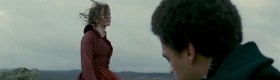
2016 #1 I’m as surprised as anyone by how much I liked The Revenant, having not been particularly enamoured of the previous Alejandro G. Iñárritu films I’d seen, but this gruelling survival-story Western oozes excellence from every frame. Leo’s pretty good, as are the rest of the cast, but Emmanuel Lubezki’s cinematography is the highlight: appropriately crisp depictions of wintery nature, an incredible use of natural light, and single-shot sequences that blow Birdman out of the water. By telling the story primarily with these visuals, Iñárritu has created a work of true cinema.

Like Lincoln, this is a beautifully-shot biopic about people stood around in rooms talking. The big gun it has in its corner, however, is an actual West Wing writer — its creator, no less — Aaron Sorkin. Sorkin’s screenplay is a precisely constructed marvel, brought to the screen by a quality cast capable of wrapping their tongues around his magnificent dialogue, and in Danny Boyle a director with the right visual sensibilities to make the material sing. What could have just been an Apple fanboy’s wet dream is instead a gripping character drama with a surprising corporate thriller vibe at times.

An orange to The Raid’s apple, this sequel is bigger and grander in every conceivable aspect. A sprawling crime epic, spanning many years, many locations, and many characters, it’s the antithesis of the tightly-focused first film — but all the better for it. Even with the more intricate plot, there’s still plenty of time for elaborate action sequences, crafted with even greater skill and inventiveness than the first movie. It’s surely one of the greatest action movies ever made.

In a top twenty filled with crime thrillers (see: #15, #11, #9, #7, #2), gorgeously-shot movies (see: #13, #6, #4, #3), and remarkable female leads (see: #20, #15, #6, #5), it’s only fitting that a film which does all of these so skilfully should top my list. Emily Blunt is the powerhouse FBI agent who finds herself out of her depth in a complex cross-agency investigation that leads her, and us, to some dark and morally questionable places. It’s all incredibly shot by the reliably amazing Roger Deakins. Between this and his other entry in my top ten, I think Denis Villeneuve has marked himself out as one of the most exciting directors working right now.


I always want to include this section of my post, but sometimes I’m not quite sure what to put in it — if it was just some more ranked films, I’d’ve included them above. But this year I have something concrete to begin with, because there were several films that I surprised myself by not including in my top twenty. They were films that I really liked — and, perhaps even more so, lots of other people really liked and include in their lists — but which, for some reason, when I was sorting through my options, fell by the wayside in favour of… well, in favour of the films that did make it in. I’m talking about films like Captain America: Civil War, Doctor Strange, Fantastic Beasts and Where to Find Them (maybe that’s not on many other lists, but I really enjoyed it), The Iron Giant… and, of course, Rogue One. My already mixed feelings about the latest Star Wars movie were massaged by happening to read Andrew Ellard’s Tweetnotes and Film Crit Hulk’s dissection of the film while preparing this list, and while I don’t necessarily agree with everything they have to say, between them they managed to clarify and illuminate some problems I already had with the movie, and that kinda put me off its inclusion.

A shout out, too, for those less-widely-loved films that I really, really liked but couldn’t quite justify being in this top twenty — films like Crimson Peak, Dragon (Wu Xia), The Good Dinosaur, Grand Piano, Lost River, Pan, and Andrea Arnold’s Wuthering Heights. And despite all those Shaw Brothers movies I watched, none ended up charting — but One-Armed Swordsman came close.

Finally, I can’t end this without mentioning the 26 films that earned 5-star ratings this year — especially as I haven’t actually published reviews for nine of them yet! So, 15 made it into the top twenty, but as they’re spread throughout the list I’ll name them again: Arrival, Cold in July, Deadpool, Ex Machina, The Limey, Lincoln, The Martian, The Nice Guys, Predestination, The Raid 2, The Revenant, Road Games, The Russia House, Sicario, and Steve Jobs. The other 11 were: 12 Years a Slave, Barry Lyndon, Hamlet, The Iron Giant, Macbeth, Napoleon, The Pianist, Spotlight, The Spy Who Came in from the Cold, Witness for the Prosecution, and Wuthering Heights. Additionally, short film The Present also got full marks.


During 2016 I watched 38 movies that were released in 2016, but of course that means there were plenty I missed. As usual, then, here’s an alphabetical list of 50 films that are listed as 2016 on IMDb (unless IMDb got it glaringly wrong) that I’ve not yet seen.

They’re chosen for a variety of reasons, from box office success to critical acclaim via simple notoriety — though I’ve decided to not include any more bloody Ice Age films on these lists, because they keep making them, they keep doing pretty well at the box office, and I keep not watching them.

The BFG
Ghostbusters
The Jungle Book
La La Land
Moonlight
Nocturnal Animals
Finding Dory
The Handmaiden
Kubo and the Two Strings
Moana
The Neon Demon
Silence
Absolutely Fabulous: The Movie
Alice Through the Looking Glass
Allied
Assassin’s Creed
Ben-Hur
The BFG
Blair Witch
Bridget Jones’s Baby
Don’t Breathe
Eddie the Eagle
Everybody Wants Some!!
Finding Dory
Ghostbusters
The Girl on the Train
Gods of Egypt
Hail, Caesar!
The Handmaiden
Hell or High Water
Hunt for the Wilderpeople
I, Daniel Blake
Independence Day: Resurgence
Inferno
Jack Reacher: Never Go Back
The Jungle Book
Kubo and the Two Strings
La La Land
The Legend of Tarzan
Live by Night
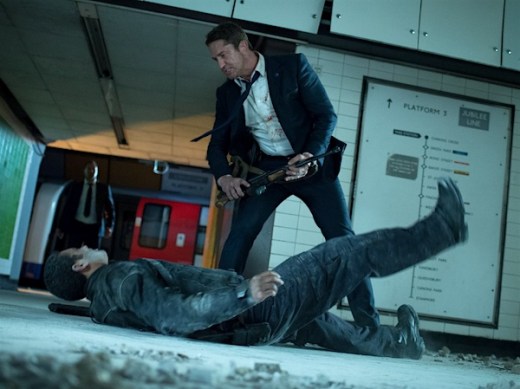
London Has Fallen
The Magnificent Seven
Manchester by the Sea
Me Before You
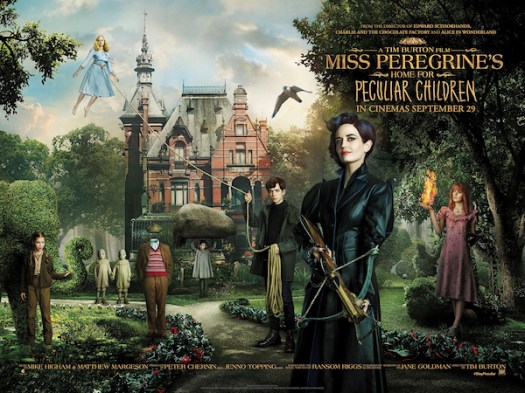
Miss Peregrine’s Home for Peculiar Children
Moana
A Monster Calls
Moonlight
The Neon Demon
Nocturnal Animals
Now You See Me 2
Passengers
Pride and Prejudice and Zombies
Sausage Party
The Secret Life of Pets
Silence
Sing
Sing Street
Sully: Miracle on the Hudson
Teenage Mutant Ninja Turtles: Out of the Shadows
Warcraft: The Beginning
Your Name

…and many more.


And that’s 2016 over… apart from the 36 reviews I still have to post, of course. I think that’s one of my worst ever. That’s what comes of not doing my advent calendar.

It’s also the end of 100 Films’ first decade, which I intend to make even more of a fuss about than I already have when the official birthday rolls around at the end of February. I’m thinking lists, and probably statistics. Any excuse for some statistics.

But, for now, all that remains is for me to thank you for reading and wish you all the best with your own film-watching endeavours. Let’s hope 2017 is a better one for us all.