2016 #172
Paul Feig | 125 mins | streaming (HD) | 2.35:1 | USA / English | 15 / R
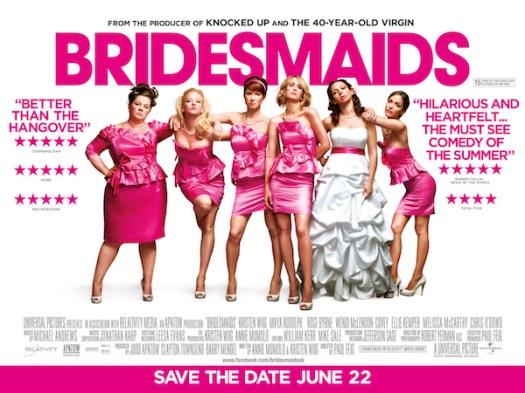
Bridesmaids opens on a shot of the outside of a house, but we can hear the people inside. It sounds like they’re having sex. “I’m so glad you could come over,” one says. Cut to a view of the closed bedroom door. Still sounds like sex. “Cup my balls,” says the male voice. Our assumption is still sex. Cut to inside the bedroom, where it looks like he’s on his back and she’s on top of him — you know, having sex. And it’s maybe at this point that you realise that, yes, they are just having sex — there is no clever, funny twist coming.
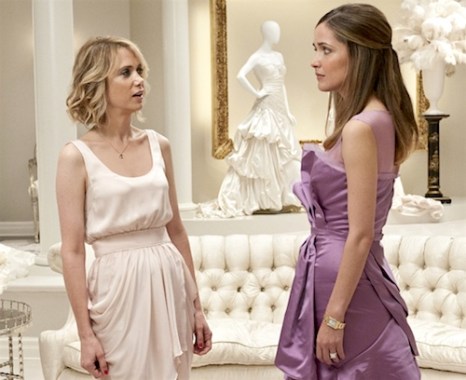
Thankfully this unimaginative sequence is not indicative of Bridesmaids’ overall quality. The female participant in that first scene is Annie (co-writer Kristen Wiig), a down-on-her-luck baker who’s struggling with life since her cake store went bust. When her best friend Lillian (Maya Rudolph) announces her engagement, she asks Annie to be her maid of honour. But Annie soon clashes with fellow bridesmaid Helen (Rose Byrne), the wealthy and glamorous wife of Lillian’s fiancé’s boss, who’s keen to replace Annie in Lillian’s affections. Wedding preparations and hilarity ensue.
Despite the rough start, there are some very, very funny parts later on; but, unexpectedly, it also works pretty well in more character-focused sections. You’re not going to mistake this for an emotional drama, but there’s more investment in the characters than you might anticipate given the cast and crew’s pedigree. I guess this is the on-screen result of a telling behind-the-scenes titbit: reportedly, producer Judd Apatow pushed hard for wild, physical comedy, while writers Wiig and Annie Mumolo preferred to go for subtler material. The film’s most notorious sequence — the diarrhoea scene — was largely at the insistence of Apatow and director Paul Feig. I feel like that probably explains a lot about how the film can be restrained and emotionally intelligent at times, and then ludicrously crude at others.
Maybe it also explains how it ended up being too long. The ideal length of a comedy movie is about 90 minutes, so crossing the two-hour mark feels needless. At the very least it could do with just a tighten — trimming some scenes, or even individual shots, would make a pleasant difference. And to think, there’s an extended cut!
Even more baffling is the fact that this earnt Melissa McCarthy an Oscar nomination, which is just… daft. I mean, she’s not bad, and it’s a bit of an excursion from the kind of roles I’ve seen her play otherwise — and doing something different to your norm is the kind of thing that attracts awards attention — but an Oscar? For this? No. That’s just silly.
I guess that was due in some part to the mass of praise Bridesmaids received on its release, after which there was (of course) a massive backlash. Until I read online comments before writing, I’d forgotten just how hyped it was, and how much people turned against that. With several years’ distance things have calmed down, which probably works in the film’s favour: freed from that pressure, it entertains as a largely funny, surprisingly emotionally astute female-driven comedy.
Paul Feig is a guest panellist on tonight’s episode of Insert Name Here, which is… random.
When I started this TV coverage almost a year ago I promised short reviews, but with three major releases falling under its purview this month — plus a big crossover and the best thing that was on TV this Christmas (and sundry other bits to mention too) — I find myself with quite a bit to say…
A Series of Unfortunate Events(Season 1) I’ve never read A Series of Unfortunate Events, the 13-book cycle of faux-gothic novels by Lemony Snicket that recount the terrible lives of the Baudelaire orphans as they are stalked by the scheming Count Olaf. I am, however, a verified fan / defender of the 2004 movie adaptation (I even included it in my 100 Favourites series last year) — one of few, it seemed, because the movie wasn’t a huge hit and, though it only adapted the first three of the books, no sequels were forthcoming. So I was most excited when it was announced Netflix were re-adapting the books for the small screen — and, fortunately, the new version turns out to be (aside from a few wobbles) a veritably fine drama.
The biggest of those wobbles is getting started. The series has a very particular tone and style, and that does take some getting used to. Indeed, some people will never click with it. You may well have already heard it described as “a cross between Wes Anderson and Tim Burton”, a summation which I’m afraid can’t be improved upon or reasonably substituted with another because that is precisely what it is like. If you do decide to sample the programme (assuming you haven’t already, because if you already have then any advice about what you should consider doing if you do watch it would be inherently pointless because you already have), I would recommend treating the first two episodes as a feature-length double-bill. Although delightfully structured to serve as individual segments (there’s a nice surprise at the end of episode one, even if you’re familiar with the story from other media, and a cleverly staged recap/flashback at the top of episode two), I feel like it might take the full opening story to completely settle into the tone and style the show is shooting for and — I think, on balance — hitting.
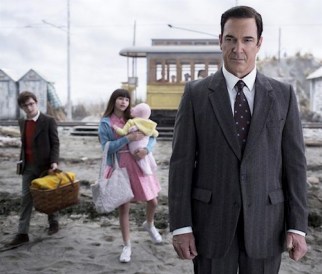
One of the big points in its favour are the scripts, which are infused with wit — not just gags in the dialogue, but at times the very structure and construction of the piece.* It also makes good repeated use of one of my favourite comedic techniques, unnecessary repetition, as well as making good comedic use of one of my repeated favourite techniques, unnecessary repetition. I suppose one might describe the style as arch, and that will not be to all tastes, but it was to mine. A lengthy sequence in episode two dedicated to explaining the difference in meaning between “literally” and “figuratively” certainly helped sway me. It’s delivered by Snicket himself, who, in the form of Patrick Warburton, regularly appears on screen to elucidate and comment upon events. I wasn’t sure of Warburton’s casting at first, but he leaves behind the kind of likeable dullards he usually plays to nail Snicket’s verbose, florid declarations and keen intelligence.
As Olaf, Neil Patrick Harris has the difficult task of being both comically inept and genuinely menacing, as well as appearing in any number of disguises (well, four). Opinion seems divided on whether he manages this better than Jim Carrey in the film, but, well, that’s opinions for you. Personally, I thought he was very good. The extra screen time here (what was done in 108 minutes of film is granted 299 minutes of TV) means he has to work at a different level and pace to Carrey, and I think there are multiple moments where he nails it. Similarly, some may think the child actors are guilty of vigorously flat delivery of their lines, but I think this is just another aspect of the Wes Anderson-esque style — as the viewer (and, possibly, the cast) become more accustomed to the material, so the quality of the performances (and/or the perception thereof) improves.
Another thing I want to mention is its pacing as a TV series. Netflix’s usual all-at-once release strategy encourages binge-watching, this we know, but it also encourages what I’m going to call “binge storytelling” — that is, series that are designed to be viewed in their entirety, like very long movies. Maybe it shouldn’t be surprising that Unfortunate Events breaks this mould (it’s adapted from four novels, so not being one long story is inherent), but a viewer might naturally expect the season’s eight episodes to consequently play like four movies split into halves. Not so. Rather, it plays like a series made up of two-parters. That’s a very fine distinction, perhaps, but there is a difference. To try to explain what I’m getting at from another angle: it isn’t structured as four movies that have had to be split in two to fit the format, but as eight one-hours where each pair present a change in location and guest cast, even as several narrative threads flow across them all. See? Well, don’t worry if not. Instead, just enjoy the theme song — which changes slightly every episode, therefore encouraging that episodic viewing. I’ve found it to be a total earworm. Look away! Looook awaaay!
I think most would’ve thought A Series of Unfortunate Events was dead on screen after the film, but this series (and the reaction to it) suggests Netflix have been vindicated for deciding to revive the property. Let’s hope they have the common sense to do the right thing and commission the two more seasons needed to complete this sorry tale. In the meantime, I’m very favourably disposed to read all the books…
* Incidentally, fun game on social media / comment sections: spot the people who are utterly baffled why both screen adaptations of Unfortunate Events have treated it so comically. Seems some people didn’t get the joke when they were kids.^
Sherlock(Series 4) Sherlock comes to an end (for now) with another variable and divisive series. That’s actually the way it’s been received ever since the start (for all the people who think it only lost its way in the third run, there were plenty who slated various parts of it during the first and second series too), so I don’t think we should be so surprised. For my part, I enjoyed it on the whole.
Opener The Six Thatchers seems to be widely despised, though for the life of me I can’t work out why. Okay, there’s the death at the end, but that was a somewhat inevitable eventuality and it’s fairly well handled. If you’re going to write off something just because it kills off a character you like… well, you need to grow up, frankly. I’m sure that’s not the only reason there are people who dislike the episode, though. Personally I enjoyed all the espionage action stuff. Sherlock has always been about adventures rather than cases and this is surely in-keeping. Anyway, it’s not a perfect episode, but it’s certainly not worse than, say, series one’s The Blind Banker.
The Lying Detective also has its detractors, but on the whole was much better received (seems to be people who hated Six Thatchers enjoyed Lying Detective and vice versa, as a rule). Between Toby Jones’ excellent, creepy performance, the riffs and reflections of certain real news stories, and the well-done adaptation of a memorable Conan Doyle original, plus the series’ visual and narrative tricks being executed just about as well as ever, I’d actually argue it’s one of the programme’s very best episodes.
But then we come to the finale, The Final Problem, which is (if you’ll excuse the pun) a problematic tale. Bits of it work magnificently, like Moriarty’s arrival and the Molly scene, but other sections are severely lacking in logic (even allowing for the heightened world of the show) or are inert — ironically so: Sherlock, John, and Mycroft spend the middle of the episode moving, but as they’re just being led from game to game it comes to very little end. It feels like it needed a good script editor to give it a going-over and give it a clearer impetus. And as for the finale, with the magically-timed arrival of another DVD from Mary… ugh. The idea behind the final montage is nice, but why not have, say, Mrs Hudson narrate it?
Sherlock’s commitment to being a fast-paced, audience-challenging adventure drama that strives to be constantly engaging and entertaining is definitely commendable, and a welcome contrast to much of the slow, dour TV drama we tend to produce over here — even if the end result is sometimes messy or unpopular. With events in-show leaving our heroes reset to a more familiar Holmesian situation, here’s hoping the big-name cast can be tempted back for a few more adventures in a couple of years.
Gilmore Girls: A Year in the Life Nine years on and Gilmore Girls graduates from being considered a twee comedy-drama on disparaged network The WB to a major cultural event, thanks to it being produced for the arbiter of all modern televisual culture, Netflix. Instead of 22 42-minute episodes of network TV we get four feature-length instalments, though it’s still very much a series: the pros and cons are shared across the board.
Pros: at its best it’s still funny, quick-witted, kooky, and sometimes even emotional. It’s a nostalgic visit to old friends, with a nice line in surprise cameos from old characters (even if you know they’re in it, most of them suddenly appear in a scene, hence “surprise”). Cons: at its worst its hero characters aren’t wholly supportable and its narrative choices come overburdened with thematic tin-eared-ness. I’ve always liked that the characters aren’t as perfect as they think they are, but I’m not sure the show knows the characters aren’t as perfect as it thinks they are. It’s hard to know exactly how deep the delusion goes: character-deep, which is kinda clever and maybe even more sophisticated than some people give the show credit for; or writer-deep, which is a little… sad? Unfortunately, there’s plenty of evidence it’s the latter (we’re constantly told of Rory’s prior success but see little evidence to suggest she’s actually capable of it).
Still, what the show sometimes lacks in realism (be that social or psychological) it makes up for with its fast-paced pop culture banter (not always as on display here as normal, I must say) and delightful kookiness. In the latter camp, an extended selection of songs from Stars Hollow: The Musical seems to get a lot of flack, but I thought it was a consistently amusing highlight. Yes, it’s an over-long aside from the main action, but that’s the kind of thing you can do when you’re given double-length episodes and creative freedom. Conversely, the finale goes overboard with this increased liberty.
Bizarrest of all is the problematic ending. Thematically, A Year in the Life begins to look like it might be about moving on, new horizons, that kind of thing — indeed, I kind of expected it to end with Lorelei moving out of Stars Hollow. But the climax — the infamous final four words… well, you could see the development as a signal of a fresh start (very literally, new life), but it doesn’t play that way. Given Rory’s personal story (her career and relationships falling apart) and situation (single, living at home), it’s less a new path forward and more a depressingly regressive loop. If you’re interested in a fuller dissection of these issues, allow me to recommend this review and, in particular, this discussion at The Verge, which both have a pretty good handle on it in my opinion. And if you want a way to reconcile the early cute perfectness with the divergent behaviour of characters as the series rolls on, this fan theory from Cracked is imperfect but fun.
A Year in the Life is never Gilmore Girls at its best (there are highs, but most work thanks to “it’s fun to have them back” nostalgia), but it does reflect the show at its worst. Flawed characters are great for drama, but only if the show is aware of their flaws. Lost amongst all its zany fun, I’m not convinced Gilmore Girls actually understands its protagonists as well as it thinks it does.
Peter Pan Goes Wrong
Christmas seems so long ago now, doesn’t it, but it’s okay: the best thing that was on TV during the festive season isn’t all that Christmassy, and if you missed it and you’re in the UK it’s still available on iPlayer for a little while yet. If you’re outside the UK, I don’t know if there’s anywhere you can see it (legally), but it’s worth seeking out. Based on the stage show, it does what it says on the tin: it’s about an amateur production of Peter Pan that goes wrong. Farcically, hilariously wrong. It’s the kind of thing that’s far, far funnier than you feel it should be — and I know I’m not alone in saying this because it went down a storm on Twitter too. And the theatre company that originated it have several other shows — here’s hoping the BBC make them a Christmas fixture.
The Flash / Arrow / Legends of TomorrowInvasion!
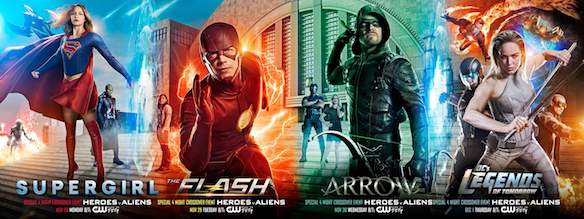
The Arrowverse’s three-night crossover masquerading as a four-night crossover (Supergirl had one scene, which they repeated in Flash anyway) was certainly a hit for The CW in terms of ratings. Quality-wise… well, it was about on a par with the individual series as a whole, which is to be expected I suppose. It was quite neat that the episodes of Flash and Arrow managed to feel like instalments of their own show as well as part of the crossover — especially Arrow, which was also marking its 100th episode — though that was to the detriment of the overarching story: the alien threat that drove the piece was occasionally sidelined, then hurriedly wrapped-up in a frantic final episode. That last part was ostensibly an instalment of the less-popular Legends of Tomorrow, but their regulars only had a little something to do before being shoved aside in favour of characters from the more popular shows. As I don’t watch Legends anymore I can’t say it bothered me, but I almost felt bad for them. I presume there’ll be another such crossover next season, but hopefully next time they’ll fully embrace it: focus on giving adequate time to the story that brings them all together, rather than trying to concurrently maintain the series’ individuality.
Also watched…
ElementarySeason 5 Episodes 1-3 — you can never have enough Sherlock Holmes.
Outnumbered2016 Christmas Special — another contender for the best comedy of the season. I liked that it wasn’t a big-fuss return, just another vignette from the lives of the Brockmans.
ViciousSeries Finale — conversely, this was as odd and kind-of-funny / kind-of-terrible as it always has been. A fitting way to end, then, I guess.
Things to Catch Up On This month, I have mostly been missing Taboo, the BBC’s dark new period drama starring Tom Hardy and written by Steven Knight. I’m sure I’ll get round to it soon, but then I’ve been saying that about Peaky Blinders (you know, the BBC’s dark period drama written by Steven Knight and sometimes starring Tom Hardy) for years and still haven’t even started it. Its scheduling on BBC One on Saturday nights feels thoroughly at odds with how it looks (surely midweek BBC Two?), but putting a proper drama on our highest-profile channel on its highest-profile night seems to have been a popular move, so what do I know?
120 days until new Twin Peaks…
Next month… Studio Ghibli’s first TV series comes to Amazon Prime… but it’s quite long and it doesn’t look that good, so I’m not sure I’ll bother.
2017 #6
Jeremy Konner | 50 mins | streaming (HD) | 16:9 | USA / English
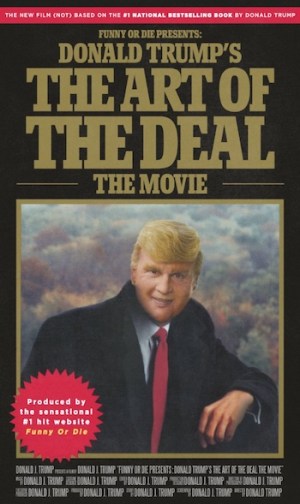
Almost a year ago, Donald Trump was still just a Republican candidate that half of the US and most of the rest of the world laughed at, waiting for something to come along and make him go away. And at that time, this was released: a feature-length(-ish) spoof from sketch comedy website Funny or Die, with a (sort-of-)starry cast, that no one knew was coming. That surprise factor — “a website that does short sketches has made a whole movie and it stars famous people and we didn’t know about it but it’s out now!” — is, frankly, the most memorable thing about it.
Introduced by Ron Howard, who supposedly discovered a VHS copy at a yard sale or something, the film poses as a lost ’80s TV movie produced by Trump himself as an adaptation of his best-selling book of the same name. Trump is played by Johnny Depp, under a pile of prosthetics and doing a passable version of that distinctive voice, who comes across a kid and relates some exploits from his life. There are cameo appearances by quite famous people like Alfred Molina, Henry Winkler, Stephen Merchant, Patton Oswalt, Robert Morse, Room’s Jacob Tremblay (looking vacantly amused), and Christopher Lloyd doing what most of his career has consisted of these past few years: playing Doc Brown in a Back to the Future joke/reference. There are some other people who get billed above some of those people, so maybe they’re also famous in America, I don’t know.
Considering its pedigree, it should come as no surprise that The Art of the Deal: The Movie plays like a very long, out of control sketch. Just like all sketch comedy, some jokes land better than others, and just like most sketch comedy, it begins to outstay its welcome by the end. It gets a lot of passes because Trump is so ridiculous that anyone taking the piss out of him is always welcome, and as such it ticks over with a level of slight amusement rather than outright hilarity.
Bits that do land include the ever-so-’80s title song by Kenny Loggins; the ethnicity of the kid suddenly changing every time Trump notices it; a bit about him paying tramps to piss in a building that (accidentally) has added resonance now; some of the comedy end credits; and a post-credit bookend with Howard, who declares that “we should probably just pretend that this film, and in fact Donald Trump, never even existed.”
2016 #164
Joel Coen | 94 mins | streaming (HD) | 1.85:1 | USA / English | 12 / PG-13
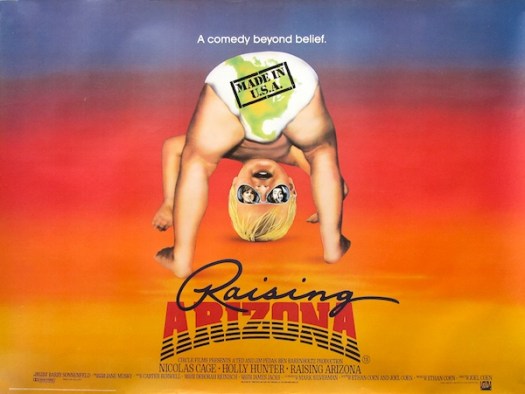
Once upon a time I did a Media Studies A level, and (for reasons I can’t remember) our teacher showed us the pre-titles sequence of Raising Arizona because it was noteworthy for being the longest pre-titles sequence ever. As it happened our teacher was wrong, because The World Is Not Enough had already exceeded it a couple of years earlier.* And now it’s completely meaningless because most blockbusters don’t bother to show any credits until the end of the film, technically rendering the entire movie as the pre-titles “sequence”.
My point here is twofold. One: I miss the structure of all films having title sequences somewhere near the start. Two: before now all I could have told you about Raising Arizona is that “it has the longest pre-titles ever (except it doesn’t)”. Well, that and it stars Nic Cage and was directed by the Coen brothers. But now I’ve watched it and, three months after the fact, …that’s still almost all I can tell you. I also remember there was a kinda-cool semi-fantastical thing going on with, like, a demon biker or something. Oh, and it’s quite funny. Not very funny, but quite.
I have an awkward relationship with the Coen brothers. I always feel like I should be enjoying their movies more than I actually do, and I think some of their stuff is downright overrated. Unfortunately, Raising Arizona has done little to change this situation.
* For what it’s worth, the length of TWINE’s pre-titles wasn’t intended. It was originally supposed to be just the stuff in Spain, with the MI6 explosion and subsequent Thames boat chase coming after the titles, but it was decided that didn’t make for a strong enough opening and it was recut. It runs about 17 minutes vs Raising Arizona’s 11.^
2017 #5
Travis Knight | 102 mins | Blu-ray | 2.40:1 | USA / English | PG / PG
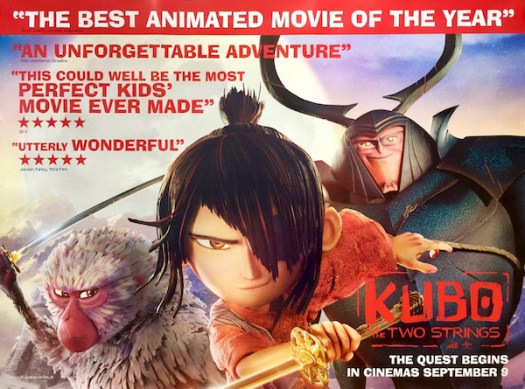
The latest film from animation studio Laika (Coraline, ParaNorman, The Boxtrolls), Kubo and the Two Strings is a samurai-action fantasy-adventure inspired by Japanese culture and folklore — but animated in stop-motion and rated PG! Not that either factor in any way undermines what may be the greatest animated movie of last year.
It is, unsurprisingly, the story of Kubo (voiced by Art “Rickon Stark” Parkinson), a young boy in olden-times Japan who regales the folk of his local town with fantastical adventure stories, which he brings to life with origami that he animates using magic from playing his shamisen (basically, Japan’s answer to the banjo). These stories actually come from Kubo’s mother and relate to his own life: Kubo’s grandfather is the evil Moon King (Ralph Fiennes), who they fled from when Kubo was a baby, while his father stayed behind to aid their escape, presumably to the death. Kubo mustn’t go out at night lest the Moon King see him and send his minions, Kubo’s creepy aunts (both Rooney Mara), to capture them. So Kubo never goes out at night and they all live happily ever after.
Not really! When the aunts come for them, Kubo’s mother uses the last of her magic to whisk Kubo away on a quest to find some mythical armour that he’ll need to defend himself against the Moon King. To help him, she brings his wooden monkey charm to life (voiced by Charlize Theron); and along the way they stumble across a man-sized beetle who used to be a samurai (voiced by Matthew McConaughey). Scrapes ensue as the trio hunt for the three pieces of the armour, with the vicious aunts in pursuit.
At its most basic, Kubo sounds like an archetypal “fantasy quest” narrative, with a gang of heroes in search of a MacGuffin to defeat a Big Bad. But the devil is in the details — something the folks at Laika know only too well. The Japanese myths they’ve tapped into here make for some fantastic detail; if anything, the familiarity of the broad story arc allows the unique aspects of the mythology to be all the more prominent, including some possibly surprising developments later on. I say “possibly” because I’ve read at least one complaint about the twists being guessable to adult viewers. Well, this is a fable and also, technically, a kids’ movie — just two reasons why plot guessability doesn’t really matter. I mean, if all you want from a movie is to be surprised, why not just watch 90 minutes of things popping out of boxes?
The other aspect massively in Kubo’s favour is the animation. It’s genuinely stunning — beautiful to look at, as well as being technically audacious and consequently impressive. Some of it is so grand that several times I forgot that most of what we’re seeing on screen was built for real and animated by hand over several years. I say “most” because it is augmented with CGI, just as any action-fantasy live-action movie would be these days. The fact there was green screen and compositing and some wholly CG elements doesn’t detract from the technical workmanship on display. That included the largest stop-motion puppet ever built. I won’t spoil what or where it is in the film, but there’s a behind-the-scenes glimpse during the end credits that is breathtaking.
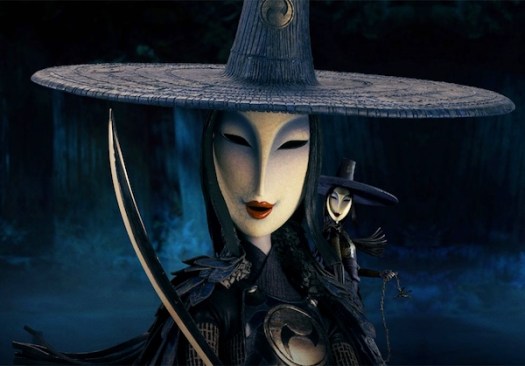
Another area the animation excels is in the action scenes. That’s a field which is rarely animation’s forte, especially stop-motion animation, but Laika took on the challenge and nailed it. Everything from the antics of Kubo’s animated origami to a centrepiece duel aboard a ship at sea are the equal to anything you’d find in a live-action samurai actioner. The character work is excellent too, especially the villains. The aunts are fabulously creepy, mainly thanks to their blank mask faces and the way they float everywhere, seemingly indestructible. There are a couple of other monstrous creatures too, but their wonders deserve to be discovered in situ.
It’s not just scale that Kubo does well: the attention to detail was immense, with Japanese cultural experts called in to inform the tiniest detail, like period-accurate stitching on the clothing. This is background detail on 10-inch puppets, remember, but they went to that much trouble. It’s indicative of the attention paid to every facet of the movie, and while using the correct stitching, or developing appropriate techniques for animating water, or applying genuine principles from Japanese beliefs, do not in themselves make for a great movie, they indicate the level of care taken over this project — which does help to produce a great movie.
Then there’s the music, composed by Dario Marianelli, which integrates the shamisen as well as other appropriate instruments into a consistently lyrical score. And the photography, by Frank Passingham — it’s not just the design work and high-quality builds that make the film so gorgeous to look at, but the quality of the light that’s captured. And I’ve been so busy singing the film’s production praises that I haven’t even mentioned how funny it is, or how emotional, with Mar Haimes and Chris Butler’s screenplay tucking some very positive lessons away in the final act. Indeed, the alternative perspective offered by embracing a different culture means that, for once, they might not just be lessons for kiddie viewers. By the time the credits roll — to a glorious cover version of a perfectly chosen song — the whole experience is completely enchanting.
I think Laika as a name went a bit unnoticed with their first feature, Coraline, because it had the already-headlining names of writer Neil Gaiman and director Henry “Nightmare Before Christmas” Selick. Their two subsequent features seem to have been well-liked but not set the world on fire (I’ve still not seen either). But here, they’re firmly stamping their name as a mark of quality. Come in Pixar, your time may be up. I’m sure Kubo won’t be picking up many gongs in the current awards season, what with three big-name Disney-backed pictures arrayed against it, but I find it hard to believe any of those outdid the artistry on display here, both in its spectacular animation technique and its majestic storytelling. To say it’s 2016’s best animated film is underselling it — it’s one of my favourite films released last year, fullstop.
Kubo and the Two Strings is released on DVD and Blu-ray in the UK today.
It placed 3rd on my list of The 17 Best Films I Saw For the First Time in 2017, which can be read in full here.
2017 #4
Taika Waititi | 101 mins | streaming (HD) | 2.35:1 | New Zealand / English | 12 / PG-13
The most recent feature from the director of the very-different-to-each-other What We Do in the Shadows and Thor: Ragnarok, this very-different-again* adventure-comedy-drama was a surprise hit in its native New Zealand, then around the rest of the world, before it wound up as Empire magazine’s pick for the best film of 2016.
Young Ricky Baker (Julian Dennison) is a delinquent who’s been rejected by every foster family in the city, so in a last-ditch attempt to avoid juvie he’s homed at the remote farm of kindly Bella (Rima Te Wiata) and her terse, irritable husband, Hec (Sam Neill). Despite initial misgivings, Ricky warms to his new home, so when child services threaten to take him away again he runs away into the bush. He’s soon found by Hec, but as child services launch a nationwide manhunt for the missing pair, they decide to go on the run as fugitives.
So yes, let’s get the obvious out of the way: Ricky and Hec end up bonding and working together and all that jazz. But this isn’t the kind of movie where it’s all about developing mutual respect and having heartfelt hugs and making declarations of everlasting father-son love. Well, maybe it is a little, in its own way — but it’s also the kind of movie where they (spoilers!) write awesome birthday songs, end up in a punch-up with some hunters, steal all-important loo roll, meet a girl worthy of the old Flake adverts, eat relaxing sausages, stumble into a vicious fight with a giant boar, and engage in the wildest third-act police car chase since… I dunno, Blues Brothers or something.
Writer-director Waititi (adapting the book Wild Pork and Watercress by Barry Crump) keeps a fairly tight hand on the film’s tone, a slightly leftfield view of the world that isn’t as extremely stylised as, say, Wes Anderson, but nonetheless is heightened beyond the normal boundaries of real-life. I only say a “fairly tight” grip because a couple of comic cameos arguably stretch things a little too far, but that’s a minor complaint. Mostly he’s skilful in balancing the comedy with genuine emotion, so that the former never neuters the latter, but equally the latter never dares become too sickly. The events of the plot may not be plausible, but the emotional underpinnings are.
Nonetheless, it’s regularly hilarious, especially when centred on Dennison and Neill’s interactions. It’s the kind of role and deadpan performance that will no doubt have some hailing Dennison as a real find, and maybe he will be, or maybe he’ll go the way of most child stars with “breakthrough” roles like this and never be heard from again. Pardon my cynicism, but it seems to be such a perfect marrying of actor and role that I’m not sure it marks the start of a glittering career so much as one superb turn. Maybe I’m wrong; time will tell. Neill, on the other hand, juggles grumpiness, likeability, and pathos in a manner that suggests his near-relegation to “the guy from Jurassic Park” for the last quarter-century is a real shame. I’m not intending to dismiss everything he’s done between then and now (some of which I’m a definite fan of), but this is likely the best showcase of his abilities for a long time.
The rest of the cast don’t shirk, with particular note to the kind of double act performed by Rachel House and Oscar Kightley as (respectively) the ‘dedicated’ child services agent and her escorting policeman who lead the manhunt. Whoever was in charge of the soundtrack did an excellent job with several amusing song picks, while the highlight of the score (credited to three composers) is an unusual use of the increasingly ubiquitous Christmas tune Carol of the Bells (the scene in question has nothing to do with Christmas, for starters). Cinematographically, DP Lachlan Milne makes marvellous use of New Zealand’s truly majestical scenery — well, why wouldn’t you?
Whether or not Hunt for the Wilderpeople is the best film of last year is immaterial — I mean, it’s a little film from a small country on the other side of the world: it’s not like it’s going to be in competition this awards season, is it? But maybe it should be. Few films get to be this funny without being overworked, this sweet without being cloying, and this quirky without being keraaazy, all at the same time.
In the UK, Hunt for the Wilderpeople is available on Netflix now, and is released on DVD and Blu-ray tomorrow.
It placed 4th on my list of The 17 Best Films I Saw For the First Time in 2017, which can be read in full here.
* Well, from what I know they all seem very different to each other — I’ve not seen the other two.^
2017 #3
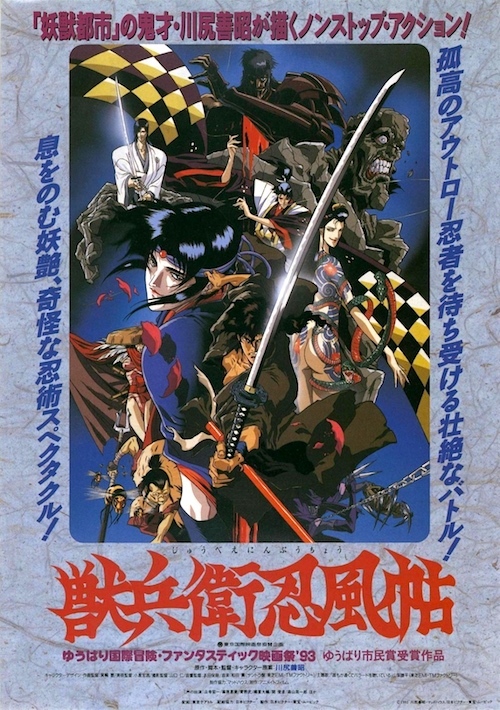
Yoshiaki Kawajiri | 92 mins | Blu-ray | 1.33:1 | Japan / English | 18
One of the films credited with helping to popularise anime in the West in the wake of Akira (reportedly it has had a greater and more enduring impact in the US than in Japan), Ninja Scroll is a fast-paced fantastical action flick full of gratuitous swordplay, gratuitous gore, and gratuitous nudity.
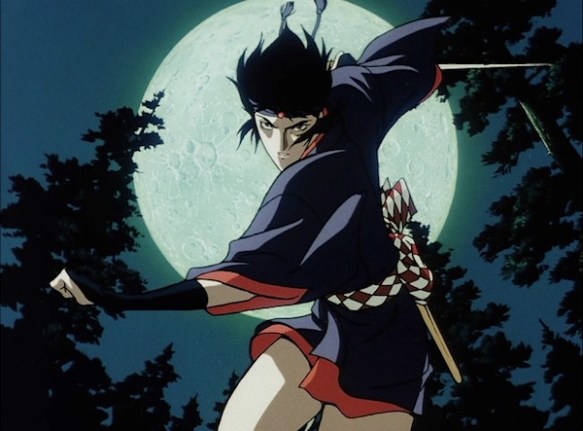
The story begins with Jubei Kibagami, a roaming ninja-for-hire, who becomes embroiled in stopping the machinations of the Shogun of the Dark after he rescues Kagero (a female ninja whose team were slaughtered by the Shogun of the Dark’s minions, the Eight Devils of Kimon), an event witnessed by Dakuan, a government spy who has been sent to investigate and stop the evil Shogun.
Try not to worry about that too much, though: Ninja Scroll moves like the clappers through a plot that is at once incredibly simple and ludicrously over-complicated. On the one hand it’s an action-driven adventure, as our trio of heroes battle their way through the Eight Devils one by one. On the other, it’s got all sorts of backstory stuff about who the Devils’ leader is and how he’s connected to something Jubei did years earlier and what any of this has to do with Kagero’s clan and… so on.
Similarly, the pace has its pros and its cons. It certainly keeps things lively, with new monstrous Devils turning up regularly, bringing bursts of exciting action with them; but it makes things bewildering at times, with a flurry of characters and exposition introduced throughout the first half-hour or so. Once it settles down, there’s actually some quite nice character stuff involving Jubei and Kagero, and to an extent Dakuan, who remains a tricksy and unreliable ‘hero’.
That’s not what the film is best known for, though, probably because it’s hidden after a big chunk of the other stuff: ultra-violence and a sex obsession. As to the former, men are literally ripped limb from limb, or cut in half, or quarters, with blood regularly spraying everywhere. Depending on your viewing preferences, it’s either incredibly extreme or we’ve seen the same kinda stuff more regularly since. I wasn’t as shocked as some reviews warned I would be, but it’s not for the faint-hearted.
The same goes for the sex and nudity, which embraces everything from the villains bickering about who’s sleeping with who (if they’re devils then half of them are horny ones) to Kagero being sexually assaulted by a rock monster. In the audio commentary recorded for the 20th anniversary, the writer, director, and animation director debate whether some of that content was unnecessary. One of them (it’s hard to tell which from the subtitles) asserts that there were always gratuitous sex scenes in the B-actioners that partly inspired the film, so it goes toward creating the right atmosphere. I guess individual tastes will vary — I mean, it’s not as if Kagero’s assault is presented as a good thing, but it is still presented. Or it is nowadays: on the film’s first release the BBFC cut that part out. Times certainly have changed.
For all that Ninja Scroll feels kinda antiquated in this carefree presentation of repellant acts, it has stood the test of time in other ways. For the faults in what happens to her early on, Kagero emerges as a competent and assured female hero (for the most part). The animation is frequently great, with some painterly compositions inspired by traditional Japanese art, as well as dramatic action sequences. I watched the English dub, which is what it is (I’ve heard better; I’ve heard much worse), but on the aforementioned commentary track they regularly sing the praises of the Japanese voice cast, so maybe the subtitled version was the way to go.
Watching Ninja Scroll is a bit of a conflicting experience nowadays. Its story is both numbingly simple (“introduce villain, fight villain, defeat villain, repeat x8”) and insanely complicated; its sometimes balanced gender politics are offset by some gratuitous and distasteful content; its characters are initially archetypal and generally unlikable, but warm up in both regards as the film progresses. A bit like my opinion of it: I wasn’t entirely sure after my first viewing, but as I watched it back with the commentary I re-appreciated an awful lot of it. Maybe it’s a grower, then.
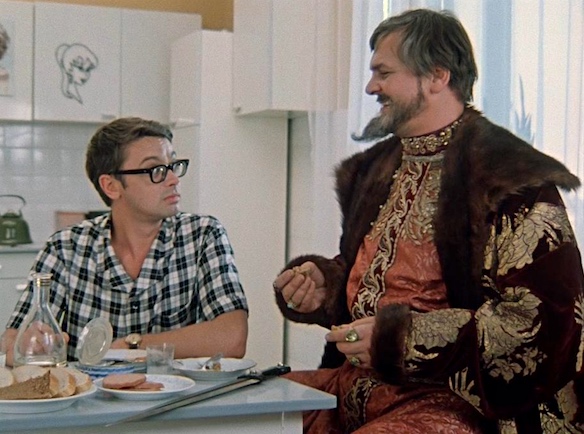
Well, “that’s what” according to IMDb voters, anyway, who’ve placed it in the upper echelons of all those best-of lists. In fact, it’s a Russian sci-fi comedy, adapted from a play by Mikhail Bulgakov (most famous to Western audiences now for the TV series A Young Doctor’s Notebook starring Daniel “Harry Potter” Radcliffe and Jon “Mad Men” Hamm). Apparently it’s a huge popular classic in Russia, hence why it’s scored so well on an international movie website and shot up those lists; and, because of that, it’s a moderately (in)famous film on movie-list-checking website iCheckMovies (at least, it is in the parts of it I frequent), because it’s a film you have to see if you want to complete any of the aforementioned lists.
And so I have seen it — courtesy of Mosfilm’s YouTube channel, where it’s available for free, in HD, with English subtitles — just in case this review makes you want to watch it too. Which, you never know, it might, because it’s actually kinda fun. In the end.
The plot concerns scientist Shurik (Alexsandr Demyanenko), who is trying to perfect a time machine in his apartment (as you do) but is getting grief from his busybody building supervisor Ivan Vasilievich (Yuri Yakovlev). Meanwhile, George (Leonid Kuavlev) is trying to rob a neighbouring apartment. To cut a lot of faffing short, the three of them end up transported to the past, where it turns out Ivan Vasilievich is the spitting image of Ivan the Terrible (also Yuri Yakovlev) and — to cut some more farce equally short — Ivan Vasilievich and George end up stuck in the past, pretending to be Mr Terrible and his chum, while Shurik and the real Mr Terrible are returned to the present day. More hijinks ensue!
So, you can see why its original title is the wittily understated statement Ivan Vasilievich Changes Profession, and how its English title can just about get away with being such a blatant attempt to cash-in on a popular movie.
As for the film itself, it starts off not so hot, somewhat overacted and a little hard to get a grip on what’s happening — it’s also a sequel or sorts, so perhaps launches with the idea you’ve seen the previous adventures of Shurik and so know what kind of thing to expect. But as it continues… well, maybe it’s a kind of Stockholm syndrome, but I ended up rather enjoying it. It’s not genius, but it’s a fairly amusing farce once it gets going. Very of its time as an early-’70s mainstream-style silly comedy, but what’s wrong with being of your time? It also sounds like it’s fairly faithful to Bulgakov’s original play, which is a little surprising, but there you go.
Unsurprisingly, Ivan Vasilievich is not a better film than all those ones I listed at the start. If it got wider exposure and more IMDb votes, I’m sure it would drop down lickety-split. At the same time, I’m actually quite glad I watched it: after I eventually warmed to it, it was kinda fun.
When I started this whole shebang ten years ago, the point was to force my hand into not just watching more films, but specifically more films that I’d never seen (hence why watching stuff I’d seen before doesn’t count). Back then I felt like I wasn’t making enough time for films, especially as there were all sorts of great movies I’d yet to get round to, not to mention my massive pile of unwatched DVDs.
After ten years of doing it, I still have a massive pile of unwatched DVDs, and now Blu-rays too, and there are still plenty of great movies I’ve not got round to… but at least I’ve seen some of them, and a lot more besides. But one thing I’ve spent a decade not doing so much of is rewatching films, whether they be old favourites, new favourites, or things that deserve a second chance. I mean, why watch something I’ve already seen when I can spend that time on something that counts towards my tally? There have been years when just doing that was enough of a struggle, after all.
But it’s been four years since I last failed my eponymous goal (yay me!), and during those last four years I’ve watched an average of 160 new films each year. I have done some rewatching in that time, but only a small number of films — disappointingly small, I’d say — and that’s pretty much how it’s been for the past ten years…
Well no longer, dear readers!
This year I’m adding a new component to my annual goal: in addition to watching at least 100 films I’ve never seen before, I decided to set a target to rewatch more. So I thought, “what should the target be?” A second hundred is patently ridiculous (even if I have watched give-or-take that many films total in each of the last two years). So then I thought, “how about half?” All things considered, 50 seemed a plausible goal — it’s only about one per week. But then I thought, “well, if it’s about one per week, why not make it one per week?” So the goal is 52.
152 films in a year — am I mad?! Well, this is why I mentioned my track record: these days, that number seems feasible to me. I’m also making it easier on myself by not necessarily reviewing the rewatches — as the Ghost of 82 insightfully pointed out recently, it’s the writing that really takes the time.
So, by December 31st 2017 I’ll: watch at least 100 new films, including 10 WDYMYHSes and 12 Blindspots, plus at least 52 rewatches.
I feel like I’m making this once-simple concept a bit complicated now…
As you’ll know from reading my Blindspot post, this year I’ve separated these very similar film-watching goals into two separate projects.
So what differentiates my WDYMYHS selection? Well, to mark my 10th blogiversary (did I do that “did I mention this already” joke already?)* I’ve attempted to identify the films from the last ten years that I really should have seen. Rather than my usual loopy array of repurposed lists, however, I just popped on Letterboxd and dug out the “most popular” film I’d not seen from each of the last ten years. I was interested to discover I already own half of them on Blu-ray, have another downloaded and another recorded, and can find the rest on Netflix, Amazon Prime, and Now TV — one on each, in fact. I mean, I couldn’t’ve planned that more neatly.
Anyway, these ten films — in chronological order — are:
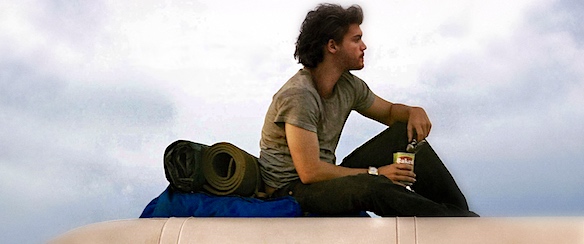
2007 Into the Wild
2008 Gran Torino
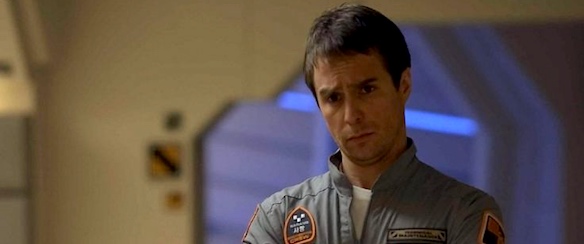
2009 Moon
2010 Black Swan
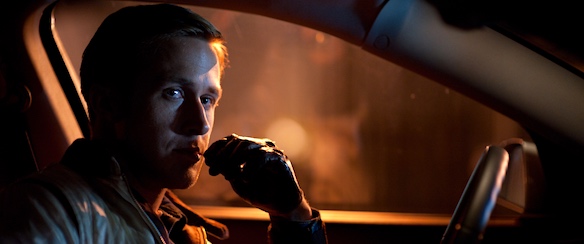
2011 Drive
2012 Silver Linings Playbook
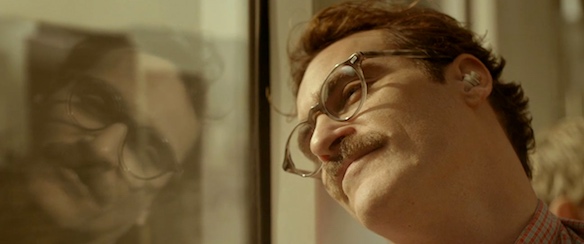
2013 Her
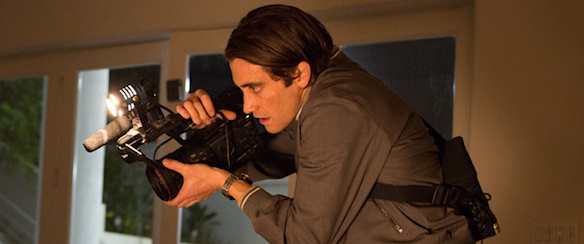
2014 Nightcrawler
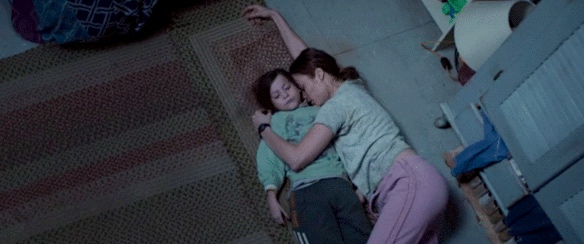
2015 Room
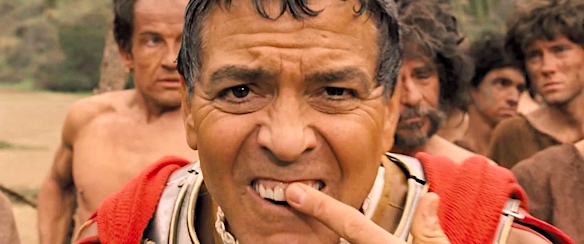
2016 Hail, Caesar!
So that’s 22 films I must watch among this year’s 100. Okay.



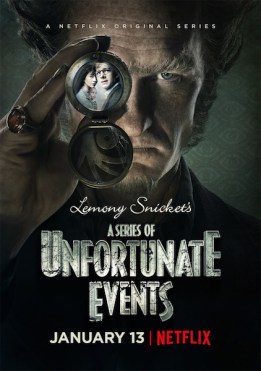 I’ve never read A Series of Unfortunate Events, the 13-book cycle of faux-gothic novels by Lemony Snicket that recount the terrible lives of the Baudelaire orphans as they are stalked by the scheming Count Olaf. I am, however, a verified fan / defender of the 2004 movie adaptation (I even
  As Olaf, Neil Patrick Harris has the difficult task of being both comically inept and genuinely menacing, as well as appearing in any number of disguises (well, four). Opinion seems divided on whether he manages this better than Jim Carrey in the film, but, well, that’s opinions for you. Personally, I thought he was very good. The extra screen time here (what was done in 108 minutes of film is granted 299 minutes of TV) means he has to work at a different level and pace to Carrey, and I think there are multiple moments where he nails it. Similarly, some may think the child actors are guilty of vigorously flat delivery of their lines, but I think this is just another aspect of the Wes Anderson-esque style — as the viewer (and, possibly, the cast) become more accustomed to the material, so the quality of the performances (and/or the perception thereof) improves.
 I think most would’ve thought A Series of Unfortunate Events was dead on screen after the film, but this series (and the reaction to it) suggests Netflix have been vindicated for deciding to revive the property. Let’s hope they have the common sense to do the right thing and commission the two more seasons needed to complete this sorry tale. In the meantime, I’m very favourably disposed to read all the books…
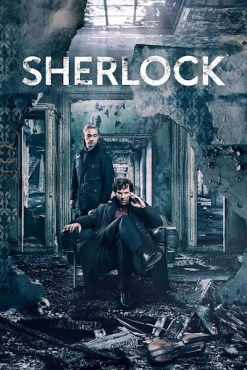 Sherlock comes to an end (for now) with another variable and divisive series. That’s actually the way it’s been received ever since the start (for all the people who think it only lost its way in the third run, there were plenty who slated various parts of it during the first and second series too), so I don’t think we should be so surprised. For my part, I enjoyed it on the whole.
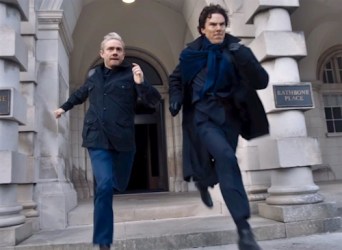 Sherlock’s commitment to being a fast-paced, audience-challenging adventure drama that strives to be constantly engaging and entertaining is definitely commendable, and a welcome contrast to much of the slow, dour TV drama we tend to produce over here — even if the end result is sometimes messy or unpopular. With events in-show leaving our heroes reset to a more familiar Holmesian situation, here’s hoping the big-name cast can be tempted back for a few more adventures in a couple of years.
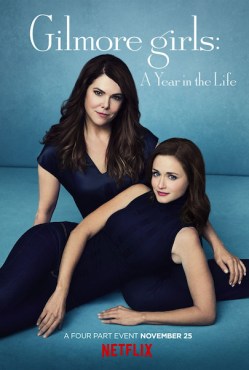 Nine years on and Gilmore Girls graduates from being considered a twee comedy-drama on disparaged network The WB to a major cultural event, thanks to it being produced for the arbiter of all modern televisual culture, Netflix. Instead of 22 42-minute episodes of network TV we get four feature-length instalments, though it’s still very much a series: the pros and cons are shared across the board.
 Bizarrest of all is the problematic ending. Thematically, A Year in the Life begins to look like it might be about moving on, new horizons, that kind of thing — indeed, I kind of expected it to end with Lorelei moving out of Stars Hollow. But the climax — the infamous final four words… well, you could see the development as a signal of a fresh start (very literally, new life), but it doesn’t play that way. Given Rory’s personal story (her career and relationships falling apart) and situation (single, living at home), it’s less a new path forward and more a depressingly regressive loop. If you’re interested in a fuller dissection of these issues, allow me to recommend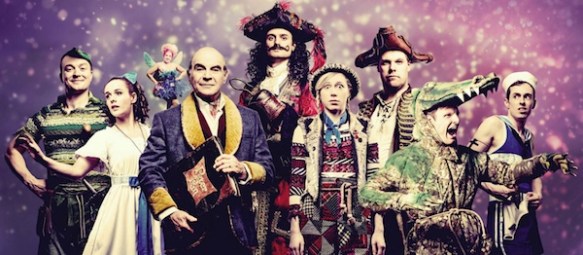
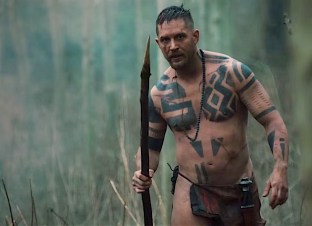 This month, I have mostly been missing Taboo, the BBC’s dark new period drama starring Tom Hardy and written by Steven Knight. I’m sure I’ll get round to it soon, but then I’ve been saying that about Peaky Blinders (you know, the BBC’s dark period drama written by Steven Knight and sometimes starring Tom Hardy) for years and still haven’t even started it. Its scheduling on BBC One on Saturday nights feels thoroughly at odds with how it looks (surely midweek BBC Two?), but putting a proper drama on our highest-profile channel on its highest-profile night seems to have been a popular move, so what do I know?