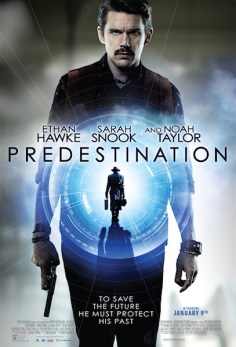
Predestination (2014)

2016 #21
The Spierig Brothers | 98 mins | Blu-ray | 2.40:1 | Australia / English | 15 / R

A man walks into a bar in ’70s New York. The bartender strikes up a conversation, which leads to a wager: if the man’s story is the most incredible the bartender has ever heard, he’ll give him a free bottle of whiskey. It had better be pretty good, because what we know that the man doesn’t is that the bartender, played by Ethan Hawke, is an agent for the Temporal Agency, travelling through time to stop crime before it happens; and he’s just had his face burnt off and completely rebuilt while failing to stop a notorious terrorist known as the Fizzle Bomber. Beat that.

That said, the man’s story is pretty incredible too — but as the telling of it makes up over half the movie, and it’s full of its own twists, I shan’t get into spoiler territory. Predestination is a film that rewards knowing as little as possible, especially as the seasoned sci-fi viewer/reader has a fair chance of guessing a good number of its twists (possibly all of them) long before they’re revealed by the film. Fortunately that doesn’t really matter, because the tale remains an engaging and thought-provoking one, with many thematic points to consider, and not just of a science-fictional nature — there are human and historical issues in play here too, which is undoubtedly a rarity in modern screen SF.

We’re guided through this by a laid-back performance from Hawke, which turns intense when needed, but even more so by an affecting, transformative, award-winning turn from Australian actress Sarah Snook. She really should be much in demand after this. Chunks of the film are just a two-hander between Hawke and Snook, yet it effortlessly captivates throughout these stretches. That’s in part thanks to the fascinating nature of the narrative, adapted faithfully from Robert A. Heinlein’s short story All You Zombies (it has nothing to do with zombies — the story’s from the ’50s, before our modern conception of a zombie was formulated), as well as the direction of the Spierig brothers.

I don’t know how many people will remember, but the pair got a bit of attention back in the early ’00s with their debut feature Undead, because they not only wrote and directed it, but also edited it and created the CG effects at home on their laptops. That’s more commonplace nowadays (well, Gareth Edwards did it for Monsters, anyway), but was A Big Thing in certain circles back then. (I bought Undead on DVD at the time but have never got round to watching it. Plus ça change.) I thought they’d disappeared after that, but they were responsible for vampire thriller (and Channel 5 staple) Daybreakers in 2009. This is their third feature. Working from a low budget once again, they take us to alternate-history versions of the ’40s, ’50s, ’60s, ’70s and ’80s, from bars to orphanages to universities to training for the space programme to the headquarters of a time travelling police organisation and more. To my eyes, it never looked cheap. Sure, it’s not overloaded with CGI, but it doesn’t need to be. I never got the sense anyone was having to hold back because of the low budget. Others may disagree, because I have seen people express the opposite opinion, but I think they’re wrong, so there.

Predestination is the latest reminder that “sci-fi” is not a byword for “action-adventure”. It certainly won’t satisfy the needs of the action-hungry fan (it’s not devoid of the odd punch-up or explosion, but they’re far from the point). For anyone interested in something a bit more intellectual, a bit more thought-provoking, particularly if you like the (potential) complications of time travel, or issues of gender and identity, then Predestination has a lot to offer, even if you guess the twists.

5 out of 5

Predestination placed 5th on my list of The 20 Best Films I Saw For the First Time in 2016, which can be read in full here.

It is available on Sky Movies on demand and Now TV from today. It debuts on Sky Movies Premiere next Friday, February 12th, at 11:30am and 10:20pm.

Purists be aware: existing British releases completely muffed up the aspect ratio (reportedly it’s both open matte and cropped), so there’s every chance Sky’s copy will be similarly afflicted.

Batman Begins (2005)

100 Films’ 100 Favourites #8

Evil fears the knight.

Country: USA & UK
Language: English, Urdu & Mandarin
Runtime: 140 minutes
BBFC: 12A
MPAA: PG-13

Original Release: 10th June 2005 (Russia)
US Release: 15th June 2005
UK Release: 16th June 2005
First Seen: cinema, June 2005

Stars
Christian Bale (American Psycho, The Fighter)
Michael Caine (Alfie, Harry Brown)
Liam Neeson (Schindler’s List, Taken)
Katie Holmes (Go, Woman in Gold)
Gary Oldman (Léon, Tinker Tailor Soldier Spy)

Director
Christopher Nolan (Memento, Interstellar)

Screenwriters
David S. Goyer (Blade, Man of Steel)
Christopher Nolan (The Prestige, Inception)

Based on
Batman, a comic book superhero created by Bob Kane and Bill Finger. In part inspired by Batman: Year One by Frank Miller and David Mazzucchelli.

The Story
After Bruce Wayne’s philanthropic millionaire parents are murdered when he’s a kid, he dedicates his life to fighting crime, travelling the world to learn combat skills, then deciding the best way to scare the Mafia-esque scum of his home city is to dress as a bat. As you do.

Our Hero
Nana-nana-nana-nana nana-nana-nana-nana Batman! But, y’know, serious. Important crimefighting jobs include getting hold of cool gadgets your company developed, messing around in restaurant fountains with models, and perfecting a ludicrously gruff voice to use when in costume.

Our Villains
Batman really has his work cut out for him this time: there’s crime boss Carmine Falcone (Tom Wilkinson), mad scientist Dr Jonathan Crane, aka Scarecrow (Cillian Murphy), commander of a league of assassins Ra’s al Ghul (Ken Watanabe), his subordinate — and Bruce’s one-time mentor — Ducard (Liam Neeson). That’s not to mention the bloke doing something dodgy with his family company (Rutger Hauer).

Best Supporting Character
It’s a toss up between two British thesps: there’s Michael Caine as the most involved and caring version of the Waynes’ butler Alfred that we’ve yet seen, and the ever-excellent Gary Oldman as Gotham’s only honourable cop, Jim Gordon. Both are a world away from previous screen incarnations of their characters.

Memorable Quote
“Well, a guy who dresses up like a bat clearly has issues.” — Bruce Wayne

Memorable Scene
Trapped in Arkham Asylum, surrounded by police and with SWAT officers storming the building, Batman activates a device on his boot for “backup”. Moments later, hundreds of bats flood the building, allowing him to make a dramatic escape.

Technical Wizardry
Previously, the Batmobile was a sleek and desirable supercar-type vehicle. Taking inspiration from some of the comics, Begins reinvents the vehicle entirely, rendering it essentially a road-ready tank. A massive change in the very concept, but one that now seems only natural.

Letting the Side Down
Hardly a major point for the viewer, but the design of the Bat-costume meant the actor in it couldn’t turn his neck — a problem also in the previous post-’89 Bat-films. Christian Bale’s frustration with this led to it being redesigned for the sequels (and explicitly referenced on screen, too).

Making of
According to some trivia on IMDb, before shooting began Nolan treated the crew to a private screening of Blade Runner, after which he told them, “this is how we’re going to make Batman.” For more on how exactly Ridley Scott’s seminal sci-fi thriller influenced Begins, check out these interview excerpts.

Previously on…
Batman’s big-screen popularity was kicked off by Tim Burton’s 1989 Batman, but that goodwill was gradually squandered, ending with 1997’s Batman & Robin, which many regard as one of the worst films ever made. It killed a once-profitable franchise, therefore paving the way for an eventual reboot.

Next time…
The Bat-world shaped by Nolan and co reached its apotheosis in the first sequel, The Dark Knight. The trilogy-forming second sequel, The Dark Knight Rises, did that rarest of things: it gave a superhero a definitive, final ending.

Awards
1 Oscar nomination (Cinematography)
3 BAFTA nominations (Production Design, Sound, Visual Effects)
1 Razzie nomination (Worst Supporting Actress (Katie Holmes))
3 Saturn Awards (Fantasy Film, Actor (Christian Bale), Writing)
4 Saturn nominations (Supporting Actor (Liam Neeson), Supporting Actress (Katie Holmes), Director, Music, Costume, Special Effects)
Nominated for the Hugo for Best Dramatic Presentation, Long Form.

What the Critics Said
“If there is one Batman film anyone should see, this is it. It’s a superhero film with a dark tone that’s very well-written with nothing but incredible actors involved. In a world where most movies these days are usually either remakes or films that are made as quickly as possible to cash in on the latest trend in Hollywood, a reboot that is not only worthy of your time but tends to make you forget about every other version that came before it says quite a bit.” — Chris Sawin, examiner.com

Score: 85%

What the Public Say
“One of the best things about Nolan’s Batman is that he grasps the idea of the three personas of Bruce Wayne. There’s Bruce when he’s playing the billionaire playboy, Bruce when he’s alone in the cave or with Alfred, and Bruce when he’s wearing the cowl. This movie truly delved into this in a way that no Batman movie had before it and was performed flawlessly by Christian Bale — whether you like the voice or hate it, Bale did a great job at playing three distinct personas.” — Blue Fish Comics

Elsewhere on 100 Films
Just before the release of The Dark Knight Rises I went back over all the live-action Bat-films of the ‘modern era’, i.e. since Tim Burton’s Batman. Of Begins, I wrote that “Nolan’s first foray into Bat-world really is a stunning piece of work… The monumental achievement of The Dark Knight has come to overshadow Begins, which is now rendered as a functionary prequel to the next film’s majesty. Don’t let that reputation fool you: on its own merits, this is very much a film at the forefront of the action-adventure, blockbuster and superhero genres.”

Verdict

If there was one thing the Burton and Schumacher Batman films were collectively notorious for, it was focusing on their villains more than their hero (not least because they cast bigger name actors in the villain roles). Personally, I don’t think that’s wholly true, but there’s no doubting that Christopher Nolan’s much-needed reboot of the franchise focuses on Bruce Wayne, his reasoning and his psychology, more than ever before. In the process, Nolan and co made us believe a man might reasonably choose to fight crime and corruption by dressing up as a bat. No small feat, that.

For #9 Burton’s Bat’s back.

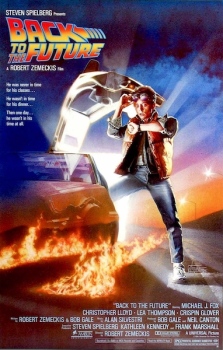
Back to the Future (1985)

100 Films’ 100 Favourites #5

He was never in time for his classes…
He wasn’t in time for his dinner…
Then one day…
He wasn’t in his time at all.

Country: USA
Language: English
Runtime: 116 minutes
BBFC: PG
MPAA: PG

Original Release: 3rd July 1985 (USA)
UK Release: 4th December 1985
First Seen: VHS, c.1991

Stars
Michael J. Fox (Teen Wolf, Stuart Little)
Christopher Lloyd (Star Trek III: The Search for Spock, The Addams Family)
Lea Thompson (All the Right Moves, Howard the Duck)
Crispin Glover (Willard, Alice in Wonderland)
Thomas F. Wilson (Action Jackson, The Heat)

Director
Robert Zemeckis (Romancing the Stone, Forrest Gump)

Screenwriters
Bob Gale (I Wanna Hold Your Hand, Trespass)
Robert Zemeckis (1941, A Christmas Carol)

The Story
After Marty McFly travels back to 1955 in a time machine invented by his friend, Dr. Emmett “Doc” Brown, he accidentally prevents his teenaged parents from meeting. It’s up to Marty to make them fall in love and therefore ensure his own existence.

Our Hero
A star-making turn from Michael J. Fox as Marty McFly, cocky teen and guitar hero.

Our Villain
Thomas F. Wilson is Biff Tannen: in the ’80s, McFly Sr’s bullying supervisor; in the ’50s, McFly Sr’s high school bully. Prone to getting covered in excrement.

Best Supporting Character
An equally iconic turn from Christopher Lloyd as Doc, mad scientist extraordinaire.

Memorable Quote
“Roads? Where we’re going, we don’t need roads.” — Doc

Memorable Scene
The climax: Marty’s one hope to get back to 1985 is a bolt of lightning that will strike the town’s clock tower, which he can use to power the DeLorean. As the moment approaches, Doc battles to connect the wiring, and Marty must make sure the car is travelling at the right speed at the right moment… Well, of course they succeed, and Doc skips happily between the time machine’s flaming tyre tracks.

Write the Theme Tune…
In a rare case of an iconic movie theme from the ’70s and ’80s not composed by John Williams, Back to the Future’s memorable motif was composed by Alan Silvestri.

Technical Wizardry
To some, the DeLorean is a failed automobile. To a generation (and, probably, every generation since) it’s one of the most iconic movie cars of all time. “Are you telling me that you built a time machine… out of a DeLorean?” “The way I see it, if you’re gonna build a time machine into a car, why not do it with some style?” Genius.

Making of
It’s now quite well known that Eric Stoltz was originally cast as Marty, and had even started filming before it was decided he wasn’t right and was replaced with Michael J. Fox. This wasn’t after just a day or two of production, though: Stoltz filmed for four weeks, completing a significant chunk of the film. So much, in fact, that it wasn’t all re-shot with Fox: most of the material without Marty actually on screen was retained (Fox had to film reverse angles for dialogue scenes without the other actors present), and a couple of long shots in the finished film actually feature Stoltz.

Next time…
Two direct sequels (the first of which picks up immediately from the end of this one), as well as an animated series, an iconic theme park ride, a computer game from adventure maestros Telltale, an ongoing comic book that launched last year, and a semi-disastrous Secret Cinema event.

Awards
1 Oscar (Sound Effects Editing)
3 Oscar nominations (Original Screenplay, Sound, Original Song)
5 BAFTA nominations (Film, Original Screenplay, Editing, Production Design, Visual Effects)
3 Saturn Awards (Science Fiction Film, Actor, Special Effects)
6 Saturn nominations (Director, Supporting Actor (Crispin Glover and Christopher Lloyd), Supporting Actress (Lea Thompson), Music, Costumes)
Won the Hugo for Best Dramatic Presentation.

What the Critics Said
“though it is hardly one of the greater flights of cinematic imagination to be seen since science fantasy reared its head as mass appeal material again, it would be virtually impossible not to enjoy it in some way or another.” — Derek Malcolm, The Guardian

Score: 96%

What the Public Say
“nothing short of an example of screen-writing brilliance. Tightly pack[ed] and interwoven from the opening scene to the final ‘cliffhanger’ which, let’s face it, was never meant to be a cliffhanger as much as just a cool and intriguing ending to a stand alone film.” — nEoFILM

Verdict

Who knew a movie about mother-son incest could be one of the most entertaining family comedies ever made? That’s because it’s magnificently written, faultlessly performed, packed with inventiveness… oh, and because the mother is the same age as the son, doesn’t know he’s her son, and the incest doesn’t actually happen. Ah, time travel! A notoriously difficult sci-fi nut to crack, another reason BTTF succeeds is because it isn’t really about time travel. One of those times where talent and good fortune come together to craft perfect movie entertainment.

Roads? Where #6 is going, it doesn’t need roads…

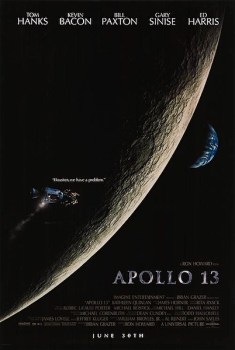
Apollo 13 (1995)

100 Films’ 100 Favourites #4

“Houston, we have a problem.”

Country: USA
Language: English
Runtime: 140 minutes
BBFC: PG
MPAA: PG

Original Release: 30th June 1995 (USA)
UK Release: 22nd September 1995
First Seen: cinema, 1995

Stars
Tom Hanks (Philadelphia, Saving Private Ryan)
Bill Paxton (Tombstone, Twister)
Kevin Bacon (Footloose, The Woodsman)
Gary Sinise (Forrest Gump, Snake Eyes)
Ed Harris (The Right Stuff, The Truman Show)

Director
Ron Howard (Willow, A Beautiful Mind)

Screenwriter
William Broyles Jr. (Cast Away, Flags of Our Fathers)
Al Reinert (For All Mankind, Final Fantasy: The Spirits Within)

Based on
Lost Moon, a true-story book by Jim Lovell & Jeffrey Kluger.

The Story
The third manned mission to land on the Moon launches to little public interest… but that all changes when an accident cripples the spacecraft. Not only will the three astronauts on board not be landing on the Moon, but they might not be able to make it back to Earth…

Our Hero
Everybody — from the three men who may die in space, to the spurned astronaut who locks himself in the simulator to find a solution, to the dozens of mission commanders and tech guys who work round the clock to keep the astronauts alive and bring them home.

Best Supporting Character
The whole cast are pretty great, but Ed Harris really earnt his Oscar nomination as the commander in Mission Control, Gene Kranz. (See also: memorable quote, below.)

Memorable Quote
NASA Director: “This could be the worst disaster NASA’s ever faced.”
Gene Kranz: “With all due respect, sir, I believe this is gonna be our finest hour.”

Memorable Scene
After surviving days in space on dwindling power, slingshotting the craft round the moon, and adjusting course last-minute to actually aim at Earth, the crippled remains of Apollo 13 enter the atmosphere. There will be three minutes of radio silence before they know if the astronauts have survived reentry. Everyone watches and waits. Silence. Three minutes is reached. Silence. Three minutes thirty seconds passes… In the command center, at the astronauts’ home, at Jay Lovell’s school, everyone waits. Four minutes passes… Goodness, it’s shamelessly manipulative filmmaking, but if your hair isn’t on end and you aren’t practically on your feet cheering with everyone else, you truly are immune.

Technical Wizardry
Gravity used a shedload of groundbreaking tech and computer graphics to simulate zero-G. 20 years earlier, Apollo 13 wasn’t so lucky, so how did they do it? In part, for real. Sets were built inside NASA’s (in)famous ‘Vomit Comet’, an airplane that flies in parabolic arcs to give astronauts an experience of zero-G, but only for 23 seconds at a time. With such a small window, shots to be achieved were carefully planned out, and cast and crew endured over 500 arcs in 13 days to film the necessary footage.

Truly Special Effect
The lift-off sequence, a combination of models and CGI without a single frame of stock footage, is iconic. For me, at least, the shot tracking down the side of the craft as the supports pull away is as indelible an image of an Apollo launch as any documentary footage.

Letting the Side Down
Two decades on, some of the CG effects (especially on Earth) are beginning to show their age. (The model work still looks grand, though.)

Making of
According to Ron Howard in a 20th anniversary interview, Tom Hanks was cast because they thought he was the actor the world would most want to save.

Next time…
The film was followed by 12-part HBO series From the Earth to the Moon, which tells the entire story of the US’s quest to put a man on the moon, from the creation of NASA to the end of the Apollo programme. It’s really good.

Awards
2 Oscars (Sound, Film Editing)
7 Oscar nominations (Picture, Supporting Actor (Ed Harris), Supporting Actress (Kathleen Quinlan), Adapted Screenplay, Art Direction-Set Decoration, Visual Effects, Original Score)
2 BAFTAs (Special Effects, Production Design)
3 BAFTA nominations (Cinematography, Editing, Sound)
1 Saturn nomination (Action/Adventure Film)
Nominated for the Hugo for Best Dramatic Presentation.

What the Critics Said
“In the end, this failed mission seems like the most impressive achievement of the entire space program: a triumph not of planning but of inspired improvisation.” — Terrence Rafferty, The New Yorker

Score: 95%

What the Public Say
“filmmakers combined elements most go to the movies for — drama, comedy, suspense, thrills, and tug of the heart. After reading Lost Moon I’ve come to appreciate the William Broyles Jr. and Al Reinert screenplay the more. Given the archival detail Lovell and Kluger documented, getting a good portion of it into a 140-minute movie was its own remarkable feat.” — le0pard13, It Rains… You Get Wet

Verdict

What could have been one of the US space program’s greatest tragedies turned out to be one of its greatest successes, a sensation that is conveyed by Ron Howard’s thrilling rendition of events. The film is too emotionally manipulative for some palates, but by and large it works magnificently for me. Bonus points are earnt for rejecting sycophancy in favour of depicting the people involved as human beings who endured and triumphed in extraordinary circumstances.

#5 will be… reached at 88mph.

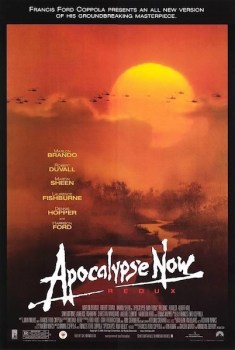
Apocalypse Now Redux (1979/2001)

100 Films’ 100 Favourites #3

Francis Ford Coppola presents an all new version of his groundbreaking masterpiece.

Original Title: Apocalypse Now (obviously)

Country: USA
Language: English, French & Vietnamese
Runtime: 202 minutes (theatrical/DVD) | 196 minutes (Blu-ray)*
BBFC: 15
MPAA: R

* This appears to be due to the Blu-ray removing the end credits, but the number of disc reviewers who haven’t even noticed the discrepancy is remarkable.

Original Release: 15th August 1979 (USA)
UK Release: 19th December 1979
Redux Release: 11th May 2001 (Cannes) | 23rd November 2001 (UK)
First Seen: DVD, c.2002

Stars
Martin Sheen (Badlands, The Departed)
Marlon Brando (A Streetcar Named Desire, The Godfather)
Robert Duvall (THX 1138, The Godfather)
Dennis Hopper (Easy Rider, Speed)

Director
Francis Ford Coppola (The Godfather, The Conversation)

Screenwriters
Francis Ford Coppola (Patton, The Godfather Part II)
John Milius (Conan the Barbarian, Red Dawn)

Based on
Heart of Darkness (loosely), a novella by Joseph Conrad.

The Story
In the middle of the Vietnam war, burnt out soldier Captain Willard is given a top-secret mission: locate US Army Colonel Kurtz, who’s gone renegade and is leading his own personal army in unauthorised attacks, and terminate his command. Travelling up the river on a Navy patrol boat, its crew unaware of Willard’s goal, they see snapshots of the war and the elements of human nature it exposes — the very horrors that drove Kurtz insane…

Our Hero
Martin Sheen is Captain Benjamin Willard — not exactly a hero, but certainly the narrator. Already mentally wracked by his experiences in Vietnam, he may not be the best person to send after another officer similarly mentally afflicted…

Our Villain
Marlon Brando — top billed, only on screen for minutes, and a nightmare to work with… but another performance for the ages as the rambling, insane, but insightful, Colonel Kurtz.

Best Supporting Character
A Golden Globe, a BAFTA, and an Oscar nomination rewarded Robert Duvall for his turn as the commander of a helicopter unit, Lt. Col. Kilgore. More than that, though, was true immortality in the form of the movie’s most famous quote: “I love the smell of napalm in the morning.”

Memorable Quote
Colonel Lucas: “When you find the Colonel, infiltrate his team by whatever means available and terminate the Colonel’s command.”
Willard: “Terminate the Colonel?”
General Corman: “He’s out there operating without any decent restraint, totally beyond the pale of any acceptable human conduct. And he is still in the field commanding troops.”
Civilian: “Terminate, with extreme prejudice.”

Memorable Scene
The sound of unseen helicopters circle. The Doors playing. A pretty forest… which explodes into flame, under the barrage of a napalm attack. One of the most iconic opening scenes.

Technical Wizardry
Apocalypse Now was one of the films that pioneered the creation of surround sound, now the industry standard. Nowhere is it better exemplified than in that opening scene, with the helicopters circling the room.

Making of
“My movie is not about Vietnam, my movie is Vietnam.” Apocalypse Now was a notoriously troubled shoot, for all kinds of reasons, from an uncooperative Brando, to Martin Sheen’s heart attack, to the cast and crew’s copious drug use… Originally scheduled to shoot for six weeks, it ended up filming for 16 months, and took nearly three years to edit.

Awards
The original version won 2 Oscars and 2 BAFTAs, and was nominated for 6 more Oscars and 7 more BAFTAs. In 2002, the Redux was nominated for 7 World Stunt Awards.

What the Critics Said
“this might be the most audience-friendly art-house film ever made, and that’s where the sheer majesty of Coppola’s daredevil balancing act comes into true focus. Coppola’s art is stripped of pretension; what lies on screen may as well be Coppola’s — and probably several other peoples’ — heart, laid bare for all to see, somehow expressed through arguably the most populist of all mediums. It may be messy, but it’s also vivaciously alive.” — Rob Humanick, Slant

Score: 93%

What the Public Say
“The most critically acclaimed movie of 2001 was made 22 years ago… The new material isn’t entirely necessary, and some may find it excessive… But Redux’s virtues far outweigh its flaws. Apocalypse Now in any version remains one of the richest, most extravagant moviegoing experiences of my life.” — Jeffrey Overstreet, Looking Closer

Verdict

The first (and, indeed, last) time I watched Apocalypse Now was shortly after the Redux version had been released, when Francis Ford Coppola was busy proclaiming it was the only version that would be made available ever again. That didn’t last, of course. Adding some 49 minutes of footage to the praised theatrical version, Redux divides viewers and critics on whether the extensions make a classic even better or just dilute it. If there’s a consensus, it’s that in either version this is a great movie. I’ve never got round to the original cut to compare for myself, so it’s the longer one that makes my list. My favourite quote about it comes from Danny Boyle: “It’s imperfect; which every film should be.”

#4 will be… the 13th.

Alien (1979)

100 Films’ 100 Favourites #2

In space, no one can hear you scream.

Country: USA & UK
Language: English
Runtime: 117 minutes | 116 minutes (director’s cut)
BBFC: X (1979) | 18 (1987) | 15 (director’s cut, 2003)
MPAA: R

Original Release: 25th May 1979 (USA)
UK Release: September 1979
First Seen: TV, c.2002

Stars
Tom Skerritt (Top Gun, Poison Ivy)
Sigourney Weaver (Ghostbusters, Galaxy Quest)
John Hurt (The Elephant Man, Nineteen Eighty-Four)
Ian Holm (Greystoke: The Legend of Tarzan, Lord of the Apes, The Lord of the Rings: The Fellowship of the Ring)

Director
Ridley Scott (Blade Runner, Prometheus)

Screenwriter
Dan O’Bannon (Dark Star, Total Recall)

Story by
Dan O’Bannon (see above)
Ronald Shusett (King Kong Lives, Total Recall)

The Story
The crew of the deep-space towing vessel Nostromo receive a distress call from an unexplored planet. Contractually obliged to respond, they find a derelict alien spaceship and a field of strange eggs. With one of the crew taken ill they return to their ship, but it soon becomes apparent something else has come with them…

Our Hero
Sigourney Weaver is second-billed as second-in-command Ellen Ripley, but it’s she who’s the voice of reason and, when ignored, the most capable to stand up to the alien threat.

Our Villain
The Alien, aka the Xenomorph, an ugly, dripping, phallic nightmare, that lurks in the shadows, strikes without warning, has the perfect defence system, and is nigh-on unbeatable.

Best Supporting Character
Ian Holm’s Ash is not all he appears to be… Holm made sacrifices for his art: he hates milk, but had to sit dribbling it from his mouth for take after take.

Memorable Quote
“I admire its purity. A survivor… unclouded by conscience, remorse, or delusions of morality.” — Ash

Memorable Scene
Dinner table. John Hurt not feeling well. You know the rest. And if you don’t, you don’t want me spoiling it for you.

Technical Wizardry
The Nostromo’s industrial-style production design is a world away from the slick, shiny spaceships of contemporary sci-fi like Star Trek. A lived-in sci-fi world wasn’t something new (Star Wars and the Millennium Falcon were two years earlier, for instance), but the notion of a spaceship that looks like a factory or an oil-rig or somesuch, and that is populated by the kind of people who would work in such an environment, continues to influence the genre today.

Truly Special Effect
The Alien, designed by H.R. Giger, built by Giger and Carlo Rambaldi, performed by Bolaji Badejo, is one of the most genuinely alien creatures the movies have ever generated. It’s terrifying, too, even after the initial disgust has been neutered by decades of over-exposure in increasingly-poor sequels and tie-ins.

Making of
The name of Weyland-Yutani, “the company” the crew work for, is actually “Weylan-Yutani”, as seen on monitors and Dallas’ beer can. It was changed to “Weyland-Yutani” for Aliens (and all subsequent films and media) because James Cameron thought it looked better with the D. It’s the little things, eh.

Next time…
Three direct sequels, two “vs Predator” spin-offs, a prequel (and a prequel-sequel), and a massive array of novels, comics, video games, and the rest. A new sequel is also in development.

Awards
1 Oscar (Visual Effects)
1 Oscar nomination (Art Direction-Set Decoration)
2 BAFTAs (Production Design, Sound Track)
5 BAFTA nominations (Supporting Actor (John Hurt), Film Music, Costume Design, Editing, Most Promising Newcomer to Leading Film Roles (Sigourney Weaver))
3 Saturn Awards (Science Fiction Film, Director, Supporting Actress (Veronica Cartwright))
4 Saturn nominations (Actress (Sigourney Weaver), Writing, Make-Up, Special Effects)
Won the Hugo for Best Dramatic Presentation.

What the Critics Said
“It’s tempting to describe the brilliantly staged scenes of horror and surprise but it would be a shame not to allow the film to reveal its own secrets. Enough to say that the tension is savage and you are held in suspense right up to the end frames.” — Ted Whitehead, The Spectator

Score: 97%

What the Public Say
“in some ways it doesn’t betray its age, and it does indeed largely still hold up, but in other ways its utterly unlike contemporary films. Its middle-aged cast, its slow, deliberate pace, the ‘real’ sets grounded in reality, how it leaves so many things unexplained — in these respects it’s obviously an older movie, and better for it.” — the ghost of 82

Elsewhere on 100 Films
I reviewed Ridley Scott’s 2003 Director’s Cut back in 2009, summarising that “to fans intimately familiar with the film, the number of trims (there are rather a lot apparently) and new scenes (just four) make a huge difference, but for a more casual viewer they don’t significantly change how it feels. That said… I’d call the original as the superior cut.”

Verdict

Ridley Scott’s “haunted house movie in space” is one of those works that an awful lot of what follows in the genre owes a debt to, from the production design to one of cinema’s most iconic heroines. “Iconic” is a good word for the film as a whole, be it the realisation of the creature or scenes like the chestburster. Quite beyond that, however, it’s a terrifying horror movie in its own right, where slowly-built tension gives way to proper scares. Being a great of one genre is an achievement, but to be great in two at the same time (horror and sci-fi, of course) is something else.

#3 is not about Vietnam… it is Vietnam.

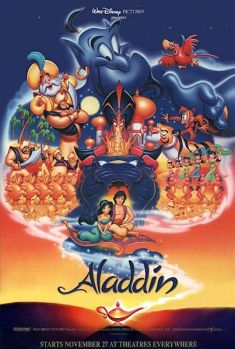
Aladdin (1992)

100 Films’ 100 Favourites #1

Imagine if you had three wishes,
three hopes, three dreams
and they all could come true.

Country: USA
Language: English
Runtime: 90 minutes
BBFC: U
MPAA: G

Original Release: 25th November 1992 (USA)
UK Release: 18th November 1993
First Seen: VHS, c.1993

Stars
Scott Weinger (Aladdin and the King of Thieves, Shredder)
Robin Williams (Good Will Hunting, Insomnia)
Linda Larkin (The Return of Jafar, Joshua)
Jonathan Freeman (The Return of Jafar, The Ice Storm)

Directors
Ron Clements (Basil the Great Mouse Detective, Hercules)
John Musker (The Little Mermaid, The Princess and the Frog)

Screenwriters
Ron Clements (The Little Mermaid, The Princess and the Frog)
John Musker (Basil the Great Mouse Detective, Hercules)
Ted Elliott (The Mask of Zorro, Pirates of the Caribbean: The Curse of the Black Pearl)
Terry Rossio (Shrek, Pirates of the Caribbean: At World’s End)

Story by
Deep breath… Burny Mattinson and Roger Allers, Daan Jippes, Kevin Harkey, Sue Nichols, Francis Glebas, Darrell Rooney, Larry Leker, James Fujii, Kirk Hanson, Kevin Lima, Rebecca Rees, David S. Smith, Chris Sanders, Brian Pimental & Patrick A. Ventura.

Based on
The folktale of Aladdin and the magic lamp from One Thousand and One Nights, aka The Arabian Nights.

Music
Alan Menken (Little Shop of Horrors, Tangled)

Lyrics
Howard Ashman (Little Shop of Horrors, Beauty and the Beast)
Tim Rice (The Lion King, Evita)

The Story
Street urchin Aladdin falls for bored Princess Jasmine when she sneaks out of her palace one day, leading him to the clutches of evil vizier Jafar, who needs Aladdin to retrieve a magic lamp as part of his scheme to rule the land. When Aladdin accidentally discovers the lamp’s inhabitant, a wish-granting Genie, he uses his wishes to set about wooing the princess. Jafar, of course, has other ideas…

Our Hero
One jump ahead of the bread line, one swing ahead of the sword, steals only what he can’t afford (that’s everything). Riffraff, street rat, scoundrel. It’s Aladdin, of course.

Our Villain
Grand Vizier Jafar, a plotting underling — the kind of role that has strong precedent in fiction, I’m sure, though Conrad Veidt as villainous Grand Vizier Jaffar in The Thief of Bagdad is rather clearly the direct inspiration.

Best Supporting Character
Oh, I don’t know, maybe… the Genie! Fantastically voiced by a heavily-improvising Robin Williams, praise is also deserved for Eric Goldberg’s character animation, which matches him every step of the way. In fact, it was an animation Goldberg created using one of Williams’ stand-up routines that convinced the comic to take the part.

Memorable Quote
Aladdin: “You’re a prisoner?”
Genie: “It’s all part and parcel, the whole genie gig. Phenomenal cosmic powers! Itty bitty living space.”

Memorable Scene
Trapped in a desert cave, Aladdin accidentally rubs a lamp and unleashes the Genie — and with it, Robin Williams’ all-time-great hilarious performance.

Best Song
For me, it’s Prince Ali, the huge Genie-led number as a disguised Aladdin arrives back in town in grandiose style. The Genie’s big solo number, Friend Like Me, is an incredibly close second. Soppy A Whole New World won all the awards, because of course it did.

Truly Special Effect
Only the second time Disney used CGI with 2D character animation. In Beauty and the Beast, it built a room for the characters to dance in; here, there’s a character (the entrance to the cave) and a whole action sequence (the flying carpet escape from said cave). It earnt the team a BAFTA nomination. There’s no shame in what they lost to: Jurassic Park.

Making of
Robin Williams ad-libbed so much of his role as the Genie — generating almost 16 hours worth of material, in fact — that the film was rejected for a Best Adapted Screenplay Oscar nomination.

Previously on…
Aladdin is Disney’s 31st Animated Classic, their official canon of animated movies. It’s the fourth film in the “Disney Renaissance”, the decade-long period (starting with The Little Mermaid and ending with Tarzan) when they had a run of films that were critically and financially successful (unlike those before and after said period).

Next time…
Two direct-to-video sequels, the second of which is quite good; in between those, a TV series ran for 86 episodes(!); a Broadway adaptation debuted in 2014 (it’s coming to the West End in May); not to mention numerous video games and appearances in other works, almost all still voiced by the less-starry names among the original cast. The go-to new voice for the Genie? Dan “Homer Simpson” Castellaneta.

Awards
2 Oscars (Original Song (A Whole New World), Original Score)
3 Oscar nominations (Sound, Sound Effects Editing, Original Song (Friend Like Me))
2 BAFTA nominations (Score, Special Effects)
1 Annie Award (Animated Feature)
3 Saturn Awards (Fantasy Film, Supporting Actor (Robin Williams), Younger Actor (Scott Weinger))
1 Saturn nomination (Music)
Nominated for the Hugo for Best Dramatic Presentation.

What the Critics Said
“What will children make of a film whose main attraction — the Genie himself — has such obvious parent appeal? They needn’t know precisely what Mr. Williams is evoking to understand how funny he is. […] What will come through clearly to audiences of any age is the breathless euphoria of Mr. Williams’s free associations, in which no subject is off-limits, not even Disney itself.” — Janet Maslin, The New York Times

Score: 94%

What the Public Say
“the perfect Disney film, one that cleverly combines the sensibilities of classic and modern audiences, one that matches toe to toe with many of the studio’s greatest films. You may prefer the emotional heart-ache of The Lion King or the romantic magic from Beauty and the Beast, but I would always prefer the witty and charming Aladdin.” — feedingbrett @ Letterboxd

Verdict

Hailing from slap-bang in the middle of the Disney Renaissance, Aladdin may not be quite as strong as the films either side of it (Beauty and the Beast and The Lion King), but it’s the next best thing. Buoyed by Robin Williams’ top-drawer performance (have I mentioned that yet?), multiple toe-tapping musical numbers, and a dastardly villain who’s among Disney’s best — and is just one of several great supporting characters here, actually — Aladdin is an A-grade animated Arabian adventure.

In #2 no one can hear you scream.

2015 In Retrospect

2015 was, as I’m sure you’ve gathered, the largest ever year of 100 Films — or 200 Films in a Year, as it’s currently known. For 2015 only, I think, because I have no intention of trying to replicate that feat next year (see here for more on that topic).

How better to finally wrap up a year than with a look at the best and worst, right? As always, my picks are not culled from films freshly released in 2015, but from this list of my personal viewing. (For what it’s worth, that list includes 22 releases from 2015, as well as 37 from 2014, some of which others would count as 2015 titles… and some of them have indeed made my best-of list.)

You can also vote for your favourites from my pick, and find out which 50 most noteworthy new films I didn’t see. There might be a few surprise along the way, too.

So without further ado…


The Five Worst Films I Saw For the First Time in 2015

In alphabetical order…
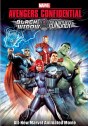
Avengers Confidential: Black Widow & Punisher
Marvel may dominate the live-action superhero arena right now, but DC has the edge in animation — and work like this is going to do nothing to change that. An uninteresting story that’s blandly told in every regard, this is a total waste of time.

Blitz
There are a lot of very, very good actors in this Jason Statham vehicle, but it’s a terrible film that’s even below standard for the star, let alone his supporting cast. So bad it feels like a spoof, there is no good reason for anyone to watch this movie.

Jack the Giant Slayer
X-Men’s Bryan Singer is the latest filmmaker to take a fairytale and give it the Lord of the Rings treatment. That formula doesn’t work here, unfortunately. The result is a flat, cheap-looking, overlong bore. Another waste of good talent.

Parabellum
Alfred Hitchcock once said that “movies are real life with the boring parts cut out.” I guess this isn’t a movie, then, because it’s not real life and it’s boring as can be. My least enjoyable viewing experience this year.
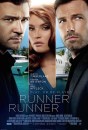
Runner Runner
Again, talented stars (Ben Affleck, Gemma Arterton) slum it in a poorly-constructed thriller with no thrills. That it’s from the director of The Lincoln Lawyer, an excellent thriller that made my top ten a couple of years ago, only makes matters worse.


The Ten 20 Best Films I Saw For the First Time in 2015

Given the extraordinary personal achievement in my viewing this year — doubling my titular goal — I’ve decided to also double my year-end top ten. It seemed appropriate.

Obviously I haven’t done such a percentage-related increase (or reduction) of my list before now, but then no previous year has seen quite so remarkable a change in my viewing total. In other (smaller) years, these additional films may well have made the cut, so this is a way of giving them their due. (Besides which, my list is numbered, so you can ignore #20 to #11 if you want.)

Final point: although this list isn’t limited to 2015 releases, there are six included, so I’ve noted their ‘2015 rank’ too.

2015 #6 After all the behind-the-scenes kerfuffle, Ant-Man probably had the lowest audience expectations for any Marvel Studios movie since Iron Man. Perhaps that’s what allowed it to become the mostly purely entertaining Marvel movie since Iron Man, too.

The Mission series here reconfigures itself as the modern equivalent to classic Bond, washing down espionage thrills with gadgets and humour. The result is fantastically enjoyable, and only so low on this list because of a certain other film a bit higher up…

John Cusack and Minnie Driver have never been more likeable as a guy and the prom date he jilted, brought back together by their high school reunion. Oh, and he’s now a hitman, in town on a job. Consitently funny, this is first-rate action-comedy entertainment.

An idiosyncratic crime drama from writer-director Jim Jarmusch, Ghost Dog stands alongside the otherwise-peerless Léon as a hitman movie that may not deliver enough action thrills for some, but is seeped in distinctive qualities of its own.

Martin Scorsese’s best-regarded works may hew towards the mainstream-intellectual, but here he sets his sights on genre material — specifically, a psychological mystery thriller — and produces a corker. Heavily Gothic in tone, it’s the first of several such films on this list.

A British-made India-set ‘Western’, this beautifully shot Boy’s Own adventure is rollicking old-fashioned entertainment from start to finish. It’s buoyed further by a cast of top-drawer British character actors, topped off with Kenneth More and Lauren Bacall. Magnificent.

One of the most acclaimed films of all time — if we’re talking “the history of cinema”, it’s certainly more important than anything else on this list. Almost 90 years old, it remains surprisingly accessible to modern eyes. An exceptionally affecting experience.

2015 #5 In a year overloaded with spy thrillers, this Bond pastiche stood out by, a) getting in early (it was released last January in the UK), and b) being a helluva lot of fun. Thematically questionable it may be, but the filmmaking verve is a joy to behold.

2015 #4 2015’s highest grossing film, this sequel/reboot of the beloved franchise has proved somewhat divisive. It certainly has flaws in characters and plot, but director Colin Trevorrow has bottled genuine Spielbergian awe and wonder, and that counts for a lot.

If this were only a top ten, I’d’ve slipped this in higher up, as much to recommend it as anything. In many respects it’s a familiar mismatched-people-fall-in-love rom-com (hence why its position dropped), but the uncommon melancholic tone makes it feel unique.

I’d wager it’s impossible to describe a Wes Anderson film without recourse to words like “quirky” and “unique”, both wholly apt epithets for The Grand Budapest Hotel, naturally. Others include hilarious, clever, inventive, controlled, and delightful. The last may be the most appropriate of all: this is a film full of delights, from the performances, to the dialogue, to the locations, to the design, to the camerawork. Anderson is the kind of filmmaker who has a cult following, which can sometimes be a bad omen. Based on this evidence, his fandom might just have the right idea.

2015 #3 There has been an awakening — have you felt it? Well, of course you have. Everyone outside of China has. Half of them twice. The J.J. Abrams-led return to a galaxy far, far away may have received a mixed reception, due to it essentially being the cinematic equivalent of a greatest-hits cover album, dealing in nostalgia more than it does originality… but it’s clearly been made by fans with an eye to crafting something that’s both enjoyable and recognisably Star Wars-y — two balls the prequel trilogy less dropped, more hurled to the ground. It’s a thrilling adventure with likeable new characters and, in my opinion, interesting new villains. There’s scope for the makers of Episodes VIII and IX to produce something even better off the back of this, and that’s exciting.

Terry Gilliam’s 1984 for 1985 is set in a dystopian Britain almost as bad as our current one, where mindless, faceless bureaucracy rules the day. It’s the kind of film where a typo can lead to a man’s death; where Jonathan Pryce fantasises about being a sword-wielding angel fighting a giant silver samurai; and where Robert De Niro turns up as a terrorist plumber. You know, if Wes Anderson is “quirky” and “unique”, I don’t think we’ve yet invented words to describe Terry Gilliam…

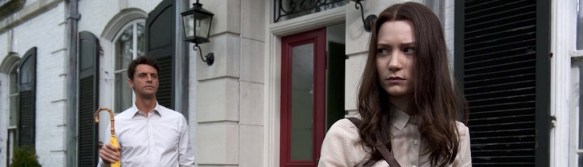
I promised you more Gothic and here it is. Director Chan-wook Park places 7th on my top ten for the second year in a row with this dark psychological thriller about a reclusive teenage girl who meets her uncle for the first time when he comes to stay following her father’s death. He’s charming, but mysterious — what are the secrets that everyone seems to know but her? Dripping with style and atmosphere, Stoker is a feast for the eyes and ears; a beguiling, sensuous, classically Gothic thriller.

2015 #2 Director George Miller returns to the Mad Max series after a 30-year hiatus for the stand-out action movie of… well, “the year” seems to undersell it. Once upon a time he was bold enough to make a chase the entire third act of a film; now, the chase is the entire movie. This is action filmmaking elevated to a genuine art form — literally, if the award season buzz is anything to go by. While the done-for-real stunts are busy boggling your mind, there slips by a story that’s surprisingly rich in theme and character. It gives added weight to a type of storytelling that could only be achieved on film — there’s a reason Miller started with a storyboard and only bothered to write a screenplay when the studio insisted.

A third dose of Gothic now, this time with a heavier dose of the “horror” element that’s so often attached to the term. Gemma Arterton and Saoirse Ronan are mother-and-daughter vampires on the run, hiding out in a seedy seaside town, where Ronan tries to lead some kind of normal life as a perma-teen while her mother’s busy doing what she’s always done: whoring. These vampires aren’t glamorous or sparkly, but damaged and discarded. Byzantium is not a very popular film, but its tarnished charms and fatalistic stylings, powered by two strong central performances and atmospheric direction, made me love it.

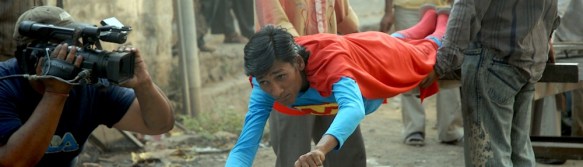
Selecting these 20 films was tough, then putting them in order was just as hard, but one thing was a lock from the start: these are my top four films I saw in 2015. The only question was the order they went in, which on another day may have been completely different — any one of them could’ve been #1. This little-seen documentary (Channel 4 premiered it in the middle of the night a few months ago, although it’s available on YouTube) takes us to a small, poor town in India where the locals make their own movies, and they’re a roaring success. It’s an inspirational film about living your dreams even when the world won’t let you, though undercurrents of reality stop it from becoming too tweely self-congratulatory. I’m not overstating it when I say I believe this is an absolute must-see for any lover of film, and probably a good many people besides.

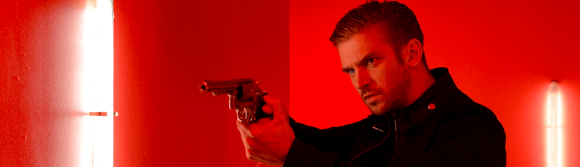
I feel like I’m being in some way Awkward with many of this year’s choices, because there’s a notable strand of films that aren’t particularly well regarded by viewers en masse (see: #11, #7, #5, now #3). Well, I’m not being awkward, dear reader: I loved all of them, and I loved this one most of all. Like several of those others, it crafts a unique mood with lashings of style, in this case inspired by ’80s movies and music. Dan Stevens is a mysterious ex-soldier who enters a family’s life and brings a load of trouble in his wake, but is he (anti-)hero or villain? Even by the end, you might not be sure. Witty, exciting, stylish, idiosyncratic, this is one guest I want to stay forever. (Sorry — it seems I can’t end any piece about this film without a terrible pun.)

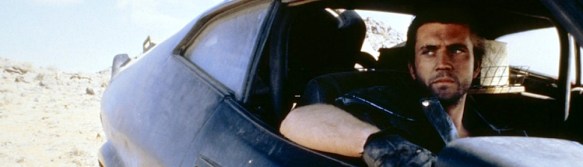
34 years before Fury Road, there was The Road Warrior. A post-apocalyptic Australian Western, it sees Mel Gibson’s titular drifter drafted into defending an oil-rich community from a violent gang of fetish-attired marauders. While the film has much to offer throughout, the real joy is the third act: a balls-to-the-wall multi-vehicle chase, as Max and co attempt to escape in a heavily-armoured oil tanker and the gang give chase in a fleet of vehicles. Maybe it’s not as slick or extravagant as Fury Road, but it was done without a lick of CGI (for all Fury Road’s “done for real” claims, there’s an awful lot of computer work across that movie) and that added tangibility gives it the edge for me. Not to mention that it did it first — without Mad Max 2, we wouldn’t even have Fury Road.

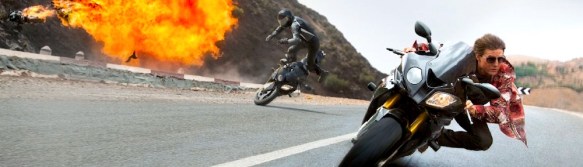
2015 #1 Not as life-affirming as Supermen of Malegaon. Not as stylish as The Guest. Not as groundbreaking as Mad Max 2. Certainly not as ‘significant’ as a host of films further down this list. But from the moment the familiar beats of the famous theme tune begin to pulse over the company idents at the top of the movie, Rogue Nation engages you in a perfectly-crafted entertainment. It delivers sequence after sequence of finely-tuned action-thriller excitement, both from Tom Cruise’s crazy stuntwork and writer-director Christopher McQuarrie’s Hitchcockian control of espionage scenes. The plot may only be solid rather than any great shakes, but it’s supported by likeable heroes, a menacing villain, and well-pitched humour. It’s all topped off with Rebecca Ferguson, who could hold her own in a stand-off with Daisy Ridley and Charlize Theron for 2015’s most kick-ass heroine. Mission perfected.


As ever, I welcome your opinion on my top ten — not just in the comments section, but also in the form of a lovely poll. Multiple selections are allowed, so feel free to pick several favourites.

And if you feel I’ve made an unforgivable omission, I welcome your scathing criticisms in the comments.


Despite doubling the size of my selection, this was still a really, really tough year for picking favourites. Competition was harder than ever, not just because I watched 200 films (47% more than even my next biggest year) but because I made a conscious effort to watch fewer time-killers and more things I’d really been intending to see. As a result, films that I enjoyed immensely or admired intensely fell by the wayside, leaving several big guns to duke it out for the limited slots.

As if doubling my top ten wasn’t enough, the tightly-fought race got stuck for a while at 30 titles. The closest to making it in was my 1,000th film, Mark Cousin’s epic 15-hour documentary The Story of Film: An Odyssey (so epic that my review draft is still in the form of 4,300 words of notes). It hurt to leave it out, but something had to go. The remainder of those 30 (which I guess would be #22 to #30, then) were, in alphabetical order, The Babadook, Gone Girl, High Noon, Looper, Paddington, Scanners, Spectre, Stranger by the Lake, and Wings. In most other years, any of those could’ve found themselves comfortably in my top ten.

I can’t end this without mentioning the 38 films that earned themselves 5-star ratings this year. 17 of them made it into the top 20 — I won’t list those again, so you can go find the three four-star imposters for yourself (clue: they’re right at the end… or start, in the order I’ve written it). The remaining 21 five-starers were Argo, The Babadook, Boyhood, Boyz n the Hood, Dreams of a Life, Filmed in Supermarionation, Fury, The General, The Girl with the Dragon Tattoo, Gone Girl, High Noon, Interstellar, Looper, The Philadelphia Story, sex, lies, and videotape, Shallow Grave, The Story of Film: An Odyssey, Stranger by the Lake, Whiplash, Wings, and The Wrestler. Reading through those again, there are several I feel should’ve been in my top 30… or 20… but what would I take out in their place? This year’s been too good, clearly.

Finally, on the same topic, there was one five-starer from each of my additional kinds of reviews (I love it when that happens — so neat). They were: non-list review 2001: A Space Odyssey, extended cut X-Men: Days of Future Past – The Rogue Cut, and short Feast.


Naturally, there were a considerable number of notable releases this year that I’ve yet to see. In my annual tradition, here’s an alphabetical list of 50 films — chosen for a variety of reasons, from box office success to critical acclaim via simple notoriety — that were released in 2015 and that I’ve not seen.

As is so often the case, it’s a funny old mix, because there were some films that seemed too ‘significant’ to leave out. This is why, despite recording my progress with these in my statistics every year, I’ll never, ever see 100% of them. For a current example, Minions is the 5th highest grossing film of 2015, so on the list it goes; but I didn’t really like Despicable Me and haven’t watched Despicable Me 2, so what are the chances I’ll ever decide to spend some of my time on Minions? Pretty darn slim, I reckon.

Anyway, the 50 I’ve chosen to highlight — some of which I do very much want to see — are…

Amy
Beasts of No Nation
The Big Short
Black Mass
Blackhat
Bridge of Spies
Brooklyn
Carol
Chappie
Cinderella
Creed
Crimson Peak
The Danish Girl
Everest
Ex Machina
Fantastic Four
Fifty Shades of Grey
Furious 7
The Good Dinosaur
The Hateful Eight
Home
Hotel Transylvania 2
The Hunger Games: Mockingjay – Part 2
In the Heart of the Sea
It Follows
Joy
Legend
Macbeth
The Man from U.N.C.L.E.
The Martian
Me and Earl and the Dying Girl
Minions
Pan
Pixels
The Revenant
Room
San Andreas
The Second Best Exotic Marigold Hotel
Sicario
Snoopy and Charlie Brown…
Spotlight
Spy
Steve Jobs
Straight Outta Compton
Suffragette
Taken 3
Ted 2
Testament of Youth
The Visit
The Walk


And so, after all that verbosity, the largest ever year of 100 Films comes to an end.

Apart from the 21 reviews I still have to post, of course. (In that respect, 2014 isn’t even finished yet.) But no matter, it will be done.

For now, all that remains is for me to thank you for reading, to wish you all the best with your own film-watching endeavours (having spent several days shut away in my own world of statistics and lists, I’ve a few people’s posts to catch up on!), and to say “see you soon” for 2016 — the 10th year of 100 Films! I have some stuff planned…

Jurassic World (2015)

2015 #154
Colin Trevorrow | 124 mins | Blu-ray | 2.00:1 | USA & China / English | 12 / PG-13

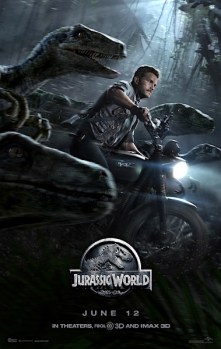
22 years ago, Jurassic Park was the first film I saw at the cinema. I was still of an age when all boys seem to find dinosaurs awesome, and of course everyone was talking about this spectacular film and its groundbreaking effects. Plus it was from Steven Spielberg — it feels daft I’d’ve known that at the time, but I was already a certified fan of the Indiana Joneses, so maybe. Either way, I was suitably awestruck, and have always been a little pleased my first big screen experience was such a good movie.

It seems now that I’m of a generation which has secretly held Jurassic Park in a level of esteem that earlier generations had for, I don’t know, Star Wars, maybe. Secret, that is, until Jurassic World came out this summer and, quite to everyone’s surprise, blew all predictions out of the water with the largest opening weekend gross of all time, both in the US ($208.8m) and internationally ($315.6m), totalling the first time a film grossed more than $500 million in one weekend. It ultimately passed The Avengers to be the third highest-grossing film of all time, taking in 40 days what the Marvel team-up needed 133 to achieve.* It was largely well-reviewed too, albeit with some dissenters, so it had a lot to live up to.

For me, it met that watermark. Okay, the plot is fundamentally a rehash of the first movie, but the devil is in the details, and in my book Jurassic World does enough new to shrug off any kind of “stealth remake” allegations. What it does definitely retain is a faithfulness to the Spielbergian tone of the first movie — a stated goal of director/co-writer Colin Trevorrow, and one I feel he’s absolutely pulled off. There’s adventure, humour, a sense of scale and wonder. Even the music’s right: in the same way his theme to Star Wars is the herald of a classical epic, and his theme to Indiana Jones is a call to adventure, John Williams’ equally-peerless theme to Jurassic Park is an ode to wonder, and composer Michael Giacchino deploys it wisely here, saving it for key moments when that sense of awe is front and centre once again. Even some of the film’s ‘problems’ aren’t, in my eyes. Does it spend too long wandering around the park before the big action starts? Not for me… which I guess is a viewpoint that comes with all the caveats of my opening paragraph. I rather suspect this is a movie that was very literally made by fans, for fans.

In that respect, I saw Jurassic World as a movie that was eager to please its audience. It may not always fully conform to logic, and some of its plot developments may be a little far-fetched for some, but it’s been crafted in a way that’s designed to tickle the fancy or scratch an itch among a spectacle-and-fun-seeking blockbuster audience. Sure, the film was greenlit to make loadsa money — what sequel (heck, what film) isn’t — but that doesn’t mean the people who were actually writing, directing, filming, designing, CGI’ing, and everything-else-ing the movie didn’t have pure intentions. Goodness knows how Trevorrow — whose sum total previous directorial experience is an overrated indie rom-com with a vague, underdeveloped sci-fi element — landed this gig, but he does a bang-up job with it. No wonder they’ve given him the keys to a Star Wars saga movie. (That’s a helluvan escalation across just three films, though! Has any other director ever shot so high so fast?)

I realise this review is a bit of a vague gush of praise, so one element that particularly intrigued me was the decision to shoot the film in a 2:1 aspect ratio. There’s some detail on the reasoning here (as well as general information on shooting choices, like the types of film and digital photography used), but essentially it was a compromise between Trevorrow and DP John Schwartzman favouring the blockbuster-standard 2.4:1 (so as to not look like a TV programme) and producer Spielberg wanting 1.85:1 (to favour the dinos’ height). I can’t speak to how it worked in cinemas, but 2:1 is actually a really pleasurable ratio for home viewing. Some 1.85:1 movies do just feel like big-budget TV episodes nowadays (which says as much about how far TV has come, in terms of its visual style, as it does anything else), but 2.35:1 can feel a little too wasteful of screen real estate (as a believer in presenting films in their original ratio (as we all should be) you tend not to question it, but looked at objectively, 2.35:1 on a 16:9 telly is kinda silly. (Not that I’m advocating those daft-looking 21:9 TVs they made a couple of years ago, mind.)) I’ve no idea if 2:1 is likely to catch on more widely (I bet Vittorio Storaro hopes so), but I would quite like if it did.

I kind of felt like Jurassic World plugged directly into whichever part of the brain is responsible for pleasure and just downloaded itself there. I know it’s flawed; even as I was watching it, there were bits that made me go, “really?” Consequently, this review was originally pegged with a four-star rating — no doubt in part influenced by all the other not-completely-praise-filled opinions out there. But, thinking back on it, I just enjoyed it. I think I’ve outlined the main reasons why that was the case, and why I’m able to put aside the niggles. Maybe I’m going soft? (See also: my reviews of poorly-received 2015 blockbusters Tomorrowland and Terminator Genisys.) On the bright side, I watched Jurassic World and had a really good time — that’s what blockbusters are fundamentally for, isn’t it?

5 out of 5

Jurassic World placed 12th on my list of The 20 Best Films I Saw For the First Time in 2015, which can be read in full here.

This review is part of the 100 Films Advent Calendar 2015. Read more here.

* Obviously The Force Awakens has already obliterated most of these records (but not all of them). Nonetheless, Jurassic World’s still-phenomenal success remains part of an extraordinary year for Universal, who have also had two other films (Furious 7 and Minions) surpass $1 billion in 2015. They even broke the previous record for full-year studio gross (Fox’s $5.53 billion) in August. They’re not normally so successful (their best result in the ‘studio league table’ for the past decade was third, but they’re usually fifth or sixth), and I rather like Universal — possibly just because of their awesome logo and fanfare, possibly because of their cool theme parks, or possibly even because of their rich history of great movies — so this story has made me unduly happy as it’s developed since the summer. ^

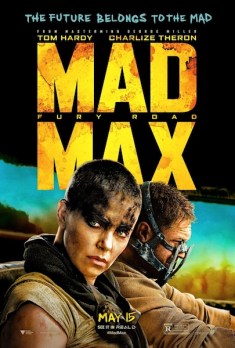
Mad Max: Fury Road (2015)

2015 #142
George Miller | 120 mins | Blu-ray | 2.40:1 | Australia & USA / English | 15 / R

After a decades-long diversion into children’s movies like Babe: Pig in the City and Happy Feet, director George Miller here returns to the post-apocalyptic action series that made his name, and in the process managed to create a blockbuster that was not only critically acclaimed and well-received by audiences, but looks set to be a major award season contender too.
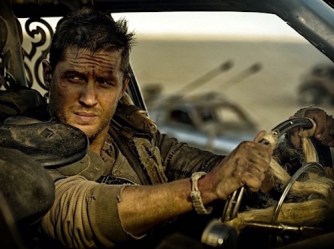
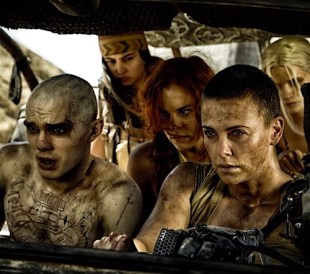
The story sees future drifter and sometime-hero Max (now played by Tom Hardy) arrive in a town ruled by Immortan Joe (Hugh Keays-Byrne), who keeps the populace in check by controlling the flow of water. He’s also created a heavily caste society, including suicidal warriors like Nux (Nicholas Hoult) and his Five Wives (Rosie Huntington-Whiteley, Riley Keough, Zoë Kravitz, Abbey Lee Kershaw, Courtney Eaton), who he keeps locked away for breeding purposes. During a routine run for oil, Joe’s best driver, Imperator Furiosa (Charlize Theron), veers off course, and it’s soon discovered it’s a bid for freedom with the wives. Joe and his amassed forces give chase. For the rest of the film.

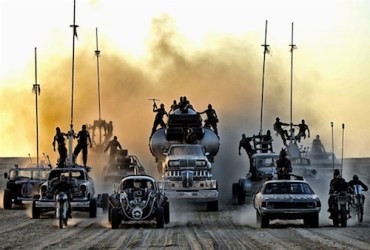
You can certainly watch Fury Road as just a two-hour chase and (presuming you like action antics) get something out of it. The volume of action, the style with which it’s executed, and the impressive audacity of the stuntwork, all mean the film functions on a purely visceral level. That said, the action sequences are almost more incredible for how they were achieved than for how they’re presented in the finished film. The end product is perhaps a little too frenetic, the CG boosts a little too heavy-handed — all the talk of “doing it all for real” may be more or less true, but it feels like an awful lot of that ‘reality’ has been augmented with wire/rig removal and the compositing of multiple practically-performed stunts into single shots. The end result is unquestionably better than empty pure-CGI mayhem, but the awe-inspiring impressiveness of the stunt performers’ work is better conveyed in the special features than the film itself.

I say that, but the finished film is visually stunning on two levels: cinematography and editing. It was shot by John Seale, and Miller had him amp up the saturation. The point was to do the opposite of most post-apocalyptic blockbusters, which are normally desaturated to heck, and it indeed creates something strikingly different. Conversely, Miller has intimated the ideal version of the movie is in black and white with no dialogue, just the score — completely visually-focused storytelling. I have a feeling he’s right, or that it would at least work well. Some nuance would be lost, but all the major plot points and character arcs would be followable.
This is in part thanks to Margaret Sixel’s editing. Chosen precisely because she’d never edited action before, Sixel brings classical touches to the work — like eye trace and crosshair framing — that keep the film exceptionally followable even in the midst of some fast cutting. The one poor choice, in my opinion, is the occasional use of a ‘step’-y effect, which just makes it look like you’re streaming on a not-quite-fast-enough connection or watching a badly-encoded pirate downloaded. I thought it might’ve been a badly produced Blu-ray at first, but apparently it was like this in cinemas too.

For those after more than just action and visuals, the film does have something to offer — despite what you might’ve heard. I think some more dismissive viewers miss it because, a) you don’t expect it, and b) it’s achieved so economically. The characters, relationships, and situations are quickly sketched in, be it through well-placed snatches of dialogue or with purely visual storytelling, but all are deftly executed. That it doesn’t expound on these at length, or linger on their detail, means you have to pay attention to get the most out of that side of the film. I guess some would counter that with, “you have to look hard because you’re reading something that isn’t there,” but I refute that. That it doesn’t spell everything out at length, or hammer home its points and themes heavy-handedly, is a good thing.
Relatedly, the Mad Max series has always been concerned with legend and mythology, both its own and the classical ideas of such. The latter informs the general style and shape of the narratives: these are legends of heroism, perhaps passed down orally from one teller to the next, emphasising the scale of the derring-do. This endures even though Max is, in some respects, the supporting lead in his own film (it even uses the old Towering Inferno left-low/right-high billing at the start for Hardy and Theron). As for the series’ own mythology, that’s well continued here, with significant additions to Max’s storied array of characters and situations: Immortan Joe, Imperator Furiosa, the Five Wives, the War Boys…

With all that considered, that Fury Road is only the second best film in the Mad Max series is merely testament to the enduring excellence of the first sequel. However, there’s possibly an element of expectation in this opinion: I expected basically nothing of Mad Max 2, particularly after I had mixed feelings about the first film (even though the sequel’s fame and acclaim is greater). Fury Road, on the other hand, has been relentlessly hyped by critics and viewers alike ever since it came out — a very different starting perspective. How much effect did this have? Impossible to say. A true comparison would necessitate watching them back-to-back in a few months, or even years, divorced of that initial build-up. Even then I’d be carrying in my memories of my initial viewings. Point being: it’s impossible to be entirely objective; to divorce a film (or films) from some kind of personal context. (Ooh, that turned a bit philosophical, didn’t it?)

Whatever. There can be no doubt that Fury Road is an exceptional achievement in visuals-driven action-adventure moviemaking, which merits its inclusion in discussions of 2015’s finest works of cinema.

5 out of 5

For my review of the “Black & Chrome” version of Fury Road, look here.

Mad Max: Fury Road placed 6th on my list of The Ten Best Films I Saw For the First Time in 2015, which can be read in full here.

This review is part of the 100 Films Advent Calendar 2015. Read more here.