100 Films’ 100 Favourites #1
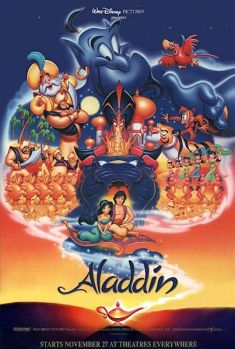
Imagine if you had three wishes,
three hopes, three dreams
and they all could come true.

Country: USA
Language: English
Runtime: 90 minutes
BBFC: U
MPAA: G
Original Release: 25th November 1992 (USA)
UK Release: 18th November 1993
First Seen: VHS, c.1993
Stars
Scott Weinger (Aladdin and the King of Thieves, Shredder)
Robin Williams (Good Will Hunting, Insomnia)
Linda Larkin (The Return of Jafar, Joshua)
Jonathan Freeman (The Return of Jafar, The Ice Storm)
Directors
Ron Clements (Basil the Great Mouse Detective, Hercules)
John Musker (The Little Mermaid, The Princess and the Frog)
Screenwriters
Ron Clements (The Little Mermaid, The Princess and the Frog)
John Musker (Basil the Great Mouse Detective, Hercules)
Ted Elliott (The Mask of Zorro, Pirates of the Caribbean: The Curse of the Black Pearl)
Terry Rossio (Shrek, Pirates of the Caribbean: At World’s End)
Story by
Deep breath… Burny Mattinson and Roger Allers, Daan Jippes, Kevin Harkey, Sue Nichols, Francis Glebas, Darrell Rooney, Larry Leker, James Fujii, Kirk Hanson, Kevin Lima, Rebecca Rees, David S. Smith, Chris Sanders, Brian Pimental & Patrick A. Ventura.
Based on
The folktale of Aladdin and the magic lamp from One Thousand and One Nights, aka The Arabian Nights.
Music
Alan Menken (Little Shop of Horrors, Tangled)
Lyrics
Howard Ashman (Little Shop of Horrors, Beauty and the Beast)
Tim Rice (The Lion King, Evita)
The Story
Street urchin Aladdin falls for bored Princess Jasmine when she sneaks out of her palace one day, leading him to the clutches of evil vizier Jafar, who needs Aladdin to retrieve a magic lamp as part of his scheme to rule the land. When Aladdin accidentally discovers the lamp’s inhabitant, a wish-granting Genie, he uses his wishes to set about wooing the princess. Jafar, of course, has other ideas…
Our Hero
One jump ahead of the bread line, one swing ahead of the sword, steals only what he can’t afford (that’s everything). Riffraff, street rat, scoundrel. It’s Aladdin, of course.
Our Villain
Grand Vizier Jafar, a plotting underling — the kind of role that has strong precedent in fiction, I’m sure, though Conrad Veidt as villainous Grand Vizier Jaffar in The Thief of Bagdad is rather clearly the direct inspiration.
Best Supporting Character
Oh, I don’t know, maybe… the Genie! Fantastically voiced by a heavily-improvising Robin Williams, praise is also deserved for Eric Goldberg’s character animation, which matches him every step of the way. In fact, it was an animation Goldberg created using one of Williams’ stand-up routines that convinced the comic to take the part.
Memorable Quote
Aladdin: “You’re a prisoner?”
Genie: “It’s all part and parcel, the whole genie gig. Phenomenal cosmic powers! Itty bitty living space.”
Memorable Scene
Trapped in a desert cave, Aladdin accidentally rubs a lamp and unleashes the Genie — and with it, Robin Williams’ all-time-great hilarious performance.
Best Song
For me, it’s Prince Ali, the huge Genie-led number as a disguised Aladdin arrives back in town in grandiose style. The Genie’s big solo number, Friend Like Me, is an incredibly close second. Soppy A Whole New World won all the awards, because of course it did.
Truly Special Effect
Only the second time Disney used CGI with 2D character animation. In Beauty and the Beast, it built a room for the characters to dance in; here, there’s a character (the entrance to the cave) and a whole action sequence (the flying carpet escape from said cave). It earnt the team a BAFTA nomination. There’s no shame in what they lost to: Jurassic Park.
Making of
Robin Williams ad-libbed so much of his role as the Genie — generating almost 16 hours worth of material, in fact — that the film was rejected for a Best Adapted Screenplay Oscar nomination.
Previously on…
Aladdin is Disney’s 31st Animated Classic, their official canon of animated movies. It’s the fourth film in the “Disney Renaissance”, the decade-long period (starting with The Little Mermaid and ending with Tarzan) when they had a run of films that were critically and financially successful (unlike those before and after said period).
Next time…
Two direct-to-video sequels, the second of which is quite good; in between those, a TV series ran for 86 episodes(!); a Broadway adaptation debuted in 2014 (it’s coming to the West End in May); not to mention numerous video games and appearances in other works, almost all still voiced by the less-starry names among the original cast. The go-to new voice for the Genie? Dan “Homer Simpson” Castellaneta.
Awards
2 Oscars (Original Song (A Whole New World), Original Score)
3 Oscar nominations (Sound, Sound Effects Editing, Original Song (Friend Like Me))
2 BAFTA nominations (Score, Special Effects)
1 Annie Award (Animated Feature)
3 Saturn Awards (Fantasy Film, Supporting Actor (Robin Williams), Younger Actor (Scott Weinger))
1 Saturn nomination (Music)
Nominated for the Hugo for Best Dramatic Presentation.
What the Critics Said
“What will children make of a film whose main attraction — the Genie himself — has such obvious parent appeal? They needn’t know precisely what Mr. Williams is evoking to understand how funny he is. […] What will come through clearly to audiences of any age is the breathless euphoria of Mr. Williams’s free associations, in which no subject is off-limits, not even Disney itself.” — Janet Maslin, The New York Times
What the Public Say
“the perfect Disney film, one that cleverly combines the sensibilities of classic and modern audiences, one that matches toe to toe with many of the studio’s greatest films. You may prefer the emotional heart-ache of The Lion King or the romantic magic from Beauty and the Beast, but I would always prefer the witty and charming Aladdin.” — feedingbrett @ Letterboxd
Verdict
Hailing from slap-bang in the middle of the Disney Renaissance, Aladdin may not be quite as strong as the films either side of it (Beauty and the Beast and The Lion King), but it’s the next best thing. Buoyed by Robin Williams’ top-drawer performance (have I mentioned that yet?), multiple toe-tapping musical numbers, and a dastardly villain who’s among Disney’s best — and is just one of several great supporting characters here, actually — Aladdin is an A-grade animated Arabian adventure.
In #2… no one can hear you scream.

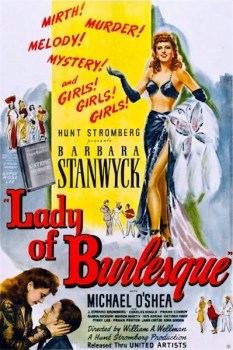 Based on the novel The G-String Murders by Gypsy Rose Lee (as in Gypsy), Lady of Burlesque stars Barbara Stanwyck as Gypsy surrogate Dixie Daisy, a performer in a burlesque show in New York where the backstage arguments turn murderous.
 Stanwyck carries the film, both on stage and off. Her “will they/won’t they (of course they will)” romance with Michael O’Shea’s comic is kept aloft by her biting ripostes to his advances, and when a comedy sketch is interrupted by backstage noises she saves the day by breaking into song, doing the splits, a cartwheel, and the Cossack dance in quick succession. Not bad for a 36-year-old!
 Adapted from the classic young adult sci-fi novel by Orson Scott “bigoted idiot” Card, Ender’s Game is the story of Andrew “Ender” Wiggin (Asa Butterfield), who displays uncommon aptitude in a military programme to train children to fight against an alien race that attacked Earth decades earlier. Sent to a training centre in space, Ender must battle his fellow candidates to prove their worth to their hardened commander, Colonel Hyrum Graff (Harrison Ford), ready for the real battle to come.
 It tips its hat to things like drone warfare, child soldiers, and understanding our enemy, but that’s all it does: acknowledge those parallels exist, then refuse to explore them. Conversely, the music is too heavy-handed, taking on the burden of providing emotion that’s lacking from the screenplay.
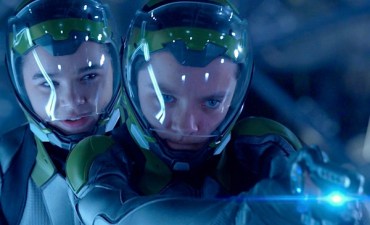 Sadly, after all that training fun, once the cadets jet off to the other side of the galaxy for a rushed third act, interest evaporates speedily. It even has to work hard to sell its own twist as a twist! (Spoilers follow in this paragraph.) In a simulation for a war, Ender does what he’d do to win that war. Then he’s told it wasn’t a simulation, it was the actual war… and he’s all cross. I mean, okay, the fella kinda has a point when he gets angry afterwards: they’ve lied to him, and maybe he would’ve behaved differently if he’d known. But the point of the training was to teach them what they needed to do to win, and it taught them that, and he did it. Maybe this twist works in the book, but in the film it felt somehow unearned.
 Score:



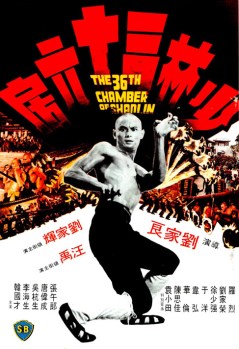 Widely regard as one of (if not the) greatest kung fu movies ever made, The 36th Chamber of Shaolin introduces us to San Te (Gordon Liu), a student whose hometown is oppressed by forces of the ruling Qing dynasty. He and his classmates join the underground resistance run by his teacher, only to wind up witnessing his friends and mentors be hunted, tortured, and killed. Faced with a similar fate, San Te escapes to the Shaolin Temple, widely known for being home to the best kung fu around. The temple’s monks refuse to teach martial arts to normal folk, nor help by joining the fight — they’re Buddhists, after all. Nonetheless, San Te manages to inveigle his way in to their company, and years of training begin.
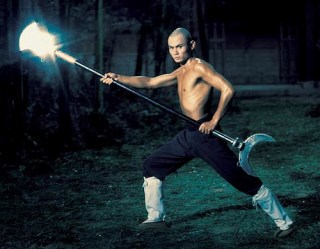 San Te is eventually learning how to use weapons, and when he finally graduates from the 35th chamber he has to prove himself in combat, first against the temple’s justice, then when he returns to the outside world and seeks vengeance. Fights both with and without weapons are imaginatively choreographed and executed with the customary speed and precision.

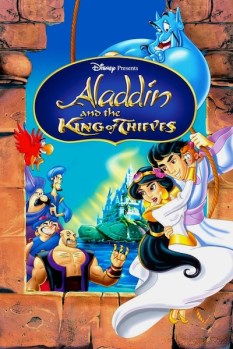 For most of the ’90s and ’00s, Disney churned out direct-to-video sequels to many of their most beloved animated classics. They have a reputation for being unremittingly awful, hence why Pixar’s John Lasseter put a stop to their production after he became Disney’s Chief Creative Officer in 2006. Despite that reputation, however, there are those who say one or two are actually quite good. One of those (and the only one I’ve previously seen) is
  are to be found with the forty thieves… I expect you can guess where that’s going. Fortunately the film gets there pretty quickly, then transitions into a story about the possible redemption (or not) of Cassim alongside the quest for the Hand of Midas, capable of turning whatever it touches into gold (natch).
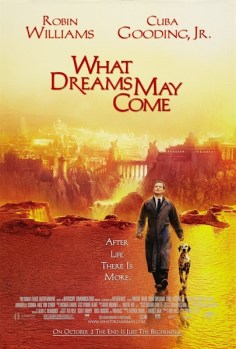 When What Dreams May Come first came out, the reviews seemed to conclude that it was rubbish, but at least visually splendid. Back in 1998, that put me off — “it’s not meant to be very good” was the takeaway thought there. As the years have gone on, for some reason those reviews (or possibly just one I extrapolated into a consensus, who knows?) stuck with me; and as my temperament as a film fan grew, that it was visually extraordinary (even if nothing else) began to seem reason enough to watch it. It lingered in the back of my mind, never quite becoming a “must see”, especially as the opportunity rarely (if ever) presented itself. So that’s more or less how I come to it now, 17 years since its release and those reviews — a long-awaited scratch of a long-lingering itch. (Perhaps this gives some insight into why/how it takes me so long to get round to watching recommendations/things I’m quite keen to see/etc.)
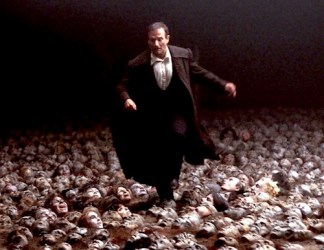 Hell, incidentally, also looks incredible, as do the various locales visited by Chris and his companions (played by Cuba Gooding Jr and Max von Sydow) on their way there. Director Vincent Ward and his team have created a rich, engrossing visual space here. It’s not just the Oscar-winning visual effects either, which create Chris’ initial realisation of Heaven as a kind of living painting, but also the locations, their decorations, and some fantastic sets. The design work is brilliant, and the vast majority of it still holds up today. Even the CGI doesn’t look glaringly like 17-year-old graphics, and in many cases what I presume is a mix of live action, models and some CGI is far more effective than the all-CG look it would likely have if made today.
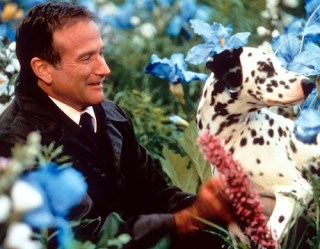 Nonetheless, some will identify with the sentimental “love transcends death”-type message more than others, and there’s a chance those who like (or don’t mind) their films to be at the soppier end of the spectrum will genuinely love it. For the rest of us — for anyone who likes visual splendour in their movies, anyway — it does indeed merit a look for the imagery alone.
 Screened in UK cinemas simultaneously with its TV premiere (and coming to the big screen in various other countries over the next week or so, too), the latest episode of the BBC’s modern-day Sherlock Holmes series is actually a standalone adventure set in the character’s original Victorian time period.
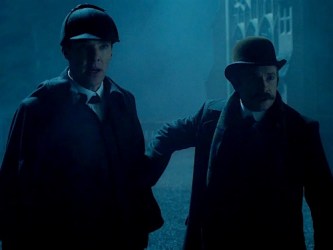 The case they find themselves embroiled in is a little more period than usual, however, with lashings of Gothic and some of the trappings of a Christmas ghost story. The episode is co-written by series creators Mark Gatiss and Steven Moffat, and anyone familiar with Gatiss’ wider work can clearly see his influence here. Moffat brings his trademark fast-paced intricately-tricksy plotting, for which individual viewers’ mileage varies greatly: some find it genius, some find it tedious. Is it clever, or does it just think it’s clever? Is it impossible to follow, or were you just not paying enough attention? As to the first question, I think it’s a bit of both; as to the second, I think the episode ultimately answers everything, but you might need to realise a few things for yourself.
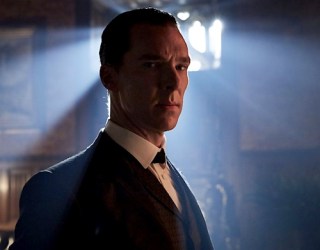 Until the last half-hour or so, anyway, when the modern version suddenly comes crashing in. At first it seems like a clever interlude; a little reminder of the true time period for this version of the characters, and a tease for season four. But it quickly transpires that, no, this episode isn’t actually a wholly standalone aside from the main series — Gatiss and Moffat have found a way to integrate it into continuity. For me, this is where the special begins to come apart at the seams; not because I inherently object to this integration, but because from that point on the episode begins to jump back and forth between the present, the imagined past, and various other dream-state asides. It’s almost entirely justified by the beautifully-shot Reichenbach Falls sequence, but a spot of cinematographic prettiness doesn’t really excuse the way the story goes a little haywire. The least successful part of all, for me, is that it calls into question the solution for the case we’ve just been presented with… but then doesn’t get round to offering another, meaning you kind of feel like the case hasn’t been solved, even though it presumably has been, with the first solution. I think.
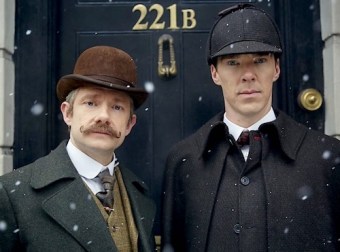 As someone who enjoys Sherlock Holmes in his proper era but is also a fan of this modern day version (I would say “a big fan”, but I’m not one of those people), I’d rather they’d played this a little more straightforward. Not a lot — it’s still under the umbrella of Sherlock after all, and the era-transposed stylistic flourishes in the first hour-ish worked very nicely in my opinion — but the mixed-up mishmash of the final act dilutes the effectiveness of the entire experience. There’s fun and thrills to be had along the way, but in another form it could perhaps have been a Sherlockian classic in its own right.
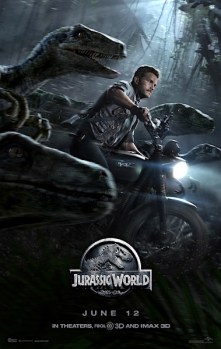 22 years ago,
  awe is front and centre once again. Even some of the film’s ‘problems’ aren’t, in my eyes. Does it spend too long wandering around the park before the big action starts? Not for me… which I guess is a viewpoint that comes with all the caveats of my opening paragraph. I rather suspect this is a movie that was very literally made by fans, for fans.
 but 2.35:1 can feel a little too wasteful of screen real estate (as a believer in presenting films in their original ratio (as we all should be) you tend not to question it, but looked at objectively, 2.35:1 on a 16:9 telly is kinda silly. (Not that I’m advocating those daft-looking 21:9 TVs they made a couple of years ago, mind.)) I’ve no idea if 2:1 is likely to catch on more widely (I bet

