
Hossein Amini | 97 mins | streaming (HD) | 2.35:1 | UK, France & USA / English, Greek & Turkish | 12 / PG-13
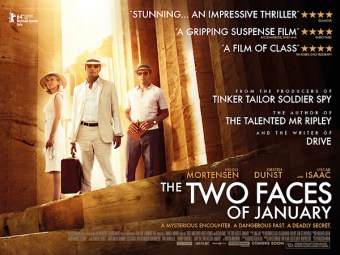 The writer of Drive (and co-writer of Snow White and the Huntsman and 47 Ronin, but maybe he’d prefer we didn’t mention those) moves into the director’s chair with this Patricia Highsmith adaptation. Best know for her Ripley (as in Talented Mr.) tales, this is instead the story of a young American man, Rydal (Oscar Isaac), who, while working as a tour guide in Greece, falls in with middle-aged American couple Chester (Viggo Mortensen) and Colette (Kirsten Dunst). Apparently on holiday, they look like an easy mark for Rydal’s somewhat-con-ish moneymaking practices, but events soon transpire to reveal the pair’s secrets, and Rydal’s greed draws him deeper into their affairs.
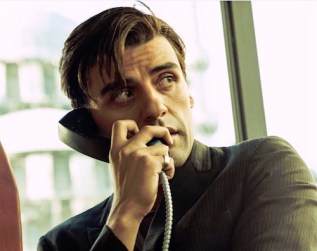
Amini has picked some quality material for his directorial debut. The storyline is pretty straightforward, but it’s driven by some interesting characters with complex motivations. You’re never entirely sure what’s driving Rydal and Chester, even if it may appear obvious; and sometimes it can be as much of a twist that a character didn’t have a better plan as it is when their implausibly-intricate machinations are unveiled. It helps that the film has a pair of quality actors in these roles, who effortlessly bring believability to even the slightly-far-fetched elements of the narrative. This is only the second thing I’ve seen where Isaac has made an impression (the other being The Force Awakens; I’d forgotten he was in Robin Hood and Sucker Punch), but I can see why everyone’s calling him one to watch.
If Dunst doesn’t leave as much of a mark as the two chaps, it’s only because Colette is a subtler-still character. Some people reckon The Two Faces of January has a thin story and no development of its characters, but I can’t help but feel it was too subtle for such critics. 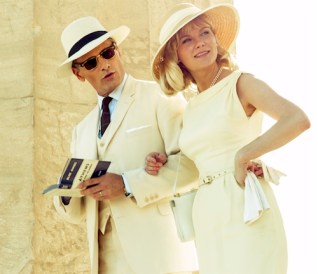 On the surface it might just seem like Colette is the dim-blonde wife, going along with her husband whatever happens and flirting with their sexy tour guide, but there’s clearly more going on under the surface. How much does she really know about Chester’s actions? Is she an innocent bystander, or is she involved? Is it harmless flirting with Rydal, or are Chester’s drunken suspicions on the money?
By choosing to set the film in the novel’s original 1960s timeframe, Amini adds instant style and class to the whole picture. Didn’t everything look classier back then? I mean, Chester wears linen suits and Panama hats, not T-shirts, shorts, and a baseball cap. It just wouldn’t be the same set today. Even the locations look straight out of the ’60s, even though they’re hundreds or thousands of years old and the film was shot this decade. Marcel Zyskind’s attractive cinematography is surely to thank for that. Again, it’s an element I’ve heard some criticise as boring or plain, which (much like the above views on plot and character) I just don’t understand. It’s not showy or show-off-y, but that’s part of what works. It lets the natural beauty of the locations speak for themselves, with classical compositions and rich lighting.
The era of the setting also helps emphasise the film’s Hitchcockian overtones, which given Highsmith’s other most-famous work is Strangers on a Train (filmed by Hitch, of course) is perhaps an obvious point of comparison, but by no means an inappropriate or negative one. As the narrative twists and turns, tightening the tension ever more, you think the Master of Suspense would’ve been quite pleased if this had been one of his pictures.
 Filming this particular Highsmith novel was a long-held ambition for Amini (he first tried to acquire the rights after his big-screen writing debut, Jude, back in 1996). Such much-awaited dreams can sometimes lead to poor results, thanks to a rose-tinted perspective or close-minded obsession, but on other occasions the lengthy preparation pays off. The Two Faces of January is most certainly a case of the latter, a ceaselessly classy, subtly complex thriller that’s very rewarding for those open to its numerous charms.

The UK TV premiere of The Two Faces of January is on Film4 tomorrow, Sunday 31st, at 9pm.
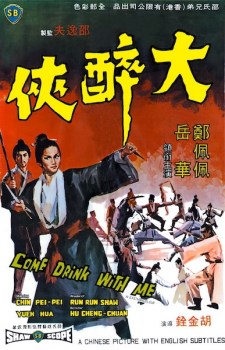 The first wuxia film directed by King Hu (King Chuan, that’s Hu! #MildlyRacistHomophoneJoke), the success of which allowed him to make his next even-more-significant movies in the genre, Come Drink with Me sees a gang kidnap the governor’s son to use him as leverage to release their leader. Instead, the governor sends his daughter, Golden Swallow (Cheng Pei-pei), to rescue her brother. She receives some help from local drunkard Fan Da-Pei (Yueh Hua), who may be more than he’s letting on…
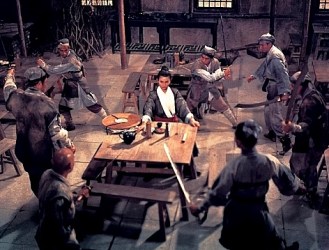 But this is a structural niggle, really. There’s so much else to enjoy — not just the action, but some amusing scenes, engaging characters, strikingly brutal villains (they not only kill a child (you wouldn’t get that in most movies) but they do it for no particular reason), and beautiful widescreen Technicolor cinematography — that it doesn’t grate too much.
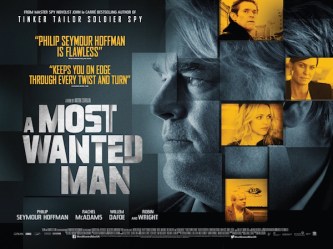 John le Carré adaptation starring Philip Seymour Hoffman as a German secret intelligence operative who must battle internal politicking while tracking a political refugee who may actually be a terrorist.

 Score:



 The word “prequel” was first coined in the ’50s, arguably entered the mainstream in the ’70s, and was firmly established as a term everyone knew and used in the ’90s by the Star Wars prequel trilogy. Works that can be defined as prequels predate their naming, however, and surely one of the earliest examples in the movies must be this silent German horror.
 Regarded as one of the first horror films, The Golem is more of a moderately-dark fantasy, or a fairytale-type myth. There are clear similarities to Frankenstein, though I don’t know if either influenced the other. However, it does feature what I presume is one of first instances of that most daft of horror tropes: running upstairs to escape the monster. It goes as well here as it ever does, i.e. not very. Said monster looks a bit comical by today’s standards. Built by the rabbi to defend the Jewish people, he immediately uses the hulking chap to chop wood and run errands — he doesn’t want a defender, he wants a servant! A terrifying beast nonetheless, it’s ultimately defeated because it picks up a little girl for a cuddle and she casually removes its magic life-giving amulet.
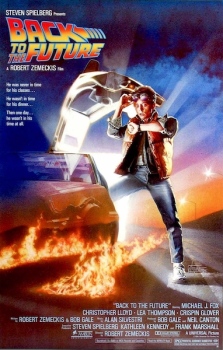



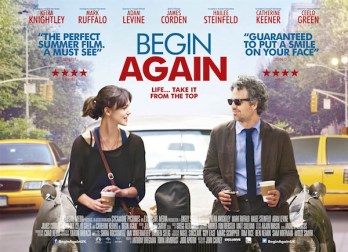
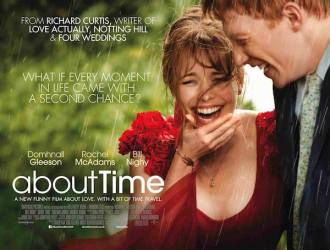 After Tim (Domhnall Gleeson) learns he can time travel back through his own life, his father (Bill Nighy) cautions him not to attempt anything too drastic — so he sets about finding love.
 Hated by Americans and loved (well, ok, “liked”) by everyone else (well, ok, “by lots, but by no means all, of people who reside outside America”), Disney’s attempt to pull a
  I know some people complain about simplistic stories that are used to just string action sequences together, and that’s a perfectly valid thing to get annoyed about, but The Lone Ranger swings to the other extreme and uses an over-complicated story to string together its action sequences. All it actually needs is a little streamlining, because the film is allowed to swing off into too many sideplots. This makes the middle of the film a slog, and you feel every minute of its excessive two-and-a-half-hour running time.
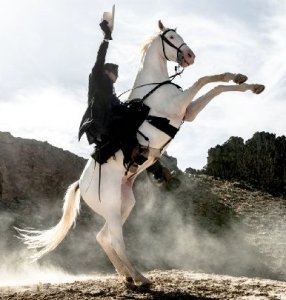 a recurring problem for Disney at the minute. To be frank, I’m not convinced anyone made a truly concerted effort to stem the overspend. When a gaggle of CG rabbits hopped on screen, all I could think was, “who allowed this?!” You’ve got a massively over-budgeted film that the studio want cut back, and one reason for that is CG bunnies that have almost no bearing on anything whatsoever! The amount of time and effort that must’ve gone into creating those fairly-realistic rabbits for such a short amount of screen time… it cost millions, surely. Millions that could’ve been saved with a simple snip during the writing stage if only someone had said, “well, those bunnies don’t add anything and they’ll be bloody expensive, so let’s lose them.”
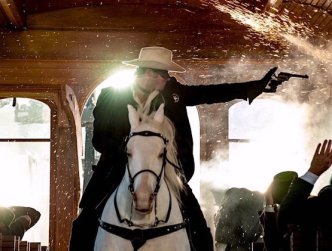 I’m not quite as effusive as Hughes, but The Lone Ranger is worth the time of anyone who enjoys an action-adventure blockbuster. It’s a three-star adventure-comedy bookended by a pair of five-star railroad action sequences, which make the trudge through the film’s middle hour-or-so feel worthwhile. There was a better movie to be made here — one that was half-an-hour shorter, more focused, and probably several tens of millions of dollars cheaper to make — but that doesn’t mean the one we got is meritless.
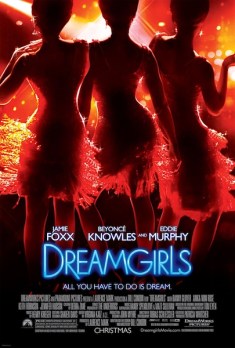 Oscar-winning adaptation of the stage musical that doesn’t tell the story of the Supremes in fictionalised form, no sir.
