

Say hello to the new-look, bigger-than-ever 100 Films monthly update! Well, partially new look — much is the same, but there are some exciting new regular categories, and image-header-things. I had some ideas; I’ve introduced them all at once. (They excited me, anyway.)
First new regular: a contents list!

- This month’s What Do You Mean You Haven’t Seen…? film(s)
- June’s viewing in full
- Viewing notes on and analysis of the above
- The Arbies: The 1st Monthly Arbitrary Awards
- Other writing from around the blogosphere…
- All the new reviews I published in June
- All the archive reviews I re-published in June
- The return of the List of 5!
- Finally, the briefest, most pointless look ahead to next month…

Just one WDYMYHS film watched this month (so I’m still two behind) — it’s Martin Scorsese’s beloved boxing biopic (that I should’ve watched in 2013 but failed to), Raging Bull. I would make a brief comment on what I thought of it, but we’ll come to that in the Arbies…

 #75 Changing Lanes (2002)
#76 Kingsman: The Secret Service (2015)
#77 The Expendables 3 (Extended Version) (2014)
#78 Ladyhawke (1985)
#79 Now You See Me (2013)
#80 The Interview (2014)
#81 Safety Not Guaranteed (2012)
#82 Superman vs. The Elite (2012)
 #83 Rush (2013)
#84 Whiplash (2014)
#85 Meet the Robinsons (2007)
#86 Before Dawn (2012)
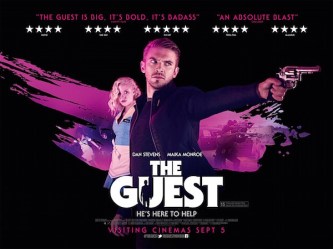
#87 The Guest (2014)
#88 Raging Bull (1980)
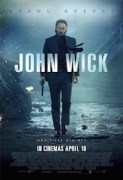
#89 John Wick (2014)
#90 Fury (2014)

- Meet the Robinsons is the 47th official Walt Disney Animated Classic, and the 39th I’ve seen. 15 to go…
- I have a whole new format and I make this entire section look pointless with one “oh, by the way” bit of trivia, which is less than I normally have to say here, I feel. Ah well, what can you do?

2015 continues apace with 16 new films watched this month. That smashes the June average of 7.14 — indeed, reaching #90 singlehandedly drags it up over a whole film, to 8.25. It’s the highest June ever, which also means it’s the 8th month in a row to beat last year’s equivalent (June 2014 had 11). It’s the 13th month in a row in which I watched more than 10 new films, and is tied with January as both the highest month of 2015 and the third-highest month ever (also tied with May & August 2010). That means that, at 2015’s halfway point, its monthly average is exactly 15.
Most excitingly of all, however, is that I’m now all but guaranteed to reach #100 in July. I’d have to fail my ten-films-per-month goal not to, and I’ve been doing really well with that so have plenty of incentive not to let it slip. More on what reaching #100 in July ‘means’ next month (hopefully!)
Over in Prediction Corner: assuming I uphold my ten-per-month minimum, this year will reach at least #150, which would be my best year by some 14 films. In other words, we should know if 2015 is a new Best Year Ever by November at the latest. (Unless I mess up ten-per-month but then still pass 136 in December, of course.) Meanwhile, in the world of averages… well, we’re halfway through the year, so such a prediction would see my tally exactly double, clocking in at a quite extraordinary 180. (Extraordinary for me, anyhow — stow it, you “365 films in a year” people!)

I’ve been posting these regular monthly updates for over five years now, and in all that time they’ve been very much focused on numbers and stats — how many films have I watched, how does that compare to the past, what does it suggest for the future, etc. And that’s fair enough — as progress reports, it’s kinda their point to report my progress. But I’ve decided it’s about time to introduce some opinion into the mix, to liven things up a bit. So I proudly present…

The 1st Monthly Arbitrary Awards
 So named because what I watch in any given month is pretty arbitrary, so the pool of contenders is a total whim rather than a genuine competition. Plus, each month two of the five categories are going to be arbitrarily chosen, just to compound the point. You’ll get the idea as we go along.
That’s Arbie on the right, by-the-way. In case that wasn’t obvious. (Turns out Arbie is also the name of the mascot of the Royal Bank of Canada. I don’t think anyone’s going to get us confused though, so on I go.)
For June 2015, the awards go to…
Favourite Film of the Month
I watched a number of very good films this month, several of them strong contenders for my year-end top ten, but when it came to the crunch there was a clear winner here: as anyone who read my review yesterday likely suspects, it’s The Guest.
Least Favourite Film of the Month
Although there were a couple of weak and/or disappointing movies amongst my viewing this month, and some I certainly liked less than this winner (or, rather, loser), for the greatest discrepancy between “expectation” and “what I actually thought of it”, this goes to Raging Bull.
The Most ’80s Soundtrack You’ve Ever Heard
Most months The Guest would have this sewn up, but oh no, not when Ladyhawke’s around. Can you imagine anyone doing a fantasy movie without a Howard Shore-esque orchestral epic soundtrack nowadays? Me either. In the ’80s, on the other hand… well, they sure did love their synthesisers.
Most “Oh, I Didn’t Know They Were In It” Cameo Appearance
If all you’ve seen of John Wick is the Keanu Reeves-centric posters, it’s probably riddled with moments such as these. Me, I somehow knew most of them, so this award goes to Jason “should’ve played James Bond at some point” Isaacs popping up in Fury as some kind of commander for a little bit. The Blu-ray has nearly an hour of deleted scenes; to my surprise, “the rest of Jason Isaacs’ role” doesn’t seem to be among them.
The Audience Award for Most-Viewed New Post of the Month
Because if I didn’t limit it to new posts, this would be Harry Potter every month (across 2014 and 2013 (the year they were first published), my reviews of Philosopher’s Stone and Chamber of Secrets accounted for 33.5% of all my page views).
This month: thanks primarily to being retweeted by a Keanu Reeves fan twitter, the victor is Man of Tai Chi.

I am shockingly bad at getting round to reading other people’s blogs, and when I do it’s often in fits and starts (as anyone who’s ever received half-a-dozen ‘likes’ from me on things they posted a month ago can attest). In the interest of being a better human being, then, I thought I’d start collating particularly interesting pieces from elsewhere and share them here, for whatever that’s worth.
There’s no particular rhyme or reason to my choices, just a handful of pieces that struck a particular chord for me this month. For one thing, there’s a pair of coincidently-thematically-similar pairings from the same two blogs. One of those is up first:
1976, the year it all started… @ the ghost of 82
ghostof82 tackles the emotions of what makes us love movies in the first place, through his own experience with Jaws in ’76.
Jurassic Park (1993) @ Films on the Box
Mike touches on a similar topic from a different angle: how films that are cinema-defining for a generation can appear to those outside said generation.
Evangelion June 22, 2015 @ Heather Anne Campbell
Monday 22nd June 2015 was “Evangelion Day”, the day on which the first episode of anime series Neon Genesis Evangelion takes place. In this write-up, Heather Anne Campbell explains what the series means to her and, in the process, outlines some of the reasons it’s so good and has endured for so long.
Ten of the Best – Noir Directors @ Ride the High Country
Whenever I read Colin’s blog I come away with a raft of new films I want to see. You can only imagine how many got added to my list after this well-considered overview.
Miracle Mile (1988) Review @ Cinema Parrot Disco
Who doesn’t love stumbling across something they’ve never heard of that turns out to be right up their street? No idea if I’d like Miracle Mile, or even if/when I’ll have a chance to see it, but table9mutant’s review has me suitably intrigued. And is it just me or are the ’80s everywhere at the minute?
Movies Silently’s Top Ten Talkies @ Movies Silently
Talking of, a) recommendations, and b) the ’80s, silent cinema doyenne Fritzi took a detour from her regular stomping ground with this list (technically from last month, but rules were made to be bent). Any list of favourites that includes Mystery Men is a good’un in my book, but the aforementioned ’80s recommendation is her #2 choice, medieval fantasy Ladyhawke. As you may’ve noticed above, it even managed to find its way to the top of my “must watch” pile (a rare feat). Full review in due course, but for now suffice to say I very much enjoyed it. I even thought the score had its moments.
RIP Christopher Lee @ Films on the Box
Finally, the second pairing I mentioned, on a sadder note. First, Mike pays fitting tribute to one of the great screen icons.
Remembering the Music of James Horner @ the ghost of 82
Last but not least, a personal tribute to composer James Horner.














































Film music has changed a lot down the years, but it’s been a pretty constant important element. Plenty of it is forgettable background noise, but some stands out so much it becomes famed in its own right. I recently re-watched the original Star Wars trilogy, inspiring this month’s top five: three film themes — plus two from other mediums — that, to me, are some of the most iconic of all.
- Doctor Who by Ron Grainer
 Diddly-dum diddly-dum diddly-dum ooo-weee-ooo… For generations of British children, that’s the sound of Saturday night adventure. I guess to some people it’s just a children’s TV theme, but they’re wrong: it was a genuinely pioneering, important example of burgeoning electronic music (honestly). As a composition it’s surprisingly versatile: Delia Derbyshire’s original arrangement is still chillingly unsettling 52 years on; Murray Gold’s 2005 version (arguably perfected in the Series Four version) is an equally-perfect orchestral blockbuster.
 - Star Wars (Main Theme) by John Williams
 Dooo-dooo dododo-dooodo dododo-dooodo dododo-doo… You could probably fill this list twice over with John Williams compositions — Indiana Jones, Jaws, Superman, Jurassic Park, more recently Hedwig’s Theme from Harry Potter, and so on — but undoubtedly the most iconic of them all is his main theme to George Lucas’ space-fantasy saga. Running it a close second is the same series’ Imperial March, perhaps the greatest villain’s theme ever. All together now: dum dum dum dum-dudum dum-dudum…
 - James Bond Theme by Monty Norman
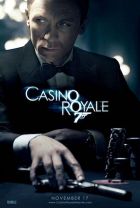 Dang da-dang-dang da-da-da dang da-dangdang da-da-da daa-daa da-da-daa… A 53-year-old surf rock tune should by all rights be horribly dated, but I guess true cool endures. While the version used in the films has barely changed, there are an abundance of variations for trailers, etc. My personal favourite is the one created by Pfeifer Broz. Music for the Casino Royale trailer in 2006. The climactic use of a choir is one of those “how did it take someone 43 years to think of this?!” moments.
 - The Fellowship Theme by Howard Shore
 Dooo-dooo dododooo, do-do-doo do-do-doo do-do-doo do do doo… The only one here that isn’t a title theme, but it’s indelibly part of the Lord of the Rings franchise — it has no reason to appear in The Hobbit trilogy, but I spent most of those eight hours missing it. It reoccurs throughout the trilogy (of course it does), but perhaps the purest version can be found in The Ring Goes South from the Fellowship soundtrack. “Only Peter Jackson and Howard Shore can make 9 people walking past a rock look epic.”
 - The Secret of Monkey Island by Michael Land
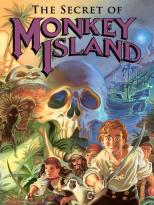 Doo-doo dodododo-doo do-do-do-doo… I’m certain this will be less familiar than any of the above to most people but, honestly, to me (and, I think, many other people who played the LucasArts games) it’s as iconic as anything else I’ve mentioned, including all of those other John Williams ones. The original was rendered in the style of its era — a digital MIDI thing — but it endured throughout the series and was transformed into some lusher orchestral versions. Try the version from the 2009 special edition, for instance.
I’m already full of incredulousness at myself for leaving out Indiana Jones. Or Back to the Future. Or Mission: Impossible. And it may’ve been composed by committee, but I love the main theme from Pirates of the Caribbean (find it cleanly in the first film’s He’s a Pirate). And if we’re allowing TV themes, what about Games of Thrones? I mean, this is pretty much what I hear every time I watch the show. And also… oh, we’ll be here forever. What are you favourites?

#100! Probably. Hopefully.
 The writing-directing team behind
 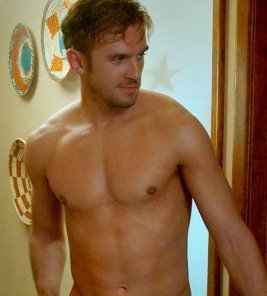 The days of chubby Matthew Crawley long since banished, a buff Dan Stevens (there’s a reason his topless scene was also all over the marketing) is entirely convincing as the seemingly-nice-but-possibly-creepy army man who inveigles his way into the Petersons’ lives with pure charm before gradually revealing, both to them and (especially) us, that there’s a lot more to him than a nice guy who happened to kill people in the Middle East. For my money, he’s the best anti-hero in a long time. Occasional flashes of dry humour — a line here, a look there — make him likeable to the audience, more than the charm that persuades the other characters does, so that by the final act we’re still pretty much on his side, whatever else happens.
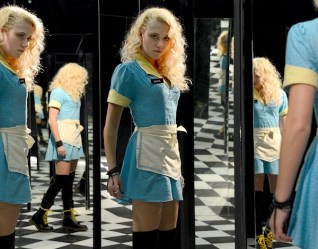 but I know I’m not the only reviewer to feel it. Wingard evokes that era and the feel of those movies, without slipping into parody and without merely ripping-off familiar flicks. I think this especially comes to the fore in the final act — it’s arguably even most distilled in the very final scene — but, again, it’s a feeling, a sensation, a familiarity, not a blatant, I dunno, “look, now we’re in the ’80s!”-ness.
 Not everyone loves it — some people outright hate it, even. I suppose it’s a little bit idiosyncratic, in a similar way to something like
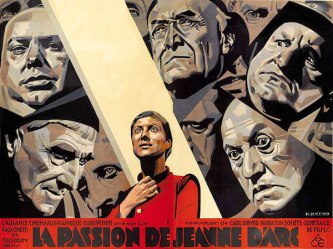 Widely regarded as one of the greatest movies of all time (look at
  Dreyer based his telling on the written records of Joan’s trial. Although that’s grand for claims of historical accuracy, it’s hard to deny that silent cinema is ill-suited to thoroughly portraying something dialogue-heavy. There are many things silent film can — and, in this case, does — do very well indeed, but representing extensive verbal debate isn’t one of them. Bits where the judges argue amongst themselves — in silence, as far as the viewer is concerned — leave you longing to know what it is they’re so het up about. Sometimes it becomes clear from how events transpire; other times, not so much.
 neutral costumes on sparsely-decorated sets, and are almost entirely shot in close-ups — all elements that avoid the usual grandiosity of historical movies, both in the silent era and since. What we perceive as being ‘grand’ changes over time (things that were once “epic” can become small scale in the face of increasing budgets, for instance); pure simplicity, however, does not age much.
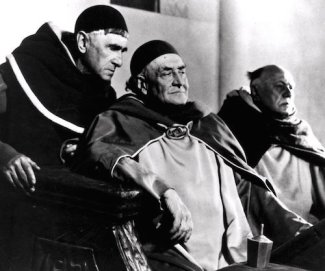 The actors playing the judges may be less individually memorable than Joan, but it’s their conflict — the personal battle between Joan and these men, as Dreyer saw it — that drives the film. Dreyer believed the judges felt genuine sympathy for Joan; that they did what they did not because of politics (they represented England, and she had led several successful campaigns against the Brits) but because of their devout belief in religious dogma. Dreyer says he tried to show this in the film, though it strikes me the judges still aren’t portrayed too kindly: they regularly seem contemptuous of Joan, and are outright duplicitous at times. Maybe that’s just religion for you.
 however, so I have no opinion. Instead, they offer two alternatives. On the correct-speed 20fps version, there’s a piano score by silent film composer Mie Yanashita. Apparently this is the only existing score set to 20fps, and Masters of Cinema spent so much restoring the picture that there was no money left to commission an original score. Personally, I don’t think they needed to. Yanashita’s is classically styled, which works best for the style of the film, and it heightens the mood of some sequences without being overly intrusive, by and large. Compared to Dreyer’s preferred viewing method, of course it affects the viewing experience — how could it not, when it marks out scenes (with pauses or a change of tone) and emphasises the feel of sequences (with changes in tempo, for instance). That’s what film music is for, really, so obviously that’s what it does. Would the film be purer in silence? Maybe. Better? That’s a matter of taste. This particular score is very good, though.
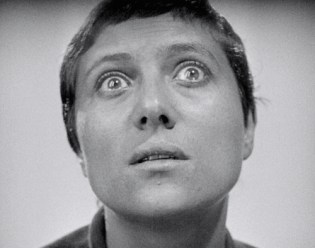 Some viewers describe how they’ve found The Passion of Joan of Arc to be moving, affecting, or life-changing on a par with a religious experience. I wouldn’t go that far, but then I’m not religious so perhaps not so easily swayed. As a dramatic, emotional, film-viewing experience, however, it is highly effective. As Dreyer wrote in 1950, “my film on Joan of Arc has incorrectly been called an avant-garde film, and it absolutely is not. It is not a film just for theoreticians of film, but a film of general interest for everyone and with a message for every open-minded human being.” A feat of visual storytelling unique to cinema, it struck me as an incredible movie, surprisingly accessible, and, nearly 90 years after it was made, timeless.



 Six months on from all the kerfuffle, the storm-in-a-teacup (as it turned out) controversy of The Interview’s initial release has been consigned to the (film-)history books, leaving us with a movie to be judged on its own merits… albeit a movie being judged by a lot of people who probably wouldn’t’ve bothered with it otherwise, just because of the aforementioned controversy.
 no, really, he’s definitely as evil as everyone thought. On the bright side, co-writer/directors Rogen and Evan Goldberg also pull off a surprisingly well-constructed through-line about honeypotting/honeydicking, even if it doesn’t wholly hang together if you think about it too much (if Kim was just honeydicking Dave, would those things really make him cry?)
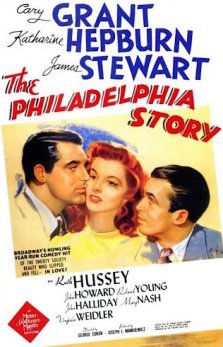 Katharine Hepburn is the
 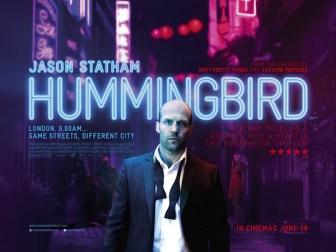 Steven Knight, the writer of
  The film’s problem, perhaps, is that it slips a little between two stools. It’s certainly not action-packed enough to appeal to a good deal of Statham’s fanbase — the one or two instances of him kicking ass are very much asides. On the flipside, it may not commit to the character drama fully enough to satiate the needs of that kind of viewer. However, for anyone at peace with those two apparently-disparate styles — like, well, me — Hummingbird will be a more satisfying experience.
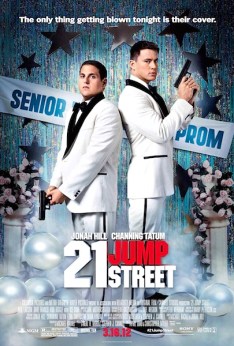 Having turned the unlikely-to-be-any-good story of a machine that makes it rain food into
 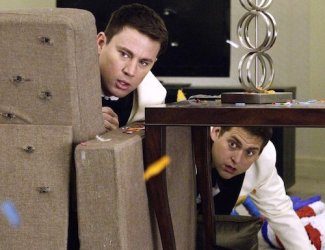 this leaves Hill hanging out with the cool kids — and being lured down the path of parties and their shallower friendship — while Tatum falls in with a gang of ultra-nerdy nerds and starts actually learning stuff. Distilled like that makes it sound pat, but in the film it works; in part because they don’t overplay the clichéd “friends fall out irretrievably… until it’s retrieved for the final act” story arc.
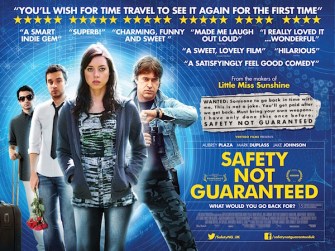 The debut feature from the director of all-conquering box office behemoth
  Maybe I’m missing something, I don’t know, but where other directors currently making a similar transition (Gareth Edwards, Josh Trank, Duncan Jones) showed some signs of a reason for the upgrade in their debut and/or sophomore features, I can’t fathom what singled Trevorrow out. He seems to have done alright with it though, so never mind.
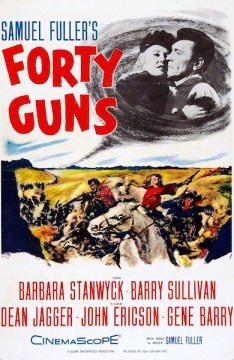 Western with Barbara Stanwyck as a powerful landowner, and commander of the titular posse, whose bullying brother, Brockie, is consequently allowed to run riot over the town. Enter lawman Griff (Barry Sullivan) and his two brothers, whose moves to bring Brockie in line kickstart a chain of ruinous events.
 100Films.co.uk