

Bryan Singer | 149 mins | Blu-ray | 2.39:1 | USA & UK / English | 12
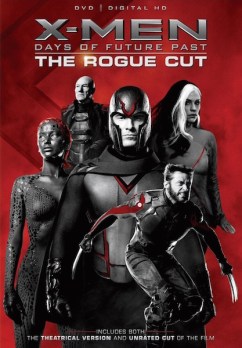 One of the big stories in the run-up to this fifth X-Men film’s release last year (my previous review is here) was that returning cast member Anna Paquin, one of the leads in the original trilogy — certainly, she’s the audience PoV character in the first one — had been virtually excised from the final cut, her subplot deemed extraneous by director Bryan Singer, as well as screenwriter Simon Kinberg, who all but admitted he’d shoehorned her into the screenplay in the first place. Instantly, a director’s cut was mooted by journalists/fans, and almost as quickly Singer and co were on board. So that’s how we end up with The Rogue Cut, which probably has all kinds of bizarre connotations if you’re not aware Rogue is a character in the series.
It remains a bit of a misnomer even if you do, because it’s not like Rogue has a huge part to play. Her subplot is actually more of a showcase for Ian McKellen’s Magneto and Shawn Ashmore’s Iceman, as they rescue her (with a little help from Patrick Stewart’s Professor X) from an enemy-occupied X Mansion. From there, she takes over from Kitty Pryde (Ellen Page) maintaining Wolverine’s presence in the past. In the cut released in cinemas, Kitty kept doing what Kitty was already doing, which is certainly a smoother way of handling things. Kinberg was right: this subplot feels like it’s been half-forced in, mainly to give the future-time cast extra things to do.
This sequence is not the only addition, however; I’m sure this release would’ve been perfectly adequately dubbed an Extended Cut or Director’s Cut were it not for the fan/media focus on the Rogue portions, which earnt it “The Rogue Cut” as a nickname before it was adopted as the official name. In total, the new cut is 17 minutes and 10 seconds longer, though I believe Singer said there were some deletions too, so it may be there’s slightly more than that. Either way, it’s tough to spot everything that’s been added. There are extensions littered throughout — according to the Blu-ray’s scene select menu, of the extended cut’s 44 chapters, 20 include alternate material (including the end crawl, thanks to a mid-credits scene) and two are all-new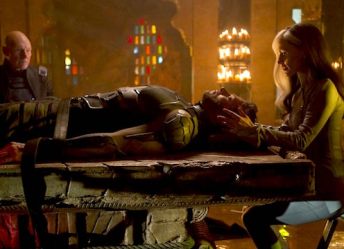 (though the theatrical cut only has 40 chapters, so I’m not entirely sure how that pans out). Most must be teeny extensions, however, and I look forward to Movie-Censorship.com doing a report so I can know all I didn’t spy. Apparently Singer and editor John Ottman discuss the changes quite a lot in their commentary track, but I haven’t taken the time to listen to that yet.
The bulk do come in the aforementioned “Rogue rescue” sequence that has given this cut its name. However, it’s intercut with some new material in the 1973 segments: Raven/Mystique (Jennifer Lawrence) also visits the X Mansion, for a little tête-à-tête with Hank/Beast (Nicholas Hoult). Both have a knock-on effect later in the movie: having taken over from Kitty, Rogue is now present throughout the climax (not that it makes much difference, besides changing Magneto’s method of entry after he barricades them in), and a brief moment — a look, no more — between Raven and Hank in the past.
Oh, and Nixon says “fuck”. That must be new, because you’re only allowed one “fuck” in a PG-13 and I distinctly remember James McAvoy saying it.
So is this cut better? Well, no. Is it worse? Well, not really. It’s just different. On the one hand, here we have some extra fleshing out of Raven and Hank’s characters, more action for future-Magneto and Iceman, and a more decent role for Rogue — though her part still isn’t much cop, all things considered. On the other hand, it makes for a slightly less streamlined film, and the intercutting between past-Magneto retrieving his helmet and future-Magneto rescuing Rogue is built like it should have some kind of juxtapositional weight but, unless I’m missing something, it doesn’t.
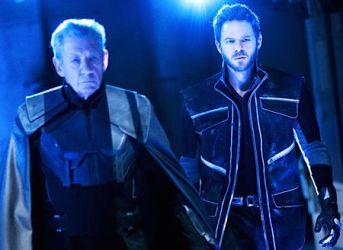 The Rogue Cut is worth seeing for anyone who enjoyed the theatrical version — and, in terms of a copy to own, the Blu-ray comes with both cuts and more special features (though it loses all the extras from the first release, including a few more deleted scenes) — but, unless you’re a huge fan of Rogue or Iceman, it’s not essential.
As it’s fundamentally the same film, my original score stands.

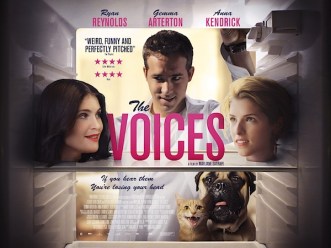 Jerry (Ryan Reynolds) is a nice guy living in the small town of Milton, working in shipping at Milton Fixtures and Fawcetts, where he fancies the English girl in accounts, Fiona (Gemma Arterton), and doesn’t notice how much another girl in accounts, Lisa (Anna Kendrick), likes him. He also talks to his dog, Bosco, and cat, Mr Whiskers, and they talk back. That’s why his psychiatrist (Jacki Weaver) encourages him to take his medication, but he doesn’t. When he accidentally murders Fiona (as you do), it’s Mr Whiskers that encourages him to cover up the crime.
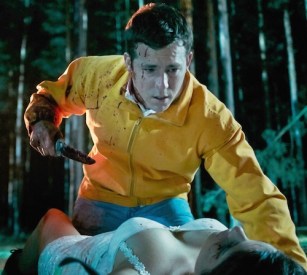 what happened in his past to make him this way (flashbacks and hints are scattered, leading to an eventual reveal), and how will it all end for him? We’re conflicted here, because he’s a nice guy who we like, but he’s also a murderer, in horrific fashion, and so surely justice is due. Screenwriter Michael R. Perry and director Marjane Satrapi (of
 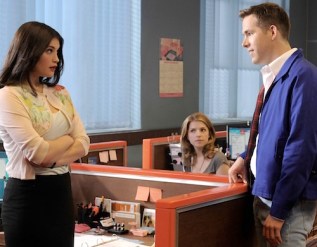 Able support comes in the form of three women in Jerry’s life. Gemma Arterton has a ball, first as a bit of a bitch, then as a ludicrously-chipper super-English talking head. Anna Kendrick, meanwhile, is sweet and likeable, and while we may be on Jerry’ side when he accidentally slides his knife into Fiona, we’re keen for him not to make the same mistake with Lisa. Whether he does or not is where the real battle for his sanity lies. The third is Jacki Weaver’s psychiatrist, who is central to the climax but also has the least to do of all three, really. Never mind.
 The Voices is the kind of film you say is “not for everyone”, which are often the best kind if they are for you. For me, it wasn’t quite funny enough — I’d’ve liked more of the dog and cat, who get the lion’s share of the best material. I also felt that Jerry’s backstory, the reasons for why he is how he is and does what he does, weren’t explored quite enough. The Blu-ray’s deleted scenes hint at more of this, particularly with an alternate climax, which was perhaps cut because there was too little material specifically building up to it. Rather than losing that ending, it would’ve been better to keep it and find more scenes that contributed to it.
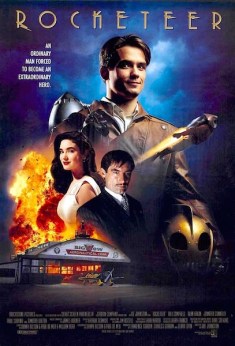 Based on an ’80s-created superhero modelled on the matinee serials of the ’30s and ’40s, The Rocketeer sets its scene in 1938, when stunt pilot Cliff Secord (Billy Campbell) winds up in possession of an experimental rocket pack. Initially donning it as part of the stunt show, when Cliff uses it to rescue another pilot he, a) attracts the attention of the hoods who originally stole it, and b) discovers his true calling as a hero, etc. Throw in a love interest (Jennifer Connelly) who’s a Hollywood extra with connections to the swashbuckling film star (Timothy Dalton) who’s really behind the theft, and you’ve got yourself an adventure!
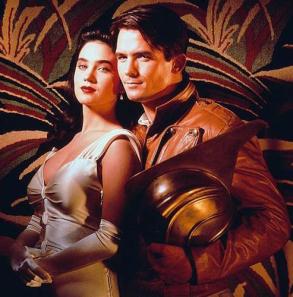 We all know effects alone do not make a good movie, but equally trying to make an effects-y movie when you can’t achieve said effects is a fool’s errand. Fortunately there’s some other derring-do to make up for it, and the climax atop a zeppelin isn’t at all bad.
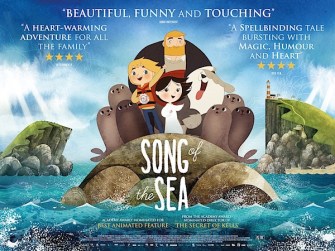 The second feature from director Tomm Moore and his pan-European team of animators (after the excellent, Oscar-nominated
 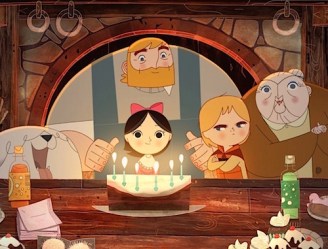 but the motivator for that is clearly resentment towards her for appearing the night his beloved mother left. Their father, too, is hamstrung by his grief, struggling to move on from his wife’s disappearance and fully engage with the world. His kids are his only connection, Saoirse in particular, but his mother makes him realise that clinging to them is damaging their lives too… or is it?
 all are factors that can, and do, elevate the film. Don’t get me wrong: this is a cut above your average animated adventure. I just didn’t enjoy it as much as The Secret of Kells.
 For more positives, Song of the Sea’s animation and design is at least as strong as it was in Moore’s previous film. There’s the ‘house style’ flattened, animated storybook look; a description which could sound like criticism but absolutely is not. Some very beautiful scenes are evoked, meaning that at the very least there’s always imagery to tide you over. I’d list some favourites, but we’d be talking about most of the film. That said, the depiction of a run-down, smoggy Dublin stands out as something different from the countryside idylls of Kells and the rest of the locales in Song of the Sea, but it’s not exactly “beautiful”. Rather, look to the island home of our heroes, a tall rock surrounded by the blue sea; the home of the glowing-eyed long-haired Seanachai (the moment when it suddenly turns around in the montage after Saoirse uses her coat for the first time is my favourite shot in the film, a little sliver of fantasy imagery that magnificently teases what’s to come); or the small sanctuary surrounded by a field of stinging nettles — again, a kind of gentle, on-the-edge-of-the-real-world fantasy that quite appeals to me. The fact the countryside is littered with half-hidden stone figures, which we know to be frozen magical begins, is another nice touch; especially as they’re often surrounded by human litter, the analogy (as I see it) being both that people exist around them but don’t even see them, and also that, presumably through our modern disbelief, we’ve thrown these legends out with our trash.
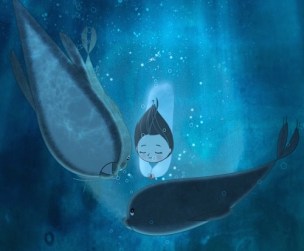 Even as I write, I’m talking myself round to liking Song of the Sea even more than I did on first viewing — and that was quite a lot, albeit coloured by my perception that I didn’t like it as much as The Secret of Kells. If you enjoyed Moore’s earlier film, this unquestionably merits seeking out (if you haven’t already, of course; I mean, I did). If you haven’t seen Kells, well, you’ve so far missed a treat; and now you’re missing two.
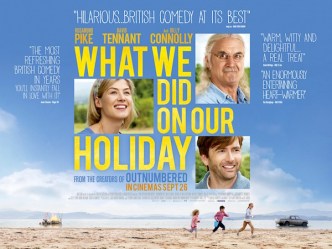 “
“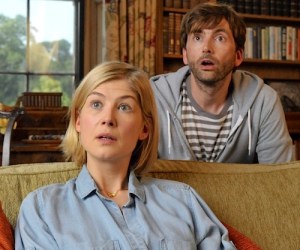 For some, the shift may scupper things. For me, it only makes it better: the story’s pathos and emotion are brought into focus, and the humour becomes all the funnier for punching in as tonal relief. It often seems to me that movies struggle to stay amusing for a full feature running time (there’s surely a reason all TV comedy comes in 30 minute chunks), but this story allows Hamilton and Jenkin to spread the laughs out a little without them feeling few or far between.
 including the likes of Ben Miller, Amelia Bullmore (getting the best subplot), Annette Crosbie and Celia Imrie. The real grown-up star, however, is Connolly. You get the sense he’s as scriptless as the kids are, improvising away with a mischievous twinkle in his eye, like some kind of idealised fun granddad. The scenes with just him and the kids are certainly one of the highlights, among the most amusing and the most affecting.
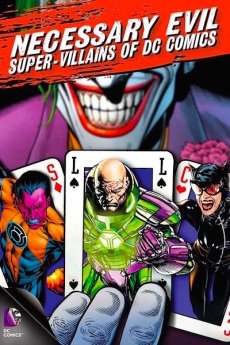 Christopher Lee narrates as a bunch of talking heads (writers, actors, psychologists) discuss the titular. The topics are quite universal — the psychological underpinnings apply not just to DC, not even just to comics, but to all fiction. Side effect: DC’s villains don’t always look so special.
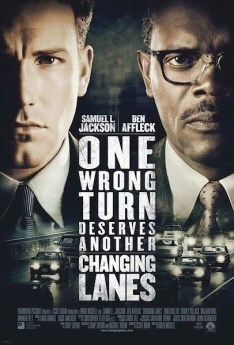 Hot-shot lawyer Ben Affleck and down-on-his-luck Samuel L. Jackson are involved in what Americans like to assonantly call a fender bender, making the latter miss a custody hearing and the former lose an important document worth millions… which Jackson happens to pick up. Cue a game of tit-for-tat retaliation, as Affleck tries to recover the file by ruining Jackson’s life further, and an increasingly-desperate Jackson enacts increasingly-violent revenge.
 I don’t know why they bothered). The worst offender is David Arnold’s score — all turn-of-the-millennium club-y electronic-drum-kit-y beats, for a character-driven drama/thriller? Ugh.
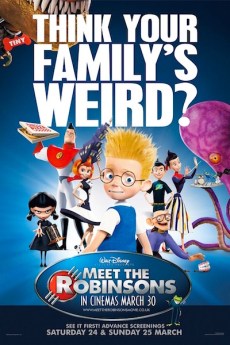 Disney’s 47th Animated Classic comes from their weak ’00s period, after the end of the so-called Renaissance and before what’s apparently been dubbed the neo-Renaissance (presumably no one could think of a synonym). This hails from the tail end of that lamentable era, though, so there are signs of recovery: Meet the Robinsons isn’t bad, just mediocre.
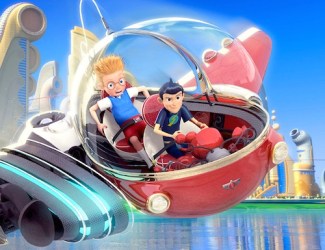 The time travel element of the plot is weakly thought-through. It’s not the point of the film, which is more about family ‘n’ stuff, but it’s central enough that it robs the already-underpowered climax of much weight — you’re too busy thinking “wait, does that make sense?” to be invested in events. Finally, the animation style has aged badly, now looking plain and under-detailed.
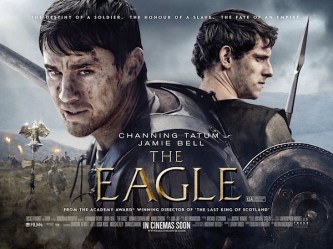 Channing Tatum is a brave Roman general whose father lost his company’s standard, the titular eagle, north of Hadrian’s Wall (a real historic event, coincidentally depicted in
 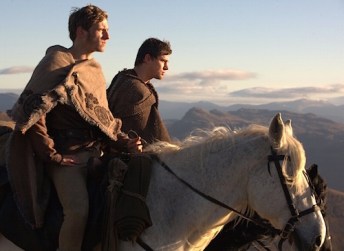 quality to the setting, characters, and imagery that’s quite striking.
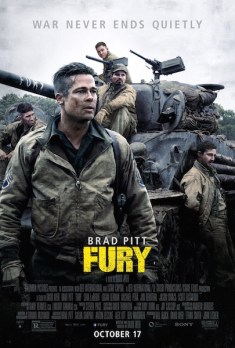 I don’t believe there are very many movies about tanks — there’s
 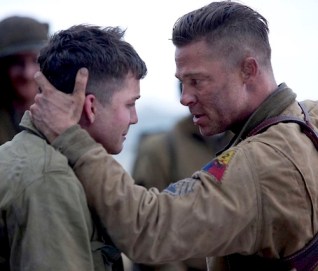 Most of the characters exist in a moral grey area, something which some reviewers seem to struggle with. From the off, our ostensible heroes are not shown in a particularly pleasant light, committing or encouraging acts we would view as unconscionable. As the film goes on, it seems like we’re being invited to bond with them, to respect or admire them. I’m not sure that’s a wholly accurate reading of it, though. I think we’re being shown different sides to them — much as Norman is, in fact. At first you see the depths they have reached; then, as you get to know them, you see a little more of their true (or at least their pre-corrupted-by-war) characters. Does this redeem them or excuse their actions? Well, that’s your decision. I don’t think the film is predicated on you coming round to their way of thinking. Without meaning to spoil anything, it’s not as if the meta/karmic world of plot construction lets them off scot-free by the end. Of course, whether we need our focus characters to be clean-cut heroes or whether complex morally-grey/black characters are preferable is another debate.
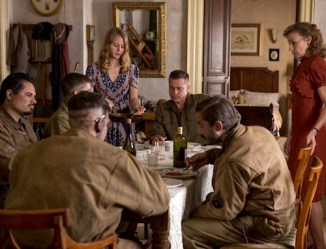 This is a scene most reviews seem to single out, I’ve since realised, but that’s for good reason: even watching it cold, the powerful writing, direction and performances mark it out as a sequence that transcends the movie it’s in. Again, it’s the unpredictability of what these men might do; the grey area of the guys we’re meant to think are the heroes not always being heroic.
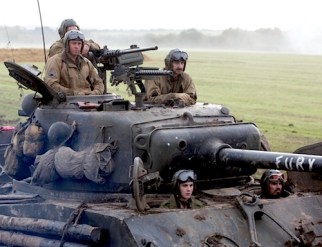 I think Fury is a rather rewarding movie for those that can, though. The fact it provokes debate is no bad thing — I think it’s a misinterpretation to read the film, as some online commenters clearly have, as “these guys do horrible things, but they’re the main characters and the not-Nazis, so I must be meant to like them, so the film is bad”. Well, I suppose it’s not news that some people struggle with cognitive dissonance. On the flipside, I don’t think you’re meant to outright hate them — there’s an element of “the Allies did bad things too, y’know” about the film, but that’s not its sole aim. I think it’s more complicated than that, and, naturally, all the better for it. Even on a more surface level, though, there’s adrenaline-pumping excitement to be had from the well-realised action scenes. It’s a combination that worked very well indeed for me, and if my score errs on the side of generosity then, well, consider it redressing the balance.
 100Films.co.uk