

Colin Trevorrow | 82 mins | TV | 2.35:1 | USA / English | 15 / R
WANTED. Someone to go back in time with me. This is not a joke. You’ll get paid after we get back. Must bring your own weapons. Safety not guaranteed. I have only done this once before.
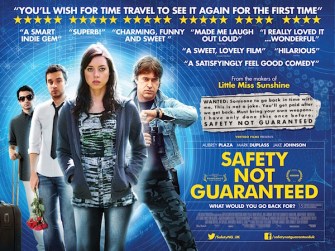 The debut feature from the director of all-conquering box office behemoth Jurassic World, Safety Not Guaranteed is a small-scale indie comedy that may or may not have a sci-fi twist. Inspired by a real newspaper ad (actually written by a bored editor), this fictional version sees three journalists from a Seattle magazine tracking down the guy who placed the ad in order to find out the true story behind it.
Despite the unique-sounding premise, much of the film plays as a pretty standard indie romantic-comedy-drama. You’ve got Aubrey Plaza as the girl who never quite fit in; Mark Duplass as a geeky loner with a heart of gold who (spoilers!) she falls for; Jake Johnson as a thirtysomething returning to his small hometown after years in the big city to reconnect with a lost love… If it’s beginning to sound like a checklist of indie plot points then, well, it’s not that bad — this isn’t Indie Movie. While none of the story threads unfold with as much uniqueness as the initial set-up promises, and do occasionally nudge towards thumb-twiddling familiarity, they’re not so rote as to be a total write off. Towards the end, it’s even managed to build up enough steam to offer an effective and somewhat affecting final act.
Trevorrow’s direction is solid. There’s nothing wrong with it, but equally I saw little to mark it out from any other low-budget indie dramedy. I don’t see what here particularly earnt him the instantaneous fast-track move to mega-budget blockbuster-making — directors who previously made that leap at least had the courtesy to go via a mid-budget feature or two following their dirt-cheap debut.  Maybe I’m missing something, I don’t know, but where other directors currently making a similar transition (Gareth Edwards, Josh Trank, Duncan Jones) showed some signs of a reason for the upgrade in their debut and/or sophomore features, I can’t fathom what singled Trevorrow out. He seems to have done alright with it though, so never mind.
Safety Not Guaranteed has enough tweaks to the expected format that fans of the genre will lap it up (as evidenced by any online comment section you choose to check out), and I guess casual viewers who are predisposed to its particular set of traits will like it more than they like other examples of the same; but, the closing moments aside, I don’t think it’s anything like as unique as some people seem to think it is.

Safety Not Guaranteed is on Film4 tonight at 12:10am.
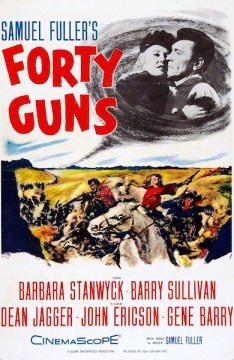 Western with Barbara Stanwyck as a powerful landowner, and commander of the titular posse, whose bullying brother, Brockie, is consequently allowed to run riot over the town. Enter lawman Griff (Barry Sullivan) and his two brothers, whose moves to bring Brockie in line kickstart a chain of ruinous events.
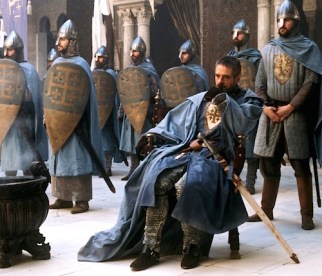
 Ridley Scott’s Crusades epic is probably best known as one of the foremost examples of the power of director’s cuts: after Scott was forced to make massive edits by a studio wanting a shorter runtime, the film’s summer theatrical release was so critically panned that an extended Director’s Cut appeared in LA cinemas before the end of the year, reaching the wider world with its DVD release the following May. The extended version adds 45 minutes to the film (and a further 4½ in music in the Roadshow Version), enough to completely rehabilitate its critical standing.
 A strong cast bolsters the human drama that sometimes gets lost in such grand stories. Bloom is a perfectly adequate if unexceptional lead, but around him we have the likes of Michael Sheen, David Thewlis, Alexander Siddig, Brendan Gleeson, and Edward Norton (well done if you can spot him…) There are even more names if you look to supporting roles. Most notable, however, are the co-leads: both Liam Neeson, as the knight who recruits Balian, and Jeremy Irons, as the wise advisor when he gets to Jerusalem, bring class to proceedings, while Eva Green provides mystery and heart as the love interest. Of everyone, she’s best served by the Director’s Cut, gaining a whole, vital subplot about her child that was entirely excised theatrically. It’s the kind of thing you can’t imagine not being there, and Scott agreed: it seems the chance to restore it was one of his main motivators for putting together a release of the longer version.
 (I’d wager
 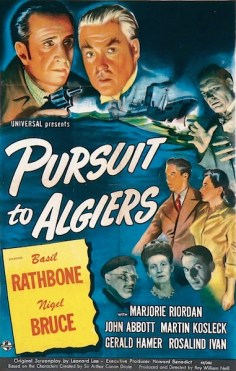 After a fun opening where Holmes and Watson have to solve the world’s most obvious riddle (naturally, Watson is completely oblivious to there even being a riddle), the original dynamic duo are tasked with escorting the heir to the throne of somewhere-or-other back to his homeland, thwarting assassination attempts as they go.
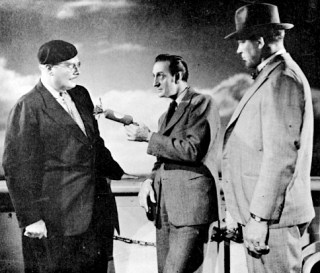 each of which he thwarts last-minute in sometimes amusing fashion. That’s not fundamentally a poor premise for an adventure comedy, I don’t think, but it doesn’t work for Sherlock Holmes. I mean, if you’re trying to prevent someone from being assassinated, why would you let the assassins carry on?! A last-minute twist reveals a sort of motivation, but it’s not a particularly convincing one in my book.
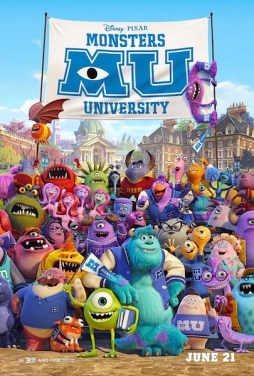 Pixar’s fourth sequel is more
 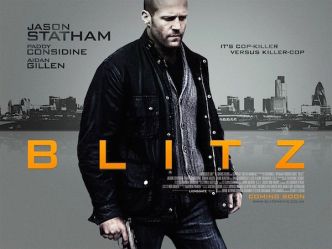 Jason Statham plays the kind of copper who wakes up on his sofa in the middle of the night, immediately pours himself a whiskey in a mug, then goes out and beats up three youths who were trying to nick a car, in this godawful crime novel adaptation.
 At least it has some so-bad-they’re-good one-liners — “Aren’t you going to take any notes?” “Do I look like I carry a pencil?” Unfortunately, their presence meant the thing Blitz most reminded me of was
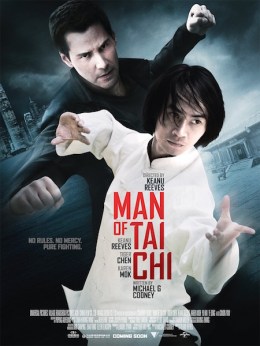
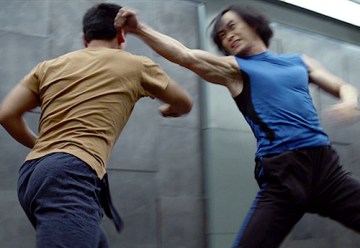 Some have opined that it’s over-edited. Early on I thought it was a mite too chopped up (during a plain old dialogue scene, funnily enough), but for most of the film it’s fine. Fast at times, sure, but so’s the fighting. There’s a style and rhythm to it all — some near-montage-like sequences are surely meant to be exactly that — and the fighting is never needlessly obscured, because (unlike in so many Hollywood action movies) these guys can actually do it and Reeves wants to show us that. He really focuses on them, too. These aren’t fights as part of elaborate chase sequences, or action interludes whose drama is reliant on the sheer volume of competitors being offed. Nearly every bout is one-on-one (there’s a single instance of two-on-one), all executed in nondescript rooms or arenas. It’s the straight-up fight choreography that does the talking here.
 A mention also for the score by Kwong Wing Chan. Apparently it’s made up of “Techno-styled, bass-heavy beats” or something (I got that from another review). Not the kind of music I normally listen to for pleasure, but its pounding electronic rhythms fit here, making their presence felt while never crossing into the over-dominance that kind of music is wont to do.
 Action comedy starring John Cusack as a hitman who has to face the life he left behind when he’s assigned a job in his hometown on the same weekend as his high school reunion.
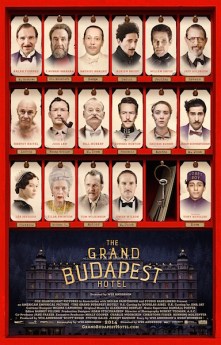 The latest from cult auteur Wes Anderson, which managed that rare feat of enduring from a March release to being an awards season contender, sees the peerless concierge of a magnificent mid-European hotel (Ralph Fiennes) accused of murdering a rich elderly guest (Tilda Swinton, caked in Oscar-winning prosthetics) and attempting to flee across the country to clear his name. More or less, anyway, because this is a Wes Anderson film and so it takes in all kinds of amusing asides, tangents, and recognisable cameos.
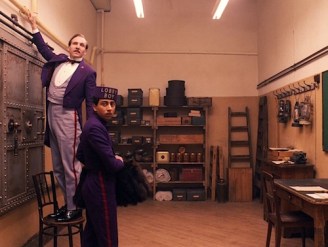 I suppose the kooky idiosyncrasies of Anderson’s brand of storytelling and filmmaking will rub some viewers up the wrong way, looking on it all as vacuous affectations signifying nothing. To each their own, but, whatever the merits (or not) of Anderson’s style as a kind of one-man genre played out across his oeuvre, The Grand Budapest Hotel displays a synthesis of contributing elements that creates a movie that’s ceaselessly inventive, surprising, amusing, and entirely entertaining.
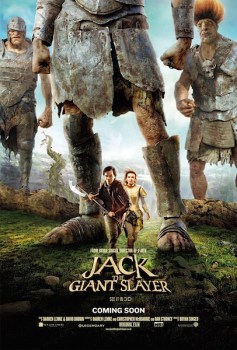 The influence of Peter Jackson’s
 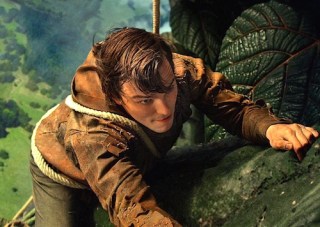 A computer-animated prologue wants to be the one from
 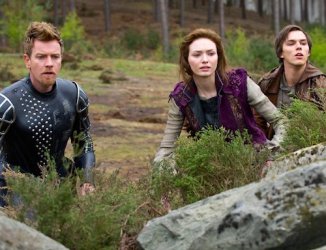 overacted characters, and bright-and-cheerful CGI are more or less acceptable, in a “it’s no classic but it’ll pass two hours just fine” kind of way. Produced on those kinds of terms, this might have passed muster for some. Might.
