
Say hello to the new-look, bigger-than-ever 100 Films monthly update! Well, partially new look — much is the same, but there are some exciting new regular categories, and image-header-things. I had some ideas; I’ve introduced them all at once. (They excited me, anyway.)
First new regular: a contents list!

- This month’s What Do You Mean You Haven’t Seen…? film(s)
- June’s viewing in full
- Viewing notes on and analysis of the above
- The Arbies: The 1st Monthly Arbitrary Awards
- Other writing from around the blogosphere…
- All the new reviews I published in June
- All the archive reviews I re-published in June
- The return of the List of 5!
- Finally, the briefest, most pointless look ahead to next month…

Just one WDYMYHS film watched this month (so I’m still two behind) — it’s Martin Scorsese’s beloved boxing biopic (that I should’ve watched in 2013 but failed to), Raging Bull. I would make a brief comment on what I thought of it, but we’ll come to that in the Arbies…

 #75 Changing Lanes (2002)
#76 Kingsman: The Secret Service (2015)
#77 The Expendables 3 (Extended Version) (2014)
#78 Ladyhawke (1985)
#79 Now You See Me (2013)
#80 The Interview (2014)
#81 Safety Not Guaranteed (2012)
#82 Superman vs. The Elite (2012)
 #83 Rush (2013)
#84 Whiplash (2014)
#85 Meet the Robinsons (2007)
#86 Before Dawn (2012)
#87 The Guest (2014)
#88 Raging Bull (1980)
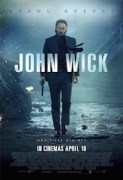
#89 John Wick (2014)
#90 Fury (2014)

- Meet the Robinsons is the 47th official Walt Disney Animated Classic, and the 39th I’ve seen. 15 to go…
- I have a whole new format and I make this entire section look pointless with one “oh, by the way” bit of trivia, which is less than I normally have to say here, I feel. Ah well, what can you do?

2015 continues apace with 16 new films watched this month. That smashes the June average of 7.14 — indeed, reaching #90 singlehandedly drags it up over a whole film, to 8.25. It’s the highest June ever, which also means it’s the 8th month in a row to beat last year’s equivalent (June 2014 had 11). It’s the 13th month in a row in which I watched more than 10 new films, and is tied with January as both the highest month of 2015 and the third-highest month ever (also tied with May & August 2010). That means that, at 2015’s halfway point, its monthly average is exactly 15.
Most excitingly of all, however, is that I’m now all but guaranteed to reach #100 in July. I’d have to fail my ten-films-per-month goal not to, and I’ve been doing really well with that so have plenty of incentive not to let it slip. More on what reaching #100 in July ‘means’ next month (hopefully!)
Over in Prediction Corner: assuming I uphold my ten-per-month minimum, this year will reach at least #150, which would be my best year by some 14 films. In other words, we should know if 2015 is a new Best Year Ever by November at the latest. (Unless I mess up ten-per-month but then still pass 136 in December, of course.) Meanwhile, in the world of averages… well, we’re halfway through the year, so such a prediction would see my tally exactly double, clocking in at a quite extraordinary 180. (Extraordinary for me, anyhow — stow it, you “365 films in a year” people!)

I’ve been posting these regular monthly updates for over five years now, and in all that time they’ve been very much focused on numbers and stats — how many films have I watched, how does that compare to the past, what does it suggest for the future, etc. And that’s fair enough — as progress reports, it’s kinda their point to report my progress. But I’ve decided it’s about time to introduce some opinion into the mix, to liven things up a bit. So I proudly present…

The 1st Monthly Arbitrary Awards
 So named because what I watch in any given month is pretty arbitrary, so the pool of contenders is a total whim rather than a genuine competition. Plus, each month two of the five categories are going to be arbitrarily chosen, just to compound the point. You’ll get the idea as we go along.
That’s Arbie on the right, by-the-way. In case that wasn’t obvious. (Turns out Arbie is also the name of the mascot of the Royal Bank of Canada. I don’t think anyone’s going to get us confused though, so on I go.)
For June 2015, the awards go to…
Favourite Film of the Month
I watched a number of very good films this month, several of them strong contenders for my year-end top ten, but when it came to the crunch there was a clear winner here: as anyone who read my review yesterday likely suspects, it’s The Guest.
Least Favourite Film of the Month
Although there were a couple of weak and/or disappointing movies amongst my viewing this month, and some I certainly liked less than this winner (or, rather, loser), for the greatest discrepancy between “expectation” and “what I actually thought of it”, this goes to Raging Bull.
The Most ’80s Soundtrack You’ve Ever Heard
Most months The Guest would have this sewn up, but oh no, not when Ladyhawke’s around. Can you imagine anyone doing a fantasy movie without a Howard Shore-esque orchestral epic soundtrack nowadays? Me either. In the ’80s, on the other hand… well, they sure did love their synthesisers.
Most “Oh, I Didn’t Know They Were In It” Cameo Appearance
If all you’ve seen of John Wick is the Keanu Reeves-centric posters, it’s probably riddled with moments such as these. Me, I somehow knew most of them, so this award goes to Jason “should’ve played James Bond at some point” Isaacs popping up in Fury as some kind of commander for a little bit. The Blu-ray has nearly an hour of deleted scenes; to my surprise, “the rest of Jason Isaacs’ role” doesn’t seem to be among them.
The Audience Award for Most-Viewed New Post of the Month
Because if I didn’t limit it to new posts, this would be Harry Potter every month (across 2014 and 2013 (the year they were first published), my reviews of Philosopher’s Stone and Chamber of Secrets accounted for 33.5% of all my page views).
This month: thanks primarily to being retweeted by a Keanu Reeves fan twitter, the victor is Man of Tai Chi.

I am shockingly bad at getting round to reading other people’s blogs, and when I do it’s often in fits and starts (as anyone who’s ever received half-a-dozen ‘likes’ from me on things they posted a month ago can attest). In the interest of being a better human being, then, I thought I’d start collating particularly interesting pieces from elsewhere and share them here, for whatever that’s worth.
There’s no particular rhyme or reason to my choices, just a handful of pieces that struck a particular chord for me this month. For one thing, there’s a pair of coincidently-thematically-similar pairings from the same two blogs. One of those is up first:
1976, the year it all started… @ the ghost of 82
ghostof82 tackles the emotions of what makes us love movies in the first place, through his own experience with Jaws in ’76.
Jurassic Park (1993) @ Films on the Box
Mike touches on a similar topic from a different angle: how films that are cinema-defining for a generation can appear to those outside said generation.
Evangelion June 22, 2015 @ Heather Anne Campbell
Monday 22nd June 2015 was “Evangelion Day”, the day on which the first episode of anime series Neon Genesis Evangelion takes place. In this write-up, Heather Anne Campbell explains what the series means to her and, in the process, outlines some of the reasons it’s so good and has endured for so long.
Ten of the Best – Noir Directors @ Ride the High Country
Whenever I read Colin’s blog I come away with a raft of new films I want to see. You can only imagine how many got added to my list after this well-considered overview.
Miracle Mile (1988) Review @ Cinema Parrot Disco
Who doesn’t love stumbling across something they’ve never heard of that turns out to be right up their street? No idea if I’d like Miracle Mile, or even if/when I’ll have a chance to see it, but table9mutant’s review has me suitably intrigued. And is it just me or are the ’80s everywhere at the minute?
Movies Silently’s Top Ten Talkies @ Movies Silently
Talking of, a) recommendations, and b) the ’80s, silent cinema doyenne Fritzi took a detour from her regular stomping ground with this list (technically from last month, but rules were made to be bent). Any list of favourites that includes Mystery Men is a good’un in my book, but the aforementioned ’80s recommendation is her #2 choice, medieval fantasy Ladyhawke. As you may’ve noticed above, it even managed to find its way to the top of my “must watch” pile (a rare feat). Full review in due course, but for now suffice to say I very much enjoyed it. I even thought the score had its moments.
RIP Christopher Lee @ Films on the Box
Finally, the second pairing I mentioned, on a sadder note. First, Mike pays fitting tribute to one of the great screen icons.
Remembering the Music of James Horner @ the ghost of 82
Last but not least, a personal tribute to composer James Horner.














































Film music has changed a lot down the years, but it’s been a pretty constant important element. Plenty of it is forgettable background noise, but some stands out so much it becomes famed in its own right. I recently re-watched the original Star Wars trilogy, inspiring this month’s top five: three film themes — plus two from other mediums — that, to me, are some of the most iconic of all.
- Doctor Who by Ron Grainer
 Diddly-dum diddly-dum diddly-dum ooo-weee-ooo… For generations of British children, that’s the sound of Saturday night adventure. I guess to some people it’s just a children’s TV theme, but they’re wrong: it was a genuinely pioneering, important example of burgeoning electronic music (honestly). As a composition it’s surprisingly versatile: Delia Derbyshire’s original arrangement is still chillingly unsettling 52 years on; Murray Gold’s 2005 version (arguably perfected in the Series Four version) is an equally-perfect orchestral blockbuster.
 - Star Wars (Main Theme) by John Williams
 Dooo-dooo dododo-dooodo dododo-dooodo dododo-doo… You could probably fill this list twice over with John Williams compositions — Indiana Jones, Jaws, Superman, Jurassic Park, more recently Hedwig’s Theme from Harry Potter, and so on — but undoubtedly the most iconic of them all is his main theme to George Lucas’ space-fantasy saga. Running it a close second is the same series’ Imperial March, perhaps the greatest villain’s theme ever. All together now: dum dum dum dum-dudum dum-dudum…
 - James Bond Theme by Monty Norman
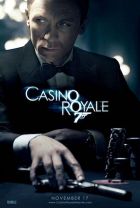 Dang da-dang-dang da-da-da dang da-dangdang da-da-da daa-daa da-da-daa… A 53-year-old surf rock tune should by all rights be horribly dated, but I guess true cool endures. While the version used in the films has barely changed, there are an abundance of variations for trailers, etc. My personal favourite is the one created by Pfeifer Broz. Music for the Casino Royale trailer in 2006. The climactic use of a choir is one of those “how did it take someone 43 years to think of this?!” moments.
 - The Fellowship Theme by Howard Shore
 Dooo-dooo dododooo, do-do-doo do-do-doo do-do-doo do do doo… The only one here that isn’t a title theme, but it’s indelibly part of the Lord of the Rings franchise — it has no reason to appear in The Hobbit trilogy, but I spent most of those eight hours missing it. It reoccurs throughout the trilogy (of course it does), but perhaps the purest version can be found in The Ring Goes South from the Fellowship soundtrack. “Only Peter Jackson and Howard Shore can make 9 people walking past a rock look epic.”
 - The Secret of Monkey Island by Michael Land
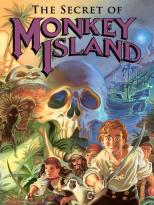 Doo-doo dodododo-doo do-do-do-doo… I’m certain this will be less familiar than any of the above to most people but, honestly, to me (and, I think, many other people who played the LucasArts games) it’s as iconic as anything else I’ve mentioned, including all of those other John Williams ones. The original was rendered in the style of its era — a digital MIDI thing — but it endured throughout the series and was transformed into some lusher orchestral versions. Try the version from the 2009 special edition, for instance.
I’m already full of incredulousness at myself for leaving out Indiana Jones. Or Back to the Future. Or Mission: Impossible. And it may’ve been composed by committee, but I love the main theme from Pirates of the Caribbean (find it cleanly in the first film’s He’s a Pirate). And if we’re allowing TV themes, what about Games of Thrones? I mean, this is pretty much what I hear every time I watch the show. And also… oh, we’ll be here forever. What are you favourites?

#100! Probably. Hopefully.
 May’s films in full
 #67 Hummingbird (2013), aka Redemption

















 2013 Academy Awards
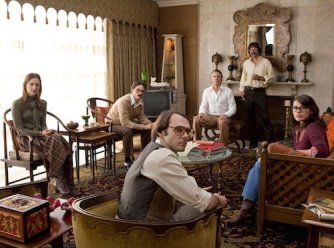
 Argo is probably the most traditionally entertaining from 2012’s crop of Best Picture nominees. I know a lot of people awarded that honour to
 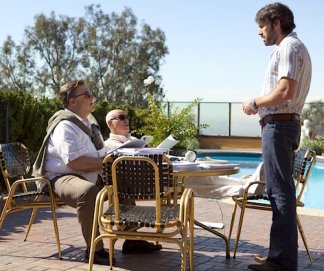 This is where we get the humour, mainly directed at the movie industry. Some say this is why it won the big awards: Hollywood loves a look at itself, and here it’s both satirical (“So you want to come to Hollywood, act like a big shot, without actually doing anything? You’ll fit right in!”) and congratulatory — after all, the plan goes ahead and so (spoilers) Hollywood saves the day. The film creates just the right balance between taking the mick out of Hollywood and bigging-up its role in saving some lives, while also not spending too long on this section that we forget the perilous situation on the other side of the world. After all, once all the fun and games in Tinseltown are over, it’s back to the serious business in Iran.
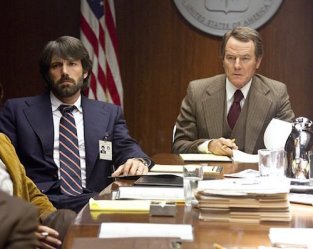
 That’s just artistic licence, really — it’s not as if these people were safe, they just had a damn good plan; and, as I said, you need a dramatic ending for a thriller. However, all the “chasing them down the runaway” stuff is a bit full-on and action-movie-ish. It’s not even accurate to how it would go in real life, if it had happened, because the militia’s cars would need to be travelling phenomenally fast to keep up with the plane, and they aren’t seen to be affected by its jets either. For me, the rest of the climax — the guards checking the ‘crew’ out, phoning the LA office, later running up to the control tower, etc — all works; assuming you accept the film is still a Hollywood thriller, not a fact-bound documentary, and so needs a suitably dramatic climax. It’s a shame they didn’t leave it at that, but not a deal breaker either.
 That was in the ’70s — adjusted for inflation, it comes to over $350 million. For a drama about a couple divorcing and arguing over custody of their kid! Today, it’d be lucky to earn a tenth of that, even if it was up for Oscars. But I digress.) It’s a surprising Oscar pick these days because it’s a genuinely enjoyable watch, rather than a gruelling look at something-or-other serious.
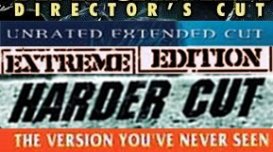 So many consumers hold off for the DVD these days, especially with the added quality offered by Blu-ray, that the old answer of “what was released in the cinema” doesn’t necessarily hold true any more. Filmmakers know some will be waiting for the DVD, so are less concerned with releasing a studio-mandated, shorter, mass audience friendly cut into cinemas when their fuller vision can be found on DVD. Equally, the PR people know that “longer cut!” and “not seen in cinemas!” and other such slogans can help sell DVDs, and so may be forcing needless and unwelcome extensions onto filmmakers. Then there’s all those older directors who think they’re doing a good thing finally getting to tamper with their film 30 years on, who may well be misguided.
 There remains one argument for clarity, I think. How does one guarantee that, in the future, the ‘correct’ version remains accessible? With new formats always coming along, there’s no assurance that every cut of a film will be released; with TV showings, there’s no assurance the preferred version will always be the one shown (though there’s another argument for how much the latter matters considering they already mess around with aspect ratios and edits for violence/swearing/sex/etc.) But then, even if a filmmaker makes it clear that their preferred version is the one that only came out on DVD/Blu-ray, what chance is there that unscrupulous disc / download / unknown-future-format producers or TV schedulers won’t just revert to the theatrical version by default?
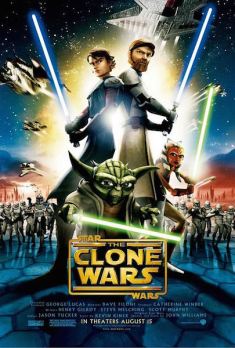 The Clone Wars can boast an awful lot of firsts within the
  Catherine Taber’s Padmé impression is probably the most convincing of the lot and, coincidentally sharing the same scenes, Corey Burton’s Truman Capote impression as Ziro the Hutt is entertainingly obvious. Count Dooku doesn’t particularly benefit from the involvement of Christopher Lee, but at least Samuel L. Jackson is vaguely recognisable lending his actual voice to Mace Windu. Most of the cast deliver the kind of performance you typically find in kids’ cartoons — i.e. not all that good, no doubt due to the pressures of producing as many episodes as possible as cheaply as possible. Dubious line readings abound, though in fairness this may be down to the awkward lines they’re forced to deliver.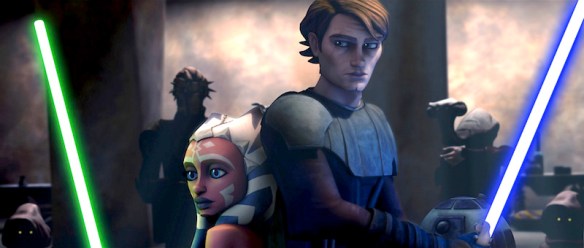
 It may sound like a piece of trivia that this was originally conceived as three episodes of
  it just doesn’t have the epic quality that imbued all the other Star Wars films. Not every film has to be an epic, even ones set within the same universe/storyline, but by wheeling out all the main characters and then showing them complete just one moderately low-key mission, The Clone Wars does feel like a single instalment of a TV series and not an appropriately-scaled cinematic experience.
 Another fan documentary (following yesterday’s review of

 Everything you remember about Episode I is still true: the plot is too mired in political machinations, the dialogue is truly dire, the acting frequently wooden, the direction flat, and Jar Jar Binks is as annoying as ever. There are some good bits — the pod race is exciting and the four-way climax works, especially the excellent lightsaber battle. A lot of the CGI holds up remarkably well, but equally a lot of it wouldn’t pass muster for a computer game now.
 Ten years on from Episode I and Anakin’s a fully fledged Jedi (almost), Padme’s a senator, and Obi-Wan has a beard. Episode II benefits from improved dialogue and performances. Unfortunately it’s still far from ideal — the overuse of CGI leaves much of it looking fake (this is, almost, an animated film with a few real actors in) and the first hour is blighted by a slow pace, too much plot, and the allegedly all-important love story in which Anakin and Padme fall in love because, well, the plot says they do.
 The sextet reaches its darkest point: Anakin turns to the Dark Side and slaughters the Jedi younglings before burning in the fires of Mustafar. It’s all very depressing. To the film’s credit, it doesn’t conclude; that’s to say, as the last film to be released you might’ve expected Lucas to bring things to a definite conclusion, but instead it ends with a sense that there’s more to come — exactly how things should be at the halfway point!
 Here it is: the big crossover; the moment of truth. How does it fare? Pretty well, actually. A long time has passed since the dark finale of Episode III and there’s undoubtedly a lighter feel (despite the Empire being in control!) C-3PO and R2-D2 are onboard the ship from the end of Episode III, a useful visual link as things almost start over — it’s Luke’s story now, and, with a new actor as Obi-Wan, it’s only the droids and Darth Vader who are recognisable from before.
 There are a variety of elements in the series’ penultimate film that have a very different impact in light of what we’ve experienced in the first trilogy. The most obvious is the revelation that Vader is Luke’s father: it’s no longer a twist, of course, but the emotional impact on Luke still makes it an important moment. Yoda’s line, “There is another”, is less mysterious, as is Luke’s ability to telepathically alert Leia near the end. Thank God their kiss is only a brief moment of humour though!
 Considering it’s the grand finale, it’s perhaps surprising that Episode VI is largely the lightest of all the films, filled with extra humour and all those cute little Ewoks. Personally, I like the Ewoks — they make me laugh, go “aww”, and it’s sad when they die! Yoda’s death is another sad moment, and even more so having seen him in full action in the first three films. The threat posed by the Emperor is also even more apparent, there’s more of a sense that Luke truly could follow in his father’s footsteps, and there’s added poetic irony in Darth Vader’s final decision — it is the same thing that caused him to turn to the Dark Side that saves him from it.
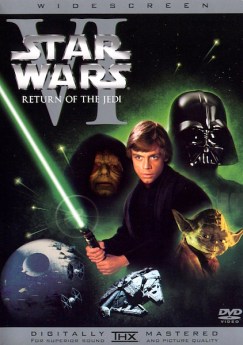 Again, there seem to be only minor differences or effects improvements here — it does make you wonder what the fans were kicking up such a fuss about! The main 1997 additions were shots of planets around the Empire following the destruction of the Death Star, and these actually improve what is otherwise a very low-key celebration. The main addition for the DVD is Hayden Christensen as Anakin Skywalker. It doesn’t work at all; in fact, it manages to make it look as if there was never anyone there at all.
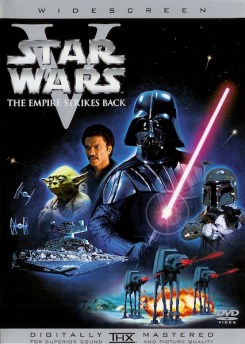 Little here is visually different from the ’97 Special Edition. Cloud City benefits from the CGI windows and lighting it was given back then, though the views look as fake as ever. The big change comes in dubbing both Boba Fett and the Emperor with appropriate actors from the prequel trilogy (as well as a few other minor audio tweaks).
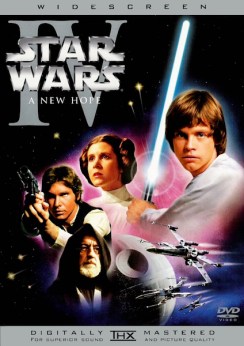 Much criticism has been made of Lucas deciding to modify the original trilogy for the 1997 re-release, and then further for the 2004 DVD release. It’s not necessarily unjustified, but it is sometimes picky. If Han shooting first bothered you, you may be a little pleased to know they now shoot at the same time.
 100Films.co.uk