Rogue One (2016)

aka Rogue One: A Star Wars Story

2016 #187
Gareth Edwards | 134 mins | cinema | 2.35:1 | USA / English | 12A / PG-13

This review contains major spoilers.

Rogue OneThe first live-action non-saga movie to take us to a long time ago in a galaxy far, far away, this initial entry in what is sure to be a never-ending series of so-called “Anthology” movies really puts the “War” into Star Wars.

It begins without the traditional opening crawl, which is somewhat ironic when you consider that, of all the Star Wars movies, this is the one that would most benefit from some scene-setting — fans are on a fairly sure footing, but casual viewers who still expect to see the further adventures of Rey, Finn, and BB-8 may be a little baffled. (And if you think the saturation media coverage will have prepared everyone, you’re underestimating Normal Folks’ capacity to be completely oblivious to movie news.) Anyway, where we actually are is 30-something years before The Force Awakens… but as this is a spoilery review you don’t need me to recap the plot, because you’ve not read this far if you haven’t seen the movie. Right? Good.

As I was saying, Rogue One is really a war movie, and is at its best when it’s consciously riffing off other (i.e. non-sci-fi) genres, like gritty World War 2 epics or daring heist thrillers. These are some new flavours for a franchise which has produced seven films in the action-adventure mould. Rogue One doesn’t deviate so far from that path — it’s a bit like Disney stablemate Marvel in that it mixes other-genre spice into the familiar recipe rather than striking out in a wholly different direction — but it’s enough to taste different.
HeistUnfortunately, the plot starts off almost as jumbled as my mixed metaphors there. “Jumbled” may be unfair, but it’s a little scrappy, initially jumping around all over the place in a way that’s tricky to follow even if you’ve read up on the film and have an idea who you’re being introduced to and why. It must be a right pain for neophyte viewers. There can be a fine line between praising a film for requiring its viewers to pay attention and do some work, and criticising it for being disarrayed and not making things clear. Personally, I thought Rogue One was sat right on that line for much of its first act, until a few big expositional infodumps come along to explain the storyline.

A primary cause of this is the number of characters we need to be introduced to. Presumably aiming for a Dirty Dozen / Magnificent Seven / men-on-a-missionpeople-on-a-mission… beings-on-a-mission vibe, it leaves things occasionally a little scattered until the team comes together. The resultant volume of heroes means the movie is arguably a little short on the kind of memorable characters Star Wars is loved for, although that doesn’t mean there isn’t good work here. Felicity Jones makes Jyn a likeable, moderately complex heroine, at least when she’s not delivering cheesy speeches. Ben Mendelsohn produces a reliably snake-like villain as Imperial Director Krennic, while Riz Ahmed once again injects a lot of personality into a somewhat underwritten supporting role. Donnie Yen and Jiang Wen make a solid double act who it would’ve been lovely to see more of in a sequel, and Alan Tudyk gets all the best lines as snarky droid K-2SO. Most ill-served are Diego Luna as a conflicted Rebel captain whose internal struggles aren’t fully brought out, Forest Whitaker as an ageing extremist, and Mads Mikkelsen, who is lumped mainly with exposition. The latter two at least bring extra-textual gravitas to their smaller roles.
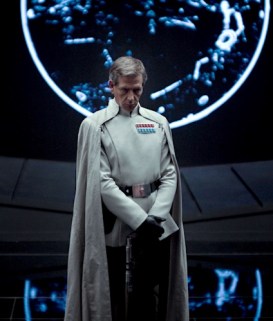
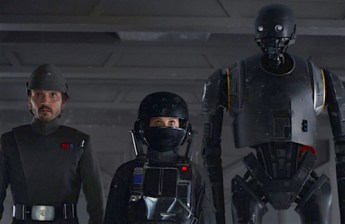
KrennicThen we come to perhaps the film’s most discussed character: Grand Moff Tarkin, played by Peter Cushing’s computer-generated face overlaid on the motion capture and voice of Holby City’s Guy Henry. Leaving aside the ethics of the enterprise, I found the character’s presence to be pretty distracting: you know it’s CGI and you can’t stop focusing on just Tarkin’s face, trying to judge how effective or not it is. For me, it proves that CGI isn’t yet quite up to creating a fully plausible human being. Your mileage will vary on whether it’s suitably competent nonetheless or an ill-conceived failure.

Elsewhere, there are tons of little nods to the wider Star Wars canon, including the animated series: Whitaker’s character actually comes from The Clone Wars, where he appeared in four episodes; and there are half-a-dozen background references to ongoing series Rebels, most prominently the ‘Hammerhead’ ship, which was introduced there. Lucasfilm do seem very keen to emphasise that all these different media really are one interconnected universe, unlike so many other cross-format franchises, which accept everything as canon until the main series decides they want to contradict it. For example, while I was on holiday recently I visited the Star Wars exhibition they currently have at Disney’s Hollywood Studios, which features various displays of, say, villain’s lightsabers or pilot’s helmets that put real-life recreations of ones from The Clone Wars and Rebels right alongside those from the original trilogy and the prequels as if that’s exactly where they belong. I must commend Lucasfilm for such an unusual commitment to institutionally tying these things together, rewarding the investment fans will inevitably make in doing the same. It does mean I feel I need to get on with watching the six seasons of Clone Wars and three (or more) seasons of Rebels, though.
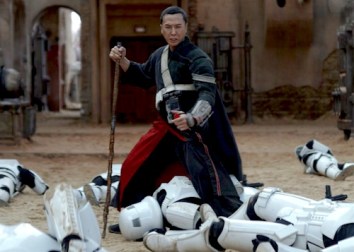
Donnie Yen: badassContinuing such comparison to the wider Star Wars galaxy, some have said Rogue One is the Empire Strikes Back of Disney-era Star Wars, because it’s the darker second (on the release schedule) film. Of course, the main reason it’s dark is that every major (new) character dies. You know what’s unique about Empire in the context of the entirety of live-action Star Wars movies? It’s the only one where no major character dies. Death isn’t the only signifier of darkness, of course, but my point is rather that I think people are grasping at straws if they think anyone inside Lucasfilm has consciously positioned Rogue One to serve an Empire-like role in their revived franchise. That doesn’t mean they’re not treating it seriously, mind: director Gareth Edwards has already revealed that the first draft had Jyn and Cassian survive the battle of Scarif, purely because the writers thought the execs would never agree to all the heroes being killed off, but those execs immediately suggested that everyone should die and that element was never questioned again. Yes, sometimes studio suits are actually on the side of narrative truthfulness.

Even if that got locked early on, other things certainly didn’t. The film’s reshoots made big news for no particularly good reason (it’s par for the course on blockbusters these days), but their results are easy to see thanks to the film’s trailers: there are a number of significant shots present there that didn’t make the final cut, suggesting some radically different events in the third act. You can watch a short compilation of those here. As far as I’m aware neither Edwards nor anyone else has said what was actually changed by the reshoots, but it would be interesting to find out. Considering the Scarif-set portion of the film is probably its most successful part, and that’s where the reshoots seem to have been focused, it might make a good defence of a process that is often seen as a sign of disaster (sometimes for good reason).

Star of deathMuch discussion of Rogue One seems to have revolved around whether it’s better than The Force Awakens. At the risk of sitting on the fence, I can see both sides. On the one hand, Edwards is a much more interesting filmmaker than J.J. Abrams. The latter is adept at aping the work of others, having now been in charge of multiple movies that are mostly derivative but nonetheless entertaining. Edwards’ career is still a little fresh and blockbuster-centric to risk describing him as an auteur, but his debut film was more indie than anything Abrams has even thought of creating, and his take on Godzilla attempted to be more interesting than the rote monster blockbuster it could’ve easily been. He brings similar qualities to Rogue One. On the other hand, that riskier take has resulted in a few fumbles, whereas The Force Awakens was a polished, crowd-pleasing entertainment. I’d hesitate to say I prefer one to the other because they provide slightly different thrills, but on a first viewing I did find Force Awakens more satisfying. Given time and distance, however, I wouldn’t be at all surprised to find Rogue One leapfrogging it in my estimations.

4 out of 5

Star Wars (1977)

100 Films’ 100 Favourites #88

A long time ago
in a galaxy far, far away…

Also Known As: Star Wars: Episode IV – A New Hope

Country: USA
Language: English
Runtime: 121 minutes | 125 minutes (special edition)
BBFC: U
MPAA: PG

Original Release: 25th May 1977 (USA)
UK Release: 27th December 1977
First Seen: VHS, c.1990

Stars
Mark Hamill (Batman: Mask of the Phantasm, Star Wars: Episode VIII)
Harrison Ford (American Graffiti, The Fugitive)
Carrie Fisher (When Harry Met Sally…, Star Wars: The Force Awakens)
Alec Guinness (Kind Hearts and Coronets, The Bridge on the River Kwai)
James Earl Jones (Field of Dreams, The Lion King)

Director
George Lucas (THX 1138, Star Wars: Episode I – The Phantom Menace)

Screenwriter
George Lucas (American Graffiti, Star Wars: Episode II – Attack of the Clones)

The Story
When he discovers a distress call from a beautiful princess, a young farmhand joins forces with an old warrior, a roguish pilot, his bear-like first mate, and a pair of bickering robots to rescue her — which involves taking on the evil galactic Empire, and in particular their chief enforcer: Darth Vader.

Our Heroes
Farm boy Luke Skywalker just wants to go off and join the rebellion, but little does he realise how much that path leads to his destiny. Helping him get there is smuggler Han Solo, who may come from a wretched hive of scum and villainy and is happy to shoot first at the same time as his opponent, but has a heart of gold really. The object of their mission, and both their affections, is the strong-willed Princess Leia.

Our Villains
A man in a black suit with breathing problems might not sound like one of the most effective screen villains of all time, but that’s what you get when you come up with pithy descriptions like that. In fact, Darth Vader is so badass, he’s not above choking members of his own side, the evil Empire — and they’re evil.

Best Supporting Character
R2-D2 is the best supporting character in every Star Wars film, but in this one we are also introduced to Obi-Wan Kenobi. A mysterious old man who inducts Luke into the ways of the Force, Obi-Wan is played by veteran character actor Alec Guinness, meaning he is bestowed with instant awesomeness. Not as handy with a lightsaber as he used to be, mind.

Memorable Quote
Darth Vader: “Your powers are weak, old man.”
Obi-Wan Kenobi: “You can’t win, Darth. If you strike me down, I shall become more powerful than you could possibly imagine.”

Quote Most Likely To Be Used in Everyday Conversation
“I have a very bad feeling about this.” — Luke Skywalker

Memorable Scene
It’s fair to say Star Wars is loaded with memorable scenes, but for pure effectiveness you’d have to go a long way to beat the opening sequence: giant spaceships flying overhead, blasting laser beams at each other; walking, talking robots bickering; a gunfight between men and armoured soldiers; and then Darth Vader, stalking into the movie like a sci-fi vision of Death himself.

Memorable Music
George Lucas wanted a score reminiscent of classic Hollywood movies to help inform audiences about what they were watching — that although it was set on alien worlds with giant spaceships and laser swords, it was a familiar kind of heroic adventure tale. Composer John Williams delivered exactly that, drawing on influences including classical composers, like Stravinsky and Holst, and film composers, like Erich Wolfgang Korngold (King’s Row) and Alfred Newman (How the West Was Won). He produced not only a great soundtrack all round, but arguably the most famous movie theme of all time.

Truly Special Effect
Star Wars did so much to break new ground in special effects, it’s difficult to know where to start. Some of it’s a little skwiffy (the lightsaber effects are notoriously problematic, their colours varying even in recent remastered versions), but the model work — the spaceships and their battles — is fantastic.

Letting the Side Down
Han shot first! *ahem* Yes, A New Hope is definitely the movie where Lucas’ unpopular Special Edition fiddling is it at its least liked, primarily for that bit where Han no longer shoots Greedo in cold blood. What do you have to do to get a merciless good guy these days, eh? Other changes have varying degrees of effectiveness: having extra X-Wings in the Death Star battle looks pretty neat, but the CGI Jabba the Hutt — complete with Han stepping jerkily over his tail — is terrible.

Making of
George Lucas screened an early cut of the film for a group of his director friends, most of whom agreed with him: it was going to be a flop. Brian De Palma even called it “the worst movie ever”. There was one dissenting voice: Steven Spielberg, who predicted it would be a huge hit. As if that man’s entire career wasn’t proof enough that he knows what he’s talking about…

Previously on…
Star Wars’ influences can be clearly traced back to the sci-fi cinema serials of the ’30s and ’40s, like Flash Gordon. In-universe, the saga begins with the Prequel Trilogy, and there’s shedloads of other spin-off media. Most pertinently, this December’s first live-action non-saga Star Wars film, Rogue One, should lead more-or-less directly into the start of A New Hope.

Next time…
Star Wars essentially inspired the next 39 years (and counting) of effects-driven summer blockbusters. It also started a mini-industry all of its own — well, quite a large industry, actually: films, TV series, novels, comic books, computer games, board games, role playing games, toys, clothes, lunch boxes… anything you can imagine, I’d wager. Primarily, the story is directly continued in The Empire Strikes Back and Return of the Jedi, and resumed in The Force Awakens, with more to come in 2017 and 2019.

Awards
7 Oscars (Editing, Score, Sound, Art Direction-Set Decoration, Costume Design, Visual Effects, Special Achievement Award for Sound Effects)
4 Oscar nominations (Picture, Supporting Actor, Director, Original Screenplay)
2 BAFTAs (Music, Sound)
4 BAFTA nominations (Film, Editing, Costume Design, Production Design/Art Direction)
13 Saturn Awards (Science Fiction Film, Supporting Actor (Alec Guinness), Director (tied with Spielberg for Close Encounters), Writing, Music (John Williams tied with himself for Close Encounters), Costumes, Make-Up, Special Effects, Editing, Sound, Art Direction, Set Decoration, Special Award for Outstanding Cinematographer)
4 Saturn nominations (Actor (both Harrison Ford and Mark Hamill), Actress (Carrie Fisher), Supporting Actor (Peter Cushing))
Won the Hugo for Best Dramatic Presentation.

What the Critics Said
“The battles, the duels, the special effects — and what special effects! Swords made of light, blasters shooting laser beams, exploding planets — it goes on and on. All the aging acid-heads who tripped out to Stanley Kubrick’s overrated 2001: A Space Odyssey, will go bananas over Star Wars. Not to mention comic-book freaks, science fiction and fantasy fans, lovers of old westerns, romances, mysteries and movies about the Crusades. In addition to being a slickly produced and highly entertaining adventure suitable for the whole family, Star Wars is richly evocative of a whole range of old film forms and I predict that entire books will be written on the sources, the religious symbolism, the mythological and historical allusions, and so on and so forth that Lucas has incorporated” — Robert Martin, The Globe and Mail (This review from the original release, before it was called Episode IV, also notes that it “opens like Episode 6 of a serial”. Good call, sir.)

Score: 93%

What the Public Say
“To this day, A New Hope is used as a primary example of storytelling. It perfectly establishes a world and introduces audiences to a protagonist that goes on his hero’s journey. There’s a reason that so much pop culture parodies and pays tribute to this film and it’s because of how near perfect it is. You have the Princess in peril still holding her own against what will always be one of the greatest movie villains of all time in Darth Vader. That is also one thing the prequels do that take away from this movie and the two that come after: They soften Vader. Vader is cold, ruthless, robotic, and menacing. Not someone who cries about his girlfriend. […] A New Hope just does everything the right way. When it wants you to be excited, you are. When it wants you to be sad, you are. John Williams contributed to this a great deal with his score; and Lucas’ use of practical effects to tell his story make it a masterpiece.” — Reed, We’re Not Sorry

Elsewhere on 100 Films
I’ve written about the original Star Wars trilogy twice before, both times back in 2007. Of A New Hope’s modified DVD version, I said that “there are a few extremely minor changes from the ’97 version… sadly, though, not to the CGI: Jabba still looks dire, not even as good as the Episode I version — CGI that was five years old by the time of this release.” Then, treating the film as the fourth part of the saga, I wrote that “the biggest change [from the prequel trilogy] is in tone: I to III present an epic fantasy story, full of wizard-like Jedi, intricate galactic politics, and ancient prophecies; by contrast, A New Hope is straight-up action/adventure, far more concerned with gunfights, tricky situations, exciting dogfights, and amusing banter than with whether the President has been granted too much executive power.”

Verdict

In my post on The Empire Strikes Back, I said it wasn’t actually my favourite Star Wars film. For all the popularity the series has as a whole, there’s only really one other possible contender for that crown: the first one. By which I mean this one, not Phantom Menace. Here, Lucas almost instantly conjures up a universe that feels wholly-imagined and genuinely lived-in (which is part of the reason people ended up so disappointed by the made-up-as-they-went-along, fill-in-the-blanks prequel trilogy). Throw in an array of likeable and entertaining characters, plus groundbreaking special effects, and you’re on to a winner. The plot may just be a classical hero narrative, but it’s in space and has laser swords — that counts for a lot.

Next: #89 ! Fuck yeah!

Return of the Jedi (1983)

100 Films’ 100 Favourites #73

Return to a galaxy far, far away.

Also Known As: Star Wars: Episode VI – Return of the Jedi

Country: USA
Language: English
Runtime: 132 minutes | 135 minutes (special edition)
BBFC: U
MPAA: PG

Original Release: 25th May 1983 (USA)
UK Release: 2nd June 1983
First Seen: VHS, c.1990

Stars
Mark Hamill (The Empire Strikes Back, The Guyver)
Harrison Ford (Indiana Jones and the Last Crusade, Patriot Games)
Carrie Fisher (The Empire Strikes Back, The ‘Burbs)
Anthony Daniels (The Lord of the Rings, Star Wars: Episode I – The Phantom Menace)
Peter Mayhew (Star Wars, Comic Book: The Movie)

Director
Richard Marquand (Eye of the Needle, Jagged Edge)

Screenwriters
Lawrence Kasdan (Raiders of the Lost Ark, Silverado)
George Lucas (American Graffiti, Star Wars: Episode III – Revenge of the Sith)

Story by
George Lucas (Indiana Jones and the Temple of Doom, Radioland Murders)

The Story
As the Galactic Empire construct a new Death Star, Jedi-in-training Luke Skywalker — the Rebel Alliance’s best hope of defeating the evil Darth Vader — is busy rescuing his friend Han Solo from the clutches of crime lord Jabba the Hutt. Meanwhile, the powerful Emperor waits, intending to convert the young Jedi to the Dark Side…

Our Heroes
Luke Skywalker: Jedi Knight.
Han Solo: defrosted resistance captain.
Princess Leia: sister, love interest, bikini-wearer. Is it just me or does Leia get a pretty poor deal as the trilogy goes on?

Our Villains
Quite possibly the greatest villain ever created for the movies, Darth Vader. Here he’s on an arc of redemption, so there’s also the Emperor, who has the appearance of a wizened old man but is strong in the Force. As Vader himself puts it, “the Emperor is not as forgiving as I am.” Uh-oh!

Best Supporting Character
R2-D2 is the best supporting character in every Star Wars film, but in this one we are introduced to Jabba the Hutt (well, unless you watched Episode I or the New Hope Special Edition first). A giant, fat, slug-like crime lord who is impervious to Jedi mind tricks and apparently has a fondness for metal bikinis, he’s as physically repulsive as are his methods and mores.

Memorable Quote
“Many Bothans died to bring us this information.” — Mon Mothma

Quote Most Likely To Be Used in Everyday Conversation
“It’s a trap!” — Admiral Ackbar

Memorable Scene
The speeder bike chase — arguably the best action sequence in the entire original trilogy. Considering this is a series of films that include three or four duels with frickin’ laser swords, that’s some feat.

Memorable Music
John Williams’ music is an essential part of the Star Wars experience. While no single tune in Jedi is as iconic as the Main Theme from A New Hope or the Imperial March from Empire, the overall score is as good as ever.

Technical Wizardry
The background plates for the speeder bike chase were captured by having a Steadicam (operated by the system’s creator, Garrett Brown) walked through a forest while filming less than one frame per second. When played back at regular 24fps, this 5mph stroll came out more like a 120mph hurtle. They spent three days filming to get enough footage for the whole sequence.

Truly Special Effects
These days, the answer to the question “how did they do that?” is “CGI”. Back in the ’80s, however, they had to be a bit more creative — leaving an abundance of achievements worthy of inclusion here. For example, the shot where the Imperial fleet spring their trap on the Rebels was the most complex matte shot ever attempted, with dozens of separate model elements having to be printed in. Or there’s the puppet work. Jabba was full-size, of course, and the 2,000lb costume was operated by four puppeteers: one for his right arm and jaw, another for his left arm and tongue, both of whom moved his body; another had a cable control to move the mouth and nostrils, using his feet to work bellows to simulate breathing; and the fourth moved his tail. Plus the smoke for when Jabba uses his pipe was apparently created by someone smoking a cigar and blowing it up a tube. For the Rancor, on the other hand, Lucas wanted to use a Godzilla-style man in a suit, but the tests didn’t work very well. The final result is not stop-motion, as you might expect, but an 18-inch rod puppet. Filming it was treated as a live-action shoot, though various techniques were used to conceal the methodology, like slow-motion or running the film backwards — anything they could think of to help remove the sense of “Muppet-ness”.

Letting the Side Down
When it comes to Lucas’ Special Edition fiddling, most people focus on the “Han shot first” complaint. Personally, I find the change at the end of Jedi — where Hayden Christensen has been pasted over Sebastian Shaw as Anakin’s Force ghost — more egregious. That said, the stupid song & dance number in Jabba the Hutt’s palace runs it a close second. On the bright side, the added shots of planets around the Empire celebrating the destruction of the Death Star helps aggrandise an otherwise low-key post-climax celebration.

Making of
So, that metal bikini, eh? What a blatant bit of fan service by that dirty old George Lucas! Well, apparently it actually came about because Carrie Fisher herself complained about her all-covering costumes in the first two films meaning you couldn’t tell she was a woman. Costumer Aggie Guerard Rodgers’ design was inspired by the work of famed fantasy artist Frank Frazetta, but whoever decided it should be made as such a rigid piece wasn’t thinking ahead: the solidness of the top meant it didn’t move with Fisher’s body, and she refused to use double-sided tape, so before each take someone from wardrobe had to (to quote IMDb) “ensure that her breasts were still snug inside the costume”. Nice work if you can get it. Nonetheless, several scenes had to be reshot due to what we now call “wardrobe malfunctions”.

The Ewok Line
To quote from the How I Met Your Mother Wiki, “The Ewok Line correlates the birth year of a person and the subsequent appreciation of Ewoks […] Those born on or before May 25, 1973 have a low appreciation of the film’s creatures, while those born after this date have an affinity for them. This is because those who saw the Ewoks in Return of the Jedi, which was released theatrically on May 25, 1983, who were 10 or under still loved their teddy bears, giving them an increased appreciation for the Ewoks.” I was born in 1986 and, yes, I love Ewoks. I mean, how can you not enjoy their silly mix of teddybear cuteness, gobbledegook language, and Empire-beating military competence?

Previously on…
Return of the Jedi picks up on the cliffhanger from The Empire Strikes Back, which of course continued the story of Star Wars. Many, many other films, TV series, novels, comic books, computer games, and whatever other media you can think of, take place before and around these movies.

Next time…
Ooh boy… Well, primarily: 16 years later, George Lucas returned to the world he created for the infamous Prequel Trilogy, finally filling in those missing first three Episodes. Chronologically, the saga picks up after Jedi with last year’s Episode VII: The Force Awakens, and will continue in Episodes VIII and IX. Aside from those main tenets, there’s an unimaginable mass of stuff in what’s known as the Star Wars Expanded Universe: TV series, novels, comic books, computer games, and anything else you can imagine — and it’s only going to continue growing in the future. Most of what was generated before Disney bought Lucasfilm may have been wiped out by whoever’s in charge now, but that doesn’t mean people don’t care about what went on in it. Of particular note is Timothy Zahn’s Thrawn trilogy of novels, which kickstarted the prominence of the Expanded Universe, and which many fans used to view as effectively being Episodes VII, VIII and IX.

Awards
1 Oscar (Special Achievement in Visual Effects)
4 Oscar nominations (Score, Art Direction-Set Decoration, Sound, Sound Effects Editing)
1 BAFTA (Visual Effects)
3 BAFTA nominations (Make Up Artist, Production Design/Art Direction, Sound)
5 Saturn Awards (Science Fiction Film, Actor (Mark Hamill), Costumes, Make-Up, Special Effects)
5 Saturn nominations (Actress (Carrie Fisher), Supporting Actor (Billy Dee Williams), Director, Writing, Music)
Won the Hugo for Best Dramatic Presentation

What the Critics Said
“The characters and dialogue get lost somewhere between the bug-eyed monsters and the exploding spaceships, but it is all so much fun it probably really does not matter a whole lot. […] Because so much of Return of the Jedi concentrates on makeup and special effects, and perhaps also because much of the dialogue (and acting) is so bad, it is pretty hard to get too involved with the characters, who came across with much more human interest in The Empire Strikes Back, the second of the movies. In a sense, the extraterrestrials are a lot more human than the people.” — Harper Barnes, St. Louis Post-Dispatch

Score: 80%

What the Public Say
“[A] thing I like about the scene in Jabba’s palace is the teamwork between all of the heroes in their mission to rescue Han Solo. It reminds me of a heist in way, since you got the droids, Chewbacca, Lando, Leia and Luke all working together and serving different purposes in rescuing Han. I also love the fact that the reason they are all working together is because they all care about Han. It just goes to prove that Star Wars isn’t just a huge spectacle but a story about family and friendship, which makes it a lot more personable.” — Jacob Bartley, Apocaflix! Movies

Elsewhere on 100 Films
I’ve written about the original Star Wars trilogy twice before, both times back in 2007. Of Return of the Jedi’s modified DVD version, I said that “there seem to be only minor differences or effects improvements here — it does make you wonder what the fans were kicking up such a fuss about”, and noted that “the speederbike chase is one of the trilogy’s greatest action sequences. And Ewoks are cute.” Then, treating the film as the sixth part of the saga, I wrote that it had “the biggest failing of the films as a single series: the prequel trilogy is endlessly obsessed with the prophecy about Anakin bringing balance to the Force; it isn’t mentioned once here. A dubbed line or added shot with Yoda saying something would’ve been nice.”

Verdict

Once upon a time I decided Return of the Jedi was actually my favourite Star Wars movie. I watched them again last year and changed my mind again, and wondered quite what I’d been thinking before. Jedi does have a lot to commend it, from multiple memorable set pieces to some effective character work with most of the principals, but it’s certainly not without its flaws, which have only been exacerbated by the prequel trilogy — as the climax to a mythic six-film saga, the finale of Jedi lacks some heft. Arguably it only reaches towards classic status by association with its two predecessors, but on its own merits it’s still an exciting space adventure.

#74 will be… six weeks on the road in the winter of 1931.

100 Films’ 100 Favourites: The Story So Far…

For a transcript of the video, see here.

To recap, the first 50 are…

  1. Aladdin
  2. Alien
  3. Apocalypse Now Redux
  4. Apollo 13
  5. Back to the Future
  6. Back to the Future Part II
  7. Back to the Future Part III
  8. Batman Begins
  9. Batman Returns
  10. Beauty and the Beast
  11. The Big Sleep
  12. Blade
  13. Blade Runner: The Director’s Cut
  14. Bloody Sunday
  15. The Bourne Identity
  16. The Bourne Supremacy
  17. Casablanca
  18. Casino Royale
  19. Children of Men
  20. Conspiracy
  21. Cube
  22. Daredevil
  23. Die Hard
  24. Dogma
  25. Dogville
  26. Donnie Darko
  27. The Empire Strikes Back
  28. Face/Off
  29. Fight Club
  30. Flash Gordon
  31. For a Few Dollars More
  32. From Russia with Love
  33. Galaxy Quest
  34. The Game
  35. Gangs of New York
  36. Ghost in the Shell
  37. Ghostbusters
  38. Gladiator
  39. The Godfather
  40. GoldenEye
  41. Gone with the Wind
  42. Groundhog Day
  43. Highlander
  44. The Incredibles
  45. Indiana Jones and the Last Crusade
  46. Josie and the Pussycats
  47. Jurassic Park
  48. Kill Bill: Vol. 1
  49. Kiss Kiss Bang Bang
  50. Lemony Snicket’s A Series of Unfortunate Events

During my selection process for this list, my almost-final long-list stalled at a little over 150 films. As I’m posting these in alphabetical order, I can now list some of the also-rans that almost made it but, for one reason or another, didn’t.

The Adventures of Robin Hood
Austin Powers: The Spy Who Shagged Me
Battle Royale
Butch Cassidy and the Sundance Kid
Closer
Collateral
Crouching Tiger, Hidden Dragon
Cruel Intentions
eXistenZ
The Fugitive
The Godfather Part II
Goldfinger
Hilary and Jackie
A History of Violence
Independence Day
Indiana Jones and the Temple of Doom
Inside Man
Interview with the Vampire
Jaws
JFK
Kill Bill: Vol. 2
.

That’s only 21, with another 34 to be revealed next time — which does make me wonder if I just got harsher as I moved through an alphabetical list!

Tomorrow, the second half begins…

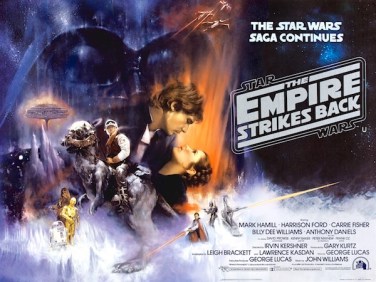
The Empire Strikes Back (1980)

100 Films’ 100 Favourites #27

The Star Wars Saga Continues

Also Known As: Star Wars: Episode V – The Empire Strikes Back

(I may be a young whippersnapper, but I’m old enough that, when I was a kid, we still called it just The Empire Strikes Back. I thought that would be a nicer place for it among my 100 Favourites, therefore.)

Country: USA
Language: English
Runtime: 124 minutes | 127 minutes (special edition)
BBFC: U
MPAA: PG

Original Release: 21st May 1980 (UK)
US Release: 20th June 1980
First Seen: VHS, c.1990

Stars
Mark Hamill (Star Wars, The Big Red One)
Harrison Ford (Raiders of the Lost Ark, Air Force One)
Carrie Fisher (Star Wars, Hannah and Her Sisters)
Billy Dee Williams (Mahogany, Batman)
Frank Oz (The Muppet Movie, Monsters, Inc.)

Director
Irvin Kershner (Never Say Never Again, RoboCop 2)

Screenwriters
Leigh Brackett (The Big Sleep, The Long Goodbye)
Lawrence Kasdan (Raiders of the Lost Ark, Wyatt Earp)

Story by
George Lucas (Raiders of the Lost Ark, Willow)

The Story
After the evil Galactic Empire uncovers the Rebel Alliance base on Hoth, our heroes flee for the stars. Guided by a message from beyond the grave, Luke heads to meet an old Jedi master. Meanwhile, Han, Leia, Chewie, and the droids hide for a bit, then go to meet the only black man in the galaxy…

Our Heroes
Luke Skywalker: ace pilot; Jedi in training.
Han Solo: reformed criminal.
Princess Leia: wait, hold on, her planet was destroyed — surely now she’s either Queen Leia or, y’know, nothing?

Our Villain
Darth Vader: daddy issues personified.

Best Supporting Character
R2-D2 is the best supporting character in every Star Wars film, but in this one we are introduced to Yoda. Looks like a Muppet, as cheeky as a Muppet, much wiser than a Muppet. Probably. It’s hard to be certain.

Memorable Quote
“Try not. Do, or do not. There is no try.” — Yoda

Quote Most Likely To Be Used in Everyday Conversation
Leia: “I love you.”
Han: “I know.”

Memorable Scene
After a dramatic lightsaber duel, Darth Vader lops off Luke’s hand, his weapon disappearing with it. As Luke dangles over an endless fall to Certain Death, Vader decides this is the perfect moment to impart a big secret…

Memorable Music
The Star Wars Main Theme is all well and good, but here regular composer John Williams introduces us to arguably an even more iconic tune — it certainly gets played outside of the films more often, as a universal signifier of evil. That’s right, it’s the Imperial March! All together now: dum dum dum dum-duhdum dum-duhdum…

Truly Special Effect
To animate the tauntauns, Phil Tippett and ILM pioneered the use of go motion, a version of stop-motion animation that moves the puppet while the frame is being exposed so as to create motion blur, thereby making the effects more realistic. (It purposefully wasn’t used for the AT-AT walkers, to emphasise their mechanical movement by keeping it slightly jerky.) Go motion would go on to be used on films including Dragonslayer, E.T., RoboCop, and Willow. It was going to be used for the dinosaurs in Jurassic Park, but then someone had another idea…

Letting the Side Down
Lucas’ Special Edition fiddling isn’t as prevalent in Empire as in its original trilogy compatriots. If anything, the big windows in Cloud City are a nice touch.

Making of
The crew took crates of simulated snow from the Hoth set to the shoot in Norway, in case there wasn’t enough real snow on location. Somewhat ironic, then, that the location was hit by a snowstorm, coating the region so thoroughly that some of the scenes set in Hoth’s wilderness were filmed right outside the crew’s hotel.

Previously on…
The story begins, of course, in Star Wars. There’s tonnes of other material set before Empire, not least the infamous prequel trilogy.

Next time…
The Star Wars universe is immense, so don’t expect me to even attempt a summation of it. At the most essential, Return of the Jedi picks up the dangling threads of Empire and completes the trilogy, while last year’s The Force Awakens continues the narrative decades later, with more instalments to come in 2017 and 2019.

Awards
2 Oscars (Sound, Special Achievement in Visual Effects)
2 Oscar nominations (Score, Art Direction-Set Decoration)
1 BAFTA (Music)
2 BAFTA nominations (Production Design, Sound)
4 Saturn Awards (Science Fiction Film, Actor (Mark Hamill), Director, Special Effects)
4 Saturn nominations (Supporting Actor (Billy Dee Williams), Writing, Music, Costumes)
Won the Hugo for Best Dramatic Presentation
1 WGA Award nomination (Best Comedy Adapted from Another Medium — yes, really)

What the Critics Said
“It’s almost too much to expect that a sequel can ever top the success of the original, and I suspect that this will prove the case with The Empire Strikes Back […] While Empire doesn’t quite measure up to Star Wars in the freshness and originality of its script, and the plethora of space operas that has been jamming the screens ever since Star Wars has somewhat lessened the novelty of city-sized ships sailing the stratosphere, nevertheless this 20th Century-Fox release remains a rattling good entertainment, a worthy successor to the original — and far and away the best of its kind since Star Wars itself.” — Arthur Knight, The Hollywood Reporter (This original 1980 review also mixes up Yoda and Boba Fett. Fun.)

Score: 94%

What the Public Say
“the movie suffers from as uneven a vibe as its forebear, with, especially, the midsection lacking in elements designed to wholeheartedly sustain one’s interest. This proves to be especially true of Luke Skywalker’s ongoing (and less-than-captivating) training at the hands of Frank Oz’s Yoda, as such interludes suffer from a lack of momentum that bring the proceedings to a dead stop at each and every turn. […] an erratically-paced yet consistently entertaining installment in a not-quite-great sci-fi series.” — David Nusair, Reel Film Reviews (This site gives Episodes III, IV, V and VI a rating of 3/4, but Force Awakens a full 4/4. Just so you know.)

Elsewhere on 100 Films
I’ve written about the original Star Wars trilogy twice before, both times back in 2007. Of The Empire Strikes Back’s modified DVD version, I said that “the big change comes in dubbing both Boba Fett and the Emperor with appropriate actors from the prequel trilogy […] Other than shunning the poor original actors in such a way, Empire is much the same as ever.” Then, treating the film as the fifth part of the saga, I wrote that “a variety of elements […] have a very different impact in light of what we’ve experienced in the first trilogy. The most obvious is the revelation that Vader is Luke’s father: it’s no longer a twist, of course, but the emotional impact on Luke still makes it an important moment. Yoda […] seems to have gone a little loopy after several decades alone on Dagobah”.

Verdict

What more is there to say about The Empire Strikes Back, really? According to some polls, it’s the greatest movie of all time; even if you don’t go that far, it’s a masterpiece of blockbuster science-fantasy adventure. Every moment is tuned to tickle the thrill-glands; every special effect a labour of love that, with their inventiveness and genuine physicality, remains largely impressive today. And it’s so well paced that most people completely overlook that the storyline is chronologically challenged (Luke travels to Dagobah, meets Yoda, learns a bunch of tricky Jedi skills, and heads off to Cloud City, all while the rest of the characters hide in an asteroid field and are locked up for about five minutes). Plus it has the audacity to end on an almighty cliffhanger/revelation double-header! And in that spirit: it’s not even my favourite Star Wars movie. But I’ll tell you about that another time.

#28 will star… Travolta/Cage.

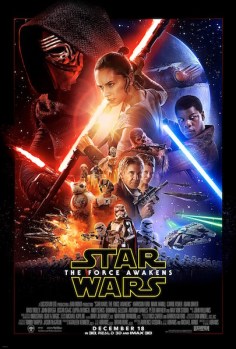
Star Wars: The Force Awakens (2015)

aka Star Wars – Episode VII: The Force Awakens

2015 #191
J.J. Abrams | 135 mins | cinema (3D) | 2.35:1 | USA / English | 12A / PG-13

Oscar statue2016 Academy Awards
5 nominations

Nominated: Best Editing, Best Original Score, Best Sound Mixing, Best Sound Editing, Best Visual Effects.


Star Wars: The Force Awakens is not the best film of 2015. Not according to the Academy of Motion Picture Arts and Sciences, anyway, who didn’t see fit to nominate it for Best Picture at tomorrow’s Oscars. Many fans disagree, some vociferously, but was it really a surprise? The Force Awakens is a blockbuster entertainment of the kind the Academy rarely recognise. Okay, sci-fi actioner Mad Max: Fury Road is among this year’s nominees, but with its hyper-saturated cinematography and stylised editing, it is action-extravaganza as art-film, further evidenced by some people’s utter bafflement at how anyone can like a film so devoid of story or character. (It isn’t, of course — those people are wrong.)

I’m sure the makers of Star Wars can rest easy, though, what with it being the highest grossing film ever at the US box office (at $924m and counting, it’s the first movie to take over $800m, never mind $900m), and third-ever worldwide (behind only Titanic and Avatar, both of which had re-releases to compound their tallies). Its reception has been largely positive too, with many fans proclaiming it the third or fourth best Star Wars movie — which doesn’t sound so hot, but when two of those previous films are unimpeachable all-time favourites, being third is an achievement. There are many dissenting voices though, disappointed thanks to their perception that it’s just a rehash of A New Hope, and that it’s a movie short on original ideas but long on modern-blockbuster bluster and noise.

I think, at this point, one or two other people on the internet have written the odd word about The Force Awakens — you have to really go looking, but trust me, there are some articles out there. (Of course, by “one or two other people” I really mean “everybody else”, and by “the odd word” I mean “hundreds of thousands of millions of words”. And by “have” I mean “has”, for grammatical accuracy in this completely-revised sentence).

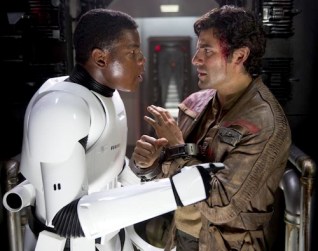
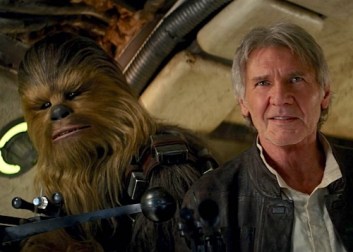
I too could talk about the likeable new heroes; the triumphant return of old favourites; the underuse of other old favourites; Daisy Ridley’s performance; John Boyega’s performance; the relationship between Rey and Finn; the relationship between Finn and Poe; the success of Kylo Ren and General Hux as villains (well, I thought they were good); the terrible CGI of Supreme Leader Snoke; the ridiculous overreaction to the alleged underuse of Captain Phasma; that awesome fight between the stormtrooper with that lightning stick thing and Finn with the lightsaber; the mystery of Rey’s parentage; the mystery of who Max von Sydow was meant to be (and if we’ll ever find out); some elaborate theory about why Ben wasn’t called Jacen (there must be one — elaborate theories that will never be canon are what fandoms are good for); the way it accurately emulates the classic trilogy’s tone; the way it’s basically a remake of A New Hope; the way it isn’t that much of a remake of A New Hope; why ring theory and parallelism makes all this OK anyway; all of its nods to the rest of the saga; that death scene; that ending; those voices in that vision; and the single greatest part of the entire movie: BB-8 giving a thumbs up.
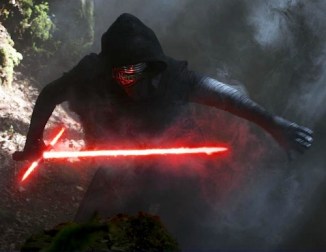
But I won’t talk about any of that. Not now, anyway. Instead, for an angle of moderate uniqueness, I’ll talk about the five elements of the film that have been singled out for recognition by the Academy of Motion Picture Arts and Sciences.

Editing
J.J. Abrams seems to have tricked some people into thinking he’s a great director with The Force Awakens (rather than just a helmer of workmanlike adequacy (when he’s not indulging his lens flare obsession, at which point he’s not workmanlike but is inadequate)), and I think that’s partly because it’s quite classically made. Yeah, it’s in 3D, but the style of shots used and — of most relevance right now — the pace of the editing help it feel in line with the previous Star Wars movies. Some of the more outrageous shots (often during action sequences) stand out precisely because they’re outside this norm. Perhaps we take for granted that Abrams delivered a movie in keeping with the rest of the series, because that’s The Right Thing To Do, but that doesn’t mean he had to do it. And the transitional wipes are there too, of course.
Score
Ah, John Williams — 83 years old and still going strong. Or still going, at any rate. I’m not the most musically-minded viewer, unless something really stands out to me. I don’t remember anything in Williams’ Force Awakens score standing out. Not that there’s anything wrong with it per se, but I didn’t notice anything new that has the impact of The Imperial March or Duel of the Fates (for all of the prequels’ faults, they at least gave us that). In Oscar terms, it’s apparently not looking so hot for Williams either: his return to a galaxy far, far away is being trumped by Ennio Morricone’s return to the West.

Sound Mixing & Sound Editing
No one knows what the difference is between these two categories. I’m not even sure that people who work in the industry know. As a layperson, it’s also the kind of thing you tend to only notice when it’s been done badly. The Force Awakens’ sound was not bad. It all sounded suitably Star Wars-y, as far as I could tell. That’s about all I could say for it. It feels like these are categories that get won either, a) on a sweep, or b) on a whim, so who knows who’ll take them on the night?
Visual Effects
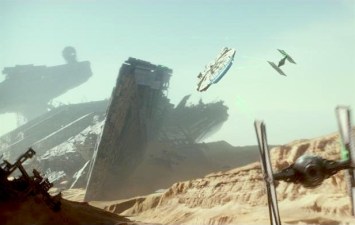
CGI is everywhere nowadays, and at the top end of the game it seems like it’s much-for-muchness in the photorealism department. So what dictates the best of the best, the most award-worthy? Well, innovations are still being made, they’re just less apparent in the end product, it would seem: reportedly there are a load of workflow-type innovations behind the scenes on Star Wars, which improved consistency, as well as some better ways of achieving things that were already achievable.

Nonetheless, for a franchise with which they have a long, close history, it’s understandable that ILM pulled out all their tricks here — fairly literally: they even used forced perspective to extend some sets, rather than the now-standard digital set extension (green screen + CG background). Most notably, a lot of BB-8 was done with working models and puppetry. Of course that’s still computer aided, be it with wire and rod removal or some bits of animation, but it still lends the droid greater presence and physicality. That kind of grounded, make-it-real mindset pervades — the effects team exercised “restraint […] applying the basic filmmaking lessons of the first trilogy,” according to this article from Thompson on Hollywood. Effects supervisor Roger Guyett says that attitude was about being “very specific about what the shot was about. And making it feel like you were photographing something that was happening.”
In terms of whether it will win or not, well, take your pick of the predictors. Some say Fury Road will sweep the technical categories, presumably in lieu of it winning any of the big-ticket prizes. Star Wars was the big winner at the Visual Effects Society awards though, which have predicted the Oscar on nine of the past 13 occasions. The times it’s failed have generally been prestige films that happen to have effects kicking blockbusters off their pedestal, like Hugo beating Dawn of the Planet of the Apes, or Interstellar beating Rise of the Planet of the Apes (the Academy clearly hates those damned dirty apes). With The Revenant taking secondary honours at VES, perhaps that’ll be an unlikely Oscar victor.

In truth, I don’t think any of those are the best things about The Force Awakens. What really works for it are the characters, the relationships, the pace of the story (rehashed or not), the overall tone. It was never going to get major awards in the categories that recognise those achievements (acting, writing, directing), and, frankly, those elements aren’t gone about in an awards-grabbing fashion anyway. In the name of blockbuster entertainment, however, they’re all highly accomplished.
With the good ship Star Wars relaunched under a sure hand and with a surfeit of familiarity to help steady the ride, hopefully future Episodes can really push the boat out.

5 out of 5

Star Wars: The Force Awakens placed 9th on my list of The Ten Best Films I Saw For the First Time in 2015, which can be read in full here.

Returning to Jedi (2007)

2015 #91
Jamie Benning | 148 mins | streaming | 16:9 | UK / English

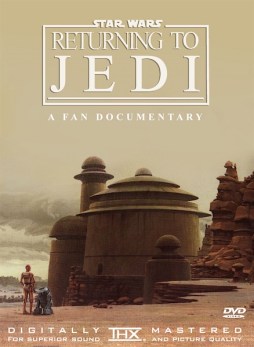
Returning to Jedi completes fan/editor Jamie Benning’s trilogy of documentaries about the original Star Wars trilogy with a look at the making of… well, obviously. In case you’ve forgotten, Benning’s “filmumentaries” are most succinctly summarised by the documentary’s own introduction:
Returning to Jedi is an unofficial commentary. It contains video, audio and information from over one hundred sources taking you deep into the making of Return of the Jedi.

I’m not entirely sure why, but it felt to me that this might be the best of all Benning’s Star Wars filmumentaries (he’s also completed ones for Jaws and Raiders of the Lost Ark). It’s not that anything’s drastically different (the format works), it’s just a certain something that made it the most engrossing. Perhaps there was more material to work with — the result is something like 20 minutes longer than Jedi itself, and a good ten minutes longer than the other Star Wars filmumentaries. Doesn’t sound so much when put like that, so maybe I’m making a spurious correlation.

There’s certainly tonnes of behind-the-scenes footage in this one, more so than the other two. Much of it concentrates on the creation of the special effects, as usual, with particular attention paid to Jabba, the Rancor, and the speederbike chase. As all are noteworthy achievements in effects work, they merit the focus. Audio snippets from various interviews down the years provide some more varied detail. There’s a fair bit of information on variations to the story that were considered and rejected, though it does make it sound like Lawrence Kasdan was desperate to kill someone off: he kept suggesting the likes of Han, Lando, and even Luke should make the ultimate sacrifice, while Lucas maintained no one should die. Kasdan wasn’t alone — Harrison Ford also thought Solo should die, and Mark Hamill expected more darkness for Luke — but I guess they weren’t to be heard by an increasingly autocratic Lucas (reports of him essentially directing Jedi for Richard Marquand, or of his clash with the Directors’ Guild that prevented Steven Spielberg from directing the film, go unmentioned here).

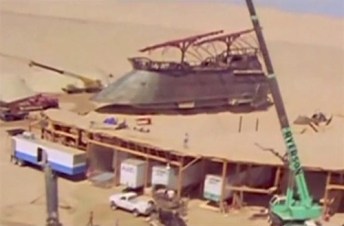
Highlights include: a look at the set for Jabba’s sail barge and the Sarlacc pit, an enormous raised construction in the Arizona desert that looks incredible; the fact that they consulted a child psychologist, who told them under 12s would think Vader being Luke’s father was a lie unless it was unequivocally stated, hence the scene where Yoda does just that; and a selection of interesting deleted scenes. The wisest deletion was an early scene of Luke building his new saber and hiding it in R2-D2 — how much would that undermine the reveal that Luke had a plan all along? — though also of note are a sandstorm before they leave Tatooine (deleted for pace) and a full-on shoot-out as Han and co enter the bunker on Endor.

Whether Returning to Jedi is the best of Benning’s work or not is neither here nor there, really. Although their length and the fact they sometimes focus on minutiae probably rules them out for the casual observer, who might prefer a shorter making-of overview if they’re even interested, his trilogy of Star Wars filmumentaries are consistently fascinating for fans.

4 out of 5

Returning to Jedi can be watched on Vimeo here.

Star Wars: The Force Awakens is released in the UK at midnight tonight, and in the US on Friday. It will be reviewed at a future date. (Possibly Christmas Day. We’ll see.)

This review is part of the 100 Films Advent Calendar 2015. Read more here.

Building Empire (2006)

2015 #71
Jamie Benning | 137 mins | streaming | 16:9 | UK / English

The first of Jamie Benning’s “filmumentaries” looks at the making of sometime Best Film Ever, and widely-accepted Best Star Wars Ever, The Empire Strikes Back (as it used to just be known). To quote the documentary’s own intro:

Building Empire is an unofficial commentary to The Empire Strikes Back. It contains video clips, audio from cast and crew, alternate angles, reconstructed scenes, text facts and insights into the development and creation of the film.

It begins with director Irvin Kershner explaining how he came to be involved, though my main observation was how much he sounds like Yoda. Maybe that’s just me…

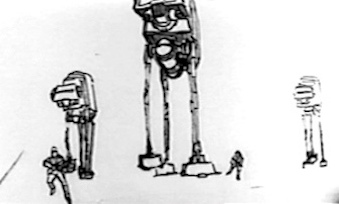
From there, there’s a focus on the special effects and how they were achieved. There’s a lot of detail about the myriad effects on Hoth, the creation of the asteroid field, and the puppetry of Yoda, as well as boundless trivia, like detailing the set-extension matte paintings. Other major themes include changes from early drafts and in deleted material; audio differences between the many different versions (not only the various release prints and Special Editions, but audiobooks and the like); commentary from actors on the evolution of their characters; plus detail on the actual filming, including the terrible weather on location in Norway (they were able to shoot some of Hoth’s desolate ice fields within feet of their hotel) and the rigours of the Luke/Vader lightsaber duel.

My personal highlight of the documentary comes in Cloud City, at the point Lando’s betrayal is revealed. Benning inserts a “deconstruction of an action scene” (Han shooting at Vader; Vader Force-stealing Han’s gun), using uncut footage and B-roll to quickly glimpse how such things are achieved — or were, before “with CGI” was the answer for everything. Here, Benning’s work transcends merely placing rare interviews or behind-the-scenes footage at the appropriate juncture, instead using that material to create something genuinely new and insightful.
Assuming you’re interested in snippets of minutiae and amusing trivia (if not, these filmumentaries definitely aren’t for you), the downsides are few. It’s a shame that, just occasionally, there are stretches with no additional material (though never for long) when at other times the additions race by in a blink-and-you’ll-miss-it flash. There are also quite a few instances labelled “restored music”, but there’s no comment from John Williams, Kershner, or anyone else on why so much was removed and/or changed.

Niggles aside, I felt like I enjoyed Building Empire even more than its later predecessor (how very Lucas). I’m not saying it’s fundamentally better — just as with Star Wars Begins, for those who love making-of details and trivia, Building Empire is a delightful grab bag of such bits and pieces.
4 out of 5

Building Empire can be watched on Vimeo here.

Star Wars: The Force Awakens is released in the UK this Thursday, and in the US on Friday.

This review is part of the 100 Films Advent Calendar 2015. Read more here.

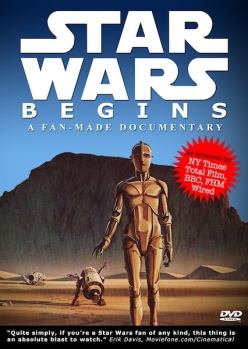
Star Wars Begins (2011)

A Filmumentary

2015 #63
Jamie Benning | 139 mins | streaming (HD) | 16:9 | UK / English

This year, I finally got round to watching the Star Wars Blu-rays I bought back whenever they came out, so I thought what better time to also finally watch Jamie Benning’s trilogy of “filmumentaries”. What’s a filmumentary, you ask? Well, here’s the opening text of the film itself:
Star Wars Begins is an unofficial commentary on Star Wars. It contains video clips, audio from the cast and crew, alternate angles, bloopers, text facts and insights into the development and creation of the film.

For those familiar with (Warner) Blu-rays, it’s essentially a fan-made Maximum Movie Mode, though drawing on a wealth of archive resources rather than newly-recorded material. In practice, it plays less like a cohesive “making of” and more like a trivia track on steroids. Only rarely do we learn something fundamental; mostly it’s interesting titbits. But then, this is a documentary made by a fan for fans, and fans love minutiae. Consequently, it sometimes comes from a place of deep fan-ish-ness. For example, it refers to and uses clips from the “Lost Cut”, but never bothers to define or explain what that is (or if it did, I blinked and missed it). Conversely, it occasionally transcends “Star Wars trivia” to unveil general “moviemaking trivia” — how different on-set audio sounds to the final mix; demonstrations of how editing can affect the flow and pace of a scene; and so on.

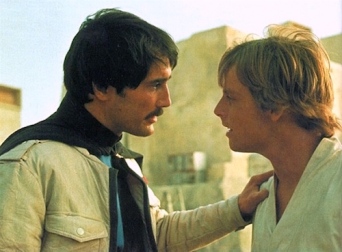
Perhaps the highlight are some early deleted scenes. Featuring Luke, Biggs and their friends on Tatooine, and placed to intercut with the droids’ progress and Vader’s search for them (i.e. before we even meet Luke in the finished film), the sequences were removed en masse due to execs’ fears they made the movie feel like “American Graffiti in space”. And for once, an exec was right! They give the movie a completely different tone; more grounded and less mythic. Thank goodness they were done away with, to be honest.
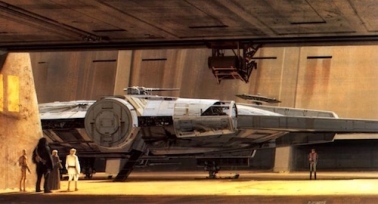
Another personal highlight was a snippet from a 1978 interview with Harrison Ford, in which the Han Solo actor says Star Wars is not science fiction, it’s science fantasy. He’s bang on the money — it’s a distinction I subscribe to wholeheartedly. I’d always thought it was a more recent argument, but there he is expressing it right after the film came out, not as some decades-later revisionism.

This is actually the third of Benning’s filmumentaries — he started with Empire and followed it with Jedi, only then going back to where it all began. Maybe there’s a reason for that. Maybe a greater behind-the-scenes scrutiny on the sequels gave him more to work with, producing more in-depth making-ofs, and when he went back to the first he just had to work with what he could find. Or maybe the disjointed trivia grab bag is his style, and here it reaches its apogee. I guess I’ll find out soon enough.

Star Wars Begins may not be the first port of call for anyone looking for an overview of the making of Star Wars, but it’s a goldmine of behind-the-scenes titbits and occasional candid revelations for anyone with a strong enough interest.
4 out of 5

Star Wars Begins can be watched on Vimeo here.

Star Wars: The Force Awakens is released in the UK this Thursday, and in the US on Friday.

This review is part of the 100 Films Advent Calendar 2015. Read more here.

The 100 Films Advent Calendar 2015

Good times are here again, dear readers, because it’s December 1st and that can only mean one thing: advent calendars. Specifically, the fourth annual 100 Films in a Year Advent Calendar!

And this year, there’s double the fun: not content with providing you with my precious insight on a single cinematic wonder each day, for my 2015 advent calendar there will be two reviews every day. Or, to look at it another way, one review every 12 hours between now and Christmas Day.

Each day at midnight: a speedy little drabble nightcap.
Each day at midday: a full-length review lunch.
(Sorry, none of these metaphorical meals contain chocolate.)

(This isn’t at all doomed to fail, is it…)

Also of note! As per last year, my advent calendar will serve, in part, as a kind of ‘review of 2015’, looking back on some of the year’s biggest and most significant movies (that I’ve yet to review). Such delights may include Ant-Man, Avengers: Age of Ultron, Ex Machina, Force Majeure, Mad Max: Fury Road, Mission: Impossible – Rogue Nation, the Shaun the Sheep Movie, Spectre, Terminator Genisys, Tomorrowland, as well as the biggest film of the year (so far), Jurassic World, and the one that may yet surpass it, Star Wars: The Force Awakens. (No guarantees, mind — I’ve not written some of them yet. Heck, I’ve not seen some of them yet…)
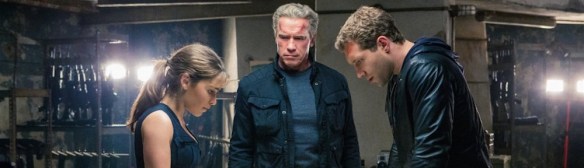
Plus! A series of reviews dedicated to Star Wars in the run-up to the release of Episode VII. All will be revealed on Monday 14th (or now, if you look at my coming soon page — they’re pretty obvious).
Anyway, let’s get started. Should be pretty clear which are the drabbles and which the full reviews.


December 1st

December 2nd

December 3rd

December 4th

December 5th

December 6th

December 7th

December 8th

December 9th

December 10th

December 11th

December 12th

December 13th


Star Wars Week

December 14th

December 15th

December 16th


December 17th

December 18th

December 19th

December 20th

December 21st

December 22nd

December 23rd

December 24th

December 25th

Merry Christmas!