
Joachim Rønning & Espen Sandberg | 129 mins | cinema | 2.35:1 | USA / English | 12A / PG-13
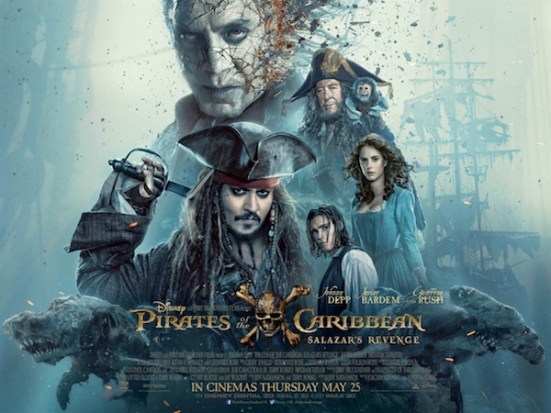
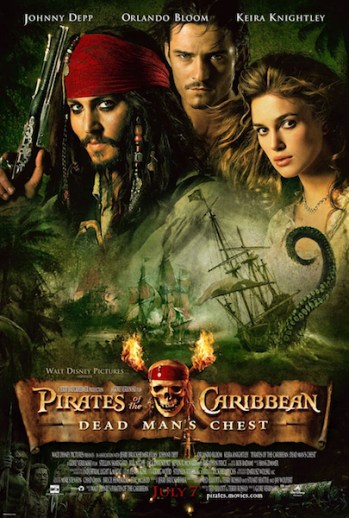
Dead men may tell no tales, but lucrative franchises never die, so Disney’s Pirates of the Caribbean has taken to the high seas once again. Johnny Depp is back in the role that once netted him an Oscar nomination (remember that?), the drunken pirate Captain Jack Sparrow, this time teaming up with the child of some old friends (Brenton Thwaites) and a bright young astronomer (Kaya Scodelario) for another MacGuffin hunt adventure, while again being pursued by some cursed seafarer (Javier Bardem) and a member of the British Navy (David Wenham).
Yes, despite the unusually-long six-year gap since the previous film, and all the promotional talk of this being a fresh start for the series that tonally harks back to the standalone fun of the first movie, Salazar’s Revenge (or, if you prefer, Dead Men Tell No Tales) seems doomed to repeat bits and bobs from the series’ other instalments. It’s not a complete wash-out, however, because it at least executes some of those bits quite well. Sadly, other bits are beginning to look a little tired. Perhaps the best single adjective to describe the film’s attitude would be “muddled”. Beware, me hearties: spoilers follow.
It seems likely that Disney do want this to be a soft reboot of the franchise — a reboot to combat the increasingly poor critical receptions that greeted the previous sequels, but a soft one so that Depp’s popular turn can continue being a part of things. This revivalist plan presumably included looking back in time, beyond the last movie (the least popular one) to the series’ heyday. However, rather than just try to replicate the tone of the earlier movies, storyliners Jeff Nathanson and franchise veteran Terry Rossio have revived some of the old plots too. So we have a film that attempts to move forward with new young leads and a new villain, all hunting for a new MacGuffin, but with motivations bedded in plots that were ostensibly wrapped up a decade ago. They can’t even bring themselves to ignore the previous movie, despite its lack of popularity, continuing narrative threads from there as well. So much for “reboot”.
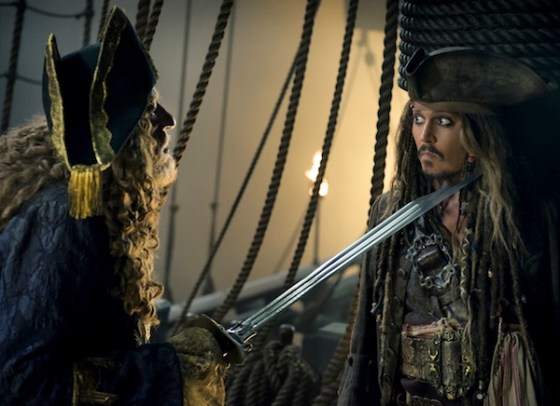
And yet, despite that, its consistency with previous films is sometimes poor. For example, Salazar is freed because Jack gives away his magic compass — but didn’t he do that in film two and/or three, with no such ill effects? Also, why does the compass now suddenly have the power to make you face things you dread? And how does that even work, considering other characters have had it and given it away and never had such issues? Maybe they were just hoping viewers wouldn’t remember the ins-and-outs of the plots of previous movies… though, if that’s the case, why is the story based on them?
Unfortunately, its internal consistency isn’t much better. Like, why do ghost pirates own zombie sharks? How come Salazar can suddenly possess someone when it becomes necessary for the plot? That ability is never mentioned, it just turns up. When Carina’s navigating them to the map-island, how do they end up at a completely different place (before later just setting off again)? Maybe I missed something…
This abundance of niggles stems from the film being overstuffed with ideas that it doesn’t invest in fully — just like the last film, which it was supposed to have learnt lessons from! One of the things that made the original Pirates movie work was its relative simplicity, which kept the story focused and driving forward. The sequels all throw in too much random stuff — see my previous paragraph, which isn’t even the half of it: I haven’t mentioned the witch, or the ruby-powered star map, or the nonsensical post-credits scene.

It probably doesn’t help, then, that Salazar’s Revenge is the shortest Pirates film (though it doesn’t feel like it). The dearth of screen time may be why both Bardem and Wenham are ultimately wasted as the villains — they’re not working together, so the time typically afforded to the antagonist ends up split between them. Geoffrey Rush’s Captain Barbossa is back too, as much a series regular as Captain Jack now. He gets an emotional storyline that surfaces out of the blue just before the last act. It’s a nice idea, but appears too late in the game to have time to develop properly.
And how about the flashback showing Jack defeating Salazar, which seems to stop the film dead halfway through. Why not put that sequence at the start? Then cut straight to the existing opening scene of the naval ship accidentally sailing into the Devil’s Triangle. It’d work — the viewer thinking, “oh, the navy ship is going to sink, just like Salazar did all those years ago,” but then it doesn’t and Salazar attacks. (Hey, Hollywood — employ me!) Okay, fair enough, that structure would make it awkward to place Orlando Bloom’s opening cameo, but—
Oh, wait, that’s another thing! So, we know why Orlando Bloom only appears in bookend scenes and why Keira Knightley is reduced to a dialogue-less cameo — because Disney want this to be a fresh start with new stars — but it feels like, to do this particular story properly (trying to break the curse that’s imprisoning Bloom), they both should’ve been in it more. I mean, why isn’t the formerly strong and capable Elizabeth working with her son to free the love of her life? At least explain that, film, don’t just ignore it! Heck, tossing in even one line from Henry (“my mum’s given up hope, but I haven’t”) would’ve solved it.
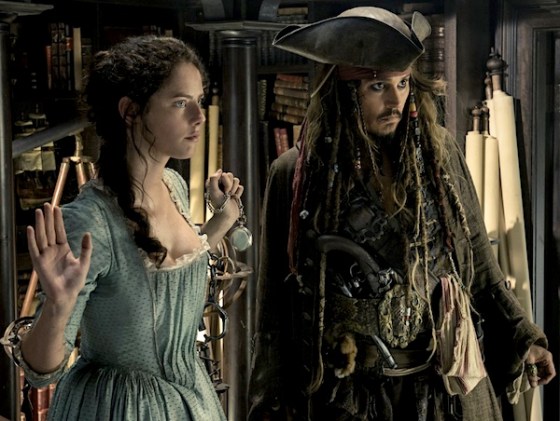
As for the rest of the cast, Johnny Depp feels like he’s forgotten how to play Sparrow — it’s a pretty good imitation rather than the real thing. Kaya Scodelario plays Carina with an earnest intelligence, a trait which is exhibited dependably throughout the screenplay. That shouldn’t need to be worthy of note, but, for a female character, it is. Thwaites, on the other hand, is perfectly bland as Henry Turner, rarely even managing the enthusiasm or charming naivety suggested by that good line from the trailers (“I think I saw her ankles!”)
On the action-adventure front, there are some good set pieces, mainly early on — the bank robbery and the halted executions, particularly the spinning guillotine, are inventively handled. Sadly, later efforts are obscured by gloomy lighting and too much whizzing around of CGI — and, once again, the overabundance of out-of-nowhere ideas (why does the ship’s figurehead suddenly come to life?!) Geoff Zanelli’s score primarily recycles Hans Zimmer’s familiar themes, which I don’t mind too much because I like them. At least it does so in a less slapdash fashion than On Stranger Tides, where the music felt plonked on at random.
So, I’ve moaned throughout this review, and here’s the main reason for that: there’s a decent action-adventure movie hidden in Salazar’s Revenge — probably not something that would equal the first Pirates, but a good effort — but all the times when plot necessities seem to have been filled with “invent something new!” rather than “make what we’ve got work”, plus all the little inconsistencies (both internally and with previous films), really get in the way. Maybe, now that all of the leftover business from previous films is well and truly resolved, and if this makes a lot of money, we’ll get a sixth film that finally does return to the joys of the first.
Hey, Disney: you own Lucasfilm now — how about Pirates of the Caribbean: The Secret of Monkey Island?

Pirates of the Caribbean: Salazar’s Revenge is in some cinemas now. Pirates of the Caribbean: Dead Men Tell No Tales is in the others.




 Score:



 Hated by Americans and loved (well, ok, “liked”) by everyone else (well, ok, “by lots, but by no means all, of people who reside outside America”), Disney’s attempt to pull a
  I know some people complain about simplistic stories that are used to just string action sequences together, and that’s a perfectly valid thing to get annoyed about, but The Lone Ranger swings to the other extreme and uses an over-complicated story to string together its action sequences. All it actually needs is a little streamlining, because the film is allowed to swing off into too many sideplots. This makes the middle of the film a slog, and you feel every minute of its excessive two-and-a-half-hour running time.
 a recurring problem for Disney at the minute. To be frank, I’m not convinced anyone made a truly concerted effort to stem the overspend. When a gaggle of CG rabbits hopped on screen, all I could think was, “who allowed this?!” You’ve got a massively over-budgeted film that the studio want cut back, and one reason for that is CG bunnies that have almost no bearing on anything whatsoever! The amount of time and effort that must’ve gone into creating those fairly-realistic rabbits for such a short amount of screen time… it cost millions, surely. Millions that could’ve been saved with a simple snip during the writing stage if only someone had said, “well, those bunnies don’t add anything and they’ll be bloody expensive, so let’s lose them.”
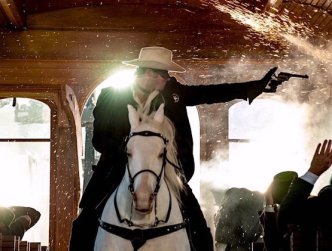 I’m not quite as effusive as Hughes, but The Lone Ranger is worth the time of anyone who enjoys an action-adventure blockbuster. It’s a three-star adventure-comedy bookended by a pair of five-star railroad action sequences, which make the trudge through the film’s middle hour-or-so feel worthwhile. There was a better movie to be made here — one that was half-an-hour shorter, more focused, and probably several tens of millions of dollars cheaper to make — but that doesn’t mean the one we got is meritless.
 Before he descended into self-parody, Tim Burton made movies like this: a biopic of the eponymous ’50s filmmaker, renowned for his so-bad-they’re-good productions. Burton still contributes his trademark dark quirkiness, but it conjures a subject-appropriate tone rather than aimless Burtonesqueness.
 Having turned the unlikely-to-be-any-good story of a machine that makes it rain food into
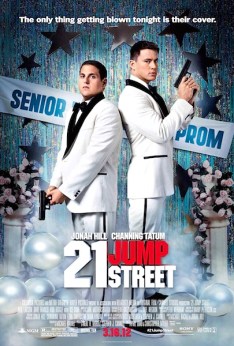
  this leaves Hill hanging out with the cool kids — and being lured down the path of parties and their shallower friendship — while Tatum falls in with a gang of ultra-nerdy nerds and starts actually learning stuff. Distilled like that makes it sound pat, but in the film it works; in part because they don’t overplay the clichéd “friends fall out irretrievably… until it’s retrieved for the final act” story arc.
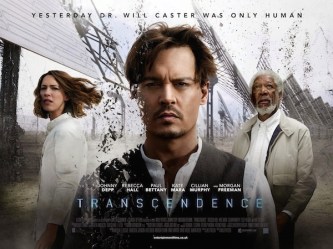 Christopher Nolan’s regular director of photography (he’s lensed seven Nolan films, from
  Another element that’s probably too challenging for some is where our allegiances are meant to lie. (Some spoilers follow in this paragraph.) At the start, it’s clear Depp & friends are the heroes and the murderous anti-tech terrorists are the villains. As events unfurl, however, artificial-Will perhaps goes too far, Bettany teams up with the terrorists, and eventually so do the government and Will’s other friends. There is no comeuppance for some characters who are initially begging for it; a good one self-sacrifices somewhat heroically. This doesn’t fit the usual Hollywood mould at all (well, the last bit does, sometimes), no doubt to some’s annoyance. The number of people who clamour for any sliver of originality or texture to their blockbusters, but then are unhappy when they actually get it…
 robbing the entire film of tension and nullifying any sense of surprise, and the movie doesn’t compensate with, say, a feeling of crushing inevitability. The climax in particular becomes a drawn-out exercise in connect the dots: we’ve been shown how this all ends up, now we’re just seeing the minutiae of how it got there. There’s no twist or reveal to speak of, just a wait for it to marry up with what we already know.
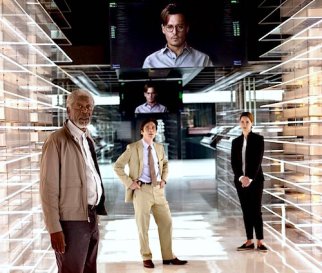 I guess that’s probably the explanation for Transcendence’s poor reception, in the end: it’s too blockbuster-y for viewers who’d like a dramatic exploration of its central moral and scientific issues, but too lacking in action sequences for those who misguidedly expected an SF-action-thriller. I maintain it’s not slow-paced, especially if you think it’s going to be, but nor does it generate doses of adrenaline on a committee-approved schedule. It’s not all it could have been, but if all you’ve heard is the mainstream drubbing, it’s probably better than you expect.
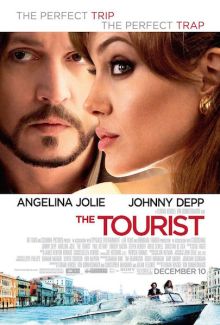 Much maligned on its release, I thought The Tourist was actually a decently entertaining light thriller.
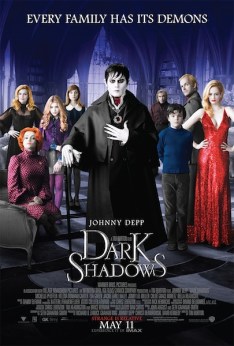 Director Tim Burton’s most recent live-action movie is an adaptation of a 1960s soap opera… albeit one featuring vampires, witches, ghosts and sundry other supernatural goings-on. You wouldn’t get that on
  Early on, it works. The first 20 to 30 minutes offer a serviceable prologue and an engaging introduction to most of the characters. It’s funny, it’s occasionally spooky, there’s a good deal of promise for a marginally-more-serious
  It’s a tonal grab bag: at times it seems to be a knowing spoof of daytime soaps, at others pushing for drama almost with a straight face; it’s sometimes deliberately and successfully comedic, at others straining too hard for a desperate laugh; it has a strain of bizarre sexuality that may be aiming at comic but is frequently just uncomfortable. This scrappiness leads to the most cardinal sin of any entertainment: it ends up a bit boring; and, in its out-of-the-blue big-battle climax, crushingly derivative.
 100Films.co.uk