Blindspot 2023

This is my 11th year doing a version of Blindspot (not to mention that various other bloggers do it too… or used to. Do other people still do this? Is there a whole world of it going on that I’m somehow cut off from? Or am I a lone proponent, still plugging ahead with a near-decade-old fad, because I really like it? I don’t know…)

Anyway, if you somehow still don’t know what it is or how it works, the premise is simple: choose 12 films you should have seen but haven’t, then watch one a month throughout the year. (My 12 also contribute to my 100 Films in a Year Challenge.)

Some people just choose their 12 films. I normally do it via an elaborate system of compiling “great movies” lists in various configurations to spit out some general consensus of which 12 well-regarded films I should watch next, rejigging which lists are included and how they’re factored in to provide new results each year. But 2023 is a bit different, thanks to a significant event last month: the publication of a new edition of Sight & Sound’s decennial 100 Greatest Movies poll, one of — nay, the most widely respected list of its kind among cinephiles. There were 27 films I hadn’t seen on the latest edition of the list — more than enough to fuel my Blindspot selections for this year.

I’ll explain how I whittled those 27 down (it wasn’t a long process, but it’s more than just “the top 12”) after listing the films themselves. In the order they ranked in Sight & Sound’s poll, this year I must watch…


Jeanne Dielman…
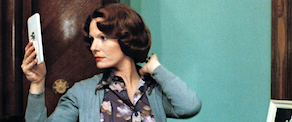
Jeanne Dielman, 23, quai du Commerce, 1080 Bruxelles

Beau Travail

Beau Travail

Cléo from 5 to 7

Cléo from 5 to 7

Close-Up

Close-Up

Au hasard Balthazar

Au hasard Balthazar

Shoah

Shoah

Killer of Sheep

Killer of Sheep

Fear Eats the Soul

Fear Eats the Soul

A Brighter Summer Day

A Brighter Summer Day

Pierrot le Fou

Pierrot le Fou

Tropical Malady

Tropical Malady

Black Girl

Black Girl


With just 12 slots but 27 films I hadn’t seen, obviously I had to pare the list down somehow. One method would’ve been to just take the 12 highest ranked — they’re meant to be the best of the best, after all. But that didn’t allow for the fact that, to be blunt, there were films further down the list that I was more interested in seeing. Another method would’ve been to run the 27 films through one of my usual list-of-lists calculations and see which 12 emerged victorious. But in a year where I’d simplified the selection process, it seemed silly to overcomplicated it again.

So, here’s what happened: I already owned some of the films on disc; when the list came out, after I had a look at it, there were a couple of highly-ranked films that I’d already been considering purchasing, so I ordered them; and there were a few more that, for whatever reason, I felt compelled to, um, download. When I stopped to take stock of this flurry of activity, the number of films in my possession added up to 13. They weren’t necessarily the films I had envisioned being in my final 12 (for starters, two from the top 50 were missing), but there we were.

The only remaining question: which to ditch? It was nearly Au hasard Balthazar. I wasn’t sure I’m ready for the “a donkey’s miserable life” movie. I’m still not. But this seemed as good a time as any to bite the bullet and get it seen. What about approaching it from the other angle — which had to be included? Well, I don’t think I’m going to like Jeanne Dielman, but I’ve felt I should watch it for some time now… and, more importantly, it’s #1 — of course #1 had to go in! Then there’s the ones I already owned on disc: Shoah, A Brighter Summer Day, and Black Girl (also Yi Yi, but that was on last year’s list, so I ruled it out on the presumption I’d watch it in December. Oops). Then, the ones I’d freshly ordered: Beau Travail and Close-Up. Even if I hadn’t bought them, both are among the top four I hadn’t seen.

That just left narrowing the remaining seven downloads to six. I could talk you through my process, such as it was, on a film by film basis, but in the end it came down to a gut feeling. You can already see which films made it in — the loser, for what it’s worth, was Douglas Sirk’s Imitation of Life. I couldn’t really tell you why; it’s just what I decided.

One other thing: I can’t usually have wildcards from Blindspot — it’s a list of 12 films taking up 12 slots; there aren’t any to be wildcards. But this year is an exception in that respect, too: I figure that, as the entire list is chosen from Sight & Sound’s list, then the 15 unchosen films were the only other eligible options, and therefore they could be eligible for wildcard slots. Disagree? Tough, it’s my game. Will I actually watch any of them, when getting through the 12 actual picks can be challenge enough some years? Maybe not. But the possibility is there.


Before we leave Blindspot behind and head to “What Do You Mean You Haven’t Seen…?” (or, if you’ve come to this post second, before you head back to your life), here’s a dash of additional info. You see, just because these 12 films were all taken from the Sight & Sound list, that doesn’t mean they don’t contribute towards my completion of other lists — unsurprisingly, there’s some degree of overlap between different “great films” lists. So, in case you were curious (because I was), other key lists that some of these films appear on (at time of writing) include…

TSPDT’s The 1,000 Greatest Films (16th edition) — all 12, ranging from 34th (Au hasard Balthazar) to 869th (Black Girl).

BBC’s The 100 Greatest Foreign-Language FilmsJeanne Dielman; Beau Travail; Cléo from 5 to 7; Close-Up; Au hasard Balthazar; Shoah; Fear Eats the Soul; A Brighter Summer Day; Pierrot le Fou.

BBC’s The 100 Greatest Films Directed by WomenJeanne Dielman; Beau Travail; Cléo from 5 to 7.

iCheckMovies’s Most FavoritedJeanne Dielman; Close-Up; A Brighter Summer Day.

Letterboxd’s Top 250 Narrative Feature FilmsJeanne Dielman; A Brighter Summer Day.

IMDb’s Top 250 — nothing (can’t say I’m surprised).


The All-New 100 Films in a Year Challenge, Mk.II

Alright, here we go: after spending the first week of 2023 wrapping up 2022, it’s finally time to move on to the new year.

For the 17th year in a row, I’m going to attempt to watch 100 films in a year. But, for the second year in a row, that’s not just any old 100 films: following on from last year’s grand re-envisioning of the challenge, it’s 100 films that fulfil certain categories and criteria. Those categories and criteria have undergone some changes, however — hence Mk.II.

When I conceived of this new-style challenge, it was always my intention to vary the categories somewhat year by year (there was a reason last year’s goal of watching 12 film noirs came in a category called “Genre”, not “Film Noir”), but actually undertaking it for a year has thrown up a few pointers about how it could work better, or cases in which the rules needed to be clearer. Consequently, some of this year’s categories are mere refinements on what went before, while others are the same but with new contents, and a couple have been replaced wholesale for the sake of variety.


The one rule that applies across all categories: a film can only count once. Sounds kinda obvious, but the categories are not mutually exclusive — I could watch a DVD of a film in this year’s genre that’s also part of a series, and technically that could count in any one of three categories. Similarly, if I rewatch a film that I’ve already counted, the rewatch can’t count. As a separate viewing, it sort of still fulfils the criteria, but I feel it’s better to have 100 totally unique films. (It also means I can accurately track my progress in a list on Letterboxd, whereas I couldn’t if repeats were allowed.)

With that said, this year’s categories are…

New Films

x12. Any film that’s general release date (i.e. not festival screenings, etc) in the UK (i.e. not in the US, nor any other country) is between 1st January 2023 and 31st December 2023. Maximum one per month (but rolls over if I fail to watch one).

Rewatches

x12. Any film I’ve seen before (unless it’s already been counted in 2023’s Challenge). Maximum one per month (with rollovers, as above).

Blindspot

x12. Films I feel I should have seen, or that “great movies” lists tell me I should have seen. Not just any old films, but 12 films specifically chosen and named in advance. Designed to be watched one per month, but doesn’t have to be. I’ll name this year’s 12 in their own post soon. Teaser: the recent publication of Sight & Sound’s once-a-decade poll has had a significant bearing on this year’s choices…

What Do You Mean You Haven’t Seen…?

x12. Similar to Blindspot, in that they’re 12 specifically chosen films to be watched one per month, but these are all based around a theme. This year’s theme: film noir. “Hold up,” I hear you say, “wasn’t film noir a different category last year?” Why yes, it was 2022’s Genre. What’s different about it being 2023’s WDYMYHS theme? I’ll explain when I name the 12 specific films in their own post, soon.

Failures

x12. Every month, I list my “failures” — new releases or purchases that I failed to watch in the previous month. Sometimes, I catch up on some of them. Often, I don’t. Making it a Challenge category will hopefully force my hand. As with new films and rewatches, it’s a maximum of one per month, but rolls over if necessary.

Genre

x10. Any films from within a specified genre. Unlike most of the above categories, these can be watched at any time — maybe I’ll spread them throughout the year; maybe I’ll binge them all back to back. Most likely it’ll be somewhere between the two. This year’s genre: giallo.

Series Progression

x10. Any instalment in a film series I’m already watching (there’s a Letterboxd list of them here). If I start a new series, either by accident or choice, the first film can’t count, but any further films can. I thought about replacing this category, but while I’ve still got so many series on the go, I wanted to keep the incentive to push on with them.

Physical Media

x10. Last year, I had a whole category dedicated to DVDs, because I’ve got so many of them that I’ve never watched. Frankly, it’s a category I thought I’d change — but I have so many unwatched discs, it needs to stick around if it’s to make any serious dent in its purpose. However, I’ve widened it this year, because I also have a massive pile of unwatched 3D and UHD Blu-rays. So, not any physical media counts, just those three formats. I know that makes the category title inaccurate, but “DVDs and 3D Blu-rays and 4K Ultra HD Blu-rays” seemed unwieldy. As with genre and series films, these can be watched at any time.

Wildcards

x10. Last year, every category had 12 films, leaving an awkward four spare. My solution was to make them ‘wildcards’ that could be added to any category, thus turning a bug into a feature. That feature had the potential to be so useful that I’ve expanded it.

You see, towards the end of 2022, the Challenge was dictating my viewing more than I would like. I wanted to catch up on recent releases, and also watch some Christmassy fare, but none of those films would have qualified for the Challenge, and I still had a couple of dozen films left to complete it, so I felt forced to watch DVDs and film noirs and so on instead. Okay, that’s partly my own fault for not getting on with them earlier in the year; but this new-style Challenge was always going to be a work in progress, so I thought that, for Year Two, I’d build in a potential fix. Hence: the revised wildcard category.

As you can see, I’ve more than doubled the quotient, and I’m removing the limit of one wildcard per category (as there are only eight other categories, that wouldn’t work anyway). These ‘new’ wildcards still need to be attached to an existing category, but it can happen as often per category as I want (provided the category’s requirements have already been met, e.g. no 11th Genre film until I’ve filled the original ten). I imagine, therefore, that these will mostly get used on additional new films, perhaps rewatches and failures, but who knows? We’ll see how it goes… and change it again for 2024, if needs be.


All that make sense? If not, let me remind you that you don’t really need to worry about any of this — it’s only me who has to work it out.

As the year goes on, you can follow my progress on the Challenge Tracker page, and also via my monthly reviews; or there’s always my Letterboxd for the guaranteed most up-to-date status of my film logging.

100 Films in a Year Challenge 2022: Final Standing

As the challenge tracker page will soon be replaced with a version keeping tabs on 2023’s effort, here’s an archive of how it looked at the very end of 2022 — sadly incomplete, after I chose to abandon it. Hopefully I’ll fare better in 2023.


On this page, I’ll track my progress with The All-New 100 Films in a Year Challenge. Learn more about the challenge here.

New Films

  1. Mass (2021)
  2. The Misfits (2021)
  3. Django & Django (2021)
  4. Death on the Nile (2022)
  5. Chip ’n Dale: Rescue Rangers (2022)
  6. Apollo 10½: A Space Age Childhood (2022)
  7. Ambulance (2022)
  8. Prey (2022)
  9. Persuasion (2022)
  10. Scream (2022)
  11. See How They Run (2022)
  12. Doctor Who Am I (2022)

Rewatches

  1. Gosford Park (2001)
  2. A Room with a View (1985)
  3. West Side Story (1961)
  4. The Father (2020)
  5. On the Town (1949)
  6. Top Gun (1986)
  7. Calamity Jane (1953)
  8. Batman: Dead End (2003)
  9. Paddington 2 (2017)
  10. The Two Faces of January (2014)
  11. Enola Holmes 2 (2022)
  12. Avatar (2009)

Blindspot

  1. L’avventura (1960)
  2. Los Olvidados (1950)
  3. A Man Escaped (1956)
  4. High and Low (1963)
  5. To Be or Not to Be (1942)
  6. Paris, Texas (1984)
  7. Mirror (1975)
  8. La Grande Illusion (1937)
  9. Come and See (1985)
  10. A Woman Under the Influence (1974)
  11. Les Enfants du Paradis (1945)
  12. Yi Yi

What Do You Mean You Haven’t Seen…?

  1. Flight of the Navigator (1986)
  2. She’s Gotta Have It (1986)
  3. Cobra (1986)
  4. Hannah and Her Sisters (1986)
  5. Pretty in Pink (1986)
  6. A Better Tomorrow (1986)
  7. Mona Lisa (1986)
  8. The Mission (1986)
  9. Howard the Duck (1986)
  10. Manhunter (1986)
  11. The Name of the Rose
  12. The Transformers: The Movie

Decades

  1. Broken Blossoms (1919)
  2. The Navigator (1924)
  3. Shot in the Dark (1933)
  4. Penny Serenade (1941)
  5. The Monolith Monsters (1957)
  6. Carry On Spying (1964)
  7. The Hobbit (1977)
  8. Dirty Rotten Scoundrels (1988)
  9. In the Line of Fire (1993)
  10. Barbie as The Princess and the Pauper (2004)
  11. Voyage of Time: An IMAX Documentary (2016)
  12. Free Guy (2021)

DVDs

  1. Meat Loaf: In Search of Paradise (2007)
  2. Tintin and the Temple of the Sun (1969)
  3. The Flying Deuces (1939)
  4. Mifune: The Last Samurai (2015)
  5. Tintin and the Lake of Sharks (1972)
  6. Clerks (1994)
  7. Walk the Line (2005)
  8. The Mindscape of Alan Moore (2003)
  9. The Blues Brothers (1980)
  10. 3 to go…
  11. 2 to go…
  12. 1 to go…

Genre: Film Noir

  1. Escape in the Fog (1945)
  2. My Name Is Julia Ross (1945)
  3. Johnny Gunman (1957)
  4. Repeat Performance (1947)
  5. He Walked by Night (1948)
  6. The Guilty (1947)
  7. Killer’s Kiss (1955)
  8. The Killing (1956)
  9. Christmas Holiday (1944)
  10. I Wouldn’t Be in Your Shoes (1948)
  11. Mr. Soft Touch (1949)
  12. 1 to go…

Series Progression

  1. Jackass Number Two (2006)
  2. Encanto (2021)
  3. Scream 2 (1997)
  4. The Sign of Four: Sherlock Holmes’ Greatest Case (1932)
  5. Scream 3 (2000)
  6. Scre4m (2011)
  7. Star Trek III: The Search for Spock (1984)
  8. Quatermass 2 (1957)
  9. Jackass 3D (2010)
  10. 3 to go…
  11. 2 to go…
  12. 1 to go…

Wildcards

  1. Munich: The Edge of War (2021) — additional ‘New Film’ in April
  2. Scream (1996) — additional ‘Rewatch’ in June
  3. The Thrill of It All (1963) — additional ‘Decade’ for the 1960s
  4. Where will it go?

Abandoning the 100 Films Challenge 2022

There are 10 days of the year left — 11 if you include this evening — and I have 11 films left to complete my 100 Films Challenge (you can see the state of things on the tracker, here). It seems almost like a match made in heaven. But it isn’t. Quite the opposite, in fact. Which is why I’ve decided to abandon the challenge at this point.

Why? When I’m so close and it seems so possible, why?

Well, it may look doable on paper, but it isn’t in real life. Not this particular real life, for me, here in 2022. Not for any grand or scary reason; just simple scheduling.

Here’s the problem: having to watch specific films. The old-style “any 100 films in a year”? Easy peasy. Done it already, in fact (I mentioned it in November’s review). That’s why I created the new system: to make the Challenge more of a challenge. But it’s turned out to be too challenging this year. It’s my own fault — I was too laissez-faire earlier in the year. “There’s plenty of time to catch up.” Reader, there was not plenty of time. Or if there was, I still let it run out.

With the days of the year that are left, and knowing my personal schedule (of family get togethers and whatnot), some of it is still possible. Three DVDs? Not too hard. Three ‘series’ films? Yep, could do. One more film noir? A doddle. A wildcard attached to one of those three categories? Hardly a wildly difficult task.

Here’s the rub: Yi Yi for Blindspot, and The Name of the Rose and The Transformers: The Movie for WDYMYHS. One of them? Plausible. Two of them? At a stretch, possibly. All three? Nah. And with the aforementioned categories as well? Not on your nelly. I’ve just run out of time to make them all work with the other stuff I have going on for the rest of the year.

Also: even if I could get it done, it’d be pretty unrelenting, with little or no room for ‘free viewing’. Catching up on some 2022 misses? Forget it! Christmas films? Not bloody likely! A relaxing something-and-nothing flick on a lazy holiday afternoon? Get back to it, Challenger!

By choosing to abandon the uncompleteable challenge, I give myself permission to (perhaps) watch some of those things. Might I still tick off a few more films — watch some DVDs; progress some series; maybe even allow a little more noir into the white of Christmas? Perhaps. Perhaps not. That I don’t have to doesn’t mean I won’t. But choosing to declare the completion of the Challenge dead at this point means I can just enjoy the last week-and-a-half of the year, without the constant background nagging of how many films I still have to try to squeeze in.

So, was this new experiment a failure? Well, technically, yes — obviously, because I failed it. But that’s my own damn fault. It’ll be back in 2023, in a revised form. It was always my intention to revise it year by year (there’s a reason the film noir category is called “Genre”, not “Film Noir”, for example), and hopefully 2023’s version will be a little more completable.

Plus, I must try to remember that leaving such a big chunk ’til the last minute is not a very workable plan.

Anyway, hopefully this won’t be the last you see of me in 2022 (I’d like to get a bit more caught up on reviews); and then it’ll be the start of 2023 — time to look back at 2022 (I’ve got my usual suite of year-end posts planned (yep, there are gonna be statistics!)), and to begin afresh (for my 17th year).

High and Low (1963)

aka Tengoku to jigoku

Akira Kurosawa | 144 mins | Blu-ray | 2.35:1 | Japan / Japanese | 12

High and Low

Akira Kurosawa has a good many classic films to his name, but, according to users of both IMDb and Letterboxd, this is the second best of them all — and, on the latter’s list, the 12th greatest film ever made, to boot. No pressure.

Adapted from the American crime novel King’s Ransom by Ed McBain, the film stars Toshiro Mifune as a business executive who we first meet being wooed to join a potential coup of the company. (The film rattles through a few twists early on to set up its initial dilemma, which I’m now going to spoil, so if you want to go in completely cold, jump to the next paragraph.) In fact, Mifune is plotting his own takeover, paid for by leveraging everything he has. But then, his young son is abducted, with the kidnappers demanding a huge ransom — if he pays, his carefully-laid plans will be impossible to execute; but it’s his son! But then, it turns out it isn’t his son — the crooks took the wrong boy, instead kidnapping the son of Mifune’s lowly chauffeur. But they don’t know that, and there’s no way in hell the poor chauffeur could pay a ransom. What’s a man to do?

Some might power a whole film on that storyline and dilemma, but it’s only the beginning of High and Low. Its original Japanese title (天国と地獄) literally translates as Heaven and Hell, and, as both monikers indicate, this is a film of two halves; of opposing forces; of extreme choices. Without wishing to spoil any more of what goes down, I’ll say that almost the first hour of the film takes place almost entirely in a single room. It feels like the whole thing might unfurl there, a la Hitchcock’s Rope — almost a formal exercise in telling a story from a single setting. But then it moves to an immediately more dynamic locale — a train — for a properly thrilling sequence, around which the story and structure pivots. The rest of the film goes ultra-procedural. A lengthy scene early in this half depicts a police debriefing in a manner that feels almost documentarian, as if we’re witnessing a genuine meeting filmed and presented in real-time, as various detective duos update senior officers and their colleagues on the specific aspect of the case they’ve been working.

Hanging on the telephone

This eye for detail, presented with a degree of mundanity, makes the film feel extra realistic. That extends to the final details. No spoilers, but, although you may call this a Thriller due to the type of story being told, it doesn’t climax with a big twist or revelation; no reveal of some super-clever grand plan that, with implausible foresight, anticipated and accounted for everything that’s happened. Rather, the film seems to proceed methodically and logically through every thread of investigation and consequence for its primary characters, until it simply has no more left to tell.

It’s certainly a fine piece of work — although, on first watch, I’d say I’ve seen several better examples of the genre and several better films by Kurosawa. But that isn’t truly a criticism of the film, rather of its high placing on the lists mentioned at the start. Awareness of such accolades has a tendency to overshadow any first viewing of a film that warrants them (just witness how many people are underwhelmed by Citizen Kane), so I look forward to returning to High and Low sometime under less pressure.

5 out of 5

High and Low is the 30th film in my 100 Films in a Year Challenge 2022. It was viewed as part of Blindspot 2022. It placed 6th on my list of The Best Films I Saw in 2022.

Archive 5, Vol.4

I have a backlog of 432 unreviewed feature films from my 2018 to 2021 viewing. This is where I give those films their day, five at a time, selected by a random number generator.

Today: singing vicars, grumpy gamers, very nice Kazakhs, and deleted actors.

This week’s Archive 5 are…

  • Going My Way (1944)
  • The Bells of St. Mary’s (1945)
  • Zero Charisma (2013)
  • Borat (2006)
  • The Thin Red Line (1998)


    Going My Way

    (1944)

    Leo McCarey | 126 mins | digital (HD) | 1.33:1 | USA / English | U

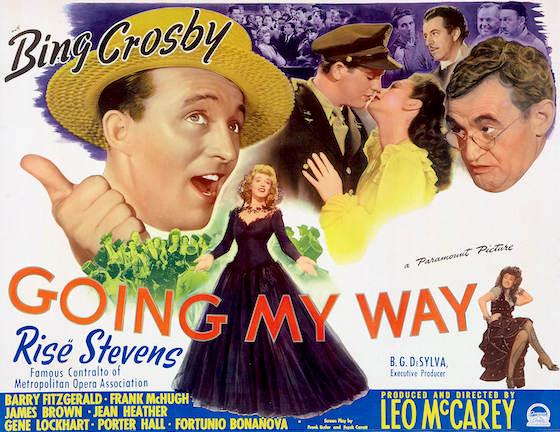
    Going My Way

    The Oscars, eh? Every year film fans pay them a load of attention, and every year we seem to be disappointed with the outcome. But this isn’t some new phenomenon: Going My Way hails from the 1940s, but is perhaps the definitive example of a film that managed to sweep the Oscars (it won seven awards from ten nominations) against a bunch of films that have endured to much greater acclaim (films it competed against included Double Indemnity, Laura, Lifeboat, Gaslight, and Meet Me in St. Louis. I think we can agree those are all better-remembered on the whole).

    None of which is to say it’s a bad film. It’s a gently-paced series of vignettes, almost like a collection of short stories, springing from young priest Father O’Malley (Bing Crosby) arriving to take charge of a struggling New York City parish. His modern ways clash with the old-fashioned values of the incumbent Father Fitzgibbon (Barry Fitzgerald), but his worldly knowledge allows him to connect with some of the parish’s disaffected inhabitants. Despite the religious setting, it doesn’t lean too heavily on the wonders of Christianity (you know I’d be the first to rip into it if it did). Overall, it’s perfectly pleasant; an easy afternoon’s viewing.

    Incidentally (and here’s a good bit of trivia that might come in handy for a quiz someday), it was the first Oscar Best Picture winner to have a sequel: The Bells of St. Mary’s, released the very next year… and also the very next review in this roundup…

    3 out of 5

    Going My Way was #93 in my 100 Films in a Year Challenge 2021.


    The Bells of St. Mary’s

    (1945)

    Leo McCary | 126 mins | TV (SD) | 4:3 | USA / English | U

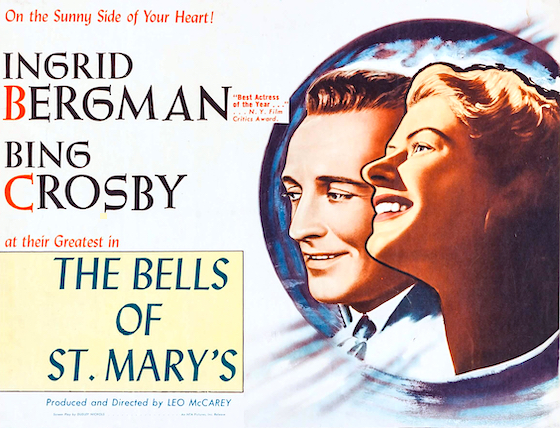
    The Bells of St. Mary's

    This followup to Going My Way was not only the first sequel to an Oscar Best Picture winner, but was also the first sequel to be nominated for the Best Picture Oscar.

    Bing Crosby returns as Father O’Malley, sent to a new locale, ready to solve another series of subplots at a struggling religious institution, this time butting heads (sort of — it’s never as dramatic as that makes it sound) with Ingrid Bergman’s head nun. Like the first one, it’s really a bundle of subplots for Bing to ‘solve’. The low-stakes problems and amiable tone between the two leads, even when they’re disagreeing, makes for a gentle and relaxing kind of film. I’d give it the edge over its Oscar-winning predecessor, thanks primarily to Bergman’s performance, but neither film is likely to set anyone’s world alight.

    As well as their Oscar success, the films were the highest grossing at the US box office for 1945 and ’46, respectively, another first for a film ‘series’. And yet, with six decades distance, they’re little more than also-rans; nicely obscure trivia answers to “films that won/were nominated for Best Picture”. Maybe there’s a lesson in that for anyone obsessed with the current cultural zeitgeist.

    3 out of 5

    The Bells of St. Mary’s was #187 in my 100 Films in a Year Challenge 2021.


    Zero Charisma

    (2013)

    Katie Graham & Andrew Matthews | 88 mins | digital (HD) | 16:9 | USA / English

    Zero Charisma

    I’d nickname this Portrait of a Manbaby on Fire. The manbaby in question is Scott (Sam Eidson), a stereotypical alpha-nerd: he has a neckbeard; he wears black T-shirts that feature elaborate depictions of grim reapers and the like; he lives with his grandma; he paints miniature fantasy figurines; he’s the Game Master of a role-playing group, which he rules with an iron fist. But when into-geeky-stuff hipster Miles (Garrett Graham) joins the group and everyone really likes him, Scott finds his position threatened, and he’s not happy about it.

    As much as geek/nerd culture has transitioned into the mainstream over the past couple of decades, there’s still stuff that remains the preserve of the hardcore; the truly nerdy. That culture clash is part of what Zero Charisma is about, of course, with Scott’s true old-fashioned kind of nerdishness clashing with Miles’s new-school cool. But it’s also a character study of the former. Scott may seem a stereotype — like The Simpsons’ Comic Book Guy rendered in live-action — but I’d wager anyone who’s moved in nerdish circles has known someone at least a bit like him. Stereotypes are stereotypes for a reason. The film exposes and examines those to often amusing effect. Some have said it exaggerates these things, but I don’t think it’s particularly guilty of that. Maybe it generalises them, and lumps all the worst characteristics of the extremely nerdy together into one character, but that doesn’t make it inaccurate, just broad.

    My only real problem was the ending. There’s a scene where everything comes to a head — a climax, if you will — but, in the wake of that, I felt it lacked adequate resolution. Has Scott learnt anything from this experience? Is he a changed man? Maybe a little, but not completely. To be fair, that’s a realistic character arc, because whose personality changes overnight after a single revelation? And yet it also doesn’t feel like the filmmakers quite know how they want to leave things. If they’d been going for a “change takes time and is incremental, but Scott’s started on that road” kinda message, I would have approved. Instead, the film tries to have its cake and eat it by showing Scott as better on the surface, but then secretly GMing a game where he still behaves like an asshole. Maybe it’s trying to say we can never truly change, however much our flaws are highlighted to us, which would be a pretty glum way to end an otherwise likeable comedy.

    3 out of 5

    Zero Charisma was #109 in my 100 Films in a Year Challenge 2020.


    Borat

    (2006)

    aka Borat: Cultural Learnings of America for Make Benefit Glorious Nation of Kazakhstan

    Larry Charles | 84 mins | digital (HD) | 16:9 | USA & UK / English | 15 / R

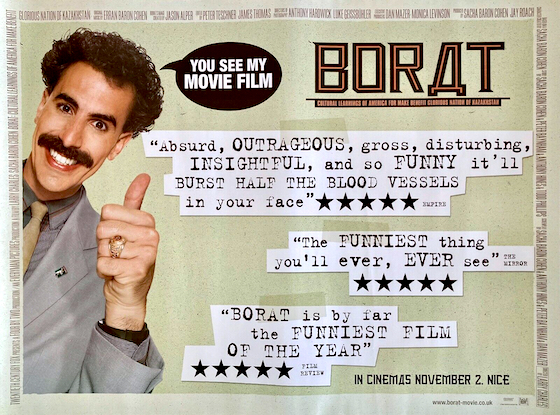
    Borat

    Ali G’s Sacha Baron Cohen adopts the persona of a Kazakh journalist to ostensibly interview Americans about their culture, but, unbeknownst to them, he’s of course really looking to expose their ludicrous views (you just know that, ten years later, a lot of these people voted for Trump) and take the piss out of them for our entertainment.

    As with most sketch-based comedy, the end result is a mixed bag. Sometimes it’s very funny; other times, it’s just being gross for the sake of it, like in a naked fight between Borat and his portly producer. A few bits don’t quite land — sometimes you can feel Baron Cohen’s not getting the response he wanted out of his target — and, even though he’s taking the piss out of people who deserve it, it sometimes gets a bit uncomfortable (though that might just be my English reserve/politeness kicking in and making me cringe). Most of the sketches are quite short, which is nice — they generally don’t outstay their welcome, and, if one isn’t working, you can be assured another will be along shortly.


    3 out of 5

    Borat was #220 in my 100 Films in a Year Challenge 2020.


    The Thin Red Line

    (1998)

    Terrence Malick | 171 mins | Blu-ray | 2.35:1 | USA / English | 15 / R

    The Thin Red Line

    An extensive cast of famous actors and recognisable faces star as a battalion of soldiers who spend 2 hours and 51 minutes taking one (1) hill in Terrence Malick’s very Terrence-Malick-y World War 2 movie. I mean, this is a movie about a battle in which the first shots aren’t fired until past the 45 minute mark, but there are plenty of shots showing the minutiae of nature. And there’s a lot of discussion about how there isn’t enough water.

    None of which is necessarily a problem — indeed, there are plenty of people who think this is a great movie, and I’m glad for them. But for everyone who loves it, there’s someone who’d call it “pretentious and self-indulgent, despite gun battles and lush cinematography.” I find myself somewhat stuck in the middle. I mean, if you were expecting a normal combat movie from Terrence Malick, more fool you. And it’s unquestionably beautifully shot — so many gorgeous visuals, but also effective camerawork and editing to convey, say, the chaos of battle. But I also found it to be bitty and episodic. Well, calling them “episodes” might be kind — they’re scenes; sometimes less than scenes; just moments, or even shots. It’s like a really long deleted scenes package pretending to be a movie.

    Of course, the behind-the-scenes stories sort of support that reading. The first cut clocked in at five hours. It took two editors and thirteen months of post-production to get it to a manageable size. Hans Zimmer composed over four hours of music, but only for a few bits of his work made it into the final cut. Billy Bob Thornton recorded narration for the entire film; the released cut has eight different narrators, but none of Thornton’s work is in there. Many actors thought they had significant roles, but found their performances reduced to little more than cameos. Most famously, Adrien Brody thought he was playing the lead role, only to discover at the premiere that he’s in just a couple of shots, and doesn’t even speak until over halfway through (and then it’s just a brief voiceover). And then there are the actors whose work was left on the cutting room floor: Bill Pullman, Gary Oldman, Lukas Haas, Viggo Mortensen, Martin Sheen, Jason Patric, Mickey Rourke… This movie has more great actors whose performances were deleted entirely than most movies have in their entire cast!

    All of which suggests a movie that should be universally recognised as a disaster. That it isn’t — quite the opposite — is testament to something. Maybe someday I’ll rewatch it and find out what.

    3 out of 5

    The Thin Red Line was #77 in my 100 Films in a Year Challenge 2020. It was viewed as an additional film for Blindspot 2020 after I failed to watch it for WDYMYHS 2019.


  • What Do You Mean You Haven’t Seen These Films from 1986?

    After a couple of years ‘off’ (or, if you prefer, combined with Blindspot, because they’re essentially the same thing), “What Do You Mean You Haven’t Seen…?” is back!

    Now, it’s part of my All-New 100 Films in a Year Challenge (you may have heard about that — I feel like I bring it up enough) and has a slightly refined focus. Whereas before it featured great or significant movies I should’ve seen from across film history, now I’m giving it a specific theme each year. For the inaugural year of its new version, I’ve picked my birth year: the 12 films from 1986 that I’m most surprised I haven’t seen.

    First, the films I’ve chosen. After, I’ll natter a little about how and why.


    A Better Tomorrow

    A Better Tomorrow

    Cobra

    Cobra

    Flight of the Navigator

    Flight of the Navigator

    Hannah and Her Sisters

    Hannah and Her Sisters

    The Hitcher

    The Hitcher

    Howard the Duck

    Howard the Duck

    Manhunter

    Manhunter

    Mona Lisa

    Mona Lisa

    The Name of the Rose

    The Name of the Rose

    Pretty in Pink

    Pretty in Pink

    She’s Gotta Have It

    She's Gotta Have It

    The Transformers:
    The Movie

    The Transformers: The Movie


    First, for the sake of context, here are all the feature films from 1986 that I have seen (taken from what I’ve logged on Letterboxd, which should be thorough at this point), in alphabetical order…

    Iron Eagle
    The Karate Kid Part II
    Labyrinth
    Laputa: Castle in the Sky
    Little Shop of Horrors
    The Money Pit
    Never Too Young to Die
    Platoon
    Stand By Me
    Top Gun
    When the Wind Blows
    .

    Yes, Biggles. I loved the books as a kid, so I guess I had to see the film, even though it’s some weird-ass post-Back to the Future time-travel-based reimagining.

    To select the list of films I needed to watch, I had a root around 1986’s highest-rated and most popular films (two different things) on both IMDb and Letterboxd, compiling a long-list of possibilities. That came to around about 30 titles, from which I selected the final 12 based purely on my own level of awareness — for example, Manhunter went straight into the final selection because, given the kinds of films I particularly like, it seems ludicrous I haven’t seen it yet. (It’s partly because I only own it on DVD. I never got round to importing the Shout BD, and now it looks to be out of print, with copies on sale for hundreds of dollars. Mad! And annoying.) I expect, if other people were presented with the same long-list, they might make slightly different selections. Such is life.

    One in particular that I nearly included was Star Trek IV. It must be good, right, because it’s an even-numbered one. Also, everyone seems to know about “the one with the whales”, and it’s that one. But as I’m currently working my way through the Trek films anyway (albeit slowly: TMP was last February and Wrath of Khan last July), it seemed unnecessary, even futile, to include one here.

    In conclusion, it wasn’t a particularly involved or technical selection process this time. At least that means this explanation is a lot shorter than my normal verbosity. In the unlikely event you’re missing that, there’s always my Blindspot post.

    Blindspot 2022

    There may be numerous changes around here for 2022 & onwards, but one thing that remains the same is the Blindspot challenge, which I’m undertaking for the tenth year running (though I called it “What Do You Mean You Haven’t Seen…?” back at the start. Now, WDYMYHS is a whole additional thing — details of the 2022 version are here).

    For those still unfamiliar with it, Blindspot’s premise is simple: choose 12 films you should have seen but haven’t, then watch one a month throughout the year. (Those 12 also contribute to my All-New 100 Films in a Year Challenge.) Below, I’ve listed my selection for this year, and afterwards I’ll talk a bit about how I chose them.

    The films are listed alphabetically, using the titles they’ve most recently been released under in the UK. Some of those are different to those used by, say, the Criterion Collection (we don’t automatically translate titles into English over here, what with us being more sophisticated ‘n’ all), but if you have to Google them, hey, at least you’ll have learnt something new.


    L’avventura

    L'avventura

    Come and See

    Come and See

    Les enfants du paradis

    Les enfants du paradis

    La grande illusion

    La grande illusion

    High and Low

    High and Low

    A Man Escaped

    A Man Escaped

    Mirror

    Mirror

    Los olvidados

    Los olvidados

    Paris, Texas

    Paris, Texas

    To Be or Not to Be

    To Be or Not to Be

    A Woman Under
    the Influence

    A Woman Under the Influence

    Yi Yi

    Yi Yi


    Some people just pull their 12 films out of who-knows-where. Personally, I’ve largely taken a more ‘scientific’ approach, using lists of great and/or popular films to try to shape some or all of my choices each year. This year is no different. But although I’ve made the process fairly complex some years — with lots of different contributing lists, sometimes weighted in different ways, or with additional rules — this year, I’ve kept it pared back.

    Just three lists were used: the IMDb Top 250 Movies (they’ve finally put “250” back in its official name, hurrah!); the Letterboxd equivalent, the Official Top 250 Narrative Feature Films; and the mother of all great movie lists, TSPDT’s The 1,000 Greatest Films. I limited the last one to its top 250, for equality. All lists were weighted equally, with a film gaining points inverse to its position on a list — i.e. #1 would get 250 points, #250 would get 1 point, etc. I also factored in how many different lists the films appeared on at iCheckMovies (10 points per list), and gave a little nudge (of 11 points) to anything I already owned. That last one didn’t actually have much impact, merely serving to change the final film that made the cut. Still, it means I already have copies of seven of the films, rather than only half of them.

    In fact, ensuring I could reasonably get hold of the films was something I checked before finalising the list, especially as Los olvidados doesn’t have an English-language Blu-ray release (in fact, according to Blu-ray.com, it’s only been released on BD in Japan). The only other factor I implemented was my longstanding “no repeat directors” rule. That took out Edward Yang’s A Brighter Summer Day (in favour of Yi Yi), as you can see in the list below. One previous rule I didn’t enforce this year was that, if I fail to watch a film one year, it’s locked out the next. I failed with Come and See in 2021, but it also topped the chart this year, so I’ve let it back in immediately. I won’t make the mistake of leaving it ’til December this time, though.

    So, as promised a moment ago, here are the final 13 films with their points tallies…

  • Come and See — 777 points
  • High and Low — 573 points
  • Yi Yi — 571 points
  • A Brighter Summer Day — 566 points
  • To Be or Not to Be — 533 points
  • Mirror — 524 points
  • Les enfants du paradis — 509 points
  • La grande illusion — 509 points
  • A Man Escaped — 491 points
  • A Woman Under the Influence — 488 points
  • Los olvidados — 450 points
  • L’avventura — 444 points
  • Paris, Texas — 423 points

    Finally, a couple more stats about the films. Last year, many of the films were exceptionally long — the average running time came out at 2 hours 36 minutes, with only three of the films running under 2 hours; but with the shortest being just 1 hour 10 minutes and the longest 7 hours 19 minutes, there was quite a range. Compared to that, 2022’s extremes don’t seem so, well, extreme: the shortest film is Los olvidados at 1 hour 21 minutes, while the longest is Les enfants du paradis at 3 hours 9 minutes, and five films (almost half) are under 2 hours… although there is a half-hour jump between the longest film under 2 hours (La grande illusion, 1 hour 53 minutes) and the shortest over 2 hours (a three-way tie between L’avventura, Come and See, and High and Low, each running 2 hours 23 minutes). Nonetheless, the average is down from last year, to a slightly more reasonable 2 hours 13 minutes.

    Although it wasn’t a conscious decision, the films are quite well spread around this year, both temporally and geographically. For the former, there’s one from the 1930s, two each from the 1940s, 1950s, 1960s, 1970s, and 1980s, and then one from the 2000s. For the latter, France comes out on top with three titles, followed by two each for Russia and the USA, and one apiece from Germany, Italy, Japan, Mexico, and Taiwan. In the latter case, I’m taking (what I believe to be) the primary country of production — several of the films can lay claim to multiples.

    Finally, half of the films are by directors whose work I’ve never seen before. They are Michelangelo Antonioni, Luis Buñuel, Marcel Carné, Elem Klimov, Wim Wenders, and Edward Yang. And with the other films’ directors including the likes of Robert Bresson, John Cassavetes, Akira Kurosawa, Ernst Lubitsch, Jean Renoir, and Andrei Tarkovsky — a real mix of artists whose work that I’ve seen has either struck me as fantastic or… well… — it should be an interesting year.

  • The All-New 100 Films in a Year Challenge

    As I said in my introduction to the blog’s new era, reports of 100 Films in a Year’s death may have been grossly exaggerated — because while 100 Films in a Year as it was is no more, in its place I have…

    The All-New 100 Films in a Year Challenge!

    Just like its title, this new version is similar but different. My original challenge was wholly straightforward: watch 100 films I’d never seen before every year. The only thing approaching complexity or contention was whether alternate cuts (e.g. director’s cuts) counted as a “film I’d never seen before” or not. But this brand-new version of the challenge… well, it’s going to require some explaining.

    Before I do, let’s recap why this came about. As regular readers are likely aware by now, I’ve been thinking about modifying my eponymous goal for a few years, primarily because simply “watching 100 new films in a year” stopped being an actual challenge and became my de facto state. It’s almost a decade since I failed in that goal, and over the last few years my average has been closer to 200 films in a year. So, why not just double the target? Or pick another number? Maybe I would’ve just done that, were it not for a few slip-ups (i.e. months where I fell short of my minimum target) and lifestyle changes in recent years. Obviously a challenge should be challenging, not a guaranteed walk in the park, but “just watch more films” didn’t seem the right way to push myself.

    That’s what ultimately led to this new challenge — or, you might argue, array of challenges. You see, rather than just watching any old 100 films, now there are a selection of categories, and films will need to fulfil criteria to qualify. Whereas the old challenge merely motivated me to watch more films, this new version is designed to encourage me to watch certain kinds of films. Plus, with some additional rules for each category, it will spread that viewing throughout the year, rather than seeing me engage in a headlong rush to #100 as quickly as I can (which has happened the past few years).

    So, you could argue this is eight separate challenges that together add up to 100 films, rather than a ‘true’ 100 films challenge — whatever that might mean. And you can argue that, if you want — I don’t care. This is a personal project, not some athletic endeavour subject to outside scrutiny, and this is how I’m choosing to do it. Of course, if for some reason you wanted to join in, you’re more than welcome. Feel free to use my rules. Feel free to tweak them to suit your own goals. Feel free to ignore them entirely and come up with your own criteria. Feel free to think “you know what, I really need to play more video games” and set yourself 100 Games in a Year as a challenge. Heck, that’s how this all began: I ‘ripped off’ the Read 50 Books in a Year challenge.


    As I said, there are now eight groups making up my 100-film challenge. I’ll outline them in a moment, but first there’s one general rule: a film can only count once. Sounds kinda obvious, I guess, but my categories are not so niche as to be mutually exclusive — I could watch a Blindspot pick from the 1970s on DVD and technically it could count across three categories. But if I did that, well, the final tally wouldn’t actually get to 100, which would be self defeating. When a film fulfils the criteria for multiple groups (as some surely will, especially early on), it’s up to me to allocate which category it counts towards — although there are some sub-rules that will help dictate that. (My challenge is watching films, but yours may be trying to understand why I make these things so unnecessarily complicated…)

    Without further ado, the categories are…

    New Films

    Well, that immediately requires clarification, doesn’t it? Because in the old challenge all 100 films were “new”, as in “new to me”. Now, however, I mean “new” as in “new (to the UK)”. And the UK clarification is needed because we so often get foreign films ‘late’, especially awards-y films that play US dates the year before but aren’t released here until January, February, March… even as late as June or July sometimes. So, this category is 12 films that were released in the UK for the first time during 2022. To some people that might seem like no challenge whatsoever — and it’s not that much of a challenge to me, to be honest, because I normally far exceed it. But, on the whole, my viewing skews older (when there’s the whole of film history to explore, why just watch brand-new stuff?), so I feel it’s a worthwhile category to include. Plus, part of the point of this is to spread the challenge throughout the year. To ensure that, this category is limited to one qualifying film per month — so even if I watched two (or more) new films in a single month, only the first would count towards the challenge. However, it can rollover if necessary — for example, if I watched no new films in January, I could count two in February. That might seem to undermine the concept of spreading these throughout the year, but, without it, it would be possible for me to fail the entire year on January 31st, which would suck.

    Rewatches

    In arguably the biggest change of all, rewatches now count… but only 12 of them. Mirroring the “new films” requirement, this is also limited to one per month. I’m not intending to run my Rewatchathon anymore, primarily because of this, but I’d like to think I’ll still rewatch more than 12 films a year. We’ll see — maybe I’ll end up bringing it back.

    Blindspot

    This continues as-is: 12 specific films, chosen ‘scientifically’ from best-of lists and the like, designed to be paced one per month. Because they’re specific films, if I did decide to get ahead of myself then they could count ‘early’, but I don’t think I’ve ever done that and I don’t intend to start now. As usual, there’ll be a dedicated post sometime soon with my 12 picks.

    What Do You Mean You Haven’t Seen…?

    After a couple of years ‘off’ (or, if you prefer, combined with Blindspot, because they’re essentially the same thing), WDYMYHS is back. The change is, whereas Blindspot is made up of “great movies” (according to other people), WDYMYHS will revolve around a theme of some kind. This year that link will be my birth year: 12 specific films from 1986 that I’m surprised I haven’t seen. Again, my 12 picks will be named in a dedicated post soon.

    Decades

    At least one film from every decade that feature films have existed, i.e. since the 1910s. That makes it another group of 12 — what are the odds?! It’s almost like I’m doing this deliberately… I can watch as many of these as I like within any given month, so we’ll see how long it takes me to tick them all off — recent decades will come quickly and easily, but some of the older ones might require a specific effort.

    DVDs

    I’ve spent years lamenting the fact that I don’t watch enough of my DVDs. Thanks to a couple of decades spent collecting, I own over 1,000 of the things, many never played, and they don’t often make it into my viewing nowadays, largely because they’re not HD. (I suspect that, statistically, I’m more likely to spend money upgrading a DVD to Blu-ray than I am to actually watch a DVD.) So, to force me to dig into that particular back catalogue, I’m making it a goal to watch at least one per month, as per the “new films” rules. And no ‘cheating’: if I don’t want to watch something from my DVD copy (because I want to get it in HD, or even UHD), that’s absolutely fine… but I can’t get it in HD and then still count that towards the DVD goal. I have to actually watch the DVD for it to count.

    Genre

    Like WDYMYHS, here I’m going to pick a specific genre or movement (preferably one that’s either highly specific or that I’m less au fait with, not something broad or well-worn like, say, “action”) and aim for at least one per month, i.e. 12 more films. However, this is a free-for-all: whereas WDYMYHS is 12 pre-chosen titles, this can be anything that falls within the genre; and I won’t limit myself to counting just one per month. Maybe I’ll have a marathon and complete it in one go! Maybe I’ll still spread it thin! At least having the choice provides an opportunity for some variety, right? This year’s genre will be that old favourite, film noir. I’ve had noir ‘viewing projects’ before, but there are plenty of key texts that still elude me, so maybe 2022 will right that. Or maybe I’ll just end up getting all 12 from Indicator’s 24-film Columbia Noir series. Frankly, either is good by me.

    Series Progression

    That’s perhaps the vaguest title of all, but let me explain (that’s the whole point of this post, after all). I have multiple different film series on the go at any one time — so many that, a couple of years ago, I started keeping a list, the Letterboxd version of which is here. Some of those series I continue to merrily work my way through; some I half-forget I have underway. So, the point of this category is to compel me to continue, across another 12 films. I could watch 12 from one series; I could watch one each from 12 different series. I could marathon them all across a weekend; I could watch them one a month throughout the year. Whatever — just so long as I keep going with series I’ve already started. (If I start a new series, either by accident or choice, the first film can’t count, but any future films can.)

    I know I said there were eight categories, but if you’ve been doing the maths so far you’ll have realised we’re only at 96 films. So there must be a ninth category, right? Well, yes and no. Let me introduce you to…

    Wildcards

    The final four films are ‘wildcards’ that I can attach to any of the eight categories. They still have a couple of rules, though. Firstly, wildcards can only be used once the category’s own requirements are met. What that means is, I could use a wildcard to (for example) count a second new film in January, but I couldn’t use one for a film noir until I’ve watched 12 film noirs. Lastly, only one wildcard per category — so I couldn’t (for example) watch five new films in January and count them all. Make sense? If not, let me remind you that you don’t really need to worry about any of this — it’s only me who has to work it out.


    I’ll be tracking my progress with the Challenge in my monthly review posts, and on a dedicated page too.

    Also, while it’s no longer the ‘official’ goal of the blog, I suspect I’ll end up still counting my overall viewing, and likely post year-end stats and whatnot about it next January. I’ve been doing that count for almost my entire adult life, so it’s a well-established habit at this point. Not to mention that, actually, I enjoy it — but now primarily for my own interest, rather than as the raison d’être of this blog.

    Blindspot 2021: What do you mean you haven’t seen…?

    Now that all my “looking back at 2020” posts are done, it’s time to start the first full week of 2021 wi— sorry, what? Second week? Where did the first one go?! Alright, well, it’ll have to do. So, dragging myself belatedly into the same year as everyone else, it’s time to present my Blindspot picks for 2021.

    The Blindspot challenge (for the benefit of those still unfamiliar with it) involves choosing 12 films you should have seen but haven’t, then watching one a month throughout the year. I started doing this eight years ago, calling it “What Do You Mean You Haven’t Seen…?” (WDYMYHS for short), but then someone else came up with the same idea independently and gave it a much snappier moniker, and that caught on.

    My 12 films for this year are below in alphabetical order. After that there’s a few stats, and then I’ll explain how and why I chose them.


    Aguirre,
    Wrath of God
    Aguirre, Wrath of God


    The Birth of a Nation
    The Birth of a Nation


    Cinema Paradiso
    Cinema Paradiso


    Come and See
    Come and See


    La Dolce Vita
    La Dolce Vita


    Frankenstein
    Frankenstein


    La Haine
    La Haine


    The Life and Death
    of Colonel Blimp
    The Life and Death of Colonel Blimp


    Pather Panchali
    Pather Panchali


    Rain Man
    Rain Man


    Sansho Dayu
    Sansho Dayu


    Sátántangó
    Sátántangó

    Here’s a few stats about this year’s list…

  • The average running time of the films is 2 hours 36 minutes. Yes, that’s the average. While the shortest film, Frankenstein, runs a measly 1 hour 10 minutes, there are only two others below the two-hour mark, and four that run over 2½ hours. And the longest, Sátántangó, is a whopping 7 hours 19 minutes — that’s longer than six Frankensteins.
  • There’s a spread of exactly 80 years between the oldest film (1915’s The Birth of a Nation) and the newest (1995’s La Haine). Of course, that means the most recent film here is over a quarter of a century old…
  • Exactly eight decades are represented, too. The most prolific is, amusingly enough, the ’80s, with three films. The ’50s and ’90s have two each, and there’s one apiece from the 1910s, ’30s, ’40s, ’60s, and ’70s.
  • The films come from nine countries: three from the USA, two from Italy, with the rest being from France, Germany, Hungary, India, Japan, the Soviet Union, and the UK.
  • There are eight different main languages spoken, plus one silent film. English is the most common with three films, two are in Italian, and the rest encompass Bengali, French, German, Hungarian, Japanese, and Russian.
  • Six of the films are from directors who I’ve never seen a feature from before. They are D.W. Griffith, Werner Herzog, Elem Klimov, Satyajit Ray, Béla Tarr, and Giuseppe Tornatore. (I have seen a short by Griffith before, but this is his first feature for me.)

    I tend to mix up my method for choosing films each year, but for 2021 I’ve retained one thing from last year — itself a legacy of the couple of years where I did two 12-film lists — and that’s to have six films ‘chosen for me’ via a consensus ranking of various “greatest movie” lists, and then to choose the other six myself from my massive unwatched disc pile. Inevitably, the latter seems to get influenced by films that piqued my interest in the former, but, eh, why not? (If you fancy a challenge, feel free to guess which six films belong to which selection process. Answers coming up.)

    The lists that contribute to the “poll of polls” selection can only be varied so much. I mean, there are probably thousands of such lists out there, but there are only a handful that are well known and respected (to one degree or another), and so I tend to use a lot of the same ones every year. You might think that makes which films appear a foregone conclusion — surely they’re the ones that narrowly missed out last year? — but things do change on some of these lists. For example, when I chose last year’s selection, Come and See was ranked 7th on Letterboxd; this year, it’s 2nd. That’s not an insignificant change: when I’m combining multiple lists, a jump like that at the top of a list could be the difference between inclusion and not quite making it. Besides, I do vary my lists and how I count them every year, precisely so as to keep things slightly unknowable.

    This year’s contributing lists were:

  • Letterboxd’s Official Top 250 Narrative Feature Films
  • IMDb’s Top Rated Movies (aka the IMDb Top 250)
  • the Reddit Top 250
  • Empire’s The 500 Greatest Movies of All Time (aka the Empire 500)
  • Empire’s The 100 Best Films of World Cinema
  • Sight & Sound’s 2012 poll, using the 250-film version listed on Letterboxd (the official list only goes to 100)

    A notable absentee this year is They Shoot Pictures, Don’t They?’s The 1,000 Greatest Films, itself a “poll of polls” that is therefore one of, if not the, definitive lists of greatest movies. That’s why I normally include it, and that normality is why I didn’t this year: it’s gone just for the sake of a change. In its place (sort of) is the Empire World Cinema list. It’s shorter than the others, so under my scoring system (which I’ll explain in a moment) it contributed somewhat less than the other lists. That means it served to tweak which foreign films got in, rather than acting to wipe out US/UK films — although, as it turns out, no US films made it through that way.

    So, each poll was scored out of 250 (250 points for 1st place, 249 for 2nd, etc), except the Empire World Cinema one, which was out of 100. Any film beyond 251st place on the Empire 500 earnt one point; and there were 10 additional points for each list a film appeared on (i.e. every film got 10 bonus points, because every film had to be on one list; but if it was on two it got 20, etc.) The full chart ended up including 230 films — that’s everything I hadn’t seen from the Letterboxd, IMDb, Reddit, and Empire World Cinema lists, plus those from the top 150 on Sight & Sound and the Empire 500 (by the time I got to those, I figured any films further down that weren’t on another list didn’t stand a chance; of course, I did include their rankings for all films that were on another list). Further to the plain scores, I also applied other rules — “no repeat directors” is the main one. I used to limit myself to films I already own, but not anymore; and I try to ensure variety in the kinds of films included, to get a spread of ages, countries, genres, etc.

    With all that considered, I think this is the first year I’ve simply accepted the films at the top of the chart without having to eliminate any. The only film to appear on all six lists was Come and See, so perhaps it’s no surprise that it came first with 810 points. Mind you, only one film appeared on five lists (Paris, Texas) and that came 17th, so being on fewer lists with higher ranks could beat merely appearing on many lists. In second place was La Dolce Vita with 647 points; third was Cinema Paradiso with 510; fourth was Pather Panchali with 502; fifth was Sátántangó with 461; and in sixth, just behind it with 460, was The Life and Death of Colonel Blimp. Regular readers (or those who’ve clicked and read some of the links in this article) may remember that Come and See and Sátántangó both qualified for the 2020 list, but were removed because new restorations were on the way. Those have now materialised: Come and See on a Criterion disc that I imported, and Sátántangó on very different UK and US discs (it’s also available to rent digitally, which is how I intend to view it).

    As for my ‘free choice’ films, three have a spot on that consensus ranking. They were La Haine (13th, 413 points), Sansho Dayu (16th, 398 points), and Aguirre, Wrath of God (38th, 262 points). You’ll note that none of those films are American, and so my only three picks that are not on the consensus ranking (The Birth of a Nation, Frankenstein, and Rain Man) are also my only three US films. Make of that what you will.

    I’ve spent most of 2021 so far working towards one self-imposed deadline after another, to get all of these end of year/new year posts done, so now I’m looking forward to catching up on other blogs — and actually watching some films!