The Godfather (1972)

100 Films’ 100 Favourites #39

An offer you can’t refuse.

Country: USA
Language: English, Italian & Latin
Runtime: 175 minutes
BBFC: X (cut, 1972) | 18 (1987) | 15 (2008)
MPAA: R

Original Release: 24th March 1972
UK Release: 18th August 1972
First Seen: DVD, c.2001

Stars
Marlon Brando (On the Waterfront, Apocalypse Now)
Al Pacino (Dog Day Afternoon, Scarface)
James Caan (Rollerball, Misery)
Robert Duvall (The Seven-Per-Cent Solution, Network)

Director
Francis Ford Coppola (The Godfather Part II, Apocalypse Now)

Screenwriters
Mario Puzo (Earthquake, Superman)
Francis Ford Coppola (The Great Gatsby, The Conversation)

Based on
The Godfather, a novel by Mario Puzo.

The Story
1945: Michael takes his girlfriend to his sister’s wedding, where she’s introduced to his family, including his father, Vito — the Don of New York’s Corleone crime family. Over the next decade, decisions made by the family lead to escalating gang war, and just as he thought he was out, Michael is pulled in to the family business.

Our Hero
A good college kid who dropped out to fight in World War 2, Michael Corleone has distanced himself from his family’s criminal activities… until a series of events find him drawn inescapably in.

Our Villain
According to the AFI, Michael is the 11th most iconic villain in film history. Of course, he winds up a Mafia Don, so he’s hardly a good guy in the traditional sense, but we’re surely on his side, at least throughout this film. Even in that context, I think you could argue the titular Godfather himself, Don Corleone, is the villain: his one son who tried to escape the life of crime is pulled into it after a string of poor choices and unfortunate incidents land the family in trouble.

Best Supporting Character
James Caan is Vito’s hot-headed eldest son, Sonny, heir apparent to the crime empire. Unfortunately, that very hot-headedness is liable to leave the position open…

Memorable Quote
“Luca Brasi sleeps with the fishes.” — Clemenza

Quote Most Likely To Be Used in Everyday Conversation
“I’m gonna make him an offer he can’t refuse.” — Don Corleone
(According to the AFI, this is the second best movie quote ever.)

Memorable Scene
The opening is the perfect scene-setter for the movie. On the day of his daughter’s wedding, Don Corleone hears requests for favours. One man asks for retribution against men who assaulted his daughter, which he has been denied by the legal system. Corleone questions why the man didn’t come straight to him, but ultimately grants the grovelling father his wish. Here, the film has established its pace, its tone, and themes of family, respect, and the important point that these criminals think of themselves as the honourable ones.

Write the Theme Tune…
Italian composer Nino Rota composed the majority of the soundtrack (Carmine Coppola contributed some music), including the famous main theme. Apparently a Paramount executive described Rota’s score as too “highbrow” and urged it be ditched, but Coppola won out. Considering the music’s subsequent fame and familiarity, I think we know who was right.

Technical Wizardry
The dark but amber-tinged cinematography by Gordon Willis is gorgeous. It’s stuff like this that high definition was made for.

Making of
Cinematographer Gordon Willis insisted that every shot represent a point of view, placing his camera around 4ft off the ground and keeping the angle flat. Coppola persuaded him to do a single aerial shot, in the scene when Don Corleone is gunned down, by telling Willis that the angle represented God’s perspective.

There’s a first time for everything…
According to IMDb, “Coppola turned in an initial director’s cut running 126 minutes. Paramount production chief Robert Evans rejected this version and demanded a longer cut with more scenes about the family. The final release version was nearly 50 minutes longer”. Studios love extended cuts for DVD these days, but choosing to take up more time in theatres? Not bloody likely.

Next time…
Debate rages as to whether sequel The Godfather Part II is an even better film. Either way, it was the first sequel to win Best Picture (and still one of only two). In 1977, Coppola edited the two films together in chronological order, along with some deleted scenes, to form The Godfather Saga miniseries, aka The Godfather: A Novel for Television. (Although it’s not been released on home media since VHS, it has been repeated on TV in HD, meaning copies can be… acquired.) Over a decade later, Coppola turned his duology into a trilogy with The Godfather Part III. Although generally reviled whenever it’s spoken about, it has a not-bad 7.6 on IMDb and was also nominated for Best Picture, as well as six other Oscars. (Part III was later added to the chronological cut to make The Godfather Trilogy: 1901-1980.)

Awards
3 Oscars (Picture, Actor (Marlon Brando), Adapted Screenplay)
8 Oscar nominations (Supporting Actor (James Caan, Robert Duvall, and Al Pacino), Director, Costume Design, Sound, Editing, Score)
1 BAFTA (Music)
4 BAFTA nominations (Actor (Marlon Brando), Supporting Actor (Robert Duvall), Costume Design, Most Promising Newcomer to Leading Film Roles (Al Pacino))

What the Critics Said
“It seems that the first question everyone asks about The Godfather is concerned with Marlon Brando’s interpretation of the title role. That is the way the movie has been programmed and promoted: Brando, Brando, Brando, and more Brando. The word from advance hush-hush screenings was wow all caps and exclamation point. […] So to answer belatedly the first question everyone asks about The Godfather: Brando gives an excellent performance as Don Vito Corleone [however,] though Brando’s star presence dominates every scene in which he appears, the part itself is relatively small, and there are other people who are equally good with considerably less strain, among them the extraordinarily versatile James Caan as the hot-headed, ill-fated Sonny Corleone, Richard Castellano as the jovially gruesome Clemenza, and Robert Duvall as Don Vito Corleone’s non-Italian consigliere, Tom Hagen.” — Tony Ortega, The Village Voice

What One Single Critic Said
“I don’t see how any gifted actor could have done less than Brando does here. His resident power, his sheer innate force, has rarely seemed weaker. […] Al Pacino, as Brando’s heir, rattles around in a part too demanding for him. James Caan is OK as his older brother. The surprisingly rotten score by Nino Rota contains a quotation from “Manhattan Serenade” as a plane lands in Los Angeles. Francis Ford Coppola, the director and co-adapter (with Mario Puzo), has saved all his limited ingenuity for the shootings and stranglings, which are among the most vicious I can remember on film. The print of the picture showed to the New York press had very washed-out colors.” — Stanley Kauffmann, New Republic (the one and only critical review on Rotten Tomatoes)

Score: 99%

What the Public Say
“Few people could have anticipated during the course of adapting Mario Puzo’s best-seller The Godfather to the big screen that it would become a lasting legacy in cinema. Forty-plus years have passed since its theatrical release, yet it stands the test of time as not only one of the greatest depictions of a crime family, but as one of the best films ever made. […] That lasting popularity isn’t a fluke; the Godfather films stand the test of time because these aren’t just movies, they’re cultural touchstones.” — Colin Biggs, Movie Mezzanine

Verdict

Has it really been almost eight years since the IMDb Top 250’s unshakeable #1 was usurped? The Godfather sat pretty at the top of that user-voted ranking for the best part of nine years, its balance between critically-acclaimed filmmaking finesse and quotable gangster machinations almost perfectly calibrated for that website’s prevailing demographic. (It’s since settled at #2, hardly a failure.) It’s not just IMDb users, though: The Godfather places 6th on the latest iteration of The 1,000 Greatest Films, the as-near-to-definitive-as-you-can-get poll-of-polls compilation. It’s for the same reasons, really: The Godfather combines thriller elements and striking violence with a strong understanding of character and a believable exploration of organised crime, a world as fascinating as it is morally repulsive, for a whole that is as artistically accomplished as it is palatable to the mainstream.

Sky Movies Select are showing the complete Godfather trilogy today from 4:30pm.

Next… you know the name, you know the number — it’s #40.
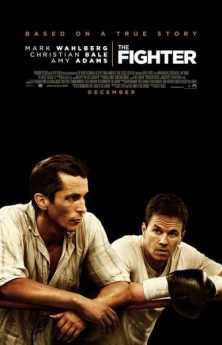
The Fighter (2010)

2016 #80
David O. Russell | 115 mins | streaming (HD) | 2.35:1 | USA / English | 15 / R

Oscar-winning true-story drama that relates the early career of boxer Micky Ward (Mark Wahlberg), a coulda-been-a-contender type held back by the training of his half-brother, ex-boxer turned drug addict Dicky (Christian Bale), and the management of his controlling mother (Melissa Leo), not to mention the cadre of harpy-ish sisters. Micky gains some confidence after entering a relationship with barmaid Charlene (Amy Adams), who’s prepared to stand up to his family. He breaks away from them and gets better opportunities, but soon realises that to win he’ll need to combine the best of both worlds.
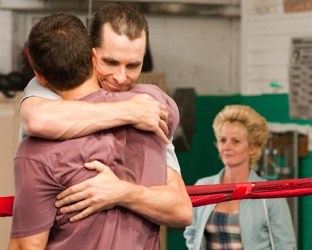
I swear, written like that it sounds much cheesier than it plays.

I don’t normally care for boxing movies (I even gave the sainted Raging Bull just 3 stars), but I rather enjoyed this. Perhaps that’s because it’s about the familial drama as much as it is pugilism, but then the same could be said of Bull, so who knows — maybe I’m just becoming inured to the sport. Heck, I even found myself invested in the outcome during the climactic bout.

Nonetheless, the film’s real meat lies in the dysfunctional family drama that informs events in the ring. Kudos to whoever had the cojones to focus on the story of Micky Ward establishing himself as a world-class boxer, leaving out the three later fights that really made his name (talk of a sequel covering those seems to have died down, I guess because this film wasn’t a blockbuster so presumably didn’t do sequel-justifying box office numbers). Maybe the story behind those fights forms a good narrative too, but there’s plenty enough here to merit the focus and form a neat narrative — it doesn’t need a fourth act covering three more fights.

Although this is technically Ward’s story, it’s as much about his older half-brother, washed-up fighter turned part-time trainer and full-time crack addict Dicky Eklund. It’s another of Christian Bale’s extreme weight gain/loss roles (in this case, loss), but there’s more to it than such physical exertion. Bale inhabits the character, and a brief clip of the real Dicky during the credits suggests he’s done so very accurately. His performance is mesmeric and definitely worthy of that Oscar. For the rest of the cast, Amy Adams holds attention equally in a less showy role, and even Marky Mark isn’t half bad. Melissa Leo also won an Oscar for her performance, which I forgot until I read so after — it was the one she controversially funded her own ad campaign for. I guess that paid off.

David O. Russell stages things with a kind of documentary-esque realism, down to capturing the fights on period-authentic SD video (according to IMDb, they used actual HBO cameras from the time, No-style, rather than just degrading the footage). In trying to figure out why The Fighter worked better for me than Raging Bull, I was left wondering if this was part of it… until I re-read my Bull review, which specifically noted that the “camerawork […] seems to be aiming for documentary-like realism”. There I called it “boring”; here, I felt that gritty, almost happened-upon rather than performed style seemed to suit the seedy world of boxing and the rundown lives of these people. Clearly I’m clutching at straws — my distaste for Bull does not boil down to “I thought it was shot wrong”.

The Fighter isn’t without its faults, though. There’s a certain element of cliché to the story arc — whether that’s just fact emulating fiction, or the screenwriters imposing familiar shapes on to what really happened, I don’t know. It could also stand to lose a few minutes here and there, especially when it goes round in circles about whether Micky should be trusting his family or not. And talking of movie clichés and comparisons to other films about fighting, watching it in close proximity to Warrior just highlights the other film’s outright manipulation and definite use of cliché, especially in its climax. I’d say this is the better film, with a more interesting, plausible depiction of fractured family dynamics, and a climactic result that didn’t feel telegraphed from act one.

It’s fair to say that I primarily chose to watch The Fighter so I could tick it off lists of “films directed by David O. Russell” and “Best Picture nominees”, and wound up rather liking it. If they ever get the sequel off the ground, I’d certainly be up for it.

4 out of 5

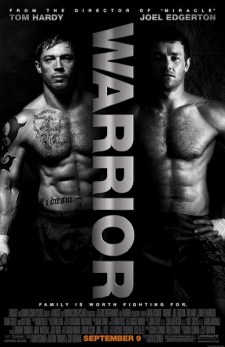
Warrior (2011)

2016 #71
Gavin O’Connor | 140 mins | streaming (HD) | 2.35:1 | USA / English | 12 / PG-13

Two estranged brothers (Tom Hardy and Joel Edgerton), who’ve taken very different paths in life to escape their alcoholic and abusive father (Nick Nolte), wind up entering the mixed martial arts tournament to end all mixed martial arts tournaments, their eyes on the unprecedentedly massive cash prize — one to save his house and family, the other to help the widow of his Army chum. As they separately go up against an array of more experienced opponents, who could possibly end up in the final bout? Hm, I wonder…
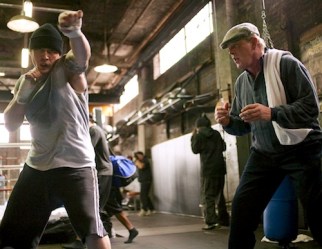
It’s a constant surprise to me that Warrior is on the IMDb Top 250 — and in a very secure 146th place, too — for two reasons: firstly because I’m not sure I’d ever heard anyone actually talk about it, except in passing as part of “the rise of Tom Hardy”-type passages; and secondly because, from the outside, it doesn’t look like a very Top 250-y kind of film. Maybe that’s silly, because there are several other boxing-related films on that hallowed list, but they seem to come from a different pedigree. I guess I’m trying to rationalise a feeling: from the little I’d seen or (not) heard, Warrior just doesn’t seem like the kind of movie that would garner enduring acclaim from a wide enough audience to maintain such a position. Having chosen to watch it in part to assuage that confusion, I still find its placement just as baffling.

Trying to find some explanation, I turned to reviews and comments on film-focused social media sites. It quickly becomes apparent that the love for Warrior doesn’t just come from some silent majority of non-film-fan film viewers. Indeed, it’s amazing how many people of usually sound taste are suckered in by this movie — and how many of them know they’re being suckered in but let it happen anyway. The weirdest thing for me is that this is the kind of film I regularly award 4 stars even while loads of other people are giving it 3 and I think they’re being a bit harsh but I can see where they’re coming from. Now, I’m almost loath to give it 4 because I don’t agree with the consensus. And it’s a particularly strange consensus: everyone seems to acknowledge it’s terribly clichéd, but then give it a pass on that. Why? Why don’t you show the same leniency to the tonnes of other movies you rip to shreds for their clichés?

As I implied in my opening paragraph, you can tell how the climactic tournament is going to pan out before the film even begins. In a movie rife with cliché, the shape of that contest — who beats who and when — is the most clichéd part… and yet it also forms the climax. Surely the ending being the most rote bit should leave audiences with a sour taste? Yet they seem to become totally enraptured by it. “I knew I was being shamelessly manipulated by an overfamiliar story, but I loved it! Don’t worry, next week I’ll go back to completely slagging off every other movie that even tries to slightly manipulate me and has even the tiniest vaguely familiar aspect to it.” Presumably these people are even giving a pass to the film’s laughable training montage — I guess no one involved in Warrior has seen Team America.

Still, you could argue the film isn’t about the tournament — it’s about a broken family healing. But if you’re looking for exceptional quality in the dramatic stakes or performances, you’re still left wanting. The family drama is rendered in frequently familiar beats, and when it’s not dealing in clichés it’s dealing in cheap sentiment. Hardy’s character is a war-hero marine — for the American male audience Warrior is clearly aimed at, that’s basically hanging a sign around his neck that says “awesome guy” and letting it suffice for characterisation and backstory. Hardy is a good actor, but he’s not called on to do much more than glower. Oscar-nominated Nick Nolte gives an affecting performance, though I’m not sure his character arc actually reaches any kind of ending. The rest of the cast are adequate: Joel Edgerton is decent as an upstanding family man; Jennifer Morrison has little to do as his wife; Frank Grillo is convincing as a trainer who bases his philosophy on classical music; Kevin Dunn gets some amusing moments as Edgerton’s school principal. Other people sometimes say words.
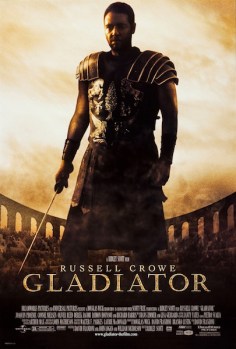
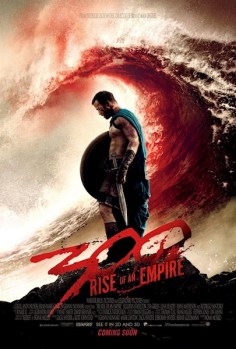
Warrior is decent enough for a cliché-driven sports movie, and it certainly has all the attendant ‘victorious’ moments that make such movies feel good without having to try very hard, and at least the fight choreography is decent (I’ve no idea how faithful it is to real MMA, but it seems reasonably plausible to me), and there’s one pretty good performance… but Top 250? I remain baffled.

4 out of 5

Gladiator (2000)

100 Films’ 100 Favourites #38

The general who became a slave.
The slave who became a gladiator.
The gladiator who defied an empire.

Country: USA & UK
Language: English
Runtime: 155 minutes | 171 minutes (extended edition)
BBFC: 15
MPAA: R

Original Release: 4th May 2000 (Australia)
US Release: 5th May 2000
UK Release: 12th May 2000
First Seen: DVD, c.2001

Stars
Russell Crowe (L.A. Confidential, A Beautiful Mind)
Joaquin Phoenix (Walk the Line, Her)
Connie Nielsen (The Devil’s Advocate, One Hour Photo)
Oliver Reed (Women in Love, The Three Musketeers)
Richard Harris (This Sporting Life, Unforgiven)

Director
Ridley Scott (Kingdom of Heaven, Exodus: Gods and Kings)

Screenwriters
David Franzoni (Amistad, King Arthur)
John Logan (The Aviator, Skyfall)
William Nicolson (Shadowlands, Mandela: Long Walk to Freedom)

Story by
David Franzoni (Jumpin’ Jack Flash, Citizen Cohn)

The Story
Roman Emperor Marcus Aurelius believes his son and heir, Commodus, is unfit to rule, so plans to appoint victorious General Maximus Decimus Meridius as regent. Before he can, Commodus murders Marcus and orders Maximus’ execution. Maximus escapes, but returns home to find Commodus has had his wife and son murdered. Captured by slavers, Maximus becomes a gladiator, and when Commodus announces gladiatorial games to commemorate his father, he spots a chance for revenge…

Our Hero
Maximus Decimus Meridius, commander of the Armies of the North, General of the Felix Legions and loyal servant to the old emperor, Marcus Aurelius. Father to a murdered son, husband to a murdered wife, becomes a gladiator, will have his vengeance against the new emperor, in this life or the next.

Our Villain
Said new emperor, Commodus. Murders his father because Marcus favours Maximus. Fancies his sister. That kinda guy.

Best Supporting Character
Even if his performance is partially computer generated (more on that later), Oliver Reed still stands out as Proximo, the slave owner who buys Maximus and turns him into a gladiator. For a fella who does that kind of thing, he turns out to be very honourable.

Memorable Quote
“My name is Maximus Decimus Meridius, commander of the Armies of the North, General of the Felix Legions and loyal servant to the true emperor, Marcus Aurelius. Father to a murdered son, husband to a murdered wife. And I will have my vengeance, in this life or the next.” — Maximus Decimus Meridius, commander of the Armies of the North, General of the Felix Legions, loyal servant to the true emperor Marcus Aurelius; father to a murdered son, husband to a murdered wife.

Quote Most Likely To Be Used in Everyday Conversation
“Are you not entertained? Are you not entertained?” — Maximus Decimus Meridius, commander of the Armies of the— yeah, you know the rest.

Memorable Scene
After Maximus secures a surprise victory in the Colosseum, Commodus enters the arena to congratulate the victor. Maximus reveals himself (cue famous speech), but holds back on his plan to murder the Emperor. As the Praetorian Guard prepare to execute Maximus, the crowd chant: “live!” Not prepared to risk unpopularity, Commodus spares him… for now.

Truly Special Effect
Oliver Reed died halfway through filming, with his key supporting role only partially complete. Famously, his performance was completed with computers, one of the first times such a thing had been done. Effects company The Mill created the additional footage by filming a body double and then mapping on a computer-generated mask of Reed’s face. The work totalled two minutes of screentime, at an estimated cost of $3.2 million.

Making of
When the HBO/BBC TV series Rome started, I read an interview with the programme’s historical advisor, who’d performed the same role for Gladiator. Asked to compare the experience of working on a major Hollywood movie versus a BBC-produced TV series, she cited the way the makers asked for information about something they wanted to include: on TV they’d ask, “did this exist?”; on Gladiator they’d say, “find us proof this existed.”

Next time…
A prequel or sequel was discussed ever since the film was a hit. The best/worst idea came from a re-write by Nick Cave (yes, that one) in which Maximus was “reincarnated by the Roman gods and returned to Rome to defend Christians against persecution; then transported to other important periods in history, including World War II, the Vietnam War, and finally being a general in the modern-day Pentagon.” As awesome as that sounds, it was rejected for “being too far-fetched, and not in keeping with the spirit and theme of the original”. Spoilsports.

Awards
5 Oscars (Picture, Actor (Russell Crowe), Costume Design, Sound, Visual Effects)
7 Oscar nominations (Supporting Actor (Joaquin Phoenix), Director, Original Screenplay, Cinematography, Editing, Score, Art Direction-Set Decoration)
5 BAFTAs (Film, Cinematography, Production Design, Editing, Audience Award)
10 BAFTA nominations (Actor (Russell Crowe), Supporting Actor (both Joaquin Phoenix and Oliver Reed), Director, Original Screenplay, Music, Costume Design, Sound, Visual Effects, Make Up/Hair)
2 World Stunt Awards (Best Fight, Best Work with an Animal)
1 MTV Movie Award (Best Movie)
5 MTV Movie Awards nominations (including Best Line from a Movie for “It vexes me, I am terribly vexed!”)

What the Critics Said
“There isn’t much difference between the crowds cheering Maximus and fans of modern mayhem entertainment. Money is the root of all violent exploitation then and now. One of Maximus’ endearing qualities is the way he resents the attention. It’s insane to view these fights as fun. We like him enough to agree, then realize we’re gawkers, too. Scott plays cagey with this paradox, as if to say: If you want to be a ghoul, do it right. Mano a mano, with much more than profit in the balance. Viewers shouldn’t feel guilty watching Gladiator, but its impatience with trash-sports showmanship is unmistakable.” — Steve Persall, St. Petersburg Times

Score: 76%

What the Public Say
“As far as elements of technical filmmaking go, Gladiator is nothing short of a marvel. Production design team does a magnificent job in putting up set pieces that are grand, imposing & meticulously refined with the real standout being the Colosseum itself which is undeniably a sight to behold. The culture, politics & life within the Roman Empire is illustrated in splendid detail. Costumes, artefacts & other props are in sync with the timeline its story is set in but it also incorporates a slightly urban touch to it that brings a flavour of its own into the picture and enhances the look & feel of the whole imagery.” — CinemaClown @ Letterboxd

Verdict

Gladiator’s influence is plain to see: it was hailed at the time for reviving the classic swords-and-sandals epic — and indeed it did, because in its wake we’ve had so many that my original plan to list them here became untenable. The ‘original’ is still the best, though, thanks to director Ridley Scott’s feel for the epic, Russell Crowe’s strong hero, Joaquin Phoenix’s slimily unstable villain, and a mix of a straight revenge tale with familial/political plotting and the importance of public relations, thumping action sequences, and groundbreaking special effects.

#39 will make you… an offer you can’t refuse.

300: Rise of an Empire (2014)

2016 #78
Noam Murro | 98 mins | streaming (HD) | 2.35:1 | USA / English | 15 / R

Taking place before, during, and after the events of Zack Snyder’s surprise-hit graphic novel adaptation 300, belated follow-up Rise of an Empire tells the wider story of what was going on in the war between Greece and Persia. In particular, it follows Themistokles (Sullivan Stapleton) as he commands a series of sea battles against the Persian navy, led by Artemisia (Eva Green).
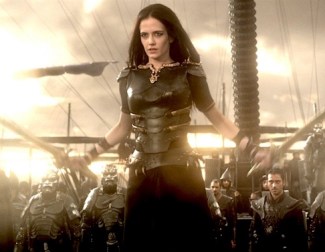
300 was known from the off as a case of style over substance, both in terms of its visuals (the ultra-heightened colour palette at a time when extreme digital grading still felt new; the slow-mo/fast-mo/etc editing) and its storytelling (taking an historical event and ramping it up to the level of legend; dialogue more concerned with being readily quotable than sounding plausible). But it committed so thoroughly to that methodology that it kind of worked, in its own ridiculous way. It helped that, as I said, it was all quite new — 300 was a visual revelation back in 2007, and that was enough. Now, plenty of films look like that, leaving 300 2 in search of a hook. It doesn’t find one.

It doesn’t help that the CGI this time is terrible, making the whole thing look like a computer game with real people occasionally dropped in. It’s not just the low quality of the graphics (calling them “effects” or “visuals” seems generous), but the way the camera moves and frames things. And the gore is gorno-level outrageous. In one shot early in the film, we see a horse rise up in fright, slow motion emphasising how its whole body is lifting into the air on its hind legs, its front hoof flailing, its eyes wild… before it comes crashing down, its hoof smashing into a grounded man’s head, the not-even-vaguely-plausible CGI blood exploding everywhere — in slow motion, of course.

It’s also terribly obvious that it was shot for 3D. I’m not normally one to criticise a film for that — I think when some critics know a film is being released in 3D they see that in its shot choices, even if they’re perfectly valid choices for 2D. But Rise of an Empire screams that it was made for 3D from the start, with all manner of things thrust towards the camera, usually in slow motion, and the constant explosions of blood (to call them squirts or sprays implies a more liquid-like quality than they actually possess) which go nowhere else but camerawards. Presumably the only reason it’s not an 18 for violence is because it’s all so bloody silly.


There is no point discussing or analysing any other aspects of the film. In every respect — from the clunky structure, to the leaden dialogue, to the poor performances, to the cheap visuals, to the fake CGI — this doesn’t feel like the $110 million blockbuster it is, but like a direct-to-Syfy TV movie.

1 out of 5

300: Rise of an Empire is available on Amazon Prime Instant Video UK as of yesterday.

It featured on my list of The Five Worst Films I Saw in 2016, which can be read in full here.

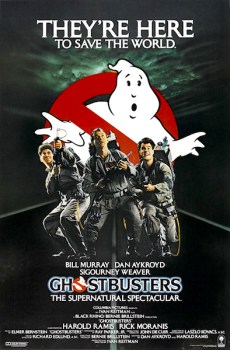
Ghostbusters (1984)

100 Films’ 100 Favourites #37

They’re here to save the world.

Also Known As: Ghost Busters, technically.

Country: USA
Language: English
Runtime: 105 minutes
BBFC: PG (1984) | 12A (2011)
MPAA: PG

Original Release: 8th June 1984
UK Release: 7th December 1984
First Seen: VHS, c.1990

Stars
Bill Murray (Groundhog Day, Lost in Translation)
Dan Aykroyd (The Blues Brothers, Trading Places)
Harold Ramis (Stripes, The Last Kiss)
Ernie Hudson (The Crow, Congo)
Sigourney Weaver (The Year of Living Dangerously, Gorillas in the Mist)
Rick Moranis (Little Shop of Horrors, Honey, I Shrunk the Kids)

Director
Ivan Reitman (Stripes, Kindergarten Cop)

Screenwriters
Dan Aykroyd (The Blues Brothers, Dragnet)
Harold Ramis (Animal House, Groundhog Day)

The Story
After losing their university jobs, a trio of paranormal researchers set up a ghost extermination business. They’re soon hired by Dana Barrett, who believes her apartment is haunted. Turns out it is, by an evil demigod who posses Dana and sets about bringing the world to an end…

Our Heroes
They ain’t afraid of no ghosts! Discredited parapsychologists Peter Venkman, Ray Stantz and Egon Spengler set up the Ghostbusters to combat the increasing problem of paranormal activity in New York City, and later recruit Winston Zeddemore to cope with demand.

Our Villain
Gozer the Gozerian, a Sumerian god of destruction. Likes to turn his servants into supernatural hounds and allow the good guys to choose the form of their ‘destructor’ — which is how you end up having to fight a 112½-foot marshmallow man.

Best Supporting Character
Among a strong cast of memorable characters, one has to feel for William Atherton as antagonistic EPA agent Walter Peck. Peck is so unlikeable that, according to director Ivan Reitman, it “ruined” Atherton’s life: people confronted him as if he were the character, including starting fights in bars. He’s just too good at being a slimy little so-and-so, I guess.

Memorable Quote
“Don’t cross the streams.” — Dr. Egon Spengler

Quote Most Likely To Be Used in Everyday Conversation
“Dogs and cats, living together!” — Dr. Peter Venkman (well, we used it a lot…)

Memorable Scene
The Ghostbusters fail to stop the coming of Gozer, who shortly declares that the destructor will follow, in a physical form chosen by the team. Although three of them manage to clear their minds, something pops into Ray’s head — “the most harmless thing. Something I loved from my childhood. Something that could never, ever possibly destroy us.” Unless it was eleven storeys tall and motivated by evil, of course.

Sing the Theme Tune…
“If there’s something strange in you neighbourhood, who you gonna call?” Ray Parker Jr.’s theme song is as iconic as the movie itself. It lost the Oscar to Stevie Wonder’s I Just Called to Say I Love You. Won the BAFTA, though.

Truly Special Effect
The film is full of excellent effects work — all done practically, of course, in those pre-CGI days. That also means an abundance of techniques were used, from simple stuff like hanging things on wires or using wind blowers to make library cards fly around, to miniatures with a Godzilla-style man in a suit, to full animation for things like the proton packs’ streams. And it was all produced on such a tight schedule that, according to the film’s effects mastermind, 70-80% of the work was achieved in the first take.

Making of
Dan Aykroyd wrote the part of Winston with Eddie Murphy in mind, having just worked with him on Trading Places. When Murphy was unavailable due to working on Beverly Hills Cop, Ernie Hudson was cast. He was so excited by the part that he agreed to do it for half his usual salary, only to then receive a revised script in which Winston had a greatly reduced role. In 2015, Hudson commented, “I love the character and he’s got some great lines, but I felt the guy was just kind of there. I love the movie, I love the guys. I’m very thankful to Ivan for casting me. I’m very thankful that fans appreciate the Winston character. But it’s always been very frustrating — kind of a love/hate thing, I guess.”

Next time…
First came The Real Ghostbusters, an animated series that ran from 1986 to 1991 and produced 140 episodes (the addition of The Real to the title being due to another series from the ’70s). Due to its success, the cast and crew were cajoled into making a film sequel, Ghostbusters II, which scared the life out of me when I was about 4. In 2009, Ghostbusters: The Video Game used the likenesses and voices of many of the original cast, and Dan Aykroyd described it as “essentially the third movie.” Rumours and/or plans for a genuine second sequel persisted for a very, very long time (there’s a mass of details here, if you’re interested), though finally seem to have been abandoned in favour of this summer’s all-female reboot.

Awards
2 Oscar nominations (Visual Effects, Original Song)
1 BAFTA (Original Song)
1 BAFTA nomination (Visual Effects)
1 Saturn Award (Fantasy Film)
Nominated for the Hugo for Best Dramatic Presentation.

What the Critics Said
“The cast could not be better. Although his role is too small, Aykroyd is endearingly serious as a diehard, but easily scared, ghost-hunter. Harold Ramis, the co-writer of the script, is extremely funny as a hopeless egghead […] But Ghostbusters is primarily a showcase for Murray, who slinks through the movie muttering his lines in his usual cheeky fashion and getting off an occasionally hilarious crack that proves he’s thoroughly enjoying himself.” — Kathleen Carroll, New York Daily News

Score: 97%

What the Public Say
“the use of special effects, specifically practical effect, shines as well. The ghosts may not be perfectly rendered, but they are so interesting in design and they have so much energy onscreen that you don’t mind it. The practical effects, like having the ground open up or drawers being opened by unseen ghosts are done very well. In a time where many effects-heavy films rely solely on CGI, it’s nice to look back to a time when practical effects were still commonplace in movies and done well in movies.” — Joey Sack, Reel Reactions

Verdict

Along with Teenage Mutant Ninja Turtles and ThunderCats, I loved Ghostbusters when I was a kid — I had a dressing up set, with a jumpsuit and a proton pack with a yellow foam whatsit for the stream, and one of the traps, and an Ecto-1, and the firehouse playset, and one time I got my fingers caught in the grill on the roof (which was there to pour goo through, because toys) and I’m sure I panicked until liberal application of butter freed me… Good times. I guess back then my love for it was more to do with the animated series than the movie, but the film itself is a work of blockbuster comedy art. The characters are a joy to be around, the dialogue is hilarious and quotable, multiple sequences lodge themselves indelibly in the memory, the special effects are exemplary, and the dramatic stakes can be surprisingly effective for what’s primarily a comedy.

All together now: “bustin’ makes me feel good!

#38 will have its revenge… in this post or the next.

Captain America: Civil War (2016)

2016 #92
Anthony & Joe Russo | 147 mins | cinema | 2.35:1 | USA / English, German, Russian, Xhosa & Romanian | 12A / PG-13

This review contains spoilers.
(because, at this point, I’m not sure there’d be much point writing about it otherwise)

We’re now on to the 13th film in the Marvel Cinematic Universe, and while you don’t need to have seen all 12 preceding movies to follow the events of Civil War, you do need at least four — and, to get everything, a further four or five beyond that. (Don’t worry about the four TV series — it’s increasingly clear that they’re only notionally connected to the movies.) So the Marvel model for a “shared universe” is not discrete stories that take place in the same world, but a series of ever-more-connected narratives. It’s working for them, though, as the continually stellar box office totals prove.

Ostensibly the third Captain America movie, Civil War is as much a sequel to Avengers: Age of Ultron as it is to The Winter Soldier: it throws us straight in to action with the new Avengers line-up established at the end of Ultron, as they battle what turns out to be a villain from Winter Soldier. As I said, ever-more-connected. This particular mission goes disastrously wrong, bringing to a head plans that the governments of the world had been cooking up for a while: the Sokovia Accords, a way to control the Avengers and give them some accountability. Team leader Steve Rogers / Captain America (Chris Evans) isn’t keen — he’s worried political interests will conflict with the Avengers’ ability to do good. Bankroller Tony Stark / Iron Man (Robert Downey Jr.) is on board, however — spooked by having created Ultron, and after being confronted by the mother of an American lad who died in Sokovia (because the Sokovian deaths didn’t matter enough, I guess), he thinks the Avengers need reining in. The burgeoning conflict is clarified when Rogers’ childhood friend Bucky Barnes, aka Soviet agent the Winter Soldier (Sebastian Stan), emerges from hiding to attack the signing of the Accords — Rogers wants to save him; Stark needs to bring him in, dead or alive. As most of the other heroes we’ve met in the preceding 12 movies (not to mention a couple of new ones) pick sides, battle lines are drawn for an almighty clash.

As complicated as the plot sounds once you start trying to succinctly summarise it, Civil War is easy to follow as it unfurls. In fact, it’s to its credit that it can’t be readily summarised in any more detail than “Cap and Iron Man disagree; fight” without really getting into it. Screenwriters Christopher Markus and Stephen McFeely have followed up the political thriller of Winter Soldier with another global thriller storyline, again bringing different genre textures to the superheroics that are nonetheless present and correct. The film’s style mixes in just the right amount of realism — no one’s pretending this isn’t a comic book movie, with some elements of comic book logic and a casual acceptance of people having world-changing powers; but if such people did exist, this is the kind of way they would be handled by the authorities.

So while Civil War does work as a popcorn-guzzling action spectacular, the themes it raises — primarily of how we oversee and control those who claim to protect us — are relevant to real life, if you want them to be. The film attempts to make it a genuine debate by placing Cap and Stark as the figureheads of each side. Sure, that’s borrowed from the original comic book storyline that inspired the film, but it works perfectly for the movies: Iron Man is the basis around which the whole MCU was originally built, while Captain America is almost its break out star, emerging from the mess of The First Avenger to become one of the shining lights of every film he’s starred in since, at least two of which commonly compete for the crown of the MCU’s best movie. So who better to place at the heart of the conflict? Who better to present viewers with a genuine choice?

Well, maybe. But the debate is partially stalled by the fact this is a Captain America movie rather than an Avengers one. Yeah, you can side with Tony Stark & co, but you know Cap’s going to come out to the good, one way or another. As it pans out, it’s not a total victory (Team Cap are all now fugitives, presumably until Infinity War), but, morally, Cap wins, and even Tony knows it. Would it have been better to frame the political/thematic issues in an Avengers movie, to make it a genuine contest? Maybe. It’s almost hard to imagine it divorced of this context now, and a lot of that context is Cap-based. The rest of the cast of The Avengers may be hanging around, but the narrative drive comes back to Steve and Bucky, a throughline that belongs to the Captain America trilogy. You can’t doubt that this is a Captain America film — tonally, it fits better with The Winter Soldier than Age of Ultron — even as it is, really, also an Avengers one.

If we’re talking about hero-vs-hero conflicts and movies that give you something to think about, it’s only fair that we drag this year’s other big silver screen superhero battle into the fray. There’s little doubt that Civil War is a more readily entertaining film than Batman v Superman, and clearly a more popular one, but it left me with less to think about. That’s not to say there isn’t thematic weight here — I’ve just spent a couple of paragraphs referring to its attempts to engage with such debates, after all — but I felt like the film kinda covers what there is to say. Maybe Batman v Superman leaves its issues more open; or maybe they’re less well conveyed; or maybe we struggle to read them into it because they’re not actually there. Whatever the truth, I came out of Zack Snyder’s movie with lots going on in my mind and wrote 2,500 words about it that contained half or less of my thoughts. I came out of Civil War thinking, “well that was fun.”

On that visceral level, there are a couple of stunning action sequences. The car/foot chase between Cap, Bucky and Black Panther is fantastic, casually throwing in cool moments like the way Bucky steals a motorbike. The climactic two-on-one fight is also a sight, throwing in strong choreography and seamless effects work to create a battle that has a real ebb and flow, a back and forth over who has the upper hand. And the centrepiece of it all, of course, is the two teams facing off at the airport. For fans of superheroes, this is pretty much the ultimate expression of the genre yet brought to live-action moviemaking. For my money, the antics of Ant-Man — and Giant-Man — are by and large (pun very much intended) the best bit of it, but maybe I’m just a little biased. Certainly, that everyone’s favourite webslinger is in the mix is the icing on the cake, and Tom Holland seems to have quickly nailed Spidey. Personally, I still find it a bit odd him turning up, especially in such a minor role. There’s still a slight sense that the MCU is made up of second/third-string heroes, who needed that shared universe to kickstart their big-screen life. Spidey most certainly does not need that… or didn’t before Sony effed it up with the last two movies, anyway. Maybe he does now.

And while I’m talking about Spider-Man, let’s talk about those post-credits scenes. Peter Parker is the star of the second one, and it’s Marvel Studio’s usual kind of tease, though perhaps less teasing than normal — “hey, remember that kid who was Spider-Man? He’s Spider-Man!” Thanks, guys. Before that, though, the mid-credits scene is a mid-credits scene for the sake of a mid-credits scene. By establishing where Bucky ends up, it’s surely an essential part of the overall narrative. Okay, it has the requisite teaser properties, hinting at where we might find Team Cap come the start of Avengers 3; and it teases Black Panther too, but only very, very mildly — like the Spidey scene, it’s basically saying, “hey, remember that foreign prince who was Black Panther? He lives in a foreign country… where he’s Black Panther!” Other than that, it’s kinda important to answer the question of “hey, what happened to Bucky?” next time Cap turns up. So why isn’t the scene just in the film? Well, it is in the film — just after a few of the credits — so what does it matter, right?

As I was saying — there’s plenty more action in the movie. Sadly, much of it falls foul of the dreaded ShakyCam. Watching Civil War just days after The Raid 2 made that especially frustrating. With all the time and effort they put into training actors these days, plus all the effects technology they have at their disposal to paint out wires or replace faces (something they’ve been able to do unnoticeably since Jurassic Park, for pity’s sake!), you’d think a $250 million movie could manage better. (If you’re wondering what they did spend $250 million on, it was stuff like, “eh, we may as well just use CGI for the close-ups, too”.)

One thing the film definitely gets right, in my view, is its villain. So central is the Cap/Iron Man conflict that it seemed any villain would be an afterthought, at best; and it doesn’t help that the MCU is renowned for having weak antagonists. Indeed, for most of the movie Zemo seems like the expected nonentity; a villain for the sake of a villain, who’s being seeded earlier in the film just so he doesn’t come completely out of nowhere at the climax. But then, when his whole story and plan is revealed, it turns out that all along he may have been one of the most interesting villains the MCU has yet offered. His motivation is simple but effective; his methodology cunning and almost successful — even after the heroes know what he was trying to get them to do, they do it anyway! His final scene with Black Panther may be the best part of the entire movie. Nice work, Daniel Brühl.

In the end, Civil War leaves plenty open for future Marvel movies. Well, of course it does — half the time MCU movies are feature-length trailers for the next MCU movie. Where Civil War is really clever, however, is that it does that stage-setting while also feeling conclusory. As the third part in the Captain America trilogy, it actually makes a pretty satisfying end to that narrative. As the third part in the “trilogy in five parts” that is The Avengers trilogy, well, it’s clearly not the end, but it’s a fairly discrete segment.
It may well also be the best MCU movie so far, too. There aren’t many 13th films that can say that.

4 out of 5

Calvary (2014)

2016 #91
John Michael McDonagh | 101 mins | Blu-ray | 2.35:1 | Ireland & UK / English | 15 / R

From the director of In Bruges’ older brother (who, in fairness, made a name for himself with 2011 comedy The Guard, which I’ve still not got round to) comes this dark (very dark) comedy drama — with emphasis on the latter, I suppose, but it is very funny along the way.

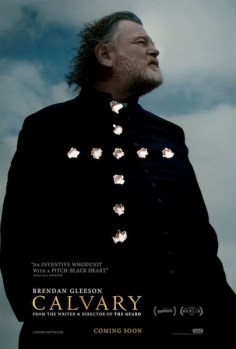
Brendan Gleeson (In Bruges, The Guard) stars as Father James, a priest in a small Irish town. One day at confession he’s told he is going to be murdered. Not for anything he did wrong, but precisely the opposite — because he is a good priest. The mysterious threatener gives him a week to get his affairs in order. Over the next seven days, we follow James as he interacts with his characterful parishioners, and are led to ponder which of them might be the would-be assassin, especially as so many seem cynical and nasty. All the while, James struggles internally with what is the right thing to do.

That’s the story of Calvary, at any rate, but it’s fairly clear that it’s about something more. What exactly that is, however, is a matter of debate. Could it be an apologia for the church and the wrongs it has inflicted in living memory? It certainly leans into those issues: without spoiling anything, the inciting incident is related to historic abuse, but the film is showing that priests aren’t all like that — that some people in the church are actually good, or at least as good as any of the rest of us — which I should imagine is true. That doesn’t make the film an apology, nor an excuse, but does raise a point: should the innocent be blamed for the wrongdoings of the guilty just because they share a belief? I think most rational people would agree they should not. Nonetheless, I’ve read at least one commenter, who I’m presuming was a hardened atheist, castigate the film for daring to feature a good priest, as if the very concept of one existing was a heinous and offensive suggestion. Conversely, in the special features Chris O’Dowd speaks of his initial wariness that this was going to be another “bad priest” movie, and how that doesn’t align with his personal experience of the clergy.

So could it, instead, merely be a snapshot of Irish society, in particular its current relationship with the church? Surely that’s part of what’s in play, with the cynical, dismissive, teasing, sometimes hateful attitudes of the parishioners surely no coincidence. Some viewers have certainly taken this as the film’s primary talking point, and some have been less than impressed that it doesn’t align with their view of modern Ireland. (I’m in no position to comment.) Neither of these feel like they’re getting at the totality of what it’s saying, though.

Nonetheless, the way the film presents itself is not at fault. The acting is strong across the board, none more so than Gleeson. He brings all kinds of facets to a man who could’ve been a blank page on which to project the other colourful characters, and he truthfully conveys major character moments and changes of direction without the need for dialogue. O’Dowd surprises in a rare non-comedic role, while further able support comes from recognisable faces like Kelly Reilly (as James’ troubled daughter), Dylan Moran (as a nouveau riche dick) , Marie-Josée Croze (as a bereaved holidaymaker), M. Emmet Walsh (as an ageing author), and — for just one scene, but a good one — Domhnall Gleeson (you can discover what he is when you watch it). And no offence to Aidan Gillen, but his smarmy atheist doctor feels like the kind of part he always plays.

That’s not to exclude the less familiar names, some of whom deliver many of the biggest laughs, like Killian Scott (as a slightly worrying simpleton), David Wilmot (as James’ naïve fellow clergyman), and Owen Sharpe (as a Brooklyn-accented promiscuous gay) — though if you watch Ripper Street, you may have seen a couple of them in quite different guises. And though it may be a cliché, McDonagh has successfully made the location a character, too: the towering mountain, an accidental discovery once on location, adds the looming presence the director hoped it would.

Calvary may in fact be a great film, if only I could put my finger on what I think it’s really trying to get at, which remains frustratingly out of my reach, at least for now. However, I will say it’s a very good one, and anyone who likes a character-driven drama scattered with dark but hilarious humour would do well to seek it out.

4 out of 5

Calvary is available on Amazon Prime Instant Video UK as of yesterday.

Ghost in the Shell (1995)

100 Films’ 100 Favourites #36

It’s found its voice…
now it needs a body.

Original Title: Kôkaku Kidôtai
Also Known As: Mobile Armored Riot Police: Ghost in the Shell (Japan)

Country: Japan
Language: Japanese
Runtime: 83 minutes
BBFC: 15

Original Release: 18th November 1995 (Japan)
UK Release: 8th December 1995
First Seen: DVD, 2000

Stars
Atsuko Tanaka (Ghost in the Shell 2: Innocence, Bayonetta: Bloody Fate)
Akio Ôtsuka (Black Jack, Paprika)
Kôichi Yamadera (Ninja Scroll, Cowboy Bebop: The Movie)
Yutaka Nakano (Cowboy Bebop: The Movie, Ghost in the Shell 2: Innocence)
Tamio Ôki (Journey to Agartha, Wolf Children)

Director
Mamoru Oshii (Patlabor: The Movie, Ghost in the Shell 2: Innocence)

Screenwriter
Kazunori Itō (Patlabor: The Movie, .hack//SIGN)

Based on
The Ghost in the Shell (攻殻機動隊 Kōkaku Kidōtai, literally Mobile Armoured Riot Police), a manga by Masamune Shirow.

The Story
Japan, 2029: Public Security officer Major Motoko Kusanagi and her team are assigned to track down and capture a dangerous hacker known as the Puppet Master, but they soon find themselves embroiled in a far-reaching conspiracy…

Our Hero
In a future world where humans can undergo varying degrees of cyberisation, Major Motoko Kusanagi is a “full-body prosthesis augmented-cybernetic human” — only her brain is organic. Her body is a generic mass production model, so she can blend in while being a kick-ass law enforcement officer.

Our Villain
The Puppet Master, a cyber criminal who hacks into people’s brains and gives them false memories. But is there something even worse going on behind the hacker?

Best Supporting Character
Kusanagi’s second-in-command Batou is stoic to the point of brusqueness — apparently quite a different characterisation to his portrayal in other Ghost in the Shell media.

Memorable Quote
“If we all reacted the same way, we’d be predictable, and there’s always more than one way to view a situation. What’s true for the group is also true for the individual. It’s simple: overspecialise, and you breed in weakness. It’s slow death.” — Major Kusanagi

Memorable Scene
Pursuing the Puppet Master, Kusanagi comes face to face with a six-legged tank. After a blazing gun battle, she tries to physically rip it open, her cybernetic body straining to breaking point — and beyond…

Technical Wizardry
Ghost in the Shell was groundbreaking in its skilful combination of traditional 2D animation with CGI additions. It used a process called “digitally generated animation” (DGA), which combined cel animation with computer graphics to create lens effects that simulated depth, motion, and unusual lightning techniques, as well as mixing in 3D CGI and digital audio.

Letting the Side Down
In 2008, Oshii revisited the film to create Ghost in the Shell 2.0, which regraded the colour, replaced some of the original animation with new CGI, omitted several scenes, and featured a remixed and re-recorded soundtrack. (More details here.) As is almost always the case when directors fiddle with their creations decades later, it wasn’t well received by fans.

Next time…
As befalls many a popular anime franchise, Ghost in the Shell has spawned a raft of sequels and reboots. The only direct sequel, Innocence, was released in 2004. TV series Ghost in the Shell: Stand Alone Complex ran for two seasons between 2002 and 2005, with the first run compiled into movie The Laughing Man and the second into Individual Eleven, all of which were followed by a final film, Solid State Society. Another reboot came in 2013 with direct-to-video series Ghost in the Shell: Arise, which so far totals five episodes and, last year, continuation film Ghost in the Shell: The New Movie. (Only four episodes have so far been released in the West, but the movie — which continues the story from the fifth episode — came out on Monday in the UK. Just to make things more complicated.) A live-action American remake is currently shooting for release in March 2017 — you’ve probably heard about it.

Awards
5 Annie Awards nominations (Animated Feature, Directing, Producing, Writing, Production Design)

What the Critics Said
“When Akira first blasted out of Japan back in 1991 it looked like the Western concept of widescreen animation would be changed forever. […] Unfortunately, it was not to be. Sure, on video, the Manga scene has gone from strength to strength, but as far as theatrical releases are concerned, nothing has really come along to match Akira’s sheer retina-scalding magnificence. Until now. […] From its baddie-eviscerating opening sequence through innumerable car chases, shoot outs and tongue-in-cheek dialogue exchanges, this is exactly the kind of film that James Cameron would make if they ever let him through the Disney front gates.” — Clark Collis, Empire

Score: 95%

What the Public Say
“both the film and Oshii have fallen into a kind of disrepute among the anime community. The common line on GITS is that it’s wordy, masturbatory, and pretentious with nothing going on intellectually and that the (plainly inferior but more easily accessible) GITS: SAC is a better alternative. I wanted to write this article to respond to that notion. GITS is a highly thoughtful film and worthy of comparison to virtually any scifi feature you could name. ” — tamerlane, too long for twitlonger

Verdict

Ghost in the Shell was the first anime I consciously saw, which maybe helps it earn a place here. It’s an initially accessible movie that’s also very complicated — there are pulse-pounding action scenes and a thriller storyline to keep things exciting, but also a lot of deep philosophical discussions, touching on themes of gender and identity. I think for some viewers the latter are a negative, while for others they’re the entire point. (I imagine the forthcoming Hollywood remake will either ditch or seriously curtail them, but you never know.) The combination makes for a stimulating (in multiple senses) sci-fi actioner.

Next… who ya gonna call? #37 !

The Raid 2 (2014)

aka The Raid 2: Berandal

2016 #90
Gareth Evans | 150 mins | Blu-ray | 2.40:1 | Indonesia & USA / Indonesian, English & Japanese | 18*

I wasn’t as impressed as some were by The Raid when I finally got round to watching it two years ago — in my review I said its action was merely equal to other Asian fight flicks, asserted that Dredd had done the same story in a more rounded fashion, and compared the whole thing to Mamma Mia. To use a term that came up in my comments recently: where Mamma Mia is a chick flick, The Raid is definitely a dick flick. That’s probably why it’s taken me this long to get round to its sequel, which was at least as well-liked by the viewing public, if not more so (it has a higher rating on IMDb) — but I couldn’t trust that last time, so why this time? However, it turns out The Raid 2 is an entirely different kettle of fish.

That’s certainly true of the plot — this may be the least “just a rehash of the first film” sequel ever made. Starting mere hours after its predecessor finished, the sequel begins with good cop Rama (Iko Uwais) being co-opted into an anti-corruption internal affairs unit. It’s not just about doing the right thing, though: Rama wants a shot at Bejo (Alex Abbad), a rising criminal who murdered Rama’s brother. Rama is promptly asked to leave his wife and young son behind to go undercover in a prison with the aim of getting close to Uco (Arifin Putra), the son of powerful mob boss Bangun (Tio Pakusadewo). Unfortunately, instead of being sentenced to a couple of months as promised, Rama is given years in jail. Nonetheless, he manages to ingratiate himself with his target, and upon his eventual release is immediately granted a position in Bangun’s organisation. And, look, this is meant to be a review, not a plot summary — it all just spirals from there.

Where the first film was an efficient, simple thriller designed almost solely to link the startling action sequences, here writer-director Gareth Evans has created a sprawling crime epic. Anyone who’s seen the kind of gangster actioners Hong Kong cinema has produced since the ’80s or so will feel in familiar territory. That’s no bad thing, however, just a point of genre comparison. By expanding the world he’s created out in every direction, Evans has created a work that is not only bigger in a literal sense, but also deeper, more complex, and more interesting than the straightforward adrenaline rush of the movie that made his name.

That’s not to say The Raid 2 skimps on the action front, mind. Oh no. Far from it. If anything, the physical displays here are even greater, and certainly more varied. A free-for-all riot in a muddy prison yard brings to mind the church fight from Kingsman in its crazed frenzy; the first film’s Mad Dog, Yayan Ruhian, is back as a new character who gets a remarkable battle around a multi-level nightclub; the instantly iconic and aptly named Hammer Girl (Julie Estelle) gets a showcase on a subway car, and later double teams with her chum Baseball Bat Man (Very Tri Yulisman) to take on Rama; and that’s not even the climax, as our hero goes toe to toe with knife-wielding henchman The Assassin (Cecep Arief Rahman) in a kitchen-set rumble that has to be seen to be believed.

But as incredible as each of those are — and indeed they are — the highest of highlights is surely the car chase. There’s a chance you’ll have heard about this even if you’re not especially interested in the film: a bit of behind-the-scenes detail about how they achieved one particular shot went viral a couple of years ago. If you haven’t seen that, nor the film, then don’t seek it out — it actually kinda spoils it a little bit, knowing how it was done. (Without spoiling it, it was all done practically, whereas a Hollywood blockbuster would undoubtedly have done it with CGI — and spent as much on that one shot as Evans and co have on this entire movie.) The sequence is more than just one technically-impressive shot, however, but an exciting and innovative action scene all round, that definitely pushed the boundaries of the filmmakers’ capabilities (they had to get in a specialist outfit from overseas to help realise their ambitions).
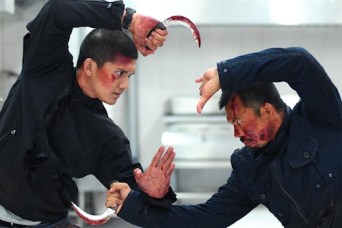
Those are just the highlights — there are numerous smaller but no less accomplished sequences elsewhere, too. To be precise, there are 19 fight scenes, featuring more complex choreography than the first film — and it’s one of the fight choreographers who said that, so it must be true. The two-and-a-half hour running time may mean The Raid 2 isn’t the unrelenting action-fest that the first film was, but those memorable combats are just as much a part of the film’s DNA. I don’t think anyone’s going to feel shortchanged.

From a filmmaking point of view, it’s even more accomplished. Evans demonstrated he knew how to lens action in the first movie, but here the whole movie looks more polished and more expensive (even though it only cost $4.5 million). There’s greater ambition on display in every facet, including both the choreography and the camerawork. Most Hollywood blockbusters seem to push (or exceed) the two-and-a-half hour mark these days, and even when it fills that time, it feels like it’s partly because no one quite knew when to cut back. The Raid 2, however, feels suitably epic — just as you think a film that’s two-and-a-half hours long ought to feel, really.

For me, The Raid 2 outclasses its predecessor in every possible way, from the deeper and more involving story, to the jaw-dropping feats of choreography and performance, to the more assured and polished filmmaking. An instant action classic.

5 out of 5

The Raid 2 will be available on Amazon Prime Instant Video UK from tomorrow.

It placed 2nd on my list of The 20 Best Films I Saw For the First Time in 2016, which can be read in full here.

* The MPAA insisted on 4½ seconds of cuts to get an R rating. The UK version is uncut. ^