Split (2016)

2017 #62
M. Night Shyamalan | 117 mins | download (HD) | 2.35:1 | USA & Japan / English | 15 / PG-13

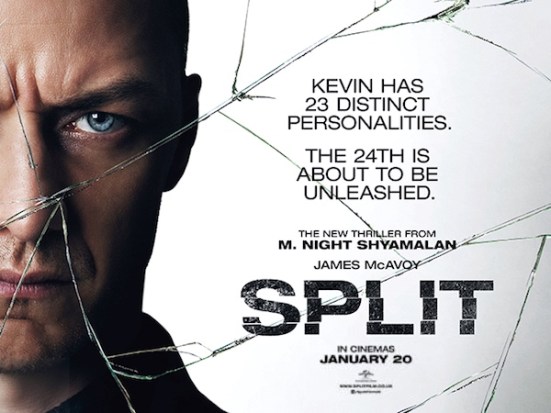
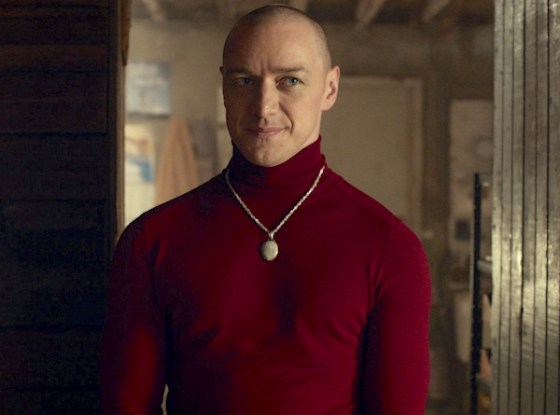
Split

Once-fêted writer-director M. Night Shyamalan surprised a lot of people in 2015 by finally beginning his long-awaited comeback (a day I think it’s safe to say many thought would never come) with low-budget high-concept horror The Visit. Then earlier this year he surprised people again by delivering another long-promised return. Well, he surprised people who didn’t find it out on the internet the day after the darn thing came out, anyway. For that reason (plus the newsworthy announcements that have followed in its wake), this review presumes you know Split’s last-minute twist.

And, like many a twist before it, once you know what’s coming it can’t help but colour the entire film. What’s unique about Split’s reveal is that, really, it shouldn’t — it’s a bonus extra-textual connection, not a traditional twist that forces you to reassess the narrative you’ve just seen. The problem, I suppose, is that it’s a distraction; or it was for me. I spent the entire movie with a background awareness that this was in the same universe as Unbreakable, which meant that (a) I was hyper-attentive for anything that suggested a link before the closing cameo (I didn’t see anything significant; I think the similar posters are probably the cheekiest thing), and (b) any tension about whether or not James McAvoy’s character will turn out to have (semi-)supernatural powers dissipates, because of course he will — that’s the world we’re in.

Oh, you!

This is why having twists spoiled is bad. I guess journalists felt that as it wasn’t a twist inherent to the film’s narrative — not like, say, The Sixth Sense or Fight Club — it was OK to shout about it online with uncommon speed. In fairness, the later news that the trilogy-completing Glass is in development means that, even if they had kept schtum, anyone waiting on Split’s digital/DVD/streaming/etc release was likely to have the connection blown anyway. But I didn’t want to be having a conversation about the point at which discussing spoilers is permissible. That’s a distraction from the film itself, which does it a disservice. But then, so’s knowing the ending before you start.

I guess this is a long-winded way of saying I don’t think I’ve fairly judged Split yet. I was too busy thinking “OMG, Unbreakable sequel, yay!” Still, it’s easy to spot several plus points. The Witch’s Anya Taylor-Joy makes for an engaging heroine, her character quiet but assured, more capable than the bolshy but kinda useless classmates she’s imprisoned with. Even as a twist-spoiled viewer is waiting for the inevitable reveal that, yep, McAvoy has powers that are going to manifest, there’s tension in when and how and who’ll make it out alive.

Making it out alive?

However, the really exceptional part of the movie is McAvoy’s performance. I don’t know how accurately or sympathetically the film handles the science of his character’s condition, but his embodiment of the role — of all the roles — is superb. The multiple distinct personalities aren’t created just by putting on a silly voice or funny costume; McAvoy changes the way he holds himself, the way he stands and moves, the way his face expresses. It’s the kind of performance that in a different kind of film would’ve been all over awards season.

I feel bad for not entirely assessing Split on its own merits, but equally I can’t help it — the thing that most excites me is where it promises to go next; the full-blown sequel to Unbreakable that many people (myself included) have been hoping would come for the best part of two decades. Maybe once that’s been and gone I’ll be able to revisit this and take it as a standalone piece.

4 out of 5

Split is released on DVD and Blu-ray in the UK today.

Review Roundup

In today’s round-up:

  • Partners in Crime… (2012)
  • Charlie Bartlett (2007)
  • Florence Foster Jenkins (2016)


    Partners in Crime…
    (2012)

    aka Associés contre le crime… “L’œuf d’Ambroise”

    2016 #189
    Pascal Thomas | 105 mins | streaming (HD) | 1.85:1 | France / French & Italian | 12

    Partners in Crime…

    André Dussollier and Catherine Frot star as Agatha Christie’s married investigators Tommy and Tuppence (here renamed Bélisaire and Prudence) in this third in a series of French adaptations of Christie stories (best I can tell, the first two aren’t readily available in English-friendly versions).

    Based on the short story The Case of the Missing Lady, it sees Tommy and Tuppence Bélisaire and Prudence investigating the disappearance of a Russian heiress at a suspicious health farm, while also quarrelling about their relationship. It’s very gentle comedy-drama, even by the standard of Christie adaptations, with a thin mystery, thin humour, and thin character drama, which all feels a little stretched over its not-that-long-but-too-long running time. I shan’t be seeking out its two antecedents.

    2 out of 5

    Charlie Bartlett
    (2007)

    2017 #9
    Jon Poll | 97 mins | streaming (HD) | 1.85:1 | USA / English | 15 / R

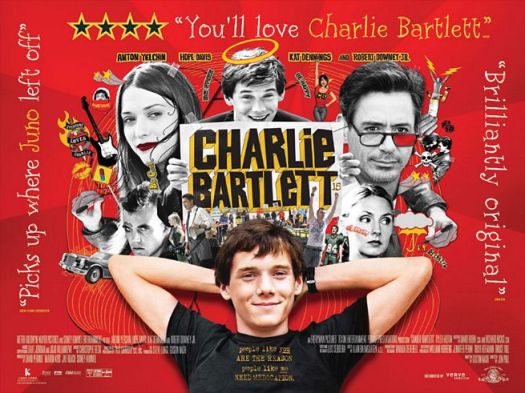
    Charlie Bartlett

    Anton Yelchin is the eponymous rich kid trying to fit in at a regular high school, which he does by becoming an amateur psychiatrist to his classmates, in a comedy-drama that plays as the ’00s answer to Ferris Bueller. It starts out feeling rather formulaic and predictable, running on familiar high school movie characters and tropes, but later develops into something quite emotional. It’s powered by excellent performances from Yelchin and Robert Downey Jr, as the school’s unpopular and unprepared principal.

    4 out of 5

    Florence Foster Jenkins
    (2016)

    2017 #34
    Stephen Frears | 106 mins | streaming (HD) | 2.35:1 | UK / English | PG / PG-13

    Florence Foster Jenkins

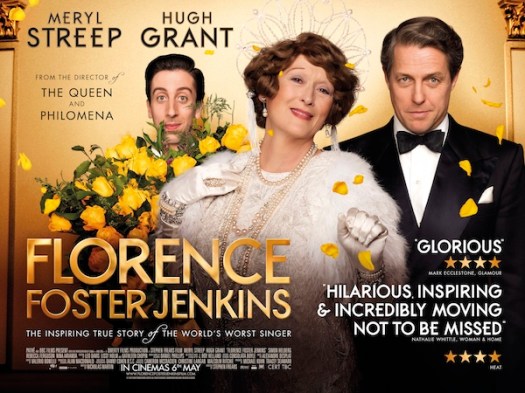
    Try to ignore the fact Meryl Streep nabbed an Oscar nomination away from someone more deserving (for example, Amy Adams. Well, no, definitely Amy Adams), and she gives a good turn as the titular society lady who couldn’t sing for toffee but thought she was fantastic, and used her wealth and influence to launch a concert career. She’s only enabled by her doting… assistant? Lover? Husband? You know, the film blurs that line (deliberately, I think) and I’ve forgotten what he was. Anyway, he’s played by Hugh Grant, who is also good.

    It’s a gently funny comedy, as you’d expect from the subject matter, but one that reveals a surprising amount of heart and depth through Florence’s attitude to life, as well as how her men (who also include The Big Bang Theory’s Simon Helberg as the third lead; also good) attempt to care for her needs.

    4 out of 5

  • The Deer Hunter (1978)

    2016 #181
    Michael Cimino | 176 mins | streaming (HD) | 16:9 | UK & USA / English, Russian, Vietnamese & French | 18 / R

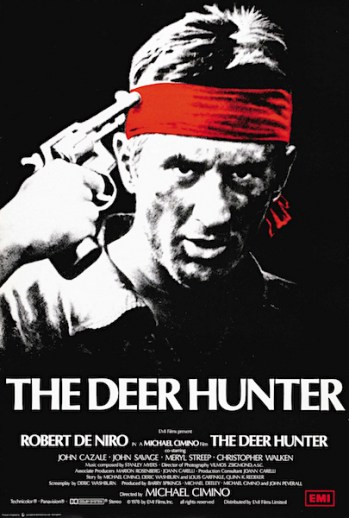
    The Deer Hunter

    One of the first movies about the Vietnam war made after it ended, The Deer Hunter was controversial before it was made (no American company wanted to touch it, leaving British group EMI to put up the initial funding), controversial when it was released (Peter Arnett, who won a Pulitzer for his coverage of the war, called the use of Russian roulette “simply a bloody lie”), and remains controversial today (Mark Kermode called it “one of the worst films ever made, a rambling self-indulgent, self-aggrandising barf-fest steeped in manipulatively racist emotion”), but is cited by some as one of the best movies ever made.

    The plot concerns three Pennsylvanian steel workers (Robert De Niro, Christopher Walken, and John Savage) who have been conscripted. It follows their final days before joining up, then some of their time in the conflict, then how they react once home — this is a Vietnam movie where under a third of its running time actually takes place in ‘Nam. But, as per producer Michael Deeley, the film “wasn’t really ‘about’ Vietnam. It was something very different. […] It was about how individuals respond to pressure: different men reacting quite differently.” It takes its time getting there (this is a long movie that feels long), but that’s what the famed Russian roulette stuff is all about, really — a way of coping with some kind of mental collapse; of leaving suicide up to chance.

    Walken a fine line

    It’s certainly a problematic film, with its depiction of the Vietcong particularly tin-eared — they’re an old-fashioned baddie, cruel and evil without any apparent provocation. Coupled with a final scene that sees the cast singing God Bless America, it comes across a bit too right-wing to be wholly palatable. It’s also a slog, particularly the first third and its never-ending wedding sequence.

    These things can’t completely negate the qualities Deeley highlighted in the above quote, or that many viewers clearly see in it. That said, if I’m completely honest, I think Kermode may be closest to the truth.

    4 out of 5

    The Deer Hunter was viewed as part of my What Do You Mean You Haven’t Seen…? 2016 project, which you can read more about here.

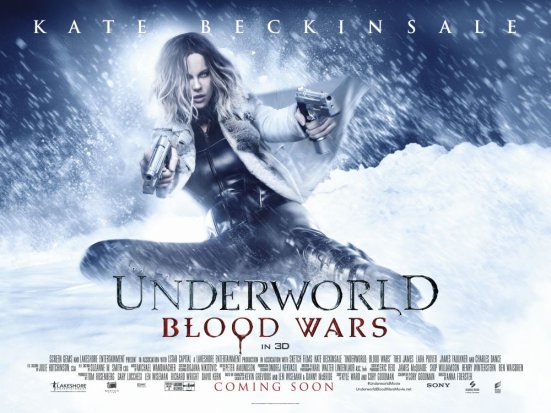
    Underworld: Blood Wars (2016)

    2017 #72
    Anna Foerster | 91 mins | Blu-ray (3D) | 2.40:1 | USA / English | 15 / R

    Underworld: Blood Wars

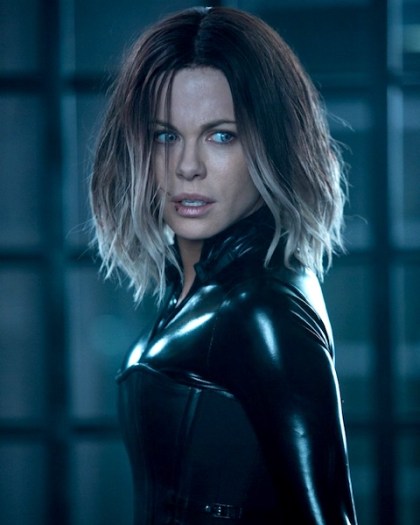
    Kate Beckinsale is back in skintight leather for……

    I’m sorry, my mind wandered off then. As I was saying: Kate Beckinsale is back in… skintight leather……

    Sorry, happened again. As I was saying: Kate Beckinsale is back in… her role as a werewolf-killing vampire for the fifth entry in the Underworld series, which seems to be as undying as its star creatures.

    Picking up a little while after the last one left off, the war between vampires and Lycans (aka werewolves) is now back in full swing, and both sides are hunting Selene (Beckinsale). Her own kind want her for previous crimes (see: the first two films), while the Lycans are after her daughter (see: the last film) to give them an advantage in the war. Fearing for their safety, the vampires invite Selene back into the fold to train a new generation of combatants, but there are sneakier plans afoot…

    Kate Beckinsale in leather. Nuff said.

    The first Underworld marked out somewhat-new territory when it hit screens in 2003 by taking fantasy/horror elements like vampire covens and werewolves and placing them in a modern urban environment, fighting more with guns than swords and teeth. It certainly wasn’t wholly original — Blade had already done a similar concept and visually it owed a lot to The Matrix — but it was fresh enough. Since then the series has increasingly strayed away from that: the second film brought more traditional-style Eastern European countryside, the third was a medieval prequel, and the fourth was… kind of nothing-y, really.

    Now, they seem to have made something of an effort to get back to the ‘world’ of the first film, with extravagant vampire covens and underground Lycan forces, while also growing the series’ mythology by introducing us to new areas of vampiredom, primarily a Nordic coven. This move also brings with it a degree of politicking among the vampires, which is kind of what I imagine a millennia-old secret society would be like. I mean, don’t expect House of Cards — it’s done at the level of the action B-movie this series is — but it’s kinda fun. To achieve this it’s had to ignore an awful lot of the last film — not entirely, by any means, as it’s quite heavily based in some leftover plot points — but other parts have been completely glossed over. This lax attitude to continuity could be irritating, but a counterargument might go that isn’t it better to ditch stuff that isn’t really working in favour of stuff that’s more entertaining?

    Vampire politics

    Part of the entertainment comes from characters talking rather than just fighting, and we’re treated to some magnificently cheesy, overworked dialogue. Some of these scenes are edited within an inch of their life, lines almost tripping over each other as they’re rushed on to the screen. By rights that should be a problem, yet in something as fabulously trashy as Underworld it feels more expedient — they’re getting on with it, rather than being ponderous about the mythology, like much fantasy is wont to do. I kinda like it for that. Alternatively, there’s one bit where the main characters seem to express themselves in a quick-cut series of heavy breaths and grunts. It’s either terrible or genius, or possibly both.

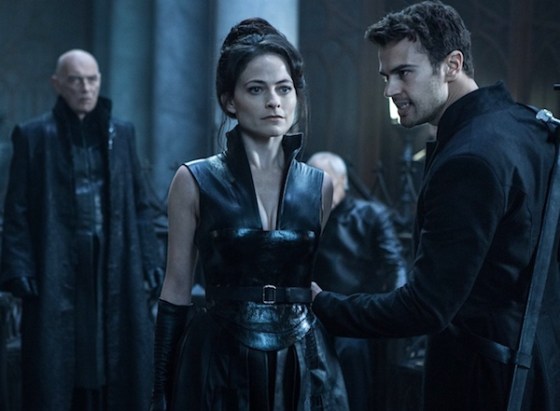
    This tone is supported by some superbly hammy acting from a cast filled with faces from British TV. Sherlock’s Irene Adler, Lara Pulver, seems to be having a whale of a time as the scheming head of a vampire coven, while giving Miss Beckinsale a run for her money in the kinky outfit department. She’s accompanied by Merlin’s Arthur, Bradley James, pouting around as her frequently-insulted boy toy. Tobias Menzies (take your pick of what you consider him best-known for) does his best as the Lycan’s cunning new leader, who’s most threatening in his CGI-powered transformed state. And Charles Dance is back, exuding pure class as always, completely convincing you that he believes in all the high-fantasy drivel he has to spout.

    Irene and Arthur

    Similarly, we all know Kate Beckinsale is better than this — and if you’d forgotten, Love & Friendship should’ve reasserted it. Even here she’s called on to be more than just a shapely pair of buttocks, getting to inject Selene with some rare emotion on several occasions. She also once again kicks ass left, right, and centre. The film’s action on the whole is fairly entertaining. There’s little impressive choreography or particularly original combat concepts, but it passes muster. Even Charles Dance gets to do some swashbuckling (as he terms it in the making-of), which is only brief but also as awesome as it sounds. Another part amusingly sees two bulletproof adversaries walk slowly towards one another while emptying their guns into each other. It’s, again, simultaneously close to being both terrible and genius.

    Despite being renowned as a visually gloomy series, I thought it looked pretty nice in 3D — better than Awakening did, at any rate. Awakening was genuinely shot in 3D, whereas (based on what I could see in behind-the-scenes footage from the special features) Blood Wars appears to have been post-converted. It shows how far that technology has come that even a modestly budgeted movie like this (just $35 million) can afford post-conversion that often looks very good indeed.

    The only major disappointment I had with the film was that, thanks to it being in a rush every time it had some plot to get through, parts of it don’t quite make sense. The ending, in particular, where a voiceover monologue mentions a load of stuff we haven’t just seen happen and doesn’t quite flow. Surely they could’ve afforded an extra two minutes to connect the dots? Apparently the ending was designed to both brings things full circle and, perhaps, leave it open for a sixth instalment. Well, I would say it shortchanges the wrapping-up bit — this could be a place to conclude the series, but by not giving that sufficient weight (i.e. by rushing it), it implies a kind of “tune in next time”-ness.

    Kate Beckinsale. Leather. Nuff. Said.

    That aside, I actually massively enjoyed Blood Wars; much more than the negative reception led me to expect. Of course, the Underworld films are a fan-only experience at this point — not because of diminishing quality, as most reviews would cite, but because of how much the story is based in events from three of the previous four films. If you’ve watched any of those previous movies and not enjoyed them, it’s not worth catching up for this — it’s fundamentally “more of the same”, just done better than it’s been since the first movie.

    These days franchises can revive themselves for new viewers later in their runs — Fast Five being the best Fast & Furious movie is a case in point — but Blood Wars isn’t a Fast Five. However, as someone who would, at this point, I guess, count myself as a fan of the series, Blood Wars delivered.

    4 out of 5

    Underworld: Blood Wars is released on DVD and Blu-ray (in regular, 3D, and UHD flavours) in the UK today.

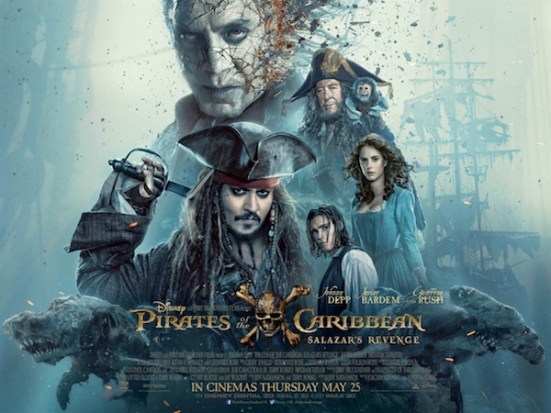
    Pirates of the Caribbean: Salazar’s Revenge (2017)

    aka Pirates of the Caribbean: Dead Men Tell No Tales

    2017 #71
    Joachim Rønning & Espen Sandberg | 129 mins | cinema | 2.35:1 | USA / English | 12A / PG-13

    Pirates of the Caribbean: Salazar's Revenge

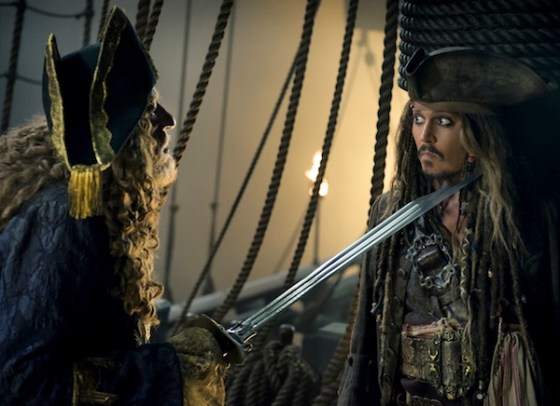
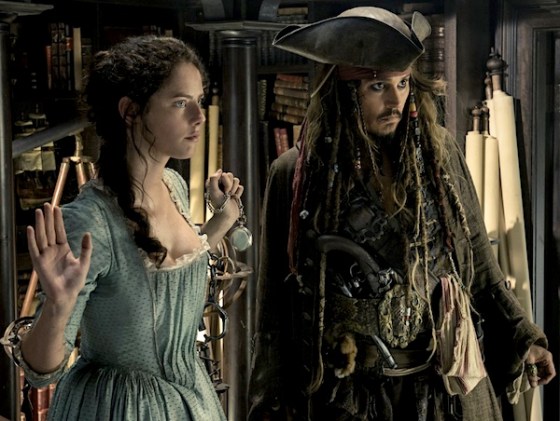
    Dead men may tell no tales, but lucrative franchises never die, so Disney’s Pirates of the Caribbean has taken to the high seas once again. Johnny Depp is back in the role that once netted him an Oscar nomination (remember that?), the drunken pirate Captain Jack Sparrow, this time teaming up with the child of some old friends (Brenton Thwaites) and a bright young astronomer (Kaya Scodelario) for another MacGuffin hunt adventure, while again being pursued by some cursed seafarer (Javier Bardem) and a member of the British Navy (David Wenham).

    Yes, despite the unusually-long six-year gap since the previous film, and all the promotional talk of this being a fresh start for the series that tonally harks back to the standalone fun of the first movie, Salazar’s Revenge (or, if you prefer, Dead Men Tell No Tales) seems doomed to repeat bits and bobs from the series’ other instalments. It’s not a complete wash-out, however, because it at least executes some of those bits quite well. Sadly, other bits are beginning to look a little tired. Perhaps the best single adjective to describe the film’s attitude would be “muddled”. Beware, me hearties: spoilers follow.

    It seems likely that Disney do want this to be a soft reboot of the franchise — a reboot to combat the increasingly poor critical receptions that greeted the previous sequels, but a soft one so that Depp’s popular turn can continue being a part of things. This revivalist plan presumably included looking back in time, beyond the last movie (the least popular one) to the series’ heyday. However, rather than just try to replicate the tone of the earlier movies, storyliners Jeff Nathanson and franchise veteran Terry Rossio have revived some of the old plots too. So we have a film that attempts to move forward with new young leads and a new villain, all hunting for a new MacGuffin, but with motivations bedded in plots that were ostensibly wrapped up a decade ago. They can’t even bring themselves to ignore the previous movie, despite its lack of popularity, continuing narrative threads from there as well. So much for “reboot”.

    Cutthroat, without the island

    And yet, despite that, its consistency with previous films is sometimes poor. For example, Salazar is freed because Jack gives away his magic compass — but didn’t he do that in film two and/or three, with no such ill effects? Also, why does the compass now suddenly have the power to make you face things you dread? And how does that even work, considering other characters have had it and given it away and never had such issues? Maybe they were just hoping viewers wouldn’t remember the ins-and-outs of the plots of previous movies… though, if that’s the case, why is the story based on them?

    Unfortunately, its internal consistency isn’t much better. Like, why do ghost pirates own zombie sharks? How come Salazar can suddenly possess someone when it becomes necessary for the plot? That ability is never mentioned, it just turns up. When Carina’s navigating them to the map-island, how do they end up at a completely different place (before later just setting off again)? Maybe I missed something…

    This abundance of niggles stems from the film being overstuffed with ideas that it doesn’t invest in fully — just like the last film, which it was supposed to have learnt lessons from! One of the things that made the original Pirates movie work was its relative simplicity, which kept the story focused and driving forward. The sequels all throw in too much random stuff — see my previous paragraph, which isn’t even the half of it: I haven’t mentioned the witch, or the ruby-powered star map, or the nonsensical post-credits scene.

    Salazar, out for revenge

    It probably doesn’t help, then, that Salazar’s Revenge is the shortest Pirates film (though it doesn’t feel like it). The dearth of screen time may be why both Bardem and Wenham are ultimately wasted as the villains — they’re not working together, so the time typically afforded to the antagonist ends up split between them. Geoffrey Rush’s Captain Barbossa is back too, as much a series regular as Captain Jack now. He gets an emotional storyline that surfaces out of the blue just before the last act. It’s a nice idea, but appears too late in the game to have time to develop properly.

    And how about the flashback showing Jack defeating Salazar, which seems to stop the film dead halfway through. Why not put that sequence at the start? Then cut straight to the existing opening scene of the naval ship accidentally sailing into the Devil’s Triangle. It’d work — the viewer thinking, “oh, the navy ship is going to sink, just like Salazar did all those years ago,” but then it doesn’t and Salazar attacks. (Hey, Hollywood — employ me!) Okay, fair enough, that structure would make it awkward to place Orlando Bloom’s opening cameo, but—

    Oh, wait, that’s another thing! So, we know why Orlando Bloom only appears in bookend scenes and why Keira Knightley is reduced to a dialogue-less cameo — because Disney want this to be a fresh start with new stars — but it feels like, to do this particular story properly (trying to break the curse that’s imprisoning Bloom), they both should’ve been in it more. I mean, why isn’t the formerly strong and capable Elizabeth working with her son to free the love of her life? At least explain that, film, don’t just ignore it! Heck, tossing in even one line from Henry (“my mum’s given up hope, but I haven’t”) would’ve solved it.

    A clever woman? What is the world coming to

    As for the rest of the cast, Johnny Depp feels like he’s forgotten how to play Sparrow — it’s a pretty good imitation rather than the real thing. Kaya Scodelario plays Carina with an earnest intelligence, a trait which is exhibited dependably throughout the screenplay. That shouldn’t need to be worthy of note, but, for a female character, it is. Thwaites, on the other hand, is perfectly bland as Henry Turner, rarely even managing the enthusiasm or charming naivety suggested by that good line from the trailers (“I think I saw her ankles!”)

    On the action-adventure front, there are some good set pieces, mainly early on — the bank robbery and the halted executions, particularly the spinning guillotine, are inventively handled. Sadly, later efforts are obscured by gloomy lighting and too much whizzing around of CGI — and, once again, the overabundance of out-of-nowhere ideas (why does the ship’s figurehead suddenly come to life?!) Geoff Zanelli’s score primarily recycles Hans Zimmer’s familiar themes, which I don’t mind too much because I like them. At least it does so in a less slapdash fashion than On Stranger Tides, where the music felt plonked on at random.

    That's the second biggest pirate ship I've ever seen

    So, I’ve moaned throughout this review, and here’s the main reason for that: there’s a decent action-adventure movie hidden in Salazar’s Revenge — probably not something that would equal the first Pirates, but a good effort — but all the times when plot necessities seem to have been filled with “invent something new!” rather than “make what we’ve got work”, plus all the little inconsistencies (both internally and with previous films), really get in the way. Maybe, now that all of the leftover business from previous films is well and truly resolved, and if this makes a lot of money, we’ll get a sixth film that finally does return to the joys of the first.

    Hey, Disney: you own Lucasfilm now — how about Pirates of the Caribbean: The Secret of Monkey Island?

    3 out of 5

    Pirates of the Caribbean: Salazar’s Revenge is in some cinemas now. Pirates of the Caribbean: Dead Men Tell No Tales is in the others.

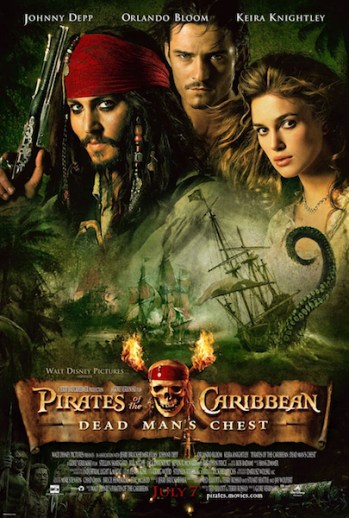
    Pirates of the Caribbean: Dead Man’s Chest (2006)

    The 100 Films Guide to…

    Captain Jack is back

    Here’s the first in a sporadic new series of posts, inspired by my 100 Favourites entries, which I’ll be using to plug some of the gaps in my review archive. As a good starting example, this is the only Pirates of the Caribbean film I haven’t covered before.

    Country: USA
    Language: English
    Runtime: 151 minutes
    BBFC: 12A
    MPAA: PG-13

    Original Release: 6th July 2006 (UK & others)
    US Release: 7th July 2006
    Budget: $225 million
    Worldwide Gross: $1.066 billion

    Stars
    Johnny Depp (Edward Scissorhands, Alice in Wonderland)
    Orlando Bloom (The Lord of the Rings, Kingdom of Heaven)
    Keira Knightley (Pride & Prejudice, The Imitation Game)
    Bill Nighy (Love Actually, The Best Exotic Marigold Hotel)

    Director
    Gore Verbinski (The Ring, Rango)

    Screenwriters
    Ted Elliott (The Mask of Zorro, The Lone Ranger)
    Terry Rossio (Shrek, Godzilla vs. Kong)

    Based on
    Pirates of the Caribbean, a theme park ride at Disneyland.


    The Story
    On their wedding day, Will Turner and Elizabeth Swann are arrested for piracy. To secure a pardon, all they have to do is bring in Captain Jack Sparrow. Meanwhile, the aforementioned pirate captain is hunting for a key that he can use to unlock a chest that contains leverage he may be able to use to escape a debt to the horrifying Davy Jones…

    Our Heroes
    Jack Sparrow (or, as half the characters pronounce it, Jack Sparrah), the pirate captain who looks like a drunken fool but is actually in possession of a sharp mind. Also Will Turner, the swashbuckling ex-blacksmith determined to prevent the execution of himself and his beloved. That would be Elizabeth Swann, the governor’s daughter who is altogether more capable than would be expected of a woman from this era.

    Our Villains
    The pirate-hating East India Company is represented by the scheming Cutler Beckett, who seeks to rid the seas of pirates. To do so, he intends to control Davy Jones, captain of the Flying Dutchman. A tentacled terror, Jones seeks primarily to add more damned souls to his crew — including one Jack Sparrow…

    Best Supporting Character
    Will Turner’s father, Bootstrap Bill, was condemned to the ocean’s depths, where he ended up committing himself to servitude on Davy Jones’ ship. Well, unless Will can find a way to set him free…

    Memorable Quote
    Elizabeth Swann: “There will come a time when you have a chance to do the right thing.”
    Jack Sparrow: “I love those moments. I like to wave at them as they pass by.”

    Memorable Scene
    A large chunk of the climax is a set of interconnected sword fights that most famously include three men duelling each other inside a runaway waterwheel. And while that’s good, my favourite bit has always been Elizabeth, Pintel and Ragetti fighting off Davy Jones’ crew while sharing two swords (and a chest) between the three of them.

    Truly Special Effect
    Davy Jones is an incredible creation, the writing mass of CGI tentacles that make up his face conveying a slimy physicality that remains impressive even as some of the film’s other computer-generated effects begin to show their age.

    Previously on…
    Inspired by a Disney theme park ride, nobody expected much of Pirates of the Caribbean — or, as it was hastily subtitled once someone at Disney realised this could be the start of a franchise, The Curse of the Black Pearl. As that someone knew, it turned out to be something very special. Dead Man’s Chest retrofits it into being the first part of a trilogy.

    Next time…
    The aforementioned trilogy concludes with At World’s End, which was shot back-to-back with Dead Man’s Chest and so wraps up its many dangling plot threads. The series continued with standalone instalment On Stranger Tides, while this year’s Dead Men Tell No Tales, aka Salazar’s Revenge, looks as if it seeks to tie the whole shebang together.

    Awards
    1 Oscar (Visual Effects)
    3 Oscar nominations (Art Direction, Sound Mixing, Sound Editing)
    1 BAFTA (Special Visual Effects)
    4 BAFTA nominations (Production Design, Costume Design, Sound, Make Up & Hair)
    1 Saturn award (Special Effects)
    4 Saturn nominations (Fantasy Film, Supporting Actor (Bill Nighy), Costume, Make-Up)
    1 World Stunt Award (Best Fight — see “Memorable Scene”)

    Verdict

    The Pirates sequels have all come in for a lot of criticism ever since their first release. It was inevitable, really: the first is basically a perfect blockbuster action-adventure movie, something any follow-up would struggle to live up to. However, I think Dead Man’s Chest has improved with age. It lacks the freshness and elegant simplicity of its forebear, true, but it still has inventive sequences, memorable characters, impressive effects, and a generally fun tone, even as it’s setting up masses of mythology that will only be fully paid off in the next instalment. That also means it doesn’t quite function as a standalone adventure. But if you readjust your focus slightly, so that the film isn’t about beating Davy Jones, but instead about finding the chest and settling Jack’s debt to Jones, it’s more self-contained than it appears.

    The fifth Pirates of the Caribbean movie, under whichever subtitle they’ve chosen for your country, is in cinemas from today.

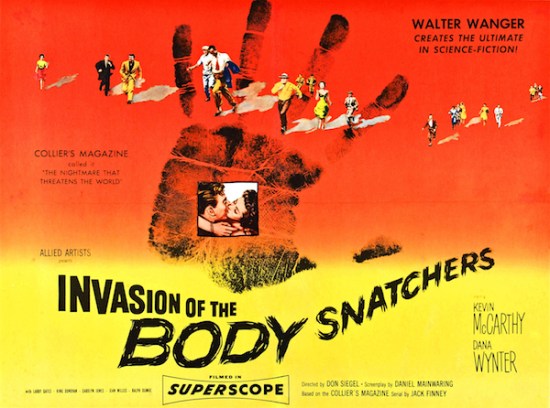
    Invasion of the Body Snatchers (1956)

    2016 #147
    Don Siegel | 77 mins | streaming (HD) | 2.00:1 | USA / English | PG

    Invasion of the Body Snatchers

    A sci-fi thriller about a stealth alien invasion using human duplicates (clue’s in the title), this original film version of the oft-remade Invasion of the Body Snatchers is best not at genre-movie chills, but at evoking and commenting on paranoia and what causes it.

    Thematically, the narrative of insidious outsiders slowly replacing good honest people with braindead versions who are on their side has been read as either anti-communist or anti-McCarthyite, with some critics claiming the framing story (more on that in a bit) changes it from the latter to the former. Allegedly none of these themes were intended — not by the author of the original story, the screenwriter, the producer, or the director. Which doesn’t mean you can’t see them there. Indeed, director Don Siegel felt the anti-McCarthy subtext was inescapable, but he tried not to emphasise it. Whichever reading you prefer, or none, the sense of unease, distrust, and lurking danger that the film creates are a peerless reflection of paranoid feelings.

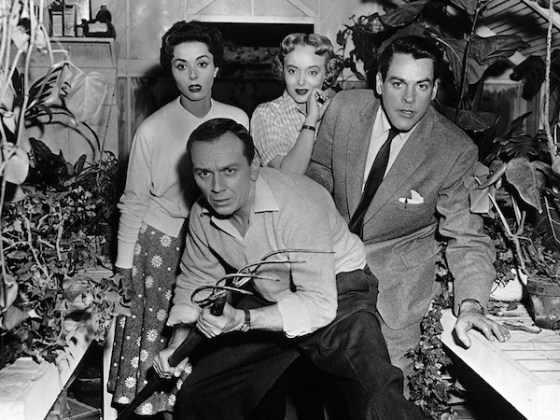
    Although I deemphasised the genre aspect above, that doesn’t mean it lacks for sophistication there either. It’s as much a thriller as it is science fiction, and more mature in that regard than what’s commonly brought to mind by the phrase “50s sci-fi movie” (whether that’s fair or not). The way the mystery slowly unravels — the calmness of it; how even our heroes unwittingly allow some of it to happen — sucks you slowly deeper into its anxious grip. (“Slowly” being a relative term, because this is a short, quick movie.) Nonetheless, the most outright SF elements — the plant-like pods that the clones emerge from — are suitably creepy. Not in themselves, but when they first burst open and the bodies inside begin to ooze out… Though not strictly a horror movie (at least not as we’d define it today), those moments are chilling.

    Extreme gardening

    The impact of this sequence is supported by the black-and-white photography, which helps obscure any cheapness or amateurism to be found from the era- and budget-restrained special effects work. But such photography benefits the film as a whole, too, with some great film noir visuals during nighttime scenes. Siegel had previously helmed several such crime pictures (and would go on to a couple more) and it’s clear those skills crossed over. It also works very nicely with the film’s paranoia — what’s lurking in the shadows?

    In some respects it’s amazing Invasion of the Body Snatchers is as successful as it is, because the studio chose to dick around with it in a couple of ways. Originally the film had some humour, which (as I think we all know by now) definitely can have a place in a horror movie, generally to help manage tension levels. Despite successful test screenings in which the audience screamed or laughed as appropriate, the studio ordered the humour be cut. I guess they then felt they’d made the film too glum, because they next ordered the addition of bookend sequences, against the wishes of both the producer and the director. It’s clear these couple of scenes were shot much later, with much less care given to their quality. They do somewhat detract from the pervading pessimistic, bleak, increasingly hopeless tone — which was why they were added, of course, so at least in that respect they’re a success.

    Those late additions aren’t bad enough to ruin the film, however, which still comes away as a well-made exercise in tension.

    4 out of 5

    Twin Peaks: The Missing Pieces (2014)

    2017 #68
    David Lynch | 91 mins | Blu-ray | 1.85:1 | USA & France / English | 15

    Twin Peaks: The Missing Pieces

    When Twin Peaks: Fire Walk with Me was released in 1992, one of the things that disappointed fans was the absence of many of Twin Peaks’ beloved characters. A few of those absentees were due to scheduling conflicts or behind-the-scenes disagreements, but others were shot and left on the cutting room floor. Rumours circulated for years (still do at times) that David Lynch actually shot five hours of material, only two-and-a-quarter of which made it into the final cut. However, as early as ’92 itself, co-writer Robert Engels stated that the first cut ran 3 hours 40 minutes, adding that they hoped to put that extended version out on LaserDisc. Such a release never happened, and fans were left wanting. Campaigns were launched to get the deleted material on DVD, but there were issues with who held the rights, and then Lynch was only prepared to release them if they had been properly mastered and finished to theatrical standard.

    Finally, after over two decades of waiting and hoping, the stars aligned and the series’ Blu-ray release was accompanied by those long-awaited scenes. Dubbed “The Missing Pieces”, there were 90 minutes of them — which, you’ll note, when added to the 135-minute film more-or-less equals the 3 hours 40 minutes Engels promised back in ’92. It’s also basically another movie’s worth of material; and, indeed, there were limited theatrical screenings as part of the promotion for the Blu-ray — hence why this counts as a film (look, it’s on IMDb and everything).

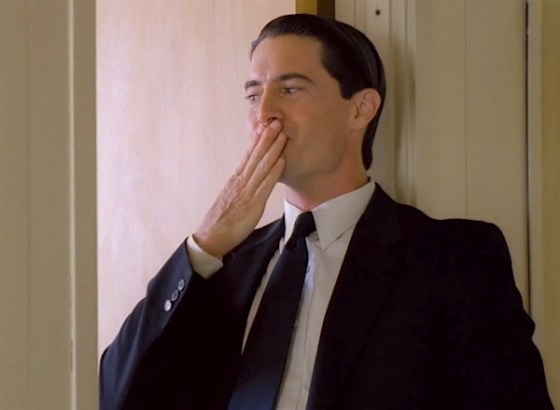
    Diane, it's 9:27am and I am stood in your doorway blowing you a kiss...

    Still, The Missing Pieces may just sound like an uncommonly long selection of discarded bits, same as most DVD deleted scene sections, but there’s more to it than that. There’s quality material here — even, some people say, some of the best scenes in the entire Twin Peaks canon. In fact, some people even reckon it stands confidently as a second Twin Peaks movie, albeit one that depicts events that occur concurrently to the existing film. Well, I don’t think I’d go quite that far, but there’s definitely more to this than a couple of missing lines or amusing asides.

    The fact it isn’t a standalone work is evident from the off, which begins like a traditional deleted scenes package: a collection of context-free bits-and-pieces of FBI Agents Chet Desmond and Sam Stanley in the town of Deer Meadow. These go on for about ten minutes, including a bout of fisticuffs between Desmond and the uncooperative local sheriff that was a very wise removal from the final cut. These early scenes make it instantly clear that The Missing Pieces is a companion to Fire Walk with Me and needs to be watched alongside it, not a unique entity that’s capable of holding its own. These are “Missing Pieces” indeed, not “Meanwhile Pieces”.

    That said, the interest level of the material increases quite quickly. There’s a scene between Stanley and Agent Cooper that doesn’t add a great deal to the story but does again reference the mysterious blue rose — was Lynch intending to go somewhere with that, or not, hence why the scene was deleted? It has a prominent place on the Blu-ray packaging, too… There’s also more David Bowie, though it doesn’t make his part a whole lot clearer. On the bright side, it includes a Buenos Aires hotel bellhop delivering the immortal line: “Oh, Mr. Jeffries! Oh, the shit, it come out of my ass.”

    Oh, the shit, it come out of my ass.

    As things move on to the Twin Peaks-set portion of the tale, we get what the fans really wanted: not mere odds and ends that were removed to expedite the plot, but bits featuring fan favourite characters. Whether the scenes are important or not is another matter, but it must’ve been great to see new material featuring some beloved characters. (I’m glad I’m only watching this now, when this is all available and there’s a new series with new answers on the horizon, rather than having had to endure the wait.)

    That said, in the scope of the story Fire Walk with Me was telling, all of the townsfolk deletions make sense. There are a couple of scenes of Big Ed and Norma’s romance that help set up where they were at the start of the series, but it has little or no relation to Laura. Even less relevant is a scene at the sawmill showing Josie and Pete arguing with a customer over the size of a 2×4. It’s utterly pointless, the only possible reason for its existence to be to shoehorn those characters into the movie, and therefore it was an eminently sensible deletion. The same goes for scenes at the sheriff’s station, which felt like they had greater relation to the actual story of Fire Walk with Me but I still couldn’t quite make head nor tail of.

    It’s not all townsfolk asides, however: there are more scenes with Laura, too. One at Donna’s house shows Dr Hayward being kind towards Laura, seemingly the only man in the entire town who treated her appropriately. That might’ve made a nice counterpoint if left in the movie. Similarly, there’s a scene of domestic bliss in the Palmer household, where Leland, Sarah and Laura practise speaking Norwegian round the dinner table and end up in hysterics. That would’ve made a nice mirror to the later dinner table scene where Leland goes all creepy.

    How's Annie?

    As you’d expect from a deleted scenes section, but in opposition to what some people claim about it, The Missing Pieces is a collection of just that — pieces; fragments divorced from their whole. It’s definitely an experience aimed squarely at fans, then, but that doesn’t mean it’s not one worth taking for the initiated.

    It all ends with an epilogue — a couple of scenes that, for the first time, move beyond the end of the series’ finale. Again, how utterly thrilling it must’ve been to finally get such a continuation over twenty years later. In the first, we catch up with Annie in the hospital, where she repeats the statement her bloody possibly-corpse (though, as we can see, not a corpse) made in Laura’s bed. It also turns out she has the ring… until a nurse pilfers it. Then we cut to the Great Northern, where Coop’s just smashed his head into the mirror. He stages it as an accident when Harry and Doc Hayward rush in to help him, and they insist he returns to bed to rest.

    And that’s it.

    3 out of 5

    Or that was it, because tonight it’s 25 years later and that gum you like is going to come back in style.

    It is happening again.

    Twin Peaks: Fire Walk with Me (1992)

    2017 #67
    David Lynch | 135 mins | Blu-ray | 1.85:1 | USA & France / English | 15 / R

    Twin Peaks: Fire Walk with Me

    This review contains major spoilers for both Twin Peaks and Fire Walk with Me.

    When Twin Peaks was cancelled, co-creator David Lynch quickly realised he wasn’t done telling stories in that world — probably because he’d just ended the TV series on a massive cliffhanger, having only recently refocused his attention on the show after a period of absence. Within a month of the series’ end, he’d secured a deal to produce a big-screen continuation. Along with one of the series’ lead writers, Robert Engels, Lynch cooked up a plan for a trilogy of movies that would explore some of the series’ leftover mythology — primarily, the mysterious and otherworldly Black Lodge. The first of these movies would begin by revisiting the aspect of Twin Peaks that had brought it so much attention in the first place: the murder of Laura Palmer.

    Unfortunately, Lynch had misjudged the public’s appetite — or, more likely, didn’t particularly care about that, but nonetheless what people wanted didn’t line up with what Lynch made. The resulting movie, Twin Peaks: Fire Walk with Me, was not a success. For fans of the TV programme, the tone didn’t match, most of the regular cast didn’t appear, and, on the surface at least, it was a story about events they already knew, rather than a resolution to the series’ cliffhanger. For non-fans, it didn’t seem to stand alone in the way a ‘proper’ movie should. Lynch had won the top prize at Cannes just two years earlier, but now the screening of Fire Walk with Me was booed; so was the press conference. Reviewers were similarly unimpressed. The film flopped at the box office. The intended trilogy stalled with its first instalment, and Fire Walk with Me went down as a poorly-regarded failure, unquestionably one of Lynch’s worst films.

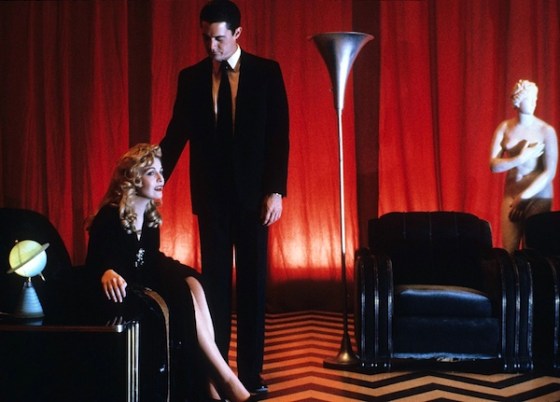
    Lady in red (room)

    Well, opinions change. Nowadays you’re just as likely to see someone contend that Fire Walk with Me is the pinnacle of Lynch’s career as you are to see someone express the view it’s his nadir; perhaps even more likely. From what I can gather, a quarter-of-a-century’s distance has allowed people to become more understanding about what it was Lynch was actually trying to achieve with the film; that it is, despite what the title might lead you to believe, as much “A David Lynch Film” as it is “A Continuation of The Popular Mainstream TV Series Twin Peaks”.

    In both of these respects, there’s an awful lot to unpack. It’s a continuation and expansion of the ongoing Peaks story (and certainly not a conclusion to it), with pieces that lead up to Laura’s murder, pieces that expand on or continue stuff from the series finale, as well as brand new mysteries and puzzles. Simultaneously, it stands on its own two feet as a depiction of — and, in its use of horror, allegory for — the terrors of domestic psychological abuse and incest. And before all that it starts with a half-hour prologue in which a cast of character we mostly don’t know investigate a murder that die-hard fans might just about recall from its fleeting relevance to the series’ earliest episodes. And David Bowie turns up for a bizarre cameo that goes nowhere. In many respects, Fire Walk with Me is not an easy movie.

    It is a rewarding one for those prepared to dig into it, however. Again, that applies to both levels the film is functioning on. It may not directly continue after the events of the series, but there are a couple of hints and nods towards the events of the finale and what happens next, as well as a lot of general additions to the mythology. And as a film about abuse, it’s not just a depiction of events, but is attempting to in tap into how that actually feels, psychologically — as Lynch has said, it’s about “the loneliness, shame, guilt, confusion and devastation of the victim of incest.” It must do this successfully because Sheryl Lee has said that, “I have had many people, victims of incest, approach me since the film was released, so glad that it had been made because it helped them to release a lot.” Bravely, it’s also a bit about the abuser, presenting him with, if not sympathy, then some degree of understanding — to quote Lynch again, it deals with “the torment of the father – the war within him.”

    Happy families

    One thing that straddles both sides of the film, I think, is that it goes a long way to ‘redeeming’ Laura Palmer. In the series she’s the all-American good girl homecoming queen who we quickly learn wasn’t so good under the surface, spending her time partying hard with drugs and promiscuous sex. At one point it seems like she was just a wild child who got in too deep. Now, I forget if the series eventually made clear that she let herself be murdered in order to stop a malicious demon from possessing her, but, even if it did, it’s a few lines of dialogue. Here, we see the real, severe struggles she was battling while trying to maintain some kind of normal life, and how hard she fought against them. She was, actually, just an ordinary girl, forced to face extraordinary circumstances.

    Conversely, this is almost exactly why some people disliked the film: because it took how Laura Palmer appeared in the series, as kind of a notion or concept that the town projected their values and issues onto, and made her into a real person, who was consequently as messed up as most teenagers are. Essentially: Laura Palmer was more interesting dead than alive. I have two thoughts on this. One: Laura wasn’t exactly leading a normal life, so there’s definitely something in seeing how she ended up how she did; what her psychological state was like. Two: perhaps it’s entirely the point that the reality and the legend (particularly the legend built around someone tragically cut down too young) are not the same thing; that the reality is not as great as the notion. That sounds like a particularly Lynchian theme to me.

    All of this added depth to Laura is driven by a remarkable performance from Sheryl Lee. Originally cast to play a corpse and a photograph, Lynch liked her so much they created a role for her in the series (as Laura’s lookalike cousin Maddie), and she gets an even meatier role here. Even though viewers of the series already know the answers that Laura only discovers during the film, Lee’s performance is so powerful, particularly when enacting fear or terror (no one instils fear in the viewer quite so well as Sheryl Lee looking terrified by something off camera that we never see), that we are horrified along with her. There’s also a power in seeing something play out that we’ve previously only been told about — the reality of it happening is more horrendous than the facts we’ve heard.

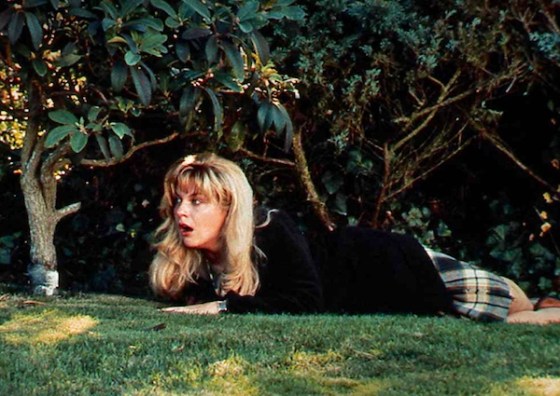
    LAWNa Palmer (get it?)

    This is partly why Fire Walk with Me has a distinctly different tone to the series (which, as noted, probably didn’t help win people over). It’s still full of quirky surrealism, of course, because it’s a David Lynch film; but the lighter, funnier, chirpier elements have all been excised. This is a dark, dark movie. One suggestion I’ve read from a fan is that the TV series was from Agent Cooper’s point of view, hence it emphasised the small-town charm and optimistic worldview, while the film is from Laura’s perspective, so it’s altogether grimmer and more fatalistic. This may not have been deliberate on the part of Lynch and co, but it certainly makes some kind of sense.

    Which road the imminent Twin Peaks revival will walk, obviously no one outside of the production yet knows. But the other week it was widely reported that Lynch had said Fire Walk with Me would be essential to understanding the new series. I think some people were surprised by this — the vestiges of the film’s original negative reception, perhaps — but, having just watched the film, it feels like a bit of a “well, duh” statement. Fire Walk with Me is often summarised as being just “the last seven days of Laura Palmer”, which makes it sound like it’s wholly related to a mystery that was wrapped up in the original series. It’s more than that, making huge contributions to the series’ ongoing mythos, as well as a couple of hints about events in and after the original finale — unless those were going to be completely ignored by the new series (which doesn’t sound like Lynch to me, not to mention that it would surely irritate fans), then of course Fire Walk with Me is important!

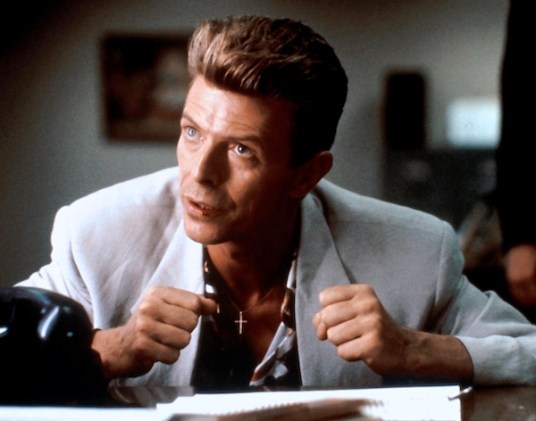
    One thing that’s probably never getting explained is that Bowie cameo. His character was one of the things inserted by Lynch and Engels to build on in the proposed sequels — yes, rather like all those films that adapt the first novel of a series and fill it with foreshadowing, assuming they’ll get to make the rest, but never do. Reportedly Bowie was lined up to appear in the revival, but died before he could film any scenes. Whether that particular mystery will be explained some other way, or be left forever as a dangling thread in Twin Peaks’ complex web, obviously remains to be seen. So too the disappearance of Agent Chester Desmond, as actor Chris Isaak isn’t part of the extensive cast list they’ve announced. But then, maybe they’re keeping some secrets there too…

    He's here to blow our minds

    There’s so much more that could be said about Fire Walk with Me. About ‘fake Donna’, for instance — actress Moira Kelly standing in as Laura’s best friend, Donna Hayward, because original actress Lara Flynn Boyle was unavailable — and how there’s a camp of people who think she might actually be better than the original (me included). About the significance of time (there’s a definite clock motif; several clear references in dialogue; it’s technically a prequel but with sequel pieces; there’s definitely a few bits of time travel going on; and so on). About the Lil scene, which may or may not be a dig at over-analytical fans; indeed, that whole prologue is like some kind of inversion of Twin Peaks. About the Pink Room sequence and its seedy artistry. About the interpretation that Bob is a shared fiction, concocted by both Leland and Laura to help that pair of troubled souls deal with the horrors they’re living through (you may think Leland deserves no sympathy, but the series made it fairly clear that he had been a victim of abuse himself…)

    Fire Walk with Me is so many different things all at once that it’s almost a mess of a film. But Lynch knows what he’s doing, if not entirely then at least to a significant degree. Plus it only becomes more interesting and complex as you continue to think and read about it after viewing. Perhaps, after the new series, it will slot into place even better, and its significance in the overall scheme of Twin Peaks will become even clearer. Maybe its critical rehabilitation has a few steps left to take yet…

    4 out of 5

    Tomorrow: the missing pieces.
    Twin Peaks (1990)

    aka Twin Peaks: Pilot (International Version)

    2017 #70
    David Lynch | 113 mins | Blu-ray | 4:3 | USA / English | 15

    Twin Peaks: Pilot (International Version)

    While they were seeking funding for their feature-length TV pilot, creators David Lynch and Mark Frost agreed to demands that they film an alternative ending that wrapped up the episode’s primary mystery. The thinking was that, if the pilot didn’t get picked up to series, it could be released in Europe as a complete movie (why it couldn’t also be released in the US as a movie I don’t know), thereby recouping some of the cash spent on it. Apparently Lynch and Frost forgot they’d signed up for this until towards the end of the shoot, when they were reminded of their contactual obligation and so dashed something off.

    But the series did get picked up, and that half-arsed ending should’ve been consigned to the dustbin of history. Instead, Twin Peaks became a massive worldwide phenomenon, and whoever owned the rights to release the movie version exercised said right, naturally including the tacked-on conclusion. Although the rights situation was settled long ago, the ‘extended’ version is still routinely included alongside the proper one on disc releases. I thought it was about time I checked it out — and judged it as a standalone movie, of course.
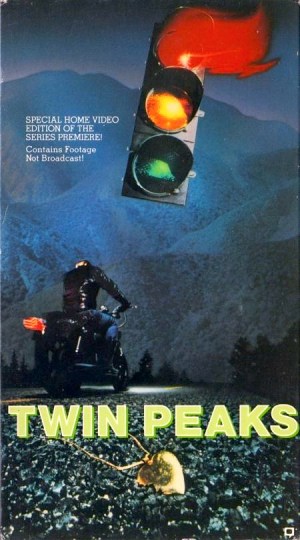
    Welcome to Twin Peaks

    Obviously, for most of its running time the so-called “international version” is identical to the broadcast version of the episode. I would contend that is one of the greatest episodes of television ever made. Everything about it is sublime. For starters, it establishes Twin Peaks’ world quite methodically. We’re gradually introduced to the police station, the mill, the Great Northern hotel, the Double R diner, the school, character’s homes — not just literally the locations, but the people who inhabit them, including their relationships to one another, both public and secret. There’s a ton of information to absorb here, but it’s all laid out so neatly that it doesn’t feel like a chore. There’s also a lot of potential plot lines started or hinted at, which makes a good deal of sense for kicking off a series but (as we’ll see in a bit) is not such a good idea for a two-hour movie…

    The episode is also incredibly strong in a filmmaking sense. Thematically, there’s the typical Lynchian obsession with the darkness hiding behind seemingly normal, perfect American lives. It’s not just the weird murder, either: pretty much everyone is sleeping with someone they shouldn’t be, or having some other domestic issue. That’s also very soapy, but that’s deliberate. It’s neither parody nor homage per se, but it’s definitely influenced by how soaps perceive and portray the world. Interestingly, at this point Twin Peaks could be considered just a crime drama with a few quirky characters — all the supernatural weirdness the show’s so known for begins in the next episode (and doesn’t fully kick into gear until the second season).
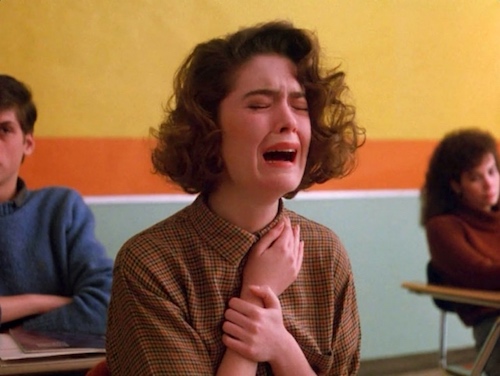
    Visually, Lynch’s shot composition is fantastic, with a strikingly great use of the frame and blocking — very precise, very neat, ordered, but not in a self-conscious, Wes Anderson kind of way. It seems mindful of being shown on the relatively small television screens of the era, but also maintains a quality that carries over to this day. Beyond the purely visual, the content it creates is remarkable too. The sequence in the high school, where the news about Laura gradually comes out before it’s officially announced, is incredible — the way people slowly begin to suspect, the way characters react, the way Lynch is unhurried in letting this unfold. Having watched the episode a couple of times this year now, I think this part is one of my favourite scenes in the whole of cinema. The way it builds to that somehow-perfect shot of Donna sat at her school desk crying is majestic.

    It's not just because everyone hates Lara Flynn Boyle

    However, when judged as a standalone movie, Twin Peaks is a disaster.

    After an hour-and-a-half of sheer quality, we reach the 19-minute tacked-on ending. This climax is rushed, simplistic, and refuses to touch on the vast majority of the episode’s subplots. I mean, of course it doesn’t — it was a rush job at the end of production to fill a contractual requirement. It wraps up the Laura Palmer case as quickly and perfunctorily as it can, then Lynch basically says a humungous “eff you” to the notion of having to do a movie version by bunging in a nonsensical dream sequence.

    For those who are curious but not minded to sit through the whole thing, I’ll outline what actually happens. The deviation comes in the final scene of the episode as broadcast: instead of having a vision, Sarah Palmer has a flashback to when she was hunting for Laura that morning, realising she saw the killer hiding in Laura’s bedroom. (This, at least, is an effectively creepy notion. Was he actually visible in the quick panning shot of the room we saw earlier on? I daren’t go back to check. Seriously.) Sarah has Leland call Lucy, who’s hanging out at home with Andy (their amusing home life, otherwise unseen in the series, is probably the only reason to watch this). Lucy phones Sheriff Truman so he and Hawk can go to the Palmers and get a police sketch of the killer. Meanwhile, Agent Cooper is awoken by a mysterious phone call (there are lots of phone calls in this) from a man who knows unreleased details about the Teresa Banks murder. The man insists they meet at the hospital, so Coop calls Lucy and tells her to tell the sheriff to meet him there with the sketch.

    At home with Punky

    At the hospital, they discover the mysterious caller is the one-armed man, Mike, who identifies the sketch as Bob. He also babbles some other stuff which I’m not sure has much meaning in this version, but was recycled for one of his later appearances in the series proper. Mike reveals that Bob is currently down in the hospital basement. Harry and Coop pop down there, confront Bob, have a little natter with the creepy killer (whose creepiness is considerably diluted by his chattiness, if only for the duration of this scene). Then Mike barges in and shoots Bob dead. Coop delivers a kind of one-liner, before a title card informs us it’s “twenty-five years later”. Then the famous Red Room scene plays out, just like it does in Episode 2 — and if you thought it made almost no sense in the context of the series, it makes even less here. Where is Coop now? Who’s the little guy? Why does he talk funny? Why does his cousin look like Laura Palmer? What’s she on about? What does she whisper to Cooper? Why are we being shown any of this?! It came to Lynch in a vision, and he liked it so much he repurposed it for the series, where it eventually came to have meaning (some meaning, anyway)… but here it’s utterly aimless.

    Let's rock!

    This international version of Twin Peaks was never really meant to be seen, and it’s obvious Lynch and Frost felt that way when concocting its final act. That ending is rushed in what it does bother to conclude — and, compared to all the plots we’ve just spent nearly two hours watching, what it concludes is not very much. The killer isn’t even one of the people we were considering as suspects. Thank goodness this isn’t all Twin Peaks ever was.

    The pilot as broadcast is a five-star masterpiece; not just the start of something truly special, but something remarkable in and of itself. The extended standalone version is so ruined by its final 19 minutes that I can only rate it:

    3 out of 5

    Tomorrow: fire, walk with me.