The Knockout Monthly Update for November 2018

When Rocky snuck its way onto my “What Do You Mean You Haven’t Seen” list back in January, I didn’t have particularly high hopes — I’ve never liked boxing movies, and I was only going to watch it because I ‘should’. Well, in the eight months since I watched it I’ve gone on to watch all six sequels, ending this month when I gave Creed full marks precisely because of how much it was a Rocky movie. And that’s why this month is a knockout.

Also, because I watched a tonne of films.


#223 Their Finest (2016)
#224 Going for Golden Eye (2017)
#225 Jurassic World: Fallen Kingdom 3D (2018)
#226 The Other Side of the Wind (2018)
#227 Batman & Mr. Freeze: SubZero (1998)
#228 Jodorowsky’s Dune (2013)
#229 Have a Good Funeral, My Friend… Sartana Will Pay (1970), aka Buon funerale amigos!… paga Sartana
#230 Bohemian Rhapsody (2018)
#231 Attack the Block (2011)
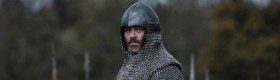
#232 Outlaw King (2018)
#233 Incredibles 2 3D (2018)
#233a Bao 3D (2018)
#234 They Shall Not Grow Old (2018)
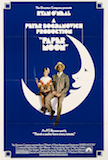
#235 Paper Moon (1973)
#236 Hitchcock/Truffaut (2015)
#237 The Greatest Showman (2017)
#238 The Ballad of Buster Scruggs (2018)
#239 The Tale of the Princess Kaguya (2013), aka Kaguyahime no monogatari
#240 Redline (2009)
#241 Zatoichi’s Cane Sword (1967), aka Zatôichi tekka-tabi
#242 Creed (2015)
#243 Danger: Diabolik (1968), aka Diabolik
#244 Boy (2010)
#245 Dad’s Army (2016)
#246 Teen Titans Go! To the Movies (2018)
#247 Ant-Man and the Wasp 3D (2018)
Bohemian Rhapsody

Paper Moon

Creed

Teen Titans Go! To the Movies

.


  • With 25 new films watched, November is the fourth best month of 2018. That’s not particularly impressive — it’s only just inside the year’s top third — but on an all-time scale…
  • That number makes November 2018 my joint fifth best month of all time (tied with August 2007), putting it in the top 5% of all months. Sounds a lot more impressive put like that, doesn’t it?
  • It’s the best November ever by some margin (the previous was 2016’s 14), in the process dragging the month’s average from 8.8 to 10.3. That leaves just July with an average below 10.0 (but it’s on 9.9, so hopefully I’ll get it over the line next year).
  • Also, as this is the first November with over 20 films, that leaves just December as the only month never to have reached the 20s. Will next month be the first? Only time will tell.
  • This month’s Blindspot film: aliens invade a London council estate in Attack the Block. The aliens may be violent, feral monsters, but they didn’t count on chavs…


The 42nd Monthly Arbitrary Awards

Favourite Film of the Month
There were many films I really liked this month, including a couple that surprised me, and ending with two colourful superhero movies that I enjoyed as much or more than the genre’s more serious-minded efforts earlier in the year. But, as the introduction to this post probably made clear, the victor has to be Creed.

Least Favourite Film of the Month
Where Creed worked because it had respect for its legacy, this month’s loser is a film that puts on the surface sheen of caring about its forebear, but doesn’t demonstrate that reverence — because it’s pretty rubbish. The film in question is 2016’s Dad’s Army remake.

Most Listened-to Song from a Movie of the Month
I thought this was going to be Last Breath by Future from the Creed soundtrack, which makes nice use of the famous Rocky theme to give that inspirational anthem a modern spin. But iTunes informs me the actual winner is the number I highlighted in my Greatest Showman review, the almost-titular The Greatest Show. Well, I did bung it on loop while I was writing that review…

Most Surprising Male Nudity of the Month
Sure, everyone was talking about Chris Pine’s penis in Outlaw King, but did you know Teen Titans Go! To the Movies features baby Superman’s naked, wiggling arse? Okay, he’s just a cartoon, but still.

The Audience Award for Most-Viewed New Post of the Month
November 2018 was my second largest month ever for views and visitors, much of that powered by the continued popularity of my Bodyguard review (which has now entered my top ten of all time). As for new posts, regular readers may know that the winner of this award is often a review of a just-released film posted while that film is still brand spanking new. So when I posted my review of Bohemian Rhapsody a whole 18 days after its UK debut and 9 days after its US release, I didn’t expect much hit-wise. But, lo and behold, a mega-popular film is a mega-popular film, and Bo Rhap bested the likes of Outlaw King (a review I posted the day after it popped up on Netflix) and They Shall Not Grow Old (a review I posted the morning after it was on TV) to be November’s most-viewed new post.


This month, a few recent blockbusters I watched for the first time in 3D…

#42 Jurassic World 3D (2015)
#43 Dodgeball: A True Underdog Story (2004)
#44 Thor: Ragnarok 3D (2017)
#45 Justice League 3D (2017)

People seem to have become increasingly sour towards Jurassic World in the years since it came out, but I still think it’s pretty great, a blockbuster ride with sufficient spectacle. In 3D, the extra dimension is superb, really adding to the film’s scale.

The same can be said of Thor: Ragnarok, which also benefited from a shifting IMAX aspect ratio. I enjoyed it even more on a second viewing — having been reminded of what a ‘normal’ Marvel movie is like tonally by Black Panther and Infinity War, Taika Waititi’s influence was much more pronounced.

Conversely, I was a bit more attuned to Justice League’s flaws this time around. Not that I was unaware of them before, and I still mostly enjoyed it, but it’s so clearly a compromised movie. Its 3D is fine, but rarely as spectacular as a film of this scope should be.


2018’s record-obliterating total.

Plus, could the combined final tallies of the main list and Rewatchathon result in— no, shh, it’s a secret…

The Past Month on TV #40

In the fast-moving world of television nowadays (where whole seasons appear at once, daft uber-fans burn through them in a single sitting, and the conversation around them is over in a weekend), it’s easy to forget that the latest instalment of Netflix’s ever-shrinking Marvel offering — season three of Daredevil — came out within the last month. (Well, month-and-a-bit — this column’s a week later than usual.) Anyway, that’s where I’ll begin.

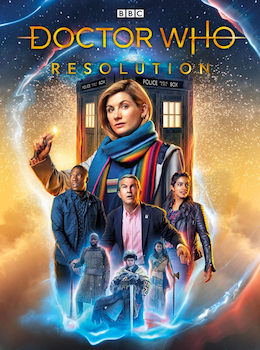
And there’s plenty more to cover after that, including a bunch of new Doctor Whos, the Inside No. 9 live Halloween special, the unusual finale of Upstart Crow, the latest Derren Brown special, and sundry episodes of other series too. So, as the Bard himself might say, without much further ado…

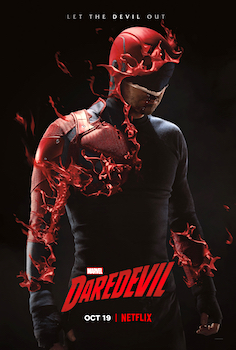
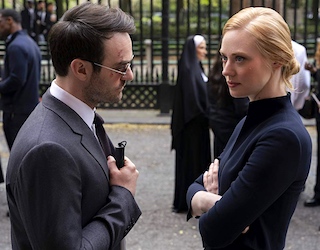
Daredevil  Season 3
Daredevil season 3For the 11th season of Marvel Cinematic Universe TV shows on Netflix, we make a long-awaited return to the hero who started it all: the Man Without Fear… the Devil of Hell’s Kitchen… Matt Murdock, Attorney at Law… Daredevil.

And “return” is a good word to describe this season, which sees Daredevil’s nemesis, crime boss Wilson Fisk, aka Kingpin, negotiate a semi-release from prison in exchange for informing to the FBI. While Daredevil’s second season veered off into more fantastical storylines from the character’s comic book adventures, which continued into team-up miniseries The Defenders, season three returns to the street-level, almost-real-world, grittily-toned world of organised crime of the show’s first season. It makes sense: season two didn’t go down that well (I loved it, personally, but it clearly wasn’t for everyone), and it seems The Defenders was pretty much a flop, but Daredevil’s first season remains one of the most popular instalments of the Marvel/Netflix collaboration. Returning to its playbook seems to have panned out, because season three has been getting strong notices across the board.

There are a lot of reasons for that, I think. Some are obvious: the show has always received acclaim for its superbly choreographed and filmed action sequences, and season three doesn’t drop the ball. Indeed, to mix metaphors, it raises the bar again, with an 11-minute single-take prison escape that is all kinds of impressive — and was done 100% for real, no hidden cuts (you can read more about that here). That may be the standout one this season (although there’s a four-way fight in the finale that’s a doozy), but there are numerous stunning sequences throughout all 13 episodes. They really put effort into making the action inventive and original, and that effort is appreciated. I guess if action sequences do nothing for you then it doesn’t matter either way, but seeing it be so well-executed is better than samey action-for-the-sake-of-action.

Back in blackThere’s a lot more to this season than that, though. New showrunner Erik Oleson has crafted a narrative for his 13 episodes that is better formed than most Marvel Netflix shows — heck, than most streaming series fullstop. It doesn’t seem to drag things out or go round in circles just to fill its episode count, but has a clear sense of pace and purpose. Okay, it’s still a streaming series — it still feels it can afford to devote entire episodes to things a network show might dash through in one sequence — but often that works to add depth. Spending a whole episode on Matt’s convalescence at the start of the season might seem indulgent, but it’s also important to his mindset for the rest of the season, which makes a big point of his morality, his religion, and his relationship with God — always a key aspect of the character, and foregrounded here without becoming objectionable to those of us with a less Catholicly inclined view of the world. The structural accomplishment really pays off in the final few episodes, too, with an array of surprising and game-changing twists and developments. My notes for later episodes were full of things like “shocking climax” and “oooh, twist!” and “ohhh shit!” At times Fisk feels genuinely unbeatable and you actually wonder how the heroes can win this one.

The return to gritty street-level criminal enterprises is more than just an aesthetic move, too. Well, that’s partly the joy of it — it makes for a refreshing change after multiple seasons of magic and mysticism if you watch all the Marvel/Netflix shows, after that side of the MCU even invaded the theoretically-grounded worlds of Luke Cage and Jessica Jones, never mind Iron Fist. But it also allows Oleson to bring more genuine depth to his characters. He’s spoken about being driven by psychological realism — what would these characters really want and need, and therefore do? That might sound like Writing 101, but I think it’s easy for writers of comic book material to fall back on comic book tropes.

Hitting the BullseyeA good example of this is FBI Agent Benjamin Poindexter, who will turn out to be the villain Bullseye. Sorry if you think that’s a spoiler, but one of his first scenes shows off his mind-blowing marksmanship, so you ought to guess, really. In the comics, Bullseye has no backstory — he’s just a psychopathic killer — which is the kind of shit you can get away with if you’re being cartoonish. In the interests of psychological realism, however, Oleson wanted to give him one, to explore his origins, and they were basically free to do what they liked. They even spoke to psychiatrists and the like to make it genuinely realistic. I guess some may think this is unnecessary detail for what is still fundamentally a superhero-action show, but it has its rewards. It’s the same with giving the season a thematic weight to consider. According to Oleson, that was “fear” — how we’re all constrained by our fears and can’t be free until we face and overcome them. This applies to every character, hero and villain alike. Well, it’s a particularly pertinent choice for Daredevil, considering his sobriquet of “the man without fear”.

If I have one complaint about the season, it’s the lack of crossover with other Marvel Netflix shows — not just for the sake of fan service, but for genuine reasons of in-universe plausibility. Oleson has said crossovers aren’t his style, because he’s focused on his characters and not shoehorning in others for the sake of it, but that adherence to the realism of the characters is why it’s silly that certain others don’t turn up. The most glaringly obvious omission is Frank Castle, aka the Punisher — who, in this iteration of the Marvel Universe, started out as a Daredevil supporting character (as one of the main threats in season two). The real-world reason he doesn’t pop up is probably that he’s got his own show now, so I guess scheduling didn’t work out. But (as this Collider article points out) it makes no sense that Castle wouldn’t turn up to help Karen, especially as the danger to her life is literally headline-making news. As that article summarises, “Frank Castle’s absence doesn’t ruin the season, not even close, but it’s a burden an otherwise Who WOULDN'T come to her rescue? I mean seriously...well-told story shouldn’t have to bear, and one that could have been easily remedied.” With Punisher season two on the way it’s possible this apparent plot hole could still be explained and/or retconned (whether they’ll bother is another matter, although Karen was a major character in Punisher season one so they ought to at least reference it), but it’s a shame it went unexplained in Daredevil itself.

Still, that’s the only major complaint I have about this whole season. Many are seeing it as a return to form — as I said, I loved season two, so for me it’s just Daredevil continuing to be excellent, just in a different way. Normally this would absolutely bode well for a fourth season, but with Iron Fist being cancelled (presumably due to ratings) and Luke Cage also canned (over bizarre creative differences, despite the season being half written), it seems like Marvel and Netflix don’t get along so well at the minute (might be something to do with that forthcoming Disney streaming service…) I really hope they don’t throw the baby out with the bathwater, because in my opinion Daredevil is still one of the best things to come out of the whole MCU, on the small or big screen.

Doctor Who  Series 11 Episodes 3-7
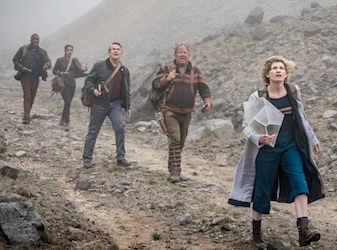
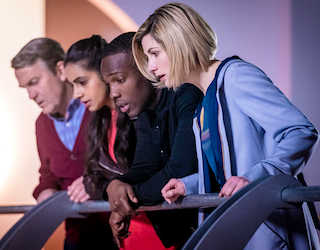
Doctor Who - RosaI let this post slip a week, so there are five episodes of Doctor Who to look back over. First up, the new team’s first historical adventure, Rosa (whew, it feels like more than a month since this aired!) I wrote last month about how there seemed to be a conscious effort to take Who back to its roots; to do things in a way perhaps not seen since the William Hartnell era of the mid-’60s. Rosa continues this. Back then, historical adventures didn’t have alien threats for the Doctor & co to battle, instead taking a genuine(ish) trip into the past. Rosa does give them a time-travelling criminal to battle, but he’s a relatively slight element in how things play out: he’s trying to alter history by nudging it out of place with small acts, so the TARDIS Team have to nudge it back. Mainly, the episode exists to be a timely commentary on racism. Co-written by acclaimed author Malorie Blackman, it was mostly a success… though, like episodes one and two, it saw the villain less being defeated, more just teleporting away.

Arachnids in the UK was more of a typical Doctor Who romp, as the supporting cast’s hometown of Sheffield was threatened by giant spiders, Trump-ish businessmen, and some dodgy thematic plotting (why is the villain bad for shooting an animal that was going to slowly die of asphyxiation otherwise?) Also, the villain is allowed to wander off at the end, like in episodes, one, two, and three. Continuing this less-revolutionary seam was The Tsuranga Conundrum, which saw the TARDIS Team trapped on a medical ship being torn apart by a metal-eating little critter. Strong design elements (the set looked great, as did the CGI monster) did little to hide some round-the-houses plotting and a cast too big to get enough adequate screen time. Also, it ended with the monster being set free into space, similarly to episodes one, two, three, and four. Was this a deliberate pattern?

TARDIS TeamEpisode six and seven say “no”. Well, a bit — the actual villain did survive the first. I still hope they’re going somewhere with this, because otherwise it’s very sloppy. Anyway, episode six itself, Demons of the Punjab, was one of the highlights of the season. Like Rosa, it sees the Doctor and co going into history and facing up to the real issues of the day, with the aliens popping in to add some spice rather than properly drive the story — like Rosa, you can imagine a not-that-different version of this episode without them. Preventing the Doctor from interfering and being ultra-heroic is certainly a change of pace from the “heroic god” version of the character we’ve had since the 2005 revival, but it’s not an unheard of vision — again, it harks back to the Hartnell era.

Finally for now, Kerblam! is the first-ever Who story with an exclamation mark in the title. Truly groundbreaking, this season is. I also thought it was the most successful sci-fi episode of the season thus far, feeling like the kind of excitement-filled runaround that would’ve fit in the Eccleston, Tennant, Smith, or Capaldi eras. Its satirisation of Amazon was quite fun, the design work was once again superb, and there was even a budget-busting action sequence. And the villain didn’t escape to live another day! Although, did they really deserve to die? Even when an episode succeeds this season, it still leaves you with questions…

Inside No. 9  Dead Line
Inside No. 9: Dead LineI’ve never watched Inside No. 9 before, though I’ve always meant to get round to it. For those equally in the dark, it’s a comedy-horror anthology series from writers Steve Pemberton and Reece Shearsmith, aka half of the League of Gentlemen, with each half-hour episode a self-contained tale. The reason I’ve jumped in here was because this was a live Halloween special. For some reason I’m always intrigued by live TV drama (I even watched episodes of Eastenders and Coronation Street just because they were going out live), and Inside No. 9’s standalone nature made just dropping in feasible. Anyway, the episode itself was a typically playful endeavour — many fans switched off halfway through, genuinely duped by one of the episode’s tricks. The episode also managed to genuinely integrate the fact it was live, roping in a news broadcast from another channel and having one of the characters tweet. That means it played better live than it would, say, on iPlayer (where it’s still available), though it’s still worth a watch as an effective piece of drama — the way it played with the form of live TV was the best bit, but alongside that it snuck in an interestingly-constructed narrative. You can also view it as a half-hour homage to infamous BBC drama Ghostwatch, which is no bad thing. (That also reminds me I’ve still not got round to watching Ghostwatch…)

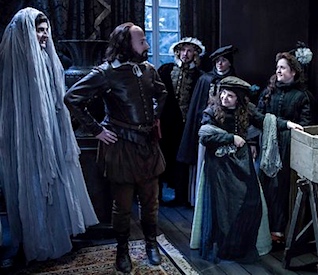
Upstart Crow  Series 3 Episode 6
Go On and I Will FollowI always wondered if this day would come. As many (though I would guess not all) viewers must know, Shakespeare’s son Hamnet died in childhood. Not exactly traditional material for a multi-camera sitcom, so I wondered if the series would just never go there; equally, it’s by Ben Elton, co-writer of the famously tragic final episode of Blackadder Goes Forth, a work of unequivocal genius. And so in the final episode of this series, Go On and I Will Follow, Upstart Crow does go there… eventually, in the final moments of an episode that’s mostly fluff about theatre awards. It makes for a somewhat bizarre ending. Hamnet was never much of a character in the show, so while his passing’s effect on the characters is obvious, it has little meaning to us viewers. Then there’s the dedication to him at the end, which just reads like a spoof. The only bit that truly worked for me was the final lines: read in solemn voiceover, a passage by Shakespeare himself about grief. Perhaps that’s fitting. Perhaps if the whole episode had been about it in some way, then it would’ve worked — it’s part of why that Blackadder finale is so effective: the whole episode is about going “over the top”, or trying to avoid it, and so the unity of plot and theme and character and historical fact builds to an emotional gut punch of an ending. But rather than do that, Hamnet’s untimely end is just one scene tacked onto the end of some achingly obvious satire about something inherently vacuous. Well, maybe that was Elton’s point, but I don’t think the contrast was sharply enough drawn if so. Without that consistency across the whole episode, the ending just feels… odd. Ah well, at least we know there’s definitely a Christmas special to look forward to.

Also watched…
  • Batman: The Animated Series Heart of Ice, Deep Freeze, Cold Comfort / Batman Beyond Meltdown — Watched these specific episodes to accompany my viewing of the film Batman & Mr. Freeze: SubZero. Heart of Ice may be one of the show’s best episodes, but the other two suggest it was in serious decline by the end. Meltdown is pretty good, though.
  • Children in Need 2018 — I used to watch the BBC’s annual charity telethon religiously, but I’ve lapsed in the last few years. I unintentionally caught some of it this year, which just confirmed it’s continued downhill. What I saw was mostly either trailers for forthcoming (BBC) shows or pop singers just singing — where have all the original sketches and specials gone? There were still a couple, and they were the highlights.
  • Derren Brown: Sacrifice — Derren’s third Netflix “Original” is the first that’s actually new. In it, he tries to programme an anti-immigrant American to stand between an illegal immigrant and a gun-wielding biker. It’s not his best special (it feels like a recombination of previous techniques to an ending that’s only new in its specifics), but it’s not a bad one either. I imagine if you’ve not seen what he can do before, it’d be more impressive. Assuming you believe it, that is; which you should, because what would be the point if it was fake?
  • The Great Model Railway Challenge Series 1 Episodes 3-6 — Reader, I did end up watching the rest of the series. My review of the first two pretty much covers it all. It’s not a hobby I’d ever take up (I was never much good at arts & crafts or building model kits or any of that kind of stuff), but for some reason I’ve always liked miniature things (love a model village) and the creations here are often very impressive.
  • Great News Season 1 — This newsroom sitcom limped to two seasons on network TV in the US, but recently made its way to UK shores as a Netflix “Original” — but only after it had already been cancelled in the US. That’s a shame, because once it settles into its stride its often pretty funny, and one of those “save our show, Netflix” campaigns might’ve been warranted. Oh well, at least I’ve got season two to look forward to.
  • Mars Season 1 Episode 1 — There’s been a spate of dramas about mankind’s first mission to Mars in recent years, but this was one of the most high-profile: produced by Ron Howard, it mixes documentary footage with the drama to show the present-day reality behind what we’re seeing in the fiction. Unfortunately, the fiction part is bloody awful, at least on the basis of this first episode. I’ve had the series on Blu-ray for years and finally started watching it because season two was beginning, but I’m not sure I’ll even make it on to episode two.
  • What Do Artists Do All Day? Peter Jackson — Despite the general-sounding title, this is a straight-up behind-the-scenes about the making of They Shall Not Grow Old. Well worth a look if you’re interested in how they did it. (They Shall Not Grow Old was also on TV this month, of course. My review is here.)

    Things to Catch Up On
    The Little Drummer GirlThis month, I have mostly been missing The Little Drummer Girl, the BBC’s new John le Carré adaptation from the makers of The Night Manager, their last (and very successful) John le Carré adaptation. As regular readers may know, I have a proclivity for saving series like this up and watching them back-to-back over about a week once they’re done — truly, I am of the Netflix generation. Dammit. Anyway, I’m looking forward to it, so expect me to get right on it and review it next month.

    And speaking of Netflix, I’ve still not got round to the new Sabrina or the much-discussed and recommended Haunting of Hill House. Whether I’ll be able to make time for those once Christmas TV ramps up, who can say. Oh God, and I’ve just remembered there’s still Killing Eve on iPlayer, too. Eesh.

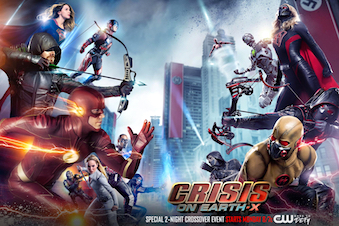
    Next month… the final few episodes of Doctor Who, and an Arrowverse crossover or two.

  • They Shall Not Grow Old (2018)

    2018 #234
    Peter Jackson | 95 mins | TV (HD) | 1.85:1 | UK & New Zealand / English | 15

    They Shall Not Grow Old

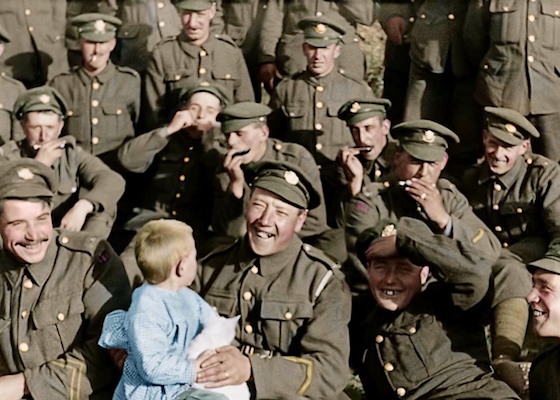
    Commissioned by 14-18 NOW (the UK’s arts programme for the First World War centenary) and the Imperial War Museum to see what he could do to make their old World War One footage more engaging for a modern audience, director Peter “Lord of the Rings” Jackson’s initial tests at restoring the footage were so successful that the project was eventually worked up into this feature-length documentary. It tells the story of the Western Front from the point of view of ordinary Tommies living and fighting on the frontline, using only footage from the period (plus photos, posters, artwork, maps, and so on) and narration taken from interviews with men who were really there — no historians to provide context or analysis here.

    This presents two distinct things to consider when looking at the film: not only its success as a documentary, but also the methods Jackson and co have undertaken to produce it. In terms of the latter, what Jackson and his computer wizards have done goes far beyond the normal realms of “restoration”. For starters, the original footage has been cleaned up (removing scratches and dirt, stabilising the image, etc) — so far, so normal. But that original footage was shot on hand-cranked cameras, giving it a frame rate of anywhere from 10 to 18fps (sometimes varying within one piece of film). So, computers have created additional frames to bring all the footage up to a standard, smoother 24fps. Then the footage has been painstakingly colourised, and also converted into 3D (if you see it at a 3D cinema screening, anyway. Maybe there’ll be a Blu-ray). The goal of all this is to make it seem more immediate and real; to try to connect modern viewers to these men in a more direct fashion, without the distancing effect of watching juddery, indistinct black & white film.

    Before and after

    Calling the work Jackson and co did to old footage “restoration” has been controversial in some circles, because it goes beyond mere “restoration” and into the realm of revisionism, like the colourisation of old movies that came to prominence in the ’80s and was widely criticised (though it still occasionally rears its head today — try buying a Blu-ray of It’s a Wonderful Life without both black & white and colour copies of the film). Jackson has a different and specific aim with his work here, however. He’s not saying this is a better way to view old film footage fullstop, but rather is looking for a way to bring these past events to life for a modern viewer; to try to erase the past 100 years and put us in their shoes, to make us see how much these people, though separated by so much time, were really very similar to us. The effectiveness of the end result in achieving this goal — of bringing that long-gone war vividly to life — is undeniable.

    Indeed, anecdotally, a lot of people do find the addition of colour to be revelatory — after the film’s screening on BBC Two last night, I saw many tweets talking about the “extraordinary”, “breathtaking”, “jaw dropping”, “spine tingling”, “astounding” moment when colour faded in. Personally, however, it rarely seemed like more than a special-effects veneer painted over the original footage. Well, that’s exactly what it is, in fact. It’s not necessarily a criticism, either — it may be for the best, even, because this isn’t a kind of ‘restoration’ we want to see applied across the board to old films. Either way, I do agree that it added a new perspective to see the war presented in this way; but the idea that it’s a perfect, genuinely lifelike ‘restoration’ didn’t quite wash with me. In fact, I thought one of the film’s most striking, identifiable moments came early on, before it had made the transition to colour: as the narrators talk about how young they were when they signed up, we’re shown closeups of soldiers’ faces, and you can really see how young they were — many of them literally just boys. I think it’s pretty common knowledge that, although the age to sign up was 19, lads as young as 14 lied to get in, but seeing it so clearly is another matter.

    Faces

    Moments like that prove that They Shall Not Grow Old’s success as a documentary doesn’t just lie with its “restored” footage. The film’s worth lies as much in the way the story is told — the voiceover narration taken from genuine soldiers’ testimonies, recorded by the BBC and IWM in the ’60s and ’70s; the editing of certain sequences — as it does in the “modernising” of old footage. The added colour and clarity do bring some bits to life and make them feel closer to today, as per Jackson’s stated goal, but a lot of the time the smeary, blurry quality of the colourisation makes it feel as much like a painting come to life as it does real footage. Nonetheless, the truthfulness of what we’re being told burns through that, and it’s the combination of visuals and audio that aids our understanding of what life was like for those men in that place at that time.

    It’s quite a dense film too, packed with information, constantly surging forward with the images, an imagined soundtrack to match them, and almost non-stop narration. At times it becomes like a tone collage, where you almost absorb it more than process it, getting an impression of life on the front more than specific experiences. In this interview, Jackson says the film uses about 120 narrators, edited together to sound almost like they’re telling one story — the “common story” of the experience of a soldier on the Western Front, with extreme or uncommon anecdotes having been edited out. It means a lot of the war isn’t touched on (other fronts, other experiences, like the Navy or Air Force), but there were budgetary reasons for that as much as anything (they originally offered Jackson enough money for a film about 30 minutes long).

    Western Front

    While those other stories are undoubtedly worth telling too, I think it was wise of Jackson to retain a degree of focus here. Rather than attempt to cram a wide-ranging account of a complex conflict into the brief running time of a single film, he’s instead painted a picture of what it was like to be an ordinary Tommy in the trenches of Europe. This is not the story of commanders and generals, of presidents and kings, but of ordinary blokes on the ground — the people most of us would’ve been, had we lived 100 years ago — and Jackson’s methods help make that story as real and relatable as it’s ever been.

    5 out of 5

    They Shall Not Grow Old is available on iPlayer until Sunday 18th November. A documentary about the making of the film airs on BBC Four tonight at 7:30pm.

    Another Month Bites the Dust: The Monthly Update for October 2018

    Another month gone and another month gone, another month bites the dust. Hey, I’m gonna get November too! Another month bites the dust!

    (So, I didn’t actually get to see Bohemian Rhapsody this month, but I thought of this title and it was too good to miss.)


    #207 The Twilight Saga: Breaking Dawn – Part 1 (2011)
    #208 Prevenge (2016)
    #209 Bridget Jones’s Baby (2016)
    #210 TiMER (2009)
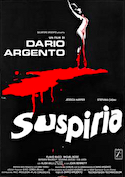
    #211 Suspiria (1977)
    #212 Jin-Roh: The Wolf Brigade (1999), aka Jin-Rô
    #213 Matinee (1993)
    #214 Zatoichi’s Pilgrimage (1966), aka Zatôichi umi o wataru
    #215 The Night Comes for Us (2018)
    #216 The Producers (1967)
    #217 Rocky Balboa (2006)
    #218 It’s Such a Beautiful Day (2012)
    #219 Unsane (2018)
    #220 The Lives of Others (2006), aka Das Leben der Anderen
    #221 Phantom Thread (2017)
    #222 Jennifer’s Body (2009)
    Suspiria

    Phantom Thread

    .


    • This month I watched 16 new films. It’s not the best month of the year, but it’s not the worst, either.
    • It beats the October average (previously 13.8, now 14.0), but not the rolling average of the last 12 months (previously 21.0, now 20.4), nor the average for 2018 to date (previously 22.9, now 22.2).
    • One of those 16 was Rocky Balboa, which means I’ve now watched all the main Rocky films for the first time this year. That wasn’t the plan when Rocky scraped onto my WDYMYHS list in last place! But at some point I made the conscious decision to finish them (rather than let them spread out indefinitely, like many other series I’m in the middle of), and I’ve enjoyed them all (even Rocky V). With Creed II out at the end of November, I intend to get fully caught up on the entire Rocky legacy very soon.
    • This month’s Blindspot film: colourful and sonically bombastic horror in Dario Argento’s original Suspiria. I’ve been saving it all year for this month (for hopefully obvious reasons), and it didn’t disappoint.
    • This month’s WDYMYHS film: superb behind-the-Berlin-wall dramatic thriller The Lives of Others. And, as I only do ten of them, that’s the final WDYMYHS film for 2018!


    The 41st Monthly Arbitrary Awards

    Favourite Film of the Month

    Lots of enjoyable films this month, including some high-quality Oscar winners… but it was October, aka horror month, which just tips the scales in favour of Suspiria. It was the first Dario Argento film I’ve seen, but I look forward to experiencing more.

    Least Favourite Film of the Month
    There’s no point beating about the bush: it was definitely The Twilight Saga: Breaking Dawn – Part 1.

    Best Demonstration That Shooting On Film Is Still Better of the Month
    Phantom Thread may’ve looked gorgeous in 35mm-derived UHD, but nothing reminds you of the beauty of film quite like Unsane’s fugly shot-on-iPhone visuals.

    Most Gratuitous Nude Scene Without Any Nudity of the Month
    Bella and Edward going skinny dipping before finally consummating their marriage was barely necessary, but at least the whole series had basically been building to the point when they finally do it. Megan Fox going for a completely unmotivated nudey dip in Jennifer’s Body, on the other hand, was… well, gratuitous.

    The Audience Award for Most-Viewed New Post of the Month
    For only the fifth time this year, the winner of this award is not my TV column. In fact, it’s the second most-viewed winner of this award in 2018 (behind Avengers: Infinity War’s huge tally back in April). That would be Netflix’s Indonesian actioner The Night Comes for Us.

    Leaving aside new posts, my overall most-read post of the month by an absolute mile (much higher than any other post has ever managed in a single month, barring that time Cracked.com linked to me, which is mainly why I’m mentioning it) was last month’s TV review. Why? Well, it included my review of Bodyguard, which, following its phenomenal success in the UK, debuted on Netflix in the rest of the world last week. It previously won Most-Viewed New Post in September, but in October it received over six times as many hits!


    My Rewatchathon continues apace…

    #39 School of Rock (2003)
    #40 Face/Off (1997)
    #41 South Park: Bigger, Longer & Uncut (1999)

    Face/Off was one of the films I put into my 100 Favourites without rewatching, but if I had… well, I’m not saying I wouldn’t’ve included it, but I wouldn’t’ve given it 5 stars. It’s sort of terrible… but it goes about its business so outrageously and so ridiculously that it’s also sort of glorious. If it didn’t star Travolta and Cage or wasn’t directed by John Woo, I think it would’ve been a disaster; but they all carry out their roles with OTT abandon, and that’s actually what makes the ludicrous material work.

    The South Park movie was going to become the latest in my ongoing series of “films I’ve owned forever on a DVD that I’ve never played, but were available on a streaming service in HD so I watched there instead”. Not that South Park’s self-consciously simplistic animation is crying out for the extra detail of 1080p, but a bit of crispness never hurt. But then it turned out it was only available to stream in SD anyway (goodness knows why — an HD version definitely exists because there’s a Blu-ray available in several territories), so I decided to pop in the DVD after all. But then I couldn’t find where my DVD copy was, so I elected to just watch the streaming version after all. What a story, eh? Look out for the movie adaptation, coming soon…

    Oh, and the film was pretty good. It’s nearly 20 years old and has dated somewhat, but the vulgar irreverence has its charms.


    A new Coen brothers movie! A new Orson Welles movie! Chris Pine’s penis! And that’s just on Netflix…

    The Past Month on TV #39

    Travel through time and space, into dreams and memories, and along miniature railways in this month’s TV review…

    Doctor Who  Series 11 Episodes 1-2
    Doctor Who series 11The 37th season of Doctor Who begins with the show’s biggest soft-reboot since at least 2010; arguably, since 2005; arguably, ever. With a new showrunner comes a new broom, and so we have a new Doctor, a new TARDIS, a new set of companions — sorry, they’re “friends” now — new locations, new monsters, and a new style (thanks to a raft of behind-the-scenes changes, including a new effects company, swish new cameras and lenses, and a new aspect ratio). It’s the perfect jumping-on point… and it worked, with the premiere achieving the show’s highest ratings for a decade; or longer, depending how you count it.

    Oh, and the Doctor’s a woman now, too. “It’ll kill the show,” cried a vocal minority. Hahaha, nope!

    But what of Jodie Whittaker, anyway? As with any new Doctor, I feel she needs a little time to find her feet — something that lies in the writing as much as the performance. There are some lines which would seem more at home in the mouths of David Tennant or Matt Smith, which Whittaker gamely tackles but don’t quite feel natural. But at other times the material and her performance click in perfect synchronicity, and we can see the promise that lies within. Hopefully as the writers become more familiar with her mannerisms, what works and what doesn’t for this particular incarnation, then it’ll all become smoother. There’s no reason to doubt she’s up to the task.

    Some question the new man in charge of running the show, though. Chris Chibnall’s TV record is… patchy. For every Broadchurch series one there’s a Broadchurch series two; for every Broadchurch series three there’s a Torchwood series one; and so on. He acquits himself decently with this opening pair of episodes. The first, The Woman Who Fell to Earth, may owe an obvious debt to Predator with its alien-hunter storyline, but Who has always liberally borrowed from other places and made the material its own.

    TARDIS TeamIndeed, even as it’s open-armed and newbie-friendly, Chibnall’s era already seems as Who-literate as you’d expect from such a long-time fan (somewhat (in)famously, as a teenager in the ’80s Chibnall appeared on TV criticising the then production team). His sense of what Who should be is at once indebted to the modern era (in particular the years of Russell T Davies, who I suspect may’ve been something of a mentor to Chibnall at one point) and also seeks to reintegrate elements long absent. For example, there’s the expanded TARDIS team, which calls to mind that of the series’ very first group of travellers; though whereas 1963 gave us a teenage girl and two middle-aged teachers, 2018 offers two teenagers and one middle-aged bloke. Such are the changing times. And for dedicated Whovians, the plot of episode two, The Ghost Monument, also had an air of early Hartnell serials, with its episodic trek across a danger-filled alien world. It was a brisk, entertaining 50 minutes, but stop and think about it too much and the cracks begin to show (read Andrew Ellard’s tweetnotes to see how it could’ve been polished up, for example).

    Still, two episodes into a new era is no point at which to make generalisations about it (despite what some people have been trying). This is a reasonably promising start, though: there’s a good cast in place, and a clear sense of purpose — this feels like a production team making the version of the show they want on screen, not one rushing headlong to get out anything so long as it meets the broadcast deadline (something that afflicted both RTD’s and Steven Moffat’s eras at times). Only the weeks ahead can really tell how consistently they’ve achieved this. Personally, I’m more excited for each new episode to come around than I have been for some time.

    Maniac
    ManiacNetflix continue to blur the line between movies and TV with this limited series starring Oscar winner Emma Stone and Oscar nominee Jonah Hill, co-created and directed by Cary “director of the next Bond film” Fukunaga. Well, I mean, it’s a line that other TV producers have blurred plenty in the past — movie stars on TV is far from a new thing at this point, and there’s no doubting this is a TV series rather than a movie (it’s 6½ hours long, for one thing) — but, still. And they bend the rules of TV, too, with individual episodes running everywhere from 26 to 47 minutes. (Does that matter when Netflix’s release-it-all-at-once strategy means you choose how much to watch at any one time? Maybe not. But if you’re the kind to still watch one episode at a time, a word to the wise: I recommend double-billing the ultra-short should-be-one-episode pair of episodes 7 and 8.)

    Anyway, Hill stars as the paranoid and delusional son of a business magnate who enrols in a drug trial, where he meets Stone’s addict in search of a fix. The trial is a new method for treating past trauma, something both of them have plenty of; and when the AI that’s a vital part of the procedure malfunctions, the pair find themselves in each other’s dreams and fantasies. It’s kind of like Inception made by someone with a kookier imagination than Christopher Nolan.

    In fact, an even better point of reference would be X-Men-adjacent TV series Legion: it has the same preoccupation with mental health, with mysterious possibly helpful / possibly evil institutions, with can’t-trust-reality trippiness, with retro-futuristic design… It’s certainly a heavily stylised series, which is half the charm. The other half is all the dreamworld stuff, which takes a few episodes to rock up but is worth the wait. And the other half — because this is the kind of show that would definitely have three halves — is the chemistry between Stone and Hill, which is unexpected but palpable.

    Kooky chemistryA significant amount of the series’ offbeat likability is down to idiosyncratic direction by Fukunaga, I suspect — the way he’s shepherded the visual creation of this world, the leftfield performance choices across the cast, and so on — but Emma Stone is definitely the MVP. While the aforementioned chemistry between her and Hill is important, and a lot of the rest of the cast get to excel at being quirky and funny, it’s Stone who really brings heart and emotion to the piece, making it more than just a zany fantasy.

    Maniac throws you in at the deep end, with a first instalment that’s densely packed with information and alternate-world building, which it races past and through, sometimes with two or three things going on at once, making it feel a bit like hard work. But, really, that’s all incidental detail. Once you settle into it, an inventive and kooky journey awaits. How much it all adds up to is debatable — though, for the characters, it definitely reaches a worthwhile place — but it’s the kind of trip where the journey’s worth at least as much as the destination.

    The Great Model Railway Challenge  Series 1 Episodes 1-2
    The Great Model Railway Challenge
    Long-time readers of this column with exceptionally good memories may remember that I once watched two episodes of Shed of the Year merely because one episode featured a Doctor Who-themed shed and another featured a cinema-themed shed (I’m still jealous of the latter, and you should be too — see photos at the aforementioned link). Well, here we have another show that wouldn’t normally be up my street… but episode one was all cinema-themed builds, and episode two featured a Doctor Who-themed build.

    As for the programme itself, well, the format follows the template established by Bake Off and since copied ad infinitum for almost every hobby TV producers can think of: a pair of affable, pun-delivering hosts; a mixed-gender pair of expert judges; well-practiced amateur contestants, who compete in a series of tasks and challenges over a period of three days — in this case, to build model railways. It comes across as being as nerdy a hobby as you’d think (and with one team choosing to do the Who themed setup, it’s like nerd²), but I don’t mean that as a criticism — the stuff they produce is, at its best, astonishing and a lot of fun. I think I’m going to end up watching the rest of the series.

    Also watched…
  • Upstart Crow Series 3 Episode 4 — It’s funny how this era of catchup TV can lead to both binge-watching and spreading stuff thinner than intended (or is that just me?) Anyway, the sole episode of Upstart Crow continued the quality run I commented on last month, this time with an amusing episode-long riff on Much Ado About Nothing.
  • Would I Lie To You? Series 12 Episode 1 — The best panel show on TV is back and as on form as ever, particularly with the ever-unguessable Bob Mortimer popping in for the first episode. A treat.

    The Not-So-Immortal Iron Fist
    Colleen the Iron FistHaving just last month written about how improved Iron Fist was and how I was actually looking forward to season three, Netflix went and cancelled it last weekend. That’s the first of their Marvel shows they’ve outright cancelled (it doesn’t look like The Defenders is coming back, but that was technically always a one-off miniseries anyway). There are lots of options for Iron Fist’s future, however: could be they’re planning to team up some of the characters into a new show; could be it moves to Disney’s forthcoming streaming service, which is set to have other MCU-related series. I figure the latter is unlikely — it’s tarnished goods now — but it would seem a shame to not pay off the second season’s cliffhangers/teases somewhere, somehow.

    Things to Catch Up On
    InformerThis month, I have mostly been missing Informer, BBC One’s new thriller. Well, it only started on Tuesday, so that’s fair enough, right? I guess I’ll save it up and see how it goes down — I’ve managed to avoid wasting time on a few initially-promising-but-ultimately-poorly-received series with this method; though, equally, it led to Radio Times spoiling Bodyguard for me, so you take your chances… And as the lack of review may’ve told you, I’ve yet to start Killing Eve. With a bunch of stuff popping onto Netflix over the coming weeks (see below), it’ll be lucky to make next month’s column either.

    Next month… after a 2½-year wait (which has included seven seasons of other Marvel/Netflix shows), it’s finally time to give the Devil his due — that being, a third season.

    Plus! Netflix’s spooky Riverdale spinoff, Chilling Adventures of Sabrina, and more new Who.

  • The “Oh My God, I Can’t Believe It” Monthly Update for September 2018

    Oh my god, I can’t believe it —
    I’ve never seen this many films before!

    For only the second time, 100 Films in a Year has reached 200 films in a year…

    …and — for the first time ever — beyond!


    #188 Sartana’s Here… Trade Your Pistol for a Coffin (1970), aka C’è Sartana… vendi la pistola e comprati la bara!
    #189 Lost in Space (1998)
    #190 Skyline (2010)
    #191 April and the Extraordinary World (2015), aka Avril et le monde truqué
    #192 The Tree of Life (2011)
    #193 I Kill Giants (2018)
    #194 Compulsion (1959)
    #195 The Hunt (2012), aka Jagten
    #196 Heathers (1988)
    #197 Courage Under Fire (1996)
    #198 Gods of Egypt 3D (2016)
    #199 Zatoichi’s Vengeance (1966), aka Zatôichi no uta ga kikoeru
    #200 Sholay (1975)
    #201 Network (1976)
    #202 Mary and Max (2009)
    #203 Ran (1985)
    #204 Step Brothers (2008)
    #205 Before Midnight (2013)
    #206 Rocky V (1990)
    April and the Extraordinary World

    Heathers

    Before Midnight

    .


    • September adds 19 films to 2018’s tally, in the process taking it past the final totals of both 2016 (195) and 2015 (200) to make it my biggest year ever!

    *ahem*

    So, back in 2015, after I reached my highest ever final total, I felt fairly certain that would never be beaten. It had been a push to get there, and I was determined to spend more time on things besides watching new films. Well, I haven’t done nearly as much other stuff as I’d hoped, but my film tally did drop slightly over the next few years (195 in 2016; 174 in 2017), plus starting my side goal of the Rewatchathon would surely steal numbers from the main tally.

    And yet here we are: at the end of September — with a whole 25% of the year left to go — and I’ve already surpassed that 200 total. Oh, and I’ve watched 38 films towards this year’s Rewatchathon, too.

    How has this happened? Goodness only knows. Whether the remainder of the year will keep up this pace, which would land me with a final tally in excess of 270 films… well, I don’t know that either. It seems unlikely, given that both August and September have had totals well down on the giddy heights of April and May (my two biggest months of all time). Nonetheless, a total in the 230s is a likely minimum, with 250+ not improbable — both far in excess of what I once thought possible (considering that, in two of this blog’s first six years, I failed to even make 100). What I will predict is that I won’t achieve these kinds of numbers ever again. But then, I said that last time…

    Anyway, back to notes about this month in particular:

    • As I said, I watched 19 new films this month, which surpasses the September average (previously 11.6, now 12.3), but falls just short of the rolling average of the last 12 months (previously 20.3, now 21), as well as 2018’s average to date (previously 23.4, now 22.9).
    • Rewinding to the start of the month for a moment, I watched a film on September 2nd, crossing another date off my list of “never seen a film on”s. That just leaves three to complete: January 5th, May 23rd, and December 22nd.
    • This month’s Blindspot film: Danish wrongfully-accused drama The Hunt, a film whose story will surely induce righteous anger in any viewer — which is not a criticism.
    • This month’s WDYMYHS film: Akira Kurosawa’s feudal Japan-set adaptation of King Lear, and his final samurai epic, Ran. It’s testament to Kurosawa’s magnificence that he made a movie this great but I wouldn’t even put it in his top five.
    • One film I didn’t watch this month was The Shape of Water. Having to wait so long for a chance to see it (it disappeared from cinemas near me in a flash, and the UK Blu-ray release came over three months after the US) seems to have accidentally put it on my back burner: it’s been on disc here since the end of June and I’ve still not got round to it. Maybe next month — after all, it is a monster movie.


    The 40th Monthly Arbitrary Awards

    Favourite Film of the Month

    I watched six or seven five-star films this month (one’s still wavering between a four and a five), which makes this a tricky proposition, especially as I really enjoyed some of the four-star ones too. Heck, I had a lot of fun watching Gods of Egypt, and I gave that three stars! It’s not my favourite film of the month, though. I’m going to bestow that honour on Heathers, which I finally got round to seeing thanks to Arrow’s 4K-restored Blu-ray release. Not only does it look fantastic, it’s a great black comedy too.

    Least Favourite Film of the Month
    Now, here’s a toughie: I watched two of the worst films I’ve seen all year back-to-back at the start of the month. I won’t be surprised if they both make the year-end bottom five. But, of the two, the one I liked least was Lost in Space, because at least Skyline is trying to do something interesting, whereas Lost in Space just squanders its blockbuster budget on being shit.

    Best Fight of the Month
    Tussles galore between giants, gods, and armies of Japanese warriors this month, but none were so gruelling as Celine and Jesse verbally slugging it out in Before Midnight.

    Old Film That’s Still Pertinent Today of the Month
    Media satire Network is 42 years old now, but I’m pretty sure you could take its screenplay, change only a couple of minor words, and film it as being set today.

    The Audience Award for Most-Viewed New Post of the Month
    For the fifth time this year, my monthly TV review was victorious in this category. I usually attribute this to referrals from IMDb, and the biggest contributor for this month’s column appears to have been Bodyguard. (The most-viewed new film review was Jack Reacher: Never Go Back.)


    A massive six rewatches this month, both catching up on the shortfall left after last month and surging ahead into next month’s ‘allowance’.

    #33 Darkman (1990)
    #34 Avengers: Infinity War 3D (2018)
    #35 Solo: A Star Wars Story 3D (2018)
    #36 Before Sunrise (1995)
    #37 Before Sunset (2004)
    #38 Kingsman: The Golden Circle (2017)

    I feel like someday I need to coalesce into words why I love Darkman — I only wrote a drabble after my first viewing, and I don’t feel like expounding on it right now, but it’s a really good fun pulp sci-fi/horror/superhero noir.

    Avengers: Infinity War is a slightly less mind-blowing experience when you know all the twists and developments — it’s one of those films where the first viewing may always be the best thanks to the surprises and reveals having a tangible impact — but it still holds up as a one-of-a-kind epic, full of excitement, humour, and even emotion. I’m miffed they didn’t put the IMAX ratio on Blu-ray (and always will be — I’m still cross with Brad Bird about Ghost Protocol), but at least the 3D was fantastic.

    Conversely, I definitely enjoyed Solo more on a second viewing, in part thanks to the better-managed expectations of having already seen it. It’s nowhere near the greatest Star Wars movie, but it’s a solid space adventure with many likeable touches. The 3D isn’t bad, but in terms of Fancy Modern Formats, I suspect Bradford Young’s notoriously dark photography would benefit more from UHD’s high dynamic range.

    I’ve been meaning to (re)watch Richard Linklater’s Before trilogy since the third one came out on DVD (no Blu-ray on this side of the pond) five years ago. And I’ve been really meaning to do it since Criterion released them in a lovely Blu-ray box set a little over 18 months ago (that doesn’t sound so bad — I thought it was longer). Well, obviously, I’ve finally done it.

    When I first watched the Before films in 2007 (only a duology back then), I was 21. I admired them both, but definitely preferred the first, Before Sunrise. Indeed, I was a little startled to realise I only gave it four stars in my original review. Now, it’s a firm five, and I’d say one of my favourite films of all time (it did place 28th in my 100 Favourites, but it would be higher now). However, consensus often seems to favour the second film, Before Sunset. I’ve always wondered if this is an age thing: when I first watched them, I was close to the age of the characters in the first film, whereas many critics contributing to said consensus would’ve been closer to the characters’ age in the sequel. Well, now I’m 32, and I certainly identified with the sequel a lot more this time than I did back then. I probably still prefer the first, on balance — it now comes loaded with nostalgia for being in your early 20s — but I consider the sequel to be more-or-less its equal.

    And what of the third film, Before Midnight? Well, I’ll publish a full review at some point…


    It’s October, which means only one thing here at 100 Films: the sheer terror of The Twilight Saga!

    The Past Month on TV #38

    There are three major series for me to review this month, thanks to the UK’s highest-rated drama launch for a decade, Bodyguard; the debut season of Amazon’s heavily-promoted version of Jack Ryan; and a second season for the runt of the Marvel/Netflix litter, Iron Fist. Plus, shorter reviews of other stuff. All spoiler-free, of course.

    So, without further ado…

    Bodyguard  Series 1
    Bodyguard series 1
    A massive hit for BBC One from writer Jed “Line of Duty” Mercurio, Bodyguard follows copper David Budd (Game of Thrones’ Richard Madden) as he’s assigned to protect Home Secretary Julia Montague (Keeley Hawes), who’s trying to push through a tough new anti-terrorism act. As multiple terrorist attacks begin to take place, and Montague cosies up to the intelligence services, the series quickly morphs into a conspiracy thriller, with Budd struggling to know who can be trusted as he hunts for the truth about what’s going on and why.

    Like Line of Duty, Mercurio excels at Big drama: this is a busy, fast-moving story that churns through plot. Not much here of the gradual, slow, “it’s really more about these characters as people” stuff we usually get from British drama. That’s not to say there isn’t fine character work, mind: Budd, in particular, is a complex and nuanced hero, who starts out calm and capable and is revealed to be… well, something else; so much so that you begin to wonder if he’s an unreliable narrator… The other thing Mercurio is great at is set pieces. In Line of Duty they’re often lengthy, jargon-filled police interviews, although he’s pulled off a couple of big action ones too. Bodyguard kind of merges the two, in that they’re talky but also usually involve bombs and guns. The series is bookended by them: episode one boldly devotes its opening 20 minutes to what initially seems like a prologue (unsurprisingly, it has more relevance later), and a massive chunk of the middle of the finale is taken up with another.

    David Budd and Julia MontagueSome have criticised the series for being OTT, implausible, or having too many plot holes. Well, individual mileage will vary on that. It’s not a slice-of-life drama, after all — the larger-scaled storytelling is a genre thing, not an inherent flaw. It’s no more implausible than hundreds of other thriller TV series and movies, just perhaps not the kind we make much in the UK anymore. I’m always wary of accusations of plot holes — it’s a term that gets thrown around too liberally nowadays by, frankly, people who either don’t know what they’re on about or have a failure of imagination (“we didn’t see that happen on screen so how can it have happened” is, genuinely, the root of one prominent complaint about Bodyguard’s finale).

    Still, I think the series’ main aim was to be an exciting guessing game — it’s a whodunnit, really, with a multitude of suspects and motivations. As that, I thought it was a success; and, based on the ratings and chatter, it looks like the public at large agreed. No second series has been commissioned (and, anyway, Mercurio is busy on the next Line of Duty until sometime next year), but I’d be surprised if we don’t see more.

    (If you’re outside the UK, it was announced last week that Netflix have snapped up the international rights, where it will be available from October 24th.)

    Jack Ryan  Season 1
    Jack Ryan season 1The latest reboot of Tom Clancy’s CIA hero sees him get the TV treatment, which is perhaps the best place for a hero who is more about solving problems with his mind than his gun, and a storytelling style that cuts between lots of concurrent plots before later revealing how they interrelate. That’s something this season has done rather well, incidentally — it’s an original story, taking Clancy’s characters but not directly adapting any of his novels, but they committed to trying to emulate his “mosaic storytelling style”. I’ve never read any Clancy, so I’m not an expert on this, but they seem to have evoked it well. (Considering there are multiple Ryan novels that haven’t been adapted, it seems a shame to abandon them entirely. Maybe in a future season.)

    The actual plot concerns — what else — Middle Eastern terrorism. On the bright side, it devotes as much time to the villains as to the heroes, painting a more detail picture than just “some foreign-looking people want to blow us up”. I don’t know if it has anything deep or new to say about terrorists and those who hunt them (we’ve had ten seasons of 24, seven of Homeland, and goodness knows how many other shows on this theme since 9/11 — it’s well worn), but it’s still effective as an intelligent thriller, bolstered by having a desk-jockey analyst as a hero rather than a trigger-happy soldier. Nonetheless, episodes are packed with incident, tension, and excitement. It’s not quite “a thinking man’s thriller” because I don’t think it ultimately has enough to say about things, but it is a lot more measured and realistic than your usual action-thriller fare, while still creating exciting (but also plausible) sequences.

    Naturally, the season takes the form of “an 8-hour movie” (to be precise, it’s actually 6.6 hours long), because that’s what’s popular with prestige TV nowadays, but it also works on an episodic level. Put another way, it’s in parts that build to a whole, rather than a whole sliced up because it has to be. That’s not to say the series isn’t heavily serialised, mind (for example, there’s a random murder in episode two that doesn’t seem to relate to anything else, but then pays off at the end of episode four), but this is only a problem if you dislike non-episodic storytelling. I tend to agree that some shows take this too far, seeming to go nowhere on an episodic level because everything’s designed to be “one long story”, but Jack Ryan is one of those serialised shows that strikes a healthy balance between the two — it is one long story, but each episode conveys a solid amount of plot.

    Field analystAn advantage the show has in this regard is its short length: with just eight episodes, the plot moves at a fair lick. It gets better as it goes on, too, as the various plot lines and characters begin to build and resonate with one another. Indeed, it’s something very rare, possibly unheard of, in direct-to-streaming series: one where I wished the season was a couple of episodes longer. Not that it’s rushed per se, but one or two subplots might’ve been even better with just a little more room to breathe; the main stories might’ve been even better with just a beat or two more in them. But in an era where streaming/prestige series are gaining a reputation for being bloated and not having enough story to fill their running time, maybe it’s better to leave people wanting more.

    And I certainly do want more — season two’s already in production, and I’m looking forward to it. Although I enjoyed this season a lot, I do hope the next one takes us somewhere a little more original (and therefore interesting) than Islamic terrorists. I mean, how about those Russians and the tech espionage shit they’re pulling nowadays? Now that sounds Clancy-esque.

    Iron Fist  Season 2
    Iron Fist season 2The first season of Iron Fist attracted a lot of criticism, and, thankfully, the people behind the Marvel/Netflix series have listened. This second season doesn’t suddenly revamp the show into the best thing on TV or something, but it is a big improvement. They were hamstrung to an extent — as new showrunner M. Raven Metzner has said in interviews, you can’t reboot something like this: it has to keep to the continuity of what happened in season one, and in The Defenders, and in the other Marvel/Netflix series, and go from there — but they’ve made a fair fist of it, (there’s a good piece about what changes they made here), and by the end of the season the show is in a much better place.

    It starts a little iffily, mind. I mean, the hero is a rich, privileged white guy with anger issues who appropriated another culture for his own ends, while the villains are the Asian guy who wants back his birthright that the hero took, and a businesswoman who wants her due from the company she helped build. If I was confident the show was going somewhere with that it’d be one thing, but it also feels like it can’t’ve been deliberate (considering the heroes also include a Japanese-American woman investigating her heritage and, later in the season, a black female cop), but it’s a definite reading of episode one. I began to worry it was going to accidentally pan out like some kind of Men’s Rights / White Supremacist show. Well, it’s not that bad, thank goodness — the season does make some nods towards tackling these issues (there’s a scene in episode six where Davos specifically calls Danny out on his privilege meaning he values nothing), but I’m not sure it truly engages with it, more hopes that if it’s acknowledged and sort of moved on from (I won’t say too much because of spoilers!) then we’ll let it slide.

    So, even with that, a lot of things are improved over season one. Most things, even. But the show is at its best whenever its title character is off screen. Every member of the supporting cast and their relationships to each other is more interesting than Danny. At best he’s a bit nothingy, at worst an irritant. In fairness, I also suspect the show knows this, given its focus on Colleen — look how she shares the marketing. She makes a better lead character than Danny — her conflictedness about being a vigilante is certainly a richer seam than his privileged certainty, and Jessica Henwick excels in some properly kickass fight scenes, too. Among the supporting cast, Ward and Joy Meacham get some interesting material as well, again developing from what they went through in season one. Where back then it was just Plot Stuff to provide a story and twists, here there’s a genuine attempt to explore what the psychological fallout of that might look like. Plus, there’s a lot less stuff about the running of Rand Enterprises, something I called out the first season for ballsing up.

    VillainsIronically, while the MCU movies became renowned for their poor villains, that’s the area the Netflix series have always excelled in. This season the star turn comes from Alice Eve as a version of Daredevil villain Typhoid Mary, who (spoilers if you don’t know the character!) has dissociative identity disorder (DID), aka multiple personality disorder — so she can be both sweet, timid, kind Mary, and hard, stern, violent Walker. It’s the kind of role that’s a gift for any actor, of course, and Eve is fantastic. Similarly, Danny’s childhood friend Davos gets to combine many of the traits I’ve described in other characters: motivated by past events; complex relationships to other characters (not only Danny, but, as the end of season one teased, Joy). He’s the kind of villain whose goal is almost relatable; where you almost side with him over the hero.

    Across all of the characters and storylines, I think the season wants to be about addiction, but it doesn’t execute it as a throughline particularly well. Early on we see Danny being a little bit out of control with the fist; then, many episodes later, he explains he was addicted to it; in between, there’s a subplot about Ward being in NA and struggling to stay on the wagon. These two plot threads should be mirroring each other, not tag-teaming — and in a way that sometimes leaves the theme untouched for an episode or two, at that. It’s a shame, really, because if they’d managed that kind of cohesion in what the show was “about”, it may have been able to lay claim to being a genuinely very good show, rather than just a marked improvement on season one. Don’t get me wrong, I quite liked a lot of it, and I do think it’s a big improvement; but you can see signs that maybe it could’ve been something even better. But hey, even if it can’t offer depth, at least it can offer thrills. And really, it’s a superhero show — good vs. evil punch-ups are the order of the day.

    Marvel’s Netflix shows have often faced accusations of being too long, of not having enough story to fill their 13 episodes. That’s a problem of story, not episode count, as The Defenders proved by not having enough plot to fill eight episodes. Nonetheless, Iron Fist now only has ten episodes, and it seems to have helped. The plot moves so fast that by halfway it feels like it must be nearing its end, but instead of going in circles, it has some more twists and tricks up its sleeve. And to complete the indication that the show is making an effort to head in new directions, the finale devotes about half its running time to wrapping up the main plotDaughters of the Dragon (via a whole load of fighting, natch) and then the second half to what happens after — not just the necessary “wind down” type aftermath stuff, but also a fair chunk of time into establishing where things will go in season three. Netflix hasn’t commissioned that yet, but I hope they do because I’m actually looking forward to it. Wonders will never cease.

    Upstart Crow  Series 3 Episodes 1-3
    Upstart Crow series 3Ben Elton’s Shakespearean sitcom commences its third run as funny as ever, if not more so — I’ve always enjoyed it, but it feels particularly on point this series. I guess its on-the-nose satire of modern life by transposing it to Elizabethan society (e.g. Will’s woeful carriage journeys between London and Stratford are an unsubtle riff on the problems with British railways) won’t find favour with everyone, mainly because it seems a little easy and there’s a monologue about it pretty much every episode, but I still find that stuff amusing. When Elton applies the same strategy to other aspects of modern life, it’s similarly as rewarding/obvious, depending on your predilections. But there’s also a solid vein of mining Shakespeare’s own works for humour, the best one so far this series being an extended bit about how all of Will’s friends think Hamlet is a comedy due to its farcical plot. There’s also a running subplot about Will’s nemesis, Robert Greene, trying to discredit him by making people think he doesn’t write his own plays, which nicely pillories those ridiculous theories, and includes a guest appearance by Ben Miller doing an amusing riff on Mark Rylance.

    Reported Missing  Series 2 Episode 1
    Not normally my kind of programme, this — a fly-on-the-wall documentary that follows police as they search for missing persons — but the ‘plot’ description for the first case piqued my interest. A dad reports his five-year-old son missing after having not seen him for two years due to a custody dispute with the mother. When the police track her down, she says the boy doesn’t exist and she doesn’t even know the man who made the report. Who is telling the truth? What’s really going on? It plays out like a low-key thriller. If you have access to iPlayer (the episode is here), it only takes up the first half of the episode and I’d say is worth half-an-hour of your time.

    Also watched…
  • Daniel Sloss: Live Shows — A pair of live stand-up shows, recorded at different times and places, that Netflix have lumped together as a ‘series’. The first, Dark, is a masterpiece; it lives up to its name though, so avoid if pitch black humour isn’t your thing. The second, Jigsaw, isn’t quite as exceptional, but is still excellent. A definite cut above most other stand-up specials I’ve watched.
  • Hang Ups Series 1 Episodes 4-6 — I was praiseful of Hang Ups last month, but if anything it improved as it went on, with the finale a riotous farce.
  • The Imitation Game Series 1 Episodes 1-3 — ITV’s impression-based panel show is a bit odd (everyone’s busy pretending it’s improvised when much of it is clearly scripted) and dependant on the skills of the guests (some of these so-called impressionists should find a new job), but it’s pleasantly diverting. Plus it gave us this skit of Andy Murray singing I’m So Excited, which is spot on.
  • Magic for Humans Season 1 Episodes 4-6 — Like Hang Ups, there’s even better stuff here than in the first half of the season (which I also wrote about last month). Episode four, Seeing is Believing, is not only a fun magic show but also kinda profound.

    Things to Catch Up On
    Killing EveThis month, I have mostly been missing Killing Eve, BBC America’s critically-acclaimed, Emmy-nominated thriller about an MI5 officer hunting for an assassin. It aired in the US back in April, and it feels like ever since I’ve been hearing praise for it flowing across the Atlantic. It finally made its way to this side of the pond this month (for an organisation with “BBC” in their name, BBC America productions do take their time getting over here). As I’ve only just (as in “as of last night”) finished making my way through 24 episodes of Jack Ryan, Iron Fist, and Bodyguard back-to-back, maybe that’ll be up next.

    Although likely to get in the way is Maniac, Netflix’s miniseries starring Jonah Hill and Emma Stone that looks inherently interesting (based on the trailer — like Inception made by someone with a wilder imagination than Christopher Nolan) and is directed by Cary Joji Fukunaga, aka the recently-announced director of Bond 25. I’ve never seen anything he’s done, despite almost all of it being on my “to watch” list, so it’s about time I started. Expect reviews of both of those next month, then, alongside the return of a certain time traveller…

    Next month… Jodie Whittaker is the Doctor!

  • The 100th Monthly Update for August 2018

    It’s been over eight years now since I started charting my progress via monthly updates — the first was in May 2010. And that, as you may’ve guessed, makes this the 100th such monthly update. (Although this was the 140th month I’ve been doing 100 Films, so, er, it’s kind of meaningless and arbitrary, really…)

    Anyway, to mark this special occasion I’ve… named this blog post after it. And… that’s it.

    So, on to this month’s viewing!


    #174 Beneath the Planet of the Apes (1970)
    #175 Pride and Prejudice and Zombies (2016)
    #176 Strangers on a Train (1951)
    #177 A Quiet Place (2018)
    #178 The Quiet Earth (1985)
    #179 Zack and Miri Make a Porno (2008)
    #180 Christopher Robin (2018)
    #181 Zatoichi and the Chess Expert (1965), aka Zatōichi jigoku-tabi
    #182 Darkest Hour (2017)
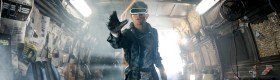
    #183 Ready Player One 3D (2018)
    #184 Seoul Station (2016), aka Seoulyeok
    #185 The Most Unknown (2018)
    #186 Zorro (1975)
    #187 The Elephant Man (1980)
    Christopher Robin

    Zorro

    .


    • With 14 new films watched, August is the lowest month of 2018 so far.
    • Nonetheless, it beats the August average (previously 11.7, now 11.9). And though it falls short of the rolling average of the last 12 months (20.0), last August was even lower, so it still increases it (slightly) to 20.3. No such luck with my average for 2018 to date, though, which was previously 24.7 and is now 23.4.
    • But it’s only by recent standards that a total of 14 looks in any way poor. There’s no other year in which it would be the smallest month, and three years where it would’ve been the biggest. Plus, it would be an above-average tally for any month of the year except May, where it’d be bang on average. So, on an all-time scale, 14 is still good going.
    • In other good news, this month I passed 2017’s total to make 2018 my third best year ever. It will almost certainly reach second place next month. And I’d have to average just three films a month for the rest of the year for it not to become my best year ever. Well, let’s not jinx it…
    • It wasn’t a deliberate choice to watch A Quiet Place and The Quiet Earth back to back (though possibly a subconscious one, I guess). They’re the first (and second) films beginning with Q in this year’s viewing, and only the fifth and sixth in this blog’s lifetime.
    • And then I immediately followed those with a film beginning with “Z”, which would normally be quite rare (it was only my 13th ever “Z” film), but this year it really isn’t: it was my 7th this year alone, and by the end of the month I was up to my 9th.
    • While we’re on the topic, The Elephant Man is my first “E” film this year. It may be the most commonly used letter in the English language, but it’s a surprisingly rare one at the start of film titles.
    • This month’s Blindspot film: Alfred Hitchcock’s murderous thriller Strangers on a Train.
    • This month’s WDYMYHS film: the aforementioned The Elephant Man. Disappointed to discover it wasn’t David Lynch’s attempt at superheroes. (Not really.)


    The 39th Monthly Arbitrary Awards

    Favourite Film of the Month

    There are some well-regarded films in the list above, including a couple of Best Picture nominees, but nothing leaps out at me as a huge favourite — my short list for this award encompassed nine of the fourteen titles. On balance, I’m going to pick Christopher Robin. It’s definitely not the “best” film up there, but I love Pooh, and he’s on particularly good form in this film.

    Least Favourite Film of the Month

    There were no films I outright disliked this month, but two flicks battle it out for the title of least whelming — both starring zombies. I expected very little of Pride and Prejudice and Zombies, so I was surprised to find parts of it rather enjoyable. I still don’t think it was all it could’ve been, though. On the other end of the spectrum, there was a weight of expectation on a prequel to the magnificent Train to Busan, one which Seoul Station couldn’t live up to. It’s by no means a “bad film” though, and is certainly the best least-favourite film this year.

    Podcast of the Month
    Your mission, should you choose to accept it, is to listen to journalist Chris Hewitt chat with writer-director Christopher McQuarrie about Mission: Impossible – Fallout for 5 hours and 52 minutes on the two-part Empire Film Podcast Mission: Impossible – Fallout Spoiler Special. No, that’s not a typo: the interview (actually two interviews) lasts almost 6 hours. If that sounds like an OTT amount of time to discuss one film… well, I guess it would be for some. But McQuarrie is an intelligent, articulate, thoughtful, and honest interviewee, and the insights he shares about the process of making Fallout, a big-budget entertainment-focused summer blockbuster, are fascinating for die hard Mission fans, or, indeed, anyone interested in behind-the-scenes details of filmmaking. He gets pretty candid at times too. I guess Paramount okayed it, but it feels more revealing than you normally hear during a film’s press cycle — including what really went on during the saga of Henry Cavill’s moustache and the Justice League reshoots. (If you just want to hear that, it’s in the final 15 minutes of part one.)

    Best Swashing of Buckles of the Month
    Really, this is just an excuse to highlight the 1975 version of Zorro starring Alain Delon. It’s a Spaghetti Western cum swashbuckler, an actioner cum comedy, with very much the same kind of tone as Richard Lester’s Three Musketeers. It’s a lot of fun, and I think rather underrated. If you’re interested, it’s currently streaming on Amazon Prime in the UK (but not in the US, I’m afraid. Don’t know about elsewhere, or other providers).

    The Audience Award for Most-Viewed New Post of the Month
    Despite only appearing on Thursday, my 37th TV column stormed up the charts, taking under 36 hours to pass presumed victor Christopher Robin (which had two whole weeks to amass its hit count) to bag this month’s crown. I thought this would be due to referrals from IMDb seeking my Disenchantment review, but the stats show it’s more thanks to referrals seeking Magic for Humans. Well, there you go.


    Sadly, I fell slightly behind target with my Rewatchathon viewing this month. I only missed one, though, so that should be easily caught up.

    This month, by coincidence, they’re all spy thrillers in long-running series…

    #30 Skyfall (2012)
    #31 Mission: Impossible – Fallout (2018)
    #32 The Hunt for Red October (1990)

    The big news here is Mission: Impossible – Fallout, because it’s the first film I’ve seen twice at the cinema since Watchmen back in 2009. It’s a superb film that I would’ve considered seeing twice anyway, but it was sealed by getting the chance to see it in IMAX, where it did look incredible. (For the record, and for anyone who cares, it was only “LieMAX”, but still, looked great.) I would have quite liked the chance to see it in 3D too, especially as there doesn’t seem to be a Blu-ray release scheduled for that, but hey-ho.

    Much like Never Say Never Again last month, I only watched Skyfall because I happened to see it was on ITV2. This time I was flicking and came upon it a little way in. Normally I wouldn’t watch a film under those circumstances, but I had nothing better to do and it’s so good that I became engrossed, eventually watching it through to the end. So, technically, this isn’t a full viewing, but I did watch the vast majority of it. According to my records, I’ve only seen it twice before, the last time being five-and-a-half years ago in February 2013. Even though I’m counting this, I feel like I should do it again properly sometime soon.

    Finally, The Hunt for Red October is a film I remembered liking but, well, that’s about all I remembered. I’ve been meaning to re-watch it for many years, and I recently bought the Blu-ray so I could do just that — and, having checked my records, it turns out “recently” here means “three-and-a-half years ago”. I’m a lost cause, people… And I didn’t decide to finally get round to it because the latest reboot of the character came out yesterday. Well, not consciously, but I do keep seeing posters for the series around, and I have been quite looking forward to it, so that may have exerted a subconscious pull.


    So, August was quite a slow month, both in viewing and review-posting, because I was away from home for a fair chunk of time in the middle. I’d hoped to catch up some on my ludicrous review backlog during that time, but that didn’t happen. Not even a little bit. And the reason I’m mentioning this now, in the “next month” section, is that the rest of my year is shaping up to be pretty busy with non-film stuff too, which is likely to mean a continued reduction in viewing and blog-writing. Only time will tell just how that pans out.

    The Past Month on TV #37

    Another later-than-usual TV review, because my TV viewing was affected by the same stuff that’s seen my post count plummet this month, as well as kept this month’s film numbers down (more on that on Saturday). Consequently, I waited until I’d actually watched enough TV to make this post somewhat worthwhile…

    Although, despite what I said in last month’s “next month”, I still haven’t watched Lost in Space. Maybe next month (but don’t count on it).

    Disenchantment  Season 1
    DisenchantmentThe first new series from The Simpsons creator Matt Groening in almost 20 years, Disenchantment is a riff on the fantasy genre. It follows the misadventures of Princess Bean of Dreamland, a rebellious sort who prefers to sneak out of the castle and get drunk in the pub than… well, do anything else. In the first episode, she and we are introduced to her personal demon, Luci, and Elfo, an elf who has left his happy-clappy kingdom to explore the misery of the wider world. This trio form the heart of the show, though naturally there’s a wider ensemble to help fuel storylines.

    You may’ve heard the series has come in for a bit of a drubbing from critics, which I’m not sure is wholly fair. It’s not the most consistently funny show, with background gags sometimes providing bigger laughs than the main stories or situations, but it raises chuckles with decent regularity. It’s also not the most original concoction on TV, with some familiar characters and relationships, just grafted onto a fantasy setting. Although at least it has the good sense to create its own fantasy world, rather than being a direct spoof of, say, a certain other show that has brought the genre widespread attention. Whether it’s set in a fully-realised world or one the writers are creating on the fly, I’m not sure, but there’s a lot of room left to explore.

    But even if it’s not hilarious or groundbreaking, the first season builds up a nice little rhythm as it goes along. The weakest episodes are undoubtedly the first few, which are somewhat swamped under setup. After a few standalone stories in the middle — which vary in quality from some of the season’s best instalments to, well, not — things begin to come together for a highly serialised run at the end, which finds a use for many disparate bits from those standalone episodes, and all culminates in a cliffhanger. Fortunately, Netflix’s original commission was for twice as many episodes as are in this first run, so we’re guaranteed a second batch. This serialisation works better for a streaming show than completely standalone episodes, although Disenchantment thankfully doesn’t lose sight of being consumable in episode-sized bites.

    So, while it may take most of the season to truly warm to the characters and for the series to find its groove, it does get there, and suggests brighter things in the future. Whether it will ever attain the cult following enjoyed by Groening’s other series is arguably a long-shot (can lightning strike thrice?), but it has potential.

    Hang Ups  Series 1 Episodes 1-3
    Hang UpsLoosely based on the US series Web Therapy, this new sitcom stars Stephen Mangan as Richard Pitt, a therapist offering his services over the internet. The filming style (each client only appears for a few minutes per episode, popping up now and again throughout the series, always via webcam) allowed them to attract a rather phenomenal supporting cast, including the likes of David Bradley, Charles Dance, Celia Imrie, Richard E. Grant, and David Tennant. The way each episode pingpongs around the various clients and Richard’s many, many personal problems (his marriage, his kids, his parents, his siblings, his bank balance) makes for a whip-crack pace that has pros and cons — each episode seems to disappear in a flash, having at once both dashed through some plot and also gone nowhere. Partly this is the result of an abundance of characters — some of the clients are basically one-off sketches, which is fine, but the regulars’ stories can only advance in small increments. I’m left wondering if it might’ve actually worked better with less going on. Still, the quality cast means characters do get rounded out speedily, and when it works it can be pretty funny.

    Also watched…
  • The Comedy Lineup Season 1 Episodes 2,5,8 — Netflix’s series of 15-minute standup sets from up-and-coming comics. Naturally, that means the quality is varied. I only watched a semi-random sampling, and some were very good and some were pretty weak. A new batch of episodes is released tomorrow.
  • Magic for Humans Season 1 Episodes 1-3 — I love a good magic show, and this Netflix series is definitely a contender. Magician Justin Willman’s cheeky-chappy persona may grate with some viewers, but his tricks — a mix of hip variations on old standards and wonder-inducing new stunts — are dazzlingly effective.
  • Mark Kermode’s Secrets of Cinema Episodes 3-5 — So good (see my review from last month) that they’ve decided to keep it on iPlayer for a whole year. No word on a second series, as far as I’m aware, but fingers crossed.

    Things to Catch Up On
    BodyguardThis month, I have mostly been missing Bodyguard, the new BBC One thriller from Line of Duty creator Jed Mercurio that premiered with a two-day double-bill last weekend. It seemed to go down well, based on the ratings and what I saw on Twitter (while avoiding spoilers!) As usual, I intend to wait until the whole series has aired (or most of it, at least) and then whisk through the lot.

    Next month… everyone’s least favourite Marvel Netflix show returns. But there’s a new showrunner and a lower episode count, so fingers crossed Iron Fist feels worth the 10-hour investment this time.

  • The Mission: Obviously Possible Monthly Update for July 2018

    Dun dun dun-dun-dundun, dun-dun-dundun, dun-dun-dundun, dun-dun… duh-duh-duuun… duh-duh-duuun… duh-duh-duuun… duhdun!

    It just makes you want to go jump out of a plane or something, doesn’t it? Sadly, I think I’d be less Tom Cruise, more James Corden.


    #146 Batman Ninja (2018)
    #147 Muppet Treasure Island (1996)
    #148 Blade of the Immortal (2017), aka Mugen no jûnin
    #149 Red Sparrow (2018)
    #150 True Romance (1993)
    #151 RoboCop (2014)
    #152 Rocky IV (1985)
    #152a Rocky VI (1986), aka Rock’y
    #153 What Ever Happened to Baby Jane? (1962)
    #154 Cash on Demand (1961)
    #155 Despicable Me 2 3D (2013)
    #156 Godzilla: City on the Edge of Battle (2018), aka Gojira: Kessen Kidō Zōshoku Toshi
    #157 Zatoichi and the Doomed Man (1965), aka Zatôichi sakate-giri
    #158 Free Enterprise (1998)
    #158a Friends, Romans and Leo (1917)
    #158b Little Red Riding Hood (1917)
    #158c Quaint Provincetown (1917)
    #158d Microscopic Pond Life (1915)
    #159 Kidnapped (1917)
    #160 Iron Monkey (1993), aka Siu nin Wong Fei Hung chi: Tit ma lau
    #161 Superman III (1983)
    #162 The Navigator: A Medieval Odyssey (1988)
    #163 The Day the Earth Stood Still (2008)
    #164 Mission: Impossible – Fallout (2018)
    #165 Full Metal Jacket (1987)
    #166 Wind River (2017)
    #167 The LEGO Ninjago Movie 3D (2017)
    #168 Body of Lies (2008)
    #169 I Am Sartana, Your Angel of Death (1969), aka Sono Sartana, il vostro becchino
    #170 The Garden of Words (2013), aka Koto no ha no niwa
    #171 The Secret in Their Eyes (2009), aka El secreto de sus ojos
    #172 Paul (Extended Edition) (2011)
    #173 The Way of the Gun (2000)
    Muppet Treasure Island

    Free Enterprise

    The Navigator

    Mission: Impossible - Fallout

    Full Metal Jacket

    .


    Firstly, as usual, stats and numbers…

    • With 28 new feature films watched, July kept up 2018’s run of supersize months — in fact, it’s not only the third best month of the year, but also the fourth best of all time.
    • It’s my 50th consecutive month with 10+ films. It’s also my 6th consecutive month with 20+ films, extending that record-breaking run. It leaves just November and December as the only months that have never reached 20+ films.
    • It’s by far my highest July ever, the previous best being last year’s 17, and is so far beyond the monthly average of 8.1 that it’s dragged it up almost two whole films to 9.9.
    • Continuing with averages, it also surpasses the rolling average of the last 12 months (previously 19.1, now exactly 20) and the average for 2018 to date (previously 24.2, now 24.7).
    • On the 17th I reached the landmark of being 100 films ahead of target. That’s the first time I’ve been 100 ahead since the end of 2015, when I was there for all of three days (29th-31st December) — and that was the only other time I’ve been 100 ahead. As it stands, I end the month a whopping 115 films ahead of where I ‘should’ be by this point.
    • Less auspiciously, this month my backlog of unreviewed films also surpassed 100 titles for the first time. Eesh.
    • Back to brighter news: as I continue to keep track of dates on which I’ve never seen a film (see the last bullet point in Viewing Notes here for background on that), this month I watched films on both the 16th and 19th to reduce the remaining list by a third. Still to come this year: September 2nd and December 22nd.

    Now for something actually about the films themselves…

    • This month’s Blindspot film: plugging a gap in my viewing of both Quentin Tarantino’s and Tony Scott’s filmographies, the Tarantino-written Scott-directed True Romance, which plays exactly like a movie written by Quentin Tarantino and directed by Tony Scott.
    • This month’s WDYMYHS film: plugging a gap in my viewing of Stanley Kubrick’s filmography, as I tend to do about once a year, Full Metal Jacket, which was one of my favourite Kubricks.
    • Somewhat relatedly: Argentinian Oscar-winning thriller The Secret in Their Eyes was a strong contender for one of those must-watch lists this year, but didn’t make it for reasons I forget. I sort of figured it’d be on a list next year. Not anymore, obviously.
    • Finally, earlier this week I posted my Train to Busan review semi-randomly (it was the last review left from 2017 and I wanted those done), only to later discover its UK TV premiere is this Friday. The “likes to make reviews tie into things” part of my brain was not impressed.


    The 38th Monthly Arbitrary Awards

    Favourite Film of the Month
    Tom Cruise learnt to fly a helicopter, performed 106 skydives, and broke his ankle just to entertain us. And by golly, it worked. Some favourites are not a choice — this just is Mission: Impossible – Fallout.

    Least Favourite Film of the Month
    There were a few mediocre options to choose between here, though. While there were definite flaws in certain unnecessary remakes and sequels among this month’s viewing (have a scan through the list above and I’m sure you can pick out the films I mean), the closest any film came to the cardinal sin of boring me was Godzilla: City on the Edge of Battle.

    Most Played Soundtrack of the Month
    As much as I love the Mission: Impossible music (and, having now listened to the soundtrack in full, Lorne Balfe’s score for Fallout is better than I gave it credit for in my review), the soundtrack I’ve most often had on loop this month is Muppet Treasure Island, which has an array of superbly piratical songs (including a scene-stealing turn from Tim Curry), as well as a proto-Pirates of the Caribbean score from Hans Zimmer.

    Most Impressive Spy of the Month
    Oh sure, Ethan Hunt can do all those amazing physical feats, but can he be a pasty white guy wandering around Iraq looking for terrorists and somehow not stand out like a sore thumb to the locals, hm? No, that’s apparently Leo’s special skill as Roger Ferris in Body of Lies.

    The Audience Award for Most-Viewed New Post of the Month
    I reviewed two new releases this month: direct-to-Netflix anime sequel Godzilla: City on the Edge of Battle, and highly anticipated cinematic blockbuster Mission: Impossible – Fallout. Guess which review got the most hits. Yes, as you’ve probably correctly predicted from the way I’m making this point, it was Godzilla: City on the Edge of Battle. Well, I can tell you exactly why that happened: my most-viewed posts are always ones that get a lot of referrals from IMDb, and, despite submitting my Fallout review as soon as I published it on Thursday morning, for some reason they didn’t add it until Monday afternoon, after the pre-release and opening weekend interest had passed. It ended up coming third, behind a very different spy movie, Red Sparrow.


    After a concerted effort, this month I finally finished publishing reviews of my 2017 viewing. Now I’ve just got all those 2018 ones to catch up…


    This month I am mainly rewatching Films That Precede Sequels That Are In Cinemas Now.

    Well, I say “mainly” — from a UK perspective, technically it only applies to two of these…

    #25 Galaxy Quest (1999)
    #26 Never Say Never Again (1983)
    #27 The Incredibles (2004)
    #28 Mission: Impossible – Rogue Nation (2015)
    #29 Ant-Man 3D (2015)

    I’ve been meaning to watch Never Say Never Again, er, again for yonks — I last saw it as a kid and, really, didn’t remember it very well. I happened to catch it starting one night on ITV4 HD and thought, well, why not now? Turns out, it’s not all that bad. I mean, it’s not great, but it was a passably entertaining off-brand Bond film. There are probably some Roger Moore films I’d rank below it — if it counted for such rankings, which it doesn’t. I’ll give it the “Guide To” treatment at some point.

    I bought (and last watched) the special edition DVD of The Incredibles when it first came out in 2005, but I’ve never upgraded it because Disney have given it short shrift over here: first an extras-starved Blu-ray, now no UHD release even scheduled. It was long overdue that I revisit the film (as I said, it’s been 13 years), especially with the sequel coming out (in July here, hence why I wasn’t wittering about this last month), but I didn’t want to watch it in SD. I ended up stumbling across a UHD copy by… “other means”. So, yeah: screw you, Disney — I can’t say I feel too guilty about freely acquiring a film I’ve already bought and they’ve not bothered to treat right on this side of the pond since DVD.

    Anyway, it’s a truly exceptional film — I don’t know why it’s taken me so long to rewatch it, and I wish I had more often. It’s certainly in my top four Pixar movies, alongside the Toy Story trilogy. Plus, I definitely made the right call skipping SD: it looks fantastic in higher definition; almost too good, the crispness showing up the age of the CG animation. Whether there’s an appreciable difference between its HD and UHD versions, I couldn’t say. Based on the comparisons at Caps-a-holic, there’s a slight difference in colour and sometimes in very, very fine detail, but the regular Blu-ray seems to hold its own.

    Finally, Mission: Impossible – Rogue Nation. It’s clearly the best of the first five Missions. Obviously, you’re allowed to have a different opinion. But you’d be incorrect. It’s basically a perfect spy/action movie, and anyone who tries to say otherwise is just wrong.


    I suppose summer, with all its picnics and barbecues and whatnot, is the most appropriate time to release a movie about an ant and a wasp…