
Travel through time and space, into dreams and memories, and along miniature railways in this month’s TV review…

Doctor Who Series 11 Episodes 1-2
 The 37th season of Doctor Who begins with the show’s biggest soft-reboot since at least 2010; arguably, since 2005; arguably, ever. With a new showrunner comes a new broom, and so we have a new Doctor, a new TARDIS, a new set of companions — sorry, they’re “friends” now — new locations, new monsters, and a new style (thanks to a raft of behind-the-scenes changes, including a new effects company, swish new cameras and lenses, and a new aspect ratio). It’s the perfect jumping-on point… and it worked, with the premiere achieving the show’s highest ratings for a decade; or longer, depending how you count it.
Oh, and the Doctor’s a woman now, too. “It’ll kill the show,” cried a vocal minority. Hahaha, nope!
But what of Jodie Whittaker, anyway? As with any new Doctor, I feel she needs a little time to find her feet — something that lies in the writing as much as the performance. There are some lines which would seem more at home in the mouths of David Tennant or Matt Smith, which Whittaker gamely tackles but don’t quite feel natural. But at other times the material and her performance click in perfect synchronicity, and we can see the promise that lies within. Hopefully as the writers become more familiar with her mannerisms, what works and what doesn’t for this particular incarnation, then it’ll all become smoother. There’s no reason to doubt she’s up to the task.
Some question the new man in charge of running the show, though. Chris Chibnall’s TV record is… patchy. For every Broadchurch series one there’s a Broadchurch series two; for every Broadchurch series three there’s a Torchwood series one; and so on. He acquits himself decently with this opening pair of episodes. The first, The Woman Who Fell to Earth, may owe an obvious debt to Predator with its alien-hunter storyline, but Who has always liberally borrowed from other places and made the material its own.
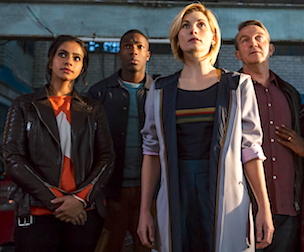 Indeed, even as it’s open-armed and newbie-friendly, Chibnall’s era already seems as Who-literate as you’d expect from such a long-time fan (somewhat (in)famously, as a teenager in the ’80s Chibnall appeared on TV criticising the then production team). His sense of what Who should be is at once indebted to the modern era (in particular the years of Russell T Davies, who I suspect may’ve been something of a mentor to Chibnall at one point) and also seeks to reintegrate elements long absent. For example, there’s the expanded TARDIS team, which calls to mind that of the series’ very first group of travellers; though whereas 1963 gave us a teenage girl and two middle-aged teachers, 2018 offers two teenagers and one middle-aged bloke. Such are the changing times. And for dedicated Whovians, the plot of episode two, The Ghost Monument, also had an air of early Hartnell serials, with its episodic trek across a danger-filled alien world. It was a brisk, entertaining 50 minutes, but stop and think about it too much and the cracks begin to show (read Andrew Ellard’s tweetnotes to see how it could’ve been polished up, for example).
Still, two episodes into a new era is no point at which to make generalisations about it (despite what some people have been trying). This is a reasonably promising start, though: there’s a good cast in place, and a clear sense of purpose — this feels like a production team making the version of the show they want on screen, not one rushing headlong to get out anything so long as it meets the broadcast deadline (something that afflicted both RTD’s and Steven Moffat’s eras at times). Only the weeks ahead can really tell how consistently they’ve achieved this. Personally, I’m more excited for each new episode to come around than I have been for some time.
Maniac
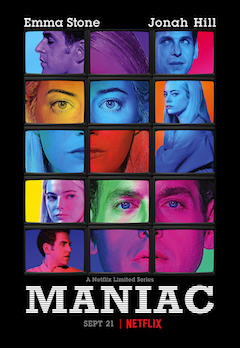 Netflix continue to blur the line between movies and TV with this limited series starring Oscar winner Emma Stone and Oscar nominee Jonah Hill, co-created and directed by Cary “director of the next Bond film” Fukunaga. Well, I mean, it’s a line that other TV producers have blurred plenty in the past — movie stars on TV is far from a new thing at this point, and there’s no doubting this is a TV series rather than a movie (it’s 6½ hours long, for one thing) — but, still. And they bend the rules of TV, too, with individual episodes running everywhere from 26 to 47 minutes. (Does that matter when Netflix’s release-it-all-at-once strategy means you choose how much to watch at any one time? Maybe not. But if you’re the kind to still watch one episode at a time, a word to the wise: I recommend double-billing the ultra-short should-be-one-episode pair of episodes 7 and 8.)
Anyway, Hill stars as the paranoid and delusional son of a business magnate who enrols in a drug trial, where he meets Stone’s addict in search of a fix. The trial is a new method for treating past trauma, something both of them have plenty of; and when the AI that’s a vital part of the procedure malfunctions, the pair find themselves in each other’s dreams and fantasies. It’s kind of like Inception made by someone with a kookier imagination than Christopher Nolan.
In fact, an even better point of reference would be X-Men-adjacent TV series Legion: it has the same preoccupation with mental health, with mysterious possibly helpful / possibly evil institutions, with can’t-trust-reality trippiness, with retro-futuristic design… It’s certainly a heavily stylised series, which is half the charm. The other half is all the dreamworld stuff, which takes a few episodes to rock up but is worth the wait. And the other half — because this is the kind of show that would definitely have three halves — is the chemistry between Stone and Hill, which is unexpected but palpable.
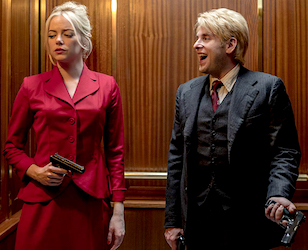 A significant amount of the series’ offbeat likability is down to idiosyncratic direction by Fukunaga, I suspect — the way he’s shepherded the visual creation of this world, the leftfield performance choices across the cast, and so on — but Emma Stone is definitely the MVP. While the aforementioned chemistry between her and Hill is important, and a lot of the rest of the cast get to excel at being quirky and funny, it’s Stone who really brings heart and emotion to the piece, making it more than just a zany fantasy.
Maniac throws you in at the deep end, with a first instalment that’s densely packed with information and alternate-world building, which it races past and through, sometimes with two or three things going on at once, making it feel a bit like hard work. But, really, that’s all incidental detail. Once you settle into it, an inventive and kooky journey awaits. How much it all adds up to is debatable — though, for the characters, it definitely reaches a worthwhile place — but it’s the kind of trip where the journey’s worth at least as much as the destination.
The Great Model Railway Challenge Series 1 Episodes 1-2

Long-time readers of this column with exceptionally good memories may remember that I once watched two episodes of Shed of the Year merely because one episode featured a Doctor Who-themed shed and another featured a cinema-themed shed (I’m still jealous of the latter, and you should be too — see photos at the aforementioned link). Well, here we have another show that wouldn’t normally be up my street… but episode one was all cinema-themed builds, and episode two featured a Doctor Who-themed build.
As for the programme itself, well, the format follows the template established by Bake Off and since copied ad infinitum for almost every hobby TV producers can think of: a pair of affable, pun-delivering hosts; a mixed-gender pair of expert judges; well-practiced amateur contestants, who compete in a series of tasks and challenges over a period of three days — in this case, to build model railways. It comes across as being as nerdy a hobby as you’d think (and with one team choosing to do the Who themed setup, it’s like nerd²), but I don’t mean that as a criticism — the stuff they produce is, at its best, astonishing and a lot of fun. I think I’m going to end up watching the rest of the series.
The Not-So-Immortal Iron Fist
 Having just last month written about how improved Iron Fist was and how I was actually looking forward to season three, Netflix went and cancelled it last weekend. That’s the first of their Marvel shows they’ve outright cancelled (it doesn’t look like The Defenders is coming back, but that was technically always a one-off miniseries anyway). There are lots of options for Iron Fist’s future, however: could be they’re planning to team up some of the characters into a new show; could be it moves to Disney’s forthcoming streaming service, which is set to have other MCU-related series. I figure the latter is unlikely — it’s tarnished goods now — but it would seem a shame to not pay off the second season’s cliffhangers/teases somewhere, somehow.
Things to Catch Up On
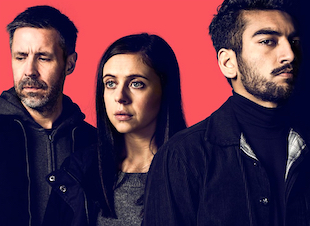 This month, I have mostly been missing Informer, BBC One’s new thriller. Well, it only started on Tuesday, so that’s fair enough, right? I guess I’ll save it up and see how it goes down — I’ve managed to avoid wasting time on a few initially-promising-but-ultimately-poorly-received series with this method; though, equally, it led to Radio Times spoiling Bodyguard for me, so you take your chances… And as the lack of review may’ve told you, I’ve yet to start Killing Eve. With a bunch of stuff popping onto Netflix over the coming weeks (see below), it’ll be lucky to make next month’s column either.
Next month… after a 2½-year wait (which has included seven seasons of other Marvel/Netflix shows), it’s finally time to give the Devil his due — that being, a third season.
Plus! Netflix’s spooky Riverdale spinoff, Chilling Adventures of Sabrina, and more new Who.




 Favourite Film of the Month















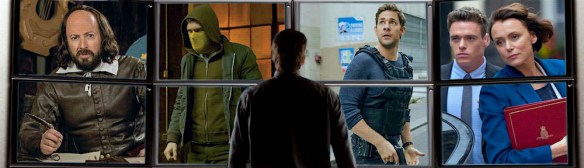


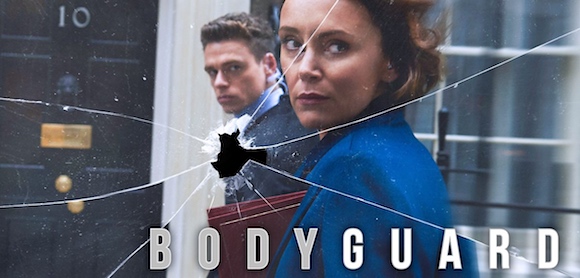
 Some have criticised the series for being OTT, implausible, or having too many plot holes. Well, individual mileage will vary on that. It’s not a slice-of-life drama, after all — the larger-scaled storytelling is a genre thing, not an inherent flaw. It’s no more implausible than hundreds of other thriller TV series and movies, just perhaps not the kind we make much in the UK anymore. I’m always wary of accusations of plot holes — it’s a term that gets thrown around too liberally nowadays by, frankly, people who either don’t know what they’re on about or have a failure of imagination (“we didn’t see that happen on screen so how can it have happened” is, genuinely, the root of one prominent complaint about Bodyguard’s finale).
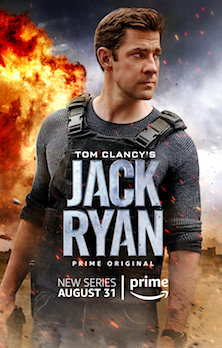 The latest reboot of Tom Clancy’s CIA hero sees him get the TV treatment, which is perhaps the best place for a hero who is more about solving problems with his mind than his gun, and a storytelling style that cuts between lots of concurrent plots before later revealing how they interrelate. That’s something this season has done rather well, incidentally — it’s an original story, taking Clancy’s characters but not directly adapting any of his novels, but they committed to trying to emulate his “mosaic storytelling style”. I’ve never read any Clancy, so I’m not an expert on this, but they seem to have evoked it well. (Considering there are multiple Ryan novels that haven’t been adapted, it seems a shame to abandon them entirely. Maybe in a future season.)
 An advantage the show has in this regard is its short length: with just eight episodes, the plot moves at a fair lick. It gets better as it goes on, too, as the various plot lines and characters begin to build and resonate with one another. Indeed, it’s something very rare, possibly unheard of, in direct-to-streaming series: one where I wished the season was a couple of episodes longer. Not that it’s rushed per se, but one or two subplots might’ve been even better with just a little more room to breathe; the main stories might’ve been even better with just a beat or two more in them. But in an era where streaming/prestige series are gaining a reputation for being bloated and not having enough story to fill their running time, maybe it’s better to leave people wanting more.
 The first season of Iron Fist attracted a lot of criticism, and, thankfully, the people behind the Marvel/Netflix series have listened. This second season doesn’t suddenly revamp the show into the best thing on TV or something, but it is a big improvement. They were hamstrung to an extent — as new showrunner M. Raven Metzner has said in interviews, you can’t reboot something like this: it has to keep to the continuity of what happened in season one, and in
  Ironically, while the MCU movies became renowned for their poor villains, that’s the area the Netflix series have always excelled in. This season the star turn comes from Alice Eve as a version of Daredevil villain Typhoid Mary, who (spoilers if you don’t know the character!) has dissociative identity disorder (DID), aka multiple personality disorder — so she can be both sweet, timid, kind Mary, and hard, stern, violent Walker. It’s the kind of role that’s a gift for any actor, of course, and Eve is fantastic. Similarly, Danny’s childhood friend Davos gets to combine many of the traits I’ve described in other characters: motivated by past events; complex relationships to other characters (not only Danny, but, as the end of season one teased, Joy). He’s the kind of villain whose goal is almost relatable; where you almost side with him over the hero.
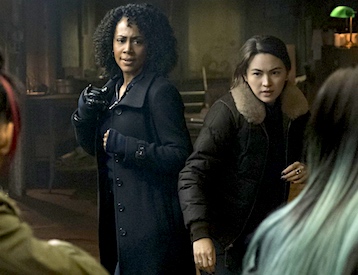 (via a whole load of fighting, natch) and then the second half to what happens after — not just the necessary “wind down” type aftermath stuff, but also a fair chunk of time into establishing where things will go in season three. Netflix hasn’t commissioned that yet, but I hope they do because I’m actually looking forward to it. Wonders will never cease.
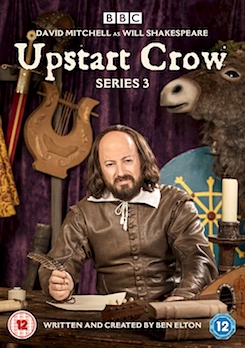 Ben Elton’s Shakespearean sitcom commences its third run as funny as ever, if not more so — I’ve always enjoyed it, but it feels particularly on point this series. I guess its on-the-nose satire of modern life by transposing it to Elizabethan society (e.g. Will’s woeful carriage journeys between London and Stratford are an unsubtle riff on the problems with British railways) won’t find favour with everyone, mainly because it seems a little easy and there’s a monologue about it pretty much every episode, but I still find that stuff amusing. When Elton applies the same strategy to other aspects of modern life, it’s similarly as rewarding/obvious, depending on your predilections. But there’s also a solid vein of mining Shakespeare’s own works for humour, the best one so far this series being an extended bit about how all of Will’s friends think Hamlet is a comedy due to its farcical plot. There’s also a running subplot about Will’s nemesis, Robert Greene, trying to discredit him by making people think he doesn’t write his own plays, which nicely pillories those ridiculous theories, and includes a guest appearance by Ben Miller doing an amusing riff on Mark Rylance.
 This month, I have mostly been missing Killing Eve, BBC America’s critically-acclaimed, Emmy-nominated thriller about an MI5 officer hunting for an assassin. It aired in the US back in April, and it feels like ever since I’ve been hearing praise for it flowing across the Atlantic. It finally made its way to this side of the pond this month (for an organisation with “BBC” in their name, BBC America productions do take their time getting over here). As I’ve only just (as in “as of last night”) finished making my way through 24 episodes of Jack Ryan, Iron Fist, and Bodyguard back-to-back, maybe that’ll be up next.










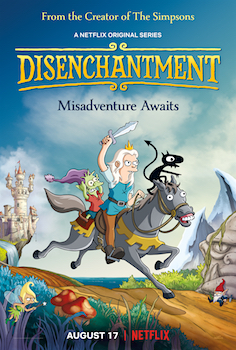 The first new series from The Simpsons creator Matt Groening in almost 20 years, Disenchantment is a riff on the fantasy genre. It follows the misadventures of Princess Bean of Dreamland, a rebellious sort who prefers to sneak out of the castle and get drunk in the pub than… well, do anything else. In the first episode, she and we are introduced to her personal demon, Luci, and Elfo, an elf who has left his happy-clappy kingdom to explore the misery of the wider world. This trio form the heart of the show, though naturally there’s a wider ensemble to help fuel storylines.
 Loosely based on the US series Web Therapy, this new sitcom stars Stephen Mangan as Richard Pitt, a therapist offering his services over the internet. The filming style (each client only appears for a few minutes per episode, popping up now and again throughout the series, always via webcam) allowed them to attract a rather phenomenal supporting cast, including the likes of David Bradley, Charles Dance, Celia Imrie, Richard E. Grant, and David Tennant. The way each episode pingpongs around the various clients and Richard’s many, many personal problems (his marriage, his kids, his parents, his siblings, his bank balance) makes for a whip-crack pace that has pros and cons — each episode seems to disappear in a flash, having at once both dashed through some plot and also gone nowhere. Partly this is the result of an abundance of characters — some of the clients are basically one-off sketches, which is fine, but the regulars’ stories can only advance in small increments. I’m left wondering if it might’ve actually worked better with less going on. Still, the quality cast means characters do get rounded out speedily, and when it works it can be pretty funny.
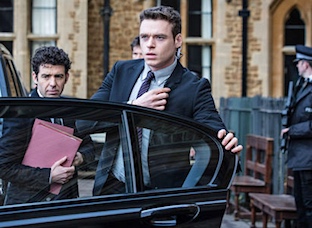 This month, I have mostly been missing Bodyguard, the new BBC One thriller from Line of Duty creator Jed Mercurio that premiered with a two-day double-bill last weekend. It seemed to go down well, based on the ratings and what I saw on Twitter (while avoiding spoilers!) As usual, I intend to wait until the whole series has aired (or most of it, at least) and then whisk through the lot.






















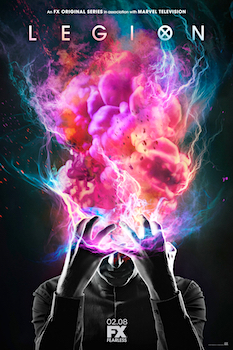 The first live-action X-Men TV series is only tangentially connected to either the movies (there are a couple of vague nods) or even the original comic books (apparently the title character is the only thing taken from them), but instead creator Noah Hawley (the man behind the Fargo TV series) has been allowed free rein to do as he pleases. Turns out that’s a massive mindfuck; a series that’s focused on atmosphere over narrative coherence, full of crazy visuals and abstruse plotting. If you’re thinking, “that sounds a bit Lynchian,” then yes, this is probably the nearest thing we’ll ever get to a David Lynch version of the X-Men.
 Mark Kermode is our guide for this BBC Four documentary series that seeks to expose the inner workings of movie genres and what makes them so effective. Co-written by Kermode and encyclopaedically knowledgeable movie guru Kim Newman, the series certainly has the chops to take on such a task. Focusing on one genre per episode, it makes an interesting choice to start with romcoms — a massively and enduringly popular type of movie, unquestionably, but one that’s often ignored by serious film analysis. That makes it the perfect choice for a series such as this, because, as the episode makes clear, the whole point of the genre is to do something very, very hard (produce a funny movie with loveable characters) and make it look easy (and when they succeed, that’s why it gets ignored!) As insightful as the first edition was, I preferred the second one, focusing on heist movies, though that’s purely because it’s a genre I’m more disposed toward.
 As I mentioned when I reviewed
  This month, I have mostly been missing Picnic at Hanging Rock, the new adaptation of Joan Lindsay’s novel (perhaps better known from Peter Weir’s 1975 film adaptation), which is currently halfway through airing here in the UK. It looks up my street, so I intend to binge it at some point. Also, Keeping Faith, the BBC Wales drama that was such a hit on iPlayer they’re finally giving it a run on BBC One proper. Oh, and the third series of Unforgotten is also partway through, and they’ve gone and revived The Bletchley Circle too. Who says summer is a quiet time for TV?
































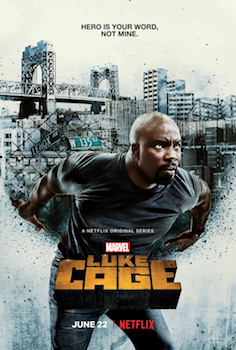 The ninth season of the MCU on Netflix takes us back to Harlem for the continuing adventures of the eponymous bulletproof black man. It’s hard to imagine a more timely superhero for America (maybe if he was an immigrant too), not that the series’ is actually all that concerned with such issues, aside from passing nods and references. Instead, it’s more of a gangster crime drama: the still-standing
 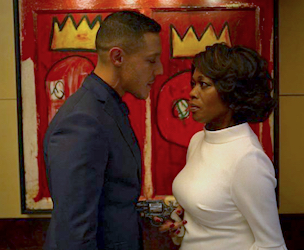 Mike Colter remains a likeable lead, but, again, it’s a villain who steals the show: as Mariah, the brilliant Alfre Woodard is perhaps the best thing about the whole series. Her performance is consistently fantastic, selling every twist and turn of character the writers throw at her. The season is as much about what events do to her as it is about Luke. She isn’t entirely alone, though: there are plenty of great performances, and scenes to showcase them, throughout the season. Occasionally there are some really bloody terrible ones though, like the time detective Misty Knight and her captain argue loudly about a shared secret while they’re in a room full of other cops. Is that bad writing, bad acting, bad direction, or all of the above?
 The flip side to all that is that this interconnectedness will perhaps be comic book fans’ favourite thing about the show — the way it casually references other series, or suddenly brings their characters in for a guest spot, is just like how comic books operate. It’s pretty constant too: barely an episode goes by without a significant reference to or cameo appearance by someone from another Marvel/Netflix show; and these aren’t all mere Easter eggs, but sometimes quite important or vital pieces of plot or character development.
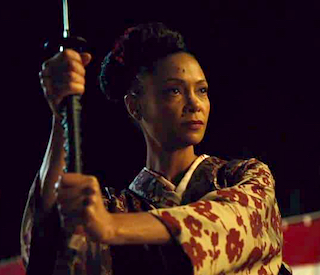
 And so Westworld’s sophomore run rides into the sunset, and I think it’s left behind more questions than answers.
 Exhibit A is the “Hale was Dolores all along” revelation. It’s a neat twist, almost up to season one levels, were it not undermined by the season’s own structure: Hale hasn’t been Dolores all along, and the muddled timelines make it hard to recall how many scenes we’ve had with “Halelores” (as the writers apparently dubbed her). In fact, one of the ways they hid her in plain sight was to limit her screen time: apparently she only popped up in episodes three and seven. Those scenes are littered with
  This month, I have mostly been missing Preacher’s third season, which started this week. Well, I only watched
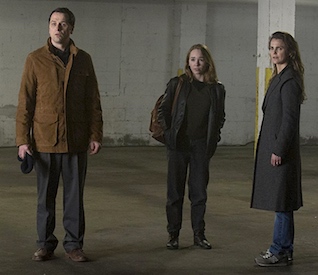
 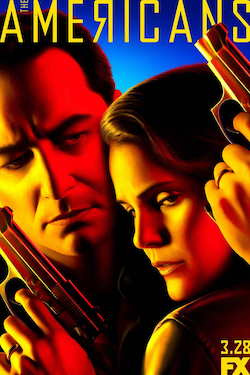 That song was released in 1987, the same year as the final season of The Americans is set. The show has typically avoided featuring well-known music in favour of cult favourites and obscurities, but R.E.M.’s classic would’ve been an appropriate number to hear during one of the series’ trademark music montages in the finale. (That said, it did contain both Dire Straits and U2, so they weren’t above using big hits.) Maybe it would’ve been a bit on the nose, but it certainly was applicable: it was the end of the world as the characters knew it, and so too for fans, as six incredible seasons came to a final end. But do we feel fine? That depends how you define “fine”. The show will be missed terribly, but goddamn if it didn’t stick the landing to cement itself as one of the greatest TV series ever made.
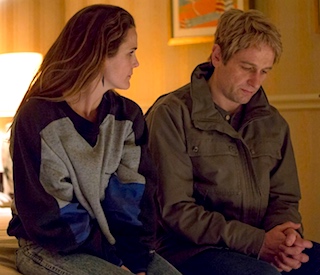 given texture or sometimes affected by the relationships, whereas by this point the relative importance and impact seems reversed. I guess you could still enjoy it as “just a spy show”, but I don’t think you’d want to — the stuff you’re invested in has shifted. That was always the programme’s genius, of course: it’s not about spies who happen to be married, it’s about marriage through the prism of people who are spies.
 As a commenter on
  I wrote
 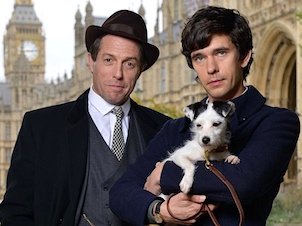 This month, I have mostly been missing A Very English Scandal, the Russell T Davies-penned drama about the real-life case of a ’60s politician and his secret homosexual lover. It seems to have gone down exceptionally well, and anything by RTD is always worth watching. Other than that, it feels like there’s a bunch of stuff on streaming I’ve been meaning to get round to and still haven’t. That list would keep us here all day, though.
 100Films.co.uk