
Once again it was another busy festive period on the tellybox, and here’s what I thought of what I watched.

Doctor Who Resolution
 Now, that’s more like it! After the damp squib of alleged-finale The Battle of [Mashes Hand on Keyboard], this New Year’s Day special does a much better job of putting a capstone on series 11. Despite its status as a separate “special” episode, it’s hard to deny that it’s actually part of the last series (despite what BBC Worldwide would have us believe, with their cash-grab move of leaving the episode out of the series box set, which isn’t even released for another fortnight): Ryan’s dad finally turns up (after being mentioned multiple times during the main series), while the primary storyline does a more subtle and effective job of mirroring series premiere The Woman Who Fell to Earth than Battle of Thingy-Wotsit did by just having a returning villain.
Resolution has a returning villain too, of course: the Daleks! Or, rather, one sole Dalek. Like 2005 episode Dalek, Resolution seeks to make a single Dalek a world-threatening force, and largely does a bang-up job. As has been thoroughly demonstrated by now, current showrunner Chris Chibnall isn’t half the writer that Russell T Davies or Steven Moffat are (and he only proves this harder by trying to emulate their styles so often), so Resolution doesn’t have as much freshness or innovation as some Dalek tales from Davies’ and Moffat’s eras. But, saying that, the Dalek ‘riding’ a human via some kind of icky telepathic link is a new idea, which makes for some effective horror moments, especially given the creepy cephalopod-influenced design of the creature. There’s plenty of exciting running about too, making this the most blockbuster-like version of Who we’ve yet seen from Chibnall’s era.
It still wasn’t perfect (as glad as I was to see Ryan’s dad turn up, the lengthy heart-to-heart scenes crippled the pace, and his inevitable redemption was narratively unearned; plus, Yaz continues to get shafted with “generic companion” duties), but overall it was a fun treat for Christmas New Year’s Day. More episodes with this kind of ambition when the series returns in 2020, please!
The ABC Murders
 Once upon a time it seemed implausible that anyone would ever try to play Poirot ever again, given how iconically (and thoroughly) David Suchet had embodied the Belgian detective during the 25-year series in which he starred. But I suppose it was inevitable that it would happen someday, and so following Branagh’s go at the end of last year, this year ends with another pretender to the throne: John Malkovich. Where Branagh stuck to tradition, with a flamboyant and fastidious embodiment of the character that seemed in-keeping with how Agatha Christie wrote him, Malkovich and regular TV-Christie scribe Sarah Phelps (she’s written all of the BBC’s new adaptations to date) have gone more revisionist. This Poirot is quiet, unassuming, ageing, almost embarrassed to be butting into the police investigation, especially as they would rather he pushed off, and he lives in a 1930s where fascism is ascendent and foreigners are despised, so he feels compelled to hide his Belgian roots as much as possible. It all feels psychologically plausible (and the mirroring of Brexit Britain is obvious), but it’s also a big set of changes to take in one go, which understandably angered some fans. I confess, I’ve never read a Poirot book, but I was a fan of the Suchet series. Nonetheless, I enjoyed this take on the character as an alternative — it may not be faithful, but it is believable.
The same could be said of the plot. Poirot and/or Christie are best remembered for country house-type murder mysteries, with a bunch of upper-class suspects in a confined location, who Poirot interviews one by one before bringing them all together to explain what happened. This was the format that Branagh used to reassuring effect in his film (and, presumably, will continue to use in his next one, if my memory of its structure serves me right). The ABC Murders doesn’t go that way, however, with Poirot on the hunt for a killer who taunts him via letters. The suspect pool is limited not by confined location, but by how sophisticated the viewer wants to be at guessing — the structure is that of a howcatchem rather than a whodunit, as we witness the murderer going about his deeds while Poirot attempts to find him out. But this is Christie, so there’s a twist in the tail. Look, I’m trying not to spoil it for anyone who’s not seen it yet, but everyone I was watching with figured early on that (last spoiler warning!) the guy who was Obviously The Murderer was not the murderer, and so it turned into the usual guessing game of “which recognisable guest star did it?” Well, at least one aspect of this was reassuringly familiar, then.
Watership Down
 The BBC and Netflix teamed up for this £30 million CG animated adaption of Richard Adams’ children’s novel, perhaps most (in)famous for its 1978 film adaptation that is said to have traumatised all who saw it (I never have). I guess most of that money went on the all-star cast (seriously, the number of well-known names is mad — far too many to list here, so you can check out this list if you want), because it certainly doesn’t seem to have been spent on the animation. Frankly, much of the series looks like an unfinished animatic; the stuff you sometimes see on animated movies’ DVD release as deleted scenes or work-in-progress versions. And yet, there are occasional flashes of polish: look closely at the rabbits’ fur in many scenes and you’ll see high levels of detail.
Cheap production values are not the be-all-and-end-all, though — such things can be easily overlooked if there’s a good story or characters. But Watership Down’s animation is so poor that it scuppers that, too. Most of the characters are visually indistinguishable, made worse when there are so many of them to get to know, and very little screen time is invested in delineating them. It’s not even something you get used to or work out for yourself — the longer the series went on, the more confusing it became to follow who each rabbit was and what was meant to be happening to them. It’s frustrating and distancing, getting in the way of you caring about the characters or the story, which literally ruins the entire production. We stuck with all four hours of it because of a bloody-minded “we’ve started so we’ll finish” attitude. I’d recommend not even starting it.
Not Going Out Ding Dong Merrily on Live
 Normally I’d fold this into the comedy roundup (see below), but I enjoyed it so much I’m singling it out. As the title implies, this was a live edition of the long-running sitcom. What inspired that, I don’t know, but it paid off with the series’ best episode for years. The storyline didn’t necessitate the live-broadcast format in the same way as 2018’s other live comedy special, Inside No.9, but writer-star Lee Mack built in various sequences to push what was possible live. And, naturally, some things went wrong — golden opportunities for a quick-thinking comic like Mack, who got to throw in plenty of improvisations and fourth-wall breaking. It may not be sophisticated, but it was funny. Indeed, I enjoyed it so much that I watched it twice within 24 hours.
Comedy roundup
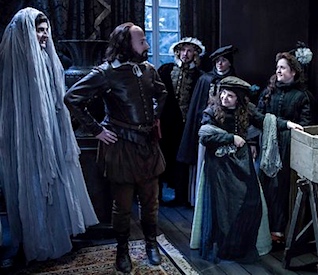 Also tickling my funny bone this season were a new Upstart Crow Christmas special, given a prime Christmas Day slot. It riffed off A Christmas Carol, which was unfortunate because I saw rather too many version of that this year (see below for another). I can’t say Crow’s take was particularly special, but I’m fond of the sitcom anyway so another episode is always welcome. The night before that (Christmas Eve, for those not keeping up), BBC One had one-off comedy-drama Click & Collect, with Stephen Merchant as a dad who must travel to the other end of the country to collect that year’s most-wanted toy for his daughter, accompanied by his irritatingly over-friendly neighbour. It’s the kind of fluff that would feel a bit too daft most of the time, but hits the right light-entertainment note at Christmas. A bit more cutting edge was Goodness Gracious Me: 20 Years Innit!, marking the 20th anniversary of the groundbreaking British-Asian sketch show with a special that used some of the series’ funniest sketches as examples to discuss what made the show so important. It was a subtly clever way to be both “greatest hits” clip show and retrospective documentary at once. Sadly, the repeat of an overlong old Christmas special that followed wasn’t quite as vintage. And, as I’m rounding things up, there were also seasonal editions of panel shows Mock the Week (the usual clips and outtakes), Have I Got News for You (more compiled clips), and Insert Name Here (actually a new edition! I’m fond of it and was happy to see back on our screens). Several others I’m yet to catch up on (Would I Lie to You, The Imitation Game), though I did see both new episodes of Mrs Brown’s Boys. I know I “should” hate it, but the Christmas Day one, at least, made me laugh.
Things to Catch Up On
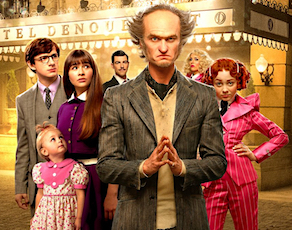 This Christmas, I have mostly been missing A Series of Unfortunate Events season three — the final one! Okay, it only came out yesterday, but I was with family and couldn’t watch it (ugh!) Not that I’d want to rush through it, anyway. By the time you’re reading this I’ll have made a start, and it’ll be reviewed next month. The same is true of Luther season four, which also started yesterday and which I’ll watch sometime later.
Next month… look away, if you can: it’s the final series of Unfortunate Events!


 Favourite Film of the Month





















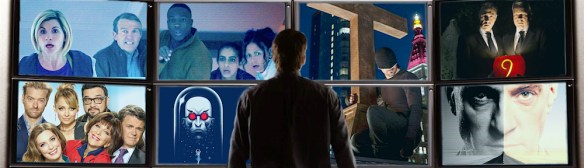
 The most recent season of Doctor Who went out, not with a bang, but with a whimper, in perhaps the most underwhelming “finale” the show has ever done. It wasn’t really a dramatic and exciting culmination of this year’s run of episodes, which is what a true “finale” is. Rather, it was just the last episode shown before the season… stopped. Fortunately, before that were two more episodes that proved this new era’s best stuff comes from its guest writers rather than its showrunner.
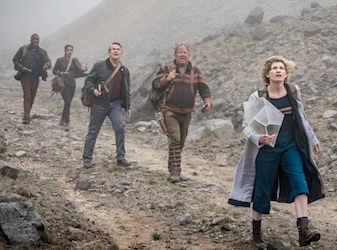 Typically for showrunner Chris Chibnall, it was a half-thought-through tale, with regular logic gaps and narrative dead ends, and none of the impact you expect from a season-ender. Kinder viewers may say that’s because there’s a New Year’s Day special imminent which is the real finale, but I think that’s just being optimistic. Certainly, the BBC haven’t seen fit to include the special in the season box set (even though it’s released a fortnight after the special airs), which I’m sure is partly a shameless cash grab, but also indicates its separate status.
 Whereas
  One day I’m going to watch all of Poirot from the start, but I happened to see these few episodes this month. They’re from the series’ early days (obviously), when episodes were an hour long and based on short stories (as opposed to the feature-length novel adaptations they did later). What’s remarkable is how different they are, structurally and tonally, from those later episodes, with which I’m more familiar. The feature-length ones each feel like a standalone movie, whereas these early episodes do feel like a TV series, with “case of the week” plots. For example, there’s a regular recurring cast (alongside the titular detective there’s his sidekick Captain Hastings, his housekeeper Miss Lemon, and trusty Inspector Japp), who all appear every week and each get some kind of subplot, even if it’s not tied to the main storyline — in one episode, while the other three are away solving a jewel theft, Miss Lemon has to hunt for her missing keys. And that’s another thing: there’s not always a murder. And there’s not always a pile of suspects, either — none of these episodes feature the famous “gather all the suspects in one room and explain what happened”-style finale, so synonymous with the series. So, in many ways it feels quite strange, but still entertaining.
 This month, I have mostly been missing Death by Magic — not a high-profile show, maybe, but a new Netflix thing that seems up my street. Other than that, I’ve been conspicuously failing to get around to a bunch of “box sets” (I hate calling digital collections “box sets” — there’s no “box” involved) that I’ve been meaning to get to for varying amounts of time: The Little Drummer Girl, Killing Eve, The Haunting of Hill House, Lost in Space, the Netflix years of Black Mirror, Ash vs Evil Dead, Chilling Adventures of Sabrina (which even added a new Christmas episode), Riverdale, Mindhunter, Inside No.9… Not to mention everything that’s on my long-term back-burner, like Breaking Bad, The Wire, The Sopranos, The Shield, The X Files, things that don’t begin with a definitive article… There’s no doubt many more that are currently slipping my mind, anyway. With an abundance of Christmas specials incoming, I guess whichever series I dive into next will have to wait until January.

















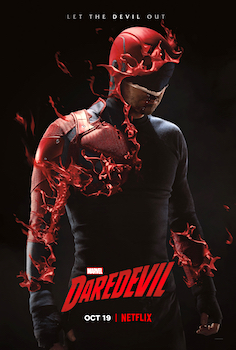 For the 11th season of Marvel Cinematic Universe TV shows on Netflix, we make a long-awaited return to the hero who started it all: the Man Without Fear… the Devil of Hell’s Kitchen… Matt Murdock, Attorney at Law… Daredevil.
 There’s a lot more to this season than that, though. New showrunner Erik Oleson has crafted a narrative for his 13 episodes that is better formed than most Marvel Netflix shows — heck, than most streaming series fullstop. It doesn’t seem to drag things out or go round in circles just to fill its episode count, but has a clear sense of pace and purpose. Okay, it’s still a streaming series — it still feels it can afford to devote entire episodes to things a network show might dash through in one sequence — but often that works to add depth. Spending a whole episode on Matt’s convalescence at the start of the season might seem indulgent, but it’s also important to his mindset for the rest of the season, which makes a big point of his morality, his religion, and his relationship with God — always a key aspect of the character, and foregrounded here without becoming objectionable to those of us with a less Catholicly inclined view of the world. The structural accomplishment really pays off in the final few episodes, too, with an array of surprising and game-changing twists and developments. My notes for later episodes were full of things like “shocking climax” and “oooh, twist!” and “ohhh shit!” At times Fisk feels genuinely unbeatable and you actually wonder how the heroes can win this one.
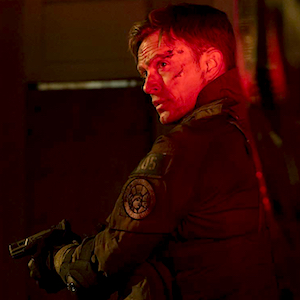 A good example of this is FBI Agent Benjamin Poindexter, who will turn out to be the villain Bullseye. Sorry if you think that’s a spoiler, but one of his first scenes shows off his mind-blowing marksmanship, so you ought to guess, really. In the comics, Bullseye has no backstory — he’s just a psychopathic killer — which is the kind of shit you can get away with if you’re being cartoonish. In the interests of psychological realism, however, Oleson wanted to give him one, to explore his origins, and they were basically free to do what they liked. They even spoke to psychiatrists and the like to make it genuinely realistic. I guess some may think this is unnecessary detail for what is still fundamentally a superhero-action show, but it has its rewards. It’s the same with giving the season a thematic weight to consider. According to Oleson, that was “fear” — how we’re all constrained by our fears and can’t be free until we face and overcome them. This applies to every character, hero and villain alike. Well, it’s a particularly pertinent choice for Daredevil, considering his sobriquet of “the man without fear”.
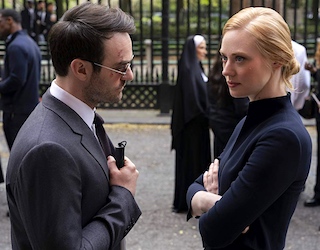 well-told story shouldn’t have to bear, and one that could have been easily remedied.” With Punisher season two on the way it’s possible this apparent plot hole could still be explained and/or retconned (whether they’ll bother is another matter, although Karen was a major character in Punisher season one so they ought to at least reference it), but it’s a shame it went unexplained in Daredevil itself.
 I let this post slip a week, so there are five episodes of Doctor Who to look back over. First up, the new team’s first historical adventure, Rosa (whew, it feels like more than a month since this aired!) I wrote
  Episode six and seven say “no”. Well, a bit — the actual villain did survive the first. I still hope they’re going somewhere with this, because otherwise it’s very sloppy. Anyway, episode six itself, Demons of the Punjab, was one of the highlights of the season. Like Rosa, it sees the Doctor and co going into history and facing up to the real issues of the day, with the aliens popping in to add some spice rather than properly drive the story — like Rosa, you can imagine a not-that-different version of this episode without them. Preventing the Doctor from interfering and being ultra-heroic is certainly a change of pace from the “heroic god” version of the character we’ve had since the 2005 revival, but it’s not an unheard of vision — again, it harks back to the Hartnell era.
 I’ve never watched Inside No. 9 before, though I’ve always meant to get round to it. For those equally in the dark, it’s a comedy-horror anthology series from writers Steve Pemberton and Reece Shearsmith, aka half of the League of Gentlemen, with each half-hour episode a self-contained tale. The reason I’ve jumped in here was because this was a live Halloween special. For some reason I’m always intrigued by live TV drama (I even watched episodes of Eastenders and Coronation Street just because they were going out live), and Inside No. 9’s standalone nature made just dropping in feasible. Anyway, the episode itself was a typically playful endeavour — many fans switched off halfway through, genuinely duped by one of the episode’s tricks. The episode also managed to genuinely integrate the fact it was live, roping in a news broadcast from another channel and having one of the characters tweet. That means it played better live than it would, say, on iPlayer (where
  I always wondered if this day would come. As many (though I would guess not all) viewers must know, Shakespeare’s son Hamnet died in childhood. Not exactly traditional material for a multi-camera sitcom, so I wondered if the series would just never go there; equally, it’s by Ben Elton, co-writer of the famously tragic final episode of Blackadder Goes Forth, a work of unequivocal genius. And so in the final episode of this series, Go On and I Will Follow, Upstart Crow does go there… eventually, in the final moments of an episode that’s mostly fluff about theatre awards. It makes for a somewhat bizarre ending. Hamnet was never much of a character in the show, so while his passing’s effect on the characters is obvious, it has little meaning to us viewers. Then there’s the dedication to him at the end, which just reads like a spoof. The only bit that truly worked for me was the final lines: read in solemn voiceover, a passage by Shakespeare himself about grief. Perhaps that’s fitting. Perhaps if the whole episode had been about it in some way, then it would’ve worked — it’s part of why that Blackadder finale is so effective: the whole episode is about going “over the top”, or trying to avoid it, and so the unity of plot and theme and character and historical fact builds to an emotional gut punch of an ending. But rather than do that, Hamnet’s untimely end is just one scene tacked onto the end of some achingly obvious satire about something inherently vacuous. Well, maybe that was Elton’s point, but I don’t think the contrast was sharply enough drawn if so. Without that consistency across the whole episode, the ending just feels… odd. Ah well, at least we know there’s definitely a Christmas special to look forward to.
 This month, I have mostly been missing The Little Drummer Girl, the BBC’s new John le Carré adaptation from the makers of The Night Manager, their last (and very successful) John le Carré adaptation. As regular readers may know, I have a proclivity for saving series like this up and watching them back-to-back over about a week once they’re done — truly, I am of the Netflix generation. Dammit. Anyway, I’m looking forward to it, so expect me to get right on it and review it next month.











 100Films.co.uk