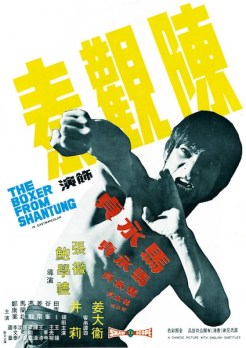
The Boxer from Shantung (1972)

aka Mǎ Yǒng Zhēn

2016 #56
Chang Cheh & Hsueh Li Pao | 125 mins | TV (HD) | 2.35:1 | Hong Kong / Mandarin | 18

The problem with watching so many Shaw Brothers movies so close together, as I have this year, is they begin to blur into one. There’s definitely a house style to the stories, the photography, the sets — everything, really. Even the particularly good ones can fail to lodge in the memory as discrete units.

That said, The Boxer from Shantung is a particularly good one. It tells the based-(loosely)-on-a-true-story tale of Ma Yongzhen (Chen Kuan-tai), a small-town guy labouring in Shanghai. After an encounter with gangster Tan Si (David Chiang), Ma decides that’s the life for him, and sets out to climb the crime ladder.

The Boxer from Shantung displays a greater focus on plot and character than is perhaps typical for a Shaw Bros movie, but doesn’t exactly stint on action either — the sequences are a little more spread out than usual, and it results in a just-over-two-hours runtime that isn’t typical for these films. Fortunately, it’s an engrossing enough story that this isn’t a problem, even if the narrative has a rise-and-fall kind of shape that is fairly familiar in the gangster genre.

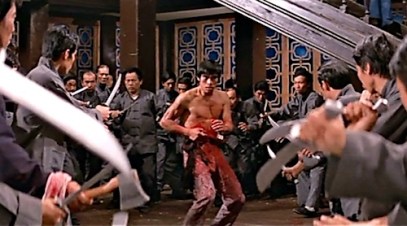
Nonetheless, where the film really comes to life is in its stonking climax — a massive brawl in which Ma kicks everyone’s ass for quarter of an hour, even with an axe embedded in his stomach. At the end of the day, tightly choreographed and expertly performed action sequences such as this are why we come to these movies; and, at the end of the day, The Boxer from Shantung doesn’t disappoint.

4 out of 5

A Boy and His Dog (1975)

2016 #19
L.Q. Jones | 90 mins | streaming | 2.35:1 | USA / English | 15 / R

Based on a novella by esteemed author Harlan Ellison, this is a low-budget sci-fi comedy-drama about a horny teenager (Don Johnson) and his telepathic dog (voiced by Tim McIntire) surviving in a post-apocalyptic wilderness, who are lured into a weird underground world. It’s a film fuelled by weirdness, left-field ideas, and a controversial tragicomic ending.

It’s a “not for everyone” kind of film that, I must confess, I found hard to properly engage with thanks to watching the poor quality, overly dark, windowboxed copy that used to be hosted on Amazon Prime Instant Video.

One to try again someday, maybe.

3 out of 5

The Godfather (1972)

100 Films’ 100 Favourites #39

An offer you can’t refuse.

Country: USA
Language: English, Italian & Latin
Runtime: 175 minutes
BBFC: X (cut, 1972) | 18 (1987) | 15 (2008)
MPAA: R

Original Release: 24th March 1972
UK Release: 18th August 1972
First Seen: DVD, c.2001

Stars
Marlon Brando (On the Waterfront, Apocalypse Now)
Al Pacino (Dog Day Afternoon, Scarface)
James Caan (Rollerball, Misery)
Robert Duvall (The Seven-Per-Cent Solution, Network)

Director
Francis Ford Coppola (The Godfather Part II, Apocalypse Now)

Screenwriters
Mario Puzo (Earthquake, Superman)
Francis Ford Coppola (The Great Gatsby, The Conversation)

Based on
The Godfather, a novel by Mario Puzo.

The Story
1945: Michael takes his girlfriend to his sister’s wedding, where she’s introduced to his family, including his father, Vito — the Don of New York’s Corleone crime family. Over the next decade, decisions made by the family lead to escalating gang war, and just as he thought he was out, Michael is pulled in to the family business.

Our Hero
A good college kid who dropped out to fight in World War 2, Michael Corleone has distanced himself from his family’s criminal activities… until a series of events find him drawn inescapably in.

Our Villain
According to the AFI, Michael is the 11th most iconic villain in film history. Of course, he winds up a Mafia Don, so he’s hardly a good guy in the traditional sense, but we’re surely on his side, at least throughout this film. Even in that context, I think you could argue the titular Godfather himself, Don Corleone, is the villain: his one son who tried to escape the life of crime is pulled into it after a string of poor choices and unfortunate incidents land the family in trouble.

Best Supporting Character
James Caan is Vito’s hot-headed eldest son, Sonny, heir apparent to the crime empire. Unfortunately, that very hot-headedness is liable to leave the position open…

Memorable Quote
“Luca Brasi sleeps with the fishes.” — Clemenza

Quote Most Likely To Be Used in Everyday Conversation
“I’m gonna make him an offer he can’t refuse.” — Don Corleone
(According to the AFI, this is the second best movie quote ever.)

Memorable Scene
The opening is the perfect scene-setter for the movie. On the day of his daughter’s wedding, Don Corleone hears requests for favours. One man asks for retribution against men who assaulted his daughter, which he has been denied by the legal system. Corleone questions why the man didn’t come straight to him, but ultimately grants the grovelling father his wish. Here, the film has established its pace, its tone, and themes of family, respect, and the important point that these criminals think of themselves as the honourable ones.

Write the Theme Tune…
Italian composer Nino Rota composed the majority of the soundtrack (Carmine Coppola contributed some music), including the famous main theme. Apparently a Paramount executive described Rota’s score as too “highbrow” and urged it be ditched, but Coppola won out. Considering the music’s subsequent fame and familiarity, I think we know who was right.

Technical Wizardry
The dark but amber-tinged cinematography by Gordon Willis is gorgeous. It’s stuff like this that high definition was made for.

Making of
Cinematographer Gordon Willis insisted that every shot represent a point of view, placing his camera around 4ft off the ground and keeping the angle flat. Coppola persuaded him to do a single aerial shot, in the scene when Don Corleone is gunned down, by telling Willis that the angle represented God’s perspective.

There’s a first time for everything…
According to IMDb, “Coppola turned in an initial director’s cut running 126 minutes. Paramount production chief Robert Evans rejected this version and demanded a longer cut with more scenes about the family. The final release version was nearly 50 minutes longer”. Studios love extended cuts for DVD these days, but choosing to take up more time in theatres? Not bloody likely.

Next time…
Debate rages as to whether sequel The Godfather Part II is an even better film. Either way, it was the first sequel to win Best Picture (and still one of only two). In 1977, Coppola edited the two films together in chronological order, along with some deleted scenes, to form The Godfather Saga miniseries, aka The Godfather: A Novel for Television. (Although it’s not been released on home media since VHS, it has been repeated on TV in HD, meaning copies can be… acquired.) Over a decade later, Coppola turned his duology into a trilogy with The Godfather Part III. Although generally reviled whenever it’s spoken about, it has a not-bad 7.6 on IMDb and was also nominated for Best Picture, as well as six other Oscars. (Part III was later added to the chronological cut to make The Godfather Trilogy: 1901-1980.)

Awards
3 Oscars (Picture, Actor (Marlon Brando), Adapted Screenplay)
8 Oscar nominations (Supporting Actor (James Caan, Robert Duvall, and Al Pacino), Director, Costume Design, Sound, Editing, Score)
1 BAFTA (Music)
4 BAFTA nominations (Actor (Marlon Brando), Supporting Actor (Robert Duvall), Costume Design, Most Promising Newcomer to Leading Film Roles (Al Pacino))

What the Critics Said
“It seems that the first question everyone asks about The Godfather is concerned with Marlon Brando’s interpretation of the title role. That is the way the movie has been programmed and promoted: Brando, Brando, Brando, and more Brando. The word from advance hush-hush screenings was wow all caps and exclamation point. […] So to answer belatedly the first question everyone asks about The Godfather: Brando gives an excellent performance as Don Vito Corleone [however,] though Brando’s star presence dominates every scene in which he appears, the part itself is relatively small, and there are other people who are equally good with considerably less strain, among them the extraordinarily versatile James Caan as the hot-headed, ill-fated Sonny Corleone, Richard Castellano as the jovially gruesome Clemenza, and Robert Duvall as Don Vito Corleone’s non-Italian consigliere, Tom Hagen.” — Tony Ortega, The Village Voice

What One Single Critic Said
“I don’t see how any gifted actor could have done less than Brando does here. His resident power, his sheer innate force, has rarely seemed weaker. […] Al Pacino, as Brando’s heir, rattles around in a part too demanding for him. James Caan is OK as his older brother. The surprisingly rotten score by Nino Rota contains a quotation from “Manhattan Serenade” as a plane lands in Los Angeles. Francis Ford Coppola, the director and co-adapter (with Mario Puzo), has saved all his limited ingenuity for the shootings and stranglings, which are among the most vicious I can remember on film. The print of the picture showed to the New York press had very washed-out colors.” — Stanley Kauffmann, New Republic (the one and only critical review on Rotten Tomatoes)

Score: 99%

What the Public Say
“Few people could have anticipated during the course of adapting Mario Puzo’s best-seller The Godfather to the big screen that it would become a lasting legacy in cinema. Forty-plus years have passed since its theatrical release, yet it stands the test of time as not only one of the greatest depictions of a crime family, but as one of the best films ever made. […] That lasting popularity isn’t a fluke; the Godfather films stand the test of time because these aren’t just movies, they’re cultural touchstones.” — Colin Biggs, Movie Mezzanine

Verdict

Has it really been almost eight years since the IMDb Top 250’s unshakeable #1 was usurped? The Godfather sat pretty at the top of that user-voted ranking for the best part of nine years, its balance between critically-acclaimed filmmaking finesse and quotable gangster machinations almost perfectly calibrated for that website’s prevailing demographic. (It’s since settled at #2, hardly a failure.) It’s not just IMDb users, though: The Godfather places 6th on the latest iteration of The 1,000 Greatest Films, the as-near-to-definitive-as-you-can-get poll-of-polls compilation. It’s for the same reasons, really: The Godfather combines thriller elements and striking violence with a strong understanding of character and a believable exploration of organised crime, a world as fascinating as it is morally repulsive, for a whole that is as artistically accomplished as it is palatable to the mainstream.

Sky Movies Select are showing the complete Godfather trilogy today from 4:30pm.

Next… you know the name, you know the number — it’s #40.

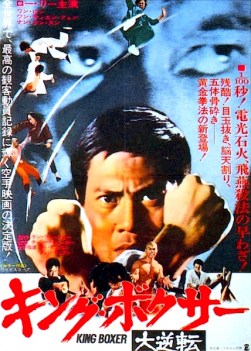
King Boxer (1972)

aka Five Fingers of Death / Tian xia di yi quan

2016 #12
Cheng Chang Ho | 98 mins | TV (HD) | 2.35:1 | Hong Kong / Mandarin | 15 / R

Released in the US as Five Fingers of Death, this popularised kung fu Stateside… before Enter the Dragon came along just a few months later and completely overshadowed it.

Viewed today, it’s a bit cheesy (which is par for the course, really), and does occasionally drag with the back and forth machinations of the rival schools. But there’s a good level of action (the primary reason to watch any kung fu movie worth its salt, surely), and a particularly stunning, casually inventive, multi-fight climax.

Also look out for “the Kill Bill sound effect” (actually from Ironside) and Evil Michael McIntyre.

4 out of 5

Film4’s Revenge of Martial Arts Gold season concludes tonight at 1:35am with The 8 Diagram Pole Fighter.

The Five Venoms (1978)

aka Five Deadly Venoms / Wu du / Mm Dook

2016 #9
Chang Cheh | 97 mins | streaming (HD) | 2.35:1 | Hong Kong / Mandarin | 18 / R

Some say The Five Venoms is one of the very best martial arts films ever made. Some say it’s the best. I’m afraid I have to disagree. Strongly.

It begins with a daft premise: a student is instructed to find five former pupils and a teacher, but he doesn’t know their names or where they went. All he knows is their fighting styles, which they will use in an emergency, and that the ex-teacher is rich. Presumably he therefore had to scour the entire country watching everyone fight until he stumbled on the right guys. Oh, and there’s a time limit because the pupils may go after the teacher’s money… though how the chap who’s setting this mission is supposed to know they haven’t already, I don’t know.

So the plot is a non-starter, but we don’t watch kung fu movies for the plot. Unfortunately, The Five Venoms seems to think we do, because action is actually in short supply. When a decent slab of it does arrive, in the form of a five-way fight for the climax, it’s somehow boring. Before then there’s bouts of torture and plain violence, and while the blood is as fake as ever, the style is cold and gruesome. The only really good bits come from the characters’ imagination: there’s the opening scene, with flashback demonstrations of everyone’s powers, in comic-book-gaudy colours; and later, the student teams up with one of the ex-pupils to plan and prepare, and as they practice we see the villains appear through their imagination.

I’m not sure what people see here to call it one of the greatest martial arts movies ever. The establishment of the Five Venoms and their styles, all of that mythology, seems to be a big thing for some people. I keep reading things like “the concept of the five Venom styles is simply amazing”, or that “the mythology alone is exquisite”, but I just don’t buy it. There’s nothing wrong with it — it’s a decent setup — but to call it a “mythology” is bordering on grandiose. And whether it’s a full-blown mythology or just a high-concept setup, either way it’s not that incredibly mind-blowing a concept.
The hype means that The Five Venoms is a disappointment — cheesy, convoluted, sometimes nonsensical, lacking in action, and, worst of all, often dull.

2 out of 5

The Five Venoms is on Film4 tonight at 11:10pm as part of their Revenge of Martial Arts Gold season.

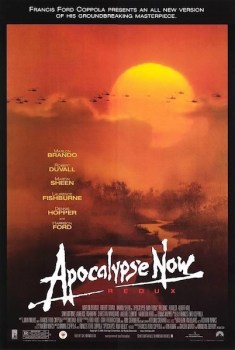
Apocalypse Now Redux (1979/2001)

100 Films’ 100 Favourites #3

Francis Ford Coppola presents an all new version of his groundbreaking masterpiece.

Original Title: Apocalypse Now (obviously)

Country: USA
Language: English, French & Vietnamese
Runtime: 202 minutes (theatrical/DVD) | 196 minutes (Blu-ray)*
BBFC: 15
MPAA: R

* This appears to be due to the Blu-ray removing the end credits, but the number of disc reviewers who haven’t even noticed the discrepancy is remarkable.

Original Release: 15th August 1979 (USA)
UK Release: 19th December 1979
Redux Release: 11th May 2001 (Cannes) | 23rd November 2001 (UK)
First Seen: DVD, c.2002

Stars
Martin Sheen (Badlands, The Departed)
Marlon Brando (A Streetcar Named Desire, The Godfather)
Robert Duvall (THX 1138, The Godfather)
Dennis Hopper (Easy Rider, Speed)

Director
Francis Ford Coppola (The Godfather, The Conversation)

Screenwriters
Francis Ford Coppola (Patton, The Godfather Part II)
John Milius (Conan the Barbarian, Red Dawn)

Based on
Heart of Darkness (loosely), a novella by Joseph Conrad.

The Story
In the middle of the Vietnam war, burnt out soldier Captain Willard is given a top-secret mission: locate US Army Colonel Kurtz, who’s gone renegade and is leading his own personal army in unauthorised attacks, and terminate his command. Travelling up the river on a Navy patrol boat, its crew unaware of Willard’s goal, they see snapshots of the war and the elements of human nature it exposes — the very horrors that drove Kurtz insane…

Our Hero
Martin Sheen is Captain Benjamin Willard — not exactly a hero, but certainly the narrator. Already mentally wracked by his experiences in Vietnam, he may not be the best person to send after another officer similarly mentally afflicted…

Our Villain
Marlon Brando — top billed, only on screen for minutes, and a nightmare to work with… but another performance for the ages as the rambling, insane, but insightful, Colonel Kurtz.

Best Supporting Character
A Golden Globe, a BAFTA, and an Oscar nomination rewarded Robert Duvall for his turn as the commander of a helicopter unit, Lt. Col. Kilgore. More than that, though, was true immortality in the form of the movie’s most famous quote: “I love the smell of napalm in the morning.”

Memorable Quote
Colonel Lucas: “When you find the Colonel, infiltrate his team by whatever means available and terminate the Colonel’s command.”
Willard: “Terminate the Colonel?”
General Corman: “He’s out there operating without any decent restraint, totally beyond the pale of any acceptable human conduct. And he is still in the field commanding troops.”
Civilian: “Terminate, with extreme prejudice.”

Memorable Scene
The sound of unseen helicopters circle. The Doors playing. A pretty forest… which explodes into flame, under the barrage of a napalm attack. One of the most iconic opening scenes.

Technical Wizardry
Apocalypse Now was one of the films that pioneered the creation of surround sound, now the industry standard. Nowhere is it better exemplified than in that opening scene, with the helicopters circling the room.

Making of
“My movie is not about Vietnam, my movie is Vietnam.” Apocalypse Now was a notoriously troubled shoot, for all kinds of reasons, from an uncooperative Brando, to Martin Sheen’s heart attack, to the cast and crew’s copious drug use… Originally scheduled to shoot for six weeks, it ended up filming for 16 months, and took nearly three years to edit.

Awards
The original version won 2 Oscars and 2 BAFTAs, and was nominated for 6 more Oscars and 7 more BAFTAs. In 2002, the Redux was nominated for 7 World Stunt Awards.

What the Critics Said
“this might be the most audience-friendly art-house film ever made, and that’s where the sheer majesty of Coppola’s daredevil balancing act comes into true focus. Coppola’s art is stripped of pretension; what lies on screen may as well be Coppola’s — and probably several other peoples’ — heart, laid bare for all to see, somehow expressed through arguably the most populist of all mediums. It may be messy, but it’s also vivaciously alive.” — Rob Humanick, Slant

Score: 93%

What the Public Say
“The most critically acclaimed movie of 2001 was made 22 years ago… The new material isn’t entirely necessary, and some may find it excessive… But Redux’s virtues far outweigh its flaws. Apocalypse Now in any version remains one of the richest, most extravagant moviegoing experiences of my life.” — Jeffrey Overstreet, Looking Closer

Verdict

The first (and, indeed, last) time I watched Apocalypse Now was shortly after the Redux version had been released, when Francis Ford Coppola was busy proclaiming it was the only version that would be made available ever again. That didn’t last, of course. Adding some 49 minutes of footage to the praised theatrical version, Redux divides viewers and critics on whether the extensions make a classic even better or just dilute it. If there’s a consensus, it’s that in either version this is a great movie. I’ve never got round to the original cut to compare for myself, so it’s the longer one that makes my list. My favourite quote about it comes from Danny Boyle: “It’s imperfect; which every film should be.”

#4 will be… the 13th.

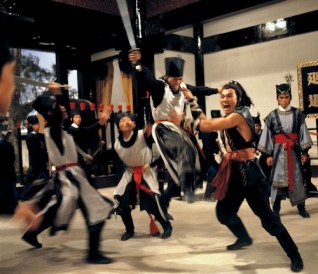
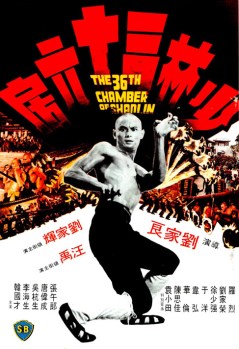
The 36th Chamber of Shaolin (1978)

aka Shao Lin san shi liu fang / Master Killer

2016 #6
Liu Chia-liang | 111 mins | streaming (HD) | 2.35:1 | Hong Kong / Mandarin | 15 / R

Widely regard as one of (if not the) greatest kung fu movies ever made, The 36th Chamber of Shaolin introduces us to San Te (Gordon Liu), a student whose hometown is oppressed by forces of the ruling Qing dynasty. He and his classmates join the underground resistance run by his teacher, only to wind up witnessing his friends and mentors be hunted, tortured, and killed. Faced with a similar fate, San Te escapes to the Shaolin Temple, widely known for being home to the best kung fu around. The temple’s monks refuse to teach martial arts to normal folk, nor help by joining the fight — they’re Buddhists, after all. Nonetheless, San Te manages to inveigle his way in to their company, and years of training begin.
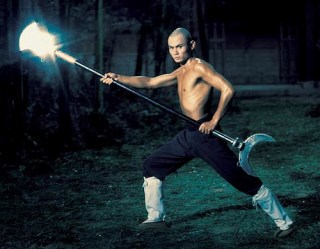
Said training — where San Te must progress through the Shaolin Temple’s 35 (not 36) chambers one by one — makes up the bulk of the film, though there are lengthy bookends dealing with the reason he goes there in the first place and what he later does with that training. If the notion of watching chamber after chamber after chamber (times 35) sounds dull, don’t worry, we only actually see ten of them, and several of those via an extended montage. The chambers take the form of challenges, which San Te must overcome by either puzzling them out or developing some kind of physical or mental acuity. Their content is varied and innovative, which makes them engrossing to watch even as they make the film episodic, but the nature of the challenges makes the movie different from the usual fight-after-fight-after-fight structure of kung fu flicks.

If it’s combat you want, though, never fear: everybody is kung fu fighting at regular intervals. Displays of physical skill and speed are de rigueur for these kind of films, but the combat here is as impressive as any. While the initial training takes the form of tangentially-related skills tests, San Te is eventually learning how to use weapons, and when he finally graduates from the 35th chamber he has to prove himself in combat, first against the temple’s justice, then when he returns to the outside world and seeks vengeance. Fights both with and without weapons are imaginatively choreographed and executed with the customary speed and precision.

Much as you won’t enjoy many a musical if you can’t accept people just bursting into song, you won’t enjoy many a kung fu movie if you can’t accept a story told primarily through back-to-back action sequences. The 36th Chamber of Shaolin is more-or-less that kind of movie, though the differing styles of the chambers’ challenges bring pleasing variety. Is it the greatest kung fu film of all time? I’m no expert, but it’s certainly inventive, masterfully performed, and suitably different from any such movie I’ve yet seen.

4 out of 5

The 36th Chamber of Shaolin is on Film4 tonight at 10:55pm. It kicks off a short season of martial arts movies — more details here.

Alien (1979)

100 Films’ 100 Favourites #2

In space, no one can hear you scream.

Country: USA & UK
Language: English
Runtime: 117 minutes | 116 minutes (director’s cut)
BBFC: X (1979) | 18 (1987) | 15 (director’s cut, 2003)
MPAA: R

Original Release: 25th May 1979 (USA)
UK Release: September 1979
First Seen: TV, c.2002

Stars
Tom Skerritt (Top Gun, Poison Ivy)
Sigourney Weaver (Ghostbusters, Galaxy Quest)
John Hurt (The Elephant Man, Nineteen Eighty-Four)
Ian Holm (Greystoke: The Legend of Tarzan, Lord of the Apes, The Lord of the Rings: The Fellowship of the Ring)

Director
Ridley Scott (Blade Runner, Prometheus)

Screenwriter
Dan O’Bannon (Dark Star, Total Recall)

Story by
Dan O’Bannon (see above)
Ronald Shusett (King Kong Lives, Total Recall)

The Story
The crew of the deep-space towing vessel Nostromo receive a distress call from an unexplored planet. Contractually obliged to respond, they find a derelict alien spaceship and a field of strange eggs. With one of the crew taken ill they return to their ship, but it soon becomes apparent something else has come with them…

Our Hero
Sigourney Weaver is second-billed as second-in-command Ellen Ripley, but it’s she who’s the voice of reason and, when ignored, the most capable to stand up to the alien threat.

Our Villain
The Alien, aka the Xenomorph, an ugly, dripping, phallic nightmare, that lurks in the shadows, strikes without warning, has the perfect defence system, and is nigh-on unbeatable.

Best Supporting Character
Ian Holm’s Ash is not all he appears to be… Holm made sacrifices for his art: he hates milk, but had to sit dribbling it from his mouth for take after take.

Memorable Quote
“I admire its purity. A survivor… unclouded by conscience, remorse, or delusions of morality.” — Ash

Memorable Scene
Dinner table. John Hurt not feeling well. You know the rest. And if you don’t, you don’t want me spoiling it for you.

Technical Wizardry
The Nostromo’s industrial-style production design is a world away from the slick, shiny spaceships of contemporary sci-fi like Star Trek. A lived-in sci-fi world wasn’t something new (Star Wars and the Millennium Falcon were two years earlier, for instance), but the notion of a spaceship that looks like a factory or an oil-rig or somesuch, and that is populated by the kind of people who would work in such an environment, continues to influence the genre today.

Truly Special Effect
The Alien, designed by H.R. Giger, built by Giger and Carlo Rambaldi, performed by Bolaji Badejo, is one of the most genuinely alien creatures the movies have ever generated. It’s terrifying, too, even after the initial disgust has been neutered by decades of over-exposure in increasingly-poor sequels and tie-ins.

Making of
The name of Weyland-Yutani, “the company” the crew work for, is actually “Weylan-Yutani”, as seen on monitors and Dallas’ beer can. It was changed to “Weyland-Yutani” for Aliens (and all subsequent films and media) because James Cameron thought it looked better with the D. It’s the little things, eh.

Next time…
Three direct sequels, two “vs Predator” spin-offs, a prequel (and a prequel-sequel), and a massive array of novels, comics, video games, and the rest. A new sequel is also in development.

Awards
1 Oscar (Visual Effects)
1 Oscar nomination (Art Direction-Set Decoration)
2 BAFTAs (Production Design, Sound Track)
5 BAFTA nominations (Supporting Actor (John Hurt), Film Music, Costume Design, Editing, Most Promising Newcomer to Leading Film Roles (Sigourney Weaver))
3 Saturn Awards (Science Fiction Film, Director, Supporting Actress (Veronica Cartwright))
4 Saturn nominations (Actress (Sigourney Weaver), Writing, Make-Up, Special Effects)
Won the Hugo for Best Dramatic Presentation.

What the Critics Said
“It’s tempting to describe the brilliantly staged scenes of horror and surprise but it would be a shame not to allow the film to reveal its own secrets. Enough to say that the tension is savage and you are held in suspense right up to the end frames.” — Ted Whitehead, The Spectator

Score: 97%

What the Public Say
“in some ways it doesn’t betray its age, and it does indeed largely still hold up, but in other ways its utterly unlike contemporary films. Its middle-aged cast, its slow, deliberate pace, the ‘real’ sets grounded in reality, how it leaves so many things unexplained — in these respects it’s obviously an older movie, and better for it.” — the ghost of 82

Elsewhere on 100 Films
I reviewed Ridley Scott’s 2003 Director’s Cut back in 2009, summarising that “to fans intimately familiar with the film, the number of trims (there are rather a lot apparently) and new scenes (just four) make a huge difference, but for a more casual viewer they don’t significantly change how it feels. That said… I’d call the original as the superior cut.”

Verdict

Ridley Scott’s “haunted house movie in space” is one of those works that an awful lot of what follows in the genre owes a debt to, from the production design to one of cinema’s most iconic heroines. “Iconic” is a good word for the film as a whole, be it the realisation of the creature or scenes like the chestburster. Quite beyond that, however, it’s a terrifying horror movie in its own right, where slowly-built tension gives way to proper scares. Being a great of one genre is an achievement, but to be great in two at the same time (horror and sci-fi, of course) is something else.

#3 is not about Vietnam… it is Vietnam.

A Clockwork Orange (1971)

2015 #152
Stanley Kubrick | 137 mins | Blu-ray | 1.66:1 | UK & USA / English | 18 / R

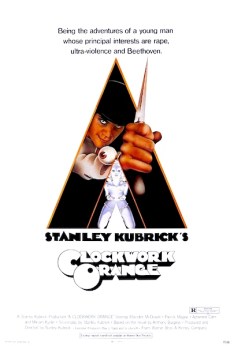
Yet more dystopian sci-fi! Who doesn’t love some dystopian sci-fi? Here we’re in the ’70s, though (makes a change from the ’80s), with writer-director Stanley Kubrick adapting Anthony Burgess’ novel into a film so controversially violent the director himself eventually banned it from release in the UK for decades. Almost 45 years on, it’s testament to the film’s power that it is still in parts shocking.
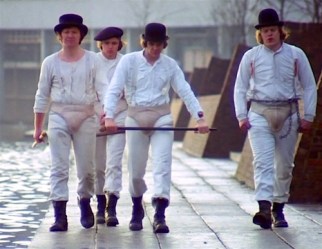
Set in a glum future Britain, the film follows eloquent juvenile delinquent Alex (Malcolm McDowell), whose violent acts eventually catch up with him when he’s imprisoned. Being the cocky little so-and-so that he is, he manages to get himself on a programme for rehabilitation and release… though that may not be all it’s cracked up to be.

The first half-hour or so of A Clockwork Orange is brilliant. I think there’s a reason this is the part that the majority of clips used when discussing the movie are lifted from, and it’s not just to do with spoilers: here is where the best imagery, and the most potent examinations of violence and the male group psyche, are to be found. It’s shocking and uncomfortable at times, funny and almost attractive at others (hence the perceived need for the ‘ban’), but the cumulative effect is precise and striking.

However, everything from Alex’s admission to prison onwards could do with tightening, in my view. It may be sacrilege to say this, but I think the film would benefit from having a good 15 to 20 minutes chopped out. All the prison bureaucracy stuff is funny, but is it relevant? “Relevance” isn’t the only deciding factor about what goes into a film, of course, but I feel like we’ve seen plenty of red-tape spoofing elsewhere. Maybe that’s just an unfortunate byproduct of the film’s age. Other parts just go on a bit too long for my taste — there’s barely a sequence after Alex’s arrest that I didn’t feel would benefit from getting a wriggle on. I don’t think this is me bringing a youth-of-today “everything must be fast cut” perspective to the film, I just found it needlessly languorous at times. Maybe I was missing a point.

McDowell’s performance is fantastic throughout. I’ve seen Alex referred to as a villain (not often, but by at least one person), which strikes me (and, I’m sure, many others) as remarkably reductionist and point-missing. He’s not a hero, certainly — a mistake I think some critics of the film made, in part because the use of voiceover invites us to identify with him, and I guess anyone other than the hero having a voiceover narration was fairly new 45 years ago (feel free to correct me on that point). But he’s not a villain, especially when he comes up against the terrifying forces of the establishment. McDowell’s performance, and Kubrick/Burgess’ storytelling, is thankfully more complex than that.

That continues right through to the ending, which is quite different in the novel and film — though I say this as someone who’s not read the book, so apologies if this is off base. Reportedly Burgess ends with Alex moving away from violence of his own free will, primarily because he’s grown up and grown out of it; the point basically being that all young men go through a violent phase (even if Alex’s is extreme) and then grow out of it. Kubrick ends on a much more ambiguous note… so ambiguous, I’m not really sure what it’s saying… or even what all the ambiguities actually are…

A Clockwork Orange remains a striking film, and not just because of the ultra-violence. It’s at its best early on, with the remainder not always working for me, but it’s a fascinating experience nonetheless.

4 out of 5

A Clockwork Orange was viewed as part of my What Do You Mean You Haven’t Seen…? 2015 project, which you can read more about here.

This review is part of the 100 Films Advent Calendar 2015. Read more here.

Murder by Death (1976)

2015 #120
Robert Moore | 91 mins | download | 1.85:1 | USA / English | PG / PG

A gaggle of famed detectives are summoned to a remote mansion to solve a murder in this detective spoof by playwright Neil Simon. The twist is, all the characters are spoofs of famous literary/film/TV ‘tecs. Also, that the murder hasn’t happened yet. And also, that the person inviting them is Truman Capote. Not “someone playing Truman Capote”, but “Truman Capote playing someone”.

A comedy where a bunch of people are invited to a remote mansion to solve a murder? Yes, it does sound an awful lot like Clue. Indeed, based on my reading, almost all modern assessments of the film seem to boil down to two straightforward alternatives: “it’s not as good as Clue” or “it’s better than Clue”. As it pre-dates Clue by almost a decade, maybe that shouldn’t be our only point of reference? Still, I guess the ’80s-ness and name-y cast of the later film has helped it gain more traction — it certainly seems to be on TV regularly, whereas I only learnt of Murder by Death as a footnote when reading up on the Thin Man series.

For what it’s worth, I think its quality is about level with Clue. Such appreciation may partly depend on one’s familiarity with the characters being spoofed, however: it’s a funny story in and of itself, but a fair dollop of the humour revolves around riffs on the personalities, quirks, and storytelling tropes of Nick & Nora Charles, Poirot, Miss Marple, Sam Spade, and Charlie Chan, whereas Clue requires, at most, that you know the icons from Cluedo.

I said Clue has a namier cast, but Murder by Death is no slouch, including Maggie Smith, David Niven, Peter Falk, and Alec Guinness as a blind butler, an affliction that’s mined for all its comedic value (and then some). They all give great comic performances, as does James Coco as the film’s version of Poirot. There are some neat send-ups of the genre — the literally-impossible mysteries and all that — as well as some good old-fashioned wordplay and silliness. The only downside is it loses its way a bit by the end. I suppose it doesn’t strictly need a satisfactory conclusion to the mystery, because it’s only a spoof ‘n’ all, but I feel like it would’ve benefitted from a stronger finale nonetheless.

However, it’s a consistently amusing film, and everyone involved seems to be having a whale of a time. It’s definitely worth seeking out for fans of detective fiction who don’t mind the genre being gently ribbed.

4 out of 5