Becoming Jane (2007)

2008 #91
Julian Jarrold | 115 mins | DVD | PG / PG

Becoming JaneDirector Julian Jarrold seems to have found his cinematic niche in “coming a bit late”. His Kinky Boots, while entertaining, was reminiscent of films like The Full Monty… except 8 years later; Becoming Jane rides the Pride & Prejudice bandwagon… except 18 months later; and his latest, the new Brideshead Revisited, had something of the Atonements about it… except 6 months later. At least his lead times have got shorter.

Perhaps Jarrold’s other inspiration here was Batman Begins. No, bear with me, for this is Austen Begins: Jane’s literary career has yet to start, but as the film progresses we see something of her personality taking shape — and plenty of the inspiration for her novels. Lord alone knows how factual any of it is, but I’m sure it must be a lot of fun for certain Austenites. On the other hand, purists might be less pleased with their idol being constantly lovelorn and indulging in (whisper it, children) snogging. For those with only the most cursory knowledge of Austen’s work, these might be the only things that stop them believing this is an adaptation of one of her novels; though, in truth, they’re probably not even that intrusive.

The big advantage to this being a somewhat Hollywoodised version of the story is the slew of English acting talent on display. Julie Walters, Maggie Smith and Ian Richardson are all present, in roles of varying sizes, plus the younger Anna Maxwell Martin (Bleak House) and Laurence Fox (son of Edward); not to mention James McAvoy, busy appearing in everything under the sun at the time. In the lead role, Anne Hathaway does a fine job, though there’s the inevitable question of “why not cast a Brit?” (to which one must assume the answer is, “for the sake of the US box office”). At least her accent is good.

Becoming Jane is a Jane Austen biopic treated as if it were a Jane Austen novel. In fact, so much is it embedded in the writing of Pride & Prejudice — and the notion that most of that was inspired by her own life — that it occasionally feels like another adaptation of it. This approach is a little uncomfortable in places, though probably makes sense considering the target market; and, by being so relatively lightweight, the resultant films seems to have faced less criticism from some Austenites than the similarly-timed TV biopic, Miss Austen Regrets. It’s for precisely this reason that the latter was a superior product, however: it may be darker and less uplifting — it ends with Austen’s death, rather than the start of her literary career — but it has a level of reflection that makes it more than Austen-Lite. Unlike this.

3 out of 5

Becoming Jane is on BBC Two today, Wednesday 31st December 2014, at 1:20pm.

(Originally posted on 27th January 2009.)
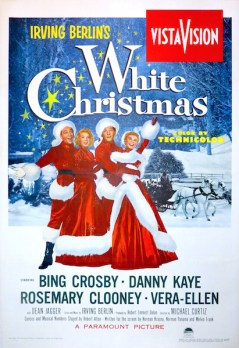
White Christmas (1954)

2008 #97
Michael Curtiz | 115 mins | DVD | U

White ChristmasWhite Christmas is surprisingly un-Christmassy. Yes, it’s set at the right time of year, and the plot concerns itself with do-gooding and charity and other such vaguely seasonal themes; but, crucially, there’s a distinct absence of snow (until the very end) and little else actually inspires much Christmas feeling.

The plot winds its way to a moving finale, but, baring a few memorable numbers — Sisters, for example; and, particularly, a rendition of it by the male leads — most of the path there is quite average. One wonders how much of its renown is actually based on the titular song.

3 out of 5

White Christmas is on Film4 today, Monday 24th November 2014, at 12:50pm.

Die Hard 2 (1990)

aka Die Hard 2: Die Harder

2008 #95
Renny Harlin | 118 mins | DVD | 18 / R

Die Hard 2Good guides to how to write always advise that your hero is only as good as the villain. This is one of the reasons Die Hard is such an endlessly enjoyable film — as well as a great high-concept setup, excellent action sequences, and amusing one-liners, Alan Rickman’s villain, Hans Gruber, is one of the best ever committed to celluloid. Dry witted and clearly more educated than his opponent, Bruce Willis’ John McClane, he’s nonetheless defeated by that everyman spanner-in-the-works. Yippee-kay-aye indeed.

So how do you top that? Well, not like this. The generic Traitor General character offered here isn’t a patch on Gruber, meaning the hero/nemesis relationship between him and McClane never kicks off in quite the same way. The final act even tries to introduce a new villain, probably aware that the first one wasn’t quite working, though it’s to little avail. Their final duel — on the wing of a moving plane — is exciting enough, but doesn’t pack the same punch as the first film’s verbal sparring.

Arguably the other main reason Die Hard worked so well — the confined office block setting — is also discarded, giving McClane a whole airport to run around. We have to be grateful that this isn’t just a straightforward rehash of the first film — probably the advantage of being adapted from an unrelated novel, 58 Minutes, rather than a committee considering how to recycle the same idea — but it doesn’t have the same brilliant simplicity. That said, the line acknowledging similarities between the scenarios is a highlight, and good use is made of McClane’s fame following the events of the first film.

Die Hard 2 is by no means a bad action film — there are several sequences that are above par for the genre, an acceptable degree of silliness, and the odd spectacular explosion too — but the unavoidable comparison to one of the genre’s all-time classics is to its detriment. If only the villain was someone like Gruber’s brother…

4 out of 5

(Originally posted on 25th January 2009.)

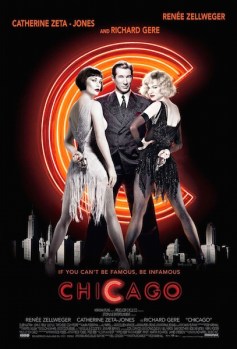
Chicago (2002)

2008 #96
Rob Marshall | 108 mins | DVD | 12 / PG-13

ChicagoI remember being distinctly unimpressed when Chicago took the Best Picture Oscar in 2003, especially as the alternatives included Gangs of New York and The Two Towers — not to mention Road to Perdition, an excellent film that was massively undervalued during award season.

In its favour are a number of memorable songs, all performed with impressive routines. On the downside, they’re all quite stagey in their choreography, though this suits the daydream-fantasy style in which they come about. In fact, the ability of film to make clear the distinction between ‘real life’ and fantasy means the film is far easier to follow than the stage version.

The story is passable enough, serving as a roadmap between the songs and offering the occasional bit of commentary/criticism on celebrity culture — it may be set in the ’20s and have been written in the ’70s, but the characters’ underhand tactics to keep their story on the front pages are as pertinent now as ever.

Five years on, Chicago isn’t as poor as expected — it manages to be consistently entertaining — but nor is it superior to the alternatives. For a current comparison, it’s only marginally better than if Mamma Mia were to trot round winning Best Picture gongs this year.

4 out of 5

The Blues Brothers (1980)

2008 #99
John Landis | 142 mins | DVD | 15 / R

The Blues BrothersCult comedy musical, with a more-than-healthy dose of the surreal, about two brothers on a mission from God, here watched in the extended DVD version (full details at IMDb). Maybe this is why it takes a while to get going — the first hour or so could do with a kick up the proverbial — and has a tendency to sprawl like an unruly first draft.
On the other hand, its insistence at being random, crazy, and incessantly silly throughout is beautifully anarchic. There’s an array of fabulous cameos — Ray Charles! Aretha Franklin! and Carrie Fisher, feeding the anarchy with her ludicrous attempts to kill one of the titular pair. While there were fewer songs than I’d expected, they’re all classics rewarded with infectiously fun performances. Then there’s the climactic car chase, which surely challenges many more serious examples for pure excitement value.

And any film which sees Neo-Nazis jump into a river to avoid being run over has to be good.

4 out of 5

The Blues Brothers is on ITV4 tonight, Friday 26th September 2014, at 11:35pm.

(Originally posted on 24th January 2009.)

Snakes on a Plane (2006)

2008 #94
David R. Ellis | 101 mins | DVD | 15 / R

Snakes on a PlaneYou don’t get much more high-concept than “snakes on a plane”, a mission statement of a title if ever there was one. It certainly captured the imagination of online geekdom, who knew everything they wanted just from those four words and famously launched a viral marketing campaign for a film they’d not seen. Ultimately, it’s for that reason it will be remembered, because without the evocative title and the reaction it provoked this would be forgotten quicker than Samuel L. Jackson can utter his Oedipal expletive-laden catchphrase.

The best thing one can say about Snakes… is that it lives up to its B-movie title. Once it gets going it throws lots of gory fun at the audience, like a snake in a microwave, or entirely gratuitous shots of people trampled in panic (which sounds distasteful, but in the context of the film is more amusingly squelchy). It even manages the horror movie’s obligatory gratuitous sex/nudity — courtesy of the Mile High Club, naturally. That’s not to mention the plot, in which a gang release snakes onto a plane (did you guess?) in order to kill an FBI-escorted witness. As assassination plans go, it may just be the barmiest ever, and delightfully so.

However, the plan is flawed — in storytelling terms at least — because snakes don’t actually do much. They drop from ceilings, they slither, they bite… and then you’re pretty much done. When the legless beasties eventually turn up it’s quite good… for a couple of minutes. But a couple of minutes do not a feature film make, so every length-inflating trick is whipped out to boost the running time. The first crime is an irritatingly long opening: a seemingly endless preamble reveals what crime the witness witnessed, why he’s being transported, and how villainous the villain is — but all the average audience member wants is to get on that plane!

But when they finally board there’s a series of establishing scenes to get through. There’s even a full version of the safety demonstration — no one likes the safety demo normally, never mind in a film! This bit at least serves to introduce an array of characters ready to be killed, but as few of their stories go anywhere most should have remained faceless victims. These scenes on the plane feel like the opening, and may have been less interminable if they weren’t preceded by all that needless preamble. It’s especially pointless because, by the time the plane inevitably lands, the makers seem to have forgotten they introduced a villain in the first place.

In between, those snake ideas (drop! slither! bite!) run their course sharpish, so the viewer is treated to an array of stock Plane Disaster Movie scenarios. An investigation on the ground! Something needs fixing in the hold! A non-pilot has to land the plane! Chopping 10 to 20 minutes wouldn’t hurt any — it should be short and efficient — or, instead, putting the same screen time to better use by bringing a resolution to the villain. Normally the plane landing would be a perfect point to end — you want snake-based slaughter, and then you want out — but after the persistence in setting other stories in motion those really ought to be finished.

Snakes on a Plane is as much of a B-movie as the title implies. This seems to be what disappointed some when it was finally released, yet at the same time is clearly the vibe the makers were going for all along. Perhaps a greater problem is that it still sounds like such a good — snakes released on a plane to kill someone? That’s utterly loopy! It should be crazy and great! But it’s treated with too much seriousness, as if the makers are struggling to convince us this is actually a plausible notion in the real world — which it patently isn’t.

Nowhere near bad enough for the infamous “so bad it’s good” classification, nor good enough to rise up on genuine merits, it is instead largely unremarkable though passably entertaining. Perhaps it should’ve been left as just a title.

3 out of 5

Channel 4 are premiering Snakes on a Plane tonight at 10pm (hence why it rises above the eight other still-unreviewed films from 2008 today).

(Originally posted on 17th January 2009.)

Swing Time (1936)

2008 #100
George Stevens | 99 mins | TV | U

Swing TimeSwing Time is, I’m told, widely hailed as the greatest of the Fred Astaire/Ginger Rogers pictures. The plot isn’t especially captivating, one of the stock variations on “boy meets girl” that still serve rom–coms to this day, but that’s not the main reason these films are so loved.

That, of course, is the song and (especially) dance numbers. I can’t say I recall any of the songs now, but the dances are suitably impressive. Particularly memorable is an early number where, after Astaire accidentally gets Rogers’ dance teacher character fired, he shows the proprietor how much she’s taught him in the last ten minutes, winning her job back. Trust me, that makes far more sense on screen than in that pathetic explanation. Elsewhere, Astaire blacks up for a dance to Bojangles of Harlem. These days one might wonder why he had to black up, or consider the concept faintly racist, but clearly it was acceptable for the time and in no way detracts from the skill on display.

One interesting note is some story similarities to Sideways — yes, Sideways, the recent Oscar-winning indie comedy about love and wine tasting. Whether Swing Time had any influence on that (made almost 70 years later), or it’s just a huge coincidence, I don’t know, but there are several reminiscent moments throughout the engaged-man-and-buddy-find-love-in-far-off-location-(then-accidentally-let-truth-slip) plot.

I haven’t seen enough Astaire/Rogers films to declare whether this is their best or not, though personally I preferred Top Hat. In the same way the plot of some action films doesn’t matter one iota so long as the fights are good, so the story here is irrelevant beside the quality of the dancing — and that, at least, is exemplary.

4 out of 5

(Originally posted on 9th January 2009.)

A final push…!

So today is the final day of 2008, and so the final day of this blog’s second year. And have I made it to 100?

Not yet.

A quick look at the coming soon page reveals I’m up to #97 — only three films to go, with 24 hours left. I didn’t think that would be the case: as little as 10 days ago I’d given up on making 100, thinking to hit even 90 would be an achievement. But with a bit of motivation I’ve nearly done it at the final hurdle (which I think is an incorrect reversed metaphor, or something).

December’s turned out to be pretty good throughout, actually. While I may’ve managed just 7.4 films a month (on average, obviously) in the year’s first 11 months, I’ve already watched 16 in the last 30 days — and that’ll be 19 if all goes well. If I could keep that up all year round I’d be closer to 250 Films in a Year! (Don’t worry, I’m not crazy — next year’s aim is still just 100.)

Additionally, this year’s In Retrospect and Full List (for last year’s see here and here) will now appear by 4th January, all being well, which gives me time to factor in the final few films.

24 hours, three films. Sounds easier than it is, I’m sure.

2008’s summary posts will be republished in November.

The Many Adventures of Winnie the Pooh (1977)

2008 #92
John Lounsbery & Wolfgang Reitherman | 71 mins | DVD | U / G

The Many Adventures of Winnie the PoohHaving finished 2007 with Piglet’s Big Movie, it feels somewhat appropriate to round off 2008 (almost) with Disney’s first Winnie-the-Pooh feature.

The Many Adventures… is actually compiled from three shorts made in 1966, 1968 and 1974, with some new linking material. I don’t know if these shorts were produced with any great expense, but there’s occasional evidence of what looks like cheap animation. It’s not that it’s not smooth or fluid, but rather the attentive viewer will often spot sketch marks around some lines, or flashes of other bits not properly erased. Perhaps it was deliberate, considering the sketchy style of the backgrounds, designed to evoke the original illustrations, but I sometimes found it distracting.

This is one relatively minor flaw in an otherwise brilliant adaptation, however. The film faithfully adapts several of the original stories, acknowledging its sources by frequently showing the action as illustrations within a copy of the book. This fourth-wall-breaking move may irritate some, but personally I loved seeing Pooh and co have to leap from page to page, or tipping the book sideways to free Tigger from a tree. Such moves seem tonally in keeping with A.A. Milne’s original stories and, even though some tales are abridged and some good ones left out, that spirit is always retained.

The characterisation is also spot on, producing an array of cute and loveable creations, none more so than Pooh himself. The gopher is an unnecessary addition, though the running joke about him not being in the book is very nicely done. And one can’t fail to mention the excellent songs, now as linked to the world of Pooh as anything from the original books — especially Tigger’s little tune, surely familiar to anyone who was a child in the last 30 years.

If some later Disney ventures have lost sight of the correct spirit for Pooh’s adventures, at least this original is a great adaptation. Bouncy, trouncy, flouncy, and, above all, fun fun fun fun fun.

5 out of 5

Wallace and Gromit in A Matter of Loaf and Death (2008)

2008 #88a
Nick Park | 29 mins | TV | PG

Wallace and Gromit are phenomenally popular, as proven this Christmas Day when their latest adventure became the most-watched programme on British TV for three years (and that was just the overnights — ratings will rise when official figures are released in a couple of weeks). Not only that, but the TV premiere of their big screen adventure also made the Christmas Day top ten, a not insignificant feat. Popularity does not necessarily mean quality, of course, and in this case such figures come on the back of three popular shorts and a successful feature film. They were all extremely good too and, luckily, A Matter of Loaf and Death doesn’t let the batch down. (I feel there should be a better baking pun there…)

As ever it’s packed with inventive humour, both visual and verbal, and Gromit remains one of the finest silent comedy characters ever created. The amount of emotion and story that can be conveyed with a lump of plasticine is tribute to the abilities of Park and his team of animators. The rest of the creation is top notch too, not just in terms of impressive craft on characters and sets, but also in the use of lighting and camera angles to evoke other films while not losing the series’ individuality. If anyone still thinks stop motion is about a locked-off camera at a flat angle they are sorely mistaken.

Film fans will also delight in a slew of movie references, from a poster for Citizen Canine to an Aliens-inspired climax, and numerous even subtler ones in between. This is a feast that will undoubtedly reward seconds — and more.

If there’s one problem it’s that it’s too short. I don’t mean that in the usual “I just want more” way, but literally that it could perhaps do with being longer. There’s easily a feature-length story here, meaning it feels a little abridged as a half-hour short. It’s not rushed, thankfully, just not played out as effectively as it could be with double the running time.

The last three Wallace & Gromit adventures have each won Park an Oscar (and the first only lost out to Park’s own Creature Comforts). Will this bring the series’ fourth? It would certainly be deserved.

5 out of 5