
Paul Provenza | 85 mins | TV | 18
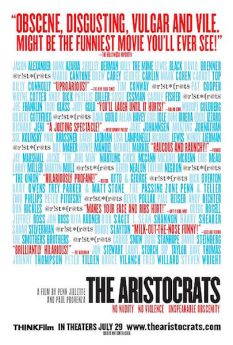 It’s not unusual for films showing on TV to be prefaced with content warnings about language, sex or violence, but I don’t think I’ve ever previously seen one that feels the need to place such a warning after every single ad break. But if there’s one film that needs that treatment — or, rather, one film they could actually show on TV that needs that treatment — it’s The Aristocrats.
The Aristocrats is, apparently, an incredibly famous joke, well known to all comedians — and, generally, only told to each other, not to audiences — that is flexible enough for anyone to tell in their own way and still have it work. It’s also incredibly vulgar; in fact, the point is often to make it as vulgar as humanly possible. To explain much more would ruin the point of the film, which aims to expose and explain this cultish joke to the masses. Personally I’ve never heard of the thing, and for all I know The Aristocrats could be an elaborate Blair Witch-esque hoax — “oh yeah, all comedians know it”. Note this: the only people you’ll see throughout are comedians, and they all seem to know each other too.
Subject matter aside, there’s not much of a structure to the material presented. Mostly compiled from dozens of interviews, the resultant piece is a jumbled mix of comedians telling their version of the joke, comedians explaining variations on it (those whose telling completely changes it are the ones who succeed), comedians explaining why it’s funny, comedians explaining how it works, comedians explaining how and why it varies, comedians musing on the differences between male and female tellings of the joke…
On the other hand, even though there is a degree of repetition, there’s also a surprising amount to say about it — even by the end, when yet another comedian launching into their version has you reaching for the remote, there’s often another little titbit around the corner. In other notes: for British viewers, the biggest and most widely known names — Billy Connolly, Eddie Izzard — barely feature; for everyone, it features one of the worst ventriloquists I’ve ever seen; and a mime artist who singlehandedly makes the entire thing worthwhile.
The biggest problem with The Aristocrats — the film, not the joke — is quite a simple one: it’s about a single joke. Even the most meandering comedians tell several of those in an hour and a half. To compound the issue, said joke can vary so much as to defy a lot of comedy-killing “why’s it funny?” analysis. What you’re left with is repetitive retellings of a joke that, to be blunt, is rarely funny whatever you shove in the middle. It’s an insider’s film about an insider’s joke; for the rest of us, it rather over eggs the point.

 It had been my impression that this summer’s sequel,

 You’ve probably heard about Enchanted: it’s the one that starts out as a traditionally animated Disney film, before The Normal Girl Who Will Marry A Prince is thrown into a Magic Portal by The Evil Stepmother and finds herself in present-day New York. It’s one of those concepts so good it just makes you think, “why haven’t they thought of that before?”
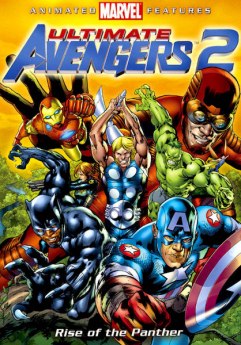 Some things in life baffle me. Form dictates I now list a couple of humorous examples, but we’ll skip that and get to the point: why would you make a direct-to-DVD movie that has a subtitle on the box but not on the film itself? I can understand why titles get tweaked on cinema-release posters and/or subsequent DVD releases — for marketing purposes, say; or clarity — but why, when your title is going direct to the DVD stage, do the titles not match? And why does the box add the subtitle rather than remove it for on-shelf simplicity? I have no answers — it baffles me, remember — but this is the sort of thing I sometimes muse about. The sort of thing that most other people don’t even notice, never mind care about.
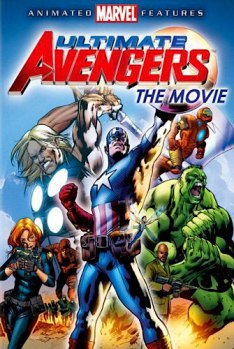 With the
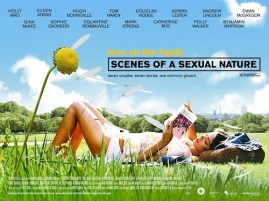 Scenes of a Sexual Nature is a half-accurate and half-misleading title for this low-budget British comedy drama. The first half is spot on — the film’s made up of seven unconnected scenes — while the second implies it’s ruder than it is.
 Remember the ubiquitous Writer’s Strike in the US? It must be about a year ago now, but its effects are still being felt —


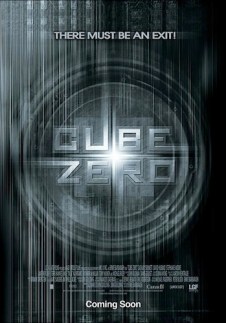 I presume, from the title, that Cube Zero is meant to be one of them prequel things, going back before the original film to reveal more of the backstory and answer questions that probably didn’t need answering. It does some of this — there are unwelcome answers and an ending that explicitly links back round to the first film — but undermines it by apparently being set in some fantasy-future retro-industrial universe that doesn’t gel with the everydayness of the preceding entries. This design work is almost nice, reminiscent of films such as
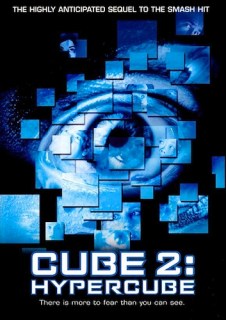 The new cube set is bigger, shinier, simpler, emptier, always one plain colour, and devoid of traps. Consequently, but perhaps inadvertently, it seems to symbolise the film itself.

