I watched so many films in 2016 that I’d forgotten I saw some of them so recently. Going back over the list, there were films I watched as late as March that I was amazed weren’t things I’d seen a couple of years ago. I don’t know what this signifies, really, other than that watching almost 200 films in a year has warped my perspective.
Anyway, it’s now time to consider the quality of that viewing: which films were the worst? Which the best? And what did I miss?
So without further ado…
 The Five Worst Films I Saw For the First Time in 2016
This year I saw some films so bad that Home on the Range hasn’t made my bottom five! In alphabetical order, they were…
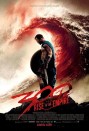 300: Rise of an Empire
300 was hardly the height of cinematic class, but this makes it look like an accomplished work of auteurism (though, considering how Zack Snyder has continued down a similar aesthetic path, perhaps it always was). It’s just poorly made, with flat performances, cheap direction, aimless violence, and CGI that wouldn’t look great in a computer game.
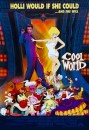 Cool World
Maybe if director Ralph Bakshi had got his way Cool World would be a masterpiece. Maybe not, too. Torn between conflicting interests (it’s a kid-friendly movie with adult content) and with distractingly poor technical aspects (the animation and live action often seem mismatched), it’s an unappealing mess.
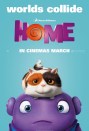 Home
Home
DreamWorks’ animated movies never quite achieve the crossover acclaim that greets almost anything Pixar spit out, which is sometimes a shame… and sometimes it really isn’t, like with this irritating movie about an irritating alien and his irritating human friend. Pixar have never made anything this annoying. Not even Cars.
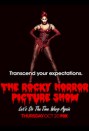 The Rocky Horror Picture Show: Let’s Do the Time Warp Again
“Is this even worse [than The Rocky Horror Glee Show]? Well, that’s a bit like someone forcing you to eat a dog shit and a cat shit before asking you which tasted nicer.” Most accurate review I’ve ever written.
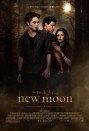 The Twilight Saga: New Moon
New Moon contains the single funniest scene in any movie I’ve seen this year. Unfortunately, New Moon is not a comedy (not deliberately, anyway) and that scene is not a comedy interlude (not deliberately, anyway). For all the Twilight saga’s other sins, I will forever love it for giving us Face Punch. (Oh, but the rest of the film is pretty terrible.)
 The Twenty Best Films I Saw For the First Time in 2016
Last year I commemorated the fact I’d doubled my titular target by also doubling the size of my top ten, joking about having never done a percentage increase before. But that got me thinking: what if I did? So from now on my “top 10” will be a “top 10%” — which this year means it’s a top 20 again.
My guiding principle when ranking this year’s picks became films that excited me — not in the adrenaline-pumping sense of having fantastic action sequences, but in the sense of films which left me feeling thrilled by their cinematic achievements. Not that I’m saying every film here is some wonder of Cinema, just that the notion guided some of my choices. It’s ended up with some very good, perhaps even better, films slipping down the chart. But never mind: as is usually the case with lists like this, it’s only a snapshot of my thinking right now.
Finally: as always, this list is created from the movies I watched for the first time this year, not just new releases. However, I did watch 38 films that had their UK release in 2016, and six of them are in my top twenty, so I’ve noted their ‘2016 rank’ too.
An intelligent, considered sci-fi movie that ponders artificial intelligence and its potential right to life, but also a gripping psychological thriller about three individuals locked in a bunker. And there’s Oscar Isaac’s dance scene too.
Sion Sono’s comic book epic mixes battle rap, comic grotesques, ultra violence, gratuitous nudity, more barmy notions than you can shake a stick at, and probably the kitchen sink too, into possibly the most batshit-crazy movie I’ve ever seen. Is it trash or art? It can be two things.
Wes Anderson described his typically-idiosyncratic young-love adventure as “an autobiography about something that didn’t happen”, which is possibly my favourite description of a film ever. A movie for the romantic adventurer in every childhood bookworm.
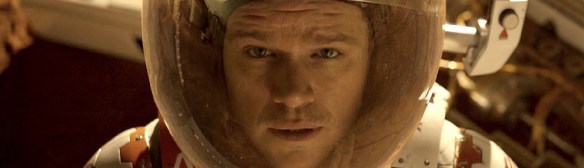
The best comedy or musical of 2015 is neither of those things, but it is one in a pleasing run of intelligent sci-fi movies Hollywood is offering these days. Trust Ridley Scott and Matt Damon to make a movie about using science to grow potatoes into a gripping adventure.
An underrated le Carré thriller starring Sean Connery as a book publisher coerced into helping MI6 and the CIA bring over a defector, alongside Michelle Pfeiffer as his Russian contact. Strong performances enliven a typically le Carré plot: grounded, plausible, unguessable, with a surprising conclusion.
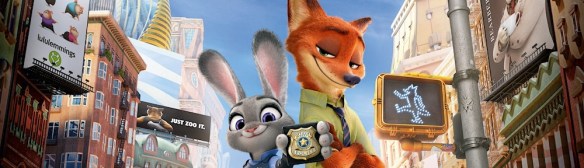
2016 #6 A neo-noir crime thriller about racism featuring nudism and drug abuse… from Disney! It’s still a kid-friendly animated comedy, of course, but one that functions particularly well — arguably even better — for adult fans.
It looks like such a boilerplate indie movie that I kinda expected to hate this, but it caught me off guard with characters I related to and a story that I found affecting without being saccharine. Probably the most emotional a movie has made me feel this year.
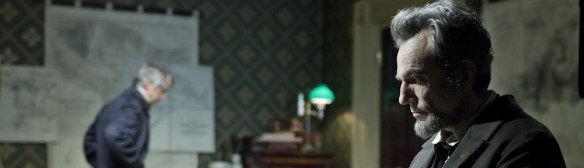
Famed for Daniel Day-Lewis’ awards-scooping performance that is arguably one of the greatest of all time, there’s actually much more to Spielberg’s biopic. Playing like a gorgeously-shot period version of The West Wing, if you like men politicking in gaslit rooms, this is heaven.
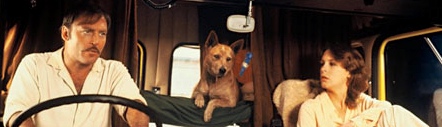
Now we move into my Top Ten. Yeah, I know it’s #12, but I really thought these two would make it. I guess they’re kinda =10th, then; though that would be cheating… Anyway: I hadn’t even heard of this movie before this year, but the coincidence of a blog post and a Blu-ray release led me to purchase it and I was so glad I did. It’s Rear Windscreen meets Duel Down Under in a superb Ozploitation thriller.
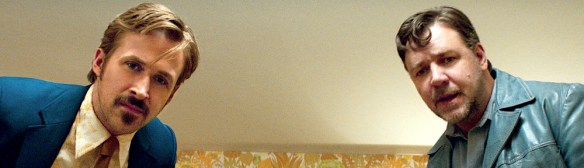
2016 #5 Russell Crowe and Ryan Gosling reveal rarely-seen comic talent as a pair of not-actually-that-nice guys who nonetheless have some morals in Shane Black’s spiritual sequel to Kiss Kiss Bang Bang. This has just as convoluted a plot, and it matters just as little — its major asset is that it’s frequently hilarious.
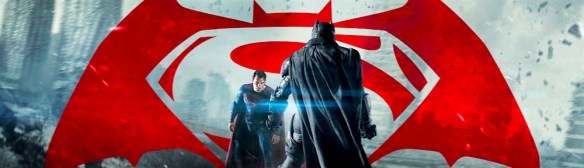
2016 #4 Yes, really. And, just so we’re clear on what’s going on here, neither Civil War nor Doctor Strange are in my Top 9. Is BvS ‘better’ than anything Marvel Studios put out this year? Hm. But is it a more interesting movie? I thought so. Zack Snyder made a dark, morally ambiguous, imperfect movie that reflects the dark, morally ambiguous, imperfect days we live in. Perhaps it’s just too timely for its own good? People don’t seem to want a movie that questions our heroes and our relationship towards them in a world where real-life heroes feel in short supply. It’s clearly not the movie a lot of people think they need, but maybe it’s the one they deserve right now.
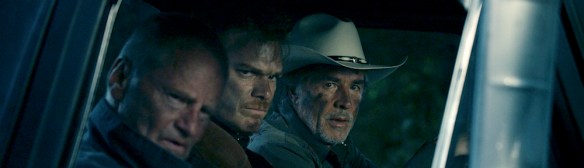
Of all the films on this list, Cold in July has arguably the most surprising plot: it takes sharp right-angle turns at several points, never breaking the style and genre it sets itself in, but instead shuttling the viewer off in entirely different directions than expected. By the time it reaches its action-packed climax, you have no idea quite what it’s going to do — and how better to end a neo-noir thriller than that?
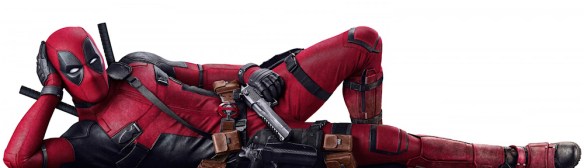
2016 #3 This may be all the way down in 8th place, but in some respects it’s #1: I’m not sure I’ve had more pure fun watching a movie this year than I did during Deadpool (The Nice Guys would be closest). Okay, so it’s a little puerile really, but the humour comes thick and fast, and the regular fourth-wall breaking undercuts not just the film but the whole superhero genre. Having talked about the excitement of great Cinema at the start, this isn’t that, but it is a fantastically good time.
Steven Soderbergh transforms a pretty straightforward revenge story into an elliptical narrative that has you constantly questioning what you’re watching — is it flashback, flash-forward, a dream, a plan, a fantasy…? In the end it’s probably none of those things, but Soderbergh’s unusual editing techniques create an arthouse/mainstream mash-up that is a uniquely querying, mystifying, yet satisfying experience.
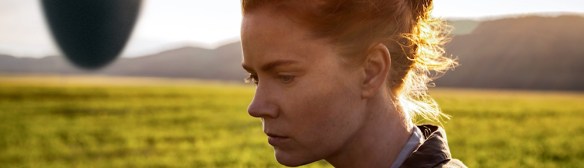
2016 #2 In an era when Hollywood considers “science-fiction” a byword for “action-adventure”, it’s all the more remarkable that an intelligent, adult drama like this was backed by a major studio. It’s partly a timely message about the need for mankind to understand each other across nations and work together, but it’s also a thoughtful meditation on the human condition — what it means to be human, what it costs us, and if it’s worth it. Director Denis Villeneuve paces events sublimely, imbuing the alien spacecraft with a wonder and fascination that you’d’ve thought lost in modern “anything is possible” cinema, but the film really belongs to Amy Adams and her layered, affectingly real performance.
Another thought-provoking science-fiction movie (for those not keeping count, it’s the fourth in this list), Predestination has been less heralded but deserves to be better known. Adapted from a short story by genre giant Robert A. Heinlein, it’s satisfying both as a tangled time travel mystery (with some great twists, whether you guess them or not) and as a consideration of human and historical issues about things like identity and feminism.
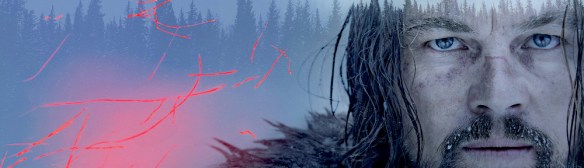
2016 #1 I’m as surprised as anyone by how much I liked The Revenant, having not been particularly enamoured of the previous Alejandro G. Iñárritu films I’d seen, but this gruelling survival-story Western oozes excellence from every frame. Leo’s pretty good, as are the rest of the cast, but Emmanuel Lubezki’s cinematography is the highlight: appropriately crisp depictions of wintery nature, an incredible use of natural light, and single-shot sequences that blow Birdman out of the water. By telling the story primarily with these visuals, Iñárritu has created a work of true cinema.
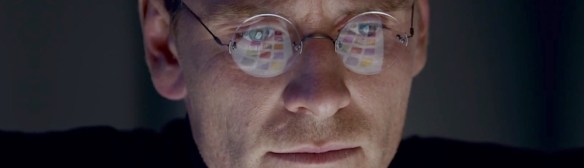
Like Lincoln, this is a beautifully-shot biopic about people stood around in rooms talking. The big gun it has in its corner, however, is an actual West Wing writer — its creator, no less — Aaron Sorkin. Sorkin’s screenplay is a precisely constructed marvel, brought to the screen by a quality cast capable of wrapping their tongues around his magnificent dialogue, and in Danny Boyle a director with the right visual sensibilities to make the material sing. What could have just been an Apple fanboy’s wet dream is instead a gripping character drama with a surprising corporate thriller vibe at times.
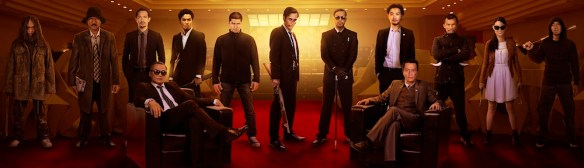
An orange to The Raid’s apple, this sequel is bigger and grander in every conceivable aspect. A sprawling crime epic, spanning many years, many locations, and many characters, it’s the antithesis of the tightly-focused first film — but all the better for it. Even with the more intricate plot, there’s still plenty of time for elaborate action sequences, crafted with even greater skill and inventiveness than the first movie. It’s surely one of the greatest action movies ever made.
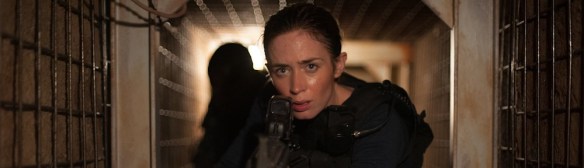
In a top twenty filled with crime thrillers (see: #15, #11, #9, #7, #2), gorgeously-shot movies (see: #13, #6, #4, #3), and remarkable female leads (see: #20, #15, #6, #5), it’s only fitting that a film which does all of these so skilfully should top my list. Emily Blunt is the powerhouse FBI agent who finds herself out of her depth in a complex cross-agency investigation that leads her, and us, to some dark and morally questionable places. It’s all incredibly shot by the reliably amazing Roger Deakins. Between this and his other entry in my top ten, I think Denis Villeneuve has marked himself out as one of the most exciting directors working right now.

I always want to include this section of my post, but sometimes I’m not quite sure what to put in it — if it was just some more ranked films, I’d’ve included them above. But this year I have something concrete to begin with, because there were several films that I surprised myself by not including in my top twenty. They were films that I really liked — and, perhaps even more so, lots of other people really liked and include in their lists — but which, for some reason, when I was sorting through my options, fell by the wayside in favour of… well, in favour of the films that did make it in. I’m talking about films like Captain America: Civil War, Doctor Strange, Fantastic Beasts and Where to Find Them (maybe that’s not on many other lists, but I really enjoyed it), The Iron Giant… and, of course, Rogue One. My already mixed feelings about the latest Star Wars movie were massaged by happening to read Andrew Ellard’s Tweetnotes and Film Crit Hulk’s dissection of the film while preparing this list, and while I don’t necessarily agree with everything they have to say, between them they managed to clarify and illuminate some problems I already had with the movie, and that kinda put me off its inclusion.
A shout out, too, for those less-widely-loved films that I really, really liked but couldn’t quite justify being in this top twenty — films like Crimson Peak, Dragon (Wu Xia), The Good Dinosaur, Grand Piano, Lost River, Pan, and Andrea Arnold’s Wuthering Heights. And despite all those Shaw Brothers movies I watched, none ended up charting — but One-Armed Swordsman came close.
Finally, I can’t end this without mentioning the 26 films that earned 5-star ratings this year — especially as I haven’t actually published reviews for nine of them yet! So, 15 made it into the top twenty, but as they’re spread throughout the list I’ll name them again: Arrival, Cold in July, Deadpool, Ex Machina, The Limey, Lincoln, The Martian, The Nice Guys, Predestination, The Raid 2, The Revenant, Road Games, The Russia House, Sicario, and Steve Jobs. The other 11 were: 12 Years a Slave, Barry Lyndon, Hamlet, The Iron Giant, Macbeth, Napoleon, The Pianist, Spotlight, The Spy Who Came in from the Cold, Witness for the Prosecution, and Wuthering Heights. Additionally, short film The Present also got full marks.
During 2016 I watched 38 movies that were released in 2016, but of course that means there were plenty I missed. As usual, then, here’s an alphabetical list of 50 films that are listed as 2016 on IMDb (unless IMDb got it glaringly wrong) that I’ve not yet seen.
They’re chosen for a variety of reasons, from box office success to critical acclaim via simple notoriety — though I’ve decided to not include any more bloody Ice Age films on these lists, because they keep making them, they keep doing pretty well at the box office, and I keep not watching them.
Absolutely Fabulous: The Movie
Alice Through the Looking Glass
Allied
Assassin’s Creed
Ben-Hur
The BFG
Blair Witch
Bridget Jones’s Baby
Don’t Breathe
Eddie the Eagle
Everybody Wants Some!!
Finding Dory
Ghostbusters
The Girl on the Train
Gods of Egypt
Hail, Caesar!
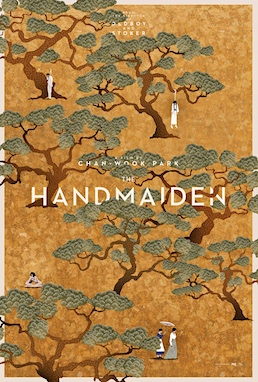
The Handmaiden
Hell or High Water
Hunt for the Wilderpeople
I, Daniel Blake
Independence Day: Resurgence
Inferno
Jack Reacher: Never Go Back
The Jungle Book
Kubo and the Two Strings
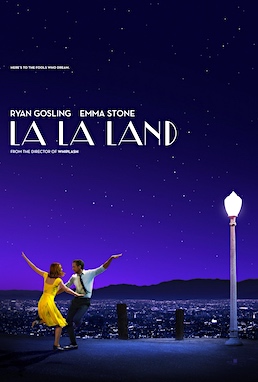
La La Land
The Legend of Tarzan
Live by Night
London Has Fallen
The Magnificent Seven
Manchester by the Sea
Me Before You
Miss Peregrine’s Home for Peculiar Children
Moana
A Monster Calls
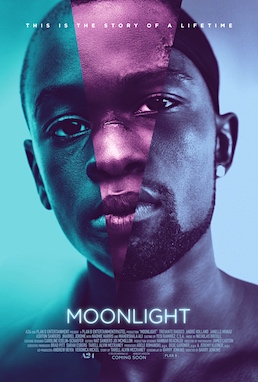
Moonlight
The Neon Demon
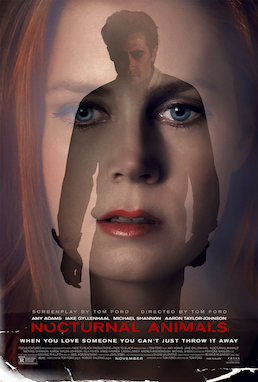
Nocturnal Animals
Now You See Me 2
Passengers
Pride and Prejudice and Zombies
Sausage Party
The Secret Life of Pets
Silence
Sing
Sing Street
Sully: Miracle on the Hudson
Teenage Mutant Ninja Turtles: Out of the Shadows
Warcraft: The Beginning
Your Name
…and many more.
And that’s 2016 over… apart from the 36 reviews I still have to post, of course. I think that’s one of my worst ever. That’s what comes of not doing my advent calendar.
It’s also the end of 100 Films’ first decade, which I intend to make even more of a fuss about than I already have when the official birthday rolls around at the end of February. I’m thinking lists, and probably statistics. Any excuse for some statistics.
But, for now, all that remains is for me to thank you for reading and wish you all the best with your own film-watching endeavours. Let’s hope 2017 is a better one for us all.





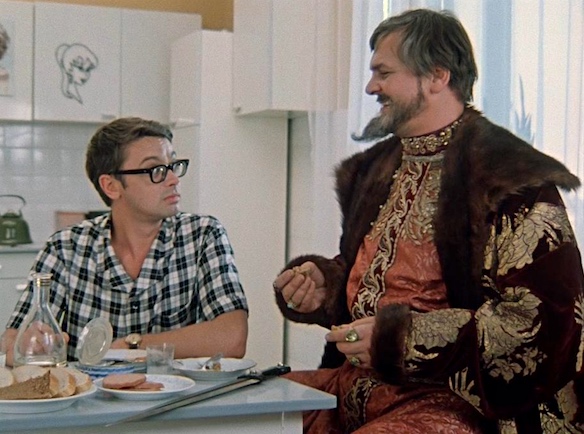



























 Favourite Film of the Month






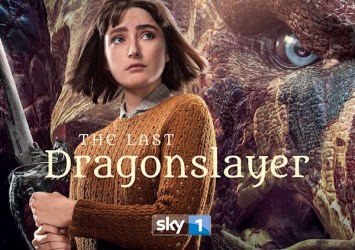 I’m not sure whether to commend or condemn Sky1 for having the balls to schedule a light family-friendly fantasy drama against
 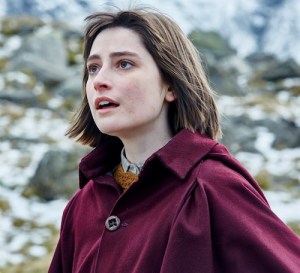 About now you’re probably thinking The Last Dragonslayer is completely derivative of every other major young-adult fantasy franchise of the last… well, forever. It’s hard to deny that the plot is, at least in its broadest thematic strokes, a pretty familiar affair. What makes the enterprise worthwhile is its humorous execution. This isn’t a spoof of the genre, more a satirical mash-up of familiar fantasy building blocks and modern life. So, for example, the king’s chief knight is also a pop star, followed around by a gaggle of adoring female fans; when Jennifer finds herself in need of money, her dragonslaying assistant signs a sponsorship deal with soft drink brand Fizzipop that requires her to film an advert, make at least two promotional appearances, and wear a branded T-shirt until the dragon is slain. It’s this whimsical slant on our world that is arguably Dragonslayer’s most successful aspect.
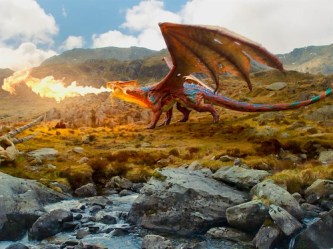 I guess The Last Dragonslayer’s irreverent, sometimes silly tone won’t be to all tastes, but I enjoyed it very much. Unsurprisingly (all things considered) the book is the first in a series, and so not everything is fully resolved by the film’s end. Let’s hope that, in spite of their scheduling, it’s done well enough for Sky that sequels are forthcoming.
 The controversial Steven Moffat era of nuWho is headed towards its end, but before his final full series next year there’s this penultimate Christmas special. There have been 12 of them now and they’re always divisive: some people think they’re too Christmassy, some that they’re not Christmassy enough; some like that they’re standalone adventures suited to a broader audience, but other times they’re not standalone enough… Each year presents a different mix of these elements, pleasing some and alienating others.
 “Proper Bake Off” came to an end with what felt a little like a joyous celebration of the series’ unique charms, as well as its highs and lows. Considering the two festive episodes were shot before the controversial move to Channel 4 took place, that’s almost impressive. It’s hard to imagine GBBO without the alchemical mix of Mel, Sue, Paul and Mary, and these episodes showed the format on fine form. And then the BBC went and snuck in that
  The problem with Christmas specials of on-going shows is you’re sometimes left with on-going plots that must be acknowledged, and Grantchester has a particularly major one with its hero’s life-long love leaving her husband while pregnant. If you don’t watch, it’s set in the ’50s, so this kind of behaviour is the greatest scandal known to man. The special leaps into this without even the by-your-leave of a “previously on”, so I pity any non-regular viewers made to sit down in front of it on Christmas Eve. But it’s an immensely popular show with big ratings, apparently, so who can blame ITV for wanting it in their always-underpowered Christmas schedule? I imagine it fared better than Maigret did the next night…
 The team behind previous Christmas specials
  I thought And Then There Were None was one of the highlights of last year’s Christmas schedule, turning Agatha Christie’s most popular novel into a dark, slasher-movie-esque thriller, the first English-language adaptation to remain faithful to the original’s glum ending. I don’t know if this year’s Christie is faithful to her original short story, but it isn’t to the play adaptation (at least as I know it from
 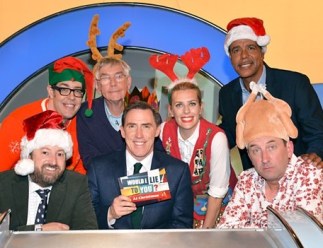 There’s always a lot of special episodes of comedy shows on over Christmas, with varying degrees of success. I thought this year’s Live at the Apollo was woeful, with Romesh Ranganathan the only truly bright spot in 45 minutes of flat observations and unfunny daftness. Conversely, Would I Lie To You? proved to be as good value as it always is, thanks to the quick wit of the regulars plus Tom Courtenay’s affected (I presume) dodderiness. Mock the Week’s clip show format was perhaps improved by the fact I didn’t watch the most recent series, while the imperfect Insert Name Here makes a nonetheless welcome return. In the comedy gameshow sub-genre, Alan Carr’s 12 Stars of Christmas was the kind of trash I’d never watch at any other time of year yet stuck with for all five hours and kind of enjoyed (helped by watching on catch-up and fast-forwarding the really repetitious bits), while the David Walliams-fronted Blankety Blank revival provided as much charm as the format ever has. And normally it wouldn’t count as comedy, but this year’s run of Celebrity Mastermind began with CBBC puppet Hacker T. Dog as a contestant. At least he didn’t win.
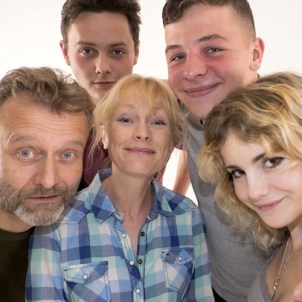 My list of Christmas TV to get round to remains pretty extensive. There are all those regular series that insert a seasonal episode — The Grand Tour (that’d be the episode with Richard Hammond’s ice cream comments that you might’ve heard about), Paul O’Grady: For the Love of Dogs, Yonderland (not that I’ve watched any of the latest series), QI, Inside No.9 (which I’ve never watched before, but the special sounds good)… And there are series coming back for one-offs too, like Outnumbered and Jonathan Creek (which I loved during its original run but have been surprisingly lax about watching in the last few years). I’ve also not yet caught a couple of this year’s animated adaptations, Michael Rosen’s We’re Going on a Bear Hunt and Raymond Briggs’ Ethel & Ernest (which I figure will count as a film). Documentaries like Lego’s Big Christmas and West Side Stories also sit on my list, likely to get forgotten. There’s Sky1’s big Christmas Day drama, The Last Dragonslayer (which I wager I’ll also count as a film); Eric Idle’s comedy musical science thing, The Entire Universe; and Charlie Brooker’s 2016 Wipe, which apparently manages to make 2016 funny (I’ll believe it when I see it). Finally, I always save Channel 4’s The Big Fat Quiz of the Year for either New Year’s Eve or New Year’s Day, because that just seems more appropriate.
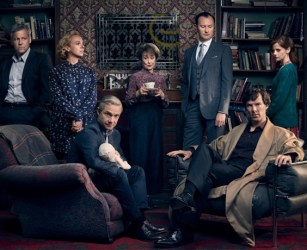 Things are beginning to wind down now… but as far as TV schedulers are concerned “Christmas” lasts until at least January 1st, so there are a couple of big hitters left. The biggest of all is a new, potentially final, run of Sherlock. No idea what the quality will be like, but expect lots of handwringing on social media and huge ratings either way. On New Year’s Eve there’s stage adaptation Peter Pan Goes Wrong, which I’ve heard such good stuff about it’s probably going to be a disappointment, and a Winnie-the-Pooh documentary that I’m going to watch even though it’s presented by Alan Titchmarsh. Next week (which you could argue is still part of Christmas if you have very forgiving holiday leave) sees lots of police shows kicking off, if that’s your thing: Death in Paradise, Endeavour, Midsomer Murders, No Offence, Silent Witness, Unforgotten… even Brooklyn Nine-Nine. And in the sphere of movies on TV, tonight you can choose between the network premiere of
  100Films.co.uk