Unknown's avatar

About badblokebob

Aiming to watch at least 100 films in a year. Hence why I called my blog that. http://100films.co.uk

Sight & Sound’s The 100 Greatest Films of All Time (2012 edition)

When I relaunched 100 Films back in January, one of the things I promised was “a new occasional series about various 100-film lists — you know, like the Sight & Sound poll, or all those AFI ones.” I hadn’t intended it to take until November to get started on that feature, but here we are.

And, in truth, I might not even have got round to doing it now, were it not for the fact that the results of Sight & Sound’s latest decennial poll are out next month (or possibly before the end of this one, depending who you listen to). So, before that renders this article near obsolete, let’s look back at their last poll…


For those who don’t know, Sight & Sound is a magazine published since 1932 by the BFI (British Film Institute). Since it integrated the Monthly Film Bulletin in 1991, it’s been the journal of record for films released in British cinemas, reviewing everything that’s granted a theatrical release in the UK (even the kinds of mainstream fare that might not appeal to its average readership), alongside all the film-related news and features you’d expect from such a publication.

Beginning in 1952, every decade the magazine has polled an international selection of film critics and professionals to create a list of the greatest films of all time. Each contributor submits an unranked list of their top ten films, with each named film receiving one vote when compiled into the overall list. The 2012 iteration was, deliberately, the biggest ever in terms of contributors: over 1,000 “critics, programmers, academics, distributors, writers and other cinephiles” were approached to contribute, and 846 did — up from just 145 in the preceding 2002 poll. (Since 1992, the votes of film directors have been compiled into a separate list. In 2012, 350 directors voted on their list. Maybe I’ll cover that another time.)

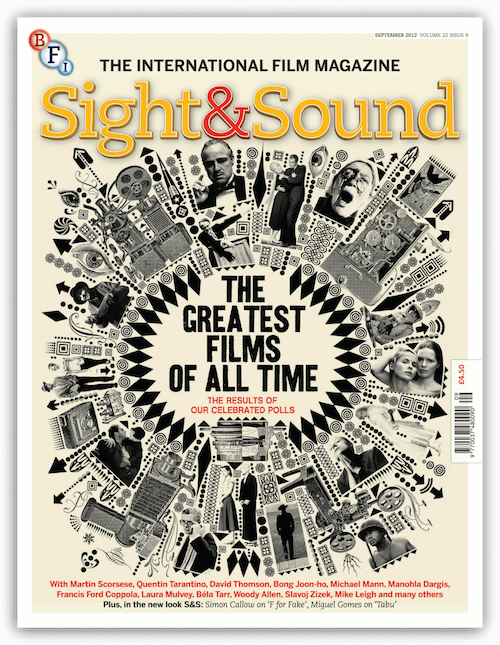
Sight & Sound September 2012 issue, featuring the results of their 2012 poll on the cover

The poll has come to be recognised as one of — if not the — most important of its kind. The great critic Roger Ebert once asserted that, “because it is world-wide and reaches out to voters who are presumably experts, it is by far the most respected of the countless polls of great movies — the only one most serious movie people take seriously.” You’ll often hear it said that Citizen Kane is the greatest movie of all time, and if you’ve ever wondered just who decided that… well, it was the Sight & Sound poll: Kane was ranked #1 in every iteration from 1962 to 2002. (The 1952 poll was topped by Bicycle Thieves. Kane came =13th.) That was the main reason the 2012 poll made headlines at the time: Kane was unseated! But we’ll come to that in just a sec…

I think the poll’s exalted reputation is both a blessing and a burden that the magazine’s editors are only too aware of, hence the attempt to broaden its contributor base in 2012. How much further — or not — they’ve broadened it for 2022, I guess we’ll find out soon. Reports on social media indicate there are more than double the number of contributors, with an effort to make it truly a worldwide sampling and thus break the traditional dominance of American and European cinema. Surely such a focus is an inevitable side effect of the poll being conducted by an English-language British-based magazine, but there’s still value in trying to overturn the bias.


Below is the full list of 100 films (actually 101, thanks to a nine-way tie for 93rd place). When there’s a tie, I’ve copied the order from Sight & Sound’s own listing. (At first I’d thought they’d gone with chronological rather than alphabetical order (the list’s bias against recency is a whole separate debate), but it doesn’t seem to be either. Maybe it’s just random. I don’t know.)

I’ve done the same for translations of non-English titles. It seems to me that there’s little consistency about whether Sight & Sound used original titles or English translations, so I just copied their list. Depending on your awareness of world cinema and alternate titles, that may mean there are some titles you don’t recognise even though you do know the film, actually. I think that, thanks mainly to the Criterion Collection, it’s English-language titles that are commonly used online by English-speakers nowadays; but, ironically, one of the rare instances that Criterion use the original-language title is for a film here listed by its English-language alternative. Fun times.

Where a title is a link, it’s to my review. You can find Sight & Sound’s own write-up of the poll results here (courtesy of the Internet Archive, because as of 1st December 2022 the original page has been replaced with the new list).


1

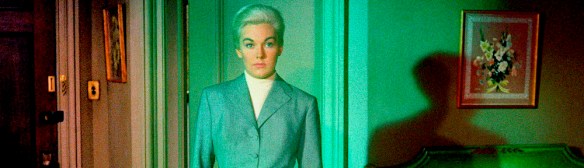
Vertigo

(1958)

2

Citizen Kane

(1941)

3

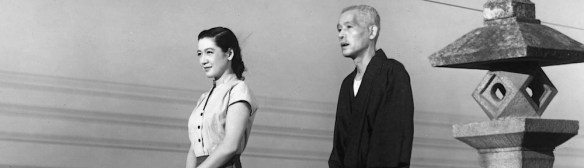
Tokyo Story

(1953)

4

La Règle du jeu

(1939)

7

The Searchers

(1956)

8

Man with a Movie Camera

(1929)

10

(1963)

11) Battleship Potemkin (1925)
12) L’Atalante (1934)
13) Breathless (1960)
14) Apocalypse Now (1979)
15) Late Spring (1949)
16) Au hasard Balthazar (1966)
17=) Seven Samurai (1954)
17=) Persona (1966)
19) Mirror (1974)
20) Singin’ in the Rain (1951)
21=) L’avventura (1960)
21=) Le Mépris (1963)
21=) The Godfather (1972)
24=) Ordet (1955)
24=) In the Mood for Love (2000)
26=) Rashomon (1950)
26=) Andrei Rublev (1966)
28) Mulholland Dr. (2001)
29=) Stalker (1979)
29=) Shoah (1985)
31=) The Godfather Part II (1974)
31=) Taxi Driver (1976)
33) Bicycle Thieves (1948)
34) The General (1926)
35=) Metropolis (1927)
35=) Psycho (1960)
35=) Jeanne Dielman, 23 quai du Commerce 1080 Bruxelles (1975)
35=) Sátántangó (1994)
39=) The 400 Blows (1959)
39=) La dolce vita (1960)
41) Journey to Italy (1954)
42=) Pather Panchali (1955)
42=) Some Like It Hot (1959)
42=) Gertrud (1964)
42=) Pierrot le fou (1965)
42=) Play Time (1967)
42=) Close-Up (1990)
48=) The Battle of Algiers (1966)
48=) Histoire(s) du cinéma (1998)
50=) City Lights (1931)
50=) Ugetsu monogatari (1953)
50=) La Jetée (1962)
53=) North by Northwest (1959)
53=) Rear Window (1954)
53=) Raging Bull (1980)
56) M (1931)
57=) The Leopard (1963)
57=) Touch of Evil (1958)
59=) Sherlock Jr. (1924)
59=) Barry Lyndon (1975)
59=) La Maman et la putain (1973)
59=) Sansho Dayu (1954)
63=) Wild Strawberries (1957)
63=) Modern Times (1936)
63=) Sunset Blvd. (1950)
63=) The Night of the Hunter (1955)
63=) Pickpocket (1959)
63=) Rio Bravo (1958)
69=) Blade Runner (1982)
69=) Blue Velvet (1986)
69=) Sans Soleil (1982)
69=) A Man Escaped (1956)
73=) The Third Man (1949)
73=) L’eclisse (1962)
73=) Les enfants du paradis (1945)
73=) La grande illusion (1937)
73=) Nashville (1975)
78=) Chinatown (1974)
78=) Beau Travail (1998)
78=) Once Upon a Time in the West (1968)
81=) The Magnificent Ambersons (1942)
81=) Lawrence of Arabia (1962)
81=) The Spirit of the Beehive (1973)
84=) Fanny and Alexander (1984)
84=) Casablanca (1942)
84=) The Colour of Pomegranates (1968)
84=) Greed (1925)
84=) A Brighter Summer Day (1991)
84=) The Wild Bunch (1969)
90=) Partie de campagne (1936)
90=) Aguirre, Wrath of God (1972)
90=) A Matter of Life and Death (1946)
93=) The Seventh Seal (1957)
93=) Un chien andalou (1928)
93=) Intolerance (1916)
93=) A One and a Two (1999)
93=) The Life and Death of Colonel Blimp (1943)
93=) Touki Bouki (1973)
93=) Fear Eats the Soul (1974)
93=) Imitation of Life (1959)
93=) Madame de… (1953)


October’s Failures

There can be only one release to kick off this month’s failures. Not because it was somehow the ‘most failed’ (it only came out yesterday, and — for various reasons — I didn’t get my copy until 10pm), but because it’s so long-awaited. Ever since StudioCanal started doing their lavish tat-filled 4K box sets a few years ago, I’ve been hoping they’d do one for Highlander (knowing that they owned the UK rights and had a 4K transfer ready, having released it on regular Blu-ray back in 2016), and it’s finally here. Hurrah! I haven’t actually watched Highlander since before Blu-rays were a thing (I bought a previous BD edition in 2009 and, shamefully, I’ve never watched it), so I’m looking forward to finally revisiting it.

Anyway, highlighting that has messed up the usual order of things, so let’s get back on track with what hit the big screen this month. Frankly, nothing that came particularly close to tempting me out the door. I guess The Banshees of Inisherin, maybe, as I love In Bruges, but I’m also happy to wait to watch it at home. Maybe I’d’ve been lured by documentary Doctor Who Am I if it had actually been playing near me. I’ve already preordered the Blu-ray that’s out later this month, mind. As for the ostensible blockbusters — your Black Adams and your Halloween Endses — I intend to watch them someday, but there’s so certainly no rush on my part. Same goes for most of this month’s other cinematic releases: Amsterdam, Barbarian, Bros, Decision to Leave, The Lost King, The Woman King… All stuff that will go on my watchlist when they come to a streamer I’m subscribed to, but I’m not sure there’s anything I’ll check out before that.

As for said streamers, Netflix score perhaps the most noteworthy release of the month with the new German adaptation of All Quiet on the Western Front. Not “noteworthy” in the sense of generating column inches (I’ve barely seen it discussed), but in terms of quality, perhaps the winner (when I have seen it discussed, it’s with nought but praise). As if to balance the books, they also had lamentable YA adaptation The School for Good and Evil. Despite the disparity in critical reception, I bet it’s the latter that gets more viewers, sadly. Higher up my “to see” list than either is the new film from Henry “the actual director of Nightmare Before Christmas” Selick, Wendell & Wild. I don’t know anything at all about it, other than it’s stop-motion animated (natch) and was cowritten with Jordan Peele, but “the new film from the director of Coraline” is more than enough to convince me it’s a must-see. Also premiering this month was family-friendly Halloween-targeted The Curse of Bridge Hollow (I thought the trailer looked fun enough, but I imagine I’ll promptly forget it exists), some thriller starring Joel Egerton and Sean Harris called The Stranger (mmm, generic title), and Eddie Redmayne and Jessica Chastain in The Good Nurse. Redmaybe and Chastain in something based on a true story? Sounds like it should be an awards contender or something, not limited to a passing reference buried at the end of my Netflix roundup, but I’ve barely seen it mentioned (I’ve only vaguely picked up on the “true story” thing too, so I might not even be right about that).

Also worth a mention on Netflix was Guillermo del Toro’s Cabinet of Curiosities, which I concluded is actually a TV series — an anthology of eight one-hour episodes — but there are some pretty big names starring in them, and some of the directors are familiar, too. In reliable “we still don’t really have proper rules about TV” fashion, Letterboxd have listed all the episodes individually, giving some credence to the idea of counting them as films… but Letterboxd also do that with Black Mirror, which similarly has name-y casts and directors (sometimes), but is definitely a TV series (aside from the odd special, arguably), so I’m not about to start counting either towards my 100 Films Challenge.

Talking of “TV that’s sort of a film”, Disney+ had the latest addition to the MCU, Werewolf by Night. It is, according to their branding, a “Special Presentation”. But in an era when Disney are happy to premiere big releases from their major studios (Pixar have suffered the brunt of this) on Disney+, what makes it “not a film”? Only its 50-something-minute runtime, I guess. It would’ve been a good one to watch in the lead up to Halloween (I mean, that’s why they released it when they did), but I didn’t make the time. And I haven’t decided if I should count it or not anyway (50 minutes is above the American Academy-derived 40-minute rule I use for differentiating features from shorts, but does that stop Werewolf by Night from being a ‘TV special’?) The only other brand-new thing on Disney+ I’ve noted this month is Rosaline, which has an intriguing premise (it’s about the girl Romeo loved before Juliet), but I’ve not encountered much discussion of it, which doesn’t bode well for it being worth paying attention.

Over on Amazon, they had the new film from writer/director Lena Dunham. Remember her? Lucky you if not. That nearly made me ignore Catherine Called Birdy entirely, but the trailer autoplayed at me and tickled me enough to put it on my watchlist. More likely to get me pressing ‘play’ is The Sound of 007, a documentary about (you guessed it) the music of the James Bond films. Considering how vital and influential the music of Bond is — both the scores and the title songs — it seems a worthy subject for such in-depth exploration. Its release was timed to coincide with the complete back catalogue of Bond films returning to Prime. Considering they own them now, when they’re available or not feels a bit like artificial scarcity. Anyway, they’re all in 4K, which is nice; but as I’ve had the “Bond 50” Blu-ray set for ten years and not finished getting through it yet, I doubt I’ll jump into Amazon’s offering. (Though Goldeneye has a notoriously weak transfer on Blu-ray, so subbing in the streaming 4K when I get there is tempting.)

Continuing in non-‘original’s territory, Amazon win the month with the streaming debut of “Nic Cage as Nic Cage (literally)” action-comedy The Unbearable Weight of Massive Talent. They’ve also now got X, the horror movie that only came out back in March and has already been sequelised (though apparently said sequel doesn’t have UK distribution, which perhaps doesn’t speak well of the first film’s success here). The best Netflix could manage in this field was… um… no, I got nothing. On the other hand, Sky Cinema (which, despite my attempts to wean off subscribing to so many streamers, I now have again thanks to a dirt-cheap offer) this past month premiered Sonic the Hedgehog 2 (I enjoyed the first more than I expected), The Lost City (strong Romancing the Stone vibes, in a good way), and Foo Fighters-starring horror Studio 666.

On to the final streamer I still pay for (unless I’m forgetting one, which is depressingly possible), and MUBI this month debuted Hit the Road, which I heard good things about when it played festivals last year so I’m looking forward to finally seeing, and The Wolf House, which I only know of because of its high ranking on Letterboxd animation lists, but I want to take this (thus far, rare) chance to see due to its high ranking on Letterboxd animation lists. (Now I’ve just gotta not forget those films are there and actually make time to watch them…) They also built up to Halloween with a whole season fo Dario Argento films — most of which I’ve not seen; all of which I own on disc, mostly thanks to Arrow. We’re talking The Bird with the Crystal Plumage, Deep Red, Phenomena, Tenebrae

Of course, horror movies were popping up left, right and centre throughout October. The one I really should’ve watched is Rosemary’s Baby on All 4, because it’s something I really need to tick off a few Letterboxd lists. Plus because it’s meant to be a great film, obv. But it’s gone now, so that ain’t happening. Other horror streaming for free included, on All 4, Monster House, the remake of The Ring, and Saint Maud; and on BBC iPlayer, Ghost Stories, His House (formerly a Netflix Original, but apparently it was a BBC co-production and so always destined to jump services), lockdown favourite Host, the original Poltergeist; and piles more that I’ve either seen or own on disc. People really do go crazy for the ol’ horror films in October, huh? I always feel I should watch more, but I’m never organised enough.

Talking of free streamers, this month I discovered that the ITV Hub actually has a load of interesting films on it. For some reason I didn’t think their streaming service offered many films at all; and if they did… well, I have low intellectual expectations for the kinds of films ITV would show. Clearly I’ve misjudged them, because they have stuff like Belleville Rendez-Vous, Dogtooth, A Ghost Story, I’m Not There, My Left Foot, Son of Saul, Sophie’s Choice, and more (plus some of the kinds of things you might expect ITV to show, which is less interesting, but fair enough). The only downside is that they’re only available in SD, because ITV technology is dated like that. Maybe the forthcoming launch of ITV X will solve the problem… although as that’s a subscription service, I don’t know if they’ll bother to upgrade their free catchup.

Speaking of expensive things, here’s what I’ve been spending all of my money on this month — in addition to the aforementioned Highlander set, obvs. Normally I’d begin the list with brand-spanking-new releases, but I don’t think there were any this month. Top Gun: Maverick came out here yesterday, but I’m still a bit torn between getting it by itself or in the 4K double-pack with the first film, so I haven’t ordered it yet. As for new editions of older films, 88 Films delivered Hong Kong thriller Righting Wrongs with a choice of four cuts of the film, and Italian crime thriller Blood and Diamonds. Giving Highlander a run for its money in the “chunky box set for a single title” stakes was 101 Films’ Blu-ray reissue of Ghostwatch. Okay, that’s a TV programme, but as a one-off feature-length drama you could argue it’s a TV movie. I’ve still never seen it (another one where I’ve just missed the prime night of the year to watch. Oh dear). In a similar horror vein, I imported the new 4K edition of Bram Stoker’s Dracula. It only adds Dolby Vision encoding (which I have switched off because I’m not convinced by how my TV handles it) and a couple of slight new extras, but I never picked up the previous 4K disc, so it was an easy choice. (I didn’t have to import it — it was released here as a Zavvi exclusive — but the import was cheaper.) And, still technically horror but moving ever further away from it, Eureka brought us the 1923 iteration of The Hunchback of Notre Dame starring Lon Chaney.

Sticking with the genre theme, I actually bought quite a few horror titles this month — not intentionally, but I guess it was an accident of what was on sale. So, from Network I picked up a few British classics (“classic” in the sense of “old” rather than “revered”), like The Dark Eyes of London starring Bela Lugosi, and The Ghoul starring Boris Karloff. From Arrow’s annual ‘Shocktober’ sale I snagged A Ghost Waits (which has a lovely textured slipcover, incidentally), and the two Giallo Essentials sets they’ve released in the UK (I may have to import the US-exclusive third one sometime just to complete the set). I also snagged a few horror titles from Indicator’s sale — or Hammer titles, anyway, which doesn’t necessarily mean horror. Those included the standard editions of The Full Treatment and The Snorkel, along with a spare empty Hammer Volume Two box, which is the set they were originally released in. I already owned the standard editions of the other two films from that set, so now I’ve got something that’s almost the same as having the real thing (I’m only missing the booklets and the bellyband). That means I now have all of Indicator’s Hammer sets bar the first, which I’ll never pick up because I won’t pay silly second-hand prices for it. That’s kind of a shame. Anyway. Also from Indicator: Fanatic (one of the films from that first Hammer set), early Mexican horror La Llorona, and experimental ’70s British horror Voices. Finally, as part of that US order with Dracula, I snagged George A. Romero’s The Amusement Park, Kino’s 4K of Invasion of the Body Snatchers ’78, and Shout’s 4K release of the original Candyman (I already owned Arrow’s regular Blu-ray box set, which is a nice set with good nice physical extras, but their 4K release just emulates it, whereas Shout’s adds a bunch of new on-disc extras. So, I’ll be keeping both). Plus, not strictly a horror title but it is relevant: the 4K edition of Batman: The Long Halloween. It cost literally twice as much as just buying the UK 1080p disc. Whether it’s worth it, I’m not sure.

Lest you think I deliberately went round hoovering up horror because it was Halloween, nearly all of those orders also included non-scary stuff. Like, from Network I also bought thrillers Defence of the Realm and The Quiller Memorandum, plus I finally gave in and upgraded The Story of Film: An Odyssey to Blu-ray. From Indicator, I grabbed spiritual drama Immaculate Conception and Western A Time for Dying. My US order was rounded out by Ex Machina in 4K (again, dodging an expensive Zavvi-exclusive UK version for a cheaper but feature-filled US release), noir double-bill The Guilty (which I’ve already watched, so it’s not a failure, so it’s not in bold) and High Tide, and a classic 3D triple(!) bill of Jivaro, Sangaree, and Those Redheads from Seattle. Even Arrow don’t just include horror in their sale, and from them I also picked up a couple of Japanese films: war drama Red Angel and classic movie homage To Sleep So as to Dream.

And, you know, that’s not even quite everything, but I think it’s more than enough.

The Screaming Monthly Review of October 2022

Alright, Halloween’s over — but, later on, there are a few statistics about how far off-track I am in completing my 100 Films Challenge this year, and that gave me the heebie-jeebies, at least.


This month’s viewing towards my yearly challenge

#61 The Sign of Four: Sherlock Holmes’ Greatest Case (1932) — Series Progression #4
#62 The Two Faces of January (2014) — Rewatch #10
#63 Walk the Line (2005) — DVD #7
#64 The Thrill of It All (1963) — Wildcard #3
#65 Scream 3 (2000) — Series Progression #5
#66 Scre4m (2011) — Series Progression #6
#67 The Guilty (1947) — Genre #6
#68 The Mission (1986) — WDYMYHS #8
#69 Scream (2022) — New Film #10
#70 La Grande Illusion (1937) — Blindspot #8


  • I watched six feature films I’d never seen before in October.
  • All of them counted towards my 100 Films in a Year Challenge, along with four rewatches.

The rest of this week’s observations fall into a few different categories. First, some thoughts on the films themselves and the Challenge categories they qualify under…

  • I had drafted a rather long bit here about the first of those rewatches, because originally I counted a rewatch of Encanto — but I’d already counted Encanto earlier this year, the first time I saw it. Technically my rules state that “a film can only count once”, but what I really meant was “a viewing can only count once”. I rarely watch the same film twice within a year, so it didn’t cross my mind to anticipate that in my rules. Nonetheless, I was torn about whether counting the same film twice, albeit on different viewings, was ‘legal’. Then I happened to rewatch The Two Faces of January, which didn’t qualify under any other category, so I thought I may as well count that instead. Quandary solved! But I might need to rethink and be more specific for 2023.
  • The next rewatch is also a little contentious for me. The point of the DVD category was to make me watch more of my DVDs, and I watched someone else’s copy of Walk the Line (because I was at their house; meaning my copy still sits unplayed, 15+ years after I bought it). But, referring to the rules again, I didn’t make it hard-and-fast that it had to be my DVD that was watched (it’s just heavily intimated). If I was closer to my target, I might let this go uncounted; but with things looking tight, I feel like I have to exploit my own unintended loophole.
  • The Thrill of It All was also a DVD, also owned by someone else, but I dodged the issue this time by counting it as the Wildcard for the Decades category. That’s a funny one, because basically any film can count — it’s just got to have been released in, er, a decade. Daft, maybe, but them’s the rules. And so, as the first new film I watched (that didn’t qualify for another category) since I completed Decades last month, The Thrill of It All just happened to be in the right place at the right time to be a Decades wildcard.
  • This month’s Blindspot film was Jean Renoir’s anti-war prisoner-of-war classic, La Grande Illusion.
  • This month’s WDYMYHS film was The Mission. Arguably I should’ve left that until last, as it was a stand-in for another film, but eh, I fancied watching it, so I did.
  • I didn’t watch anything from last month’s “failures”.

Now, statistical stuff…

  • With just six new films watched, October ties with September for the weakest month of the year so far. But there were an uncommonly high number of rewatches, so in that respect it’s not so bad.
  • Indeed, thanks to those rewatches — and that all the new films I watched qualified for the challenge — this is actually the most successful month for 2022’s 100 Films Challenge since January!
  • I also watched three short films this month, which doesn’t get mentioned anywhere (until their reviews turn up, eventually), but is the most for a single month this year. So, despite how it looks at first glance, October wasn’t so bad after all.
  • That said, it doesn’t sit well statistically, lowering every average you care to mention: my average new films in October (from 13.2 to 12.7), the average new films for 2022 to date (from 9.4 to 9.1), and the rolling average of new films for the last 12 months (from 10.2 to 9.9).
  • It’s also the sixth month this year that’s failed to reach my minimum target of 10 new films, which makes 2022 the least successful year in this regard since 2013.
  • Such a poor run means that, with 83% of the year gone, I’ve only completed 70% of my 100 Films Challenge.
  • The only other occasions on which I’ve been in comparably poor shape heading into the final two months of the year were 2008 (when I ended October at #73) and 2009 (when I was at #66). In 2008, a last-minute push saw me just reach #100 after watching 11 films in six days. In 2009, if I’d pulled off the same feat again I could’ve made it… but I didn’t, and ended on #94.

There’s more about what all this means for the last two months of 2022’s 100 Films Challenge in the “Next Time” section at the end of this post.


The 89th Monthly Arbitrary Awards

Favourite Film of the Month
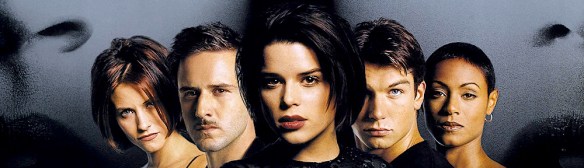
This month’s viewing included a highly-acclaimed anti-war classic and a Palme d’Or-winning multi-Oscar- and BAFTA-nominee — very worthy films no doubt, but often they’d be usurped by something more populist that I just enjoyed more. Scream (2022 version) comes closest, but not quite close enough. As for the other two, I think I give the edge to The Mission.

Least Favourite Film of the Month
I guess, on balance, this goes to B-league film noir The Guilty. I didn’t dislike it at all — it’s a perfectly respectable slightly-above-run-of-the-mill B-noir — but the other new films I watched were just that bit better, overall. (I was going to deliberately watch a bad film last night to stop this from happening, but I ran out of time.)

Best Scream of the Month
In typical me fashion, I started my rewatch of the Scream films back in June, aiming to space them out up until Halloween, but ended up not watching the second until the end of September and the rest this month. Oh well. But of the three I watched this month, which is the best? I say Scre4m. The 2022 one is good, but the 2011 film got to the “legacy sequel” thing first and did it near-perfectly. Still, whichever way you cut it, I think the good Scream films now outnumbered the bad (or, at least, lesser) ones, so that’s nice.

Best Early-Cinema Short Film of the Month
As I mentioned earlier, I watched a few short films this month, all from the early days of cinema — titles like The Sick Kitten, which is basically the world’s first cat video (it’s little more than a 30-second close-up of a kitten. I won’t be reviewing it). There was also Life of an American Fireman, which was once hailed as the first example of crosscutting (between action inside and outside a burning building), until it was discovered that was a re-edit decades later, and the original cut actually played the action in full twice. Oops. Of higher quality were two films by the great Georges Méliès: The Infernal Cauldron, in which some devilish business sees people thrown in a burning cauldron; and The One-Man Band, which uses trick photography to have multiple Méliès play in a band together. Maybe nowadays we can see the seams a bit in how it was done, but the filmmaker’s sense of fun and experimentation for the sake of it radiates off the screen.

The Audience Award for Most-Viewed New Post of the Month
No posts particularly shone in October (y’all weren’t interested in my Scream coverage, huh?), with the victor being the monthly review of September. Previously it’s been a rarity for a monthly review to win here (this may be only the third time it’s happened), but that’s now two months in a row. On the one hand, weird. On the other, I do like my monthly reviews — to me, they’re the backbone of the blog, with their regularity and their neat little summaries of things. So, if y’all want to start treating them that way too, that’s cool by me.


Every review posted this month, including new titles and the Archive 5


As we head into the final two months of the year, the number of films I have left to watch for my 100 Films Challenge are, frankly, a lot higher than I’d like — they should average 8.3 per month, but for November and December it’ll need to be 15.0.

On the bright side, those numbers break down neatly across most of the remaining incomplete categories: each month should have three film noirs, three films that progress a series, two Blindspot films, two WDYMYHS films, one new film, and one rewatch; plus, there are five DVDs to split between them, and a single wildcard to go somewhere, which may well end up being a 13th DVD, or perhaps another film noir, or another series entry. I’m not sure things will pan out quite so neatly, but maybe they will — it’s something concrete to aim for in each category, after all.

More importantly, is that doable? My averages across 2022 so far suggest not. But I’ve pulled things out of the bag in December before now (see the last bullet point under “Viewing Notes”), so only time will tell…

The 100 Films Guide to Scream

I don’t always do anything to mark Halloween on this blog… but when I do, this is the kind of thing I do: complete coverage of the Scream movies (so far).

That means all-new “100 Films Guide To”s for the original film, its two sequels, and the 2011 legacy sequel, plus my brand-new review of this year’s, er, new legacy sequel. You know, the film that should’ve been called 5cream, but wasn’t.


Scream (2022)

Matt Bettinelli-Olpin & Tyler Gillett | 114 mins | Blu-ray (UHD) | 2.39:1 | USA / English | 18 / R

Scream (2022)

Nowadays, reviving horror franchises with reboots or continuations that just use the same title as the original film are all the rage — witness The Thing, Halloween, and Candyman; you might also include Evil Dead, Blair Witch, The Predator, and Texas Chainsaw Massacre. (And it’s not just limited to horror movies: Shaft is a sequel to Shaft, which was a sequel to Shaft.) And where there’s a trend in horror movies, the Scream series must follow, to both emulate and roast the genre’s new status quo. Fortunately, there’s more than merely “we could call a new Scream film ‘Scream’” to the movie’s satirical targets.

Set about ten years after the last film, the fifth Scream (I get that the recycled title is a meta-gag too, but I still think it’s a shame they missed the chance to go with 5cream, or Screams / Scream5) introduces us to a new cast of characters. That’s what every Scream film has had to do (that’s the thing with slashers — most of your cast gets killed off each time), but here we’re in ‘requel’ mode. For those who don’t know, ‘requel’ is a portmanteau of “reboot” and “sequel”, i.e. a film that’s both a reboot (in the sense it’s a new story you can jump onboard with) and a sequel (in that it’s still in continuity with the previous films). “Legacy sequel” is a similar thing — a belated sequel, in continuity, with the original cast, now older — but Scream already targeted that kind of follow-up last time out. What being a ‘requel’ means for this film is we meet all the new characters before the legacy ones are gradually introduced the plot.

A plot summary is barely necessary: someone in a Ghostface mask is murdering people. Who is it? What’s their motive? That’s the plot of all the Scream films — of course it is, that’s how horror franchises work. The devil is in the details, but that can make the details spoilers. There are some neat reveals, and twists on the franchise’s formula, that I’m not going to spoil here because that would ruin the fun. If you’re a fan of the series, the less you know going in, the better. For example, there’s one reveal — which doesn’t come until we’re already in the final act — that was, apparently, blown in the trailer, even after the filmmakers worked hard to keep it secret until the right moment in the film itself. (That’s according to the audio commentary — I haven’t watched the trailer to see if it blatantly blew it or if fans just worked it out from the footage shown.)

Ghostface Mk.V

Scream being Scream, it gets to both have its cake and eat it by pointing out the laughable clichés and ridiculous tropes of other horror films, then doing them anyway. Some people dislike this approach — “pointing out that what you’re doing is a cliché doesn’t stop it from being a cliché” — but, personally, I think it’s part of the charm of these films. They don’t do the thing and then have someone go “that was so cliché!”, they tell you “wouldn’t it be clichéd if this happened?” and then it does. Too subtle a difference for some, I guess, but it works for me. One thing the previous films have a habit of doing — and it continues in this one — is laying out the entire plot for you, even telling you who the villain is, but you don’t notice because you’re busy playing whodunnit and stringing the mystery together. Of course, they also lay out red herrings, so it’s always easier to spot the “they gave it all away” moments with hindsight.

Whether or not you’re on board with that “point out what it’s going to do then do it” approach will probably dictate how much enjoyment you can get out of a film like Scream. The best bits are the ones that are self-aware, either because characters are expressly discussing the plot or because the filmmakers are playing with our expectations. In the case of the latter, this film has a really neat sequence in which you know for certain the killer is going to jump out at some point, but the character on screen is, as ever, oblivious to this fact, so merrily goes around opening doors, thus blocking our lines of sight, or wandering past open doorways, which are then held in shot for just a moment too long… It’s a gag that builds in hilarity the longer it goes on, and directors Bettinelli-Olpin & Gillett milk it magnificently.

As for the former, this film has an especially neat exchange about “fan fiction”. Without Wes Craven in the director’s chair and/or Kevin Williamson at the typewriter, this film could definitely be dismissed as just “fan fiction” — that’s the gag, really. But, in terms of quality, there’s “fan fiction” and there’s “fans who have become professionals picking up the baton and continuing a franchise perfectly”. If this film is either, I’d argue it’s the latter. Which is a slightly convoluted way of saying Scream (5) nails the tone, style, and — perhaps most importantly — meta humour that makes a Scream film a Scream film.

4 out of 5

Scream is the 69th film in my 100 Films in a Year Challenge 2022.

Scre4m (2011)

The 100 Films Guide to…

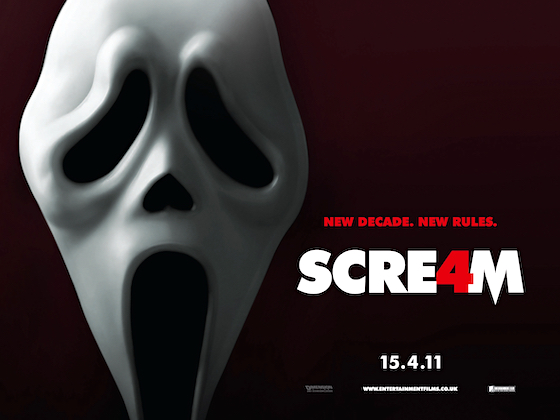
Scre4m

New Decade. New Rules.

Also Known As: Scream 4. Not in the film itself, though. Nor on any of its marketing. But most places on the internet? Apparently. Quite why certain online movie databases are so resistant to listing the film by its proper title, I don’t know.

Country: USA
Language: English
Runtime: 111 minutes
BBFC: 15
MPAA: R

Original Release: 13th April 2011 (Belgium, Egypt & France)
US & UK Release: 15th April 2011
Budget: $40 million
Worldwide Gross: $95.99 million

Stars
Neve Campbell (Scream (1996), Scream (2022))
Courtney Cox (Scream 2, Scream (2022))
David Arquette (Scream 3, Scream (2022))
Emma Roberts (Wild Child, We’re the Millers)
Hayden Panettiere (I Love You, Beth Cooper, Scream 6)

Director
Wes Craven (Wes Craven’s New Nightmare, Scream)

Screenwriter
Kevin Williamson (Scream, I Know What You Did Last Summer)


The Story
Ten years since the last Ghostface killings, and the tragic events have faded into festivity for the teens of Woodsboro, who now celebrate the anniversary of the first killings. But this year is a special one, because Sidney Prescott is back in town, and someone has donned the mask to go on a new killing spree…

Our Heroes
Sidney Prescott, perennial survivor of multiple Ghostface killers, must face one again as she returns to her hometown for the first time in years to promote her new book. Dewey — now Sheriff — and Gale — now his wife — are back, too, along with an array of fresh faces ready for the slaughter.

Our Villain
After a decade away, Ghostface is back! Except, as always, it’s a new killer (or killers) behind the famous mask. They’re still stalking Sidney, her friends and her family, but who is it and what’s their motive this time?

Best Supporting Character
Each new Scream film has introduced fresh faces (the films have a habit of killing off most of the supporting cast each time round, funnily enough, so you kinda have to), but the “whole new generation” angle of Scre4m makes it feel like there are even more this time round. While many are clear mirrors of characters from the first film (deliberately so), perhaps the one that manages to stand out the most in her own right is Hayden Panettiere’s Kirby, sassy best friend to Sidney’s cousin Jill. Yeah, she’s he new version of Rose McGowan’s Tatum, but, unlike some of the other characters, she doesn’t just feel like a 2011-painted carbon copy of the original. Plus, (major spoiler alert!) there’s a reason that, despite this film leaving her for dead, she’s set to reappear in Scream 6.

Memorable Quote
The Voice: “It’s time for your last-chance question. Name the remake of the groundbreaking horror movie in which the vill—”
Kirby: “Halloween, Texas Chainsaw, Dawn of the Dead, The Hills Have Eyes, Amityville Horror, Last House on the Left, Friday the 13th, A Nightmare on Elm Street, My Bloody Valentine, When a Stranger Calls, Prom Night, Black Christmas, House of Wax, The Fog, Piranha. It’s one of those, right?”

Memorable Scene
The film begins with two teen girls at home choosing a movie to watch, when a mysterious caller with a gravelly voice threatens their lives. What happens next would be a spoiler… but, from the very start, Scre4m sets out its stall as a movie that, in true franchise tradition, is going to play with the rules and expectations of movies.

Previously on…
After a hugely successful and acclaimed first film, Scream did what so many popular movies have done in the past few decades: got turned into a trilogy. Really, it’s only fitting that it got in early on the 2010s trend of “reviving a once-popular but thought-finished film series”.

Next time…
And now it’s getting in on the “just keep making more films forever” trend that once used to be more-or-less limited to James Bond and shitty horror sequels but nowadays is the defining feature of the entirety of Hollywood. First there was a new film simply titled Scream (the fact it’s not called 5cream or Scream5 is a sin), and next is… a second/sixth film that no one seems quite sure what the final title will be. I guess we’ll find out when it’s released next March.

Awards
2 Scream Awards nominations (Horror Actress (Neve Campbell), Best Cameo (Anna Paquin & Kristen Bell))

Elsewhere on 100 Films…
I originally reviewed Scre4m after I first watched it back in 2012, when I felt the film was “kind of old school. It fits better in the era of the original trilogy and/or earlier horror films than with the development of the genre in the intervening decade.” I went on to suggest it “plays best to those who saw the first three at the right age, i.e. mid-to-late teens or so. I shouldn’t think it would engage a new audience all that much, especially ones versed in the gorier Saw and Final Destination franchises. But for those of us with fond memories (to one degree or another) of the first three films, it’s kind of a nice little revisit.”

Verdict

The original Scream trilogy was the defining horror franchise of the ’90s, so reviving it over a decade after its last instalment seemed like the usual Hollywood BS of revisiting any recognisable IP. But with the original last, screenwriter, and director all returning, the film actually did what Scream has always done: be part scary movie, and part commentary on the horror genre landscape. And this time it throws in some social commentary for good measure, with some slightly-ahead-of-its-time satire of social media celebrities. It’s only become more pertinent with the stratospheric rise of YouTubers in the additional decade since the film came out.

One criticism I’ve seen levelled at Scre4m a few times is that it takes on remakes when it isn’t a remake itself. Well, that wouldn’t work, would it? For the characters to know they’re in a ‘remake’, they’d have to know there was an original — which by default would mean it’s not a remake but a continuation. In fact, the film does address this: it points out that we’re back in the original town, with killers who are following the pattern of the original movie (in-universe, that’s Stab, which seems to be a pretty faithful telling of the ‘real-life’ events shown in Scream). Most of the new characters are analogous to ones from the first film, too. So, Scre4m is, in fact, a remake… while also not being one, obviously.

All in all, the eleven years between Scream 3 and Scre4m gave the filmmakers enough fresh material to chew on to make the film a more-than-worthwhile addition to the franchise. For my money, the fresh perspectives make it easily the series’ best film since the first.

Scream 3 (2000)

The 100 Films Guide to…

Scream 3

The most terrifying scream
is always the last.

Country: USA
Language: English
Runtime: 117 minutes
BBFC: 18
MPAA: R

Original Release: 4th February 2000 (USA & Canada)
UK Release: 28th April 2000
Budget: $40 million
Worldwide Gross: $161.8 million

Stars
Neve Campbell (Three to Tango, The Company)
David Arquette (Ravenous, Ready to Rumble)
Courtney Cox Arquette (Commandments, Zoom)
Liev Schreiber (Sphere, X-Men Origins: Wolverine)

Director
Wes Craven (The Last House on the Left, My Soul to Take)

Screenwriter
Ehren Kruger (Arlington Road, The Ring)


The Story
As production gets underway on Stab 3 — the latest in the series of horror movies based on the Woodsboro killings — someone wearing a Ghostface costume starts killing the cast. But really, they want to know one thing: the whereabouts of perpetual murder-target Sidney Prescott…

Our Heroes
With Sidney in hiding at a remote location known only to a handful of people, the initial investigation into the new killings falls to the other survivors of the previous films: Dewey, now working as a consultant-cum-security on Stab 3, and his former love interest, intrepid reporter Gale Weathers.

Our Villain
The Ghostface killer is back, now terrorising Hollywood — but who’s behind the mask this time? As with the first two films, this technically counts as a whodunnit, though well done if you guess anywhere near the correct conclusion — it’s hardly Christie-level…

Best Supporting Character
Mark Kincaid (Patrick Dempsey) is the Hollywood homicide detective investigating the murders. As someone who grew up around the movie biz, he’s as au fait with the rules of cinema as most of the characters have had to become — but does that mean he fits right in, or has all the knowledge necessary to be the new Ghostface?

Memorable Quote
“Is this simply another sequel? Well, if it is, same rules apply. But here’s the critical thing: if you find yourself dealing with an unexpected backstory and a preponderance of exposition, then the sequel rules do not apply. Because you are not dealing with a sequel, you are dealing with the concluding chapter of a trilogy.” — Randy

Memorable Scene
Looking for someone, Sidney wanders into the abandoned Stab 3 soundstage — to be confronted by a perfect full-size replica of her childhood home. As she wanders inside, remembering the terrifying events that occurred there, she begins to suspect the killer is also lurking. Cue a clever re-staging of one of the first film’s most memorable scenes, as the new killer chases Sidney around her old home.

Making of
Neve Campbell was busy shooting a TV series and another film during the production of Scream 3, meaning her availability was limited to just 20 days on set. That’s why Dewey, Gale, and the new supporting cast get so much more screentime now, with Sidney mostly by herself. But whoever was in charge of scheduling around Campbell’s availability actually did a pretty good job maximising her presence, spreading her appearances throughout the film, with a few key interactions with the rest of the cast. If you didn’t know the behind-the-scenes story, you might not even realise what they had to do.

Previously on…
The first Scream garnered much acclaim for its amusing deconstruction of slasher movies. Naturally, Scream 2 applied the same modus operandi to sequels.

Next time…
Scream 3 was supposedly the end of the series… but if there’s one thing popular horror movie franchises do, it’s keep coming back. So, a little over a decade later, the series was revived with Scre4m in 2011. Then it was turned into an unrelated TV series that ran for two seasons in 2015 and 2016. Then that was rebooted as Scream: Resurrection in 2019. Then the original movie continuity was returned to earlier this year, in the confusingly-titled Scream. That’s getting a sequel next year. Goodness knows what they’re gonna call it.

Awards
2 MTV Movie Award nominations (Female Performance (Neve Campbell), Comedic Performance (Parker Posey))
1 Fangoria Chainsaw Award (Supporting Actress (Parker Posey))

Verdict

The Scream movies were always noteworthy for the metatextual way in which they addressed and engaged with the tropes and clichés of slasher movies, but actually setting this one in Hollywood on the set of a slasher movie based on the events of the previous movies is perhaps taking the whole self-awareness thing one step too far. It pushes its luck even further with some cameos that are kinda fun, but also kinda too silly (Jay and Silent Bob?! So the Scream movies are canonically set in the View Askewniverse…) Plus, the attempt to retcon in a series-overarching motive for the killer, in aid of making it a true trilogy rather than just “another Scream movie”, is as forced and unsatisfying as it sounds.

All of which said, the film still has effective moments and individual sequences, and a smattering of entertaining gags that are still on the money. Even if it remains the least of the Scream films, but it’s far from the disaster it’s often been painted as.

Scream 2 (1997)

The 100 Films Guide to…

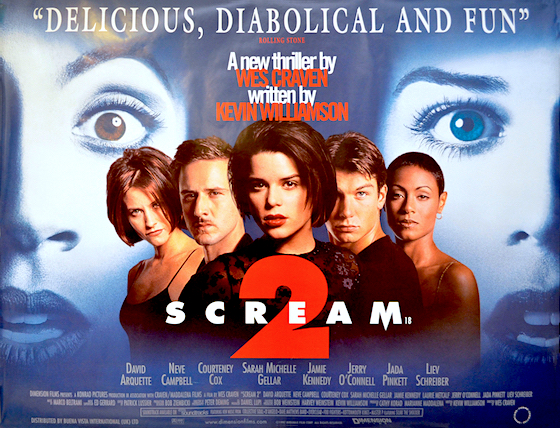
Scream 2

Someone has taken their love of
sequels one step too far.

Country: USA
Language: English
Runtime: 120 minutes
BBFC: 18
MPAA: R

Original Release: 12th December 1997 (USA & Canada)
UK Release: 1st May 1998
Budget: $24 million
Worldwide Gross: $172.4 million

Stars
Neve Campbell (54, Skyscraper)
Courtney Cox (Masters of the Universe, Bedtime Stories)
David Arquette (Wild Bill, Eight Legged Freaks)
Jamie Kennedy (Romeo + Juliet, Son of the Mask)

Director
Wes Craven (The Hills Have Eyes, Cursed)

Screenwriter
Kevin Williamson (Teaching Mrs. Tingle, Cursed)


The Story
Sidney is now at college, but when a movie is released based on the Woodsboro murders, a new killer dons the Ghostface mask and begins targeting her fellow students.

Our Heroes
The sequel natural reunites the survivors of the first film (spoilers!) — target Sidney Prescott, police officer Dewey Riley, reporter Gale Weathers, and film nerd Randy Meeks — while adding a host of new victims / suspects. It’s full of faces that were TV-famous at the time and/or have gone on to be better known since: Jada Pinkett Smith, Omar Epps, Liev Schreiber, Sarah Michelle Gellar, Joshua Jackson, Timothy Olyphant, Jerry O’Connell, Laurie Metcalf…

Our Villain
Ghostface — but unlike other slasher franchises with supernatural villains, this is just a mask, worn by different killer(s) in each film. Who is it this time? Well, that’d be a spoiler — the Scream movies are effectively murder mysteries. Not particularly good murder mysteries (they don’t function in that Christie-esque way of laying out suspects and clues so we can have a fair guess at whodunnit), but they’re technically murder mysteries nonetheless.

Best Supporting Character
Some of the new characters give their best shot at being memorable, but sorry, it’s Randy again (see this category in the first Scream). That said, there is a nice little cameo from the ever-excellent David Warner.

Memorable Quote
Randy: “The way I see it, someone’s out to make a sequel. You know, cash in on all the movie murder hoopla. So it’s our job to observe the rules of the sequel. Number one: the body count is always bigger. Number two: the death scenes are always much more elaborate. More blood, more gore. Carnage candy. Your core audience just expects it. And number three: if you want your sequel to become a franchise, never, ever—”

Memorable Scene
Sidney and her roommate Hallie are being escorted to safety in the back of a police car when Ghostface appears out of nowhere, hijacks the car, and crashes it into roadworks. With the car’s back doors locked, the girls’ only chance of escape is by climbing into the front seat and out the driver’s window — right past the unconscious serial killer…

Previously on…
The original Scream was such a hit that this sequel was in production just six months later, and eventually released less than a year after the first.

Next time…
As the horror franchise of the ’90s, naturally Scream has continued into the ’00s and beyond: Scream 3 wrapped up the trilogy in 2000, before the series was revisited with Scream 4 (actually titled Scre4m) in 2011, and then revived earlier this year in a film simply titled Scream. That’s getting a sequel next year, which obviously poses titling issues. There have also been a couple of TV incarnations, both entirely unrelated in story terms: Scream: The TV Series ran for two seasons in 2015 and 2016, and Scream: Resurrection (or season 3, if you prefer) in 2019.

Awards
1 MTV Movie Award (Female Performance (Neve Campbell) — she beat Kate Winslet in Titanic!)
3 Fangoria Chainsaw Awards (Wide-Release Film, Supporting Actress (Courtney Cox), Screenplay)
2 Fangoria Chainsaw Award nominations (Actress (Neve Campbell), Supporting Actor (Liev Schreiber))
3 Saturn Award nominations (Horror Film, Actress (Neve Campbell), Supporting Actress (Courtney Cox))

Verdict

Where the first Scream was a forensic deconstruction of the slasher genre, the second is more of a vague gesture in the general direction of sequel tropes — less focused, less insightful, less funny. But, crucially, it’s still quite entertaining. There are abundant references for movie buffs to enjoy (primarily to other sequels and, er, other Friends cast members), while Wes Craven’s ever-skilful thrill sequences ensure the tension doesn’t slack too much. There are even a few jump scares for the more susceptible. It’s not a genre-(re)defining classic like the first movie, but it’s still a solid scary movie.

Scream (1996)

The 100 Films Guide to…

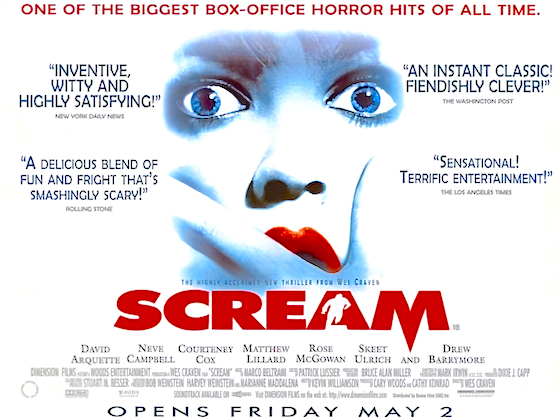
Scream

Someone has taken their love of
scary movies one step too far.

Country: USA
Language: English
Runtime: 111 minutes
BBFC: 18
MPAA: R

Original Release: 20th December 1996 (USA)
UK Release: 2nd May 1997
Budget: $14 million
Worldwide Gross: $173 million

Stars
Neve Campbell (The Craft, Wild Things)
David Arquette (Buffy the Vampire Slayer, Never Been Kissed)
Courtney Cox (Ace Ventura: Pet Detective, 3000 Miles to Graceland)
Drew Barrymore (Firestarter, 50 First Dates)

Director
Wes Craven (A Nightmare on Elm Street, Red Eye)

Screenwriter
Kevin Williamson (I Know What You Did Last Summer, The Faculty)


The Story
In the quiet town of Woodsboro, a mysterious man in a mask starts murdering teenagers, first taunting them with horror movie trivia questions.

Our Hero
Sidney Prescott is an ordinary high school girl… apart from the fact her mother was murdered a year ago, and it was her eyewitness testimony that saw a man sentenced to death. Now, a serial killer seems to be targeting her — could the events be connected?

Our Villain
A slasher movie has to have a distinctive-looking, nicknamed serial killer at its centre, and here it’s Ghostface — although he’s actually only called that once in the film itself. His costume is a generic Halloween outfit bought from any old store, and is technically called Father Death. Why didn’t that name stick instead? Probably because it’s a bit shit.

Best Supporting Character
The film has severable memorable supporting turns, but perhaps the key one is nerd and video store employee Randy (Jamie Kennedy). He knows all the rules of horror films, and when it turns out his friends don’t, he helpfully gives them an explainer — which also works for any audience members who maybe aren’t so au fait with the genre either.

Memorable Quote
“No, please don’t kill me, Mr. Ghostface, I wanna be in the sequel!” — Tatum

Memorable Scene
The opening scene: everyday teenage girl Casey (played by Movie Star™ Drew Barrymore) is preparing to watch a movie when she gets a phone call. It seems like a wrong number, but the man keeps calling back. At first their chat is a bit flirty, but then it begins to get a bit weird, and soon… well, if you haven’t seen it, I wouldn’t want to spoil it for you.

Making of
The movie’s climax takes place at a house party the kids are having to take their mind off the killings, or something. But you wouldn’t guess it was the climax to start with, because it begins a little over halfway through the film — the ‘scene’ altogether lasts 42 minutes. It was shot across a gruelling 21 days of night shoots. After it was finally done, the crew had T-shirts made saying “I Survived Scene 118”.

Next time…
Two direct sequels followed in 1997 and 2000. More recently, the franchise has been subjected to the usual rounds of revivals: it took on parodying the ‘legacy sequel’ with a continuation in 2011, then did the same again with another one in 2022. A sequel to that is on the way next year. In between, there was a spin-off TV series that lasted three seasons. Season 1 and 2 were a reboot, unconnected to the movies; then it rebooted itself for season 3, still with no connection to the movies.

Awards
1 MTV Movie Award (Movie)
1 MTV Movie Award nomination (Female Performance (Neve Campbell))
4 Fangoria Chainsaw Awards (Wide-Release Film, Actress (Neve Campbell), Supporting Actress (Drew Barrymore), Screenplay)
1 Fangoria Chainsaw Award nomination (Supporting Actor (Skeet Ulrich))
3 Saturn Awards (Horror Film, Actress (Neve Campbell), Writer)
3 Saturn nominations (Director, Supporting Actor (Skeet Ulrich), Supporting Actress (Drew Barrymore))

Verdict

By the mid-’90s the once-popular horror genre was languishing in a mire of endless sequels to the same old titles — but then Scream came along and gave it a much-needed kick up the rear end. Originally titled Scary Movie (in some ways, a more apt title), Scream is a horror movie that knows it’s a horror movie — a kind of self-awareness, often (arguably mistakenly) referred to as post-modernism, that was ever so popular in the ’90s. But it worked for a reason: it treated the audience with respect. It said, “you know the rules, so let’s not pretend.” And that facilitates two things: by acknowledging the rules, it can play with them to make you laugh; and it can break them to surprise you. Thus Scream is simultaneously a spoof of the slasher genre and a genuine entry in it. It’s potentially a tricky tightrope to walk (several major directors were rejected because they thought the film was just a comedy), but Wes Craven nails the tone so perfectly that he makes it look easy. So what might have been a last-hurrah commentary on what had already been instead turned out to be the beginning of a new wave; one which has helped fuel the genre for over 25 years since.

2022 | Weeks 27–28

Hello! Yes, it’s me — I am still here. I’ve just been finding my time filled up with other stuff: working on the 2022 iterations of both WOFFF and FilmBath Festival (in addition to the ol’ day job); dogsitting for the in-laws; throwing up from eating bad garlic…

Anyway, here are some reviews of films I watched all the way back in July. (Oh dear, I am behind. Well, let’s see if I can catch up…)

  • Johnny Gunman (1957)
  • A Better Tomorrow (1986), aka Ying hung boon sik
  • Mifune: The Last Samurai (2015)
  • The Lost Daughter (2021)


    Johnny Gunman

    (1957)

    Art Ford | 67 mins | digital (HD) | 4:3 | USA / English

    Johnny Gunman

    The history of cinema is littered with fascinating asides and dead ends, and this is one of them: an independent film from before independent films were really a thing; from the time when the studio system was beginning to falter, but the film school auteurs hadn’t yet arrived (Spielberg, Scorsese, Coppola, et al were still in their teens when this was made).

    As with the films that would later break similar new ground after the digital video revolution in the ’90s, there are cracks — it’s amateurish and undeniably low-budget in places — but also artistry — every once in a while it’ll whip out an exceptionally well-lit scene or interesting visual. Story-wise, it’s an odd mix: there’s the noir-ish gangster plot line, which is derivative and clichéd; but it takes over the film from what you feel like it almost wants to be, which is a Before Sunrise-style slice of life. Maybe, in a freer world, that’s what the filmmakers would’ve produced; but when you’re one of the first people trying to break in from the outside, hitting the familiar beats of a genre is no bad idea.

    Some of the highlights of the film come at the start, with documentary-like shots of New York street life when our heroine visits the Greenwich Festival. It’s a brief little window into the real 1950s NYC, before the rote gangster plot comes to dominate. Indeed, being shot on location, and with an inexperienced cast, lends the whole production a certain veracity that you don’t always get from soundstage-bound studio pictures of the era. On the other hand, that’s also what gives it the rough edges that will make it unpalatable to some viewers.

    However you cut it, this is hardly a forgotten gem, but it’s an interesting detour of movie history that I’m glad I stumbled across.

    3 out of 5

    Johnny Gunman is the 45th film in my 100 Films in a Year Challenge 2022.


    A Better Tomorrow

    (1986)

    aka Ying hung boon sik

    John Woo | 96 mins | digital (HD) | 1.85:1 | Hong Kong / Cantonese, Mandarin & English | 18

    A Better Tomorrow

    A Better Tomorrow was the first in a run of modern-day gangster action movies that would make director John Woo’s name. Its original Chinese title translates as True Colours of a Hero, which is just as apt: it’s about a pair of mid-level crooks, one of whose brother is a cop, and the ways and whys in which they try and fail to escape the criminal life.

    Woo’s style was cutting edge back in the day, but that day is now pushing 40 years ago. Of course, his flamboyant style has never been to some people’s taste (witness the dismissive stance some still take towards M:i-2). Viewed now, this is cheesier and less stylistically polished than his later career-defining HK films like The Killer or Hard Boiled, but, on the couple of occasions it does explode into action, it’s suitably grandiose, and it has an engaging storyline and character dynamics.

    In regards to the latter, you can definitely see why Chow Yun-Fat was the breakout star. He’s actually got a supporting role, but his charisma shines off the screen, and there’s a plausibility to the way he handles the action. (Ironically, although it made Chow an action icon, he was cast because Woo didn’t think he looked like an action star.)

    Not Woo’s strongest film, then, but a definite sign of someone headed in the right direction — and, clearly, his later work paid off that promise.

    4 out of 5

    A Better Tomorrow is the 46th film in my 100 Films in a Year Challenge 2022. It was viewed as part of “What Do You Mean You Haven’t Seen…?” 2022.


    Mifune: The Last Samurai

    (2015)

    Steven Okazaki | 77 mins | DVD | 16:9 | USA & Japan / English & Japanese | 12

    Mifune: The Last Samurai

    At just an hour and a quarter, this biography of the actor Toshiro Mifune feels more like a primer on his work and life (complete with newcomer-friendly contextual asides into the history of Japanese cinema, the career of Akira Kurosawa, etc) rather than the deep-dive exploration of the man and his legacy that some reviewers hoped for. I certainly learnt stuff, but such criticism has validity. For that reason, the less you know about Mifune (and Kurosawa), the more you’ll get out of the film. That said, it might pay to have already seen some of their films — it’s not that director Steven Okazaki doesn’t introduce and summarise them adequately; more that, if you’ve seen them, you know the full context.

    Nonetheless, a good range of interviewees ensure the documentary is not without insight, managing to explore both what made Mifune the man tick and what made him such a phenomenal screen presence. Plus, the fact that Okazaki is happy to explain contextual topics (like a history of chanbara films; or matters of social history, like what losing World War 2 was like for the Japanese people) is both education and useful, because I imagine most non-Japanese viewers don’t have much baseline knowledge about this stuff. The film is definitely a biography of Mifune (not, say, a history of 20th century Japan using the actor as a gateway), but there’s much to be gleaned here for the interested viewer.

    4 out of 5

    Mifune: The Last Samurai is the 47th film in my 100 Films in a Year Challenge 2022.


    The Lost Daughter

    (2021)

    Maggie Gyllenhaal | 122 mins | digital (HD) | 1.66:1 | USA, UK, Israel & Greece / English & Italian | 15 / R

    The Lost Daughter

    Maggie Gyllenhaal’s directorial debut, based on a novel by Elena Ferrante, stars Olivia Colman as Leda, a woman on holiday alone in Greece, where she encounters a young mother (Dakota Johnson) whose daughter briefly goes missing, reminding Leda of her own younger days, when she was played by Jessie Buckley and had a husband and two daughters herself.

    It’s perhaps initially difficult to pin down exactly what The Lost Daughter is driving at — I suspect it’s the kind of film in which some people would say nothing happens. But it’s really a kind of mystery, where the mystery is the lead character’s psychology: why is she like this? There’s also the more obvious mystery of what exactly happened in her past, but that isn’t solved so much as gradually doled out in flashbacks. Obviously that kind of story relies a lot on its performances, and Colman is as strong as ever. So much of the importance of the film, which lies in her character and emotion, is conveyed without dialogue. That’s not do down the able support from Buckley and Johnson, mind.

    Gyllenhaal’s direction is interesting and effective, using lots of fairly extreme close-ups to give a kind of tactile sensation to the film. On the other hand, I would say it feels a little longer than necessary (especially after the ‘reveal’ scene, where the final piece of the puzzle clicks), and I’m not convinced it knows how to end (or perhaps it’s my fault for not really ‘getting’ the finale).

    Overall, though, it’s an impressive debut from Gyllanhaal, and a great alternative perspective on motherhood.

    4 out of 5