
Happy New Year, dear readers. In fact, Happy New Decade!
Well, kinda. Yeah, sure, technically it isn’t, but when people talk about “the 2010s” they’re going to mean “2010–2019” and when they talk about “the 2020s” they’re going to mean “2020–2029”, so…
Anyway, as usual I’m going to spend the first week (give or take) of this new year looking back at the old one. I already started that in my Christmas Day post — which contained the kind of thing I’d normally be writing about here, so now might be an appropriate time to read that if you haven’t already.
Otherwise, onwards to my final monthly review of the decade…

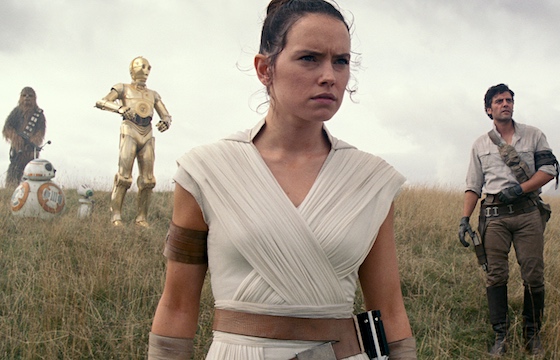
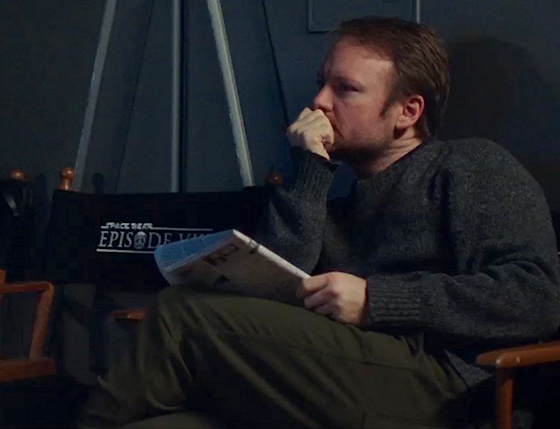
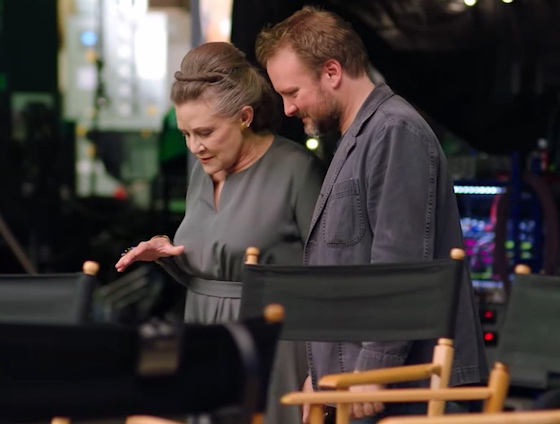
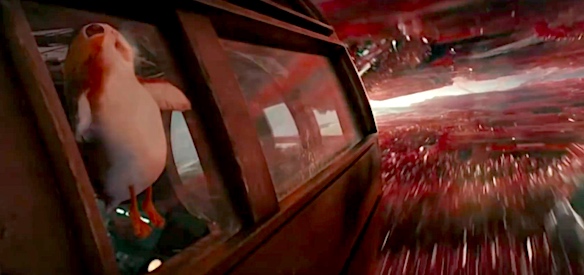
#147 Star Wars: The Rise of Skywalker (2019)
#148 Eighth Grade (2018)
#149 Brightburn (2019)
#150 Agatha and the Curse of Ishtar (2019)
#151 Death on the Nile (1978)

- So, I watched five new feature films in December.
- The last of those came on New Year’s Eve, granting December a last-minute reprieve from being in my bottom 10% of months ever, and also from being one of my lowest months of 2019. Instead, that (dis)honour is shared by June and October.
- 2019 was the first year since 2014 that any month tallied fewer than 10 films — and, with December now included among them, in total there were five such months.
- That finalises the monthly average for 2019 as 12.58, which obviously December was well below.
- It was also below the rolling average for the last 12 months (previously 13.3, now… 12.6, of course), and the average for December itself (previously 11.7, now 11.2).
- There’ll be more on where this puts 2019 in relation to previous years in my annual statistics post, later in the week.
- Nothing from Blindspot nor WDYMYHS again this month, meaning I got nowhere near completing either. Oh dear. But I did watch 17 films between the two this year, which is a better result than if I’d only been doing one of those challenges, so that’s good.
- From last month’s “failures” I watched Brightburn and Eighth Grade.

The 55th Monthly Arbitrary Awards
 Favourite Film of the Month
Well, this is easy-peasy. Of the five films I watched, four scored 3 stars. The other was Eighth Grade, which gets a full 5.
Least Favourite Film of the Month
I watched some distinctly middle-of-the-road films this month, but plain old mediocrity is nothing in the face of the disappointment that was Star Wars: The Rise of Skywalker.
The Audience Award for Most-Viewed New Post of the Month
I only made four posts in December, and only one of those was an opening-weekend review of a highly-anticipated, much-talked-about final film in a 42-year-old ultra-popular franchise, so it should surprise no one that Star Wars: The Rise of Skywalker is the victor here.



I’d’ve had to rewatch 24 films in December to reach my goal of 50 for 2019. No surprise, that didn’t happen. But I did watch a few, at least.
#27 The Lord of the Rings: The Fellowship of the Ring – Extended Edition (2001/2002)
#28 The Lord of the Rings: The Two Towers – Extended Edition (2002/2003)
#29 The Lord of the Rings: The Return of the King – Extended Edition (2003/2004)
That’s the first time I’ve watched The Lord of the Rings since I started doing Rewatchathons. They’re still great.
And so my 2019 Rewatchathon ends on #29 — far lower than intended, but it’s better than 0, and that’s really the point.

The streamers seem to have gone absolutely bloody mental with new additions this month — Netflix could boast 87 additions yesterday alone, while literally thousands of films poured onto Amazon’s Prime Video across the month… at least according to the site I use to track it. In reality, a lot of the stuff that picked up as ‘new’ was already available (for some reason it seems much harder to track what’s new on Amazon than Netflix). Whatever — I didn’t watch any of them, so everything worthy of note pops up down here in my failures.
But before I get onto rattling off those titles, some comparatively short lists. Like for the cinema, where I missed what’s supposed to be one of the best films of the year, and another that’s supposed to be one of the worst. Those are Little Women and Cats, respectively. One I’ll surely pounce on when it hits disc is sequel/threequel/fourquel (depending how you want to count it) Jumanji: The Next Level, which is hopefully a bit of fun (I’ve not really read any reviews of that one).
Speaking of discs, a mix of new purchases and Christmas presents bulked out my to-watch list this month. The single biggest addition was Criterion’s Godzilla box set, with its 15 giant monster movies. I also got my mitts on their release of the Koker trilogy. Further catalogue additions came via Master of Cinema’s release of A Fistful of Dynamite and Arrow’s of The Exorcist III, while newer titles included Anna and the Apocalypse, Happy Death Day 2U, and Men in Black: International (it was on offer). This month’s discs were rounded out by a trio of rewatchers: Toy Story 4 (in 3D!), Deadwood: The Movie (without the much-desired deleted scenes), and miniseries From the Earth to the Moon (in its controversial HD restoration).
So, we return to Netflix and Amazon. The former had a few high-profile originals this month: possible awards contenders Marriage Story and The Two Popes, plus Michael Bay’s latest, 6 Underground. Some other 2019 releases I’ve yet to see elsewise also cropped up, including the new Hellboy, Missing Link, Mrs. Lowry & Son, Fighting with My Family, A Private War, and Mid90s. Amazon didn’t have any brand-new titles to brag about, but they did have some similarly recent acquisitions, including Wild Rose, Fisherman’s Friends, and Horrible Histories: The Movie. As for older titles popping up… well, there were many, but select ones of note across both services included Roman J. Israel, Esq. (with its Oscar-nominated turn from Denzel Washington), The Rover, The Breadwinner (moving from Amazon to Netflix), the original Benji, Blackfish, Young Mr. Lincoln, and The Great Escape (that’s right, I’ve never seen The Great Escape).
I’m gonna need to start watching considerably more films again to even touch the sides of that lot.

After I’ve done my usual array of posts analysing 2019, it’ll be on to 2020 — my 14th year. And it’s entirely possible it’ll be the year I reach #2000…





































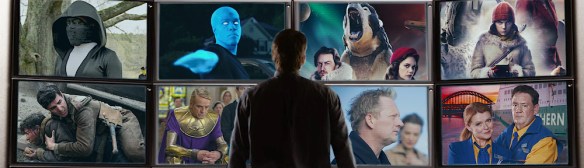
 Another year, another divisive Doctor Who Christmas special. It’s the third time that the Christmas Day spectacular has to serve double duty by writing out the programme’s lead actor, and it follows the format set out by David Tennant’s swan-song The End of Time and Matt Smith’s finale The Time of the Doctor by being a very inward-looking fan-focused edition. I’m not sure that’s the right tack to take on Christmas, quite frankly, when the show’s playing to a wider audience of more casual viewers than normal. Former showrunner Russell T Davies and immensely popular leading man Tennant had earnt that kind of indulgence by the time they exited, and the series was pretty much the biggest thing on British TV at the time, so most of those so-called “casual viewers” were actually regular watchers of the show anyway. I’m not convinced exiting showrunner Steven Moffat and departing Doctor Peter Capaldi are quite in the same position.
 The BBC’s two-part adaptation of Jessie Burton’s 2014 bestseller promised to be a supernatural treat, though in that respect the trailers were somewhat misleading. Set in 17th century Amsterdam, it’s about a girl who marries a wealthy merchant, but finds his strict and secretive household is not all she’d hoped. He buys her a dolls house as a wedding gift and she commissions a miniaturist to produce items for it, but she soon starts to receive things she didn’t order — things which suggest the miniaturist somehow knows people’s secrets, and can possibly see the future… In actuality, The Miniaturist is more of a period drama, albeit one with lashings of Gothic that were right up my street. It was beautifully made, with a fantastic eye on the costumes and locations, and cinematography that evoked painting of the era. There were strong performances too, particularly from Anya Taylor-Joy (yes, her out of
 “Oh God, I’d forgotten,” says one character early in the first instalment for almost 15 years of BBC Two’s pitch-black comedy series. He’s been confronted with some other returning characters, but I have to say that the sentiment kind of sums up my reaction to a lot of this revival, in two ways: firstly because I had to keep rummaging in my memory to make connections back to a series I haven’t watched for a decade and a half, and secondly because the hilarious grotesquery of the League came crashing back. Revivals of once-great comedies can be a mistake — they’re often little more than an exercise in nostalgia; and this one is certainly aimed at fans, as the vast majority of it continues or riffs off stuff from before — but, in spite of that, it still felt fresh and edgy, not like a gang of middle-aged men reliving past glories (the other thing that goes wrong with revivals). So it was all really rather good, and it’s gone down very well too. Officially it’s a 20th anniversary special rather than a fourth series, but might we see more? I think it would be welcomed.
 So much comedy, so much of it a passable time-killer that I have little else to say about. The highlight was probably 300 Years of French and Saunders, an excellent celebration of the comedy double act, reminding us of many of their greatest hits alongside a few nice additions. It made me want a whole highlights series repeating all their many hilarious film spoofs. Shakespearean satire Upstart Crow offered a neat riff on one of the better-remembered storylines from modern Christmas classic Love Actually, which it executed with surprising subtly (or, at least, I had to point out the references to my fellow viewers, which was followed by half-an-hour of scouring through Richard Curtis’ film for the relevant scenes). I enjoyed the pilot for Tim Vine Travels Through Time back in
  Black Mirror series four was released last Friday, but I haven’t even watched series three yet. Well, I did only watch
 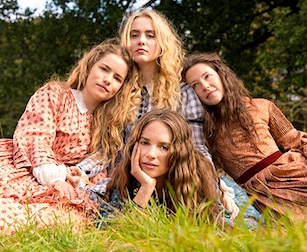 I may’ve watched 26 different programmes, but there’s still an awful lot I’ve missed. Like the BBC’s new three-part adaptation of Little Women — I’ve never read it or watched another version, so here’s my chance to get cultured. Less worthy but no less lovely, there’ve been a couple of Great British Bake Off specials featuring contestants from the BBC years even though it’s now on Channel 4. Gasp, indeed. And despite that long list up above, there’s still a handful of comedy specials I’ve got to catch up on, like Not Going Out, Would I Lie to You?, and even some not featuring Lee Mack. There’s bound to be something else I’ve forgotten — I’ll have to go through the Radio Times, again…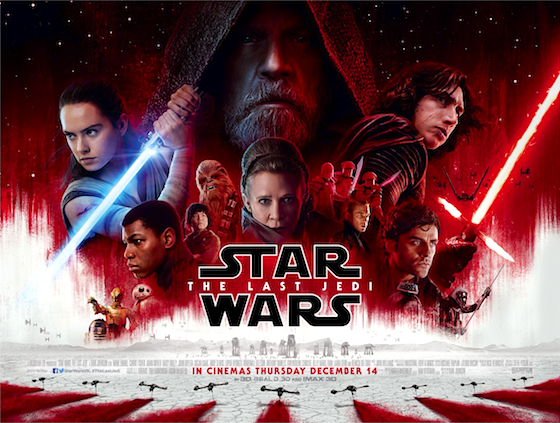




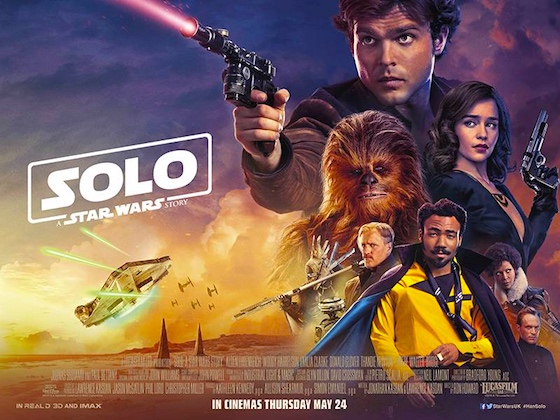
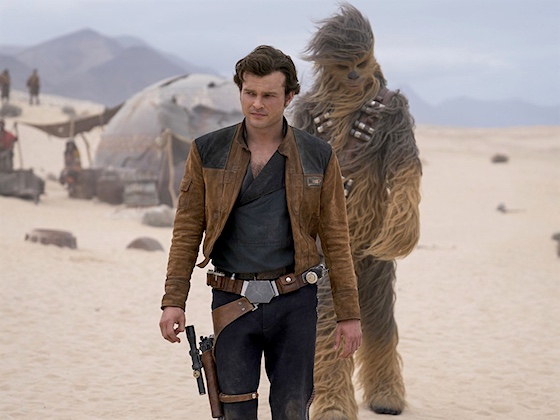
 The first live-action non-saga movie to take us to a long time ago in a galaxy far, far away, this initial entry in what is sure to be a never-ending series of so-called “Anthology” movies really puts the “War” into Star Wars.
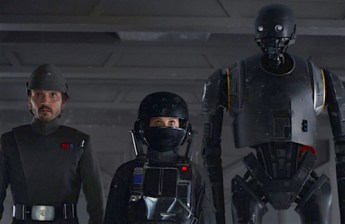 Unfortunately, the plot starts off almost as jumbled as my mixed metaphors there. “Jumbled” may be unfair, but it’s a little scrappy, initially jumping around all over the place in a way that’s tricky to follow even if you’ve read up on the film and have an idea who you’re being introduced to and why. It must be a right pain for neophyte viewers. There can be a fine line between praising a film for requiring its viewers to pay attention and do some work, and criticising it for being disarrayed and not making things clear. Personally, I thought Rogue One was sat right on that line for much of its first act, until a few big expositional infodumps come along to explain the storyline.
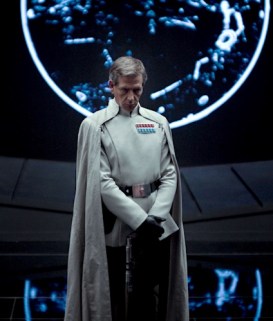 Then we come to perhaps the film’s most discussed character: Grand Moff Tarkin, played by Peter Cushing’s computer-generated face overlaid on the motion capture and voice of
  Continuing such comparison to the wider Star Wars galaxy, some have said Rogue One is the
  Much discussion of Rogue One seems to have revolved around whether it’s better than The Force Awakens. At the risk of sitting on the fence, I can see both sides. On the one hand, Edwards is a much more interesting filmmaker than J.J. Abrams. The latter is adept at aping the work of others, having now been in charge of multiple movies that are mostly derivative but nonetheless entertaining. Edwards’ career is still a little fresh and blockbuster-centric to risk describing him as an auteur, but his
  100Films.co.uk