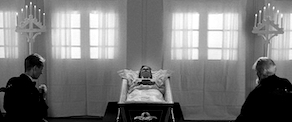
Blindspot 2023

This is my 11th year doing a version of Blindspot (not to mention that various other bloggers do it too… or used to. Do other people still do this? Is there a whole world of it going on that I’m somehow cut off from? Or am I a lone proponent, still plugging ahead with a near-decade-old fad, because I really like it? I don’t know…)

Anyway, if you somehow still don’t know what it is or how it works, the premise is simple: choose 12 films you should have seen but haven’t, then watch one a month throughout the year. (My 12 also contribute to my 100 Films in a Year Challenge.)

Some people just choose their 12 films. I normally do it via an elaborate system of compiling “great movies” lists in various configurations to spit out some general consensus of which 12 well-regarded films I should watch next, rejigging which lists are included and how they’re factored in to provide new results each year. But 2023 is a bit different, thanks to a significant event last month: the publication of a new edition of Sight & Sound’s decennial 100 Greatest Movies poll, one of — nay, the most widely respected list of its kind among cinephiles. There were 27 films I hadn’t seen on the latest edition of the list — more than enough to fuel my Blindspot selections for this year.

I’ll explain how I whittled those 27 down (it wasn’t a long process, but it’s more than just “the top 12”) after listing the films themselves. In the order they ranked in Sight & Sound’s poll, this year I must watch…


Jeanne Dielman…
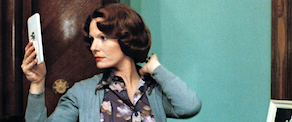
Jeanne Dielman, 23, quai du Commerce, 1080 Bruxelles

Beau Travail

Beau Travail

Cléo from 5 to 7

Cléo from 5 to 7

Close-Up

Close-Up

Au hasard Balthazar

Au hasard Balthazar

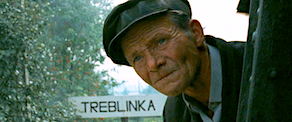
Shoah

Shoah

Killer of Sheep

Killer of Sheep

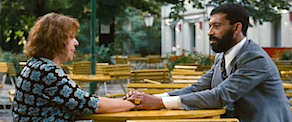
Fear Eats the Soul

Fear Eats the Soul

A Brighter Summer Day

A Brighter Summer Day

Pierrot le Fou

Pierrot le Fou

Tropical Malady

Tropical Malady

Black Girl

Black Girl


With just 12 slots but 27 films I hadn’t seen, obviously I had to pare the list down somehow. One method would’ve been to just take the 12 highest ranked — they’re meant to be the best of the best, after all. But that didn’t allow for the fact that, to be blunt, there were films further down the list that I was more interested in seeing. Another method would’ve been to run the 27 films through one of my usual list-of-lists calculations and see which 12 emerged victorious. But in a year where I’d simplified the selection process, it seemed silly to overcomplicated it again.

So, here’s what happened: I already owned some of the films on disc; when the list came out, after I had a look at it, there were a couple of highly-ranked films that I’d already been considering purchasing, so I ordered them; and there were a few more that, for whatever reason, I felt compelled to, um, download. When I stopped to take stock of this flurry of activity, the number of films in my possession added up to 13. They weren’t necessarily the films I had envisioned being in my final 12 (for starters, two from the top 50 were missing), but there we were.

The only remaining question: which to ditch? It was nearly Au hasard Balthazar. I wasn’t sure I’m ready for the “a donkey’s miserable life” movie. I’m still not. But this seemed as good a time as any to bite the bullet and get it seen. What about approaching it from the other angle — which had to be included? Well, I don’t think I’m going to like Jeanne Dielman, but I’ve felt I should watch it for some time now… and, more importantly, it’s #1 — of course #1 had to go in! Then there’s the ones I already owned on disc: Shoah, A Brighter Summer Day, and Black Girl (also Yi Yi, but that was on last year’s list, so I ruled it out on the presumption I’d watch it in December. Oops). Then, the ones I’d freshly ordered: Beau Travail and Close-Up. Even if I hadn’t bought them, both are among the top four I hadn’t seen.

That just left narrowing the remaining seven downloads to six. I could talk you through my process, such as it was, on a film by film basis, but in the end it came down to a gut feeling. You can already see which films made it in — the loser, for what it’s worth, was Douglas Sirk’s Imitation of Life. I couldn’t really tell you why; it’s just what I decided.

One other thing: I can’t usually have wildcards from Blindspot — it’s a list of 12 films taking up 12 slots; there aren’t any to be wildcards. But this year is an exception in that respect, too: I figure that, as the entire list is chosen from Sight & Sound’s list, then the 15 unchosen films were the only other eligible options, and therefore they could be eligible for wildcard slots. Disagree? Tough, it’s my game. Will I actually watch any of them, when getting through the 12 actual picks can be challenge enough some years? Maybe not. But the possibility is there.


Before we leave Blindspot behind and head to “What Do You Mean You Haven’t Seen…?” (or, if you’ve come to this post second, before you head back to your life), here’s a dash of additional info. You see, just because these 12 films were all taken from the Sight & Sound list, that doesn’t mean they don’t contribute towards my completion of other lists — unsurprisingly, there’s some degree of overlap between different “great films” lists. So, in case you were curious (because I was), other key lists that some of these films appear on (at time of writing) include…

TSPDT’s The 1,000 Greatest Films (16th edition) — all 12, ranging from 34th (Au hasard Balthazar) to 869th (Black Girl).

BBC’s The 100 Greatest Foreign-Language FilmsJeanne Dielman; Beau Travail; Cléo from 5 to 7; Close-Up; Au hasard Balthazar; Shoah; Fear Eats the Soul; A Brighter Summer Day; Pierrot le Fou.

BBC’s The 100 Greatest Films Directed by WomenJeanne Dielman; Beau Travail; Cléo from 5 to 7.

iCheckMovies’s Most FavoritedJeanne Dielman; Close-Up; A Brighter Summer Day.

Letterboxd’s Top 250 Narrative Feature FilmsJeanne Dielman; A Brighter Summer Day.

IMDb’s Top 250 — nothing (can’t say I’m surprised).
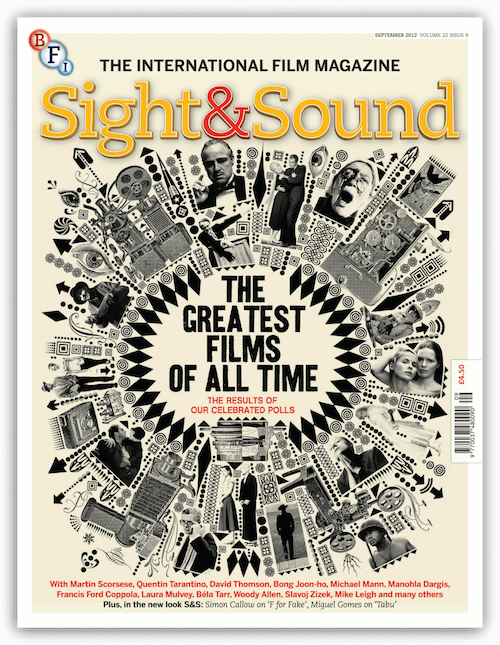

Sight & Sound’s The 100 Greatest Films of All Time (2012 edition)

When I relaunched 100 Films back in January, one of the things I promised was “a new occasional series about various 100-film lists — you know, like the Sight & Sound poll, or all those AFI ones.” I hadn’t intended it to take until November to get started on that feature, but here we are.

And, in truth, I might not even have got round to doing it now, were it not for the fact that the results of Sight & Sound’s latest decennial poll are out next month (or possibly before the end of this one, depending who you listen to). So, before that renders this article near obsolete, let’s look back at their last poll…


For those who don’t know, Sight & Sound is a magazine published since 1932 by the BFI (British Film Institute). Since it integrated the Monthly Film Bulletin in 1991, it’s been the journal of record for films released in British cinemas, reviewing everything that’s granted a theatrical release in the UK (even the kinds of mainstream fare that might not appeal to its average readership), alongside all the film-related news and features you’d expect from such a publication.

Beginning in 1952, every decade the magazine has polled an international selection of film critics and professionals to create a list of the greatest films of all time. Each contributor submits an unranked list of their top ten films, with each named film receiving one vote when compiled into the overall list. The 2012 iteration was, deliberately, the biggest ever in terms of contributors: over 1,000 “critics, programmers, academics, distributors, writers and other cinephiles” were approached to contribute, and 846 did — up from just 145 in the preceding 2002 poll. (Since 1992, the votes of film directors have been compiled into a separate list. In 2012, 350 directors voted on their list. Maybe I’ll cover that another time.)

Sight & Sound September 2012 issue, featuring the results of their 2012 poll on the cover

The poll has come to be recognised as one of — if not the — most important of its kind. The great critic Roger Ebert once asserted that, “because it is world-wide and reaches out to voters who are presumably experts, it is by far the most respected of the countless polls of great movies — the only one most serious movie people take seriously.” You’ll often hear it said that Citizen Kane is the greatest movie of all time, and if you’ve ever wondered just who decided that… well, it was the Sight & Sound poll: Kane was ranked #1 in every iteration from 1962 to 2002. (The 1952 poll was topped by Bicycle Thieves. Kane came =13th.) That was the main reason the 2012 poll made headlines at the time: Kane was unseated! But we’ll come to that in just a sec…

I think the poll’s exalted reputation is both a blessing and a burden that the magazine’s editors are only too aware of, hence the attempt to broaden its contributor base in 2012. How much further — or not — they’ve broadened it for 2022, I guess we’ll find out soon. Reports on social media indicate there are more than double the number of contributors, with an effort to make it truly a worldwide sampling and thus break the traditional dominance of American and European cinema. Surely such a focus is an inevitable side effect of the poll being conducted by an English-language British-based magazine, but there’s still value in trying to overturn the bias.


Below is the full list of 100 films (actually 101, thanks to a nine-way tie for 93rd place). When there’s a tie, I’ve copied the order from Sight & Sound’s own listing. (At first I’d thought they’d gone with chronological rather than alphabetical order (the list’s bias against recency is a whole separate debate), but it doesn’t seem to be either. Maybe it’s just random. I don’t know.)

I’ve done the same for translations of non-English titles. It seems to me that there’s little consistency about whether Sight & Sound used original titles or English translations, so I just copied their list. Depending on your awareness of world cinema and alternate titles, that may mean there are some titles you don’t recognise even though you do know the film, actually. I think that, thanks mainly to the Criterion Collection, it’s English-language titles that are commonly used online by English-speakers nowadays; but, ironically, one of the rare instances that Criterion use the original-language title is for a film here listed by its English-language alternative. Fun times.

Where a title is a link, it’s to my review. You can find Sight & Sound’s own write-up of the poll results here (courtesy of the Internet Archive, because as of 1st December 2022 the original page has been replaced with the new list).


1

Vertigo

(1958)

2

Citizen Kane

(1941)

3

Tokyo Story

(1953)

4

La Règle du jeu

(1939)

7

The Searchers

(1956)

8

Man with a Movie Camera

(1929)

10

(1963)

11) Battleship Potemkin (1925)
12) L’Atalante (1934)
13) Breathless (1960)
14) Apocalypse Now (1979)
15) Late Spring (1949)
16) Au hasard Balthazar (1966)
17=) Seven Samurai (1954)
17=) Persona (1966)
19) Mirror (1974)
20) Singin’ in the Rain (1951)
21=) L’avventura (1960)
21=) Le Mépris (1963)
21=) The Godfather (1972)
24=) Ordet (1955)
24=) In the Mood for Love (2000)
26=) Rashomon (1950)
26=) Andrei Rublev (1966)
28) Mulholland Dr. (2001)
29=) Stalker (1979)
29=) Shoah (1985)
31=) The Godfather Part II (1974)
31=) Taxi Driver (1976)
33) Bicycle Thieves (1948)
34) The General (1926)
35=) Metropolis (1927)
35=) Psycho (1960)
35=) Jeanne Dielman, 23 quai du Commerce 1080 Bruxelles (1975)
35=) Sátántangó (1994)
39=) The 400 Blows (1959)
39=) La dolce vita (1960)
41) Journey to Italy (1954)
42=) Pather Panchali (1955)
42=) Some Like It Hot (1959)
42=) Gertrud (1964)
42=) Pierrot le fou (1965)
42=) Play Time (1967)
42=) Close-Up (1990)
48=) The Battle of Algiers (1966)
48=) Histoire(s) du cinéma (1998)
50=) City Lights (1931)
50=) Ugetsu monogatari (1953)
50=) La Jetée (1962)
53=) North by Northwest (1959)
53=) Rear Window (1954)
53=) Raging Bull (1980)
56) M (1931)
57=) The Leopard (1963)
57=) Touch of Evil (1958)
59=) Sherlock Jr. (1924)
59=) Barry Lyndon (1975)
59=) La Maman et la putain (1973)
59=) Sansho Dayu (1954)
63=) Wild Strawberries (1957)
63=) Modern Times (1936)
63=) Sunset Blvd. (1950)
63=) The Night of the Hunter (1955)
63=) Pickpocket (1959)
63=) Rio Bravo (1958)
69=) Blade Runner (1982)
69=) Blue Velvet (1986)
69=) Sans Soleil (1982)
69=) A Man Escaped (1956)
73=) The Third Man (1949)
73=) L’eclisse (1962)
73=) Les enfants du paradis (1945)
73=) La grande illusion (1937)
73=) Nashville (1975)
78=) Chinatown (1974)
78=) Beau Travail (1998)
78=) Once Upon a Time in the West (1968)
81=) The Magnificent Ambersons (1942)
81=) Lawrence of Arabia (1962)
81=) The Spirit of the Beehive (1973)
84=) Fanny and Alexander (1984)
84=) Casablanca (1942)
84=) The Colour of Pomegranates (1968)
84=) Greed (1925)
84=) A Brighter Summer Day (1991)
84=) The Wild Bunch (1969)
90=) Partie de campagne (1936)
90=) Aguirre, Wrath of God (1972)
90=) A Matter of Life and Death (1946)
93=) The Seventh Seal (1957)
93=) Un chien andalou (1928)
93=) Intolerance (1916)
93=) A One and a Two (1999)
93=) The Life and Death of Colonel Blimp (1943)
93=) Touki Bouki (1973)
93=) Fear Eats the Soul (1974)
93=) Imitation of Life (1959)
93=) Madame de… (1953)


Blindspot 2020: What do you mean you haven’t seen…?

The Blindspot challenge (for the benefit of those still unfamiliar with it) is where you pick 12 films you feel you should’ve seen but haven’t, then watch one a month throughout the year. I started doing this in 2013, calling it “What Do You Mean You Haven’t Seen…?” (WDYMYHS for short), but then someone else came up with the same notion independently and gave it a much snappier moniker, and that caught on.

My fortunes with the Blindspot / WDYMYHS challenge have been up and down over the years. I’ll spare you a full potted history, but last year I set myself two lists of 12 films each and didn’t complete either — although between them I did watch 17 movies. I braved 24 films because for two years before that I’d done 22 and completed it with relative ease. So maybe I should aim for 24 again this year…

…but I’m not going to. In the same way that the second half of 2019 was a bit unpredictable (leading to my failures), I’m not wholly sure what the future holds, so I’m going to rein it back to the original 12 and see how it goes. And besides, if I find 12 unchallenging then I’ve got the seven remaining films from last year I could move on to; plus one from 2015 that I never got round to. That’s a pretty big ‘buffer’ to work on.

Now, I’ll jump ahead to the main event: the 12 films I must watch, in alphabetical order. Afterwards, I’ll explain how they were chosen.


8½


All Quiet on
the Western Front
All Quiet on the Western Front


An American Werewolf
in London
An American Werewolf in London


Andrei Rublev
Andrei Rublev


The Battle of Algiers


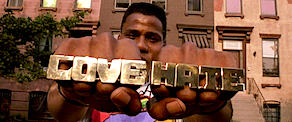
Do the Right Thing
Do the Right Thing


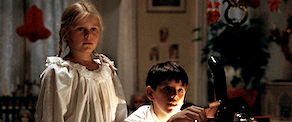
Fanny and Alexander
Fanny and Alexander


The French Connection


In the Mood for Love


Ordet
Ordet


Ugetsu Monogatari
Ugetsu Monogatari


Under the Skin
Under the Skin

So, some people just pick their 12 films. When I did two lists, that’s what I did for one of them. But the rest of the time I’ve let consensus decide, by compiling “great film” lists in various different combinations to suggest the films other people feel I should’ve seen. I quite like both methods, so for 2020 I’ve picked six with one and half-a-dozen with the other. That said, my ‘free choice’ six were influenced by some of the films that didn’t quite make it into the ‘preselected’ six. (Feel free to guess which films belong in which six. Fun and games! Answers in a mo.)

This year, the selection process involved the following lists:

  • Letterboxd’s Official Top 250 Narrative Feature Films
  • IMDb’s Top Rated Movies (aka the IMDb Top 250)
  • The 1,000 Greatest Films by They Shoot Pictures, Don’t They? (aka TSPDT)
  • the Reddit Top 250
  • Empire’s The 500 Greatest Movies of All Time (aka the Empire 500)
  • Sight & Sound’s The 100 Greatest Films of All Time (2012 edition)

    Because TSPDT takes Sight & Sound’s voter ballots as its foundation, I counted the Letterboxd scores twice as a way of evening it out a bit and not letting S&S be too dominant. It only worked up to a point. For example, Harakiri is ranked 4th on the Letterboxd list and 33rd on IMDb, but it’s a lowly 647th on TSPDT and nowhere on the other lists. So as I started adding the lists together (in the order I’ve credited them above), Harakiri was right at the top, then gradually fell right back. But that’s kinda the point of counting multiple lists: it’s getting a consensus of consensuses. Letterboxd users clearly think Harakiri is one of the very greatest films of all time; IMDb voters aren’t quite as enthusiastic, but it’s up there; everyone else… not so much.

    But it’s not just about the raw numbers of which films top the list: I have some rules. Chief among them, I’ve previously only selected films I already own on DVD/Blu-ray or have access to on Netflix/Prime/etc. This year, I let the door open to anything, though I did first make sure I could reasonably source a copy. So, top of the list was Andrei Rublev, followed by Federico Fellini’s . Next, in a somewhat ironic turn of events, my new “open door” policy actually led to some high-scoring films being eliminated. While sourcing copies of Come and See and Sátántangó, I discovered that both have recently been restored and are expected to get Blu-ray releases in 2020. You might think that’s perfect timing, but what if one or both slipped to 2021, or were insanely overpriced? So I decided to adopt a “wait and see” approach. Maybe they’ll be on 2021’s list.

    Next in the running was In the Mood for Love, followed by Ordet. Then my only still-standing regular rule came into play: one film per director. That meant the next film — La Dolce Vita, which shares Fellini with — was cut. After that is actually where Sátántangó was ranked (keeping up? I don’t blame you if you’re not), followed by Mirror — but Mirror is directed by Andrei Tarkovsky, the same as Andrei Rublev, so out it went too. But now we do finally reach the end: the next two high-scorers were Fanny and Alexander and The Battle of Algiers, which (as you’ll know from their inclusion in the list above) were fine.

    And with those six settled upon, I turned to picking six more from my DVD/Blu-ray collection. There’s less to say about these: I made a long-list of 127 ‘maybe’s; narrowed it down to 38 ‘very possibly’s; and then picked six, based on a mix of intuition about what I ‘should’ have seen and things I’ve personally been wanting to see for a while. I did also try to keep some variety in terms of the films’ ages, genres, countries, and languages… but almost all the ones that made my short-list were in English, so, er, oops. It meant Ugetsu Monogatari was an easy choice, anyway; and I was sure to include some British films (or British co-productions, at least); and Do the Right Thing may be American, but it’s also the only one of the 12 from a black filmmaker. (No female directors, though, which is an unfortunate oversight.) Still, on balance there are more films not in English (seven vs five), and the B&W/colour split is exactly 50/50.

    Four of my six ‘free choices’ do appear further down the rankings I’d compiled. That’s coincidence rather than design, although I suppose seeing them on the list might’ve helped push them to the forefront of my mind. Those four were Do the Right Thing (18th), Ugetsu Monogatari (23rd), An American Werewolf in London (127th), and The French Connection (162nd). I don’t know about you, but I was a little surprised All Quiet on the Western Front didn’t make it. Well, of the lists I’ve used this year the only one it’s on is TSPDT, at a lowly 742nd. (I’m not surprised Under the Skin wasn’t on any, what with it being so recent. For one thing, it hadn’t even been released when the Empire and Sight & Sound polls were conducted.)

    And that’s all that thoroughly over-explained.

    (Did anyone read all this?) (Hello future-me, who surely will re-read all this at some point, sad egocentric that I am.)

    Finally, if I manage those 12 and want more, the eight left outstanding from 2015 and 2019 are…

  • All About Eve
  • All the President’s Men
  • The Breakfast Club
  • Ikiru
  • The Ipcress File
  • The Royal Tenenbaums
  • The Thin Red Line
  • To Kill a Mockingbird

    This is hardly a chore — there are some great-looking movies there — so hopefully I’ll find time for all 20. It would only be fitting, given the year…