
M. Night Shyamalan | 129 mins | cinema | 2.39:1 | USA / English | 15 / PG-13

About 18 years ago, I first watched Unbreakable on DVD. It was the new film from M. Night Shyamalan — a name no one knew a year or two earlier, but the huge success of The Sixth Sense had somehow catapulted him to the top of the zeitgeist, where he was talked about as the new Hitchcock or Spielberg. Maybe no one could spell or pronounce it (I remember a lot of “Shamalamadingdong”s), but for some reason this wasn’t just “The New Film from the Guy Who Directed The Sixth Sense“, it was “The New Film from M. Night Shyamalan”. Anyway, it had met a mixed reception, but for some people it worked, and I joined their ranks. From there, it seems to have developed something of a cult following — it has many ardent fans, but others still don’t get it.
In interviews, Shyamalan mentioned that Unbreakable’s plot had originally been just the first act of the film, until he decided to expand it to the whole movie, and so he had ideas that acts two and three might become two further movies and form a trilogy. There began a long wait for the film’s fans, ever hoping that one day Shyamalan — whose reputation went steadily and increasingly downhill with every film he made from that point — would come back round and continue what he’d started. I can’t speak for everyone, obviously, but I’d begun to give up hope: in December 2016, I added Unbreakable to my 100 Favourites series, and in that post I wrote, “16 years on, I guess hopes of a continuation are long dead.”
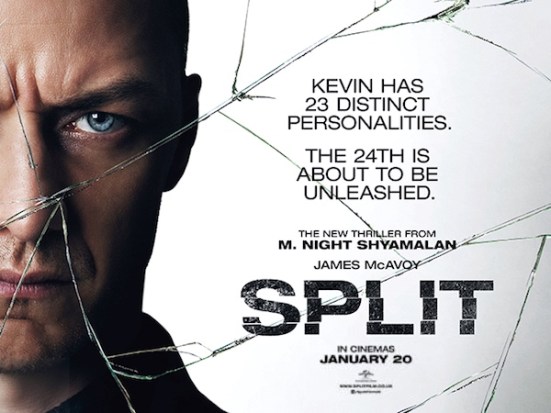
Six-and-a-half weeks later, Split was released. You probably know the rest.
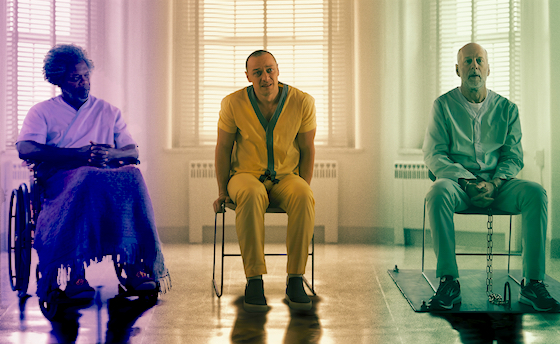
…but in case you don’t: Split was a stealth sequel to Unbreakable, only revealed in its very last scene when Bruce Willis suddenly appeared and name-checked Samuel L. Jackson’s character. I say “only” revealed — I found out on Twitter, the first day after the film went on general release. Damn you, internet! But anyway, the point is: suddenly the hope was back alive. And it was confirmed to be so shortly afterwards, when Shyamalan announced that a sequel to Unbreakable and Split had been officially greenlit.
Now, I’ve devoted a massive chunk of this review to that history lesson for one reason: to make it clear just how much I was anticipating this movie. I’m certainly not alone in that; but if you’re not someone who saw Unbreakable almost two decades ago and have been hoping for a sequel ever since, I hope the last few paragraphs gave you some perspective of how those of us who did feel about Glass finally being here. This is my most anticipated superhero movie in a year that also includes an Avengers that will tackle the fallout from a humungous cliffhanger, a new X-Men (a series I also love), a new Spider-Man (which I think looks great), and more (the most superhero movies in one year ever, apparently). So, for some of us, this has a lot of expectation to live up to.
And I think expectations — whether they come from the previous films, the trailers, critics’ reviews, or what have you — are going to have a big effect on people’s reaction to Glass. Expecting a Marvel-style superhero throw-down? It was never going to be that, you fool. Don’t like movies where most confrontations come through dialogue? Okay, but did you actually watch Unbreakable and Split? (Those are both criticisms I feel I’ve seen in other reviews I’ve read.) Want to see Bruce Willis and Samuel L. Jackson face off again in a film that’s fundamentally Unbreakable 2? That’s not an unreasonable hope, but Glass is as much a sequel to Split as it is to Unbreakable, perhaps even more so. Certainly in tone, Glass has more in common with the slightly-pulpy, almost-B-movie style of Split than it does with the quiet, characterful mode Unbreakable operated in. That first film was a Drama, all about believable people coping with their personal issues, whereas the two follow-ups are much more genre movies. That said, they’re still genre movies that have been filtered through the unique mindset of this particular writer-director — don’t expect a great deal of easy satisfaction here.
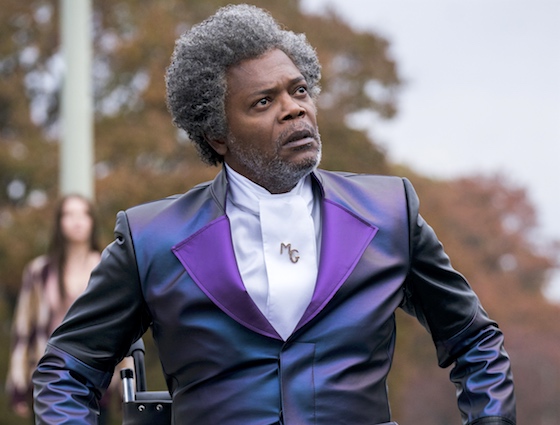
Do expect twists. Of course there are twists — it’s a Shyamalan movie! Indeed, it’s almost the most Shyamalany of Shyamalan movies, because Glass has more than one surprise reveal to pull out during its final stretch. Some are almost obvious, especially if you’re aware of fan theories from the previous films. Some are entertaining, the kind of rug-pulls you’d expect in the last act of a movie whose villain is a genius. Some are… more startling. Some people will appreciate the boldness; others will feel it undermines what came before, or what they wanted to see here. I don’t think anything is an outright “that doesn’t make sense” betrayal of the world Shyamalan has created in this trilogy, but some people will be displeased about the directions he chooses to go.
Talking of which, one of the big complaints I’ve read (and, fair warning, kinda-spoilers follow for the rest of this paragraph) is that the middle of the film wastes time trying to convince us these characters’ powers aren’t real, when we’ve already seen that they are. I think that’s a somewhat unfair criticism; one that comes from not properly investing in what we’re watching. Dr Staple is trying to convince the characters of reality, that they can’t have powers; and, as I saw it, the point of those scenes is to make us doubt it too. Yes, we’ve seen them do extraordinary things, but as Dr Staple lays out, can those things not just be explained by science and/or personal delusion? They’ve shown special skills, but are they really superhuman abilities? Several characters are swayed by her argument… so was I, to a point… except then I remembered the critics who’d said this was “a waste of time”, and therefore I guessed Shyamalan couldn’t be building to a reveal that these characters didn’t have powers after all, because if he were then it wouldn’t be a waste of time. So thanks for that, whichever Negative Nelly’s review I read that spoiled it.
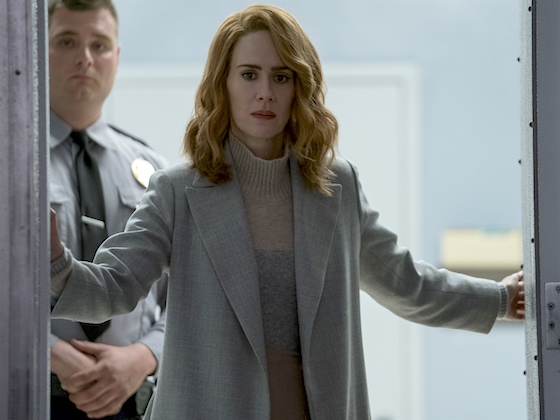
As Dr Staple, Sarah Paulson is the main new addition to the cast for this finale. Her character’s a bit of a blank slate — we don’t really get to know her, why she’s doing this job, why she believes their powers can’t be real (other than the sheer implausibility of it, anyway). She exists to challenge the leads and their beliefs, not really to be a character herself. Or is that blankness just a facade, and that’s its point? I’ll say no more both out of an awareness of spoilers and because I’m not sure myself. It’ll be interesting to rewatch the film and see what, if anything, else presents itself about her on a closer rewatch.
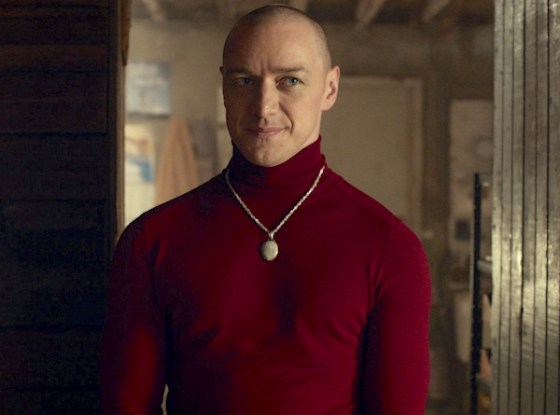
Despite having the title role, Samuel L. Jackson is mainly reserved for the third act, but when he comes to life he revels in the part so much that I didn’t mind having to wait. James McAvoy gets to show off like he did in Split, only this time with an even greater number of distinct personalities. Some people think he’s overacting; I think it’s impressive. Split was more of a showcase for his skill, because here he has to share screen time with so much else that’s going on, but Shyamalan helps him out by actually giving different alters their own separate character arcs. In places that’s done quite subtly, so I think some might miss just how much McAvoy has to do.
While McAvoy gets to negotiate multiple arcs, the last of the three headliners, Bruce Willis, barely has one. Some have said he phones in his performance here, but I think that’s unfair. Shyamalan hasn’t actually given him that much to work with, which is a shame — some people will feel like they’ve waited almost two decades to get more of David Dunn and been shortchanged. Well, David was always a quiet, introspective character anyway, so in some respects it’s fitting. In the two or three scenes where he was allowed to really do something, I felt like Willis had recaptured the part.

It’s not just those four who have a significant role to play, either. For me, Anya Taylor-Joy actually has one of the film’s best parts, and gives one of its best performances. Here, again, is where Glass is at least as much a sequel to Split as to Unbreakable, in the way it devotes time to the development of her character and to her relationship with McAvoy’s. Also returning is Spencer Treat Clark as Joseph, David’s son. I wasn’t sure if this was a case of managing to lure back a child actor who’d drifted off, or if the guy had continued to work since. Well, having IMDb’d him, it turns out he’s been working virtually nonstop since Unbreakable, but it just happens I haven’t seen anything he’s been in (well, except he was in one episode of Mad Men, apparently). His is a somewhat less complex supporting role, but he’s particularly good at conveying Joseph’s thoughts in a few key dialogue-less moments.
But the biggest returnee of all is behind the camera: writer-director M. Night Shyamalan. (Who is also in front of the camera, actually, with a cameo that exists largely to reconcile his cameos in the two previous films. It’s an amusing bit of fan service.) Shyamalan has, I think, always been a good director. He shows a good eye for strong and rich visuals, be they simple face-on close-ups or more innovative shot choices, but without being needlessly flashy. The film incorporates flashbacks using deleted scenes from Unbreakable, which at least one reviewer took to prove Shyamalan has deteriorated as a director in the past 20 years, but I thought they integrated seamlessly. His weakness has always been more as a writer, and your mileage will vary on how much that’s a problem here — as I discussed earlier, it’s quite a talky film, with the characters confined to a limited set of locations, and that likely won’t please some viewers. There’s also some thuddingly terrible dialogue (you may’ve read about the “showdown” line), but he’s been responsible for worse.

Reading other reviews and audience reactions, it’s clear that Glass is going to be divisive to some degree. In some ways it seems to deliberately confound expectations, which will frustrate some viewers even as it delights others. It’s not interested in being a typical comic book movie, or even really in deconstructing the genre, another thing I think some viewers were expecting it to do. Instead, comic books are a launchpad for its own mythology, and Shyamalan’s own ideas about what’s important from them. In that respect it’s very much his movie, and I think that’s a good thing. It’s not a stone-cold classic like Unbreakable — it lacks the subtle feel for real-life human emotion that makes that film so powerful — but I enjoyed it a lot. I’d certainly rather have something that tries to be fresh, to do something different, to push at boundaries, than an attempt at empty repetition for the sake of easy results.

Glass is in cinemas now.



 Despite fathering the modern superhero movie genre, the X-Men series always seems to punch under its weight at the box office (a point the recent
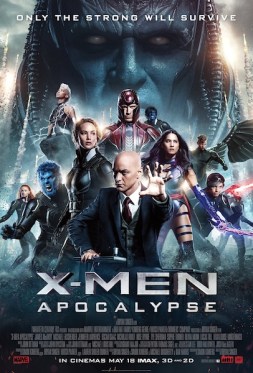
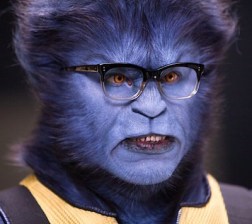
  That’s only the half of it, though. This is an X-Men movie, which not only means there’s an ensemble cast, but that it’s dedicated to constantly adding new members to it. This time around, we’re re-introduced to the ‘original’ team as teenagers: Scott Summers (Tye Sheridan) is the viewer’s “way in” to Xavier’s school after he suddenly starts shooting laser beams from his eyes; there he meets Jean Grey (Sophie Turner), a powerful telepath the other students are scared of because sometimes her dreams shake the school at night; Mystique rescues blue-skinned German teleporter Nightcrawler (Kodi Smit-McPhee) from a cage fight in Berlin, where he was up against Angel (Ben Hardy), who becomes one of Apocalypse’s Four Horsemen, alongside weather controlling street kid Storm (Alexandra Shipp) and Psylocke (Olivia Munn), who can create blades of energy with her hands. And there’s also Jubilee (Lana Condor), who has bugger all to do. Jubilee was a major character in the animated series, and the filmmakers seem obsessed with getting her into the movies (she had cameos in the first trilogy) without ever actually giving her anything to do.
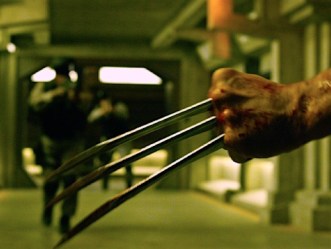 It doesn’t help that they feel the need to shoehorn a Wolverine cameo in there, an underwhelming action sequence that becomes a massive aside from the main storyline. It feels like setup for something more next time, but Hugh Jackman has stated
 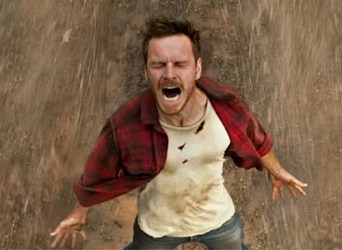 Another element lost in the mix is the real-world resonance contained in the best X-films. There’s a lot of to be said for the spectacle that’s present in all the movies, but Days of Future Past (for the most recent example) anchored it in the human conflicts between the heroes, and in their relation to the rest of the world. Apocalypse nods in that direction, with Mystique invoking Magneto’s metaphorical family to get him to stop destroying the world, but it’s not as well integrated, not as effective as previous outings. Said destruction is on a massive scale, but it’s too massive — the film doesn’t sell it; it’s just another city being destroyed somehow, emotionless computer-generated effects that are overfamiliar in these megablockbusters now (and not helped when you’ve seen similar sights two or three times right before the film in trailers for the likes of
  In fact, the film as a whole feels a draft or two away from being truly ready. Some of the dialogue clunks hard, especially when characters speak in exposition to one another. The plot needs streamlining and focusing, especially early on, and some events need appropriate weight added to them. Other things just need smoothing out — that trip to the mall happens Just Because, with no real sense of why the characters are doing it (other than some handwaving dialogue about needing to get out of the school for a change), and, as I said, in the final cut only leads to one single joke. Yet for all that, some things do work beautifully: Storm’s hero-worship of Mystique comes up almost in passing early in the film, establishing/emphasising Mystique’s place in the mutant world now; but then it becomes a key point in the climax without the need for any explanatory dialogue, as Storm wordlessly realises that her hero is fighting on the other side. It is, in a way, the best bit of the movie.
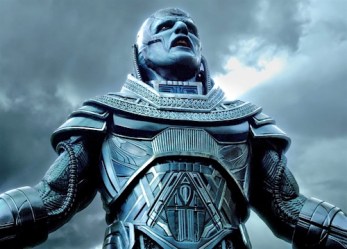 Despite being a negative nelly for much of this review (like so many others, which has given it a lowly
 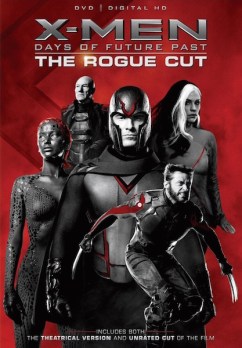 One of the big stories in the run-up to this fifth X-Men film’s release last year (my previous review is
 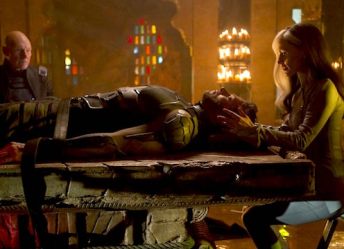 (though the theatrical cut only has 40 chapters, so I’m not entirely sure how that pans out). Most must be teeny extensions, however, and I look forward to
 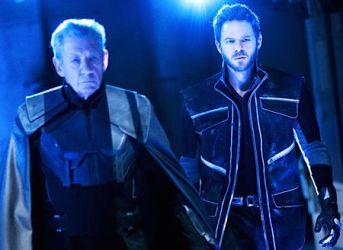 The Rogue Cut is worth seeing for anyone who enjoyed the theatrical version — and, in terms of a copy to own, the Blu-ray comes with both cuts and more special features (though it loses all the extras from the first release, including a few more deleted scenes) — but, unless you’re a huge fan of Rogue or Iceman, it’s not essential.
 I think I’ve previously discussed my life-long love of the X-Men franchise, so I shan’t go into detail again, but suffice to say Days of Future Past has been one of my most-anticipated movies ever since the title (which is that of a classic and influential story from the comics) was announced. Thank goodness, then, that the final result doesn’t disappoint.
 Beyond that, there’s the characters: the younger versions are having to deal with the fall-out from
  Not everyone gets to shine in a cast this big, although pretty much everyone gets a moment. The future-set cast have the least to do, people like Halle Berry turning up to do little more than show their face, though Stewart and McKellen get a moment or two worthy of their talents. After he was the focus of the last film, Fassbender is slightly shortchanged here; but after McAvoy gave him essential support in First Class, Fassbender plays the same service here, informing Charles’ journey. Of the new additions, Evan Peters as Quicksilver (that’s the one who’ll also be played by Aaron Taylor-Johnson in
  Later, there’s the aforementioned ‘slow-mo’ sequence, and the grand climax, which offers more “fly something big around” antics a la First Class’ submarine, only considerably grander. Yet for all the spectacle, the final moments once again come down to character: what is Magneto prepared to do? What is Mystique prepared to do? Will anyone listen to Charles? And so on. Even the much-vaunted Marvel Studios movies tend to base their climaxes in slabs of ‘epic’ CGI crashing into each other; Days of Future Past does that for a bit, then brings the characters back into focus for the real final beats.
 (Jennifer Lawrence being the third pillar of the past triumvirate, as they’ve already focused on Xavier and Magneto). While Days of Future Past does wrap up the majority of its threads (the open-ended ones are answered by previous films, if you want them to be), there’s plenty there to play with in the next film (and, perhaps, ones beyond that) if they want to… which they do.
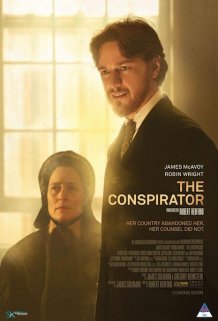 Although John Wilkes Booth is famous as the man who assassinated Abraham Lincoln, he was merely the person who pulled the trigger: eight people were tried for conspiracy to kill America’s 16th President; this is the story of what happened to the only woman among them.
 or rather, like an actress versed in playing modern characters struggling gamely with a period one, and coming up short.
 I made sure to see
  It was blurry, the sound was muffly. I saw a clip in a summer movies trailer just a few days later when I saw
  but that’s fine because here they’re just supporting characters. This is the story of two other young men, Xavier and Lehnsherr, aka Professor X and Magneto.
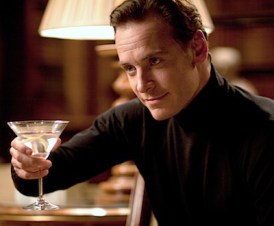 the flipside to the Xavier-Lehnsherr relationship working better, if you will. There’s also Kevin Bacon, playing his second superhero villain in as many years, who does sterling work as a former Nazi seeking world domination — remember the ’60s, when world domination was a valid aim for a villain? There’s more than a little Bond in the mix here.
 than a superhero movie in many ways — and when it tries to introduce an X-Men team made up of second-string leftover characters it loses its way slightly. But balance is everything with ensemble casts like this, and watching the film again gives a better perspective on its pace and its actual balance. First time through these things are distorted because you don’t know how far through the story you are, how long’s left, how long each scene will last, and so on; a second time, with an idea of where it’s going and so forth, you can better appreciate how it’s all actually weighed up, and I think First Class achieves a balance better than most have given it credit for.
 It’s a complete non-issue for non-fans, and the same for any open-minded fans who realise they’re not trying to faithfully bring the X-Men canon to the big screen. Earlier films should already have shattered that illusion anyway.
 After seeing First Class in the cinema I thought to myself that, while I would dearly love to give it a full five stars, in all good conscience I couldn’t; for whatever reason, it didn’t quite come together enough. Watching it again on Blu-ray, however, I’ve completely changed my mind: I wouldn’t change a thing. All my anticipation is more than paid off — I love this movie.
 Director Julian Jarrold seems to have found his cinematic niche in “coming a bit late”. His
  A predictable British rom-com, enlivened only by a few good moments and performances, as well as the excellent ’80s soundtrack.
 100Films.co.uk