The Best of 2022

And so my review of the year reaches its end in the usual fashion: with the best films I watched for the first time in 2022, plus a few honourable mentions, and a list of notable new releases I missed.

Regular readers may have noticed there’s no “worst” list this year. As I wrote last year, the idea of singling out a list of bad movies has become highly unfashionable in recent years, especially when big-name publications do it. I don’t think such lists are wholly without worth (they acknowledge that, as a film viewer, it’s not all sunshine and roses), and there’s a big difference between a major publication slagging off some recent releases (which may affect those films’ continued financial success and their makers’ careers) and a one-man blog picking a couple of lesser films from what he happened to watch that year (which rarely includes recent releases, and wouldn’t have an impact on them even if it did). Nonetheless, in the spirit of celebrating what you love and staying quiet about the rest, I’ve decided to ditch my “worst” list. (If you want, there’s still the “Least Favourite” award in my monthly Arbies.)

With that said, it’s on with…



The Eleven Best Films I Watched for the First Time in 2022

Continuing with the methodology I’ve used since 2016, this list features the top 10% of my first-time watches from the year. In 2022, the total was 111, which means there are 11 films on this year’s “top 10”.

As ever, it’s not just 2022 releases that are eligible for my 2022 list. Consequently, in recent years I’ve included a ‘yearly rank’ for films that had their UK release during the previous 12 months. However, I watched so few of the year’s big hitters in 2022 that I felt to rank what I did see would be misleading. There are too many acclaimed films omitted only because I’m not able to consider them, not because I don’t think they’re worthy. Hopefully I’ll get back on top of seeing new releases, so a yearly ranking can return in the future.


Take a noir storyline then run it through gritty “kitchen sink” British sensibilities, and you get this: a film that works as both a neo-noir gangster thriller and a character study of a man revising his views of the world. [Full review.]

10

Prey
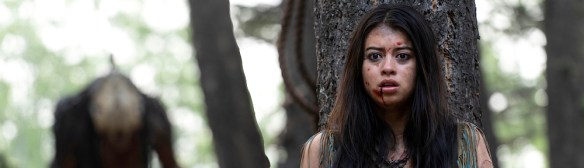

Studios keep trying to rehash their ’80s sci-fi/action IPs, and they keep producing mediocre results. Thankfully, someone has finally bucked the trend. Prey works in part because it abandons continuity and takes a back-to-basics approach to its alien menace. Setting it in a completely different time period adds more opportunities for fresh perspectives and developments. It’s such a seemingly simple idea that works so well, and one that’s eminently repeatable. Predators vs knights? Predators vs samurai? Predators vs cowboys? Yes, yes, and yes, please, and anything else you can think of. [Full review.]


Michael Bay has always been a divisive filmmaker. His brash, bombastic style isn’t for everyone. But I think there’s a method to his madness (even when it results in trash) and so, when he’s on form, he remains one of the most exciting action filmmakers. Ambulance shows he’s still got the goods. You could imagine the storyline — after a bank heist goes wrong, two crooks escape in an ambulance, along with the cop they shot and a paramedic trying to save him — being from a 1940s film noir; a grim character study of men under pressure. That side of it is still in there, just dressed up with all the wildness of only-semi-restrained Bayhem. [Full review.]


A thriller about… writing a book? Ah, but when the book in question is the autobiography of a disgraced, potentially criminal former Prime Minister, and the book’s new ghost writer has been brought in because his predecessor died under suspicious circumstances, well, you begin to see where there are questions to be answered. Pierce Brosnan is perfect for the role of a former politician who is 50% charming and 50% believable as a scheming villain, while Ewan McGregor leads us through the twisty plot as an everyman who needs the money but still has a conscience. Will the truth out? [Full review.]


Spielberg, man. If you’d told me a remake of West Side Story would end up in my top ten of the year, I’d have given you a funny look. I didn’t love the original film version, but I also didn’t think it could be bettered — it’s a classic for a reason. Surely any remake was doomed to be lesser? But ah, here comes Steven Spielberg, a director whose style clearly chimes with my taste (in fairness, his work helped define my taste, thanks to watching the likes of Indiana Jones, and Spielberg-produced/-emulating movies such as Back to the Future, at a formative age). His version screams Movie in a way so few films do nowadays, and the changes he and his team have made to the material elevate it even beyond the ’61 film, for my money. [Full review.]


Toshiro Mifune plays a man presented with a life-changing moral dilemma in this thriller from director Akira Kurosawa. It’s a film of two halves: the first, contained almost to one room in near-real-time, sees Mifune’s business executive grapple with a conundrum that could ruin his career; the second becomes intensely procedural as it follows the police investigation and fallout from Mifune’s actions. With its precision attention to detail and healthy dose of mundanity, Kurosawa conjures an intense realism — the film could almost be a documentary; only, a documentary could never be this finely controlled. [Full review.]


Disappointingly relegated to “Sky Original” status here in the UK (usually a dumping ground for low-quality genre movies), Mass is a film that deserves to be more widely seen (the story of too many films buried on random streaming services nowadays, I fear — how many people have actually seen Best Picture winner CODA when it’s locked away on Apple TV+?) The less you know going in the better to be hit with the film’s full emotional weight. And it is a heavy film, but only in a way the befits its subject matter. Made up almost entirely of four people sat round a table talking, it is nonetheless “a blisteringly emotional gut-punch … but, with that, it’s ultimately cathartic.” [Full review.]


I do enjoy a Disney animation, but one has never broken into my top ten before (Zootropolis was 15th in 2016 and Moana was 16th in 2017). That’s partly the luck of the draw (I watched over 50% more films in each of those years), but also something about how well Encanto works — which, frankly, I can’t quite put my finger on. I mean, all the obvious elements are there: catchy songs, likeable characters, impressively fluid animation, a strong message about what matters. But there’s something else, too; a sprinkling of magic that, for me at least, elevates the film to be something even more special. I say I like a Disney film, but I don’t revisit them too often. I’ve already watched Encanto twice. In one year? That’s not like me! So, hopefully you see my point. [Full review.]

3

Top Gun: Maverick
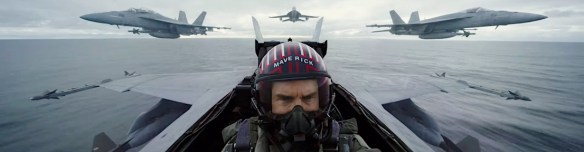

I feel the need — the need for actors doing their flying stunts for real! Striking usage of the IMAX aspect ratio! Memorable callbacks to the original movie! Cheesy music that fits the tone perfectly! Actual humour! Proper subplots! Top Gun: Maverick is old-fashioned blockbuster moviemaking done with modern sensibilities (can you imagine them actually putting actors in jets back in the ’80s? For one thing, where would they have put those great big film cameras?) Actor/producer Tom Cruise has spent decades now perfecting this brand of big-screen entertainment, and here he shows the next generation how it should be done — both in-film, as a pupil-turned-teacher trying to get a class of the best pilots to be even better, i.e. as good as he is; and in real life too, rocking up in an era when the box office is dominated by previz- and CGI-driven superhero theme-park-rides-as-cinema, and giving us a done-for-real spectacle that kicked all their asses at the box office. The movies, and movie stars, are only dead when Tom Cruise says they are.

2

Les Enfants du Paradis


According to IMDb, when Children of Paradise (to use its translated title) was initially distributed in the USA, it was promoted as “a sort of French-made Gone with the Wind”. It’s not a bad comparison. Not in a literal sense — this isn’t about a spoilt rich girl getting caught up in a civil war on the wrong side — but as an epic, years-spanning romantic melodrama? There are some similarities. It’s the story of a courtesan-turned-actress and the four men in her orbit — a mime artiste, an aspiring actor, a wannabe crook, and a moneyed gent — in and around the theatrical scene of 1830s Paris. It’s told with a style that feels adapted from a novel — it’s got that kind of scope, with its timespan and array of characters, and depth, which feel more like literature than something conceived directly for the screen. In fact, most of the characters are based on real people, which I suppose is neither here nor there, but does add another layer of interest. Whatever makes it work is enough to keep it thoroughly compelling even with a running time over three hours.

1

Manhunter


I first became aware of Manhunter many moons ago, as a piece of footnote trivia in the history of movies: “did you know there was a Hannibal Lector film before Silence of the Lambs?” What a crazy idea! How bad it must have been to be so thoroughly overshadowed by Anthony Hopkins’ Oscar-winning version. Well, the history of the movies is rarely so straightforward; and as the immediate acclaim for Lambs has died down, and its various sequels and prequels have petered away, Manhunter has been able to reemerge somewhat. And so it should, because this is a great movie. Maybe not a great Hannibal Lector movie (Brian Cox is very good in the role, with less of the ticks and tricks that made Hopkins so memorable, but he’s not the focus of the story), but a superb “hunt for a serial killer” thriller. It’s dripping with ’80s style thanks to a director who helped define what that even meant (via his involvement with Miami Vice), while the hero cop, played by William Petersen, feels ahead of his time, struggling with the mental toll of previous cases as he tries to do the right thing and stop another killer. Such a mix of style and substance makes for an all-round fulfilling film; one that I think deserves every bit to be celebrated alongside Jonathan Demme’s more widely-acknowledged movie.

To celebrate it topping my list, Manhunter is on BBC Two tonight at 11:05pm, and on iPlayer for 30 days afterwards.*

As usual, I’d like to highlight a few other films.

Firstly, I wrote this little paragraph not sure where to use it, but here seems a good place. That’s to say: I love a minor film noir. Just a solid, competently made, usually 60-to-80-minute programmer. The highly-regarded Classics are all well and good — I appreciate their quality; why they’re ‘better’ — but, in many respects, I get more actual enjoyment (certainly in a relaxed, easy-viewing sense) from a run-of-the-mill type film. Not bad ones, you understand, just average fare. And here seems a good place to say that because 2022’s Challenge compelled me to watch a few noirs of that ilk. All of them were on the long list for my top ten, but none quite made it. I’m talking about the likes of Christmas Holiday, He Walked by Night, Killer’s Kiss, My Name Is Julia Ross, and Repeat Performance. (I also liked The Killing, but that’s in no way a “minor” noir.) Mr. Soft Touch grew on me as it went on, too, but that’s probably one to only be watched in December.

Next, here’s a recap of the 12 films that won the Arbie for my Favourite Film of the Month. Some have already been mentioned in this post, but some haven’t… In chronological order (with links to the relevant awards), they were Mass, Ghostbusters: Afterlife, West Side Story, High and Low, Shang-Chi and the Legend of the Ten Rings, The Ghost Writer, Ambulance, Repeat Performance, Top Gun: Maverick, The Mission, Manhunter, and Les Enfants du Paradis.

Finally, something I’ve always done in this section is list every film that earned a 5-star rating during the year. In part that’s because there’s normally far too many to include in my list, even if it weren’t for the fact 4-star films usually sneak in too. But this year, there were only six films that received full marks, and all of them made the top 10%, too. Nonetheless, they were Les Enfants du Paradis, High and Low, Manhunter, Mass, Top Gun: Maverick, and West Side Story. Additionally, there were also full marks for my rewatch of the original Scream.

I’ve been creating these “50 Unseen” (as I call them for short) lists for 16 years now, and it doesn’t get any easier to choose what to include — or, rather, what to exclude.

It became a little easier in the past few years, because I was watching so many movies that the number of wide-release titles I’d missed fell, leaving room for more arthouse-y ‘hits’ — films the masses didn’t see but Film People were chatting about. But I watched very few new films this year — just 18 with a 2022 UK release date, down from 30+ in the last few years (with a high of nearly 60 in 2019). Those are small numbers compared to people who watch multiple brand-new films every week, but it had been enough to cover a significant percentage of ‘major’ releases. 18 is… well, not.

With an initial long-list of almost 150 films, I did consider increasing this list to 100 titles. It would be in keeping with the site’s theme, after all. But 100 is such a big number… I mean, history suggests I won’t manage to watch the 50 listed films within the next decade or two, so how long would 100 take? No, 50 simply feels about the ‘right size’ for a list of this type, whereas 100 feels excessive. Besides, something is always going to get left off, it’s just how far down the list that cutoff comes.

So, with the caveat that I’ve inevitably forgotten or misjudged something really noteworthy, here’s an alphabetical list of 50 films designated as being from 2022 that I haven’t yet seen. They were chosen for a variety of reasons, from box office success to critical acclaim via simple notoriety, and hopefully represent a spread of styles and genres, successes and failures.

Avatar: The Way of Water
Black Panther: Wakanda Forever
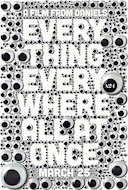
Everything Everywhere All at Once
Jurassic World Dominion
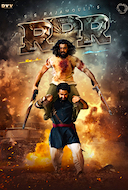
RRR
Weird: The Al Yankovic Story
The Batman
Decision to Leave
Guillermo del Toro’s Pinocchio
Nope
Turning Red
The Whale
Aftersun
All Quiet on the Western Front
Avatar: The Way of Water
Babylon
The Banshees of Inisherin
The Batman
Black Adam
Black Panther: Wakanda Forever
Blonde
Bullet Train
Crimes of the Future
Decision to Leave
Doctor Strange in the Multiverse of Madness
Don’t Worry Darling
Downton Abbey: A New Era
Elvis
Empire of Light
Everything Everywhere All at Once
The Fabelmans
Fantastic Beasts: The Secrets of Dumbledore
Glass Onion: A Knives Out Mystery
Guillermo del Toro’s Pinocchio
Halloween Ends
Jackass Forever
Jurassic World Dominion
Lightyear
Men
The Menu
Minions: The Rise of Gru
Moonfall
Morbius
Nope
The Northman
Pinocchio
Roald Dahl’s Matilda the Musical
RRR
She Said
Smile
Sonic the Hedgehog 2
Strange World
Thor: Love and Thunder
Three Thousand Years of Longing
Turning Red
Tár
The Unbearable Weight of Massive Talent
Uncharted
Weird: The Al Yankovic Story
Wendell & Wild
The Whale
X

And that’s another year over.

I gotta say, I’m quite pleased with how quickly I wrapped it all up — I haven’t got my “best” list out by January 6th since 2017. It shouldn’t feel like a rush to get this stuff online, but when many people are sharing their lists before the end of December (or even earlier, in the case of some publications), a week or more into January feels “late”.

Anyway, I’m going to leave a couple of days to let the end of 2022 finally sink in, and then I’ll start waffling on about my targets for 2023.


* Obviously it’s not actually because of my list, just a coincidence. ^
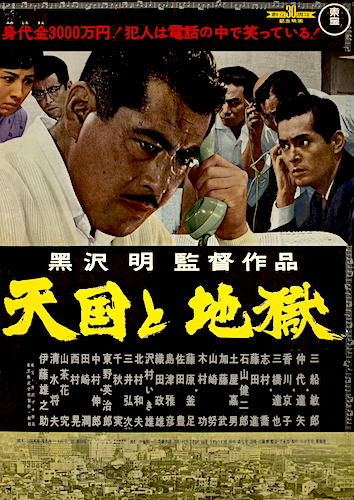
High and Low (1963)

aka Tengoku to jigoku

Akira Kurosawa | 144 mins | Blu-ray | 2.35:1 | Japan / Japanese | 12

High and Low

Akira Kurosawa has a good many classic films to his name, but, according to users of both IMDb and Letterboxd, this is the second best of them all — and, on the latter’s list, the 12th greatest film ever made, to boot. No pressure.

Adapted from the American crime novel King’s Ransom by Ed McBain, the film stars Toshiro Mifune as a business executive who we first meet being wooed to join a potential coup of the company. (The film rattles through a few twists early on to set up its initial dilemma, which I’m now going to spoil, so if you want to go in completely cold, jump to the next paragraph.) In fact, Mifune is plotting his own takeover, paid for by leveraging everything he has. But then, his young son is abducted, with the kidnappers demanding a huge ransom — if he pays, his carefully-laid plans will be impossible to execute; but it’s his son! But then, it turns out it isn’t his son — the crooks took the wrong boy, instead kidnapping the son of Mifune’s lowly chauffeur. But they don’t know that, and there’s no way in hell the poor chauffeur could pay a ransom. What’s a man to do?

Some might power a whole film on that storyline and dilemma, but it’s only the beginning of High and Low. Its original Japanese title (天国と地獄) literally translates as Heaven and Hell, and, as both monikers indicate, this is a film of two halves; of opposing forces; of extreme choices. Without wishing to spoil any more of what goes down, I’ll say that almost the first hour of the film takes place almost entirely in a single room. It feels like the whole thing might unfurl there, a la Hitchcock’s Rope — almost a formal exercise in telling a story from a single setting. But then it moves to an immediately more dynamic locale — a train — for a properly thrilling sequence, around which the story and structure pivots. The rest of the film goes ultra-procedural. A lengthy scene early in this half depicts a police debriefing in a manner that feels almost documentarian, as if we’re witnessing a genuine meeting filmed and presented in real-time, as various detective duos update senior officers and their colleagues on the specific aspect of the case they’ve been working.

Hanging on the telephone

This eye for detail, presented with a degree of mundanity, makes the film feel extra realistic. That extends to the final details. No spoilers, but, although you may call this a Thriller due to the type of story being told, it doesn’t climax with a big twist or revelation; no reveal of some super-clever grand plan that, with implausible foresight, anticipated and accounted for everything that’s happened. Rather, the film seems to proceed methodically and logically through every thread of investigation and consequence for its primary characters, until it simply has no more left to tell.

It’s certainly a fine piece of work — although, on first watch, I’d say I’ve seen several better examples of the genre and several better films by Kurosawa. But that isn’t truly a criticism of the film, rather of its high placing on the lists mentioned at the start. Awareness of such accolades has a tendency to overshadow any first viewing of a film that warrants them (just witness how many people are underwhelmed by Citizen Kane), so I look forward to returning to High and Low sometime under less pressure.

5 out of 5

High and Low is the 30th film in my 100 Films in a Year Challenge 2022. It was viewed as part of Blindspot 2022. It placed 6th on my list of The Best Films I Saw in 2022.

That’s the Second Biggest Monthly Review of April 2022 I’ve Ever Seen!

If you’re unfamiliar with the work of the once-formidable computer game developer LucasArts, you might think the title of this month’s review is setting up an almost-but-not-quite record-breaking affair. Not so, dear reader.

As those au fait with the aforementioned studio’s venerable output are doubtless already aware, this month’s title is, rather, referencing a running gag from the Monkey Island games. That was prompted by the recent announcement that 2022 will see the release of a sixth game in the series. The Monkey Island games have been a big part of my life, ever since I played the original on our family’s first PC when I was about six years old, so I’m thrilled that we’re getting another. I’ve already begun replaying the preceding games in anticipation.

None of which has anything to do with films, of course (except for the trivia that Steven Spielberg and ILM did nearly make a Monkey Island film once), other than that it’s taken away some of my film-viewing time. Consequently, the following has occurred…


This month’s viewing towards my yearly challenge

#26 Death on the Nile (2022) — New Film #4
#27 Munich: The Edge of War (2021) — Wildcard #1
#28 Encanto (2021) — Series Progression #2
#29 The Father (2020) — Rewatch #4
#30 High and Low (1963) — Blindspot #4


  • I watched 11 feature films I’d never seen before in April.
  • Just four of them counted towards my 100 Films in a Year Challenge, along with one rewatch.
  • That means I’ve fallen behind schedule for the first time this year — I should’ve reached #33 to be on track to hit #100 in December at a steady pace.
  • I’m not too worried, though. This month, for example, I watched seven films that didn’t count towards the challenge, so there’s plenty of leeway to watch more challenge-compliant films in the future.
  • Nonetheless, I deployed my first ‘wildcard’ in April, counting Munich: The Edge of War as a second 2022-released film watched this month. It’s a nice category to be able to use a wildcard in… but now that I’ve done it once, I can’t do it again. Them’s the rules.
  • In case you weren’t sure, the series Encanto progresses is the Disney Animated Canon (or Animated Classics, or whatever else you want to call it — the official name has varied over time). It’s not the ‘next’ entry I need to see in that series, but that’s okay, because it’s one of the few I’m making my way through in any old order.
  • This month’s Blindspot film saw the great Akira Kurosawa in a Hitchcockian mode for kidnap thriller cum social drama High and Low.
  • This month’s WDYMYHS film didn’t happen in the end, leaving me with one to catchup — next month, hopefully.
  • From last month’s “failures” I watched Death on the Nile and Fast & Furious 9.


The 83rd Monthly Arbitrary Awards

Favourite Film of the Month
Aside from the films listed above, my viewing this month included such acclaimed and/or popular recent releases as Spider-Man: No Way Home and Best Picture Oscar winner CODA. But, while they were good isn their own ways, probably the best film I saw was a classic: Akira Kurosawa’s High and Low.

Least Favourite Film of the Month
Nothing truly terrible this month, but Fast & Furious 9 finally burst that franchise’s bubble, for me. Those films have been ridiculous but fun for about half the series’ run now, but I thought F9 tipped the balance too far — it was more ridiculous than ever, but it was no longer fun.

Most Unfortunate Casting That Didn’t Happen of the Month
Withnail & I is one of those films I’ve been meaning to watch forever but never quite cared enough to make the effort to get round to, until this month. Then, entirely by coincidence, I later happened to see on Twitter this bit of trivia: apparently, early in the development of Sherlock, creator(s) Steven Moffat and/or Mark Gatiss mentioned to Paul McGann that they were considering casting him as Watson with Richard E. Grant as Holmes. Now, obviously they’re Withnail & I personas wouldn’t be right for those roles, but they’re both much more versatile actors than that. As great as I think Benedict Cumberbatch and Martin Freeman were, a film/series with Richard E. Grant as Sherlock Holmes and Paul McGann as Dr Watson is something I now feel we’ve been robbed of.

Most Pointless Extra-Textual Question of the Month
When the trailer for Death in the Nile came out, one line from it went semi-viral: “we have enough champagne to fill the Nile!” Of course, the character is being metaphorical: no one thinks they actually have that much champagne; she just means they have a lot. But, as I said, the line went viral, and therefor you can find multiple articles that tried to answer the question, how much champagne would it take to fill the Nile? The answer? It’s complicated. And, really, for such a fundamentally pointless question (no one’s going to try to do it for real), does any answer closer than that matter?

The Audience Award for Most-Viewed New Post of the Month
Just three posts compete for this honour, once again (hopefully May will be when I finally get back on top of that), and the winner is the one with actual reviews to read: 2022 Weeks 9–11.


Every review posted this month, including new titles and the Archive 5


I’m going to try to get both my challenge viewing and my general reviewing back on track. We’ll see how that goes…

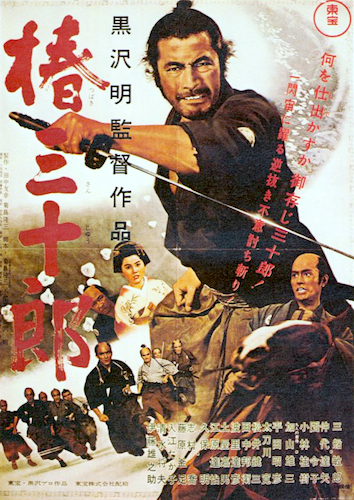
Sanjuro (1962)

aka Tsubaki Sanjûrô

2018 #139
Akira Kurosawa | 96 mins | DVD | 2.35:1 | Japan / Japanese | PG

Sanjuro

Yojimbo was such a box office success that the studio requested a sequel. Director Akira Kurosawa obliged by reworking his next project, an adaptation of an unrelated story (Peaceful Days by Shūgorō Yamamoto), so that it featured Toshiro Mifune’s eponymous scheming samurai, Sanjuro. This follow-up came out just nine months later — and, by genuine coincidence, I happened to watch it nine months after I watched Yojimbo; and now, in a mix of tardiness and planning, I am also reviewing nine months after I reviewed Yojimbo. All of which signifies absolutely bugger all, but it happened so I’m noting it.

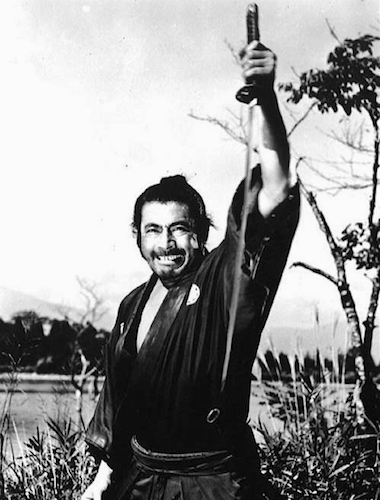
This time, Mifune’s anti-hero becomes involved with nine young samurai who suspect corruption among the local authorities. The youngsters are well-meaning but naive to a fault, and so Sanjuro decides to help them. That’s a real boon for them, as it turns out, because they’d all die several times over if it weren’t for him stopping them and guiding them in a better direction. As well as showing us what a smart operator Sanjuro is, it’s often quite humorous, something this film feels more inclined to than its predecessor. For instance, there are several great bits of funny business with an enemy guard they capture and stash in a closet, but who keeps being let out after he sort of converts to their side.

Sanjuro's sword

In the booklet accompanying Criterion’s DVD of the film, Michael Sragow writes that “in the Akira Kurosawa movie family tree, Sanjuro is the sassy kid brother to Yojimbo, and like many lighthearted younger siblings, it’s underrated.” I’d certainly agree. It doesn’t feel as significant as Yojimbo, probably because of the lighter tone (in my review, I described the previous film as “almost mercilessly nihilistic”) and a less fiddly story. But I found it more readily enjoyable than Yojimbo. It’s got a straightforward but clever plot, plenty of funny bits that don’t undermine the rest, and some decent bursts of action. It’s also just as well-made, particularly the cinematography, which is beautifully composed and framed by DPs Fukuzô Koizumi and Takao Saitô.

The making-of documentary that accompanies Sanjuro begins with Kurosawa stating that “a truly good movie is really enjoyable, too. There’s nothing complicated about it. A truly good movie is interesting and easy to understand.” I can think of few better quotes to describe Sanjuro, which is a truly good movie.

5 out of 5

Yojimbo (1961)

aka Yôjinbô

2017 #126
Akira Kurosawa | 111 mins | DVD | 2.35:1 | Japan / Japanese | PG

Yojimbo

Best known to many viewers as the film Sergio Leone ripped off to make A Fistful of Dollars, Akira Kurosawa’s Yojimbo is itself already a Western in all but setting: it stars Toshiro Mifune as Sanjuro, a ronin who wanders into a village where two gangs are at loggerheads, a conflict from which the regular folk cower in fear. Where Kurosawa deviates from the Western, at least as they had been made to that point, is that Sanjuro isn’t a clean-cut hero who’ll side with the good guys and get this mess sorted — he’s a mercenary, primarily out for his own interests; and besides, there are no good guys to join: both gangs are equally bad.

In his essay that accompanies Criterion’s release of the film, Alexander Sesonske argues that Kurosawa is actually combining “two typically American genres”. So we have “a classic Western setting, with dust and leaves blowing across the wide, empty street that runs the length of a village, a lone stranger passes as frightened faces peer from behind shutters”, mixed with the morals (or lack thereof) of a gangster movie, with everyone a crook hoping to merely outgun the others. That all comes wrapped in the milieu of a samurai movie, meaning instead of pistol duels or scattershot machine-gun fire we get flashing blades. Indeed, Yojimbo was the first film to have a sound effect for a sword slashing human flesh — they had to experiment to get it right, because it had never been done. Considering the film also features severed limbs and squirting blood, the BBFC’s PG seems awfully lenient…

Observing the conflict

Given all that, it seems like this is an almost mercilessly nihilistic film. It’s set in a town that’s been fucked up by the never-ending gang warfare, and over the course of the story nearly everyone dies, many of them in brutally violent fashion. Even the hero seems remorseless, killing freely and plotting to get the two gangs to massacre each other because he sees a way to profit. Sesonske asserts that “Yojimbo lacks the intellectual challenge of Rashomon, the moral resonance of Ikiru, or the sweep and grandeur of Seven Samurai”, which may all be true to an extent, but we shouldn’t disregard what the film does offer: a bleak worldview that chimes with the careless brutality of the world as we know it.

Even in such hopelessness there is beauty, and here, at least, that comes from Kazuo Miyagawa’s gorgeous black-and-white cinematography. With many incredibly blocked and framed shots, it’s no wonder Kurosawa has been so copied — his visuals are always amazing. His exacting desires may’ve created various production issues (the specially-built set, made with extreme period accuracy, was unprecedentedly expensive; to create the windswept effect they used all of the studio’s wind machines, which was so powerful actors couldn’t open their eyes and camera cranes couldn’t complete moves; and he used all of the studio’s big lights for night scenes, but the way they pulsated meant lens filters had to be used to compensate), but it doesn’t half look good in the end.

5 out of 5

Yojimbo was viewed as part of my Blindspot 2017 project, which you can read more about here.

Seven Samurai (1954)

aka Shichinin no samurai

2013 #110
Akira Kurosawa | 207 mins | Blu-ray | 1.33:1 | Japan / Japanese | PG

Seven SamuraiSeven Samurai used to be a striking anomaly amongst the top ten of IMDb’s user-voted Top 250: it’s a three-and-a-half-hour subtitled black-and-white movie. These days it sits at #21, presumably through a mixture of IMDb tweaking the voting rules and it being rated lowly by people keen to see all of the Top 250 but who don’t typically like three-and-a-half-hour subtitled black-and-white films. Nonetheless, it has a claim to wide popularity (alongside its critical renown) that is rarely achieved by three-and-a-half-hour subtitled black-and-white movies.

In 16th Century Japan, rural communities are terrorised by gangs of bandits stealing their crops, raping their women, and all that other nasty to-do. One village has had enough and, knowing they can’t defend themselves, sets out to employ a band of samurai to defend them when the bandits come again the next year. Samurai aren’t cheap, but the villagers have no money, so they’ll have to make do with what they can get. Managing to snag Kambei (Takashi Shimura) to lead the defenders, he assembles a team, including wannabe Kikuchiyuo (Toshiro Mifune) and five others (Daisuke Katō, Isao Kimura, Minoru Chiaki, Seiji Miyaguchi, and Yoshio Inaba), who then set about preparing the villagers for battle…

Despite its epic running time, Seven Samurai isn’t really an epic film — this isn’t the story of a war, or even a battle, but of a skirmish to defend one village. How does it merit such length, then? By going into immense detail, by having plenty of characters to fuel its narrative and its subplots (and if you think there’d be plenty of time to explore seven characters in over three hours, turns out you’d be wrong), and by using the time to familiarise us with these people, so that when the final fight comes — and that’s a fair old chunk of the film too — we care what happens. Plenty of other films make us care in a shorter period of time, of course, but here we feel truly invested in the outcome.

The titular seven (well, six of them)It’s also unhurried. As Kenneth Turan explains in his essay “The Hours and Times: Kurosawa and the Art of Epic Storytelling” (in the booklet for Criterion’s DVD and Blu-ray releases of the film, and available online here), the film “unrolls naturally and pleasurably… luxuriating in its elongation — it takes an entire hour just for the basic task of choosing the titular seven.” As a viewer, I think you have to be mentally prepared for that pace, in a way. Most other films would use a snappy montage to collate the team, with key scenes or moments later on being used to highlight their personalities — witness any number of Hollywood (and Hollywood-esque) ‘men on a mission’ movies that do exactly that. Kurosawa’s expanded version makes the film more a marathon than a sprint, with only some of the negative connotations describing something as “a marathon” entails.
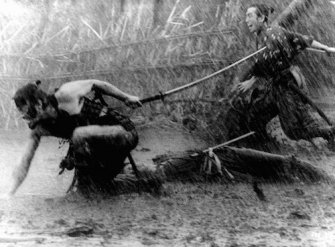
In truth, this is not the most fascinating portion of the film, but nor is it without merit. As discussed, it’s establishing these characters in full so that we are more attached to them later, but it’s also commenting on, perhaps even deconstructing, the image and role of the samurai. In “A Time of Honor: Seven Samurai and Sixteenth-Century Japan” (again in Criterion’s booklet, and available online here), Philip Kemp explains how Kurosawa’s depiction of the samurai overthrows some simplistic ideals that had become associated with them, and shows them instead as normal human beings, more likely to run away to save their own skin than pointlessly fight to their death. The villagers have indeed managed to employ professional combatants, but they’re not so different to the villagers themselves, just better trained.

The rain in Japan falls mainly on the actionThe length ensures our investment in the village, too, just as it does for the samurai. They’re not being paid a fortune — in fact, they’re just being paid food and lodging — so why do they care? Well, food and lodging are better than no food and lodging, for starters; and then, having been in the village so long in preparation, they care for it too. It is, at least for the time being, their home. You can tell an audience this, of course, but one of the few ways to make them feel it is to put them there too — and that’s what the length does. To quote from Turan again,

The film’s length works in its favor in ways both big and small: It allows the samurai leader, whose head is shaved in an opening scene, to gradually grow his hair back. It allows the eternally uneasy bond between the samurai and the villagers, as well as the villagers’ martial confidence, to grow believably over time. … When the bandits finally do attack, our hearts are in our throats — we know the defenders so well, and we can sense that not everyone will survive.

It can seem like a blind alley to go on about a film’s length — many an epic is long just because it has a long, or large, story to tell — but in Seven Samurai, the sheer size, and the way it uses that, are almost part of the point.

The film ends with a melancholic note. That “eternally uneasy bond between the samurai and the villagers” comes to an end — with victory won, the surviving samurai are no longer required. The farmers return to farming, the samurai return to… what? They are not really at home in the village, they were just guests; nor are they rich, because there was no pay — so what have they got out of the conflict? As Alain Silver notes in “The Rains Came: Kurosawa’s Pictorial Approach to Seven Samurai” (in Criterion’s booklet, of course, but not online), The final shotthe final scene, the way it’s edited and framed, ties the remaining samurai to their deceased comrades, the living and thriving farmers a distant and separate group. Fighting is the way of the past, perhaps, and peaceful farming the future. Or is the samurai’s only purpose to be found in death, because other than that they are redundant?
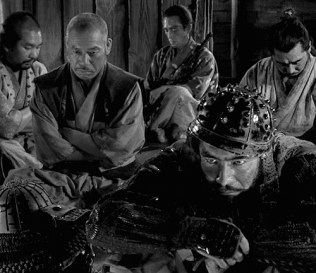
Even if you don’t want to get into the film’s philosophical underpinnings, there are plenty of other, more visceral thrills to enjoy. The characters provide humour as well as emotional depth; there are scattered “action sequences” throughout; and the big climax may technically only be a skirmish, but it’s one played out in detail, to epic effect. There’s not the choreography that viewers used to modern blockbusters or Hong Kong fisticuffs might expect, but that doesn’t meant the rough and realistic fighting isn’t exciting or well-constructed. Drenched in rain and covered in mud, it’s messy and, in its own way, beautiful. The whole film is visually stunning, as you’d expect from a Kurosawa picture. You may not realise it at the time, but many a familiar type of shot actually originated here, and then was copied down the ages.

It might seem difficult to credit now, but Seven Samurai was only fairly well received in Japan on its initial release: as Stuart Galbraith IV reveals in “A Magnificent Year” (also in Criterion’s booklet (where else?)), most of the awards for Best Picture went elsewhere, and at the box office it was comedies and romances that were the big crowd-pleasers. 'I can't believe Toho cut our movie'And it wasn’t as if it was overseas viewers who hit on the magic: as Turan reveals, “Toho Studios cut fifty minutes before so much as showing the film to American distributors, fearful that no Westerner would have the stamina for its original length.” The more things change the more they stay the same, I suppose — how many Great Films from Hollywood are ignored by awards bodies and audiences, only to endure in other ways?

Seven Samurai is definitely a case of the latter. Its standing on the IMDb list may have slipped with time (and rule changes, no doubt), but it’s still a trend-bucker — a three-and-a-half-hour subtitled black-and-white film that can appeal, if not to the masses, then to some people who wouldn’t normally go in for that kind of thing. A marathon but not a slog, requiring investment rather than passive absorption, Kurosawa’s epic rewards the viewer with one of cinema’s most enthralling, gorgeous, and vital experiences.

5 out of 5

Seven Samurai placed 1st on my list of The Ten Best Films I Saw For the First Time in 2013, which can be read in full here.

It was viewed as part of my What Do You Mean You Haven’t Seen…? 12 for 2013 project, which you can read more about here.

This review is also part of the 100 Films Advent Calendar 2014. Read more here.

Rashomon (1950)

2008 #24
Akira Kurosawa | 88 mins | DVD | 12 / PG-13

RashomonOne has to wonder if Dr. Gregory House was exposed to Rashomon at a young age. House’s universal truth — “everyone lies” — is also the conclusion of Kurosawa’s much-lauded film, in which four witnesses tell different versions of the events surrounding a samurai’s murder.

The “Rashomon” of the title is one of two gates to Kyoto, built in 789 and in disrepair and disrepute by the film’s 12th Century setting, but thanks to this film the word has come to signify a narrative that retells the same event from multiple perspectives. Mentioning it seems unavoidable when writing about a film (or episode of TV, or novel, or…) with such a structure, as reviews of recent thriller Vantage Point would attest. However, most similar tales aren’t quite as radical as this ‘original’ (which is based on two short stories by Ryunosuke Akutagawa), in which the four tales differ wildly.

Justifiably, much has been written about Rashomon, both critically and analytically. As such I’m not going to dig too deeply here, but instead just highlight a couple of reasons why it’s so acclaimed. For one, it looks great. Kazuo Miyagawa’s cinematography is exemplary, producing gorgeous rain at the gate, wonderful shadows in the forest, and employing numerous inventive shots and moves, always effective rather than showy. Fumio Hayasaka’s music underscores proceedings beautifully, coming into its own during long dialogue-free sequences. The performances are also accomplished, especially Toshiro Mifune as laughing bandit Tajomaru, but also Masayuki Mori’s largely silent turn as the murdered samurai, and Fumiko Honma’s chillingly freaky medium.

As I said, there’s much more that could be (and has been) written about Rashomon — I’ve not even touched on the intricacies of the plot, the presentation of the courthouse scenes, the significance of the fights, and so on. Certain viewers might be put off by the subtitles, the black and white photography, the film’s age, and its occasional ‘arthouse’-ness — and, I confess, I’m one of the first people to get fed up with films like Tati’s Play Time or Ozu’s Tokyo Story — but, for me, Rashomon was an incredibly enjoyable first encounter with Kurosawa.

5 out of 5

Rashomon placed 5th on my list of The Ten Best Films I Saw For the First Time in 2008, which can be read in full here.