William A. Wellman | 144 mins | Blu-ray | 1.33:1 | USA / silent (English) | PG / PG-13
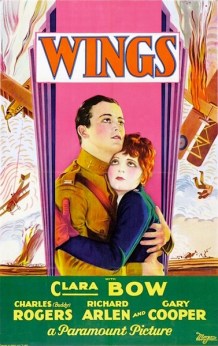 Students of the Oscars well know that, technically speaking, there wasn’t a single “Best Picture” award at the inaugural Academy Awards ceremony in 1929. Instead, there were two awards that covered that ground, seen (at the time) as being of equal significance. One was for “Unique and Artistic Production” — which I’d argue is more or less what most people think Best Picture represents today. That was given to F.W. Murnau’s Sunrise. The other was more generically titled “Outstanding Picture”. Presumably because of the more obvious similarity in its name, that’s the one the Academy have retrospectively decided was the first Best Picture award; and that’s why Wings is, officially speaking, the first Best Picture winner.
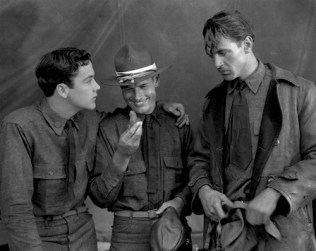
In small-town America in 1917, middle-class Jack (Charles ‘Buddy’ Rogers) and rich David (Richard Arlen) are rivals for the affections of city girl Sylvia (Jobyna Ralston). She’s actually only interested in David, though Jack’s too naïve to see it. He also doesn’t see that his neighbour, Mary (“It girl” Clara Bow), is infatuated with him. When both lads sign up for the air service, they find themselves in training together, where they eventually bond by having a punch-up. Boys, eh? Before you know it they’re on the front line of the First World War — via a brief encounter with Cadet White (a pre-fame Gary Cooper) — holding their own in dogfights against ace German pilots. Meanwhile, Mary has also joined the war effort, arriving in France as an ambulance driver. What are the chances she’ll run into Jack and their potential romance will have an opportunity to progress, I wonder?
So Wings is part rom-com, part war-action movie. On the ground, Jack and David’s interactions with Mary and Sylvia (the latter of whom barely features) are based around misunderstandings and almost-slapstick drunkenness. In the air, the picture comes alive in thrilling battle scenes, performed by fearless stuntmen and shot by bold cameramen. Well, most of the time: famously, Rogers and Arlen had to pilot themselves (in Rogers’ case,  he learnt to fly just for the film), and, mid-flight, had to film their own close-ups by switching on battery-operated cameras mounted in front of them. You wouldn’t know it from watching the film itself, though: even today, the action sequences carry a palpable air of excitement, aided (perhaps even created) by the knowledge that it was all done for real — including the crashes.
At the time of production, director William A. Wellman was pretty much unproven, having mainly directed B-level Westerns. Conversely, Wings was a risky proposition, with a remarkably high $2 million budget — not the most expensive silent film (that was Ben-Hur, at $4 million), but in the very top tier (according to this Wikipedia article, the average cost of an MGM feature at the time was $160,000). However, Wellman got the nod because he was an experienced combat pilot, having flown in World War One himself. This knowledge paid dividends for the film’s eventual quality, though caused some friction during production, as Wellman spent weeks on location not shooting as he waited for the right clouds. Sounds ridiculous, but the movie was shot in clear-skied Texas, and with no clouds there would be no sense of depth or speed for the planes.
Why Texas? It’s where the country’s largest military base was, with up to 10,000 troops stationed there. The military committed resources to aid a picture that was seen to cast them in a positive light, reportedly providing the production with $15 million worth of men and equipment. Yes, not 1.5 — fifteen. In today’s money, that contribution comes to around $200 million, which alone would put Wings among the top 50 most expensive films ever made. It was a remarkable undertaking. This included occupying a five-acre site where they “built France”, including an entire village and a trench-crisscrossed 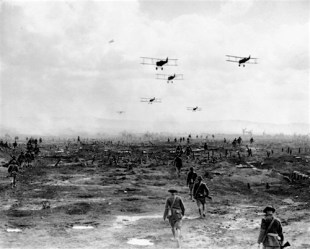 bomb-pockmarked battlefield. Those bomb craters were, in fact, genuine: the military spent a few days before filming using the location for target practice. The climactic battle that occurred on this site was filmed with up to 19 cameras at once, including some mounted on four towers, the highest of which reached 100ft. I know this is a review, not a catalogue of production numbers, but it’s quite incredible.
As is the movie it produced. Whatever Wellman’s status before and during production, the end result proves his skill as an action director. Unsurprisingly these sequences don’t have the adrenaline-fuelled fast-cutting of today’s action scenes, but they have a mind-boggling scale that armies of CGI will never replicate, and an accompanying sense of awe to match. It’s not exactly thrilling, because Wellman takes time to find asides that show the cost of combat — this isn’t just a Boy’s Own gad about in the jolly old First World War. Tragedy strikes, and Wellman makes it suitably affecting.
If the same can’t be said of the romantic storylines then, well, it could be worse. A mid-film sequence in Paris, where Jack gets plastered and starts imagining bubbles floating out of everything, wins bonus amusement points for actually showing those bubbles, though loses some for going on too long. It also doesn’t help matters that Jack’s actually a bit of a dick in the way he treats other people throughout the movie. He undermines and borderline bullies David thanks to their shared affection for Sylvia, while we know David’s being kind enough to not tell Jack that Sylvia’s actually in love with him. Even after they’ve made up, the same situation rears its head late in the film, when David tears up a photo of Sylvia to stop Jack seeing the love note jotted on it. That’s before we even get on to how completely ignorant he is of Mary’s affections.
 How much these factors affect the film’s quality seems to be very much a personal matter. Wings set the stall for many a Best Picture winner to follow by being not that well regarded by critics; indeed, more time and praise is given to its top-award compatriot, Sunrise. For the most part, I found the personal dramas passable enough, with a few outstanding scenes — David’s farewell to his stoical parents; Cooper’s scene; the bubbles (at first). However, the combat sequences, and in particular the aerial photography, are stunning; so impressive as to easily offset whatever doubts the other elements may engender.
At a time when silent movies are still routinely overlooked by the studios (and the best most labels outside the US seem to release is the canon of accepted greats (plus a few random outliers)), I think it’s safe to say Wings has only received extensive restoration and re-release thanks to its position as the official first Best Picture winner. Would it receive such royal treatment from Paramount without that accolade? I think we can be pretty certain that — even though it was both an extraordinarily expensive and extraordinarily successful film — it would not. On the bright side, it’s deserving of such attention for its inherent qualities, even if it remains a shame that other equally (or, arguably, even more) deserving silent pictures not only don’t receive the same love and attention from their rights holders, but don’t receive any attention whatsoever.
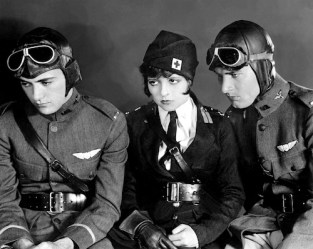 But I digress. Wings is a film that deserves to be remembered as more than a mere footnote. It’s not just a trivia answer to “what was the first Best Picture?”, but a worthy winner of that prize; a movie that, almost 90 years after it was produced, still has the power to elicit excitement and awe. Wellman’s picture may not have been deemed unique or artistic, even though it’s definitely the former and possibly the latter, but it was deemed outstanding, and it’s definitely that.

This review is part of The Silent Cinema Blogathon. Be sure to check out the many other fantastic contributions collated by host In the Good Old Days of Classic Hollywood.
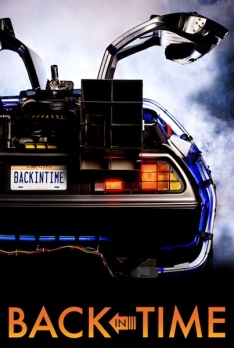 If you’re on social media (or even just frequent pop culture news sites), you can’t fail to have noticed that Wednesday just passed was “Back to the Future Day”, the exact date Marty McFly and Doc Brown (and Marty’s girlfriend) travel to in
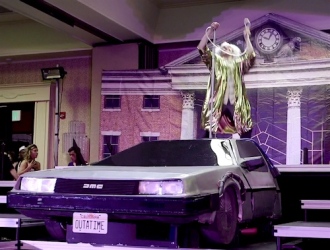
 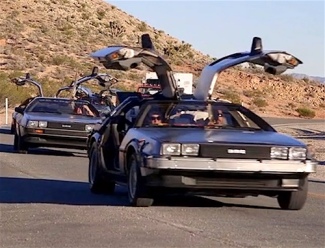 Then it moves on to the fans — what the film means to them, and what that’s led them to do. Those we meet include a couple who travel around the US in a DeLorean fundraising for Michael J. Fox’s charity; the team of aficionados who restored Universal Studios’ decrepit display DeLorean; the family of collectors who own the only film-used DeLorean that will ever be in private ownership; a guy who built a mini-golf course in his yard with a Back to the Future-themed hole that he’s used for charity events with some of the films’ cast; the people who have had some success developing a real-life hoverboard; and the guy who set up a fansite that was so good it became the official site, and is now regularly employed as an official consultant about the films, not least for the rafts of merchandise that comes out these days. We also get a look at the Secret Cinema event in London from a year or two ago that made headlines for all the wrong reasons. Naturally, none of that gets mentioned here (in fairness, because it has nothing to do with Back to the Future itself).
 That glaring error aside, Back in Time is not a bad film, provided you know what to expect. It’s a shade too long and the storytelling is occasionally a little jumbled, but there are some nice interviews and stories — hearing Michael J. Fox recount the Royal Premiere where he was sat next to Princess Diana pretty much makes the whole exercise worthwhile.
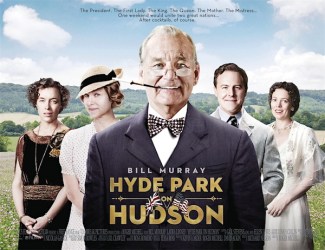 Wannabe-prestige picture Hyde Park on Hudson is like two films playing at once: the dramatic/romantic story of President FDR’s (Bill Murray) burgeoning affair with his distant cousin Daisy (Laura Linney), and the comedy-drama of his meeting with King George VI (aka “the one Colin Firth played in
  For what it’s worth, the film was born of the discovery of Daisy’s letters and diaries, which told of the relationship. Apparently the screenwriter was one of the people who found these, so I guess that’s where his interest lies. The film is a UK production from Film4, however, and made in the wake of the global success of The King’s Speech, so perhaps that explains the root of the royal involvement. While both stories have some potential, they aren’t made to gel, switching back and forth as if in some kind of narrative relay that enables the film to run a theatrical distance.
 with vibrant colours evoking a place of sunny happiness, but anything set at night is graded with a terribly extreme, not to mention awfully rote, case of teal-and-orange.
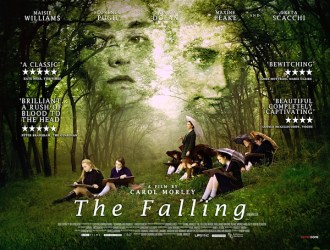 Inspired by real events, The Falling stars
  Writer-director Carol Morley has kept the pace and tone slow, in an enchanting rather than ponderous fashion, but it’s a “not for everyone” pace nonetheless. For me, it only really lost its way as it moved into its final stages. Without wanting to spoil where it goes, in my opinion too much was explained, but at the same time it explained nothing.
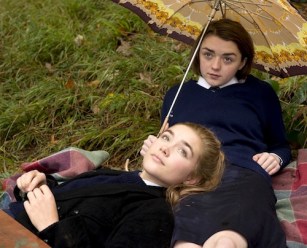 An element I do think was at the forefront of consideration is sensuality and sexuality, which plays a large and significant part in the film. Pretty much any movie bar “bawdy high school comedies starring obvious twentysomethings” seems to veer away from schoolgirl sexuality these days, wary of inevitable “OMG u a pedo” reactions, I guess. Sexuality does not equal pornography, though; and, as I alluded, here it’s played out as much through a heightened, tactile sensuality. It does probably ‘help’ that it’s a film written and directed by a woman — it would carry a very different, more Lolita-ish air if it had been written or directed by a man. What exactly it’s saying with all this is arguably as mysterious as the cause of the fainting epidemic, but then it’s all tied together: teenage years are a period of sexual awakening, of course, and if you’re in an environment where nearly everyone is of the same gender, and where such things are massively repressed… well, how is it going to manifest itself? If “sex” is somehow the cause of the fainting, it’s not because sex is bad, it’s because there’s no other appropriate outlet for it.
 Best of the lot, however, is Florence Pugh. Reportedly discovered when The Falling’s casting directors visited her school, you can see why she’s quickly been snapped up for a leading role. I wouldn’t be surprised if Hollywood come knocking looking to make her the next Kate Winslet/Keira Knightley/Gemma Arterton/etc “English rose”-type lead in some blockbuster or other.
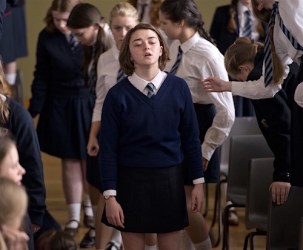 For me, it’s the kind of film that, with time and subconscious reflection, I may come to remember more fondly and be keen to see again, or all but forget. It’s the kind of film I could, without even re-watching it, re-evaluate and want on my year-end top ten, or could see on my top ten contenders long-list come January 1st and wonder, “dear God, what was I thinking?!” It’s the kind of film I’m not sure I wholly liked, but I’m glad I’ve seen.
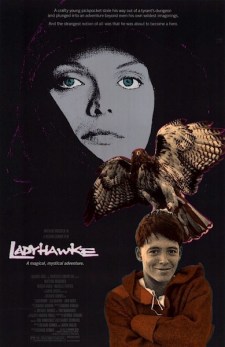 This is one of those films that crops up in the daytime TV schedules now and then and I’d always paid little heed to, because no one else seemed to. Then I read
  Here, there’s a good 45 minutes or so of mystery before said reveal. Obviously, therefore, it would work better as a fresh viewing experience if you didn’t know that going in; but it’s so fundamental to the setup (despite the focus on Philippe, it’s their story) that I wonder if anyone has ever seen it without knowing? On the bright side, it doesn’t really matter: this is not a film where the ‘big twist’ is the point.
 but Philippe occasionally addresses amusing asides to God, for example. It even wisely dodges special effects… most of the time. The few occasions on which it does make motions in that direction, it demonstrates why it was wise not to attempt them more thoroughly. These days they’d slather on the CGI, but shying away from such things is not just due to a lack of technology: it’s far more magical to not be too explicit.
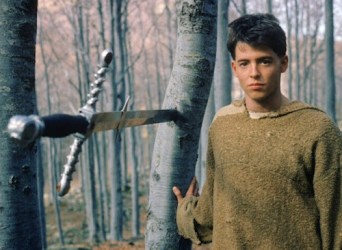 That’s the kind of age when one might be liable to fall in love with it; or, at least, people of (very roughly speaking) my generation would — I suppose Kids These Days fall in love with copious CGI, be that animated or ‘live action’. Anyway, I think it deserves to be less overlooked, and if you’ve never caught it (or not for a while) it certainly merits a chance.
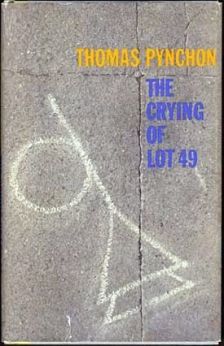 After watching
  It’s probably not fair to judge The Crying of Lot 49 by normal moviemaking standards. As a high school project to summarise a novel in a few minutes of video (which it may or may not be), it’s probably alright. Otherwise, though, it’s not worth the seven minutes; not even for die-hard fans of the author and/or novel. It is, you might say, a W.A.S.T.E. of time. #injoke
 Screened at the London Film Festival earlier this month, then made available on MUBI in the UK (where you can, if you want,
 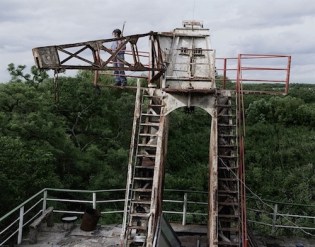 That’s the whole movie, more or less. I haven’t spoiled it for you because you’re not going to watch it because why would you? There is no discernible story or meaning; there is no characterisation; there is nothing but imagery and snippets of moments that signify nothing. It is a movie that has deliberately left out any explanations. Apparently the director has said it’s all a criticism of global capitalism, or something. Even with that extra-filmic information, it’s still difficult to ascertain much meaning. This isn’t realism — this isn’t avoiding “hello, person who is my brother” dialogue — this is obtuseness for obtuseness’ sake.
 In 2006, the body of 38-year-old Joyce Vincent was found in her London bedsit, surrounded by Christmas presents and with the TV still on. Sad, but largely unremarkable, were it not for the fact that she’d been dead for three years.
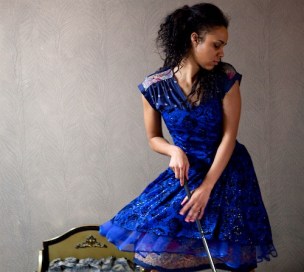 Some people seem to view this as little more than a detective mystery, and are frustrated that Morley ‘chose’ to leave out details. I guess such critics have no understanding of things like confidentiality (when it comes to why Joyce was in a women’s refuge and what she disclosed there), rights to privacy (if the family don’t want to be interviewed, you can’t force them), the realities of investigating a real-life case (maybe some people who knew her in those final years just don’t want to be found), or human decency (Joyce led a fragmented life that came to a terribly sad end, and all you can think about is why she didn’t leave a few more clues around for you to deduce what happened and why?!)
 On the more considered side of the internet, there’s a reasonable debate to be found about the filmmakers’ right to tell the story at all. Joyce kept her life story secret even from some of her closest friends, and yet here it is being picked over in a movie for anyone to see. Is it moral to do such a thing? Should she not just be left in peace? Are the extraordinary circumstances of her death a good enough reason for this level of prying? Surely her death and how it came to occur needs to be understood, though, and surely the only way to do that fully is to examine her life. But is that not the business of inquests and the like, not films? But then, the filmmakers seem to have dug up information the inquest didn’t get close to unveiling. Perhaps the question is, when does society’s interest justifiably overtake the rights of the individual? Does it here? I’m not sure. Maybe.
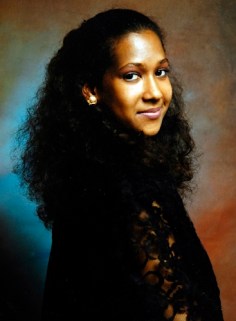 Nonetheless, these flaws can’t detract from the fundamental power of the story being told. If you come away from this thinking not about how sad it was for both Joyce and the people who knew her (especially Martin, especially in the film’s final moments), or what you should or could perhaps be doing better in your life, but instead being angry that it didn’t satiate your ghoulish need for full and frank revelations… well, I don’t know what to say about you, but it wouldn’t be very nice. Through this incident, Morley and her interviewees are really making bigger points about our society and our relationships. It’s no one’s fault, per se, that this happened to Joyce, but that it can happen is horrendous.
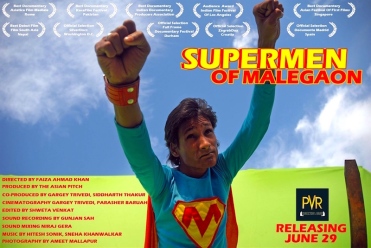 In the impoverished Indian town of Malegaon, everyone either works on the power looms and is paid a pittance, or is unemployed and so has even less; apart from the women, who are squirrelled away out of sight at home. The population is 75% Muslim, the remainder Hindu, and that leads to tension. Outside of work, there is nothing to do for entertainment… except go to the movies. And Malegaon loves the movies.
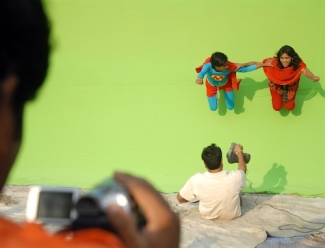 Supermen of Malegaon is the making-of story of Nasir’s most ambitious production to date. Having seen the use of greenscreen in one of those behind-the-scenes outtakes, he realised he could use the process to make a special effects movie — specifically, to make Superman fly to Malegaon. This documentary follows the trials and tribulations of Nasir and his band of hobby filmmakers through their film’s writing, planning, and its sometimes troubled shoot, until it’s completed. In the process, we meet some genuine characters, learn something of the unique lifestyle of Malegaon itself, and maybe even learn something about ourselves too.
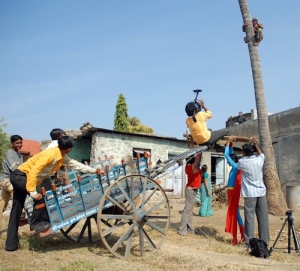 Even if it doesn’t, the situation in ‘Mollywood’ is an interesting one. This is a cottage industry: everyone involved has day jobs, funding the movies out of their own pocket, or by borrowing cash, or with favours, or by selling in-film adverts to local businesses — yes, that’s right, product placement, not that anyone involved would know that term. Women from Malegaon cannot appear in or work on the films due to local attitudes, so actresses are hired from nearby villages; the screenplay is written and shooting schedule arranged so that the actress only needs to be involved for the minimum number of days, to save money. Bicycles and motorbikes are used to create tracking shots; the director gets a piggyback for a high angle, or is raised and lowered on the arm of a cart to create a crane shot. The ingenuity and inventiveness of these literally-self-taught moviemakers is astonishing.
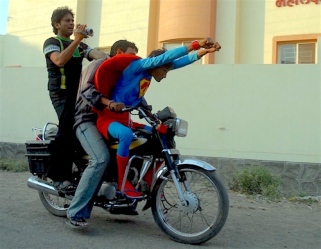 which he turns down because he could make four whole films for that much money. Even that little is scraped together. Mollywood moviemaking isn’t a money spinner, it’s a hobby. Still, one of the writers wants to make it as a proper writer; wants to go to Bombay and do it as his career. This has been his aim for 15 years, he says, and Bombay is no closer.
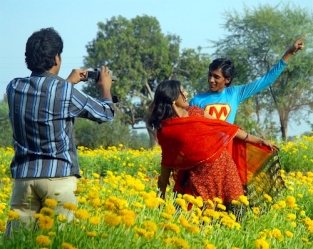 It’s an incredible, one-of-a-kind film; more powerful and life-affirming than it perhaps has any right to be. But then the filmmakers of Malegaon don’t really care about such things. They make movies because they want to, whether they ‘should’ or not; they make them better than you might expect; and it enriches their lives. Their story may do the same for you. In my opinion, it’s an essential film; a true must-see.
 After the
  Perhaps it’s just because she’s clearly struggling with an atrocious variable accent, the quality of which makes it rather distracting whenever she opens her mouth. Having used Moriarty plenty, the series finally accepts that he’s dead and moves on to his right-hand man, Col. Sebastian Moran. Considering the identity of the conniving colonel is a mystery for most of the movie, however, his involvement is perhaps no great shakes.
 100Films.co.uk