2015 #167
Caradog James | 90 mins | streaming (HD) | 2.35:1 | UK / English | 15 / R
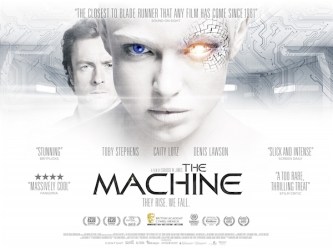
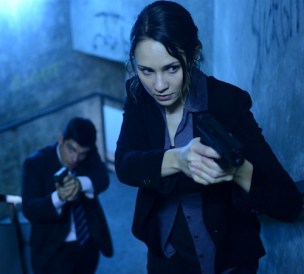
In a near future where Britain is part of a Cold War against China, a scientist (Toby Stephens) has been trying and failing to perfect artificial intelligence at a government research facility. When he hires a new associate (Arrow’s Caity Lotz) they make progress, crafting a machine in her own image (played by Lotz again, obviously). Unsurprisingly, their boss (Denis “turned down The Force Awakens” Lawson) has some less-than-ethical plans in mind for their new toy…
Welsh writer-director Caradog James presents some strong ideas about the morals of creating AI, our responsibilities in doing so, its right to sentience, and so on. Some of these notions are even quite original, in particular an ending that seems to be saying that the machines are going to replace us and maybe that’s OK. Unfortunately the concepts don’t always coalesce in the telling, and when the film resorts to a passably-well-done shoot-em-up climax it feels needless — it hasn’t been that kind of film.
Or maybe James, in only his second feature, is trying to show his full range and use the film as a calling card. After all, it does attempt human drama, an exploration of sci-fi ideas, a touch of conspiracy thriller, and, as mentioned, an all-action climax. Unfortunately he’s delivered quite a clunky screenplay, which lingers on inexplicable scenes one moment before rushing over vital things the next. Perfunctory dialogue fails to build characters or relationships in a way that pays off when it needs them to.
This may explain why the performances are a mixed bag. Toby Stephens can’t seem to find much to work with in his lead role, despite supposedly having a couple of emotional arcs. Lawson sleepwalks through his turn as a shady government higher-up. Lotz is unremarkable as a human, but fantastic as the AI-driven machine. Her performance as the latter is the primary reason to consider watching the film.
Production values are all over the place. Nicolai Brüel’s cinematography is often highly atmospheric, though sometimes nonsensical (why is a scientific lab so dark?) and prone to J.J. Abrams levels of lens flare indulgence. There’s some classy CGI, in particular the interface graphics on tablets and computers, but the set for Lawson’s office looks like it’s from an am dram production. You can’t help but suspect the aforementioned over-darkness is to hide more issues of this nature. In truth, that’s only a problem if you can’t see past a low budget to what a film’s trying to achieve; but it’s to the discredit of what else is going on that I did notice.
The Machine suggests a lot of potential, but the end result is a bit muddled and that promise is only fitfully realised.
2015 #121
Adam Fields | 80 mins | streaming | 1.78:1 | USA / English | 18 / R
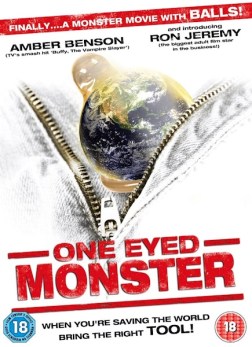
Sometimes, I swear off consciously watching any more likely-to-be-bad movies. And sometimes, I just feel like attempting something like One-Eyed Monster. And this is why: it’s actually pretty fun.
I have been known to suggest in my reviews of films that the writers/producers/whoever surely came up with a title and then tried to base a film around it. I imagine that’s actually the case fairly rarely. Here, however, I feel certain that’s what happened. For the innocents among you… well, maybe you should stop reading now. For the slightly-less-innocent, “one-eyed monster” is a euphemism for a (whisper it) penis. It also contains the word “monster”, like, y’know, a horror movie. What if you made a horror movie where some chap’s one-eyed monster was a monster?!
Someone probably felt very pleased with themselves when they had that realisation.
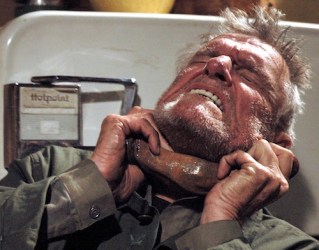
I suppose it follows that the chap in question should be a porn star. I don’t really know why it follows, but somehow it seems natural. The storyline, then, concerns a bunch of porn stars and their small crew travelling to a remote cabin to shoot their latest masterpiece, only an alien lightning bolt (or something) strikes leading man Ron Jeremy (the real-life porn star playing himself) and turns his penis into an evil entity that starts killing people.
Don’t worry, it is a comedy.
Perhaps the first thing to say is that, despite the setup and star, this isn’t actually a porn movie. People assume it is — even the BBFC (who’ve definitely watched the damn thing) hide it behind an age barrier in the euphemistically-titled “adult” section of their website. Anyone looking for those kind of kicks is going to be disappointed, although there’s still plenty of vulgar and crude dialogue to justify its 18 certificate. In actuality, it’s mostly above using “we said a rude word!” as a ‘joke’, which is one positive it has over many more mainstream ‘comedies’.
Indeed, the film as a whole is more fun than it has any right to be, but almost as much as you might hope for from such a silly premise. Okay, perhaps the acting isn’t up to much… or possibly they’re playing it really deadpan. Maybe both. I actually found that side of it very amusing, but I guess some people just see it as crap acting. Either way, there are some genuinely very funny bits. I laughed out loud more than once, which is more than I can say for many a more slickly made comedy.
Look, One-Eyed Monster isn’t any kind of high art, nor is it really an undiscovered masterpiece of the comedy-horror sub-genre. It’s only really scary if you have a (frankly, irrational) fear that you might get strangled by a sentient dismembered member, but it is funny, and those with the right kind of sense of humour (and/or stomach for such things) could find worse ways to spend 80 minutes.
2015 #159
Randall Lobb | 99 mins | streaming (HD) | 16:9 | USA / English | PG / PG
This informative documentary uses interviews with all the key players to tell the story of how a small indie comic, created incidentally and published almost on a whim, became a true cultural phenomenon.
And, despite how daft it all seemed (well, to adults — kids lapped it up), it really was huge. At first, co-creators Kevin Eastman and Peter Laird managed to scrape together enough money for a limited run of the first issue of the comic; three years later, it was outselling The Avengers, and they had deals for a toy line and animated TV series. Both of those were massive hits too… but it nearly ended after just five episodes and the first few action figures: toy manufacturer Playmates were so happy with the sales figures that they didn’t care about doing more. Seriously. Can you imagine that happening today? “We’ve made tonnes of money on this! Right, let’s stop it and think of something else.” It was the series’ producer who fought for more episodes, which must have made Playmates giddy with glee in the end: at its height, the toys shipped 100 million units a year, cited in the film as being probably the largest amount for a single toy line ever. I confess, I had a fair number of the toys; mainly early ones too, so there’s plenty of nostalgia-inducing focus on them here.
The film traces the story beyond that to the first live action film, which broke records for an independent production. There are some nice bits of behind-the-scenes trivia in this section, like how they shot dialogue scenes with the Turtles at 23fps, and action scenes at 22fps, so as to make the movements of the slightly-clunky suits crisper when played back at the regular 24fps. It’s around this point that the Turtles phenomenon began to wane, however, so it’s somewhere between a shame and unsurprising that the documentary stops shortly after — the sequelfilms were not very good and didn’t do very well, and it wasn’t long before the rights were sold on anyway, at which point the story of the creators’ relation to their creation essentially comes to a close. Is it right to gloss over this, or would it have been better to explore it in more detail? Both points of view have their merits, probably depending on how much nostalgia you hold for the property.
As for this documentary, it nonetheless finds an almost emotional conclusion with Eastman and Laird today talking about the chain of chance and coincidence that brought them together three decades ago to accidentally create something that transformed their lives, and which continues to endure in all kinds of media (no one liked that Michael Bay film, but it’s still getting a sequel; while the current animated series is apparently very good, for people who like that kind of thing). It makes for a surprisingly engrossing behind-the-scenes story, too.
2015 #175
Raoul Walsh | 149 mins | Blu-ray | 1.33:1 | USA / silent (English) | U
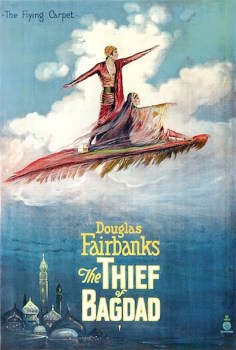
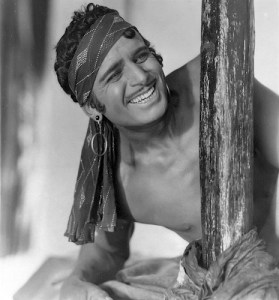
Douglas Fairbanks started out in comedies, where he was so popular he was quickly established as “the King of Hollywood”, which allowed him to attempt something different: an historical adventure film. The Mark of Zorro was a huge hit, in the process defining the swashbuckling genre, so he followed it with The Three Musketeers, then Robin Hood. With each new film he tried to outdo his last, and that culminated in his Arabian Nights fantasy, The Thief of Bagdad.
Fairbanks plays the titular thief, who steals only what he can’t afford — that’s everything. Well, that’s not strictly true: he’s clearly stolen a load of cash, so he must be able to afford quite a bit. But shush, I will have my Aladdin references. No, the thief mainly steals for the thrill and the adventure, and to have whatever he wants. As he tells a fella in a mosque, “My reward is here. Paradise is a fool’s dream and Allah is a myth.” I guess you could say things like that in the ’20s without being brutally murdered.
Anyway, it’s time for the princess of Bagdad (Julanne Johnston) to get married. Princes are called from far and wide to vie for her hand, and one of the keenest is the Prince of the Mongols (Sojin Kamiyama), who wants to add Bagdad to his empire (because only a truly evil ruler would use their army to conquer Baghdad). With goods flooding into the palace in preparation, the thief decides it would be a grand time to burgle the place. As he goes about his thievery, he comes across the princess’ bedchamber and falls in love. Or maybe just lust, because his next plan is to masquerade as a prince and steal her.
With the aid of his comic chum (Snitz Edwards), the thief pretends to be Prince Ali, fabulous he, Ali Ababwa Ahmed of the Isles, of the Seas, and of the Seven Palaces. It’s a made-up title, of course, which alerts the Mongol Prince to the attempted deception — though as he’s “the Governor of Wah Hoo and the Island of Wak”, he’s a fine one to talk. The thief manages to make it to see the princess anyway. She instantly falls in love with him, and he realises he loves her too, so can’t just kidnap her. His whole value system is undermined! But now he’ll have to win her hand by more honest means. Well, she already loves him, so he’s halfway there; but he’s an imposter, so there’s that to sort out yet.
The main problem with The Thief of Bagdad, for me, was that it took more-or-less 90 minutes to get to this point. That stretch isn’t without entertainment value, both deliberate, like Fairbanks’ joyful displays of athleticism, and not, like the overwrought intertitles in which characters speak like Yoda by way of Shakespeare (“Thou wilt wed the suitor who first toucheth the rose-tree” / “He touched not the rose-tree”). The beginning is where the pace really suffers: the multitudinous ways the thief goes about his larceny are individually entertaining and/or ingenious, but as an introduction that merely needs to establish “this man is a clever, successful thief”, it’s overkill. Lovers of Fairbanks’ theatrics may well disagree, but I wanted the real story to get going.
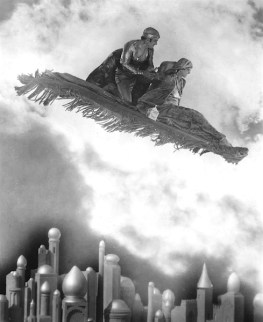
However, once it gets past this languorous preamble, the film really comes alive for its final hour. Everyone’s off on a quest, and so we leave the epic Bagdad set for an array of other equally-impressive locales. Here’s where the film’s real adventure lies, as we whizz through multiple fantasy landscapes, the thief battling monsters as he goes, and the Mongol Prince plotting to conquer the city. This is also where most of the film’s famed special effects are to be found. So groundbreaking that they were analysed in scientific magazines at the time, they still have the power to enchant viewers the best part of a century later. Okay, sometimes you can see the wires, but that rarely undermines the magic. While a giant bat looks quite cuddly, a dragon-ish alligator-creature is fairly effective, and an underwater-spider-thing is actually rather creepy.
Even more impressive are the sets. The work of famed Hollywood designer William Cameron Menzies, at the time Fairbanks felt Menzies was too inexperienced to work on such a big project. Undeterred, he created a collection of detailed drawings and convinced the star/producer. No surprise that worked, because Menzies’ designs are extraordinary. His complex, detailed, unreal drawings are recreated accurately on screen (examples of this can be seen in the ‘video essay’ included on the film’s Blu-ray releases, for instance), using numerous techniques to create truly fantastical scenes: ginormous sets (they covered six-and-a-half acres), built on a reflective enamel floor (which had to be constantly re-enamelled throughout the shoot) and painted in certain ways to make them appear floaty; or glass matte paintings used to seamlessly extended or enhance shots. Reportedly 20,000 feet of film — that’s hours and hours worth — were shot just to test the lighting and painting of the sets.
Such visual extravagance could overwhelm many a movie star, but not so Fairbanks. I suppose it helped that, as the biggest male name in Hollywood movies, and with his own production companies and studios, he was in charge. Whatever the credits may say (not that there are any on the current widely-available prints), it seems Fairbanks was as much the film’s director as Raoul Walsh, who was hired because he used to run and box with the star. Consequently the film is built around Fairbanks, his skills and his interests — it’s a true star vehicle. He exudes fun, embodying that swashbuckling spirit of adventure and derring-do, and clearly having a whale of a time, which makes it all the more enjoyable for us, too.
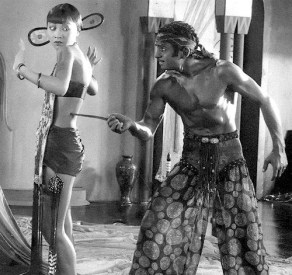
Nonetheless, other cast members manage to make a mark. Kamiyama is an effective villain, with his skull-like face and menacing manner, in particular when he unleashes one of my favourite threats ever at the ruler of Bagdad: “You shall add joy to the wedding festival by being boiled in oil.” Who doesn’t think deep-fried caliph is joyous? In a star-making supporting role, Anna May Wong is indeed memorable as a traitorous handmaiden. That’s more than can be said of her employer: Johnston is a bit of a non-starter as the princess, which I guess is what happens when you have to re-cast because your original choice departs part way through production. Comedian Snitz Edwards was also a mid-production replacement, drafted in to provide comic relief. It wasn’t necessary: he doesn’t add much, and Fairbanks had it covered.
The Thief of Bagdad succeeds most as a spectacle, especially as it has various kinds to offer: Fairbanks’ stunts, Menzies’ sets, the still-remarkable effects work. It may be a bit bloated, but Fairbanks’ exuberance infects the entire production so that, when it’s at its best, it’s immensely enjoyable.
2015 #139
Bharat Nalluri | 104 mins | Blu-ray | 2.40:1 | UK / English | 15 / R
The BBC’s long-running spy thriller series Spooks (aka MI-5 in the US) came to a close a few years ago, and instantly sparked rumours of a big-screen continuation. Unlike most such rumours, that one actually came to fruition: this result hit UK cinemas in the summer, and is now making its way across the pond — under that Mission: Impossible-esque title, of course.
The TV series is probably best remembered for the way it regularly killed off its leading characters in shocking fashion, thanks to the most infamous of them all: the “deep fat fryer incident” from the second-ever episode. It was about a lot more than that, though. Beginning in 2002 in the wake of 9/11, a series about the security service defending the country from terrorism couldn’t avoid being ultra-relevant, and it ran for a decade during which such issues never ceased to be pertinent (and haven’t since). That other famous British spy institution, James Bond, was at the tail-end of the Brosnan era when Spooks began, and the lower-key TV series was — like Tinker Tailor and others before it — pitched as a “real world” version of what the security services got up to. Storylines were “ripped from the headlines”, often with eerie prescience: after one early episode, the series’ lack of end credits led some viewers to believe the real BBC News bulletin that followed was still part of the drama.
Early seasons focused at least as much on things like the mundanity of spycraft, or how one went about having a personal life while also being a sometimes-undercover agent, as they did on the exciting action of counterespionage — as evoked in the memorable tagline “MI5 not 9 to 5”, of course. As the years rolled on, things got increasingly outlandish and grandiose, just as almost every spy series that starts out “grounded” is wont to do. In season three, an entire episode was spent on the moral dilemma of whether it was acceptable to assassinate someone; a couple of years later, assassinations would just be a halfway-through-an-episode plot development. The one constant through all this was section chief Harry Pearce (Peter Firth), the M figure to a rotating roster of “James Bond”s, including Matthew “Ripper Street” Macfadyen and Rupert “Whitechapel” Penry-Jones, as well as other actors who didn’t go on to lead Jack the Ripper-derived crime series, like Richard “The Hobbit” Armitage.
Now, a couple of years since the TV series wrapped up its ten-year run, Spooks has attempted to make the leap to the big screen. Although they’ve roped in the fella who directed the first-ever episodes, the screenwriters are the final two seasons’ showrunners, so the movie follows on from where the series ended up rather than re-establishing itself in where it all began. What does that mean in practice? Sub-Bourne action in a film that often appears more like a well-budgeted TV movie than a proper feature film.
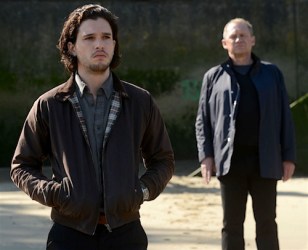
But I’m getting ahead of myself. The story begins with Harry running an op that goes wrong, during which terrorist Adam Qasim (Elyes Gabel) is sprung from custody just before being handed over to the CIA. Cue international incident. Naturally the blame is pinned on Harry, who consequently throws himself off a bridge. Except no one buys that, so they drag in Will Holloway (Kit Harington), a disenchanted one-time protégé of Harry’s (i.e. the series’ latest “younger man who can do the running around”). He knows nothing about it (obviously), but they want him to track Harry down nonetheless. Turns out Harry suspects there’s a mole in MI5 (because it’s a spy thriller — there’s always a mole) and it might be one of the very people who brought Will in (who include David Harewood, Tim McInnerny, and Jennifer Ehle). Harry and Will must work together to, a) find the mole, and b) stop whatever atrocity Qasim has planned next.
In case it isn’t clear, you don’t need to have seen the TV series to follow the plot, which is standalone in every aspect that seriously matters (there are certainly nods to the show, especially to its final season, and one fan-pleasing cameo. More would’ve been nicer.) However, a familiarity might help manage your expectations: The Greater Good feels like a wider-screen, (slightly-)bigger-budgeted version of the show, for good or ill. “Good” because, well, it should really, otherwise why call it Spooks? “Ill” because anyone expecting an action-packed thriller to rival Bond, Bourne, or Mission: Impossible will come away disappointed.
The trailers attempt to promise some of that kind of action, but they’re a bit of a cheat: what adrenaline the film has is mostly released in tiny bursts, scattered throughout. That strategy is fine if you’ve got the money to make each little burst a solid sequence, but when the entirety of some sequences is “jumping through a window” or “climbing a wall to get into a flat”, well… Sure, it looks good in the trailer — it promises lots of action in different places at different times — but that’s also a promise the movie can’t fulfil. The Greater Good certainly isn’t just a low-rent action movie — it’s driven by its plot — but if they’d saved up the filmmaking time, effort, and expense afforded to those single-dose action moments and poured it all into one sequence (in addition to the two or three fully-realised action sequences that the film does have), it might’ve paid dividends.
So what of that plot? As mentioned, the exciting contemporaneousness of Spooks’ storylines went increasingly AWOL as the series wore on, trading real-world issues for ludicrous government conspiracies or revived Cold War rivalries. Unsurprisingly, given the writers involved, the movie continues in that latter tradition. That’s a shame, because Spooks’ ability to engage with real-world issues in a thriller context was one of its best elements. It’s not as if we’re lacking in spy-related storyline-fodder in the real world — something Edward Snowden-y or about radicalised nationals would’ve been a good starting point. (Based on his accent, I guess Qasim is supposed to be an American who was converted, but that facet of his character isn’t explored.) At least they try to sub in some thematic relevance, raising questions related to doing what’s right versus doing what’s expected. Sadly that dichotomy isn’t explored as fully as it could have been either, but it’s definitely a constant and repeated factor.
You might not believe it from this picky review but, fundamentally, I did enjoy the Spooks movie. It largely retains the feel of the TV series (albeit without the moderately-memorable theme music — honestly, it’s like someone forgot to compose anything for the title credits. What were they thinking?!), and if they manage to produce a sequel then I’ll be sure to see it; but in this outing I can’t help spotting ways I thought it could’ve been even better. Consequently, as a film in its own right it comes across as a Bourne wannabe. On the bright side, it’s still better than The Bourne Legacy.
Spooks: The Greater Good MI-5 is available in the US through DirecTV from today, and in theaters and on demand from December 4th.
2015 #109
David Bullock | 72 mins | streaming (HD) | 1.78:1 | USA / English | NR* / PG-13
The second release in Warner Premiere’s series of direct-to-video DC Universe Animated Original Movies (which now stretches to 24 titles and counting) is adapted from writer and artist Darwyn Cooke’s acclaimed comic book miniseries DC: The New Frontier, which sees Golden Age heroes (Superman, Batman, Wonder Woman) meeting Silver Age heroes (the Flash, Green Lantern) for the first time in the 1950s.
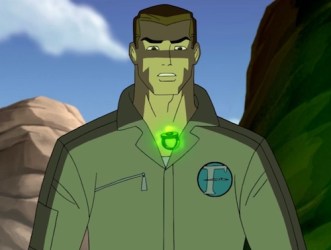
With so many characters (those are just the tip of the iceberg), Justice League: The New Frontier has a many-pronged narrative to squeeze into its brisk hour-and-ten-minutes running time. The connecting tissue is an unknown entity that has decided to destroy all life on Earth, which eventually will lead all of the various characters to come together to combat it. Other than that, I’m not even going to attempt to summarise the story because there’s so darn much going on. Uncommonly, it spends a lot of time focused on the likes of Hal Jordan (David Boreanaz) and the Martian Manhunter (Miguel Ferrer) rather than the usual big names.
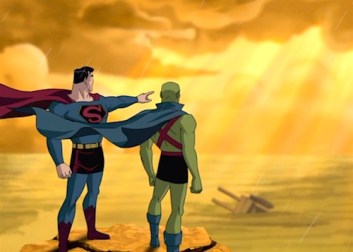
Frankly, there are too many characters, and the film doesn’t always seem to know what to do with all of them. The array of cameos in minor roles is fine, and sure to please thoroughly-versed comic book readers, but it’s the main characters who are sometimes sidelined. In some cases, literally: Wonder Woman disappears off to her island after two scenes; the Flash retires early on; Superman gets sunk in the ocean at the start of the climax. The plot feels underdeveloped too. There are snippets of Batman investigating the entity, for instance, but before he can really learn anything the thing just attacks, so his storyline was needless. Maybe Cooke’s original graphic novel had more time for all of this. If some things have had to be sacrificed to streamline the tale into a 70-minute movie, then it wouldn’t be uncommon for these DC animations. I’ve not read the book so I don’t know. However, there are definitely bits that could’ve been sacrificed or abridged further (the Flash’s two early action sequences, for instance) to make more room to tell the story in full.
On the bright side, a period-set superhero movie makes a nice change; and it just gets on with it, rather than feeling the need to explain itself with alternate worlds or time travel or any such BS. It has the confidence to start with many of the heroes already in play, rather than worry about giving each one a full-blown origin story or something. At one point I thought it might manage to pull off something akin to Watchmen, but in the ’50s and with recognisable DC heroes. Such a comparison might be a kindness too far. There are some good concepts here, but the execution pootles out as it goes along. At times it feels a bit like a pilot episode, as if they were somehow expecting to spin a TV series out of it — for all I know maybe they were — but the problem with pilot episodes is that they are, by definition, unresolved. The New Frontier has a climax that wraps up the immediate threat, but it also feels like it was laying character and supporting cast groundwork for something longer-running.
On technical merits, the art design is… variable. At times it appears to have been inspired by Cooke’s awesome style, which is both pleasing in itself and marks a nice spot of variety from these animations’ norm, but at other points the style reverts to simplistic “Saturday morning cartoon” familiarity. Disappointingly, the actual animation is always of that level. Warner have definitely put out worse examples in this range (Superman vs The Elite), but they’ve also done much better (Batman: The Dark Knight Returns).
I really wanted to like The New Frontier, for all sorts of reasons. It does start well, with moments of promise sparkling here and there, but the longer it spends juggling so many balls, the fewer it can keep flying smoothly. (Do balls “fly” when juggled? Anyway, you get my point.) Considered as a whole, the overall result is fairly disappointing.
* The New Frontier has never had a disc release in the UK (or a theatrical one, naturally), so has never been classified by the BBFC (I thought you needed that for streaming or download nowadays, but turns out it’s optional). Amazon choose to list it as a PG, but the US’s PG-13, aka a 12, seems nearer the mark (depending how much you care about cartoon violence and blood, anyway).^
2015 #145
Catherine Hardwicke | 122 mins | download (HD) | 2.35:1 | USA / English | 12 / PG-13
I’m not a big one for Halloween, but I’ve acknowledged the horrific holiday on a couple of occasions now. For 2015, I decided to review one of the most notorious supernatural films of recent times. A movie so horrific, it sent critics cowering behind their sofas. A film so evil, it’s perverted the minds of children — and some adults — the world over. A movie so renowned, it strikes fear into the hearts of even hardened movie lovers.
I speak, of course, of Twilight.
(That was more surprising when it was in a generically-titled post as an introduction to a whole week of reviews for the entire saga, but then it turned out I had better things to watch in October than four more Twilight films, so you’re only getting this one for now.)
For thems that don’t know, Twilight is the story of Bella Swan (Kristen Stewart), a teenager who moves to live with her father in the small town of Forks, Washington (apparently it’s actually a city, but the film would have you think it’s almost a village). Attending the local high school, she’s intrigued by the introverted Cullen siblings, in particular Edward (Robert Pattinson). To cut a long ramble short, it turns out they’re vampires, but friendly vegetarian vampires. Bella instantly falls in love with Edward in all of three seconds, because he’s kinda dangerous but pretty and sparkles in sunlight (we shall come back to this), though his lust for her brings out his blood-drinking side. Just to make things complicated, there are some other vampires visiting the area who have fewer qualms about drinking human blood…
Twilight is adapted from a young adult novel by Stephenie “one too many Es in her name” Meyer that no one had heard of (bar its legion of bloodthirsty fans) before someone thought it would make a good movie. It would probably have been better if things had stayed that way. There are many reasons for that, but let’s take them in the order they must’ve occurred. First: the story, which is also the worst part. Edward is an odd, creepy stalker — turning up in Bella’s bedroom and staring at her while she sleeps, that kind of thing — who she then finds out is a century-old man (bit of an age gap) and, literally, a predator… but she instantly unconditionally loves him. What the merry fuck? She’s given no reason to even like the guy, and plenty of reasons to run away scared of him, but no, she falls in love. What message is this sending to young girls? That the guy who follows you around everywhere just staring at you and then confesses he’s having trouble controlling his impulse to murder you (yes, he says that) is the perfect soulmate? Not to mention that he’s 100-and-something years old and dating a 17-year-old. He shouldn’t be pre-teen girls’ idol, he should be Hugh Hefner’s!
All of the characters are this poorly drawn. Their motivations, actions, and reactions often make little sense. The number of times one of them does something because Plot are incalculable. That’s without even mentioning Bella’s almost total inability to do anything for herself, except use Google to find some tiny second-hand bookshop in a rarely-visited town to buy a book about something she wants to research, rather than, say, use Google to read up a bit first. Then she gets the book, looks at one illustration and its caption, and it’s back on Google to find out more. Nice work, Bella.
All of this is Meyer’s fault, faithfully translated to the screen by adapter Melissa Rosenberg. This is a woman with quality TV form: she was a lead writer on Dexter back in its first four seasons, when it was really, really good; now she’s showrunner on the forthcoming Marvel/Netflix series Jessica Jones, which has promising trailers and a well-reviewed first episode, in particular its treatment of female characters. Yet she also wrote this. Even if you allow for her being hamstrung by the novel in story terms, the dialogue is appalling, in every respect. Characters bluntly state their own and each other’s emotions at each other. We’re always being told stuff instead of shown it. Scenes heavy with exposition are shot with frenetic camerawork and underscored with driving music as if that somehow makes it filmic and exciting.
Ah, the acting and direction! Nearly every performance is poor. Pattinson and Stewart spend the entire film appearing uncomfortable and puzzled — by themselves, with each other, with everyone else. Her only other emotion is “moody loner”; he at least manages a smile, maybe twice. Some of it is unbelievably cheesy, like an ’80s genre B-movie by a music video director. That kind of thing can work, a) when it’s from the period, or b) when it’s done knowingly. Twilight is neither. The Pacific Northwest location is inherently atmospheric, which is handy because Catherine Hardwicke’s direction does nothing to conjure up any such feeling itself.
And then we have vampires who sparkle. Sparkly vampires. Sparkly. Vampires. Just… why?! The whole traditional mythology of vampires is played fast and loose with, which is fine, that’s what many vampire flicks do; and there are even some borderline-neat subversions… but golly, that sparkliness is silly.
Some of these points are definitely just niggles, but the film is so laden with them that it all becomes ripe to cause either laughter or frustration. Better the former than the latter, which is why the Honest Trailer is so entertaining. See for yourself:
Believe it or not, I didn’t actually hate Twilight as much as I thought I might. Occasionally there are shots or moments that work, maybe even the odd whole scene. Bella’s dad is pretty good, both their relationship and Billy Burke’s performance. I quite liked some of the aggressively-blue cinematography, but then I do like the colour blue. There’s almost a nice element of melancholic “leaving a fun ordinary life behind for this fantastic but dangerous new one”, but I think that might be limited to literally one shot-reverse-shot of Bella seeing her friends leaving a café.
So it’s not a good film, but it’s not a “worst film ever made”-level disaster either. I mean, it’s not so bad that I can’t even bear the thought of watching the sequels. Actually, they kind of intrigue me, because (spoiler warning!) it hasn’t even got to the Jacob/werewolves stuff yet, and that whole Team Edward / Team Jacob aspect seemed to be such a big thing. And I want to see what Michael Sheen has to do with anything. And I kinda wanna see if Breaking Dawn is as batshit crazy as the plot description I once read made it sound. And maybe there’ll be more of Anna Kendrick’s cleavage, because wow, who knew that was there? (Look, it’s a movie about a creepy stalker romance between a 100-year-old man and a 17-year-old girl — a little light ogling of someone around my own age pales in comparison.)
So that’s Twilight for you: poorly plotted, poorly written, poorly acted, poorly directed, teaching poor life lessons to its target age group, and yet still somehow so compelling that I’m prepared to sit through another eight-ish hours of the stuff. Never has the phrase “your mileage may vary” been so apt.*
* Unless someone used it in reference to the Fast & Furious films.
aka Birdman: or (The Unexpected Virtue of Ignorance)
2015 #164
Alejandro G. Iñárritu | 119 mins | streaming (HD) | 1.85:1 | USA / English | 15 / R
2015 Academy Awards 9 nominations — 4 wins
Winner: Best Picture, Best Director, Best Original Screenplay, Best Cinematography. Nominated: Best Actor, Best Supporting Actor, Best Supporting Actress, Best Sound Mixing, Best Sound Editing.
I started the week by reviewing the first Best Picture winner, and now end it with a review of the most recent — which just so happens to be coming to Sky Movies and Now TV from today (couldn’t’ve planned that much better if I’d tried!)
Birdman isn’t a superhero movie, though if the title sounds like one then that’s no accident: Michael Keaton is an actor who once played a superhero in the late ’80s and early ’90s. Well, to clarify, Michael Keaton plays an actor, Riggan Thomson, who once played a superhero in the late ’80s and early ’90s — the Birdman of the title. Decades later, he’s trying to be taken seriously by starring in a play on Broadway… which he’s also written… and is directing… and has sunk his personal finances into. So it’s probably not a good thing that one of his cast can’t act, his personal life is all over the place, the critics hate him before the play’s even opened, and he’s hallucinating superpowers.
Birdman is a comedy. “How the heck did a comedy win Best Picture at the Oscars?” you might well wonder, because that never happens anymore. Well, it’s a comedy-drama — it’s certainly funny, but drily so, and with lots of Personal Character Drama and a few Issues along the way. As it goes on, and gets a bit weird and kinda arthouse-y (as if it wasn’t to start with), you may forget that’s where it began. Nonetheless, I found it more consistently amusing than other recent acclaimed comedic Best Picture nominees, like the disappointing American Hustle.
In part this is thanks to Keaton, who gives quite an immersive performance as the numbed, self-deluded star. Some people were very much behind him for the Best Actor gong, but I think it found its rightful home: Eddie Redmayne’s performance as Stephen Hawking was transformative to the point you forgot you were watching an actor; Keaton is just rather good. Anyway, for me the more enjoyable performance came in a supporting turn from Edward Norton. Norton is a notoriously difficult-to-work-with actor… sorry, Norton plays a notoriously difficult-to-work-with actor, who joins Riggan’s production and begins to wreak all kinds of havoc.
The rest of the cast are dealt very mixed hands. Emma Stone is good, but was there enough meat on the role’s bones to justify Best Supporting Actress, other than one awards-clip-baiting shouty monologue? I’m not sure. The most memorable thing about her performance is how extraordinarily large her eyes are. Andrea Riseborough is thrown a bone or two; Zach Galifianakis doesn’t showboat like I’d’ve expected a comedian with his background to; Lindsay Duncan appears for one scene, but it’s a pretty good one (sometimes it really benefits American movies that there are swathes of fantastic British actors who are capable of first-rate leading performances, but so low down the food chain that they can be drafted in for single-scene roles); and Naomi Watts is utterly wasted. (At one point Riseborough and Watts kiss, which is apparently a spoiler for Mulholland Drive because she kisses a woman in that too. Oh IMDb trivia section, you will let any old rubbish in.)
Famously, almost the entire film takes place in a single take. A fake one, of course. Well, I say of course — Russian Ark did a feature-length single take for real. I’d assumed this meant the film took place in real time, because that seems the obvious thing to use an unbroken shot for — to show us everything that occurred in the time it occurred. But no. Iñárritu uses that and the fact it’s faked quite cleverly at times, to pull off impossible changes of location. For example, at one point the camera leaves Norton in the theatre’s gods and drifts down towards the stage, where we can see him mid-performance.
The most curious aspect of the single take is: what did it need two editors for?! Everything had to be meticulously planned in advance — apparently, longer was spent on the screenplay than is normal, because once it was shot nothing could be cut — so surely all someone had to do was stick it together at the joins? Some of those joins are actually fairly obvious (your familiarity with filmmaking techniques and where joins might be hidden will dictate exactly how many), but a decent number remain hidden, I think. Well, I presume — I didn’t see them. Anyway, it’s more a feat of logistics and cinematography, the latter of which Emmanuel ‘Chivo’ Lubezki did win an award for. How deserved that was, I’m not sure. It’s very impressive to work out how to shoot a movie in a single take, even a pretend one, but surely cinematography awards are for the quality of the images, not the logistics of moving your camera around? Birdman is by no means an ugly film, but the best-looking of the year? I’m not so sure.
Birdman is an entertaining film, both funny enough to keep the spirits up and dramatic enough to feel there’s some depth there. It’s also a mightily impressive feat of technical moviemaking, but then I do love a long single take (even a fake one). Is it the Best Picture of 2014? Well, from the nominees, it’s not the funniest (The Grand Budapest Hotel), nor does it have the most impactful performances (The Theory of Everything), nor is it the must gripping or thought-provoking (Whiplash), and it doesn’t feel the most significant (Boyhood). There is an interesting element of having its cake and eating it about Birdman, though, as it berates The Movies for their current superhero obsession while telling the story of a Hollywood actor who sets out to prove those snooty New York theatre critics wrong. Hm, however did this win Best Picture from an organisation whose main voting bloc is Hollywood actors?
Birdman debuts on Sky Movies Premiere today at 1:45pm and 10:10pm.
2015 #162
Park Chan-wook | 99 mins | streaming (HD) | 2.35:1 | UK & USA / English | 18 / R
Director Chan-wook “Oldboy” Park makes his English-language debut with this modern-Gothic thriller from the pen of Wentworth “yes, the guy from Prison Break” Miller.
When well-to-do architect Richard Stoker dies on his daughter’s 18th birthday, he leaves said insular daughter India (Mia “Tim Burton’s Alice in Wonderland” Wasikowska) stuck in their Tennessee mansion with her unbeloved mother (Nicole “the face behind the nose” Kidman). At the wake, both are surprised by the arrival of Charlie (Matthew “Ozymandias” Goode), Richard’s brother who Evelyn has never met and India has never even heard of. Nonetheless, he’s all charm and good manners, though when he moves into their home he begins to build up a slightly creepy relationship with Evelyn, and essentially stalks India. The Stokers’ housekeeper clearly knowns something about him, but then she disappears; and Richard and Charles’ Aunt Gwendolyn turns up wanting a word with Evelyn. Just what is going on with Uncle Charlie that everyone apart from India seems to know about?
And I’ve already said too much, maybe. Stoker isn’t all about its mystery and its twists — it’s at least as much about its carefully constructed Gothic mood; but part of that is the mystery, so, y’know. Indeed, it’s so moody and atmospheric that it seems to turn some viewers off. It’s certainly not thrill-a-minute, and it has a very particular pace and tone. I’m going to keep coming back to the word Gothic, because that really is the best word for it; whether that should be “modern Gothic” or “neo-Gothic” or “Southern Gothic” or what, I don’t know, but it’s definitely Gothic — with little more than cosmetic changes, I’m sure the story could be shunted back to a crumbling pile in 19th Century England. So precise is the mood of this secluded household, it’s kind of weird when, a little while in, we get to see India’s place of education: a typical US high school. In another film I might call this sudden change of locale a misstep, a breaker of tone, but in the world Park has created it just feels like a point of contrast.
Visually, Stoker is peerless. It doesn’t scream “beauty” at you, but the shot composition, Chung-hoon Chung’s photography, and Nicolas De Toth’s editing are all exceptional. The sound design is incredible too, with judicious use of ultra-heightened effects to imitate India’s skill for hearing small things others maybe miss. Finally, the music is perfection. A piano duet composed by Philip Glass is one of the film’s most memorable sequences, but Clint Mansell offers a doom-laden score, of a piece with his work on Requiem for a Dream and The Fountain (both of which I think I’ve written of my admiration for sometime previously), and there are some choice songs too: I’d never heard Summer Wine by Nancy Sinatra & Lee Hazlewood before, but it fits the film like a glove, as well as being fantastic in its own right; and Emily Wells’ Becomes the Color slugs in with a kind of perfect dissonance to the musical style to that point. A comment on iCheckMovies used the word “sumptuous” for all of this, and that seems apt.
I have a feeling “not for everyone” may be one of the most overused phrases on this blog, but, if so, I think that’s for good reason: some of the best movies are “not for everyone”. We may not agree on what those movies are, but that’s kind of the point: they fit our own individual tastes, not “everyone’s”. Stoker undoubtedly doesn’t have easy mass appeal — it’s got a 6.9 on IMDb — and even some people open to its charms deem it to only be style over substance. I don’t think it’s wholly lacking in the latter, though if you’re looking for some Significance then I don’t know if you’ll find it — it’s an artistically-made Gothic thriller, not a soul-bearing artistic portrait of humanity. And as for the style… well, I’ve already talked about that. Whether you can have “style” for style’s sake, or whether it needs to be in aid of something, is a debate for another day. Here, it is in aid of something: amping up the Gothicism of the inherently Gothic story, which in other hands could have just became any-old present-day-set family thriller.
Describing something as “an acquired taste” might well be another phase I’ve used often, especially as it’s essentially a synonym for “not for everyone”. Nonetheless, that’s what I’ll go for here. Stoker will most decidedly not appeal to all palates, but for the right viewer, it’s a dark, moody, sensuous, Gothic delight.
The UK TV premiere of Stoker is on Film4 tomorrow, Friday 30th, at 9pm.
It placed 7th on my list of The Ten Best Films I Saw For the First Time in 2015, which can be read in full here.
2015 #128
Greg Mottola | 113 mins | streaming (HD) | 16:9 | USA / English | 15 / R
Seth Rogen and Evan Goldberg’s semi-autobiographical comedy sets Seth (Jonah Hill) and Evan (Michael Cera) (see what they did there?) on a quest to obtain booze for a party where they hope to copulate. Or, “every American teen comedy.”
Presumably the key to Superbad’s acclaim lies in the details, then. The narrative is implausible (hence “semi-”) but creates amusing situations — it’s a comedy, so, fine. Seth’s all-encompassing sex obsession feels extreme, but also accurate to many teenage boys.
The most interesting aspect is the guys’ college-threatened codependent relationship. Or maybe it’s people saying rude sex words — your mileage may vary.

 In a near future where Britain is part of a Cold War against China, a scientist (Toby Stephens) has been trying and failing to perfect artificial intelligence at a government research facility. When he hires a new associate (Arrow’s Caity Lotz) they make progress, crafting a machine in her own image (played by Lotz again, obviously). Unsurprisingly, their boss (Denis “turned down The Force Awakens” Lawson) has some less-than-ethical plans in mind for their new toy…
 This may explain why the performances are a mixed bag. Toby Stephens can’t seem to find much to work with in his lead role, despite supposedly having a couple of emotional arcs. Lawson sleepwalks through his turn as a shady government higher-up. Lotz is unremarkable as a human, but fantastic as the AI-driven machine. Her performance as the latter is the primary reason to consider watching the film.
 Sometimes, I swear off consciously watching any more likely-to-be-bad movies. And sometimes, I just feel like attempting something like One-Eyed Monster. And this is why: it’s actually pretty fun.
 hide it behind an age barrier in the euphemistically-titled “adult” section of their website. Anyone looking for those kind of kicks is going to be disappointed, although there’s still plenty of vulgar and crude dialogue to justify its 18 certificate. In actuality, it’s mostly above using “we said a rude word!” as a ‘joke’, which is one positive it has over many more mainstream ‘comedies’.
 This informative documentary uses interviews with all the key players to tell the story of how a small indie comic, created incidentally and published almost on a whim, became a true cultural phenomenon.
 As for this documentary, it nonetheless finds an almost emotional conclusion with Eastman and Laird today talking about the chain of chance and coincidence that brought them together three decades ago to accidentally create something that transformed their lives, and which continues to endure in all kinds of media (no one liked
 Douglas Fairbanks started out in comedies, where he was so popular he was quickly established as “the King of Hollywood”, which allowed him to attempt something different: an historical adventure film.
  of course, which alerts the Mongol Prince to the attempted deception — though as he’s “the Governor of Wah Hoo and the Island of Wak”, he’s a fine one to talk. The thief manages to make it to see the princess anyway. She instantly falls in love with him, and he realises he loves her too, so can’t just kidnap her. His whole value system is undermined! But now he’ll have to win her hand by more honest means. Well, she already loves him, so he’s halfway there; but he’s an imposter, so there’s that to sort out yet.
 Even more impressive are the sets. The work of famed Hollywood designer William Cameron Menzies, at the time Fairbanks felt Menzies was too inexperienced to work on such a big project. Undeterred, he created a collection of detailed drawings and convinced the star/producer. No surprise that worked, because Menzies’ designs are extraordinary. His complex, detailed, unreal drawings are recreated accurately on screen (examples of this can be seen in the ‘video essay’ included on the film’s Blu-ray releases, for instance), using numerous techniques to create truly fantastical scenes: ginormous sets (they covered six-and-a-half acres), built on a reflective enamel floor (which had to be constantly re-enamelled throughout the shoot) and painted in certain ways to make them appear floaty; or glass matte paintings used to seamlessly extended or enhance shots. Reportedly 20,000 feet of film — that’s hours and hours worth — were shot just to test the lighting and painting of the sets.
 In a star-making supporting role, Anna May Wong is indeed memorable as a traitorous handmaiden. That’s more than can be said of her employer: Johnston is a bit of a non-starter as the princess, which I guess is what happens when you have to re-cast because your original choice departs part way through production. Comedian Snitz Edwards was also a mid-production replacement, drafted in to provide comic relief. It wasn’t necessary: he doesn’t add much, and Fairbanks had it covered.
 The BBC’s long-running spy thriller series
  Early seasons focused at least as much on things like the mundanity of spycraft, or how one went about having a personal life while also being a sometimes-undercover agent, as they did on the exciting action of counterespionage — as evoked in the memorable tagline “MI5 not 9 to 5”, of course. As the years rolled on, things got increasingly outlandish and grandiose, just as almost every spy series that starts out “grounded” is wont to do. In season three, an entire episode was spent on the moral dilemma of whether it was acceptable to assassinate someone; a couple of years later, assassinations would just be a halfway-through-an-episode plot development. The one constant through all this was section chief Harry Pearce (Peter Firth), the M figure to a rotating roster of “James Bond”s, including Matthew “
 But I’m getting ahead of myself. The story begins with Harry running an op that goes wrong, during which terrorist Adam Qasim (Elyes Gabel) is sprung from custody just before being handed over to the CIA. Cue international incident. Naturally the blame is pinned on Harry, who consequently throws himself off a bridge. Except no one buys that, so they drag in Will Holloway (Kit Harington), a disenchanted one-time protégé of Harry’s (i.e. the series’ latest “younger man who can do the running around”). He knows nothing about it (
 The trailers attempt to promise some of that kind of action, but they’re a bit of a cheat: what adrenaline the film has is mostly released in tiny bursts, scattered throughout. That strategy is fine if you’ve got the money to make each little burst a solid sequence, but when the entirety of some sequences is “jumping through a window” or “climbing a wall to get into a flat”, well… Sure, it looks good in the trailer — it promises lots of action in different places at different times — but that’s also a promise the movie can’t fulfil. The Greater Good certainly isn’t just a low-rent action movie — it’s driven by its plot — but if they’d saved up the filmmaking time, effort, and expense afforded to those single-dose action moments and poured it all into one sequence (in addition to the two or three fully-realised action sequences that the film does have), it might’ve paid dividends.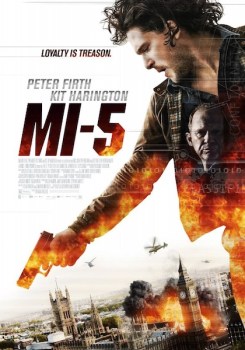
 The second release in Warner Premiere’s series of direct-to-video DC Universe Animated Original Movies (which now stretches to
  However, there are definitely bits that could’ve been sacrificed or abridged further (the Flash’s two early action sequences, for instance) to make more room to tell the story in full.
 I really wanted to like The New Frontier, for all sorts of reasons. It does start well, with moments of promise sparkling here and there, but the longer it spends juggling so many balls, the fewer it can keep flying smoothly. (Do balls “fly” when juggled? Anyway, you get my point.) Considered as a whole, the overall result is fairly disappointing.
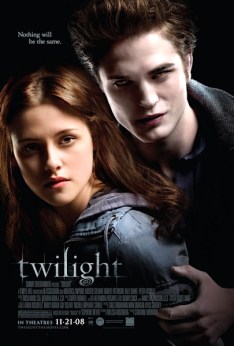 I’m not a big one for Halloween, but I’ve acknowledged the horrific holiday on a couple of occasions now. For 2015, I decided to review one of the most notorious supernatural films of recent times. A movie so horrific, it sent critics cowering behind their sofas. A film so evil, it’s perverted the minds of children — and some adults — the world over. A movie so renowned, it strikes fear into the hearts of even hardened movie lovers.
 Edward is an odd, creepy stalker — turning up in Bella’s bedroom and staring at her while she sleeps, that kind of thing — who she then finds out is a century-old man (bit of an age gap) and, literally, a predator… but she instantly unconditionally loves him. What the merry fuck? She’s given no reason to even like the guy, and plenty of reasons to run away scared of him, but no, she falls in love. What message is this sending to young girls? That the guy who follows you around everywhere just staring at you and then confesses he’s having trouble controlling his impulse to murder you (yes, he says that) is the perfect soulmate? Not to mention that he’s 100-and-something years old and dating a 17-year-old. He shouldn’t be pre-teen girls’ idol, he should be Hugh Hefner’s!
 in particular its treatment of female characters. Yet she also wrote this. Even if you allow for her being hamstrung by the novel in story terms, the dialogue is appalling, in every respect. Characters bluntly state their own and each other’s emotions at each other. We’re always being told stuff instead of shown it. Scenes heavy with exposition are shot with frenetic camerawork and underscored with driving music as if that somehow makes it filmic and exciting.
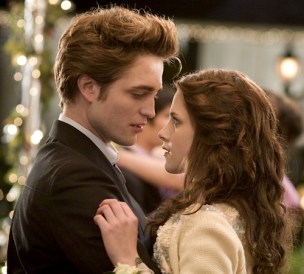 a little light ogling of someone around my own age pales in comparison.)
 2015 Academy Awards
 I started the week by reviewing
 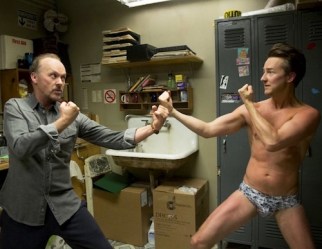 In part this is thanks to Keaton, who gives quite an immersive performance as the numbed, self-deluded star. Some people were very much behind him for the Best Actor gong, but I think it found its rightful home: Eddie Redmayne’s performance
 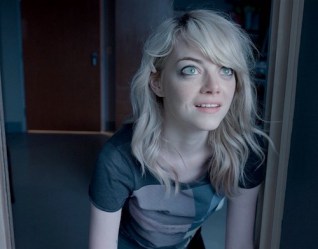 Famously, almost the entire film takes place in a single take. A fake one, of course. Well, I say of course —
 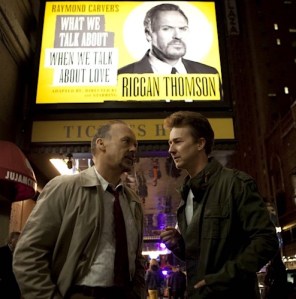 Birdman is an entertaining film, both funny enough to keep the spirits up and dramatic enough to feel there’s some depth there. It’s also a mightily impressive feat of technical moviemaking, but then I do love a long single take (even a fake one). Is it the Best Picture of 2014? Well, from the nominees, it’s not the funniest (
 Director Chan-wook “
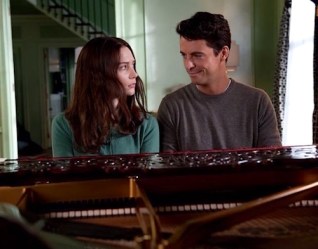 I’m sure the story could be shunted back to a crumbling pile in 19th Century England. So precise is the mood of this secluded household, it’s kind of weird when, a little while in, we get to see India’s place of education: a typical US high school. In another film I might call this sudden change of locale a misstep, a breaker of tone, but in the world Park has created it just feels like a point of contrast.
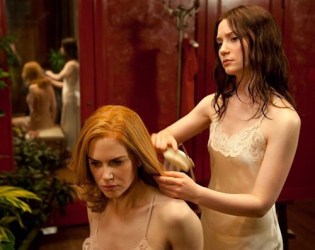 not a soul-bearing artistic portrait of humanity. And as for the style… well, I’ve already talked about that. Whether you can have “style” for style’s sake, or whether it needs to be in aid of something, is a debate for another day. Here, it is in aid of something: amping up the Gothicism of the inherently Gothic story, which in other hands could have just became any-old present-day-set family thriller.
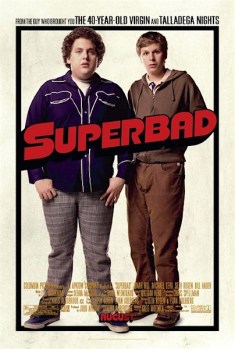 Seth Rogen and Evan Goldberg’s semi-autobiographical comedy sets Seth (Jonah Hill) and Evan (Michael Cera) (see what they did there?) on a quest to obtain booze for a party where they hope to copulate. Or, “every American teen comedy.”
