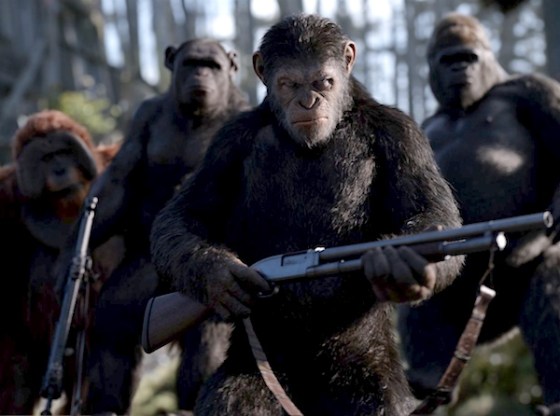
Suicide Squad (2016)

2016 #178
David Ayer | 123 mins | download (HD) | 2.39:1 | USA / English, Japanese & Spanish | 15 / PG-13
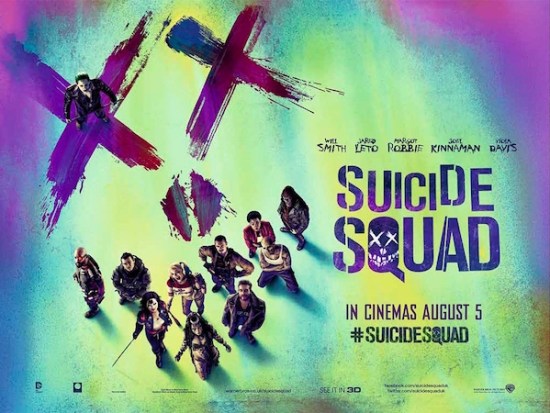
Suicide Squad

Oscar statue2017 Academy Awards
1 nomination — 1 win

Won: Best Makeup and Hairstyling.


The third movie in DC’s attempt at a shared cinematic universe always seemed like an odd choice — why adapt a minor title starring second- or third- (or even fourth-) string villains when you’ve yet to bring several of your better-known heroes to the screen? Then the trailers came out and the apparent darkly comical tone seemed to click with viewers. But apparently that wasn’t what the movie was like at all, so then the studio ordered reshoots and hired the trailer editing people to re-cut the whole movie.

That did not end well.

The final version of Suicide Squad definitely feels like a film that was messed around in post. I imagine the basic plot remains the same, however: sneaky government operative Amanda Waller (Viola Davis) comes up with a Cunning Plan to use locked-up super-villains — including the likes of Deadshot (Will Smith) and Harley Quinn (Margot Robbie) — to undertake dangerous and/or secret missions, on the basis that these prisoners are totally expendable. Why would the villains agree? They don’t have a choice: little bombs in their head will go off if they don’t comply. Almost immediately after getting approval for her initiative, a crisis breaks out in Generic Skyscraper City that requires the Squad’s expertise — how handy! Meanwhile, the Joker (Jared Leto) is concocting a plan to free his girlfriend…

Skwad!

That there were editing tussles over Suicide Squad’s final cut becomes evident almost immediately: the way it introduces Deadshot and Harley before cutting to Waller pitching her plan is a little clunky, surely a re-ordering to get the big-name characters on screen ASAP, which becomes obvious when they’re later introduced again alongside the other candidates. However, it really goes awry when Waller’s pitch and introduction of the Enchantress is immediately followed by another meeting where Waller makes her pitch and introduces the Enchantress. Maybe the screenplay was that clunkingly constructed to begin with, or maybe they just made a ham-fisted job of the restructuring.

On a shot-to-shot level the editing is fine, but various events aren’t allowed the necessary room to breathe, the endless character introductions are a jumble, the narrative is fitfully revealed, and the overall pace is a disaster. It’s easy to believe that it was cut by trailer editors because the pace and style with which it handles some sequences is reminiscent of the storytelling economy applied in trailers. Problem is, what works in a 120-second advertisement doesn’t in a 120-minute narrative. There are bits that are well put together — the occasional strong scene or impressive visual idea — but there’s a nagging awareness that someone felt the need to mess things around.
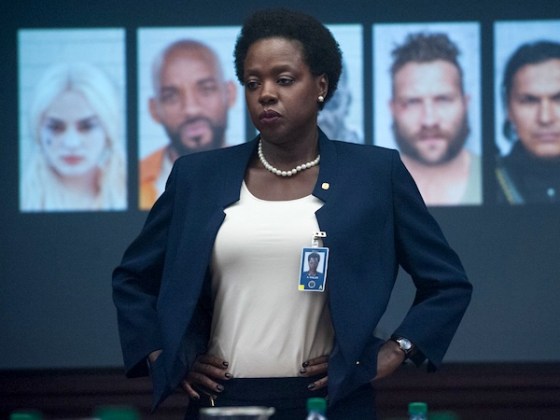
And nobody messes with Amanda Waller

Similarly, the use of songs on the soundtrack is scattershot. Some are eye-rollingly on the nose, while others seem chucked in at random, the apparent intent to be ‘quirky’ by throwing on discordant tracks. Parts of the film are the same, like Captain Boomerang’s pink unicorn: it’s a self-consciously Funny bit that’s deployed a couple of times early on and then completely disregarded. I mean, I’m not going to argue that the lack of reference to pink unicorns after the halfway point is Suicide Squad’s biggest flaw, but it’s indicative of its sloppy handling of material.

Examples of this disjointedness are almost endless. Like, during the climax the squad have a specific plan to deal with Enchantress’ brother, who they are aware of thanks to earlier seeing him on a ‘spy boomerang’ (don’t ask). But when the big fella comes out, their reactions are all “who the hell is this?!” and “we’re in trouble now!” It’s not a major flaw, it just doesn’t quite make sense — and when that keeps happening, I’d say the cumulative effect is a problem.

Suicide stars

On the bright side, Margot Robbie and Will Smith work overtime to both make their characters function and bring some entertainment value to the film, and they largely succeed. Viola Davis makes for a great love-to-hate character as the endlessly cunning Waller. I don’t even dislike Jared Leto’s loony take on the Joker. The rest of the cast… well, okay, the less said about them the better. For one thing, there’s a lot of them, and some don’t even need to be there. Slipknot and Katana barely serve any function, for instance, and the film only emphasises this by giving them clumsily offhand introductions.

There’s a definite sense that this version of Suicide Squad was created based on either audience feedback or the perception of what the audience wants, rather than what was actually designed to be the structure of the movie. It hasn’t worked. Scenes butt against each other in ways that surely weren’t intended, and the longer it goes on the more it feels like bits and pieces have been dropped in or taken out all over the place. It is possible to restructure a film in post, especially when you have reshoots to smooth the joins, but Suicide Squad absolutely feels like the hash job it was reported to be. Its legacy will be the lesson of what happens when you attempt a last-minute chop-and-change re-cut.

Theatrical Cut
2 out of 5


So, is the extended cut better?

2016 #195a
David Ayer | 135 mins | Blu-ray | 2.40:1 | USA / English, Japanese & Spanish | 15

Please sir, can I have some more?

Well, firstly, this isn’t a Batman v Superman-esque situation, where the extended cut puts the film back together how it was originally meant to be and suddenly makes it work. This is exactly what it says on the tin: extended. It’s the same movie, with 13 extra minutes.

I did enjoy it more on second viewing, but I’m not sure that was because of the new material. There’s extra stuff with Harley and the Joker, which feels like it’s been shoehorned in — but then, so did their scenes that were there before. The bar scene was one of the highlights of the theatrical cut and is improved by adding back some material that was only in the trailer. Otherwise, I suspect it’s just the rewatch factor, under which circumstances familiarity can allow the brain to make connections or invent explanations that the film may not contain, but through their existence (even if it’s just in your head) the film makes more sense. Even that doesn’t absolve all of Suicide Squad’s numerous faults, but it’s something.

It’s still not a good movie, really, but at least second time round I (overall) enjoyed watching it.

Extended Cut
3 out of 5

And finally, lest you ever forget…
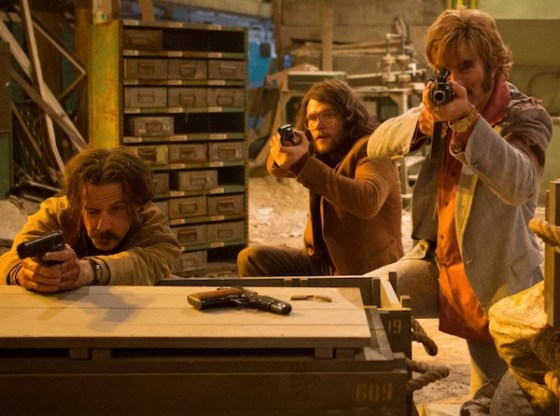
Free Fire (2016)

2017 #105
Ben Wheatley | 91 mins | Blu-ray | 2.39:1 | UK & France / English | 15 / R

Free Fire

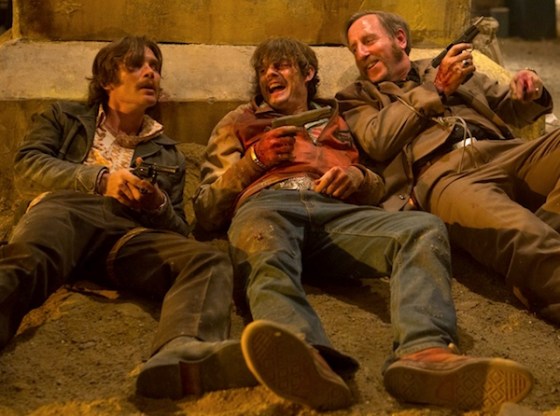
The latest film from director Ben Wheatley (he of Kill List, Sightseers, A Field in England, High-Rise, and the rest) is by far his most accessible movie yet. Set in Boston in the ’70s, it sees two IRA fellas (Cillian Murphy and Michael Smiley) arranging through a pair of black market brokers (Brie Larson and Armie Hammer) to purchase guns from some arms dealers (Sharlto Copley and Babou Ceesay), with each side bringing along a couple of chaps to carry boxes (Sam Riley, Jack Reynor, Noah Taylor, and Enzo Cilenti). But things go sideways when a couple of those minor participants have a falling out, leading to a protracted shoot-out. “Protracted” as in “two-thirds of the movie”.

If an hour-long gunfight doesn’t sound like your cup of tea, maybe Free Fire isn’t the movie for you. Conversely, this isn’t a Jason Statham flick: instead of an hour of highly-choreographed gunplay, most of the participants get injured early on and end up seeking cover around the rubble-strewn floor of an abandoned factory, occasionally taking potshots at each other. Most action movies are defined by their characters sprinting about — in this one, they crawl. The screenplay was partly inspired by FBI ballistics reports from real gunfights, so there’s actually some veracity to how things go down.

Guys with guns

So, on the one hand, it has a definite grit and reality. Bullet wounds actually hurt, leaving characters dragging themselves around in the dirt. Although there are occasional bullet-flying free-for-alls, just as often every shot counts. Similarly, their guns run out of bullets — frequently. Sometimes, permanently. On the other hand, however, it’s a bit like something Quentin Tarantino or Guy Ritchie might once have made, although thankfully without slavishly duplicating either of their overfamiliar styles. Without being an out-and-out comedy, it’s often pretty funny, thanks to the ludicrous situation and outrageous characters — all while remaining just this side of plausible, that is.

Unfortunately, the thin premise means it lags a bit in the middle. It feels in need of a clearer overall purpose and one or two more ideas. A better sense of space would help, too. We know who’s shooting at who, but for a long time we don’t really know where they all are in relation to each other. That’s not a deliberate choice to evoke the confusion of a gunfight or something — the characters all seem to know where they need to point their weapons. It’s a lack of filmmaking clarity, exposed in the Blu-ray’s behind-the-scenes featurette when it’s revealed how meticulously and thoroughly the whole thing was mapped out — it’s a real shame that doesn’t translate on screen.

More guys with guns

These are flaws that hold Free Fire back from perfection, mind. It’s still a fitfully funny, sporadically tense, gleefully violent hour-long shoot-out. And events occur in real-time, too, which I always have a soft spot for. When all is eventually said and done, I doubt critics and scholars are going to hold it up as a key film of Wheatley’s career, but I’d wager it’s the one most people will get the most enjoyment from.

4 out of 5

Free Fire is released on DVD and Blu-ray in the UK today.

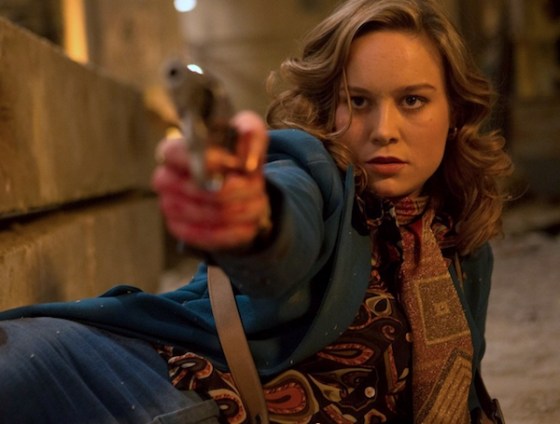
She isn’t pictured in the review, so here’s a bonus one of Brie Larson being badass:

Badass Brie

22 Jump Street (2014)

2017 #99
Phil Lord & Christopher Miller | 112 mins | Blu-ray | 2.40:1 | USA / English | 15 / R

22 Jump Street

After the genuinely surprising success (both critically and financially) of the 21 Jump Street movie, a sequel was inevitable. This is that sequel — and it won’t let you forget it.

In the first movie, best-buddy cops Jenko (Channing Tatum) and Schmidt (Jonah Hill) went undercover in a high school to unearth a drug ring. Now, they go undercover in a college to unearth a drug ring. Sequels, eh? But it’s okay because the film makes a running joke out of how it’s just rehashing what worked in the first movie. I say “it’s okay” — some people seem to fundamentally object to this, saying that acknowledging that it’s a copy doesn’t stop it being a copy. Personally, I give the film a bit more credit than that. It’s a copy because it’s funny when it’s a copy, not because it has absolutely no new ideas.

In part, it knows when to improve on itself: they’ve taken one of the most memorable and likeable bits of the first movie — the meta-jokes at the expense of the film itself — and ramped them up to 11. And it works. Or, at least, it did for me. Is this the most meta comedy ever? I dunno, but I can’t think of another that so relentlessly riffs off both the expected tropes of its genre and its own status as a sequel. It broadens the remits to movies in general, too — when it finally paid off, the meticulously over-constructed ‘meet cute’ gag elicited one of the biggest laughs I’ve had at a film in a long time. I’m almost loathe to mention it, because it works best when you have no idea that’s where it’s going, but oh well. Similarly, the widely-discussed end credits must’ve been a real hoot when they were a total surprise. Fortunately, they’re still a ton of fun even if you’ve had the joke ruined. (As I’ve already half-spoiled one moment, and the credits were pretty widely covered back when the film first came out, I shall say no more.)

Crash helmet

The one shame in all this is that it rehashes the last movie’s relationship arc for the leads. Gags about it being exactly the same movie are funny when they’re overt, like with the main drug investigation plot, but it’s like no one in production noticed that they’d reheated the character arcs. It does kind of go somewhere new with it, but only in the sense that it’s inverted which of the pair soars and which feels left out. Nonetheless, it stills leads to some funny scenes, like the “break up” and a counselling session, so at least it’s not a complete loss.

When a movie nobody expected anything good of becomes a hit and they rush to produce a sequel, you’d expect nothing more than a lazy rehash. 22 Jump Street takes that ball and runs with it, turning its lazy rehashery into meta-humour that makes the movie more-or-less the equal of its predecessor.

It’s a shame the threequel seems to have become lost down the dead-end of making it a Men in Black crossover because I wouldn’t mind seeing trilogies given the Jump Street treatment. But you never know, maybe that’ll become the silver lining to the Han Solo fiasco.

4 out of 5

Channing Tatum stars in another spoof cop series, Comrade Detective, available on Amazon Prime from today.

Moana (2016)

2017 #85
Ron Clements & John Musker | 103 mins | TV (HD+3D) | 2.35:1 | USA / English | PG / PG

Moana

The latest entry in Disney’s animated canon (the 56th), Moana is another princess-starring musical — that genre fully back in vogue for animated movies since the success of Frozen, I guess. The twist (if you can call it that, because the film thankfully doesn’t belabour the point) is that this isn’t another European-style princess fairytale, but rather one inspired by Polynesian culture, with songs co-written by That Guy From Hamilton.

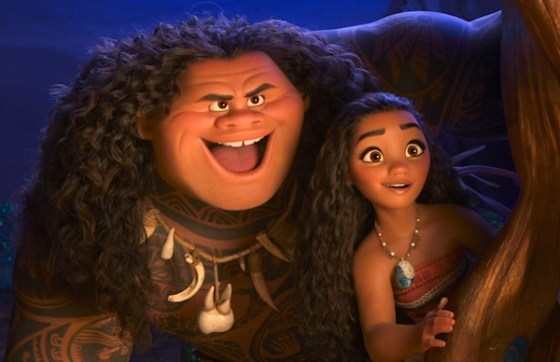
Moana (voiced by newcomer Auli’i Cravalho) is the daughter of a chief whose tribe never venture far from their island’s waters, despite the sea calling to Moana — literally, as it turns out, because when the island’s crops begin to wither, the sea chooses Moana to undertake a quest to find the demigod Maui (Dwayne Johnson) to restore a MacGuffin and make everything a-okay again. Along the way, there are moral lessons about being adventurous and stuff.

Although the cultural setting is notably different to Disney’s usual stomping ground — and, don’t get me wrong, that diversity is something to be applauded, both for putting different kinds of heroes on screen and for giving us all something fresh — Moana is executed with Disney’s customary slickness. It looks fantastic, especially in 3D, where the ocean stretches forever into the screen, and there’s a musical sequence with 2D backgrounds that, ironically, is one of the best extra-dimensional bits because of what it does with said backgrounds. The songs are a toe-tapping treat too, with Moana’s big number, How Far I’ll Go, a more likeable earworm than certain other Disney songs about going; a David Bowie-inspired villain’s song, Shiny; and, my personal favourite, a comedy number sung by the Rock called You’re Welcome (this being the one with the 2D-that-looks-fab-in-3D animation).

Maui and Moana

Surprisingly for a Disney princess film, there’s a superb action sequence in the middle, a rope-swinging sea battle against… miniature… pirate… coconut… things… er, I guess…? Anyway, it may actually be one of my favourite action scenes of the year, which is not what you generally find in a Disney musical. The big action scene at the end is perhaps slightly less effective as it strives hard to be an epic climax, but I think that’s nitpicking — it’s conceptually strong, with another positive underlying message. A bigger problem is the character of the sea: it chooses Moana for the quest, which arguably takes away some of her agency (the film fights to seem like it’s giving it back to her), and regularly turns up as a mini deus ex machina every time the characters need a hand.

That said, while I can observe those issues from an objective and critically-minded point of view, they didn’t actually bother me all that much. If you just (ahem) let it go, Moana is a ceaselessly likeable, consistently entertaining musical adventure. Along with Frozen and Zootropolis, it suggests Disney have hit a real stride right now that hopefully they can continue to build on.

4 out of 5

Moana is available on Sky Cinema from today.

It placed 16th on my list of The 17 Best Films I Saw For the First Time in 2017, which can be read in full here.

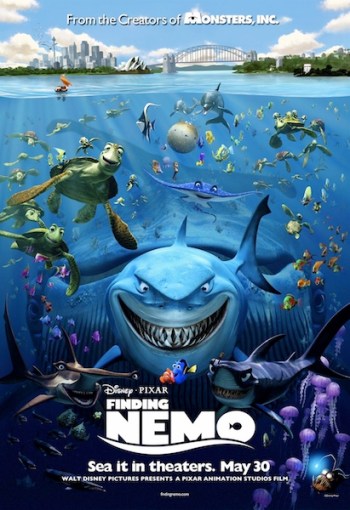
Finding Nemo (2003)

The 100 Films Guide to…

There are 3.7 trillion fish in the ocean.*
They’re looking for one.

Country: USA
Language: English
Runtime: 100 minutes
BBFC: U
MPAA: G

Original Release: 30th May 2003 (USA & Canada)
UK Release: 10th October 2003
Budget: $94 million
Worldwide Gross: $940.3 million (including a 3D re-release)

Stars
Albert Brooks (Broadcast News, Drive)
Ellen DeGeneres (Mr. Wrong, EDtv)
Alexander Gould (Bambi II, Curious George)
Willem Dafoe (Platoon, Antichrist)

Director
Andrew Stanton (WALL·E, John Carter)

Screenwriters
Andrew Stanton (Toy Story, Monsters, Inc.)
Bob Peterson (Up, Cars 3)
David Reynolds (The Emperor’s New Groove, Chicken Little)

Story by
Andrew Stanton (A Bug’s Life, Toy Story 2)


The Story
When clownfish Nemo is netted by a diver, his nervous father swims across the ocean in search of his son. Meanwhile, Nemo tries to escape the fish tank he’s wound up in.

Our Heroes
Single dad Marlin just wants the best for his son, Nemo, but his worries make him overprotective. However, little Nemo is braver and more capable than he knows. It must run in the family, because Marlin steps up to go to the ends of the Earth to rescue his son, aided by the forgetful but kind-hearted Dory.

Our Villains
Not exactly villain in the traditional sense, but the dentist who bagged Nemo, and is intending to give him as a present to his overenthusiastic niece, did start all this trouble and is putting the eponymous fishy in harm’s way, so…

Best Supporting Character
As you might expect from what is in many respects an under-the-sea road movie, our heroes encounter an array of colourful characters on their journey. Perhaps the most memorable is turtle Crush, voiced by director Andrew Stanton, who’s characterised as a surfer dude. (According to The Disney Wiki, he’s also the films tetartagonist, which is a word I never knew I needed until now. Though, by the time you’re down to the level of the fourth protagonist, you’re getting into murky waters. I mean, when you consider the importance of Gill, maybe Crush is actually the pentagonist? Or the sentagonist? Or maybe we shouldn’t even be using these labels in the first place.)

Memorable Quote
Mine.” — seagulls

Memorable Scene
Marlin and Dory meet a ‘friendly’ shark, Bruce, who coerces them into attending a meeting of his support group for sharks who are trying to reform from their fish-eating ways. “Fish are friends, not food”… until a shark smells blood, anyway.

Next time…
13 years later, the gang got back together for Finding Dory.

Awards
1 Oscar (Animated Feature)
3 Oscar nominations (Original Screenplay, Score, Sound Editing)
1 BAFTA nomination (Original Screenplay)
1 BAFTA Children’s Award nomination (Feature Film)
9 Annie awards (Animated Theatrical Feature, Directing in an Animated Feature, Writing in an Animated Feature, Voice Acting in an Animated Feature (Ellen DeGeneres), Music in an Animated Feature, Character Design in an Animated Feature, Production Design in an Animated Feature, Character Animation, Effects Animation)
3 Annie nominations (Character Animation x2, Effects Animation)
2 Saturn awards (Animated Film, Supporting Actress (Ellen DeGeneres))
3 Saturn nominations (Writing, Music, DVD Special Edition)
Nominated for the Hugo for Best Dramatic Presentation, Long Form
2 Kids’ Choice Awards (Favorite Movie, Favorite Voice from an Animated Movie (Ellen DeGeneres))
1 Kids’ Choice Awards nomination (Favorite Fart in a Movie — the winner was Kangaroo Jack)


Verdict

Finding Nemo is one of the films that helped establish Pixar’s name as a byword for quality animation. While it’s a very likeable movie, I must admit I’ve never loved it. Perhaps its popularity and impact has more to do with when it was released: Disney’s primary movies at the time were mired in the likes of Treasure Planet and Home on the Range, and DreamWorks’ only real achievement was the first Shrek. That said, I don’t want to do Nemo a disservice: it’s packed to the gills with engaging characters, memorable lines, funny ideas, colourful designs, and a couple of strong moral messages. It’s a true family movie.

* Actually, no one can ever know exactly how many fish there are in the ocean. According to some sources, the real number is probably closer to between 1 and 4 quadrillion! We just wanted to emphasize the boatload of fish that live in the world’s oceans and one fish’s incredible quest to find his lost son. If you think you know the actual number, we’d like to know too! Contact us at: findingnemo.com

Kong: Skull Island (2017)

2017 #39
Jordan Vogt-Roberts | 118 mins | cinema | 2.35:1 | USA, China, Australia & Canada / English | 12A / PG-13

Kong: Skull Island

The king of the giant apes returned to the big screen this year as part of Legendary’s MonsterVerse, which will see him tussle with Godzilla in three years’ time. But we’re getting ahead of ourselves.

This new incarnation of Kong wisely dodges being a third remake of the original classic, opting for a new story of how mankind first comes across the eponymous island and its super-sized inhabitants. Set in the ’70s as the Vietnam war comes to an end, a mixed group of scientists and military men head for the uncharted island to see what lies within, and a monstrous battle for survival ensues.

Skull Island is a monster B-movie realised with a modern blockbuster budget and a dose of class from director Jordan Vogt-Roberts. Its major thrills come from the dust-ups between humans and giant beasties, or giant beasties and other giant beasties, but these are executed with a verve and enthusiasm that renders them a constant delight. Vogt-Roberts unleashes his skill with a palpable sense of excitement for the material, never seeming to hold back as he fills the entire movie with cool imagery and vibrant colours. The period setting is well evoked, bringing the sensation of witnessing a certain kind of non-specific throwback to adventure and monster movies past, even as lashings of expert CGI realise this new vision. (Also: two monkey movies this year and both with an Apocalypse Now vibe? Coincidencetastic.)

A skull, on the island

There’s a game cast, too, with Tom Hiddleston, Brie Larson, John Goodman, Samuel L. Jackson, and, in particular, John C. Reilly having a whale of a time as just some of our adventurers. Between them they help navigate a tone that could’ve been a jumble but instead feels just right, neither too pompous nor too comical. It’s never so grounded that the ridiculous stuff feels silly; never so silly that any of it stops mattering.

Kong: Skull Island might be the most fun I’ve had at the cinema so far this year. I can’t wait to watch it again on Blu-ray, and in 3D this time — I’m hoping that’ll really show off the scale of the big ol’ monsters. At the end of the day it’s a B-movie about giant monsters hitting things, which is what has held me back from giving it full marks, but don’t be surprised if this ends up on my year-end top ten: it’s superb blockbuster entertainment.

4 out of 5

Kong: Skull Island is released on DVD and Blu-ray in the UK today.

It placed 10th on my list of The 17 Best Films I Saw For the First Time in 2017, which can be read in full here.

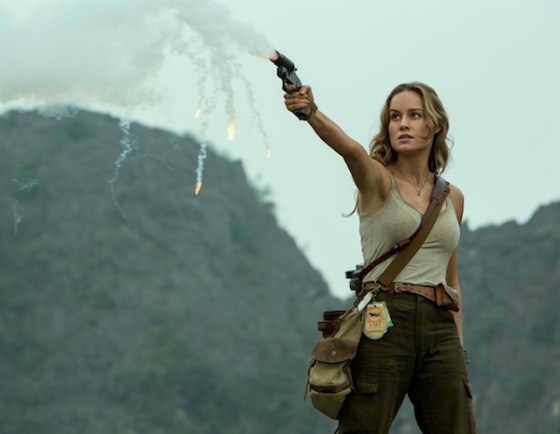
My review was a bit short to have more than one picture, but here’s a bonus one of Brie Larson being badass:

Badass Brie

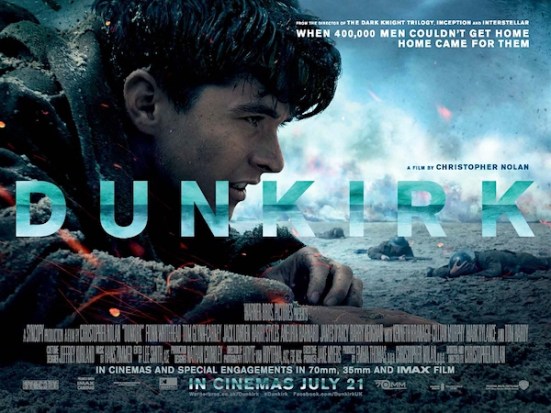
Dunkirk (2017)

2017 #102
Christopher Nolan | 106 mins | cinema | 2.20:1 | UK, USA, France & Netherlands / English | 12A / PG-13

Dunkirk

Batman Begins. The Dark Knight Rises. Memento. The Prestige. Interstellar. Inception. The Dark Knight. Of his previous nine feature films, Christopher Nolan has seven on the IMDb Top 250 (in descending order as listed). I’m sure Following and Insomnia have their advocates as well. Nonetheless, many reviews are hailing Dunkirk as his best film yet. Some are even say it’s his first genuine masterpiece. Some that this is the film where he finally lives up to those endless Kubrick comparisons.

And some just harp on about how we have to see it in bloody IMAX, even though most of us can’t.

Personally, coming out of it I felt pretty much the same way I have about every Christopher Nolan film bar The Dark Knight: it was very good, but was it great?

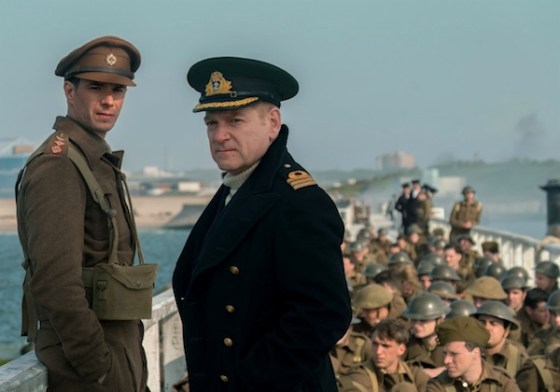
We shall wait for them on the landing grounds

I don’t know how well the Battle of Dunkirk is known outside British shores (a lot better after this film, I’d wager), but I think it has a kind of ‘national myth’ status here; the sort of thing the phrase “our finest hour” was invented for. In 1940, British and allied troops retreated from the Nazi advance across Europe, ending up with their backs to the sea on the beach at Dunkirk, France, waiting for rescue from the British Navy. As their ships were plagued by German bombers and U-boats, eventually civilians were mobilised, with hundreds of fishermen and hobbyists sailing their tiny craft across the Channel to save as many as they could — in the end, over 330,000 troops. That’s ‘The Story’, anyway — I’m sure the truth is more nuanced. It’s also what provoked Churchill’s “We shall fight on the beaches” speech, which is probably even more famous.

So why hasn’t Dunkirk been more widely depicted on screen before now? Well, it didn’t involve the Americans, so I imagine that’s a big part of it. Also, it was technically a defeat — not exactly uplifting fodder. And where do you lay your focus? To take D-Day as a counterpoint: sure, it was a massive operation involving multiple beaches and thousands of troops, but you pick a handful of men to follow and you’re depicting the general experience. With Dunkirk, you’ve got the men who made it on to boats, those left on the beach, the civilians coming to their rescue, the sailors, the airforce… Or maybe I’m trying to make it sound more difficult to film than it actually is, and it all just comes back down to “the yanks weren’t there”.

Wherever did they find sand for all those bags?

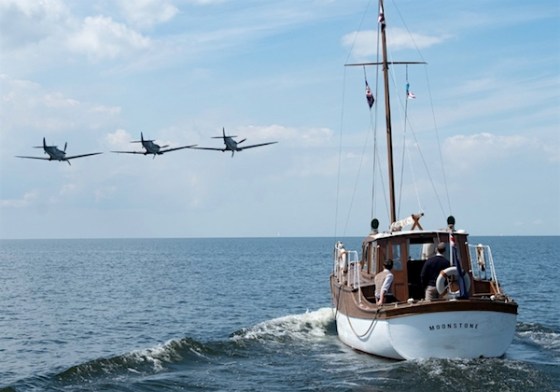
But Christopher Nolan is allowed to basically do what he wants nowadays, and so Christopher Nolan is the one who’s finally made a film of Dunkirk. (I say “finally” — there have been others, a long time ago.) Despite it being the shortest film of his Hollywood career, Nolan gets round the perspective problem by making it an epic, driven by spectacular visuals and universal themes rather than a focused tale of just a character or two. In aid of this, it’s a three-pronged affair: in separate storylines we follow the soldiers on the beach and in the boats; a civilian craft on its way to rescue them; and a pilot providing air cover.

To complicate matters, Nolan stages each of these stories at a different time period — respectively, one week, one day, and one hour before the film’s climax — but intercuts them all as if they were happening at once. At times, literally: rather than limit each storyline to whole scenes one by one, events in each (like, say, a boat sinking with the soldiers on it and the pilot in a dogfight) are intercut as if they’re occurring simultaneously. It’s… an unusual choice. I’m not saying it’s bad, but I’m not sure what its goal is, exactly. For the film as a whole, it works effectively, especially spotting background details in each story that then crop up again later when other storylines catch up to them.

Background details

I think the main effect Nolan was aiming for is intensity. Not of war, so much, but of survival. That this is a PG-13 war movie caused some to balk — how can you depict war nowadays without blood and gore? But this isn’t a war movie per se, it’s an escape movie. It’s not about the reality of someone getting their arm or head blown off, it’s about escaping a sinking ship, or running out of fuel, or keeping going when the odds are against you. Couple this with the aforementioned visual spectacle, and a thunderous sound mix, and Dunkirk is definitely an Experience.

Indeed, for those without access to an IMAX — and, let’s face it, that’s the vast majority of viewers — the film’s sound is the main reason to see it in the cinema. It’s loud. I saw other people in my screening actually covering their ears at some points. That’s not just because my cinema had the volume too high (well, I don’t think it is), but I think it’s purposefully part of the effect. Of course, if you’ve got a decent sound system at home and are prepared to crank it up, maybe the Blu-ray will yet offer a similar experience. Certainly, in terms of the visuals, the disc release is likely to use the film’s IMAX Digital version, which features 80 minutes of 1.90:1 footage (vs. the constant 2.20:1 framing that you’ll see in most cinemas); and, if we’re lucky, they’ll include the IMAX footage in its full 1.43:1 ratio too (they did for Nolan’s Batmans, but not for Interstellar). It’s kind of ironic that this is a new-release film from a director hell bent on the sanctity of the theatrical experience (you probably saw his comments about Netflix earlier this week), where most of us will better see his intended visuals on a home video format than we will at the cinema.

We shall wait for them on the beaches

In trying to think how to sum up, I’ve come to the conclusion that early reviews have put too much weight on Dunkirk. I’m sat here pondering “is it Nolan’s best film?” or “is it the greatest war film ever made?”, rather than just “how was it as a film in itself?” On first blush, I wasn’t as enthralled by it as I was by The Dark Knight, or even Inception, but in some respects it’s a more mature, maybe even more cinematic, movie than either of those. As for being the greatest war film, I can’t help but instantly think of Saving Private Ryan, whose opening scene remains the one to beat, but also follows through with the rest of its story; and if we expand our scope to allow cinematic TV series, can anything top Band of Brothers? But, as I said earlier, Dunkirk isn’t trying to out-war those war movies.

So, setting aside questions of its place in film history, Dunkirk aims to be an intense experience about trying to survive events bigger than yourself. In that regard, it’s as successful as the evacuation itself.

5 out of 5

Dunkirk is in cinemas everywhere now. It’s also been released in IMAX, donchaknow.

It placed 9th on my list of The 17 Best Films I Saw For the First Time in 2017, which can be read in full here.

Ocean’s Eleven (2001)

The 100 Films Guide to…

3 casinos.
11 guys.
150 million bucks.
Ready to win big?

Country: USA
Language: English
Runtime: 117 minutes
BBFC: 12
MPAA: PG-13

Original Release: 7th December 2001 (USA & Canada)
UK Release: 15th February 2002
Budget: $85 million
Worldwide Gross: $450.7 million

Stars
George Clooney (Batman & Robin, Michael Clayton)
Brad Pitt (Fight Club, World War Z)
Matt Damon (The Talented Mr. Ripley, Jason Bourne)
Andy Garcia (The Godfather: Part III, Jennifer 8)
Julia Roberts (Pretty Woman, Closer)

Director
Steven Soderbergh (Traffic, Magic Mike)

Screenwriter
Ted Griffin (Ravenous, Matchstick Men)

Based on
Ocean’s Eleven, a 1960 film starring the Rat Pack.


The Story
A gang of crooks plot the biggest heist in Las Vegas history: robbing three casinos at once.

Our Heroes
Danny Ocean, a charming con man fresh out of prison, planning his biggest job yet — well, anyone’s biggest job yet. To do it he’ll need ten more men, including right-hand-man Rusty, newbie Linus, explosives expert Basher, inside man Frank, old pro Saul, tech head Livingston, gymnast Yen, general double-act support Virgil and Turk, and all of it bankrolled by Reuben.

Our Villains
Smug Las Vegas big shot Terry Benedict, owner of all three casinos the gang are targeting. Also: he’s shagging Ocean’s ex-wife.

Best Supporting Character
The aforementioned former Mrs Ocean, Tess, who’s shacked up with Benedict in part because he’s a more honest man than her ex. Or so she thinks…

Memorable Quote
Danny: “Because the house always wins. Play long enough, you never change the stakes, the house takes you. Unless, when that perfect hand comes along, you bet big, and then you take the house.”
Rusty: “Been practicing that speech, haven’t you?”
Danny: “Little bit. Did I rush it? Felt like I rushed it.”
Rusty: “No, it was good, I liked it.”

Memorable Scene
As with any good entry in this genre, the heist itself — which is less “a scene” and more “the third act”, of course — is the highlight of the movie.

Letting the Side Down
Don Cheadle’s cockney accent is less Guy Ritchie, more Dick Van Dyke. But then, as we know, that’s how cockneys are meant to sound anyway.

Next time…
A pair of less well regarded sequels followed in 2004 and 2007 (ten years ago! Time flies), while an all-female spin-off is out next summer.

Verdict

As slick and stylish now as it was a decade-and-a-half ago, Steven Soderbergh’s remake of the Rat Pack comedy-thriller is that rarest of all things in moviedom: a remake that’s better than the original. Apparently Soderbergh said that he saw this as an opportunity to give audiences “pleasure from beginning to end… a movie that you just surrender to, without embarrassment and without regret.” Well, he nailed it. It’s a film packed with likeable characters, memorable lines, snazzy direction, cool music cues, and the raison d’être of a heist movie: a final act that pulls the wool over the audience’s eyes. It’s pretty much perfect entertainment.

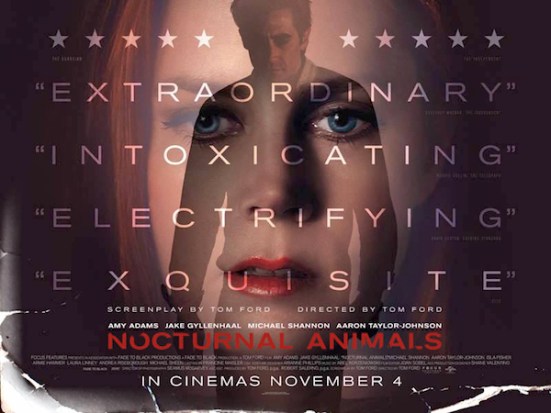
Nocturnal Animals (2016)

2017 #55
Tom Ford | 117 mins | streaming (HD) | 2.35:1 | USA / English | 15 / R

Nocturnal Animals

In her second Oscar-worthy role of 2016 that didn’t even get nominated, Amy Adams plays rich art gallery owner Susan, who out of the blue receives a package from her ex-lover Edward (Jake Gyllenhaal) containing an advance copy of his debut novel, which he’s dedicated to her. With the weekend alone to herself, Susan reads the novel — in which the family of Tony (Gyllenhaal again), wife Laura (Isla Fisher) and their daughter India (Ellie Bamber) are terrorised by a gang led by Ray (Aaron Taylor-Johnson), before copper Bobby Andes (Michael Shannon) helps them seek justice/revenge — in the process reliving memories of her tumultuous former relationship.

At first the plot of Edward’s novel seems more interesting than the framing narrative that contains it — after all, you’re pitching a tense thriller against a woman reading a book while she remembers falling for a guy. But as it becomes clear that the novel is just a pulpy thriller, and as the flashbacks to Susan and Edward’s history reveal a mystery of their own, the balance begins to shift. The question is not really “why is the book dedicated to Susan”, because she clearly knows that from very early on. Instead, the quandary for the viewer is: what exactly did she do that merits this lurid tale being her… what? Punishment, maybe?

Although the story is black as night, it’s a beautifully constructed film — as you might expect from someone with a background in design like writer-director Tom Ford. It’s not just the visually appealing work of cinematographer Seamus McGarvey or the film’s various designers that is so striking, though. The three narrative strands are expertly handled. There’s never any doubt about which is which, even when Ford at times intercuts between all three in one sequence, but he hasn’t resorted to simplistic tricks (like vastly different colour grading, say) to pull that off. It’s subtler, and more effective, than that.

Shocking reading

To guide the characters through his sombre narratives, Ford has put together a helluva cast. Of course there’s the primaries — Adams, Gyllenhaal, Shannon, and Taylor-Johnson are all superb — but turning up for just a scene or two are the likes of Isla Fisher, Armie Hammer, Laura Linney, Michael Sheen, Andrea Riseborough, and Jena Malone, any of whom could be leads in their own right. It does make it slightly disconcerting when you assume someone that recognisable will turn up again later and then they don’t, but I suppose that just sits with the generally unsettling tone of the film.

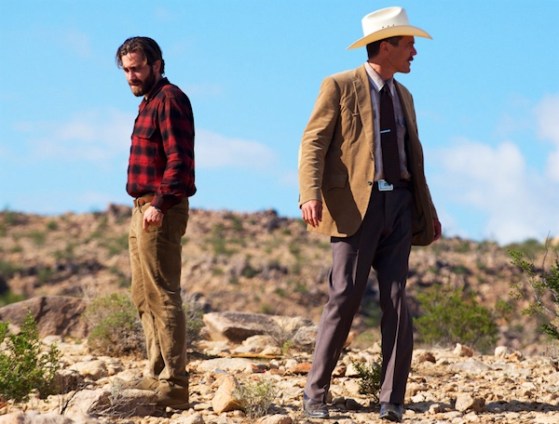
Taking its artfulness to heart, some people have dismissed the film as being no more than an artily-dressed-up simplistic revenge story. Personally, I think the point of the story-within-the-story is to be simplistic. I don’t think Edward is meant to be a very good writer, and that’s why he’s produced a very pulpy novel. What matters is the effect this bluntly allegorical piece of trash storytelling has on the person it’s primarily aimed at — i.e. Susan. And there’s still ambiguity for the audience in just what Susan is interpreting from the novel. I mean, Edward is Tony, that’s obvious; and maybe he’s Bobby, too; and Susan must be Laura… but who is Ray? Is Ray just the concept of what happened between them made flesh? Or maybe Susan is actually Ray? Or perhaps Edward is Ray too? Or perhaps it’s something else entirely, I don’t know.

Who's who?

Equally ambiguous is the ending to the present-day framing narrative, but I’m not sure I have much to add to that other than what you can easily find online, so no spoilers here. Other than to say I think the main plot points are all solved (the story-within-the-story wraps up, and how it mirrors the characters’ history has been revealed), but there are some open-ended points that the viewer can choose how to read as they see fit.

Nocturnal Animals has been a pretty divisive film. Lots of people compare it to last year’s even more controversial The Neon Demon, in one way or another — I’ve seen both “at least it’s better than…” and “it would make a good double bill with…” Well, I really ought to get round to that, then, because I admired Nocturnal Animals very much. It’s a beautiful movie about ugly deeds and ugly thoughts.

5 out of 5

Nocturnal Animals is available on Sky Cinema from today.

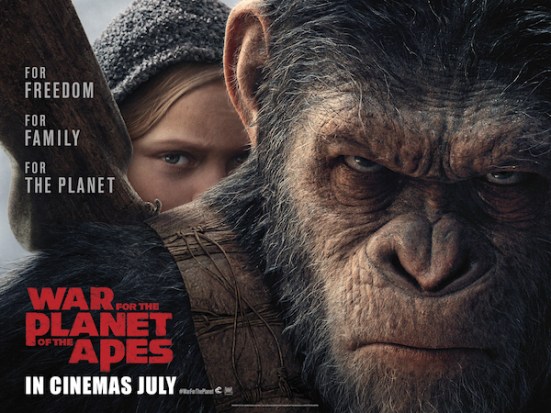
War for the Planet of the Apes (2017)

2017 #98
Matt Reeves | 140 mins | cinema (3D) | 2.35:1 | USA / English & American Sign Language | 12A / PG-13

War for the Planet of the Apes

Previously on Planet of the Apes… the rise of intelligence in apes resulted in them establishing a new ape society in the woods. After humanity was mostly wiped out by disease, the actions of a few apes, still angry about their treatment at the hands of humans, led to the dawn of war began between peaceful apes and vengeful humans.

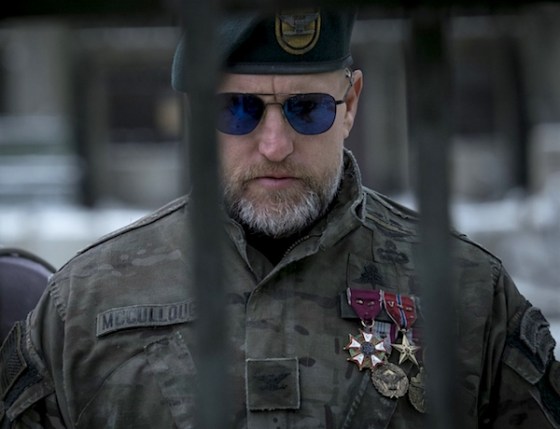
Now, ape leader Caesar (Andy Serkis) has been in hiding for years. After a human sortie into the forest leads to them finally discovering his location, the Colonel (Woody Harrelson) executes a stealth assault on the apes’ home. Incensed, Caesar and a small band of his most dedicated followers set out to find the humans’ stronghold and bring the Colonel to justice, hopefully ending the war in the process.

When it was announced that the follow-up to Dawn of the Planet of the Apes was going to be titled War for the Planet of the Apes, it only made sense. The previous film ended with that war beginning, for one thing. More than that, the clear point of this prequel trilogy has been to show how the world as we know it ended up on the path to becoming the one Charlton Heston encountered in the original Planet of the Apes — and you just knew mankind wasn’t going to give up without a fight, making some kind of war all but inevitable. However, as it turns out, the title is almost a misnomer.

Cheeky monkeys

This is not a war movie in the sense of it being two hours of epic battles. There’s a set-to at the start (one which reminded me of the opening of Saving Private Ryan without in any meaningful way being a rip off of it), and a big battle forms the backdrop to the climax, but in between the film is something else. Or, rather, somethings else: there are multiple genres one could cite as an influence on the film as it transitions betweens phases of its story. There’s a bit of the “men apes on a mission” thing going on, with an edge of the Western in there, before it turns into a POW camp movie of sorts, with a healthy dose of Apocalypse Now for good measure. If that makes it sound restless, it’s not; it’s just not beholden to picking one set of tropes and sticking to them — it goes where its story dictates. That works.

Similarly, the film is a tonal masterclass: as befits the subject matter of its title, there is grim and serious stuff here, but it’s laced with splashes of comedy, heartfelt emotion, moral debate, and social commentary, the vast majority of which is handled with understatement rather than Hollywood grandstanding. And if there’s one throughline to connect all this, it’s the characters. In a summer blockbuster?! I know, right? But that’s been a marker of quality throughout this new Apes trilogy: a willingness to be thoughtful and considered, not just trade on shoot-outs and explosions.

Military might

Andy Serkis is once again phenomenal in the lead role. Caesar’s story this time is almost Shakespearean, the film’s biggest war being his internal battle over the right course to take, and what his desired actions mean for his soul. He was always the sensible, reasonable, merciful ape, but events provoke another side in him — is he just like his old enemy Koba after all? Through him the film considers themes like justice vs revenge, the needs of the few vs the needs of the many, the rights and wrongs of actions in wartime. Caesar may be the hero, but he’s certainly not perfect.

On the flip side, Woody Harrelson is a clear-cut villain — a heartless bastard; a thoroughly nasty piece of work… or so it seems, because, when he eventually gets a chance to state his case, to explain where he’s coming from, the things he’s seen and decisions he’s had to make, you can understand his point of view. That doesn’t mean we necessarily agree (it’s pretty clear that, like Kurtz, he’s gone off the reservation), but it does make him a character rather than a cardboard cutout. As the film manoeuvres its way around these two characters, their differences and similarities, it’s abundantly clear that this is a much more complex film than your usual blockbuster fare of “always-right good guys shoot at thoroughly-evil bad guys”.

Talk with the animals... or not

Serkis and Harrelson are the stand outs, but there are brilliant performances elsewhere. Steve Zahn plays a character called Bad Ape, who’s both funny and touching, while Amiah Miller is a human girl the apes pick up on their travels, and the way she conveys a genuine emotional connection with the apes helps to sell them as real characters. Not that the CGI work of Weta needs much help there — it’s once again phenomenal, so real you don’t even think about it anymore. They had to break new ground for Dawn, for the first time taking performance capture outside of specially-designed studios (aka The Volume) and onto location filming. Perhaps that innovation explains why some of Matt Reeves’ direction last time was a little stilted and TV-ish. More years of development have removed those constraints, however, and his work on War is marvellously cinematic.

It’s also a true trilogy capper. They may choose to continue the story after this point (we’re still a couple of thousand years away from Charlton Heston showing up), but if they don’t then this will happily serve as an ending. I don’t think it’s a spoiler to say that, although each film of this prequel trilogy has been quite distinct (pleasingly so, I’d say), there’s still a sense of this one rounding off things that were set in motion back in the first movie. There are also Easter egg-like nods and hints towards the original film; and to some of its sequels too, apparently (I’ve not seen those yet so I’ll have to take other people’s word for it).

They don't wanna be like you-ooh-ooh

War for the Planet of the Apes is possibly not the movie we were expecting, but that’s no bad thing. I’m not sure how well it’ll go down with the crowd that pushes things like Transformers 5 to over $500m (and counting), but it has to be applauded for sneaking emotionally and thematically considered material into a huge-budget summer blockbuster. It’s not just great science fiction, it’s great drama. It’s also cemented these Apes prequels as arguably the greatest movie trilogy of the decade.

5 out of 5

War for the Planet of the Apes is in cinemas most places now.

It placed 5th on my list of The 17 Best Films I Saw For the First Time in 2017, which can be read in full here.