Glass (2019)

2019 #7
M. Night Shyamalan | 129 mins | cinema | 2.39:1 | USA / English | 15 / PG-13

Glass

About 18 years ago, I first watched Unbreakable on DVD. It was the new film from M. Night Shyamalan — a name no one knew a year or two earlier, but the huge success of The Sixth Sense had somehow catapulted him to the top of the zeitgeist, where he was talked about as the new Hitchcock or Spielberg. Maybe no one could spell or pronounce it (I remember a lot of “Shamalamadingdong”s), but for some reason this wasn’t just “The New Film from the Guy Who Directed The Sixth Sense“, it was “The New Film from M. Night Shyamalan”. Anyway, it had met a mixed reception, but for some people it worked, and I joined their ranks. From there, it seems to have developed something of a cult following — it has many ardent fans, but others still don’t get it.

In interviews, Shyamalan mentioned that Unbreakable’s plot had originally been just the first act of the film, until he decided to expand it to the whole movie, and so he had ideas that acts two and three might become two further movies and form a trilogy. There began a long wait for the film’s fans, ever hoping that one day Shyamalan — whose reputation went steadily and increasingly downhill with every film he made from that point — would come back round and continue what he’d started. I can’t speak for everyone, obviously, but I’d begun to give up hope: in December 2016, I added Unbreakable to my 100 Favourites series, and in that post I wrote, “16 years on, I guess hopes of a continuation are long dead.”

Six-and-a-half weeks later, Split was released. You probably know the rest.
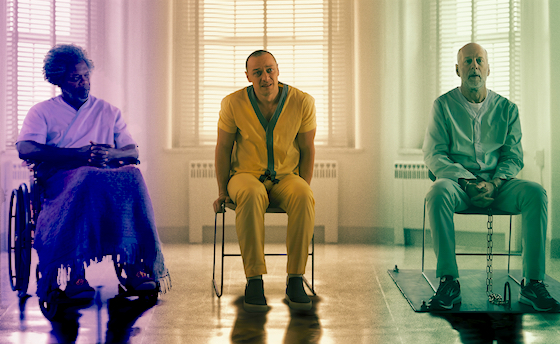
Mr Glass, the Horde, and the Overseer

…but in case you don’t: Split was a stealth sequel to Unbreakable, only revealed in its very last scene when Bruce Willis suddenly appeared and name-checked Samuel L. Jackson’s character. I say “only” revealed — I found out on Twitter, the first day after the film went on general release. Damn you, internet! But anyway, the point is: suddenly the hope was back alive. And it was confirmed to be so shortly afterwards, when Shyamalan announced that a sequel to Unbreakable and Split had been officially greenlit.

Now, I’ve devoted a massive chunk of this review to that history lesson for one reason: to make it clear just how much I was anticipating this movie. I’m certainly not alone in that; but if you’re not someone who saw Unbreakable almost two decades ago and have been hoping for a sequel ever since, I hope the last few paragraphs gave you some perspective of how those of us who did feel about Glass finally being here. This is my most anticipated superhero movie in a year that also includes an Avengers that will tackle the fallout from a humungous cliffhanger, a new X-Men (a series I also love), a new Spider-Man (which I think looks great), and more (the most superhero movies in one year ever, apparently). So, for some of us, this has a lot of expectation to live up to.

And I think expectations — whether they come from the previous films, the trailers, critics’ reviews, or what have you — are going to have a big effect on people’s reaction to Glass. Expecting a Marvel-style superhero throw-down? It was never going to be that, you fool. Don’t like movies where most confrontations come through dialogue? Okay, but did you actually watch Unbreakable and Split? (Those are both criticisms I feel I’ve seen in other reviews I’ve read.) Want to see Bruce Willis and Samuel L. Jackson face off again in a film that’s fundamentally Unbreakable 2? That’s not an unreasonable hope, but Glass is as much a sequel to Split as it is to Unbreakable, perhaps even more so. Certainly in tone, Glass has more in common with the slightly-pulpy, almost-B-movie style of Split than it does with the quiet, characterful mode Unbreakable operated in. That first film was a Drama, all about believable people coping with their personal issues, whereas the two follow-ups are much more genre movies. That said, they’re still genre movies that have been filtered through the unique mindset of this particular writer-director — don’t expect a great deal of easy satisfaction here.
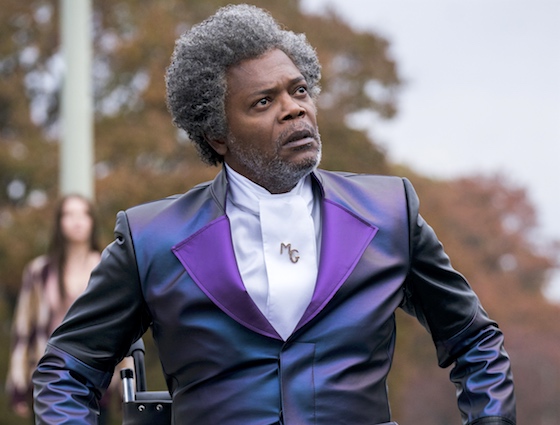
Confounded?

Do expect twists. Of course there are twists — it’s a Shyamalan movie! Indeed, it’s almost the most Shyamalany of Shyamalan movies, because Glass has more than one surprise reveal to pull out during its final stretch. Some are almost obvious, especially if you’re aware of fan theories from the previous films. Some are entertaining, the kind of rug-pulls you’d expect in the last act of a movie whose villain is a genius. Some are… more startling. Some people will appreciate the boldness; others will feel it undermines what came before, or what they wanted to see here. I don’t think anything is an outright “that doesn’t make sense” betrayal of the world Shyamalan has created in this trilogy, but some people will be displeased about the directions he chooses to go.

Talking of which, one of the big complaints I’ve read (and, fair warning, kinda-spoilers follow for the rest of this paragraph) is that the middle of the film wastes time trying to convince us these characters’ powers aren’t real, when we’ve already seen that they are. I think that’s a somewhat unfair criticism; one that comes from not properly investing in what we’re watching. Dr Staple is trying to convince the characters of reality, that they can’t have powers; and, as I saw it, the point of those scenes is to make us doubt it too. Yes, we’ve seen them do extraordinary things, but as Dr Staple lays out, can those things not just be explained by science and/or personal delusion? They’ve shown special skills, but are they really superhuman abilities? Several characters are swayed by her argument… so was I, to a point… except then I remembered the critics who’d said this was “a waste of time”, and therefore I guessed Shyamalan couldn’t be building to a reveal that these characters didn’t have powers after all, because if he were then it wouldn’t be a waste of time. So thanks for that, whichever Negative Nelly’s review I read that spoiled it.
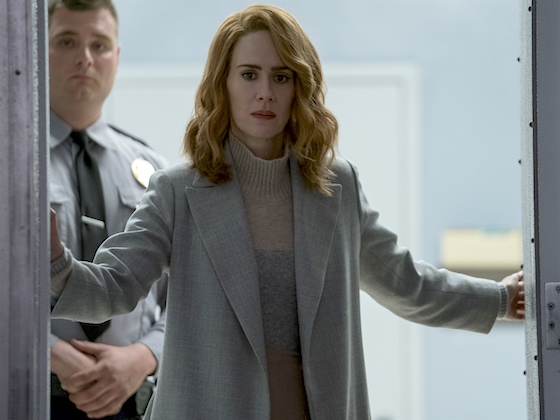
Is Dr Staple stable?

As Dr Staple, Sarah Paulson is the main new addition to the cast for this finale. Her character’s a bit of a blank slate — we don’t really get to know her, why she’s doing this job, why she believes their powers can’t be real (other than the sheer implausibility of it, anyway). She exists to challenge the leads and their beliefs, not really to be a character herself. Or is that blankness just a facade, and that’s its point? I’ll say no more both out of an awareness of spoilers and because I’m not sure myself. It’ll be interesting to rewatch the film and see what, if anything, else presents itself about her on a closer rewatch.

Despite having the title role, Samuel L. Jackson is mainly reserved for the third act, but when he comes to life he revels in the part so much that I didn’t mind having to wait. James McAvoy gets to show off like he did in Split, only this time with an even greater number of distinct personalities. Some people think he’s overacting; I think it’s impressive. Split was more of a showcase for his skill, because here he has to share screen time with so much else that’s going on, but Shyamalan helps him out by actually giving different alters their own separate character arcs. In places that’s done quite subtly, so I think some might miss just how much McAvoy has to do.

While McAvoy gets to negotiate multiple arcs, the last of the three headliners, Bruce Willis, barely has one. Some have said he phones in his performance here, but I think that’s unfair. Shyamalan hasn’t actually given him that much to work with, which is a shame — some people will feel like they’ve waited almost two decades to get more of David Dunn and been shortchanged. Well, David was always a quiet, introspective character anyway, so in some respects it’s fitting. In the two or three scenes where he was allowed to really do something, I felt like Willis had recaptured the part.

(Anya Taylor-)Joy to the world

It’s not just those four who have a significant role to play, either. For me, Anya Taylor-Joy actually has one of the film’s best parts, and gives one of its best performances. Here, again, is where Glass is at least as much a sequel to Split as to Unbreakable, in the way it devotes time to the development of her character and to her relationship with McAvoy’s. Also returning is Spencer Treat Clark as Joseph, David’s son. I wasn’t sure if this was a case of managing to lure back a child actor who’d drifted off, or if the guy had continued to work since. Well, having IMDb’d him, it turns out he’s been working virtually nonstop since Unbreakable, but it just happens I haven’t seen anything he’s been in (well, except he was in one episode of Mad Men, apparently). His is a somewhat less complex supporting role, but he’s particularly good at conveying Joseph’s thoughts in a few key dialogue-less moments.

But the biggest returnee of all is behind the camera: writer-director M. Night Shyamalan. (Who is also in front of the camera, actually, with a cameo that exists largely to reconcile his cameos in the two previous films. It’s an amusing bit of fan service.) Shyamalan has, I think, always been a good director. He shows a good eye for strong and rich visuals, be they simple face-on close-ups or more innovative shot choices, but without being needlessly flashy. The film incorporates flashbacks using deleted scenes from Unbreakable, which at least one reviewer took to prove Shyamalan has deteriorated as a director in the past 20 years, but I thought they integrated seamlessly. His weakness has always been more as a writer, and your mileage will vary on how much that’s a problem here — as I discussed earlier, it’s quite a talky film, with the characters confined to a limited set of locations, and that likely won’t please some viewers. There’s also some thuddingly terrible dialogue (you may’ve read about the “showdown” line), but he’s been responsible for worse.

Mastermind

Reading other reviews and audience reactions, it’s clear that Glass is going to be divisive to some degree. In some ways it seems to deliberately confound expectations, which will frustrate some viewers even as it delights others. It’s not interested in being a typical comic book movie, or even really in deconstructing the genre, another thing I think some viewers were expecting it to do. Instead, comic books are a launchpad for its own mythology, and Shyamalan’s own ideas about what’s important from them. In that respect it’s very much his movie, and I think that’s a good thing. It’s not a stone-cold classic like Unbreakable — it lacks the subtle feel for real-life human emotion that makes that film so powerful — but I enjoyed it a lot. I’d certainly rather have something that tries to be fresh, to do something different, to push at boundaries, than an attempt at empty repetition for the sake of easy results.

4 out of 5

Glass is in cinemas now.

Godzilla: The Planet Eater (2018)

aka Gojira: Hoshi o Kuu Mono

2019 #3
Hiroyuki Seshita & Kôbun Shizuno | 91 mins | streaming (HD) | 16:9 | Japan / English | 12

Godzilla: The Planet Eater

Picking up where the previous film left off, this concluding instalment in the anime Godzilla trilogy (which also doubles as the 32nd official Godzilla movie) sees the eponymous kaiju lying dormant while plans swing into action to bring Ghidorah, a being from another dimension who’s worshipped as a god by some, into our dimension, where it will eat Godzilla and then Earth itself.

Yeeeaaah.

But before we get to the headline monster mash, there’s an attempt at a plot. By the end of the last film, the alliance between humans and a couple of alien races who’d helped us out was looking a bit shaky. What once looked like it might make for a Battlestar Galactica/Babylon 5-style conflict has turned out to be nothing so developed, and in this final film it noodles along, driven by minor supporting characters we have zero attachment to; a something-and-nothing plot line that kills time until it’s summarily wiped away. Meanwhile, down on Earth, we’re treated to dozens of scenes in which the trilogy’s equally unmemorable lead characters wander around waffling Religious Studies 101-level stuff about religion as propaganda and a manipulation tool. At one point a character talks about soup as an analogy for, like, society or something, coming to the observation that “unlike the soup, we have free will.” It’s a deep philosophical movie, man. About as deep as a bowl of soup.

All the while, we’re made to wait for the guy we came to see to wake up. Yes, Godzilla literally sleeps through the first half of the movie. Well, I can’t say I blame him.

Godzilla vs Ghidorah

On the bright side, it does eventually get to some good bits (that’s more than I’d say about the preceding instalment). There’s a sequence where the alien death cult religion summons Ghidorah, who initially manifests as some kind of shadow-demon that begins massacring everyone in the room, which is all quite creepy. It’s followed by a large-scale sequence where Ghidorah’s glowing energy snake-dragon form emerges from a space-time singularity and destroys the humans’ spaceship in some kind of temporally-messed-up way, which is also quite striking. You have to appreciate these individual sequences almost in isolation, because the plot they’re part of is a load of muddly claptrap.

Then there’s the climax, in which we get to witness a mountain-sized dinosaur-ish monster with atomic breath (Godzilla) battle an interdimensional three-headed dragon-snake apparently made of glowing yellow light (the trilogy’s take on Ghidorah). It has its moments, but it’s overlong and mixes in a bunch of the cod-scientific wannabe-philosophical gubbins too, which takes the wind out of its sails somewhat.

There have been some interesting ideas tucked away in this trilogy, both in how it reimagined the kaiju and their mythologies, and in the brand-new stuff it attempted to introduce with the alien races and their beliefs. Unfortunately, that promise has been lost under unengaging characters, poorly defined relationships, and the kind of philosophising you might expect from a Sixth Form student. It was bold to try to take the Godzilla franchise in a new direction, but that boldness feels squandered.

2 out of 5

Godzilla: The Planet Eater is available on Netflix now.

Blindspot Review Roundup

Of the 22 Blindspot/WDYMYHS films I watched in 2018, I still haven’t posted reviews for 18 of them. (Jesus, really?! Ugh.) So, here are three to get that ball rolling.

  • The 400 Blows (1959)
  • Big Fish (2003)
  • Strangers on a Train (1951)


    The 400 Blows
    (1959)

    aka Les Quatre Cents Coups

    2018 #4
    François Truffaut | 100 mins | streaming (HD) | 2.35:1 | France / French | PG

    The 400 Blows

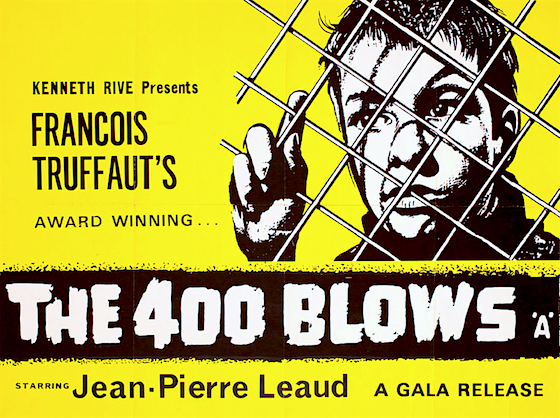
    One of the first films to bring global attention to La Nouvelle Vague, François Truffaut’s semi-autobiographical drama introduces us to Antoine Doinel (Jean-Pierre Léaud), a schoolboy in ’50s Paris who plays havoc both at home and at school, which naturally winds up getting him in trouble. The film is both a portrait of misunderstood youth (Antoine isn’t so much bad as bored) and indictment of its treatment (neither his school nor parents make much effort to understand him, eventually throwing him away to a centre for juvenile delinquents).

    The film barely contains one blow, never mind 400, which is because the English title isn’t really accurate: it’s a literal translation of the original, which is derived from the French idiom “faire les quatre cents coups“, the equivalent meaning of which would be something like “to raise hell”. Imagine the film was called Raising Hell and it suddenly makes a lot more sense.

    Anyway, that’s beside the point. As befits a film at the forefront of a new movement, The 400 Blows feels edgy and fresh, that aspect only somewhat blunted by its 60-year age. I was thinking how it was thematically ahead of its time, but I suppose Rebel Without a Cause was also about disaffected youth and that came out a few years earlier, so I guess it’s more in the how than the what that 400 Blows innovated.

    Either way, it’s an engaging depiction of rebellious youth, that remains more accessible than you might expect from a film with its art house reputation.

    5 out of 5

    Big Fish
    (2003)

    2018 #32
    Tim Burton | 125 mins | streaming (HD) | 1.85:1 | USA / English & Cantonese | PG / PG-13

    Big Fish

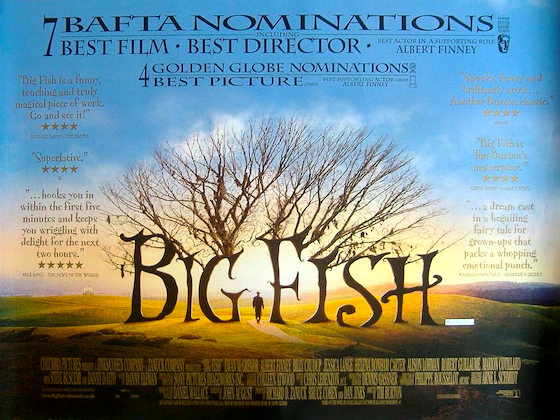
    After getting distracted into the mess that was his version of Planet of the Apes, Tim Burton returned to the whimsical just-outside-reality kind of fantasy that had made his name. Based on a novel by Daniel Wallace, it’s about the tall tales of a dying man (played by Albert Finney on his deathbed and Ewan McGregor in his adventurous prime), and his adult son (Billy Crudup) who wants to learn the truth behind those fantastical stories.

    Most of Big Fish is fun. It exists at the perfect juncture between Burton’s sense of whimsy and a more realistic approach to storytelling — he’s reined in compared to some of the almost self-parodic works he’d go onto shortly afterwards made since, but it doesn’t seem like he’s constrained, just restrained. With a mix of many funny moments, some clever ones, and occasional somewhat emotional ones, it ticks along being being all very good.

    But then the ending comes along, and it hits like a freight train of feeling, clarifying and condensing everything that the whole movie has been about into a powerful gut-punch of emotion. It’s that which elevates the film to full marks, for me.

    5 out of 5

    Strangers on a Train
    (1951)

    2018 #176
    Alfred Hitchcock | 101 mins | Blu-ray | 1.37:1 | USA / English | PG / PG

    Strangers on a Train

    Alfred Hitchcock’s adaptation of Patricia Highsmith’s thriller novel, in which two men get chatting on a train and agree to commit a murder for each other — as you do. In fact, one of the men — tennis star Guy Haines (Farley Granger) — was just making polite conversation and doesn’t want to be involved; but the other — good-for-nothing rich-kid (and, as it turns out, psychopath) Bruno Antony (Robert Walker) — really meant it, and sets about executing the plan.

    Strangers on a Train is, I think, most famous for that premise about two strangers agreeing to commit each other’s murder; so it’s almost weird seeing the rest of the movie play out beyond that point — I had no idea where the story was actually going to go with it. It’s a truly great starting point — the kind of “what if” conversation you can imagine really having — and fortunately it isn’t squandered by what follows — the “what if” scenario spun out into “what if you actually followed through?” Naturally, I won’t spoil where it goes, especially as you can rely on Hitch to wring every ounce of suspense and tension out of the premise.

    Aside from Hitch’s skill, the standout turn comes from Walker, who makes Bruno a delicious mix of charming and scheming, confident and pathetic, and brings out the homosexual subtext without rubbing it in your face (well, it was the ’50s).

    5 out of 5

    The 400 Blows, Big Fish, and Strangers on a Train were all viewed as part of Blindspot 2018, which you can read more about here.

  • Zatoichi’s Cane Sword (1967)

    aka Zatôichi tekka-tabi

    2018 #241
    Kimiyoshi Yasuda | 93 mins | Blu-ray | 2.35:1 | Japan / Japanese

    Zatoichi's Cane Sword

    The 15th Zatoichi movie is another that’s regarded as one of the very best: Letterboxd users rank it in the series’ top ten; IMDb voters have tied it for first place (with the first and 17th films); while The Digital Bits reckon it’s the best of them all, the only film in the series they gave an A+ rating. Well, I wouldn’t go that far, but it’s another fine instalment in this series that consistently delivers.

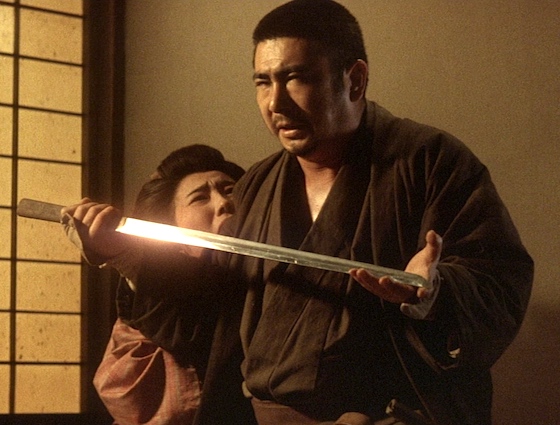
    Ichi’s sword skills attract the attention of an old blacksmith, a former sword maker, who it turns out was the protégé of the man who forged Ichi’s blade. Upon examining it, the blacksmith informs Ichi of a sad fact: the sword has an invisible crack — it’s good for one more strike, but that strike will break it. Giving the weapon to the blacksmith as a memento, Ichi quits his roaming ways and finds work as the live-in masseur at a nearby inn. There he stumbles into familial intrigue involving a dead boss’ children, the schemes of a cheating gang from the next town over, and the machinations of a corrupt official.

    Zatoichi’s Cane Sword comes with a great setup — Ichi giving up his sword and, with it, renouncing his wandering, battling lifestyle; trying to get by without falling back on his old combative skills — but, actually, I’m not sure how much our hero’s new status quo really changes things. I mean, you know Ichi’s going to end up with a sword in hand slashing down his foes eventually; and until we reach that point, the rest of the plot is pretty standard Zatoichi stuff. It’s solid, but not the most interesting the series has offered, despite some promising building blocks. For example, there’s a revelation about a supporting character’s parentage that feels like it could and should go somewhere interesting, but instead it just turns out they already knew. Later, Ichi tells Boss Iwagoro that he’s met many evil men, but Iwagoro is the worst. Well, that’s patently not true — we’ve seen much worse than him over the course of the series.

    Zatoichi and his sword

    I don’t want to sound too down on the film, though, because while it’s not in the absolute top tier of the series, it’s surely at the upper end. Even if the way events play out didn’t dig into their promise as much as I’d hoped, it still leads to numerous engaging or entertaining moments — the quietly emotional scene where Ichi decides to completely change his life, for example; or, by complete contrast, a fun and silly scene where Ichi abuses the respect/fear of a snivelling boss by pretending to be drunk and pouring sake all over the chap. There’s also a nightmare sequence, which makes this the second Zatoichi film in a row to feature a dream scene, fact fans. Whereas the last one was a bit… odd, this one is a memorable insight into Ichi’s fears. Finally, the inevitable climactic mass slaughter is set in falling snow, which gives it a nice bit of visual beauty to stand out, seeing as the rest of the film’s fight choreography is pretty standard stuff for the series — which of course means that, considered in isolation, it’s as impressive as ever.

    Anyone who watches and enjoys the Zatoichi series is bound to end up with their own particular favourites, for whatever reason. Clearly Cane Sword particularly clicked for the writers at The Digital Bits; for me, it’s been other films — I’m reminded of Adventures of Zatoichi, which seems to score lowly with most people but was one of my favourites. Either way, Cane Sword is another very good entry in a series which is, fortunately, full of them.

    4 out of 5

    Absolutely Fabulous: The Movie (2016)

    2018 #96
    Mandie Fletcher | 87 mins | streaming (HD) | 2.35:1 | UK & USA / English | 15 / R

    Absolutely Fabulous: The Movie

    “Most movies are a script in search of some money,” said Jon Plowman, producer of every episode of Ab Fab, “but this was more a case of some money in search of a script. From the minute the word got out that Jennifer was contemplating writing the film of Ab Fab, lots of financiers threw their hats in the ring.” A cruel critic might therefore be tempted to accuse the cast and crew of doing this poorly-received film continuation of the popular TV series “just for the money”, but I think that would be disingenuous — I think there was a real desire to put an appropriate capstone on the beloved sitcom. Whether that merited a 90-minute theatrical release, or would’ve been better served as a 60-minute TV special, is another matter…

    Primarily, I think Ab Fab: The Movie is targeted at fans of the series, and isn’t really designed to stand on its own feet as an independent movie. I’ve only seen some of the TV show, and I think that was essential to understanding who all the characters were, how they were connected, and why they behaved in certain ways. Even then, I felt like there was stuff flying over my head because I haven’t seen all of the original episodes and/or because it’s been some years since I did watch any.

    So, I’m no expert on Ab Fab, but it’s always been my impression that when it started it was satirising the fashion world of the era (i.e. the ’90s). However, as it’s gone on it seems to have become about itself, as it were — its own characters and in-jokes, rather than any commentary on the wider world. That’s what we get here, therefore: basically, a 25th anniversary special amped up to full-blown movie status. One of the selling points for it as a big-screen variant was that it’s Eddie and Patsy on the French Riviera, continuing the age-old tradition of big-screen outings for British sitcoms being just “send the characters abroad”. Despite that, the first half is still set in London, and it’s pretty funny. When they do finally head overseas, it doesn’t exactly drag, but it seems a bit desperate.

    Wheels on fire, off screen

    In terms of broader relevance, creator/writer/star Jennifer Saunders has spoken about how the film was supposed to be about ageing; about, apparently, the “reality” of these youth-obsessed characters getting old when they don’t know how to. Well, there’s not much reality in it it, given the typically outlandish situations the already-exaggerated characters find themselves in (for example, the emotional climax comes while Eddie and Patsy are trapped in a tiny van sinking in a swimming pool). That doesn’t mean such OTT antics aren’t amusing, but expecting an examination of the human condition from them is a bit… unlikely.

    A more notable feature is the insane number of cameos — “around 60”, according to this list on IMDb. I guess the notoriety of Ab Fab attracts big names… though plenty of them, er, aren’t. Basically, if you’re not a Brit, assume everyone who pops up for only one scene and opens their mouth is some degree of famous here. There are some international (i.e. American) faces too, though, to remind you of the series’ worldwide cult appeal.

    Overall, I enjoyed the film, but it definitely leans into being a fan-friendly exercise, which I’m not sure was appropriate for a belated big-screen debut. It’s not an ideal starting point for the uninitiated, then, but it’s not a terrible send-off for existing fans.

    3 out of 5

    The UK TV premiere of Absolutely Fabulous: The Movie is on BBC One tonight at 9pm, and will be available on iPlayer afterwards.

    Black Mirror: Bandersnatch (2018)

    2018 #261
    David Slade | “90” mins | streaming (HD) | 2.20:1 | UK & USA / English | 15

    Black Mirror: Bandersnatch

    The latest addition to Charlie Brooker’s Black Mirror universe is the kind of work that pushes at the boundaries of form and medium — and therefore is the kind of work that challenges how I count things here at 100 Films. Is it a film? An episode of TV? A video game? Or is it genuinely something new? Well, it’s not really a video game — it’s not interactive enough to qualify as that. So is it a TV episode, then? It carries the Black Mirror branding, and that is a TV series. Plus it’s not a theatrical release… but then, neither are most Netflix films. Indeed, Bandersnatch carries its own listing on Netflix (as a standalone title, not an instalment of the series), and is promoted by Netflix as an “interactive film”. So, taking them at their word, I’ve decided that means it counts as a film.

    It’s also, I think, very accurate branding — they debated internally how it should be promoted, and I think they’ve landed on the right term for it. As I said before, it’s not really a video game — it’s not as interactive as a gamer would expect it to be. The debate between film vs. TV episode is tighter, but when isn’t it these days? Either way, it’s not just your regular passive Netflix-viewing experience, because it is interactive. In practice, it plays like a video version of Choose Your Own Adventure books — you know what those are, right? I’ve heard some Young People don’t, which saddens me in my apparently-old-now early 30s. If you don’t know, in a CYOA book you’d read a passage of story, then be asked to make a choice on behalf of the hero; for Option A, you’d turn to page X, and for Option B you’d turn to page Y, and so on from there, with your choices dictating your path through the story.

    No reading required

    Bandersnatch is similar, only without all the manual flicking back and forth: every so often (roughly every three to five minutes, determined as the optimal period of time by Netflix’s product testers) you’re presented with two choices on screen and have ten seconds to pick one. Which you choose decides what you see happen next. (If you don’t choose, Netflix decides for you. Make no choices whatsoever and you’re led on a predetermined route that gets you through a full story in the shortest time possible.) Sometimes these choices are small (which breakfast cereal to eat?), sometimes significant (accept a job offer?). Netflix remembers them all, even the minor ones, which have knock on effects later. They made a rod for their own back in this respect, because having to account for viewers’ early choices led to requiring alternate scenes later on that only vary in how they include the viewers’ fundamentally-meaningless earlier choice. But that’s Netflix’s behind-the-scenes problem, not ours as viewers. Suffice to say, they’ve put the work in, and those little touches help make for an even more immersive experience: the choices themselves may have no bearing on the plot, but the fact the film remembers them and then uses them again later is a kind of meaning in itself.

    By this point you’re probably wondering what it’s actually all about, especially if you’re not merely wowed by the technology. (If you are wowed by the technology, check out this article at Wired which goes into more detail about what was required.) Set in 1984, we’re introduced to 19-year-old Stefan (Fionn Whitehead), who lives with his dad (Craig Parkinson) and wants to be a video game designer. He’s managed to wangle a meeting with the company who publish games by his idol, Colin Ritman (Will Poulter). Stefan’s pitch is Bandersnatch, an adaptation of a classic Choose Your Own Adventure novel by Jerome F. Davies, who went mad. Stefan found the book among the possessions of his dead mother, an event which has left him seeing a therapist (Alice Lowe). As Stefan begins to write the program for Bandersnatch… well, what happens next is up to you.

    Everybody play the game of life

    You can already see how content is reflecting form (you’re playing a Choose Your Own Adventure game about a guy writing a Choose Your Own Adventure game, just in case you needed that spelling out for you), and, well, I don’t want to spoil anything (as much as you can spoil anything about a film where every viewer will have a different experience), but it goes further down the rabbit hole than that. Trust Brooker and the Black Mirror team to have taken a new, emerging technology and made a drama about it — I mean, that’s pretty much the series’ MO. You can rely on them to not make things as straightforward as they first appear, either. Most of the time the film offers two options, each leading you down a different path, but sometimes it mixes it up (to say how would be to spoil the experience, like attempting to relate a joke from a comedy). And if you’re curious about how alternate pathways play out, don’t worry, you won’t have to watch the film from the start every time: after certain “game over” points, Bandersnatch offers the chance to jump back to earlier decisions and choose differently. If you’re interested enough to continue, this is definitely worth doing: as I said earlier, Netflix remembers all your choices — there are sometimes advantages to choosing that ‘continue’ option instead of starting from scratch at a later date.

    Perhaps the most impressive thing about Bandersnatch, considering all the myriad choices and paths and possibilities it presents to the viewer, is that it all makes sense. That might sound like Filmmaking 101, but it’s a massive pitfall that would’ve been so, so easy for them to fall into. And they made it a more complicated job for themselves too, insisting the choices viewers make were genuinely meaningful and affected what happened and where the story went. It’s very cleverly written and constructed — it’s not designed to force you down a certain path, or give you a fake choice that doesn’t really change anything, but instead to do those things while still building to a cohesive whole. Yes, of course it’s not total free will to do whatever you fancy, and sometimes there’s no escaping a certain choice or development… but, with the way Brooker has married story and presentation medium, that’s all kinda part of the point.

    Suspicious Stefan

    If you think about how Bandersnatch was made — the challenge it presented to Brooker as writer, to director David Slade, and to the cast having to negotiate their characters’ various emotional arcs across different permutations of similar scenes — it becomes even more impressive on a technical level. And that’s partly because you don’t have to consider the behind-the-scenes logistics to find this an enjoyable experience. They’ve executed it so consummately that you can just watch it, play it, experience it without needing to perform mental gymnastics to make it fit together, because they’ve accounted for all that and filmed the necessary alternate stuff and been certain it all pieces together. So you can instead apply brain power to what the film has to say about choice and free will, and to working out which alternative options you could choose and which parts of the story you perhaps haven’t experienced yet.

    Plus, to an extent, how much you get out of Bandersnatch is rewarded by how much you’re prepared to put in. As I mentioned earlier, at the simplest level you can just put your remote down and watch it play out a 40-minute-ish Black Mirror episode via its default choices (selected by Brooker), giving you the most basic version of the story (I haven’t done this, but I’m tempted to give it a go). Or you can play through until you reach one of the five endings that bring you to the choice of a credits scroll. (Netflix’s official line is that there are five endings. Depending how you count it, there are definitely more.) Or you can keep going and going, taking those “continue” options and seeing where different choices lead you. Sometimes, they lead you to entirely new places. And while there are multiple endings, there’s an “official” ending, too; one where the credits roll and you end up back at the Netflix menu screen (or, I guess, go to something else playing, if you’re one of those weirdos who hasn’t turned that feature off), rather than another continue option.

    Play on

    I played on until I came across that particular finale — partly because I’m a completist, partly because I was so engrossed in what I was watching. Did I experience every permutation the film has to offer? No, I’m pretty sure I didn’t; but I’m also pretty sure I experienced the bulk of the major ones. Did I get “lucky” that it took me so long to find that final-ending, meaning I saw a lot of the film before I got there? Put another way: is there a quicker path to that final-ending which would mean you saw less of the whole film than I did? Maybe there is. Or maybe there isn’t — maybe the only way to that ending is trial and error through multiple permutations. Or maybe there are multiple “final” endings, and when you’ve exhausted what the film feels it has to offer it throws you the appropriate one. Such are the secrets of Bandersnatch, which Reddit users will surely reveal in time. They’ve already made a start, although a thorough-looking flowchart doing the rounds on Twitter has already been proven to be missing at least a few possibilities.

    However much time you choose to spend on it (Netflix say a thorough session would take two-and-a-half hours, although the BBFC certification reveals that there’s over five hours of footage required to make the whole thing function), Bandersnatch is a genuine experience, once again putting Netflix at the cutting edge crossroads of modern visual entertainment. Is it a film? A TV episode? A video game? All of those things? None of them — something else? Something new? Those who must experience such new things will need to try this out, of course — they probably already have. But it’s one for regular viewers, too, with a rewarding story to tell; one which could only have been adequately told with this newly-imagined technology. In my opinion, it’s a magnificent success, and a must-have experience.

    5 out of 5

    Black Mirror: Bandersnatch is available to watch/play/whatever on Netflix now.

    It placed 10th on my list of The 26 Best Films I Saw For the First Time in 2018.

    Christine (2016)

    2018 #114
    Antonio Campos | 114 mins | streaming (HD) | 1.85:1 | UK & USA / English | 15 / R

    Christine

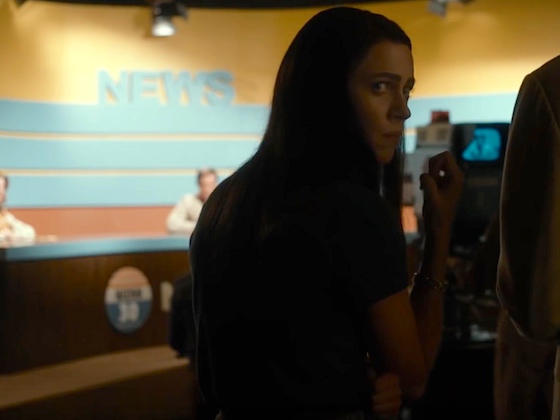
    The true, tragic story of newswoman Christine Chubbuck is told in this affecting drama. For those that don’t know, it’s the ending that is why her story is famous: Christine was the first person to commit suicide live on television. The film attempts to help us understand Christine’s life and mental state, and what led her to that moment.

    The overwhelming impression I got was of Christine’s existence being quietly sad. She’s shown to have the kind of life that isn’t loudly and forcefully horrible, but just… disappointing. So terribly and thoroughly disappointing that “why bother?” becomes a legitimate question for the person having to live it. That made it a somewhat uncomfortable film to watch, but that could be a personal thing — I can relate to Christine’s social awkwardness, and could see some of the pitfalls she was headed towards. (That said, not everything goes exactly as one might expect, specifically her infatuation with Michael C. Hall’s handsome anchorman.) I’ve known people like Christine, too, who do all the right things and try to put good out in the world, but somehow the world spits it all back, like it doesn’t matter.

    Performance anxiety

    In part because of this psychological realism, the film feels respectful, but without being either neutered or over-explanatory. By the former I mean that it doesn’t present Christine as some perfect soul — she can be bolshy and trying even for people who like her. By the latter, that it doesn’t hype up how bad her life was to make sure you ‘get’ why she’d do it. For example, everyone around her cares so much. You’d expect a terrible home life, bullying or teasing colleagues, some kind of gross betrayal, but no: they’re mostly nice; they like her; they try to be her friends. And you feel like she sees that, too, even as she… doesn’t. I suppose it must be mostly speculative in what it reveals about her psychologically, but you feel like it understands the responsibility of taking that approach — that it must try to be truthful, rather than histrionic; but that it’s important it attempts to find that truth, not just be enigmatic and vague.

    Rebecca Hall gives a fantastic performance in the title role, completely immersed in what must be a difficult part to play: the viewer has to understand, identify, and empathise with Christine, even as she’s a bit standoffish, awkward, and maybe doesn’t even understand herself all that well. Between Hall’s masterly performance and Antonio Campos’ understated direction, they’ve created a film that dodges the pitfall of being melodramatic, and managed to make you sympathise with Christine and why she would do what she did, even as you empathise with her enough to wish she wouldn’t.

    4 out of 5

    Christine is available on Netflix UK from today.

    Ready Player One (2018)

    2018 #183
    Steven Spielberg | 140 mins | Blu-ray (3D) | 2.40:1 | USA / English | 12 / PG-13

    Ready Player One

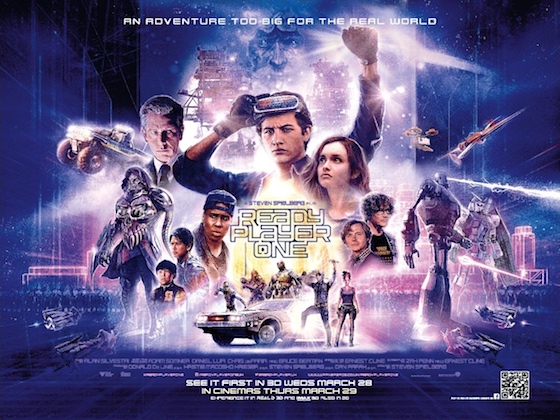
    Steven Spielberg’s latest foray into the style of popular moviemaking he helped create in the ’70s and ’80s — the summer tentpole action-adventure mega-blockbuster — is an adaptation of a novel so bedded in the popular movies of the ’70s and ’80s that the whole thing is a bit too meta: it’s a movie obsessed with the brilliance of ’80s pop culture, made by one of the primary creators of that culture. At least Spielberg insisted that all references to his own work be cut, otherwise it could’ve become a mite self-congratulatory. Though it does mean that Spielberg becomes conspicuous by his absence in a Spielberg movie. Oh, it’s enough to make your head spin…

    The plot, then: in the year 2045 the real world is a mess, so people spend most of their time in the virtual reality playground of the OASIS. When the game’s creator died, he left behind the first in a series of challenges, and whoever completes them will inherit the OASIS itself. (If you’re thinking, “isn’t that Charlie and the Chocolate Factory but with video games?”, I guess we’ll chalk that up as just another reference. (If you’re thinking, “isn’t that Willy Wonka and the Chocolate Factory but with video games?”, tsk, go read more Dahl.)) Unfortunately, no one’s even been able to crack the first clue… until someone does, of course, because this is an action-adventure blockbuster, not some existential mood piece on the futility of trying to please the dead… or, you know, something. Anyway, cue lots of whizzy CG antics, with CGI that’s actually allowed to look like CGI because it’s all set in a CG environment — I bet the animators were thrilled when that brief came along, because who doesn’t love their job being made easier?

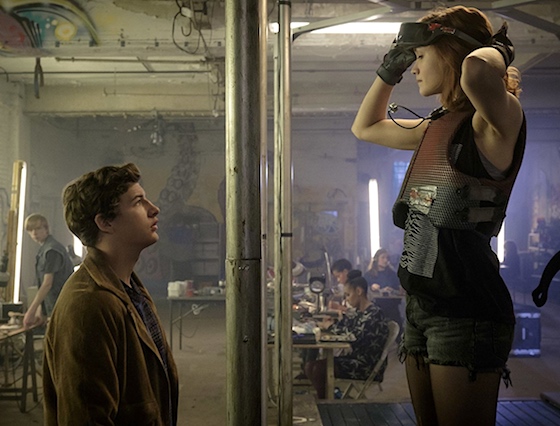
    What other car is an '80s lover gonna choose?

    Unfortunately, the same amount of effort seems to have gone into the screenplay. Some of this no doubt stems from the original work: the world of 2045 makes no plausible sense (check out the ghost of 82’s review for more on this theme), and there’s the least convincing romantic relationship outside of a George Lucas movie. Worst for me was something an adaptation can readily fix, the dialogue, but which here is frequently full of clunky, hand-holding exposition. This rears its head not just when establishing the film’s world and its rules, which would be bad enough, but also for relatively minor and easily-followed plot points throughout. It’s like the film has been written so even a goldfish could follow it — you don’t need to remember the start of a sentence because its end will explain the same thing again. Equally ill-considered is the movie’s apparently pro-gaming stance. Certainly, a lot of gamers seem to have embraced it as a film that understands their culture; and yet its final message is, “go spend more time in the real world, ya nerds!”

    And yet, I mostly enjoyed it. It may not hang together if you engage your brain, but as a bit of fluff it’s largely a fun virtual romp. There are more Easter eggs than a Cadbury’s warehouse in January, which are fun for geeks like me to spot, and those whooshy visuals are even more entertaining when viewed in 3D, which (as Blu-ray.com’s review put it) is “a compelling demonstration of why the format is worth keeping alive.”

    Watching other people play video games

    But, even though I liked it overall, I can’t help feeling it was a bit of a waste of Spielberg’s time. It’s not that he’s done a bad job — he’s still a god amongst men when it comes to crafting a blockbuster movie — but I also think the end result lacks a certain something that his best work contains. I don’t really know why, but for some reason I feel like he should’ve spent the time it took to make this doing something else, and left this film to be helmed by someone… less important. I mean, there are a lot of other filmmakers who could’ve done a fine job with the material, and wouldn’t have felt the need to cut all the book’s references to Spielberg’s films either.

    4 out of 5

    Ready Player One is available on Sky Cinema as of this weekend.

    Shrek Forever After (2010)

    2018 #132
    Mike Mitchell | 93 mins | Blu-ray | 2.35:1 | USA / English | U / PG

    Shrek Forever After

    Shrek the Third suggested that DreamWorks’ golden-goose animated franchise was running out of fairytales to subvert, so this fourth — and final (for the time being) — movie turns its attention on the series itself.

    Shrek is becoming disgruntled with life as a family man, so signs a deal with Rumpelstiltskin to have just one day as a “real ogre” again — but Rumpelstiltskin is a tricksy so-and-so, using the small print to land Shrek in an alternate timeline where he was never born. If Shrek can’t sort it out by midnight, he’ll be erased forever and the new timeline will stick. The filmmakers take this storyline as an opportunity to give us a look at how characters might’ve turned out in a Shrek-less world: Fiona is a warrior leading an ogre resistance, disillusioned by life after no prince came to rescue her; Puss in Boots is a fat, pampered kitty; and Donkey is working as a cart-donkey… but is otherwise pretty much the same. I guess some personalities never change.

    Sundry of the series’ many supporting characters get the same treatment, and it’s in this upending of familiarity that Forever After finds its greatest entertainment value. The result therefore favours dedicated viewers, while newcomers would be advised to seek out the franchise’s first two instalments. While this conclusion might not be quite as good, or iconic, as that pair, it does have a lot going for it, making it a more fitting finale than its mediocre predecessor.

    4 out of 5

    Shrek Forever After is on BBC One today at 3:10pm, and will be available on iPlayer afterwards.

    The Shape of Water (2017)

    2018 #256
    Guillermo del Toro | 123 mins | Blu-ray | 1.85:1 | USA / English, American Sign Language & Russian | 15 / R

    The Shape of Water

    Oscar statue2018 Academy Awards
    13 nominations — 4 wins

    Won: Best Picture, Best Director, Best Score, Best Production Design.
    Nominated: Best Actress (Sally Hawkins), Best Supporting Actor (Richard Jenkins), Best Supporting Actress (Octavia Spencer), Best Original Screenplay, Best Cinematography, Best Editing, Best Costume Design, Best Sound Mixing, Best Sound Editing.

    I still can’t quite believe a creature-feature fantasy romance won Best Picture. It remains surreal to see a genre movie conquer the Oscars like that. Even The Lord of the Rings, for all its so-Fantasy-it-defined-the-genre-ness, has a lot of the “historical war epic” in its form (not to mention the genre-transcending cultural impact that film trilogy had), and so its win seems less striking than this out-and-out monster movie. Naturally, The Shape of Water doesn’t actually conform to the commonly-understood connotations of what a “monster movie” is, and therein lies what makes it something fresh, and therefore Best Picture material.

    In fact, even “Fantasy” isn’t quite the right term for The Shape of Water — “fairy tale” is nearer the mark. It begins with voiceover narration talking about a princess as the camera glides underwater into a room where everything is afloat, including a sleeping woman… until everything gradually settles to the floor, an alarm goes off, and she wakes up — and now it’s just a real room. Except, even then, it’s not really real — it’s storybook-real; movie-real. Almost literally, in the sense that her apartment is above an old-fashioned movie palace. It’s a gorgeously designed set, but it doesn’t feel like somewhere someone would actually live — but it’s only just out of kilter, which is part of why it’s so fantastic. In case you missed it up top, the film also won an Oscar for production design, and that was certainly deserved.

    Dreaming

    Anyway, the woman in question is Elisa (Sally Hawkins), whose reality could hardly be more distant from that of a fairytale princess: she’s working nights as a cleaner at a government facility, wiping up the splattered piss of “clever men”. She’s also mute, communicating via sign language to her friends, coworker Zelda (Octavia Spencer) and down-on-his-luck neighbour Giles (Richard Jenkins). Things change when a mysterious new project arrives at the facility. Well, it’s no surprise to say that turns out to be a… kind of… merman… human/fish… being… It’s accompanied by head of security Strickland (Michael Shannon), who hates its guts and desires nothing more than to inflict pain, and scientist Dr. Hoffstetler (Michael Stuhlbarg), who is more sympathetic, for his own reasons. But it’s Elisa who, almost accidentally, comes to bond and communicate with the creature, in secret; but as their connection grows, she realises something must be done about its predicament.

    I’ve read some reviews that berate Shape of Water for its straightforward storyline — I’ve described a fair chunk of the plot just getting to that point of conflict, and you can probably infer much of the rest. But I think such criticisms miss the point. For one thing, it is not fiction’s only goal to shock us with plot twists. There’s more to storytelling than just surprises, and Shape of Water certainly has more to it. For another, it is quite clearly a fairy tale — albeit an adult-minded one — and those go more-or-less one way. And even then, the events that I thought would form the film’s climax happen at the halfway point, so this viewer was at least somewhat surprised.

    Toxic masculinity

    So what is there instead? Characters, for one. We don’t get too much backstory on any of them — which is interesting, because apparently del Toro wrote lengthy summaries for the main characters, some running to 40 pages, which were provided to the actors to read and use if they wanted. Whether they embraced them or not, they are all well-judged performances. Hawkins, Spencer, and Jenkins got the nomination nods, but it would’ve been equally at home in the hands of Shannon or Stuhlbarg. And that’s not to mention Doug Jones, who conveys the creature’s emotions with physicality and movement alone — aided by superb prosthetic and CGI technicians, of course. But while the film’s primary focus is on the interspecies love tale he features in, each supporting character has their own subplot to help sketch their personality, and provide meaning and resonance to the main story.

    That’s where theme comes into it — intricately linked to the characters, because this is all about outsiders and otherness. The fish-man is the most obvious “other”, with Elisa positioned second (as alluded to earlier, she seems to only have two or three friends and acquaintances she can actually communicate with); but there’s also Zelda, a black woman, and Giles, a gay man — and this is ’60s America, making those statuses even ‘lower’. Plus there’s Dr. Hoffstetler, but that would be a spoiler. Suffice to say, his unique predicament is given a more nuanced portrayal than you’d normally find in American media. All of this exists in counterpoint to Strickland, who’s basically the physical embodiment of toxic masculinity. For a film set in the ’60s, with a lot of Cold War overtones — and in a Fantasy environment, with a supernatural romance at its core — The Shape of Water certainly has a lot of timely relevance.

    Something fishy goin' on

    But, while you can hold it up as a mirror to the here and now, it also has a timelessness — like all the great fairy tales, of course. It transcends its ’60s setting and its 2010s production to really be about values of humanity — of acceptance —that are always pertinent. By tucking these messages into a fantasy that is most assuredly aimed at adults (it practically contains a laundry list of “things not suitable for children”), del Toro has given depth and meaning to an outlandish movie that, yeah, fundamentally, as the jokes all go, is about a woman fucking a fish.

    5 out of 5

    The Shape of Water is available on Sky Cinema from today.