2015 #12
Peter Berg | 98 mins | DVD | 2.40:1 | USA / English | 15*
 Will Smith is the eponymous drunken vagrant, who also has the powers of Superman, in this under-appreciated superhero comedy-drama. Hated by the public for the destruction he causes while ‘helping’, and wanted by the authorities for the same — though they can’t catch him because, you know, superpowers — he gets an image makeover when he saves wannabe entrepreneur Jason Bateman. Bateman’s wife, Charlize Theron, is less sure of Hancock’s merits.
If you’ve only seen the humour-focused trailers, seeing Hancock described as a comedy-drama might come as a surprise. There’s a whole behind-the-scenes story here, it would seem, hinted at in various interviews and articles one can find scattered around. To boil it down, it seems as if screenwriters Vy Vincent Ngo and Vince Gilligan (yes, him of Breaking Bad) and, in particular, director Peter Berg thought they were making a character drama superhero movie, while studio executives were more interested in it being a superhero action-comedy. Only natural when you hire Will “Men in Black” Smith, I guess. While the marketing went all-out on the comedy angle, the film itself is torn between these two pillars, leaving viewers with mismanaged expectations — resulting in “under-appreciated”.
Tonally, it’s mixed throughout. For instance, it’s been shot with handheld close-up ShakyCam veracity, which works when it’s playing on “what if this were real?” emotional story beats, but feels at odds on the occasions it descends into comedic vulgarity. Some criticise Berg’s style fullstop, saying he’s taken a black comedy/satire and played it straight. Unsurprisingly, I don’t think that’s wholly fair. There’s a lot of stuff here that works as a serious-minded drama, suggesting Berg was on the right track, 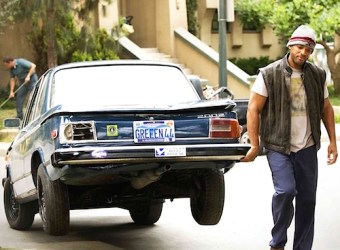 but it rubs against comedy stuff that feels like it’s from a Comedy. The extended cut includes an early sex/ejaculation joke/sequence that wasn’t in the theatrical cut because Berg thought it wasn’t funny and test audiences agreed. Goodness knows why it got put back, other than because of length — it accounts for over half of the extensions (more details here).
Essentially, I think the critics are damning Berg and co for not making the movie the critics think they should be making, and not giving them credit for making the movie they were trying to make. The marketing men are at fault here, or the audience for wanting a superhero comedy when they’ve sat down to a superhero drama. Unfortunately, it’s harder to defend when Berg’s work was indeed compromised, though by studio interference rather than by misunderstanding his own mind. Also by the fact his other films include crap like Battleship, so of course you might think he’s rubbish.
As if that wasn’t enough, there’s a controversial twist/change of direction halfway through. Fundamentally there’s nothing wrong with twists, but this engenders a bumpy transition, which initially seems not to work — the tone and meaning shift abruptly. However, if you go with it, the film settles back down and it pays off during the finale. A lot of viewers aren’t very good about trusting a movie and going with it these days, though. Again, however, occasional poor decisions make it trickier to defend. For instance (spoilers!), when Mary goes to visit Hancock after it’s revealed she has powers too, she’s dressed up like a supervillain, a complete change of style from her normal casual-suburban-mom look. Why the change? 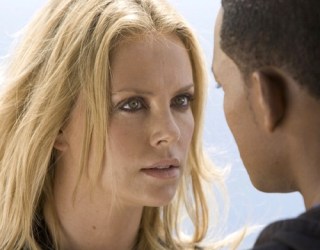 Why indeed, because a) she’s not a supervillain, and b) even if she were, why get changed?! It’s a kind of bait-and-switch: she’s made to look like a villain because we think that’s what she’s about to be revealed as, and a big hero-vs-villain fight follows too… but she isn’t. It’s not quite up there with the magically-changing Batsuits of Batman & Robin, but it’s the next level down.
While I’m bashing the film, let’s note that the CGI is appallingly weak. It’s hard to know how much that’s time passing and how much it was always weak, but considering it’s from the same year as Iron Man, I err to the latter. This may again be the result of behind-the-scenes travails, though: apparently it was supposed to contain 300 VFX shots, but actually has 525. Did anything go right on this film’s production?
On the bright side, Will Smith’s performance has garnered lots of praise, deservedly so. He could have been his usual charming self, making Hancock a funny goofball character. Instead, he plays the reality of this guy being a damaged loner. It might not make the film as consistently comedic as some would have liked, but it’s a more engaging and rewarding performance on the whole.
 The film would work a lot better on the whole if the tone had been settled on as definitively as Smith’s performance, rather than trying to have its cake and eat it by mining both the “what if this were real?” and “haha, an unlikeable drunk superhero!” versions concurrently. For my money, however, if you treat Hancock as a fairly seriously-intended movie that was forced to contain more (half-arsed) action and (misjudged) comedy for the sake of box office, it’s not a bad experience at all.
Hancock is on 5* tonight at 9pm.
* The extended version is officially Unrated in the US. Many a time an “unrated” cut would mirror the theatrical version’s certificate, if only they’d bothered. However, theatrically Hancock was a PG-13, but only after it had been submitted twice before and received an R — which is probably what this version would be, then. ^

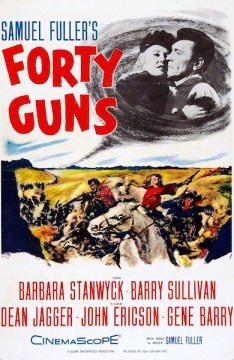 Western with Barbara Stanwyck as a powerful landowner, and commander of the titular posse, whose bullying brother, Brockie, is consequently allowed to run riot over the town. Enter lawman Griff (Barry Sullivan) and his two brothers, whose moves to bring Brockie in line kickstart a chain of ruinous events.
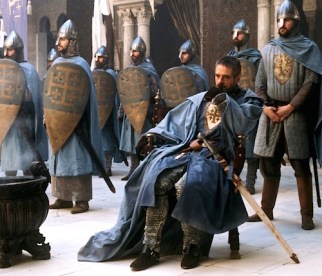
 Ridley Scott’s Crusades epic is probably best known as one of the foremost examples of the power of director’s cuts: after Scott was forced to make massive edits by a studio wanting a shorter runtime, the film’s summer theatrical release was so critically panned that an extended Director’s Cut appeared in LA cinemas before the end of the year, reaching the wider world with its DVD release the following May. The extended version adds 45 minutes to the film (and a further 4½ in music in the Roadshow Version), enough to completely rehabilitate its critical standing.
 A strong cast bolsters the human drama that sometimes gets lost in such grand stories. Bloom is a perfectly adequate if unexceptional lead, but around him we have the likes of Michael Sheen, David Thewlis, Alexander Siddig, Brendan Gleeson, and Edward Norton (well done if you can spot him…) There are even more names if you look to supporting roles. Most notable, however, are the co-leads: both Liam Neeson, as the knight who recruits Balian, and Jeremy Irons, as the wise advisor when he gets to Jerusalem, bring class to proceedings, while Eva Green provides mystery and heart as the love interest. Of everyone, she’s best served by the Director’s Cut, gaining a whole, vital subplot about her child that was entirely excised theatrically. It’s the kind of thing you can’t imagine not being there, and Scott agreed: it seems the chance to restore it was one of his main motivators for putting together a release of the longer version.
 (I’d wager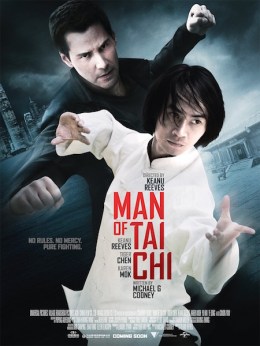
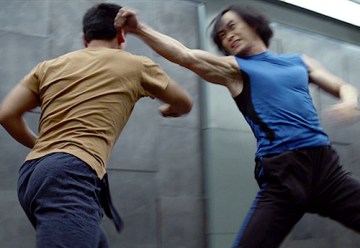 Some have opined that it’s over-edited. Early on I thought it was a mite too chopped up (during a plain old dialogue scene, funnily enough), but for most of the film it’s fine. Fast at times, sure, but so’s the fighting. There’s a style and rhythm to it all — some near-montage-like sequences are surely meant to be exactly that — and the fighting is never needlessly obscured, because (unlike in so many Hollywood action movies) these guys can actually do it and Reeves wants to show us that. He really focuses on them, too. These aren’t fights as part of elaborate chase sequences, or action interludes whose drama is reliant on the sheer volume of competitors being offed. Nearly every bout is one-on-one (there’s a single instance of two-on-one), all executed in nondescript rooms or arenas. It’s the straight-up fight choreography that does the talking here.
 A mention also for the score by Kwong Wing Chan. Apparently it’s made up of “Techno-styled, bass-heavy beats” or something (I got that from another review). Not the kind of music I normally listen to for pleasure, but its pounding electronic rhythms fit here, making their presence felt while never crossing into the over-dominance that kind of music is wont to do.
 Action comedy starring John Cusack as a hitman who has to face the life he left behind when he’s assigned a job in his hometown on the same weekend as his high school reunion.
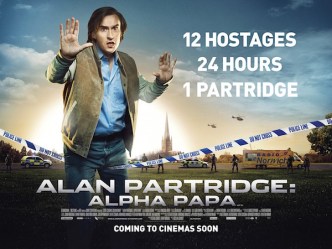 Steve Coogan brings his popular character to the big screen. When Partridge’s radio station colleague Pat (Colm Meaney) is fired, he takes a group of employees hostage at gunpoint. At Pat’s request, Partridge is sent in to negotiate.
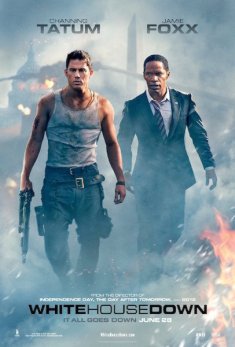 US Capitol policeman Channing Tatum is visiting the White House, trying and failing both to impress his estranged daughter and get a job in the Secret Service, when terrorists attack and try to take President Jamie Foxx hostage. Tatum rescues him from some of them, but with the rest occupying the building the stage is set for “
 If there’s a downside, it’s that this $150 million movie looks like it was made for closer to $15. There’s an overabundance of digital sets, ‘exteriors’ obviously shot on incorrectly-lit soundstages, and terrible CGI. Goodness only knows where all that money went — the actors’ salaries? Tatum and Foxx are good, but I’m not sure they’re worth that much. And here’s a good a time as any to say that this year I’ve become a bit of a Channing Tatum convert. I’d written him off because, to be honest, he looks a bit of a lug and I still think he’s woefully miscast as Gambit in
 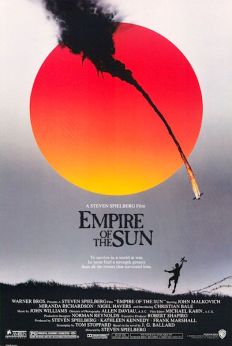 Steven Spielberg’s adaptation of J.G. Ballard’s semi-autobiographical novel stars a 13-year-old Christian Bale as Jim, the son of British ex-pats in China when the Japanese invade during World War II. Separated from his family as they try to flee, Jim encounters born survivor Basie (John Malkovich) and, when they wind up in an internment camp for the rest of the war, a cross-section of the rest of the left-behind. To Jim, a somewhat naïve but capable, confident and determined endurer, the whole thing is a big adventure; we can see the truth, though: that it’s a grim slog of life and death, and most succumb to the latter. The reality of the situation gets to Jim in the end, too… but maybe I’m getting ahead of myself.
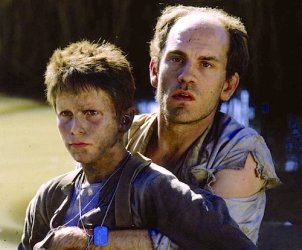 As it stands, the film is a fascinating insight into a less-often-covered aspect of the war. Even in small roles, the quality cast keep it watchable and relatable. Bale’s performance comes in just the right side of annoying — quite an achievement for a character who seems inherently brattish and prone to irritate.
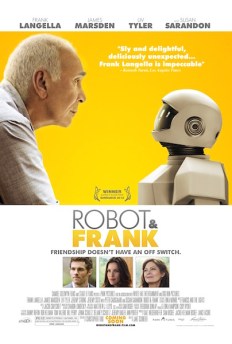 In “the near future”, Frank (Frank Langella) is an ageing jewel thief in denial about his dementia, contenting himself with visits to the local library, which is being taken over by a bunch of yuppies to turn into “the library experience”, and shoplifting from the beauty store that used to be his favourite restaurant. Concerned for his wellbeing, his son (James Marsden) gets him some home help in the form of a humanoid robot (voiced by Peter Sarsgaard). Initially reluctant to accept its presence, when the robot attempts to help by also shoplifting from the beauty store, Frank senses an opportunity…
 (part of a half-realised almost-subplot about robot rights, or something), we not only feel Frank’s (temporary) loss of his friend, but also urge the film to turn the robot back on and get back to what’s really making the movie work. The event serves a purpose (it’s the point Frank realises he’s stopped just putting up with the damn robot and actually come to appreciate its presence), but still.
 Equally, this is of a branch of science-fiction we see all too rarely on the big screen, but which is fertile ground for those wishing to explore it: using fantastical concepts to explore and enlighten our own world. Even if you learn nothing revelatory about old age and the rigours of dementia, the friendship between the robot and Frank is reason enough to enjoy.
 The very low-key nature of Time Lapse will put some people off. If you like your sci-fi full of action or scientists or world-saving/changing endeavours, it’s not for you. If you like sci-fi where an impossible concept throws ordinary people into dilemmas about themselves and each other, this is a well-conceived drama. Add in an engrossing mystery element that keeps you questioning and guessing until the end, and you have a minor gem.
 100Films.co.uk