
Bryan Singer | 144 mins | cinema | 2.35:1 | USA / English, German, Arabic, Polish & Ancient Egyptian | 12A / PG-13
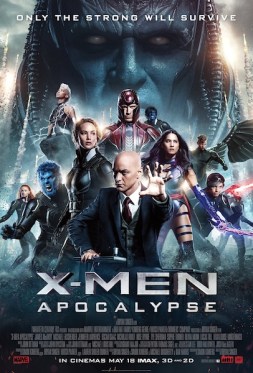 Despite fathering the modern superhero movie genre, the X-Men series always seems to punch under its weight at the box office (a point the recent Deadpool Honest Trailer makes succinctly, if blink-and-you’ll-miss-it-ly). They’re always movies of massive anticipation for me, though, because it’s a franchise I have particular fondness for. The ’90s animated series was a ‘key text’ of my childhood, and the tie-in magazine was the first comic book I consciously bought (as opposed to all the Ghostbusters / ThunderCats / Thunderbirds / etc ones I had when I was wee). The first X-Men movie was the first movie I bothered to see twice at the cinema, and remains one of only a handful to have provoked that added expense from me. So even in a summer full to bursting with ensemble superhero (and supervillain) dramatics, a new X-Men movie is easily one of my most anticipated.
Following on from the excellent double bill of First Class and Days of Future Past, Age of Apocalypse picks up in the 1980s. It’s a decade on from Magneto (Michael Fassbender) almost killing the President — and, in the process, revealing the existence of mutants to the world. Mystique (Jennifer Lawrence) is hailed as a hero for stopping him, so travels the world incognito, helping other mutants. Xavier (James McAvoy) has properly established his School for Gifted Youngsters (aka Mutants), with Hank McCoy (Nicholas Hoult) as a teacher. And Magneto is living under an assumed name in Poland, a quiet domestic life complete with wife and daughter. When CIA agent Moira MacTaggert (Rose Byrne, returning after sitting out Days of Future Past) accidentally helps a cult resurrect the centuries-dead mutant Apocalypse (Oscar Isaac), who believes he’s a god, it sets in motion a chain of events that will bring our disparate compatriots back together — and possibly bring about the end of the world.
 That’s only the half of it, though. This is an X-Men movie, which not only means there’s an ensemble cast, but that it’s dedicated to constantly adding new members to it. This time around, we’re re-introduced to the ‘original’ team as teenagers: Scott Summers (Tye Sheridan) is the viewer’s “way in” to Xavier’s school after he suddenly starts shooting laser beams from his eyes; there he meets Jean Grey (Sophie Turner), a powerful telepath the other students are scared of because sometimes her dreams shake the school at night; Mystique rescues blue-skinned German teleporter Nightcrawler (Kodi Smit-McPhee) from a cage fight in Berlin, where he was up against Angel (Ben Hardy), who becomes one of Apocalypse’s Four Horsemen, alongside weather controlling street kid Storm (Alexandra Shipp) and Psylocke (Olivia Munn), who can create blades of energy with her hands. And there’s also Jubilee (Lana Condor), who has bugger all to do. Jubilee was a major character in the animated series, and the filmmakers seem obsessed with getting her into the movies (she had cameos in the first trilogy) without ever actually giving her anything to do.
With so many characters to deal with, the film becomes a little overburdened with subplots. It’s trying to be a trilogy-former for the remnants of the First Class cast, resolving the fractured relationship between Charles, Erik, and Raven before those three actors fulfil their contracts and decide they don’t want to do a fourth movie; but it’s also trying to introduce the new-old gang of X-Men, and establish their characters to head-up future movies; and it also has to deal with establishing its villain and his plans. It’s a big ask, and while director Bryan Singer and screenwriter Simon Kinberg do manage to keep all the plates spinning and achieve something with most of them — helped no end by actors of McAvoy and Fassbender’s quality being able to flesh out their underwritten parts — some plot threads do feel perfunctory, their events and resolutions a bit skin-deep.
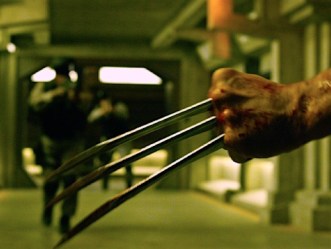 It doesn’t help that they feel the need to shoehorn a Wolverine cameo in there, an underwhelming action sequence that becomes a massive aside from the main storyline. It feels like setup for something more next time, but Hugh Jackman has stated the next Wolverine solo film will be his last outing as the character, so presumably it isn’t. That said, the post-credits scene, showing some Essex Corp suits collecting Weapon X blood, suggests a possibility for how they’ll recast Jackman without Logan magically getting a new face. For those not in the know, Essex Corp is the company of villain Nathaniel Essex, aka Mr Sinister, a cloner who created female Wolverine clone X-23. Naturally commenters are predicting she might turn up in the next X-film, which is not illogical, but I wonder if Sinister might instead use Wolverine’s blood to create a new, younger Wolverine — played by a new, younger actor, of course. We’ll see.
The one thing the Wolverine sequence does do is place him broadly in the right place (i.e. freed from the Weapon X programme) to link back up with the first X-Men movie. That’s a connection Singer also attempts to make elsewhere (Charles and Erik’s final dialogue is very similar to their final exchange in the first X-Men), even though we’re now in a new timeline that doesn’t perfectly marry up to the first three movies. Indeed, depending how you count it, Apocalypse can be seen as a second, third, fourth, sixth, or ninth X-Men movie. Yes, really. It’s the second for director Bryan Singer since he took back the reins with Days of Future Past; it’s the third in a prequel trilogy that can began with First Class; it’s Singer’s fourth X-film overall; overall, it’s the the sixth in the X-Men series; and it’s the ninth movie in the X-Men universe (which also encompasses two Wolverine spin-offs and this year’s primary comic book movie success story, Deadpool). Some of these have greater relevance than others, but they all inform the film in one way or another. For example, it’s the second second-Singer movie to introduce Nightcrawler and not know quite what to do with him outside of action sequences.
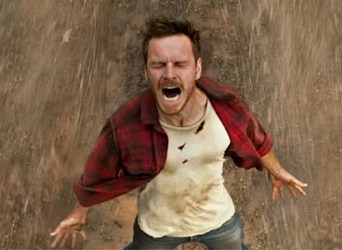 Another element lost in the mix is the real-world resonance contained in the best X-films. There’s a lot of to be said for the spectacle that’s present in all the movies, but Days of Future Past (for the most recent example) anchored it in the human conflicts between the heroes, and in their relation to the rest of the world. Apocalypse nods in that direction, with Mystique invoking Magneto’s metaphorical family to get him to stop destroying the world, but it’s not as well integrated, not as effective as previous outings. Said destruction is on a massive scale, but it’s too massive — the film doesn’t sell it; it’s just another city being destroyed somehow, emotionless computer-generated effects that are overfamiliar in these megablockbusters now (and not helped when you’ve seen similar sights two or three times right before the film in trailers for the likes of Teenage Mutant Ninja Turtles 2 and Independence Day 2).
Elsewhere, sacrificial character deaths have little weight — one of the main ones is Havok (Lucas Till), whose presence in the movie I haven’t even felt the need to mention up to this point. There’s a new Quicksilver sequence, but it feels like an attempt to recreate the last film’s magic. It’s a fun scene, no doubt, and it does have some new ideas within it, but it’s primarily a variation on a theme and feels shoehorned in to the movie, rather than an organic or wholly original element. Immediately before this, a trip to the mall for a single joke (the Return of the Jedi one you’ll have heard about if you’ve read any other review) screams “deleted scenes!”, even without having seen Sophie Turner tweet a Dazzler-referencing photo. Will we be seeing X-Men: Apocalypse – The Dazzler Cut on Blu-ray this time next year? Well, I doubt it’ll actually be named that (more’s the pity), but maybe we will. I’d certainly expect a chunky selection of deleted scenes (some of which have already been teased).
 In fact, the film as a whole feels a draft or two away from being truly ready. Some of the dialogue clunks hard, especially when characters speak in exposition to one another. The plot needs streamlining and focusing, especially early on, and some events need appropriate weight added to them. Other things just need smoothing out — that trip to the mall happens Just Because, with no real sense of why the characters are doing it (other than some handwaving dialogue about needing to get out of the school for a change), and, as I said, in the final cut only leads to one single joke. Yet for all that, some things do work beautifully: Storm’s hero-worship of Mystique comes up almost in passing early in the film, establishing/emphasising Mystique’s place in the mutant world now; but then it becomes a key point in the climax without the need for any explanatory dialogue, as Storm wordlessly realises that her hero is fighting on the other side. It is, in a way, the best bit of the movie.
The other very best bit is a great title sequence, which almost makes me wish I’d seen the film in 3D. It’s best seen rather than described, but do pay attention because it swirls a lot of detail into a very short space of time. It also uses the title theme that Singer’s regular composer John Ottman wrote for X2, which Singer revived for Days of Future Past (I’m pretty sure it wasn’t used in The Last Stand or First Class, to their shame), and seems intent on making the series’ regular main theme. He’ll hear no objection from me, because I think it’s a fantastic piece, almost as good as the classic one from the ’90s animated series (see: the animated series’ Honest Trailer).
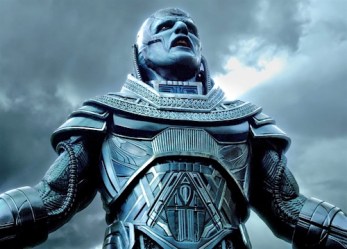 Despite being a negative nelly for much of this review (like so many others, which has given it a lowly 47% on Rotten Tomatoes, which is ridiculous), I actually enjoyed Apocalypse a great deal; it’s just that these critical observations flow forth when you think about and analyse it afterwards. In spite of them, I think the film does enough right to be an entertaining action-adventure sci-fi blockbuster. It’s not the epitome of the X-franchise — there are at least four movies in the franchise better than it, in my estimation — but I’d still argue it’s closer to those better films (all of which I’d number among my favourite movies, incidentally) than it is to the doldrums of The Last Stand or X-Men Origins: Wolverine. The X-Men movies will continue (a brand-new young cast and a post-credits tease confirm that much), and a minor blip in quality should do nothing to derail that train.

X-Men: Apocalypse is released in the US and Canada today, and is still playing everywhere else that it’s still playing.
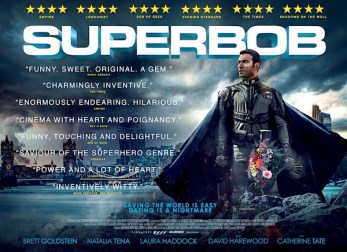 Comedies about superheroes tend to come in the form of big-bucks mainstream-aimed effects-y pieces (
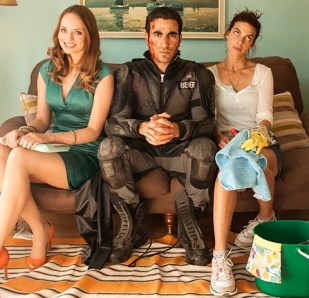 though, because the conceit is all but dropped fairly early on, and the film begins to develop in nice directions. It starts out as pure comedy, and while it doesn’t lose that aspect, it does develop a strand of endearingly genuine sweetness. That helps to see it through the predictable rom-com beats that follow, leaving you (or this viewer, at least) not minding that it’s predictable where the story’s going to go because, thanks to the characters, that’s where you want it to go.

 Score:



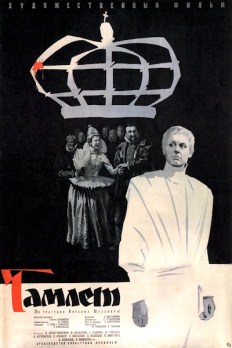 A black-and-white, two-and-a-half hour Shakespeare adaptation in subtitled Russian? No, wait, come back! Actually, don’t bother, because if you’re turned off by any or all of that description then, yeah, this isn’t for you. If you don’t object, however, then you’ll find a film that the likes of Sir Laurence Olivier, Sir John Gielgud, and Sir Kenneth Branagh have hailed as the greatest film adaptation of arguably the Bard’s most revered play.
 In the famously complex lead role, Innokenty Smoktunovsky gives a Hamlet who you really feel is more intelligent than everyone else around him — like a student fresh home from his studies, who has surpassed his parents and old acquaintances in sheer learning and attentiveness to philosophical topics, but doesn’t yet have a firm handle on his swirling thoughts. It’s possible he’s going genuinely mad with it, too, rather than the playfulness some choose to interpret in the part. Anastasiya Vertinskaya embodies sweet innocence as Ophelia, who Hamlet seems to genuinely care for, but has a poor way of showing it. Conversely, Mikhail Nazvanov makes for a somewhat neutered Claudius — he’s almost bumbling, outwitted by Hamlet but with enough innate power (he’s King, after all) to mask it. I suppose that emphasises the “student who’s outstripped his parents” point, but it doesn’t exactly make for a powerful villain. Still, different interpretations are always interesting.
 The visitation of Hamlet’s father’s ghost is another tour de force moment, the kind of visual impact that benefits not a jot from being described in text.
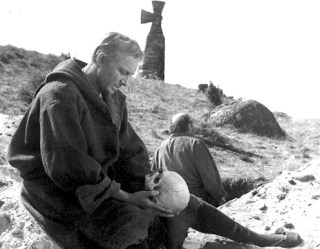 Even with the subtitle issue feeling like an obstacle to engagement, this was perhaps the most enjoyable Hamlet film I’ve seen. Maybe that’s because it has an advantage in that I’m now more familiar with the play (something which hindered Branagh’s version, as that was the first time I’d seen it), but it speaks to the film’s overall quality that it has more to offer than just Shakespeare’s words.


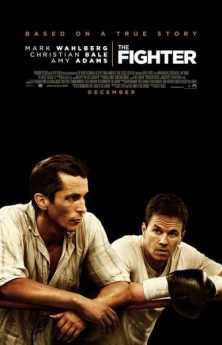 Oscar-winning true-story drama that relates the early career of boxer Micky Ward (Mark Wahlberg), a coulda-been-a-contender type held back by the training of his half-brother, ex-boxer turned drug addict Dicky (Christian Bale), and the management of his controlling mother (Melissa Leo), not to mention the cadre of harpy-ish sisters. Micky gains some confidence after entering a relationship with barmaid Charlene (Amy Adams), who’s prepared to stand up to his family. He breaks away from them and gets better opportunities, but soon realises that to win he’ll need to combine the best of both worlds.
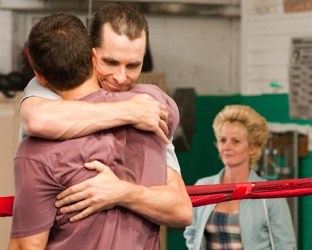 Although this is technically Ward’s story, it’s as much about his older half-brother, washed-up fighter turned part-time trainer and full-time crack addict Dicky Eklund. It’s another of Christian Bale’s extreme weight gain/loss roles (in this case, loss), but there’s more to it than such physical exertion. Bale inhabits the character, and a brief clip of the real Dicky during the credits suggests he’s done so very accurately. His performance is mesmeric and definitely worthy of that Oscar. For the rest of the cast, Amy Adams holds attention equally in a less showy role, and even Marky Mark isn’t half bad. Melissa Leo also won an Oscar for her performance, which I forgot until I read so after — it was the one she controversially funded her own ad campaign for. I guess that paid off.
 The Fighter isn’t without its faults, though. There’s a certain element of cliché to the story arc — whether that’s just fact emulating fiction, or the screenwriters imposing familiar shapes on to what really happened, I don’t know. It could also stand to lose a few minutes here and there, especially when it goes round in circles about whether Micky should be trusting his family or not. And talking of movie clichés and comparisons to other films about fighting, watching it in close proximity to
 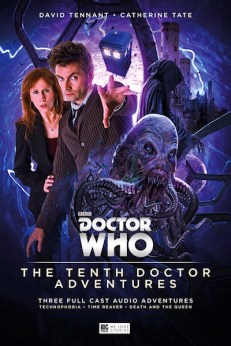 One of Doctor Who’s most popular eras is revived this week, as David Tennant returns to the headline role for the first time since
  The first is Technophobia by Matt Fitton, which is set in our recent past (and therefore Donna’s near-future) when the new M-Pad tablet computer seems to be causing the populace to forget how to use technology. Tennant and Tate hit the ground running — it’s a cliché, but it really does sound like they’ve never been away. Their sprightly performances contain little of the stilted “I’m reading this script aloud for the first time” acting that sometimes plagues audio drama. Fitton captures the style and tone of their single TV season to a tee — if they’d done a second year together, you can well believe this as its first episode. Even Howard Carter’s incidental music is a mostly-fitting substitute for Murray Gold’s iconic work.
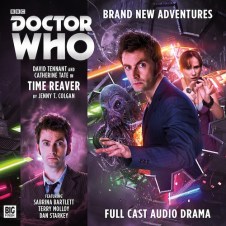 The middle tale is sci-fi adventure Time Reaver by Jenny T. Colgan, a best-selling romantic novelist who’s turned her hand to multiple Who projects (including a 10th Doctor and Donna novel published last week to tie-in with these dramas). For me, this was the weak link of the trilogy, though it’s by no means bad. There are some fantastic ideas, but at times their inspirations show through too clearly, and the execution is sometimes lacking. This was Colgan’s first audio drama, and dare I say it shows. Sequences like an action-packed barroom brawl are a little too ambitious to convey in an audio-only medium, and the dialogue is regularly forced to describe what’s going on. On the bright side, Mr Carter offers more magnificent sound design — the noises made by cephalopod villain Gully are immensely evocative.
 The final episode is the group’s historical outing, Death and the Queen by James Goss, and it may be the best of the lot. Our intrepid duo find themselves in the kingdom of Goritania in 1780, when it comes under siege from a destructive cloud that contains Death himself. Goss mixes comedy with peril in just the right quantities to create a story that is an entertaining romp but also manages to expose different facets of the Doctor and Donna’s relationship. If Fitton has bottled the essence of RTD, here Goss evokes Steven Moffat, with a time-jumping opening ten minutes that you can well imagine on TV, but which also work perfectly in audio. Things slow a bit later on, with the dialogue sometimes going in circles — a fault of all three of these plays, actually. They could’ve benefited from a trim to fit within the TV series’ 45-minute slot, rather than allowing the freedom of not having to conform to a schedule let them to slide to 55-ish.
 Ah, love a bit of Eurovision, even if the songs weren’t as good this year. Ok, you might say they never are, but there’s often one or two half-decent ones (I still listen to Conchita Wurst’s Rise Like a Phoenix sometimes, mainly because it’s the best Bond theme released in the last decade). Even then, the winner wasn’t the best of that middling bunch, though it probably had the best message. In fact, the best song of the night was the Swedish hosts’ half-time number, Eurovision-spoofing Love Love Peace Peace (watch it
 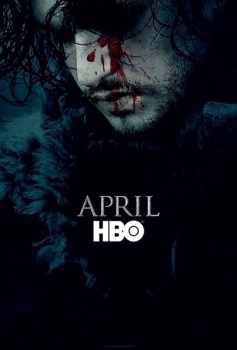 Good luck to you if you’re not watching Game of Thrones but still trying to avoid spoilers this year, with the huge and widely-covered news that [REDACTED] was [REDACTED], or that [REDACTED] killed [REDACTED], or when [REDACTED] and [REDACTED] were [REDACTED] for the first time since [REDACTED], or when [REDACTED] was [REDACTED] but [REDACTED] the [REDACTED] and [REDACTED] of [REDACTED] in the process — even if more people seemed interested in discussing her [REDACTED]s.
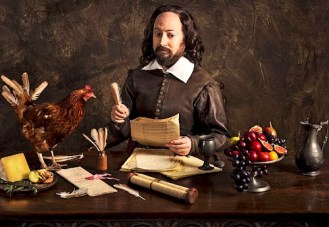 I can’t remember the last time I saw a new multi-camera sitcom that wasn’t either, a) a bit meta (like Miranda or Mrs Brown’s Boys), or b) a revival (like Red Dwarf X). I don’t know if that says more about the current TV landscape or the kind of things I watch, but either way it surprised me when that was the form Upstart Crow took. It’s just one element that gives it the feel of Blackadder, which I don’t mean as a criticism. Even if it feels a little dated in its execution, there are plenty of laughs — some easy, some clever — and, really, what more do you want from a comedy than to laugh? It may not be up to Blackadder’s highest highs (yet — there’s still time; you never know), but I’d wager it stands fair comparison to the classic’s comparatively-lesser instalments… which I mean to be a less critical assessment than it sounds.
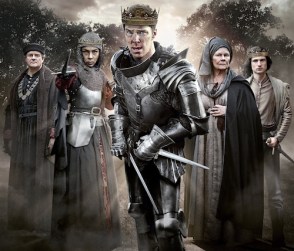 This month, I have mostly been missing the second run of The Hollow Crown, the BBC’s all-star adaptation of Shakespeare’s War of the Roses plays… though as I still haven’t got round to watching the first run from 2012, that’s no real surprise. In fact, Upstart Crow aside, I’ve not yet watched any of their still-running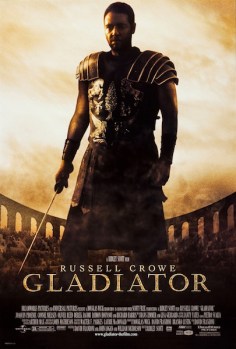

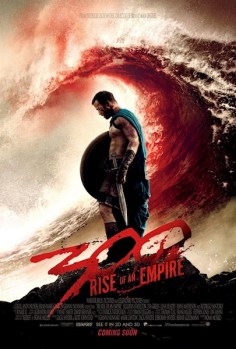 Taking place before, during, and after the events of Zack Snyder’s surprise-hit graphic novel adaptation
 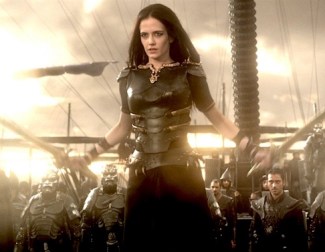 It’s also terribly obvious that it was shot for 3D. I’m not normally one to criticise a film for that — I think when some critics know a film is being released in 3D they see that in its shot choices, even if they’re perfectly valid choices for 2D. But Rise of an Empire screams that it was made for 3D from the start, with all manner of things thrust towards the camera, usually in slow motion, and the constant explosions of blood (to call them squirts or sprays implies a more liquid-like quality than they actually possess) which go nowhere else but camerawards. Presumably the only reason it’s not an 18 for violence is because it’s all so bloody silly.
 We’re now on to the 13th film in the Marvel Cinematic Universe, and while you don’t need to have seen all 12 preceding movies to follow the events of Civil War, you do need at least four — and, to get everything, a further four or five beyond that. (Don’t worry about the four TV series — it’s increasingly clear that they’re only notionally connected to the movies.) So the Marvel model for a “shared universe” is not discrete stories that take place in the same world, but a series of ever-more-connected narratives. It’s working for them, though, as the continually stellar box office totals prove.
 As complicated as the plot sounds once you start trying to succinctly summarise it, Civil War is easy to follow as it unfurls. In fact, it’s to its credit that it can’t be readily summarised in any more detail than “Cap and Iron Man disagree; fight” without really getting into it. Screenwriters Christopher Markus and Stephen McFeely have followed up the political thriller of Winter Soldier with another global thriller storyline, again bringing different genre textures to the superheroics that are nonetheless present and correct. The film’s style mixes in just the right amount of realism — no one’s pretending this isn’t a comic book movie, with some elements of comic book logic and a casual acceptance of people having world-changing powers; but if such people did exist, this is the kind of way they would be handled by the authorities.
 Well, maybe. But the debate is partially stalled by the fact this is a Captain America movie rather than an Avengers one. Yeah, you can side with Tony Stark & co, but you know Cap’s going to come out to the good, one way or another. As it pans out, it’s not a total victory (Team Cap are all now fugitives, presumably until
  On that visceral level, there are a couple of stunning action sequences. The car/foot chase between Cap, Bucky and Black Panther is fantastic, casually throwing in cool moments like the way Bucky steals a motorbike. The climactic two-on-one fight is also a sight, throwing in strong choreography and seamless effects work to create a battle that has a real ebb and flow, a back and forth over who has the upper hand. And the centrepiece of it all, of course, is the two teams facing off at the airport. For fans of superheroes, this is pretty much the ultimate expression of the genre yet brought to live-action moviemaking. For my money, the antics of Ant-Man — and Giant-Man — are by and large (pun very much intended) the best bit of it, but maybe I’m just
  “hey, remember that foreign prince who was Black Panther? He lives in a foreign country… where he’s Black Panther!” Other than that, it’s kinda important to answer the question of “hey, what happened to Bucky?” next time Cap turns up. So why isn’t the scene just in the film? Well, it is in the film — just after a few of the credits — so what does it matter, right?
 In the end, Civil War leaves plenty open for future Marvel movies. Well, of course it does — half the time MCU movies are feature-length trailers for the next MCU movie. Where Civil War is really clever, however, is that it does that stage-setting while also feeling conclusory. As the third part in the Captain America trilogy, it actually makes a pretty satisfying end to that narrative. As the third part in the “trilogy in five parts” that is The Avengers trilogy, well, it’s clearly not the end, but it’s a fairly discrete segment.
