
John Michael McDonagh | 101 mins | Blu-ray | 2.35:1 | Ireland & UK / English | 15 / R
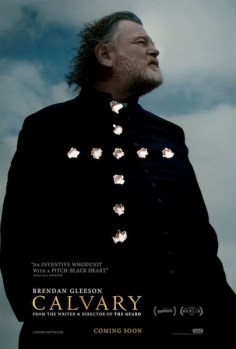 From the director of In Bruges’ older brother (who, in fairness, made a name for himself with 2011 comedy The Guard, which I’ve still not got round to) comes this dark (very dark) comedy drama — with emphasis on the latter, I suppose, but it is very funny along the way.
Brendan Gleeson (In Bruges, The Guard) stars as Father James, a priest in a small Irish town. One day at confession he’s told he is going to be murdered. Not for anything he did wrong, but precisely the opposite — because he is a good priest. The mysterious threatener gives him a week to get his affairs in order. Over the next seven days, we follow James as he interacts with his characterful parishioners, and are led to ponder which of them might be the would-be assassin, especially as so many seem cynical and nasty. All the while, James struggles internally with what is the right thing to do.
That’s the story of Calvary, at any rate, but it’s fairly clear that it’s about something more. What exactly that is, however, is a matter of debate. Could it be an apologia for the church and the wrongs it has inflicted in living memory? It certainly leans into those issues: without spoiling anything, the inciting incident is related to historic abuse, but the film is showing that priests aren’t all like that — that some people in the church are actually good, or at least as good as any of the rest of us — which I should imagine is true. That doesn’t make the film an apology, nor an excuse, but does raise a point: should the innocent be blamed for the wrongdoings of the guilty just because they share a belief? I think most rational people would agree they should not. Nonetheless, I’ve read at least one commenter, who I’m presuming was a hardened atheist, castigate the film for daring to feature a good priest, as if the very concept of one existing was a heinous and offensive suggestion. Conversely, in the special features Chris O’Dowd speaks of his initial wariness that this was going to be another “bad priest” movie, and how that doesn’t align with his personal experience of the clergy.
 So could it, instead, merely be a snapshot of Irish society, in particular its current relationship with the church? Surely that’s part of what’s in play, with the cynical, dismissive, teasing, sometimes hateful attitudes of the parishioners surely no coincidence. Some viewers have certainly taken this as the film’s primary talking point, and some have been less than impressed that it doesn’t align with their view of modern Ireland. (I’m in no position to comment.) Neither of these feel like they’re getting at the totality of what it’s saying, though.
Nonetheless, the way the film presents itself is not at fault. The acting is strong across the board, none more so than Gleeson. He brings all kinds of facets to a man who could’ve been a blank page on which to project the other colourful characters, and he truthfully conveys major character moments and changes of direction without the need for dialogue. O’Dowd surprises in a rare non-comedic role, while further able support comes from recognisable faces like Kelly Reilly (as James’ troubled daughter), Dylan Moran (as a nouveau riche dick) , Marie-Josée Croze (as a bereaved holidaymaker), M. Emmet Walsh (as an ageing author), and — for just one scene, but a good one — Domhnall Gleeson (you can discover what he is when you watch it). And no offence to Aidan Gillen, but his smarmy atheist doctor feels like the kind of part he always plays.
That’s not to exclude the less familiar names, some of whom deliver many of the biggest laughs, like Killian Scott (as a slightly worrying simpleton), David Wilmot (as James’ naïve fellow clergyman),  and Owen Sharpe (as a Brooklyn-accented promiscuous gay) — though if you watch Ripper Street, you may have seen a couple of them in quite different guises. And though it may be a cliché, McDonagh has successfully made the location a character, too: the towering mountain, an accidental discovery once on location, adds the looming presence the director hoped it would.
Calvary may in fact be a great film, if only I could put my finger on what I think it’s really trying to get at, which remains frustratingly out of my reach, at least for now. However, I will say it’s a very good one, and anyone who likes a character-driven drama scattered with dark but hilarious humour would do well to seek it out.

Calvary is available on Amazon Prime Instant Video UK as of yesterday.


 Score:



 I wasn’t as impressed as some were by
 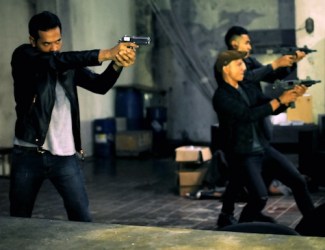 Where the first film was an efficient, simple thriller designed almost solely to link the startling action sequences, here writer-director Gareth Evans has created a sprawling crime epic. Anyone who’s seen the kind of gangster actioners Hong Kong cinema has produced since the ’80s or so will feel in familiar territory. That’s no bad thing, however, just a point of genre comparison. By expanding the world he’s created out in every direction, Evans has created a work that is not only bigger in a literal sense, but also deeper, more complex, and more interesting than the straightforward adrenaline rush of the movie that made his name.
 But as incredible as each of those are — and indeed they are — the highest of highlights is surely the car chase. There’s a chance you’ll have heard about this even if you’re not especially interested in the film: a bit of behind-the-scenes detail about how they achieved one particular shot went viral a couple of years ago. If you haven’t seen that, nor the film, then don’t seek it out — it actually kinda spoils it a little bit, knowing how it was done. (Without spoiling it, it was all done practically, whereas a Hollywood blockbuster would undoubtedly have done it with CGI — and spent as much on that one shot as Evans and co have on this entire movie.) The sequence is more than just one technically-impressive shot, however, but an exciting and innovative action scene all round, that definitely pushed the boundaries of the filmmakers’ capabilities (they had to get in a specialist outfit from overseas to help realise their ambitions).
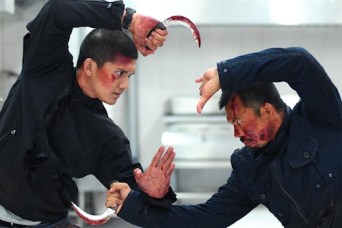 Most Hollywood blockbusters seem to push (or exceed) the two-and-a-half hour mark these days, and even when it fills that time, it feels like it’s partly because no one quite knew when to cut back. The Raid 2, however, feels suitably epic — just as you think a film that’s two-and-a-half hours long ought to feel, really.



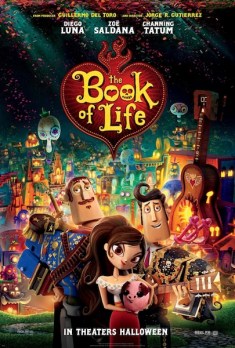 A myth-like animated musical adventure based around Mexico’s Day of the Dead, most notable for its unique art style that presents gorgeous visuals throughout.

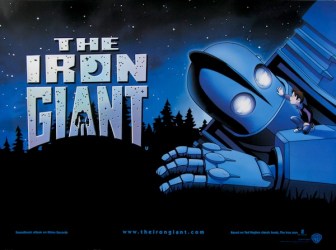 Adapted (loosely) from Ted Hughes’ children’s novel The Iron Man, the feature debut of director Brad Bird (
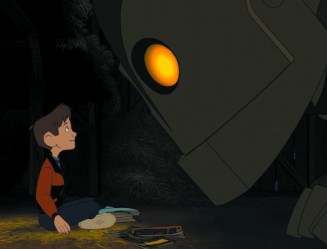 The story, as reconstructed by Bird and screenwriter Tim McCanlies, integrates influences from ’50s B-movies (very apt for a giant robot ‘monster’) and Cold War/Space Race paranoia for a potent storyline that has a different emphasis from the novel’s “world peace” finale, but nonetheless is promoting understanding of alien/foreign powers and, y’know, deep stuff like that. Alternatively — or, rather, concurrently — it’s an
  reputation it has gradually amassed — and which only continues to grow, I think. Last year saw the release of an extended Signature Edition, with a couple of short scenes added, which comes to US Blu-ray (alongside the original version) later this year. Just from reading about those new scenes, I’m not convinced they’ll improve the experience, but it’ll certainly be worth finding out.
 The third feature (but first you’re likely to have heard of) by writer-director Alexander Payne (

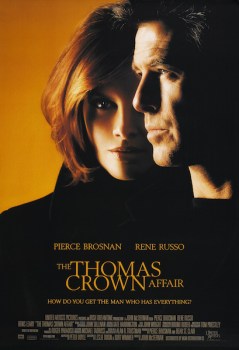 Once upon a time, John McTiernan was an action auteur, known for films that sat comfortably on the “mainstream modern classics” scale, like
 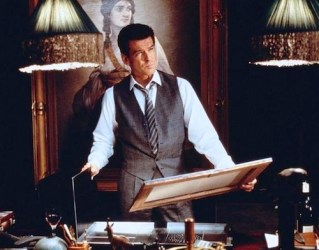 McTiernan’s action background comes to the fore in a pair of extended heist scenes at either end of the movie, which are surely the standout parts. The seductions and plot twists in between these bookends are certainly entertaining and may even keep you guessing, but it’s the heists that pack the most entertainment. They’re the kind of thing we don’t see so much nowadays, at least not in mainstream movies, because any sequence designed to provide excitement is a fight of some kind, and most of those are shot in the shaky-cam style. There’s none of that palaver here, just perfectly choreographed cutting between the various players in each heist, and some well-chosen music — as if being ably to do awesome stuff accompanied by the James Bond Theme wasn’t cool enough, here Brosnan gets to do the same to Nina Simone’s Sinnerman.
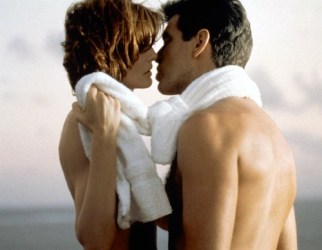 The Thomas Crown Affair may not be the best film on any of its principals’ CVs (well, except perhaps for Russo’s), but it’s a consistently enjoyable light thriller with a couple of particularly memorable sequences and a fun central dynamic. Apparently it’s better than the original, too. There’s long been talk of a sequel, but it seems to have gone the way of McTiernan’s career, which is a shame.
