
Country: USA
Language: English
Runtime: 81 minutes
BBFC: PG
MPAA: G

Original Release: 22nd November 1995 (USA)
UK Release: 22nd March 1996
First Seen: cinema, 1996
Stars
Tom Hanks (Sleepless in Seattle, Catch Me If You Can)
Tim Allen (Galaxy Quest, The Shaggy Dog)
Director
John Lasseter (A Bug’s Life, Cars)
Screenwriters
Joss Whedon (Alien Resurrection, Avengers: Age of Ultron)
Andrew Stanton (A Bug’s Life, John Carter)
Joel Cohen (Cheaper by the Dozen, Garfield)
Alec Sokolow (Cheaper by the Dozen, Garfield: A Tale of Two Kitties)
Story by
John Lasseter (Toy Story 2, Planes)
Pete Docter (Monsters, Inc., Up)
Andrew Stanton (Finding Nemo, Toy Story 3)
Joe Ranft (Beauty and the Beast, Cars)
The Story
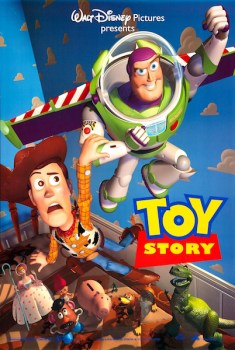
In a world where toys come to life when humans aren’t around, Woody is six-year-old Andy’s favourite doll… until he gets Buzz Lightyear, a space ranger action figure, for his birthday. An upset Woody clashes with Buzz, but when the bickering pair are left behind during a house move they must work together to get back to their kid.
Our Heroes
Woody is a cowboy doll, the favourite of his kid, Andy, and consequently the leader of all Andy’s toys. That is until Andy gets a shiny new Buzz Lightyear action figure, whose newness ingratiates him with all the other toys. Plus, to Woody’s continued annoyance, Buzz believes he really is a space ranger and has no idea he’s just a toy.
Our Villain
Sid, Andy’s nasty neighbour kid who does terrible, terrible things to toys…
Best Supporting Character
Mr Potato Head, whose various body parts are slotted on and therefore removable and interchangeable. Hilarity ensues. Also has a nice line in snarky comments.
Memorable Quote
“To infinity, and beyond!” — Buzz Lightyear
Quote Most Likely To Be Used in Everyday Conversation
“You are a sad, strange little man, and you have my pity.” — Buzz Lightyear
Memorable Scene
One of Buzz’s claims as a real space ranger is that he can fly, so Woody challenges him to prove it. Buzz closes his eyes, dives off the bed… and, through a series of flukes, bounces and coasts his way around the room, landing back on the bed. “That wasn’t flying,” cries Woody, “that was falling with style!”
Memorable Song
The film’s themes are perfectly reflected in Randy Newman’s Oscar-nominated and endlessly catchy song, You’ve Got a Friend in Me. Both Toy Story sequels have tried to emulate it, with… less success.
Technical Wizardry
Only the whole movie — it was the first feature-length wholly-computer-generated animated film. As such, we have it to thank/blame for the current entire state of popular Western animation.
Making of
The animators perfected the movement of the toy soldiers by nailing a pair of shoes to a wooden plank and trying to walk around in them.
Previously on…
Toy Story was the first feature-length computer-animated film — there is, in that sense, literally nothing before it.
Next time…
Two feature film sequels, both of which are at least as artistically successful as this first, with a fourth set to follow in 2018. Also, three short films and two TV specials to date, plus direct-to-video spin-off movie Buzz Lightyear of Star Command: The Adventure Begins and the TV series that follows it. You could also argue the entirety of Pixar’s highly-praised output is a follow-up to the success of Toy Story, as well as American feature animation’s almost entire conversion from traditional cel animation to 3D CGI.
Awards
1 Special Achievement Oscar to John Lasseter for “the development and inspired application of techniques that have made possible the first feature-length computer-animated film.”
3 Oscar nominations (Original Screenplay, Song, Musical or Comedy Score)
1 BAFTA nomination (Visual Effects)
8 Annie Awards (Animated Feature, Directing, Writing, Producing, Music, Production Design, Animation, Technical Achievement)
1 Annie Awards nomination (Voice Acting (Tom Hanks))
2 Saturn nominations (Fantasy Film, Writing)
Nominated for the Hugo for Best Dramatic Presentation
What the Critics Said
“Far from just a technological breakthrough, this hellzapoppin fairy tale […] is a magically witty and humane entertainment. It has the purity, the ecstatic freedom of imagination, that’s the hallmark of the greatest children’s films. It also has the kind of spring-loaded allusive prankishness that, at times, will tickle adults even more than it does kids. The moment Mr. Potato Head arranges his snap-on features into a Cubist mash and says, ”I’m Picasso,” it’s clear that director John Lasseter and his team of writer-technicians have taken their most anarchic impulses and run with them. […] In its techno-cool photo-realist way, though, this movie, too, invites you to gaze upon the textures of the physical world with new eyes. What Bambi and Snow White did for nature, Toy Story, amazingly, does for plastic — for the synthetic gizmo culture of the modern mall brat. The film’s wit (and resonance) is that it brings toys to life exactly the way children do in their heads. It molds plastic into pure imagination.” — Owen Gleiberman, Entertainment Weekly
 Score:
 100%
100%What the Public Say
“The Animation is superb. Given that this was one of the first ever feature length computer animated movies, those guys at Pixar really hit the nail on the head. The colours are vibrant and the characters are dynamic. An excellent use of Blues, Yellows and Reds really accentuate the ‘children’ and ‘toys’ feel. There are also beautiful realistic elements such as a scene where Woody and Buzz find themselves under a lorry in a petrol station. With this, I was simply amazed at the attention to detail with the stones, tarmac and oil stains on the textures. It really looks like you are close-up to the ground and I love it!” — Alexander Potter, Pottercraft’s Pictures

Just because something’s the first to do something doesn’t necessarily mean it’s any good, but Pixar didn’t strike gold with Toy Story just because computer animation was New. It’s the likeable characters, how they develop and learn, the amusing situations they’re put in, plus some heartwarming messages about friendship. There’s more emotion and character development in these wooden-and-plastic toys generated with pixels in a computer than many a film can achieve with real human beings, and that’s why Pixar came to revolutionise and dominate the Western animation genre.
Some would say “the original is still the best”, and it is up there, but on Sunday I will beg to differ…

#93 will be… a superior sequel.



 Between his popular English-language debut
 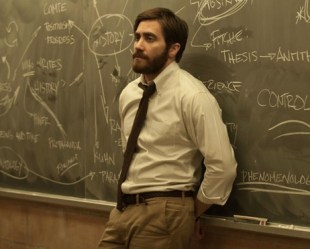 While looking up those various explanations, I read at least one review that asserted it’s a good thing that the film doesn’t provide a clear answer at the end. Well, I think that’s a debatable point. I mean, there is an answer — Villeneuve & co clearly know what they’re doing, to the point where they made the actors sign contracts that forbade them from revealing too much to the press. So why is it “a good thing” that they choose to not explain that answer in the film? This isn’t just a point about Enemy, it’s one we can apply more widely. There’s a certain kind of film critic/fan who seems to look down on any movie that ends with an explanation for all the mysteries you’ve seen, but if you give them a movie where those mysteries do have a definite answer but it’s not actually provided as part of the film, they’re in seventh heaven. (And no one likes a movie where there are mysteries but no one has an answer for them, do they? That’d just be being mysterious for precisely no purpose.) But why is this a good thing? Why is it good for there to be answers but not to give them, and bad for there to be answers and to provide them too? If the answers the filmmakers intended are too simplistic or too pat or too well-worn or too familiar, then they’re poor for that reason, and surely they’re still just as poor if you don’t readily provide them? I rather like films that have mysteries and also give me the answers to those mysteries. Is that laziness on my part? Could be. But I come back to this: if, as a filmmaker (or novelist or whatever) you have an answer for your mystery and you don’t give it in the text itself, what is your reason for not giving it in the text? Because I think perhaps you need one.
 Fortunately, Enemy has much to commend aside from its confounding plot. Gyllenhaal’s dual performance is great, making Adam and Anthony distinct in more ways than just their clothing (which is a help for the viewer, but not for the whole film), and conveying the pair’s mental unease really well. It would seem he errs towards this kind of role, from his name-making turn in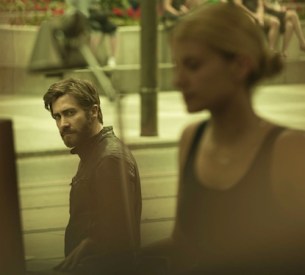

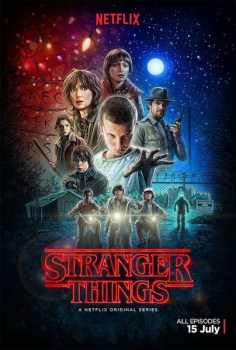 Hype — it’s a funny old business. It’s hard to have avoided hearing something about Stranger Things, Netflix’s summer hit that went down like gangbusters, its ’80s nostalgia perfectly calibrated to target the kind of people who run entertainment news websites these days — just to be cynical about it. Or truthful. Then there came the backlash, which attested there was nothing more to the show than those callbacks and tributes; a hollow experience of copying and “hey, remember this? That was good, wasn’t it?”
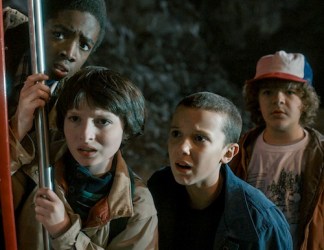 Without wanting to get into spoiler territory (despite what the media would have you believe, not everyone has Netflix all the time and not everyone watches every new zeitgeisty series immediately. Apologies if you write for an entertainment site and I’ve just given you palpitations), everything comes together nicely for a barnstorming pair of climactic episodes. For my money, the penultimate chapter is the best one: with a bunch of revelations out of the way (some of them easily guessed but finally confirmed), the series kicks off a run of long-awaited fan-pleasing events (as in many a drama, it takes this long for everyone to finally start talking to each other; also, the bit with the van!) The finale is less accomplished, with some characters wandering around for a bit in a way that feels designed to pad the running time. Still, it’s a satisfying conclusion… to season one, anyway.
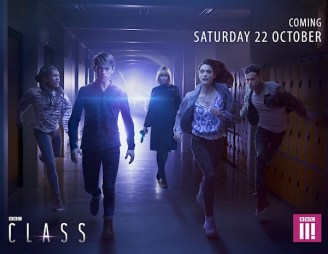 Ten years to the very day since the launch of the original dark, sexy BBC Three Doctor Who spin-off,
  The CW’s raft of superhero shows restarted on UK TV this month. I’ve given up on Legends of Tomorrow and am still not joining Supergirl (though I got hold of the opening episodes, co-starring Superman, to maybe make time for at some point); but, five seasons in, Arrow has me suckered for the long-haul, and The Flash tempted me back with the intrigue of adapting Flashpoint. I’ve never got on the bandwagon with Flash, which attracted a lot of praise during its first season that I simply didn’t agree with, leading it to outshine Arrow in ratings and people’s affections. Arrow has long been off the boil, and season five certainly hasn’t got it back up to temperature so far, but The Flash had plenty of issues of its own. It’s not problem free now, but I actually really liked the first couple of episodes of the new season. It’s still a long way from the top tier of TV superheroes (Netflix have that sewn up), but it’s likeable.
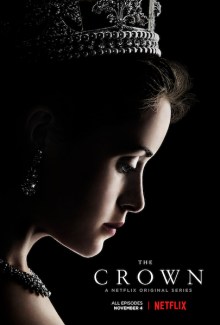 This month, I have mostly been missing the most expensive TV show ever made*, Netflix’s much-discussed The Crown. I don’t know if they’ve been pushing it as much in the rest of the world as they did in the UK, but it certainly felt like it was everywhere… for about a week, as is usually the way with Netflix series. Also missed: the equally-discussed Netflix-exclusive new run of Black Mirror. Both of these are because I don’t keep up a permanent Netflix subscription, but between them, the forthcoming Gilmore Girls revival, and the Series of Unfortunate Events remake in January, I will be signing up again late in December (using the free month voucher they had in the Radio Times, hurrah!)
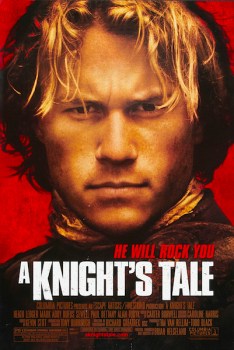 A squire fakes being a knight to win a jousting contest, and a lady’s affection, in this medieval comedy-adventure.
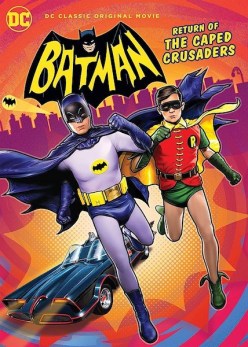 Holy nostalgia hit, Batman! This animated movie reunites the surviving stars of the enduringly popular
 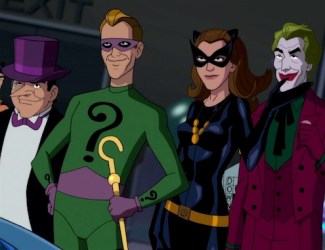 fundamentally, a comedy. Conversely, Ward still sounds pretty spry, and is gifted plenty of those “Holy [insert something here], Batman!” catchphrases that never cease to be fun. Unfortunately, Newmar also sounds her age, but doesn’t seem to quite have the liveliness that West retains. In the behind-the-scenes featurettes she seems a delightfully kooky old bird (at the recording she’s wearing cat ears, for one thing), so it’s hard to resent her, but the portrayal of Catwoman as slinky and sexy feels a little… odd. On the bright side, it means you don’t get the uncomfortableness of West flirting with a much younger actress, even in animated form.
 On the whole, Return of the Caped Crusaders is a resounding success. It’s a fun return to a beloved incarnation of arguably the most popular superhero; a version who’d been somewhat left out in the cold for a couple of decades by a world that grew up a bit too much, but is now being re-embraced and held in deserved esteem. And, even better, there’s already a follow-up in the works. Holy must-see sequel, Batman!
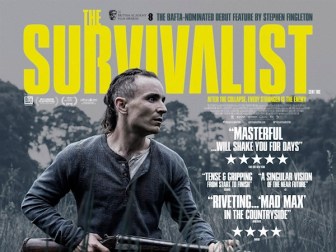 ’70s self-sufficiency sitcom
 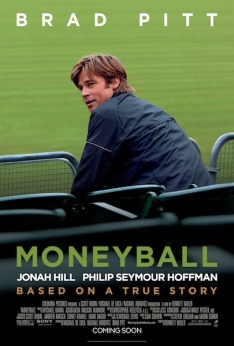 Based on a true story, Moneyball concerns the management of baseball team Oakland Athletics during the 2002 season. General manager Billy Beane (Brad Pitt) struggles to put a squad together due to a comparatively low budget for players, which has seen all his best ones drift off to richer contracts elsewhere. Fed up with the traditional scouting system, he recruits Peter Brand (Jonah Hill) to use statistical analysis to select a cheap team of quality players. The rest of his staff despair, including coach Art Howe (Philip Seymour Hoffman), who refuses to play the team as Beane and Brand suggest, which unsurprisingly leads to self-vindicating failure — until they force his hand…
 Problems extend beyond the sporting specifics. It’s quite some way into the movie before it gets stuck into the meat of the plan working, and before that it often throws in asides that meander around through Beane’s earlier playing career and current family life. The former has some bearing on the plot, though feels inadequately integrated — as one flashback it might work, but as a series of them it’s not enough to constitute a parallel story. The latter, his family life, provides character texture, but it’s slight, uninformative, and ultimately unnecessary. You could cut it and the film would lose nothing.
 and didn’t need any work, which probably explains why it’s not so Sorkin-y. Zaillian is not a bad writer — his credits include
 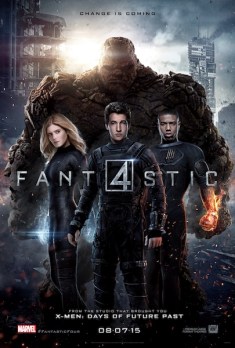 Sometimes you just have to see what all the fuss is about, even if that fuss is overwhelmingly negative. Obviously that’s the case with the most recent attempt to bring Marvel’s popular “first family” to the big screen. The behind-the-scenes stories are already the stuff of movieland legend, so I won’t repeat them here, but what of the film itself? Or the version that ended up available for public consumption, anyway.
 and serve as new pieces — like a shattered mug that’s been reassembled with lashings of superglue and using a handle from another vessel, which has inexplicably wound up a slightly different size and shape to how it used to be. Considering the studio got cold feet and insisted on massive reshoots, this is quite possibly exactly what happened.
 Fox like to keep their superhero movies Serious and Dark — and why not? Before this, it had worked pretty well for them across seven X-Men movies, while their colourful-and-cheery
 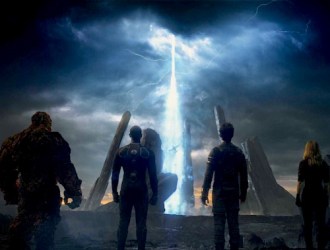 What could have been a comfortable 3-star movie, maybe even 4 if it followed through well enough, is dragged down to 2 by studio meddling. Will they never learn? Nonetheless, I actually enjoyed enough of Fantastic Four that, while it won’t be going on the long-list of contenders for the best movies I’ve seen this year, I won’t be putting it on the list for the worst either.


