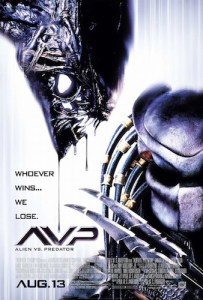
AVPR – Aliens vs Predator: Requiem (2007)

2009 #19
The Brothers Strause | 97 mins* | DVD | 15 / R

AVPRAliens vs Public Relations? Sadly not. And when a joke plot like that sounds more appealing than a rematch between two of sci-fi’s greatest monsters, you know you’re in trouble.

In my last Alien/Predator review, I made sure to attack director Paul W.S. Anderson a bit. As well as being renowned for making rubbish films, Anderson is also quite well known for being sequel-shy… and so it is with the AVP franchise, here handing the reins to the less-than-capable special effects-creating Brothers Strause. They supposedly set out with a fan-pleasing remit: primarily an R-rating, but they even make sure to use familiar fonts and sound effects right from the title card. Though said title card is blurry and unclear, obscuring the film’s very name — a sign of things to come, because their ability to please fans extends no further than some vague surface essentials.

To be fair, it can’t be easy to marshal all the familiar tropes of two different franchises into a single film that does something original with them. But that’s no excuse — things like facehuggers and skinned humans are present as if simply ticked off a list, having neither the surprise and mystery of the original appearance (obviously) nor anything new to make them worthwhile. They’re there because they ‘need’ to be, and while it makes some kind of sense to not play them as surprises, there’s nothing remotely new or different to hold our attention instead. Much of it is so poorly done that it’s not even set pieces strung together, it’s ideas for set pieces strung together.

If you thought AVP spent too much time focusing on the Predators rather than the humans (and I did), you’ll find AVPR even worse. It again tries to emulate the build-the-characters-first approach of the best Alien and Predator films, but intercuts their mundane lives with what the Predators and Aliens are up to. No, no, no. Part of the point of the character-based slow-build is to create tension — there’s none of that here. And by not withholding the monsters, the dull lives become even duller. One of the Alien series’ strengths was in making the extraordinary (space travel!) seem mundane (space truckers), but AVPR makes the ordinary seem mundane, and that’s no achievement at all; in fact, that’s a great big failure.

Even the action sequences are a mixed bag. There’s a nice line in harsh and surprising deaths — major characters are suddenly picked off, and with a cast so full of minor actors you can never be certain who’ll make it; and among them are a young boy, pregnant mums, and most of the town gets nuked by the army because the townsfolk trusted them. The final fight makes admirable use of suits and animatronics over CGI, but it’s so dark you can barely tell what’s happening. Similarly, the PredAlien may be great or it may be rubbish — you never see it well enough to tell. It’s not only the climax: over-dark cinematography and typically choppy editing obscure every action sequence. Why is it that in an age where special effects are so improved and there’s a preference for real actors over stunt doubles, action sequences have become harder to follow?

The overall feel is of a horror B-movie — a direct-to-DVD one. It may be a stock phrase for reviewers, but in this case it’s actually true: AVPR genuinely makes AVP look good. It’s a new low even for the Predator series, and it drags the Alien franchise from once lofty heights right down into the gutter with all the other too-long-running horror franchises. However permissable parts of AVPR might be (when judged on its own terms) (with a kindly eye), the inconceivably thorough degradation of a once-great franchise is its greatest crime.

Alien³ was a charming mess. This is just a mess. An irredeemable one.

1 out of 5

* AVPR on DVD is 7 minutes longer than in cinemas. This seems to be the only cut available (outside of Germany) and isn’t specially labelled, hence the lack of qualifying “Director’s Cut” or “Extended Cut” or “DVD Cut” in my title.

AVPR featured on my list of The Five Worst Films I Saw in 2009, which can be read in full here.

AVP: Alien vs. Predator – Extended Version (2004)

2009 #18
Paul W.S. Anderson | 98 mins | DVD | 15 / PG-13

This review contains minor spoilers.

AVPOnce upon a time — around the late ’90s, when he was only known for Event Horizon (and that video game thing no one wanted to mention) — director Paul W.S. Anderson was seriously and vocally attached to a film adaptation of Doctor Who. At the time it was such a good idea, a bright new hope for Who’s revival, with a Hollywood-level — yet, pleasingly, British — director at the helm. When it didn’t come together it was quite disappointing. In retrospect, I think we can breathe a collective sigh of relief.

Anderson’s films always come in for a critical drubbing and AvP was no exception. Sadly, it was well deserved. The main problems are a weak script, including an abundance of prologues in place of genuine character development, and poor performances, not helped by what sounds like a regular use of bad ADR. Characters make leaps of logic that would be reasonable if they’d seen the preceding six films, but make no sense whatsoever given what they know in context. The story begins moderately well, even pushing to the slow build in the franchises’ best entries (though without as much tension), until just 13 minutes in, when there’s a pointless scene on a Predator ship. Of course we know they’re coming — they’re in the title — but it’s a reveal too soon and ruins any mood Anderson’s managed to create. Constant updates on their progress exacerbate the problem.

There are actually some very inventive ideas scattered throughout — like the captured, frozen Alien Queen — but, in storytelling terms, their reveals are poorly handled, occuring too early and too far from the protagonists. However much time Anderson wants to spend getting his humans into position (a lot, just like the other six filmmakers before him), he clearly doesn’t trust the audience to go along with it without some hints of the creatures (unlike the best of the filmmakers before him). It’s not his only directorial misstep. He makes the fatal mistake of letting his monsters out into the light too much, though the choppy editing almost obscures them again. While effects can now withstand this level of scrutiny, the effect of the creatures can’t — they belong half-hidden in shadow, especially the Alien.

Elsewhere, every facehugger is treated to a graphic slow-mo shot. Once might’ve been cool, but it quickly becomes overkill — especially when the first instance features three, immediately rendering every solo example that follows unremarkable. And then there’s the ending nabbed from Predator 2. And the final beat that, though the groundwork is laid earlier in the film, still doesn’t really make sense (considering how fast chestbursters came out of the humans, or how long the Predator had been dead by the time it popped). When the director doesn’t know how to handle the titular monsters correctly, you know you’re in trouble.

That said, Anderson certainly delivers on the title’s Aliens-fighting-Predators promise. Most of the film’s limited imagination is lavished on these battles, but as with most monster-on-monster bouts we have no stake in either side, leaving them mostly heartless and only engaging on the level of “cool!” The human characters are left by the wayside at these moments, disappearing out of the way — and taking what little plot there is with them — for a few minutes. When they do appear there are some attempts at character development (yes, beyond those prologues) which are well-intentioned but painful. All things considered, Anderson has taken two horror franchises with an action-adventure tinge and turned them into an action-adventure film with a horror tinge.

This ‘extended version’ is a whopping 79 seconds longer than the theatrical cut, adding a whaling station prologue. This exacerbates the issue of revealing the monsters too early, but it does go some way to justifying the otherwise random glimpses of the Predator ship. Nonetheless, to be truly effective we shouldn’t know more about what the aliens are up to than the human characters do and it’s all a mistake. (An unrated version of the film is also available in some territories. It runs eight minutes longer, but the additions seem to just be the deleted scenes included on other releases.)

Flash forward however many years since that mooted Who movie, and Anderson’s career has mostly reverted to video game adaptations and trashing as many franchises as he can. AvP is surely the culmination of his efforts: here he manages to amalgamate a popular and acclaimed film franchise, its almost-as-beloved stablemate, and an equally popular and acclaimed comics & video game series, and then decimate all three in one 85-minute (without credits) swoop. Well done Mr Anderson, your efficiency knows no bounds.

2 out of 5

Tomorrow, AVPR – Aliens vs Predator: Requiem.

The X Files: I Want to Believe – Director’s Cut (2008)

2009 #44
Chris Carter | 104 mins | DVD | 15
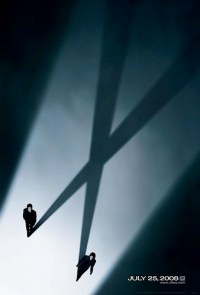
Six years after the once-phenomenal TV series meandered to an inconclusive conclusion, Mulder and Scully were back at the cinema, a decade on from their previous between-seasons big screen outing. The big threat this time was not aliens, however; nor even something more Earthly supernatural; but rather, where they would find an audience? There are now kids old enough to watch this in a BBFC-endorsed fashion who weren’t even born when the series started, and that’s not to mention the misguided attempt to pitch this as a Summer blockbuster.

And if there’s one thing I Want to Believe isn’t it’s a Summer blockbuster, which its snowbound setting arguably gives away to even the most casual observer, while its lack of action sequences and focus on spooky goings-on and character relationships — not to mention that none of these characters are requisitely young enough to head up a typical Summer Movie — should have been the clue to studio execs. And, unsurprisingly, the release strategy failed, leaving audiences either disappointed or not even turning up. As with so many perceived flops these days, it seems to me, I Want to Believe didn’t actually flop: off a $30m budget it made $68m worldwide. Though as only $21m came from the US, where the consideration of box office stats is often highly self-centred, it’s easy to see why many believe it did. Such perception, coupled with poor reviews and that problem of finding an audience, may mean there’s not a third movie, which seems a shame with 2012 on the horizon — quite nice timing for a (last-ever, I should think) instalment.

But let’s return to the issue of how this film was perceived, because I think that’s key to why it was so poorly received. The problem here is that it’s an X Files movie; not because there’s anything wrong with another film for that series, and not because it’s a bad version of The X Files, but because that title carries certain expectations — not only from fans but, with greater relevance to any widespread success, from the general public. Witness the IMDb thread entitled “Where the F were the aliens”, for example. Were this just an entirely standalone supernatural-tinged thriller — and consequently released in a sensible non-Summer slot — it probably would’ve gone down a bit better.

As it actually stands, I Want to Believe is not the kind of X Files most people were expecting — i.e. Something To Do With Aliens, and it’s no spoiler to say that there’s not a single one to be seen — forgetting that the series was never just about extraterrestrials. The idea that I Want to Believe was a bit rubbish and thoroughly disappointing is consequently as much (if not more) the fault of those viewers and reviewers who expected a different kind of film and didn’t get it. That said, it’s a shame that I Want to Believe isn’t wholly successful as the kind of film it’s trying to be either: on the surface, a standalone low-key supernatural thriller — though it fails to explore or explain its fantastical and scientific ideas as fully as one would like, particularly during its lacklustre (anti-)climax — but one that also tackles issues of moving on, obsession and belief, and how they can impact on a relationship — though with all the weight you’d expect in the belated sequel to a sci-fi TV spin-off.

Mainly, however, it’s about belief. The examples of this are too numerous to mention, but a clear one is the subplot involving Scully’s fight to treat a terminally ill boy. The thread bears little relation to the main supernatural plot, which was another point of confusion for many viewers, but if you consider the film as a commentary on and examination of the various forms and merits of belief it begins to slot in a lot better. Perhaps this is another case of a filmmaker attempting something beyond what audiences were expecting to invest in terms of intelligence, although if one accepts it’s there and a significant part of the film it probably begins to pale as a relatively light and underdone exercise. Still, it’s hard to deny that belief is the film’s central theme, which pleasantly turns the title from a generic catchphrase from the series, as it initially appeared, to a none-more-appropriate moniker.

Perhaps distracted by his thematic intents, writer-director Carter rushes some plot points, though he may also be limited by budget constraints and the need to make a distinctly R-flavoured movie hit PG-13. While the Director’s Cut adds three-and-a-half minutes of material, which Duchovny asserts is mainly gore that was cut to avoid an R certificate in cinemas (full details of which can be found here), there’s still nothing that looks as if it would’ve been out of place on conservative US network television, and obviously no effort has been made to give the main plot some breathing space.

The same goes for the guest cast, most of whom are thoroughly underused. Billy Connelly makes a good show of it, but Amanda Peet’s FBI agent has much unfulfilled potential. Yet at other points Carter lets things spool out comfortably — too comfortably, some might argue. One of these places is the relationship scenes between the two leads. The amount of attention lavished on this might lend credence to a theory that the film is as much about a pair of ostensibly retired paranormal investigators as it is this particular case, and through that again a consideration of obsession and belief.

The large amount of time spent on Mulder and Scully’s relationship fortunately doesn’t turn the film into an effort solely for the benefit of ‘shippers’. There’s definite space here for a portrait of two people in a relationship who have tried to move on from their old life but just can’t, and at times I Want to Believe does achieve such lofty aims. Little nuggets of information — such as the fact they’re even in a relationship, or that they once had a child together — drop in almost from nowhere in a way that undoubtedly sounds just like dialogue to a knowledgeable fan, but to a more casual viewer works as a slow uncovering of these two characters. Unfortunately such quality is fitful, especially as the movie goes on, and while the nine-seasons-and-one-movie of backstory initially just add depth if you know about them, it’s some time before the sudden and underwhelming climax that it feels they’re dictating events a little too much. What was shaping up to be a workably standalone depiction of two characters almost becomes just a status update on Mulder and Scully.

And here lies the rub: at times, the Second X Files Movie gets too caught up in being just that. There’s nothing wrong with that per se, but it could do with remembering it’s a Movie and not just another X File — especially if it wants to find any new (or even lapsed) viewers. When Assistant Director Skinner turns up it’s the final nail in the coffin for any shot at independence. As a fan, it’s impossible to begrudge a brief but heroic last-minute appearance from Mulder and Scully’s long-time ally, but as an objective viewer, he’s just some bloke who turns up with no introduction just in time to play a major role in the climax. It’s a misstep that, along with an accumulation of others, seriously damages the film.

But does an X Files movie need to be independent? Should nine seasons (and one movie) of backstory be ignored? Well, yes and no. There’s nothing wrong with making a “where are they now?” fan-pleasing reunion, but that would belong on TV with the bulk of the thing being commemorated. In the cinema, six years distant and billed as a standalone tale (note that it’s not even The X Files 2: I Want to Believe, never mind The X Files 204: I Want to Believe), it ought to stand on its own two feet and work entirely as a self-contained piece of drama. That it fails in this is perhaps the most disappointing aspect of all for me: it makes it infinitely harder to defend this as a supernatural thriller that deserves to be judged entirely on its own terms, rather than with some established knowledge of what The X Files ‘is’, when the makers are relying on those self-same established notions to tell their story.

Never mind finding an allusive audience, this is the film’s real battle: when Carter gets too caught up in making The Second X Files Movie, shifting what’s working well as both The X Files and A Movie into straight-up An X Files Movie territory. It’s this failure to be independent — not to the point of ignoring the series’ backstory, I should clarify, but to a point where this film can be wholly appreciated without ever seeing The X Files — that ultimately holds I Want to Believe back from becoming a great horror/thriller/drama movie in its own right. It’s frustrating because so often Carter comes tantalisingly close to fulfilling such ambitions, and if he had I’d have no qualms about defending this movie as an underrated (though, it is), misunderstood (though, it is) and independent supernatural-flavoured drama. Sadly, however, I think I just want to believe it is.

3 out of 5

The X Files: I Want to Believe premieres on Sky Movies Premiere tonight at 9:45pm, then at various times throughout the week. It’s probably the theatrical cut, but who can say?

Commentary! The Musical (2008)

2009 26a
Jed Whedon & Joss Whedon | 42 mins | DVD

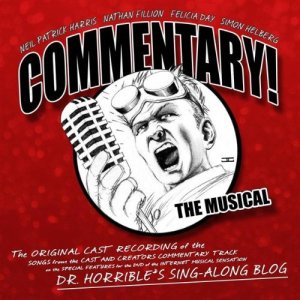
Commentary! The MusicalCommentary! The Musical falls somewhere between DVD extra, TV episode and short film. Whatever it should be classed as, it’s utter genius.

You’ve surely heard of Dr. Horrible’s Sing-Along Blog, the project Joss Whedon created during the infamous US Writers’ Strike. (That in itself you could debate the status of. Three-part miniseries? Short film? Feature film? (At 42 minutes it’s over the Academy’s boundary.) And endlessly on.) Well, on the Dr. Horrible DVD can be found this — an alternate audio track, on which the cast and crew discuss the making of the feature… except it’s all scripted and the majority is sung. Not your traditional audio commentary then.

As an audio commentary, it does little to illuminate the production of Dr Horrible — though, surprisingly, it does do some — but instead focuses its energy on spoofing commentary tracks, DVD extras, and the American film and TV industry in general. Specific targets include the Writers’ Strike and its lack of success, rivalry between lead actors, the importance of ensemble cast members, Asians in US TV and film, the dissection of art by DVD extras, and many more. It’s almost all incredibly funny — inevitably there are a few duff gags and dull songs, although they are uncommonly rare — and it moves at a rate of knots, meaning it rewards multiple listens to pick up every gag. Having already re-listened to a couple of tracks, I can attest to noticing funny lines that I was too busy laughing through before. In a spot of technical impressiveness, the commentary is often surprisingly scene-specific, sometimes even shot-specific. When you consider the effort that must’ve been involved to script and time both songs and spoken dialogue to make this happen, it’s even more impressive.

It’s this careful scripting and the sure-handed attentiveness to theme that marks Commentary! The Musical out as a fictional work in its own right, rather than ‘merely’ a DVD extra, in much the same way that Mystery Science Theater 3000 or the short-lived (and easily forgotten) Rob Brydon series Director’s Commentary are original works. With its well-targeted thematically-appropriate comedy and plentiful gags, it’s pure delight for fans of DVDs, or anyone else with a mind open to the concept.

5 out of 5

Alien: The Director’s Cut (1979/2003)

2009 #13a
Ridley Scott | 111 mins | DVD | 15 / R

Famously, Ridley Scott’s 2003 Director’s Cut re-release of Alien came in slightly shorter than the original version, an unusual state of affairs. This disparity isn’t just because Scott lopped a bit out (though, he did) — he also removed scenes and put others back, in the process creating a cut of the film as edited by an older version of the same filmmaker. Or, alternatively, creating a different version to help shift some extra tickets — it depends which quotes you want to believe.

Having only seen the original version once, and several years ago, I can’t offer any meaningful analysis of how Scott’s myriad nips and tucks impact on pace. It certainly doesn’t feel faster on the whole, still exhibiting the same slow-build tension that’s as reminiscent of 2001 as any other horror films. Coupling this with a very realist style of dialogue and action — minimal, overlapping, mundane, light on exposition — makes the film feel positively indie-like today. There’s no way a major effects-filled blockbuster would progress so slowly now, though recently Sunshine came close. In these respects, Alien: The Director’s Cut isn’t all that different from the Alien so many know and love — no surprises there — and all but the most die hard of die hard fans are unlikely to notice such minor changes.

However, Scott also reinserted four deleted scenes, which even I managed to spot. Only one makes a notable difference: during the climax, Ripley discovers Dallas and Brett in alien cocoons and burns them. The Aliens’ cocooning is intrinsic to the plot of later films in the franchise, in which respect it works well to see it first crop up here; taking the film on its own merits though, such an addition in the middle of the climax serves to slow it down and feel like an unnecessary aside, tidying up a loose end that most audience members wouldn’t even think was a loose end (I know I didn’t). Of course, this just goes to show that it was a sensible cut to make back in ’79.

These small moments aside, Alien feels unchanged. It’s been said many times before but, first and foremost, it’s a horror movie — it just happens to be one set in space with plenty of sci-fi trappings. Move it to an oil tanker in the middle of the ocean and a great deal of it would function just as well. Whatever effect Scott’s trims may have had, they haven’t made it any less effective in this regard, though second time round all the jump-scares failed on me, but that’s the nature of such a shock rather than a flaw of Alien in particular. Trying to look at it objectively, we all know that Ripley’s the only survivor and the franchise heroine now, but the film gives you no/few reason/s to presume she’s any more significant than any other character: she’s third in command, Weaver’s only second in the credits, and she doesn’t even go out on the initial mission. It’s an effective step in keeping the audience guessing who might survive.

Some of the effects look rather dated now, especially the ship’s computers, but that’s not really problematic. The design work on the ship is still exemplary, and of course often copied. It’s so grimy, industrial and (for want of a better word) ‘real’ that one wouldn’t even need to reshoot much to claim it was set on that oil tanker. The Alien is still the main consideration in design and effects terms, and it’s still barely seen. This was always a very sensible move, hiding any shortcomings in the design (most of the time at least) and also helping create menace — because it’s never seen in full, and only brief glimpses are snatched in the shadows, we always believe it could be anywhere. This all builds to the great escape pod ending, which cleverly uses a calm-after-the-storm feeling and the distraction of Ripley’s semi-strip to lull the viewer into a state of total unawareness. Even on re-watching when you know it’s coming, this sequence contains arguably the film’s most effective jump.

Alien is 30 this year and the Director’s Cut is now six years old, meaning most seriously interested viewers will have seen it by now. How different this version is from the original cut should be indicated by the fact I didn’t feel justified in giving this a new number, even with my poor memory. I can only imagine that to fans intimately familiar with the film the number of trims (there are rather a lot apparently) and new scenes (just four) make a huge difference, but for a more casual viewer they don’t significantly change how it feels as a whole. That said, even with my vague memory, I’d call the original as the superior cut.

5 out of 5

The Blues Brothers (1980)

2008 #99
John Landis | 142 mins | DVD | 15 / R

The Blues BrothersCult comedy musical, with a more-than-healthy dose of the surreal, about two brothers on a mission from God, here watched in the extended DVD version (full details at IMDb). Maybe this is why it takes a while to get going — the first hour or so could do with a kick up the proverbial — and has a tendency to sprawl like an unruly first draft.

On the other hand, its insistence at being random, crazy, and incessantly silly throughout is beautifully anarchic. There’s an array of fabulous cameos — Ray Charles! Aretha Franklin! and Carrie Fisher, feeding the anarchy with her ludicrous attempts to kill one of the titular pair. While there were fewer songs than I’d expected, they’re all classics rewarded with infectiously fun performances. Then there’s the climactic car chase, which surely challenges many more serious examples for pure excitement value.

And any film which sees Neo-Nazis jump into a river to avoid being run over has to be good.

4 out of 5

The Blues Brothers is on ITV4 tonight, Friday 26th September 2014, at 11:35pm.

(Originally posted on 24th January 2009.)

24: Redemption (2008)

Extended Edition

2008 #86
Jon Cassar | 98 mins | DVD | 15

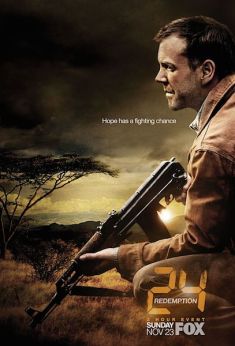
24: RedemptionRemember the ubiquitous Writer’s Strike in the US? It must be about a year ago now, but its effects are still being felt — Dr Horrible’s Sing-Along Blog, Joss Whedon’s rule-breaing internet musical, made during the strike, is about to hit region-free DVD in the US (albeit on DVD-R and only from Amazon.com); plenty of second-year shows are getting canned, probably because their truncated first years didn’t allow time to get decent audiences (that’s one excuse anyway); and 24’s seventh season, kicking off in January 2009, is a year late. Which allowed them to make this in the meantime.

The setup is simple: Jack Bauer’s trekking round the world, currently holed up with an ex-army buddy (played by the ever-excellent Robert Carlyle) in the African nation of Sangal where said buddy has set up a school. Yes, Jack Bauer is living a life of peace. But then Bad Men turn up wanting the kids for child soldiers, and within the hour they’re attempting a military coup — this is still 24 remember, the action all takes place “in real time”. What’s Jack to do? Why, return to his old One Man Army self, of course — if he can’t stop the coup, he sure as hell can save those kids! Meanwhile, it’s inauguration day for America’s new female (black? 24’s been there and done that — twice) President…

For a Fox action series, off screens for almost 18 months and undoubtedly designed as a starting point for new viewers, Redemption (not that that title’s seen on screen) has a surprisingly slow build up. That’s no bad thing — this is a story after all, not a 90-minute shoot-out — but there are times when one feels it should get a wriggle on. This is likely where most, if not all, of this extended version’s new material was added. There’s almost 15 minutes added to the running time here, though some is surely due to a 5-minute credit crawl that must be much longer than the TV version’s. Having not seen the broadcast edit I can’t comment on what new scenes, shots or lines are added, but there’s no greater violence or thematic density than 24 usually produces so I imagine what was cut was cut for time alone.

That said, Redemption certainly tackles its fair share of issues — primarily, the use of child soldiers, and the US involvement (or lack of) in African genocides. It’s certainly admirable and worthwhile for such a popular series to bring these important issues to the attention of a mass audience who might otherwise ignore, or at least not be aware, of them, but they’re still included in a “mainstream American action series” way — that’s to say, they’re ultimately a reason for a shoot-out. There’s also some subtle political commentary, such as the UN Peacekeeper stationed at the school being a coward who runs away at the first sign of violence… and then betrays them to boot! Of course, just because it’s unsubtle doesn’t make it wrong, but Blood Diamond this is not. Whatever the politics, the action sequences — and, once things get going, there are a few — are all carried out with 24’s usual panache.

Is this a suitable jumping-on point for newcomers? Yes, quite simply. It’s several years since the last season and Jack’s in a very new part of this life. Some old faces crop up and there are some backstory references, but these are more nods for returning fans than anything important. Everything you need to know for this story is contained herein, and fortunately that doesn’t involve great slabs of exposition about previous seasons. On the other hand, it fails as a standalone movie. While the main plot — Jack defends school — is kicked off and wrapped up in the space between the title and the credits, there are several US-based plot threads that aren’t even close to being resolved. These are clearly designed to flow on into season seven — presumably they’re either elements bumped from the early episodes up into the movie, or a fleshing out of information that would’ve just been exposition before.

It’s hard not to conclude that Redemption would’ve been better without the US scenes. They add nothing to the main action in Africa and they’re all quite flatly directed, forcibly reminding you that this is just a TV movie by being worse than most TV these days. Their one true benefit is an ending that juxtaposes the new President’s inauguration speech with the civil war beginning in Sangal, which, consciously or not, underlines the hypocrisy at the heart of America.

As a standard season-opening episode of 24, coming on the back of the weakest-yet sixth season, it may well have earned itself an extra star. Judged as a standalone film, however, I fear it has to be just

3 out of 5

Thinking “but that’s not a film”? Then please have a read of this.

Hitman: Unrated (2007)

2008 #70
Xavier Gens | 94 mins | download | 15

HitmanVideo games have been fertile ground for filmmakers over the past couple of decades — or, rather, for film financiers, because while they almost invariably garner poor reviews they do insist on making them. What marks Hitman out from the crowd? Well, nothing.

In fact, Hitman seems to be doing its best to blend in and go unnoticed — much like a good hired assassin would do, you’d imagine. Except in this film, all the assassins are bald and have barcodes tattooed on the back of their head — not at all conspicuous. The story begins at the end, as is the fashion for most films these days, and as usual there’s absolutely no reason why it should. After that, you’ve got a series of ideas and scenes recycled from the likes of The Bourne Identity — and by “from the likes of” I really mean “from” — that don’t add up to anything particularly new. The majority of the plot is easily guessed within the first half-hour; those guesses that don’t pan out aren’t because the film has anything surprising to do, but instead because it seemingly can’t be bothered to resolve certain plot threads. Equally, the plentiful leaps in logic appear to be the result of lazy filmmaking, not caring to fill in the gaps between two cliched plot beats.

Characters suffer from poor performances — disappointing in the case of lead Timothy Olyphant, who was pretty good in Deadwood — but are also let down by a lack of technical ability, featuring a copious amount of clearly dubbed dialogue. They shouldn’t’ve bothered, because it’s all atrocious. Behind the dialogue, the rest of the writing isn’t any better. Agent 47’s characterisation is all over the place. He’s clearly supposed to be calm and robotic, and at times he is, with an appropriate lack of understanding about life and women; but then there are moments where he’s shouty, or humourous, or eye-rollingly knowing. It’s like the screenwriter’s copied the scene from another film (usually The Bourne Identity) and forgotten to put his characters into it. As for the rest of the cast, Dougray Scott and current Bond girl Olga Kurylenko are also let down by poor material. Also worthy of note is a Russian General toward the end, who is a spectacularly bad actor.

Believe it or not, Hitman does have the odd moment that’s almost worthwhile. There’s some wit with the sex (or, rather, “lack of sex”) scenes, and I quite liked the (derivative, it must be said) score. And then there’s the action, of course, which is naturally the main point of a film like Hitman. It’s fairly extreme, considering, and appropriately bloody — exploding heads from snipers, many spurting wounds from SMGs, and so on. This is the ‘benefit’ of the unrated cut, which is barely any longer than the theatrical one but does have plenty of extra blood CG’d in. For a full list of differences — as well as that blood, there’s a few extra shots in fights and of ‘controversial things’ like drug-taking — have a look at this page (translated from German). Most of the action scenes are passable but with nothing to mark them out, the one exception being a four-way blade fight in a disused train carriage between Agent 47 and three other bald assassins. It’s a good idea fairly well executed, but suffers from a nagging question: where did the other three come from and, more importantly, why were they there?

I’ve made it this far without mentioning Leon, the gold standard against which all other assassin movies will inevitably be compared. It feels almost cruel to mention it though, because Hitman’s aims are nothing so lofty. Style and content-wise, films such as Wanted and Shoot ‘Em Up are much closer relations, as well as the film it so often imitates, The Bourne Identity. Hitman is not as original nor as fun as any of these, which makes it all rather pointless.

2 out of 5

I Am Legend: Alternate Theatrical Version (2007/2008)

2008 #47a
Francis Lawrence | 104 mins | Blu-ray | 15

This review contains spoilers.

I Am Legend: Alternate Theatrical VersionI only watched the theatrical version of I Am Legend earlier this year (it’s #35), but, for reasons I won’t elaborate on for once, I’ve found myself watching this alternate version already.

Most of the comments in my original review still apply, as this cut only has minimal differences: there are a couple of very short new scenes in the third act, which were presumably excised because they primarily feed into the different ending, the main attraction of this version. Personally, I prefer it. The whole butterfly thing is too God-messagey, recalling the weakest elements of Signs, but if one can put that aside then the new content fits in much better with several threads that develop in the rest of the film (in both versions — in the original cut they’re just ignored). It feels like this was the intended conclusion but, for whatever reason, someone decided it needed changing. Perhaps it wasn’t explosive enough; or, indeed, conclusive enough, as it dispenses with the safe-haven epilogue and its pathetic attempt at justifying the title — another pleasurable loss as far as I’m concerned.

One other element I’ve reconsidered thanks to this repeat viewing are the CGI humans. They’re good enough in and of themselves, and would make more than passable foes in another action film, but here they ruin the ambiance that’s so carefully built up before their first appearance. Yes, the CGI lions are also clearly fake, but with limited methods to create such scenes they seem more acceptable. The arrival of the Dark Seekers, on the other hand, barges the film from thoughtful sci-fi drama into horror action blockbuster stylistically, in a way that using real actors simply wouldn’t. The not-real Dark Seekers may have superhuman jumping abilities, but the film doesn’t need those either, and could easily have crafted a similarly action-packed climax with real performers.

I Am Legend is still as middle-of-the-road as before, with very little to choose between the two versions. However, thanks to a less irritating final few minutes, this version just has the edge — if you ever intend to watch I Am Legend, be it a repeat viewing or your first, I recommend you plump for the alternate cut.

3 out of 5

The theatrical version of I Am Legend is on Watch tonight, Tuesday 14th October 2014, at 10pm.

Léon: Version Intégrale (1994/1996)

2008 #42
Luc Besson | 127 mins | DVD | 15*

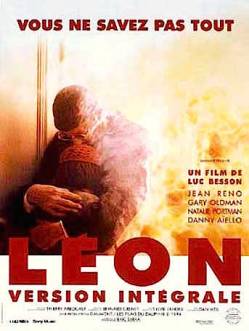
Léon: Version IntégraleI first saw Léon about 10 years ago, back when video was still an acceptable way of watching things. A friend leant it to me, insisting it was a film I absolutely had to see, and he wasn’t wrong. It’s remained one of my favourite films ever since, though typically I haven’t watched it more than once or twice in the intervening decade. (It also fostered a love for Sting’s closing song, Shape of My Heart, which is criminally missing from a Greatest Hits CD my dad owned (even though his dire song from Demolition Man is on there), and in moderately recent years was indifferently reused by both Sugababes and Craig David.)

I became aware of this extended cut a few years ago, a little while before it was released on R1 DVD. Having held out for a UK R2 release for about half a decade now, I gave in and bought the (apparently superior, and also in a Steelbook, which always has a way of persuading me) German R2. It’s labelled as a “Director’s Cut” but, as Besson states in the relatively lengthy booklet (translated with the aid of [the now defunct] Babel Fish), “the second version is neither better nor worse than the original” — it’s not a preferred cut, just a different, extended one.

But personally, I prefer this version. Not because there’s anything wrong with the original — far from it — but because this one has more. Sometimes you can have too much of a good thing of course, but I don’t think that’s happened here. The additions build on the characters and relationships, primarily between the two leads, and also add extra doses of humour and action. Besson wasn’t necessarily wrong to remove these things from his original cut — the extent of Léon and Mathilda’s relationship is especially controversial for some, and the extended scenes of Léon training Mathilda as a Cleaner are arguably extraneous — but they all add to the experience. Wisely, he doesn’t seem to have touched what was already there. Everything that was great about the original — from the astounding performances of Jean Reno, Natalie Portman and Gary Oldman, to the thrilling action sequences, and plenty else in between — remains intact. They’ve not been buggered about with, just expanded around.

Ultimately, the reason I prefer this version is quite simple: I love the film and the characters, I could happily take more of them, and I very much enjoyed all of the added material. I can understand objections to the insinuations about Léon and Mathilda’s relationship, but I didn’t find it any creepier here than it was before (besides which, any paedophilic notions come from her and he quashes them). The quality of the performances in the new scenes, plus other solid additions, make all the new bits worthwhile.

The version intégrale isn’t too much of a good thing, then, just more of a great thing. To my mind, Léon (in either cut) is unquestionably essential.

5 out of 5

* The original cut of Léon was last classified in 1996 and given an 18. The longer version was classified in 2009 and received a 15. That must be a pretty rare case of a longer version (technically) having a lower certificate. ^