Spy: Extended Cut (2015)

2016 #106
Paul Feig | 125 mins | streaming (HD) | 2.35:1 | USA / English | 15
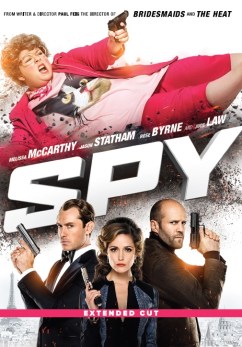
The cinema was blessed — or, depending on your point of view, blighted — by an abundance of espionage-related movies last year (see: the intro to my initial thoughts on Spectre for more on that), and even writer-director/star team Paul Feig and Melissa McCarthy got in on the act with this comedy.

McCarthy is Susan Cooper, a CIA agent who provides desk-bound support for Bond-esque super-spy Bradley Fine (Jude Law). When Fine is killed while investigating the villainous Rayna Boyanov (Rose Byrne), Cooper insists she go into the field to finish what he started. This doesn’t impress experienced agent Rick Ford (Jason Statham), who goes rogue to deal with Boyanov himself.

Technically speaking, Spy is a spy comedy rather than a spy spoof — a perhaps subtle distinction, but one that does inform the kind of comedy you’re getting; i.e. rather than a send-up that relies on you knowing the material being parodied to get the jokes, this is almost a workplace comedy… just one where the workplace is international espionage. Put another way, less Naked Gun or Austin Powers, more Kingsman with the comedy dialled up higher in the mix.

This is perhaps why it’s sporadically amusing rather than regularly hilarious; on the bright side, it only occasionally slides too far into dull toilet/gross-out ‘humour’. Similarly, it means that there are a handful of fun and/or exciting action beats scattered throughout the film, which you might not expect. They’re typically brief, but — even more surprisingly — there’s a fight between McCarthy and a henchwoman in a kitchen which is a genuinely good action sequence. It’s also surprisingly gruesome. Yes, it’s R-rated, but in the world of comedy that usually just means an overabundance of the F-word. Here we have at least one clear headshot, a dissolving throat, a knife through a hand, and more photos of a henchman’s penis than you ever needed to see. (That last one’s only describable as “gruesome” depending on your personal predilections, of course.)

Apparently Feig is a fan of James Bond and developed, wrote, produced, and directed Spy because he knew no one would ever let him do a real Bond movie. I guess that explains why some of it does work passably well as a genuine action/thriller. Composer Theodore Shapiro does an equally good job of evoking Bond’s musical stylings throughout his score. In my experience most comedies don’t show such consistent commitment in their music. Talking of music: as I mentioned in my June monthly update, there’s a random cameo by Verka Serdyuchka, Ukraine’s Eurovision entry from 2007. That gets the film some bonus points in my book.

The quality of the cast’s performances are variable in ways I didn’t expect. Statham almost steals the film, playing essentially himself — but exaggerated, I’m sure. McCarthy is a solid lead, at her best when sparking off Rose Byrne, who makes anything more watchable. Miranda Hart has a large supporting role as McCarthy’s CIA colleague, but I’m not sure that her strengths are wholly played to. I guess if you like her you’ll like her here (and if you don’t…) Peter Serafinowicz’s lecherous Italian is disappointingly overplayed, however, and I’m not sure why you’d cast ever-so-British Jude Law as a James Bond type and then give him an American accent.
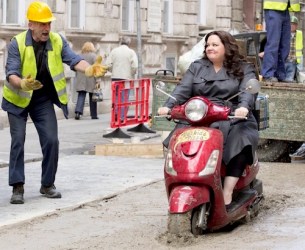
The extended (aka unrated) cut contains almost 10 minutes of extra material, detailed here. Reading that list really demonstrates how some bits were tightened up for the theatrical release. I’d even wager that some parts are the result of improvising to find one good line, but in the extended cut they’ve strung half a dozen of the options together. I don’t think any casual viewer would miss much by sticking to the theatrical cut. That said, despite it running to two hours, I didn’t find it to be too long. It still wouldn’t hurt if it was tighter in places, but I didn’t get that “oh dear God why is this longer than 90 minutes?!” feeling you can get from 120-minute comedies.

Amusing rather than hilarious, but with a pleasing commitment to its genre, Spy isn’t going to tap into the zeitgeist in the way Austin Powers did almost 20 years ago(!), but it does provide a largely entertaining couple of hours.

3 out of 5

Feig and McCartney’s latest collaboration, the Ghostbusters reboot, is in UK cinemas from today, and launches around the world over the coming weeks.

Grand Piano (2013)

2016 #34
Eugenio Mira | 87 mins | streaming (HD) | 2.35:1 | Spain & USA / English | 15 / R

Written by Damien “Whiplash” Chazelle, Grand Piano is “Phone Booth with a piano”. Elijah Wood plays a nerve-ridden musical wunderkind about to make his comeback when he receives a phone call ordering him to play an impossible piece of music perfectly or else his loved ones get it. Is he up to the challenge? Can he uncover and defeat his telephonic terroriser whilst also giving a piano performance to a packed house?

Running under 80 minutes before the credits roll, Grand Piano is a brisk thriller that barely has time to be anything less than engrossing. It relies on keeping you entertained with its series of quick reveals, twists, and sequences of tension, rather than meaningful themes or considered characters (though look out for some perhaps-familiar faces in supporting roles nonetheless). Director Eugenio Mira keeps things relatively classy, rather than descending into meaningless shaky-cam antics — this is a movie set at a classical music recital, after all.

The storyline is utterly preposterous, of course, though it amuses me that some people criticise it for that. I mean, it’s a genre picture — no genre picture is not preposterous. The veneer of truth they present varies, but rare is the genre movie that crafts a genuinely plausible version of real life. Die Hard would never, ever happen, but it’s still a great action movie. I’m not claiming Grand Piano is of Die Hard quality, but criticising its plot for being preposterous? It’s not so preposterous that it breaks the ‘rules’ of the thriller genre. Either you’re on board with that, or maybe you shouldn’t watch this kind of movie.
Really, there’s not much more to Grand Piano than its well-made creation of tension and thrills, and so I don’t find myself with much more to say about it. I enjoyed it very much, though.

4 out of 5

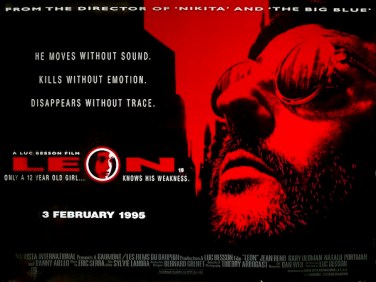
Léon (1994)

100 Films’ 100 Favourites #51

He moves without sound.
Kills without emotion.
Disappears without trace.

Also Known As: The Professional (USA) *shudder*

Country: France
Language: English
Runtime: 110 minutes | 132 minutes (version intégrale)
BBFC: 18 | 15 (version intégrale)
MPAA: R

Original Release: 14th September 1994 (France)
US Release: 18th November 1994
UK Release: 3rd February 1995
First Seen: VHS, c.1999

Stars
Jean Reno (Les visiteurs, Ronin)
Natalie Portman (Star Wars – Episode I: The Phantom Menace, Black Swan)
Gary Oldman (Bram Stoker’s Dracula, Tinker Tailor Soldier Spy)

Director
Luc Besson (Nikita, The Fifth Element)

Screenwriter
Luc Besson (The Transporter, Taken)

The Story
When her family are murdered by a corrupt police officer, 12-year-old Mathilda runs to hide with her quiet, reclusive neighbour, Léon. Turns out he’s a hitman, and she begins to train with him so she can exact her revenge…

Our Heroes
As the title character, Jean Reno’s child-like hired killer is likeable, sympathetic, and quite sweet — traits one wouldn’t typically associate with his profession. As his young ward, Mathilda, Natalie Portman is compelling, playing a hardened, emotionally bruised kid in desperate need of support and guidance, more so than she needs vengeance.

Our Villain
Gary Oldman brings pure entertainment value to the film in one of his most iconic performances: Stansfield, the crazy copper with a penchant for both drugs and quotable dialogue.

Best Supporting Character
There’s not much room for anyone else to stand out around the three lead performances, but Danny Aiello comes closest as Léon’s kindly mafioso handler, Tony.

Memorable Quote
Stansfield: “Bring me everyone.”
Benny: “What do you mean ‘everyone’?”
Stansfield: “EV-RY-ONE.

Memorable Scene
As Mathilda returns home from buying groceries, she sees the door to her family’s apartment open and a man standing suspiciously outside. As she nears, she catches a glimpse inside — her father sprawled on the floor in a pool of blood. She keeps walking, pretending not to have seen, and approaches Léon’s door — where he’s been watching through his peephole. Trying to hold back tears, she rings his bell. Behind the door, Léon fidgets, not answering — he doesn’t want to get involved. She pleads under her breath. She rings again. The man at her door watches, suspicious. She rings again, desperate. Léon is torn… OK, you know all along what he’s going to do, but Besson’s direction and the performances from Portman and Reno ring every second of tension out of the sequence.

Letting the Side Down
Some people find the relationship between Léon and Mathilda problematic, and that gets in the way of their enjoyment of the movie. I’ve never seen it that way. Mathilda tries to inappropriately push herself on Léon, but he never takes her up on it. He’s a child himself in many ways and that side of life doesn’t seem to engage him at all, never mind in an unacceptable fashion.

Making of
The film’s second shot (still in the credits) is a tracking shot that travels along a New York road without stopping. It was only possible after studying the pattern of the traffic lights along the route to make sure the camera truck didn’t encounter any red lights.

Previously on…
The film was inspired by Jean Reno’s role in Besson’s previous film, Nikita (aka La Femme Nikita), in which he turns up in the third act as “Victor the Cleaner”, dressed in an outfit similar to Léon’s, to deal with Nikita’s botched mission.

Next time…
Besson wrote a script for a sequel focusing on a grown-up Mathilda. While they waited for Portman to age into the role, Besson left Gaumont to start his own studio, EuropaCorp. Unhappy at his departure, Gaumont have apparently refused to let him have the necessary rights. According to Olivier Megaton (the director of Besson projects like Transporter 3 and both Taken sequels) it will now likely never happen. Reportedly the script was recycled into Colombiana, which I am now 100% more interested in seeing.

Awards
7 César nominations (Film, Actor (Jean Reno), Director, Music, Cinematography, Editing, Sound)

What the Critics Said
“For Luc Besson, [Léon] is a poetic brute, a man without humanity who has lived so close to darkness for so long that he has lost all connection to the light. The universe around him, too, is a symbolic construction, an interweaving of opera, film noir and existentialism, where the larger-than-life forces of innocence and corruption explode in blood and violence. […] Reno plays it minimally; Oldman splatters his performance all over the screen. Oldman is the least inhibited actor of his generation, and as this deranged detective, he keeps absolutely nothing in reserve. When the camera gets close to him, you feel as if you want to back away. […] Stansfield’s signature is his passion for music. He thinks of everything, even his blood orgies, in terms of rhythm and color. You want Beethoven? he asks, picking up a shotgun. I’ll play you some Beethoven. Fortunately, Besson structures his film in much the same way. Not only does music play an important role in giving texture to his material, his scenes — especially the violent ones — are presented as arias, chamber pieces, symphonies.” — Hal Hinson, The Washington Post

Worst Spurious Connection in a Supposedly Professional Review
“A favorite of IMDb fanboys (who have absurdly — but predictably — ranked it the 27th best movie of all time!) and reportedly of pedophiles as well” — Matt Brunson, Creative Loafing (You’re right about one thing, though, Matt: 27th is ridiculous — Léon is top ten material.)

Counterpoint to Mr Brunson
“[It] would go on to become one of his most highly-regarded films among audiences. Sadly it was not thought of nearly as well by critics, merely receiving somewhat average reviews, giving us another sad oversight [and] proving that there are those times where the general audience can have more perception into a film than those that analyze them for a living.” — Jeff Beck, examiner.com

Score: 71%

What the Public Say
“In spite of ranking on the top ten lists of many, many movie fans since its release, my love for [Léon] was not immediate. As a matter of fact I pretty much disliked it on the first and second outings because I couldn’t quite grasp what Luc Besson was going for with this film. It’s not an action movie, it’s more of a love story set to the tone of bloodshed and corruption, a subtle poetic masterpiece that relies on characterization and artistic strokes of pure raw emotion than some shoot em up gangster flick. […] I’ve come to truly appreciate what a pure piece of brilliant filmmaking this is and the loose allusions this has toward another Besson masterpiece La Femme Nikita. Everything about this film from the performances right down to the set pieces are like pieces of moving art, and Besson is the artist with the brush. […] Besson’s incomparable film is almost impossible to beat and there’s yet to be a director who could match his magnum opus. Even after almost twenty years, [Léon] stands as the superlative masterpiece of action filmmaking and has yet to be matched or toppled by any director in the business.” — Felix Vasquez, Cinema Crazed

Elsewhere on 100 Films
I reviewed the extended “version intégrale” cut of the film in 2008, asserting that “I prefer this version. Not because there’s anything wrong with the original — far from it — but because this one has more. […] I love the film and the characters, I could happily take more of them, and I very much enjoyed all of the added material. […] Léon (in either cut) is unquestionably essential.”

Verdict

Léon delivers the kind of tense sequences of action you’d imagine of a dramatic action-thriller (i.e. not highly-choreographed punch-ups every five minutes, but the action scenes that do appear are suspenseful), but the film’s real joy lies in its characters, who are expertly performed and wonderful to spend time with (in a movie context — in real life, I wouldn’t be so sure…) As a whole, Besson brews the grittily realistic with something far more fantastical to create a film that is, perhaps, a little too unique for some to get a handle on (I’m thinking of the handful of low-rated critics reviews on Rotten Tomatoes, which fly in the face of the consensus opinion). For the majority, however, Léon is a gripping, characterful, rewatchable masterpiece.

#52 just can’t wait… to be king.

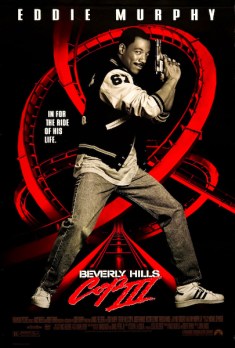
Beverly Hills Cop III (1994)

2016 #105
John Landis | 100 mins | streaming (HD) | 16:9 | USA / English | 15 / R

Beverly Hills Cop III always seemed to be on TV when I was younger — on BBC1, quite late, but I guess not that late because I always seemed to stumble across it during the theme park climax. In reality it can probably have only been on a couple of times, but that’s how it seemed. And because it caught my attention, I somehow knew that one day I’d end up watching the entire movie, just to see. To see what, I’m not sure; but to see. Of course, that necessitated watching the first and second films first (because I’m me). I very much enjoyed them both. Unfortunately, the third is nothing like as good.
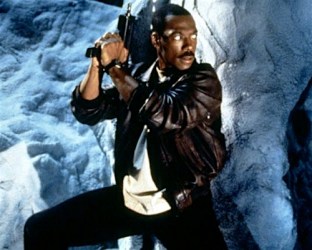
This time, Detroit cop Axel Foley (Eddie Murphy) tracks a gang of crooks to Disneyland Wonder World, an L.A. theme park. There, he ropes in his old chum in the Beverly Hills PD, Billy Rosewood (Judge Reinhold), and blatant stand-in for an actor who refused to come back his colleague Jon Flint (Héctor Elizondo), to investigate Wonder World’s head of security (Timothy Carhart), who Axel recognises as the head of the gang.

By all accounts Beverly Hills Cop III was a troubled production. Murphy was in a phase where he could be a pain to work with, and, according to director John Landis, was envious of the careers of Denzel Washington and Wesley Snipes, who were starring in straight action movies. Consequently, Murphy was keen to downplay the film’s comedy — much to its detriment, of course, as it’s Murphy’s comedy that makes this series work. Landis knew that: in the same interview, he says the screenplay for the first film was “one of the worst scripts I ever read […] It was a piece of shit, that script, but the movie’s very funny because Eddie Murphy and [the film’s director] Martin Brest made it funny.” The script for the threequel also wasn’t any good (according to some versions of events, that’s why original co-stars John Ashton and Ronny Cox didn’t return), but Landis tried to put Murphy in funny situations and see what improvisation threw up. Murphy, keen to be taken seriously, worked around that.
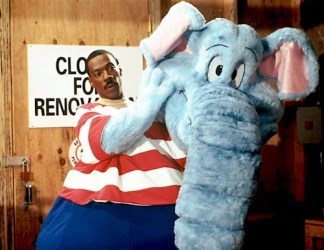
I don’t think all blame can be laid on Murphy, though. For an example, look at the sequence aboard a broken-down ride about halfway through the movie — it might just be one of the most tension-free thrill sequences ever filmed. Axel has to climb across the ride, storeys up in the air, to rescue two kids who are dangling from another compartment. It seems to take him forever to get there — far, far longer than those two young kids could plausibly hang on for — while interminable early-’90s electronic music throbs in the background. The park attendants stand around doing nothing. A whole crowd of people stare up at him with bored expressions. I’m not sure if that was deliberate, because I can’t really see what the point of a massive crowd of blank-faced onlookers serves, but I also can’t see how anyone involved in the film could’ve read their expressions as being in any way interested by or invested in the action they’re supposedly watching. Well, at least it reflects how the audience must’ve felt.

In my review of the original Beverly Hills Cop, I wrote about how I only really watched it so I could then see the sequels, because they were directed by Tony Scott and John Landis. Ironically, the first one turned out to be good entertainment, and certainly the most enjoyable of the trilogy. Scott’s sequel isn’t half bad; very much a “next best thing” situation. As for Landis’ effort… Well, Beverly Hills Cop III isn’t all bad — some fun slips through the cracks; the occasional glimmer of what made the previous movies memorable. But when taken as a whole film, it’s a crushingly mediocre experience that can’t measure up to either of its predecessors.

2 out of 5

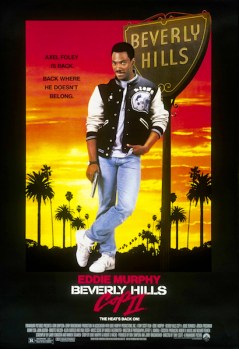
Beverly Hills Cop II (1987)

2016 #53
Tony Scott | 99 mins | streaming (HD) | 2.35:1 | USA / English | 15 / R

Wiseass Detroit cop Eddie Murphy heads back to the titular wealthy California city* to investigate when a burglary gang nearly kills his friend.

Top villain Jürgen Prochnow is so underused one wonders why he’s even in the film — Brigitte Nielsen’s more striking henchwoman could’ve been brains as well as brawn. Either way, they’re the character equivalent of a MacGuffin: this is all about Murphy, plus sidekicks Judge Reinhold and John Ashton, having fun and entertaining us in the process. Tony Scott brings ’80s slickness without losing sight of the comedy, for a sequel that’s almost as enjoyable as its predecessor.

4 out of 5

* Did you know Beverly Hills was its own city? I thought it was just an L.A. suburb. ^

The Equalizer (2014)

2016 #37
Antoine Fuqua | 127 mins | streaming (HD) | 2.35:1 | USA / English, Russian & Spanish | 15 / R

Back in the ’80s, everyone’s favourite actor whose name is also the punchline to a joke (“what do you call a man with three planks on his head?”), Edward Woodward, starred in a US TV drama about a former secret agent who uses those skills to exact vigilante justice for innocents who can’t help themselves. I’ve never seen it, but I guess it was popular back in the day because, 25 years after it ended, it was rebooted on the big screen. Or maybe they’ve just run out of popular stuff and are now rebooting anything and everything they can get their hands on. Either way, it’s a decent enough IP to fashion into a contemporary action-thriller, and indeed director Antoine Fuqua has made a decent-enough contemporary action-thriller.
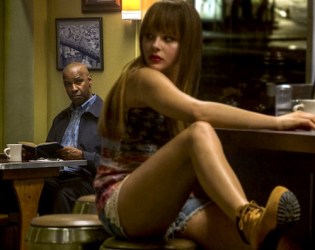
In this iteration, Robert McCall (Denzel Washington) is, by day, a mild-mannered member of staff at whatever the US equivalent of B&Q is; but by night, memories of his former life as some kind of special agent keep him awake, so he hangs out at a diner where he regularly bumps into working girl Teri (Chloë Grace Moretz). After she’s hospitalised by a client, McCall feels he can’t sit on the sidelines anymore, and applies his Very Special Skills to her pimps — just to, you know, equalise things. Unfortunately, turns out those pimps were Russian gangsters, and now McCall has a bigger fight on his hands…

The Equalizer is a decently-made, well-performed, pretty entertaining action-thriller for fans of the genre. There’s nothing fundamental to complain about if you take it for what it is, and anyone who enjoys inventive deaths will be tickled by some sequences. Otherwise, it lacks originality, remixing familiar tropes and plot points into a passably-new shape.

Viewers who as a rule don’t enjoy this kind of movie will find nothing remarkable. Equally, fans of the genre will be perfectly entertained for a couple of hours.

3 out of 5

A Boy and His Dog (1975)

2016 #19
L.Q. Jones | 90 mins | streaming | 2.35:1 | USA / English | 15 / R

Based on a novella by esteemed author Harlan Ellison, this is a low-budget sci-fi comedy-drama about a horny teenager (Don Johnson) and his telepathic dog (voiced by Tim McIntire) surviving in a post-apocalyptic wilderness, who are lured into a weird underground world. It’s a film fuelled by weirdness, left-field ideas, and a controversial tragicomic ending.
It’s a “not for everyone” kind of film that, I must confess, I found hard to properly engage with thanks to watching the poor quality, overly dark, windowboxed copy that used to be hosted on Amazon Prime Instant Video.

One to try again someday, maybe.

3 out of 5

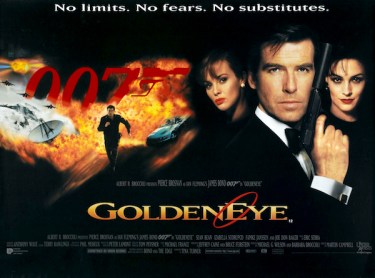
GoldenEye (1995)

100 Films’ 100 Favourites #40

You know the name.
You know the number.

Country: UK & USA
Language: English, Russian & Spanish
Runtime: 130 minutes
BBFC: 12 (cut, 1995) | 15 (uncut, 2006)
MPAA: PG-13

Original Release: 16th November 1995 (Canada)
US Release: 17th November 1995
UK Release: 24th November 1995
First Seen: VHS, 1996

Stars
Pierce Brosnan (Mrs. Doubtfire, Mamma Mia)
Sean Bean (Patriot Games, The Lord of the Rings: The Fellowship of the Ring)
Izabella Scorupco (Reign of Fire, Exorcist: The Beginning)
Famke Janssen (X-Men, Taken)
Judi Dench (A Room with a View, Notes on a Scandal)

Director
Martin Campbell (The Mask of Zorro, Casino Royale)

Screenwriters
Jeffrey Caine (The Constant Gardner, Exodus: Gods and Kings)
Bruce Feirstein (Tomorrow Never Dies, The World is Not Enough)

Story by
Michael France (Cliffhanger, The Punisher)

Based on
James Bond, a character created by Ian Fleming.

The Story
When Russian crime syndicate Janus steal the activation codes for a new satellite weapons system called “Goldeneye”, there’s only one man who can stop them using it for nefarious ends: Jack Bauer. Only kidding — it’s Jason Bourne. No, ‘course not — it’s Bond, James Bond.

Our Hero
Pierce Brosnan is Bond, James Bond, for the first time. After the almost-franchise-killing seriousness of Timothy Dalton, Brosnan nails Bond for the nostalgic ’90s: a dash of Sean Connery’s grit, a dash of Roger Moore’s raised-eyebrow humour, a whole lot of suaveness. For a while, the old “Connery or Moore?” question became “Connery, Moore or Brosnan?”

Our Villain
The mysterious Janus, who (spoiler alert!) turns out to be former MI6 agent and Bond’s chum Alec Trevelyan, out for revenge against the British Empire for betraying his family after World War 2, and against Bond for setting the bombs’ timers for three minutes instead of six.

Best Supporting Character
It was a bold choice to cast a woman as M back in 1995, even though she was inspired by the real director of MI6 at the time. Fortunately they cast the inestimable Dame Judi Dench, who naturally made the role her own — so much so that she survived the otherwise series-wide reboot in 2006, and having a male in the part now feels kinda odd.

Memorable Quote
“I think you’re a sexist, misogynist dinosaur. A relic of the Cold War” — M
(If a single line saved the Bond series, it’s this. In one fell swoop Dame Judi proves that a female M will work, and that this is a franchise aware of the need to drag itself into the present day.)

Memorable Scene
The villains are driving off with the kidnapped love interest. There’s no Aston Martin in sight. Does Bond take another car? Of course not — he takes a bloody tank.

Write the Theme Tune…
Bono and The Edge of U2, hired after…

Sing the Theme Tune…
Tina Turner. According to Wikipedia, “the producers did not collaborate with Bono or The Edge,” hence why (unlike previous Bonds) there’s nothing in the main score that references the title theme. That would rather become the Bond M.O. as the ’90s went on.

Truly Special Effect
The bungee jump off the damn — because it’s not a special effect, it’s real. The Bond series’ legacy of incredible, groundbreaking stunts continues with considerable style.

Letting the Side Down
Éric Serra’s score. Hiring someone to write a very modern (for the early ’90s) score for the newly-relaunched Bond must’ve seemed like a good idea at the time… but it wasn’t. It hasn’t improved any with age, either. Tellingly, after the score was finished the producers had someone else re-score the film’s big action sequence, the St. Petersburg tank chase, with music that sounds far more classically Bondian. Bonus problem: if you had an N64 (like I did), chances are you played GoldenEye the game far more than you watched the film. It too used Serra’s score, meaning I can’t hear it without being transported back to an idyllic adolescence playing blocky video games.

Making of
Pierce Brosnan was originally cast as Bond in 1986, but was forced to pull out when his TV series, Remington Steele, was unexpectedly renewed (according to one telling, that was purely to prevent him playing Bond — they only made six more episodes). Previously, Timothy Dalton had almost been cast when Roger Moore became Bond, and Moore had almost been cast before Sean Connery. Don’t be too surprised if Henry “Superman” Cavill — who was almost cast before the producers settled on Daniel Craig — is taking his martinis shaken not stirred in a few years’ time.

Previously on…
16 previous Bond films (which are all technically in the same continuity). The last was six years earlier, and the least financially successful for 15 years in the US (did alright worldwide, though).

Next time…
Brosnan played Bond thrice more, to increasing box office (if not critical) acclaim. He was due to do a fifth, but then the producers won back the rights to Casino Royale and the rest is history.

Awards
2 BAFTA nominations (Special Effects, Sound)
2 Saturn nominations (Action/Adventure Film, Best Actor (Pierce Brosnan))
2 MTV Movie Awards nominations (including Best Sandwich in a Movie for the submarine sandwich with tomatoes and provolone. It lost to the ham and cheese sandwich in Smoke).

What the Critics Said
“James Bond, the British spy with a taste for the high life and a licen[c]e to kill, comes back in surprisingly hardy and supple form. Gadgets firing, quips racing, libido unfurling, surrounded by a top-notch supporting crew of actors, designers and demolition experts, the new Agent 007 (now played by Pierce Brosnan) delivers whatever Bond devotees could reasonably want, or what newcomers anticipate. […] So much familiarity may lead to contempt in some quarters. But Bond, like Sherlock Holmes, Jeeves, Tarzan, Frankenstein or Dracula, is one of those mythical British pop figures who seem ageless, infinitely adaptable. […] Perhaps the reason is that Bond — as his detractors have always noted — is an adolescent fantasy figure, a Peter Pan popped onto the stage of international espionage. Like Peter, he can’t — won’t — grow up. [He has] caught the world’s imagination because he played out its darker dreams with fairy-tale lightness.” — Michael Wilmington, Chicago Tribune

Score: 78%

What the Public Say
“Rarely in the Bond franchise have directing, acting, cinematography, action, and music come together to create such a stylishly sublime experience. GoldenEye has undeniably earned its now-solidified status as a classic.” — Lukas, Lukas + Film

Verdict

After diminishing box office in the Dalton years, a long gap forced by legal battles, and the Cold War ending in the interim, bringing Bond back for the ’90s was perhaps a bit of a long shot. Fortunately, this fact didn’t escape the makers: there are numerous nods to Bond’s somewhat old-fashioned values (see also: memorable quote), and a whole heap of effort was expended on large-scale action sequences and stunts. Couple that with a solid storyline, several memorable villains, and a “greatest hits”-style leading performance from Brosnan, and you have a series that wasn’t just revived but was set to reach new heights (of box office, if nothing else).

Frankly my dear, #41 doesn’t give… a damn.

Captain America: Civil War (2016)

2016 #92
Anthony & Joe Russo | 147 mins | cinema | 2.35:1 | USA / English, German, Russian, Xhosa & Romanian | 12A / PG-13

This review contains spoilers.
(because, at this point, I’m not sure there’d be much point writing about it otherwise)

We’re now on to the 13th film in the Marvel Cinematic Universe, and while you don’t need to have seen all 12 preceding movies to follow the events of Civil War, you do need at least four — and, to get everything, a further four or five beyond that. (Don’t worry about the four TV series — it’s increasingly clear that they’re only notionally connected to the movies.) So the Marvel model for a “shared universe” is not discrete stories that take place in the same world, but a series of ever-more-connected narratives. It’s working for them, though, as the continually stellar box office totals prove.

Ostensibly the third Captain America movie, Civil War is as much a sequel to Avengers: Age of Ultron as it is to The Winter Soldier: it throws us straight in to action with the new Avengers line-up established at the end of Ultron, as they battle what turns out to be a villain from Winter Soldier. As I said, ever-more-connected. This particular mission goes disastrously wrong, bringing to a head plans that the governments of the world had been cooking up for a while: the Sokovia Accords, a way to control the Avengers and give them some accountability. Team leader Steve Rogers / Captain America (Chris Evans) isn’t keen — he’s worried political interests will conflict with the Avengers’ ability to do good. Bankroller Tony Stark / Iron Man (Robert Downey Jr.) is on board, however — spooked by having created Ultron, and after being confronted by the mother of an American lad who died in Sokovia (because the Sokovian deaths didn’t matter enough, I guess), he thinks the Avengers need reining in. The burgeoning conflict is clarified when Rogers’ childhood friend Bucky Barnes, aka Soviet agent the Winter Soldier (Sebastian Stan), emerges from hiding to attack the signing of the Accords — Rogers wants to save him; Stark needs to bring him in, dead or alive. As most of the other heroes we’ve met in the preceding 12 movies (not to mention a couple of new ones) pick sides, battle lines are drawn for an almighty clash.

As complicated as the plot sounds once you start trying to succinctly summarise it, Civil War is easy to follow as it unfurls. In fact, it’s to its credit that it can’t be readily summarised in any more detail than “Cap and Iron Man disagree; fight” without really getting into it. Screenwriters Christopher Markus and Stephen McFeely have followed up the political thriller of Winter Soldier with another global thriller storyline, again bringing different genre textures to the superheroics that are nonetheless present and correct. The film’s style mixes in just the right amount of realism — no one’s pretending this isn’t a comic book movie, with some elements of comic book logic and a casual acceptance of people having world-changing powers; but if such people did exist, this is the kind of way they would be handled by the authorities.

So while Civil War does work as a popcorn-guzzling action spectacular, the themes it raises — primarily of how we oversee and control those who claim to protect us — are relevant to real life, if you want them to be. The film attempts to make it a genuine debate by placing Cap and Stark as the figureheads of each side. Sure, that’s borrowed from the original comic book storyline that inspired the film, but it works perfectly for the movies: Iron Man is the basis around which the whole MCU was originally built, while Captain America is almost its break out star, emerging from the mess of The First Avenger to become one of the shining lights of every film he’s starred in since, at least two of which commonly compete for the crown of the MCU’s best movie. So who better to place at the heart of the conflict? Who better to present viewers with a genuine choice?

Well, maybe. But the debate is partially stalled by the fact this is a Captain America movie rather than an Avengers one. Yeah, you can side with Tony Stark & co, but you know Cap’s going to come out to the good, one way or another. As it pans out, it’s not a total victory (Team Cap are all now fugitives, presumably until Infinity War), but, morally, Cap wins, and even Tony knows it. Would it have been better to frame the political/thematic issues in an Avengers movie, to make it a genuine contest? Maybe. It’s almost hard to imagine it divorced of this context now, and a lot of that context is Cap-based. The rest of the cast of The Avengers may be hanging around, but the narrative drive comes back to Steve and Bucky, a throughline that belongs to the Captain America trilogy. You can’t doubt that this is a Captain America film — tonally, it fits better with The Winter Soldier than Age of Ultron — even as it is, really, also an Avengers one.

If we’re talking about hero-vs-hero conflicts and movies that give you something to think about, it’s only fair that we drag this year’s other big silver screen superhero battle into the fray. There’s little doubt that Civil War is a more readily entertaining film than Batman v Superman, and clearly a more popular one, but it left me with less to think about. That’s not to say there isn’t thematic weight here — I’ve just spent a couple of paragraphs referring to its attempts to engage with such debates, after all — but I felt like the film kinda covers what there is to say. Maybe Batman v Superman leaves its issues more open; or maybe they’re less well conveyed; or maybe we struggle to read them into it because they’re not actually there. Whatever the truth, I came out of Zack Snyder’s movie with lots going on in my mind and wrote 2,500 words about it that contained half or less of my thoughts. I came out of Civil War thinking, “well that was fun.”

On that visceral level, there are a couple of stunning action sequences. The car/foot chase between Cap, Bucky and Black Panther is fantastic, casually throwing in cool moments like the way Bucky steals a motorbike. The climactic two-on-one fight is also a sight, throwing in strong choreography and seamless effects work to create a battle that has a real ebb and flow, a back and forth over who has the upper hand. And the centrepiece of it all, of course, is the two teams facing off at the airport. For fans of superheroes, this is pretty much the ultimate expression of the genre yet brought to live-action moviemaking. For my money, the antics of Ant-Man — and Giant-Man — are by and large (pun very much intended) the best bit of it, but maybe I’m just a little biased. Certainly, that everyone’s favourite webslinger is in the mix is the icing on the cake, and Tom Holland seems to have quickly nailed Spidey. Personally, I still find it a bit odd him turning up, especially in such a minor role. There’s still a slight sense that the MCU is made up of second/third-string heroes, who needed that shared universe to kickstart their big-screen life. Spidey most certainly does not need that… or didn’t before Sony effed it up with the last two movies, anyway. Maybe he does now.

And while I’m talking about Spider-Man, let’s talk about those post-credits scenes. Peter Parker is the star of the second one, and it’s Marvel Studio’s usual kind of tease, though perhaps less teasing than normal — “hey, remember that kid who was Spider-Man? He’s Spider-Man!” Thanks, guys. Before that, though, the mid-credits scene is a mid-credits scene for the sake of a mid-credits scene. By establishing where Bucky ends up, it’s surely an essential part of the overall narrative. Okay, it has the requisite teaser properties, hinting at where we might find Team Cap come the start of Avengers 3; and it teases Black Panther too, but only very, very mildly — like the Spidey scene, it’s basically saying, “hey, remember that foreign prince who was Black Panther? He lives in a foreign country… where he’s Black Panther!” Other than that, it’s kinda important to answer the question of “hey, what happened to Bucky?” next time Cap turns up. So why isn’t the scene just in the film? Well, it is in the film — just after a few of the credits — so what does it matter, right?

As I was saying — there’s plenty more action in the movie. Sadly, much of it falls foul of the dreaded ShakyCam. Watching Civil War just days after The Raid 2 made that especially frustrating. With all the time and effort they put into training actors these days, plus all the effects technology they have at their disposal to paint out wires or replace faces (something they’ve been able to do unnoticeably since Jurassic Park, for pity’s sake!), you’d think a $250 million movie could manage better. (If you’re wondering what they did spend $250 million on, it was stuff like, “eh, we may as well just use CGI for the close-ups, too”.)

One thing the film definitely gets right, in my view, is its villain. So central is the Cap/Iron Man conflict that it seemed any villain would be an afterthought, at best; and it doesn’t help that the MCU is renowned for having weak antagonists. Indeed, for most of the movie Zemo seems like the expected nonentity; a villain for the sake of a villain, who’s being seeded earlier in the film just so he doesn’t come completely out of nowhere at the climax. But then, when his whole story and plan is revealed, it turns out that all along he may have been one of the most interesting villains the MCU has yet offered. His motivation is simple but effective; his methodology cunning and almost successful — even after the heroes know what he was trying to get them to do, they do it anyway! His final scene with Black Panther may be the best part of the entire movie. Nice work, Daniel Brühl.

In the end, Civil War leaves plenty open for future Marvel movies. Well, of course it does — half the time MCU movies are feature-length trailers for the next MCU movie. Where Civil War is really clever, however, is that it does that stage-setting while also feeling conclusory. As the third part in the Captain America trilogy, it actually makes a pretty satisfying end to that narrative. As the third part in the “trilogy in five parts” that is The Avengers trilogy, well, it’s clearly not the end, but it’s a fairly discrete segment.

It may well also be the best MCU movie so far, too. There aren’t many 13th films that can say that.

4 out of 5

Ghost in the Shell (1995)

100 Films’ 100 Favourites #36

It’s found its voice…
now it needs a body.

Original Title: Kôkaku Kidôtai
Also Known As: Mobile Armored Riot Police: Ghost in the Shell (Japan)

Country: Japan
Language: Japanese
Runtime: 83 minutes
BBFC: 15

Original Release: 18th November 1995 (Japan)
UK Release: 8th December 1995
First Seen: DVD, 2000

Stars
Atsuko Tanaka (Ghost in the Shell 2: Innocence, Bayonetta: Bloody Fate)
Akio Ôtsuka (Black Jack, Paprika)
Kôichi Yamadera (Ninja Scroll, Cowboy Bebop: The Movie)
Yutaka Nakano (Cowboy Bebop: The Movie, Ghost in the Shell 2: Innocence)
Tamio Ôki (Journey to Agartha, Wolf Children)

Director
Mamoru Oshii (Patlabor: The Movie, Ghost in the Shell 2: Innocence)

Screenwriter
Kazunori Itō (Patlabor: The Movie, .hack//SIGN)

Based on
The Ghost in the Shell (攻殻機動隊 Kōkaku Kidōtai, literally Mobile Armoured Riot Police), a manga by Masamune Shirow.

The Story
Japan, 2029: Public Security officer Major Motoko Kusanagi and her team are assigned to track down and capture a dangerous hacker known as the Puppet Master, but they soon find themselves embroiled in a far-reaching conspiracy…

Our Hero
In a future world where humans can undergo varying degrees of cyberisation, Major Motoko Kusanagi is a “full-body prosthesis augmented-cybernetic human” — only her brain is organic. Her body is a generic mass production model, so she can blend in while being a kick-ass law enforcement officer.

Our Villain
The Puppet Master, a cyber criminal who hacks into people’s brains and gives them false memories. But is there something even worse going on behind the hacker?

Best Supporting Character
Kusanagi’s second-in-command Batou is stoic to the point of brusqueness — apparently quite a different characterisation to his portrayal in other Ghost in the Shell media.

Memorable Quote
“If we all reacted the same way, we’d be predictable, and there’s always more than one way to view a situation. What’s true for the group is also true for the individual. It’s simple: overspecialise, and you breed in weakness. It’s slow death.” — Major Kusanagi

Memorable Scene
Pursuing the Puppet Master, Kusanagi comes face to face with a six-legged tank. After a blazing gun battle, she tries to physically rip it open, her cybernetic body straining to breaking point — and beyond…

Technical Wizardry
Ghost in the Shell was groundbreaking in its skilful combination of traditional 2D animation with CGI additions. It used a process called “digitally generated animation” (DGA), which combined cel animation with computer graphics to create lens effects that simulated depth, motion, and unusual lightning techniques, as well as mixing in 3D CGI and digital audio.

Letting the Side Down
In 2008, Oshii revisited the film to create Ghost in the Shell 2.0, which regraded the colour, replaced some of the original animation with new CGI, omitted several scenes, and featured a remixed and re-recorded soundtrack. (More details here.) As is almost always the case when directors fiddle with their creations decades later, it wasn’t well received by fans.

Next time…
As befalls many a popular anime franchise, Ghost in the Shell has spawned a raft of sequels and reboots. The only direct sequel, Innocence, was released in 2004. TV series Ghost in the Shell: Stand Alone Complex ran for two seasons between 2002 and 2005, with the first run compiled into movie The Laughing Man and the second into Individual Eleven, all of which were followed by a final film, Solid State Society. Another reboot came in 2013 with direct-to-video series Ghost in the Shell: Arise, which so far totals five episodes and, last year, continuation film Ghost in the Shell: The New Movie. (Only four episodes have so far been released in the West, but the movie — which continues the story from the fifth episode — came out on Monday in the UK. Just to make things more complicated.) A live-action American remake is currently shooting for release in March 2017 — you’ve probably heard about it.

Awards
5 Annie Awards nominations (Animated Feature, Directing, Producing, Writing, Production Design)

What the Critics Said
“When Akira first blasted out of Japan back in 1991 it looked like the Western concept of widescreen animation would be changed forever. […] Unfortunately, it was not to be. Sure, on video, the Manga scene has gone from strength to strength, but as far as theatrical releases are concerned, nothing has really come along to match Akira’s sheer retina-scalding magnificence. Until now. […] From its baddie-eviscerating opening sequence through innumerable car chases, shoot outs and tongue-in-cheek dialogue exchanges, this is exactly the kind of film that James Cameron would make if they ever let him through the Disney front gates.” — Clark Collis, Empire

Score: 95%

What the Public Say
“both the film and Oshii have fallen into a kind of disrepute among the anime community. The common line on GITS is that it’s wordy, masturbatory, and pretentious with nothing going on intellectually and that the (plainly inferior but more easily accessible) GITS: SAC is a better alternative. I wanted to write this article to respond to that notion. GITS is a highly thoughtful film and worthy of comparison to virtually any scifi feature you could name. ” — tamerlane, too long for twitlonger

Verdict

Ghost in the Shell was the first anime I consciously saw, which maybe helps it earn a place here. It’s an initially accessible movie that’s also very complicated — there are pulse-pounding action scenes and a thriller storyline to keep things exciting, but also a lot of deep philosophical discussions, touching on themes of gender and identity. I think for some viewers the latter are a negative, while for others they’re the entire point. (I imagine the forthcoming Hollywood remake will either ditch or seriously curtail them, but you never know.) The combination makes for a stimulating (in multiple senses) sci-fi actioner.

Next… who ya gonna call? #37 !