
Sylvester Stallone | 100 mins | Blu-ray | 1.85:1 | USA / English | PG / PG

“It’s the
eye of the tiger, it’s the thrill of the fight
Risin’ up to the challenge of our rival
And the last known survivor stalks his prey in the night
And he’s watchin’ us all with the eeeeyyyyeeee…of the tiger.”
Sorry, got swept up in the moment there!
Yes, this is the Rocky movie where that song, so associated with the franchise, finally makes its appearance. It’s also where the sequels are believed to start going down hill (assuming you rate Rocky II, anyway), though Stallone himself was once asked to score the films and gave this 9 out of 10. I don’t know if I’d go that far, but I liked it.
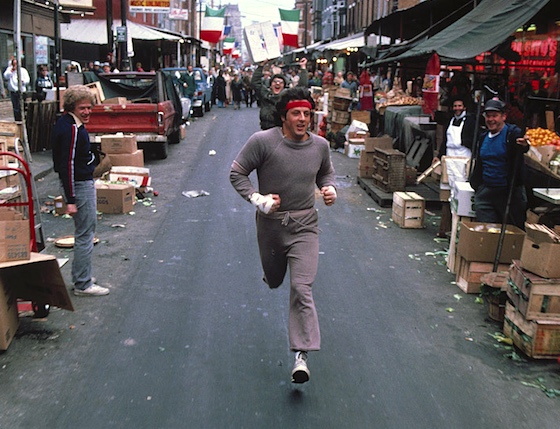
Picking up on Rocky II’s cue, this film also begins where the last one left off — in this case, that’s with Rocky just about beating Apollo Creed in their rematch. We’re then led through the next few years of Rocky’s life via an excellent five-minute montage, which shows his continued success and massive fame, and, simultaneously, the rise of Clubber Lang (played by Mr. T) through the boxing ranks, with one goal: beating Balboa. All of that’s conveyed with just images soundtracked to Eye of the Tiger. It’s a great bit of filmmaking — conveying story economically and clearly through pure imagery — a level of artistry and accomplishment you don’t expect to encounter in the third movie in a boxing franchise.

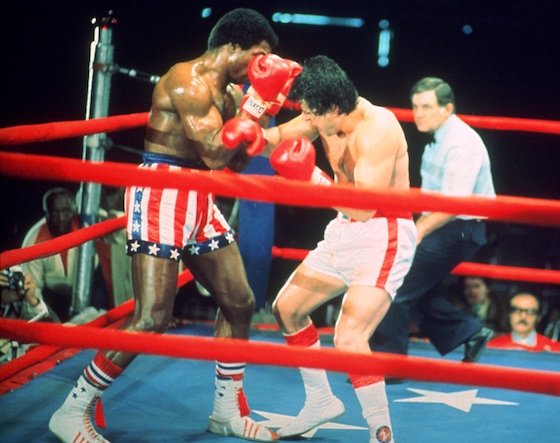
So, after all that success, Rocky is set to retire, until Lang goads him into one more bout. What Rocky doesn’t know is that his trainer, Mickey (Burgess Meredith), has been protecting him, only arranging soft fights he thinks Rocky can win; but Lang is a real force, one Mickey doesn’t think Rocky is up to fighting. Determined to prove his worth in the ring, Rocky goes ahead anyway, but, with distractions from his personal life weighing down, he loses badly. A rematch seems off the cards, until an offer of help comes from an unlikely source: Rocky’s erstwhile nemesis, Apollo Creed (Carl Weathers).
Rocky III is much more action orientated than the first two films. Those were almost social dramas that happen to be about someone who boxes, while this is a sports movie through and through. Stallone once confessed he’d run out of ideas after the first two films, which is why this and Rocky IV focus so much on the fights and training. It’s odd he should say that, because there’s definitely something here about how fame has changed Rocky’s life. It’s more something that’s alluded to rather than being examined by the story — used as background and ‘dressing’ rather than being central to the narrative — but it suggests that, if Stallone had really wanted to add a different dimension to the film, there was a storyline staring him in the face.
It feels appropriate that this was the first Rocky released in the ’80s: our down-and-out coulda-been-a-contender hero is now rich, dressing smart, living in a big house with a nice lifestyle. The whole thing feels like it’s left behind gritty realism for slick aspirational success. But it’s not a completely empty experience, generating emotional attachment from Rocky’s relationships — not only with his wife and young son, but also Mickey and, to a somewhat lesser extent, Apollo Creed. Plus the action and montages are slick and exciting, making this perhaps the most adrenally satisfying of the series to date.
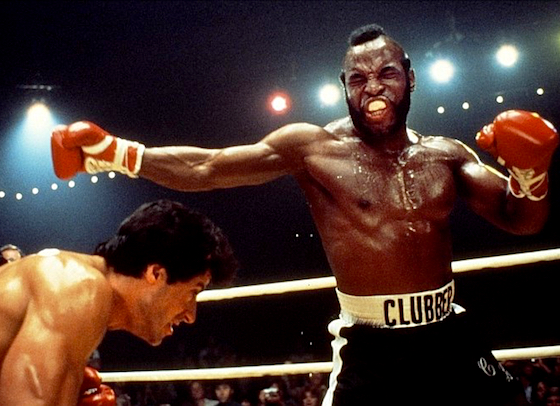
It’s also quite smart to reposition Rocky as an underdog, make him need his hunger again — there’s not much satisfaction in watching the story of how the best in the world beats someone who isn’t the best! Our hero needs to be challenged, and the film definitely gives him that. That’s the same as the preceding movies, but what’s different here is that it’s a purely sporting challenge, rather than a life one. There are developments in Rocky’s personal life that have a big effect on him, sure, but they’re intrinsically tied to the sporting aspect.
If the first two films are a mirror image of each other, this is something different. It lacks the grit or depth of those two, but still entertains, albeit in a somewhat more superficial way. Giving it a title-mirroring three stars feels a bit harsh, because I did rather enjoy it, but its straightforward focus on the action in the ring means it’s not on the same level as the first two. That said, I’d wager it’s the most effortlessly rewatchable Rocky so far.










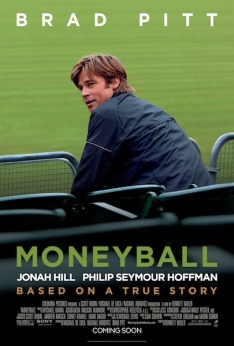 Based on a true story, Moneyball concerns the management of baseball team Oakland Athletics during the 2002 season. General manager Billy Beane (Brad Pitt) struggles to put a squad together due to a comparatively low budget for players, which has seen all his best ones drift off to richer contracts elsewhere. Fed up with the traditional scouting system, he recruits Peter Brand (Jonah Hill) to use statistical analysis to select a cheap team of quality players. The rest of his staff despair, including coach Art Howe (Philip Seymour Hoffman), who refuses to play the team as Beane and Brand suggest, which unsurprisingly leads to self-vindicating failure — until they force his hand…
 Problems extend beyond the sporting specifics. It’s quite some way into the movie before it gets stuck into the meat of the plan working, and before that it often throws in asides that meander around through Beane’s earlier playing career and current family life. The former has some bearing on the plot, though feels inadequately integrated — as one flashback it might work, but as a series of them it’s not enough to constitute a parallel story. The latter, his family life, provides character texture, but it’s slight, uninformative, and ultimately unnecessary. You could cut it and the film would lose nothing.
 and didn’t need any work, which probably explains why it’s not so Sorkin-y. Zaillian is not a bad writer — his credits include
 As much as I love Game of Thrones, and think
  Watching this, it’s difficult to imagine anyone involved really believed they would get a sixth season — which is good, because (a) they stood very little chance, and (b) that means it wraps everything up to a nice, proper ending. My feelings on Jonah “brother of Christopher” Nolan’s cyber-thriller have oscillated over the years, and I’m a long way from agreeing with those who assert it’s actually one of the best sci-fi series ever; but for a show that started out as a fairly standard CBS procedural thriller, it did ultimately manage to play with and work around the network’s expectations to produce something superior. It’s a shame they clearly had to rush the final arc (marred further by having to hit a quota of ‘case of the week’ episodes, for some reason), but it still got to a good place. If you’ve not watched it but are interested, consider finding one of those “episodes you should definitely watch” guides (like
 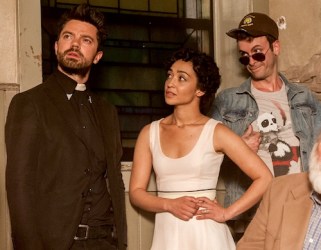 In the end, this turned out to be less of a TV prequel to the comic book series than an expanded and rejigged adaptation of the comic’s opening four-issue story arc (with some stuff from later thrown in for added fuel). As Seth Rogen explained on the post-finale chat show Talking Preacher, the books throw an awful lot of quite comic-book-y ideas at you very quickly, and TV viewers maybe needed a little longer to digest all of that. Plus extra space to develop and examine the characters, of course. It’ll be interesting to see how future seasons handle the issue of adaptation. By the end of season one, the characters are in a place to launch into something closer to the rest of the comic; but, at the same time, budget issues have already forced some reimagining, so what else will it be forced to compromise or reinvent? I think the bold, fearless barminess of the TV series has earned it the right to our attention, whether it goes further off piste or hews closer still to its roots.
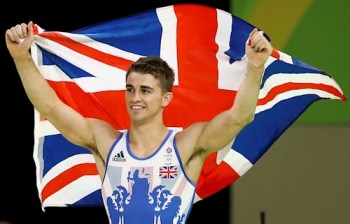 This month, I have mostly been missing… not that much, really. With the Olympics dominating the good TV channels and much of US drama on its summer hols, there doesn’t seem to have been much on. I haven’t gone crazy for Rio 2016 like I did for London 2012 (much to my surprise at the time, that was), though we’ve caught bits and pieces, not least Max Whitlock’s double gold (along with
 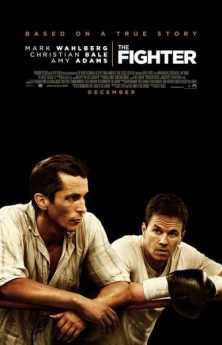 Oscar-winning true-story drama that relates the early career of boxer Micky Ward (Mark Wahlberg), a coulda-been-a-contender type held back by the training of his half-brother, ex-boxer turned drug addict Dicky (Christian Bale), and the management of his controlling mother (Melissa Leo), not to mention the cadre of harpy-ish sisters. Micky gains some confidence after entering a relationship with barmaid Charlene (Amy Adams), who’s prepared to stand up to his family. He breaks away from them and gets better opportunities, but soon realises that to win he’ll need to combine the best of both worlds.
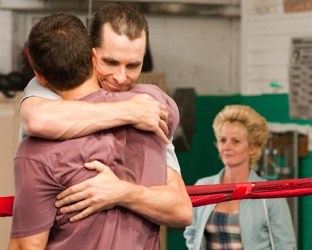 Although this is technically Ward’s story, it’s as much about his older half-brother, washed-up fighter turned part-time trainer and full-time crack addict Dicky Eklund. It’s another of Christian Bale’s extreme weight gain/loss roles (in this case, loss), but there’s more to it than such physical exertion. Bale inhabits the character, and a brief clip of the real Dicky during the credits suggests he’s done so very accurately. His performance is mesmeric and definitely worthy of that Oscar. For the rest of the cast, Amy Adams holds attention equally in a less showy role, and even Marky Mark isn’t half bad. Melissa Leo also won an Oscar for her performance, which I forgot until I read so after — it was the one she controversially funded her own ad campaign for. I guess that paid off.
 The Fighter isn’t without its faults, though. There’s a certain element of cliché to the story arc — whether that’s just fact emulating fiction, or the screenwriters imposing familiar shapes on to what really happened, I don’t know. It could also stand to lose a few minutes here and there, especially when it goes round in circles about whether Micky should be trusting his family or not. And talking of movie clichés and comparisons to other films about fighting, watching it in close proximity to
 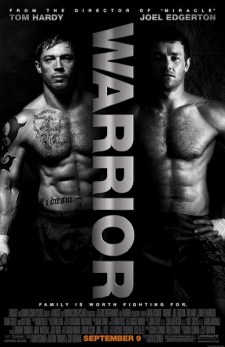 Two estranged brothers (Tom Hardy and Joel Edgerton), who’ve taken very different paths in life to escape their alcoholic and abusive father (Nick Nolte), wind up entering the mixed martial arts tournament to end all mixed martial arts tournaments, their eyes on the unprecedentedly massive cash prize — one to save his house and family, the other to help the widow of his Army chum. As they separately go up against an array of more experienced opponents, who could possibly end up in the final bout? Hm, I wonder…
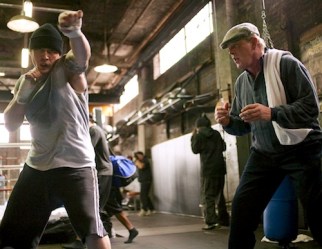 I think they’re being a bit harsh but I can see where they’re coming from. Now, I’m almost loath to give it 4 because I don’t agree with the consensus. And it’s a particularly strange consensus: everyone seems to acknowledge it’s terribly clichéd, but then give it a pass on that. Why? Why don’t you show the same leniency to the tonnes of other movies you rip to shreds for their clichés?
 though I’m not sure his character arc actually reaches any kind of ending. The rest of the cast are adequate: Joel Edgerton is decent as an upstanding family man; Jennifer Morrison has little to do as his wife; Frank Grillo is convincing as a trainer who bases his philosophy on classical music; Kevin Dunn gets some amusing moments as Edgerton’s school principal. Other people sometimes say words.
 100Films.co.uk