Cover Girl (1944)

2016 #168
Charles Vidor | 103 mins | TV | 4:3 | USA / English | U

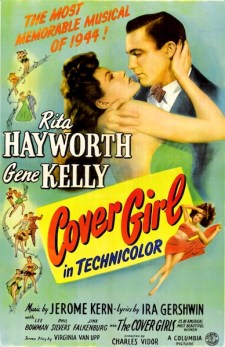
Cover GirlRun-of-the-mill musical starring Rita Hayworth as a Brooklyn showgirl who finds fame after accidentally landing a prestigious magazine cover because the editor was in love with her spitting-image grandmother.

Gene Kelly co-stars as the owner of the low-rent joint she used to star in, and provides two decent dance numbers: the first alongside Hayworth and Phil Silvers, the second alongside himself, double exposure allowing his shop-window reflection to leap into the street.

Otherwise the songs are forgettable, despite the fact it won an Oscar for its score, and the predictable story is allowed too much leeway by the running time.

3 out of 5

Christine (1983)

2016 #85
John Carpenter | 106 mins | streaming (HD) | 2.35:1 | USA / English | 18 / R

ChristineOne of a couple of films John Carpenter directed “for hire” in an attempt to restore his Hollywood reputation after the box office failure of The Thing, Christine is an adaptation of a Stephen King novel about a car possessed by evil. Yes, a car. I guess if you wait long enough, anything and everything will be possessed by evil eventually (in fiction, at any rate).

Despite that pedigree, Christine is about as scary as… well, I was trying to think of something soft and fluffy that hasn’t ever been used in a horror movie, but that list is increasingly short. But you get my point: it’s not scary. Its 18 certificate is earned by an abundance of very strong language — which, according to screenwriter Bill Phillips, was added for that exact purpose: the film wasn’t violent enough to get an R, and they didn’t think people would see it if it was a PG (this being before the PG-13), so they just inserted a lot of swearing. It’s still a pretty entertaining film, though, thanks to some humour and the almost-there thematic subtext of America’s obsession with the automobile.

The central (human) character is Arnie, a nerdy teen who becomes obsessed and then empowered by the eponymous vehicle. Keith Gordon is pretty good as this “worm that turned” type, albeit in a somewhat melodramatic way: he’s a heightened version of a nerd at the start, and a heightened version of a car-obsessed teenage dick later on. One review I read reckoned the film “sacrifices character logic” — what, there’s a flaw in the logical behaviour of a guy who’s semi-possessed by his demonic car, you mean?

Girl on girl action, of a sortEven if Carpenter was doing it only for kudos with the studios, he still turned in solid work. Christine may not be scary, but she is menacing, and her attacks work as individual sequences. Unsurprisingly it’s not his strongest film, and it’s not the greatest adaptation in the Stephen King movie canon either, but if all movies by jobbing filmmakers were this good then we’d be luckier moviegoers.

4 out of 5

Christine is one of the first releases from new UK Blu-ray label Indicator, out today.

The Shawshank Redemption (1994)

100 Films’ 100 Favourites #83

Fear can hold you prisoner.
Hope can set you free.

Country: USA
Language: English
Runtime: 142 minutes
BBFC: 15
MPAA: R

Original Release: 23rd September 1994 (USA)
UK Release: 17th February 1995
First Seen: TV, c.1999

Stars
Tim Robbins (Jacob’s Ladder, Mystic River)
Morgan Freeman (Driving Miss Daisy, Invictus)
Bob Gunton (Demolition Man, Ace Ventura: When Nature Calls)

Director
Frank Darabont (The Green Mile, The Mist)

Screenwriter
Frank Darabont (A Nightmare on Elm Street 3: Dream Warriors, The Green Mile)

Based on
Rita Hayworth and Shawshank Redemption, a short story by Stephen King.

The Story
When Andy Dufrense is incarcerated in Shawshank State Penitentiary, he soon finds himself helping the corrupt warden money-launder his bribes. With a measure of protection from the guards, Andy’s common decency leads him to try to improve life for his fellow inmates, all the while thriving on the hope he’ll one day get out.

Our Heroes
Andy Dufrense is an intelligent fella, who earns himself protection and privileges by helping with the guards’ finances, and befriends fellow inmates by overhauling the prison library. He’s serving two consecutive life sentences for murdering his wife and her lover, despite claiming he’s innocent — like everyone else in Shawshank. Conversely, his new best friend, Red — the film’s narrator — is the only guilty man in Shawshank. He’s the guy you go to if you want anything smuggled in, like, say, a rock hammer…

Our Villains
Warden Samuel Norton is outwardly a good Christian and forward-thinking prison governor, but is actually a corrupt and vicious sonuvabitch, only too happy to use Andy’s skills to fiddle the books — and punish him harshly for any signs of dissent. His right-hand-man is the captain of the guards, Hadley, who’s not above giving a wayward prisoner a life-altering beating, or worse…

Best Supporting Character
The prison’s librarian, Brooks, who’s been locked up for almost 50 years. The old chap gets paroled, but the outside world has become a very different place by 1954, and he has a heartbreaking fate.

Memorable Quote
“The funny thing is, on the outside I was an honest man, straight as an arrow. I had to come to prison to be a crook.” — Andy Dufresne

Quote Most Likely To Be Used in Everyday Conversation
“Get busy living or get busy dying.”

Memorable Scene
Left alone in the warden’s office, Andy comes across a record. He puts it on the turntable, locks the door, and switches on the PA system, broadcasting opera to the entire prison. Guards and prisoners alike stop where they stand to listen. Meanwhile, the warden bangs on the door and demands Andy turn the music off. He leans toward the record player… and turns it up. The insubordination will cost him, but, for a few minutes, the beautiful music makes the prisoners feel free.

Making of
The American Humane Association monitored filming that involved Brooks’ pet crow. During a scene where it’s fed a maggot, the AHA objected — because it was cruel to the maggot. They demanded the filmmakers use one that had died from natural causes, which was duly found.

Awards
7 Oscar nominations (Picture, Actor (Morgan Freeman), Adapted Screenplay, Cinematography, Editing, Score, Sound)
2 Saturn nominations (Action/Adventure/Thriller Film, Writing)

What the Critics Said
“The mood swings rigorously through every emotion as the cranky, wiseguy and downright crazed array of criminals bare the brunt of the turbulent life within the doomy Shawshank catacomb. […] If you’re miserable enough to look for gripes then, yes, it does drift on too long and who needs prison buggery again? Yet the ending has such poetic completeness you’re too busy contentedly chuckling to worry about sore behinds. This may have confounded American audiences — it flopped big-time on planet Yank — but a more divine movie experience you will not find this side of Oscardom. […] If you don’t love Shawshank, chances are you’re beyond redemption.” — Ian Nathan, Empire

Score: 91%

What the Public Say
“it has these amazing feel good moments yet it doesn’t feel contrived. Most of us film lovers can see right through that. If Shawshank was guilty of that, it wouldn’t have stayed in the number one spot for all these years. […] I think there are a lot of things that make The Shawshank Redemption such a widely loved film and the movie just gets so many things “right” that they all combine to give us something spectacular: Feel good moments like the beer & opera scenes (which never fail to move me no matter how many times I watch this movie). Andy & Red’s friendship. The lesser characters such as Brooks & Heywood (and the heartbreakingly beautiful “Brooks Was Here” theme from Thomas Newman). Seeing the posters on the wall change, showing the passage of time. Alexandre Dumbass. The pet bird. Rita Hayworth. And, of course, the overall message of hope. More than anything, though, I think it’s Stephen King’s story and Darabont’s ability to give us scenes of pure beauty in a movie based someplace as awful as a prison” — table9mutant, Cinema Parrot Disco

Verdict

The Godfather sat seemingly unassailable atop IMDb’s Top 250 for nine years, until The Dark Knight kicked it off, not everyone agreed, and when the dust settled Shawshank was the new #1, a position it’s now held for eight years. Naturally that means there’s been a backlash in some circles. It’s a particularly snooty kind of reaction in general, I find, probably because Shawshank is exactly the kind of movie primed to emerge as a consensus favourite: it has drama and darkness, but also humour and optimism, and elicits emotions across the spectrum — it’s neither too grim to depress people into not enjoying it, nor too sentimental to make them do that mock “throwing up” noise some people do when things get really schmaltzy.

I wager some people confuse the notion of “consensus favourite” with “produced by committee”, which sound similar — a large group of people coming to agree on something — but are actually very different. The latter typically produces bland work that no one loves; something that wouldn’t curry favour with the former. Is The Shawshank Redemption the greatest movie ever made? Not in my opinion. I’d wager not in the opinion of most of the people who’ve given it a score on IMDb that’s contributed to it being #1. But it is a very good film indeed — and, clearly, most of us can agree on that.

#84 will be… not a fucking Merlot.

One Flew Over the Cuckoo’s Nest (1975)

2016 #100
Miloš Forman | 134 mins | download (HD) | 16:9 | USA / English | 18 / R

One Flew Over the Cuckoo's NestBy many accounts this is the greatest film I’d never seen (hence it being this year’s pick for #100). How are you meant to go about approaching something like that? Probably by not thinking about it too much. I mean, something will always be “the greatest you’ve never seen”, even if you dedicate yourself to watching great movies and the “greatest you’ve never seen” is something pretty low on the list… at which point I guess it stops mattering.

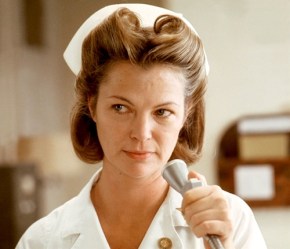
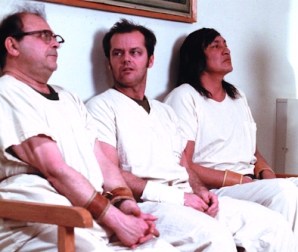
Anyway, this acclaimed drama — one of only three films to win the “Big Five” Oscars — follows Randle McMurphy (Jack Nicholson), a prisoner who’s claiming to be mentally ill in order to avoid hard labour, as he’s sent to a psychiatric hospital for evaluation. His ward is run by the firm hand of Nurse Ratched (Louise Fletcher), who subtly controls and oppresses the other inmates (who include early appearances by Danny DeVito, Christopher Lloyd, and Brad Dourif). With his antiauthoritarian nature, McMurphy sets out to usurp her control… with ultimately disastrous consequences.

Cuckoo’s Nest is very ’70s in its bleakness; also in being about someone sticking it to The Man, and The Man winning. We often conflate such qualities with realism — “it’s not all happy, it must be more like real life” — but I wonder if Cuckoo’s Nest is actually too on the nose as an indictment of the system. McMurphy is a highly disruptive influence, which in reality would surely be a problem, but he’s seen to bring the other inmates a joy they previously hadn’t known. His actions give one, Billy Bibbit, confidence and cure him of his stutter — until Ratched reasserts control, his stutter returns, and… worse happens.

Wretched RatchedHollywood is notorious for adapting novels by grafting on happier endings, but here they did the opposite, removing even the glimmers of justice that the novel offers. In the book (according to Wikipedia), when McMurphy strangles Ratched he also exposes her breasts, humiliating her in front of the inmates; when she returns to work, her voice — her main instrument of control — is gone, and many of the inmates have either chosen to leave or have been transferred away. Conversely, in the film there is no humiliation, and we explicitly see that she still has her voice and that all the men are still there. Of course, McMurphy’s ultimate end isn’t cheery in either version. It’s almost like the anti-Shawshank in its hope-less ending. While the cynical part of me thinks this is more realistic, I do like a bit of optimism, a bit of victory, a bit of justice for the real perpetrators.

Even aside from the ending, I don’t think the film is as focused as it could or should be. I’m not asking to be handheld through it all, but at times it meanders. The best qualities lie in the acting. Nicholson and Fletcher won the Oscars, and both are very good — Nicholson with his familiar crooked charm, Fletcher despicable as the everyday megalomaniac — but for me the best performance is Brad Dourif, making his screen debut as the stuttering, sweet, ultimately tragic Billy Bibbit. He was nominated for an Oscar, but lost to George Burns in Only sane one hereThe Sunshine Boys (anyone remember that? No, didn’t think so); though he did win the BAFTA, once again proving that we have all the taste.

I’m not quite on board with all the praise Cuckoo’s Nest has received — I think it might be improved by a streamlining of purpose. Either way, it is not an enjoyable movie, though it is perhaps a significant one.

4 out of 5

One Flew Over the Cuckoo’s Nest was viewed as part of my What Do You Mean You Haven’t Seen…? 2016 project, which you can read more about here.

Charlie Wilson’s War (2007)

2016 #135
Mike Nichols | 98 mins | streaming (HD) | 1.85:1 | USA & Germany / English & Russian | 15 / R

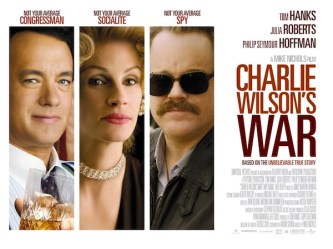
Charlie Wilson's WarUnlikely stories can make great movies, or at least fun ones, and if this isn’t the former then it’s largely the latter.

It’s about a hard-partying US congressman (Tom Hanks) who suddenly becomes interested in the Soviet occupation of Afghanistan, so increases support for the rebels by calling in the many favours he’s collected.

Boasting a typically witty script from Aaron Sorkin, and a cast (including Philip Seymour Hoffman) capable of delivering it, it makes a potentially grim topic surprisingly entertaining — which is presumably why acknowledgement of the aftereffects is reduced to one subtle, but chilling, nod to 9/11.

4 out of 5

The Past Month on TV #9

There’s so much TV right now! And that’s before you consider all the old stuff to catch up on (and by “old” I mean “anything aired before the past month”).

Still, here’s a selection of what’s been gracing my eyeballs in the last 35 days…

Luke Cage (Season 1)
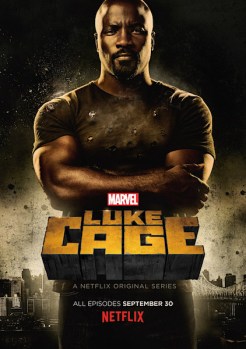
Luke CageThe third series in the Marvel/Netflix stable wins points for boldness, much as Jessica Jones did this time last year. Where Daredevil is a well-done but ‘standard’ superhero show, leading to it being somewhat demeaned by the Cool Kids of the critical world (but much higher-rated by us plebs on the likes of IMDb), Jessica pushed into dark psychological territory, and now Luke Cage brings black culture and life into the fold.

In truth, I still think Daredevil is the best produced of the three. Maybe that’s because it’s operating in more familiar territory, but it seems to know how to construct its storylines to fit the time given, and pace them to really kick off that “just one more episode” feeling that Netflix binge-watching is so famed for. Conversely, Jessica didn’t have enough story for 13 episodes, spinning its wheels and going in circles in the second half. Luke Cage doesn’t suffer from that exact problem, but it spends a lot of time finding excuses to keep its near-invulnerable hero out of the action.

But, for its plot-related flaws, it’s not a bad show. It has three strong villains — it’s just a shame it’s the fourth who becomes the focus for the back half of the season. Its use of music is unusual and brilliantly executed, though as it’s employing genres and styles, indeed a whole culture, that I’m not exactly au fait with, it’s like watching as a fascinated outside observer rather than someone fully embedded or engaged. That’s not necessarily a negative, just a different way of relating to it. And even with those storytelling faults I mentioned, there’s at least one huge and unexpected twist, which really livens up the show… for a bit. It also gives Rosario Dawson the biggest role she’s yet had in one of these Marvel series, and that’s no bad thing either.

Indeed, the best thing about Luke Cage is its characters. Mike Colter is an appealing leading man — when the character is allowed to do something, anyway — and the supporting characters on both sides are fantastic (with that one unfortunate exception I already mentioned). This bodes well for when they join up with everyone else in The Defenders next year, and also leaves season two with plenty of potential…

…if Netflix commission it, of course. Surely they can’t be intending to have 6+ Marvel shows on the go?!

Ripper Street (Season 5)
Ripper StreetIt feels like only yesterday I was writing here about season four (it was, in fact, February and March). I think it was assumed this final season would be coming next year, but then Amazon announced it almost out of the blue just before the BBC’s run of season four ended, and made the unusual-for-them decision to dump the whole season at once, Netflix-style. It benefits this particular group of episodes because it really is one long story — when the show moved to Amazon for its third season it got more heavily serialised, but often with “case of the week” plots alongside that; the end of season four and all of season five throw that almost entirely aside for one long, developing storyline.

Nonetheless, they’ve done a good job of making a TV show rather than a really long movie in six parts. The third episode, in particular, sets our heroes aside almost entirely to spend an hour with a villain who’s barely done more than grunt so far, digging into his psyche and his hopes (if any) of redemption. It almost felt more like an arty drama film than an episode of a period police procedural and proves that, even after five years, a quality programme can still push at and explore its form.

The final episode, however, is a certified oddity. After wrapping up the season’s primary plots with relative haste, it moves on to an odd, somewhat lethargic non-story. It is, in its way, bold for what started as a police procedural to end with an episode that focuses on the drama of its characters’ lives, but it does so with an almost perverse fixation on setting up certain expectations only to dash them. It is tough to call the episode either satisfying or unsatisfying as a conclusion, though I imagine some will come to the latter opinion purely because it is so uncommon. It’s titled Occurrence Reports, and that seems apt, for it seems to merely report a series of occurrences; but they do at least, in their way, bring all of the series’ parts to their respective ends.

Leaving aside the finale’s forays into structural experimentation, this is a good final season, that has moments to count among the programme’s very best. I still reckon season three is the best individual run, however.

Black Mirror (Series 2)
Black MirrorWell, it’s only taken me 3½ years to get round to this (seriously, where does time go?!) This bunch really represents the series’ highs and lows. On the one hand, Be Right Back — in which Hayley Atwell signs up for a company who create a virtual version of her deceased partner using his contributions to social media — is an exploration of broadly-plausible near-future-tech with a focus on its potential emotional effect. That’s what Black Mirror does best, I’d argue: look at stuff that may, perhaps, be in the pipeline, and how that would actually play out for us. On the other, there’s The Waldo Moment, which is also sickeningly plausible — as Charlie Brooker himself has said, it’s more or less come true, though with the likes of Boris Johnson and Donald Trump instead of a blue cartoon bear — but as an episode it doesn’t quite seem to know where to go with its concept or what it might ultimately signify. The episode just stops rather than ends, until a flash-forward coda that’s a bit silly in its extremity. Even Brooker, while doing press for the third season (released tomorrow), has said he’d go back and re-do that episode if he could. Still, full marks for effort.

Red Dwarf XI (Episodes 1-5)
Red Dwarf XIThis latest series of Red Dwarf (which airs its fifth episode tonight, with the sixth available on demand from tomorrow) seems to have gone down rather well, with some reviews even hailing it as a “return to form” — that form being “the good old days” of Red Dwarf VI (or thereabouts), over 20 years ago. Personally, I didn’t dislike Red Dwarf VII or Back to Earth, and I even have a soft spot for Red Dwarf VIII, so what do I know? Nonetheless, I would concur that this Dwarf represents a fine vintage, hitting the series’ unique mix of accessible mainstream-ish comedy and proper science-fiction concepts. Red Dwarf XII is already in the can for 2017, and I wouldn’t be surprised to see Dave commission more episodes beyond that.

Star Trek The City on the Edge of Forever
Star Trek: The Animated Series Yesteryear
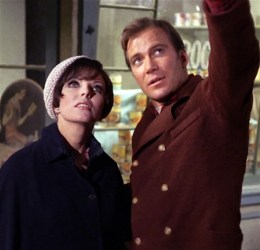
Star Trek - The City on the Edge of ForeverThe entirety of TV Star Trek is available on Netflix, so I took the chance to watch the most acclaimed episodes of both The Original Series and The Animated Series — which happen to be connected, something I didn’t realise until afterwards. Er, I mean, which I totally planned. Both are pretty fine uses of science-fiction to explore relatable issues. Well, not many of us have to deal with disruptions to reality caused by time travel, or knowledge of the future creating dilemmas about what we do next, but they work the relatable stuff in around the surface plots. And they both still seem pretty bold for network TV episodes even today, almost half a century later, as (spoilers!) Kirk lets a good woman die to retain the correct timeline, and a kids’ cartoon deals with the subject of euthanasia.

Also watched…
  • Castle Season 6 Episode 8-Season 7 Episode 1 — almost always a nice, light, entertaining show, but the season 6 finale is a mess. Well, the bulk of it’s fine, but the premise is illogical and the cliffhanger is weightless and unneeded.
  • The Great British Bake Off Series 7 Episodes 5-9 — this series has seen Bake Off’s charms firing on all cylinders, I think, which just reminds you what we’re about to lose.
  • Line of Duty Series 1 — as this is on Netflix I thought I’d finally see what all the fuss is about. I think it’s the second run where it really took off, but this has its moments.
  • The Musketeers Series 2 Episodes 6-7 — quite a few grim crime shows in this month’s viewing, so a bit of quality swashbuckling is a welcome change of pace.
  • Scott & Bailey Series 5 — not the strongest run (the “darknet serial killers” case was a little too outlandish for a show that has often thrived on its more-plausible-than-your-average depiction of murder investigation), but still a quality police drama. Shame there won’t be more.

    Things to Catch Up On
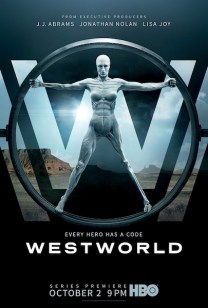
    WestworldThis month, I have mostly been missing loads of stuff. Probably the most talked about is HBO’s adaptation of Westworld, which has apparently pulled in even bigger ratings than Game of Thrones. Over here there’s the second series of The Missing, which if it’s half as good as the first will be a real must-see. Then there’s Woody Allen’s first (and last) TV series for Amazon, Crisis in Six Scenes. Reviews have been mixed to poor but I still intend to get round to it. And finally Hooten & the Lady, which may be the worst title for anything in the history of ever, but a globetrotting adventure series inspired by the likes of Indiana Jones and Romancing the Stone sounds right up my alley.

    Next month… the latest Doctor Who spin-off comes to iPlayer; brand-new Black Mirror comes to Netflix; and I’ll finally watch Stranger Things, I promise.

  • Serenity (2005)

    100 Films’ 100 Favourites #82

    They aim to misbehave.

    Country: USA
    Language: English
    Runtime: 119 minutes
    BBFC: 15
    MPAA: PG-13

    Original Release: 29th September 2005 (Australia)
    US Release: 30th September 2005
    UK Release: 7th October 2005
    First Seen: cinema, 7th October 2005

    Stars
    Nathan Fillion (Waitress, Super)
    Summer Glau (The Initiation of Sarah, Knights of Badassdom)
    Chiwetel Ejiofor (Dirty Pretty Things, 12 Years a Slave)

    Director
    Joss Whedon (Avengers Assemble, Much Ado About Nothing)

    Screenwriter
    Joss Whedon (Buffy the Vampire Slayer, Toy Story)

    Based on
    Firefly, a TV series created by Joss Whedon.

    The Story
    In the far future, a crew of renegades harbour a fugitive who knows a terrible secret about the totalitarian rulers. When a ruthless assassin comes for them, their only hope becomes to seek out the truth behind one of the regime’s darkest acts…

    Our Heroes
    The crew of the Firefly-class spaceship Serenity. Led by Captain Mal Reynolds, they’re a gang of rogues and thieves, but are also honourable sorts (well, mostly) forced into that life by a harsh universe. They’ve recently taken onboard Dr Simon Tam and his mysterious sister, River, who has certain skills…

    Our Villains
    The Operative, an efficient and moral assassin sent by the Alliance, the universe’s ruling body, to retrieve River — at any cost. But if he’s the rock then there’s also a hard place: Reavers, bloodthirsty perverted cannibals who stalk the uncharted regions our heroes will need to venture into.

    Best Supporting Character
    Shepherd Book, a preacher and former member of Serenity’s crew, now living on the appropriately-named planet of Haven. Has some very insightful words of advice for Mal.

    Memorable Quote
    “I don’t care what you believe in, just believe in it.” — Shepherd Book

    Quote Most Likely To Be Used in Everyday Conversation
    “Shiny” — as a synonym of “great”.

    Quote Most Likely To Be Found on a T-Shirt
    “I am a leaf on the wind, watch how I soar.” — Wash

    Memorable Scene
    After the history-lesson-within-a-dream-within-a-hologram-within-a-scene pre-titles, Whedon introduces us to the crew and their titular ship with a four-and-a-half-minute unbroken tracking shot. I do love a long single take, and this one excels by introducing us to all the main heroes, their personalities, their situations, their relationships — all at the same time — while also establishing the geography of the ship; and, by extension, the incredible set, which featured the entire interior of the ship built across just two sections (there’s an invisible cut in the middle of the shot to transition between sets).

    Technical Wizardry
    I created this category to highlight any elements of production that were especially striking — things like cinematography, editing, design, costumes… No offence to any of them (and considering the film was produced for a slight-for-a-sci-fi-blockbuster $40 million, they all do a super job), but the real star is Whedon’s screenplay. Packed to the gills with the literate, witty dialogue he’s famed for, it also manages to be emotionally affecting, make points about governments and their power, engage with themes of belief and the importance of freedom, and weave in a subtext that reflects the real-life story of Firefly’s death and rebirth — though Whedon claims that last one was an accident.

    Letting the Side Down
    The public. It didn’t gross enough; there weren’t any sequels. Damn you, mankind!

    Making of
    Talking of the impressive Serenity set (see: Memorable Scene), it was built in the same way for Firefly, but the blueprints were lost between Fox destroying the series’ sets and production on the movie beginning. When Nathan Fillion learnt this at a production meeting, he was able to supply the blueprints himself — he’d been so excited to be on the show, he’d taken photos of all the pre-production material he’d seen, including the set blueprints.

    Previously on…
    Serenity continues and, to an extent, concludes Joss Whedon’s criminally short-lived TV series Firefly. Mismarketed by US network Fox, the series wasn’t a success on original broadcast, leading to cancellation after just 11 episodes had aired. Thanks to word-of-mouth and availability on DVD, it has developed a massive following since.

    Next time…
    Despite the distinct and disappointing dearth of sequels, the Firefly/Serenity franchise has continued on, mostly in the form of various comic books, which have plugged gaps in continuity, revealed long-awaited character histories, and even continued the story after the movie.

    Awards
    1 Saturn Award (Supporting Actress (Summer Glau))
    1 Saturn nomination (Science Fiction Film)
    Won the Hugo for Best Dramatic Presentation Long Form

    What the Critics Said
    “With its Hawksian attention to group dynamics and its skilful definition of character through action, this supremely entertaining hybrid-movie plays like Rio Bravo in space. The textured narrative is peopled by precisely delineated characters who employ a salty retro-future-speak, in which twenty-fifth century slang is morphed with frontier Western archaisms (‘take umbrage’, ‘confound these bungers’). The settings and tone are hyper-real, yet the human behaviour is grounded and credible, the moral conflicts complex and involving. Shiny, intelligent fun.” — Nick Funnell, Time Out London

    Score: 82%

    What the Public Say
    “We get a decent story, providing lots of action, a huge amount of wit and plenty of suspense. It’s extremely entertaining. It’s well written too, with information smartly hidden beneath breezy dialogue, and looks very cinematic. (The camerawork is often expressive and classy.) Maybe what’s most impressive is the economy. Many scenes are doing double-duty, servicing plot and character, action and exposition, drama and comedy… There’s just a sharpness to everything, which means the film rattles along and is never boring.” — Ian Farrington

    Verdict

    Regular readers may have picked up that I don’t re-watch films much (I can’t identify at all with people who claim to have seen the same film dozens or hundreds of times). Despite that, I saw Serenity in the cinema four times, two of them back-to-back. Such is the genius of writer-director Joss Whedon, and the quality of the Firefly universe — it’s a situation where every element just clicked to make a perfect result. (Well, every element except the original TV network, anyway.) No doubt Serenity is best viewed as a capper to the fourteen-hour TV series — that extra investment in the characters and universe makes the film’s best bits sing — but it’s accessible to newcomers also, being so cleverly structured and packed with all the information you’d need.

    It was named “Film of the Year” by the BBC’s Film programme; it topped an SFX poll for the best science-fiction film of all time; and its DVD is a permanent resident on the International Space Station to entertain the crews. Cào nǐ, Fox.

    #83 will… get busy living or get busy dying.

    Caesar Must Die (2012)

    aka Cesare deve morire

    2016 #77
    Paolo & Vittorio Taviani | 74 mins | streaming | 1.85:1 | Italy / Italian | 12

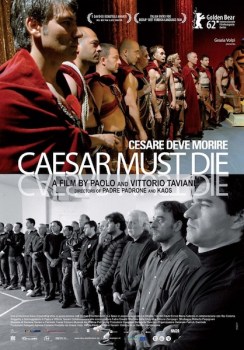
    Caesar Must DieOn the surface, this is a documentary about the inmates of Rome’s high-security Rebibbia prison — many of them with mafia connections — putting on a performance of Shakespeare’s Julius Caesar. However, it becomes clear fairly quickly that it’s all been staged, which is only more apparent when you learn some behind-the-scenes details (at least one prisoner had been released years earlier and returned to participate in this project).

    The question becomes: is that a problem? Because while it isn’t a documentary, it also is a documentary. These are real prisoners putting on a real performance, as they do every year (indeed, it was a previous production that inspired this film’s existence). Even if what we’re watching isn’t literal documentary footage, it’s surely been inspired by real experiences and conflicts, then re-worked into movie form. So it blurs the line between fact and fiction, which is also thematically appropriate: these criminals, some of them murderers, are now playing the parts of murderers in a fiction, and seeing reflections of their own lives in Shakespeare’s centuries-old text.

    I don’t know if this gives us any particular insight into the minds of mobsters, or if the mobsters’ experiences bring a new perspective to Shakespeare, but it seems clear that being involved in the project has given new insight and perspective to the prisoners’ lives. For us as viewers, perhaps that suggestion about the power of art to improve anyone’s life — or to provide an escape or solace when in grim situations — is illumination enough.

    4 out of 5

    Lost River (2014)

    2016 #79
    Ryan Gosling | 95 mins | streaming (HD) | 2.35:1 | USA / English | 15 / R

    Lost RiverThe directorial debut of uber-hearththrob movie star Ryan Gosling is not what you might expect someone of that particular adulation to produce. It’s not just that it has a dark heart, but that it’s slow, opaque, perverted, and not easily summarisable.
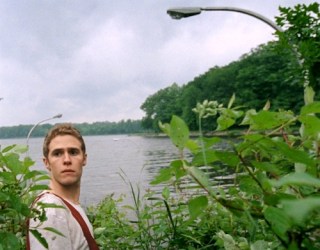
    To try nonetheless: Bones (Iain De Caestecker) lives in a possibly-near-future rundown Detroit, where his mother (Christina Hendricks) is struggling to repay the loan so they can keep their house. A meeting with the bank manager (Ben Mendelsohn) leads to him offering her a job at a mysterious nightclub. Meanwhile, Bones salvages copper for cash, which brings him into the orbit of vicious criminal Bully (Matt Smith). Escaping Bully’s clutches, Bones discovers an old road that leads under a lake. He learns from his neighbour, Rat (Saoirse Ronan), that there’s a town under there, which may hold the key to breaking the curse hanging over their town…

    If it’s not obvious, there’s definitely some magical realism going on in Lost River. Adult fairytale would be another term for it; there are slices of some form of Gothic, too. To put it another way, it’s definitely Lynchian. Other directors may have been an influence on Gosling as well, but it specifically brought Blue Velvet to mind for me, without in any palpable way being a clone of that movie. Nonetheless, it also engages with some very real present-day issues, like the recession, albeit in an elliptical fashion (despite the plot being about someone under threat of losing their house). Perhaps this is just a convenient way to touch of themes of family, home, and what home means (i.e. more than just a house), as well as the importance or otherwise of escaping that home, or somehow reconstituting it.

    Lake lightsIt comes to a very cathartic ending, on multiple levels. I almost didn’t realise I needed that catharsis at the end — I knew I wanted certain characters to get their comeuppance, but the load that seems to lift at the end, with all the different climaxes combined, including parts that might not seem ‘good’… well, it’s almost like Rat is right about Bones’ actions lifting a bad spell.
    On a technical level the film is superb, combining fantastic cinematography with evocative costumes, expressive sets, and an effective score. Some of the imagery is the visual equivalent of ambient mood music, as is some of the score (er, literally). That occasionally comes across as self-consciously Arty, therefore, but in the right mood or mindset it works. There are several strong performances as well: Christina Hendricks does understated desperation; Matt Smith is a credible schoolyard bully writ large; Ben Mendelsohn exudes menace as a nightclub-owner-cum-devil-incarnate; and Saoirse Ronan is marvellous in everything.

    By giving it a 4, I’m maybe being a tad generous; certainly it’s poor consumer advice, because this is a “not for everyone” film. But if I gave it a 3, I’d be underselling how much I eventually liked it. It’s certainly flawed — slow, slight, maybe pretentious, and Arty. But it also takes us to an intriguing world, toys with some interesting ideas, conveys a few memorable moments, and stuns with consistently arresting visuals. I’ll take that mix over “blandly fine” any day.

    4 out of 5

    Se7en (1995)

    100 Films’ 100 Favourites #81

    Seven deadly sins. Seven ways to die.

    Also Known As: Seven

    Country: USA
    Language: English
    Runtime: 127 minutes
    BBFC: 18
    MPAA: R

    Original Release: 22nd September 1995 (USA)
    UK Release: 5th January 1996
    First Seen: TV, 12th June 2001 (probably)

    Stars
    Morgan Freeman (The Shawshank Redemption, Million Dollar Baby)
    Brad Pitt (Legends of the Fall, The Curious Case of Benjamin Button)
    Kevin Spacey (The Usual Suspects, American Beauty)
    Gwyneth Paltrow (Sliding Doors, Shakespeare in Love)

    Director
    David Fincher (Fight Club, Zodiac)

    Screenwriter
    Andrew Kevin Walker (8MM, Sleepy Hollow)

    The Story
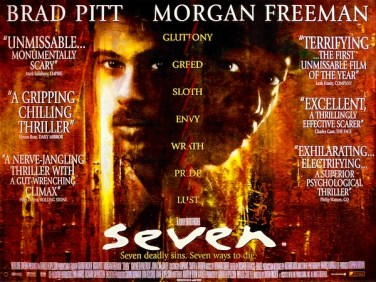
    In an unnamed city, two homicide detectives investigate a series of grim murders inspired by the seven deadly sins.

    Our Heroes
    William Somerset is a detective who works calmly and methodically, and cares more than most. Serving out the last few days before his retirement, he lands a helluva final case. His new partner is David Mills, a hotheaded but idealistic new transfer who’s keen to prove himself. Despite their chalk-and-cheese temperaments, or perhaps because of them, the pair may be ideally suited to catch the elusive killer.

    Our Villain
    John Doe, a proper psychopath, and on a mission too. I say the detectives are ideally suited to catch him, but, well (major, major spoilers…) they technically don’t and he essentially wins.

    Best Supporting Character
    R. Lee Ermey’s police captain, purely for the moment when he answers a phone. I love that bit of humour far more than it probably warrants.

    Memorable Quote
    “What was in the box? What’s in the box? What’s in the fucking box?!” — Mills

    Memorable Scene
    The climax — just Somerset, Mills, and John Doe, alone in the middle of nowhere… and then a deliveryman shows up. “John Doe has the upper hand!”

    Technical Wizardry
    The film’s visual style really helps to sell the tone — dark, foreboding, grim. This is in part because it’s always raining, a decision made to increase the sense of dread, and because of Darius Khondji’s cinematography, which employed bleach bypass (see also: Minority Report), a process that serves to deepen shadows. Additionally, for the film’s Platinum Series DVD release it was rescanned from the original negative, meaning the whole film had to have its colour grading re-done. Some of the changes were quite extensive (as detailed in the DVD/Blu-ray’s special features, if you’re interested).

    Truly Special Effect
    A serial killer thriller might not sound like a special effect showcase, but John Doe’s extreme methods lead to some pretty unusual and gruesome corpses — rendered with suitably sickening prosthetics, of course. ‘Sloth’ is particularly harrowing, though ‘lust’ is so bad it’s left almost entirely to our imagination — though, again, someone had to design and build the… instrument.

    Making of
    John Doe’s shelves of handwritten notebooks were real and created especially for the film. They took two months to create at a cost of $15,000.

    Next time…
    Screenwriter Andrew Kevin Walker originally thought of 8MM as a sequel, and David Fincher was interested, but it didn’t happen and we wound up with the only-half-decent Nicolas Cage-starring Joel Schumacher-directed version instead.

    Awards
    1 Oscar nomination (Editing)
    1 BAFTA nomination (Original Screenplay)
    2 Saturn Awards (Writing, Make-Up)
    5 Saturn nominations (Action/Adventure Film, Actor (Morgan Freeman), Supporting Actress (Gwyneth Paltrow), Director, Music)
    Places with more taste (i.e. where it won Best Film): Empire Awards, Fantasporto International Fantasy Film Awards, MTV Movie Awards; plus Best Foreign Language Film at Blue Ribbon Awards, Hochi Film Awards, Sant Jordi Awards (Audience Award)

    What the Critics Said
    “designer unpleasantness is a hallmark of our era, and this movie may be more concerned with wallowing in it than with illuminating what it means politically. Yet the filmmakers stick to their vision with such dedication and persistence that something indelible comes across — something ethically and artistically superior to The Silence of the Lambs that refuses to exploit suffering for fun or entertainment and leaves you wondering about the world we’re living in.” — Jonathan Rosenbaum, Chicago Reader

    Score: 80%

    What the Public Say
    “The rain never ends. There is seldom any sunlight, or any warmth. The city feels like a city of the damned, as if its denizens are souls trapped in some circle of hell from which there is no escape. A feeling of dread pervades everything; there is never any inclination that anything remotely like justice or hope or salvation is even possible here. […] it’s all style and atmosphere but… to criticise the film for that, almost feels like missing the point — it’s so integral to the piece, the atmosphere is actually one of the film’s characters” — the ghost of 82

    Elsewhere on 100 Films
    I reviewed Se7en quite thoroughly (and, if I do say so myself, quite well) as part of a retrospective on Fincher’s films back in 2011, concluding that “some would claim that Se7en is no more than a standard murder thriller with a stock mismatched pair of detectives. In some respects they’re right, but in enough respects they’re wrong. There’s a killer high concept behind the crimes, but it’s really the execution of the film that makes it so much more. It’s in the performances, the way those stock characters are written, their subplots, the story’s pace, the cinematography, the music, individual sequences like Somerset in the library or the climax that rise not only to the top of the genre but to the top of the very medium of film itself.”

    Verdict

    When asked, I normally say Se7en is my favourite movie. That’s partly pre-picked just to prevent any such conversations turning into a dreary slog where I um and ah through hundreds of options, but naturally there’s some truth in it. On the surface it’s merely a police procedural, but it’s the way it handles that material that elevates it. It’s a dark film about terrible deeds, which both suits its subject matter (murder isn’t really just a fun little mystery to solve, is it?) and presents a worldview that makes us consider who’s really right and who’s really mad — John Doe is clearly an evil psychopath, but does he have a point? It’s also made with supreme artistry by director David Fincher and his team — I’ve already mentioned DP Darius Khondji, but it’s also superbly edited by Richard Francis-Bruce. And I’d argue it has one of the greatest climaxes ever filmed. There are more easily enjoyable movies in my 100 Favourites, but there are none that are any better made, nor any that better expose the dark heart of humanity.

    #82 will be… a big damn movie.