2013 #56
Andrew Dominik | 160 mins | Blu-ray | 2.40:1 | USA, Canada & UK / English | 15 / R
 September 1881: after admiring their leader for years through cheap magazine stories, 19-year-old Robert Ford manages to hook up with the James Gang. Little does he suspect that, just seven months later, he will be responsible for the murder of his idol, Jesse James. (That’s not a spoiler, it’s in the title.)
Ultimately released in 2007, The Assassination of Jesse James by the Coward Robert Ford found itself going head-to-head in the awards season with No Country for Old Men and There Will Be Blood. The accepted narrative of that time is about the two-horse-race between the latter two, though Jesse James fits with them in some kind of thematic and stylistic triumvirate: they’re all products of what I’d call “American mainstream art house” cinema; all classifiable as Westerns, though none in a strictly traditional sense; all more concerned with their characters and their lives than the machinations of the plot. In the end, No Country garnered most of the awards, There Will Be Blood seems to have settled in as a critical darling, but, for my money, this purest Western of the three is by far the best.
I’m not going to waste much time making direct comparisons between the three films. I suspect there’s an article in that, if someone hasn’t written it already, but it’s not one I have much interest in penning: I don’t think I’ve made much secret of my distaste for the Coen and Anderson efforts in this little threesome, both being films I never really engaged with and certainly didn’t enjoy (in fairness, I should give Blood a second shot, but even the idea of sitting through No Country again makes me shudder). The Assassination of Jesse James, however, is a film I both engaged with and enjoyed greatly.
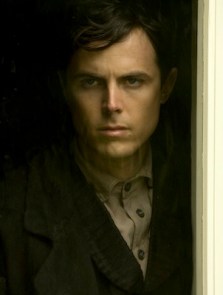 Let’s be clear, though: this is not a film for everyone. This is not an action movie set in the Wild West, which might be what’s expected from a Hollywood studio movie starring Brad Pitt. Apparently director Andrew Dominik intended to make a film with a Terence Malick vibe, so I read after viewing, which chimed with me because “Malick-esque” was one of my foremost thoughts during viewing. This is a slowly-paced two-hours-and-forty-minutes, with more shots of crops blowing gently in the breeze or riders approaching gradually over distant hills as there are flashes of violence. Despite what the studio wanted, this is not a fast-paced action Western, it’s a considered, sometimes meditative, exploration of character and theme.
The character explored is not particularly Jesse James, but Robert Ford. As the latter, Casey Affleck was largely put forward for Supporting Actor awards, which does him a disservice — the film is largely told from Ford’s perspective, and though there are asides where it follows James or other members of the gang, it begins with Ford’s arrival and ends with his departure from this world. Affleck is superb in a quiet but nuanced performance, which I would say ranges wildly without ever appearing to change. At times he is cocky and self-sure, at others cowardly and defensive, often creepy and occasionally likeable, sometimes both worldly and naïve, a perpetual wannabe who even when he achieves something is still poorly viewed. You might think the title is stating its position on him, but it really isn’t — it’s a position to be considered, a point of contrast to the man’s motives and actions; a statement that is in fact a question.
Conversely, Pitt’s Jesse James is closer to a supporting role. We see him primarily through the eyes of others; he is distant, unknowable, his moods and actions unpredictable thanks to years of law-dodging that’s led to a paranoia about his own men — not all of it misplaced.  Jesse’s mood swings are more obvious than Ford’s, but Pitt makes them no less unlikely. At times charming and a clear leader, at others he is a genuinely tense, frightening presence, without ever needing to resort to the grandstanding horror-movie grotesques offered by (Oscar winners) Daniel Day-Lewis and Javier Bardem in There Will Be Blood and No Country respectively.
Though there are other memorable and striking performances — particularly from Sam Rockwell, Paul Schneider, and a pre-fame Jeremy Renner; plus a precise, perfectly-pitched, occasional voiceover narration from Hugh Ross (who doesn’t have many credits to his name but surely deserves some more now) — the third lead is Roger Deakins and his stunning cinematography. There are many clichés to use for good-looking films, and the vast majority of the time they are trotted out as what they are and not really meant. Jesse James, however, is one most could be applied to with total accuracy. For example, there are very few — if any — films where you could genuinely take any frame and hang it as a perfect photograph; but if there is one where you could, this is it.
Deakins has reportedly said that “the arrival of the train in darkness is one of the high watermarks of his career”, and he’s right to think that. It’s a glorious sequence, made up of several shots where every one is perfectly composed and lit to create a remarkable ambience and beauty, as well as telling the story, which in this instance involves as much creation of suspense as eliciting pure artistic appreciation. Deakins did take home a few awards for his work here, but not the Oscar. I can’t remember which film did win and, frankly, I don’t care, because whichever it was this outclasses it by miles.
 This must also be thanks in part to director Andrew Dominik. Every last shot feels precisely chosen and paced. Of course, every shot in every film has been chosen and placed where it is, but the amount of thought that’s gone into that might vary. Jesse James somehow carries extra weight in this department, with no frame in its not-inconsiderable running time wasted on an unnecessary angle or take that’s allowed to run even a second too long. Somewhat famously, there was a lot of wrangling over the film’s final cut (delaying its release by a year or more), with the aforementioned debate between something faster and something even slower: a four-hour version screened at the Venice Film Festival, to a strong reception. Sadly, the intervening years haven’t seen that cut, or any of its parts, resurface (to my knowledge). That’s an hour and twenty minutes of material and I’d love to know what’s in them.
One thing in there, I’d wager, would be the performances of Mary-Louise Parker and Zooey Deschanel. Both their characters have a tiny presence in the finished product, and while that may be fine for the overall story (some would criticise how much female characters are sidelined, but that’s another debate), casting two moderately major actresses creates a disjunct with the size of their roles. I was going to say this is one of the film’s few flaws, but it’s debatable if it even qualifies as that: if they’d cast less recognisable faces, their lack of presence would pass by unnoticed.
The other thread I mentioned, seven paragraphs ago, was “theme”. The film has a lot of concurrent aspects one might consider — “loyalty” being a major one, for instance — but I think the biggest is “celebrity”. Not in the modern sense, though I’m sure there are analogies for those that wish. To pick up on what I was saying before: Ford is the main character, and the main thing he wants, even if he doesn’t realise it, is fame. He joins the James Gang because he’s enamoured with the adventurous tales he’s read; 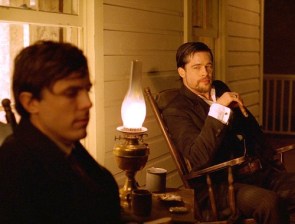 because he’s obsessed with the notoriety of Jesse. Later, once the titular deed is done, he becomes an actor (not without talent, as the narration informs us) and re-performs the act that made him famous hundreds of times. It’s his legacy, however, to not be as well-remembered as his victim; to not be as well-liked, even; not even close. There’s something there about the pursuit of fame for its own sake, if nothing else.
It’s difficult to call any film “perfect”. Certainly, there would be plenty of viewers who would consider The Assassination of Jesse James to be an overlong bore. Each to their own, and I do have sympathy with such perspectives because there are acclaimed films that I’ve certainly found to be both overlong and boring. Not this one, though. From the constant beauty of Deakins’ cinematography, to the accomplished performances, to the insightful and considered story (not to mention that it’s been cited as the most historically accurate version of events yet filmed), there are endless delights here. As time wears on and awards victors fade, it deserves to elbow its way back into the debate for the best film of the ’00s.
The UK TV premiere of The Assassination of Jesse James by the Coward Robert Ford is on ITV4 tonight at 10pm. It’s screening again tomorrow at 11pm.
It placed 3rd on my list of The Ten Best Films I Saw For the First Time in 2013, which can be read in full here.

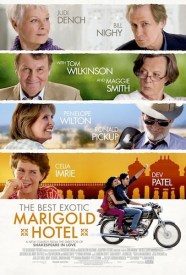 “Old fogies go to India” is the setup of this frothy comedy-drama that clearly courts the so-called ‘grey pound’ — i.e. older viewers still prepared to pay to go to the cinema. But when said fogies are played by Judi Dench, Maggie Smith, Tom Wilkinson, Bill Nighy, Ronald Pickup, Celia Imrie and Penelope Wilton, it will surprise no one to learn there’s something here for us all.
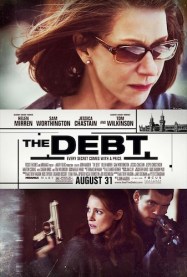 Screenwriting partnership Jane Goldman and Matthew Vaughn vacate their usual milieu (see
 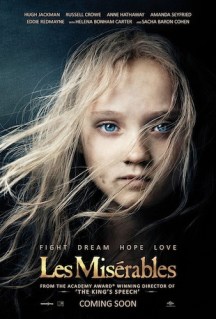 27 years after its West End debut, the long-running smash-hit musical finally makes the leap to the big screen. Such a beloved work paired with a recently Oscar-winning director and an all-star cast was pretty much a dead cert for big-name awards nominations, and so it was to be; but critical reaction was more mixed: I’ve seen people who love the film unreservedly, and others who despise it with a passion.
 Despite its running time, Les Mis is quite brisk for much of that plot (which, sorry if you’ve never seen it, I have described a fair old chunk of). There’s no interval in the film, but on stage it doesn’t come until well into the Paris section of the tale. Such a break must help the pacing, because while I remember enjoying it all on stage (where, I might add, it’s even longer), on screen I felt the middle portion began to drag. So yes, an epic running time for an epic, but it actually moves quickly through the parts that make it an epic before slowing for a bit of a forced romance and that kind of palaver.
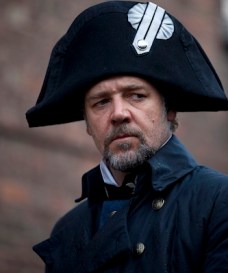 Much talk around Les Mis focused on the performances, with three in particular attracting discussion. As honourable wronged-man Valjean, Jackman is the star of the show, and brings his musical theatre background to bear on a clearly-sung but emotive performance. He was unlucky to be in the same awards year as Daniel Day-Lewis’ all-conquering turn in
 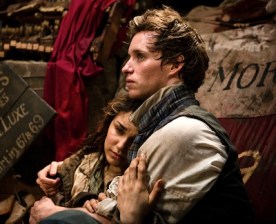 The rest of the cast is an assortment from the can-sing (Eddie Redmayne, Amanda Seyfried) to the comedic-so-it-doesn’t-matter (Sacha Baron Cohen, Helena Bonham Carter). The best voice of the lot belongs to Samantha Barks as Eponine. No surprise, really, as she was poached from the West End… where she’d found herself via one of Andrew Lloyd Webber’s BBC talent shows, so I imagine he feels thoroughly vindicated now (as if he didn’t before).
 Hooper does an above-average job on the whole, but the lack of awards nods shouldn’t be so surprising.
 The director of
 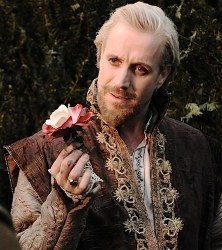 which is what you should expect from the director of all those films I listed above but quite blatantly doesn’t sit right. And it’s over two hours long too, so it keeps going… and going…
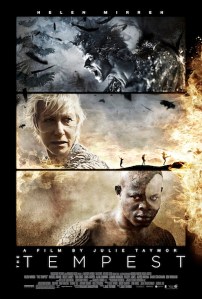 Film and theatre director Julie Taymor (infamous now for Spider-Man: Turn Off the Dark) here brings us a radical-seeming interpretation of Shakespeare’s final play. The main character’s changed gender! There’s CGI being tossed about everywhere! It’s got Russell Brand in it! If that sounds superficial, it is. Taymor’s film is still set in the Elizabethan period, in Elizabethan dress (broadly speaking), with a cast of mostly classical actors, enacted on an island that is admittedly a stunning setting but is nonetheless where the original play is set. If it’s a “modern retelling of William Shakespeare” (per the blurb), it perhaps missed what Baz Luhrmann
 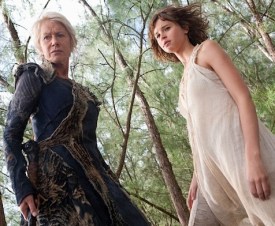 It goes on in the middle, a mess of scenes of characters traipsing about the island for no apparent reason. (This reminded me of
 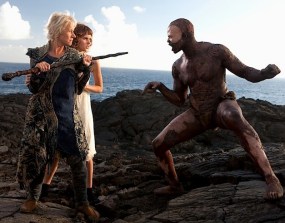 Another key role sees Djimon Hounsou as the slave Caliban, immediately suggesting a colonialist reading that isn’t exactly a huge reach anyway. And Russell Brand makes Shakespeare sound like Russell Brand talking, which at some points I’m not convinced he isn’t (I’ve no idea if Taymor allowed him to stray from the text or not). Love interest is provided by Reeve Carney. I’ve never heard of him, but he’s young and quite pretty and has a music video on the Blu-ray, so I guess he’s from that kind of arena. He speaks with an English accent, but so does everyone else (bar Caliban and the boatswain), so he may still be sourced from the other side of the pond’s teenybopper scene.
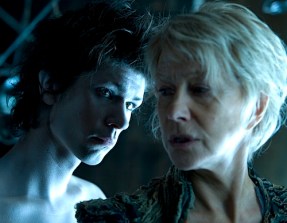 Ariel as a truly spiritual spirit, half invisible and jetting off into the sky on a regular basis. I found his realisation a mixed bag: it’s nice to take advantage of the medium to render the spirit in a way that’s impossible on stage, but sometimes it goes a bit far and looks a bit cheap. They’ve also tried to make him androgynous, but done it a bit weirdly: he’s always naked, occasionally making it clear he has no penis, sometimes has small breasts, but always has a moderately deep, clearly manly voice. Show it to a class of teenagers studying the play and you may illicit some confused feelings… That aside, the make-up effects are brilliant. Caliban’s patchwork skin is the best piece of work, but Ariel’s rendering as a giant crow is a fearsome sight as well. For all I know the latter may count as costume design, which is what earnt the film an Oscar nomination. But, hey, the clothes are nice too.
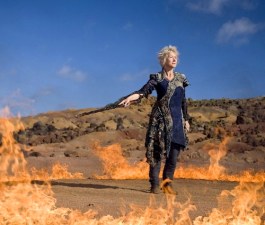 It would be nice to say the magic and fantasy could convert new fans to Shakespeare, much as Leo DiCaprio and swishy editing did for teens nearly two decades ago, but there’s nothing beyond that trailer-friendly neat-looking stuff to convince them it was worth their time. Meanwhile, Shakespeare traditionalists may find it all a bit much. If that leaves it stranded on an ill-located isle of terrible beauty, then at least it’s an apt fate.
 Some films benefit from knowing as little as possible going in; some are at their best when you know nothing at all. But that’s pretty much impossible — unless you go purely on someone’s “you’ll like this, trust me” recommendation about a film you’ve never even heard of, you’ll be aware of something. Normally this comes from a review or blurb, and you just have to trust that the reviewer or copywriter was kind enough to keep it spoiler-free.
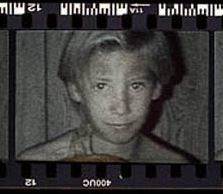 So here’s what the film lets you in on in the opening moments: in 1993, 13-year-old Nicholas Barclay went missing in Texas. In 1997, a boy claiming to be him surfaced… in Spain. He had Nicholas’ tattoos, but he had a French accent and the wrong colour eyes. And yet the first relative to see him, Nicholas’ older sister, gave a positive ID, and upon returning to America he was accepted into the family. Why did they take in such an obvious fraud?
 but, nonetheless, it makes the documentary itself feel untrustworthy, just like its participants. Is that an intended effect? Arguably the film’s main theme is lies — the lies we tell ourselves, the truths we want to believe; confirmation bias, perhaps, though that term is never mentioned — but the documentary itself never lies to us… I don’t think. It just feels like it might be.
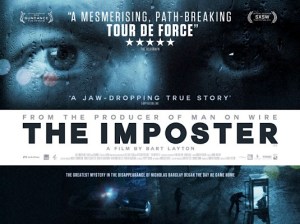
 as the poster prominently tells us, this is “from the producer of
 Directed by the inestimable Billy Wilder, winner of the Grand Prix (forerunner to the Palme d’Or) at the first Cannes, winner of the Best Picture Oscar in 1946, and also Best Actor, Director, and Screenplay, it’s a wonder that The Lost Weekend isn’t better known. I don’t think I’d even heard of it until Masters of Cinema announced their Blu-ray release
 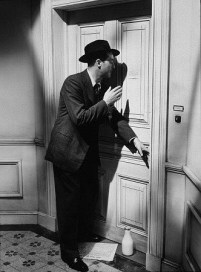 all of them thwarted at the last possible moment, when victory seems assured. The film isn’t preachy, but if it does teach us a lesson then this is how it does it.
 Milland is astounding. The film rides on him and he really carries it. It’s easy to play a comic drunk, but Milland doesn’t sink to that. Indeed he doesn’t do one type of drunk at all, swaying back and forth across various levels of inebriation as required. I often find films of this era contain performances we assess as great, but if you put them in a film today no one would buy it; they’d find it stagey and fake. Milland’s transcends that — it fits the era, but I wouldn’t be surprised to find it would play just as potently today. I think it’s fair to say that Milland is not widely known today, but with every film of his I become more convinced that history has been unkind.
 There’s also able support from Howard Da Silva as barman Nat and Doris Dowling as Gloria (is she a whore of some kind? Just an escort? A bar-crawler? Did I miss something?), whose slang is oddly infectious. No offence to Jane Wyman, but her lovelorn-but-strong girlfriend character only seems to really come alive in the closing minutes, when she considers abandoning Birnam to his fate.
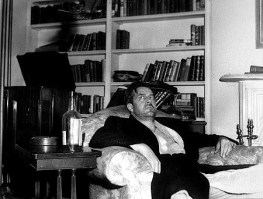 but from what I do know of other conditions of addiction and mental health, this feels as if it’s still thoroughly relevant.
 Shortly after I watched Tinker Tailor, it was announced that they (“they” in this instance being Working Title, I think) are planning a new film adaptation of Daphne du Maurier’s perennially popular novel Rebecca. This news was greeted (at least on the websites where I read it) with cries in the comments along the lines of, “you can’t remake Hitchcock!” Such is the power of
 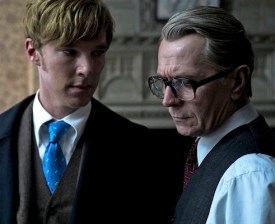 Yet, for all that, the film is excellent. It may not match the TV series in places, in my subjective opinion, but in its own right it shines. Gary Oldman does the impossible and offers a Smiley that is neither an imitation of Guinness’ nor a deliberate counterpoint, but stands apart as an equally proficient rendering of the character. The rest of the cast are equally up to task, with the exception of Kathy Burke, who stands out like a sore thumb in my opinion.
 Another noteworthy advantage of the film is that it’s gorgeously shot. The TV series actually has its own appeal in this area, with a realism that is quite pleasing. The film occasionally goes grander (look at the depiction of meeting rooms in The Circus for a major example — while the TV series goes for any old room in Whitehall, the film offers stonking soundproof ‘pods’), but it works in its own way.
 It’s funny what movies sometimes pique your interest. I saw a trailer for relationship drama Love and Other Impossible Pursuits (or, as it was retitled in America, The Other Woman) on some completely unrelated US Blu-ray earlier this year (I forget which film it was, but the only connection was the disc’s distribution company) and wondered why I’d never heard of it before — after all, it looked like a Worthy Drama, starring Oscar Winner Natalie Portman and Lisa Kudrow From
  As I was brought to the film by its trailer, it pays to say it’s actually very different. The advert hides the baby’s death but hints at it, as if it’s a Big Reveal they clumsily didn’t want to give away. But no, it’s brought up within the first five or so minutes and actually drives a lot of the film. The emphasised “other woman” facet is present, though in a slightly different way to normal: this is how such relationships continue as a long-term status quo, rather than the immediate impact of an affair.
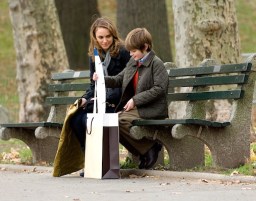 I can imagine that flashback working within the shape of a novel, where structure works differently. Indeed, I got the impression the book is probably very novelistic; maybe a character study, even. Those are two things that don’t always transfer well to film. I don’t think it’s about Being The Other Woman, despite the US title; nor do I think it’s about Being The Stepmother; nor is it about Losing A Baby. Those things are all in there, certainly, but rather than any of them be The Story, they’re elements in the exploration of the character of Emilia. I’m not sure that works for a movie; not for this one at any rate.
