True Romance (1993)

2018 #150
Tony Scott | 121 mins | Blu-ray | 2.40:1 | USA & France / English & Italian | 18
True Romance

Directed by Tony Scott from Quentin Tarantino’s first screenplay,* True Romance is pretty much everything you’d expect from an early Quentin Tarantino screenplay directed by Tony Scott. It stars Christian Slater and Patricia Arquette as a pair of Bonnie and Clyde-ish lovers, who accidentally steal a load of cocaine from her pimp and end up on the run from the mob.

At first blush, I’d say this feels much more like a Tarantino movie than a Scott one. It’s all there in the dialogue, the subject matter, the characters — it’s everything you’d expect from early QT: verbose, funny, littered with pop culture references, violent. It’s well paced, too; not exactly whip-crack fast, but also never slow or draggy. It is shot more like a Scott flick than a QT one, but only somewhat — it lacks both the slick flashiness we associate with Scott’s early work (Top Gun, Beverly Hills Cop II) and the grungy hyper-editing of his later stuff (Man on Fire, Domino). That said, some scenes (like one between Arquette and James Gandolfini’s underboss in a motel room, for example) are shot like Tony Scott to the nines, reiterating my opening point.

Other observations: There’s one helluva supporting cast — it’s just littered with famous names in roles that only last a scene or two. (I could list them, but that might spoil the fun.) The sweet plinky-plonky score by Hans Zimmer is so unlike either his normal stuff or this genre of movie, which is no bad thing. On its original release the film was cut by about two minutes to get an R rating, with the original cut eventually released “unrated” on home formats, sometimes labelled the “director’s cut”. All the differences are relatively short trims to do with violence (full details here). The “director’s cut” is the only one that’s ever been released on DVD or Blu-ray anywhere, thus making the distinction between “theatrical” or “director’s cut” pretty much moot at this point… or at any point in the last 20 years, frankly.

Clarence and Alabama go to the movies

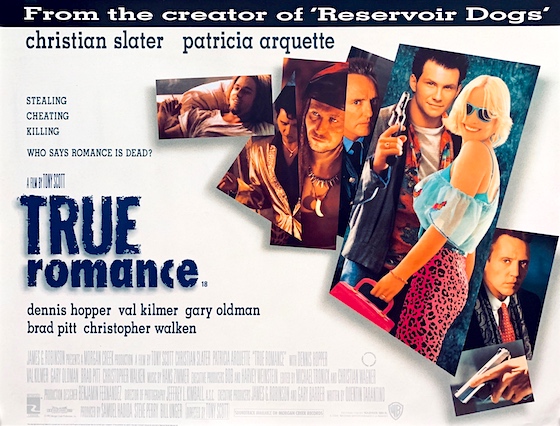
It’s got a funny old trailer, too: it’s centred around a bunch of made-up numbers that have no basis in the film (“60 cops, 40 agents, 30 mobsters”), it mostly features the film’s climax, and it doesn’t once mention Quentin Tarantino — I guess “from the writer of Reservoir Dogs” wasn’t considered a selling point just the year after it came out. (Though obviously it was in the UK — just see the poster atop this review.)

Of course, nowadays it’s often regarded as “a Tarantino movie” — the copy I own is part of the Tarantino XX Blu-ray set, for instance. I wonder if that ‘divided authorship’ is why, while the film does have its fans, it’s not widely talked about as much as some of either man’s other work: it’s not wholly a Tony Scott film, but, without QT actually behind the camera, it’s not really a Tarantino one either. Personally, I’m a fan of both men’s work, so of course it was up my alley. I don’t think it’s the best from either of them, but mixing together the distinct styles of two such trend-setting iconoclasts does produce a unique blend.

4 out of 5

True Romance was viewed as part of my Blindspot 2018 project.

* True Romance came out between Reservoir Dogs and Natural Born Killers, but apparently QT wrote this first, then when he failed to get funding for it he wrote NBK, then when he also failed to sell that he wrote Reservoir Dogs. Another version says True Romance and NBK started out as one huge movie, written in Tarantino’s familiar chapter-based non-chronological style, until QT and his friend Roger Avery realised just how long it was and decided to divide it in two. ^

The Happytime Murders (2018)

2019 #9
Brian Henson | 91 mins | streaming (HD) | 2.39:1 | USA & China / English | 15 / R

The Happytime Murders

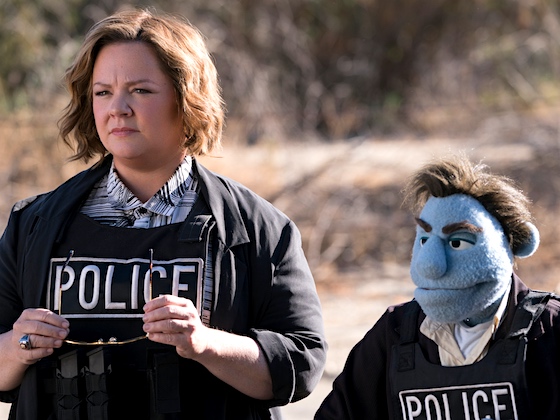
The Muppets meets Who Framed Roger Rabbit meets an R rating in this black comedy murder mystery from director Brian “son of Jim” Henson. Set in a world where Muppet-esque (but not actual Muppets, because IP rights) puppets co-exist alongside humans, disgraced puppet cop turned private investigator Phil Phillips (performed by Bill Barretta, which, let’s be honest, is a better name for a comedy private eye than the one they’ve actually used) stumbles onto a spate of connected puppet murders, and must reluctantly team up with his former partner, human detective Connie Edwards (Melissa McCarthy), to crack the case.

The mystery that drives the plot isn’t too bad, including a neat twist/reveal that’s perhaps guessable but not terribly so. It does hew closely to the tropes and clichés of the noir genre, which is a mixed blessing. On the one hand, as it’s not a straight crime movie I don’t think it’s a problem for it to recycle all those things when it has fresh comedy to hang off them, or if it’s somehow riffing off familiar elements but with the puppet stuff, but often it isn’t that clever.

Women and puppets in blue

Nonetheless, there are some legitimately funny bits along the way, often found among the riffs on the puppet thing (for example: one of the victims is drowned, and before bagging the body they ring him out). Unfortunately it isn’t funny as often as it should be, too often relying on worn or lacklustre humour. I mean, it tries to run with the old playground favourite “idiots say what?” as a running gag. It also leans on puppets being lewd and crude as the extent of the gag, which simply isn’t that funny in itself, partly because it isn’t as original as the film seems to think it is (cf. Team America, Avenue Q).

While The Happytime Murders isn’t close to the echelons of quality where you’d find Roger Rabbit or the best of the Muppets, it’s also not a total washout. From behind-the-scenes stuff I’ve read it sounds like a lot of effort was expended on filming it, making sure the puppets could interact with the humans and so on, and those technical aspects are first rate. It’s just a shame the same level of innovation wasn’t poured into screenplay. I didn’t hate it, but it doesn’t live up to its potential either.

3 out of 5

The Happytime Murders is available on Netflix UK from today.

Review Roundup

As foretold in my most recent progress report, June is off to a slow start here at 100 Films. Or a non-start, really, as I’ve yet to watch any films this month and this is my first post since the 1st. Hopefully it won’t stay that way all month (I’ve got my Blindspot and WDYMYHS tasks to get on with, if nothing else).

For the time being, here a handful of reviews of things I watched over a year ago but have only just written up:

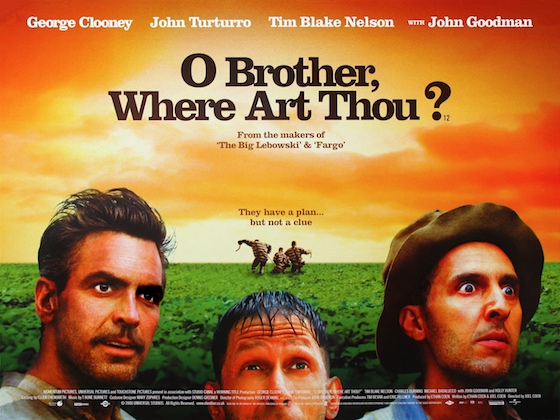
  • O Brother, Where Art Thou? (2000)
  • Allied (2016)
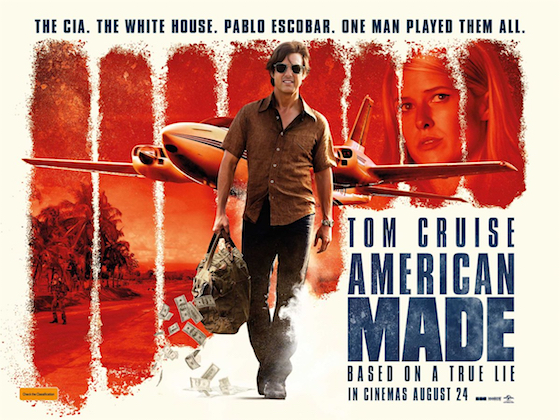
  • American Made (2017)


    O Brother, Where Art Thou?
    (2000)

    2018 #106
    Joel Coen | 103 mins | streaming (HD) | 2.39:1 | UK, France & USA / English | 12 / PG-13

    O Brother, Where Art Thou?

    The eighth movie from the Coen brothers (eighth, and yet they still weren’t being allowed a shared directing credit! No wonder that stupid DGA rule pisses people off) is one of their movies that I found less objectionable. Oh, sure, most of their stuff that I’ve reviewed I’ve given four stars (as well as a couple of threes), but that’s more out of admiration than affection — for whatever reason, their style, so popular with many cineastes, just doesn’t quite work for me; even when I like one of their films there’s often still something about it I find faintly irritating.

    Anyway, for this one they decided to adapt Homer’s Odyssey, but set in the American Deep South during the Great Depression. Apparently neither of the brothers had ever actually read The Odyssey, instead knowing it through cultural osmosis and film adaptations, which is perhaps why the film bears strikingly minimal resemblance to its supposed source text. Rather, this is a story about songs, hitchhiking, and casual animal cruelty, in which the KKK is defeated by the power of old-timey music. Hurrah!

    It’s mostly fairly amusing. If it was all meant to signify something, I don’t know what — it just seemed a pretty fun romp. I thought some of the music was okay. (Other people liked the latter more. Considerably more: the “soundtrack became an unlikely blockbuster, even surpassing the success of the film. By early 2001, it had sold five million copies, spawned a documentary film, three follow-up albums (O Sister and O Sister 2), two concert tours, and won Country Music Awards for Album of the Year and Single of the Year. It also won five Grammys, including Album of the Year, and hit #1 on the Billboard album charts the week of March 15 2002, 63 weeks after its release and over a year after the release of the film.” Jesus…)

    Anyway, that’s why it gets 4 stars. I liked it. Didn’t love it. Laughed a bit. Not a lot. Some of the music was alright. Not all of it. Naturally it’s well made (Roger Deakins!) without being exceptionally anything. Harsher critics might say that amounts to a 3, but I’m a nice guy.

    4 out of 5

    Allied
    (2016)

    2018 #116
    Robert Zemeckis | 119 mins | streaming (HD) | 2.39:1 | USA, UK & China / English & French | 15 / R

    Allied

    Brad Pitt and Marion Cotillard star as a pair of intelligence agents who fall in love in Mr. & Mrs. Smith: WW2 Edition. Settling down together in England, all is lovely for them… until one comes under suspicion of working for the enemy…

    Overall Allied is a very decent spy thriller, let down somewhat by a middle section that’s lacking in the requisite tension and a twee monologue coda. But the first 40 minutes, set in Morocco and depicting the mission where the lovers first meet, are pretty great; there’s plenty of neat little tradecraft touches scattered throughout; and there are some pretty visuals too. There are also some moments that are marred by more CGI than should be necessary for a WW2 drama, but hey-ho, it’s a Robert Zemeckis film.

    That said, Brad Pitt’s performance is a bit… off. He never really seems connected with the material. Perhaps he was trying to play old-fashioned stoic, but too often it comes across as bored. It also constantly looked like he’d been digitally de-aged, but maybe that’s because I was watching a 720p stream; or maybe he had been, though goodness knows why they’d bother.

    Anyway, these are niggles, so how much they bother you will affect your personal enjoyment. I still liked the film a lot nonetheless.

    4 out of 5

    American Made
    (2017)

    2018 #124
    Doug Liman | 109 mins | streaming (HD) | 1.85:1 | USA & Japan / English & Spanish | 15 / R

    American Made

    Described by director Doug Liman as “a fun lie based on a true story,” American Made is the obviously-not-that-truthful-then ‘true story’ of Barry Seal, a pilot who was recruited by the CIA to do some spying and ended up becoming a major cocaine smuggler in the ’80s.

    Starring ever-charismatic Tom Cruise as Seal, the film turns a potentially serious bit of history (as I understand it, the events underpinning this tale fed into the infamous Iran-Contra affair) into an entertaining romp. Indeed, the seriousness of the ending is a bit of a tonal jerk after all the lightness that came before, which I guess is the downside of having to stick to the facts.

    Still, it’s such a fun watch on the whole — a sliver long, perhaps, even though it’s comfortably under two hours, but it does have a lot of story to get through. Parts of that come via some spectacular montages, which convey chunks of story succinctly and are enjoyable in their own right. Liman doesn’t get a whole lot of attention nowadays, I think, but it seems he’s still got it where it counts.

    4 out of 5

  • BlacKkKlansman (2018)

    2019 #86
    Spike Lee | 135 mins | download (UHD) | 2.39:1 | USA / English | 15 / R

    BlacKkKlansman

    Oscar statue2019 Academy Awards
    6 nominations — 1 win

    Won: Best Adapted Screenplay.
    Nominated: Best Picture, Best Director, Best Supporting Actor (Adam Driver), Best Editing, Best Original Score.

    “A black man infiltrates the KKK.” Sounds like the setup for a joke, doesn’t it? Or possibly some outrageous blaxploitation movie. But it’s something that actually happened, and here co-writer/director Spike Lee tells the story of the guy who did it.

    Ron Stallworth (John David Washington) is the first black officer in the Colorado Springs police department. After seeing a small advert in the local paper for information on the Ku Klux Klan, Ron phones the number and pretends to be an angry white racist. The ruse works and he’s invited to meet them, which obviously he can’t, so the department agrees to send intelligence officer Flip Zimmerman (Adam Driver) in his place. So begins an undercover operation where Zimmerman pretends to be Ron in person, and Ron pretends to be white on the phone.

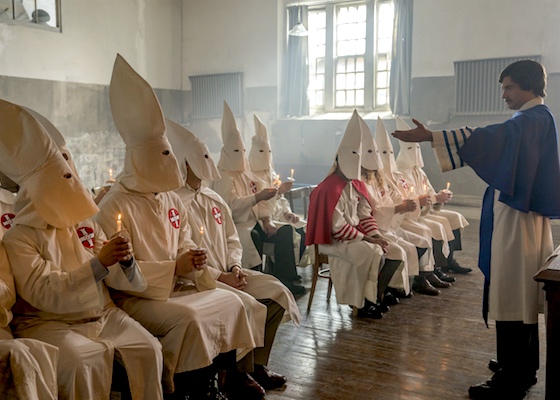
    Although the premise sounds comical, the fact it’s a true story concerning an organisation as inhumane and pernicious as the KKK made me worried the film would be serious, grim, and heavy-going. In actuality, it’s lively, funny, and fast-paced. Humour is woven throughout the story in a way that is neither incongruous nor forced, and it doesn’t undermine the stakes when things get serious. And there remain parts that remind you of the true horrors of racism in America, in particular a sequence that intercuts a Klan initiation with an old black man remembering the stomach-churning details of a lynching he witnessed in his youth. It’s horrific; it’s sad; it’s enraging.

    Spot the black man

    The same could be said of the film’s final few minutes, which powerfully connect these events from decades ago to what’s going on in the US right now. The effect is hair-raising. Some have accused this finale of being exploitative or disconnected to the rest of the movie, but I don’t hold with that. On a literal level, a certain real-life figure turns up in the news footage to provide a very concrete link to the film’s main narrative. Even without that, the whole content of the film is incredibly timely, which is depressing and terrifying, really. It doesn’t have to bash you round the head with echoes of the present state of things in the US, because those parallels are unavoidably there.

    If I have a criticism, it’d be that there’s inadequate follow-up on the internal conflict of Driver’s character. Lee made him Jewish to raise the stakes (the real-life guy wasn’t Jewish; and, if you didn’t know, the Klan hates Jews too), and so we get a beginning and middle for his personal narrative: at first he’s just doing his job, and he doesn’t care about his heritage because it wasn’t part of his upbringing; but then, in one of the film’s most memorable lines, he says he never used to think about being Jewish but now he thinks about it all the time. It feels like some kind of reconciliation of that internal conflict is needed later on, but it doesn’t come. A counter argument is that that’s the point — that he’s been subsumed as just a “White American”, but he is a Jew, and having to handle that dichotomy is something he’s never grappled with before. Still, if that’s the point where his character arc was intended to end, maybe reaching it halfway through the film wasn’t the best idea.

    Black power

    I’d still say it’s a relatively minor concern in a film that does so much else right as to render it more or less trivial. The film’s real triumph lies in how it tackles a very serious, concerning, and timely issue: luring you in with a “too good to be true” premise, engaging you with the entertaining way it’s told, thrilling you with some tense undercover-cop sequences, and finally delivering some gut punches of truth. You’ll have a good time, but also leave incensed at the state of the world — or, perhaps, of one particular country. Not many filmmakers could naturally pull off both of those opposing emotional states within the same movie, but Lee’s cracked it.

    5 out of 5

    BlacKkKlansman is available on Sky Cinema from today.

    It placed 8th on my list of The 15 Best Films I Saw For the First Time in 2019.

    The Highwaymen (2019)

    2019 #48
    John Lee Hancock | 132 mins | streaming (UHD) | 2.35:1 | USA / English | 15 / R

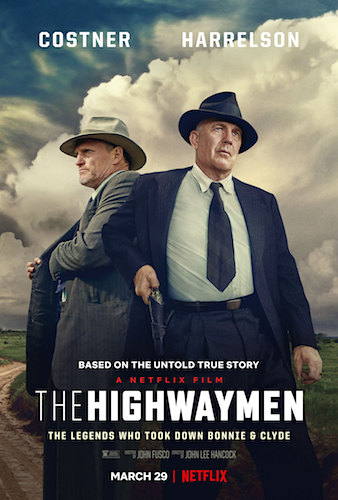
    The Highwaymen

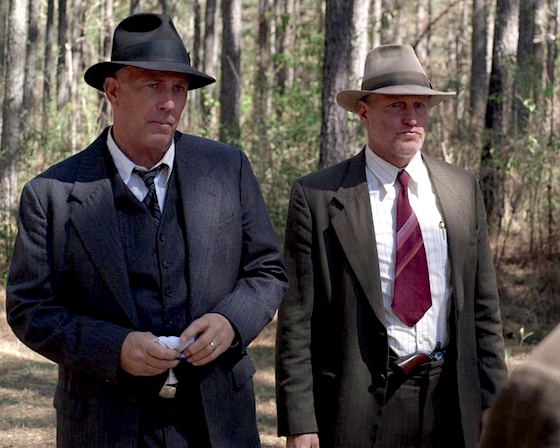
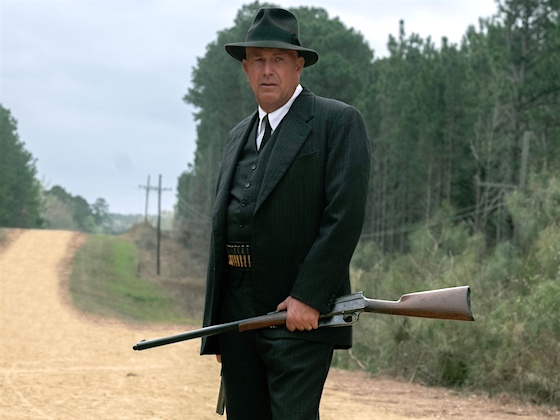
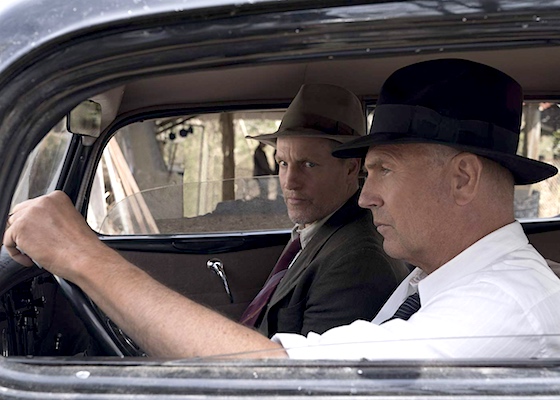
    There’s a fair chance you know the story of Bonnie and Clyde thanks to the acclaimed 1967 movie (or the 2013 miniseries, or one of the other fictional depictions, or just their general notoriety), but what about the story of the guys who got ’em? For all the Robin Hood-esque heroism that was conveyed upon them by the media at the time and then cemented in subsequent fictional retellings, they were still murder-happy criminals. The Highwaymen sets out to do its part in rectifying this by introducing us to Frank Hamer (Kevin Costner) and Maney Gault (Woody Harrelson), a pair of retired Texas Rangers who were reinstated in early 1934 to track down Bonnie and Clyde and put an end to their crime spree.

    Netflix has self-described the film as “The Untouchables meets Public Enemies” (they’re doing the job of reviewers for us!), and, while I’ve only seen one of those movies, I don’t think they’re far wrong. Netflix are well known for commissioning projects that are similar to other stuff people like (reportedly their first-ever original, House of Cards starring Kevin Spacey and produced/directed by David Fincher, came about because statistics showed viewers liked to watch the original BBC series, movies starring Spacey, and movies directed by Fincher), but this feels like one of the most blatant examples I’ve personally seen. Movies like Live by Night and Road to Perdition also came to my mind whilst watching, but it’s not limited to specific examples — it just feels like other movies set in about the same period about the same kind of thing. Well, we might blame Netflix’s data-centric thinking for that, but it’s actually nothing new in Hollywood.

    Men of the highway

    As a work in its own right, The Highwaymen is a solid period investigative thriller. It’s distinctly lacking the youthful verve and excitement of the ’67 film, which matched the youthfulness of its killer couple, replacing it instead with a slow-ish, world-weary methodicalness, which again matches its central pairing. That could be deliberate, or it could just be another instance of the recurring problem that Netflix-originated content is slower than it needs to be. When police procedurals are slow because they’re focusing on the exacting, gradual accumulation of evidence and data that leads to the downfall of the bad guys, that can be a good thing, and there’s an element of that here; but at other times it just feels a bit tardy. What it lacks is a sense of urgency, which you’d think the hunt for ceaseless murderers would have. We’re told these villains need to be stopped ASAP, and we see them continue to commit crimes as our heroes are still hunting for them, but we never really feel any sense of desperation to get the job done. Hamer and Gault kinda toddle along, as if they know it’s going to take two hours of movie-time to complete their mission so why rush?

    It’s not helped by a seeming indecisiveness about what the movie wants to focus on. It’s torn between being a portrait of aged lawmen who may be past their time and a straight-up recounting of the hunt for Bonnie and Clyde. The former is a theme it only touches on in fits and spurts, often in scenes that feel shoehorned in just to address that subject. I’m not sure it had much to say about it either. It doesn’t come to the conclusion that the old ways are the best, or that they’re not relevant anymore; or that these guys still have their skills, or that they don’t anymore (early on there’s a scene where Costner realises he isn’t as accurate with a pistol as he used to be; that never comes up again) — they’re old, they’re tired, and… that’s it. As for the investigation, I presume it’s been depicted fairly accurately — the film has the feel of a story that’s been structured and paced this way because it’s based on truth. Of course, as we know from many other “true story” films, that’s a foolhardy assumption to make. Still, the final ambush was staged exactly where it really occurred out of a desire for historical accuracy, so it’s not wholly unreasonable to suggest that extends to the rest of the film.

    Gunning for Bonnie and Clyde

    One fascinating aspect of this particular case is how much the public were on the side of the criminals, and have been since (when The Highwaymen’s trailer debuted, I saw plenty of comments from disgruntled viewers hoping the film would acknowledge how underhanded the cops were in how they finally got Bonnie and Clyde! As if it somehow wasn’t fair to just shoot dead these crooks who had killed multiple other law enforcement officers, and innocent civilians, without similar fair warning). Perhaps unavoidably, the outlaws’ celebrity is another theme the film touches on, but only loosely. The populous should probably have been terrified of this viciously violent gang, but that they instead exalted them had a lot to do with the social situation at the time, i.e. the Great Depression, where the banks were the enemy, and Bonnie and Clyde did rob banks. Unfortunately, it’s again a thread that’s not fully unravelled; another facet the film notes is interesting but doesn’t bother to do a whole lot with.

    Visually, there’s nothing to complain about here. It’s handsomely shot by John Schwartzman, with suitably open vistas that in themselves evoke a less urbanised time, where outlaws might still be hiding in the back of beyond. There are also scenes in towns and cities that clearly had enough budget to create a large-scale feel for the period. The film reportedly cost just under $50 million, the kind of budget movie studios don’t assign anymore, but it shows why it can pay off: this doesn’t need to be a $100 million blockbuster, but it does need enough cash to dress streets and extras for the setting. Netflix are one of the few still prepared to put money into such endeavours, and it is welcome.

    Elsewhere, the film’s musical score was one of the main things that reminded me of Road to Perdition, so I was amused when I saw it credited to Thomas Newman, who also composed Perdition. I’ve commented before how I sometimes like his music but other times think he sounds a bit to similar to, well, himself (his work on Skyfall distracted me by sounding like what he did for A Series of Unfortunate Events), so maybe this shouldn’t be a surprise.

    On the road to somewhere. Probably Perdition.

    Despite all those niggles I’ve listed, The Highwaymen is actually a solid viewing experience. It may not do anything original or execute elements as well as it could have, but Costner and Harrelson are engaging performers to follow around, and the story is inherently interesting enough to hold attention — it may’ve been slower than necessary, but I was never bored. The film has been described in some circles as a “dad movie”, a phrase that was also bandied around about another Netflix original earlier this month, Triple Frontier. I guess it’s being used in a reductive and dismissive sense, but, well, so what? I’m not a dad, nor of the age range being intimated by the expression, but I don’t think there’s anything wrong with a decent men-on-a-mission movie either.

    3 out of 5

    The Highwaymen is available on Netflix now.

    You Were Never Really Here (2017)

    2019 #45
    Lynne Ramsay | 90 mins | streaming (HD) | 2.35:1 | UK, France & USA / English | 15 / R

    You Were Never Really Here

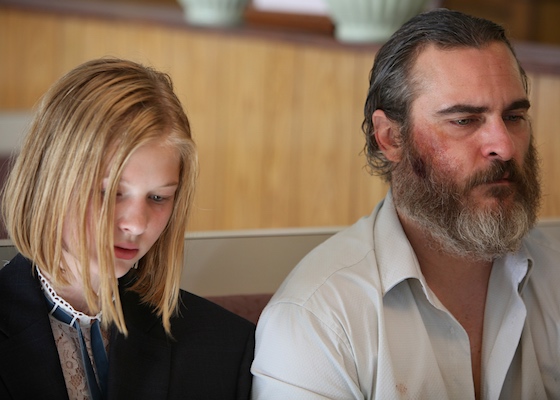
    Writer-director Lynne Ramsay tackled serious dramatic subjects in her previous features (none of which I’ve seen, I’m ashamed to say, so I apologise if my “this is a change of direction” intro is off base), but here shifts into genre mode to adapt Jonathan Ames’ noir-ish crime-thriller novella, albeit while retaining a good deal of the arthouse idiosyncrasy you’d expect.

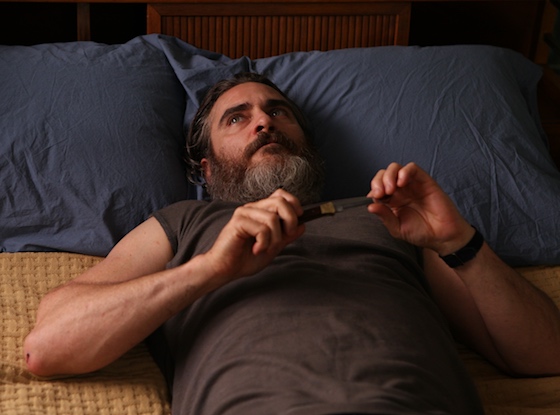
    The film follows Joe (Joaquin Phoenix), a middle-aged-or-so guy who lives with is elderly ailing mother (Judith Roberts), and seems even more tired of life than she is, plagued by memories of things he’s witnessed. That history has given Joe a (as Liam Neeson would put it) very particular set of skills, which nowadays he puts to use for private clients, via multiple middle men, primarily (or wholly — the film doesn’t clarify) to rescue abducted children. But when he’s hired to rescue a US senator’s wayward teenage daughter (Ekaterina Samsonov), things end up going sideways in unforeseen ways.

    Joe’s weapon of choice is a hammer. He uses it to take out multiple Very Bad Men in this film. But if the combination of “genre: thriller” and “using a hammer to take out bad men” makes you think You Were Never Really Here is about to unleash a low-budget action-fest upon your eyeballs, I refer you back to the writer-director being Lynne Ramsay and my mention of “arthouse idiosyncrasies”. I thought I’d mention this point upfront because I’ve seen others be disappointed by the lack of overt action in the film. Ramsay has instead chosen to keep most of the violence offscreen — we sometimes see the build-up or the aftermath, or both, or maybe neither, but only rarely the act itself. It’s not that kind of movie. And that’s not a problem, so long as you’re not expecting those kind of kicks.

    Much to think about alone

    Instead, the film becomes more of a character portrait, interrogating who Joe is and why. What kind of man does a job like that? What events in his life brought him here? What toll does it take on him? Or is there no toll because the damage has already been done? Explicitly writing these questions, which the film does seek to consider, causes me to question the worth of a serious-minded exploration of such a character’s psyche. It makes me wonder: are there real-life people like Joe? Does anyone actually do this job in the real world? Is the universe Joe moves in — a netherworld, parallel to our own but hiding from everyday view — a true one, or just the stuff that fills genre fiction? And if the answer to “is this real?” is a “no” — if these characters, situations, and environments are all just genre fodder — is there value in getting psychologically real about it?

    Some would say “no”, because we don’t necessarily come to this kind of genre fiction for realism, even when it’s given a dark or gritty spin. I mean, take a slight genre sidestep into something like Paul Greengrass’ Bourne movies, for an example: they’re shot with a documentary-esque style, but no one thinks they’re plausible portraits of real life espionage activities. Stories like You Were Never Really Here have a greater reality claim than that, but I still question their actual adherence to our real world. But surely these extreme spins on reality are invented, at least in part, to justify simultaneously inventing heroes to put into them, who can then sort it all out by wielding some weaponry and special skills that we might not accept in a totally true-to-life story-world.

    Much to think about together

    Maybe I’m over-theorising this now. But You Were Never Really Here is the kind of movie that leaves gaps to invite you to think about it, to fill in your interpretations and personal notions. It’s a film with a lot of quiet space — literally, in the sense of its often minimal dialogue and, shorn of action scenes, little of the thudding and thumping you’d expect in the sound department; but also figuratively, with long scenes that make room for you to think about what you’re witnessing; scenes that don’t hand-feed you every piece of information, so you put it together yourself. (If you want an example: no one ever tells you where Joe got his skills, but flashbacks give you visual clues to put it together.) Maybe the film isn’t trying to say “guys like this exist outside of genre pieces, and they’re like this” — maybe it’s saying “if guys like this existed outside of genre pieces, what would they really be like?”

    In the source novel, the title is explained via Joe’s methods: he uses fake identities, surgical gloves, and hides from cameras, all so that he was “never really there”. In the film he’s more low-tech and somewhat less scrupulous, meaning the same explanation doesn’t quite wash. I thought perhaps Ramsay meant it to have a new, arty meaning. Maybe it doesn’t — maybe it’s just the title of the book, so it stayed. Or maybe everything I’ve written is right, and people like Joe were never really here, in the real world… but if they were, they’d probably be like this.

    4 out of 5

    The UK network TV premiere of You Were Never Really Here is on Film4 tonight at 9pm.

    Sanjuro (1962)

    aka Tsubaki Sanjûrô

    2018 #139
    Akira Kurosawa | 96 mins | DVD | 2.35:1 | Japan / Japanese | PG

    Sanjuro

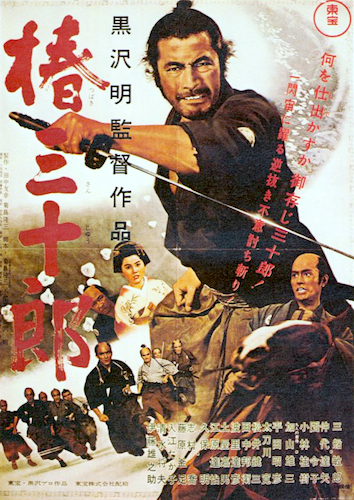
    Yojimbo was such a box office success that the studio requested a sequel. Director Akira Kurosawa obliged by reworking his next project, an adaptation of an unrelated story (Peaceful Days by Shūgorō Yamamoto), so that it featured Toshiro Mifune’s eponymous scheming samurai, Sanjuro. This follow-up came out just nine months later — and, by genuine coincidence, I happened to watch it nine months after I watched Yojimbo; and now, in a mix of tardiness and planning, I am also reviewing nine months after I reviewed Yojimbo. All of which signifies absolutely bugger all, but it happened so I’m noting it.

    This time, Mifune’s anti-hero becomes involved with nine young samurai who suspect corruption among the local authorities. The youngsters are well-meaning but naive to a fault, and so Sanjuro decides to help them. That’s a real boon for them, as it turns out, because they’d all die several times over if it weren’t for him stopping them and guiding them in a better direction. As well as showing us what a smart operator Sanjuro is, it’s often quite humorous, something this film feels more inclined to than its predecessor. For instance, there are several great bits of funny business with an enemy guard they capture and stash in a closet, but who keeps being let out after he sort of converts to their side.

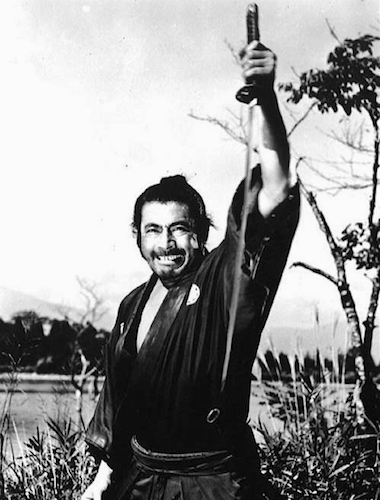
    Sanjuro's sword

    In the booklet accompanying Criterion’s DVD of the film, Michael Sragow writes that “in the Akira Kurosawa movie family tree, Sanjuro is the sassy kid brother to Yojimbo, and like many lighthearted younger siblings, it’s underrated.” I’d certainly agree. It doesn’t feel as significant as Yojimbo, probably because of the lighter tone (in my review, I described the previous film as “almost mercilessly nihilistic”) and a less fiddly story. But I found it more readily enjoyable than Yojimbo. It’s got a straightforward but clever plot, plenty of funny bits that don’t undermine the rest, and some decent bursts of action. It’s also just as well-made, particularly the cinematography, which is beautifully composed and framed by DPs Fukuzô Koizumi and Takao Saitô.

    The making-of documentary that accompanies Sanjuro begins with Kurosawa stating that “a truly good movie is really enjoyable, too. There’s nothing complicated about it. A truly good movie is interesting and easy to understand.” I can think of few better quotes to describe Sanjuro, which is a truly good movie.

    5 out of 5

    Triple Frontier (2019)

    2019 #39
    J.C. Chandor | 125 mins | streaming (UHD) | 2.11:1 | USA / English, Spanish & Portuguese | 15 / R

    Triple Frontier

    Former US soldier Santiago ‘Pope’ Garcia (Oscar Isaac) is struggling to make a difference as a consultant to a South American police force when his informant (Adria Arjona) finally gives him the location of powerful drug lord Gabriel Lorea (Reynaldo Gallegos), who’s hiding deep in the jungle surrounded by ill-gotten gains to the tune of many millions of dollars. Deciding the cops are too corrupt to handle this, Pope reaches out to his old military buddies — commander and strategist Tom ‘Redfly’ Davis (Ben Affleck), pilot Francisco ‘Catfish’ Morales (Pedro Pascal), and brothers Ben and William ‘Ironhead’ Miller (Garrett Hedlund and Charlie Hunnam) — to take on one last ‘off the books’ mission: kill Lorea and pocket the money for themselves. But they decide it’s too immoral so stay at home and do nothing.

    Not really! Of course they agree to do it, risking their lives and their moral code for a big payday they all desperately need.

    On the one hand Triple Frontier is a standard men-on-a-heist actioner, and a lot of people seem to have dismissed it as such. On the other, however, there’s quite a lot of different things going on here. Almost too many, in fact, as arguably the film doesn’t have time to explore them all. There’s a distinct thread about the treatment of veterans in the US — that these guys have been used up and spat out, and now struggle with their mental health and/or to even make a living in regular society. It also ties this into some “warrior code” mentality, which I’ve heard said is quite a realistic depiction of the mindset these kinds of guys have in real life, but does come across as a bit macho bullshit at times here (there’s a scene where they’re camping in the jungle, bemoaning that they’re the last of their kind, etc).

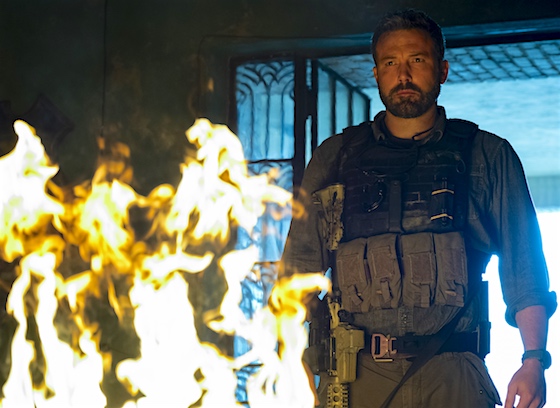
    Men mid-mission

    As well as these themes, there’s some surprise genre mash-ups going on, too. Nothing too radical, but the film doesn’t play out as I expected (vague-ish spoilers follow). At the start, it’s has almost a Sicario vibe, particularly in a sequence where Pope leads a violent raid on a gang hideout. Then it gets stuck into what the trailers promised: a bunch of military professionals pulling off a heist. Naturally, it doesn’t all go according to plan (no good heist movie has everything go according to plan!), and as the guys struggle to make their escape the film makes a hard turn into Treasure of the Sierra Madre territory, which I did not see coming. It doesn’t dig into the psychology of greed anything like as much as that film, but as the team trek through the jungle and feud amongst themselves, the film takes on a “jungle adventure” aspect I wasn’t expecting. This is where I think those claims of it being just a “standard” kinda military-men-on-a-mission movie are particularly wide of the mark.

    Apparently the film has been struggling through development since 2010, presumably after screenwriter Mark Boal won his Oscar for The Hurt Locker. That film’s director, Kathryn Bigelow, was originally attached (she’s still credited as a producer), and the film also bounced around a couple of different studios (before winding up at Netflix) and churned through a long list of possible cast members (according to IMDb, they include the likes of Tom Hanks, Johnny Depp, Denzel Washington, Sean Penn, Leonardo DiCaprio, Mark Wahlberg, Will Smith, Tom Hardy, Channing Tatum, Mahershala Ali, and Casey Affleck).

    Ben Affleck, pictured with his ties to the DC Universe

    I feel like it ended up in a pretty decent place, however. The five guys are believable as ex comrades, and it’s all very well put together, with slick but not flashy direction from J.C. Chandor, helmer of the excellent All is Lost, plus Margin Call and A Most Violent Year, neither of which I’ve seen but I’ve heard are good. Triple Frontier does nothing to besmirch his rep. It’s crisply shot by DP Roman Vasyanov — like the direction, not excessively flashy but still strong, including some great aerial stuff. Apparently this is the first film to use the full 6.5K resolution of the ARRI Alexa 65 camera, which is why it retains the camera’s unique aspect ratio of 2.11:1. In truth, it doesn’t make much difference, because it’s near as dammit the 2:1 that’s so popular among other Netflix productions, but that works for me.

    Triple Frontier doesn’t reinvent the wheel, but I think some of the commentary dismissing it as mere standard fare has done it some disservice. As a heist/action movie it’s more than competent, with some turns and developments that keep it surprising and fresh, and visuals that reward seeing it on the best-quality screen you can.

    4 out of 5

    Triple Frontier is available on Netflix now.

    Ocean’s Eight (2018)

    2019 #23
    Gary Ross | 110 mins | download (HD) | 2.39:1 | USA / English, German, French & Hindi | 12 / PG-13

    Ocean's Eight

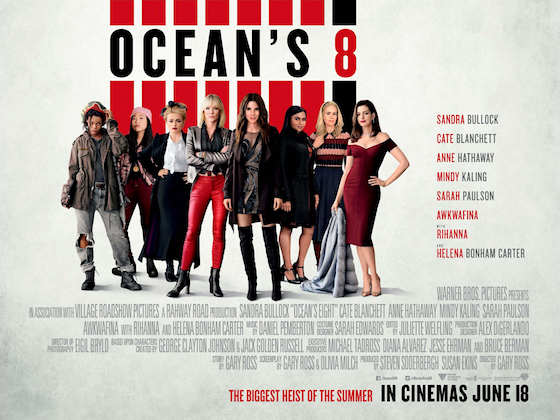
    This somewhat belated spin-off from the Ocean’s trilogy of all-star heist movies (it came eleven years after the last one) introduces us to Debbie Ocean (Sandra Bullock), the sister of George Clooney’s eponymous character from the trilogy, and also an experienced con artist. Recently released from prison, she sets about assembling a crew for an audacious heist: to lift a near-priceless necklace during the prestigious Met Gala.

    Said crew is all female — well, the crews in the previous trilogy were almost exclusively male, so why not? And just as those casts were full of big-name stars, so too is this. If Bullock’s in the Clooney role then Cate Blanchett takes over the part of Brad Pitt: the cool, in-control ‘sidekick’ who really makes Ocean’s grand plan happen. Fortunately, the film doesn’t slavishly map everyone else onto roles from the previous movies. One of the key parts is a fashion designer, played by Helena Bonham Carter — not a job that’s normally required for a heist, I don’t think. Here, it’s their way to access the mark who’ll be wearing the necklace, played by Anne Hathaway. The rest of the titular crew is rounded out by names of varying degrees of famousness, depending on your exposure to their previous work: Rihanna, Sarah Paulson, Mindy Kaling, and Awkwafina.

    As a gang, they’re quite likeable, fun to hang around with, and the cast seem to be having a good time. They’re somewhat hampered by a screenplay that rarely gives them the sparky material the previous bunch had to work with, though, so I’d suggest if there’s a Nine they get someone to punch up the dialogue and give this lot the text they deserve.

    One, two, three, four, five, six, seven... yep, eight. There's eight of them.

    Having said it doesn’t wholly map onto the previous movies, Eight massively lifts one plot thread from Eleven, which is that Debbie’s plan is secretly a way to get back at an ex boyfriend (Richard Armitage). Okay, in Eleven Danny Ocean is trying to win back his old lover and/or punish her new boyfriend, whereas here those characters are kinda combined as Debbie Ocean is trying to punish her old lover, but, well, the basic conceit is the same, right? The film does nothing to acknowledge that fact, just leaving it hanging there — awkwardly, if you’re au fait with the first movie. Conversely, whereas Danny was obsessed with his revenge to the point it risked derailing the main heist, for Debbie it seems to be a side benefit.

    That isn’t necessarily better, mind: it lowers the stakes of both the subplot (because she doesn’t seem that bothered) and the main plot (because she’s not in danger of getting sidetracked), so why include something so familiar? Indeed, the whole plot is relatively light on stakes, with the team carrying off everything with nary a hitch — barely any need to improvise or change the plan here, they’ve just got it covered. The one potential problem that does arrive is solved instantly, even before the heist begins, with such a straightforward fix that they don’t even need to modify the plan to incorporate it. It’s not even fake jeopardy, it’s just non-jeopardy.

    The whole film veers dangerously close to blandness in this fashion. Director Gary Ross may be a friend and colleague of Steven Soderbergh, but he doesn’t seem to have picked up the trilogy director’s inventiveness. There’s some mildly flashy editing scattered about, and maybe one creative shot / bit of sound design (when the camera follows the necklace underwater, the non-diegetic music gets muffled like, you know, we’re underwater), but it lacks the sophistication and verve Soderbergh brings. It feels like it needs a kick up the arse, basically.

    “Could you just give it a bit of a kick up the arse?”

    I even began to worry it was going to end with no attempt at genuine twists or surprises whatsoever, aside from a few minor but not terribly exciting reveals, which is not good for a heist movie — part of the point, surely, is that they also pull off a kind of narrative heist on the viewer. Fortunately, Eight does have a trick up its sleeve, which is quite fun. But even then, the big plan is still a pretty simple heist, which the film tries to pretend is complicated by showing Heist 101 stuff in excruciating detail (there’s a whole scene devoted to Rihanna slightly changing the position of two security cameras, one… click… at… a… time…)

    Yet for these faults, Eight still works as breezy entertainment. It’s not as perfectly slick and polished as Eleven — but then, that would’ve been asking a lot (as pure-entertainment capers go, Eleven is virtually flawless). It’s not as boundary-pushing as Twelve (a seemingly muddled film that gets interesting the more you think/read about it), but nor is it as aimless and derivative as I found Thirteen. It lacks the creative spark behind the scenes (either in the screenplay or directing departments) that could’ve elevated it, but it’s an easy way to spend a diverting couple of hours.

    3 out of 5

    Ocean’s Eight is available on Sky Cinema from today.

    The Ragtag Review Roundup

    My review backlog has got a bit silly: there are currently 128 unposted reviews on it, dating back to stuff I watched in January 2018. I was hoping to really get stuck into that as 2019 began, but I’ve been busier than expected. Anyway, I’ll keep trying — and here’s a start, with a real mixed back of films that have basically nothing in common.

    In today’s roundup:

  • American Psycho (2000)
  • Logan Lucky (2017)
  • A Nightmare on Elm Street (1984)
  • The Treasure of the Sierra Madre (1948)


    American Psycho
    (2000)

    2018 #66
    Mary Harron | 102 mins | streaming (HD) | 2.35:1 | USA & Canada / English | 18 / R

    American Psycho

    The film that made Christian Bale’s name sees him play Patrick Bateman, a high-flying New York banker with psychopathic tendencies — well, that just sounds like all those Wall Street types, right? Except hopefully they’re not actually engaging in literal killing sprees, unlike Bateman.

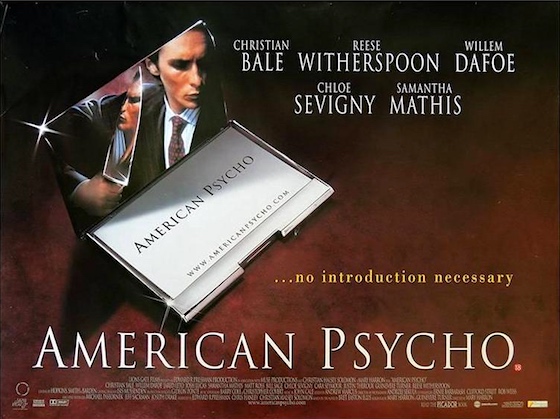
    While the murdering stuff may look like the draw, American Psycho is more interesting as an examination of the corporate mentality. It manages to be remarkably insightful, satirical, and terrifying all at once. Take the scene where they compare business cards, for instance: it’s ridiculous how much interest and importance these guys are placing in little cardboard rectangles with their name and number on, and yet you can believe such business-wankers would care about it. The anger Bateman feels when other people’s cards are considered classier than his is palpable.

    It’s a great performance by Bale across the board — so well judged, despite being barmy. It’s also interesting to observe the links between this and his version of Bruce Wayne, which is a wholly appropriately connection. I mean, who’s more of an American psycho than a guy who spends his days pretending to be a playboy businessman and his nights dressing up as a bat to beat up bad guys? I’m sure someone must’ve already developed a theory / amusing trailer mashup connecting the two films…

    The only thing that really let the film down for me was its final act. No detailed spoilers, but while I thought the rest of the film was engagingly made, the ultimate lack of resolution felt empty. To me, it seemed like it didn’t know how to end.

    4 out of 5

    Logan Lucky
    (2017)

    2018 #65
    Steven Soderbergh | 119 mins | Blu-ray | 2.39:1 | USA / English | 12 / PG-13

    Logan Lucky

    Two brothers, whose family has a historical proclivity for bad luck, decide to rob one of the US’s largest sporting venues, the Charlotte Motor Speedway, during one of its quieter events. But when the situation changes, they end up having to pull the job off during the biggest race of the year.

    Director Steven Soderbergh’s return to the heist genre a decade after Ocean’s Thirteen is something to be noted; and while Logan Lucky is a very different kind of heist movie (there’s none of that trilogy’s Hollywood glamour to be found here), it’s a more successfully entertaining movie than either of the Ocean’s sequels.

    Like them, it’s not terribly serious, instead ticking along as generally quite good fun — though there’s a scene with Take Me Home, Country Roads that’s quite affecting. Between this and Kingsman 2, I’m left to wonder how that wound up becoming just about the most emotional song ever recorded…

    Anyway, the showpiece heist is clever, in its own way, and rolls around sooner than I expected — it’s funny to read some people criticise how long it takes to get to, because I assumed it would be Act Three. Instead, the film constructs a post-heist third act that was the only time it really got too slow for me, though it does eventually reveal a purpose that was kinda worth the wait. That said, the whole thing might benefit from being a little bit tighter and shorter — ten minutes trimmed across the pre- and post-heist acts might make it zing just that bit more.

    4 out of 5

    A Nightmare on Elm Street
    (1984)

    2018 #71
    Wes Craven | 87 mins | TV (HD) | 16:9 | USA / English | 18 / R

    A Nightmare on Elm Street

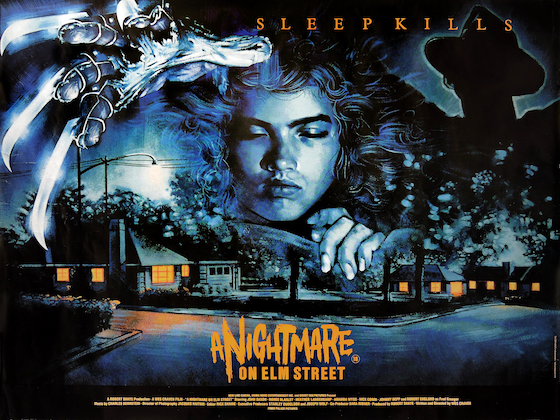
    It may be regarded as a horror classic, but I have to admit that I found A Nightmare on Elm Street to be a crushing disappointment. To me, it seemed to be a pretty poor movie (all weak: the acting, the dialogue, the music, the timescale events supposedly occur in) with some fantastic imagery. Director Wes Craven was a master, of course, and he manages to construct some truly great shots and moments amid a dirge of mediocrity. There’s a lot of nonsensical stuff too. I guess “dream logic” is meant to excuse it, but… eh.

    I do really like that poster, though.

    3 out of 5

    The Treasure of the Sierra Madre
    (1948)

    2018 #6
    John Huston | 121 mins | TV (HD) | 4:3 | USA / English | PG

    The Treasure of the Sierra Madre

    Set in the mid ’20s, two American drifters in Mexico (Humphrey Bogart and Tim Holt) team up with an old and experienced prospector (Walter Huston, director John Huston’s father) to hunt for gold in them thar hills. Along the way they have to contend with rival prospectors, violent bandits, and — most dangerous of all — their own suspicions and greed.

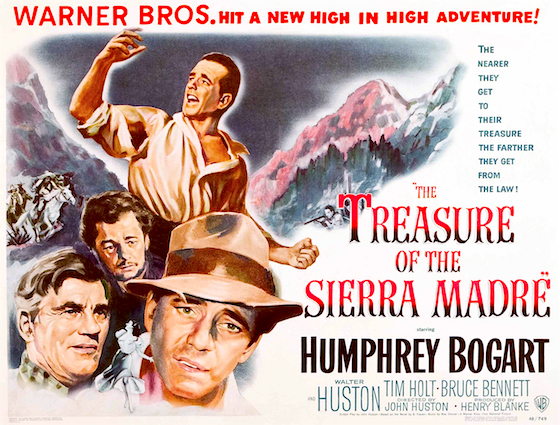
    The Treasure of the Sierra Madre blends genres like there’s no tomorrow: it’s been described as a plain drama, an adventure movie, a neo-western, it’s included on film noir lists… Of course, depending which angle you look at it, it’s all of the above. It’s both an exciting adventure movie and a character-centric exploration of the effects of greed. In depicting that, Bogart’s performance is excellent, though Huston Sr threatens to steal the show. Poor Tim Holt is overshadowed by them both, even though he gives a likeable turn.

    5 out of 5