Cars 3 (2017)

2018 #54
Brian Fee | 102 mins | download (HD+3D) | 2.39:1 | USA / English | U / G

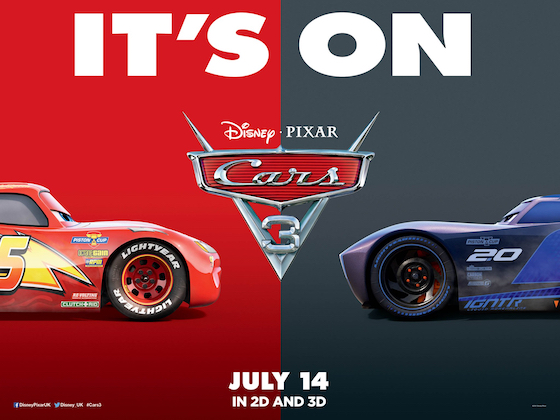
Cars 3

At this point I think it’s fairly well known that the Cars movie series continues not because of any artistic desire on the part of Disney/Pixar, but because the toys the films generate sell like hotcakes. Indeed, that situation hasn’t necessarily changed with this third instalment: apparently Cars 3 features 65 different individual racers, more than both the previous films combined. And several of those appear kitted out in different paint jobs. Disney gotsta make that toy money! The disregard with which they hold the actual movies is perhaps demonstrated by the fact this third one is helmed by a first-time director, Brian Fee, whose previous credits are as a storyboard artist on a couple of Pixar productions. Maybe they lucked out, then — or maybe they actually knew what they were doing promoting him — because I think this is easily the best film in the Cars trilogy.

Beginning with nary a reference to the events of Cars 2, racer Lightning McQueen (Owen Wilson) is back doing what he loves: racing. That’d be American-style racing, i.e. constantly turning left for hundreds of laps. Anyway, turns out there’s a new generation of hot young racers, who are less on their way up and more already here, led by Jackson Storm (Armie Hammer). They use advanced training techniques and statistics to beat the old guard — soon all of Lightning’s contemporaries are choosing to retire or being forced out, leaving him the last one standing… until he crashes in the final race of the season. Is his career over? Well, what do you think? With the backing of a new sponsor, Sterling (Nathan Fillion), and all the latest high-tech gear, Lightning sets to work training with young wannabe-racer-turned-coach Cruz Ramirez (Cristela Alonzo). But as he struggles to regain his mojo, perhaps there’s something to be said for the old ways after all…

Storm vs Lightning

Although I wouldn’t say sports movies are my bag, I think Cars 3 probably benefits from taking a more clean approach to that genre, ditching all the spy hijinks distractions of the last one. That purity of genre keeps it straightforward and focused. It also re-centres itself on Lightning McQueen, shoving Mater (Larry the Cable Guy) back into a cameo-sized supporting role, which is about where he belongs (I wouldn’t say he’s likeable in small doses, but he’s tolerable). It still finds room for humour and levity, just in a more natural, less goofy way.

Around that, it actually takes a run at some weighty themes — specifically, old age and obsolescence — and carries through on them too, with a finale that goes for more of a “finding worth in what you do next” ending rather than a “still got it (for now)” one. Such maturity means it’s perhaps more suited to Pixar’s grown-up fans than their young ones — it’s a surprisingly serious movie, in fact, without being po-faced about it. That said, you could probably play down the thematic stuff and just be entertained: there are still good set pieces, both action-based and comical, to keep the right family-friendly tone.

It makes for a winning combination. Cars 3 may not trouble the upper echelons of Pixar’s greatest achievements, but it is the best of their Cars movies — the first of the trilogy I remember genuinely enjoying, rather than just finding tolerably okay. That might sound like a low bar to set, but Cars 3 clears it admirably.

4 out of 5

Cars 3 is available on Sky Cinema from today.

Long Way North (2015)

aka Tout en haut du monde

2017 #33
Rémi Chayé | 78 mins | streaming (HD) | 2.35:1 | France & Denmark / French | PG / PG

Long Way North

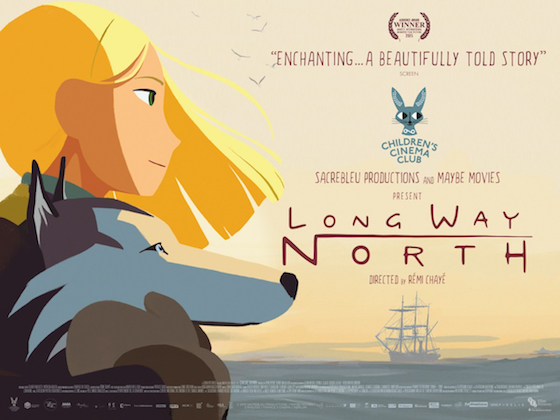
I can’t remember what brought this French-Danish animation to my attention, but I’m glad something did because it’s a beautiful little film that deserves to be better known. Set in the late 19th century, it’s about a young Russian girl, Sasha, who embarks on an adventure to the North Pole, following in the footsteps of her missing grandfather.

Regular readers may recall I ranked it among the top movies I saw last year, when I cited the “understated beauty in its deceptively simple visual style”. Indeed, the animation initially seems so plain that it feels like watching a draft animatic, but that conceals its ability to reveal subtleties when needed. In the end, the distinctive look is part of the film’s considerable charm.

I also mentioned its “equally subtle but strong feminist streak”, another positive aspect. Sasha is strong-willed and capable, but not without her faults, which makes her an engaging heroine. The film doesn’t overplay its “girls can too” side, which only makes it more successful, I think.

There’s none of the epic action sequences or broad humour that most English-language animation assumes kids need to keep them engaged, but instead Long Way North offers good characters on a proper old-fashioned exploration adventure. Highly recommended.

5 out of 5

Long Way North placed 13th on my list of The 17 Best Films I Saw For the First Time in 2017, which can be read in full here.

Transformers: The Last Knight (2017)

2018 #47
Michael Bay | 155 mins | Blu-ray (3D) | 1.90:1 + 2.00:1 + 2.35:1* | USA, China & Canada / English | 12 / PG-13

Transformers: The Last Knight

Here we have the fifth Transformers film in 11 years from director Michael Bay. At this point you ought to know what you’re getting — the style hasn’t fundamentally changed since at least the third movie, arguably since the first, so if you dislike those then most probably there’s nothing for you here. I say “probably” because I’ve seen at least one review from someone who despised the fourth film but enjoyed this one, so clearly there’s always room for variability.

We’re dealing with variations on a theme, then, and The Last Knight brings a few fresh-to-the-franchise plot spins to add a different flavour and texture this time out. Firstly, a prologue tells us that Transformers were already in England about 1,600 years ago, when they fought alongside King Arthur and Merlin, the latter of whom didn’t wield magic but actually Autobot technology (and is played by Stanley Tucci, hamming it up something rotten). This relates to the present day because… well, I could explain it to you, but it gets fiddly and, frankly, if you care then you’ll find out when you watch it. But, basically, in present day America Transformers are hunted and Cade (Mark Wahlberg) is an outlaw helping hide some of them and rescue others. When a MacGuffin from Arthurian times attaches itself to him, he winds up on his way to England to meet Sir Anthony Hopkins, the last in a long order of… oh, yeah, I said I wasn’t going to explain it. Anyway, only Marky Mark and Clever English Totty (Laura Haddock, playing the kind of Oxford professor who dresses like a secretary in a porn film) can save the world. Who do they need to save the world from? Optimus Prime! Dun dun duuuun!

Now he's called Nemesis Prime, for no good reason

It’s all nonsense, of course, but then the inherent concept of Transformers never made any sense so what does it matter? Adding in Arthurian legend and making Optimus Prime a baddie doesn’t make it any dafter than it already was. And that’s only the half of it — there are more disparate story threads and subplots than a particularly complicated miniseries. Despite being shorter than the last movie, it’s still indulgently long — and needlessly so, too. There’s a ton of stuff that could be cut to streamline the plot, from individual shots and lines (the Arthurian prologue is probably twice as long as it needs to be) to whole characters (a street girl Cade basically adopts, Izabella, contributes nothing of major significance in the end). After about an hour, the story basically stops and starts again — that’s how long it takes to get to Sir Hopkins. Stuff from the first hour remains relevant, certainly, but I’m sure there were other ways to handle it. By getting through the first hour of the movie in half the time, for one thing. For another, don’t introduce major-seeming characters that you’re then just going to set aside and ignore for the next hour while you introduce whole new ones.

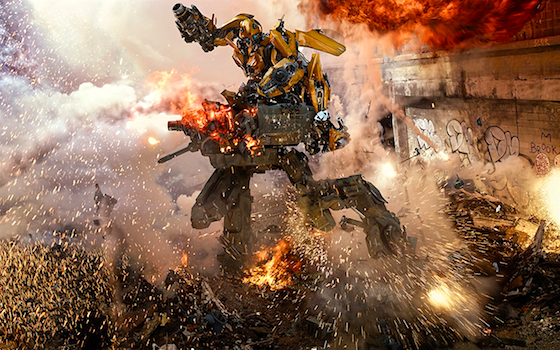
It’s remarkable how the Transformers movies can have way too much plot and not enough plot all at once. If you want to follow it you have to pay attention, not only because there’s a lot of mythology to take in, but also because Michael Bay chops it all up into bite-size chunks amongst frenetic action sequences. The film is cut like one long trailer — but that’s been Bay’s MO for a while, so, as I said at the start, no one should be surprised. It remains, in its own way, impressive. As I previously said in my review of Age of Extinction, it’s almost avant-garde: a tumble of images and sound that give you an impression of what’s occurring rather than straightforward traditional storytelling. And I say it’s impressive because it must be so much work to create — all the camera setups involved; events staged for a single, fleeting, couple-of-seconds shot; and then edited together with non-stop dynamism, rarely pausing for any notable period.

Non-stop Bayhem

And if you think that’s mad, wait until you see how Bay uses aspect ratios. Thanks to Christopher Nolan and The Dark Knight blazing a trail, we’ve now had a fair few movies that use the IMAX format for select sequences, and emulate that on home media by allowing the aspect ratio to change — for laypeople, that’s when the black bars at the top and bottom disappear and the picture fills the screen. As I say, generally this is used for specific sequences, or occasionally for a particularly grand individual shot; and usually there are two ratios, approximately 2.40:1 (with the black bars) and approximately 1.78:1 (without). Bay uses… more than that. And he does so almost indiscriminately. They’re so all over the place that you can’t miss them. Like, there are standard shot-reverse-shot conversations between two characters, but each character has a different aspect ratio… and then, as if that wasn’t bad enough, halfway through the scene one side will switch to another ratio! It just leaves you wondering why and how it ended up this way. What was the intention? What was the point? Well, that’s not a new question with Bay — he still uses five shots when one would do, so why not extend that same thinking to the film’s aspect ratio?

Despite the faffing around, much of it still looks impressive in a purely visceral sense. Like every modern tentpole, it cost a fortune to make ($217 million), but at least it looks like it did: there are so many grand sets and large-scale set pieces, much of it built or performed for real — not the giant robots, obviously, but there are car chases and human stunts and so forth that they did in real-life rather than in a computer. The money is splashed all over the screen, to the nth degree. Is that inherently a good thing? Eh. But it makes you wonder where some other $200m+ movies spend their money — especially when you consider that apparently production difficulties resulted in a lot of material being filmed but never making it into the final cut. How much? Well, supposedly a whole hour of footage was ditched from the original cut to get to the theatrical version. As I’ve already said, the film’s too long as it is, but it’s a shame there are no deleted scenes available because I’d be kind of fascinated to know what more was meant to be there, and to see how much money it looks like they wasted on it.

They really did hang Marky Mark out the side of a speeding vehicle, donchaknow

In what we did get to see, the size of the endeavour and the impressive quality of the imagery is emphasised by how it was filmed. A large proportion of the movie was shot in IMAX 3D (apparently 98%, but I’m certain there was more than three minutes in non-IMAX aspect ratios), and there are innumerable moments that benefit from the depth and scope of the format. Post-conversion has come a long way, but I’m not sure it can always equal doing it for real, especially on a format with the quality of IMAX. That said, the visual splendour didn’t strike me as much as it did in Age of Extinction. Perhaps that’s because, as Richard Brody put it in his New Yorker review, Bay’s “sense of speed works against his sense of scale and of detail. All the best moments in the movie — pure images, devoid of symbol and, for that matter, nearly empty of sense — go by too fast, are held too briefly, are developed too little.” There are some great shots in here, but the rapid editing just races past them. If you wanted to find and appreciate the shots fully, you’d have to damn near go through the whole thing frame by frame. I’m not sure they’re that good.

Although Bay and his directorial style always get a critical slating for these movies (more so than others he’s made in the same period — Pain & Gain and 13 Hours both attracted a reasonable amount of praise), they let him keep making them, and he keeps wanting to. The former makes sense: although you rarely find someone who admits to liking them, they keep making money (The Last Knight is the series’ lowest grosser worldwide, thanks to a particularly poor US showing, but it still took over $600m). As for the latter… no, I don’t know why he keeps coming back. Can you think of another blockbuster-level director who’s made five films in the same series? No one instantly comes to mind for me, and even those who are close (Lucas with Star Wars; Spielberg with Indiana Jones) did so over a long period of time with many films in between. I mean, if Bay wants to do it then why not — it’s his life and career — but I don’t quite understand it.

The three-headed robot dragon that I almost forgot

As I said nearly 1,500 words ago (I never imagined I’d have so much to say about this movie — and I haven’t even mentioned the three-headed robot dragon, or the C3PO-alike comic relief butler), everyone should know what they’re getting with the Transformers films by now. The Last Knight shares the same pros and cons as the other entries in the series, to one degree or another — by which I mean that, for instance, I found the plot a little more coherent than last time (though still totally barmy), but I wasn’t quite as bowled over by the visuals (which are at least half the point of these films, I feel). On balance, I’d say it’s one of the franchise’s better instalments.

3 out of 5

Transformers: The Last Knight is available on Sky Cinema from today.

* The listed ratio for The Last Knight is 1.90:1, because that’s the tallest, but its shifts into various other ratios are very obvious, as I discuss in the review. The three I’ve listed are the most obvious, but one of the trailers was shown to use eight slightly different ratios, so who knows how many there really are? ^

Annihilation (2018)

2018 #45
Alex Garland | 115 mins | streaming (UHD) | 2.39:1 | UK & USA / English | 15 / R

Annihilation

Many column inches (and even more tweets) have been penned about Paramount’s decision to relegate director Alex Garland’s second third film straight to Netflix outside the US, Canada, and China, so I presume the pros and cons of that move have been thoroughly discussed elsewhere. Personally, I’m on the fence: it’s disappointing not to see intelligent sci-fi being given a shot at the box office, but I’m one of those people who’s 50/50 on whether I go to see it or just wait for disc/streaming/etc. (I’ve not even seen The Shape of Water, for example, although that’s partly due to a dearth of convenient screenings during its brief theatrical appearance. Conversely, I did go to Arrival.) Anyway, it is what it is at this point, so let’s move on to the film itself.

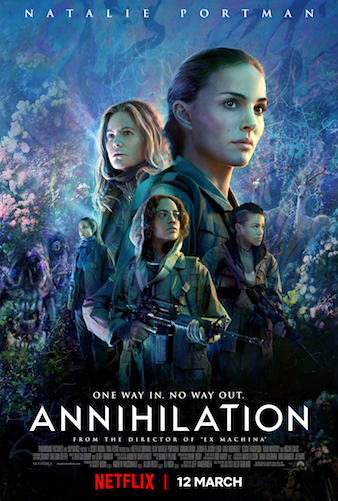
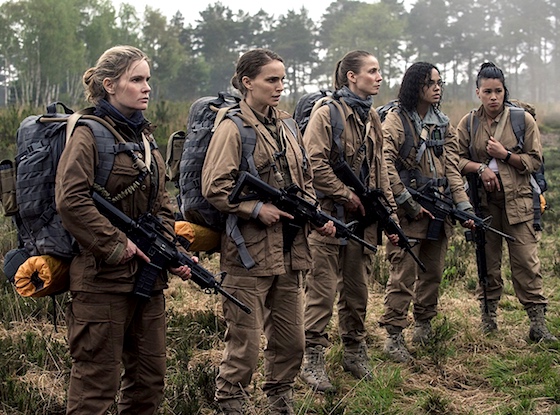
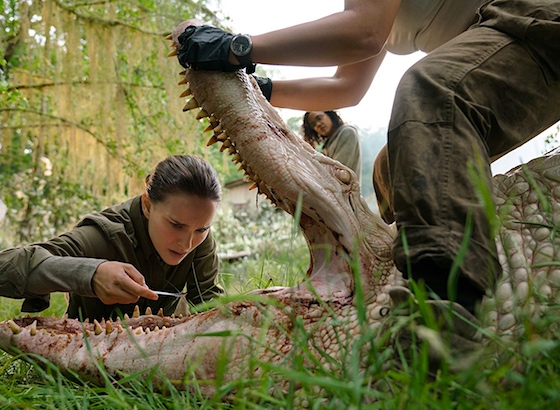
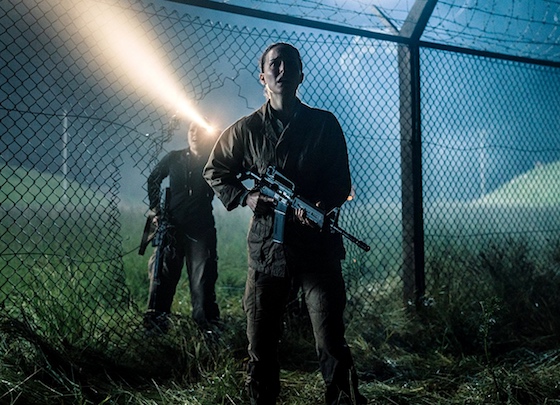
Loosely based on the acclaimed novel by Jeff VanderMeer (reportedly Garland read the book once then wrote the screenplay from memory), it follows biologist, academic, and former member of the Army, Lena (Natalie Portman), whose soldier husband Kane (Oscar Isaac) went missing a year ago during a secretive mission. After he suddenly reappears, apparently with no memory of his time away but with some severe medical problems, the couple are scooped up by a military organisation investigating Area X, a top-secret quarantined zone affected by an unexplained phenomenon known as the Shimmer. Various teams have been sent inside the Shimmer, but Kane is the only person to ever return. As his health deteriorates, Lena, desperate for answers, joins the latest squad to venture inside. That’s where stuff gets crazy…

Squad goals

The first thing Annihilation made me think of was Denis Villeneuve’s Arrival. The connection was initially triggered by the score: the ambient soundtrack by Geoff Barrow and Ben Salisbury reminded me so much of Arrival’s that I had to check this wasn’t a last work by Jóhann Jóhannsson. Once I spotted that, the other similarities in the story leapt out: they’re both thoughtful sci-fi parables about a female university lecturer being co-opted into a military operation to investigate a strange extraterrestrial presence on Earth, while also remembering her family life in flashbacks.

Despite Paramount’s insistence that the film was too intelligent for non-US audiences (you can take a moment to laugh at that notion if you like), Annihilation is perhaps more accessible than Arrival, at least initially. Whereas Villeneuve’s film played like a character drama, Garland’s has a strong adventure-movie vein, also laced with elements of the horror genre. It’s still not a mile-a-minute thrill-ride, but, if you wanted, you could engage with it on the level of a quest through an alien event, encountering strange phenomena and creatures, with events of life-threatening jeopardy. However, for all the original sci-fi ideas, it does also touch on weightier, more human psychological issues — as the Empire review summarised it, “depression, grief and the human propensity for self-destruction.”

All the better to eat you with

Naturally this material is carried by the cast. Portman makes for an interesting lead. Clearly damaged by grief, she’s quite a cold figure, which may distance her from some viewers in the way it does from some of her team mates. But there’s more to it than that, and Portman delivers subtle nuances that hint at more beneath the surface. The rest of her all-female squad — played by Jennifer Jason Leigh, Tessa Thompson, Tuva Novotny, and Gina Rodriguez — all have distinct personalities, all get brief subplots and moments, and they’re mostly managed with an equal level of understatement. Perhaps the best is Thompson, whose calm, gently heartfelt performance is quietly superb, and even more striking as it marks a huge contrast to her star-making turn in Thor: Ragnarok just a few months ago. As a pair of films to be a calling-card for her skills, one could barely ask for more.

A lot of disappointment about the lack of a theatrical release stems to not being able to see these visuals on a cinema screen; not being able to experience the audio with a cinema sound system. Well, that partly depends on your own setup at home, of course. Setting that aside, though, while there are certainly some very striking visuals, it wasn’t as consistently stunning as some reviews made it sound. I’m not saying it wouldn’t benefit from the big screen, especially if you’re particularly fond of that experience, but I didn’t feel I was missing much scale by watching at home. I felt similarly about the sound design, though I do say that as someone with a 7.1 system. For spectacle, the intricate and colourful end credits are the most striking bit — I’m certain they benefitted from my viewing the film in 4K HDR.

Scared of the dark?

However you get to see it, writer-director Alex Garland has crafted another sci-fi mystery/thriller that engages on multiple levels. For me it was somewhat damaged by the hype, perhaps a result of US reviewers frantically urging people to get out and see it to prove that Paramount’s lack of faith was a mistake. While I didn’t instantly love it in the same way as, say, Arrival, or Garland’s debut, Ex Machina, it’s undoubtedly a fascinating, thought-provoking slice of science-fiction — and a much-needed critical success for the “Netflix Original” brand after a couple of recent duds. I’d also say it places Garland ahead of genre contemporaries like Neill Blomkamp and Duncan Jones as a filmmaker to keep an eye on. Okay, he’s not quite Denis Villeneuve, but he’s a lot closer than the others.

4 out of 5

Annihilation is available on Netflix in most of the world now.

The Jungle Book (2016)

2018 #40
Jon Favreau | 106 mins | Blu-ray (3D) | 1.78:1 | USA & UK / English | PG / PG

The Jungle Book

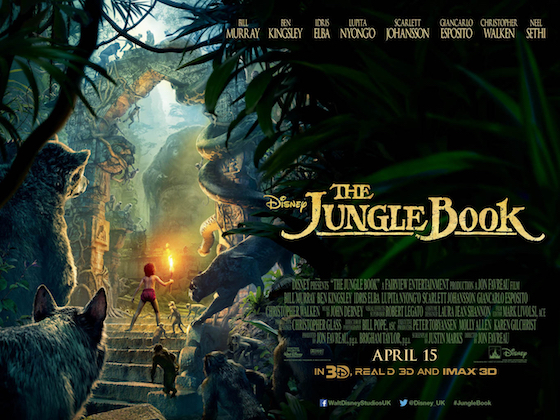
One of the successes that has convinced Disney to remake basically their entire animated back catalogue in live-action, Jon Favreau’s take on Disney’s adaptation of Rudyard Kipling’s stories barely counts as “live-action” really: the vast majority of it is animated — often the only real bits are Mowgli and some (but by no means all) of the props and scenery he interacts with — but it’s done to be photo-real and so we pretend that’s live-action.

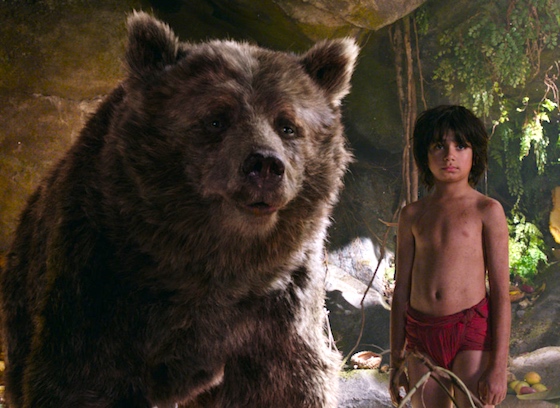
Whatever you want to call it, the visuals are stunning. It’s incredible stuff by the animators, though also by Favreau and DP Bill Pope to make all that hard work look great as a film too — they put special effort into making sure the CGI was properly lit, etc. And I reckon it’s even better in 3D. Presented in a screen-filling 1.78:1 ratio, unconstrained by the black bars of your nowadays-standard 2.35:1, it honestly feels like a window into another world. You sometimes see reviews of good 3D that say “you feel like you could reach out and touch it”, which I’ve always taken as A Thing People Say rather than an actual inclination, but at one point I did feel like I wanted to reach out and stroke Baloo’s fur, he looked so soft. The end credit sequence (a kind of pop-up book routine) looks particularly great in 3D, which helps to sell the miniaturised dimensions.

Bear necessities

Anyway, the film itself. Disney’s Jungle Book is such a well-known childhood classic that I don’t imagine you need me to recap its plot, though this version doesn’t ape it one-for-one. When Favreau was first brought on board the story treatment Disney had in development was much closer to Kipling’s work, including none of the changes Disney made when they adapted it before (i.e. adding songs and the character of King Louie), as well as being more violent, aimed at a PG-13 rating. So it was Favreau who decided it should be closer to the Disney classic, aiming to find the sweet spot between the two styles. I think he’s nailed that, mixing in enough that’s familiar from the animation with a bit more seriousness derived from Kipling.

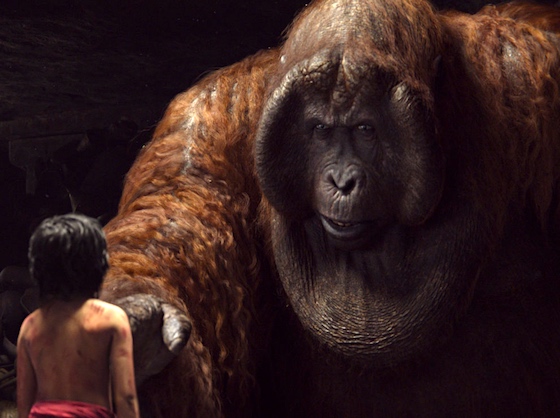
That said, I wasn’t wholly convinced by the use of the songs. The rendition of Bare Necessities is disappointingly truncated, though at least fits in context. Conversely, King Louie’s song, I Wan’na Be Like You, is so out of place that I found the sequence kind of uncomfortable. Weirdly, its reprise at the start of the end credits is great. There it’s followed by Trust In Me, which isn’t included in the film proper but might actually have worked there.

I wanna be like you-oo-oo

Still, the film as a whole functions well; surprisingly well, one might even say. You may remember the Rotten Tomatoes score for it went crazy when it came out, hiding the high 90s — it ended up at 95%. And it’s the perfect example of why Rotten Tomatoes doesn’t score a film’s quality, but does score the chance that you’ll enjoy a film. I’m not sure many people would think this is a “9.5 out of 10” kind of film, but one there’s a 95% chance you’ll think is good? Yeah.

4 out of 5

The Jungle Book is available on Netflix UK from today.

Warcraft: The Beginning (2016)

aka Warcraft

2017 #38
Duncan Jones | 118 mins | streaming (HD) | 2.35:1 | USA, China, Canada & Japan / English | 12 / PG-13

Warcraft: The Beginning

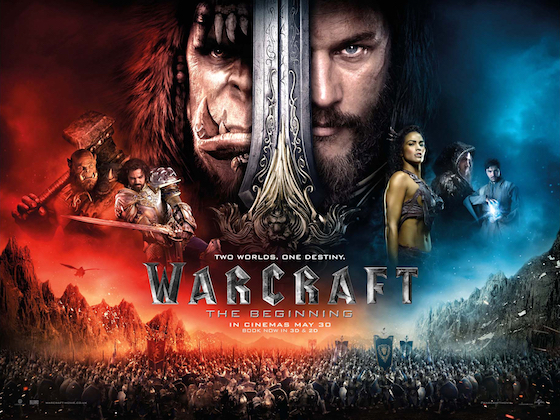
Produced by Legendary — one of the companies behind the Dark Knight trilogy, Jurassic World, Godzilla, and many other massive hits — the only thing that’s “legendary” about the Warcraft movie is how terrible it is.

Based on the long-running video game franchise, Warcraft (optimistically retitled Warcraft: The Beginning in many territories) is, based on what I’ve read, less an adaptation of the game (which has many different incarnations anyhow) and more an expansion of its universe. Rather than take the game itself and try to mush it into the shape of a movie, as most video game adaptations are forced to do, Warcraft depicts some of the game-world’s backstory, taking care to keep events canonical. I’m sure this is brilliant for fans and players, but I wonder if it’s part of why the film feels muddled and tacky to those of us who are uninitiated. Of course, at its best such efforts can make newcomers want to learn more; but at its worst it leaves you feeling confused and shut out. Warcraft is definitely a case of the latter.

It plays like a $160 million fan film. It doesn’t bother with world-building, just throwing the viewer in at the deep end. That can work, but it needs to be carefully managed. Warcraft just ploughs ahead, going deeper and deeper. It’s been made for people who know this world, its places, its people, its concepts, its rules. The film is a prequel to something that doesn’t exist — or, rather, something that doesn’t exist as a movie. And yet, for all co-writer/director Duncan Jones’ efforts to remain faithful, apparently it’s not faithful enough for some of the hardcore. It seems the movie has wound up in a place where it’s not stuck to the backstory enough to please initiated fans, but not opened itself up enough to be accessible to newcomers either.

This could get orcward

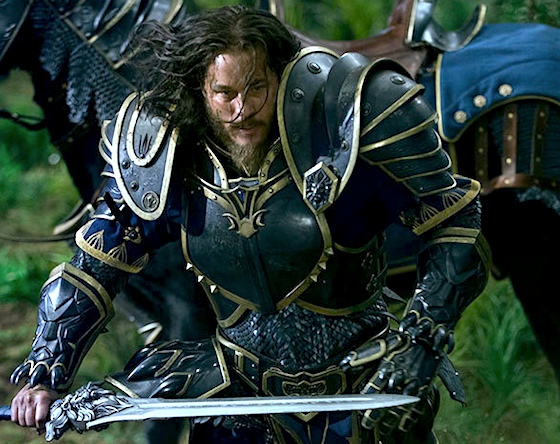
Unfortunately, the problems don’t stop there. Characters’ personalities change from one scene to the next, with no sense of development or connection. Many of the performances are stilted or clumsy, with a good deal of the actors feeling miscast. Scenes exist in isolation, with little sense they should follow what was before or precede what comes after. It feels like it was heavily messed around in post — not just stuff chopped out (reportedly Jones’ director’s cut was 40 minutes longer), but things moved around within the story — but then something will happen that suggests those scenes were always meant to be where they are. Whatever the cause, it makes it even harder to follow a story that already feels like it’s shutting out newcomers.

The biggest shame is that you can see glimmers of potential — mainly in the world itself, which is clearly quite thoroughly realised (presumably thanks to having been developed over many, many years of the games’ existence). But then, the story that takes place within that world isn’t an especially original or interesting one. Or, rather, I don’t think it is. I mean, it’s hard to tell what precisely is going on half the time.

A lot of the technical merits are strong, too. Almost every shot is loaded with CGI, but the vast majority of it looks pretty incredible. It’s no wonder some bits come up short, however, because the sheer volume of different locations, creatures, and spell effects is mind-boggling. Obviously some parts are going to suffer when you bite off more than you can chew. If there’s a problem here it might be that the design work is quite “high fantasy” — it’s all exaggerated and almost cartoony, as opposed to the more realistic take of something like Peter Jackson’s Lord of the Rings. That’s not to everyone’s taste; indeed, it might be part of why such fantasy tales used to be (and, often, still are) such a niche market.

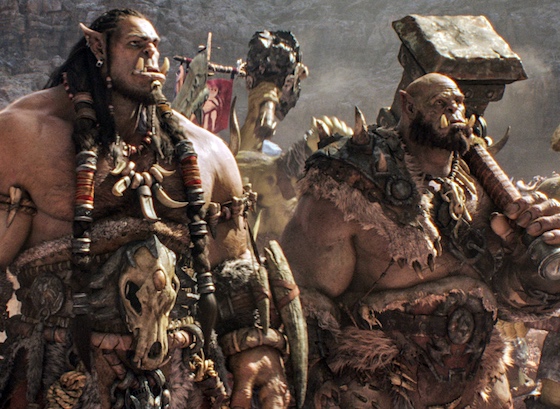
Totally realistic costumes

Talking of the market, reports say Warcraft needed to gross $450m just to break even. In the US, it took $47.4m. No, I didn’t put the decimal in the wrong place. And that’s not opening weekend, that’s in total. It was a big hit in China, but that wasn’t enough: worldwide it managed just shy of $434m (which, fact fans, makes it one of only two American movies to gross over $400m without making $100m in the US (the other was Terminator Genisys)). Jones had plans for sequels (he’s shared them on Twitter, which naturally got turned into news articles, if you’re interested), but, yeah, they’re not happening. Thank goodness the Chinese didn’t give it another few million, because this project already feels like a waste of five years of the director’s promising career. You could see Jones as currently being on a similar path to that previously trodden by the likes of M. Night Shyamalan and Neill Blomkamp: a hugely successful debut followed by increasingly poor, eventually terrible films. Hopefully his next movie, Mute (available exclusively on Netflix from today), will rectify that.

2 out of 5

Warcraft: The Beginning featured on my list of The Five Worst Films I Saw For the First Time in 2017, which can be read in full here.

Big Game (2014)

2017 #45
Jalmari Helander | 91 mins | streaming (HD) | 2.35:1 | Finland, Germany & UK / English & Finnish | 15*

Big Game

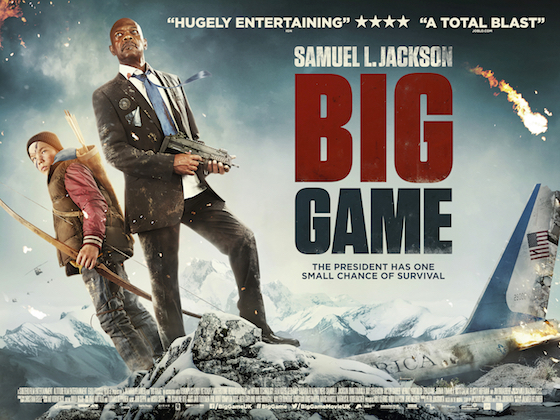
Air Force One Has Fallen meets Hunt for the Wilderpresident in this deliberately daft action movie, which sees terrorists down Air Force One in remote Finnish forests, forcing the President (Samuel L. Jackson) to rely on the help of a local teenager (Onni Tommila) as they’re hunted by the bad guys.

I’ve read some complaints that, given the daft premise, Big Game is not a comedy. I don’t know what movie they were watching, but I thought it was pretty fun. It’s not an out-and-out parody, but surely no one involved thought they were making a serious action flick? Or maybe I’m wrong, I dunno — but whether it was me or them, one of us has misread the intended tone.

That said, as well as the OTT ’80s-throwback action antics, there’s some solid drama to be found. Primarily that’s between the kid and his father — how the state of their relationship is revealed and changes throughout the film is neatly done, which is all the more impressive considering the dad’s only in it for a few minutes. There’s also some almost touching stuff between the kid and the President. Is this material too ‘serious’ for a movie that is otherwise pretty lightweight? Perhaps the action side should take itself more seriously to buoy up the characters’ relationship further? Or maybe the characters’ relationship should be less life-lesson-y to allow for the silly spectacle of the action?

If you go down to the woods today you're in for a big surprise...

Maybe either way would work, but Big Game choosing to straddle the middle ground is what leads to those complaints. Personally, I enjoyed both facets, however at odds they may seem. Indeed, it’s the kind of movie I might once have given 4 stars, because I certainly enjoyed it; but I guess that the more of these lightweight-but-fun action movies you see, the more you feel like they are good fun but 3 stars is fine.

3 out of 5

* In the US there’s a PG-13 theatrical cut (running 87 minutes) and an unrated extended cut (91 minutes), i.e. this one. The BBFC classified it 12A for cinemas and 15 for home, with the former merely having a “partially obscured” use of a rude word to get the lower certificate. ^

Zatoichi on the Road (1963)

aka Zatôichi kenka-tabi / Zatoichi’s Fighting Journey

2018 #11
Kimiyoshi Yasuda | 88 mins | Blu-ray | 2.35:1 | Japan / Japanese

Zatoichi on the Road

In his notes that accompany Criterion’s Blu-ray release of the Zatoichi series, Chris D. comments that, “despite the specificity of the English title, it should be stressed that Zatoichi is always on the road.” Indeed, titling this fifth movie Zatoichi on the Road is pretty much the equivalent of calling it Just Another Zatoichi Movie. At least the literal translation, Zatoichi’s Fighting Journey, is a little more dramatic.

So is On the Road “just another Zatoichi movie”? Critics disagree with each other. The Digital Bits’ comprehensive overview of the series describes it as “easily the best entry in the series to this point”, and Weird Wild Realm’s review goes even further, calling it “one of the strongest feature film episodes about the hero of a thousand slayings”. Conversely, the Images journal considers that it “doesn’t sustain the previous entry’s brilliant mood or pacing”, and, in direct opposition to The Digital Bits, Letterboxd users rank it clearly the lowest of the first five films. Where DVD Talk reckons it has “a fantastic, layered plot”, even Chris D. says “it has a somewhat overdeveloped, convoluted story line”.

I’m definitely in the latter camp. “Easily one of the best entries in the series”? Nope. The “action starts red hot and keeps getting hotter”? Don’t be silly. That was The Digital Bits again, and they go on to describe the climax as “one of the greatest climactic battle scenes depicted on screen since Kurosawa’s Seven Samurai,” which is just laughable. As Images counters, “when the action does rear its battle-weary head it’s good. It’s just not great. And after the sword-dizzy hysterics of the last film, greatness is what we hunger for.”

Zatoichi fights

As for the plot… Overdeveloped? Yes. Convoluted? Undoubtedly. And needlessly so — previous entry Zatoichi the Fugitive was hard to follow, but it felt worth it in the end. On the Road, I’m not so sure. The plot never really came together for me, leaving oh so many questions. Like, who was the old man who died at the start? Why did he care about Omitsu so much? Who was the lord who was after her? How did she end up with him and so far from her (apparently very rich and important) father? Why do that lord’s minions just disappear from the plot? Why was there that scene where one of them seems to regret their mission, only for Zatoichi to murder him in a split second right afterwards?

The whole thing winds up a lot of back-and-forthing for little reason, too often driven by coincidence (how come villainous Ohisa and Jingoro keep ending up in the same inns / eateries / etc as Zatoichi and Omitsu?) And I think it was meaning to imply that Ichi and Omitsu had a strong connection, almost like she wanted to marry him (as women have done in previous films — Ichi’s understanding of and/or attraction for women is certainly a recurrent theme). And he seems to care for her as much too (as seen in the ending where he caresses her trinket that he’s kept, for instance). But where was such deep a bond supposed to come from? It’s barely developed or explained.

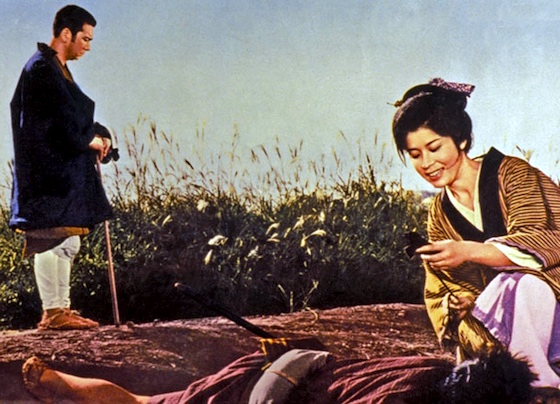
Zatoichi on a road, literally

The film isn’t a total write-off, mind, with some exceptionally good individual scenes — when Ichi confronts transportation boss Tomegoro in order to rescue Omitsu; when Ichi and Omitsu connect while eating rice balls; Ichi’s cunning manipulations of two opposing gangs at the climax. The key link there is Ichi, of course, which is thanks to another strong performance by leading man Shintaro Katsu.

On the whole On the Road is enjoyable enough as a middle-of-the-road Zatoichi adventure, with the less thrilling aspects counterbalanced by the really good bits I just mentioned. I’ve mostly focused on the negative here because I bridled at the idea, espoused by some I’ve quoted, that this is definitively a great instalment in the series. It’s not.

3 out of 5

Black Panther (2018)

2018 #23
Ryan Coogler | 134 mins | cinema | 2.39:1 | USA / English, Xhosa & Korean | 12A / PG-13

Black Panther

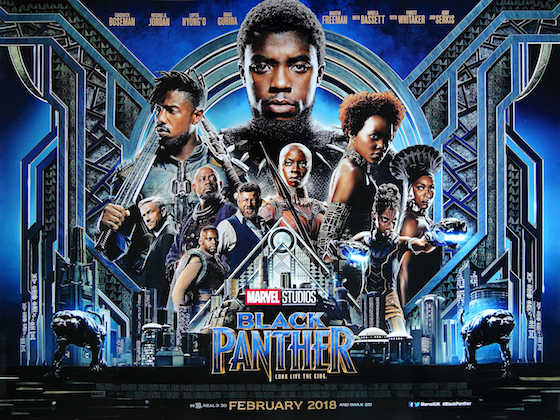
Black Panther is not the first superhero movie to star a person of colour in the leading role — not by a long, long shot. But it does look set to be the most successful. In part that’s down to its association with the MCU (the last time one of their movies grossed under $500 million was the first Captain America, 13 movies ago), but it’s also due to a general underrepresentation of non-white heroes right now — Black Panther may not be the first, but it may be the most mainstream. It also won’t hurt that it’s a very good action-adventure movie in its own right, and one that feels especially fresh thanks to tapping into an under-utilised cultural milieu.

Picking up shortly after the events that brought the title character into the MCU (as seen in Captain America: Civil War), the film begins with T’Challa, aka Black Panther (Chadwick Boseman), returning home to be crowned king of his country, Wakanda. A scientifically advanced African nation, with incredible technology fuelled by its deep reserves of the extraordinary metal vibranium, Wakanda has kept its abilities hidden from the rest of the world, who believe it’s a third world country of farmers. However, T’Challa must face forces from within and without who think Wakanda should play a greater role on the global stage — in particular long-time enemy of the state Ulysses Klaue (Andy Serkis) and his new partner in crime Erik Stevens (Michael B. Jordan), who wants to rule Wakanda and then the world.

The name's Panther. Black Panther.

A villain who wants to rule the world? Black Panther doesn’t spell out his goal quite that bluntly, I don’t think, but that’s what it is. It’s just one of several clues that this is, in many ways, a James Bond movie… only one where James Bond is a black African king with superpowers. The film’s whole structure is more Bond than Marvel, though: most obvious is the gadget-explaining Q scene, but then it becomes a globetrotting adventure (the film sets significant sequences in California, Nigeria, London, and Busan (though they don’t get there by train, thankfully)), complete with undercover operatives, a casino, car chases, and a plot with significant geopolitical elements. I’m not claiming you can map this one-for-one onto the Bond template, but the inspiration (consciously or not on the part of the filmmakers) is certainly there. One Letterboxd user described it as “The Lion King meets Skyfall”, which might sound pithy but is also surprisingly accurate — and Skyfall in particular, not just any old Bond film; but there we’d be getting into spoiler territory, so I’ll leave that for you to think about yourself after you’ve seen the movie.

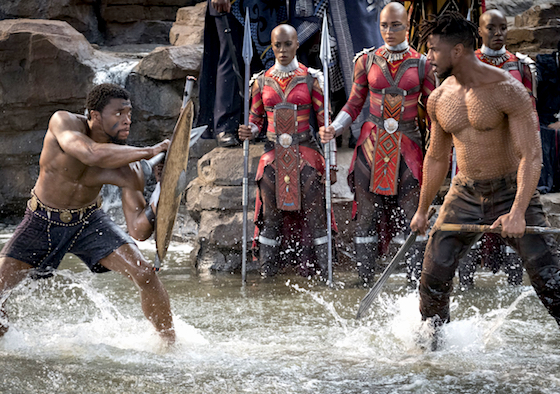
An even more significant influence, for numerous reasons, is African culture. Much has been made of the film having a predominantly black cast (aside from (to use an already well-worn joke) a couple of ‘Tolkien’ white guys), but it fully embraces that too. It isn’t nominally set in Africa with faces that happen to be of a different colour to the blockbuster norm — African traditions, designs, and ways of life have been woven throughout the film. Are they real ones the filmmakers co-opted or were they just inspired by the iconography of the continent? I don’t know. Does it matter? I don’t think so. It’s a different flavour on the blockbuster stage, and that adds freshness to just about everything.

African culture, real or imagined

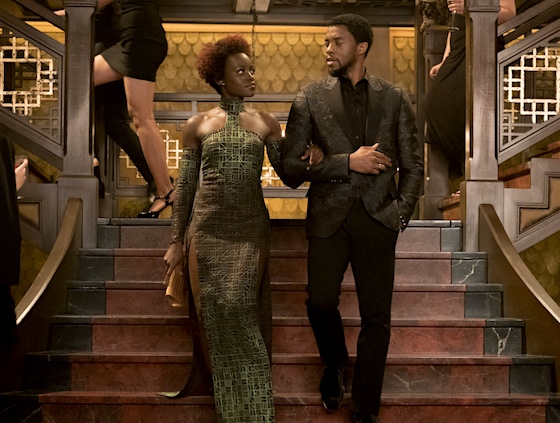
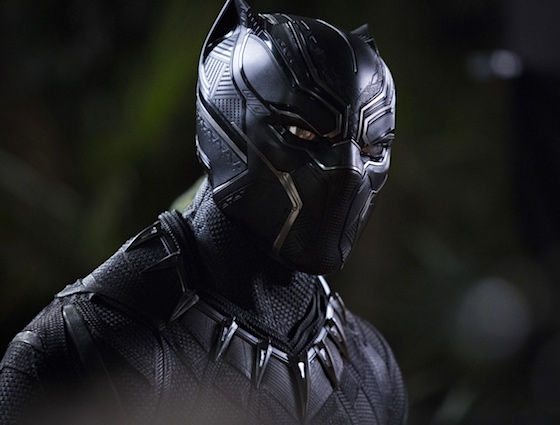
For one, it helps the film to look beautiful. It’s colourful without being cartoonish, the vibrant palette coming through via costumes and locations in a very real way. Design is naturally a big part of this — make-up; costumes; however the production design department breaks down across locations, sets, props, etc, etc. They were obviously able to cut loose, finding inspiration from different places to usual (i.e. Africa) and imagining a whole alternate world, similar to ours but a bit more Sci-Fi.

There’s the light, too — this is frequently a gorgeously shot film. Not just the quality captured by DP Rachel Morrison (who made headlines recently when she was Oscar nominated for Mudbound), but also the shot choices and editing — it’s filmic, whereas too many Marvel movies look like TV but with a humungous effects budget. Director Ryan Coogler stages the action well too. Across the board, the visuals don’t feel so generically “Marvel”, while also not forcing themselves so far outside the house style that it doesn’t feel like A Marvel Movie. Put another way, it’s probably not that radical, but it is fine-tuned.

The music is oftentimes striking as well, with Ludwig Göransson’s score and various songs* mixing different styles for a heady but effective blend. In fact, the music occasionally achieves a feel or atmosphere that I don’t think Marvel’s usually-generic soundtracks have reached before, and not necessarily ones you’d expect.

Suited up

The film is rich and fresh in plenty of other ways too. The story is loaded with varied thematic concerns: there’s politics, both on the world stage and internal; the battle between tradition vs modernity; the pros and cons of both isolationism and being open to the world; issues of colonialism and its aftereffects (and the morality of a possible reversal thereof)… Obviously race is a factor as well, but in specific ways rather than some kind of generic “hey, look, black people can do this too!” I feel like there are many different things to read into and out of this film — numerous facets that could be focused on either singularly or in various combinations — and that, actually, the film would reward such a close reading, rather than falling apart when put under a microscope.

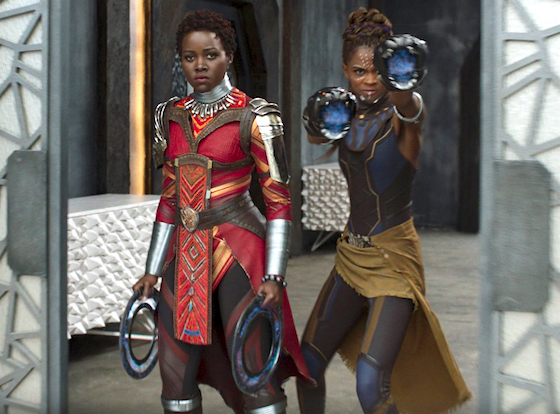
Yet another thing it juggles well in this mix are the characters and the performances behind them. There are a lot of people to get to know here, but they’re all so effectively sketched that most are interesting, likeable, or memorable (or all three) within just a few moments. The film may be called Black Panther and he may be the central hero, but he’s not the only strong, capable, heroic figure here — far from it. Indeed, another aspect that will surely generate plenty of discussion is the film’s strong female roles. The Q figure, currently at the forefront of all Wakanda’s incredible technology, is T’Challa’s younger sister (Letitia Wright); the army (or security service? I’ll confess to not being 100% on Wakanda’s military structure) is made up of women, led (of course) by a female general (Danai Gurira); their best spy is also a woman (Lupita Nyong’o); and the Queen Mother (Angela Bassett) is a powerful figurehead who gives strong advice.

Sisters, doing it for themselves

The film doesn’t make a big to-do about all this — it doesn’t boast about how well these women are doing, or have people try to “put them in their place” only for them to overcome it — it just gets on with them being awesome. Obviously the race aspect is going to be the most talked about thing here, at least initially, but I’d wager Black Panther is second only to Wonder Woman in its foregrounding of exceptionally capable female characters in the superhero genre… and, considering how many of them there are in this, one might argue it surpasses even that. Although the lead’s still a bloke, so…

Said bloke is an interesting lead character. He’s often quite quiet and thoughtful, very different to the wisecracking action men who typically lead Marvel movies. I’d guess he’s going to get on well with Captain America come Infinity War because they both have that stoic intelligence. It means that Chadwick Boseman doesn’t have the easy likeability of jokes to fall back on, as has so benefited… well, all those other Marvel leading men. But quiet strength is its own reward, if slightly slower burning, and T’Challa is ultimately a very engaging hero. On the other side of the equation, Michael B. Jordan’s villain is one of Marvel’s rare strong ones — in fairness, something they seem to have been improving since everyone pointed it out. While Erik is unquestionably a bad guy doing bad things, he has an understandable motivation, and Jordan even makes you feel for him a bit by the end.

He just can't wait to be king

Marvel Studios have often talked about trying to mix other genres into each of their movies, to try to add some much-needed variety to the familiar superhero movie formula. On the whole I’d say the effect is minimal — I’m always minded of Captain America: The Winter Soldier, which they tried to push as a ’70s-style political thriller, but which I thought was still very much a superhero movie with a dash of political thriller in the mix. Although maybe that’s enough. Anyway, Black Panther is once again undoubtedly a superhero movie in more than just the literal sense that it’s adapted from a comic book about a superhero, but this particular mix of varied influences — some familiar (it’s not the first movie to imitate Bond), others less so (African culture in an action-adventure blockbuster) — does make it feel genuinely different to the norm.

I know some people say this every time the studio releases a new movie, but it probably is Marvel’s best film to date. Nonetheless, I was going to give it 4 stars again; but the more I think about it, the more I feel like it’s time to break my duck and make this the first Marvel movie I’ve given:

5 out of 5

Black Panther is in cinemas pretty much everywhere now.

It placed 12th on my list of The 26 Best Films I Saw For the First Time in 2018.

* I’m sure there was a “songs by” credit, but I can’t remember the name and it doesn’t seem to be in any of the credits lists online. ^

King Arthur: Legend of the Sword (2017)

2018 #15
Guy Ritchie | 126 mins | download (HD+3D) | 2.35:1 | USA / English | 12 / PG-13

King Arthur: Legend of the Sword

After years of making fundamentally similar movies, director Guy Ritchie found renewed success reinventing Sherlock Holmes for Warner Bros. I presume that’s directly responsible for the studio tapping him to kickstart this long-gestating project: a series of films inspired by the legends of King Arthur. Unfortunately for them, plans for a six-film series were scuppered when this initial entry went down like a lead balloon with critics and consequently was a box office flop. Nonetheless, some people who I think are worth listening to reckoned it was actually pretty good. Turns out… eh…

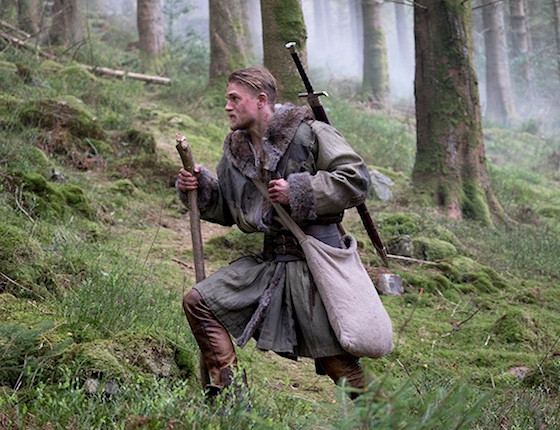
Set in a vaguely-defined historical Britain (the capital is called Londinium, but the king resides at Camelot, which is… somewhere else…?), Legend of the Sword begins with King Uther (Eric Bana) being deposed by his scheming brother Vortigern (Jude Law), with only his young son Arthur escaping. Arthur grows up in a brothel and on the streets, going from a weedy kid to… some kind of, like, gang boss type figure, I guess? Basically, we’re in familiar Guy Ritchie territory: lads up to criminal hijinks with a London accent, only now in medieval costumes. Anyway, long story short, Excalibur — the eponymous sword — reveals itself stuck in a stone, every young man is forced to try to pull it out, which obviously Arthur succeeds at, marking him out for death by Vortigern but also as the true king to those who remain loyal to Uther, who now have a Robin Hood-esque underground army — and so they begin a Robin Hood-esque campaign against Vortigern. Seriously, it wouldn’t take too many tweaks to make this as passable a Robin Hood film as it is a King Arthur one.

King Arthur and his merry men

So, to no one’s great surprise, if you’re looking for a broadly faithful adaptation of Arthurian legend then you’re out of luck here. There are obviously famous bits of the legend thrown in — the aforementioned Excalibur and its stone; the Lady of the Lake pops up too; and… um… other than that it’s pretty much just people’s names, really. I don’t know how much critics were hoping to see a more recognisably Arthurian tale, but I have to wonder if this massive deviance from the well-known stories of the eponymous hero is at least partly responsible for the film’s poor reception.

Part of why I wonder this is that, if you approach Legend of the Sword less as a King Arthur film and more as a Guy Ritchie-flavoured fantasy movie, there are bits of it I think are really, really good. Some of it’s great, even, like an efficient and exciting montage that shows Arthur growing from child to adult. Or any other time there’s a montage, really — that’s the best one, but others are equally as effective. Second best, for instance, is one where Arthur has to go on a quest in some alternate dark dimension or something, battling giant bats and other such nasties. That’d be the whole of act two in other films, or at least a significant action sequence, but its basic content is all so rote — so Ritchie instead burns through it in a montage, which feels like a nod and a wink to the audience: “you know how this goes”. Editor James Herbert certainly gives his skills a workout making these sequences fast, clear, and cinematically thrilling.

He's gonna need a montage

Of course, if you really dislike Ritchie’s trademark style then him slapping it on the fantasy genre isn’t necessarily going to enrapture you. Reportedly the project was pitched to the studio and cast as “Lord of the Rings meets Snatch” and they’ve pretty much delivered on that promise, transposing Ritchie’s modern London laddish schtick onto medieval Londinium plebs. Personally, although I’ve somewhat tired of his recognisable approach in a contemporary setting, the temporal disjunct was a fresh enough variation for me, breathing new life into both Ritchie’s MO and fantasy tropes.

Unfortunately, for all the verve of his own style that Ritchie injects, there are also bits that typify CGI-blockbuster blandness — the final fight is a nothingy blur. The speedy, montage-driven style also allows for only so much character development. What time there is gets focused on Arthur and Vortigern, which I suppose is appropriate enough, with a large supporting cast fighting over the scraps. It seems obvious to me that a mysterious female character known only as “The Mage” was meant to be revealed as Guinevere (a conceit broadly nicked from the Jerry Bruckheimer King Arthur, I think), and indeed that was apparently nixed in post-production. I guess they thought they could bump it to one of the five sequels… which now aren’t happening.

Come and 'ave a go if you think yer 'ard enough

My final three-star rating is maybe a bit harsh, but then maybe I’ve been too generous with my fours lately (or always). If Legend of the Sword had been able to carry through on the impetus of its best bits then it may even have been looking at a full five stars, they’re that good, but it doesn’t come together as a whole. It’s not the failure mass opinion painted it as, but it’s not quite a success either — it’s an interesting “good try”.

3 out of 5

King Arthur: Legend of the Sword is available on Sky Cinema from today.