
Murder abounds in this month’s reviews: Jessica Jones and Cormoran Strike are both on the trail of killers with a personal connection; Shetland’s top cop has deaths old and new on his hands; and Lucifer offers weekly homicide with a fantasy spin.
Meanwhile, the only thing getting murdered on Nailed It are the recipes.

Jessica Jones Season 2
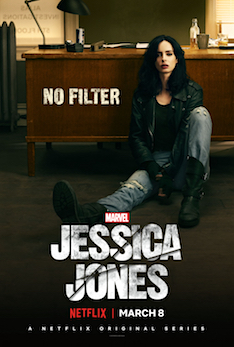 When the first season of Jessica Jones debuted 28 months ago it was practically a cultural phenomenon. Its fresh, unique take on the superhero genre marked it out as noteworthy even at a time when there are innumerable other films and series in that space. A large part of that was the intelligent and grounded way it engaged with some thorny issues, making it a critical darling and attracting audience admiration too. So I’ve been a little surprised that no one really seems to be talking about season two. Perhaps it’s just me and my little internet bubble, but since the flurry of pre-release reviews I’ve heard nary a whisper. I’m sure there must be reviews and recaps out there, which I wasn’t seeking out so as to avoid spoilers, but I didn’t stumble across any either.
Anyway, this season sees Jessica and co on the trail of the secretive medical organisation who gave her superpowers. I suppose saying any more than that might count as spoilers, depending on your point of view — they structure these seasons like novels, or long movies, meaning explaining the setup for the overall narrative can see you giving away things that don’t happen for three or four episodes. I mean, for example, in season one Kilgrave didn’t even appear until something like episode three or four, and wasn’t a major presence for another couple of episodes. A similar thing goes on this season. Some people criticise this form of storytelling on a fundamental level, wanting a more episodic approach, but it’s how these shows function — if you don’t approve of it, their very form will always offend you. You either give up on them, or take it at face value and roll with it. Sometimes it does make it feel like they’re moving too slowly, but there is a structure to the thing when viewed as a 13-hour whole.
It’s a worthwhile caveat to note that I watched the season in five multi-episode clumps over the course of five days. You definitely get a decent chunk of story when you watch several episodes back-to-back. It would play differently if spread more thinly, I’m certain, but whether that’s a negative (making everything feel slower) or a positive (allowing more time to process each beat of plot and character), I couldn’t say. Nonetheless, I would say that giving the pace a kick up the arse wouldn’t hurt.
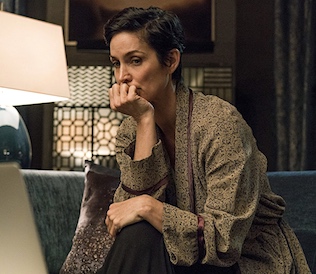 And that’s not to say these series never work in episodic form. For instance, events at the start of episode five, AKA The Octopus, see Jessica begin to force herself to be a better person. It’s one of the season’s strongest episodes, in part because of this burst of character development. Okay, it’s a bit blunt, in that she’s told she needs to improve and we see her consciously trying, but it pays off in a scene where she has to be empathetic to question a mentally-impaired witness. It’s not only Jessica who benefits from development: supporting cast members like Malcolm, Trish, and Jeri get meaty subplots to tuck into. Jeri’s is the best — indeed, her storyline might be the strongest bit of the entire season. There’s a fantastic, nuanced performance from Carrie Anne Moss — it feels like they’ve really worked to make use of her in a storyline that’s far more emotional and nuanced than what she’s had previously in these shows.
Conversely, Trish’s storyline feels slapdash. She falls off the wagon… until she runs out of her new drug, after which she’s fine. Well, more or less, because then they make it all about how she’s envious of Jessica’s powers. That’s a fine thread to pull — it’s been there all along — but some of the steps she takes as a result… it feels a bit much. Fundamentally it’s a good idea for her subplot, but I’m not sure it’s been well enough executed.
As for the main story thread, although the season starts off in the mould of a superhero thriller (like most of these Netflix/Marvel shows), around the halfway mark it morphs into a family drama. A family drama where people have superpowers, and get shot, and debate the ethics of murder and running away to non-extradition countries, but, y’know, some families are unique. It also does the material the courtesy of digging into it. Several times the season reaches what looks like an ending, and in other shows would be, then pushes past it into what happens next; the psychological reality for these characters. That’s what the whole season is about, really: these characters as people, not as heroes or villains or whatever.
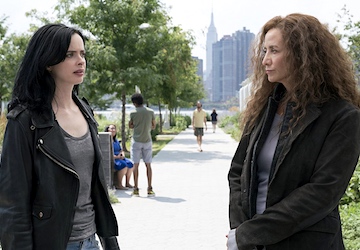 For me, it lost its way a bit again in the final pair of episodes — there are still really good bits, but others feel like a wearisome rehash of plot beats familiar from other superhero/thriller series. Eventually it comes to a good ending — there’s a surprising resolution to the plot, plus an epilogue that lays some intriguing hints for a third season (an inevitability, surely?) — but the faffery of episodes 12 and 13 to get us there… there were more streamlined ways to do this, I think. Or, considering the mandated episode count they have, more interesting ways to have spent the time. So it’s not perfect, but it’s still one of the best of the half-dozen Netflix/Marvel shows.
Strike Career of Evil
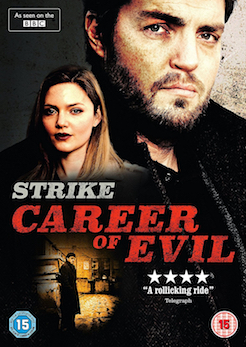 The latest Strike adaptation (and the last for at least a couple of years) was the best so far, I thought — a mysterious, reasonably complicated case, and plenty of character stuff for our likeable pair of heroes, too. The latter is certainly a big part of the series and its appeal, sometimes to the detriment of the actual investigation storyline, I suspect. By which I refer to the fact that some fans of the books have complained that the series isn’t devoting enough time to each adaptation, necessitating big cuts to the plot to fit into just two hours. I’ve not read them myself, and such editing didn’t feel noticeable during the first series, but Career of Evil did feel a little hurried at times. It’s hard to deny that the BBC have raced through their adaptations a little too fast. And now we have to wait goodness-knows-how-long to find out if Robin manages to stay married to her new husband. At the start I thought this would be a series that avoided the clichéd will-they-won’t-they between the male and female leads, but clearly it isn’t. Really, I don’t care too much if they get together or not, but her husband’s a bit of a dick and I look forward to her ditching him.
Shetland Series 4
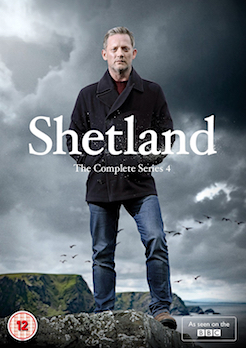 In almost the polar opposite to Strike, Shetland is no longer based on the books that inspired it (even though I believe there are one or two they’ve not adapted), and it takes a whole six episodes to tell its story. Actually, I feel a bit daft calling Strike’s case “complicated” now, because it’s as nothing to this series of Shetland, which sees DI Perez and his team struggling with both a 23-year-old cold case, which has resurfaced because the convicted murderer has just been awarded a mistrial, and a new murder with clear echoes of the first. If that wasn’t enough, the investigation leads them to Norway, where both the suspicious activities of an oil drilling firm and the plotting of a far right nationalist group come into play. Shetland has always had a bit of Scandi Noir about it (must be something to do with the cold northern environs), but it strays even further into that territory by, you know, actually going there.
All this while dealing with the continued fallout of events from last series in a respectful, mature, understated, and relevant manner. It might look like “just a cop show”, but there’s some depth here; and when everything finally comes together and the truth is revealed in the final episode, there are some revelations and developments that really hit home — it’s sad and horrifying, without wallowing in it or going tonally overboard. Good news: a fifth series has already been commissioned.
Nailed It! Season 1
 Not a reality show about manicurists (that’s what it sounds like, doesn’t it? If I was making a reality show about manicurists I’d be annoyed this took my title), but rather Netflix’s answer to The Great British Bake Off (possibly literally: they were miffed they didn’t get a chance to bid for it when it went to Channel 4). It’s not about super-skilled amateur bakers, though, but rather normal folk who attempt the kind of grand bakes you sometimes see online… and fail miserably. It’s like that bit of An Extra Slice where they look at viewers’ photos, only turned into a whole programme. It’s also very American — brash, loud, fast, unnuanced… It’s also the way it’s shot and edited, very much more like American reality series than British ones, but I shan’t bore you with a Media Studies-esque explanation of that.
So, for all those kinds of reasons, the first episode nearly put me off, but I stuck with it and it turns out it’s quite fun once you get used to it. It’s not as nice as Bake Off, but they’re not mocking the contestants either. Sure, they want them to mess up (they’re given ludicrously tight deadlines and bloody hard bakes), but it’s in a spirit of fun. Another difference between the UK and US shows: on Bake Off taste and decoration are equally important, leaning towards the former; on Nailed It, they do taste the bakes, but all that really matters is how they look. I mean, if you could distill what the rest of us think of as Americanism into a baking show…
Lucifer Season 1
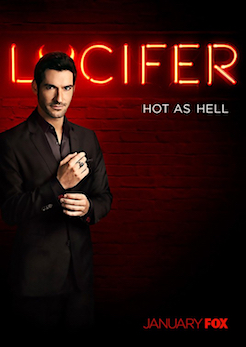 Having finally finished Castle last month, there was a gap in our viewing schedule for a light crime-of-the-week cop show. Lucifer seemed to fit the bill. For one thing, it’s been knocking around for a few years now, meaning there’s a nice backlog of episodes to get through. Loosely inspired by a DC comic, it’s about the actual Devil quitting Hell and setting up a life in Los Angeles, where — for one reason or another — he ends up helping the police investigate murders. Meanwhile, he enters therapy, and there’s an angel knocking around who wants to drag him back to Hell. The series nicely balances the bog-standard US-cop-show case-of-the-week stuff with the ongoing fantastical subplots, powered by a cast of engaging characters with conflicting motives. Best of all is the lead, Tom Ellis, giving a deliciously charming and slightly camp turn as the Prince of Darkness himself as he tries to become a better person. I’m not sure the series has really made any waves (especially on this side of the pond, what with it being an Amazon Prime exclusive here), but it’s really rather good. I mean, it’s not going to be challenging Quality TV for greatest-of-all-time status — it’s still a case-of-the-week buddy show when you boil it down — but it’s done well and a lot of fun.
Things to Catch Up On
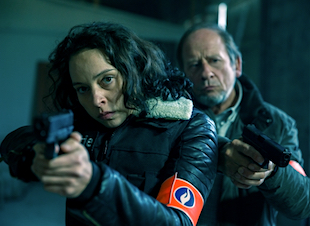 This month, I have mostly been missing The X Files season 11, which finished earlier this week in the US (and comes to the same end here in the UK with a double-bill on Monday). I watched (and reviewed, natch) its first episode last month, but that was so uninspiring that I haven’t yet bothered to continue. I’m expecting the rest of the season to be an improvement (not that I’ve read any reviews — I’m just basing that on the show’s own form), but still, here we are. Other than that, I can’t think of anything new that I’ve missed; although I did happen to see an ad on Channel 4’s app for Belgian import 13 Commandments, which they reckon “makes Se7en look like Sesame Street”. As Se7en’s my favourite film, I feel I should give that a shot, but I don’t know when I’ll find time for its 13 episodes.
Next month… Look away! Netflix’s vile family dramedy returns for a second series of Unfortunate Events.
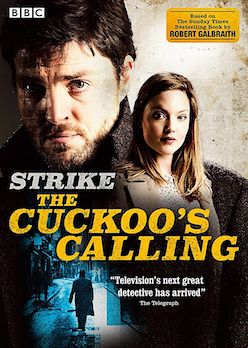 Adapted from the series of novels by Robert Galbraith — the mystery-writing pseudonym of one J.K. Rowling — you might’ve assumed this would’ve followed in the footsteps of the author’s other literary series and have Hollywood come a-knocking. Maybe they did, but TV is a more natural home for the material: it’s a decent low-key murder mystery with appealing lead characters, which is the sort of stuff that can generate TV ratings but doesn’t spell box office nowadays (well, unless it’s Murder on the Orient Express, with its $350 million worldwide gross, but that’s a different kettle of fish). While the general shape of the drama is familiar from, well, every other TV detective show, Rowling’s well-known interest in social issues regularly comes through — not least in its two main characters, one of whom is a war veteran living with the realities of an amputation, the other a talented woman finding equality in the workplace. I suppose that’s all very timely.
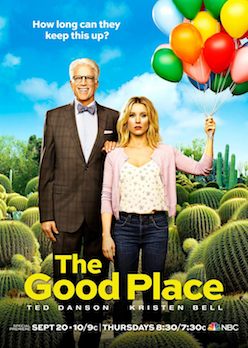 Having blown the doors off its own enjoyable premise with a clever twist at the end of
 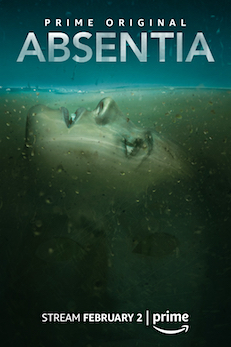 Stana “Beckett from Castle” Katic stars in this mystery-thriller, an Amazon exclusive in the US and UK (and everywhere else there’s Amazon Video, I presume). She plays FBI agent Emily Byrne, who was declared dead in absentia after she disappeared while on the hunt for a serial killer. Six years later, she turns up alive, apparently having been held captive all that time — even though the main suspect was convicted of her murder and has been in prison. Events quickly take a turn where her former colleagues wonder if Emily was in on it too, meaning she has to go on the run to prove her innocence. Of course, none of those people ever stop to wonder what she’s actually been up to for six years (it’s not like the killings continued), or why she’d decide to fake her comeback now, or… all sorts of other things. A subplot with her kid — who was too young to remember her, and now has a new real mom because his dad remarried — has emotional potential, but goes a bit too swimmingly at first and then is soon abandoned in favour of shoot outs, and unearthed skeletons (both figuratively and literally), and all that mystery-thriller stuff. So this isn’t one to think about too much, in any respect, but it’s passably entertaining as a pulp thriller. I’m going to stick with it until the end, at least, but I kinda hope it doesn’t try to end on a cliffhanger — I’m not sure I want a whole other season (or two, or three, or more).
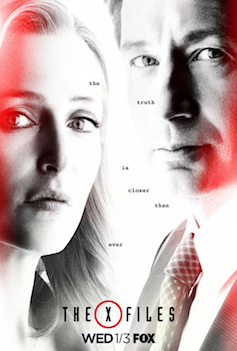 The second season of The X Files since its revival only recently started airing in the UK, but we’ve caught up as far as episode three now. Well, the broadcasts have — I’ve only watched the first episode, and it was so goddamn terrible I’ve not had the heart to continue. (I will, I’ve just not mustered the motivation yet.) Said opener was My Struggle III, continuing the series’ never-ending mythology arc plot, which last season (two years ago now!) was covered in My Struggle I and My Struggle II. Well, at least the mythology episodes are clearly marked these days — there’s a My Struggle IV later in the season, for our sins.
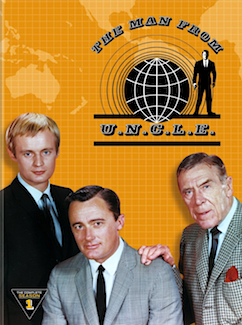 I’ve had this knocking around waiting to be watched for yonks after I picked up the complete series DVD set on offer. (“For yonks” being “since 2015” in this case.) I remember seeing some episodes as a child and enjoying them, though I don’t remember any specifics. I guess they were from the show’s later, crazier, full-colour years, because these early black-and-white adventures don’t quite chime with that vague sense-memory of what the show should be. That said, although they start out almost serious (as ’60s spy-fi goes, anyway), by just a couple of episodes in there’s already a kookier side on display. Anyhow, I expect the best is yet to come.
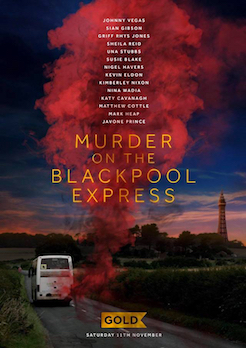 This one-off feature-length comedy aired at the end of last year, presumably timed to tie-in with the theatrical release of Kenneth Branagh’s Murder on the Orient Express — as the spoofing poster highlights, of course. (Who thought I’d wind up referencing that film twice in a TV column nearly four months after it came out? I really ought to get on with reviewing it…) Truthfully, that poster is probably the best thing about this. There’s a large cast, all recognisable from a host of British sitcoms, but half of them go underused. Those that do have a part to play get material that’s fairly amusing, amid a plot that’s somewhere between predictable and too mad to be guessable. It was funny enough on balance, but it didn’t live up to its full potential.
 This month, I have mostly been missing Altered Carbon, Netflix’s cyberpunk murder mystery. Reviews looked to be mixed, so I haven’t actually decided whether to bother with it or not. Two series I will definitely (intend to) get round to, but I’m saving up to binge once they’re done, are: BBC Two’s starry political thriller Collateral (led by Carey Mulligan, John Simm, Billie Piper, and no doubt some actors who haven’t had significant roles in Doctor Who. FYI, it’s coming to other counties as a Netflix “Original” next month); and the latest run of Scottish detective drama Shetland (the last series of which was
 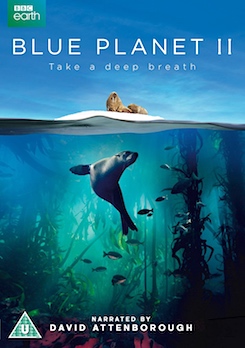 Despite the massive hype, I missed this when it aired. I say “missed” — I always intend to watch these big natural history shows, then never get round to them. I confess, it was new tech that persuaded me: after I saw it was all available in UHD on iPlayer, I had to give that a go. And…
 Now, I didn’t do a comparison to the regular HD stream, so I can’t really say how much better the UHD made things, but I do have a few observations. Related to it looking “more real”, after viewing I saw a good resolution photo taken for the series of one creature (
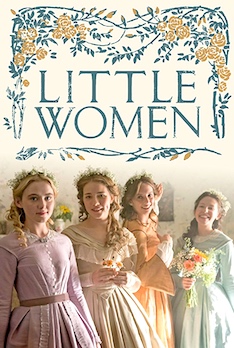 As I mentioned
  This month, I have mostly been missing the BBC’s pair of big, grim January dramas, McMafia and Hard Sun. They both seem to have received a very mixed reaction (not that I’ve been following too closely because, y’know, spoilers), but both have intriguing setups: the former a drama about the global business of the Russian mafia inspired by a non-fiction book; the latter a pre-apocalyptic sci-fi/crime thriller from the creator of
  Another year, another divisive Doctor Who Christmas special. It’s the third time that the Christmas Day spectacular has to serve double duty by writing out the programme’s lead actor, and it follows the format set out by David Tennant’s swan-song The End of Time and Matt Smith’s finale The Time of the Doctor by being a very inward-looking fan-focused edition. I’m not sure that’s the right tack to take on Christmas, quite frankly, when the show’s playing to a wider audience of more casual viewers than normal. Former showrunner Russell T Davies and immensely popular leading man Tennant had earnt that kind of indulgence by the time they exited, and the series was pretty much the biggest thing on British TV at the time, so most of those so-called “casual viewers” were actually regular watchers of the show anyway. I’m not convinced exiting showrunner Steven Moffat and departing Doctor Peter Capaldi are quite in the same position.
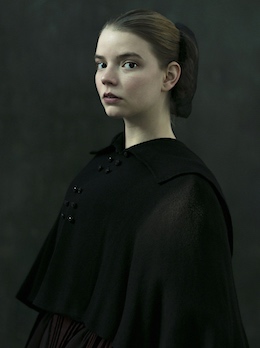 The BBC’s two-part adaptation of Jessie Burton’s 2014 bestseller promised to be a supernatural treat, though in that respect the trailers were somewhat misleading. Set in 17th century Amsterdam, it’s about a girl who marries a wealthy merchant, but finds his strict and secretive household is not all she’d hoped. He buys her a dolls house as a wedding gift and she commissions a miniaturist to produce items for it, but she soon starts to receive things she didn’t order — things which suggest the miniaturist somehow knows people’s secrets, and can possibly see the future… In actuality, The Miniaturist is more of a period drama, albeit one with lashings of Gothic that were right up my street. It was beautifully made, with a fantastic eye on the costumes and locations, and cinematography that evoked painting of the era. There were strong performances too, particularly from Anya Taylor-Joy (yes, her out of
 “Oh God, I’d forgotten,” says one character early in the first instalment for almost 15 years of BBC Two’s pitch-black comedy series. He’s been confronted with some other returning characters, but I have to say that the sentiment kind of sums up my reaction to a lot of this revival, in two ways: firstly because I had to keep rummaging in my memory to make connections back to a series I haven’t watched for a decade and a half, and secondly because the hilarious grotesquery of the League came crashing back. Revivals of once-great comedies can be a mistake — they’re often little more than an exercise in nostalgia; and this one is certainly aimed at fans, as the vast majority of it continues or riffs off stuff from before — but, in spite of that, it still felt fresh and edgy, not like a gang of middle-aged men reliving past glories (the other thing that goes wrong with revivals). So it was all really rather good, and it’s gone down very well too. Officially it’s a 20th anniversary special rather than a fourth series, but might we see more? I think it would be welcomed.
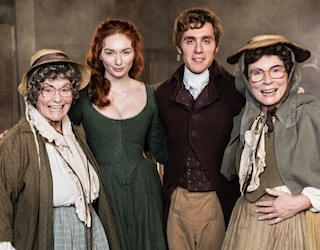 So much comedy, so much of it a passable time-killer that I have little else to say about. The highlight was probably 300 Years of French and Saunders, an excellent celebration of the comedy double act, reminding us of many of their greatest hits alongside a few nice additions. It made me want a whole highlights series repeating all their many hilarious film spoofs. Shakespearean satire Upstart Crow offered a neat riff on one of the better-remembered storylines from modern Christmas classic Love Actually, which it executed with surprising subtly (or, at least, I had to point out the references to my fellow viewers, which was followed by half-an-hour of scouring through Richard Curtis’ film for the relevant scenes). I enjoyed the pilot for Tim Vine Travels Through Time back in
  Black Mirror series four was released last Friday, but I haven’t even watched series three yet. Well, I did only watch
 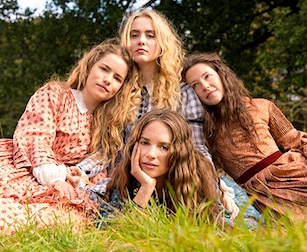 I may’ve watched 26 different programmes, but there’s still an awful lot I’ve missed. Like the BBC’s new three-part adaptation of Little Women — I’ve never read it or watched another version, so here’s my chance to get cultured. Less worthy but no less lovely, there’ve been a couple of Great British Bake Off specials featuring contestants from the BBC years even though it’s now on Channel 4. Gasp, indeed. And despite that long list up above, there’s still a handful of comedy specials I’ve got to catch up on, like Not Going Out, Would I Lie to You?, and even some not featuring Lee Mack. There’s bound to be something else I’ve forgotten — I’ll have to go through the Radio Times, again…

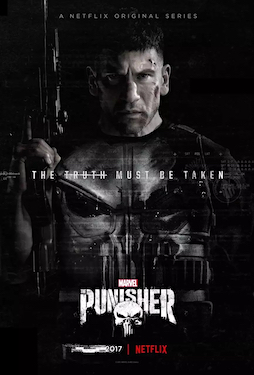 The fourth live-action iteration of Frank Castle, Marvel’s murderous anti-hero (and people moan about Spider-Man reboots), debuted in
 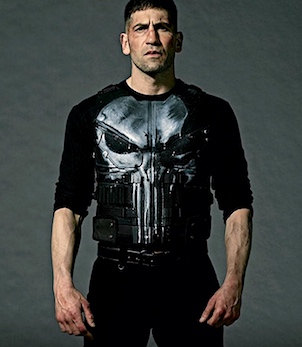 In the title role, Jon Bernthal is fantastic. You can absolutely believe him as a revenge-driven psychopath capable of killing anyone and everyone, but also as a kind-of-charming strong-but-silent type with a heart and moral code who will definitely do the right thing. I’ve seen some critics and viewers opine that now is the wrong time for a series about a hero who just murders indiscriminately. I say those people definitely haven’t watched this Punisher. Although the plot is a conspiracy thriller, the series invests a lot of time in the emotional world of Frank Castle, making him human and moral rather than just a single-minded murder-machine. Bernthal makes what could be a very one-note role into a plausible human being; one who you believe might be able to find redemption and leave someday. And maybe that makes him even more tragic — he could find it; it’s possible… but likely? There’s the rub. As it’s also trying to engage with issues facing combat veterans once they return home, it makes for a clearly different, more serious flavour for an MCU production. How successfully it explores these weighty issues is more debatable.
 The third and final series of BBC Four’s sitcom about a couple of mates whose hobby is metal detecting was every bit the equal of the first two runs, which saw the show place on my list of
 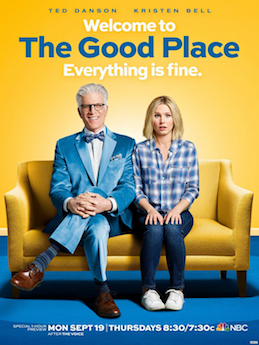 I only heard about this after its Big Twist was much-discussed online, so starting it was an exercise in knowing there was a big reveal awaiting. Fortunately, that knowledge doesn’t overshadow everything that comes before it. For those who still aren’t aware of it (especially as it’s only on Netflix on this side of the pond), it’s about a woman (Kristen Bell) who dies and goes to Heaven only due to an admin error, so she tries to better herself so that she’s deserving of her place. Other complications emerge as the season goes on, but that’s the premise. There’s a lot of plot for a sitcom — although it’s not necessarily immediately obvious, it tells a 13-episode story; this makes Netflix quite a natural home for it, actually, as it’s not your typical “every episode is fundamentally standalone” sitcom. But it’s also very funny in amongst all that, mining not only the characters and their foibles, but also the uncommon situation they’ve found themselves in. The shocker in the finale is just the icing on the cake. I hear season two has gone off the boil somewhat, but I’ll find out for myself once it’s all wrapped up.
 This month, I have been missing so much stuff. There’s been the fourth series of Peaky Blinders on BBC Two (which concludes this week, so we’ll whizz through it sometime in the new year); the second season of The Crown on Netflix (also waiting for the new year now); the same streamer’s first ever miniseries, Godless; the immensely acclaimed Blue Planet II (now available in UHD on iPlayer, too!); and I’m behind on Arrow and The Flash so haven’t reached the four-show Arrowverse crossover. And those are just the ones I can remember right now.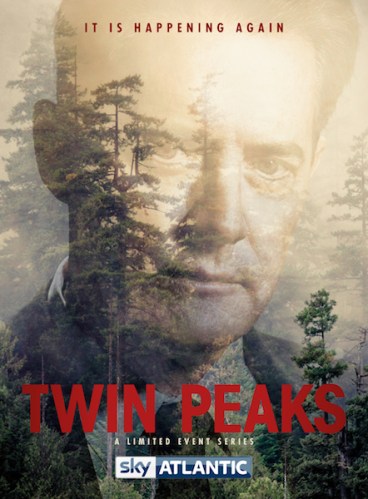
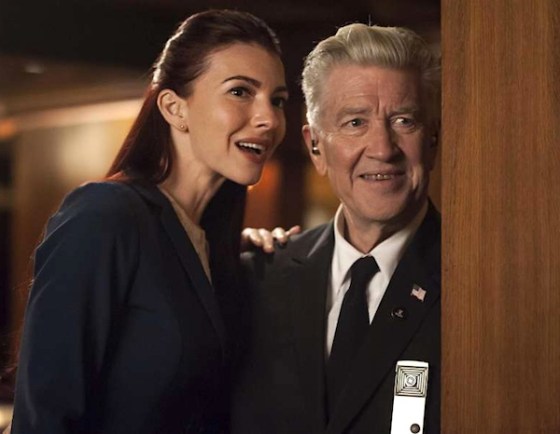
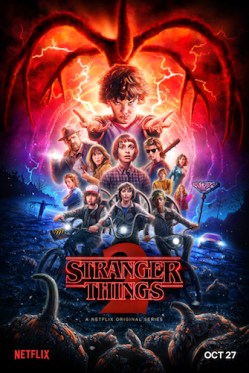 Netflix’s most talked about show (well, unless you count House of Cards for all the wrong reasons) returns wth a second season that isn’t just a continuation, it’s a sequel — note how it’s officially called Stranger Things 2 (which
 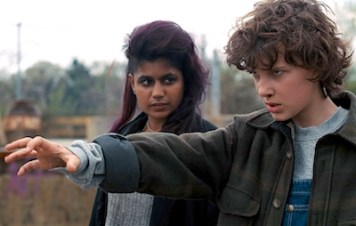 Now, you can’t discuss Stranger Things 2 without mentioning the infamous Chapter Seven. If you’ve missed the internet’s collective exclamation of disappointment and/or annoyance, IMDb has it in a nutshell: on there, the user ratings of all the other episodes (from both seasons) range from 8.5 to 9.5, a spread of 1.0 (obviously), but Chapter Seven has 6.2, a full 2.3 marks below the next lowest score. Ouch. It’s not great, but I didn’t think it was that bad. It’s a total aside from the main action, and placed where it is seems designed just to delay the pay-off to Chapter Six’s cliffhanger for another 45 minutes (in a regular programme it’d be two weeks, but this is Netflix). I don’t really hold with that being an actual problem, though — that’s just taste. No, the real problem is that it rushes through a character arc for Eleven that would’ve been better presented over multiple episodes. Considering before that she’s spent several episodes just sat around watching TV, there were surely better ways to structure her role this season.
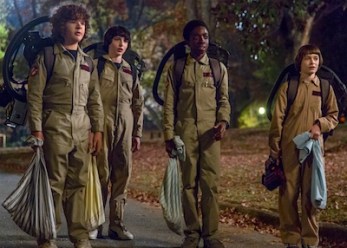 Even though it has all the big action stuff you’d expect, Chapter Nine still devotes a serious chunk of time to a character-focussed epilogue; reminding you that, as with most loved shows, the heart of it is the characters and their relationships. Indeed, although the season as a whole didn’t have the same effectiveness as the first, I thought the finale was a better climax. In fact, it would be a perfectly valid place to leave the entire series… but there are (at least) two more seasons to go. It might be nice if season three opened up the timeline a bit, because so far Hawkins seems to be a place where Crazy Terrible Shit happens over a couple of days and then everything’s fine for a whole year.
 I had nice things to say about the first half of Red Dwarf XII in
 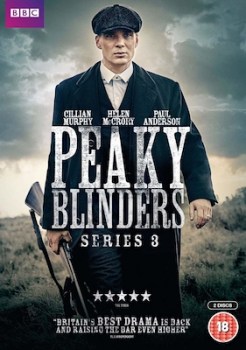 Beginning with a significant time-jump and monumental change in circumstance worthy of a Mad Men season premiere, the third series of Peaky Blinders soon sees everyone’s favourite Brummie gangsters embroiled in espionage and counter-espionage as they’re enlisted to help exiled Russian aristocracy launch a bid to reclaim their country. There’s so much more going on than that, but I won’t get into it here because we’ll be here all day — Peaky Blinders is a complexly plotted series; right up the final episode, which contains revelations that turn the previous six hours on their head. Even with all that narrative to get through, it still finds plenty of time to give most of its large-ish ensemble cast some strong character arcs. There are a few streaming series that could learn a thing or two from that…
 I confess: I started watching Rick and Morty fully expecting to hate it. I’d always thought it looked and sounded annoying, so I paid it no heed… but then it seemed to keep coming up — people referring to it in excited tones, and it ranking 7th on
  This month, I have mostly been missing Mindhunter, David Fincher’s new Netflix series about the early days of criminal psychology and criminal profiling at the FBI. It was actually released before my last TV post, but I didn’t have Netflix at the time so I didn’t bother to mention it. I would watch it next, but The Punisher is out tomorrow. Maybe after that…
 Everyone was a bit surprised when they announced a second series of Doctor Foster. The
 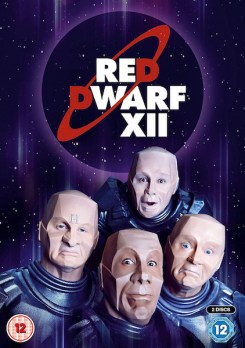 I still think of Red Dwarf as a programme that’s popped back for a bit of a revival, but I guess at this point it counts as just an ongoing show: since Dave brought it back in 2009 they’ve produced four series, half as many as the entire original run on the BBC. Give it another five or six years and they may equal, or perhaps even surpass, that number. It’s been a long time since I actually watched any of those old episodes that made the show’s name, so I can’t offer an opinion on whether the new runs are of the same quality — some say they are, some say they aren’t. Personally, I still think it’s funny overall, and (as I often say) that’s really all you need from a comedy. That said, one thing Dwarf has always done, and continues to do, is draw from actual science and science-fiction concepts to drive its plots and many of its gags. That makes it a proper sci-fi-comedy, rather than just a regular sitcom that happens to be set on a spaceship. Hurrah for that.
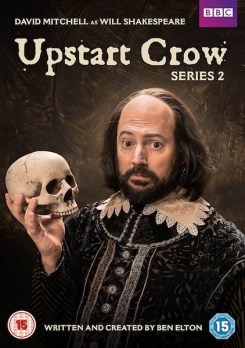 Talking of funny sitcoms, this series of Upstart Crow has been hilarious. Okay, I could do without Harry Enfield turning up as Shakespeare’s dad — almost every scene featuring him sees the humour take a turn towards the puerility of the toilet — but the rest of it is often pretty clever, riffing on Shakespearean plots and trivia. There was even a screenwriting joke in one episode that I guess would pass most people by. It also has a nice line in almost anachronistic humour, where characters comment on a fact of the day that is actually a commentary on modern life. It’s not subtle, and perhaps writer Ben Elton returns to that comedy well too often, but it’s always funny. And as I often say…
 It’s funny coming to The Thick of It for the first time now. It was so cutting-edge when it aired, and yet politics has got so much barmier since — these specials debuted a whole decade ago now, when the idea that Trump might be President was the kind of thing no one but sitcom gag writers thought about. That’s not to say the show’s lost any of its bite, just that it’s not as timely as it once was. These two hour-long specials, The Rise of the Nutters and Spinners and Losers (plus 15-minute bonus episode Opposition Extra, which follows some characters from Rise of the Nutters during the events of Spinners and Losers), set their satirical sights on the transition of power from Tony Blair to Gordon Brown. Don’t worry if you don’t remember that — there’s no reading up required, because The Thick of It is a fiction loosely inspired by real political events, rather than a straight riff on reality. It’s every inch the 21st century’s answer to Yes Minister in that respect. Although there’s an ensemble cast, all of whom are very amusing, the unmistakable star is Peter Capaldi’s Malcolm Tucker. With a regime change in the offing, Tucker risks being thrown out as part of the old guard, and so is on the back foot trying to manipulate things to his advantage. After three seasons of Capaldi as the Doctor, witnessing him here use his brain to run rings around other people to get the result he desires now feels like watching a somewhat evil — and much swearier — version of everyone’s favourite Time Lord.
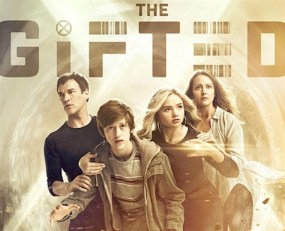 This month, I have mostly been missing The Gifted, the new TV show set definitively in the X-Men universe — unlike the last one, Legion, which apparently wasn’t. As you might infer from that use of “apparently”, I still haven’t got round to Legion either. I also haven’t seen the other new Marvel Comics-related show, Inhumans, which is part of the MCU. After the terrible reviews it’s received, I’m not sure I’ll bother.

 100Films.co.uk