Jin-Roh: The Wolf Brigade (1999)

aka Jin-Rô

2018 #212
Hiroyuki Okiura | 102 mins | DVD | 1.85:1 | Japan / Japanese | 15 / R

Jin-Roh: The Wolf Brigade

Jin-Roh has enough cool costumes and bursts of ultra-violence to cut together a trailer that looks like a kinda-typical anime action-fest, but that’s really hiding a thoughtful, complicated (oh so complicated) drama about an unlikely romance and military conspiracies.

If that sounds like a bizarre mix… well, it is. Jin-Roh is a film that likes to pull tricks on its audience (maybe those action-packed trailers were deliberate rather than marketers just doing their best to sell the thing!), and one of the tricks it plays is to constantly wrongfoot you about what kind of movie it’s meant to be. First it’s a kind of action thriller about terrorists vs. police; then it’s a subtle romance between two damaged individuals; then it’s a conspiracy thriller, and also an espionage drama; and finally it’s some kind of allegorical tragedy. As it moves through those various phases, the characters — and, by extension, us — are subjected to crosses, double crosses, and triple crosses. Good luck keeping up…

Set in an alternate history where Germany occupied Japan after World War 2 (I’m not sure that’s made clear enough in the film, but hey-ho — maybe it’s obvious to Japanese viewers), the film picks things up a couple of decades later, with Japan free from occupation but having to fight antagonistic forces from within. With many guerrilla cells having combined to form terrorist group The Sect, the security services consequently created Kerberos, a controversial police paramilitary unit, to combat them. When Kerberos corporal Kazuki Fuse fails to shoot a bomb-carrying girl and she blows herself up, he’s punished by being sent back to basic training. At the same, he meets the girl’s sister and begins to form a bond with her. Meanwhile, his failure has thrown the future of Kerberos into doubt, setting political machinations whirring every which way.

Little Red Riding Hood... and the Big Bad Wolf?

I’ll admit, I got pretty lost with all the various factions, who was plotting what and when and why, and which side everyone was supposed to be on. Perhaps I was lulled into not paying enough attention because, as I noted above, the film appears to be a tender, understated examination of the relationship between two scarred individuals struggling to cope with the same recent tragedy from different sides, before it abruptly takes a hard turn into an intricate conspiracy thriller. Reading a plot description afterwards, I managed to get my head around it, though it didn’t resolve one quandary I felt at the end of the film itself: that it’s hard to know who we’re meant to be rooting for. Did the good guys win? Did the bad guys win? Were there actually any good guys — was anyone right? Personally, I’m fine with a film where there are no heroes, where everyone’s a bad guy and one of those bad guys wins; my problem is that I was left feeling unclear about whether that was the case or not.

Mixed feelings, then. It’s a well-made film (even watching on a crummy window-boxed DVD), but all those whiplash-inducing turns and confusion-producing twists left me somewhat reeling and bewildered.

3 out of 5

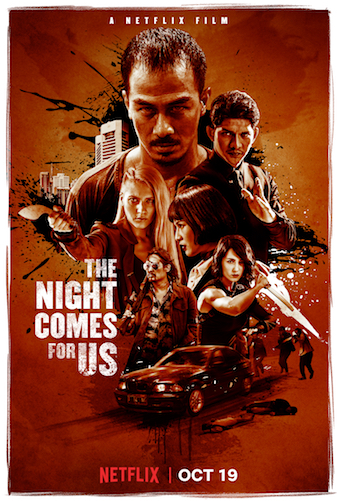
The Korean live-action remake, Illang: The Wolf Brigade, is available on Netflix from today.

(As is Daredevil season 3, Making a Murderer season 2, a brand-new Derren Brown special, and over half-a-dozen other series and films I’ve not heard of — why dump so much on one day, Netflix?!)

The Past Month on TV #39

Travel through time and space, into dreams and memories, and along miniature railways in this month’s TV review…

Doctor Who  Series 11 Episodes 1-2
Doctor Who series 11The 37th season of Doctor Who begins with the show’s biggest soft-reboot since at least 2010; arguably, since 2005; arguably, ever. With a new showrunner comes a new broom, and so we have a new Doctor, a new TARDIS, a new set of companions — sorry, they’re “friends” now — new locations, new monsters, and a new style (thanks to a raft of behind-the-scenes changes, including a new effects company, swish new cameras and lenses, and a new aspect ratio). It’s the perfect jumping-on point… and it worked, with the premiere achieving the show’s highest ratings for a decade; or longer, depending how you count it.

Oh, and the Doctor’s a woman now, too. “It’ll kill the show,” cried a vocal minority. Hahaha, nope!

But what of Jodie Whittaker, anyway? As with any new Doctor, I feel she needs a little time to find her feet — something that lies in the writing as much as the performance. There are some lines which would seem more at home in the mouths of David Tennant or Matt Smith, which Whittaker gamely tackles but don’t quite feel natural. But at other times the material and her performance click in perfect synchronicity, and we can see the promise that lies within. Hopefully as the writers become more familiar with her mannerisms, what works and what doesn’t for this particular incarnation, then it’ll all become smoother. There’s no reason to doubt she’s up to the task.

Some question the new man in charge of running the show, though. Chris Chibnall’s TV record is… patchy. For every Broadchurch series one there’s a Broadchurch series two; for every Broadchurch series three there’s a Torchwood series one; and so on. He acquits himself decently with this opening pair of episodes. The first, The Woman Who Fell to Earth, may owe an obvious debt to Predator with its alien-hunter storyline, but Who has always liberally borrowed from other places and made the material its own.

TARDIS TeamIndeed, even as it’s open-armed and newbie-friendly, Chibnall’s era already seems as Who-literate as you’d expect from such a long-time fan (somewhat (in)famously, as a teenager in the ’80s Chibnall appeared on TV criticising the then production team). His sense of what Who should be is at once indebted to the modern era (in particular the years of Russell T Davies, who I suspect may’ve been something of a mentor to Chibnall at one point) and also seeks to reintegrate elements long absent. For example, there’s the expanded TARDIS team, which calls to mind that of the series’ very first group of travellers; though whereas 1963 gave us a teenage girl and two middle-aged teachers, 2018 offers two teenagers and one middle-aged bloke. Such are the changing times. And for dedicated Whovians, the plot of episode two, The Ghost Monument, also had an air of early Hartnell serials, with its episodic trek across a danger-filled alien world. It was a brisk, entertaining 50 minutes, but stop and think about it too much and the cracks begin to show (read Andrew Ellard’s tweetnotes to see how it could’ve been polished up, for example).

Still, two episodes into a new era is no point at which to make generalisations about it (despite what some people have been trying). This is a reasonably promising start, though: there’s a good cast in place, and a clear sense of purpose — this feels like a production team making the version of the show they want on screen, not one rushing headlong to get out anything so long as it meets the broadcast deadline (something that afflicted both RTD’s and Steven Moffat’s eras at times). Only the weeks ahead can really tell how consistently they’ve achieved this. Personally, I’m more excited for each new episode to come around than I have been for some time.

Maniac
ManiacNetflix continue to blur the line between movies and TV with this limited series starring Oscar winner Emma Stone and Oscar nominee Jonah Hill, co-created and directed by Cary “director of the next Bond film” Fukunaga. Well, I mean, it’s a line that other TV producers have blurred plenty in the past — movie stars on TV is far from a new thing at this point, and there’s no doubting this is a TV series rather than a movie (it’s 6½ hours long, for one thing) — but, still. And they bend the rules of TV, too, with individual episodes running everywhere from 26 to 47 minutes. (Does that matter when Netflix’s release-it-all-at-once strategy means you choose how much to watch at any one time? Maybe not. But if you’re the kind to still watch one episode at a time, a word to the wise: I recommend double-billing the ultra-short should-be-one-episode pair of episodes 7 and 8.)

Anyway, Hill stars as the paranoid and delusional son of a business magnate who enrols in a drug trial, where he meets Stone’s addict in search of a fix. The trial is a new method for treating past trauma, something both of them have plenty of; and when the AI that’s a vital part of the procedure malfunctions, the pair find themselves in each other’s dreams and fantasies. It’s kind of like Inception made by someone with a kookier imagination than Christopher Nolan.

In fact, an even better point of reference would be X-Men-adjacent TV series Legion: it has the same preoccupation with mental health, with mysterious possibly helpful / possibly evil institutions, with can’t-trust-reality trippiness, with retro-futuristic design… It’s certainly a heavily stylised series, which is half the charm. The other half is all the dreamworld stuff, which takes a few episodes to rock up but is worth the wait. And the other half — because this is the kind of show that would definitely have three halves — is the chemistry between Stone and Hill, which is unexpected but palpable.

Kooky chemistryA significant amount of the series’ offbeat likability is down to idiosyncratic direction by Fukunaga, I suspect — the way he’s shepherded the visual creation of this world, the leftfield performance choices across the cast, and so on — but Emma Stone is definitely the MVP. While the aforementioned chemistry between her and Hill is important, and a lot of the rest of the cast get to excel at being quirky and funny, it’s Stone who really brings heart and emotion to the piece, making it more than just a zany fantasy.

Maniac throws you in at the deep end, with a first instalment that’s densely packed with information and alternate-world building, which it races past and through, sometimes with two or three things going on at once, making it feel a bit like hard work. But, really, that’s all incidental detail. Once you settle into it, an inventive and kooky journey awaits. How much it all adds up to is debatable — though, for the characters, it definitely reaches a worthwhile place — but it’s the kind of trip where the journey’s worth at least as much as the destination.

The Great Model Railway Challenge  Series 1 Episodes 1-2
The Great Model Railway Challenge
Long-time readers of this column with exceptionally good memories may remember that I once watched two episodes of Shed of the Year merely because one episode featured a Doctor Who-themed shed and another featured a cinema-themed shed (I’m still jealous of the latter, and you should be too — see photos at the aforementioned link). Well, here we have another show that wouldn’t normally be up my street… but episode one was all cinema-themed builds, and episode two featured a Doctor Who-themed build.

As for the programme itself, well, the format follows the template established by Bake Off and since copied ad infinitum for almost every hobby TV producers can think of: a pair of affable, pun-delivering hosts; a mixed-gender pair of expert judges; well-practiced amateur contestants, who compete in a series of tasks and challenges over a period of three days — in this case, to build model railways. It comes across as being as nerdy a hobby as you’d think (and with one team choosing to do the Who themed setup, it’s like nerd²), but I don’t mean that as a criticism — the stuff they produce is, at its best, astonishing and a lot of fun. I think I’m going to end up watching the rest of the series.

Also watched…
  • Upstart Crow Series 3 Episode 4 — It’s funny how this era of catchup TV can lead to both binge-watching and spreading stuff thinner than intended (or is that just me?) Anyway, the sole episode of Upstart Crow continued the quality run I commented on last month, this time with an amusing episode-long riff on Much Ado About Nothing.
  • Would I Lie To You? Series 12 Episode 1 — The best panel show on TV is back and as on form as ever, particularly with the ever-unguessable Bob Mortimer popping in for the first episode. A treat.

    The Not-So-Immortal Iron Fist
    Colleen the Iron FistHaving just last month written about how improved Iron Fist was and how I was actually looking forward to season three, Netflix went and cancelled it last weekend. That’s the first of their Marvel shows they’ve outright cancelled (it doesn’t look like The Defenders is coming back, but that was technically always a one-off miniseries anyway). There are lots of options for Iron Fist’s future, however: could be they’re planning to team up some of the characters into a new show; could be it moves to Disney’s forthcoming streaming service, which is set to have other MCU-related series. I figure the latter is unlikely — it’s tarnished goods now — but it would seem a shame to not pay off the second season’s cliffhangers/teases somewhere, somehow.

    Things to Catch Up On
    InformerThis month, I have mostly been missing Informer, BBC One’s new thriller. Well, it only started on Tuesday, so that’s fair enough, right? I guess I’ll save it up and see how it goes down — I’ve managed to avoid wasting time on a few initially-promising-but-ultimately-poorly-received series with this method; though, equally, it led to Radio Times spoiling Bodyguard for me, so you take your chances… And as the lack of review may’ve told you, I’ve yet to start Killing Eve. With a bunch of stuff popping onto Netflix over the coming weeks (see below), it’ll be lucky to make next month’s column either.

    Next month… after a 2½-year wait (which has included seven seasons of other Marvel/Netflix shows), it’s finally time to give the Devil his due — that being, a third season.

    Plus! Netflix’s spooky Riverdale spinoff, Chilling Adventures of Sabrina, and more new Who.

  • Rocky V (1990)

    2018 #206
    John G. Avildsen | 104 mins | Blu-ray | 1.85:1 | USA / English | PG / PG-13

    Rocky V

    With his career apparently on the wane, the promise of a payday tempted writer and star Sylvester Stallone to reignite the Rocky franchise for one final round (as it’s turned out, this was far from the end, but more on that another time). After the cartoonish excess of Rocky IV, Stallone tried to shepherd this film back towards the series’ roots as a gritty drama, going so far as to rehire the Oscar-winning director of the first film, John G. Avildsen. It didn’t work: Rocky V was met with poor reviews and poor box office. Stallone himself has admitted its failure in the decades since: when he was asked to rate each of the Rocky films out of ten, he gave this one zero. In spite of all that, I thought it was… fine.

    The plot picks up immediately after the end of Rocky IV, with the eponymous pugilist learning that the beating he took from Drago has left him with serious brain damage — one more fight could kill him. At the same time, a bad financial decision by Rocky’s brother-in-law Paulie (Burt Young) leaves the Balboa family in ruins, forced to move back to their old neighbourhood. Despite lucrative fight offers, Adrian (Talia Shire) insists Rocky remained retired, which leads to him encountering Tommy Gunn (Tommy Morrison), a wannabe boxer keen to be trained by the great Rocky. As Rocky begins to live vicariously through the increasingly successful Tommy, his son, Rocky Jr (played by Stallone’s own kid, Sage Stallone) is feeling neglected, especially as he’s struggling with bullies at his rough new school.

    Rocky Jr

    So, you can see how the film is trying to be more grounded — gone are the flag-waving ultra-patriotic theatrics of the last film, replaced with a grim story of financial ruin, inner city hardship, and what life is like after your dreams are over. It’s all a bit much. Indeed, it’s probably too much, because Stallone’s attempt to course-correct the franchise overshoots, sailing past gritty realism and into melodrama territory. There’s a lot of shouting and emotional theatrics, and the subplots are all a bit pat. I mean, Rocky neglecting his son because he’s training a fighter who he treats like a son is a solid enough plot, but it’s kinda obvious and we’ve seen its ilk before, and the way it plays doesn’t offer an original perspective on the material. So while it does work as a story, it’s part of what I mean about it being a melodrama — it’s not realism, it’s a heightened Movie story.

    The rest of the film is similarly afflicted — there are plenty of cheesy parts, but it wouldn’t be a Rocky movie if there weren’t — though some behind-the-scenes choices don’t help. For example, Tommy Morrison was a real-life boxer, which probably seemed like a clever casting decision, but, given his limited acting ability, was possibly a mistake. That said, while he’s hardly a spectacular actor, I didn’t think he’s as bad as some people say. One thing that definitely doesn’t work is the soundtrack. The film is often scored with rap songs, which don’t fit the character at all. I don’t know whose decision it was, but presumably not Avildsen’s: in 2002 he snuck a workprint version of the film out online, dubbing it the “director’s cut”, and apparently it includes a lot more of Bill Conti’s original score. There were various other changes as well (you can read a review here). I don’t know how easy that version is to find nowadays, or what kind of quality it’s available in — in the 16 years since, it’s not been granted an official release.

    Balboa family values

    The originally planned ending for the film had Rocky dying after the final fight, but Stallone and/or the studio thought that didn’t really fit the tone and themes of the series. Quite right, too. It also left the door open for the series to eventually continue and redeem itself: there’s the revival movie, Rocky Balboa; the spin-off with Rocky as a trainer, Creed; and the spin-off where Rocky got turned into a squirrel or a moose or something, The Adventures of Rocky and Bullwinkle. I can’t wait to see how that came about. (I jest — I know he’s the squirrel.*)

    Altogether, I don’t quite see why Rocky V gets so reviled. It’s certainly not the best movie in the series — indeed, it’s probably the lowest point, lacking the realism of the early films, the entertaining ridiculousness of its immediate predecessors, and the feel-good zero-to-hero arc seen in all of those — but it’s a passable-enough drama in its own right.

    3 out of 5

    * I did not know this — I had to Google it. Never let it be said I don’t commit to a joke. ^

    Sartana’s Here… Trade Your Pistol for a Coffin (1970)

    aka C’è Sartana… vendi la pistola e comprati la bara!

    2018 #188
    Giuliano Carnimeo* | 92 mins | Blu-ray | 2.35:1 | Italy / English | 15

    Sartana's Here… Trade Your Pistol for a Coffin

    The third official Sartana movie is to this series what On Her Majesty’s Secret Service is to the Bond films: its one-shot leading man isn’t as good as the regular fella, but the film around him is a cut above.

    Sartana’s just settling down to a nice picnic when he witnesses the robbery of a wagon by, apparently, a gang of horse thieves. The wagon was transporting gold… except it wasn’t: the bags are filled with sand. It’s all part of a scheme by the local rep of the mining company to rip off the hardworking miners and keep their earnings for himself. Naturally, Sartana embroils himself in the plotting, which also features a local impoverished saloon owner and several other gunslingers with competing interests in the gold.

    The blurb for Arrow’s Blu-ray release states that Trade Your Pistol for a Coffin “finds the series taking a more tongue-in-cheek turn while retaining […] the usual blend of inventive gunplay, plot twists aplenty and a playful sense of humour.” It’s a pretty fair summation, to be brief: the film features quite a few fun bits of dialogue and a smattering of inventive shoot-outs. The plot isn’t bad either, at least for a while. The first half-hour or so sees Sartana follow things from one situation to the next, which keeps the story moving nicely and the narrative varied. After that, I’m not sure the villains’ plans all make 100% sense, and it only gets worse once the whole cast have been introduced and there are shifting alliances and double crosses galore. As it dove into the third act, I don’t know if I lost track of what the plan was meant to be or if the film just never explained it. That seems to be par for the course in these movies, though.

    Playing games

    New boy George Hilton is fine as Sartana, selling the character’s ingeniousness, and here gifted with a particularly nice line in magicking his trademark pistol up out of nowhere. Much like Lazenby in OHMSS, he lacks the cool iconicity of the guy who originated the role, but he makes a fair fist of it.

    More of a standout is Charles Southwood as Sabbath (aka Sabata, depending which language you’re watching in), a rival gunslinger who makes for a fun addition to the film. He doesn’t turn up until halfway through, but from then he steals the show. It starts with a great introduction: he rides into town in a crisp white suit, sporting a straw boater and a girly parasol, before kicking the arses of some tough guys in the saloon. And then, to cap it off, he shares some amusing banter with Sartana over the card table. As the film goes on, the English-accented gent trades bons mots, reads Shakespeare and Tennyson, and reveals himself to be as quick-witted and gadget-stacked as the title character. Naturally it can only end one way: a Sartana vs Sabbath shoot-out. Their duel, saved for the film’s climax, is absolutely fantastic, as they take playful potshots at each other’s clothing before the victor executes an all-timer final move.

    The film’s entertainment value is bolstered further by more good direction from Giuliano Carnimeo. There’s plenty of the usual Leone influence in shootouts and whatnot, but every once in a while there’s a delightful flourish — most memorably, the use of split-screen to show three adversaries dying together, and a split-focus shot that shows Sabbath watching as Sartana’s arrival is reflected in a teaspoon.

    This often happened to the other fella

    Trade Your Pistol for a Coffin isn’t the quintessential Sartana movie, owing to the absence of regular star Gianni Garko — Hilton’s a solid stand-in, but lacks the regular’s roguish charm. But the rest of the movie packs enough value that it’s my favourite in the series so far. Nonetheless, it’s still a bit too much of a B-movie to really transcend those roots; but, for the sake of differentiation from the other two if nothing else, I’m going to generously round my score up to a 4.

    4 out of 5

    * Credited as Anthony Ascott. ^

    Behind-the-Scenes Comedy Review Roundup

    A lot of people seem to enjoy spending October watching and reviewing horror movies all month, just because of one day at the end. Well, fair enough, if that’s your bag. But for now, let’s lighten the mood with a handful of pretty good comedies, all of which are related to the making of film and television… in one way or another…

    In today’s roundup:

  • Mindhorn (2016)
  • In & Out (1997)
  • Zack and Miri Make a Porno (2008)


    Mindhorn
    (2016)

    2018 #34
    Sean Foley | 88 mins | streaming (HD) | 2.35:1 | UK / English | 15

    Mindhorn

    Back in the ’80s, actor Richard Thorncroft (Julian Barratt) starred in Mindhorn, a successful TV show about a detective on the Isle of Man who has a cybernetic eye that can see the truth — think Bergerac meets The Six Million Dollar Man. When an escaped lunatic insists he will only speak to Mindhorn, a washed-up Thorncroft sees an opportunity to revive his career by solving a real crime.

    Produced by and co-starring Steve Coogan, there’s definitely something a little bit Alan Partridge about Mindhorn — the blustering nobody who thinks he’s a star, rubbing people up the wrong way but carrying on regardless. It’s just one of several things Mindhorn is likely to vaguely remind you of. Even if it feels somewhat derivative, it’s still pretty funny, with some of the best bits coming from throwaway cameos. The whole supporting cast is very good indeed, actually, full of strong British actors having some fun. The film seems to derail a bit when it pretends to wrap the case up after half-an-hour, but it gets funny again once it has the common sense to restart it.

    So, not the greatest Brit-com ever — heck, it’s not even the greatest action-movie-spoofing Brit-com ever (*coughHotFuzzcough*) — but it’s mostly pretty amusing.

    3 out of 5

    In & Out
    (1997)

    2018 #39
    Frank Oz | 87 mins | streaming (HD) | 16:9 | USA / English | 12 / PG-13

    In & Out

    Inspired by Tom Hanks’ acceptance speech at the 1994 Oscars — when, after winning for Philadelphia, he thanked a gay teacher — In & Out is about a teacher whose former pupil wins an Oscar and, during his acceptance speech, outs the teacher as gay. The twist is, the teacher in question (Kevin Kline) didn’t know he was gay, and nor did anyone else — including his fiancée (Joan Cusack). As the media descends on the quiet little old-fashioned town and whips up a frenzy, the whole thing turns into a bit of a farce, albeit with a positive underlying message about sexuality and, ultimately, community. The premise barely sustains even this brief running time, but it’s all quite good-natured and likeable.

    3 out of 5

    Zack and Miri Make a Porno
    (2008)

    2018 #179
    Kevin Smith | 98 mins | streaming (HD) | 16:9 | USA / English | 18 / R

    Zack and Miri Make a Porno

    It’s funny how some movies cause a stir on release and then get kinda forgotten. The very concept of Zack and Miri Make a Porno (it’s in the title) was enough to give some people palpitations a decade ago, and the poster that alluded to oral sex (less a visual double entendre, more a single one) did nothing to help. And yet, does anyone really talk about it now? It’s only stuck in my mind because it’s on my 50 Unseen list from 2008, and I’ve not been able to cross it off because for a very long time it was never available to watch anywhere (it finally popped up on Netflix a couple of months ago). Well, I’m glad it did, because I really enjoyed it.

    As I said, the pitch is in the title. Zack (Seth Rogen) and Miri (Elizabeth Banks) are two old friends and housemates struggling to make ends meet, and who (through various plot machinations) decide to make a porn film together. As you do. Despite that risqué theme, the main relationship follows all your typical romcom beats; but those work because they work, and the edgy subject matter covers them up somewhat. Most surprisingly, their romance turns out to be actually quite sweet — even if major turning points hinge on things like them fucking for the first time in front of an audience. Aside from that, the film is full of the rude, crude, gross-out style humour that you’d expect, but I found it very funny nonetheless.

    4 out of 5

  • The “Oh My God, I Can’t Believe It” Monthly Update for September 2018

    Oh my god, I can’t believe it —
    I’ve never seen this many films before!

    For only the second time, 100 Films in a Year has reached 200 films in a year…

    …and — for the first time ever — beyond!


    #188 Sartana’s Here… Trade Your Pistol for a Coffin (1970), aka C’è Sartana… vendi la pistola e comprati la bara!
    #189 Lost in Space (1998)
    #190 Skyline (2010)
    #191 April and the Extraordinary World (2015), aka Avril et le monde truqué
    #192 The Tree of Life (2011)
    #193 I Kill Giants (2018)
    #194 Compulsion (1959)
    #195 The Hunt (2012), aka Jagten
    #196 Heathers (1988)
    #197 Courage Under Fire (1996)
    #198 Gods of Egypt 3D (2016)
    #199 Zatoichi’s Vengeance (1966), aka Zatôichi no uta ga kikoeru
    #200 Sholay (1975)
    #201 Network (1976)
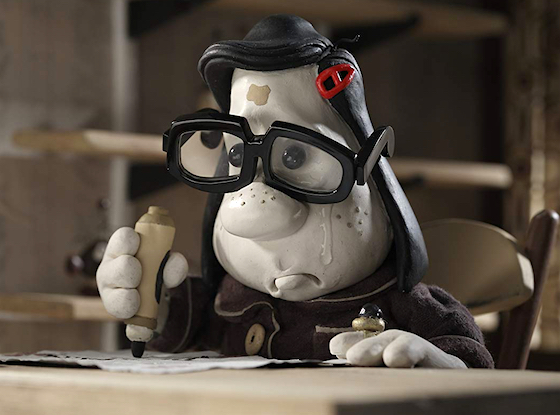
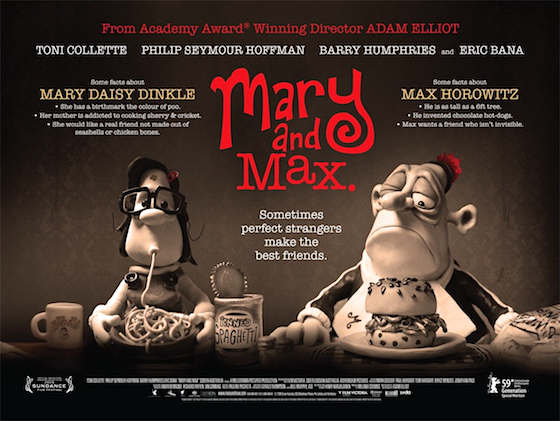
    #202 Mary and Max (2009)
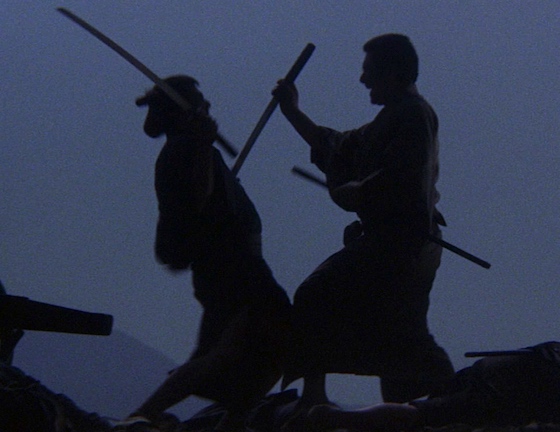
    #203 Ran (1985)
    #204 Step Brothers (2008)
    #205 Before Midnight (2013)
    #206 Rocky V (1990)
    April and the Extraordinary World

    Heathers

    Before Midnight

    .


    • September adds 19 films to 2018’s tally, in the process taking it past the final totals of both 2016 (195) and 2015 (200) to make it my biggest year ever!

    *ahem*

    So, back in 2015, after I reached my highest ever final total, I felt fairly certain that would never be beaten. It had been a push to get there, and I was determined to spend more time on things besides watching new films. Well, I haven’t done nearly as much other stuff as I’d hoped, but my film tally did drop slightly over the next few years (195 in 2016; 174 in 2017), plus starting my side goal of the Rewatchathon would surely steal numbers from the main tally.

    And yet here we are: at the end of September — with a whole 25% of the year left to go — and I’ve already surpassed that 200 total. Oh, and I’ve watched 38 films towards this year’s Rewatchathon, too.

    How has this happened? Goodness only knows. Whether the remainder of the year will keep up this pace, which would land me with a final tally in excess of 270 films… well, I don’t know that either. It seems unlikely, given that both August and September have had totals well down on the giddy heights of April and May (my two biggest months of all time). Nonetheless, a total in the 230s is a likely minimum, with 250+ not improbable — both far in excess of what I once thought possible (considering that, in two of this blog’s first six years, I failed to even make 100). What I will predict is that I won’t achieve these kinds of numbers ever again. But then, I said that last time…

    Anyway, back to notes about this month in particular:

    • As I said, I watched 19 new films this month, which surpasses the September average (previously 11.6, now 12.3), but falls just short of the rolling average of the last 12 months (previously 20.3, now 21), as well as 2018’s average to date (previously 23.4, now 22.9).
    • Rewinding to the start of the month for a moment, I watched a film on September 2nd, crossing another date off my list of “never seen a film on”s. That just leaves three to complete: January 5th, May 23rd, and December 22nd.
    • This month’s Blindspot film: Danish wrongfully-accused drama The Hunt, a film whose story will surely induce righteous anger in any viewer — which is not a criticism.
    • This month’s WDYMYHS film: Akira Kurosawa’s feudal Japan-set adaptation of King Lear, and his final samurai epic, Ran. It’s testament to Kurosawa’s magnificence that he made a movie this great but I wouldn’t even put it in his top five.
    • One film I didn’t watch this month was The Shape of Water. Having to wait so long for a chance to see it (it disappeared from cinemas near me in a flash, and the UK Blu-ray release came over three months after the US) seems to have accidentally put it on my back burner: it’s been on disc here since the end of June and I’ve still not got round to it. Maybe next month — after all, it is a monster movie.


    The 40th Monthly Arbitrary Awards

    Favourite Film of the Month
    I watched six or seven five-star films this month (one’s still wavering between a four and a five), which makes this a tricky proposition, especially as I really enjoyed some of the four-star ones too. Heck, I had a lot of fun watching Gods of Egypt, and I gave that three stars! It’s not my favourite film of the month, though. I’m going to bestow that honour on Heathers, which I finally got round to seeing thanks to Arrow’s 4K-restored Blu-ray release. Not only does it look fantastic, it’s a great black comedy too.

    Least Favourite Film of the Month

    Now, here’s a toughie: I watched two of the worst films I’ve seen all year back-to-back at the start of the month. I won’t be surprised if they both make the year-end bottom five. But, of the two, the one I liked least was Lost in Space, because at least Skyline is trying to do something interesting, whereas Lost in Space just squanders its blockbuster budget on being shit.

    Best Fight of the Month
    Tussles galore between giants, gods, and armies of Japanese warriors this month, but none were so gruelling as Celine and Jesse verbally slugging it out in Before Midnight.

    Old Film That’s Still Pertinent Today of the Month
    Media satire Network is 42 years old now, but I’m pretty sure you could take its screenplay, change only a couple of minor words, and film it as being set today.

    The Audience Award for Most-Viewed New Post of the Month
    For the fifth time this year, my monthly TV review was victorious in this category. I usually attribute this to referrals from IMDb, and the biggest contributor for this month’s column appears to have been Bodyguard. (The most-viewed new film review was Jack Reacher: Never Go Back.)


    A massive six rewatches this month, both catching up on the shortfall left after last month and surging ahead into next month’s ‘allowance’.

    #33 Darkman (1990)
    #34 Avengers: Infinity War 3D (2018)
    #35 Solo: A Star Wars Story 3D (2018)
    #36 Before Sunrise (1995)
    #37 Before Sunset (2004)
    #38 Kingsman: The Golden Circle (2017)

    I feel like someday I need to coalesce into words why I love Darkman — I only wrote a drabble after my first viewing, and I don’t feel like expounding on it right now, but it’s a really good fun pulp sci-fi/horror/superhero noir.

    Avengers: Infinity War is a slightly less mind-blowing experience when you know all the twists and developments — it’s one of those films where the first viewing may always be the best thanks to the surprises and reveals having a tangible impact — but it still holds up as a one-of-a-kind epic, full of excitement, humour, and even emotion. I’m miffed they didn’t put the IMAX ratio on Blu-ray (and always will be — I’m still cross with Brad Bird about Ghost Protocol), but at least the 3D was fantastic.

    Conversely, I definitely enjoyed Solo more on a second viewing, in part thanks to the better-managed expectations of having already seen it. It’s nowhere near the greatest Star Wars movie, but it’s a solid space adventure with many likeable touches. The 3D isn’t bad, but in terms of Fancy Modern Formats, I suspect Bradford Young’s notoriously dark photography would benefit more from UHD’s high dynamic range.

    I’ve been meaning to (re)watch Richard Linklater’s Before trilogy since the third one came out on DVD (no Blu-ray on this side of the pond) five years ago. And I’ve been really meaning to do it since Criterion released them in a lovely Blu-ray box set a little over 18 months ago (that doesn’t sound so bad — I thought it was longer). Well, obviously, I’ve finally done it.

    When I first watched the Before films in 2007 (only a duology back then), I was 21. I admired them both, but definitely preferred the first, Before Sunrise. Indeed, I was a little startled to realise I only gave it four stars in my original review. Now, it’s a firm five, and I’d say one of my favourite films of all time (it did place 28th in my 100 Favourites, but it would be higher now). However, consensus often seems to favour the second film, Before Sunset. I’ve always wondered if this is an age thing: when I first watched them, I was close to the age of the characters in the first film, whereas many critics contributing to said consensus would’ve been closer to the characters’ age in the sequel. Well, now I’m 32, and I certainly identified with the sequel a lot more this time than I did back then. I probably still prefer the first, on balance — it now comes loaded with nostalgia for being in your early 20s — but I consider the sequel to be more-or-less its equal.

    And what of the third film, Before Midnight? Well, I’ll publish a full review at some point…


    It’s October, which means only one thing here at 100 Films: the sheer terror of The Twilight Saga!

    What Ever Happened to Baby Jane? (1962)

    2018 #153
    Robert Aldrich | 128 mins | TV (HD) | 16:9 | USA / English | 12

    What Ever Happened to Baby Jane?

    Real-life rivals Bette Davis and Joan Crawford star as squabbling sisters forced together by circumstance in this slice of Hollywood Gothic. Both were once famous in their own way: as a child, bratty Jane Hudson (Davis) was a huge vaudeville star as the eponymous ‘Baby Jane’; later, her level-headed sister Blanche (Crawford) became a huge star of the silver screen, where Jane struggled to make a mark, employed only as a clause of her sister’s studio contract. A tragic incident ended both their careers, leaving Blanche paralysed and Jane her carer. Decades later, resentment has made Jane casually abusive of her invalided sister — and when she discovers that Blanche has been secretly plotting a major change to their situation, things only get worse…

    What Ever Happened to Baby Jane plays out as a mix of overwrought melodrama, plausible real-life horror, and mature psychological thriller. It’s really driven by the acting of the two leads. Crawford gets a less showy role, having to play it straight as the reasonable, sensible older sister, struggling to do what’s right for her sibling even as she’s mistreated. Davis, on the other hand, is allowed to cut loose. Jane starts the film batty and only gets less mentally stable from there. It’s quite an extraordinary performance from Davis, which threatens to tip over into scenery-chewing at any moment but remains compelling.

    Bette Davis and her preferred co-star

    The film itself is less assured. Director Robert Aldrich manages a good line in generating tension from people almost finding out what’s going on in the Hudson household, and there’s a solid final-reel twist (even if the final act in general is a bit bizarre — no spoilers, but those beach users are seriously inattentive), but the film is allowed to run longer than the material really merits. A slow burn can be used to create atmosphere, of course, but that’s not really the case here. It could do with a little more drive early on.

    But maybe it’s this looseness that has allowed so many different ways of viewing the film. As well as those I’ve already mentioned — sibling melodrama, psychological thriller, unnerving horror — people have taken it as a black comedy, or a cult camp classic. Whichever way you look at it, it’s certainly an experience.

    4 out of 5

    The TV series Feud: Bette and Joan, which dramatises the making of this film, begins a repeat run on BBC Four tonight at 10pm.

    Happy Death Day (2017)

    2018 #43
    Christopher Landon | 96 mins | streaming (HD) | 2.35:1 | USA / English | 15 / PG-13

    Happy Death Day

    How much does pure originality matter? Happy Death Day is a high-concept slasher movie that could be described as Groundhog Day meets Scream via Legally Blonde. Normally those kind of “X meets Y” descriptions give a general sense of tone or some coincidental similarities, but if you could put those three films in a blender, Happy Death Day is almost certainly what would come out. (There’s probably a more apposite sorority comedy than Legally Blonde for the third ingredient, but that’s not my subgenre of expertise.) But while there’s no doubt that Happy Death Day is derivative, that doesn’t mean it’s not entertaining.

    The film introduces us to college student Tree (Jessica Rothe), who wakes up hungover in a stranger’s dorm room on what turns out to be her birthday. Later that day, she’s murdered… after which she wakes up hungover in the same stranger’s dorm room on her birthday. Later that day, although she takes steps to avoid it, she’s murdered again… after which she wakes up hungover in the same stranger’s dorm room on her birthday. Yes, she’s in a time loop — one which, she theorises, can only be stopped if she finds and stops her killer.

    It’s a clever conceit — yes, borrowed from Groundhog Day, but utilised in a different way. For me, the plot/structural similarity is easy to overlook because, hey, it’s a great idea, why not recycle it with a different kind of story? This variation is enjoyably done, too — not an outright comedy, but with enough wit to make for a fun movie. There’s a very real danger of it being repetitive — repetitiveness is baked into the very concept, obviously — but, like Groundhog Day, it dodges that with amusing variations and intelligent filmmaking. Okay, the logic is sometimes a little askew (for example: no matter how quickly or slowly Tree leaves the dorm room at the start, the same random events happen outside), but that’s storytelling expediency rather than a major problem with the film’s logic, in my opinion.

    Screaming groundhog

    In the lead role, Jessica Rothe is excellent. She fills what could’ve been a pretty standard slasher movie heroine with different levels of reconcilable personality and a surprising amount of heart. She’s a likeable, root-for-able character to spend the day with over and over (and over) again. And when you know how the movie was filmed (i.e. like almost every other movie: not chronologically, but by location, having to shoot scenes from different time loops side by side), the way her performance is accurately nuanced becomes even more impressive.

    In my opening comparison I picked Scream specifically because Happy Death Day has the feel of those late ’90s / early ’00s teen horror movies — the heyday of franchises like Scream, Final Destination, I Know What You Did Last Summer, etc. Back then this surely would’ve been a huge hit, but I feel like very few people were talking about it when it came out last October. That said, it achieved a respectable Rotten Tomatoes score (70%), grossed $122.6 million (off a budget of just $4.8 million), and this week they made headlines by announcing the sequel’s title, Happy Death Day 2U, which seemed to go down rather well. So maybe I just missed everyone celebrating it first time round.

    I hope it continues to find a wider audience, because I think it’s a lot of fun. It may be built from blocks borrowed from other films, but they’ve been arranged in such a way that I think it still feels fresh, and they’ve been assembled skilfully enough that it’s enjoyable either way.

    4 out of 5

    Happy Death Day 2U is scheduled for release on Valentine’s Day 2019.

    The Past Month on TV #38
    There are three major series for me to review this month, thanks to the UK’s highest-rated drama launch for a decade, Bodyguard; the debut season of Amazon’s heavily-promoted version of Jack Ryan; and a second season for the runt of the Marvel/Netflix litter, Iron Fist. Plus, shorter reviews of other stuff. All spoiler-free, of course.

    So, without further ado…

    Bodyguard  Series 1
    Bodyguard series 1
    A massive hit for BBC One from writer Jed “Line of Duty” Mercurio, Bodyguard follows copper David Budd (Game of Thrones’ Richard Madden) as he’s assigned to protect Home Secretary Julia Montague (Keeley Hawes), who’s trying to push through a tough new anti-terrorism act. As multiple terrorist attacks begin to take place, and Montague cosies up to the intelligence services, the series quickly morphs into a conspiracy thriller, with Budd struggling to know who can be trusted as he hunts for the truth about what’s going on and why.

    Like Line of Duty, Mercurio excels at Big drama: this is a busy, fast-moving story that churns through plot. Not much here of the gradual, slow, “it’s really more about these characters as people” stuff we usually get from British drama. That’s not to say there isn’t fine character work, mind: Budd, in particular, is a complex and nuanced hero, who starts out calm and capable and is revealed to be… well, something else; so much so that you begin to wonder if he’s an unreliable narrator… The other thing Mercurio is great at is set pieces. In Line of Duty they’re often lengthy, jargon-filled police interviews, although he’s pulled off a couple of big action ones too. Bodyguard kind of merges the two, in that they’re talky but also usually involve bombs and guns. The series is bookended by them: episode one boldly devotes its opening 20 minutes to what initially seems like a prologue (unsurprisingly, it has more relevance later), and a massive chunk of the middle of the finale is taken up with another.

    David Budd and Julia MontagueSome have criticised the series for being OTT, implausible, or having too many plot holes. Well, individual mileage will vary on that. It’s not a slice-of-life drama, after all — the larger-scaled storytelling is a genre thing, not an inherent flaw. It’s no more implausible than hundreds of other thriller TV series and movies, just perhaps not the kind we make much in the UK anymore. I’m always wary of accusations of plot holes — it’s a term that gets thrown around too liberally nowadays by, frankly, people who either don’t know what they’re on about or have a failure of imagination (“we didn’t see that happen on screen so how can it have happened” is, genuinely, the root of one prominent complaint about Bodyguard’s finale).

    Still, I think the series’ main aim was to be an exciting guessing game — it’s a whodunnit, really, with a multitude of suspects and motivations. As that, I thought it was a success; and, based on the ratings and chatter, it looks like the public at large agreed. No second series has been commissioned (and, anyway, Mercurio is busy on the next Line of Duty until sometime next year), but I’d be surprised if we don’t see more.

    (If you’re outside the UK, it was announced last week that Netflix have snapped up the international rights, where it will be available from October 24th.)

    Jack Ryan  Season 1
    Jack Ryan season 1The latest reboot of Tom Clancy’s CIA hero sees him get the TV treatment, which is perhaps the best place for a hero who is more about solving problems with his mind than his gun, and a storytelling style that cuts between lots of concurrent plots before later revealing how they interrelate. That’s something this season has done rather well, incidentally — it’s an original story, taking Clancy’s characters but not directly adapting any of his novels, but they committed to trying to emulate his “mosaic storytelling style”. I’ve never read any Clancy, so I’m not an expert on this, but they seem to have evoked it well. (Considering there are multiple Ryan novels that haven’t been adapted, it seems a shame to abandon them entirely. Maybe in a future season.)

    The actual plot concerns — what else — Middle Eastern terrorism. On the bright side, it devotes as much time to the villains as to the heroes, painting a more detail picture than just “some foreign-looking people want to blow us up”. I don’t know if it has anything deep or new to say about terrorists and those who hunt them (we’ve had ten seasons of 24, seven of Homeland, and goodness knows how many other shows on this theme since 9/11 — it’s well worn), but it’s still effective as an intelligent thriller, bolstered by having a desk-jockey analyst as a hero rather than a trigger-happy soldier. Nonetheless, episodes are packed with incident, tension, and excitement. It’s not quite “a thinking man’s thriller” because I don’t think it ultimately has enough to say about things, but it is a lot more measured and realistic than your usual action-thriller fare, while still creating exciting (but also plausible) sequences.

    Naturally, the season takes the form of “an 8-hour movie” (to be precise, it’s actually 6.6 hours long), because that’s what’s popular with prestige TV nowadays, but it also works on an episodic level. Put another way, it’s in parts that build to a whole, rather than a whole sliced up because it has to be. That’s not to say the series isn’t heavily serialised, mind (for example, there’s a random murder in episode two that doesn’t seem to relate to anything else, but then pays off at the end of episode four), but this is only a problem if you dislike non-episodic storytelling. I tend to agree that some shows take this too far, seeming to go nowhere on an episodic level because everything’s designed to be “one long story”, but Jack Ryan is one of those serialised shows that strikes a healthy balance between the two — it is one long story, but each episode conveys a solid amount of plot.

    Field analystAn advantage the show has in this regard is its short length: with just eight episodes, the plot moves at a fair lick. It gets better as it goes on, too, as the various plot lines and characters begin to build and resonate with one another. Indeed, it’s something very rare, possibly unheard of, in direct-to-streaming series: one where I wished the season was a couple of episodes longer. Not that it’s rushed per se, but one or two subplots might’ve been even better with just a little more room to breathe; the main stories might’ve been even better with just a beat or two more in them. But in an era where streaming/prestige series are gaining a reputation for being bloated and not having enough story to fill their running time, maybe it’s better to leave people wanting more.

    And I certainly do want more — season two’s already in production, and I’m looking forward to it. Although I enjoyed this season a lot, I do hope the next one takes us somewhere a little more original (and therefore interesting) than Islamic terrorists. I mean, how about those Russians and the tech espionage shit they’re pulling nowadays? Now that sounds Clancy-esque.

    Iron Fist  Season 2
    Iron Fist season 2The first season of Iron Fist attracted a lot of criticism, and, thankfully, the people behind the Marvel/Netflix series have listened. This second season doesn’t suddenly revamp the show into the best thing on TV or something, but it is a big improvement. They were hamstrung to an extent — as new showrunner M. Raven Metzner has said in interviews, you can’t reboot something like this: it has to keep to the continuity of what happened in season one, and in The Defenders, and in the other Marvel/Netflix series, and go from there — but they’ve made a fair fist of it, (there’s a good piece about what changes they made here), and by the end of the season the show is in a much better place.

    It starts a little iffily, mind. I mean, the hero is a rich, privileged white guy with anger issues who appropriated another culture for his own ends, while the villains are the Asian guy who wants back his birthright that the hero took, and a businesswoman who wants her due from the company she helped build. If I was confident the show was going somewhere with that it’d be one thing, but it also feels like it can’t’ve been deliberate (considering the heroes also include a Japanese-American woman investigating her heritage and, later in the season, a black female cop), but it’s a definite reading of episode one. I began to worry it was going to accidentally pan out like some kind of Men’s Rights / White Supremacist show. Well, it’s not that bad, thank goodness — the season does make some nods towards tackling these issues (there’s a scene in episode six where Davos specifically calls Danny out on his privilege meaning he values nothing), but I’m not sure it truly engages with it, more hopes that if it’s acknowledged and sort of moved on from (I won’t say too much because of spoilers!) then we’ll let it slide.

    So, even with that, a lot of things are improved over season one. Most things, even. But the show is at its best whenever its title character is off screen. Every member of the supporting cast and their relationships to each other is more interesting than Danny. At best he’s a bit nothingy, at worst an irritant. In fairness, I also suspect the show knows this, given its focus on Colleen — look how she shares the marketing. She makes a better lead character than Danny — her conflictedness about being a vigilante is certainly a richer seam than his privileged certainty, and Jessica Henwick excels in some properly kickass fight scenes, too. Among the supporting cast, Ward and Joy Meacham get some interesting material as well, again developing from what they went through in season one. Where back then it was just Plot Stuff to provide a story and twists, here there’s a genuine attempt to explore what the psychological fallout of that might look like. Plus, there’s a lot less stuff about the running of Rand Enterprises, something I called out the first season for ballsing up.

    VillainsIronically, while the MCU movies became renowned for their poor villains, that’s the area the Netflix series have always excelled in. This season the star turn comes from Alice Eve as a version of Daredevil villain Typhoid Mary, who (spoilers if you don’t know the character!) has dissociative identity disorder (DID), aka multiple personality disorder — so she can be both sweet, timid, kind Mary, and hard, stern, violent Walker. It’s the kind of role that’s a gift for any actor, of course, and Eve is fantastic. Similarly, Danny’s childhood friend Davos gets to combine many of the traits I’ve described in other characters: motivated by past events; complex relationships to other characters (not only Danny, but, as the end of season one teased, Joy). He’s the kind of villain whose goal is almost relatable; where you almost side with him over the hero.

    Across all of the characters and storylines, I think the season wants to be about addiction, but it doesn’t execute it as a throughline particularly well. Early on we see Danny being a little bit out of control with the fist; then, many episodes later, he explains he was addicted to it; in between, there’s a subplot about Ward being in NA and struggling to stay on the wagon. These two plot threads should be mirroring each other, not tag-teaming — and in a way that sometimes leaves the theme untouched for an episode or two, at that. It’s a shame, really, because if they’d managed that kind of cohesion in what the show was “about”, it may have been able to lay claim to being a genuinely very good show, rather than just a marked improvement on season one. Don’t get me wrong, I quite liked a lot of it, and I do think it’s a big improvement; but you can see signs that maybe it could’ve been something even better. But hey, even if it can’t offer depth, at least it can offer thrills. And really, it’s a superhero show — good vs. evil punch-ups are the order of the day.

    Marvel’s Netflix shows have often faced accusations of being too long, of not having enough story to fill their 13 episodes. That’s a problem of story, not episode count, as The Defenders proved by not having enough plot to fill eight episodes. Nonetheless, Iron Fist now only has ten episodes, and it seems to have helped. The plot moves so fast that by halfway it feels like it must be nearing its end, but instead of going in circles, it has some more twists and tricks up its sleeve. And to complete the indication that the show is making an effort to head in new directions, the finale devotes about half its running time to wrapping up the main plotDaughters of the Dragon (via a whole load of fighting, natch) and then the second half to what happens after — not just the necessary “wind down” type aftermath stuff, but also a fair chunk of time into establishing where things will go in season three. Netflix hasn’t commissioned that yet, but I hope they do because I’m actually looking forward to it. Wonders will never cease.

    Upstart Crow  Series 3 Episodes 1-3
    Upstart Crow series 3Ben Elton’s Shakespearean sitcom commences its third run as funny as ever, if not more so — I’ve always enjoyed it, but it feels particularly on point this series. I guess its on-the-nose satire of modern life by transposing it to Elizabethan society (e.g. Will’s woeful carriage journeys between London and Stratford are an unsubtle riff on the problems with British railways) won’t find favour with everyone, mainly because it seems a little easy and there’s a monologue about it pretty much every episode, but I still find that stuff amusing. When Elton applies the same strategy to other aspects of modern life, it’s similarly as rewarding/obvious, depending on your predilections. But there’s also a solid vein of mining Shakespeare’s own works for humour, the best one so far this series being an extended bit about how all of Will’s friends think Hamlet is a comedy due to its farcical plot. There’s also a running subplot about Will’s nemesis, Robert Greene, trying to discredit him by making people think he doesn’t write his own plays, which nicely pillories those ridiculous theories, and includes a guest appearance by Ben Miller doing an amusing riff on Mark Rylance.

    Reported Missing  Series 2 Episode 1
    Not normally my kind of programme, this — a fly-on-the-wall documentary that follows police as they search for missing persons — but the ‘plot’ description for the first case piqued my interest. A dad reports his five-year-old son missing after having not seen him for two years due to a custody dispute with the mother. When the police track her down, she says the boy doesn’t exist and she doesn’t even know the man who made the report. Who is telling the truth? What’s really going on? It plays out like a low-key thriller. If you have access to iPlayer (the episode is here), it only takes up the first half of the episode and I’d say is worth half-an-hour of your time.

    Also watched…
  • Daniel Sloss: Live Shows — A pair of live stand-up shows, recorded at different times and places, that Netflix have lumped together as a ‘series’. The first, Dark, is a masterpiece; it lives up to its name though, so avoid if pitch black humour isn’t your thing. The second, Jigsaw, isn’t quite as exceptional, but is still excellent. A definite cut above most other stand-up specials I’ve watched.
  • Hang Ups Series 1 Episodes 4-6 — I was praiseful of Hang Ups last month, but if anything it improved as it went on, with the finale a riotous farce.
  • The Imitation Game Series 1 Episodes 1-3 — ITV’s impression-based panel show is a bit odd (everyone’s busy pretending it’s improvised when much of it is clearly scripted) and dependant on the skills of the guests (some of these so-called impressionists should find a new job), but it’s pleasantly diverting. Plus it gave us this skit of Andy Murray singing I’m So Excited, which is spot on.
  • Magic for Humans Season 1 Episodes 4-6 — Like Hang Ups, there’s even better stuff here than in the first half of the season (which I also wrote about last month). Episode four, Seeing is Believing, is not only a fun magic show but also kinda profound.

    Things to Catch Up On
    Killing EveThis month, I have mostly been missing Killing Eve, BBC America’s critically-acclaimed, Emmy-nominated thriller about an MI5 officer hunting for an assassin. It aired in the US back in April, and it feels like ever since I’ve been hearing praise for it flowing across the Atlantic. It finally made its way to this side of the pond this month (for an organisation with “BBC” in their name, BBC America productions do take their time getting over here). As I’ve only just (as in “as of last night”) finished making my way through 24 episodes of Jack Ryan, Iron Fist, and Bodyguard back-to-back, maybe that’ll be up next.
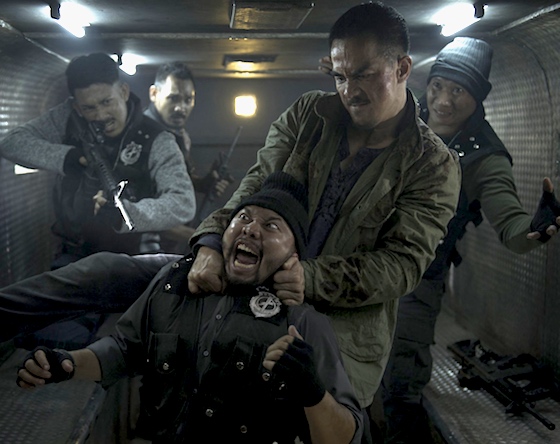
    Although likely to get in the way is Maniac, Netflix’s miniseries starring Jonah Hill and Emma Stone that looks inherently interesting (based on the trailer — like Inception made by someone with a wilder imagination than Christopher Nolan) and is directed by Cary Joji Fukunaga, aka the recently-announced director of Bond 25. I’ve never seen anything he’s done, despite almost all of it being on my “to watch” list, so it’s about time I started. Expect reviews of both of those next month, then, alongside the return of a certain time traveller…

    Next month… Jodie Whittaker is the Doctor!

  • Gods of Egypt (2016)

    2018 #198
    Alex Proyas | 127 mins | download (HD+3D) | 2.40:1 | USA & Australia / English | 12 / PG-13

    Gods of Egypt

    If you remember Gods of Egypt, it’s likely because it was excoriated on its release back in 2016.* Many were predisposed to hate it before it even came out thanks to its whitewashed cast: as the title might indicate, it’s set in Ancient Egypt and many of the characters are Egyptian gods, but most of the lead cast are white; and of those that aren’t, none are Egyptian. Even if that didn’t bother you, it was slated for its poor dialogue, flat performances, bland direction, reliance on green screen, and cheap-looking CGI. Oh dear. But every film is for someone and there’s someone for every film, and it turns out I’m one of the few (the very, very few) who actually rather enjoyed Gods of Egypt.

    Based more on legend than any relation to history whatsoever (in one rather stunning sequence, we see that the world is, in fact, flat), it’s set in a time when super-powered gods walked the Earth among humans. Well, less “among”, more “ruling over”. A squabble between the gods sees nasty-piece-of-work Set (Gerard Butler) steal both the throne and eyes of heir-apparent Horus (Nikolaj Coster-Waldau), before going on to steal the abilities of other gods to make himself more powerful. Human thief Bek (Brenton Thwaites — between this and Pirates 5, dude must’ve thought he was gonna be a star… ’til they came out) doesn’t care for the gods, but he wants to free the love of his life (Courtney Eaton and her cleavage — I don’t want to be lecherous, but seriously, her costumes are all boobs, boobs, boobs), and the only way to do it involves stealing back one of Horus’ eyes and using it to persuade the god to take on Set.

    Gods and men

    And that’s the part of the plot that’s kinda reasonable. No, really: it gets a whole lot madder as it goes on. In fact, everything about it is so consistently batshit crazy — the concepts, the plot, the visuals — that it wins you over with its utter barminess. Or maybe it won’t win you over. Maybe you’ll think all those things make it utterly awful. As I said at the start, you certainly wouldn’t be alone. But the “you couldn’t make it up (except someone did)” mentalness of it will win over a certain kind of viewer. A viewer like me.

    I’m not really going to deny any of those criticisms I cited in the opening paragraph, because it is kind of a terrible film… but if you embrace it, it’s also campy fun. It’s a film where the men are burly, the women are breasty, and the CGI is blurry, but there’s a certain irreverence that stops it from being stodgy, and a light-hearted tone to the dialogue that occasionally hits home. For all the whizzy video game-ish visuals, it’s an old-fashioned adventure quest at heart, capable of pulling off the occasional thrilling sequence or amusing verbal exchange.

    All of that said, one does have to wonder how director Alex Proyas ended up here. If you don’t recognise the name, he was once known for visionary noir-ish filmmaking in the likes of The Crow and Dark City. At some point he wound up sidelined into less invigorating fare, like Will Smith vehicle I, Robot and Nic Cage vehicle Knowing, but while neither were groundbreaking they had a certain something (and, personally, I quite liked them both). Here, though, the direction is so… uninspired. Anyone competent could’ve made it. And people say filmmaking is collaborative and directors don’t deserve all the credit, but bear this in mind: Gods of Egypt and critically-beloved Oscar winner Mad Max: Fury Road share 295 cast & crew members.

    Robot god... on a budget

    I don’t know who deserves credit for the film’s 3D, but it’s consistently excellent and occasionally spectacular. That’s the benefit of almost all the film being created in a computer, I guess. But still, the colourful visuals and wide-open locales really help with the effect — what looked gaudy and ludicrous in 2D trailers… still pretty much is, let’s be honest. But it’s less bad when it’s doing so much to help create an epic-scaled dimensionality.

    I know I should hate this silly, cheap-looking, over-CGI’d, whitewashed hot mess… but I actually thought it was a lot of daft, campy fun. There are plenty of very good movies that I’ll likely never get round to watching again — probably some great ones, even — but I’d wager Gods of Egypt is going to end up in my Blu-ray collection someday. In 3D, of course.

    3 out of 5

    The UK network premiere of Gods of Egypt is on Channel 4 tonight at 9pm.

    * I was going to say “summer 2016”, but that wouldn’t be entirely correct: weirdly, although it was a February/March release in much of the world, it somehow got given summer status in the UK and Ireland (and, er, Spain…?) ^