Bernie (2011)

2015 #53
Richard Linklater | 96 mins | streaming (HD) | 1.85:1 | USA / English | 12 / PG-13
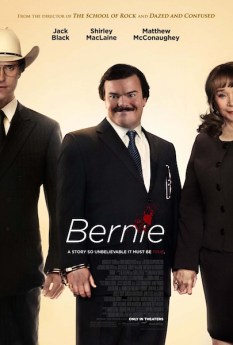
BernieI seem to vaguely remember dismissing Bernie as just ‘Another Jack Black Comedy’ back whenever it came out (in the UK, that wasn’t until April 2013), and essentially forgot about it until earlier this month when it came up on the A.V. Club’s 100 best films of the decade (so far), at #38, which made it sound a very worthwhile watch for multiple reasons. Having seen it, however, I don’t think I’d rank it as one of the (half-)decade’s best. That’s putting an unfair burden on it, though: it’s a movie I’m glad I’ve seen, and certainly one with a good many points in its favour.

Black plays the eponymous Bernie Tiede, a mortician in the small town of Carthage, Texas, whose dedication to his job and friendly disposition, both far above and beyond the call of duty, soon find him at the centre of the community and beloved by its people. When the town’s renowned miser dies, Bernie forms a bond with his even-miserlier bitch of a wife (Shirley MacLaine), becoming about the only person she gets on with. They go on expensive holidays, dine at fine restaurants, and soon Bernie is managing her affairs. But she becomes increasingly controlling, making demands on his time that he struggles to meet, and treating him as wickedly as she does everyone else. One day, Bernie shoots her dead. When his crime is discovered, the people of his small town initially refuse to believe he did it; when it’s proven he did, they clamour for him to be released anyway.

By-the-by, this is a completely true story.
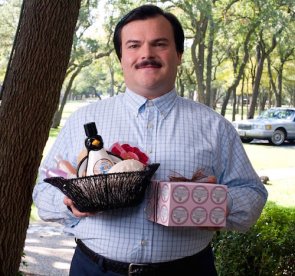
Bernie brings gifts(If you’re observing similarities to Midnight in the Garden of Good and Evil there, you’re not the first: the magazine article that inspired Bernie, published around the same time as that book’s film adaptation, is called “Midnight in the Garden of East Texas”.)

Co-writer/director Richard Linklater — who, as we know, often likes to mix up real-life and fiction in the way he produces his movies (cf. Boyhood; the Before trilogy) — tells this story in a docu-drama style, mixing talking head interviews with dramatic recreations. Many (most) of the interviewees are real-life Carthage residents, presumably giving their real recollections and opinions. It fits this narrative to a T, lending veracity to the unbelievable-if-it-weren’t-true story. They’re also amusing — not in a “laugh at the small town folks” kinda way (though there’s an inherent element of that for us as outside observers, let’s be honest), but in an honest-to-goodness “this is what real life’s like” fashion. This irreverence is how many people really react to and discuss momentous events, and in this case that gels with the tone of what happened.

No doubt spurred on by the fact he’s portraying a real person, Black gives a strong performance. It’s a comedy one, undoubtedly, but far more restrained than he normally offers. It doesn’t suggest a Robin Williams-esque versatility — I don’t imagine Black’s suddenly going to be popping up in serious parts all the time — but it is worthy of note. MacLaine does a lot with a little, her character’s vicious nature conveyed at least as much through glances, sneers, and a particular way of chewing food as it is through words and actions.
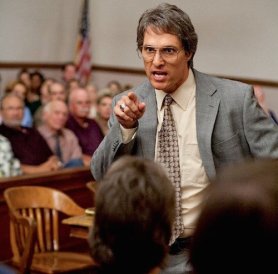
McConaissanceThe local attorney seeking Bernie’s prosecution is played by man-of-the-moment Matthew McConaughey. I don’t know when we’re meant to deem the start of his “McConaissance”, but I’m not sure this really qualifies as part of it. Not that he’s bad, but it feels like the kind of played-straight comedy Southerner I’ve seen him do a few times now; indeed, it’s how he comes across in real life, from what I’ve seen. It fits the role like a glove, but doesn’t make for a remarkable performance.

Bernie is one of those stories that you’d never buy if it weren’t true, which makes it perfect fodder for the movies. Native Texan Linklater clearly understands the mindset of those involved and is the right kind of quirky-but-mainstream filmmaker to bring it to the screen. One might argue it doesn’t show suitable reverence to the fact a woman is dead, but the involvement of so many real townspeople suggests it’s got the level and tone bang on. It’s no true-crime mystery, nor the funniest comedy, but it is a tale so engrossingly bizarre that it begs to be heard in full. The real-life post-film ending — Bernie was released from prison last year on the condition he lives above Linklater’s garage — only adds to that fascination.

4 out of 5

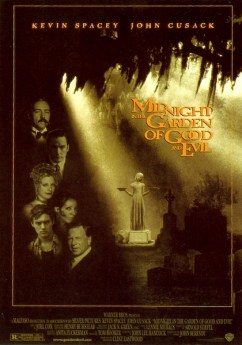
Midnight in the Garden of Good and Evil (1997)

2015 #33
Clint Eastwood | 146 mins | TV | 16:9 | USA / English | 15 / R

Midnight in the Garden of Good and EvilSent to write “500 words on a Christmas party” in Savannah, Georgia, journalist John Kelso (John Cusack) instead finds himself covering a murder trial where he’s become friendly with the accused (Kevin Spacey).
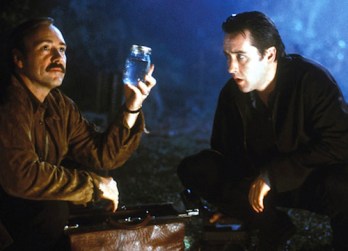
Based on the bestselling book of a true story, Midnight in the Garden (as my TV’s EPG would have it) benefits from that reality to guide it through the quirky locals and unusual turns of its true-crime plot — there’s no doubt that Spacey killed the man, but the exact circumstances of the act are disputed. There’s been some movieisation in the telling of the events (the shooting happened in May; there were four trials, here condensed to one; a romantic subplot for Kelso is a (clichéd) addition), but the sense that enough of the truth remains keeps the film inherently captivating.

That’s handy for the film, which almost leans on the “it’s all true!” angle as a crutch to help the viewer through its own production. Eastwood’s direction might kindly be described as “workmanlike” — it’s strikingly unremarkable. Cusack is as blank as he ever seems to be (have I missed his Good Films that once marked him out? I say “once” because he’s only a leading man in shit no one notices these days). He’s fine, just borderline unnoticeable, which is why the romance subplot feels so misplaced — he’s an audience cipher to access this interesting location and set of events, not a character in his own right. Apparently Ed Norton turned down the role — now he might’ve brought some personality to it. Spacey is worth watching, at least.

What's in the jar? WHAT'S IN THE JAR?Like many an “adapted from a bestseller!” movies, I guess Midnight in the Garden was a big deal in its day that’s faded to semi-obscurity since (see: Captain Corelli’s Mandolin, increasingly The Da Vinci Code, and on and on). It’s no forgotten masterpiece, but has enough going for it to merit a rediscovery by the right people who’ll enjoy it. Like me. For that, much thanks to Mike at Films on the Box, whose insightful review I naturally recommend.
4 out of 5

Next Avengers: Heroes of Tomorrow (2008)

2014 #50
Jay Oliva | 75 mins | DVD | 1.78:1 | USA / English | PG / PG

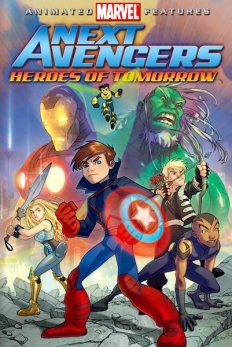
Next Avengers: Heroes of TomorrowNo, not the ’70s spy-fi series The New Avengers (is there no way for Marvel’s superheroes to avoid sounding like that franchise?), nor the sequel to the third highest grossing film of all time (but you knew that), this direct-to-DVD animated movie follows in the footsteps of the two Ultimate Avengers animated movies (though not in the same continuity… I don’t think…), and concerns… the children of the Avengers! How kids’ TV can you get, eh?

So, there’s the son of Captain America and Black Widow; the daughter of Thor and Sif; the son of Hank Pym and Wasp; the son of Hawkeye and Mockingbird; and the son of Black Panther. (Aside: in the live-action movie universe, 100% of those men have or will soon appear; only 50% of the women, though.) These kids must work with the still-living members of the original Avengers to fight… Ultron, the villain of this summer’s Live-Action Avengers 2! (Do you ever feel like the Marvel universe goes round in circles? I suppose that’s not fair — DC does it too.)

I’m being snarky but, actually, this oh-so-childish-seeming cartoon is surprisingly good. Sure, the animation and voice acting is all very ’00s Saturday morning kids’ cartoon, but there’s a moderately solid story in there, and some great new characters. Well, some good interpretations of old characters, and one great new character: Thor’s daughter, Torunn. Her character arc is a good’un, and teen voice actress Brenna O’Brien does good work with her too.

Torunn, James, AzariThe rest of the new characters are largely fine, and while they’re clearly grounded in their parents’ personalities, they’re not just carbon copies — Cap’s son James is less worthy than his father, for instance; Black Panther’s son Azari is less elbows-out; and so on. Though Hawkeye Jr. is a little skeevy… Writer Christopher Yost has done a fair job of crafting realistic-enough kids, and in an era when superheroes seem to spend more time fighting amongst themselves than they do against villains, it’s nice that this team largely get on — though not in an overly-rosy “it’s all happy families” way, thankfully.

As for Ultron, they’ve modified his creation story: he was now built by Tony Stark. That’s where they’re going with it in Avengers 2, funnily enough. It gets hardcore fanboys in a tizzy, but clearly it makes far more sense that the inventor of Iron Man would also create a sentient robot (that does look a little bit like Iron Man, kinda) than that the inventor of a miniaturisation suit would.

It’s quite nice to see a new set of characters and a new ‘world’ within a familiar universe — it feels less re-hash-y than the comics and the longer-running movie franchises can. Rage of UltronCoupled with a good plot, which keeps moving and developing rather than setting up one threat and meandering along until a big fight, as well as a few cameos and maybe even surprises along the way, Next Avengers is the kind of movie you expect to be pretty awful kids-only dross, but turns out to actually be pretty darn good.
4 out of 5

Avengers: Age of Ultron is out in the UK tomorrow.

The Hobbit: The Battle of the Five Armies (2014)

2015 #36
Peter Jackson | 144 mins | Blu-ray | 2.40:1 | USA & New Zealand / English | 12 / PG-13

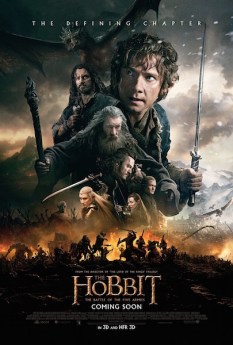
The Hobbit: The Battle of the Five ArmiesPeter Jackson’s epic Tolkien adaptation blunders its way to a conclusion with an instalment some have declared the trilogy’s best, presumably because they really enjoy watching someone else play video games. That’s what about half of this sextet-completing movie feels like, as it concludes the three-part Hobbit narrative with a CGI-riddled rendering of the titular battle. It’s the shortest film in Jackson’s Middle-earth magnum opus, though it comes to something when a film the best part of two-and-a-half hours long is described as “short”.
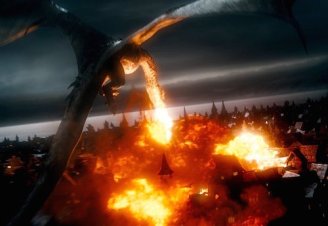
Before said battle, the movie finds itself with some business to attend to: we pick up immediately where the second part left off, with giant dragon Smaug flying towards Laketown with destruction on his mind. Kicking things off with a gigantic ten-minute action sequence isn’t a wholly bad decision pacing-wise, but this particular sequence is the wrong way to do it. Really, it’s the second film’s climax displaced — once Smaug is dealt with, a whole slew of new developments and subplots grow out of it, and that’s where the material that feels like it belongs in this film commences. Of course, that means there’s a lot of talking and manoeuvring, both politically and literally as people and troops shuffle about the board. Were it not for the big opening, there wouldn’t be an action sequence for about half the movie, and I guess that’s not considered acceptable in the modern blockbuster environment.

Now, if you were to watch all three films in one sitting, I suppose it wouldn’t matter precisely where the breaks fall. But how many people are actually going to do that? Not first-timers, that’s for sure. And then you’d get the problem of massive action sequences butting up against each other: the one that opens this film, right after the dwarfs-vs.-Smaug sequence invented during reshoots to take its place at the end of Film 2. Surely there were two other options available to Jackson when he made the decision to extend from a duology to a trilogy: he could have ended Film 2 before it even reached Smaug, Smaug attacks!or he could have ended the second film with Smaug defeated and added more material to this third film to reach his desired running time. Or not even bothered adding stuff: if you lost the Smaug opener, The Battle of the Five Armies would still be over two hours long, which anywhere but Middle-earth is considered a decent length for a movie.
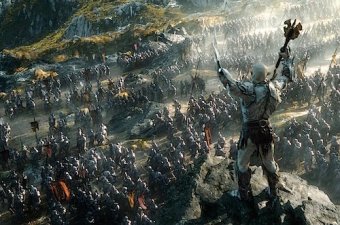
The rest of the film is a mixed bag for different reasons. For instance, Ryan Gage’s Alfrid is given a significant role — that’s the Mayor of Laketown’s assistant, if you’ve (understandably) forgotten who he is. Every minute that’s spent on his “comic relief” part is a minute wasted, and there are far too many minutes of it. Why that wasn’t left to the extended cut is anybody’s guess. It wouldn’t be particularly palatable there either — he’s just irritating, his actions predictable and unfunny — but longer versions are where there’s time for such indulgence. Conversely, Tauriel and Legolas are underused, wandering off on a completely aimless mission before wandering back for the battle.

Said battle feels a long time coming, but when it arrives… well, it’s a long time happening. It’s an epic by default, due to its sheer length. There are good bits, like the effort that has clearly been put into working out the armies’ tactics and the ebb and flow they would create. Wide aerial shots showing legions of troops swarming in formation, directed by generals with flags and horns mounted on high, are rather effective. Generals mounted on highOn the ground, the meat of the conflict only occurs when individual heroes are parcelled off into one-on-one duels. None of these particularly stand out, however, other than Legolas athletically jumping around a collapsing bridge that’s all so much CGI. This is where my earlier video game comparison really comes into play.
Some characters die. The impact is little-felt because of all the noise and bluster. That’s partly because there’s not really enough time for all the characters, of which there are more than ever. As with the second film, there’s been criticism that Martin Freeman’s eponymous Bilbo is barely featured, and, as with the second film, I disagree. Freeman’s not especially well-served in the acting stakes — Bilbo’s character development remains completed by the first part — but there’s still a focus on the actions of the little hero, some of which are pivotal.

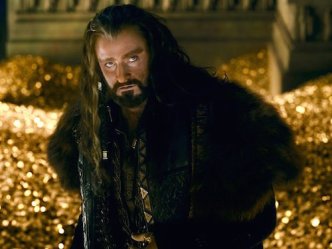
Coming out of things best is Richard Armitage as Thorin, who succumbs to the paranoid madness that has afflicted generations of his family. Can he overcome it to do the right thing? The extent of this is sometimes laid on a little thick, but that’s the filmmakers’ fault (maybe this is another place that would benefit from a few trims) rather than Armitage’s performance. As the leaders of two of the titular armies, Lee Pace (elves) and Luke Evans (humans) also get a bit of a part to play, but the remaining dwarfs are given short shrift. That includes those played by James Nesbitt, Ken Stott and Aidan Turner, He loves only gold...all of whom I’d thought would have more to do in the second and third parts of the trilogy. Turner, in particular, should have expected a bigger boost from Jackson’s decision to enrol him in an interracial romantic triangle, but it feels like they pulled back from that story thread a little after it proved unpopular in the previous film. It’s still obviously there, I just expected more of it.

On balance, The Battle of the Five Armies is probably the weakest of the three Hobbit films. Really, it’s just one big battle with a lengthy preamble. I can sort of see why Jackson felt like he could extend his original second film into a second and third — if you imagine them shorn of the reshoot-added bits, there’s still too much material for a single feature. The better solution, I suspect, would have been to accept splitting it into two shorter (i.e. regular-length) films, applying a bit of restraint in the process, rather than padding things further in an attempt to create two epics out of one ultra-epic.

As the credits begin, we’re treated to a sequence that emulates the one from Return of the King, with pencil sketches of the main cast alongside their names. On the Lord of the Rings concluder, it felt earnt; a special ending to a grand adventure. Here, it doesn’t. If anything, it feels like a reminder that the story we’ve just seen may have pushed to reach Lord of the Rings-level epicness, but is really just a tale of a small group going on an eventful hike, capped with a fairly large skirmish. A contemplative, momentous credit sequence does not feel warranted.

Legend tells of a ring...I was something of a defender of Jackson’s version of The Hobbit at first. I enjoyed An Unexpected Journey and stand by my comment that, while it’s not The Lord of the Rings, it is the next best thing. As the trilogy has dragged on, however, it’s been dragged out, and the shine has gone off it. I still think there are elements to commend it, but I also think it could have been executed better. It’s hard to imagine an even longer version will improve much this time.

4 out of 5

The Hobbit: The Battle of the Five Armies is released on DVD and Blu-ray in the UK on Monday.

My review of the Extended Edition can now be read here.

A Million Ways to Die in the West (2014)

2015 #52
Seth MacFarlane | 111 mins | streaming (HD) | 2.35:1 | USA / English & Navajo | 15 / R

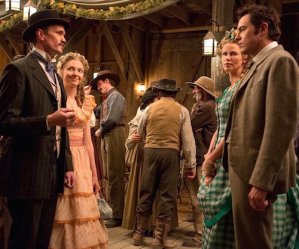
A Million Ways to Die in the WestThe second feature from Family Guy creator Seth MacFarlane, after the justly popular Ted, A Million Ways to Die in the West is a disappointing mixed bag, half pretty-decent character- and situation-based comedy, half cringingly infantile toilet-humour tomfoolery.

MacFarlane stars as Wild West sheep farmer Albert, whose love of his life (Amanda Seyfried) leaves him for the owner of the town’s moustache shop (Neil Patrick Harris). Albert accidentally befriends new-in-town Anna (Charlize Theron) who, unbeknownst to him, is the girlfriend of the West’s most notorious outlaw (Liam Neeson) and is only laying low in his small town for a couple of weeks. A plot of love triangles and gunfighting ensues, littered with the aforementioned extremes of comedy.

One of the film’s problem is that said story is definitely too long in the telling — it feels like its reaching the end about halfway through, then it just keeps going… and going… The bigger problem, however, is the depths plumbed by its ‘humour’.

If you stick with it, there are some genuinely funny, clever bits. There are even some genuinely funny, not-clever-but-amusing bits. Unfortunately, there’s a shedload of puerile gags that just demean the whole thing, and it doesn’t help that some of the worst are early on, setting up poor expectations. They’re so bad I’m embarrassed to have seen them, so I’m certainly not repeating any examples — though one, involving Harris, the result of laxatives, Challenge acceptedand two other men’s hats, briefly has a funny bit in the middle when he tries to acquire the second hat. The film also uses swearing as a comedic crutch too often. I’m not one of those people who’s only tolerant of swearing if they feel each and every use is absolutely justifiable, and I don’t object to it as just part of dialogue, but too often the film leans on someone saying “oh shit” (or whatever) as if that’s a serviceable punchline.
For movie and pop culture fans, there’s entertainment to be had from some fun cameos and allusions, many of them literally “blink and you’ll miss it” (watch out, for instance, for a Family Guy cast member’s name, and a catchphrase callback the writers inserted accidentally). One cameo in particular has been criticised by some for just being the guy turning up, but… honestly, that would be fine if you didn’t know about it in advance. If you spend the film waiting for him to turn up, the joke (such as it is) is already ruined — the gag is just him being there when you don’t expect it; so if you do expect it, there’s no gag. That’s the problem with a Surprise Cameo at any point after opening night. Would it be better if there was a joke beyond just the Surprise Cameo aspect? Well, yes. Does it work as just a Surprise Cameo? If you don’t know it’s there — if it is indeed a surprise — then, well, yes.

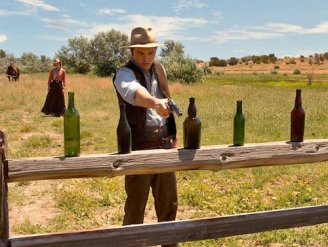
Death by bottle?The movie’s best running gag is its titular one. At first it just seems like the concept is going to be limited to Albert sitting in a saloon and listing ways to die, which isn’t funny; but then it keeps cropping back up, sometimes unexpectedly, which really works. The whole fair thing — a running gag within a running gag — is particularly effective. If the film had traded more on this, less on farting and other bodily functions, it would’ve been much improved.
Indeed, the following comment from iCheckMovies summarises my opinion perfectly:

A peculiar mixture of high and low brow comedy which makes it ultimately a bit uncomfortable. However there’s a sweet romance story hidden in there and a fun western (with some very clever gags) if you can get past its more crude side. Feels very much like it would have been quite a fun PG or 12 rated film if they had cut out the more unpleasant side.

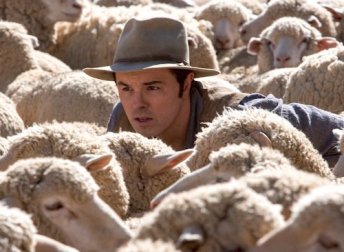
That last sentence, in particular, is right on the money. The film’s good bits are genuinely likeable; if not a classic (as the Radio Times weirdly reckons), then a perfectly enjoyable comedy. The frequent doses of crude and toilet ‘humour’ drag the overall likability down massively, however. I think a PG-13 cut would be forced to be a superior movie. Black sheepI dread to think what the 19-minutes-longer unrated version is like.*

I’d like to be able to recommend A Million Ways to Die in the West. The bits I liked, I really enjoyed. The bits I hated, however, I really despised. The best I can say is that your mileage may vary — is it worth suffering the lows to have the highs?

3 out of 5

A Million Ways to Die in the West debuts on Sky Movies Premiere today at 4pm and 8pm.

* Though it does at least bother to explain why there’s suddenly a reference to Albert’s mother being dead late in the film — it screams “we deleted a scene!” in the theatrical version. ^

Transformers: Age of Extinction is new to Sky Movies today but I haven’t seen it and I don’t intend to

2015 #—
Michael Bay | 165 mins | — | 2.35:1 | USA & China / English | 12 / PG-13

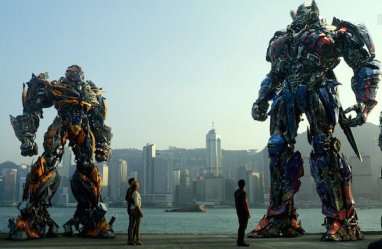
Transformers: Age of ExtinctionAs my Now TV Sky Movies subscription winds down, and I find myself with limited time left to watch the abundance of worthwhile films available there, I very nearly spent a little over two and a half of my precious hours watching the fourth Transformers movie (made available via Sky Movies on demand a week before its TV premiere, which is today).

And then I remembered that the last two Transformers films were rubbish, and that Age of Extinction had met with an even worse reception upon its theatrical debut last July, so why would I want to waste so much of my time on something I was sure to think was dross?

Maybe one day I will cave and check out this renowned piece of cinematic excrement, because I am a completist and having seen three of the films I feel compelled to watch every new entry that turns up, even if it takes me a while to get round to it. For now, though, I have better things to do. [Edit: I got round to it eventually. My review.]

Lest you came here hoping for some thoughts on Transformers 4 from someone who had actually endured it, here are some choice quotes from (and links to) other pieces that I have appreciated:

The loyal fans – and they are legion – will trot out clichés like, “Leave your brain at the door,” and defend Age Of Extinction’s right to be nothing but a succession of varoom! and kersmash! sequences. For those who aren’t still blindly faithful to something they liked when they were nine, despite the colossal scale, there’s little to see here.

— Owen Williams, Empire

Colossal scale

audiences love it. I saw this in a packed theatre. They CHEER when innocents were threatened/killed. I can loathe Bay for making it, but he’s…right? This crowd, they love hate. They love revenge. Selfishness. Cruelty. The sexism? They shrug it off. The nonsensical story and people? Ditto. But the cruelty is an active joy. They applaud. I’m not exaggerating. This (American) crowd applauded at the end of the film.

— Andrew Ellard, Tweetnotes

The cruelty is an active joy

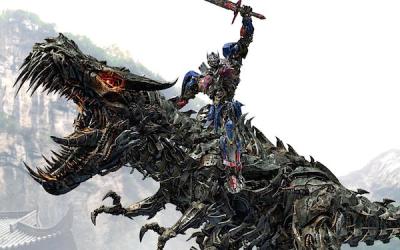
Oh man that Mike Bay fella must be the greatest moviemaker alive he even manages to throw in Robot-Dinosaurs too! And they’re on OUR SIDE! Well, to be honest I think they are actually Chinese, but fairs fair, they see Optimus in trouble and they step up, yes sir. Optimus rides in like John Wayne, bless him, sorting out the bad robots in this huge battle that’s so realistic I have to admit I lost track of what was going on, but that’s what war is like, man, its hell and you never know where the next bullet is coming from (or in this case flying robot lizard).

Robot-Dinosaurs!

Where most movies have a beginning, middle and an end, Age of Extinction has a beginning, then AHHHHH! for another two hours or so. […] an adult-themed Transformers movie seemingly written by a thirteen-year old boy and directed by his walking erection

— Neil Miller, Film School Rejects

Mark Wahlberg carrying a sword that is also a gun

Bay keeps the movie in a state of perpetual climax. Everything is epic, even when it isn’t. […] Don’t ask questions, the movie insists. If you persist, the answer is always “because it looks cool.” Why is Mark Wahlberg carrying a sword that is also a gun? Because it looks cool. Why are that CIA team wearing heavy black outfits in what looks like a pretty scorching day in Texas? Because it looks cool. Why does Lockdown’s head transform into a gun rather than his arm or something? Because it looks cool. Why is Optimus Prime riding a dinosaur? Because it looks cool.

— Darren Mooney, the m0vie blog

Why is Optimus Prime riding a dinosaur?

Bay is a film-making anomaly. Even the worst of his Hollywood peers are merely hacks. Bay is no hack. A hack is someone who understands their craft but fails to apply any artistry to it. Bay doesn’t even understand his craft.

— Eric Hillis, The Movie Waffler

There are other humans in this film

There’s nothing wrong with filmmakers either lionizing or lampooning U.S. institutions. That’s what freedom of speech is all about. In Age of Extinction, though, satire ends at the water’s edge. As soon as the action shifts to Hong Kong, the outbreak of alien-engendered chaos is met by a sea captain ordering a call to “the central government” for help, and later China’s defense minister does a walk-and-talk, sternly and seriously vowing to defend Hong Kong. America’s government is portrayed either ridiculous or diabolical, but China’s is assured and effective.

Not coincidentally, Age of Extinction is considered an “officially assisted production” […] No such deal gets struck in China without the consent and approval of the Beijing government and the Chinese Communist Party, and in this case, Paramount is in business with the Beijing regime directly

— David S. Cohen, Variety
(Though, much of Cohen’s piece is a little too “it should be pro-American! It’s unpatriotic!”)

Paramount is in business with the Beijing regime directly

I can show you invention in all 3 past movies. Rich ideas, however dumbly incorporated. Not here. Everything is an echo or repeat, or else so offensive or boring as to negate any quality. But mostly it just SITS there. […] I want to be clear. Don’t see it. Ever.

— Andrew Ellard, Tweetnotes

Transformers: Age of Extinction debuts on Sky Movies Premiere today at 1:20pm and 8pm.

Persona (1966)

2015 #7
Ingmar Bergman | 79 mins | DVD | 4:3 | Sweden / Swedish | 15

Since that debate [between New York critics Susan Sontag and Andrew Sarris when the film was first released], writing about Persona has been for film critics and scholars what climbing Everest is for mountaineers: the ultimate professional challenge.

Oh dear.

PersonaThat quote comes from Thomas Elsaesser in the introduction to his Criterion essay “The Persistence of Persona”. He goes on to add that, “Besides Citizen Kane, it is probably the most written-about film in the canon. [Every major critic has] written with gravity and great insight about Persona, not counting several books and collections entirely devoted to the film.” Well, I can’t promise gravity or insight. In fact, practically the opposite, because I think that Persona is almost wilfully obtuse.
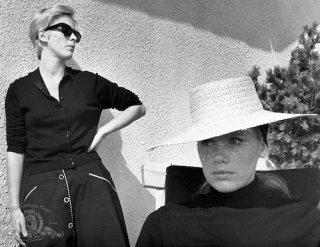
That’s not because the film is stupid, but because it’s “slow to understand” in the sense that the viewer can’t understand it — people have been debating its meaning for almost 50 years now, and it seems that still no one really knows what it’s about or what it’s trying to say. Obviously that’s some people’s bag, but it leaves me slightly baffled how it can gain such acclaim as to be well-regarded outside of the circles that decide Sight & Sound’s decennial list — I mean, it’s on the IMDb Top 250! There are some great bits, in particular some gorgeous cinematography, but the artistic indulgences (shall we say) and the complete lack of any clarity of meaning by the end make it an unlikely populist choice.

Summer holidayThe plot, such as it is, concerns an actress (Liv Ullmann) who has decided to become mute and her nurse (Bibi Andersson), who travel to a seaside summerhouse to attempt recuperation. After we’re told how they grew closer, events concern the breakdown of the relationship between the two women… or is there only one woman? We might end up inside one of their heads… but whose? Or is it both of their heads? Or…
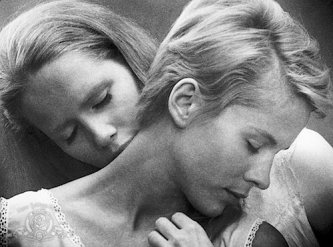
In his Amazon.co.uk review (which can be found on this page only), David Stubbs reckons that the film is “an occasionally cryptic but overwhelmingly powerful meditation on the parasitic interaction between Art and Life… about the helpless incapacity of art to ‘say’ anything in the face of grim reality.” He may well be right. What the women’s odd relationship/symbiosis has to do with that, I have no idea.

On the bright side, as I mentioned, it is beautifully shot. Some of it is on the surface unexceptional, but carries a simple beauty; other images, however, are strikingly composed and lit. There’s a particular shot that merges the faces of the two actresses together. Even though the similarity of their features is supposedly what gave Bergman the entire idea for the film, he didn’t come up with that shot until the edit. I personally didn’t think Ullmann and Andersson looked that alike, but, nonetheless, the merged shot could not be achieved any better with today’s photo-editing technology — it looks like one, wholly different, person. I’m sure there’s a deep philosophical meaning there, but I was just impressed by the technological wizardry.

Lesbian vampires?The film’s other most famous bit is a monologue Andersson delivers one night about a foursome she found herself in. As with most of the film its exact meaning is debatable, but it’s another unusual behind-the-scenes story: it was nearly cut, apparently, even though it’s in many respects the pivotal scene. It’s where the nurse opens up the most, leading to the actress’ ‘betrayal’ by repeating the story in a letter, which is what leads to the disintegration of their relationship and all the confusion/weirdness/’deep psychological filmmaking’ that follows. Later, Bergman lets a monologue (yes, another one) play in full twice. The meaning? He had intended to cut back and forth between the two actresses, but couldn’t decide which shots to discard, so just let it all run twice. At least that’s some confusion cleared up, then.

Clearly some people get a lot out of Persona. That’s nice for them. For me, it has moments of brilliance, but the stunted attempt to artistically portray the futility of portraying an idea through art is unenlighteningly ironic.

3 out of 5

Persona was viewed as part of my What Do You Mean You Haven’t Seen…? 2015 project, which you can read more about here.

Runner Runner (2013)

2015 #23
Brad Furman | 88 mins | streaming (HD) | 2.35:1 | USA / English & Spanish | 15 / R

Runner RunnerSometimes, films are so maligned that you feel you just have to see for yourself. Or I do, anyway. Crime thriller Runner Runner, with its 8% rating on Rotten Tomatoes, is one of those occasions.
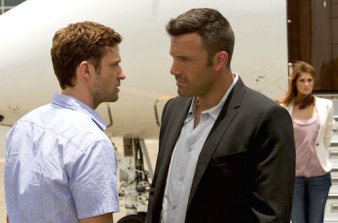
Set in the world of online gambling, it sees Justin Timberlake’s college student and gambling expert being scammed by a casino website. After flying down to the site’s Costa Rican HQ to confront its owner (Ben Affleck), he finds himself with a job that entangles him in the business’ illegal activities. FBI agent Anthony Mackie wants Timberlake to turn on his new employer, under threat of punishment himself, while he learns from Affleck’s right-hand-woman and love interest Gemma Arterton that he’s being set up to take the fall for everything. However will he extract himself from all that?!

More importantly, will you even care? Well, no, because the film gives you no reason to. It’s fatally marred by flabby storytelling, which substitutes voiceover and aimless montages for plot, with a pace that’s shot to hell — some of it rushes by, too fast to comprehend, but then later it just drags on. Director Brad Furman, who previously helmed excellent thriller adaption The Lincoln Lawyer, has tried to make a con thriller, indulging in the genre’s schtick of keeping characters’ plans hidden purely to play their success as a series of twists later. Unfortunately, it just feels like the film’s failing to elucidate necessary information. That includes all of the gambling rules and concepts, which are simply poorly explained — if you don’t know the world already, parts of the film will run away from you instantly.

Everyone in this photo deserves better than this film. Yes, even him.Brian Koppelman and David Levien’s screenplay is packed full of dreadful dialogue, which isn’t helped by phoned-in performances from all the principle cast, in particular Affleck. I guess he needed a payday between his Oscar-winning directorial efforts. I’ve seen some assert that the dialogue and delivery are meant to be mannered and stylised, but I just don’t buy it. Unless the style was meant to be “cable TV cheapie”, anyway. The Puerto Rican filming locations are quite prettily shot by DP Mauro Fiore, at least, but that’s scant consolation when everything else is so woeful.

There can be entertainment found in poorly-reviewed films: sometimes, they’re an undiscovered gem; sometimes, they’re just quite funny; but sometimes, they really are trash. There is no quality to be found here, though. If there’s such a thing as a lover of gambling-related thrillers, I guess they might find some enjoyment from the mere fact this film even exists. Otherwise, avoid.

2 out of 5

Runner Runner featured on my list of The Five Worst Films I Saw in 2015, which can be read in full here.

Rear Window (1954)

2014 #119
Alfred Hitchcock | 112 mins | Blu-ray | 1.66:1 | USA / English | PG / PG

Rear WindowAdrenaline-addicted photographer L.B. “Jeff” Jefferies (James Stewart) finds himself house- and wheelchair-bound during a New York heat wave. Whiling away time spying on his neighbours around their shared courtyard, he begins to suspect the man opposite, travelling salesman Lars Thorwald (Raymond Burr), has committed a murder and is trying to cover it up. Jeff persuades his high-society girlfriend Lisa (Grace Kelly), visiting nurse Stella (Thelma Ritter) and police detective friend Doyle (Wendell Corey) to help investigate, but no hard evidence is forthcoming. Is Jefferies just bored and paranoid?

The end result of this, as a film, is a heady mix of suspicion, tension, voyeurism, and a light romantic subplot — Hitchcock through and through. It’s one of his best-regarded films, too: Vertigo may gain the Sight & Sound plaudits, but Rear Window is second only to Psycho on the IMDb Top 250; and, as I write, they sit precisely side by side, which on a list that long is tantamount to equality. (Not that S&S ignored Rear Window: it’s at #54 on their last list.)

At its most basic level, Rear Window is an incredibly effective thriller. The setup is intriguing, followed by a drip feed of facts and clues that invite us to play detective too, joining in with the characters’ speculation. Jeff believes Thorwald’s guilt almost unequivocally, but not all his friends and associates agree, which gives us permission to doubt the movie’s ostensible hero. Maybe this isn’t the story of a well-executed murder uncovered by a right-place-right-time layman, but instead the narrative of an adrenaline junkie driven half-mad by being cooped up at home? The final reveal might turn out to not be the truth of the crime, but the truth of Jeff’s paranoia. The romantic subplot, which pivots around the vastly differing lifestyle desires of the pair (Lisa loves being a fashionable New Yorker, Jeff desires to explore the dangerous parts of the world), only emphasises the notion that Jeff may just be unhappy being ‘settled’.

The titular portalHitchcock certainly didn’t consider Jeff to be an out-and-out hero, even aside from the very real possibility that he may be wrong — as he put it in one interview, “he’s really kind of a bastard.” After all, what right does he have to be poking his nose so thoroughly into other people’s business? Not only to spend his time spying on all and sundry, which in many respects is bad enough, but to then investigate their lives, their personal business, even break in to their homes. If he’s right, they’ve caught a murderer, and the methodology would be somewhat overlooked; if he’s wrong… well, who’s the criminal then?

So Jeff is a voyeur, a position that one can interpret the film as implicitly both condoning and condemning; perhaps not in equal measure, but there are pros and cons. Through his directorial choices, Hitchcock makes us into one as well. In a genius move, we’re limited to Jeff’s perspective: we only see inside his apartment and the view from his window, pretty much as he sees it. If he falls asleep, we most often fade to black. We don’t have the advantage of knowing much that he doesn’t (as is sometimes the case in this kind of movie), but we do know exactly what he does, no less. The only difference is we can consider the possibility that he’s fooling himself — we have slightly more objectivity. Nonetheless, placing us in his shoes so thoroughly makes us consider the feeling of being a voyeur too. For some it’s uncomfortable; for others, probably a thrill; for many, I suspect, it’s a bit of both.

All of this is made possible, in part, by the movie’s incredible set, which has to be one of the greatest ever constructed. To quote from IMDb’s trivia section:

The entire picture was shot on one set, which required months of planning and construction. The apartment-courtyard set… consisted of 31 apartments, eight of which were completely furnished… some of the buildings were the equivalent of five or six stories high. All the apartments in Thorwald’s building had electricity and running water, and could be lived in.

Rear Window courtyardClick to enlarge.

It’s an incredible toy box for Hitchcock to play in, and every technical element rallies to use it to its full effect. Virtually the entire movie is shot from within Jeff’s apartment, the camera panning from apartment window to apartment window as we follow Jeff’s voyeuristic gaze. (This choice has, decades later, led to at least one striking re-working.) In every film the camera’s lens is our window on the world, of course, but you rarely feel it so much as you do here. We share in Jeff’s frustration about not being able to get a closer, better look; at only being able to watch as his friends imperil themselves, so close — only the other side of the courtyard! — yet so far away. Nonetheless, he’s afforded something of the same perspective we get as film viewers: late in the film, as Lisa searches the suspect’s apartment, Jeff can see Thorwald returning home, but he has no way to warn his girlfriend — just like us in so many moments of movie suspense. (These days he’d just send her a text, of course. Though I suppose you could still milk that: He can’t handle predictive texting! Autocorrect’s got it all wrong! He’s dropped the phone! How did he load a Chinese keyboard?!)

There’s the sound design, too. The heat wave means windows are open, letting the sounds of parties and whatnot drift to all ears. It’s not as meaningful a commentary on the viewer’s experience, I don’t suppose, but it lends a veracity and sense of immersiveness to the situation, Suspense!further enhanced by the almost total lack of a score (only present in the opening few shots).
In crafting both a suspenseful thriller and a commentary on the audience’s perspective, Hitchcock created the kind of movie that can be appreciated by both the casual movie fan and the analytical cineaste alike. Whatever one’s reasons for appreciating Rear Window, it’s certainly a masterpiece.

5 out of 5

Rear Window was viewed as part of my What Do You Mean You Haven’t Seen…? 2014 project, which you can read more about here.

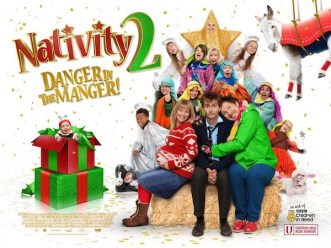
Nativity 2: Danger in the Manger! (2012)

2014 #133
Debbie Isitt | 109 mins | Blu-ray | 1.78:1 | UK / English | U

Nativity 2David Tennant replaces Martin Freeman as the teacher of a primary school class who enter themselves in a Christmas singing competition in this part-improvised sequel to the endearing 2009 hit.

Sadly, lightning doesn’t strike twice. A talented cast (also including Joanna Page, Jason Watkins, Ian McNeice and Jessica Hynes, all of whom are underused) struggle with an over-padded story, which leads to a climactic concert full of charmless, cringeworthy songs. There’s some sweetness from the kids, but not enough to paper over the cracks.

It’s no wonder last Christmas’ second sequel (with another new, bargain basement, leading man) flopped badly.

2 out of 5

Nativity 2 featured on my list of The Five Worst Films I Saw in 2014, which can be read in full here.