Rear Window (1954)

2014 #119
Alfred Hitchcock | 112 mins | Blu-ray | 1.66:1 | USA / English | PG / PG

Rear WindowAdrenaline-addicted photographer L.B. “Jeff” Jefferies (James Stewart) finds himself house- and wheelchair-bound during a New York heat wave. Whiling away time spying on his neighbours around their shared courtyard, he begins to suspect the man opposite, travelling salesman Lars Thorwald (Raymond Burr), has committed a murder and is trying to cover it up. Jeff persuades his high-society girlfriend Lisa (Grace Kelly), visiting nurse Stella (Thelma Ritter) and police detective friend Doyle (Wendell Corey) to help investigate, but no hard evidence is forthcoming. Is Jefferies just bored and paranoid?

The end result of this, as a film, is a heady mix of suspicion, tension, voyeurism, and a light romantic subplot — Hitchcock through and through. It’s one of his best-regarded films, too: Vertigo may gain the Sight & Sound plaudits, but Rear Window is second only to Psycho on the IMDb Top 250; and, as I write, they sit precisely side by side, which on a list that long is tantamount to equality. (Not that S&S ignored Rear Window: it’s at #54 on their last list.)

At its most basic level, Rear Window is an incredibly effective thriller. The setup is intriguing, followed by a drip feed of facts and clues that invite us to play detective too, joining in with the characters’ speculation. Jeff believes Thorwald’s guilt almost unequivocally, but not all his friends and associates agree, which gives us permission to doubt the movie’s ostensible hero. Maybe this isn’t the story of a well-executed murder uncovered by a right-place-right-time layman, but instead the narrative of an adrenaline junkie driven half-mad by being cooped up at home? The final reveal might turn out to not be the truth of the crime, but the truth of Jeff’s paranoia. The romantic subplot, which pivots around the vastly differing lifestyle desires of the pair (Lisa loves being a fashionable New Yorker, Jeff desires to explore the dangerous parts of the world), only emphasises the notion that Jeff may just be unhappy being ‘settled’.

The titular portalHitchcock certainly didn’t consider Jeff to be an out-and-out hero, even aside from the very real possibility that he may be wrong — as he put it in one interview, “he’s really kind of a bastard.” After all, what right does he have to be poking his nose so thoroughly into other people’s business? Not only to spend his time spying on all and sundry, which in many respects is bad enough, but to then investigate their lives, their personal business, even break in to their homes. If he’s right, they’ve caught a murderer, and the methodology would be somewhat overlooked; if he’s wrong… well, who’s the criminal then?

So Jeff is a voyeur, a position that one can interpret the film as implicitly both condoning and condemning; perhaps not in equal measure, but there are pros and cons. Through his directorial choices, Hitchcock makes us into one as well. In a genius move, we’re limited to Jeff’s perspective: we only see inside his apartment and the view from his window, pretty much as he sees it. If he falls asleep, we most often fade to black. We don’t have the advantage of knowing much that he doesn’t (as is sometimes the case in this kind of movie), but we do know exactly what he does, no less. The only difference is we can consider the possibility that he’s fooling himself — we have slightly more objectivity. Nonetheless, placing us in his shoes so thoroughly makes us consider the feeling of being a voyeur too. For some it’s uncomfortable; for others, probably a thrill; for many, I suspect, it’s a bit of both.

All of this is made possible, in part, by the movie’s incredible set, which has to be one of the greatest ever constructed. To quote from IMDb’s trivia section:

The entire picture was shot on one set, which required months of planning and construction. The apartment-courtyard set… consisted of 31 apartments, eight of which were completely furnished… some of the buildings were the equivalent of five or six stories high. All the apartments in Thorwald’s building had electricity and running water, and could be lived in.

Rear Window courtyardClick to enlarge.

It’s an incredible toy box for Hitchcock to play in, and every technical element rallies to use it to its full effect. Virtually the entire movie is shot from within Jeff’s apartment, the camera panning from apartment window to apartment window as we follow Jeff’s voyeuristic gaze. (This choice has, decades later, led to at least one striking re-working.) In every film the camera’s lens is our window on the world, of course, but you rarely feel it so much as you do here. We share in Jeff’s frustration about not being able to get a closer, better look; at only being able to watch as his friends imperil themselves, so close — only the other side of the courtyard! — yet so far away. Nonetheless, he’s afforded something of the same perspective we get as film viewers: late in the film, as Lisa searches the suspect’s apartment, Jeff can see Thorwald returning home, but he has no way to warn his girlfriend — just like us in so many moments of movie suspense. (These days he’d just send her a text, of course. Though I suppose you could still milk that: He can’t handle predictive texting! Autocorrect’s got it all wrong! He’s dropped the phone! How did he load a Chinese keyboard?!)

There’s the sound design, too. The heat wave means windows are open, letting the sounds of parties and whatnot drift to all ears. It’s not as meaningful a commentary on the viewer’s experience, I don’t suppose, but it lends a veracity and sense of immersiveness to the situation, Suspense!further enhanced by the almost total lack of a score (only present in the opening few shots).
In crafting both a suspenseful thriller and a commentary on the audience’s perspective, Hitchcock created the kind of movie that can be appreciated by both the casual movie fan and the analytical cineaste alike. Whatever one’s reasons for appreciating Rear Window, it’s certainly a masterpiece.

5 out of 5

Rear Window was viewed as part of my What Do You Mean You Haven’t Seen…? 2014 project, which you can read more about here.

Nativity 2: Danger in the Manger! (2012)

2014 #133
Debbie Isitt | 109 mins | Blu-ray | 1.78:1 | UK / English | U

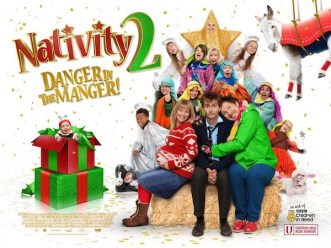
Nativity 2David Tennant replaces Martin Freeman as the teacher of a primary school class who enter themselves in a Christmas singing competition in this part-improvised sequel to the endearing 2009 hit.

Sadly, lightning doesn’t strike twice. A talented cast (also including Joanna Page, Jason Watkins, Ian McNeice and Jessica Hynes, all of whom are underused) struggle with an over-padded story, which leads to a climactic concert full of charmless, cringeworthy songs. There’s some sweetness from the kids, but not enough to paper over the cracks.

It’s no wonder last Christmas’ second sequel (with another new, bargain basement, leading man) flopped badly.

2 out of 5

Nativity 2 featured on my list of The Five Worst Films I Saw in 2014, which can be read in full here.

The Shining (1980)

2014 #80
Stanley Kubrick | 120 mins* | Blu-ray | 1.85:1 | UK & USA / English | 15 / R

The ShiningFêted director Stanley Kubrick turned his hand to horror for this Stephen King adaptation. Poorly received on release (it was nominated for two Razzies: Worst Actress and Worst Director) and reviled by King (he attempted his own version as a miniseries in 1997. It didn’t go down well), it has since been reassessed as a classic. I’ve never read the novel, so have no opinion on the film’s level of faithfulness or (assuming it isn’t true to the book) whether that’s a good thing or not. As a movie in its own right, however, The Shining is bloody scary.

The plot sees Jack Nicholson, his wife and young son travelling to a remote hotel to be its caretakers while it’s closed over the winter. As the weeks pass by, strange things begin to happen. Nicholson begins to go a little stir crazy… or is it something worse? As the hotel becomes cut off by a snowstorm, everything goes to pot…

It’s somewhat hard to summarise The Shining because, in a way, nothing much happens. There are some mysteries, but few (if any) answers. That prompts plenty of wild theories — there’s now a whole film about them, even — but whether any of those are right or not… well, you know what wild theories are normally like, right? Really, story is not the order of the day. Kubrick seems to have set out to make a horror movie in the truest sense: a movie to instill fear. And that it does. And then some.

But you're not called JohnnyGradually, inexorably, the film builds a sense of dread; a fear so deep-seated that it feels almost primal. There are few jumps or gory moments, the easy stomping ground of lesser films. There’s just… unease. It’s a feeling that’s tricky to put into words, because it’s not exactly “scary”; even “terrifying” feels too lightweight. There are undoubtedly sequences of suspense, where we fear what’s coming or what will happen to the characters (everyone knows the “Here’s Johnny!” bit, for instance), but that’s not where the film’s impact really lies.

I guess some find it slow and aimless. There are certainly fans of King and his original that are just as unimpressed as the author by the way it supposedly shortchanges Nicholson’s character. There may be some validity to both of those arguments. Nonetheless, I found Kubrick’s realisation to be probably the most excruciatingly and exquisitely unsettling film I’ve ever seen.

5 out of 5

The Shining placed 3rd on my list of The Ten Best Films I Saw For the First Time in 2014, which can be read in full here.

It was viewed as part of my What Do You Mean You Haven’t Seen…? 2014 project, which you can read more about here.


* The Shining was initially released at 146 minutes. After a week, Kubrick cut two minutes off the end. Following a poor reception, he cut even more for the European release (some say 31 minutes, but that doesn’t add up). He maintained the shortest version was his preferred cut, though it’s not the one released in most territories… except the UK. ^

March 2015 + Best Bond Beginnings

We’re a quarter of the way through the year — but with the #25 milestone passed last month, how far ahead have I forged?

Also this month: some quick thoughts on the best James Bond pre-titles sequences. Which is your favourite?


March’s films
Grosse Pointe Blank
#30 Alois Nebel (2011)
#31 Godzilla (2014)
#32 Jack the Giant Slayer (2013)
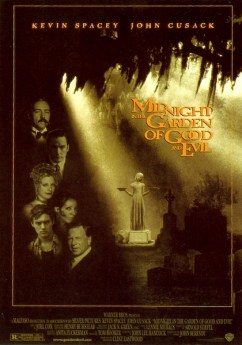
#33 Midnight in the Garden of Good and Evil (1997)
#34 Violet & Daisy (2011)
#35 The Girl with the Dragon Tattoo (2011)
#35a The Hobbit: The Desolation of Smaug (Extended Edition) (2013/2014)
Mad Max 2#36 The Hobbit: The Battle of the Five Armies (2014)
#37 God Bless America (2011)
#38 Videodrome (1983)
#39 Grosse Pointe Blank (1997)
#40 Looper (2012)
#41 Valkyrie (2008)
#42 Mad Max 2 (1981), aka The Road Warrior
#43 Tarzan (1999)
#44 Empire of the Sun (1987)


Viewing Notes

  • This is the third month in a row where I’ve watched 16 films, all in. Weird.
  • Several I’ve been meaning to get round to for years were ticked off this month: Alois Nebel, The Girl with the Dragon Tattoo, and Looper. All thanks to TV premieres.
  • It’s a complete accident that I left it a year to the month between watching Mad Max and Mad Max 2. Both were on Now TV, which I’m ending my subscription to imminently, so the third may crop up among April’s films.
  • No WDYMYHS film this month. Two in April, then.


Analysis

A grand total of 15 new films watched this month brings with it a few interesting observations. For one, this is the first time (since such records began) that January is the largest of a year’s first three months. That doesn’t really signify anything, just one of those random correlations (which has now been broken).

2015’s is the second largest March ever, and the fifth month in a row to improve on the same period from the year before. Plus it’s the tenth month in a row to have a final tally over ten. Regular readers will know my goal for this year is to have a run of 12 months that each exceed that figure, so I’m 25% of the way there. Meanwhile, the average total for January and February was 14.5, so by just tipping over that in March, the year-to-date average rises to 14.67.

2015 is clearly shaping up well on the whole. #44 is the furthest I’ve ever reached by the end of March, with second place being a three-way tie between 2010, 2011 and 2013 at #38. As ever, all indicators must be taken with a pinch of salt: last year (my highest year ever, lest we forget) I was actually running behind schedule until the last day of March; conversely, in 2012 I’d made it to #34 by the end of March, a full ten ahead of schedule, but still finished the year with just 97 films viewed.

Nonetheless, it’s prediction time! Never say never, but with the halfway point already looming next month, I feel 100 films is a fairly comfortable expectation this year (famous last words…) So, if I ‘merely’ manage to maintain my monthly ambition of ten-a-time from here on out, 2015 would make it to #134. That’d be my second-best year ever, so not to be sniffed at. If the current average (14.67, in case you forgot) holds, that would see me reach #176. Considering my previous best is 136, that’d be quite extraordinary. I live in hope.


This month’s archive reviews

Continuing apace, with 28 reposts this month.


Best James Bond Pre-titles

The past week has brought us both the first trailer for October’s 24th James Bond film, Spectre, as well as the news that it will feature the largest pre-titles sequence the 53-year-old franchise has ever staged. What better time to revive my “list of 5” format and look back at the finest examples of one of 007’s defining features, then?

Keeping the British end upExcept, goodness, I couldn’t get it down to just five! From Connery alone you’ve got ‘Bond’ being bested in From Russia with Love, the iconic jetpack in Thunderball, and the trend-setting mini-adventure from Goldfinger. As the series rolls on there’s The Spy Who Loved Me and its parachute, Moonraker’s free-fall fistfight (you couldn’t do that today — everyone would assume it was CGI and it’d have no magic), and the perfectly staged training-exercise-gone-wrong from The Living Daylights. The Brosnan era really kicks in the action, first with another peerless mini-adventure in GoldenEye (and the bungee jump…!), then increasingly expansive and suitably witty openers to both Tomorrow Never Dies and The World is Not Enough. Finally, the Craig era tipped the whole shebang on its head with Casino Royale’s moody black-and-white quickie, and Quantum of Solace’s attention-demanding car battle. Skyfall may have moved back towards the Brosnan mould, but it’s an exceptionally well done one.

That’s 12 and I don’t even know where to start paring back, at least as far as my personal favourites go.

We can all agree A View to a Kill and its use of California Girls is the worst, though, right?


Next month on 100 Films in a Year…

A third of the way through the year… but halfway to my goal?

God Bless America (2011)

2015 #37
Bobcat Goldthwait | 100 mins | TV | 2.35:1 | USA / English | 15 / R

God Bless AmericaMad Men’s Joel Murray is Frank, a glum divorcee whose indulged daughter refuses to see him, who loses his job, and who is diagnosed with a terminal brain tumor. Already fed up with the state of modern society, he sets about righting some wrongs. With a gun. He soon encounters Roxy (Tara Lynne Barr), a disillusioned teen only too keen to join his murderous crusade.

Starting with a montage spoofing the dregs of US television, the satire initially seems a little broad… but it’s also remarkably accurate, so really it’s the fault of modern US ‘culture’ for being so inherently ridiculous. In some respects this sets the tone for the entire film: on the surface, a little too ridiculous, but that’s masking a witty comedy and surprisingly truthful character piece.

The latter is where the film’s most consistent joys are to be found. It’s carried by the charisma of the two leads; they’re a joy to spend time with, even if you for some reason objected to their righteous crusade. Of course, there is amusement elsewhere too. The violence of the killing spree is sometimes graphically depicted, but it’s all to humorous ends, in one way or another. The often-OTT tone is set early on with a particularly bloody and unacceptable murder fantasy, which may alert you to whether you’ll enjoy the film or not — it will be too much for some — but to say what happens would be to spoil it slightly.

However, the strongest vein of humour always comes from the quieter scenes where Frank and Roxy just talk. Murray has been an underrated presence in Mad MenGot herself a guna supporting character who’s come and gone over the years, initially seeming one-note but revealing more in more recent seasons — but here you get that kind of arc condensed into 90 minutes. Barr is every bit his equal, the pair forming a genuine if sometimes complicated bond. That it acknowledges but dodges the whole “mid-life-crisis man and teenage girl” iffiness is further to its credit.

God Bless America treads familiar ground, in a way: the pair on a killing spree thing; the man driven to kill by society; even the heavy satire of American culture’s extreme awfulness (also pilloried in a much weaker, even more obvious fashion in Idiocracy, for example). The film works, though, because of its commitment to the characters and its story, because of the commendable excess in the way that’s depicted, because it’s genuinely funny, and because of the charm and chemistry of its two leads. Highly recommended.

4 out of 5

God Bless America is on Film4 tonight at 11:05pm.

Looper (2012)

2015 #40
Rian Johnson | 119 mins | Blu-ray | 2.35:1 | USA & China / English | 15 / R

LooperWriter-director Rian Johnson re-teams with the star of his first movie for this near-future sci-fi thriller, hailed by critics as one of the best genre movies of 2012, though it seems to have been a little more divisive among audiences.

In the year 2044, Joe (Joseph Gordon-Levitt) is employed by the mob as a very special kind of assassin. 30 years in the future, time travel will have been invented and outlawed, leading organised crime to use it for murders: the victim is sent back in time and immediately killed by a so-called ‘looper’, leaving the future police with no body to investigate. Loopers know that, one day, they’ll have to kill their future self, in order to cover their tracks by “closing the loop”. So — and you’d know where this was going even if it wasn’t part of the film’s very premise — it’s not long before we meet Joe’s future self (Bruce Willis), who escapes, intent on changing the future so he can live. It’s up to younger Joe to stop him before the angry mob kills them both.

There’s quite a bit more to Looper than that — major characters aren’t introduced until a significant way through the running time, for instance. I’m sure some screenwriting gurus would have something to say about such a structure, but it helps make for a less predictable, more organic, more entertaining movie. One that, on occasion, plays about with its chronological structure. How apt. It does make it difficult to discuss in full without spoiling anything, mind, but as I’m posting this review in order to recommend the film just before it makes its TV debut, I shall endeavour to keep things newcomer friendly.

Not visually influenced by Blade Runner, honestFirstly, the less you know the better. I pretty much knew the above before I went in, and that meant the film had surprises from the get-go. For instance, the near-future world most of the action takes place in has been well-realised by Johnson and his design and effects teams, and time travel is not the only SF concept or imagery employed here, which I wasn’t aware of. Their vision is Blade Runner-esque in its decrepitude — this is a future where the global financial crisis has rolled on, so flying motorbikes exist but most people drive present-day cars retrofitted with solar panels, for example — but it doesn’t slavishly rip off Blade Runner’s style and imagery, as have so many other movies (both good and poor). The future concepts are also used economically when it comes to storytelling. Nothing is introduced merely for the sake of showing “it’s the Future, innit” — everything pays off in some way, but without the heavy-handedness normally associated with everything existing solely for a narrative purpose.

Once the genre-rooted concepts are established, the film morphs almost into a character-driven thriller. It’s one still absolutely grounded in ideas of future technology and its possible implications, but it’s what these particular people do in that particular situation that matters. A good deal of the second half is spent on a remote farm, for instance, where the extent of sci-fi tech is a self-piloting drone for watering crops. Some people didn’t like that; I thought it was fine. So too the action sequences, which are effectively put together and serve the story, rather than making this An Action Movie.

Lookie-likieHeading up the cast, Gordon-Levitt does a good Bruce Willis impersonation — believable, but not a slavish impression. That was probably quite necessary, because I don’t imagine Willis has the thespian chops to emulate an older Gordon-Levitt. Notoriously, the younger actor does the whole thing under prosthetics designed to make it more plausible he’d age into Willis. They’re a bit weird: not badly done — far from it, in fact — but you’re always kind of aware they’re there. A highly able supporting cast flesh out the rest of the characters, though most memorable is young Pierce Gagnon as an imperilled child you wouldn’t necessarily mind getting killed. And I mean that in a nice way; about the film and his performance, if not the character.

Time travel fiction is notoriously hard to get right because of the limitless potential for paradoxes, inconsistencies, and so on. Some reckon Looper has more holes than a golf course; Johnson has asserted it was incredibly carefully constructed and all of the criticisms are answerable. I’ve not listened to either of his commentary tracks (one on the disc, another made available for download while the film was still in cinemas) so I can’t really back one side or the other. Does it feel like there are issues? Maybe. But time travel is impossible, and probably always will be, so we can’t know how it would function. A fiction has to establish its own rules for what is and isn’t possible; what does and doesn’t happen. Looper doesn’t explain the nitty-gritty of everything it portrays — there’s even a hand-wave when talking about Old Joe’s memories of Young Joe’s current actions — but I believe there is at least some thought to how it all hangs together, just maybe not in the way some viewers would approve of. Well, you go write your own time travel story, then.

It's about timeEven if there are some logic issues, it doesn’t fatally undermine the movie. Looper comes with the joys of a well-imagined future, a captivating storyline, engaging characters, and enough twists and turns along the way to keep you guessing at the outcome. The best genre movie of 2012? That was a year of stiff competition among SF/F pictures, but Looper may have the edge.

5 out of 5

The UK TV premiere of Looper is on BBC Two tonight at 9:05pm.

Requiem for a Dream (2000)

2014 #136
Darren Aronofsky | 97 mins | DVD | 16:9 | USA / English | 18 / NC-17*

Requiem for a DreamOn Coney Island, the faded and decrepit one-time pleasure place of New York City, four people — Harry (Jared Leto), his girlfriend Marion (Jennifer Connelly), his best friend Tyrone (Marlon Wayans), and his mother Sara (Oscar-nominated Ellen Burstyn) — find themselves accidentally drawn into a whirlwind of drug addiction. Not to put too fine a point on it.

A lot of people say that Requiem for a Dream is the bleakest or most depressing movie ever made, and you kind of think, “yeah well, we’ll see — how bad can it be?” For most of the film, that notion is indeed misleading. Not that it’s a happy-clappy affair, but it’s a very watchable drama, not a gruelling slog through misery. However, I’m not sure you can quite be prepared for what comes later. Even if you were told what happens, or see some of the imagery, or feel like you can see worse stuff on the internet without even looking too hard (which, of course, you can)… that’s not the point. It’s the editing, the sound design, the sheer filmmaking, which renders the film’s final few minutes — a frenzied montage that crosscuts the climaxes of all four characters’ stories — as some of the most powerful in cinema. It’s horrendous. It’s brilliant.

The rest of the film may not be its equal in terms of condensed impact, but it’s of course vital in leading you to that point. These characters lead relatively normal lives — not exceptionally bad, certainly not exceptionally good, but pretty humdrum and bog standard. They all try to better themselves in some way — Sara through diet pills, Harry and Tyrone by getting rich through selling drugs — and it all goes horrible awry.

It may be a descent into misery, then, but director Darren Aronofsky keeps it watchable through pure cinematic skill. The editing, camerawork, lighting, sound design, and special effects are all incredible throughout. There’s a surfeit of ideas and innovations from everyone involved. And yet they are never show-off-y for the sake of it — this isn’t a Guy Ritchie movie. None of the tricks or striking ideas are put there to render the film Cool, even in the way they are in some equally brilliant films (Fight Club, for example). No, everything that is deployed is done so in aid of emulating a real-life feeling or experience, or conveying a concept or a connection. At times it’s breathtaking.

I must also make special mention of the score by Clint Mansell. The primary theme is arguably most famous for being used in The Two Towers trailer a couple of years later (that’s certainly where I discovered it). Something that works fantastically on the trailer for an epic fantasy war movie might not sound like it sits well in a junkie drama, but it really works.

Requiem for a Dream may have a bit of a reputation at this point; one that might put you off viewing it, or possibly only deigning to attempt it in a certain frame of mind. While there is an element of truth to that, it is a brilliant film — not “enjoyable” in the easily-digested blockbuster sense, but as a mind-boggling and awe-inspiring feat of filmmaking, yes. Incredible.

5 out of 5

Requiem for a Dream placed 8th on my list of The Ten Best Films I Saw For the First Time in 2014, which can be read in full here.

It was viewed as part of my What Do You Mean You Haven’t Seen…? 2014 project, which you can read more about here.


* After the film was given an NC-17, it was decided to release it Unrated — so, technically, it’s not NC-17, it’s Unrated. Ah, the quirks of the US classification system. (There’s also an R-rated version, which is the same except for some shot removals and replacements during the ending.) ^

The Big Knife (1955)

2015 #8
Robert Aldrich | 107 mins | TV | 4:3 | USA / English | PG

The Big KnifeJack Palance is an actor wanting out of his studio contract in this stagey film noir.

The entire film takes place in his house, with a parade of supporting characters coming and going to variously persuade him to stay, persuade him to quit, or persuade him to do other things (saucy!) It’s not just the limited location that makes it feel stagey, though, but also the style of dialogue and the performances. I’m never quite able to put my finger on it, but there’s a certain way playwrights seem to pen dialogue that just feels like it’s from theatre, and The Big Knife (which is adapted from a stage play) has it.

Palance is very good, playing against expectations as an actor who sold out his artistry and is now struggling to be brave enough to stand up to the overbearing studio execs, who have an additional hold over him. Rod Steiger is a bit OTT as the studio’s head, Stanley Hoff, but then the character’s meant to be a bit like that. Somewhat heavy-handed pillorying of a real studio boss? Perhaps. Also worth watching is Rear Window’s Wendell Corey as Hoff’s assistant, Smiley Coy. His is a more subtle performance, conveying his opinions and enacting his schemes mostly with looks. I suppose you don’t get much less stagey than that.

ShoutyPartially driven by a seeming twist that’s obvious from the outset (which, in fairness, the film reveals only 40 minutes in), the story never quite comes alive. Palance and Corey make parts worth watching, but at other times it’s a bit of a slog, not helped by an awful score that chimes in now and then, loudly. Expansive cinematography (so much headroom — was it shot to be cropped for widescreen? Perhaps it was) combats any feeling of claustrophobia the single location and oppressive moral situation might have leant it.

The Big Knife is not the finest film noir (certainly, if anyone’s looking for familiar genre tropes, you’ll find few here), nor the finest behind-the-sets view of moviemaking, but some sporadically strong performances prevent it being meritless for the patient viewer.

3 out of 5

Bill the Galactic Hero (2014)

2014 #128
Alex Cox, Merritt Crocker, Amanda Gostomski, Danny Beard, Alicia Ramirez, Jordan Thompson & Raziel Scher | 90 mins | download | 16:9 | USA / English

Bill the Galactic HeroAlex Cox was once the director of noticed movies like Repo Man and Sid and Nancy, tipped for Hollywood success. That wasn’t really his style, though, and he wound up heading into ultra-indie territory, ultimately to “microfeatures” — films made so cheaply they fall below the Screen Actors Guild cut-off of $200,000. I confess that the only previous film of his I’ve seen is one of these: Repo Chick, a non-sequel to Repo Man that most people hate but I kinda loved. So when it turned out he was crowdfunding a new film, and a satirical science-fiction comedy at that, I jumped on it (readers with long memories may remember I mentioned it at the time). The finished result finally came out back in December, and… well…

To start at the beginning, Bill the Galactic Hero is an SF comedy novel by Harry Harrison. It’s a spoof of right-wing militaristic sci-fi, specifically Robert Heinlein’s Starship Troopers (which was also lampooned in its own film adaptation (apparently — I’ve still not seen it)). The story sees a lad from a backwater planet, Bill (James Miller), being tricked into joining the intergalactic military, who are locked in a never-ending war with reptilian aliens called Chingers. We follow him through his training, his dispatch aboard a war(space)ship, and adventures beyond. The novel is very good — not packed with gags and perhaps not often laugh-out-loud funny, but consistently wry in its outlook. You can see it would be a tough sell as an adaptation, mind, so an alternative director like Cox is probably the perfect fit.

Colorado bouldersThe way he’s gone about filming it is as, essentially, a giant student film. Cox currently teaches film at the University of Colorado at Boulder, and it was along with his students (plus some professional colleagues from previous films) that this movie was produced — that’s partly why there’s the lengthy list of directors (Cox actually directed “most of the first act and all the third”, as discussed in this interview with Quiet Earth). For various legal reasons, it’s a not-for-profit venture; indeed, any venue in the world can acquire a good-enough-to-screen quality copy from Cox for free, so long as it’s being shown in aid of charity. (That, and other interesting points, are discussed in this interview with Boulder Weekly.) The film is also available online, for free, here. This combination of factors (student film; shown only for charity; etc) makes it a little hard to be judgemental about it — witness, for instance, this ‘review’ from Boulder Weekly. But judge we must, and, sadly, in many ways it’s just not very good.

Things start badly with a colourful animated opening. I can see why this was judged to be the most cost-effective way to relate that part of the tale, as it’s set on an alien planet and filled with background extras and future-technology, but considering the amount of cardboard-and-Sellotape set dressing later in the film, surely they could have rustled something up? I also simply don’t like the style of the animation. Its painfully-bright colourfulness provides a contrast to what follows that is nearly appropriate, Awful animationbut there’s no transition from it into the black-and-white live-action main film, just an abrupt cut (a good place to have put the title credits, at the very least!) Worst of all, no effort whatsoever is made to establish that the cartoon guy we saw being enlisted at the start is now a live-action guy with a teddybear strapped to his spacesuit. It took me a minute to get it, and I’ve read the book.

The cast are kept in full spacesuit gear the whole time. This sounded like a bad idea, and it is. It’s hard to relate to their facelessness, harder still to tell the supporting characters apart. That’s also a flaw of the screenplay and direction, neither of which allow enough time to establish anyone. A lot of the supporting cast are fleeting anyway — as I said, we follow Bill across multiple situations, each with a new group of people around him — but the potential impact of certain scenes involving characters like Eager Beager and Deathwish Drang is lost thanks to the lack of early investment. Even central Bill is lacking in personality or identifiability, particularly so considering he’s the main character. This is in some ways a problem inherited from the novel, where Bill is a blank canvas floating through his various adventures. I don’t know if that was intentional on Harrison’s part, but it didn’t work for me in the book and it doesn’t here either.

The spacesuit decisionAfter a hurried start, the film does settle down to slightly longer scenes with more of a point, like Bill’s encounter with the Laundry Officer-cum-Chaplain, and some of these work pretty well. Sadly, too much of the time it’s a race through the novel’s story, feeling like a filmed recap for those who’ve read the book. Goodness knows what someone who hasn’t would make of it all. Goodness knows if they’d even be able to follow it at all, to be frank.

Not all of the adaptation’s ideas are poor, though. The novel was written in 1965, bang in the middle of the Vietnam War. For the film, Cox has substituted the final act’s Vietnam-inspired jungle planet for an era-appropriate Middle East-inspired dustbowl. An ingenious idea, though there’s little (or no) commentary on the past couple of decades of Western military intervention once you get past that obvious observation. Ah well.

The live-action parts (i.e. most of the film) are shot on black-and-white film stock, though I’m not convinced they should have bothered — video would’ve been cheaper, and probably looked much the same in the end. That said, there’s an oppressively dark feel to much of the cinematography, with numerous deep blacks crowding in, which is surely the result of using real film. It’s quite appropriate to the story’s tone, a very dry satire of a controlling future dystopia. Conversely, the special effects look great. They’re the kind of lo-fi models-and-basic-CGI style that I had been expecting, and they nail the intended tone in a way other elements are too amateurish to quite reach.

lo-fi models and basic CGI

Unfortunately, the audio quality is quite poor. The spacesuit decision reveals itself to be a bad idea once again when it muffles all the dialogue. Halfway through one character is subtitled, and I’m not sure why — she’s just as clear as everyone else. That is to say, not very; but no one else has subtitles so why does she? Possibly this could all be to do with the film being mixed for 5.1 by people inexperienced in doing so (Cox admitted as much himself) and then poorly downmixed to stereo for the online version that I watched. Perhaps the 5.1 version on the DVD comes over better? (I do have a copy, but haven’t brought myself to watch it to find out.) The end credits scroll under a new song by Iggy Pop, which I actually rather liked.

The sad thing is, I think the film could have been so much better. And I don’t mean by making it ‘properly’, either. Cox has shown he can make microfeatures work, and I don’t believe student films (which this essentially is) are fundamentally meritless. Even the production values, low-rent as they are, are fine if that’s what you’re expecting (and, given the film’s background, you should be). No, the problem lies in the storytelling: a pace that rushes through the novel at such speed that only someone familiar with it could keep up; a lack of time spent establishing characters and situations; rough editing and sound design that obscure elements and, without any breathing room elsewhere, leave you no space to work out the gaps and catch up.

HandyBill the Galactic Hero might be best described as a noble failure. It’s been created with the best of intentions, both in terms of adapting a quality novel that Hollywood had no interest in, and in training up a new generation of filmmakers in an independent and proactive way. It’s a shame the end result isn’t wholly as enjoyable as it might’ve been.

2 out of 5

Bill the Galactic Hero is now available to stream or download, for free, on Vimeo.

The Hobbit: The Desolation of Smaug – Extended Edition (2013/2014)

2015 #35a
Peter Jackson | 187 mins | Blu-ray | 2.40:1 | USA & New Zealand / English | 12 / PG-13

The Hobbit: The Desolation of Smaug - Extended EditionAt the start of their audio commentary on The Desolation of Smaug, co-screenwriters Peter Jackson and Philippa Boyens note that, when the decision was made to extend the already-shot Hobbit duology to a trilogy, it wasn’t a third movie that need to be created but a second. That is to say, it was the middle instalment that required the most extra material, including a new prologue and climax. The theatrical version rather felt like that had happened, too, and now we have a cut with 16% more again.

Fortunately for new-stuff spotters, most of these additions come in the form of whole scenes, rather than tiny extensions here and there. In total, there’s almost 27 minutes of new material, plus a little over 90 seconds removed (all of it moments that seem to have been added to the theatrical edition to cover for now-reinserted scenes). That’s a pretty significant amount, and it does impact on some facets of the story, but not enough to change the overall feel. That said, I did like the film a little better, but I’d attribute that as much to simply watching it again: things that bugged me last time felt less irksome, like how long was spent on Legolas fighting orcs at the end, for instance.

One thing I never had a problem with, unlike some others, is the film’s proportion of Bilbo: some say the titular hero is sidelined, with too much focus on Thorin and Gandalf as a result. Two things: one, despite the title, this is clearly structured as an ensemble movie — of course other characters are going to get some of the focus. Second, there’s actually loads of Bilbo! He saves everyone from spiders in Mirkwood, he saves everyone from imprisonment by the wood elves, he’s the one who finds the keyhole at Erebor, he goes into the mountain and has a long confrontation with Smaug, he’s the first face we see after the prologue and the last we see before the credits. And those are just the highlights. Better BilboThe extended cut amps him up even more, with an extra part in Mirkwood and a moment where he stands up for Thorin in Laketown. In fairness, he doesn’t have as much character development in this film as the first, while Thorin is on a definite arc and Gandalf is off on his own side-plot, but he’s undoubtedly a key character. I really don’t understand that complaint.

Of the new stuff, however, the best addition is more Beorn, authoritatively played by Mikael Persbrandt. He felt underused and half-arsed in the theatrical version, like they’d cut out a book character to make way for more film-added stuff later on. I have no idea how big his role is in the novel, but Tauriel and her dwarven love triangle aren’t in there at all, so I can well imagine some would rather have more of the skin-changer (whether from the novel or not) than the interspecies romance. Here, we get more of a sense of him as a character, with two whole worthwhile scenes supplementing his sole one from the other cut.

Other notable additions include an extended bit in Mirkwood, where the party have to cross a river; some more of Stephen Fry as the Master of Laketown; and a whole additional character encountered by Gandalf at Dol Guldur, played by renowned actor Sir Antony Sher, under so much make-up you’d never even know. There are more bits and bobs, including additional lines that set up some of the aforementioned new scenes, but nothing as significant as these. Some build on storylines first included in the extended cut of An Unexpected Journey, others are just on the level of “we shot this so here it is”.

Beorn againEven if some of the additions are worthless, on balance this is a better version of the film: more Beorn, more of the atmospheric Mirkwood, an additional character whose appearance will hopefully pay off in the extended Battle of the Five Armies (presuming it can’t have done in the theatrical version); plus simply watching the film for a second time helps iron out some of the pacing and emphasis problems I had on my first viewing. It’s still the weakest of Jackson’s Middle-earth films, and there are many issues with splitting one film in two (which I expect to rear their head again in the third film, with how some of the decisions pan out), but it isn’t all bad.

4 out of 5

In case you missed it, my review of the theatrical cut can be read here.

The concluding part of the trilogy, The Battle of the Five Armies, is 2015’s #36. It’s released on DVD and Blu-ray in the US tomorrow and in the UK on 20th April. I’ll have a review nearer that time.