2015 #73
Martin Scorsese | 138 mins | Blu-ray | 2.35:1 | USA / English | 15 / R
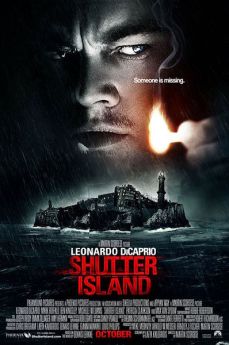 Adapted from a novel by Dennis Lehane (whose work also inspired Mystic River and Gone Baby Gone), the fourth collaboration between Martin Scorsese and Leonardo DiCaprio stars the latter as US Marshal Edward Daniels, who in 1954 is dispatched with this new partner (Mark Ruffalo) to the Ashecliffe facility on the titular island, a prison/hospital for violent, mentally ill criminals run by Dr Cawley (Ben Kingsley) and Dr Naehring (Max von Sydow), where one of the patients has disappeared from her locked room. Her presumed escape seems to be impossible, the staff are remarkably unhelpful, and Daniels has a theory about something much darker and more sinister being conducted on the island… Naturally there’s an almighty twist, which will either keep you guessing or you’ll spot early on so you can brag about how you thought it was very predictable in order to make yourself look big and clever on online comment sections (because that works).
In fairness, the twist — or, at least, key elements of it — are fairly guessable if you’re playing that game. Equally, the film leaves enough doors of possibility open that if you set your heart on one answer (even the right one) then you’re perhaps being a bit blinkered and not indulging in the fun of being strung along by a well-built mystery. And as I always say, most twists are only “predictable” if you predicted the right thing. The mystery certainly kept me engrossed and guessing. I did suspect certain things that turned out to be correct, but there were enough other possibilities floating around that I wasn’t twiddling my thumbs waiting for the reveal.
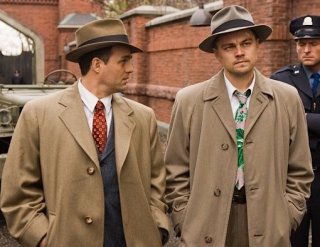 Besides, the film has other delights beyond being an elaborate guessing game. One of the things Lehane set out to do in his novel was write “a gothic”, and Scorsese and co have taken that ball and run with it. It’s overflowing with a fantastic atmosphere: unsettling, creepy, chilling, horror-movie scary when needed (some sequences are properly hair-raising); truly gothic-feeling. Every aspect of filmmaking — the direction, the photography, the editing, the sets and locations, the music — work in harmony to create a coherent mood.
To single out two, it’s gorgeously shot by Robert Richardson. There are a couple of dream sequences that are a show-off for that kind of thing, but it’s true more widely, the storm-bedevilled island presenting a rewardingly overcast palette. There are instances of what one might call dodgy green screen… but, combined with the continuity-troubled editing, I sense it may’ve been a conscious choice to enhance the disquieting sensation (the editing is certainly deliberate — that some commenters seem to believe Scorsese and Thelma Schoonmaker could make so many basic errors is bizarre).
The second is the music, put together by Robbie Robertson. Scorsese and Robertson decided against a traditional score, instead choosing to compile fragments of other works (many of them anachronistic) and chop them up in different ways. It’s probably to Robertson’s credit that it doesn’t feel like a jukebox soundtrack; indeed, I assumed it did have a fully composed score, and really rather liked parts of it.
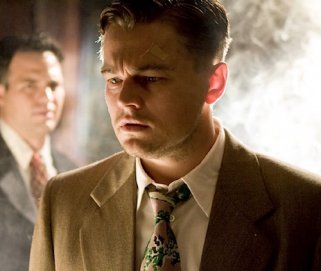 And then, after Scorsese and co have done their best to shred your nerves, in the final half-hour the pathos is immense. Quite without realising it had brought me to that point, I had a tear in my eye. This is in part thanks to some great performances, though you do need to reach the twist to fully appreciate them. Everyone reveals more levels once you know it, and indeed it’s clear a great amount of effort went into ensuring re-watchability — that if you view it again knowing the answers, you can spot things; not clues, per se, but elements in the performance, the design, the staging, that tie in to the reveal.
DiCaprio has the showiest performance, though he never goes too far with it — it’s resolutely plausible at all times. Ruffalo may give the best turn of them all, in retrospect — if you watch it a second time (or, for a quick fix, check out the clip-laden making-of documentaries where they discuss the acting), you can really see what he’s doing. Kingsley, too, who without changing his performance is both threatening and kindly.
Incidentally, reviews criticise the brevity of the documentaries on the Blu-ray, but with over half-an-hour of content they could be considerably worse, and they’re quite focused — I learnt a lot from them. No, you’re not getting a scene-by-scene breakdown like you would in an audio commentary, and there’s minimal detail on the usual moviemaking details, but there’s a solid overview of the film’s themes and how they were translated to the screen.
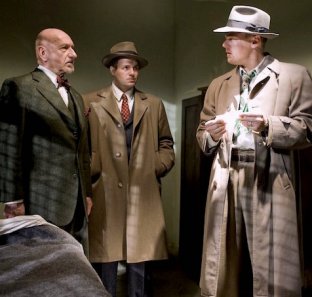 I think the more you let Shutter Island percolate after it’s over, the better it becomes. Solving the mystery and guessing at the twists occupies so much of your time on a first viewing that you almost miss the details in the characters and the world, but they build up nonetheless. There’s layers and depth here, and a plausibly realistic depiction (even according to an expert) of something that’s incredibly hard to depict in fiction. You can view Shutter Island as just an atmospheric gothic mystery chiller, and as that it’s a quality piece of work, but it’s the extra depth that mark it out as, actually, a great movie.
The UK network TV premiere of Shutter Island is on Channel 4 tonight at 9pm.
Shutter Island placed 16th on my list of The 20 Best Films I Saw For the First Time in 2015, which can be read in full here.

 After winning the Best Adapted Screenplay Oscar for Precious, Geoffrey Fletcher wrote and directed this zany hit-women movie. Or possibly he wrote it “in 1996, when everybody and their brother and their sister and their cousin twice-removed was trying to be Quentin Tarantino,” as Matt Zoller Seitz put it in his review for RogerEbert.com.
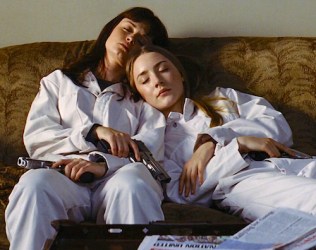 Here, Fletcher either needs to settle on one or the other, or clearly signal his intentions earlier.
 May’s films in full
 #67 Hummingbird (2013), aka Redemption
















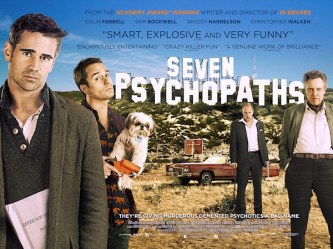 The writer-director and star of
  mainly via references to Farrell’s endeavours to pen a movie called, you guessed it, Seven Psychopaths. One wonders if there’s a hefty dose of autobiography in the writer’s struggle…
 I had absolutely zero intention of ever watching this Sylvester Stallone vehicle (which is not to be confused with John Woo’s
  Said plot all comes down to a final fight, Stallone vs Jason Momoa (of
 This year’s Best Animated Short Oscar winner is a charming little tale of a dog and his owner. I absolutely adored it, though there’s little doubt that it was helped to victory by being produced by Disney and released theatrically alongside Best Animated Film winner
  but nonetheless packs an emotional punch. Viewers have been known to shed a little tear (though fear not, dear reader: it doesn’t come via a
 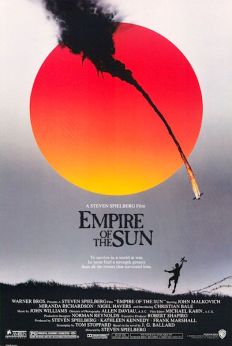 Steven Spielberg’s adaptation of J.G. Ballard’s semi-autobiographical novel stars a 13-year-old Christian Bale as Jim, the son of British ex-pats in China when the Japanese invade during World War II. Separated from his family as they try to flee, Jim encounters born survivor Basie (John Malkovich) and, when they wind up in an internment camp for the rest of the war, a cross-section of the rest of the left-behind. To Jim, a somewhat naïve but capable, confident and determined endurer, the whole thing is a big adventure; we can see the truth, though: that it’s a grim slog of life and death, and most succumb to the latter. The reality of the situation gets to Jim in the end, too… but maybe I’m getting ahead of myself.
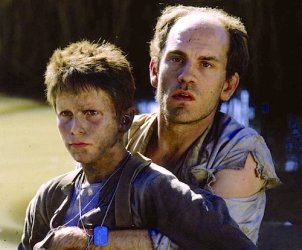 As it stands, the film is a fascinating insight into a less-often-covered aspect of the war. Even in small roles, the quality cast keep it watchable and relatable. Bale’s performance comes in just the right side of annoying — quite an achievement for a character who seems inherently brattish and prone to irritate.
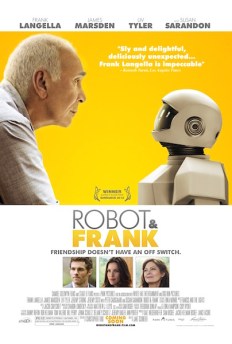 In “the near future”, Frank (Frank Langella) is an ageing jewel thief in denial about his dementia, contenting himself with visits to the local library, which is being taken over by a bunch of yuppies to turn into “the library experience”, and shoplifting from the beauty store that used to be his favourite restaurant. Concerned for his wellbeing, his son (James Marsden) gets him some home help in the form of a humanoid robot (voiced by Peter Sarsgaard). Initially reluctant to accept its presence, when the robot attempts to help by also shoplifting from the beauty store, Frank senses an opportunity…
 (part of a half-realised almost-subplot about robot rights, or something), we not only feel Frank’s (temporary) loss of his friend, but also urge the film to turn the robot back on and get back to what’s really making the movie work. The event serves a purpose (it’s the point Frank realises he’s stopped just putting up with the damn robot and actually come to appreciate its presence), but still.
 Equally, this is of a branch of science-fiction we see all too rarely on the big screen, but which is fertile ground for those wishing to explore it: using fantastical concepts to explore and enlighten our own world. Even if you learn nothing revelatory about old age and the rigours of dementia, the friendship between the robot and Frank is reason enough to enjoy.
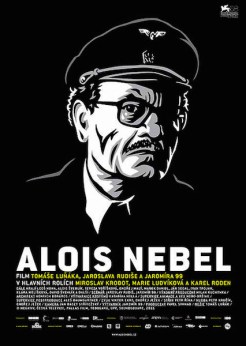 A Czech noir animation, set around Christmas 1989 to the backdrop of the country’s Velvet Revolution. Eponymous character Alois Nebel is a train station guard whose flashbacks to an event at the end of World War 2 see him sectioned, though possibly for other nefarious purposes. Having lost his job, he travels to head office in Prague to try to reclaim it, where he meets a ragtag gang of social misfits. Finally returning home, the mystery of what happened 44 years earlier may be resolved…
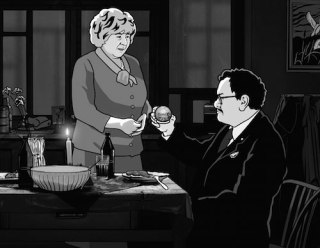 Perhaps the whole film is Deeply Thematic, then? It may be to do with the country moving on and making peace with its past, seen in a microcosm in the actions of Nebel (moving past the flashbacks, having new experiences, finding love, etc) and the people around him (finally getting revenge for something that happened nearly half a century ago). Maybe that’s all more clear if you know the Czech mindset, or the history of the Velvet Revolution. The second post in
 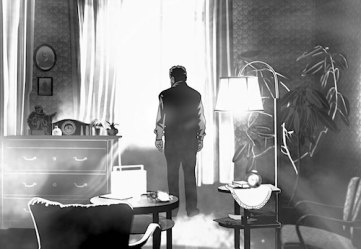 With some attractive black-and-white animation and a sporadically engaging mystery plot, Alois Nebel is far from meritless. However, its firm grounding in a wide spread of Czech history and attitudes suggests it may be best suited to those already well-versed in that country’s history and culture.
 Disney’s ’80s/’90s renaissance more-or-less came to an end with this adaptation of Edgar Rice Burrough’s jungle hero.
 100Films.co.uk