The Worst of 2020

“All of it,” I hear you cry. Yes, ok, ha ha, very funny. Obviously I’m specifically talking about the worst films of 2020.

Regular readers will know I normally include this list in my “best of” post — a sort of counterbalance to any chance of relentless positivity; a reminder that, for all the smooth, there’s always some rough. Maybe we don’t need that kind of thing for 2020, but tradition is tradition. Of course, putting this list in its own post is some kind of break with tradition anyway. But the reason is simple: I’m still working on my “best of” list — it’s a long’un, being 10% of my total viewing, and this being my biggest year ever. That also means the “best of” post will be a plenty long enough read without this little dose of misery in there. So here it is by itself instead.

A quick reminder: I select my best and worst lists from all 264 films I saw for the first time in 2020, not just new releases.


The 5 Worst Films I Saw For the First Time in 2020

As revealed in my stats post, I only handed out two one-star ratings this year. In retrospect, perhaps I was too generous, because to get this “worst of” selection down to just five films I had to leave out several movies that I really, really disliked. Here’s what I pared it down to, in alphabetical order…

Hunter Killer
This throwback-ish techno-thriller really wants to be an exciting submarine adventure in the mould of The Hunt for Red October or Crimson Tide, but it can’t rise above the level of ‘wannabe’. It’s mired with an implausible plot and bizarre casting (Gary Oldman is prominent in the marketing, but he’s barely in the film itself). It just doesn’t have the smarts to successfully emulate the Tom Clancy style it so desperately aspires to.

Lovers Rock
Sight & Sound ranked this the best film of 2020. Its appeal clearly isn’t limited to the arthouse crowd, because Empire ranked it 7th in their list. But I didn’t get it at all. If you told me director Steve McQueen tricked the BBC into paying for an elaborate ’80s theme party by just filming it, sticking some credits on his raw footage, and handing it over with the claim “yeah, this is a real movie — it’s got a screenplay credit and everything”, I’d believe you.

The Man Who Sleeps
Never mind being one of the best films of the year — this was ranked as one of the 250 best films of all time by Letterboxd users. It’s dropped off that list now, but not before I bothered to watch it, unfortunately. Like Lovers Rock, it’s a crushing bore; 70-something minutes spent watching a man do virtually nothing. Un homme qui dort? More like Un homme qui t’endort. [Full review]

Some Beasts
A family’s trip to a remote island goes awry when interpersonal tensions overflow into arguments and abuse. It’s a bit slow and self-consciously arty, but that’s not its real sin. That comes in the final 20 minutes, when it throws in an extreme plot development with no time — nor, I think, inclination — to responsibly engage with its consequences. I’m loathe to call any film “offensive”, but this probably comes the closest of anything I’ve seen. [Full review]

Superman IV: The Quest for Peace
Superman: The Movie still stands up as one of the greatest superhero movies ever made. Its sequels show you how a franchise can die. 2 and 3 are bad enough, but The Quest for Peace is by far the worst — a joyless anti-nuclear polemic, with low production values and iffy storytelling. The only bright spots are the talented returning cast, but they’re better appreciated by just rewatching the first one again. [Full review]


The 26 best films I saw for the first time in 2020.

The Past Christmas on TV

Christmas is properly over now: adults are back at work; kids are back at sch— wait, what? Another lockdown?

Well, the festive season is over either way, isn’t it? So it’s time for my annual look back at some of the TV highlights. Or what was on, anyway.

Doctor Who  Revolution of the Daleks
Doctor Who: Revolution of the DaleksThis year’s Doctor Who special felt like a bid by showrunner Chris Chibnall to keep fans happy. Popular character Captain Jack Harkness is back, properly this time — after a cameo-ish appearance last season, this is his first major role in the show since 2008. And the proper Daleks are back, too — we got a sort-of-Dalek two years ago in the last special, but, after that’s used as the model for an army of “security drones”, the real Daleks turn up to exterminate them, with the 2005-style bronze Daleks making their first full appearance since 2015 (yes, it’s been that long).

Of course, the one thing most fans would really like Chibnall to do is bugger off and let someone better write the show. He hasn’t given us that gift yet, sadly, but at least this is one of his better episodes. It’s suitably romp-ish for a seasonal special, with plenty of running down corridors, exploding enemies, and the odd gag or two. There’s even some political satire, albeit fairly familiar, heavy-handed, and underdeveloped. Well, that’s Chibnall’s whole style, isn’t it? He can’t seem to escape it, or doesn’t want to (there are surely other writers or script editors he could employ to help point him in the right direction).

The other big news this episode is the departure of regulars Ryan (Tosin Cole) and Graham (Bradley Walsh). The latter has been one of the highlights of this era, but is given short shrift here. He barely has anything to do all episode — with a cast this big there’s no time for everyone to get emotional subplots (or what Chibnall thinks passes for them), and here they’re shared between the Doctor, Ryan, and Yaz… plus returning villain Robertson, of all people, who is arguably the episode’s main character. What a shitty way to write out two of your leads. And when it comes down to it, Graham only decides to leave the TARDIS because Ryan wants to go, and he wants to spend time with Ryan. Walsh is a fine actor when given the chance, and he deserved better. Ryan’s reasons for leaving aren’t quite as underwritten, but Cole does most of the heavy lifting, injecting a lot into unspoken moments to convey what Ryan’s feeling. A bit of screenwriting advice I once read asserted that, if you don’t bother to give your characters subtext, a good actor will invent their own regardless — it feels like that’s what’s happened here; or, at least, Cole has expanded well on the thin material Chibnall gave him.

In any other recent era, Revolution of the Daleks (an inaccurate title — it should’ve been called something like Purity of the Daleks, or even Security of the Daleks) would be a middle-of-the-road episode, at best. At present, it’s probably going to be remembered as of the highlights of the era. There are now rumours that Jodie Whittaker is planning to leave the show after her next run, having completed the more-or-less standard three series. Well, the wrong person is going: she’s a fine Doctor let down by poor writing, and we’d all be better off if Chibnall would go and let someone else have a crack at giving Whittaker the material she deserves.

Cinderella  A Comic Relief Pantomime for Christmas
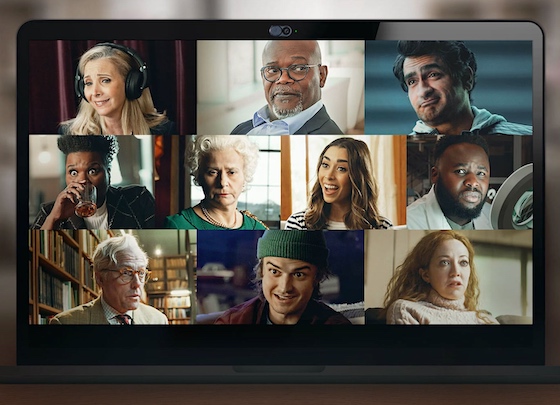
Cinderella: A Comic Relief Pantomime for ChristmasWith theatres mostly shut this November and December due to Covid restrictions, the UK’s traditional pantomime season was a write-off. But where there’s a will there’s a way, and so an all-star bunch of actors and entertainers (including the likes of Olivia Colman, Helena Bonham Carter, Tom Hollander, and Anya Taylor-Joy, plus multiple surprise cameos) came together over Zoom to record this hour-long panto in aid of Comic Relief. (FYI, there are two versions available: a 60-minute one that aired on BBC Two, and a slightly extended 63-minute cut available on iPlayer.)

I imagine it would’ve been easier logistically to film everyone separately (and would we have been any the wiser?), but instead they seem to have wrangled all these stars together on the same Zoom call and performed it in more-or-less real-time. That ‘almost live’ aspect adds an element of unpredictability to proceedings — there’s the occasional tech issue, and a fair degree of corpsing and improvisation. Looking at other reviews, I guess this wasn’t to everyone’s taste (“a poor effort when better productions were hidden online”), but I thought it added to the do-it-yourself charm. It’s not a slick production by a bunch of pros, but has an air of fun similar to a bunch of mates doing their best and having a ball. The end result is very silly, of course, but all in the right spirit.

Roald & Beatrix: The Tail of the Curious Mouse
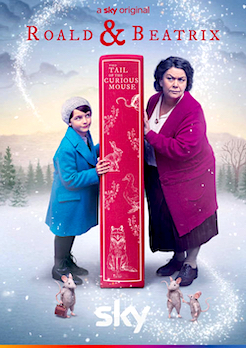
Roald & Beatrix: The Tail of the Curious MouseSky’s big special this year was this based-on-a-true-story tale of when a young, bereaved Roald Dahl went on a trip to meet an ageing Beatrix Potter. Two of the great British children’s authors meeting up at very different points in their lives? It’s a wonder no one’s thought to film this before. Although, based on the evidence here, the meeting was fairly short and inconsequential — that they met is an interesting bit of trivia, not a defining moment in either’s life. To get this anecdote up to barely-feature-length (it’s just over an hour without ads), there’s a lot of expanded backstory on both sides. The Roald side feels like it must be broadly true — it’s all about him (and his mother) struggling to cope with the deaths of both his sister and father — but the Beatrix side feels dreamt up to balance it out — it’s just about her arguing with an agent about the contents of her latest book. Eventually, these threads converge on the eponymous pair’s brief meeting… and that’s the end. It’s a slight and gentle film, but it made for moderately charming Christmas Eve fare.

Comedy Specials
The Goes Wrong Show: The NativityAs usual, the schedules were full of sitcoms and panel shows offering half-hour doses of festivals merriment. Highlights included a fourth Christmassy edition of The Goes Wrong Show, in which the accident-prone Cornley Polytechnic Drama Society turned their attention to The Nativity, with predictably disastrous — and hilarious — results. I get that Goes Wrong is too silly for some, but it hits just the right note for me. A more heartwarming tone was struck by the Ghosts special, in which Mike’s overbearing family coming to stay (clearly not set this Christmas, then). In keeping with the style of the recent second series, their presence prompted flashbacks to the life of horny MP Julian, which, via a series of kinky sex parties, delivered a message about appreciating your family while you can.

Meanwhile, Shakespearean sitcom Upstart Crow very much engaged with the current situation in an episode entitled Lockdown Christmas 1603, which imagined Will and his landlady Kate stuck at home during a plague-induced lockdown. Naturally this was a vehicle for observations about present-day life. It would be too kind to call it satire, but it was moderately amusing. After several years of Christmas specials, Not Going Out instead turned its attention to that other major end-of-December event: New Year. A show already fond of gathering its whole cast in a single location for basically a one-act play was perfect fodder for lockdown-constrained filming, and that’s what we get here: everyone gather for New Year’s Eve. Cue their inevitable sniping at one another — but when that gets too much, the assignation of New Year’s resolutions turns into some kind of group therapy session. It’s quite bold of a sitcom to deconstruct its characters’ defining foibles so explicitly, especially when there are more series on the way. One suspects the life lessons learnt won’t last…

Also watched…
  • Blankety Blank Christmas Special — Yet another revival for the popular gameshow. It was supposedly a one-off, but I suspect it was intended as a backdoor pilot; as it was a ratings hit, I’d wager we’ll see more. I could’ve included it in the comedy roundup, because its main appeal is less as a gameshow and more in the format’s potential for humour.
  • Death to 2020 — I brazenly counted this as a film for statistical reasons, but it’s a TV special really. My full review is here.
  • Have I Got 30 Years for You — An entertaining but also insightful look back at three decades of the predominant news quiz.

    Things to Catch Up On
    Black NarcissusThis Christmas, I have mostly been missing Black Narcissus, the BBC’s three-part re-adaptation of a novel most famous for being adapted into a film by Powell & Pressburger. It’s on iPlayer in UHD now, which is usually an incentive for me to catch it. Talking of three-part re-adaptations, I also didn’t watch Steven Knight’s version of A Christmas Carol — that was on last year, when I didn’t have time for it until after Christmas had passed. “Guess I’ll have to try to remember to watch it next year, then,” I said. Oops.

    Next month… Perhaps Cobra Kai. After loving season one, I deliberately didn’t rush on to season two so that I didn’t burn through it too fast before season three. Then Netflix announced season three for early January, and then moved it forward to January 1st, and now instead of nicely spacing it out I just feel very far behind. Must resist the urge to burn through two seasons now instead…

  • 2020 Statistics

    It’s the first Monday of the new year — glum, right? Well, here’s something to cheer you up: the best part of any and every year — the statistics! Woo! Yeah! Etc!

    For any newbies, or those in need of a refresher, this is where I take all the films I watched for the first time in 2020 (listed here) and analyse all sorts of stuff about them to see if anything interesting shakes out. As this was my biggest year ever, there’s bound to be a few “new highest” whatnots; but where things might get interesting is in categories with percentages and the like — does watching so many more films change the percentage that was directed by women, or the percentage I watched on Netflix, or… well, there are many things to discover.

    I’ll also mention that, as I’m a Pro member of Letterboxd, you can find additional stats there — or, rather, here. I also log shorts, some TV, and all rewatches on there, so any comparable stats (e.g. my most-watched directors) won’t match up; but I don’t think there’s actually much duplication, and they also include a bunch of stuff I don’t (actors, crew members, genres, etc), so it’s worth a look if you just can’t get enough of graphs and numbers.

    Speaking of which, here’s a beautiful load of exactly that…

    I watched 264 new feature films in 2020, my highest ever, pipping 2018 by just three films. After 14 years of doing this blog, my average final total is 152, so 2020 is a 74% increase on that. But it’s also worth noting that my viewing habits have changed a lot since 2015 (the first year I reached 200 films in a year): my average total for 2007–2014 was 111, while for 2015–2020 it’s 208. Of course, even compared to that, 2020 is up 27%.

    Normally I’d now tally up how many extended or altered cuts I watched as a separate number, but with my Rewatchathon now in the game, it doesn’t quite work like that anymore. So, for example, I watched Dune: The Alternative Edition Redux and counted it towards my main list because it was a significantly different cut to whatever I’d watched before; but when I watched and reviewed Mission: Impossible – Fallout in 3D, it was only the 3D that was different, so I counted it towards my Rewatchathon.

    I probably ought to do full-blown stats for my Rewatchathon too — I’ve been running that side challenge for four years now, so it’s about time I gave it equitable standing in these stats — but I still haven’t started collecting the necessary data throughout the year, so… Maybe next year, eh. What I can tell you is that I rewatched 46 films, for a combined total of 310. That’s one behind 2018’s 311, my previous high. (I still haven’t worked out full rewatch numbers for 2007–2016, but from previous research (mentioned in 2017’s stats) I know none of them got higher than 223.)


    NB: I have no rewatch data for 2007 and only incomplete numbers for 2008.

    I also watched 65 short films in 2020, an extraordinary number by my standards: I’d only watched 85 in the preceding 13 years of this blog, so this year alone saw my all-time total increase by over 76%. Last year was my previous best individual year, when I watched 20 shorts; this year represents a more-than-threefold improvement on that. (Short films don’t count towards any of the following stats, except for where they’re explicitly mentioned in the running time one… which is up next…)

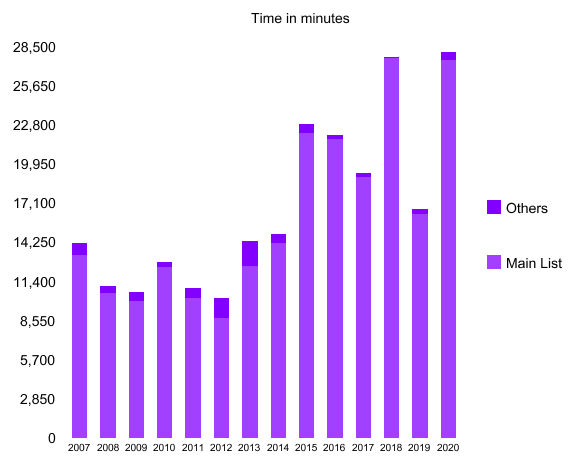
    The total running time of the 264 new features was 459 hours and 41 minutes. That’s actually down slightly on 2018, despite watching three more films — obviously I just watched shorter films on average. Besides, the drop is just 88 minutes, which is 0.3% — barely anything. And if we add in the 65 short films I watched in 2020, the total running time of all my new film viewing is an astonishing 469 hours and 19 minutes — that’s equivalent to 19½ solid days; almost three weeks of nonstop film viewing. It also means 2020 overleaps 2018 by some 391 minutes (6½ hours), aka 1.4%.
    Here’s how that viewing played out across the year, month by month. The dark blue line is new feature films, the pale blue line is my Rewatchathon, and the pale green line is shorts. As you can see, the shorts line goes literally off the chart in November — that’s because I set this graph to be based around the main list number of new films, but I watched a ridiculous 53 short films in November. (Obviously I could’ve adjusted the graph to go up higher, but that wasn’t as fun.) What’s also interesting is if you go back and compare this graph to the two times I’ve done it before, in 2018 and 2019: the shapes certainly aren’t identical, but I feel like they share an overall pattern, i.e. I hit a peak around April/May, and the back end of the year is generally lower.

    Now, the ways in which I watched those films. Attentive readers may have noticed that, earlier this year, I switched from differentiating “streaming” and “download” at the top of my reviews to just listing all such viewing as “digital”. I drafted a paragraph about the whys and wherefores of that change to include in a monthly review, but I’ve not got round to polishing it up enough to include. In short, when I first started using those terms there was a notable difference between them — streaming was low quality and unreliable, downloads were pretty good. Nowadays, it’s the other way round, if anything (for example, Apple TV+ will stream in 4K but only lets you download in 1080p), and sometimes there’s no difference at all (if I download something from iPlayer to watch later, it’s no different than streaming it from iPlayer, quality-wise). So, in that spirit, “digital” now becomes a single category in these stats; but, behind the scenes, I’ve still noted what came from where (much as I do for the different streaming services), so I’ll come to that in a mo.

    With streaming and downloading bundled, it’s no surprise that digital is my most prolific viewing format for the sixth year running, accounting for 195 films, or 73.9% of my viewing — almost three-quarters! A poor show for a physical media advocate, isn’t it? It’s a bit trickier to show you comparisons to previous years, for obvious reasons, but I’ve run the numbers and can tell you it’s their highest combined total ever, besting 61.9% in 2016. In the five-year period 2015–2019, my overall percentage for digital was 52.8%, so this is a definite increase on the norm.
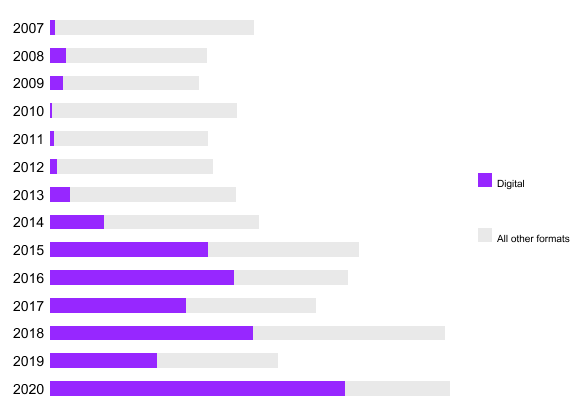
    If we break it down into various formats and services, the winner was Amazon with 60 films (30.8% of digital). If I didn’t count digital as a block, Amazon alone would be my #1 format. It’s back on top after Netflix overtook it last year, but this year Netflix isn’t even second — that goes to downloads, with 47 films (24.1%). In fact, Netflix comes joint third, tied with Now TV on 32 films (16.4%) each. Does make me wonder if I’m wasting that £11.99 a month… In fifth is iPlayer with eight (4.1%), although three of my downloads came from there, so you could argue it’s 11 (5.6%). And this is exactly why I’ve bundled all of this stuff together. Next was AMPLIFY! with seven (3.6%) — also arguably responsible for more, because I got some screeners related to it. Bringing up the rear, on Disney+ I watched five films (2.6%), and I even watched three (1.5%) on YouTube. As a final note, I technically watched zero on Apple TV+ — it’s been a real waste of the free year I got for buying a new Mac, because I had no way to watch it on my TV until recently. I did watch their original movie starring Tom Hanks, Greyhound, though I downloaded it so I could watch on my TV, so again it’s counted under downloads rather. My free year runs until February, so maybe it’ll factor properly in next year’s stats… although most of their original content is series, so I doubt it’ll represent much.

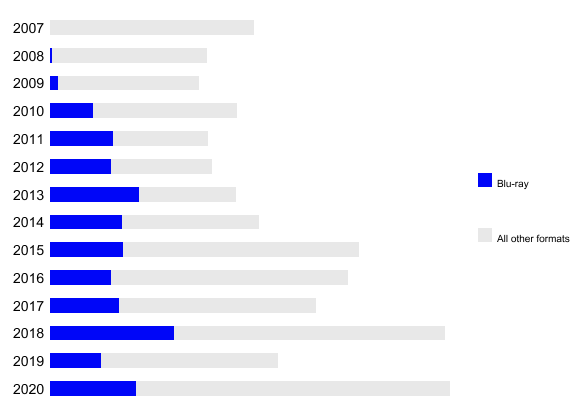
    Alright, onwards! In second place as Blu-ray with 57 films (21.6%). That’s actually its second highest total (behind 82 in 2018), but its lowest percentage of my viewing since 2016 (though last year it was less than 1% higher on 22.5%). It’s a consistent runner-up when, considering how many I buy, it really ought to be a clear first.

    Between them, digital and Blu-ray accounted for an exceptional 95.5% of my viewing this year. The remainder was spread thinly between three more formats. In third place was good old DVD with just six films (2.3%). That’s its lowest total since 2012, back when six films was 5.6% of my viewing.

    Next up, in fourth place, believe it or not, is cinema. Well, I actually only managed four trips to the big screen before the year went haywire, so it still only accounts for 1.5% of my 2020 viewing. I’m not always the greatest cinema goer, but I’ve picked it up in recent years, meaning that’s the least I’ve been since 2015.

    Finally, the once-mighty television. From 2009 to 2012 it was my highest-ranking format. Now, it’s fallen to its lowest ever total, and by some margin: it represents just two films (0.8%) in my 2020 viewing, while its previous poorest performance was 10 films, all the way back in 2008.

    In amongst all that, I watched 13 films in 3D (almost double the measly seven I watched last year) and 40 in 4K — a new high, being a 167% increase on the 15 I watched last year. Together, the two formats made up 20.1% of my viewing — not bad, especially when you consider that a lot of discs on both my 3D and 4K ‘to watch’ piles are films I’ve seen before (but not in that format).

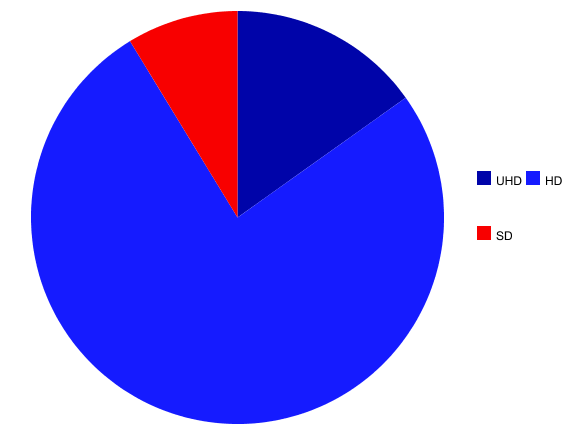
    Which brings me to the UHD vs. HD vs. SD chart. Contributing to the UHD numbers is mostly streams, some 4K Blu-ray discs, and a download or two. HD includes most of the majority of my streams and downloads, Blu-ray discs, cinema trips, and one TV screening. Contributing to SD were the handful of DVDs, plus a few streams and downloads, and the other TV screening. The final tally shows 201 films in HD (76.1%). Add in UHD and that’s a total of 91.3% in HD formats, the first time my viewing has been over 90% HD (2018 came 0.4% short). Of course, that also means it’s the lowest ever for SD — the actual number of films I’m watching in lower definition is surprisingly stable (it was 23 this year, bang-on the average of the last five years), but watching more films overall means the percentage drops.
    Moving on to the age of films, now. 2020 marks the start of a new decade (yeah, okay, it doesn’t really; but most of us will still count films from 2020 as part of the 2020–2029 decade, so tough luck, pedants). That might shake up these stats in the years to come: it’s normally the current decade that tops my chart, and it only took the 2010s until 2012 to take the #1 spot. It was close-ish with the 2000s for the next few years, but it was firmly in the lead by the middle of the decade. Will the 2020s chart a similar course?

    Well, they’re not there yet: for the 9th year running, the most popular decade was the 2010s, with 120 films — though at 45.5% of my viewing, that’s their lowest percentage since 2013. That’s partly because the 2020s have come in strong, bagging second place with 33 films (12.5%). That’s a much better percentage than the 2010s managed in their inaugural year: in 2010, the new decade accounted for just 5.65% of my viewing. Back to 2020 and, together, the past 11 years accounted for 57.95% of my viewing, which is more in line with the 2010s other recent performances.

    In third place we find the ’80s with 24 films (9.1%), a massive increase on their uncommonly poor 2019 (when they accounted for just three films, 1.99%). They’re closely followed by the 2000s on 22 (8.3%) — that’s twice as many as last year, which was also an uncommonly weak year for the decade.

    It’s a drop down to fifth place, where the ’90s are on 14 (5.3% — the exact same as last year). Not far behind is the ’60s on 12 (4.5%), and it’s the same drop to the ’40s on 10 (3.8%), and the same again to the ’70s on eight (3.0%).

    Rounding things out, the ’50s have seven (2.7%); there’s a tie between the 1920s and ’30s on six (2.3%); while the the 1910s bring up the rear with two (0.7%). (No features for the 1900s & earlier, but they were represented this year by one short.)

    From “when” to “where”: countries of production. As always, the USA absolutely dominated this category, having a role in producing 181 films. However, with that being equivalent to 68.6% of my total viewing, it’s actually the USA’s lowest percentage ever, almost four whole points below their next lowest, 72.4% in 2018. In related good news, there were 40 different countries involved in the production of at least one film — that’s my highest number ever, trouncing the 32 from 2015. Some of the more uncommon ones (for my viewing) included Algeria, Lithuania, Malaysia, Serbia, Sudan, Tunisia, and Uganda.

    Back at the top end of the chart, the UK was second, as usual. Its 71 films was its most ever; that’s 26.8%, which has been bettered, but not since 2013. Also making double figures were Canada (21, 7.95%), France (18, 6.8%), China (16, 6.1%), Japan (15, 5.7%), and Germany (14, 5.3%). Next was Spain (7, 2.7%), after which there were four countries tied on four films each, another four on three films, 10 on two films, and the remaining 14 had one film each. Perhaps the most notable omission was New Zealand, leaving 2020 as the first year since 2013 where I didn’t see any films from there. And they’ve had such a good year, too!

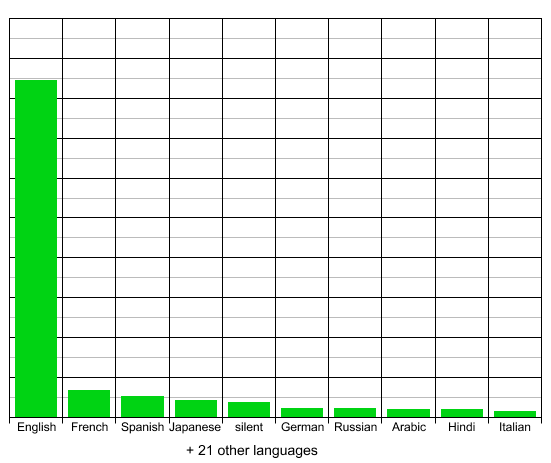
    Such a wide variety of countries must lead to a wider variety of languages spoken, right? Well, this year’s films featured 30 spoken languages (plus ten silent films) — not the most ever, but close: the only year higher was 2017 with 32. Of course, the most dominant was still English, which was spoken in 223 films. At 84.5% of my viewing, that just slips under last year’s 84.8% to be the lowest ever. In distant second was French, spoken in just 18 films (6.8%). The others to make double figures were an uncommonly strong showing for Spanish (14 films, 5.3%) and a weaker than normal year for Japanese (11 films, 4.2%). Also, China was represented across multiple languages: not just Mandarin and Cantonese, but also Hokkien and Shanghainese, plus some films where it was only listed as “Chinese”, unfortunately. Other languages that I don’t think have come up in my viewing before included Aboriginal, Catalan, Samoan, and Swahili.
    A total of 225 directors and 23 directing partnerships appear on 2020’s main list, the most ever for both tallies. No surprise, given I watched my most films ever; but bear in mind that I only watched three fewer films in 2017, but there were 23 fewer directors credited that year. I ought to work this out as a percentage sometime… Also worth noting is that the number of partnerships is slightly complicated by some Disney films that mixed and matched directors. For example, the likes of Clyde Geronimi, Jack Kinney, and Hamilton Luske have multiple credits each, but with a different lineup of co-directors each time. If we lump all the different combos together as “Disney guys”, the number of partnerships drops to 20… but that’s still the most ever.

    The most prolific director this year was Jack Kinney, who worked on all four of those “Disney guy” films (Clyde Geronimi and Hamilton Luske have three credits each). Outside of those, I watched three films directed by Denis Villeneuve — it would’ve been four, as I was intending to catch up on all his early work before Dune came out, but then Dune got delayed. I’ll finish that project in 2021, then. Directors with two films apiece were John G. Avildsen, Michael Bay, Kathryn Bigelow, Danny Boyle, Ruben Fleischer, Keith Fulton & Louis Pepe, Sidney J. Furie, Greta Gerwig, Marielle Heller, Alfred Hitchcock, Paul Leni, James Mangold, Steve McQueen, and Rob Reiner. Plus, if we factor in short films, there was David Lynch (one feature and two shorts), Terry Gilliam (one feature and one short, which is often counted as part of a feature, so…), Jon Watts (one feature and one short), and Jules White (two shorts).

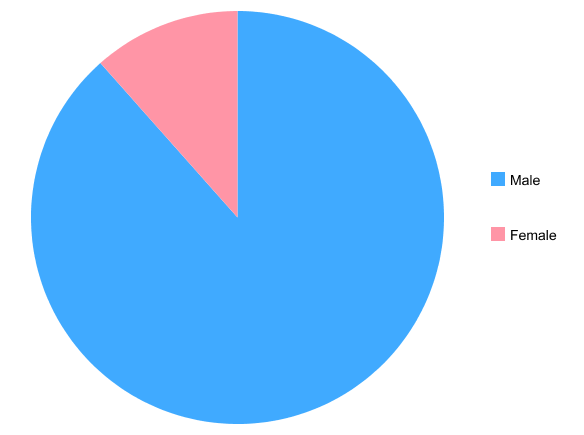
    Since 2015, I’ve specifically charted the number of female directors whose work I’ve watched. After a dip in 2016, it’s been steadily increasing in percentage terms, but last year female directors were still only credited on eleven films — seven as sole director, three as part of a directing partnership with a man. Counting each shared credit as half a film, that represented just 5.63% of my viewing. 2020 sees a significant improvement: this year, there were 33 films with a female director (28 solo, five paired with a man), which equates to 11.44% of my viewing. That’s a big improvement, but still not really good enough. It’s debatable whether the onus should be on me to seek out more films directed by women or on the industry to give more directing gigs to women (ultimately, it’s a bit of both, though I’d argue with more weight on the latter) — either way, hopefully this number will continue to increase in the future, and this graph can begin to look a lot more equitable.
    At the end of my annual “top ten” post, I always include a list of 50 notable films I missed from that year’s releases, and over the years I continue to track my progress at watching those ‘misses’. For the second year in a row, I failed to see at least one film from every previous list; but I did better than last year! In 2019, I only watched a total of 37 films from across 7 of the 12 lists. In 2020, I watched 54 films from 11 of the now-13 lists. That’s no record, but it’s a big improvement. To summarise, I watched one each from 2007, 2008, 2009, 2012, 2014, and 2015; two each from 2010, 2013, and 2017; and eight from 2018. (For completism’s sake: the two years I missed were 2011 and 2016.)

    That just leaves my first year of catching up on 2019’s 50. Of those, I watched 34 — a new record for the best ‘first year’ ever, just beating the previous high of 33 from 2017’s list that I watched in 2018.

    In total, I’ve now seen 476 out of 650 of those ‘missed’ movies. That’s 73.2%, a healthy increase from last year’s 70.3%. That percentage has increased every year for the past decade, from a lowly 25% after 2009 to where it is today. Hopefully it will continue on up in 2021. (As always, my list of 50 for 2020 will be included in my “best & worst” post later this week… month… however long it takes me…)

    At the time of writing, 20 films from my 2020 viewing appear on the IMDb Top 250. 20 from 2020? Neat. However, because that list is ever-changing, the number I have left to see has only gone down by 15, to 30. On the bright side, at this rate I might finally complete the darn thing in 2022 (getting there has only taken, um, all my life so far). Anyway, the current rankings of ones I saw this year range from 30th (Parasite) to 248th (The Battle of Algiers).

    And now, all of a sudden, we’re at the end… almost. To conclude 2020’s statistics, it’s the climax of every review: the scores.

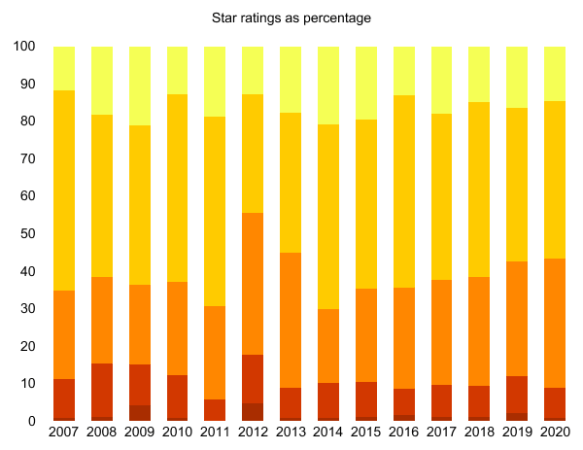
    As always, this includes every new feature film I watched, even those without a review (which, this year, is most of them). That means there are some where I’m still flexible on my exact score — films I’d happily award, say, 3.5 or 4.5 on Letterboxd, but which I insist on rounding up or down to a whole star on here. (I occasionally consider beginning to use half-stars here too, but there’s something kinda fun about having to force every film into one of just five broad groups.) For the sake of completing this stat, I’ve assigned whole-star ratings to every film, but it’s possible I’ll change my mind on some when I finally post their review. That might render this section slightly inaccurate, though, honestly, who’d even notice?

    This year I awarded 39 five-star ratings. That’s exactly the same number as in 2018, which suggests some level of consistency. It also makes this year joint second, with 2015’s 40 still the standout for volume of five-star films. In percentage terms, I gave full marks to 14.8% of films I watched, which is comfortably inside my historical range (which spans from 11.9% to 21.2%).

    The most prolific rating was four stars, given to 111 films. That’s also a second-place finish, though, with the most four-star ratings having been the 122 I awarded in 2018. Nonetheless, four-stars has been the biggest group in 13 out of 14 years of this blog’s history, and this year it encompassed 42.1% of films, which is again somewhere in the middle of a range that spans from 31.5% to 53.3%.

    More noteworthy were the 91 three-star films — the highest number ever (sailing past 2018’s 76) and, at 34.5%, the highest percentage since 2013’s 35.8% and third highest overall (the top spot goes to the only year three-stars outnumbered four-stars, 2012). I have tried to be a bit firmer with my marking in recent years (by reducing the number of times I think “oh, go on, just nudge it up to a 4, then”), so I guess this bears that out.

    At the “bad” of the scale, there were 21 two-star films, which ties with 2018 for the most ever, but at 7.95% is actually one of the lowest results ever (only 2011 and 2016 can boast a lower percentage). Finally, I handed out just two one-star ratings, which equates to 0.8%. These really are my rarest of the rare: I’ve awarded two or fewer in 9 out of 14 years, with the highest total being five (in 2012 — a bad year, clearly).
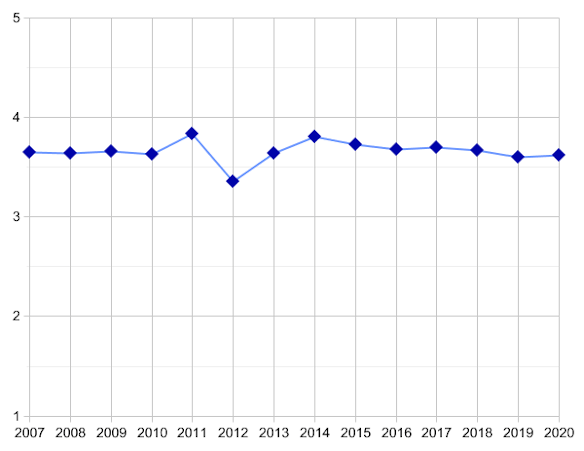
    Finally, the average score for the year — a single figure with which to judge 2020’s quality against other years, for good or ill. The short version is 3.6 out of 5, which is the same as four previous years (including last year), below eight years, and above just one year. If we expand that out a few more decimal places, at 3.621 it’s actually my third-lowest year ever, only besting last year’s 3.604 and 2012’s bizarrely poor 3.352 (I said it was a bad year). That said, we’re talking very small margins here — I’ve had to go to three decimal places to separate the years out; and, at one decimal place, my average score has never gone above 3.8 or below 3.4. So, 2020 was perfectly fine, as this graph shows.
    And that’s that for another year. FYI, this has been my most verbose stats post ever — its word count is even higher than some of my older ones that also included the entire list of films I’d watched that year. So congratulations if you made it to the end! Fun, wasn’t it? (If you’re itching for more, don’t forget my Letterboxd stats for 2020.)


    With all that analysis done, my review of 2020 is nearly at an end. All that remains is my best and worst of the year, coming just as soon as I can work it out and write it up (my long list is pretty darn long this year!)

    2020: The Full List

    As I already revealed in my December monthly review, 2020 is the biggest year of 100 Films ever. That’s thanks to me watching 264 films I’d never seen before, a figure that just pips 2018’s 261. I didn’t quite reach my Rewatchathon goal of revisiting 50 films I’d seen before, but I finished up on a not-unrespectable 46. Combined, their total of 310 is slightly behind 2018’s equivalent 311; but I also watched a frankly extraordinary (by my standards) number of shorts this year — 65, enough to increase my shorts review list by over 76%.

    More on all that in my annual statistics post, which is coming soon. For now, it’s time to look back over the year as a whole with these lovely long lists of all I watched. As well as films of all lengths, there are links to my monthly reviews (which contain all sorts of other goodies, donchaknow) and, further down, a list of my TV reviewing from the past year. To help you find what you’re looking for amongst all that, here’s a nice little set of contents links…


    • As It Happened — 2020’s monthly updates, with a chronological list of my viewing.
    • The List — an alphabetical list of every new film I watched in 2020; plus other stuff.
    • Television — an alphabetical list of every TV programme I reviewed in 2020.
    • Next Time — still to come: actual analysis of last year.

    Below is a graphical representation of my 2020 viewing, month by month. Each of the images links to the relevant monthly review, which contain a chronological list of everything I watched this year. There’s also other exciting stuff in there, like my monthly Arbie awards and what I watched in my Rewatchathon.

    I’ve often felt this section looks a bit unwieldy, so this year I’ve made it half the size. Any opinions on the change (or, indeed, anything else) are always welcome in the comment section.

    And now, the main event…


    An alphabetical list of all the new-to-me films I watched in 2020 (though some series are in chronological order within their alphabetisation). That’s followed by lists of other things I watched this year: alternate versions of films I’d already seen; rewatches I’ve marked out for ‘Guide To’ posts; and short films. Where a title is a link, it goes to my review; when there’s no link, it’s because I haven’t reviewed it yet (that’s probably self-evident…)

    • 127 Hours (2010)
    • 1917 (2019)
    • 3:10 to Yuma Hours (2007)
    • The 40 Year Old Virgin (2005)
    • 6 Underground (2019)
    • 7500 (2019)
    • 8½ (1963)
    • Ad Astra (2019)
    • The Adventures of Ichabod and Mr. Toad (1949)
    • Agatha and the Midnight Murders (2020)
    • Aladdin [3D] (2019)
    • All About Eve (1950)
    • All Is True (2018)
    • All Quiet on the Western Front (1930)
    • American Animals (2018)
    • The American President (1995)
    • An American Werewolf in London (1981)
    • Anand (1971)
    • Andrei Rublev (1966)
    • Aniara (2018)
    • The Armour of God (1986), aka Lung hing foo dai
    • The Assistant (2019)
    • August 32nd on Earth (1998), aka Un 32 août sur terre
    • Bad Boys for Life (2020)
    • Bait (2019)
    • Batman: Under the Red Hood (2010)
    • The Battle of Algiers (1966), aka La battaglia di Algeri
    • A Beautiful Day in the Neighborhood (2019)
    • Belladonna of Sadness (1973), aka Kanashimi no Belladonna
    • Bill & Ted’s Excellent Adventure (1989)
    • Bill & Ted’s Bogus Journey (1991)
    • Birds of Prey (and the Fantabulous Emancipation of One Harley Quinn) (2020)
    • Black Angel (1946)
    • Blind Fury (1989)
    • Blockers (2018)
    • Bloodshot (2020)
    • Booksmart (2019)
    • Borat: Cultural Learnings of America for Make Benefit Glorious Nation of Kazakhstan (2006)
    • Borat Subsequent Moviefilm (2020)
    • The Breakfast Club (1985)
    • Bridge to Terabithia (2007)
    • A Bug’s Life (1998)
    • Burning (2018), aka Beoning
    • Cairo Station (1958), aka Bab el hadid
    • Can You Ever Forgive Me? (2018)
    • Chariots of Fire (1981)
    • Chicken Run (2000)
    • The Children Act (2017)
    • The Christmas Chronicles: Part Two (2020)
    • Clueless (1995)
    • Coded Bias (2020)
    • Color Out of Space (2019)
    • Crawl (2019)
    • Crazy Rich Asians (2018)
    • Crooked House (2017)
    • Dangal (2016)
    • The Dead Don’t Die (2019)
    • Death to 2020 (2020)
    • Dial M for Murder [3D] (1954)
    • The Diamond Arm (1969), aka Brilliantovaya ruka
    • Dick Johnson is Dead (2020)
    • Do the Right Thing (1989)
    • A Dog’s Will (2000), aka O Auto da Compadecida
    • Dolemite Is My Name (2019)
    • Down with Love (2003)
    • Driving Miss Daisy (1989)
    • Dune: The Alternative Edition Redux (1984/2012)
    • E.T. the Extra-Terrestrial (1982)
    • Emma. (2020)
    • End of the Century (2019), aka Fin de siglo
    • Enola Holmes (2020)
    • Entrapment (1999)
    • The Equalizer 2 (2018)
    • Escape Room (2019)
    • Eurovision Song Contest: The Story of Fire Saga (2020)
    • Evil Under the Sun (1982)
    • Extraction (2020)
    • The Face of Fu Manchu (1965)
    • Falling (2020)
    • Fanny and Alexander (1982), aka Fanny och Alexander
    • Fast & Furious: Hobbs & Shaw (2019)
    • Film Stars Don’t Die in Liverpool (2017)
    • Fisherman’s Friends (2019)
    • For the Love of Spock (2016)
    • The French Connection (1971)
    • Fun & Fancy Free (1947)
    • The Gay Divorcee (1934)
    • Gemini Man (2019)
    • Godzilla: King of the Monsters [3D] (2019)
    • The Good Liar (2019)
    • The Goonies (1985)
    • Greyhound (2020)
    • Guinevere (1994)
    • Hamilton (2020)
    • Harakiri (1962), aka Seppuku
    • He Dreams of Giants (2019)
    • The Head Hunter (2018)
    • Hotel Artemis (2018)
    • Der Hund von Baskerville (1914), aka The Hound of the Baskervilles
    • Hunter Killer (2018)
    • Hustlers (2019)
    • I Am a Fugitive from a Chain Gang (1932)
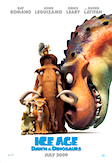
    • Ice Age: Dawn of the Dinosaurs [3D] (2009)
    • Ice Age: Continental Drift [3D] (2012)
    • Ikiru (1952), aka Living
    • An Impossible Project (2020)
    • In the Mood for Love (2000)
    • Influence (2020)
    • Intolerable Cruelty (2003)
    • The Invisible Guest (2016), aka Contratiempo
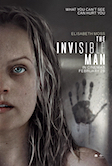
    • The Invisible Man (2020)
    • The Ipcress File (1965)
    • It Chapter Two (2019)
    • Jingle Jangle: A Christmas Journey (2020)
    • Johnny English Strikes Again (2018)
    • Joker (2019)
    • Judgment at Nuremberg (1961)
    • Jumanji: The Next Level (2019)
    • K-19: The Widowmaker (2002)
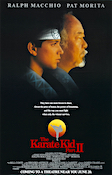
    • The Karate Kid Part II (1986)
    • The Karate Kid Part III (1989)
    • The Kid (1921/1972)
    • Klaus (2019)
    • Knives Out (2019)
    • Lady Bird (2017)
    • The Lady Vanishes (1938)
    • Lancelot du Lac (1974), aka Lancelot of the Lake
    • Laputa: Castle in the Sky (1986), aka Tenkû no shiro Rapyuta
    • The Last Black Man in San Francisco (2019)
    • Last Chance Harvey (2008)
    • Late Night (2018)
    • Le Mans ’66 (2019), aka Ford v Ferrari
    • The LEGO Movie 2: The Second Part [3D] (2019)
    • The Lie (2018)
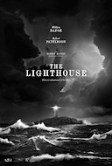
    • The Lighthouse (2019)
    • Little Women (2019)
    • Long Day’s Journey Into Night [3D] (2018), aka Di Qiu Zui Hou De Ye Wan
    • Look, Up in the Sky! The Amazing Story of Superman (2006)
    • The Looking Glass War (1970)
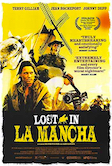
    • Lost in La Mancha (2002)
    • Love on a Leash (2011)
    • Lovers Rock (2020), aka Small Axe: Lovers Rock
    • The Lunchbox (2013)
    • Luxor (2020)
    • The Mad Magician [3D] (1954)
    • Maelström (2000)
    • Make Mine Music (1946)
    • Mamma Mia! Here We Go Again (2018)
    • A Man for All Seasons (1966)
    • Man on Wire (2008)
    • The Man Who Killed Don Quixote (2018)
    • The Man Who Laughs (1928)
    • The Man Who Shot Liberty Valance (1962)
    • The Man Who Sleeps (1974), aka Un homme qui dort
    • Mangrove (2020), aka Small Axe: Mangrove
    • Marriage Story (2019)
    • Mary Poppins Returns (2018)
    • The Mask of Fu Manchu (1932)
    • Melody Time (1948)
    • Men in Black: International (2019)
    • Millennium Actress (2001), aka Sennen joyû
    • Minions [3D] (2015)
    • Misbehaviour (2020)
    • Misery (1990)
    • Miss Fisher and the Crypt of Tears (2020)
    • Missing Link (2019)
    • The Mole Agent (2020)
    • Monty Python’s The Meaning of Life (1983)
    • Mr. Blandings Builds His Dream House (1948)
    • Much Ado About Nothing (2012)
    • My Favourite Wife (1940)
    • My Mexican Bretzel (2019)
    • The Mystery of the Rocks of Kador (1912), aka Le mystère des roches de Kador
    • Near Dark (1987)
    • Never Rarely Sometimes Always (2020)
    • Never Surrender: A Galaxy Quest Documentary (2019)
    • Never Too Young to Die (1986)
    • The Next Karate Kid (1994)
    • The Nightingale (2018)
    • The Old Dark House (1932)
    • The Old Guard (2020)
    • One Cut of the Dead (2017), aka Kamera wo tomeruna!
    • Ordet (1955), aka The Word
    • Out of Africa (1985)
    • Palm Springs (2020)
    • Parasite (2019), aka Gisaengchung
    • Paris When It Sizzles (1964)
    • Patrick (2019), aka De Patrick
    • The Peanut Butter Falcon (2019)
    • Pearl Harbor (2001)
    • Phase IV (1974)
    • Philomena (2013)
    • The Platform (2019), aka El hoyo
    • Polytechnique (2009)
    • Power of Grayskull: The Definitive History of He-Man and the Masters of the Universe (2017)
    • Puzzle (2018)
    • Quartet (2012)
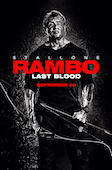
    • Rambo: Last Blood (2019)
    • Rang De Basanti (2006)
    • Ready or Not (2019)
    • Red Joan (2018)
    • The Rhythm Section (2020)
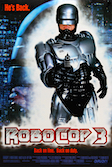
    • RoboCop 3 (1993)
    • Robolove (2019)
    • Rocketman (2019)
    • Rose Plays Julie (2019)
    • Safety Last! (1923)
    • Scooby-Doo 2: Monsters Unleashed (2004)
    • Scooby-Doo! & Batman: The Brave and the Bold (2018)
    • The Scorpion King (2002)
    • The Secret Life of Pets 2 [3D] (2019)
    • Shadowlands (1993)
    • A Shaun the Sheep Movie: Farmageddon (2019)
    • Shazam! [3D] (2019)
    • The Sheik (1921)
    • Shoplifters (2018), aka Manbiki kazoku
    • The Show Must Go On: The Queen + Adam Lambert Story (2019)
    • Showman: The Life of John Nathan-Turner (2019)
    • Showrunners (2014), aka Showrunners: The Art of Running a TV Show
    • The Sky’s the Limit (1943)
    • So Dark the Night (1946)
    • Some Beasts (2019), aka Algunas Bestias
    • The Son of the Sheik (1926)
    • Soul (2020)
    • Spaceship Earth (2020)
    • Spider-Man: Far from Home [3D] (2019)
    • Split Second (1992)
    • A Star Is Born (2018)
    • Stop Making Sense (1984)
    • Stuber (2019)
    • Superman IV: The Quest for Peace (1987)
    • Tag (2018)
    • Tenet (2020)
    • Terminator: Dark Fate (2019)
    • The Thin Red Line (1998)
    • The Three Caballeros (1944)
    • Tim’s Vermeer (2013)
    • Tolkien (2019)
    • Tomb Raider [3D] (2018)
    • Top Secret! (1984)
    • The Two Popes (2019)
    • Ugetsu Monogatari (1953)
    • Uncut Gems (2019)
    • Under the Skin (2013)
    • Us (2019)
    • Vampires Suck (2010)
    • The Vast of Night (2019)
    • Venom (2018)
    • Vice (2018)
    • The Viking Queen (1967)
    • Waking Ned (1998)
    • Waxworks (1924), aka Das Wachsfigurenkabinett
    • The Wedding Guest (2018)
    • Who Killed Captain Alex? (2010)
    • Without a Clue (1988)
    • The Wolf’s Call (2019), aka Le chant du loup
    • Won’t You Be My Neighbor? (2018)
    • Yes, God, Yes (2019)
    • Yesterday (2019)
    • You Will Die at Twenty (2019)
    • Zatoichi in Desperation (1972), aka Shin Zatôichi monogatari: Oreta tsue
    • Zero Charisma (2013)
    • Zombieland: Double Tap (2019)
    Alternate Versions
    The 100 Films Guide To…
    Shorts
    • Adnan (2020)
    • Alan, the Infinite (2020)
    • Anoraks (2020)
    • Appreciation (2019)
    • Befriend to Defend (2019)
    • Blue Passport (2020)
    • Booklovers (2020)
    • Chumbak (2019)
    • Clean (2020)
    • Closed Until Further Notice (2020)
    • The Crimson Permanent Assurance (1983)
    • The Dancing Pig (1907), aka Le cochon danseur
    • David Lynch Cooks Quinoa (2007)
    • The Day of the Coyote (2020)
    • DC Showcase: Jonah Hex (2010)
    • Destructors (2020)
    • The Devil’s Harmony (2019)
    • Embedded (2020)
    • The Escape (2016)
    • Flush Lou (2020)
    • Frankenstein (1910)
    • Frayed Edges (2020)
    • The Fruit Fix (2020)
    • Fuel (2020)
    • Guardians of Ua Huka (2020)
    • Hold (2020)
    • Home (2020)
    • Interstice (2019), aka Mellanrum
    • Keratin (2020)
    • The Last Video Store (2020)
    • Life in Brighton: An Artist’s Perspective (2020)
    • Man-Spider (2019)
    • A Map of the World (2020)
    • The Monkeys on Our Backs (2020)
    • My Dad’s Name Was Huw. He Was an Alchoholic Poet. (2019)
    • My Life, My Voice (2020)
    • Nelly (2020)
    • Nut Pops (2019)
    • One Piece of the Puzzle (2020)
    • Our Song (2020)
    • Pardon My Backfire [3D] (1953)
    • Peter’s To-Do List (2019)
    • Players (2020)
    • Quiescent (2018), aka Anvew
    • Quiet on Set (2020)
    • Reconnected (2020)
    • Shuttlecock (2019)
    • Siren (2020)
    • Slow Burn (2020)
    • So Far (2020)
    • Spooks! [3D] (1953)
    • A Spring in Endless Bloom (2020)
    • The Starey Bampire (2019)
    • Sticker (2019)
    • Stitch (2020)
    • The Stunt Double (2020)
    • Swivel (2020)
    • Talia (2020)
    • Time and Tide (2020)
    • Under the Full Moon (2020)
    • Water Baby (2019)
    • We Farmed a Lot of Acres (2020)
    • What Did Jack Do? (2017)
    • The Wick (2020)
    • Window (2019)
    1917

    The Adventures of Ichabod and Mr. Toad

    Anand

    Bait

    Bill & Ted’s Bogus Journey

    Borat Subsequent Moviefilm

    Chicken Run

    Crazy Rich Asians

    Do the Right Thing

    Enola Holmes

    The Face of Fu Manchu

    Fanny and Alexander

    Greyhound

    Harakiri

    Ice Age: Dawn of the Dinosaurs

    The Invisible Man

    The Karate Kid Part II

    The Lady Vanishes

    The Lighthouse

    Lost in La Mancha

    The Lunchbox

    Small Axe: Mangrove

    Millennium Actress

    Monty Python’s The Meaning of Life

    Never Rarely Sometimes Always

    Ordet

    Patrick

    Rambo: Last Blood

    RoboCop 3

    Shadowlands

    Showrunners

    The Son of the Sheik

    Split Second

    Tomb Raider

    Under the Skin

    The Wedding Guest

    Zatoichi in Desperation

    Zero Charisma

    The Avengers

    Alan the Infinite

    The Crimson Permanent Assurance

    The Escape

    Interstice, aka Mellanrum

    My Life, My Voice

    Pardon My Backfire

    Shuttlecock

    The Stunt Double

    What Did Jack Do?

    .

    As well as all those films, I also covered many TV programmes in my monthly(-ish) review columns. Just listing those individual posts would be meaningless, so instead here’s an alphabetical breakdown of what I covered, each with appropriate link(s).


    Get ready for the best bit of the entire year: it’s the statistics!

    My Most-Read Posts of 2020

    For the first time since I moved my blog to WordPress, my number of views went down this year. *sob* Partly that’s because 2019 had one exceptionally large month (when people flooded in from IMDb to read my thoughts on Game of Thrones’ final season), but it was more than that, because 2020 didn’t even reach the same level as 2018 — though it was close in the end, coming just 0.2% short.

    As for individual posts, this may technically be a film blog, but since 2017 my most-read chart has been dominated by TV reviews. That was the case once again in 2020 — well, if it was going to happen any year, it would be one where we were mostly stuck at home. Despite that, a film review did break into my overall top five… although that was a direct-to-Netflix movie, so some would argue it’s TV anyway.

    Nonetheless, here I once again present two top fives: one for TV, one for film. If you want to know my overall top five new posts, the #1 film slots between #2 and #3 on the TV list. Also of note: the image at the top of this post is accurate, so the top two TV posts were far out ahead of anything else. Why? Who ever knows.

    My Top 5 Most-Viewed New TV Posts in 2020

    5) The Past Month on TV #61
    including Archer season 7, The Crown season 2, Derren Brown: 20 Years of Mind Control, The Great British Bake Off series 10, Hannah Gadsby: Nanette, Jonathan Creek series 3–4 + specials, Lucifer season 5 episodes 1–8 (aka season 5A), Red Dwarf: The First Three Million Years, The Rookie season 2 episodes 1–17, and the best of The Twilight Zone #9.

    4) The Past Month on TV #59
    including Daniel Sloss: X, Doctor Who: The Time Meddler, Elementary season 6 episodes 1–14, what passed for Eurovision 2020, The Great British Bake Off series 9, Jonathan Creek series 1, Lucifer season 4, the RSC’s Macbeth with Christopher Eccleston, The Rookie season 1 episodes 16–20, Star Trek: Picard season 1 episode 8, and the worst of The Twilight Zone #3.

    3) The Past Month on TV #55
    including Doctor Who series 12 episodes 3–5, The Goes Wrong Show series 1 episodes 3–5, The Great British Bake Off series 1 episodes 1–3, His Dark Materials series 1, a few episodes of Star Trek: The Next Generation, Star Trek: Picard season 1 episode 1, the best of The Twilight Zone #6, and the Twin Peaks pilot and season 3 episode 8 in UHD.

    2) The Past Christmas on TV 2019
    including Criminal: United Kingdom season 1, Doctor Who series 12 episodes 1–2, Dracula, the Gavin & Stacey Christmas special, The Goes Wrong Show series 1 episodes 1–2, In Search of Dracula with Mark Gatiss, Miranda: My Such Fun Celebration, and Vienna Blood series 1.

    1) The Past Month on TV #56
    including the 92nd Academy Awards, the British Academy Film Awards 2020, Death in Paradise series 9 episodes 3–8, Doctor Who series 12 episodes 6–10, Flesh and Blood series 1, The Goes Wrong Show series 1 episode 6, Good Omens, The Good Place season 3, Lucifer season 3 episodes 16–24, McDonald & Dodds episode 1, My Dad Wrote a Porno, The Rookie season 1 episodes 1–6, Star Trek: Picard season 1 episodes 2–3, and the best of The Twilight Zone #7. Whew! No wonder it topped the list with all that variety.

    My Top 5 Most-Viewed New Film Posts in 2020

    Some might say this is also a list dominated by “TV”, because Netflix original movies make up three of this top five, and another was a Disney+ premiere. There’s just one theatrical release here — but then, 2020 was hardly a year in which theatrical releases were dominant anywhere.

    5) Hamilton
    The filmed version of the cultural phenomenon, performed by the original Broadway cast in its original staging. Is it a film? Is it a documentary? Is it just a filmed concert and so should we consider that its own form at this point? Whatever your opinion, this was a highly anticipated event — brought forward from its intended October 2021 theatrical release due to the pandemic — that helped cram even more subscribers onto Disney+.

    4) The Old Guard
    One of Netflix’s many attempts to kickstart an action franchise, this one starred and was directed by women, helping it tap into the general cultural zeitgeist and therefore generating conversation — and clicks.

    3) 1917
    An actual honest-to-God theatrical release! Remember those? A popular hit as well as an awards frontrunner, so no surprise it attracted plenty of clicks considering I posted my review while it was on the circuit.

    2) Extraction
    Another big Netflix franchise starter (this one already has a sequel in the works). It was reportedly Netflix’s biggest movie ever (back in July — I don’t know if that’s changed since), so it’s no surprise people wanted to read about it.

    1) Eurovision Song Contest: The Story of Fire Saga
    Mixed reviews greeted this attempt to spoof the unspoofable, as some Americans attempted to take on the singular phenomenon that is the Eurovision Song Contest. It wasn’t a resounding success, but with some fab performances (the always wonderful Rachel McAdams and Dan Stevens), surprisingly good songs (there’s Oscar buzz for Husavik), and even a catchphrase or two (“SING JAJA DING DONG”), this was kind of a breakout hit.

    The “Thank God That’s Over” Monthly Review of December 2020

    Yes, the rumours are true: 2020 is finally over! Though if you think 2021 is going to be significantly better, you haven’t been watching the news. But hey, there’s 12 whole months of it to come — maybe it’ll improve, like, halfway through?

    Anyway, we’ll leave worries of the future for later. Right now, it’s time to kick off my annual look back at the year just gone. Yeah, I’m going to spend the next week or so reliving 2020 — but don’t worry, it’ll be limited to my film viewing (like, y’know, it always is).

    The headline news is my final total: 264 feature films I’d never seen before, which sneaks past 2018’s tally of 261 to be my biggest year ever! Plus, as I wrote about earlier this month, if you combine that with my Rewatchathon total (46) then I’ve passed 300 features once again. Throw in my shorts too (a whopping 65 this year) and I can claim a final total of 375 films. Whew!

    More lists and stats and whatnot about that in the days to come. First: focusing in on the last twelfth of the year, aka December.


    #255 Klaus (2019)
    #256 Agatha and the Midnight Murders (2020)
    #257 Lovers Rock (2020), aka Small Axe: Lovers Rock
    #258 The Christmas Chronicles: Part Two (2020)
    #259 Soul (2020)
    #260 Tenet (2020)
    #261 Power of Grayskull: The Definitive History of He-Man and the Masters of the Universe (2017)
    #262 Under the Skin (2013)
    #263 Minions 3D (2015)
    #264 Death to 2020 (2020)
    Soul

    Tenet

    .


    • I watched 10 new feature films in December.
    • On the downside, that makes it my smallest month of 2020. On the bright side, it means I’ve achieved my goal of watching at least ten new films every month (something I failed in 2019).
    • It’s below my December average, though (previously 11.2, now 11.1).
    • It means the monthly average for 2020 is finalised at exactly 22.0. That’s down from 23.1 at the end of last month, but is my highest yearly total ever (it has to be — I’ve watched more films than ever; that’s how it works).
    • But it does mean December remains the only month of the year never to have reached the 20-film mark. Maybe next year.
    • Talking of long-term goals, for a while now I’ve been tracking the dates on which I’ve never watched a film during the lifetime of this blog. You’d think after doing it for 14 days I’d’ve hit every date at least once, but that’s not the case: still missing were January 5th, May 23rd, and December 22nd. Despite knowing about those for a couple of years, I keep forgetting at the right time and so miss them; and this year I again forgot all about the December date until after the fact… but I’d happened to watch a film that evening anyway. Hurrah! Maybe I’ll finally hit the other two in 2021.
    • This month’s Blindspot film was arty sci-fi Under the Skin. That means I’ve completed the challenge, although I didn’t get through all my overflow films, sadly.
    • From last month’s “failures” I watched The Christmas Chronicles 2 and Lovers Rock.


    The 67th Monthly Arbitrary Awards

    Favourite Film of the Month
    A couple of very enjoyable films this month, not least the latest from Pixar and Christopher Nolan (yes, I’m in the “Tenet was good” camp), but, in a Christmassy spirit, I’m giving this to the gorgeously-animated Netflix original, Klaus.

    Least Favourite Film of the Month
    For some it was the film of the year (it topped Sight & Sound’s poll and placed in Empire’s top ten, among others), but I thought the second Small Axe film, Lovers Rock, was a dull slog.

    Best Double Entendre of the Month
    Patting myself on the back for this one, but I was particularly pleased with my Letterboxd description of Under the Skin as Scarlett Johansson’s Twin Peaks — because it’s abstruse and meditative sci-fi like David Lynch’s TV series, and also boobies.
    Best Re-use of Music of the Month
    There are many reasons to look down on Minions, but the Minionisation of various classic pop and rock tunes is surprisingly entertaining.

    The Audience Award for Most-Viewed New Post of the Month
    For the fifth and final time this year, my most-read post was my monthly TV column. (The highest film-related post was my Christmas review roundup.)


    I didn’t find as much time for film viewing in December as I would’ve liked; and so, as the month drew to an end, I decided to prioritise my goal of watching a minimum of ten new films a month over my Rewatchathon target. That means I’ve failed to reach 50 rewatches for a second year in a row — but last year I only made it to 29, so at least I got a lot closer this time…

    #45 Die Hard (1988)
    #46 Presto (2018)

    I watched Die Hard on Christmas Eve Eve — because, y’know, it’s a Christmas movie. It’s still a great film, whatever time of year you choose to watch it.

    As for Presto, it is, of course, a short film, so I probably shouldn’t count it as a whole number (I don’t on my main list). But, hey, I make the rules around here, and as my chances of making #50 by honest means didn’t look great, I wanted to count everything I could. Besides, the point of the Rewatchathon is to make me rewatch stuff, and I’ve been meaning to rewatch Presto for years.


    If I’d found the time to watch more films this month, I would have loved to make space for David Fincher’s latest, Mank, on Netflix; and the new animation from Cartoon Saloon, Wolfwalkers, on Apple TV+. They’re top of my watchlist for January.

    Other new releases for December included the surprisingly-controversial Wonder Woman 1984 (its UK digital release is in a couple of weeks, but I’ll probably just wait for the Blu-ray); and, all on Netflix, awards contender Ma Rainey’s Black Bottom, George Clooney sci-fi The Midnight Sky, lambasted musical The Prom, and Robert Rodriguez’s surprise spinoff from The Adventures of Sharkboy and Lavagirl, We Can Be Heroes. Steve McQueen’s Small Axe series finished up on the BBC and iPlayer, with the fourth and fifth episodes/films, Alex Wheatle and Education. Meanwhile, the best Amazon could manage was A Christmas Gift for Bob, an unexpected sequel to that movie about a cat or whatever (I dunno, I’m not a cat person).

    In terms of not-new streaming additions, those catching my eye on Netflix included Jessica Chastain actioner Ava, Saoirse Ronan and Margot Robbie facing off in Mary Queen of Scots, Hugh Jackman political drama The Front Runner, and Robert Zemeckis’s Welcome to Marwen; plus Wild Rose, though that’s just jumped over from Amazon Prime. Netflix also added a bunch of stuff on December 31st, but I haven’t had time to go through that lot yet, so I’ll roll them into next month’s failures (or maybe I’ll even watch th— hahaha, no I won’t). Amazon added Greta Gerwig in Frances Ha, while iPlayer has a speedy debut for Monsoon starring Henry Golding.

    Finally, I had another ridiculous haul of new Blu-rays this month. Highlights include Arrow’s 4K releases of Cinema Paradiso, Crash (both now contenders for 2021’s Blindspot list), and Tremors, plus their release of Japanese zombie actioner Versus; Indicator’s new edition of Roadgames (which I loved when I watched the Australian Blu-ray back in 2016), plus neo-noir Devil in a Blue Dress; a pair of Samuel Fuller titles from Eureka, Hell and High Water and House of Bamboo; and All The Anime’s 4K release of Makoto Shinkai’s Weathering With You, plus their new edition of his 5 Centimeters Per Second. If that wasn’t enough, there were 13 (yes, 13) more titles, mostly from sales — including the BFI’s 18-film Werner Herzog box set. Now I just need to get better at actually watching this stuff…


    A new year begins. But first, there’s a lot more looking back at 2020 to be done. Stay tuned.

    Death to 2020 (2020)

    2020 #264
    Al Campbell & Alice Mathias | 71 mins | digital (UHD) | 2:1 | USA & UK / English | 15

    Death to 2020

    As if the line between film and TV wasn’t becoming blurred enough already, 2020 has torn it to shreds. It’s now basically up to streamers whether they brand something as “a film” or a “special” or whatever (some individual websites might insist on labelling any Netflix original movie as “TV”, but I’m not sure anyone’s listening). This feature-length one-off from the makers of Black Mirror is, officially, “a Netflix Original Comedy Event” — so it’s a TV special, really, isn’t it? I probably shouldn’t be counting it as a film. Oh, but who cares?

    Despite the lack of familiar title format, Death to 2020 very much follows in the footsteps of the Wipe series of year-in-reviews specials Charlie Brooker used to make for the BBC. It’s both documentary and mockumentary: it recaps the real-life events of the year, with minimal diversion into satirical fantasy, but archly commented on by an array of actors portraying fake experts. The Netflix budget means some properly big names are involved: Samuel L. Jackson, Hugh Grant, Lisa Kudrow… the list goes on. The prime absentee is Brooker himself, only piping up occasionally as an offscreen interviewer.

    Perhaps unsurprisingly, it focuses on the major events of the year from a UK/US perspective — other countries (like Australia, China, and… um… I think that’s it) only enter the equation when events there affect everyone else (like, y’know, starting a global pandemic). That makes sense given who made it, but maybe less so for Netflix as a global company. But then, not everything needs to appeal to everyone. I’m sure if they had a French satirist on the books, they’d be producing a Franco-centric special.

    A cast of dozens!

    It’s to Death to 2020’s disadvantage that, this year, we’ve all been paying more attention to the news than ever. That might seem like a benefit — a knowledgeable, informed audience means you can cut straight to the jokes with minimal prompting — but I think instead it means we’ve already heard most of the humour. We’ve spent all year making these gags ourselves, trying to alleviate the doom-laden (inter)national mood. The other, related, problem lies in trying to appeal to an international audience. In trying to keep things accessible for both sides of the pond, Brooker and co avoid getting into the weeds of local politics. Brexit is briefly mentioned rather than deconstructed; US politics is limited to the election. Specificities of lockdown life are dodged almost entirely. Trying to stick to broad, globally-familiar topics seems to keep the humour similarly generalised.

    Nonetheless, it starts out quite funny, even if they’re mostly riffs we’ve heard before. But around the time it hits the killing of George Floyd, the jokes dry up. If you’re not a racist dickhead, there’s little funny about the organisations that supposedly protect us instead arbitrarily murdering people. Death to 2020 knows this and picks its targets carefully, but it seems to kill the humour nonetheless — the jokes continue, but the humour in them dries up.

    It turns out the biggest problem isn’t unoriginality or too broad a target audience, but rather that 2020 was such a shitshow that it’s just no fun to be reminded of it, even in an intentionally comedic context. It doesn’t help that we’re facing a 2021 that promises at least several months of being equally as bad. Maybe one day we’ll be able to look back on all this and laugh, but just as likely we’ll prefer to forget.

    2 out of 5

    Happy New Year, dear readers! It can’t actually be any worse… right?

    The Past Month on TV #64

    Christmas TV is already underway in the UK (I believe the first things that were explicitly a “Christmas special” aired over the weekend) — so, before my usual Christmassy roundup, here’s one final regular TV column for 2020.

    His Dark Materials  Series 2
    His Dark Materials series 2

    In a world where innumerable film and TV productions have been affected by Covid and its associated lockdowns, His Dark Materials got lucky: by hurrying on to produce their second series before the young cast aged too much, they’d virtually wrapped filming before the first UK lockdown hit. The only casualty: a standalone episode detailing what one character was up to during the rest of the season. That’s frustrating for fans (as I understand it, the events intended for that episode aren’t actually in the original novel, but were dreamt up afresh by the show’s writers in collaboration with original author Philip Pullman), and if you know there’s an episode missing then you can spot its absence (there are some scenes and references in the season finale that I wager would make more sense had we seen the missing episode), but the series mostly survives without it.

    So, picking up from series one’s massive cliffhanger, this second run adapts the trilogy’s second novel, The Subtle Knife — a mysterious item of arguably even greater value than the Golden Compass that (sort of) lends its name to (the US version of) book one. Despite tackling a whole novel, I’ve seen some describe this season as boring, with too little incident. I guess that’s the advantage of waiting until the end and watching it all in just six days: I was suitably engrossed, and it moved, if not at a fair old lick, then certainly at a reasonable pace. But it’s not a show that’s always big on action — instead, it’s big on ideas, with underpinning concepts on the boundaries of science and fantasy that have to be explained and understood by the viewer. Nonetheless, there’s still plenty of conflict between our heroes and villains; and while it may seem clear who’s on which side, there are enough shades of grey, and emerging uncertainties about who’s really got the right motives, to keep it pleasantly complicated, engrossing, and believable.

    I’m sure I once read that the original plan was to adapt the trilogy of novels over five seasons — one for book one, two each for books two and three. Now, they’ve reached the point where book two has been done in a single season, and now book three is plotted out to be completed in one more run of eight episodes too. But, shockingly, it hasn’t been commissioned yet. I bloody hope the BBC (and HBO) do the right thing, because I think overall this is an excellent show, with still-timely issues of freedom and control, that merits completion on screen. And, simply, I’m excitedly looking forward to the next (final) series already.

    Update: This afternoon, while I was too busy writing this post to notice the news, the BBC and HBO officially recommissioned His Dark Materials for its third and final series. Hurrah!

    The Good Place  Season 4
    The Good Place season 4The Good Place ended forever ago, right? Well, the series finale originally aired back in January, so… this year, yeah, forever ago.

    As with every previous season of the show, this one noodles around in a new setup for the first half-dozen-or-so episodes, before swinging into one long multi-part story through to the end of the season — and, in this case, the end of the series. In that respect, it’s always been kind of an odd show, structurally, and season four is no different. Most of the jeopardy and drama is resolved a couple of episodes before the end, leaving us to watch events play out for these characters we’ve come to love, rather than trying to keep us hooked primarily by plot, unlike pretty much every other programme ever. To be clear, this is not a criticism: it absolutely works. Rather than shooting for a series finale that has the big climax of the plot plus a bunch of rushed wrap-ups, here the more-than-double-length finale is like a coda to the entire show. It’s the series’ highest rated episode on IMDb, so I’m not alone in liking this approach.

    The Good Place did, actually, start out as a show that seemed to be primarily about its plot — it’s name was mostly made off the back of one plot point in season one — but along the way it’s really developed a care for its ragtag gang of heroes, and taken us along for a once-in-an-afterlifetime ride with them, to the point where I’m actually kinda sad to see them go… but I loved watching them leave.

    Baptiste  Series 1
    BaptisteThe breakout star of BBC drama The Missing here gets his own spinoff series. Julien Baptiste is a retired police detective who specialises in finding missing people, which is exactly what he did across two series of The Missing (I reviewed the second here). But instead of a third series, he gets a spinoff, in which he… has to search for a missing person. Hm. But that’s just the inciting incident: before long, Julien finds himself embroiled in the affairs of an Eastern European criminal empire, with his family under threat. Okay, fair enough. Unfortunately, although Baptiste shares the same main creatives as its parent show — sibling screenwriters Harry and Jack Williams — what they’ve cooked up here just isn’t as inventive or captivating as their two seasons of The Missing, both of which were fantastic. Sure, they still conjure up plenty of unexpected twists and developments, but it lacks the same spark that was there before. But let’s not get carried away: it’s not a bad serial, just not as high-quality as the two seasons that preceded it. It’s been recommissioned, so perhaps next time they’ll recapture the magic.

    Smiley’s People
    Smiley's PeopleJohn le Carré’s spy mystery Tinker Tailor Soldier Spy is one of the most acclaimed works of the genre, and the 1979 TV adaptation is justly fêted as one of the great miniseries. But Tinker Tailor is actually the first book in a loose trilogy, and in 1982 they also adapted the third book (they skipped the second because its overseas settings were deemed too expensive; as I understand it, the plot also doesn’t have that much bearing on the overall events — this isn’t “one story in three parts” like many a trilogy). Smiley’s People doesn’t enjoy quite the same reputation as its forebear, and I’m afraid I’m not going to challenge that position. Like Baptiste, it’s not bad, it just lacks that je ne sais quoi that makes its predecessor a solid-gold classic. One thing they do share is a damnably complicated plot — I struggled to follow the narrative watching it one episode per day back to back, so goodness knows how anyone kept up with it once a week over a month and a half back in the ’80s.

    I watched it on the BBC’s recently-released Blu-ray, which is a tough one to recommend it. It’s clearly been mastered from the original film (where possible — some negatives were missing so they had to resort to less-good elements), but then it’s been slathered in digital noise reduction (DNR) as if in some misguided attempt to hide that it was actually shot on grainy film stock as opposed to weirdly-soft HD video. It’s so rare for things to be over-DNRed these days that you’d think we were finally past it, but obviously not. And yet, while the series never looks as good as it could, the fact it has been restored means it’s a lot better than the old DVDs, and the chances of anyone ever doing it again and getting it right are basically non-existent. Sometimes, we just have to settle for what we can get. That certainly sounds like a le Carré moral, doesn’t it?

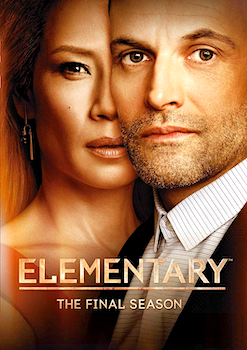
    Elementary  Season 7 Episodes 9-13
    Elementary season 7The other “Sherlock Holmes in the modern day” show finally came to an end last year, though I suspect its finishing shall remain more final: whereas Sherlock always had a stop-start “we could make more anytime” production, accompanied with cast & crew chatter about wanting to sporadically do make new episodes forever, Elementary is much more traditional US network TV show — and the diminishing episode orders of the final couple of seasons and summertime broadcasts of the last couple of seasons don’t suggest an enduring hit poised for a revival.

    Despite that, the finale itself left things open for more, imitating Sherlock’s “Holmes and Watson continue” final beat. This kind of open-ended ‘ending’ fits a show like Sherlock, where there’s a realistic chance it will return someday. For a show like Elementary, where the chance it might ever return is infinitesimally small, it just feels inconclusive. Like, if you want it to be a true finale, you need to give some closure; an actual ending. As it is, despite a narrative that condenses several years and major life events (Joan gets cancer then goes into remission across a single cut), the episode fails to truly answer why this is the point at which we stop following Sherlock and Joan’s adventures.

    There are some people who’ll tell you Elementary is better than Sherlock. I’m not one of them. I’ve warmed to it down the years, but I’ve never thought it was a particularly good realisation of Holmes and Watson — whatever its faults, Sherlock feels like it’s an attempt to adapt Arthur Conan Doyle’s work, whereas Elementary has taken a few names and basic character points and then gone its own way. I’ll concede that there are some things Elementary has done better, although that’s an almost-inevitable side effect of having c.22 episodes a year to play with instead of Sherlock’s three TV movies every couple of years. But it’s also an almost-standard US network procedural — I can remember every single episode of Sherlock, for good or ill, whereas very few of Elementary’s 154 instalments stick in my memory.

    Also watched…
  • Ghosts Series 2 — The second series of the supernatural sitcom digs more into the backstory of its various titular spooks, which seems to be a deep well for plot ideas and humour — one episode, for example, Rashomons it up by recounting one ghost’s death from the various perspectives of others who were already there to witness it. A Christmas special is imminent, and a third series is already commissioned.
  • Leverage Season 1 Episodes 1-3 — Now that I’m done with Elementary, this is my new pick for a “bung it on anytime”, “easy to watch”, US procedural. So far, it’s filling that void nicely. It’s a minor-network production from the late ‘00s, so it already feels a bit dated (it doesn’t quite have the cinematic swagger we expect from top-drawer TV now; the score, in particular, sounds like it was dropped in from a royalty-free library CD), but if you can let the production values slide, it’s good fun in a “bit of a romp” way. That’s how I like my heist movies/shows, so it ticks the right boxes for me.
  • Neil Brand’s Sound of TV — The music maestro follows up his series on the sound of movies from a few years ago (shamefully, I never got round to it) with a trio of episodes covering TV themes, advertising jingles, and TV scores. Very informative and entertaining, but you feel like the topic is so big (particularly the last one) that it could’ve withstood a few more episodes.
  • Richard Osman’s House of Games Night Series 1 — This daytime quiz show has been running for a while, but apparently became quite the success during lockdown, leading to a primetime evening spin-off — which, as I understand it, is just the exact same show but in a different time slot. It’s quite fun: there’s a good “play along at home” quality, and having the same contestants compete across the series means you end up rooting for your favourites.
  • Staged Series 1 Extended — If you didn’t know, Netflix has an extended version of this BBC lockdown hit — there’s about 29 minutes of new material spread across the six episodes, which is a fair old chunk (equivalent to almost two whole extra episodes). And that’s why I rewatched it: because it was good and I’d like to see the extra stuff. Plus, there are new episodes coming in January, so it’s a good time to recap.
  • The Vicar of Dibley in Lockdown — The clergywoman returns for a trio of bitesize Zoom sermons, which together form a kind of comedic “review of the year” (and if you’re prepared to wait for the compilation version airing in a day or two, it’s apparently got some extra material). Many of Dibley’s supporting cast are sadly no longer with us, so I doubt we’ll ever get a proper return for the show, but this is a pleasant little sliver of nostalgia mixed with current events.

    Things to Catch Up On
    The Mandalorian season 2This month, I have mostly been missing The Mandalorian season 2. Well, as regular readers will know, I never even got round to season 1. Naturally, it’s been basically impossible to avoid spoilers — though as those amount to “look which legacy character has turned up this week” rather than actual plot stuff, perhaps it will be okay. Or maybe the series doesn’t really have any plot to spoil, it’s just endless fan service — that would certainly seem to tally with some people’s view of the show. Others love it though, so I’ll see for myself… someday…

    Next month… will come after my regular Christmas TV roundup, which will likely include a bunch of seasonal sitcom specials, plus the New Year’s Day Doctor Who.

  • 300 Films in a Year (sort of) (again)

    I don’t really expect to ever again be in the position where I could whip out a natty ‘300 Films’ logo

    That’s me, writing in December 2018. I really ought to stop saying stuff like that because, well, here I am again!

    To clarify, it’s the same as last time: I haven’t reached 300 films according to the rules of my main count (i.e. films I’ve never seen before), but when you bundle together my ‘main list’ of new films and my Rewatchathon, I’ve reached 300.

    I actually got there on December 8th, but I didn’t twig at the time because I’ve been engulfed in FilmBath still (it had finished this time last year, but this year we’ve been delayed by lockdowns and what have you). The date matters because that’s actually one day earlier than I got there last time. It would’ve been more remarkable if it was the exact same date, but still, what’re the odds it would be so close?

    At one point this year it looked conceivable that I’d reach a ‘true’ 300 Films in a Year. That’s not going to happen (I’d have to watch 44 new films in the next 18 days — an average of 2.4 per day, every single day, for the rest of the month. Some people watch that kind of volume, but for me it’s just not feasible; doubly so when some of those days include the enforced family time of Christmas). But if the history of this blog has taught me anything, it’s to never say never — perhaps someday I’ll be telling you that I’ve reached that elusive true #300…

    The Amplified Monthly Review of November 2020

    Normally I avoid starting Christmas until at least December 1st. Shops and TV channels can begin to flood themselves with Christmas-related product throughout November (if not before), but I feel like “the day you open the first door of your advent calendar” is when Christmas can begin.

    This year’s a bit different, though. Never mind the whole “2020 has been shit” of it all — despite that, I was still aiming for December 1st — but then family wanted to watch Netflix’s Jingle Jangle in the middle of November, and that opened the door a crack, until eventually Christmas fully barged in on the final weekend of the month. Presents bought! Decorations up! Built a festive LEGO set I didn’t get round to doing last year!

    What I didn’t do is watch another Netflix original Christmas movie: Klaus. I didn’t get round to it last festive season, and as it’s (surprisingly) on the IMDb Top 250, I’ve been waiting impatiently all damn year for the time to roll around when I felt I could watch it. Well, it’s December now, so…

    But before I get stuck into Christmas properly, let’s remember the month that just was.


    #237 An American Werewolf in London (1981)
    #238 Robolove (2019)
    #239 Rose Plays Julie (2019)
    #240 Showrunners (2014), aka Showrunners: The Art of Running a TV Show
    #241 Falling (2020)
    #242 An Impossible Project (2020)
    #243 Coded Bias (2020)
    #244 Jingle Jangle: A Christmas Journey (2020)
    #245 The Lie (2018)
    #246 Mangrove (2020), aka Small Axe: Mangrove
    #247 The Mask of Fu Manchu (1932)
    #248 You Will Die at Twenty (2019)
    #249 Influence (2020)
    #250 My Mexican Bretzel (2019)
    #251 Borat Subsequent Moviefilm (2020)
    #252 Ordet (1955), aka The Word
    #253 Never Surrender (2019), aka Never Surrender: A Galaxy Quest Documentary
    #254 Millennium Actress (2001), aka Sennen joyû
    An American Werewolf in London

    An Impossible Project

    Never Surrender

    .

    Normally I include any short films I’ve watched in amongst the list of features, but this month I watched 53 short films. No, that’s not a typo. In the almost-14-year history of this blog to October 2020, I’d watched 97 shorts; now, AMPLIFY! alone has increased my count by 55%. That seemed an overwhelming amount to include in the above list, so I’ve separated them off here.

    A quick guide: #247a–e were the IMDb New Filmmaker nominees; #249a–k were in the Cornwall Film Festival South West Regional programme; #249l–s were in the Cornwall Film Festival International programme; #249t–z were in the New Voices programme; #250a–i were in the CINECITY Open programme; and #250j–v were in the FilmBath programme.

    #247a Under the Full Moon (2020)
    #247b Flush Lou (2020)
    #247c The Monkeys on Our Backs (2020)
    #247d Players (2020)
    #247e Home (2020)
    #249a Shuttlecock (2019)
    #249b Stitch (2020)
    #249c Nut Pops (2019)
    #249d Swivel (2020)
    #249e Anoraks (2020)
    #249f Frayed Edges (2020)
    #249g So Far (2020)
    #249h Man-Spider (2019)
    #249i Slow Burn (2020)
    #249j Closed Until Further Notice (2020)
    #249k Quiescent (2018), aka Anvew
    #249l Clean (2020)
    #249m Appreciation (2019)
    #249n Adnan (2020)
    #249o Sticker (2019)
    #249p Interstice (2019), aka Mellanrum
    #249q The Day of the Coyote (2020)
    #249r Chumbak (2019)
    #249s Guardians of Ua Huka (2020)
    #249t Destructors (2020)
    #249u Nelly (2020)
    #249v Life in Brighton: An Artist’s Perspective (2020)
    #249w My Life, My Voice (2020)
    #249x Embedded (2020)
    #249y One Piece of the Puzzle (2020)
    #249z Time and Tide (2020)
    #250a The Wick (2020)
    #250b We Farmed a Lot of Acres (2020)
    #250c A Spring in Endless Bloom (2020)
    #250d Booklovers (2020)
    #250e The Fruit Fix (2020)
    #250f Keratin (2020)
    #250g Blue Passport (2020)
    #250h Siren (2020)
    #250i Reconnected (2020)
    #250j The Last Video Store (2020)
    #250k Water Baby (2019)
    #250l Window (2019)
    #250m Alan, the Infinite (2020)
    #250n Our Song (2020)
    #250o Hold (2020)
    #250p Befriend to Defend (2019)
    #250q Fuel (2020)
    #250r My Dad’s Name Was Huw. He Was an Alcoholic Poet. (2019)
    #250s Quiet on Set (2020)
    #250t A Map of the World (2020)
    #250u Talia (2020)
    #250v The Starey Bampire (2019)


    • I watched 18 new feature films in November.
    • That’s the exact same tally as last month (and also February), so the same applies: it’s in the lower-middle for the year, coming =7th out of 11 months.
    • However, it’s below my average for 2020 to date (previously 23.6, now 23.1), and below the rolling average of the last 12 months — although, because I only watched 12 films last November, that still goes up slightly (from 21.1 to 21.6).
    • But it does pass the November average (previously 10.4, now 11.0).
    • Plus, #254 is the furthest I’ve ever reached by the end of November, beating #248 in 2018. It sets me up well to beat that year’s record for my highest ever final total — although victory is by no means guaranteed: I need eight more films to reach a new record, and last December I only watched five…
    • I’ve already noted above how the number of shorts I watched this month is measurable on an “entire history of the blog” scale, but, for what it’s worth, the next closest month came last November, also thanks to a film festival, when I watched… 9. Pales in comparison, doesn’t it?
    • This month’s Blindspot films: first, to catch-up for last month, a belated Halloween pick (that I therefore watched right at the start of the month), An American Werewolf in London; and second, Carl Th. Dreyer’s acclaimed meditation on religion, Ordet.
    • From last month’s “failures” I watched Borat Subsequent Moviefilm and The Lie.


    The 66th Monthly Arbitrary Awards

    Favourite Film of the Month
    Not that this was a bad month by any means, but it started on a high that was never quite equalled: An American Werewolf in London is exactly the kind of film “What Do You Mean You Haven’t Seen?” was created for (honestly, I’m surprised it’s taken this many years for it to make it onto the list), and it didn’t disappoint.

    Least Favourite Film of the Month
    Conversely, failing to live up to expectations was The Mask of Fu Manchu. I didn’t exactly expect great things of it (there’s the inherent racism, for one thing), but even as a pulpy ’30s pre-code adventure movie, it didn’t tick the right boxes for me.

    Favourite Short Film of the Month
    With so many short films watched this month, it seems only right to extend the Arbies to them; though I won’t do a “least favourite” (seems unfair when shorts struggle to gain attention enough as it is). There are lots of entertaining little numbers in the 53-strong field, but undoubtedly my personal favourite was The Last Video Store, a documentary about Bristol’s still-running independent video rental place, 20th Century Flicks. It’s all about the importance and brilliance of physical media — right up my street. It’s available free on Vimeo, so do check it out.

    Best Documentary Where the Tagline Gets Listed as Part of the Title of the Month
    I watched two behind-the-scenes-y documentaries this month, Showrunners and Never Surrender — those are the titles they use on screen, anyway, but look online and you’ll mostly find them listed as Showrunners: The Art of Running a TV Show and Never Surrender: A Galaxy Quest Documentary. Regular readers will know how much this kind of imprecision / inconsistency annoys me. Anyway, they were both interesting, but Never Surrender was really warm-hearted and lovely as well as informative — if you love Galaxy Quest (and who doesn’t?) then you must see it. It’s on Amazon Prime, at least in the UK.

    The Audience Award for Most-Viewed New Post of the Month
    A very deserving victor this month, in my opinion: my review of “missing hammer in a Belgian nudist camp” comedy-thriller (that should totally by a subgenre) Patrick.


    After being ahead of target most of the year, last month saw me slip behind slightly, and I haven’t caught it up… but I’m close enough that December could yet see me reach my goal of 50 rewatches.

    #42 Hot Fuzz (2007)
    #43 Fisherman’s Friends (2019)
    #44 Knives Out (2019)

    Considering how much I’ve always enjoyed Hot Fuzz (and how often it’s on ITV2), it’s a little remarkable that I’ve only watched it once since seeing it at the cinema in 2007; and, according to my records, that was around when it came out on DVD, in late ’07 or early ’08 — so I haven’t seen it in over 12 years. (Don’t ask me how long it’s been since Shaun of the Dead…) To think: all the mediocre movies I’ve watched in that time, and I could’ve just been rewatching this classic. Oh well.

    At the other end of the time spectrum, I only first watched Fisherman’s Friends this May, and Knives Out this March. Both were family-appeasing viewing choices — not that I dislike either (indeed, I’d been specifically wanting to rewatch Knives Out). I’ve not got round to reviewing either in full yet, but I will someday (probably).


    Cinemas may’ve been closed again thanks to Lockdown 2, but new releases continue to debut online — like Christmas lesbian romcom Happiest Season, which I’ve heard good things about; or Netflix’s The Christmas Chronicles 2, which hopefully is as likeable as the first one; or Ron Howard’s Hillbilly Elegy, which I’ve not heard anything good about. It does star Amy Adams and Glenn Close, though, so I expect it’ll be part of the awards conversation nonetheless.

    The same conditions that have kept theatrical releases to a minimum have seen the streamers all pile on new content, though little of it’s brand-new. Particularly drawing my attention on Netflix was Assassination Nation, and Spider-Man: Into the Spider-Verse, the latter because it’s reminded me I still haven’t watched the 3D Blu-ray I imported from Australia. On social media, they made a big fuss of having Spider-Verse in 4K — I believe it’s a 2K upscale, but its visual style seems made for HDR enhancement. So, basically, I need to rewatch it twice, once in 3D, once in 4K…

    iPlayer is also offering original movies at the minute — kind of — with Steve McQueen’s Small Axe series. I watched the first, but need to catch up on Lovers Rock and Red, White and Blue. They also have a speedy TV premiere for recent UK release Monsoon. Over on Amazon, the best they could offer is Military Wives — the kind of thing I might watch with my mum over Christmas. They also added Parasite, but I (a) have seen it, and (b) own it on disc.

    In fact, I own it on disc twice, thanks to picking up the US 4K release back in July (they’ve just released it on 4K here, but I think the import still cost me less), and buying the Criterion edition this month. I’m not one of those Criterion completists buying it for the sake of it being a Criterion — I want the special features, and also the black-and-white version (though that’s on Amazon Prime too, so…) It was one of many titles I imported thanks to Barnes & Noble’s biannual Criterion sale — although, as they still refuse to ship to the UK, I actually bought stuff price-matched from Amazon.com. Other titles I picked up included Ghost Dog (been waiting for that on Blu-ray for years), Christopher Nolan’s Following, Alfred Hitchcock’s The Lady Vanishes, Marriage Story, and the Three Fantastic Journeys bu Karel Zeman box set — the UK editions were still slightly cheaper, but pop-up packaging? Yes please! While I was at it, I also imported a bunch of other US stuff I’ve wanted for a while: Billy Lynn’s Long Halftime Walk (I’ve never heard great things about the film, but the US release is a 4K-HFR / 3D combo pack that entices me), Shout’s release of Creepshow (as the UK release is long out of print and it’s one of the few George Romero titles I didn’t own), the 4K restoration of Rian Johnson’s Brick, animation Long Way North, The Mask of Zorro in 4K, the 26th Zatoichi film (upgrading my Arrow DVD)… and a few others too (this list is getting plenty long enough, and I’ve not even started on my UK purchases).

    Yes, various UK sales further decimated my bank account this month. There was a UK Criterion offer, too, in which I picked up The Life Aquatic with Steve Zissou, The Life of Oharu, and Metropolitan; Indicator had a Hammer sale, from which I nabbed two of their box sets (Volumes Three and Four, if anyone’s interested); from Arrow’s Noirvember offer I snagged Dark City, Hangmen Also Die, and (after many years of never quite buying them) both the 1946 and 1964 versions of The Killers; plus random discounts on the 4K box sets of Sicario 1 and 2, and the Three Flavours Cornetto trilogy.

    Oh, and there were new releases too! The headliner has to be Second Sight’s incredible 4K box set of Dawn of the Dead, a behemoth packed with alternate cuts, special features, and books — not booklets, literal books. Amazing. Also available in multiple fancily-packaged editions was the 4K release of V for Vendetta, though I just went for the regular version in the end. There were also two new Jackie Chan titles from 88 Films (Shaolin Wooden Men and New Fist of Fury); plus another Eastern action classic from Eureka, The Bride with White Hair; and Japanese sci-fi from Eureka too, in the form of Mothra, The H-Man, and Battle in Outer Space. More noir, as well, in the form of Indicator’s Columbia Noir #1 box set — that number at the end promising I’ll be spending much money on this series in the years to come. And, finally, rounding out the month, a Train to Busan trilogy box set, meaning I finally picked up that zombie modern classic, along with the anime prequel (which I don’t much care for) and the new sequel, Peninsula.

    Christ, look at that list — anyone’d think I’d just had a Christmas present haul! And I left half-a-dozen titles out just to speed things up. But no, Christmas is still to come…


    Iiiiit’s Chriiiiiistmaaaaas! I have been waiting pretty much all year to be able to watch Klaus (can’t watch a Christmas film from January to November, no no no), so if I don’t get round to it I’ll be doing some serious self-chastising in my December review.