
I’ve never been to a film festival before. The expense and organisation of travel and accommodation, battles for tickets and/or never-ending queues for entry, racing to dozens of screenings a day… it’s just not my thing. (I don’t know if major festivals are really like that, it’s just an impression I’ve picked up from attendees on social media, etc.)
But when there’s a film festival one stop on the train away from your house, well, you can’t say “no”, can you? (Doubly so when you work for said festival and get comp tickets…)
FilmBath Festival isn’t among your Sundances or your Canneses or your Venices or your Londons. Nor is it one of those festival that just specialises in one thing, like documentaries or shorts. There are no red carpets or world premieres; no overtired critics trying to review 5,000 films every day or websites setting up media centres to churn out slightly stilted YouTube interviews with cast and crew desperate to promote their movie. Instead, it’s a local festival giving local people a chance to see previews ahead of general release; films that have already been released but didn’t make it to one of Bath’s cinemas; and smaller, interesting movies that might be difficult to see at all outside a festival.
Yesterday’s opening night kicked off the festival with a double bill of the first of those, including an exciting late addition to the lineup — so late it didn’t even make the brochure. (Ooh, look at all the beautifully precise punctuation and spelling and whatnot in that brochure! What geniuses must have worked on such a thing!) I saw both films, and I’ll write full reviews nearer their wide releases, but for the time being…

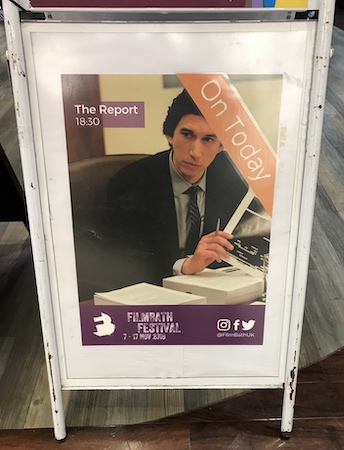
First up was The Report, an All the President’s Men-style thriller about the investigation into the CIA’s use of torture post-9/11. It’s written and directed by Scott Z. Burns, who’s probably best known for writing a handful of Steven Soderbergh movies, plus contributing to arguably the best Bourne movie and Daniel Craig’s final Bond film. At the centre of the story is Star Wars’s Adam Driver as Daniel J. Jones, the senate staffer tasked with combing through millions of pages of secret documents to find the truth. As if to highlight the significance of the story, there’s an all-star supporting cast, led by Annette Bening and Jon Hamm, plus Michael C. Hall, Maura Tierney, Tim Blake Nelson, Matthew Rhys, Corey Stoll, Ted Levine, Jennifer Morrison, and several other recognisable faces. It’s a methodical and gripping film, seemingly as dedicated to explaining the truth as is its protagonist. Imagine if we lived in a world where this was the R-rated war-related true story that became the year’s highest-grossing film at the US box office (as opposed to the one that was).
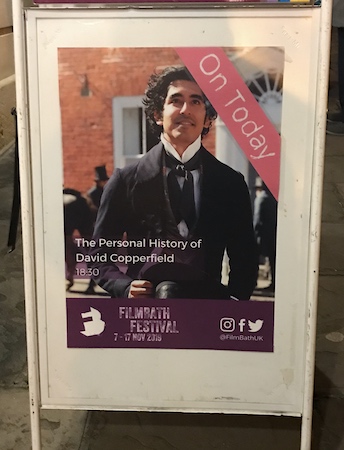
Next, that late addition: Armando Iannucci’s new adaptation of Charles Dickens’s The Personal History of David Copperfield. It’s got another all-star cast, headed by Dev Patel as the eponymous young man. Obviously such colourblind casting has provoked comment, and I guess some people won’t be able to get over that, but it doesn’t matter. Dickens’s novel is a thick tome, here condensed briskly into two hours, and there’s a lot more going on than the colour of people’s skin. Its whipcrack pace is both one of its greatest assets (it moves like the clappers) and its biggest drawbacks (it winds up feeling a bit too long). But it’s frequently riotously funny, and the namey cast are sublime, including (deep breath) Tilda Swinton, Hugh Laurie, Peter Capaldi, Ben Whishaw, Gwendoline Christie, Anna Maxwell Martin, Benedict Wong, Paul Whitehouse, Nikki Amuka-Bird, Aneurin Barnard, plus many other faces you might recognise depending how much British TV you watch. Plus, its affection for the emotional power of the act of writing is sure to make it a favourite for many authors (and wannabes).
Two completely different films, then, but both very much in my wheelhouse — as I said, I’ll review them later, but I enjoyed them both immensely. An exceptionally strong opening to a festival that promises many more delights (Jojo frickin’ Rabbit!) to come.
FilmBath Festival continues until 17th November. For information about what’s screening and to buy tickets, look here. You can also follow me on Twitter, Instagram, and/or Letterboxd for timely updates about what I’m seeing.


 Favourite Film of the Month


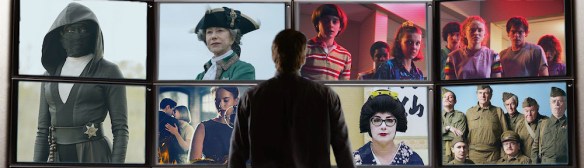






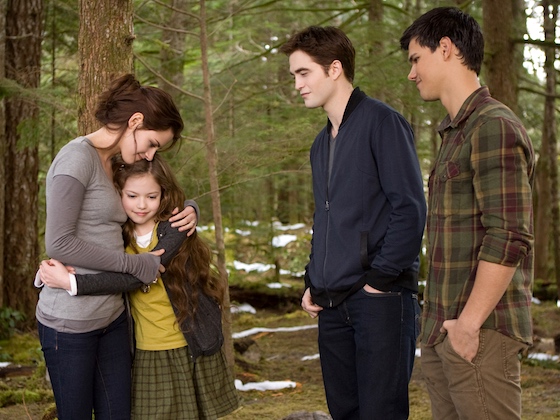

 On what you might unkindly call a superficial level, the third season of Netflix’s signature series was thoroughly entertaining — it’s frequently funny and exciting, with cool moments aplenty (especially in the last couple of episodes), and many enjoyable callbacks to both ’80s pop culture and within the show itself. But dig any deeper and it begins to seem less surefooted, with what felt to me like muddled themes and character arcs, and a sense that the mythology was treading water. I don’t particularly object to the way any characters were treated, nor the destinations any of them reached (especially as a fourth season was inevitable, so wherever this run finished up was only ever temporary), but I didn’t feel like they were being guided anywhere with any real purpose. There’s something to be said for storylines like that, but when you’re trying to play some kind of redemption arc, or a coming-of-age tale about burgeoning independence (or whatever), I feel like you need to be a bit clearer-eyed. But hey, I still enjoyed it a lot — it’s a fun watch, and I imagine even more so if you have nostalgic memories of an ’80s childhood — I just think there’s still some room for finessing.
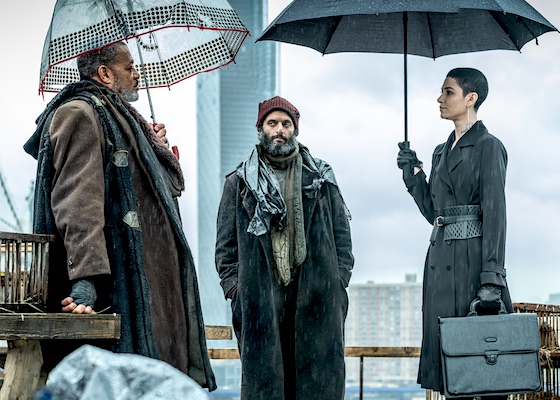
 Alan Moore and Dave Gibbons’s graphic novel Watchmen is a seminal work of the form — I’m sure you don’t need me to tell you about that at this point. Over the past decade it’s been
 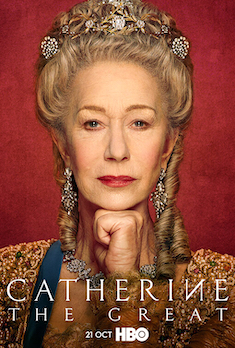 HBO and Sky Atlantic have teamed up for this lavish four-parter about the life of the famous Russian ruler, conceived by and starring Helen Mirren. The big bucks those broadcasters are known for are all over the screen here — it looks suitable sumptuous, with grand locations that positively shine, especially in UHD. Unfortunately, nothing else about the production is up to scratch. The writing is thoroughly mediocre — it most reminded me of The Tudors, although that seemed to know it was a bit of trashy fun, whereas I think Catherine the Great wants to be taken very seriously. But the dialogue is uninspiring, the characters uninteresting and underdeveloped (we’re told the relationship between Catherine and Potemkin is some great love affair, but they strop around like moody, jealous teenagers), and the flat performances do nothing to elevate any of it — and despite her general acclaim, Mirren is probably the weakest of the lot. Pretty, then, but vacant.
 The BBC’s 1970s policy of junking programmes because they supposedly no longer had commercial value is a familiar topic for Doctor Who fans, who’ve spent decades hoping and hunting for copies of missing episodes. But it was an organisation-wide policy, so Who was far from the only show that suffered — Dad’s Army was another. It’s a perennially popular sitcom here (even today repeats land among the most-watched programmes of the week), so you can see why it made commercial sense to invest in recreations of the missing episodes — especially as there’s only three of them.











 100Films.co.uk