My Top 5 Most-Read New Posts in 2018

Last year, my top five most-viewed new posts were dominated by TV reviews, with no film getting a look in until 10th place. This year, one film did crack the top five, in 5th place, with another making it into the top ten, in 7th.

Nonetheless, as this is supposedly a film blog, I’m still presenting the two separate top fives: first, which five sets of TV reviews attracted the most hits; then, which five film reviews were most visited. (You’d probably gathered that, but it’s always nice to be clear.)

The Top 5 Most-Read New TV-Related Posts in 2018

5) The Past Month on TV #32
including A Series of Unfortunate Events season 2, Westworld season 1, Archer season 5 episodes 1-5, Line of Duty series 4, Lucifer season 2 episodes 1-10, and Episodes season 5 episode 1.

4) The Past Month on TV #29
including Blue Planet II, Little Women, Death in Paradise series 7 episodes 1-2, The Great Christmas Bake Off, and the Not Going Out Christmas special.

3) The Past Month on TV #31
including Jessica Jones season 2, Strike series 2, Shetland series 4, Nailed It! season 1, Lucifer season 1, the 90th Academy Awards, Absentia season 1 episodes 7-10, The Great Stand Up to Cancer Bake Off series 1 episodes 1-3, and Not Going Out series 9 episodes 1-2.

2) The Past Month on TV #30
including Strike series 1, The Good Place season 2, Absentia season 1 episodes 1-6, The X Files season 11 episode 1, The Man from U.N.C.L.E. season 1 episodes 1-4, Murder on the Blackpool Express, The Brokenwood Mysteries series 3 episode 1, Castle season 8 episodes 16-22, Death in Paradise series 7 episodes 3-7, and Vera series 8 episodes 2-4.

1) The Past Month on TV #38
including Bodyguard series 1, Jack Ryan season 1, Iron Fist season 2, Upstart Crow series 3 episodes 1-3, Reported Missing series 2 episode 1, Daniel Sloss: Live Shows, Hang Ups series 1 episodes 4-6, The Imitation Game series 1 episodes 1-3, and Magic for Humans season 1 episodes 4-6.

#38’s victorious position is thanks to the Bodyguard review, which I published after the series ended in the UK but before it debuted on Netflix in the US. Clearly it attracted attention over there: that post received almost twice as many hits as the one in 2nd place, and more than four times as many as 5th place.

The Top 5 Most-Read New Film-Related Posts in 2018

5) Black Panther
A cultural phenomenon, the highest grossing film of the year in the US, and a contender this awards season — no wonder this was a popular post.

4) The Night Comes for Us
This is the first of two Netflix Originals in the top five. A small enough number that it could just be a coincidence, sure, but if I widened this list out to be a top 15, it’d include nine Netflix exclusives. I’m sure you could read many different things into that, but here’s one: I tend to watch and review new Netflix releases quicker than new cinema releases, so the demand for those reviews is higher at time of posting. Plus, the more niche something is, the fewer reviews there are, and so the more likely people are to find your review. Not that anyone would describe half this list as “niche”…

3) Black Mirror: Bandersnatch
In just 70 hours, this review managed enough page views to land itself as my 12th most-visited new post of the year, which is some going, really. Well, I did get it out lickety-split (within 24 hours of the film’s release), and it was a much-talked-about event. It’ll be interesting to see what its legs are like.

2) The Man from Earth: Holocene
My top two swing almost from one extreme to the other. First, this belated sequel to the cult favourite sci-fi drama, which was certainly an under-the-radar release. That made my review a relatively early one, and as it was published in mid January it’s had almost the whole year to top up its count.

1) Avengers: Infinity War
The highest-grossing film of 2018, and one of the highest of all time (only the fourth ever to take over $2 billion at the box office), it shouldn’t be a surprise that this was my most-read film review of the year — in fact, it’s already my fourth most-read film review ever. And yet it is a bit of a surprise, because people have plenty of choice when it comes to write-ups of mega-blockbusters, which is why much of this list is filled out with smaller or Netflix movies. I guess that’s the power of Marvel. Or something.

One final observation: Infinity War’s views were heavily front-loaded — it gained enough hits in April alone to land it in this top five — with just a trickle ever since. Holocene was also front-loaded (the vast majority of posts are), but at this point it’s actually getting more hits per month than Infinity War. It’s currently my fifth most-read film review ever, but maybe at some point in 2019 it’ll leapfrog the Avengers film. Funny how these things go.

The Tercentenary Monthly Update for December 2018

This year, I watched over 300 films… just not if you count by my usual rules. I wrote about that earlier this month, so I won’t rehash it all here; but to update the numbers: my final tally of new films is 261, plus 50 in my Rewatchathon, and 8 short films to boot. Add all that up and you’ve got 319.


#248 The Christmas Chronicles (2018)
#249 Torment (1944), aka Hets
#250 Sorry to Bother You (2018)
#251 Snowpiercer (2013)
#252 Mowgli: Legend of the Jungle (2018)
#253 Light the Fuse… Sartana is Coming (1970), aka Una nuvola di polvere… un grido di morte… arriva Sartana
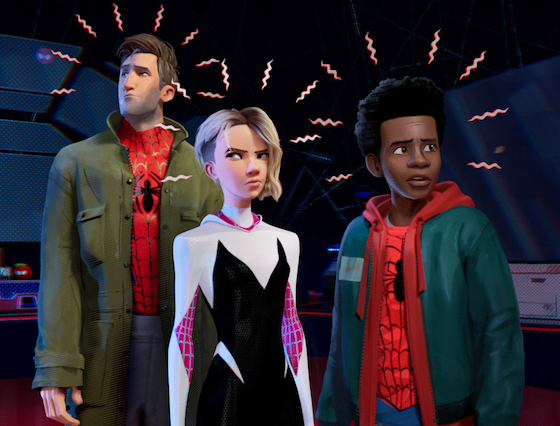
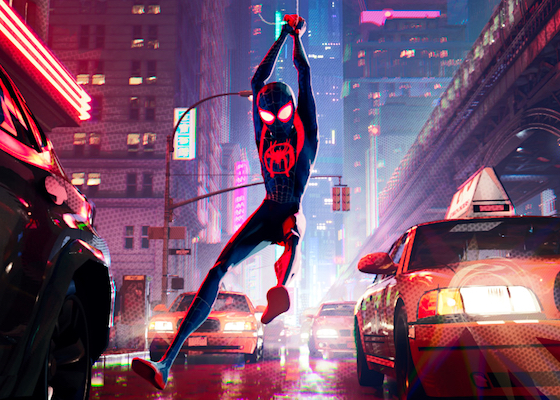
#254 Spider-Man: Into the Spider-Verse (2018)
#255 Music in Darkness (1948), aka Musik i mörker
#256 The Shape of Water (2017)
#257 Zatoichi the Outlaw (1967), aka Zatôichi rôyaburi
#258 The Man Who Invented Christmas (2017)
#259 Hachi: A Dog’s Tale (2009)
#260 A Christmas Carol (2018)
#261 Black Mirror: Bandersnatch (2018)
Snowpiercer

Spider-Man: Into the Spider-Verse

.


  • I watched 14 new films this month — a perfectly respectable number, really, but it’s tied with August for the lowest month of 2018. That’s the first time August has been the year’s lowest month, though December previously took the (dis)honour in 2016.
  • It also means December remains my only month to have never achieved a tally of 20+. It’s now a whole year before I can try that again (obviously).
  • And I didn’t watch a film on December 22nd, one of the three outstanding dates on which I’ve ‘never’ watched a film, so that’ll have to wait a whole ‘nother year too.
  • However, this month did beat the December average (previously 11.5, now 11.7), but wasn’t close to the monthly average for 2018, which is now finalised at 21.75.
  • Two Ingmar Bergman-related films this month: one he wrote, Torment, and one he directed, Music in Darkness. I got Criterion’s gorgeous box set for Christmas, which duplicates numerous titles from an old Tartan DVD box set I’ve owned for years, so before I get stuck into the Criterion set I’m watching the films that are unique to the Tartan set, with an eye to selling it. There are only three, though, so I’m 66.7% complete already.
  • This month’s Blindspot film: a 2013 film that only got a UK release a couple of months ago, when it was snuck out on digital-only with no fanfare. Not that that’s what held me back: I imported the US Blu-ray over four years ago. No, this is just my own inexplicable tardiness (again). Anyway, the film in question is Snowpiercer. Thankfully, it lived up to the wait and the hype.
  • And, with that, all 22 of this year’s Blindspot and WDYMYHS films are complete!


The 43rd Monthly Arbitrary Awards

Favourite Film of the Month
Ooh, this is a toughie — not, as is sometimes the case, because I didn’t really love anything this month, but because there were at least three films I adored and are strong contenders for my forthcoming 2018 top ten. But on balance I’m going to plump for the dystopian sci-fi allegory of Snowpiercer.

Least Favourite Film of the Month
Nothing I outright hated this month, so it’s a question of which was the most disappointing among things I at least liked. On that score, I think I have to go for Light the Fuse… Sartana is Coming, because it’s emblematic of how underwhelming I found that series on the whole.

Best “Christmas Carol” of the Month
I watched altogether too many different adaptation of A Christmas Carol this month, including a meta-ish one in The Man Who Invented Christmas, a Muppet-y one in The Muppet Christmas Carol, and a Shakespearean-studio-sitcom one in the Upstart Crow Christmas special. But I think my favourite was actually the most straightforward: a filmed version of Simon Callow’s one-man show, in which he just reads the story, basically. That’s to undersell it, though: he performs the story, and there’s some neat but not overdone direction to match. It was released in cinemas earlier in the month and screened on BBC Four over Christmas. if you missed it, it’s still on iPlayer here.

Best Spider-Man of the Month
Spider-Verse featured a surfeit of Spider-People to choose from, and while it may’ve been newbie Miles Morales’ film, with a key role for a worn-out Peter Parker, there’s definitely something to be said for Nicolas Cage as Spider-Man Noir. Part of me wants to see a whole spin-off film starring him; part of me thinks that would be a bit much. A decent-length short film would be welcome, though.

The Audience Award for Most-Viewed New Post of the Month
Netflix’s Mowgli was building a comfortable lead for itself in this category, far ahead of second-placed Spider-Verse… and then Bandersnatch happened. The first “Netflix interactive film” generated a tonne of buzz on social media (it was the top trend on Twitter almost all day on its release), and I watched and reviewed it promptly. Those factors combined led to a surge of page views that saw it surpass Mowgli’s 21-day tally in under 24 hours. Of course, they’re both Netflix films, which almost always do well in these stats. And with a couple more days under its belt since then, Bandersnatch may have found itself among my most-viewed posts of the entire year, despite only being around for three days.


My evenly-spaced-throughout-the-year Rewatchathon schedule allows for four films most months, but for some reason it decided there needed to be five in December. There have to be two “five” months to get me to 50, but why did one have to be the very last month of the year?! (I mean, when you stop and think about it it’s kinda logical this would happen, but it did seem to put a burden on the final month of the task).

Anyway, I made it, so that’s jolly.

#46 The Princess Bride (1987)
#47 Scooby-Doo (2002)
#48 Death Becomes Her (1992)
#49 Home Alone 2: Lost in New York (1992)
#50 The Muppet Christmas Carol (1992)

I don’t really feel like doing a Guide To The Princess Bride anytime soon (my backlog’s too huge as it is), but I should someday — it’s a magnificent film that, with hindsight, deserved a place in my 100 Favourites.

It wasn’t a conscious choice to end with three 1992 films back-to-back, it’s just a bizarre coincidence. Indeed, I watched Home Alone 1 last Christmas and intended to get round to the sequel back then. Instead, it took me 371 days. Though, another coincidence: they were both Rewatchathon #49.

I wrote a little about Death Becomes Her and Scooby-Doo on Letterboxd, though to the latter I’d add my highly amusing observation about the lead cast being a bunch of “before they weren’t famous” faces.


Other sites and blogs may get their year-end stuff out in December (or, if you’re Empire magazine, Oc-frickin’-tober), but if you write a blog that covers everything you see in a whole year, you ain’t done ’til 11:59:59pm on 31st December.

So, as usual, January will begin by looking back over 2018, in a series of lists and whatnot that I’ll post over the rest of this week. And then I’ll start this shebang all over again, for my 13th year. Lucky for some…

Absolutely Fabulous: The Movie (2016)

2018 #96
Mandie Fletcher | 87 mins | streaming (HD) | 2.35:1 | UK & USA / English | 15 / R

Absolutely Fabulous: The Movie

“Most movies are a script in search of some money,” said Jon Plowman, producer of every episode of Ab Fab, “but this was more a case of some money in search of a script. From the minute the word got out that Jennifer was contemplating writing the film of Ab Fab, lots of financiers threw their hats in the ring.” A cruel critic might therefore be tempted to accuse the cast and crew of doing this poorly-received film continuation of the popular TV series “just for the money”, but I think that would be disingenuous — I think there was a real desire to put an appropriate capstone on the beloved sitcom. Whether that merited a 90-minute theatrical release, or would’ve been better served as a 60-minute TV special, is another matter…

Primarily, I think Ab Fab: The Movie is targeted at fans of the series, and isn’t really designed to stand on its own feet as an independent movie. I’ve only seen some of the TV show, and I think that was essential to understanding who all the characters were, how they were connected, and why they behaved in certain ways. Even then, I felt like there was stuff flying over my head because I haven’t seen all of the original episodes and/or because it’s been some years since I did watch any.

So, I’m no expert on Ab Fab, but it’s always been my impression that when it started it was satirising the fashion world of the era (i.e. the ’90s). However, as it’s gone on it seems to have become about itself, as it were — its own characters and in-jokes, rather than any commentary on the wider world. That’s what we get here, therefore: basically, a 25th anniversary special amped up to full-blown movie status. One of the selling points for it as a big-screen variant was that it’s Eddie and Patsy on the French Riviera, continuing the age-old tradition of big-screen outings for British sitcoms being just “send the characters abroad”. Despite that, the first half is still set in London, and it’s pretty funny. When they do finally head overseas, it doesn’t exactly drag, but it seems a bit desperate.

Wheels on fire, off screen

In terms of broader relevance, creator/writer/star Jennifer Saunders has spoken about how the film was supposed to be about ageing; about, apparently, the “reality” of these youth-obsessed characters getting old when they don’t know how to. Well, there’s not much reality in it it, given the typically outlandish situations the already-exaggerated characters find themselves in (for example, the emotional climax comes while Eddie and Patsy are trapped in a tiny van sinking in a swimming pool). That doesn’t mean such OTT antics aren’t amusing, but expecting an examination of the human condition from them is a bit… unlikely.

A more notable feature is the insane number of cameos — “around 60”, according to this list on IMDb. I guess the notoriety of Ab Fab attracts big names… though plenty of them, er, aren’t. Basically, if you’re not a Brit, assume everyone who pops up for only one scene and opens their mouth is some degree of famous here. There are some international (i.e. American) faces too, though, to remind you of the series’ worldwide cult appeal.

Overall, I enjoyed the film, but it definitely leans into being a fan-friendly exercise, which I’m not sure was appropriate for a belated big-screen debut. It’s not an ideal starting point for the uninitiated, then, but it’s not a terrible send-off for existing fans.

3 out of 5

The UK TV premiere of Absolutely Fabulous: The Movie is on BBC One tonight at 9pm, and will be available on iPlayer afterwards.

Black Mirror: Bandersnatch (2018)

2018 #261
David Slade | “90” mins | streaming (HD) | 2.20:1 | UK & USA / English | 15

Black Mirror: Bandersnatch

The latest addition to Charlie Brooker’s Black Mirror universe is the kind of work that pushes at the boundaries of form and medium — and therefore is the kind of work that challenges how I count things here at 100 Films. Is it a film? An episode of TV? A video game? Or is it genuinely something new? Well, it’s not really a video game — it’s not interactive enough to qualify as that. So is it a TV episode, then? It carries the Black Mirror branding, and that is a TV series. Plus it’s not a theatrical release… but then, neither are most Netflix films. Indeed, Bandersnatch carries its own listing on Netflix (as a standalone title, not an instalment of the series), and is promoted by Netflix as an “interactive film”. So, taking them at their word, I’ve decided that means it counts as a film.

It’s also, I think, very accurate branding — they debated internally how it should be promoted, and I think they’ve landed on the right term for it. As I said before, it’s not really a video game — it’s not as interactive as a gamer would expect it to be. The debate between film vs. TV episode is tighter, but when isn’t it these days? Either way, it’s not just your regular passive Netflix-viewing experience, because it is interactive. In practice, it plays like a video version of Choose Your Own Adventure books — you know what those are, right? I’ve heard some Young People don’t, which saddens me in my apparently-old-now early 30s. If you don’t know, in a CYOA book you’d read a passage of story, then be asked to make a choice on behalf of the hero; for Option A, you’d turn to page X, and for Option B you’d turn to page Y, and so on from there, with your choices dictating your path through the story.

No reading required

Bandersnatch is similar, only without all the manual flicking back and forth: every so often (roughly every three to five minutes, determined as the optimal period of time by Netflix’s product testers) you’re presented with two choices on screen and have ten seconds to pick one. Which you choose decides what you see happen next. (If you don’t choose, Netflix decides for you. Make no choices whatsoever and you’re led on a predetermined route that gets you through a full story in the shortest time possible.) Sometimes these choices are small (which breakfast cereal to eat?), sometimes significant (accept a job offer?). Netflix remembers them all, even the minor ones, which have knock on effects later. They made a rod for their own back in this respect, because having to account for viewers’ early choices led to requiring alternate scenes later on that only vary in how they include the viewers’ fundamentally-meaningless earlier choice. But that’s Netflix’s behind-the-scenes problem, not ours as viewers. Suffice to say, they’ve put the work in, and those little touches help make for an even more immersive experience: the choices themselves may have no bearing on the plot, but the fact the film remembers them and then uses them again later is a kind of meaning in itself.

By this point you’re probably wondering what it’s actually all about, especially if you’re not merely wowed by the technology. (If you are wowed by the technology, check out this article at Wired which goes into more detail about what was required.) Set in 1984, we’re introduced to 19-year-old Stefan (Fionn Whitehead), who lives with his dad (Craig Parkinson) and wants to be a video game designer. He’s managed to wangle a meeting with the company who publish games by his idol, Colin Ritman (Will Poulter). Stefan’s pitch is Bandersnatch, an adaptation of a classic Choose Your Own Adventure novel by Jerome F. Davies, who went mad. Stefan found the book among the possessions of his dead mother, an event which has left him seeing a therapist (Alice Lowe). As Stefan begins to write the program for Bandersnatch… well, what happens next is up to you.

Everybody play the game of life

You can already see how content is reflecting form (you’re playing a Choose Your Own Adventure game about a guy writing a Choose Your Own Adventure game, just in case you needed that spelling out for you), and, well, I don’t want to spoil anything (as much as you can spoil anything about a film where every viewer will have a different experience), but it goes further down the rabbit hole than that. Trust Brooker and the Black Mirror team to have taken a new, emerging technology and made a drama about it — I mean, that’s pretty much the series’ MO. You can rely on them to not make things as straightforward as they first appear, either. Most of the time the film offers two options, each leading you down a different path, but sometimes it mixes it up (to say how would be to spoil the experience, like attempting to relate a joke from a comedy). And if you’re curious about how alternate pathways play out, don’t worry, you won’t have to watch the film from the start every time: after certain “game over” points, Bandersnatch offers the chance to jump back to earlier decisions and choose differently. If you’re interested enough to continue, this is definitely worth doing: as I said earlier, Netflix remembers all your choices — there are sometimes advantages to choosing that ‘continue’ option instead of starting from scratch at a later date.

Perhaps the most impressive thing about Bandersnatch, considering all the myriad choices and paths and possibilities it presents to the viewer, is that it all makes sense. That might sound like Filmmaking 101, but it’s a massive pitfall that would’ve been so, so easy for them to fall into. And they made it a more complicated job for themselves too, insisting the choices viewers make were genuinely meaningful and affected what happened and where the story went. It’s very cleverly written and constructed — it’s not designed to force you down a certain path, or give you a fake choice that doesn’t really change anything, but instead to do those things while still building to a cohesive whole. Yes, of course it’s not total free will to do whatever you fancy, and sometimes there’s no escaping a certain choice or development… but, with the way Brooker has married story and presentation medium, that’s all kinda part of the point.

Suspicious Stefan

If you think about how Bandersnatch was made — the challenge it presented to Brooker as writer, to director David Slade, and to the cast having to negotiate their characters’ various emotional arcs across different permutations of similar scenes — it becomes even more impressive on a technical level. And that’s partly because you don’t have to consider the behind-the-scenes logistics to find this an enjoyable experience. They’ve executed it so consummately that you can just watch it, play it, experience it without needing to perform mental gymnastics to make it fit together, because they’ve accounted for all that and filmed the necessary alternate stuff and been certain it all pieces together. So you can instead apply brain power to what the film has to say about choice and free will, and to working out which alternative options you could choose and which parts of the story you perhaps haven’t experienced yet.

Plus, to an extent, how much you get out of Bandersnatch is rewarded by how much you’re prepared to put in. As I mentioned earlier, at the simplest level you can just put your remote down and watch it play out a 40-minute-ish Black Mirror episode via its default choices (selected by Brooker), giving you the most basic version of the story (I haven’t done this, but I’m tempted to give it a go). Or you can play through until you reach one of the five endings that bring you to the choice of a credits scroll. (Netflix’s official line is that there are five endings. Depending how you count it, there are definitely more.) Or you can keep going and going, taking those “continue” options and seeing where different choices lead you. Sometimes, they lead you to entirely new places. And while there are multiple endings, there’s an “official” ending, too; one where the credits roll and you end up back at the Netflix menu screen (or, I guess, go to something else playing, if you’re one of those weirdos who hasn’t turned that feature off), rather than another continue option.

Play on

I played on until I came across that particular finale — partly because I’m a completist, partly because I was so engrossed in what I was watching. Did I experience every permutation the film has to offer? No, I’m pretty sure I didn’t; but I’m also pretty sure I experienced the bulk of the major ones. Did I get “lucky” that it took me so long to find that final-ending, meaning I saw a lot of the film before I got there? Put another way: is there a quicker path to that final-ending which would mean you saw less of the whole film than I did? Maybe there is. Or maybe there isn’t — maybe the only way to that ending is trial and error through multiple permutations. Or maybe there are multiple “final” endings, and when you’ve exhausted what the film feels it has to offer it throws you the appropriate one. Such are the secrets of Bandersnatch, which Reddit users will surely reveal in time. They’ve already made a start, although a thorough-looking flowchart doing the rounds on Twitter has already been proven to be missing at least a few possibilities.

However much time you choose to spend on it (Netflix say a thorough session would take two-and-a-half hours, although the BBFC certification reveals that there’s over five hours of footage required to make the whole thing function), Bandersnatch is a genuine experience, once again putting Netflix at the cutting edge crossroads of modern visual entertainment. Is it a film? A TV episode? A video game? All of those things? None of them — something else? Something new? Those who must experience such new things will need to try this out, of course — they probably already have. But it’s one for regular viewers, too, with a rewarding story to tell; one which could only have been adequately told with this newly-imagined technology. In my opinion, it’s a magnificent success, and a must-have experience.

5 out of 5

Black Mirror: Bandersnatch is available to watch/play/whatever on Netflix now.

It placed 10th on my list of The 26 Best Films I Saw For the First Time in 2018.

Christine (2016)

2018 #114
Antonio Campos | 114 mins | streaming (HD) | 1.85:1 | UK & USA / English | 15 / R

Christine

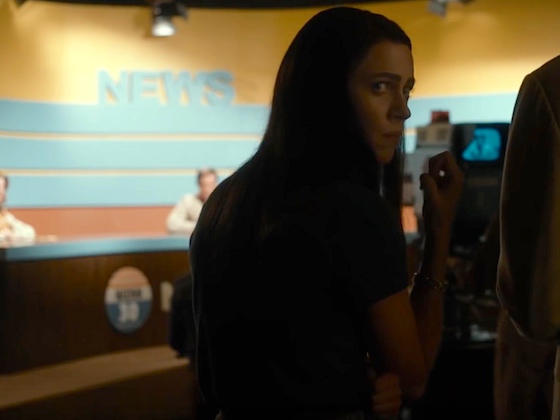
The true, tragic story of newswoman Christine Chubbuck is told in this affecting drama. For those that don’t know, it’s the ending that is why her story is famous: Christine was the first person to commit suicide live on television. The film attempts to help us understand Christine’s life and mental state, and what led her to that moment.

The overwhelming impression I got was of Christine’s existence being quietly sad. She’s shown to have the kind of life that isn’t loudly and forcefully horrible, but just… disappointing. So terribly and thoroughly disappointing that “why bother?” becomes a legitimate question for the person having to live it. That made it a somewhat uncomfortable film to watch, but that could be a personal thing — I can relate to Christine’s social awkwardness, and could see some of the pitfalls she was headed towards. (That said, not everything goes exactly as one might expect, specifically her infatuation with Michael C. Hall’s handsome anchorman.) I’ve known people like Christine, too, who do all the right things and try to put good out in the world, but somehow the world spits it all back, like it doesn’t matter.

Performance anxiety

In part because of this psychological realism, the film feels respectful, but without being either neutered or over-explanatory. By the former I mean that it doesn’t present Christine as some perfect soul — she can be bolshy and trying even for people who like her. By the latter, that it doesn’t hype up how bad her life was to make sure you ‘get’ why she’d do it. For example, everyone around her cares so much. You’d expect a terrible home life, bullying or teasing colleagues, some kind of gross betrayal, but no: they’re mostly nice; they like her; they try to be her friends. And you feel like she sees that, too, even as she… doesn’t. I suppose it must be mostly speculative in what it reveals about her psychologically, but you feel like it understands the responsibility of taking that approach — that it must try to be truthful, rather than histrionic; but that it’s important it attempts to find that truth, not just be enigmatic and vague.

Rebecca Hall gives a fantastic performance in the title role, completely immersed in what must be a difficult part to play: the viewer has to understand, identify, and empathise with Christine, even as she’s a bit standoffish, awkward, and maybe doesn’t even understand herself all that well. Between Hall’s masterly performance and Antonio Campos’ understated direction, they’ve created a film that dodges the pitfall of being melodramatic, and managed to make you sympathise with Christine and why she would do what she did, even as you empathise with her enough to wish she wouldn’t.

4 out of 5

Christine is available on Netflix UK from today.

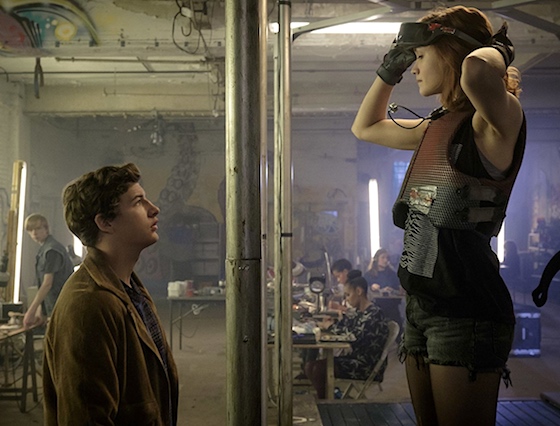
Ready Player One (2018)

2018 #183
Steven Spielberg | 140 mins | Blu-ray (3D) | 2.40:1 | USA / English | 12 / PG-13

Ready Player One

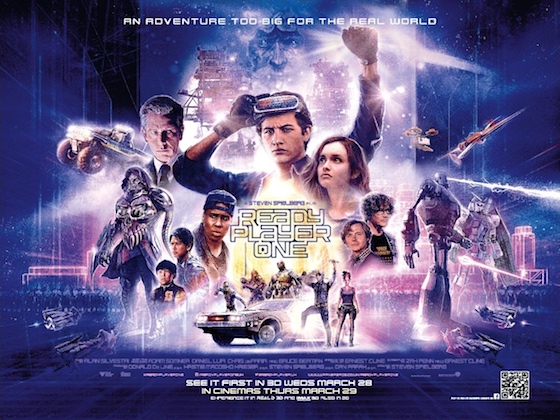
Steven Spielberg’s latest foray into the style of popular moviemaking he helped create in the ’70s and ’80s — the summer tentpole action-adventure mega-blockbuster — is an adaptation of a novel so bedded in the popular movies of the ’70s and ’80s that the whole thing is a bit too meta: it’s a movie obsessed with the brilliance of ’80s pop culture, made by one of the primary creators of that culture. At least Spielberg insisted that all references to his own work be cut, otherwise it could’ve become a mite self-congratulatory. Though it does mean that Spielberg becomes conspicuous by his absence in a Spielberg movie. Oh, it’s enough to make your head spin…

The plot, then: in the year 2045 the real world is a mess, so people spend most of their time in the virtual reality playground of the OASIS. When the game’s creator died, he left behind the first in a series of challenges, and whoever completes them will inherit the OASIS itself. (If you’re thinking, “isn’t that Charlie and the Chocolate Factory but with video games?”, I guess we’ll chalk that up as just another reference. (If you’re thinking, “isn’t that Willy Wonka and the Chocolate Factory but with video games?”, tsk, go read more Dahl.)) Unfortunately, no one’s even been able to crack the first clue… until someone does, of course, because this is an action-adventure blockbuster, not some existential mood piece on the futility of trying to please the dead… or, you know, something. Anyway, cue lots of whizzy CG antics, with CGI that’s actually allowed to look like CGI because it’s all set in a CG environment — I bet the animators were thrilled when that brief came along, because who doesn’t love their job being made easier?

What other car is an '80s lover gonna choose?

Unfortunately, the same amount of effort seems to have gone into the screenplay. Some of this no doubt stems from the original work: the world of 2045 makes no plausible sense (check out the ghost of 82’s review for more on this theme), and there’s the least convincing romantic relationship outside of a George Lucas movie. Worst for me was something an adaptation can readily fix, the dialogue, but which here is frequently full of clunky, hand-holding exposition. This rears its head not just when establishing the film’s world and its rules, which would be bad enough, but also for relatively minor and easily-followed plot points throughout. It’s like the film has been written so even a goldfish could follow it — you don’t need to remember the start of a sentence because its end will explain the same thing again. Equally ill-considered is the movie’s apparently pro-gaming stance. Certainly, a lot of gamers seem to have embraced it as a film that understands their culture; and yet its final message is, “go spend more time in the real world, ya nerds!”

And yet, I mostly enjoyed it. It may not hang together if you engage your brain, but as a bit of fluff it’s largely a fun virtual romp. There are more Easter eggs than a Cadbury’s warehouse in January, which are fun for geeks like me to spot, and those whooshy visuals are even more entertaining when viewed in 3D, which (as Blu-ray.com’s review put it) is “a compelling demonstration of why the format is worth keeping alive.”

Watching other people play video games

But, even though I liked it overall, I can’t help feeling it was a bit of a waste of Spielberg’s time. It’s not that he’s done a bad job — he’s still a god amongst men when it comes to crafting a blockbuster movie — but I also think the end result lacks a certain something that his best work contains. I don’t really know why, but for some reason I feel like he should’ve spent the time it took to make this doing something else, and left this film to be helmed by someone… less important. I mean, there are a lot of other filmmakers who could’ve done a fine job with the material, and wouldn’t have felt the need to cut all the book’s references to Spielberg’s films either.

4 out of 5

Ready Player One is available on Sky Cinema as of this weekend.

The Past Month on TV #41
Christmas is on the horizon, with the usual glut of seasonal specials and high-profile miniseries/one-offs crammed into a couple of weeks. But that’s for my next TV column — this time, here’s a bit more of the usual stuff.

Doctor Who  Series 11 Episodes 8-10
It Takes You AwayThe most recent season of Doctor Who went out, not with a bang, but with a whimper, in perhaps the most underwhelming “finale” the show has ever done. It wasn’t really a dramatic and exciting culmination of this year’s run of episodes, which is what a true “finale” is. Rather, it was just the last episode shown before the season… stopped. Fortunately, before that were two more episodes that proved this new era’s best stuff comes from its guest writers rather than its showrunner.
The Witchfinders saw the TARDIS Team head into the past for the third time this season, and once again brought up a heavy theme: after racism in Rosa and religious division in Demons of the Punjab, now it’s the misogyny of 17th century witch hunts. Fortunately it wore this somewhat more lightly than the previous two episodes, which meant it lacked their emotional weight. Instead, it was a fun adventure, revolving around an alien race reanimating the dead, and a broad, camp, but occasionally nuanced performance from Alan Cumming as King James I. I thought he was a lot of fun.

It Takes You Away set its scene as a “monster lurking near a remote cottage” tale, but pulled off a couple of twists to reveal something entirely different. It was an episode rich in science-fiction ideas — almost too rich, arguably, as the emotional impact they led to was powerful but perhaps not given enough screen time to be fully processed. But with some typically Doctor Who quirkiness thrown in, this was one of my favourite episodes of the season. Even if the execution sometimes faltered, I admired its ambition.

Which brings us back round to the finale, the stupidly titled The Battle of Ranskoor Av Kolos. It’s such a dumb, unpronounceable title that I don’t think I was alone in suspecting it was a cover for something else (in the same way the classic series used to hide the return of the Master by crediting the actor by an acronym in the Radio Times, for instance). But no, that sadly was the title. Even worse, it had barely anything to do with the episode itself — the titular conflict is over, with the Doctor and co arriving to help the few remaining survivors defeat the big bad. Or, rather, get a bunch of exposition from the survivor (with a few hoops jumped through to make sure that exposition is gradually doled out rather than received all at once), then virtually ignore him while they set about some other storyline.

The Battle of Ranskoor Av KolosTypically for showrunner Chris Chibnall, it was a half-thought-through tale, with regular logic gaps and narrative dead ends, and none of the impact you expect from a season-ender. Kinder viewers may say that’s because there’s a New Year’s Day special imminent which is the real finale, but I think that’s just being optimistic. Certainly, the BBC haven’t seen fit to include the special in the season box set (even though it’s released a fortnight after the special airs), which I’m sure is partly a shameless cash grab, but also indicates its separate status.
With that in mind, we can already take an overview of the season as a whole. It’s been a mixed one for me, with a lot of stuff I really liked, but frequently undercut by dodgy execution. I’m not at all convinced Chibnall has the necessary skills to be in charge of the show — even the best scripts exhibit a lack of polish that Russell T Davies or Steven Moffat would’ve brought. And considering there are niggling faults across the board (the direction is rarely terrible, but pretty much every episode has some odd shot or editing choices), the blame must surely lie at his door. The next season won’t materialise until sometime in 2020 — hopefully that’ll be long enough to get things more in order. But with pretty strong ratings and praise in some quarters, I’m not convinced the production team will see where they need to improve.

Crisis on Earth-X
I ended up finally quitting all Arrowverse shows just before this crossover event aired last November, though I’d intended to make it through these episodes first (I fell behind and just never picked them back up). The crossover itself seemed to go down well, and with a new one having recently aired that I also intend to watch (to see how they’ve handled Batwoman), I thought I’d first catch up on last year’s.

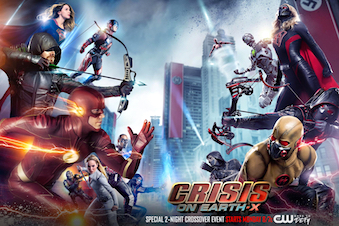
Crisis on Earth-XWhereas the previous four-show crossover failed to really coalesce into a successful single narrative, Crisis on Earth-X manages to lose the sense of hopping about across different series to play more like a single four-part story. I suppose that’s not the only way to do a crossover, but for someone tuning in just for the event who isn’t interested in the ongoing storylines of each individual series, it’s more entertaining this way. That said, it’s not as if those elements go away: the story is kicked off by everyone coming together for the wedding of Barry Allen (aka the Flash) to his longtime love Iris West. The nuptials are eventually interrupted by Nazi doppelgängers from another dimension (I do love how outright comic booky these shows can be), but it takes most of the opening episode to get there — I’d forgotten how much time these shows spend on soapy stuff like weddings and relationship woes. In that regard, they’ve certainly been designed to fit their US network (The CW, more associated with teen-girl content until these series came along). From there it goes full superhero show, with large-scale action sequences and dimension hopping antics. It may not transcend its genre roots to be objectively high-quality premium TV, but it’s pretty fun.

Agatha Christie’s Poirot  Series 2 Episodes 4-6
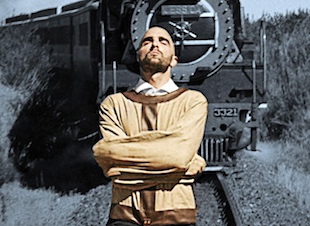
Poirot series 2One day I’m going to watch all of Poirot from the start, but I happened to see these few episodes this month. They’re from the series’ early days (obviously), when episodes were an hour long and based on short stories (as opposed to the feature-length novel adaptations they did later). What’s remarkable is how different they are, structurally and tonally, from those later episodes, with which I’m more familiar. The feature-length ones each feel like a standalone movie, whereas these early episodes do feel like a TV series, with “case of the week” plots. For example, there’s a regular recurring cast (alongside the titular detective there’s his sidekick Captain Hastings, his housekeeper Miss Lemon, and trusty Inspector Japp), who all appear every week and each get some kind of subplot, even if it’s not tied to the main storyline — in one episode, while the other three are away solving a jewel theft, Miss Lemon has to hunt for her missing keys. And that’s another thing: there’s not always a murder. And there’s not always a pile of suspects, either — none of these episodes feature the famous “gather all the suspects in one room and explain what happened”-style finale, so synonymous with the series. So, in many ways it feels quite strange, but still entertaining.
Also watched…
  • Great News Season 2 Episodes 1-7 — See last month for my comments on season one, which still apply (they tried adding Tina Fey as a guest star for a few episodes at the start of season two, which doesn’t massively change things). This little run ended with a Christmas episode (a fun riff on A Christmas Carol), which seemed a good place to pause for now.
  • The Royal Variety Performance 2018 — I haven’t bothered to watch one of these since 2012, but somewhat accidentally caught this year’s. It turned out to be rather good on the whole, I thought. Not so much the song-plugging music acts, but the comedians and circus turns, yeah.
  • Would I Lie To You? Series 12 Episodes 5-6WILTY is regularly superb, but sometimes it outshines even itself. There was one such moment back in episode three this series; there’s another in episode six, when regular panellist Lee Mack says he had to turn down an invitation to the Royal wedding to film that episode. It sounds like an obvious lie… but the other regulars, who didn’t receive invites, are worried it might just be true…

    Things to Catch Up On
    Death by MagicThis month, I have mostly been missing Death by Magic — not a high-profile show, maybe, but a new Netflix thing that seems up my street. Other than that, I’ve been conspicuously failing to get around to a bunch of “box sets” (I hate calling digital collections “box sets” — there’s no “box” involved) that I’ve been meaning to get to for varying amounts of time: The Little Drummer Girl, Killing Eve, The Haunting of Hill House, Lost in Space, the Netflix years of Black Mirror, Ash vs Evil Dead, Chilling Adventures of Sabrina (which even added a new Christmas episode), Riverdale, Mindhunter, Inside No.9… Not to mention everything that’s on my long-term back-burner, like Breaking Bad, The Wire, The Sopranos, The Shield, The X Files, things that don’t begin with a definitive article… There’s no doubt many more that are currently slipping my mind, anyway. With an abundance of Christmas specials incoming, I guess whichever series I dive into next will have to wait until January.

    Next month… is January, but expect an overview of Christmas telly before that.

  • Shrek Forever After (2010)

    2018 #132
    Mike Mitchell | 93 mins | Blu-ray | 2.35:1 | USA / English | U / PG

    Shrek Forever After

    Shrek the Third suggested that DreamWorks’ golden-goose animated franchise was running out of fairytales to subvert, so this fourth — and final (for the time being) — movie turns its attention on the series itself.

    Shrek is becoming disgruntled with life as a family man, so signs a deal with Rumpelstiltskin to have just one day as a “real ogre” again — but Rumpelstiltskin is a tricksy so-and-so, using the small print to land Shrek in an alternate timeline where he was never born. If Shrek can’t sort it out by midnight, he’ll be erased forever and the new timeline will stick. The filmmakers take this storyline as an opportunity to give us a look at how characters might’ve turned out in a Shrek-less world: Fiona is a warrior leading an ogre resistance, disillusioned by life after no prince came to rescue her; Puss in Boots is a fat, pampered kitty; and Donkey is working as a cart-donkey… but is otherwise pretty much the same. I guess some personalities never change.

    Sundry of the series’ many supporting characters get the same treatment, and it’s in this upending of familiarity that Forever After finds its greatest entertainment value. The result therefore favours dedicated viewers, while newcomers would be advised to seek out the franchise’s first two instalments. While this conclusion might not be quite as good, or iconic, as that pair, it does have a lot going for it, making it a more fitting finale than its mediocre predecessor.

    4 out of 5

    Shrek Forever After is on BBC One today at 3:10pm, and will be available on iPlayer afterwards.

    The Shape of Water (2017)

    2018 #256
    Guillermo del Toro | 123 mins | Blu-ray | 1.85:1 | USA / English, American Sign Language & Russian | 15 / R

    The Shape of Water

    Oscar statue2018 Academy Awards
    13 nominations — 4 wins

    Won: Best Picture, Best Director, Best Score, Best Production Design.
    Nominated: Best Actress (Sally Hawkins), Best Supporting Actor (Richard Jenkins), Best Supporting Actress (Octavia Spencer), Best Original Screenplay, Best Cinematography, Best Editing, Best Costume Design, Best Sound Mixing, Best Sound Editing.

    I still can’t quite believe a creature-feature fantasy romance won Best Picture. It remains surreal to see a genre movie conquer the Oscars like that. Even The Lord of the Rings, for all its so-Fantasy-it-defined-the-genre-ness, has a lot of the “historical war epic” in its form (not to mention the genre-transcending cultural impact that film trilogy had), and so its win seems less striking than this out-and-out monster movie. Naturally, The Shape of Water doesn’t actually conform to the commonly-understood connotations of what a “monster movie” is, and therein lies what makes it something fresh, and therefore Best Picture material.

    In fact, even “Fantasy” isn’t quite the right term for The Shape of Water — “fairy tale” is nearer the mark. It begins with voiceover narration talking about a princess as the camera glides underwater into a room where everything is afloat, including a sleeping woman… until everything gradually settles to the floor, an alarm goes off, and she wakes up — and now it’s just a real room. Except, even then, it’s not really real — it’s storybook-real; movie-real. Almost literally, in the sense that her apartment is above an old-fashioned movie palace. It’s a gorgeously designed set, but it doesn’t feel like somewhere someone would actually live — but it’s only just out of kilter, which is part of why it’s so fantastic. In case you missed it up top, the film also won an Oscar for production design, and that was certainly deserved.

    Dreaming

    Anyway, the woman in question is Elisa (Sally Hawkins), whose reality could hardly be more distant from that of a fairytale princess: she’s working nights as a cleaner at a government facility, wiping up the splattered piss of “clever men”. She’s also mute, communicating via sign language to her friends, coworker Zelda (Octavia Spencer) and down-on-his-luck neighbour Giles (Richard Jenkins). Things change when a mysterious new project arrives at the facility. Well, it’s no surprise to say that turns out to be a… kind of… merman… human/fish… being… It’s accompanied by head of security Strickland (Michael Shannon), who hates its guts and desires nothing more than to inflict pain, and scientist Dr. Hoffstetler (Michael Stuhlbarg), who is more sympathetic, for his own reasons. But it’s Elisa who, almost accidentally, comes to bond and communicate with the creature, in secret; but as their connection grows, she realises something must be done about its predicament.

    I’ve read some reviews that berate Shape of Water for its straightforward storyline — I’ve described a fair chunk of the plot just getting to that point of conflict, and you can probably infer much of the rest. But I think such criticisms miss the point. For one thing, it is not fiction’s only goal to shock us with plot twists. There’s more to storytelling than just surprises, and Shape of Water certainly has more to it. For another, it is quite clearly a fairy tale — albeit an adult-minded one — and those go more-or-less one way. And even then, the events that I thought would form the film’s climax happen at the halfway point, so this viewer was at least somewhat surprised.

    Toxic masculinity

    So what is there instead? Characters, for one. We don’t get too much backstory on any of them — which is interesting, because apparently del Toro wrote lengthy summaries for the main characters, some running to 40 pages, which were provided to the actors to read and use if they wanted. Whether they embraced them or not, they are all well-judged performances. Hawkins, Spencer, and Jenkins got the nomination nods, but it would’ve been equally at home in the hands of Shannon or Stuhlbarg. And that’s not to mention Doug Jones, who conveys the creature’s emotions with physicality and movement alone — aided by superb prosthetic and CGI technicians, of course. But while the film’s primary focus is on the interspecies love tale he features in, each supporting character has their own subplot to help sketch their personality, and provide meaning and resonance to the main story.

    That’s where theme comes into it — intricately linked to the characters, because this is all about outsiders and otherness. The fish-man is the most obvious “other”, with Elisa positioned second (as alluded to earlier, she seems to only have two or three friends and acquaintances she can actually communicate with); but there’s also Zelda, a black woman, and Giles, a gay man — and this is ’60s America, making those statuses even ‘lower’. Plus there’s Dr. Hoffstetler, but that would be a spoiler. Suffice to say, his unique predicament is given a more nuanced portrayal than you’d normally find in American media. All of this exists in counterpoint to Strickland, who’s basically the physical embodiment of toxic masculinity. For a film set in the ’60s, with a lot of Cold War overtones — and in a Fantasy environment, with a supernatural romance at its core — The Shape of Water certainly has a lot of timely relevance.

    Something fishy goin' on

    But, while you can hold it up as a mirror to the here and now, it also has a timelessness — like all the great fairy tales, of course. It transcends its ’60s setting and its 2010s production to really be about values of humanity — of acceptance —that are always pertinent. By tucking these messages into a fantasy that is most assuredly aimed at adults (it practically contains a laundry list of “things not suitable for children”), del Toro has given depth and meaning to an outlandish movie that, yeah, fundamentally, as the jokes all go, is about a woman fucking a fish.

    5 out of 5

    The Shape of Water is available on Sky Cinema from today.

    Spider-Man: Into the Spider-Verse (2018)

    2018 #254
    Bob Persichetti, Peter Ramsey & Rodney Rothman | 117 mins | cinema | 2.35:1 | USA / English | PG / PG

    Spider-Man: Into the Spider-Verse

    When it was announced a couple of years ago that Sony were developing an animated Spider-Man movie, there was, I think, some confusion about what they were playing at. The live-action movies were continuing, so this wasn’t a replacement. Was it connected? If so, why was it animated? If not, why did it exist? What was the point? Besides the obvious, anyway (popular brand + movie = money). Maybe Sony were just ahead of the game: where previously only one actor or series took on the mantle of a character at any one time, we’re increasingly in a world where multiple screen versions can exist simultaneously. Not that this film focuses on the same Spider-Man as the other ones…

    Into the Spider-Verse begins by introducing us to… Peter Parker. Well, of course it does — he’s Spider-Man, right? But after a witty do-over of his backstory (second only to Batman’s in terms of the number of times we’ve seen it adapted, I should think), focus shifts to one Miles Morales (Shameik Moore), a Brooklyn teenager struggling to fit in at his new private boarding school and deal with the pressure put on him by his police officer father. Escaping school one night to hang out with his Uncle Aaron (Mahershala Ali), Miles gets bitten by a genetically-modified spider and… well, you know the rest, more or less. But Miles has more than just new powers to contend with: evil scientists have created a machine to open a doorway to other dimensions (who they are and why they’re doing it, I’ll leave for the movie to reveal). But the malfunctioning machine is likely to rip the universe apart, and it falls to Miles to stop it. Fortunately, the dimensional instability means a whole host of alternate-universe Spider-People show up to help him.

    Spider-People

    It’s bold to do a team-up movie with a whole host of characters we’ve never met before — it’s something DC were criticised for with Justice League as soon as it was announced, and we were actually introduced to half of that team before the team-up happened. Well, Spider-Verse isn’t really a team-up movie in the Avengers Assemble sense. This is Miles’ movie; the other heroes are a supporting cast. This is the kind of thing that goes on all the time in comic books — heroes popping up for cameos or supporting roles in other heroes’ books — and, of course, something Marvel have increasingly brought to the screen in the MCU. Spider-Verse handles its big cast smartly, both in terms of how much screen time they get, but also how they’re introduced. Comic books will often have a cameo occur assuming you know who that character is and why they’re significant, and if you’re not an avid fan this can be confusing. Spider-Verse is a bit smarter. Brand-new characters get a solid introduction, but there are others certain others who pop in with the assumption you’ll know who they are — and, considering we’ve had over 15 years of immensely-popular Spider-Man movies, you probably do. This isn’t really a film aimed at total newcomers to Spider-Man’s world, though you’d probably get by if you are.

    That’s just one way in which Spider-Verse is perhaps the most comic-book-y comic book movie ever made. Another is the animation style, which works overtime to evoke comic books of old, while still being suitably modern and detailed. To describe the minutiae of all the little visual tricks and treats going on would take paragraphs and, frankly, get a bit dull — they’re interesting to watch, but not so much to read about spelled out in prose. Suffice to say the cumulative effect is certainly unique. Whether it always works… well, there were times I worried I’d actually wandered into a 3D screening and not brought any glasses, let’s put it that way. (I hadn’t.) But while it might take some getting used to, ultimately I really liked it.

    King of the swingers

    Indeed, that could be said of the film as a whole. Having heard a lot of advance hype from critics and preview screenings, Spider-Verse comes laden with expectation. Some earlier parts of the film play out a broadly standard superhero origin story, and, while it’s by no means bad, it doesn’t necessarily feel exceptional. But as more characters and concepts are introduced, and the film begins to pay off what it’s been setting up, it really comes together. It culminates in a powerful message — underlined by a closing quote from the great Stan Lee himself — that’s especially pertinent in the current climate of media criticism, which seems to see most people pushing for greater diversity of representation and artistic voices, while a vocal minority push back with thin “I’m not a racist but” arguments. Spider-Verse has an inclusivity at its core that is well balanced: if you want to shut out any messages and just enjoy a bunch of super-powered people engaging in hyper-kinetic action sequences, it can scratch that itch; but it demonstrates its core values, only stating them in summation at the end, rather than preaching them.

    So it turns out that, yeah, Into the Spider-Verse lives up to the hype, if you give it the time to get there. It’s a movie that will satisfy comic book fans in particular, I think, but also anyone who enjoys animation as an artform. This isn’t your standard Disney/Pixar/Illumination/etc fare, but a thrillingly-realised vision of what animation can do.

    5 out of 5

    Spider-Man: Into the Spider-Verse is officially released in the UK today and the US on Friday.

    It placed 9th on my list of The 26 Best Films I Saw For the First Time in 2018.