
Steven Soderbergh | 103 mins | TV (HD) | 15 / R
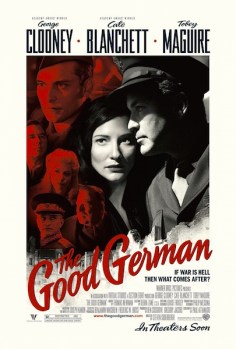
The film was shot as if it had been made in 1945. Only studio back lots, sets and local Los Angeles locations were used. No radio microphones were used, the film was lit with only incandescent lights and period lenses were used on the cameras. The actors were directed to perform in a presentational, stage style. The only allowance was the inclusion of nudity, violence and cursing which would have been forbidden by the Production Code.
So says the IMDb trivia page for The Good German, Steven Soderbergh’s delightfully thorough attempt to create a 1940s-style film noir in the ’00s. It’s even in 4:3, donchaknow.
But is this a case of style over substance? Some critics accuse it of just that, saying it concentrates more on the look & feel than the characters. They do have a point, but the style is, if not incidental, then still not the sole purpose. The tale is more about the mystery — indeed, mysteries — than the characters. Films like The Third Man and Casablanca spring readily to mind; tales where characters cross and double-cross, where you can’t be certain who’s on whose side, or why, or when, or for how long. Though, yes, The Good German does lack the depth of character found in either of those examples.
Still, this isn’t merely a pastiche — or at least not as much of one as it could have been in lesser hands — but instead is a work that conforms to the genre conventions and the filmmaking style of the era it’s both set in and sets out to emulate. It’s very believably done too, so much so that the very modern levels of violence, sex and swearing are uncomfortably incongruous. Perhaps this was Soderbergh’s intention, but you can’t help but think that it’s a misstep. If you’re going to all that trouble to recreate  the visual, audio, acting and plot styles of the era, why not ensure the dialogue and action follow suit? There’s no need for the violence, sex and swearing in this particular tale; at least, no need for it in a way that couldn’t be conveyed as effectively using Production Code-friendly methods. I’m uncertain if I like the film less for failing on this measure, but it does add to its inherent oddness.
Thematically the film is quite strong, though thanks to an assortment of almost red-herring-ish mysteries it might take more than one viewing to tease them all out. The setting, in both place and time, gives away the central issues: Berlin, after the war, as the Allies decide who will be prosecuted for the atrocities Germany committed and who will be allowed to escape without a trial. Who was responsible — the ringleaders, their underlings, ordinary people? Every character is connected to this somehow, every one has their morals tested or examined.
We’re certainly given a fair look at each of the three leads, as the film switches its focus between them around-about each act break, signalled by a brief voiceover from the new central character — one of which casually reveals the answer to what had, for a while, seemed to be the central mystery.  But how much do we get to know them, really? It’s easy to see why critics said “not very well”, because they’re too busy uncovering the conspiracies and revealing their part to actually show us much about themselves. But then why should that be a problem? It’s a noir thriller, not a character drama. Surely it’s about the mysteries and, if you like, the themes, rather than letting us understand the people caught up in them?
Indeed, the array of mysteries distracts from thematic pondering, or the wider conspiracies that the tale is ultimately concerned with. To list them would spoil plot twists, but each in turn seems to be the Main Story — until all is revealed and we have a chance to see the bigger game that’s been played all along. I suppose in that respect it’s like some of the best classic noirs — The Big Sleep springs to mind in this field, not that The Good German is quite as unknowably complex.
Soderbergh’s exercise in era-recreation can be deemed a success: if you can ignore the famous modern cast and the pristine visual quality of a recently-produced film, it looks and sounds exactly like something from the ’40s. Is that enough to sustain a feature? No. But the accompanying story — which, as this is an adaptation, surely inspired Soderbergh’s 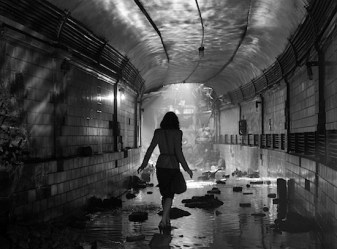 production intentions rather than being invented to slot into them — provides meat on the stylistic bones.
And yet, having seen it, I can’t help but feel that The Good German is little more than an interesting curio; one that deserves to be seen but, following that, viewers would be better off sticking to real noirs.

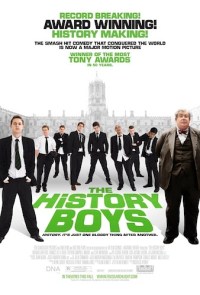 Nicholas Hytner’s film of Alan Bennett’s play, about a group of unlikely ’80s grammar school boys trying out for Oxbridge, sticks with a Bennett screenplay and the original West End/Broadway cast. However, it succeeds in not being very stagey — to the credit of Bennett’s screen adaptation and Hytner’s direction, I should imagine.
 I said it wasn’t stagey. That’s not entirely true: the exception is the finale, which in both execution and dialogue feels incredibly Theatrical. But it’s a nice idea — much better than a half dozen “what happened next” screens of text — and I wouldn’t want to lose something so effective. It also succinctly reminds us that, though this story is over, lives go on.
 Post
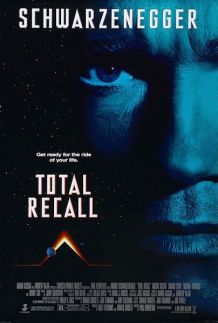
Post  depending on your point of view, either supports the “it was all a dream” reading or is just a case of artistic licence, hardly uncommon in SF cinema.
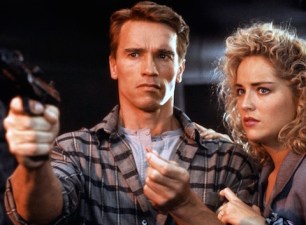 Perhaps it’s ultimately destined for an afterlife as a film representative of its era; the kind of thing that comes up as a footnote or personal favourite in texts & documentaries specifically discussing things like The Sci-fi Cinema of the ’90s. Or perhaps I’m doing it a disservice. We shouldn’t really try to predict these things too much, it’ll only lead to embarrassment when the opposite happens.
 #112
#112 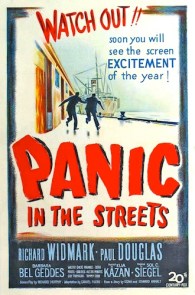 Film noir is a pretty unspecific genre, or unconscious movement, only really defined (however loosely) once it was already over. So to say a film noir isn’t particularly film noir-y might seem a tad daft, but, Panic in the Streets isn’t a particularly film noir-y film noir.
 has a beautifully bad-guy-friendly skull-like face, with his jutting cheek bones and flat-ended nose. (I imagine I’m far from the first to make this observation, but hush.)
 The world, so they say (and by “they” I mean “absolutely no one” — I’m making this up), is divided into three sorts of people: those who love
 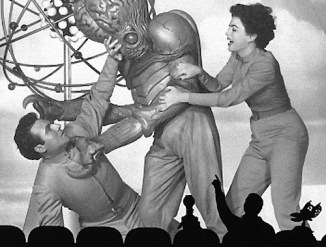 Anyway, the gang set their sights on one film per episode — or, in this feature film, one film per film. They’re being forced to watch these movies, for various unimportant reasons, and every once in a while we get comedic ‘host segments’, where they get up to hijinks on their space station (I forgot to mention, they live on a space station). These bits are well-meaning and quite funny — and in this big screen outing have been shot with a suitably filmic gloss that the video-shot TV episodes lack, which adds a surprising magnitude to the still-small-and-cheap sets and props — but the real meat of the humour is in the riffing over the film.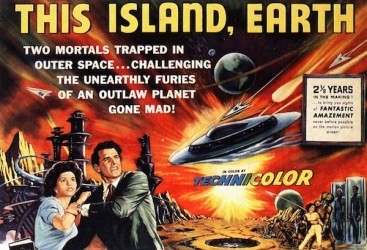
 when you’re in the mindset to take the piss out of the film. That is, if you get on with the characters (as it were) and sync with their sense of humour; if you dislike them or their humour, or like whatever they’re watching too much, then it’s probably more like some irritating yobs nattering away over something you’d quite like to watch thank you very much. (Equally, if you embark on this intending to watch This Island Earth, more fool you.)
 Alternate histories are always fun, and nothing seems to have provoked more than the Second World War. Which, as a defining event in modern history for a good chunk of the world, is understandable. It Happened Here is perhaps one of the earliest examples, depicting a 1940s Britain under Nazi occupation.
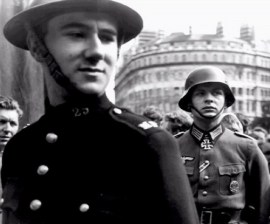 namely, the quiet but methodical enacting of The Final Solution in an occupied territory. The whole film builds to this point, gradually showing the darker and deeper levels of cooperation — which starts out almost harmless and ends with organised mass murder — meaning it never feels like Brownlow and Mollo are pushing an agenda too hard, but still confront us with the reality: that we’d probably succumb too, and this is where we’d end up.
 Another controversy arose over the villains being British collaborators — few German Nazis are seen — and the ease with which many agreed. But this is based in the facts of what occurred in other occupied territories; maybe Britain’s plucky spirit would’ve shown through, as many like to believe, or maybe many would have caved for the easier life — or, indeed, life at all. The film is examining several perspectives of occupation, and using the fictional context to good effect: this could have happened, the film says, however much we like to believe we wouldn’t have collaborated like (and/or resisted better than), say, the French.
 Nonetheless, It Happened Here is more anti-Nazi than pro-Nazi propaganda, in my opinion, though it’s easy to see why any material critical of the Allies could have outweighed the overall bias when the film was first released, just 20 years after victory in Europe. Generally, and viewed from a much more removed perspective, Brownlow and Mollo do a good job of offering conflicting perspectives with minimal comment, allowing the viewer to decide how ridiculous certain newsreels or opinions are, or how weak or misguided characters may or may not be — on both sides.
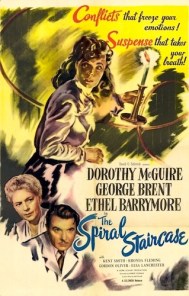 A serial murderer is on the loose in 1900s New England, or 1910s Massachusetts (pick which website you want to believe). His victims are all disabled women, so at the wealthy Warren residence, both family and staff worry for mute maid Helen — particularly as it seems the murderer may be among them…
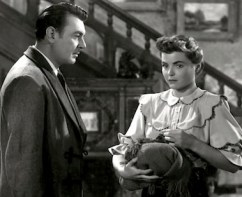 Some viewers allege that it’s at this point the story falls apart; that there’s only one possible suspect. I disagree. Though I can’t say the film entirely had me fooled, there are several suspicious characters, particularly if you’re prepared to consider extraordinary leaps of probability — and in genres like gothic horror, film noir and whodunnit, you should be. Indeed, while some see the killer as obvious others may consider them unlikely; but, for the attentive, the groundwork for the motivation is laid throughout.
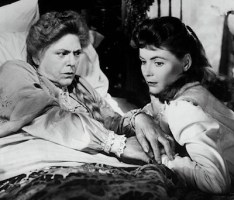 A mention for the sound design, too. Even during simple dialogue scenes, where one might expect silence but for the words in a film of this era, rain lashes against the window in the background, the heavy weather a ceaseless reminder of the threat lurking close at hand. It is, to use a cliché, a character in itself. Thanks to the enclosed setting, we spend a fair amount of time with these characters, and there are good performances too, but that’s for another reviewer to discuss — try
 Force of Evil comes well recommended, with places on several 1,000 Best Movies lists and inclusion both on
  Duncan’s analysis (Force of Evil is one of seven noirs treated to an extended segment in his book) suggests a more complex reading of the film than I took from it, explaining much as symbolic or metaphorical. Considering I didn’t engage with the film, I’m tempted to see Duncan’s reading as a way of rationalising things that either aren’t there or were flawed, but the film’s wider critical acceptance suggests he may well be right.
 Living Free is, in many ways, a tale of obsession. I’m certain that wasn’t Joy Adamson’s intention in writing the book, and I don’t think it’s the filmmakers’ intention either, but the facts can still play that way. The Adamsons devote months of their time, give up a promising career, spend all their savings, drive themselves into debt, and are nearly killed several times, all in a frequently-extreme effort to save three delinquent lion cubs who would be put down were it not for their sentimental attachment.
 The rest of the story moves into What Happened Next territory: Elsa dies, the Adamsons’ obsession with finding and saving her cubs begins. The film skips the book Living Free, adapting threequel Forever Free instead, presumably for dramatic reasons — I imagine Elsa and cubs just living isn’t as much of a Story as her death and subsequent events.
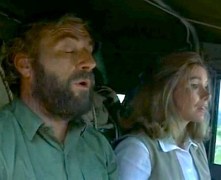 Living Free isn’t as endearing as Born Free. By the very nature of trying to keep the cubs wild, they’re less relatable than Elsa and consequently we become less attached to them. As you may’ve guessed, I found it more interesting to look on the film as a story of obsession, one that threatens to ruin the Adamsons’ lives, though ultimately it has an upbeat ending.
 100Films.co.uk